{http://www.ft.com/intl/cms/s/0/25f2d7d6-c3f8-11e4-a02e-00144feab7de.html?siteedition=intl#axzz3TzcSSqna}

The oil traders and hedge fund managers who gathered for dinner at Mike’s Bistro in Manhattan vied for the attention of Nasser al-Dossary, Saudi Arabia’s representative to Opec and Freepoint Commodities’ guest of honour.


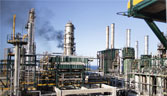


For years Saudi Arabia acted as a safety net in the market, but as prices fell the game changed, writes Anjli Raval
Scattered over half a dozen tables, the 30 attendees took turns sitting next to the man they believed had the ear of Ali al-Naimi, the kingdom’s 79-year-old oil minister and the most influential person in the energy industry.
It was October 7, and the price of oil had been falling precipitously since June. Everybody wanted to know when Saudi Arabia would take charge and stem the plunge. “Of course you’re going to cut production,” declared one guest.
“What makes you think we’re going to cut?” the Saudi official replied.
The throwaway remark, recounted by one of the attendees, reverberated across markets. It was the first sign that Saudi Arabia would not come to the oil market’s rescue, shattering long-held assumptions about the kingdom’s oil policy and shaking up a world energy order in place for decades.
During periods of instability, the Saudis have adjusted their production to restore balance. But last year, as concerns about oversupply escalated, the kingdom changed tack and refused to act as the oil market’s safety net. Cutting output, Saudi Arabia believed, would only help its rivals — and it was time to take a stand.
A month later, with crude still falling, Saudi Arabia strong-armed its Opec peers into supporting its decision not to intervene in the market. Mr Naimi would later describe this moment as “historic”.
Armed with $750bn in foreign exchange reserves, Saudi Arabia led a battle against high-cost producers — from the US to Brazil and Russia — betting that a period of lower prices would force them to cut their output. The tactic might hurt revenues in the short term, the reasoning went, but it was necessary to protect market share for the long term.
The move had a huge and immediate impact. The budgets of big oil exporting countries were thrown into disarray. Energy companies had to tear up their investment plans. Financial markets were rocked.
The shift in Saudi oil policy that was crystallised between June and October has been the subject of intense speculation. Some suspected it was rooted in geopolitics: one theory held that the Saudis, acting under US influence, deliberately sought to undermine rivals Russia and Iran. But a close examination of Saudi actions suggests an unexpected series of global political events and — crucially — a misreading of the market were the driving forces behind Riyadh’s gamble.
June 2014:‘A tipping point’
A presentation at the June 11 Opec meeting in Vienna informed ministers of slowing global oil demand and rising supplies. But Saudi Arabia thought the price of oil was safe. The Middle East was ablaze, with Libya in chaos and Isis, the militant Islamist movement, seizing territories across Syria and Iraq.
Investors calculated the turmoil would cut supplies and push oil prices towards $130 a barrel. John Kerry, US secretary of state, sought assurances from the late King Abdullah bin Abdulaziz al-Saud that Riyadh would “do what would be required” to address any supply disruptions caused by Isis, one US state department official said.
But events on the ground wrongfooted the experts. In Libya, where production had plummeted from 1.4m barrels a day to less than 200,000 b/d amid protests, strikes and blockades, there was a sudden turnround. In late June, talk spread of rebel-held ports and oilfields reopening; within three months production rallied to 900,000 b/d.
In Iraq, Opec’s second-largest producer, Isis failed to capture the country’s main oil producing regions, removing another supply threat. This, says Bhushan Bahree, an analyst at IHS Energy, was “a tipping point for the oil market”.
July: Underestimating US shale
Another surprise awaited. Oil in excess of $100 a barrel had boosted supplies from Brazil to Russia. But the growth in the US was stellar. Monthly US crude production hit a near 30-year high, averaging around 8.5m b/d and would later surpass 9m b/d. “It beat our most optimistic expectations,” says a senior US official.
Technological advances, fuelled by cheap debt courtesy of the US Federal Reserve’s quantitative easing programme, had unlocked more oil than anticipated from shale formations. Initially the diversity of supply was welcomed by Riyadh as a force for stability. Rising US production reduced its imports, easing pressure from supply disruptions in countries such as Libya, Iran and Nigeria. (The US has had a ban on most crude exports since the 1970s.)
But the Saudis doubted the sustainability of shale, given its production costs — break-even prices range between $30 and $90 a barrel for shale, compared with Saudi oil, which costs less than $10 a barrel to produce.
In depth
Latest news and comment on the global economic and political consequences of tumbling oil prices
Further reading
Further reading
The Saudis “did not believe the actual potential of the US shale revolution,” says Leonardo Maugeri, a former executive of Italy’s state-owned oil company Eni, who last year briefed Saudi officials on their new rival. “They totally underestimated the resilience of this oil.”
Even so, they were apprehensive. Throughout 2014 the Saudis enlisted analysts from ExxonMobil to investigate the break-even costs, debt financing and the output horizon for US shale, say two people familiar with the study.
August: ‘A new reality’
As demand fell more than expected in Europe, Riyadh had been slow to pick up on weakness elsewhere: China.
There were indications that the market had been softening, but the data were hard to read. “If you are a refiner in China and you don’t need as much crude, you will drop other peoples’ cargoes first. Saudi Arabia has priority status,” explains one Gulf oil consultant.
But refiners in China as well as Vietnam and India began telling Saudi Aramco, the state oil company, that they needed less than their full crude oil allocations and wanted lower prices, say people familiar with the talks.
A series of steep cuts to export prices for Asian buyers followed. Yasser Elguindi, oil analyst at Medley Global Advisors, says the aggressive pricing was a sign of how seriously Riyadh was fighting for market share as it sought to be Asia’s supplier of choice.
“Saudi Arabia has been concerned about its exports to China. [It] has been losing market share to Venezuela, west African producers and others,” he says. With exports to the US reduced by the shale boom, these producers, alongside Opec peers, had been pushing for customers in China.
Chinese imports from Saudi Arabia, which stood at 1.3m b/d in January 2013, fell to around 900,000 b/d by August 2014. Although imports and prices have since picked up, the drop illuminated a festering concern.
If the US loosens its crude oil export ban, as many expect, “this is a trend that will only accelerate,” Mr Elguindi says. Riyadh had no choice but to “protect its market share against competitors inside and outside Opec,” he adds.
Although analysts had been told by Saudi officials as early as 2012 that the market should not expect it to make unilateral cuts, these were hypothetical discussions until last summer. But now there was a shift.
“We knew that this day was coming, it was only a matter of when,” says Mohammad al-Sabban, a senior adviser to the Saudi oil minister from 1996 until 2013. As oil approached $100 a barrel, he says “it was clear we were facing a new reality”.
September: ‘We are not convinced’
There was speculation of a policy split at the highest levels in Riyadh. Some were believed to be arguing that falling crude prices were little more than a short-term blip. It also seemed that cuts were still on the table. One Saudi official told the FT: “If we see into it that demand is not maturing as expected . . . then we will cut. But right now we are not convinced with what we’re seeing on the demand side is permanent.”
Others warned that a new era was dawning. They argued it was time to teach a lesson to high-cost energy players and their financiers — from shale to solar — to maintain Saudi Arabia’s long-term competitiveness and oil’s place in the energy mix. Yet Mr Naimi and other officials appeared sanguine. “Have you ever seen me concerned?” he asked reporters. “This is not the first time prices change. They always change.”
Diplomats close to the oil ministry say the institutional reference point was the 1980s, when oil minister Zaki Yamani slashed production in response to North Sea supplies.
The move sent prices into the single-digits and led to a loss in market share. “Through history, when a drop in demand is followed by a cut in Saudi production, it has not gone too well for them,” says a western official in Riyadh. Mr Naimi believed this, too.
But even as the perfect storm was brewing, it was not until prices started “declining very rapidly” in the second half of last year that it was felt action was needed, says Abdalla El-Badri, secretary-general of Opec.
In September alone Brent dropped almost $9 as capital flight from risky commodities to more secure investments such as US treasuries hit the oil price.
At this crucial period the oil minister disappeared from public view, taking a holiday in the Seychelles. Other Saudi ministers and executives were also away over the Eid religious holiday period.
“Nobody was at the controls,” says an industry insider.
October: Crunch time in Riyadh
Decision-making in Riyadh is often slow and lacks transparency. But the first hint of a shift came with Mr Dossary’s remarks which filtered through the investment community. Other Saudi officials then began echoing the message.
“By October a policy was in place,” says a western diplomat in Riyadh. Production cuts were not completely off the table but they were “highly unlikely”.
In public, Mr Naimi — who has driven the kingdom’s oil policy since 1995 and is the most powerful among non-royal technocrats — stuck to stock phrases. A person briefed by Saudi Aramco executives says the “haphazard” communication to the market was driven by uncertainty in Riyadh. “They [the Saudis] were reacting.”
November: ‘An impossible situation’
The run-up to the November 27 Opec meeting in Vienna was dominated by calls from the cartel’s poorest members, from Venezuela to Iraq, to cut production. But Saudi Arabia was not prepared to shoulder the lion’s share of any Opec cuts. Non Opec producers would have to share the burden.
“Naimi has been around for a while and he knew that this is an impossible situation for Opec to resolve [alone],” says Sadad al-Husseini, an ex-Saudi Aramco executive. “To try and police this kind of market was not possible.”
Rafael Ramírez, Venezuela’s representative at Opec, tried to pressure Mr Naimi into a production cuts deal and arranged a meeting with the Russians and Mexicans on November 25.
The Saudi oil minister is said to have told the Russians that with both countries producing roughly 10m b/d, any potential cuts should be equal. The Russians refused. Accustomed to non-Opec countries failing to support painful decisions, Mr Naimi enlisted the support of its Gulf allies to accept a rollover of the 30m b/d production target. The rest soon capitulated. “Opec members were told that cuts of 1.5m b/d would be needed . . . but the decision was not based on supply/demand fundamentals. Quite honestly, it was strategy alone,” says a person familiar with the meeting.
December: ‘What happens to my share?’
Within three weeks of the meeting, Brent stood at $60 a barrel, the price at which Gulf producers believed oil would bottom out. Khalid al-Falih, chief executive of Saudi Aramco, like others in Riyadh’s small coterie of decision makers, was stunned by the speed of the fall and described it as “surprising”.
Stress tests at Aramco in preparation for the 2015 government budget implied an average oil price at $80 a barrel for this year, Saudi economists say. But in the new year oil touched almost half this level. As prices declined rapidly, Mr Naimi gave his fullest explanation yet of the decision to maintain supply. “It is not in the interest of Opec producers to cut their production, whatever the price is,” he told the Middle East Economic Survey. “If I reduce, what happens to my market share? The price will go up and the Russians, the Brazilians, US shale oil producers will take my share,” he added.
The shift from publicity shy to publicity seeking leader was striking. Some say Mr Naimi was responding to domestic critics. The Saudi stock market had slumped and business leaders openly questioned the wisdom of allowing prices to fall.
Epilogue: Survival of the fittest
The market turmoil — whether engineered or merely managed chaos — has come as Saudi Arabia faces a delicate political transition. The late king’s successor King Salman reconfirmed Mr Naimi in the first cabinet reshuffle, indicating support for his policy. But the new monarch’s son was promoted to deputy oil minister and the Supreme Petroleum Council, which oversaw the country’s oil sector, was replaced by a new body.
Mr Naimi, who has traditionally had a free hand on oil policy, is confident his strategy has worked. Demand for Saudi oil has picked up, and prices have rebounded on the back of news pointing to drilling and investment cutbacks.
But as he engages in a battle of survival of the fittest — armed with low-cost production, a hefty war chest and low debt — many are not convinced significant production shutoffs are imminent and ask if the strategy has truly deterred investors away from expensive oil. The oil ministry and Saudi Aramco did not respond to request for comments. Others are still asking if the November decision is to the benefit of Opec, Gulf countries or, as some fear, Saudi Arabia alone.
“If the Saudis had cut they would have been the idiot at the party. They would have done what everyone wanted, but they would also have been the one that everyone else laughed at,” says one long-time Opec analyst. “Ultimately, Naimi has told the world the Saudis would not be the ones to mop up everyone else’s mess.”

