RTRS - RWE, ENGIE STUDYING ALLIANCE INVOLVING INNOGY - BANKING SOURCES

RTRS - RWE, ENGIE STUDYING ALLIANCE INVOLVING INNOGY - BANKING SOURCES
RTRS - FRENCH GOVERNMENT SOURCE CONFIRMS TALKS ABOUT AN ENGIE-RWE ALLIANCE, CAUTIONS THEY MAY NOT SUCCEED
RTRS - ONE SCENARIO INVOLVES RWE SWAPPING PART OR ALL OF ITS 77 PCT INNOGY STAKE FOR A STAKE OF UP TO ONE THIRD IN ENGIE – SOURCES
RTRS - ANY DEAL WOULD HAVE TO WAIT FOR GERMAN GENERAL ELECTIONS IN SEPTEMBER - SOURCES

(Digitimes) Apple to ship 5-6 million 10.5-inch iPad Pro tablets in 2017, say Ta

Apple to ship 5-6 million 10.5-inch iPad Pro tablets in 2017, say Taiwan makers


The upstream supply chain's shipments for Apple's new 10.5-inch iPad Pro have been increasing recently and the device's monthly shipment volume is expected to grow to 600,000 units in July, up from around 500,000 units currently, helping its annual shipments to reach five million units in 2017, according to some market watchers. The 10.5-inch iPad Pro began mass production in March-April.

As for Apple's recently launched inexpensive 9.7-inch iPad, demand for the tablet is expected to pick up strongly starting the end of the second quarter and will reach the peak in the third quarter, increasing the device's monthly shipments to over four million units in June and July, the market watchers noted.

Apple is also rumored to upgrade its 12.9-inch iPad Pro for 2017, but the product's mass production schedule is still not clear so far. Some market watchers expect the mass production will begin in June with stable shipments in the third quarter.

Sources from the upstream supply chain noted that Apple's inexpensive 9.7-inch iPad is expected to accelerate Apple's pace on phasing out the iPad mini 4 from the market.

However, despite Apple's new strategy for its product mix, the market watchers still expect Apple's tablet shipments in 2017 to drop from a year ago.

Digitimes Research's figures also show that worldwide tablet shipments were around 8.74 million units in the first quarter and the release of the 10.5-inch iPad Pro should shore up the second quarter's tablet shipments to 8.9 million units.

FT : Basquiat painting smashes record with $110m sale

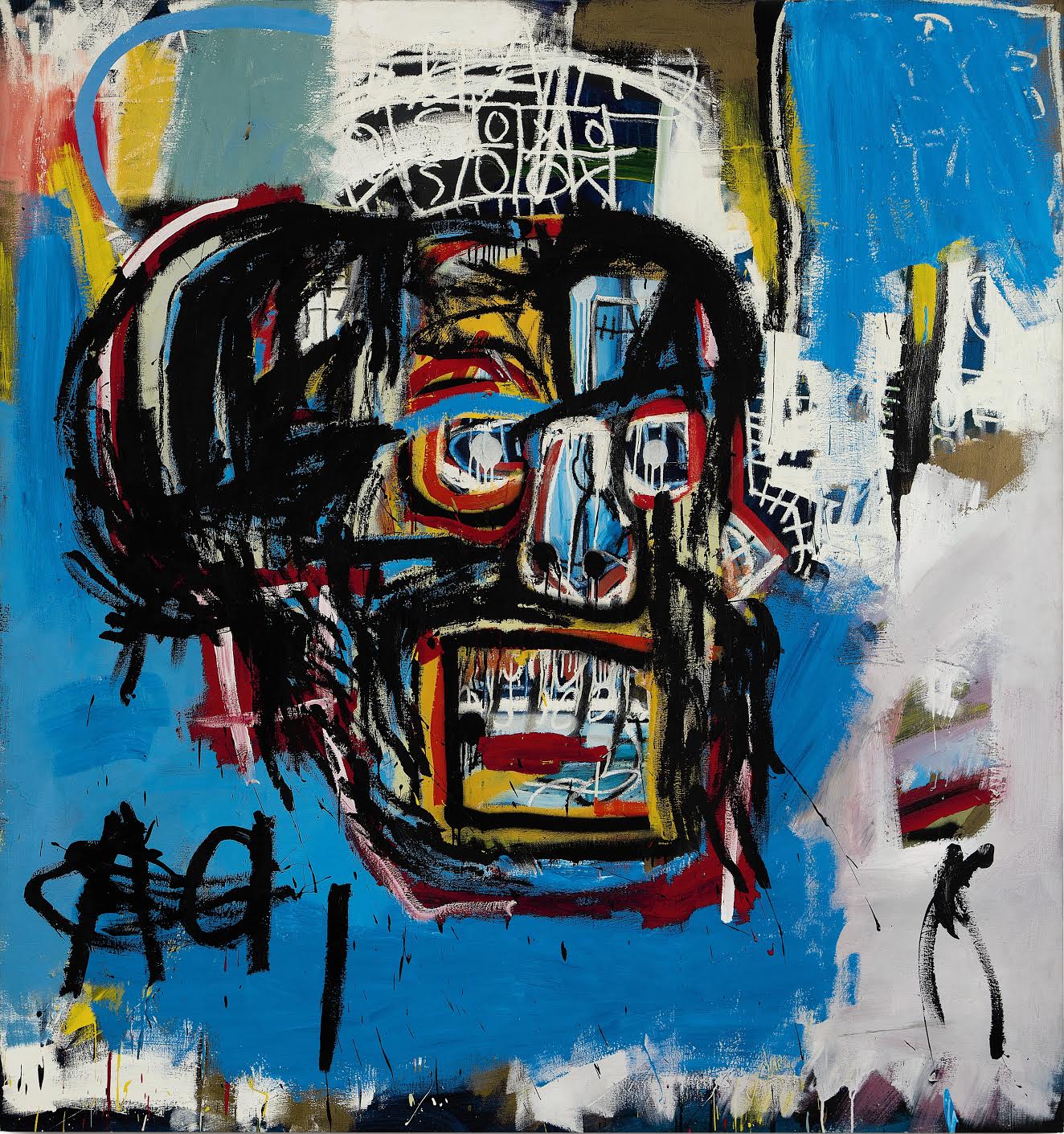
Basquiat painting smashes record with $110m sale
Top price at Sotheby’s in New York for work by an American artist


“Untitled,” a painting by Jean-Michel Basquiat, sold for $110,487,500 at Sotheby’s on Thursday night, a record price for work by an American artist at auction.

The painting, unveiled for the first time in 30 years, sold for $98m before fees at the auction house’s contemporary art sale. The price is also the highest-ever at auction for a work created after 1980.

The painting, from 1982, was last sold in May 1984 at Christie’s for $19,000.

The buyer, Yusaku Maezawa, a Japanese billionaire art collector, said: “When I first encountered this painting, I was struck with so much excitement and gratitude for my love of art. I want to share that experience with as many people as possible.”

According to a Sotheby’s fact sheet, the painting will eventually end up in a museum in Mr Maezawa’s home town of Chiba in Japan.

The previous record for work by an American artist was held by Andy Warhol’s “Silver Car Crash”, which sold at auction for $105,445,000.

Oliver Barker, senior director and chairman of Sotheby’s Europe, said: “It really shows the strength of the market as well as a very determined group of bidders.

“It pushes Basquiat on to a whole new platform. I think it’ll be some time before we see this record broken.”

There were about four contenders, with bidding starting at $57m and quickly rising to $66m. At around $90m only two remained. Cell phones came out and audiences gasped at every increase.

Four other Basquiat works were also sold on Thursday night, for $1.2m, $3.6m, $4m and $6m including premiums.

The hammer price is the price at which people have bid. The premium price includes an added percentage that goes to Sotheby’s. The auction house typically charges a 12.5 per cent commission on sales above $3m.

Before its 1984 sale Untitled was in a private collection for two years and exhibited at the Alexander Milliken Gallery in New York for under two months.

WWD : Bailey Bids Farewell to Burberry CEO Role, Commits Fully to Creative

Bailey Bids Farewell to Burberry CEO Role, Commits Fully to Creative
Shares climbed after Burberry reported a 7.3 percent decline in 2016-17 profits.

LONDON — Christopher Bailey is staying put at Burberry — at least for now.
Bailey may have bid the financial world an emotional farewell as he prepares to hand over the chief executive officer mantle to Marco Gobbetti in July, but it’s clear Bailey remains committed to Burberry — and is ready to refocus fully on all things creative.
He said Thursday, during an analyst presentation following the 2016-17 results announcement, that a highlight of his tenure as ceo was recruiting Gobbetti, the former Céline ceo who joined Burberry earlier this year as executive chairman for Asia-Pacific and Middle East.
Bailey said Gobbetti’s appointment, which takes effect July 4, “will allow me to redouble my focus on design, product and telling stories.” Bailey will continue as chief creative officer and take on the new title of president in July.
He had held the controversial dual role of chief creative officer and ceo since 2014, following the departure of former ceo Angela Ahrendts for Apple.
Indeed, Bailey used his presentation to drive home his commitment to the FTSE 100 company, and to quell all doubt about his future there. Bailey said he planned to work closely with Gobbetti as the company entered its next chapter, and he’s approaching the future with “huge optimism” for Burberry.

Profits for the year ended March 31 fell 7.3 percent to 286.8 million pounds, or $375.7 million, in line with analysts’ expectations, while revenue in fiscal 2016-17 was down 10.4 percent on a reported basis, and 2 percent on an underlying one to 2.77 billion pounds, or $3.63 billion.
The past year had been a tough one for Burberry, which 12 months ago laid out a restructuring and cost-savings plan aimed at honing the brand for a future of slower growth for luxury goods, and for a digitally engaged, want-it-now customer base.
Shares in the company rose steadily throughout the day, closing up 5.2 percent at 17.26 pounds, or $22.33.
Burberry also announced a 5 percent increase in its full-year dividend at 38.9 pence, or $0.50, pointing out that its key revenue driver, the retail business, climbed 3 percent on an underlying basis.
Adjusted profit before tax was up 42 million pounds, or $55 million, to 462 million pounds, or $605 million, in line with guidance. Adjusting items included lower beauty revenue after Burberry slashed the number of wholesale distributors from 3,500 to 35, and costs associated with the transfer of beauty operations to Coty, which is set for October.
Profits were also dented by planned restructuring charges of 20.8 million pounds, or $27.2 million, relating to Burberry’s new cost and efficiency program, in line with guidance.
Burberry also announced a new 300 million pounds, or $388 million, share buyback program to be completed by March 31, 2018, paid for partly with money from the Coty deal.
In the second half of the current fiscal year, Burberry will receive a total of 180 million pounds, or $233 million, from Coty for the long-term exclusive global license and related transfer of the beauty business, including gross assets.
There are some clouds on the horizon.
It remains unclear whether Burberry will go ahead with its plan, announced in late 2015, to build a state-of-the-art trenchcoat factory in Leeds, England. The initial investment in the factory was set to be 50 million pounds, or $77.2 million, at the time.
Burberry had already found the land and had planned to open the new facility by 2018. Dubbed Project Artisan, the factory was meant to replace Burberry’s two Yorkshire workshops that make its heritage trenches.
During a call earlier in the day, chief operating officer and chief financial officer Julie Brown said while Burberry remains committed to Yorkshire, the company has been taking its time making a decision about the fate of Project Artisan. (Earlier this month, it announced plans to move 300 back office jobs from London to Leeds, Yorkshire, as part of its cost-savings and efficiency drive.)
“We’re considering a number of options,” said Brown, adding that there were “Brexit implications,” as well as input and decisions to be made by the incoming ceo. The project was announced long before Gobbetti’s appointment and Britain’s vote to leave the European Union last summer.
As it mulls the future of its Yorkshire factories, Burberry said it is putting a renewed focus on bags, sales of which grew 16 percent year-on-year in 2016-17. The new DK88 bag, whose design is inspired by the brand’s heritage trench, will get its own stand-alone campaign and store windows later this month.
The atmosphere at the Burberry DK88 bag launch. Altman/WWD/REX/Shutterstock
Bailey said there would also be a sharper focus on the bag category going forward, with plans to elaborate on newness, but also on key shapes, core styles and add-ons to product families.
Brown said Burberry sees accessories, which generate 40 percent of revenue, as a high-potential growth category.
Overall, Bailey said the company would be taking “a more strategic approach to key categories,” such as handbags, as part of its strategy to nurture repeat business from local customers, and to drive sales per square foot in stores, an area where Burberry has been lagging behind its peers.
“A greater proportion of my time will be spent on product,” Bailey said. “We can do so much more.”
Burberry also plans to spend some of its 140 million pounds, or $240 million, in this year’s capital expenditure on store refurbishments, rather than store openings, as it seeks to consolidate its retail network after years of rapid expansion.
On the digital front, Burberry is working to bring the worlds of brick-and-mortar and online ever closer, with new services such as same-day delivery in 200 cities, instant, in-store collection services for online shoppers, and online deliveries sourced from distribution centers as well as stores.
Some 70 percent of Burberry customers’ buying decisions are influenced by digital, and the brand has made a series of moves as a result.
It has launched a local site in China, and unveiled a redesigned web site for desktop and mobile. It has also introduced a Burberry customer app in the U.K.
The company said while its guidance for full-year adjusted profit before tax remains unchanged at constant exchange rates, it is expecting a 30 million pounds, or $39 million, dent in reported adjusted PBT due to the adverse impact of currency fluctuations.
Burberry based its estimate on April 28 effective rates.
Reuters - Oil prices climb on hopes output cuts will be extended

Oil prices climb on hopes output cuts will be extended

Oil futures rose on Friday to the highest in nearly a month on growing optimism that big producing countries will extend output cuts to curb a persistent glut in crude, with key benchmarks heading for a second week of gains.

Brent crude LCOc1 was up 34 cents, or 0.7 percent, at $52.85 at 0358 GMT. The contract earlier rose to the highest since April 21 and is on track for a 4 percent climb this week, its second week of gains.

U.S. crude oil CLc1 was up 38 cents, or 0.8 percent, at $49.73 a barrel, highest since April 26. The contract is heading for a weekly increase of 4 percent.

Since the beginning of March, crude prices have swung from over $56 a barrel to under $47 as market participants were divided over the impact of rising output from the United States versus production cuts by the Organization of Petroleum Exporting Countries (OPEC) and other countries, including Russia.

But market watchers are growing more confident that OPEC, Russia and other big producers will extend cuts of almost 1.8 million barrels per day (bpd) until the end of March 2018. U.S. producers are not party to any agreements capping production.

As with other markets, concerns about U.S. President Donald Trump's agenda amidst investigations in Washington faded into the background.

"With the political turmoil easing in the U.S. overnight, the market will return to the fundamental drivers," ANZ said in a research note.

"This should see oil prices remain well bid, as OPEC continues to talk up a continuation of the production cut agreement," it said.

On May 25, leaders from OPEC and other producing countries will meet in Vienna to decide on output policy.

Rosneft, the largest oil producer in Russia, will meet agreements with OPEC on oil output reductions, the company's chief executive told reporters in Berlin on Thursday.

Still, there are signs that Saudi Arabia, OPEC's largest producer, is keeping markets well supplied.

Crude exports from Saudi Arabia rose by 275,000 barrels a day in March from February and stockpiles rose, official data showed late on Thursday.

"The battle between bulls and bears is raging on oil," said Greg McKenna, chief market strategist at CFD and FX provider AxiTrader.

"On the one hand, you have traders who worry about the efficacy of OPEC's oil cuts on inventory levels. On the other, there are those who are focused on the real drawdowns that have started to occur in US oil stocks over the past month or so."