>>> Qiagen announces that, mainly as a consequence of the new U.S. tax legislati

Qiagen announces that, mainly as a consequence of the new U.S. tax legislation, it will take an after-tax charge on net income of approx. $110-120 mln or about $0.47-$0.52/share in Q4, and an additional after-tax charge in 2018 of approx. $7 mln or about $0.03/share
  • These charges, the vast majority of which involve non-cash items, do not affect QIAGEN's adjusted EPS forecast for the fourth quarter and full-year 2017, nor the forecast to be provided for full-year 2018 in January 2018, since these charges will be excluded from adjusted results.
  • For the charge in the fourth quarter of 2017, approximately $100-110 million of the write-off involve non-cash items related to deferred tax assets, revaluation of deferred tax liabilities and other tax provisions. QIAGEN has proactively initiated additional restructuring initiatives that will mitigate some of the impact of the new U.S. tax law. As a result, a new after-tax charge of approximately $10 million is planned to be taken in the fourth quarter of 2017. An additional after-tax charge of approximately $7 million is planned to be taken during 2018 related to these specific measures. QIAGEN notes that it has now completed its previously announced efficiency programs with these measures and does not expect any additional material non-M&A related restructuring charges in 2018.
  • Based on an initial review of the new U.S. legislation, as well as the current global tax environment, QIAGEN currently expects a preliminary adjusted tax rate for full-year 2018 of approximately 20-21%, mainly due to the new U.S. limitations on interest deductions. This preliminary outlook for 2018 compares to an adjusted tax rate of approximately 17-18% expected for full-year 2017, and to a mid-term outlook provided at QIAGEN's analyst and investor day in November 2016 for an adjusted tax rate of approximately 19-20% in the period from 2018 to 2020.

FT : China’s Hollywood romance turns sour

China’s Hollywood romance turns sour
Beijing encouraged investment in the US film industry to influence perceptions but is now rethinking its Tinseltown ties

A year is a long time in Tinseltown. At the end of 2016 Wang Jianlin, the chairman of Dalian Wanda, the Chinese property, retail and entertainment group, appeared on the front of the film industry bible The Hollywood Reporter, to reveal a startling interest: he wanted to invest in each of the big six movie studios with the aim of eventually acquiring one.

One of China’s richest men, Mr Wang, known to employees and colleagues as “the chairman”, had already earned a reputation in Hollywood for big talk — and for having the firepower to back it up. Wanda had paid $2.6bn on the AMC cinema chain and $3.5bn on Legendary Entertainment, the company behind movies such as Godzilla and Pacific Rim. Those deals were part of a string of investments by Chinese entities in US entertainment, part of a co-ordinated push under President Xi Jinping to change the country’s image. Wanda was one of its prime exponents: in an April interview with the Financial Times Mr Wang said the company contributed “significantly” to the rise of Chinese “soft power and cultural influence”.

But fast forward 12 months and Mr Wang and his fellow countrymen are in retreat from Hollywood, part of a Chinese crackdown on capital flight. Paramount Pictures’ $1bn three-year film financing deal with Huahua Media, a Chinese entertainment group, has been scrapped, which the Viacom-owned studio said was due to “recent changes to Chinese foreign investment policies”. Wanda’s planned $1bn purchase of Dick Clark Productions, the company that produces the Golden Globes awards show, was also pulled. Mr Wang, meanwhile, has not been seen in Hollywood for several months: in the summer Wanda denied rumours that he had been forbidden from leaving China.

Once considered the perfect backdrop to project soft power, China appears to have soured on expanding its presence in US film. Jeffrey Katzenberg, the former DreamWorks Animation chief executive — and who was instrumental in forming Oriental DreamWorks with Chinese partners — says there has been a noticeable change.

“There was this shift in policy to a more nationalistic approach,” he told the FT. As well as the crackdown on capital outflows, he says China’s soft power ambitions have been superseded by its One Belt, One Road initiative, which seeks to build infrastructure that will join China to Central Asia, Europe and Africa by land and sea.

The change in approach has been keenly felt in Hollywood, where Chinese entities “were basically giving away free money”, according to one senior film executive. That tap has now been turned off — at least, for now.

The question that remains is after striking a flurry of deals and tie-ups with the US movie industry, did China get much of a bang for its buck?

Despite the recent change in policy, China’s influence in Hollywood has risen sharply over the past decade. “While there has been a shift in capital flows you would be hard pressed to find a producer in Hollywood willing to make a film that portrays China negatively,” says Aynne Kokas, a fellow at the Woodrow Wilson Center and the author of Hollywood Made in China. This development reflects the size of China’s cinema market, which has grown rapidly in line with the urbanisation of the country, according to IMAX chief executive Richard Gelfond. The big screen operator has 482 screens in China.

He points to the size of the market 15 years ago when China was “a very small part of the global box office”: now it rivals the US, the world’s largest theatrical market. China’s box office takings grew an average of 35 per cent a year in the past decade according to data from EntGroup, the consultancy, although growth slowed to 3.5 per cent in 2016, generating Rmb45.3bn — or almost $7bn — and is set to fall again this year. The North American box office, by contrast, was worth about $11.4bn in 2016.

Hollywood producers do not want to risk falling foul of the country’s censors and have their films denied access to such a big market. “China is incredibly important in terms of whether Hollywood movies succeed,” says Dede Nickerson, the founder of Infinity Pictures in Beijing. “It is not uncommon for US films to have better box office results in China than in the US.”

The biggest studios, such as Walt Disney, Warner Brothers, Universal and Sony Pictures, make films that portray China and Chinese characters in a positive light. Many big budget US movies now feature Chinese stars, often in supporting roles: Jiang Wen and Hong Kong’s Donnie Yen both starred in Rogue One, the recent Star Wars prequel, while Chinese actress Jing Tian appeared in this year’s Kong: Skull Island from Wanda’s Legendary — albeit in a role with barely any lines.

The greater visibility of Chinese characters in Hollywood storylines “is much more driven by economic concerns than by soft power”, says Mr Gelfond. Marketing to the Chinese audience is not just about selling tickets, he argues. “It’s the merchandise and other ancillary revenue available there.”

Hollywood-made science fiction films increasingly portray China and the US as having harmonious, co-operative relations, despite the growing geopolitical tensions between the two countries. Professor Kokas points to recent movies such as Arrival and The Martian, two sci-fi films that portray American and Chinese characters working together. “Ultimately they are very positive depictions of US-China collaborations which does not reflect what happens in the real world,” she says.

China has a history of taking offence at films that tackle politically sensitive topics or which portray the country in a contentious light. Kundun and Seven Years in Tibet, both released 20 years ago, outraged censors and were banned in the country.Walt Disney produced the Martin Scorsese-directed Kundun, a story of the Dalai Lama that infuriated the Chinese government. Given that the group planned to develop theme parks and release more movies in China, it then hired Henry Kissinger to lobby officials in Beijing to repair relations.

Actors that have starred in offending movies found that their other work would not be screened in China. Brad Pitt was reportedly banned from China after his 1997 film Seven Years in Tibet, although the ban appeared to have been lifted by 2014, when he visited the country with his wife, Angelina Jolie.

Richard Gere’s criticism of China had a similarly detrimental effect. A supporter of Tibetan independence and an ally of the Dalai Lama, Gere said in an interview with The Hollywood Reporter this year that his political views had limited his work. “There are definitely movies that I can’t be in because the Chinese will say, ‘Not with him’. I recently had an episode where someone said they could not finance a film with me because it would upset the Chinese.”

Risking access to such a vast market means the biggest studios are much more reluctant to make films that even hint at criticism of China. “For the China market you self censor because of its size,” says Stanley Rosen, a China specialist at the University of Southern California. “But there has been a backlash in [the US] Congress and elsewhere. When I do interviews about China and Hollywood the first question I usually get asked is: ‘is Hollywood pandering to China?’ Hollywood makes China look good in its films.”

He mentions the 2012 remake of the 1980s hit Red Dawn. In the original film a group of Midwestern teenagers fight a rearguard action against a Soviet army that has invaded the US. In the remake, the invading army was originally written as Chinese but after shooting had started the film’s producers swapped Chinese flags and other insignia for North Korean ones.

Chinese companies have tried to use their US investments to shift perceptions, although the results have been more mixed. On paper, Wanda’s ownership of AMC, America’s largest cinema chain, should have smoothed the way for even more positive big-screen portrayals of China. “When you know that the largest theatre chain in the US has a Chinese owner is there an inclination to make more favourable product that plays to their audience?” says Mr Gelfond at IMAX. “I would say there would be.”


But Wanda’s strategy of marrying content production, via its ownership of Legendary, with the distribution of AMC does not appear to have paid off. It spent an estimated $150m producing The Great Wall, a fantastical epic starring Matt Damon about hordes of monsters descending on ancient China. But while the movie performed quite well in China, it flopped in the US. AMC’s affiliation with Legendary “may have discouraged” rival US cinema chains from “pushing” the movie “as hard as they might have”, says Mr Gelfond.

The film also underscored the limitations of Hollywood-China tie-ups. “It was ultimately an attempt to tell a universal story,” says Prof Kokas. She mentions the criticism of the casting of Matt Damon in the title role: US cinemagoers have become increasingly vocal about so-called “whitewashing”, or the use of white stars in roles that should have been taken by ethnic minority actors. There have been similar criticisms levelled at Doctor Strange. Tilda Swinton was cast as the elderly Tibetan monk in the adaptation of the Marvel comic.

“The Great Wall tried to fit Matt Damon’s character into a Chinese film and that created a backlash in the US,” says Prof Kokas. “It shows the provincial nature of Hollywood studios, which also tends to be a barrier to collaboration with Chinese companies and developing Chinese source material.”

There are some signs of attitudes changing. Disney recently announced it was producing a live-action version of its 1998 animated hit Mulan and has cast Chinese actress Liu Yifei in the lead role.


China’s soft power push into Hollywood led to the forging of new alliances with US partners. But not all of these deals have gone smoothly. Universal Pictures, the movie studio owned by Comcast’s NBCUniversal, is on course to offload its stake in Oriental DreamWorks, the animation group, following disagreements over strategy with one of the company’s other main backers, Li Ruigang, the media entrepreneur behind the China Media Capital fund.

Universal inherited its 45 per cent stake in Oriental DreamWorks, widely regarded as the flagship joint venture between Hollywood and China, when it acquired Mr Katzenberg’s DreamWorks Animation — the studio behind the Shrek and Kung Fu Panda films — in 2016 for $3.8bn. But it quickly became clear that Universal had a different vision to Mr Li. “I am focused more on China and less globally while they want to make films in China for the world,” he told the FT in September.

China’s retrenchment in Hollywood might still have some way to go, with rumours swirling that Wanda has been told to reduce its exposure to film and sell AMC. The company declined to comment but AMC recently confirmed that it had been approached by several potential acquirers.

Despite this, Mr Katzenberg believes that Hollywood will continue to strive to be part of China’s growing domestic market. “It will surely become the largest movie market in the world,” he says. “Hollywood can’t ignore it . . . you go where the customers are. You ignore it at your peril.”

>>> What to look at this Week End - 23rd, 24th, 25th & 26th of D

Asian stocks were mixed in trading thinned by year-end holidays. Japanese benchmarks slipped from the highest levels since the early 1990s, while China’s currency reached its strongest since September.
The MSCI World Index was little changed alongside U.S. equity-index futures. Oil held above $58 a barrel, while commodities in China ticked lower on inventory-buildup concerns. Australia and Hong Kong markets remained shut Tuesday.
The euro was trading little changed against the dollar, and at similar levels to the end of last week, after briefly sliding on Monday. Dramatic moves have occurred in recent years in the currency and other markets at times of low liquidity, when automated trading programs can sometimes be a contributing factor.
Bitcoin jumped 11 percent to $15,329, after declining for most of the past week since reaching a record high above $19,000. The tumble had coincided with several warnings from financial authorities about elevated risk in holding digital coins.

Macro :
- BOJ Official Says Policy Has Significant Impact on Banks: Rtrs
- Swiss President Says Swiss-EU Relations Need to Move Forward: SB
- Italian Senate Gives Its Final Approval to 2018 Budget Law

Keep an eye on :
- AKZA NA : Akzo Nobel Chairman Says Ball in Axalta’s Court: Telegraaf
- ALT FP : Altran Sells U.S. Utilities Business to Criticalpoint Capital
- AAPL US : Apple Suppliers Retreat on Report iPhone X Sales Forecast Cut
- BEZQ IT : Saidoff Said to Be in Talks to Buy Bezeq Via Parent Co.: Globes
- ACA FP : Crédit Agricole Buys Natixis’s 15% Stake in Caceis
- DIS US : Disney Sees ’Last Jedi’ U.S. Box Office $397M Through Christmas
- GAS SM : Gas Natural Fenosa executes first stage of sale of its stake in Colombian subsidiary
- IMAX US : Imax Sees Possibility of Up to 20 Movie Screens in Saudi Arabia
- INTC US : Intel Poised to Gain as Much as 30% in Near Term, Hedgeye Says
- ISP IM : Intesa May Sell Its Non-Performing Loans Unit: Repubblica
- IWG LN : IWG Confirms Receiving Indicative Proposal From Brookfield, Onex
- LHA GY : Lufthansa Had EU150m 4Q Sales Lift Post Air Berlin: FAZ
- NDA SS : Sweden Unlikely to Change Capital Rules After Nordea Move: DI
- SREN SW : Swiss Re CEO Says Geopolitical Risks Are Underestimated: NZZamS
- TEVA IT : Flex Is Said to Look Into Buying 2 Teva Plants: Calcalist

>>> Aidan Update

Asia Market Update: Markets mixed with lower holiday volume; China may target lower M2 growth


***Headlines/Economic Data***
General Trend: Asian indices trade mixed amid lack of US leads due to Christmas holiday
-Taiwan listed Apple suppliers decline following report the US company said Q1 iPhone X sales may be below prior target
-Heavy data session for Japan: Nov jobless rate lowest since Nov 1993, Core CPI the highest since March 2015
-BoJ Kuroda reiterated ‘powerful’ monetary easing stance
-Markets in Australia, Hong Kong and New Zealand closed on Tuesday. Also multiple market closures In Europe

Japan
-Nikkei 225 opened -0.1%; closed -0.2%
Department store Takashimaya +3.5% (reported 9-month earnings)
- (JP) Japan MoF FY18/19 defense spending ¥5.1911T, record high and 6th consecutive rise
- (JP) JAPAN NOV NATIONAL CPI Y/Y: 0.6% V 0.5%E; EX FRESH FOOD (CORE) Y/Y: 0.9% (highest since March 2015*) V 0.8%E
- (JP) JAPAN NOV JOBLESS RATE: 2.7% V 2.8%E (lowest level since Nov 1993); Job-to-Applicant ratio: 1.56 v 1.56e
- (JP) Japan Dec Tokyo CPI Y/Y: 1.0% v 0.6%e; Ex-Fresh Food (Core) Y/Y: 0.8% v 0.7%e
- (JP) JAPAN NOV OVERALL HOUSEHOLD SPENDING Y/Y: 1.7% V 0.5%E
- (JP) Bank of Japan (BOJ) Oct 30-31 Policy Meeting Minutes: BOJ must persistently pursue powerful monetary easing, additional easing measures should not be implemented now
- (JP) Japan Fin Min Aso: Deflation was caused by inappropriate response of Govt and BOJ
- (JP) Bank of Japan (BOJ) Exec Dir Miyanoya: prolonged monetary easing is weighing heavily on bank profits, many regional banks could be hurt in the long-run from intensifying competition that forces lenders to cut rates
- 6502.JP Being sued by 97 investors seeking ¥33B in damages – press
- (JP) Japan MoF sells ¥2.2T v ¥2.2T indicated in 0.10% 2-yr JGBs; avg yield -0.136%; bid to cover 4.32x

Korea
Kospi opened +0.3%
LG Display +1.3%: South Korea government approves KRW1.8T investment planned for China
Chipmakers decline: Samsung Electronics -0.5%, Hynix -1.2%
- (KR) South Korea Govt and steelmakers in talks on ways to address US trade protectionism, including adjusting steel exports - Korean press
- (KR) Bank of Korea (BOK) sells KRW630B 1-yr monetary stabilization bonds at 1.90%
- (KR) According to think tank Hyundai Research Institute (HRI) an economic recovery without a wage increase has been picked as one of top 10 global trends next year - Korean press
- (KR) South Korea: See no particular activity by North Korea to launch satellite


China/Hong Kong
-Hang Seng closed for holiday, Shanghai Composite opened -0.1%
- (CN) PBoC head of research Xu Zhong: local governments should be allowed to go bankrupt in a bid to rein in excessive borrowing – CBN
- (CN) PBoC OMO: Skips OMO v skips prior; Net drain CNY50B v CNY120B drain prior (3rd consecutive skip)
- USD/CNY (CN) China PBoC sets yuan reference rate at 6.5416 v 6.5683 prior (strongest setting since Sept 13th)
- (CN) China PBOC Adviser Huang: High leverage ratio may lead to crisis; China slowdown, no govt bailouts to accumulate risks
- (CN) China Ministry of Industry and Information Technology (MIIT) sees 2018 industrial production growth ~6% (in line with 2017 target) - US financial press

Australia/New Zealand
-ASX 200 opened closed for holiday

Other Asia
- (MY) Malaysia Central Bank (BNM) short term rates to remain stable on intervention
- (PH) Philippine Central Bank (BSP): See little need to tighten policy now, inflation not flashing warning sign yet
-(SG) Singapore Nov CPI M/M: 0.6% v 0.3%e; Y/Y: 0.6% v 0.6%e; Core CPI Y/Y: 1.5% v 1.5%e (**Note this is the measure monitored by the MAS)
-(SG) Singapore Nov Industrial Production M/M: -2.3% v -0.5%e; Y/Y: 5.3% v 8.1
-(SG) Singapore to release Q4 GDP data on Tuesday, Jan 2nd (first major Asian economy to release Q4 GDP data)
-Keppel Corp -3.4%: Offshore & Marine unit to pay ~$422M fine

North America
-US markets to resume trading on Tuesday. Canada closed in observance of Boxing Day
- AAPL Said to have told suppliers Q1 iPhone X sales will be 30M v 50M units prior - Taiwan press
-(US) US financial press article examines possible implications of tax-related corporate repatriations on the US dollar; analysts unclear on impact

Europe
-EUR/USD: Financial Press article comments on the sharp and brief decline seen in EUR on Christmas Day; The Euro declined by 3% in minutes, says the article.
-(DE) German Finance Ministry Dec Monthly Report: Fiscal Balance €16.1B for Jan-Nov period
-(UK) Ineos issued update on Forties oil and gas pipeline (450K bpd): Says repair of the pipeline is now ‘mechanically complete’; pressure testing has started; reiterates full flows should resume in early Jan
-Credit Suisse: Sees Q4 writedown of CHF2.3B due to US tax reforms
- Various markets in Europe will be closed on Tuesday in observance of holidays, including France, Germany, Spain, Switzerland, UK and Italy.

***Levels as of 01:00ET***
- Nikkei225 -0.2%, Hang Seng closed; Shanghai Composite +0.5%; ASX200 closed, Kospi -0.2%; Taiex -1%
- Equity Futures: S&P500 -0.1%; Nasdaq100 -0.1%, Dax -0.3%; FTSE100 +0.0%
- EUR 1.1875-1.1863; JPY 113.36-113.19; AUD 0.7725-0.7711;NZD 0.7037-0.7017
- Feb Gold +0.3% at $1,282/oz; Feb Crude Oil +0.2% at $58.53/brl; Mar Copper +0.3% at $3.26/lb

TechCrunch : The AI chip startup explosion is already here

The AI chip startup explosion is already here

All eyes may have been on Nvidia this year as its stock exploded higher thanks to an enormous amount of demand across all fronts: gaming, an increased interest in data centers, and its major potential applications in AI.
But while Nvidia’s stock price and that chart may have been one of the more eye-popping parts of 2017, a year when AI continued its march toward being omnipresent in technology, something a little more subtle was happening in the AI world that may have even deeper ramifications.
This year, an array of startups that are all working on their own variations of hardware that will power future devices built on top of AI received enormous amounts of funding. Some of these startups have nowhere near a massive install base (or have yet to ship a product) but already appear to have no trouble raising financing.
Looking to optimize inference and machine training — two key parts of processes like image and speech recognition — startups have sought to find ways to pick away at these processes in ways that will make them faster, more power-efficient, and generally better suited for the next generation of artificial intelligence-powered devices. Instead of the traditional computational architecture we’ve become accustomed to with CPUs, the GPU has become one of the go-to pieces of silicon for processing the rapid-fire calculations required for AI processes. And these startups think they can do that even better.
Before we get to the class of startups, let’s quickly review the aforementioned Nvidia chart, just to get a sense of the scale of what’s happening here. Even with the blip at the end of the year, shares of Nvidia are up nearly 80 percent heading into 2018:

So, naturally, we’d probably see a whole class of startups that are looking to pick away at Nvidia’s potential vulnerabilities in the AI market. Investors, too, would also take notice of this.
We first broke the news that Cerebras Systems had picked up funding from Benchmark Capital in December last year when it raised around $25 million. At the time, it seemed like the AI chip industry was not quite as obvious as it was today — though, as the year went on, Nvidia’s dominance of the GPU market was a clear indicator that this would be a booming space. Then Forbes reported in August this year that the company was valued at nearly $900 million. Obviously, there was something here.
Graphcore, too, made some noise this year. It announced a new $50 million financing round in November this year led by Sequoia Capital, shortly after a $30 million financing round in July led by Atomico. Graphcore still, like Cerebras Systems, doesn’t have a splashy product on the market yet like Nvidia. And yet this startup was able to raise $80 million in a year, though hardware startups face many more challenges than ones built on the back of software.

There’s also been a flurry of funding for Chinese AI startups: Alibaba poured financing into a startup called Cambricon Technology, which is reportedly valued at $1 billion; Intel Capital led a $100 million investment in Horizon Robotics; and a startup called ThinkForce raised $68 million earlier this month.
That’s to say nothing of Groq, a startup run by former Google engineers that raised around $10 million from Social+Capital, which seems small in the scope of some of the startups listed above. Mythic, yet another chip maker, has raised $9.3 million in financing.
So we can see not just one or two but seven startups gunning for similar areas of this space, many of which have raised tens of millions of dollars, with at least one startup’s valuation creeping near $900 million. Again, these are hardware startups, and it is next-generation hardware, which may require a lot more financing. But this is still a space that cannot be ignored at all.
Moving beyond the startups, the biggest companies in the world are also looking to create their own systems. Google announced its next-generation TPU in May earlier this year geared toward inference and machine training. Apple designed its own GPU for its next-generation iPhone. Both of these will go a long way toward trying to tune the hardware for their specific needs, such as Google Cloud applications or Siri. Intel also said in October it would ship its new Nervana Nueral Network Processor by the end of 2017. Intel bought Nervana for a reported $350 million in August last year.
All of these represent massive undertakings by both the startups and the larger companies, each looking for their own interpretation of a GPU. But unseating Nvidia, which has begun the process of locking in developers onto its platform (called Cuda), may be an even more difficult task. That’s going to be doubly true for startups that are trying to press their hardware into the wild and get developers on board.
When you talk to investors in Silicon Valley, you’ll still find some skepticism. Why, for example, would companies look to buy faster chips for their training when older cards in an Amazon server may be just as good for their training? And yet there is still an enormous amount of money flowing into this area. And it’s coming from firms that are the same ones that bet big on Uber (though there’s quite a bit of turbulence there) and WhatsApp.
Nvidia is still a clear leader in this area and will look to continue its dominance as devices like autonomous cars become more and more relevant. But as we go into 2018, we’ll likely start to get a better sense as to whether these startups actually have an opportunity to unseat Nvidia. There’s the tantalizing opportunity of creating faster, lower-power chips that can go into internet-of-things thingies and truly fulfill the promise of those devices with more efficient inference. And there’s the opportunity of making those servers faster and more power-efficient when they look to train models — like ones that tell your car what a squirrel looks like — may also turn out to be something truly massive.

(ZH) Riding The Blockchain Train: These Companies Changed Their Name, And Their

Riding The Blockchain Train: These Companies Changed Their Name, And Their Stock Price Soared

Many others had done it, but nobody quite as blatantly as beverage maker Long Island Iced Tea Corp, which on Thursday became the latest to jump on the cryptocurrency bandwagon, bizarrely but profitably changing its name to Long Blockchain Corp, which sent its shares soaring by 500%.
In an ironic twist, we previewed LTEA's hilarious "pivot" just one day earlier when - discussing a similar surge in microcap stock Net Element - we said:


Now that it is abundantly clear that for a stock to explode higher, all that is necessary - and sufficient - is a press release mentioning the company's name and throwing in the word "blockchain" in the same sentence (see Riot Blockchain and LongFin Corp), other public microcaps have decided that if that's all it takes, then by all means they will gladly take investors' money.

Indeed, as the value of Bitcoin has skyrocketed in recent months, companies previously focused on making fitness apparel, bras, cigars and beverages (and many other unrelated things) have rebranded themselves as virtual currency or blockchain companies of one sort or another. In this light, what Long Island Ice Tea Blockchain did was the culmination of what to many is clear mania beahvior, as many obscure companies have pivoted operations or simply changed their names to cash-in on the cryptocurrency wave, a trend reminiscent of the dotcom boom. As profiled previously, a barrage of companies have seen their shares sky-rocket, largely on words such as “crypto” or “blockchain” in their names.

And investors have cheered them on, pushing their stock prices up, forcing countless microcaps to ride the "Blockchain train"
Artist's impression of The blockchain train
Courtesy of the NYT, below is a list of companies that have moved into crypto or blockchain businesses, or changed their names. The list also captures the surge in market value since the close on Oct. 11, a day before bitcoin crossed the $5,000 mark.
* * *
BEFORE: Long Island Iced Tea Corp.
AFTER: Long Blockchain Corp.
Long Island Iced Tea made iced teas in flavors including peach and lemon, as well as lemonades. On Thursday, the company, based in Farmingdale, N.Y., said it was shifting its corporate focus to the blockchain.

In the company's own words:“We view advances in blockchain technology as a once-in-a-generation opportunity, and have made the decision to pivot our business strategy in order to pursue opportunities in this evolving industry.” (December 21)
* * *
BEFORE: Vapetek Inc.
AFTER: Nodechain Inc.
Vapetek made batteries and liquid for electronic cigarettes. In September, it rolled out a candy flavored e-liquid called Rock Kandi. This month, the Nevada-based company renamed itself and said it would shift to mining virtual currencies.
In the company’s words: “We are confident that cryptocurrency mining and blockchain technology has a large market opportunity in the coming years and we look forward to growing the company and creating shareholder value, while helping to innovate the future of global currency.” (December 20)

* * *
BEFORE: Bioptix Inc.
AFTER: Riot Blockchain Inc.
Bioptix was a pharmaceutical company until this year. In October, the Colorado company said it was changing its name, making an investment in a Canadian virtual currency exchange and creating operations to mine Bitcoin and other virtual currencies.
The company said that alongside its virtual currency business, it will continue to pursue “products for cattle, equine and swine for the assistance and facilitation of reproduction.” (October 4)
* * *
BEFORE: On-line PLC
AFTER: On-line Blockchain PLC
On-Line was a small British company that previously incubated internet businesses. This fall, the company said it was renaming itself and shifting to focus on virtual currency technology.
The company said: “Blockchain technology and cryptocurrencies are a new and exciting area we have been working on for some time to provide systems to support the roll out of these technologies across a range of applications.” (October 26)
* * *
BEFORE: Croe Inc.
AFTER: The Crypto Company
To become a public company, The Crypto Company acquired a small existing public company, Croe, which previously developed women’s fitness clothing.
The company said this summer that its “core services include consulting and advising companies regarding investment and trading in the digital asset market and investing in a manner that diversifies exposure to the growing class of digital assets.” (June 9)
After the change, the Securities and Exchange Commission, concerned by the company’s actions, suspended trading of its stock. More such companies are sure to follow.
* * *
BEFORE: Rich Cigars Inc.
AFTER: Intercontinental Technology Inc.
Rich Cigars previously produced cigars. But the Florida company said this month that it was changing its name, getting out of the cigar business, moving to Colorado and creating subsidiaries to mine for virtual currencies.
The company said it will be pursuing “the development of a unique cryptocurrency mining business for Bitcoin and other cryptocurrencies which will operate on a 24/7 basis.” (December 14)
* * *

BEFORE: SkyPeople Fruit Juice Inc
AFTER: Future FinTech Group Inc
Formerly SkyPeople Fruit Juice was "engaged in developing agricultural plantations and produces and markets fruit juice concentrates, fruit beverages, and other fruit related products in China and overseas markets.
The company changed its name “to reflect commitment to e-commerce and agricultural commodities trading”.
* * *
BEFORE: 360 Capital Financial
AFTER: 360 Blockchain Inc.
360 Capital Financial provided financial services to companies. In October, the Canadian company announced it would change its name and ticker symbol and begin investing exclusively in blockchain-based companies.
The company said: “We are taking an all-round view to the 360 Blockchain Inc. business plan; with a mission to empower blockchain technologies with capital and experience to create exponential value.” (October 4)
* * *
BEFORE: Leeta Gold Corp.
AFTER: Hive Blockchain Technologies
Leeta Gold was focused on mineral exploration in Canada, though with little apparent success. This summer, the company said it was acquiring a Bitcoin mining company, Genesis, with facilities in Iceland and renaming itself.
According to the company: “This transaction positions HIVE as a leading cryptocurrency miner in an attractive jurisdiction, Iceland, with low energy costs.” (June 14)
* * *
Other companies have been less blatant about their "pivot", and instead changing their name, they acquired or announced expansion plans involving various "blockchain"-linked buzz words.
Digital Power Corp
The power system solutions provider has launched cryptocurrency mining operation.
  • Market cap as of Oct. 11: $10.98 mln
  • Market cap as of Dec. 21: $97.2 mln
* * *
Marathon Patent Group
Shares in the intellectual property licensing and management company have zoomed after announcing a deal to buy cryptocurrencies miner Global Bit Ventures Inc.
  • Market cap as of Oct. 11: $17.8 mln
  • Market cap as of Dec. 21: $54.5 mln
* * *
Social Reality
The internet advertising firm in October said it planned an Initial Coin Offering of Blockchain Identification Graph tokens (BIGtokens). Most recently, the firm said it would offer a cryptocurrency dividend.
  • Market cap as of Oct. 11: $28.4 mln
  • Market cap as of Dec. 21: $52.2 mln
* * *
Nova LifeStyle Inc
The furniture maker launched a blockchain-enabled unit, called “I Design Blockchain Technology Inc” on Wednesday and said it planned to accept bitcoin and other cryptocurrencies on the platform.
  • Market cap as of Dec. 19: $60.8 mln
  • Market cap as of Dec. 21: $78.6 mln
Source: Reuters, NYT

(ZH) Chinese Stocks Spooked By Apple iPhone X Forecast Cut, Nikkei Boosted By BO

Chinese Stocks Spooked By Apple iPhone X Forecast Cut, Nikkei Boosted By BOJ Hopes

With most global markets closed for Christmas, the only overnight action was in Asia, which saw Chinese equities fall with tech stocks and names linked to Apple the worst performers after a report that Apple cut forecast iPhone X sales forecasts, while property firms surged on speculation of coming consolidation. As a result, after opening higher, the Shanghai Composite Index closed 0.5% lower on the day, the blue-chip CSI 300 Index fell 0.3%, the Shenzhen Composite Index retreated 0.9%, while the ChiNext small-cap and tech Index dropped 1.3%. The PBOC's refusal to conduct a reverse repo for the second day did not boost the market mood.
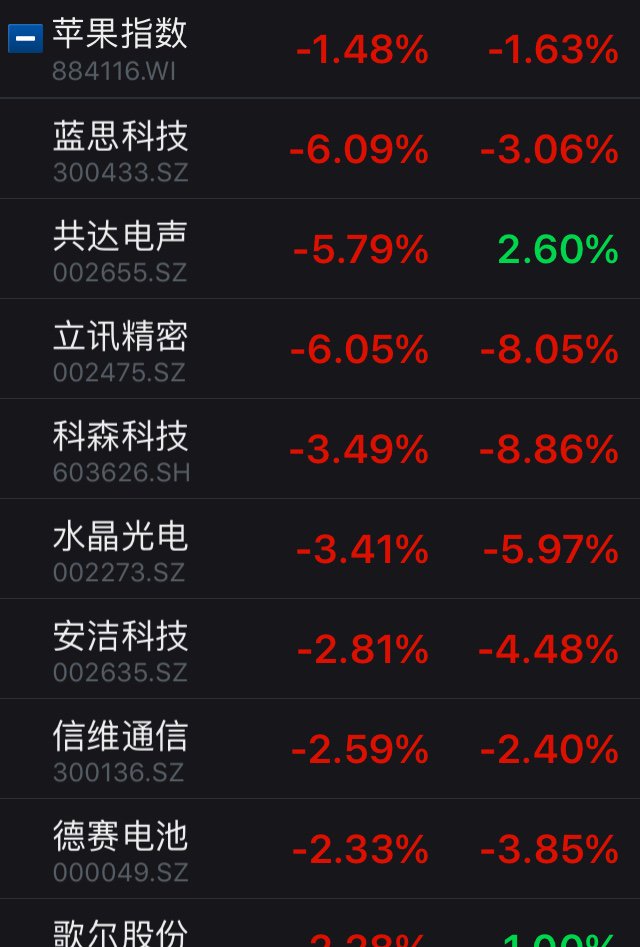
The biggest Asian losers were Apple suppliers after the Taipei-based Economic Daily News reported that Apple has cut its sales forecast for the iPhone X by 40% from 50 million in Q1 to only 30 million. The report also noted that Foxconn’s Zhengzhou plant stopped recruiting workers. Following the news, Apple supplier Lens Technology Co. dropped 8.4% to be among worst performers on the ChiNext measure; Shenzhen Sunway Communication Co. -2.2%, Luxshare Precision Industry and GoerTek both dropped at least 4%. As the table below shows, it was a sea of red for Apple suppliers.

#Apple suppliers are trading lower after #Taiwan media reported that Apple cut forecast of #iPhone X sales in Q1 2018 to 30mln units from prev 50mln units.

  • Replies

  • 3333 Retweets

  • 2424 likes


Offsetting the drop in tech names was strength among property firms: Gemdale rose 6.3% as the best performer on CSI 300 measure after Citic Securities analysts said that the planned strict implementation of property curbs in 2018 would boost industry consolidation and benefit big companies. Unless, of course, it ends up crippling the business for everyone in which case today's spike will promptly turn into a selloff.
Elsewhere in open Asian markets, Japan's Nikkei erased early losses and scraped out gains on Monday as expectations that the Bank of Japan would buy more exchange-traded funds (ETFs) offset drops by financial stocks, Reuters reported. Movements in Japanese equities were confined to a narrow range with foreign investor presence lacking due to Monday's closure of other major markets for Christmas; as a result, the Nikkei finished 0.16% higher at 22,939.18.

Of Tokyo's 33 subsectors, 10 were in the red, led by securities T and banking after their U.S. financial peers lost steam on Friday following their recent strong performance. Denim clothing store operator Jeans Mate 7448.T soared 20.2 percent after reporting that December existing store sales increased 13.2 percent from a year earlier. Furniture and interior goods seller Nitori Holdings 9843.T sank 6.4 percent after the company saw its operating profit for the nine months through to Nov. 20 rise a modest 0.3 percent to 70.4 billion yen ($621.58 million).

Cryptocurrency related shares slipped following recent wild swings in bitcoin. Internet provider GMO Internet which is engaged in the "mining" of bitcoin, fell 4.8%. Remixpoint, an operator of virtual currency trading post services, dropped 4%.
In FX, it was a quiet session, with the only major mover once again out of China, where the yuan surged over 240bp to hit 6.5514 per USD at one point, the strongest since mid-September. Earlier in the day, the PBOC raised the yuan’s fixing by 138bp to 6.5683 per USD, the highest since Sept. 20. The dollar was little changed against other major currencies on Monday in holiday-thinned trading while the cost of swapping the yen for the dollar jumped as banks scrambled to raise dollars for the year-end period.
With most currency trading centers except for Tokyo shut on Monday for Christmas, trading volume was less than 20 percent of the average for major currency pairs including the euro/dollar and the dollar/yen.
According to Reuters, the discount for buying the yen at future dates widened sharply as non-U.S. banks, which typically buy dollars now with sell-back contract at a future date, scrambled to procure greenbacks for the year-end. The one-week forward discount starting from Wednesday jumped to 0.23 yen from around 0.04 yen in the middle of last week.
“Because foreign banks are away and few market players are eager to offer dollars, the forward market is very thin,” said a currency trader at a major Japanese bank. “The market is very volatile and there are hardly any trades beyond one week."

(ZH) US Slashes United Nations' Budget By $285 Million Following "Stunning" Jeru

The United States announced a $285 million cut in the United Nations' "bloated" budget for next year, negotiated by UN Ambassador Nikki Haley. A statement by the United States Mission to the United Nations reads:


Today, the United Nations agreed on a budget for the 2018-2019 fiscal year. ‎Among a host of other successes, the United States negotiated a reduction of over $285 million off the 2016-2017 final budget. In addition to these significant cost savings, we reduced the UN’s bloated management and support functions, bolstered support for key U.S. priorities throughout the world, and instilled more discipline and accountability throughout the UN system.
Pleased with the cuts, Haley added "you can be sure we’ll continue to look at ways to increase the UN’s efficiency‎ while protecting our interests."

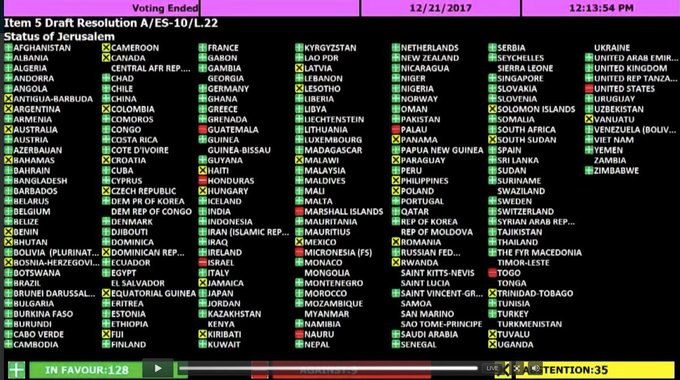
The move follows a contentious week at the U.N., after 128 nations voted in a "stunning rebuke" of President Trump's decision to recognize Jerusalem as the capital of Israel. Prior to the vote, Trump threatened to cut foreign financial aid to any countries who opposed the move - first with a tweet by Ambassador Nikki Haley threatening that the US would be "taking names," followed by comments made by Trump to reporters last Tuesday, according to Reuters.


U.S. President Donald Trump on Wednesday threatened to cut off financial aid to countries that vote in favor of a draft United Nations resolution against his decision to recognize Jerusalem as Israel’s capital.

“They take hundreds of millions of dollars and even billions of dollars, and then they vote against us. Well, we’re watching those votes. Let them vote against us. We’ll save a lot. We don’t care,” Trump told reporters at the White House.
Haley also circulated a letter to all UN member states effectively warning them not to vote against Trump's decision. "As you consider your vote, I want you to know that the President and U.S. take this vote personally," she wrote. "The President will be watching this vote carefully and has requested I report back on those countries who voted against us."
As we now know, this accomplished absolutely nothing:
Glenn Greenwald

✔@ggreenwald

The full UN vote - which the US & Israel lost 128-9, with 35 brave abstentions - is here:

  • 477477 Replies

  • 2,5412,541 Retweets

  • 3,9753,975 likes


As we wrote last week, The outcome of the vote was hailed as a "victory" by Palestine. “We will continue our efforts in the United Nations and at all international forums to put an end to this occupation and to establish our Palestinian state with east Jerusalem as its capital,” Abbas' spokesman Nabil Abu Rudainah said. Predictably, both Israel and the US were displeased.
The General Assembly vote came days after the U.S. vetoed a similar resolution in the U.N. Security Council. The panel's other 14 members voted in favor of that measure – a move that Haley called an "insult" to the U.S. Shortly after the Security Council vote, Arab and Muslim leaders at U.N. called for an emergency special session of the General Assembly to discuss the U.S.'s Jerusalem decision.
In a defiant speech ahead of the General Assembly vote on Thursday, Riyad Al Maliki, the Palestinian foreign affairs minister, cast the Trump administration’s Jerusalem decision as an affront on regional peace and security that has isolated the U.S. from the international community. “Does the United States not wonder why it stands isolated in this position?” he asked.
Turkey, which has led the Muslim opposition to the US Jerusalem declaration, was among the first to speak at the meeting. Turkish Foreign Minister Mevlut Cavusoglu stressed that only a two-state solution and sticking to the 1967 borders can be a foundation for a lasting peace between Israel and Palestine. The minister said that since Jerusalem is the cradle for the “three monotheistic religions,” all of humanity should come together to preserve the status quo.
“The recent decision of a UN member state to recognize Jerusalem as the capital of Israel violates the international law, including all relevant UN resolutions. This decision is an outrageous assault on all universal values,” Cavusoglu said.
The United States contributes approximately 22 percent of the U.N. budget - or around $3.3 billion, which President Trump asked the State Department to cut by over 50% in March.


U.S. officials in Washington and New York learned during the past week that they will be asked to find ways to cut spending on obligatory and voluntary U.N. programs by 50 to 60 percent from the International Organization Affairs Bureau’s account. State Department officials, for instance, were told that they should try to identify up to $1 billion in cuts in the U.N. peacekeeping budget, according to one source. The United States provides about $2.5 billion per year to fund peacekeepers. -Foreign Policy
U.S. diplomats warned key U.N. members during a March 9 meeting in New York to “expect a big financial restraint” on American spending – which is not surprising following President Trump’s comments from last December:

Donald J. Trump

✔@realDonaldTrump

The United Nations has such great potential but right now it is just a club for people to get together, talk and have a good time. So sad!

  • 15,26415,264 Replies

  • 21,44721,447 Retweets

  • 74,83074,830 likes

Donald J. Trump

✔@realDonaldTrump

As to the U.N., things will be different after Jan. 20th.

  • 14,58514,585 Replies

  • 32,71832,718 Retweets

  • 94,94594,945 likes

Ambassador Haley was clear in her comments after the budget cut, telling the press "We will no longer let the generosity of the American people be taken advantage of or remain unchecked," adding "This historic reduction in spending – in addition to many other moves toward a more efficient and accountable UN – is a big step in the right direction.