>>> What to look at today - 27th of December 2017

Dow -0.03% S&P -0.11% Nasdaq -0.34% Nasdaq +0.08%
US Market closed lower on very low volume, only 528mil shares traded. Europe was mostly closed on Boxing day. AAPL -2.5% on news of slower demand for iPhone X. Retail was better on Xmas data. WTI $ 59.90 +2.5% after explosion in Lybia, highest level since mid-2015, Energy sector +0.8%. huge reversal in bitcoin, which hit $16,000 after trading below $11,000 last Friday.  technology (-0.7%) and financial (-0.5%). US After Hours WATT +80% on FCC certification. Asian Market were mixed Wednesday in trading thinned by a holiday-shortened week with oil in focus. Japanese equity benchmarks posted slight gains, and Australian stocks were flat after a four-day weekend. China’s domestic shares dropped, while South Korea’s weathered a cratering in Hyundai Heavy Industries Co., after the world’s No. 2 shipbuilder announced a share sale that saw its price tumble as much as 29 percent. The euro and Aussie dollar rose against the greenback. Taiwanese shares ticked higher, with technology shares advancing. The gains suggested easing concerns about analyst downgrades of Apple Inc. iPhone X sales estimates, which sent the Nasdaq Composite Index lower overnight.

Nikkei +0.08% Hang Seng -0.01% CSI -1.60% Shanghai -1.05% Shenzen -0.69%

Eur$ 1.1881 CNH 6.5537 CNY 6.5564 JPY 113.20 GBP 1.3383 CHF 0.9890 RUB 57.5075 WTI$ 59.70 -0.45%

S&P +0.03% EuroStoxx -0.03% Dax -0.13% FTSE +0.17% SMI +0.16%

Macro :
- Emerging Markets’ Dream Run Could See a Reality Check in 2018
- Bond Investors’ Next Big Trade Is Betting on U.S. Homeowners
- World’s Wealthiest Gain $1 Trillion in ’17 on Market Exuberance

Keep an eye on :
- AAPL US : Apple China Suppliers Show No Sign of IPhone X Order Cuts: CICC
- SPR GY : *AXEL SPRINGER IS SAID IN TALKS TO BUY ZAP FROM APAX: GLOBES
- BWO NO : BW Offshore Says First Oil Produced by the BW Catcher FPSO
- FEYE US : FireEye Rises; The Information Mentions as Possible MSFT Target
- FRE GY : Drugmaker Ignored More Than 200 Bad Quality Tests, FDA Says
- PNDORA DC : Pandora Short Position Cut to 535,503 Shares at Maverick Capital
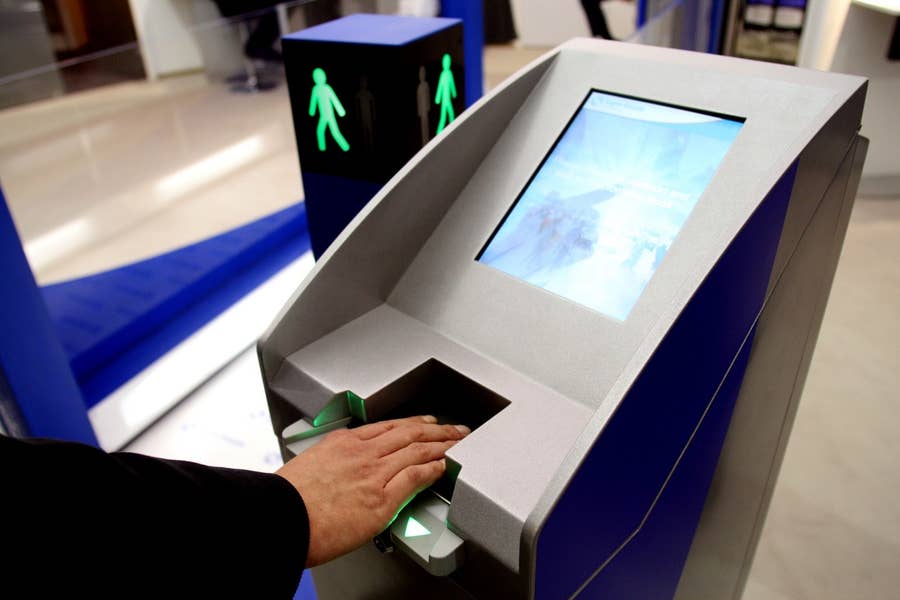
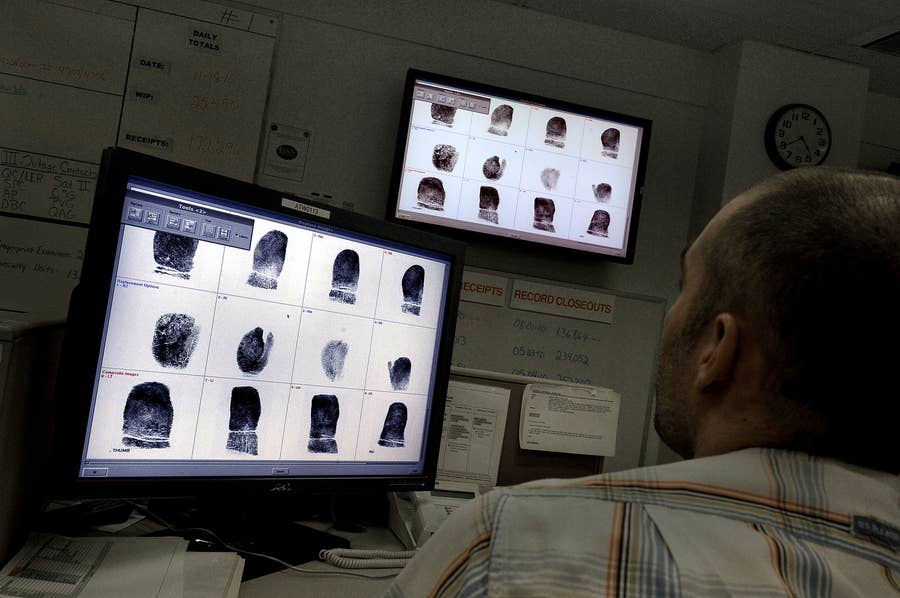
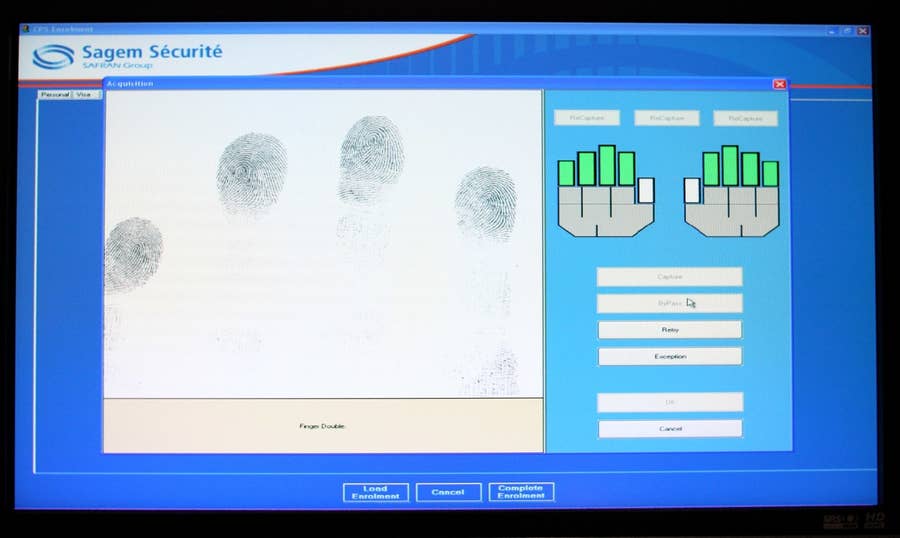
- SAF FP : Reportedly Safran concealed Russian code included in its fingerprint-analysis software that it sold to the FBI and US law enforcement agencies - Buzzfeed - http://bzfd.it/2CaZE2f
- SCMP US : Sucampo’s Low Deal Value May Trigger Additional Offers: Nomura
- TSLA US : Tesla Will Make Pickup Truck Right After Model Y, Musk Says
- FP FP : Total Says Elgin Franklin Offshore Production Has Resumed
- WATT US : Energous surges 60% on FCC certification for over-the-air, power-at-a-distance wireless charging

>>> Energous surges 60% on FCC certification for over-the-air, power-at-a-distan

Energous surges 60% on FCC certification for over-the-air, power-at-a-distance wireless charging
WATT had a market cap just under $200 mln and ~30% of the 15 mln share float is sold short

{WATT US Equity DES<GO>}

Receives industry-first FCC Certification for over-the-air, power-at-a-distance wireless charging; Approval marks major step forward for smart home, IoT and mobile devices Announced Federal Communications Commission (FCC) certification of its first-generation WattUp Mid Field transmitter, which sends focused, RF-based power to devices at a distance. As the first FCC certification for power-at-a-distance wireless charging under Part 18 of the FCC's rules, this development represents a new era of wireless charging, and opens up a tremendous opportunity for the electronics industry. 

Energous' WattUp Mid Field transmitter underwent rigorous, multi-month testing to verify it met consumer safety and regulatory requirements. As the first Part 18 FCC approved power-at-a-distance wireless charging transmitter, the certification marks a significant milestone for the consumer electronics industry and paves the way for future wireless charging ubiquity for nearly any small electronic device, including smartphones, tablets, fitness trackers, smart watches, earbuds, wireless keyboards and mice, smart speakers and more. 

The company's WattUp Mid Field transmitter can deliver power via radio frequency (RF) energy to WattUp-enabled electronic devices at a distance of up to three feet. As the only technology that can do both contact-based and non-contact-based wireless charging, as well as charge multiple devices at once, WattUp is highly scalable and automatically charges devices, as needed, until they are topped off. While older charging technologies allow for only contact-based charging, Energous is the only company to achieve Wireless Charging 2.0 to-date, which is the ability to charge devices both at contact (including fast charging large battery devices such as smartphones and tablets), as well as power-at-a-distance. Similar to WiFi, the WattUp ecosystem ensures interoperability between receivers and transmitters, regardless of the manufacturer, making the entire ecosystem flexible and accessible for consumers and manufacturing partners. 

This represents the first time FCC equipment certification has been awarded to any device that charges wirelessly at a distance, and operates under Part 18 of the FCC's rules. The FCC's Part 18 rules permit higher-power operations than are permitted under the Part 15 rules that have been used to approve other at a distance charging devices. 

The company will be demonstrating its very latest WattUp technology at CES 2018, the world's largest consumer electronics show, January 9-12.

>>> Asian Update

Asia Market Update: Equity volume remains light; China press explores 2018 outlooks

General Themes: Asia indices trade mixed, in line with the NY session
-Energy companies outperform
-Chipmakers in South Korea rebound
-World's Largest Shipbuilder Hyundai Heavy share price declines by record on capital raise
-PBoC skips OMO for 4th straight session amid signs of ‘high bank liquidity’ into year-end
-China Nov Industrial Profits grow at slowest pace since April

Australia
-ASX 200 opened flat: closed flat
-ASX 200 Resources Index +0.7%, Energy +0.7%; Financials -0.1%
-ORL.AU Enters binding deed with Mr J Will Vicars for proposed whole business outcome and continuation of operations
-RFG.AU Extended 3-year debt facility which was due to mature in Dec 2018 to 2020; reduces 5-year credit facility amount by A$25M; +9%

China/Hong Kong
-Shanghai Composite opened -0.1%, Hang Seng +0.2%
-Hang Seng Information Energy Index +1.8%, Property/Construction +1.8%; Technology -1%
-Herbal products firm Bawang International -30% (bankruptcy concerns)
-(CN) China Nov Industrial Profits Y/Y: 14.9% v 25.1% prior (slowest rise since April); China Stats Bureau cited prices for the slowdown in the data
-(CN) China Beige Book: industrial firms continued to ramp up output in Q4, wages and hiring dipped with the retail sector lagging other industries an acute hit on weak rev; see slower growth in 2018
-(CN) China State Researcher: China's economy hasn't bottomed out - China Daily
-(CN) China PBoC sets yuan reference rate at 6.5421 v 6.5416 prior
-(CN) PBoC OMO: Skips OMO v skips prior; Net drain CNY40B v CNY50B drain prior (4th consecutive skip)
-(CN) China Party Central Committee Meeting to hold plenary in January - Xinhua
-(CN) China 2018 registered unemployment rate may be 4%; surveyed unemployment 5% - China Securities Journal
-(CN) China NDRC on alert over surge in chip prices - China Daily
-(CN) China Tangshan City issues pollution alert for Tuesday – financial press (**note: Tangshan, home to dozens of steelmakers, is located in heavily-polluted Hebei province, China's biggest steelmaking region. Hebei produced 192.6 million tonnes of steel last year, nearly a quarter of the national total)
-(CN) China Information Daily: China will fight against online finance violations
-HNA Group: Bohai Capital unit received China CSRC approval to sell up to CNY4.0B in bonds
- (CN) China risk reduction efforts to focus on three main areas: state-owned enterprise leverage, local debt risk, and the asset management industry - Economic Information Daily
- (CN) Some China interbank deposit rates hit record high in December - China Securities Journal
- In China 734 bond issues have either failed or been canceled during the first 11 months of 2017, amounting to CNY586.6B v last year’s total canceled or failed issues worth CNY577.5B
- China Securities Journal discusses recent appreciation in yuan, driven largely by sharp drop in the US dollar index
-(CN) PBoC Adviser: forecasts yuan consolidation after recent gains - China press

Japan
-Nikkei 225 opened -0.2%; closed +0.1%
-TOPIX Securities Index +1.3%, Iron/Steel +0.7%
-J Front Retailing +7% (9-month profits +24%); Fast Retailing +1%
-Kawasaki Heavy Industries +7% (broker commentary)
- Japan govt reportedly could boost penalties for manufacturers who falsify product quality data - Nikkei
- Japan Center for Economic Research Survey shows expect avg CPI of 0.9% in FY18, higher than actual 0.6% rate achieved in the April-November period and the highest since FY08
- The number of IPOs in Japan in 2017 made it the second busiest year on record – Nikkei
-(JP) JAPAN NOV HOUSING STARTS Y/Y: -4.2% V -2.5%E; ANNUALIZED HOUSING STARTS: 951K V 934KE; Construction Orders y/y: 20.5% v +6.7% prior
Looking Ahead: Japan prelim Nov Industrial Production data due on Thursday

Korea
-Kospi opened -0.3%
-Hyundai Heavy -28% (announced KRW1.29T capital raise)
-Broad weakness in financial sector: Woori -3%, KB Financial -2.4%
-Chipmakers rebound from Tuesday’s declines: Samsung Electronics +1.2%, Hynix +1.9%
-LG Electronics +6.5%; Announces autonomous car partnership with Here Technologies
-Korean (KRW) trades at 2 ½ year high
-South Korea Dec Consumer Confidence: 110.9 v 112.3 prior
-China delays 3-way summit with Japan and South Korea – Yomiuri
- (KR) US Treasury announces sanctions targeting two North Korea officials
-(KR) According to Korea Economic Research Institute South Korean economy will likely take a hit from a reversal of top corporate tax rates in Asia's fourth-largest economy and the United States
-010620.KR Guides FY18 orders $3.0B, affirms FY17 orders $2.31B; -21%
Looking Ahead: South Korea Nov Industrial Production, Retail Sales and Service Sector Output data due on Thursday

Other Asia
- USD/TWD (TW) Taiwan Central Bank Deputy Gov Yang Chin-long: Taiwan Dollar (TWD) appreciation reflects US dollar weakness and the appreciation this year is not big
(TW) Taiwan Premier: Affirms sees 2018 GDP growth of 2.3%; to implement policy loosening and increase investment in 2018; Calls for higher salaries at listed companies.

North America
-US equities ended mixed: Dow flat, S&P500 -0.1%, Nasdaq -0.3%, Russell 2000 +0.1%
S&P500 Energy sector +0.9%; Technology -0.7%
-(RU) Russia said to limit US open skies access, starting Jan 1st; in response to planned US curbs
-(US) Pres Trump tweets: "All signs are that business is looking really good for next year, only to be helped further by our Tax Cut Bill. Will be a great year for Companies and JOBS! Stock Market is poised for another year of SUCCESS!"
-(LY) Explosion reported at Waha Oil pipeline feeding Es Sider terminal inLibya (production approx 260K bpd); Waha output reportedly down about 70K bpd after the incident - financial press

***Levels as of 01:00ET***
- Nikkei225 +0.1%, Hang Seng +0.1%; Shanghai Composite -0.3%; ASX200 flat, Kospi +0.3%
- Equity Futures: S&P500 +0.1%; Nasdaq100 +0.1%, Dax +0.2%; FTSE100 +0.3%
- EUR 1.1880-1.1855; JPY 113.36-113.17; AUD 0.7747-0.7724;NZD 0.7053-0.7029
- Feb Gold -0.0% at $1,287/oz; Feb Crude Oil -0.4% at $59.76/brl; Mar Copper -0.5% at $3.26/lb

>>> US Close Dow -0.03% S&P -0.11% Nasdaq -0.34% Nasdaq +0.08%


Closing Summary: Apple Deflates while Retail and Energy Stocks Inflate

It was a lackadaisical day of trading on Wall Street on many participants clearly found better things to do the day after Christmas than buy or sell stocks.  The trading proof of point was in the volume, which totaled just 528 million shares at the NYSE versus 650 million shares last Tuesday and 723 million shares the Tuesday before that.

The light participation was not a surprise as this is a popular vacation day (and week).  Major bourses in Europe were closed for Boxing Day, which contributed to the light volume.

There wasn't much news driving the market narrative, which revolved around the following:

  • Weakness in Apple (AAPL 170.57, -4.44, -2.5%) and many of its suppliers in the wake of press reports highlighting some analysts' concerns about iPhone X demand possibly being weaker than expected in the fiscal first quarter, which encompasses the holiday selling season
  • A nice move by many retail stocks after Mastercard Spending Pulse reported retail sales, excluding autos, rose at their strongest pace (+4.9%) since 2011 from November 1 through Christmas Eve.  The SPDR S&P Retail ETF (XRT 46.03, +0.52, +1.1%) reflected the relative strength of the retail stocks while Amazon.com (AMZN 1176.76, +8.40, +0.7%), which said it had its best holiday season ever, reflected the upbeat sales report.
  • The rise in oil prices ($59.90, +$1.43, +2.5%), which hit their highest level since mid-2015, spurred on by reports of a pipeline explosion in Libya that will curtail about 90,000 barrels per day from the OPEC nation.  That move led to some concurrent strength in the energy sector (+0.8%), which was the market's best-performing sector on Tuesday.
  • The huge reversal in bitcoin, which hit $16,000 after trading below $11,000 last Friday

For the most part, the broader market found itself pinned down by Apple's weakness and the weight of losses in the information technology (-0.7%) and financial (-0.5%) sectors, which are its two most heavily-weighted sectors.

Some curve flattening pressured the financials, yet that was more of an excuse for the weakness on a day when there wasn't a lot of substantive news to account for the price action.

The yield on the 2-yr note bumped up one basis point to 1.90% following a weak $26 billion 2-yr note auction; meanwhile, the yield on the benchmark 10-yr note slipped two basis points to 2.47%.

The S&P Case-Shiller Home Price Index for October was the only economic release of note.  It showed home prices in 20 major metropolitan cities increased 6.4% year-over-year (consensus +6.3%).

Wednesday's slate of data will feature the weekly Mortgage Applications Index at 7:00 a.m. ET, the Consumer Confidence report for December at 10:00 a.m. ET, and the Pending Home Sales report for November at 10:00 a.m. ET.

  • Nasdaq Composite: +28.9% YTD
  • Dow Jones Industrial Average: +25.2% YTD
  • S&P 500 +19.7% YTD
  • S&P Midcap 400 Index: +14.8% YTD
  • Russell 2000 +13.8% YTD

>>> Blockchain associated stocks surging as cryptocurrency market rebounds follo

Blockchain associated stocks surging as cryptocurrency market rebounds following correction late last week; Bitcoin reclaims $16K (+14%)

TEUM +81.89% IGC +77.03% INTV +51.35% UBIA +47.58% FTFT +45.98% LFIN +31.46% DIGAF +28.37% RIOT +27.81% GROW +15.72% GLNNF +14.09% DSS +13.27% PRELF +11.37% BLKCF +9.09% SSC +8.63% MGTI +7.99% CANN +6.14% OSTK +5.86% SING +4.82% XNET +5.29% OTIV +4.76% SGRP +4.27% MARA +3.83% SRAX +3.91%

>>> TSLA _ CEO Musk responding to a tweeted question: "I promise that we will ma

CEO Musk responding to a tweeted question: "I promise that we will make a pickup truck right after Model Y. Have had the core design/engineering elements in my mind for almost 5 years. Am dying to build it." 
- The truck will be "Similar total size [to Ford F150]. Maybe slightly bigger to account for a really gamechanging (I think) feature I’d like to add."
- In reply to another question Musk tweets: "Sustainable energy production with solar and batteries will grow much faster than auto on a percentage basis. That will be a big focus next year, with primary remaining Model 3 ramp." 
- Replying to criticism of Model S browser: "Yeah, it’s terrible. Had to upgrade old Linux OS and a bunch of drivers first. Major browser upgrades coming to all cars in a few months. Note, will be slower at first until code is optimized." 
- "Vastly better maps/nav coming soon"

FBI Software For Analyzing Fingerprints Contains Russian-Made Code (Safran)


FBI Software For Analyzing Fingerprints Contains Russian-Made Code, Whistleblowers Say
In a secret deal, a French company purchased code from a Kremlin-connected firm, incorporated it into its own software, and hid its existence from the FBI, according to documents and two whistleblowers. The allegations raise concerns that Russian hackers could compromise law enforcement computer systems.

The fingerprint-analysis software used by the FBI and more than 18,000 other US law enforcement agencies contains code created by a Russian firm with close ties to the Kremlin, according to documents and two whistleblowers. The allegations raise concerns that Russian hackers could gain backdoor access to sensitive biometric information on millions of Americans, or even compromise wider national security and law enforcement computer systems.
The Russian code was inserted into the fingerprint-analysis software by a French company, said the two whistleblowers, who are former employees of that company. The firm — then a subsidiary of the massive Paris-based conglomerate Safran — deliberately concealed from the FBI the fact that it had purchased the Russian code in a secret deal, they said.
In recent years, Russian hackers have gained access to everything from the Democratic National Committee’s email servers to the systems of nuclear power companies to the unclassified computers of the Joint Chiefs of Staff, according to US authorities.


Sergei Savostyanov / Sergei Savostyanov/TASS
The headquarters of the Russian cybersecurity company Kaspersky Lab.

This September, the Department of Homeland Security ordered all federal agencies to stop using products made by the Moscow-based company Kaspersky Lab, including its popular antivirus software, and media outlets reported that Russian hackers had exploited it to steal sensitive information on US intelligence programs. The department later clarified that the order didn’t apply to “Kaspersky code embedded in the products of other companies.” The company’s founder, Eugene V. Kaspersky, has denied any involvement in or knowledge of the hack.
The Russian company whose code ended up in the FBI’s fingerprint-analysis software has Kremlin connections that should raise similar national security concerns, said the whistleblowers, both French nationals who worked in Russia. The Russian company, Papillon AO, boasts in its own publications about its close cooperation with various Russian ministries as well as the Federal Security Service — the intelligence agency known as the FSB that is a successor of the Soviet-era KGB and has been implicated in other hacks of US targets.

“The fact that there were connections to the FSB would make me nervous to use this software.”


Cybersecurity experts said the danger of using the Russian-made code couldn’t be assessed without examining the code itself. But “the fact that there were connections to the FSB would make me nervous to use this software,” said Tim Evans, who worked as director of operational policy for the National Security Agency’s elite cyberintelligence unit known as Tailored Access Operations and now helps run the cybersecurity firm Adlumin.
The FBI’s overhaul of its fingerprint-recognition technology, unveiled in 2011, was part of a larger initiative known as Next Generation Identification to expand the bureau’s use of biometrics, including face and iris recognition technology. The TSA also relies on the FBI fingerprint database.
In hopes of winning the FBI contract, the Safran subsidiary Sagem Sécurité, later renamed Morpho, licensed the Papillon technology to boost the performance of its own fingerprint-recognition software, the whistleblowers said. Both of them worked for Morpho: Philippe Desbois was the former CEO of the company’s operations in Russia, and Georges Hala worked for Morpho’s business development team in Russia.


Jean-paul Ney / Getty Images
Sagem presented a new biometric passport in 2007.

BuzzFeed News reviewed an unsigned copy of the licensing agreement between the French and Russian companies, which both men said they had obtained while working for Morpho; it is dated July 2, 2008 — a year before the company beat out some of the world’s largest biometrics firms, including an American competitor, to secure the FBI business. It grants Sagem Sécurité the right to incorporate the Papillon code into the French company’s software and to sell the finished product as its own technology. It also stipulates that Papillon would provide updates and improvements during the five-year period that ended on the last day of 2013. In return, Sagem Sécurité agreed to pay an initial fee of roughly 3.8 million euros — equivalent to almost $6 million at the time — plus annual fees.

Got a tip? You can email tips@buzzfeed.com. To learn how to reach us securely, go to tips.buzzfeed.com.


The contract, which is also referenced in court documents, says that to Papillon’s knowledge its software does not contain any “undisclosed ‘back door,’ ‘time bomb,’ ‘drop dead,’ or other software routine designed to disable the software automatically with the passage of time or under the positive control of any person” or any “virus, ‘Trojan horse,’ ‘worm,’ or other software routines or hardware components designed to permit unauthorized access, to disable, erase, or otherwise harm the software, hardware, or data.”
The contract reviewed by BuzzFeed News also contains a section titled “Publicity” that says, “The parties agree to keep strictly confidential and not to disclose by any means to any third party the existence and the contents of this Agreement.”
Desbois — who has filed a whistleblower lawsuit in federal court accusing Safran of fraudulently collecting about $1 billion from federal, state, and local agencies — said at least three high-level company officials stressed to him on multiple occasions that the existence of the agreement needed to remain a closely held secret. Disclosure, he said he was told, might jeopardize contracts in the US market, which the company coveted.

“They told me, ‘We will have big problems if the FBI is aware about the origin of the algorithm.’”


“They told me, ‘We will have big problems if the FBI is aware about the origin of the algorithm,’” he recalled.


Neither Desbois nor Hala was personally involved in the integration of Papillon code into the French company’s products or the sale of the software to the FBI, but both said they had conversations with engineers who did work on the integration. Desbois said multiple company officials told him that the technology sold to the FBI contained the Papillon algorithm.
“You know the word omertà?” Desbois said, referencing the Mafia code of silence made famous by the movie The Godfather. “It was always the intonation like we have done something bad that is a secret between us and that we should not repeat it to anybody.”


Jean-paul Ney / Getty Images
Sagem demonstrated a new biometric passport in 2007.

“Deep collaboration”
In promotional material and on its website, Papillon boasts of its work with Russia’s Ministry of Internal Affairs, which oversees police and immigration agencies, among others, and is run by a longtime police official who was appointed to the post in 2012 by President Vladimir Putin. The products that Papillon sells “are created with the instructional assistance” of the ministry, and the company is “closely cooperating with the Ministry of the Interior, Ministry of Defense and Ministry of Justice of Russia,” according to company publications. A Russian government website says that the Internal Affairs Ministry “renders methodic assistance” to Papillon.
“Papillon is not an independent company,” said Hala, one of the whistleblowers. “Papillon was an emanation of the Internal Affairs Ministry, so Papillon was always under the control of the ministry.”
Papillon’s deputy director for marketing, Ivan Shapshal, disputed that. “We are fully a private company,” he said. “Do we do special tasks for the intelligence agencies of Russia? No, there is no reason for us to do this. It is just a risk. It does not help us make money.”
Among the Russian agencies that use the company’s fingerprint-recognition technology is the FSB. “Year by year,” one Papillon publication says, “the company expands its cooperation with” the FSB, as well as Russian agencies in charge of immigration, customs, and drug control. Other clients include the governments of Turkey, Kazakhstan, Serbia, and Albania.

“We will be happy to be close to any security agency in the world for money.”


Shapshal said his company’s fingerprint-recognition technology helps Russian police solve roughly 100,000 cases per year. “If our software can help police solve more crimes, we are happy to be ‘very close’ to them, as you say,” he said. “We will be happy to be close to any security agency in the world for money.”
Papillon’s founder and director is Pavel Zaitsev, who worked as an engineer and programmer at Russian military installations from 1985 to 1991, according to a biography published with an article he wrote for a trade publication. Many of the company’s staffers, a Russian government website says, “gained experience working at the plants of Military-Industrial Establishment in Miass” — the city in the Ural Mountains where the company later established its headquarters.
Hala said there was “deep collaboration” between Papillon and the FSB. “It’s not a secret,” he said. Hala said he attended multiple meetings involving Russian government officials and Papillon executives in which FSB officials expressed strong support for Papillon and “controlled absolutely the discussion.”
The Internal Affairs Ministry, the FSB, and the Russian Embassy in Washington, DC, did not respond to requests for comment.
Neither the FBI nor any of the companies involved denied directly that the fingerprint software used by the bureau contains Russian code.
The FBI declined to answer repeated questions about the software but said in a statement, “As is typical for all commercial software that we operate, appropriate security reviews were completed prior to operational deployment.”
Safran declined to respond to questions about its actions as owner of the subsidiary that provided the software to the FBI, noting that it has since sold that subsidiary. But in legal filings, Safran has not denied the existence of the contract to license the Russian code, instead arguing that the allegations of fraudulent sales were not specific enough and that the company was not legally responsible for the actions of its subsidiary.


Safran sold the subsidiary this year to a US private-equity firm, which renamed the company Idemia. An Idemia spokesperson said the fingerprint-recognition technology was “almost entirely developed and manufactured in France or in the United States” but that two software components contained source code developed “by other companies.”
The spokesperson, Céline Stierlé, refused to name those companies.

“We don’t comment on such things because we cannot confirm or deny.”


More broadly, she said the whistleblowers’ claims “are old allegations that are not supported by facts and that have been rejected by federal and state authorities and by the courts,” referring to the lawsuit filed by Desbois, one of the former employees who spoke with BuzzFeed News.
This year, a federal judge dismissed the case but did not evaluate the merits of most of the allegations. Instead, the judge focused on technical issues, finding that the suit hadn’t alleged enough specifics about, for example, when and how fraudulent claims for payment may have been submitted to the government. Also, the judge wrote, any false claims would have been submitted by a subsidiary that was not named as a defendant in the case — and the parent companies that were named couldn’t necessarily be held legally responsible. The case is on appeal.
As for the Russian company, Papillon, executive Shapshal responded to a question about the contract giving the French company rights to its code by saying, “We don’t comment on such things because we cannot confirm or deny.”
But he insisted that the company’s code did not include any vulnerabilities, saying that if anyone were to check “then you will see there is no back door.”


Regis Duvignau / Reuters
A Safran Group building in France.

“Weigh carefully the risks”
As the FBI evaluated the companies vying to provide the fingerprint-recognition software in 2009, the possibility that the contract might go to a company subject to influence by a foreign government, even an ally, unsettled some members of Congress. The part-ownership of Safran by the French government prompted a letter to then-FBI director Robert Mueller from Rep. John Kline of Minnesota, a Republican member of the House Intelligence Committee.
“Allowing a foreign government to provide services regarding sensitive information to our law enforcement and intelligence communities could potentially pose a grave counterintelligence threat to the US government,” Kline wrote. “I urge the FBI to assess whether any domestic companies are capable of this work and weigh carefully the risks versus the benefits of granting a foreign government access to this sensitive data.”

“Allowing a foreign government to provide services regarding sensitive information to our law enforcement and intelligence communities could potentially pose a grave counterintelligence threat.”


An FBI spokesman at the time said that the bureau “assesses all risks and vulnerabilities associated with any foreign influence or security concerns for vendors under consideration for contracts, including subcontracts, with the FBI.”
Later that year, the FBI and Lockheed Martin — the primary contractor in charge of incorporating various vendors’ products into the bureau’s system — announced the selection of a Morpho subsidiary, MorphoTrak. Among the competitors not chosen was the US company Cogent Systems.
A Lockheed Martin spokesman refused to discuss the contracting process and said the company had divested its unit responsible for the FBI program. A representative for Leidos, which is now the project’s primary contractor, declined to comment.
Desbois’s whistleblower lawsuit alleges that a US-based MorphoTrak engineer named Frank Barret was aware of the Papillon deal and led a team that helped prepare the software for use by the FBI. On the front step of his home in California, Barret refused to read and respond to the allegations in the complaint but said, “Everything I’ve said to the investigators, everything I’ve said in this trial, is true.” Asked to clarify, he closed his front door. When BuzzFeed News followed up the next day, Barret threatened to call the police.
Both Desbois and Hala said they discovered the existence of the agreement licensing the Russian company’s code after they questioned their bosses’ instructions not to compete with Papillon for certain contracts. It was then, they said, that company officials explained that the two companies had an unwritten agreement not to encroach on each other’s business in certain countries — an arrangement that violates antitrust laws, the whistleblower claim alleges. Desbois and Hala said that they obtained a copy of the licensing agreement because they wanted to see for themselves whether it spelled out the terms of the noncompete pact; it did not.
Papillon executive Shapshal declined to comment on the antitrust allegations. Idemia spokesperson Stierlé said that “this allegation, like the others, was part of the litigation” and that “it too was found to be deficient and lacking in even the most basic level of detail and was rejected by the court.” Actually, the judge found that the whistleblowers’ allegations did not provide specifics on who falsely certified to the US government that the company hadn’t violated antitrust laws, or when and how this had occurred.
Desbois’s whistleblower lawsuit accuses Safran of defrauding the US government out of about $1 billion, and if the suit is successful he stands to collect millions. Hala is not involved in the case. Both Desbois and Hala said they left Morpho voluntarily and on good terms.


The Washington Post / Getty Images
Inside the FBI's background check center.

The federal government so far has declined to intervene in the lawsuit, as it has the option to do in whistleblower suits alleging fraudulent claims for payment. In court filings, however, Justice Department lawyers noted that this wasn’t necessarily an indication that the case lacked merit, and they preserved their right to step in later. The complaint also accuses the defendants of misrepresenting the fingerprint technology in sales to the government of California; lawyers for the state also have declined to intervene.
The FBI contract is now a centerpiece in much of MorphoTrak’s marketing material. In 2011, the FBI said the new fingerprint-recognition software significantly increased both the speed and accuracy of matches, boosting the latter from 92% to more than 99.6%.

“In terms of prestige, to be able to say ‘My technology is used by the FBI,’ it really helps with sales.”


“In terms of prestige, to be able to say ‘My technology is used by the FBI,’ it really helps with sales,” said former employee Stephane Guichard, who led a US-based team that implemented and maintained the fingerprint-matching software for state and local agencies that had purchased it but was not involved in the software’s development or the FBI contract.
Guichard and two other former MorphoTrak employees who worked on government contracts in the US said they didn’t know about the licensing agreement with Papillon, and they expressed surprise that their former employer would use Russian technology. “Personally, it would have concerned me a little bit,” said Phillip Moore, who worked as an account manager and sales manager. It would have raised “basic trust issues with what they would supply us,” he said.
By the end of 2013, as the final stage of the FBI project phase-in became operational, Morpho reported that the US market accounted for more than a third of its roughly $2 billion in revenues.
Safran recently announced that it planned to refocus solely on aerospace and defense, and, earlier this year, it sold Morpho, which had recently been renamed Safran Identity & Security, to the US private-equity firm Advent International, with the French government investment bank Bpifrance also taking a stake. The reported price was about $2.5 billion.
The company, now named Idemia, has provided fingerprint-recognition software to the Department of Defense and agencies in 28 states and 36 cities or counties across the US — from the Orange County Sheriff’s Department to the New York Police Department. Through its subsidiaries, Idemia is a powerful lobbying force in Washington, and it is currently fighting to kill legislation that would endanger its status as the sole provider of fingerprint services for the TSA PreCheck program.

NYP : Psychics may hold the answer to Wall Street’s future

Psychics may hold the answer to Wall Street’s future

If you’re convinced that the “normal” techniques for calling the market just aren’t cutting it anymore, you might consider the paranormal.

Psychic intuition and planet-based predictions get dismissed as hopelessly flaky fare on Wall Street, but that hasn’t stopped a slew of astrologers, spiritualists and old-school soothsayers from weighing in on what 2018 has in store for investors.

“Uranus has the habit of breaking the status quo and all the rules,” advises Olga Morales, founder of Astrology for Gann Traders, a group that uses the zodiac to guide investments.

“Therefore, we’ll see Saturn (governments) trying to control the revolutionary spirit of radical Uranus,” Morales told The Post.

Translated into investor speak, that means stocks could get bumpy even as market regulations get scaled back by President Trump and the Republicans — at least, according to the planetary cycles.

Henry Weingarten, whose New York-based Astrologers Fund promises its clients a “stellar performance,” says this year’s surge in the Dow was all about Trump and the planets — and that they’re aligned for more gains to come.

“That 25-percent increase is primarily due to Trump and his horoscope,” Weingarten declared during a Web seminar he hosted the day of the winter solstice.

“Last year, he was under double Jupiter,” Weingarten said of Trump. “This year, he’s under Jupiter/Neptune. The sky’s the limit.”

Still, the planet-minded stock picker admits, “we may have a sell in April, and maybe a little sooner.” In commodities, Weingarten says he’s “long copper for both fundamental reasons and astrological reasons.”

While some monetary oracles look to the stars, others have visions that are financially focused.

Laura Day, who doesn’t like to be called a psychic, says she works with firms, traders, and occasionally investment novices to channel the future of specific companies and markets. “I literally see things,” she told The Post. “Often I’ll see world events coming up that [clients] would have no other way to predict.”

One topic that keeps coming up is bitcoin — and Day sees a future for the digital currency.

“I personally would not write off that market,” Day said. “Because of what’s happening politically in our world, the concept is one that endures.”

On the whole, market forecasts from astrological and psychic sources don’t appear to have fared any better than those from more traditional methods of number-crunching and dart throwing.

And last year, it should be noted, the biggest banks missed major events that roiled the markets, including Trump’s election, Brexit, and Dow 20,000.

Next year, Goldman Sachs predicts the S&P 500 could rise to 2,850 points, while the Bank of Montreal sees 2,950, thanks to the Trump tax cuts and higher corporate profits.

Meanwhile, Wall Street soothsayers — whether normal or paranormal — seem to agree about the outlook for the non-investing average Joe.

“The everyday person who works for a paycheck is the person who it looks like is going to have the hardest time,” Day predicts.

(ZH) Amazon And Google Employees Busted In Asian Sex Trafficking Sting

Amazon And Google Employees Busted In Asian Sex Trafficking Sting


Several Seattle employees of both Google and Amazon were busted after using their corporate accounts to send emails to local brothels and pimps looking to purchase services from sex workers trafficked from Asia, according to emails obtained by Newsweek.


"[E]mails obtained by Newsweek reveal another sordid corner of the tech sector’s treatment of women: a horny nest of prostitution “hobbyists” at tech giants Microsoft, Amazon and other firms in Seattle’s high tech alley."
Many of the emails were swept up in a 2015 sting operation which targeted online chat rooms and message boards in which customers rate sex workers - resulting in the arrest of 18 of these "prostitution hobbyists," including several high level Amazon and Microsoft directors - two of which are currently scheduled for trial in March.

Seattle brothels had been catering to Microsoft employees through several "backpage.com" ads located nearby the company's Redmond, WA headquarters, in what is becoming a booming business.


A study commissioned by the Department of Justice found that Seattle has the fastest-growing sex industry in the United States, more than doubling in size between 2005 and 2012. That boom correlates neatly with the boom of the tech sector there. It also correlates to the surge in high-paying jobs, since this “hobby” (the word johns use online to describe buying sex) can be expensive: some of these men spent $30,000 to $50,000 a year, according to authorities.

The tech sector has not only employed a significant number of men who pay for sex with trafficked women, it has also enabled traffickers to more easily reach customers and to hide their business from cops by taking it off the streets and into computers and ultimately, hotel rooms, motels or apartments. In one 24-hour-period in Seattle, an estimated 6,487 people solicited sex on just one of the more than 100 websites that connect buyers with sellers, according to a 2014 study.
Of note, Backpage.com shut down its adult sections in January, citing government pressure following a 2016 Senate report on commercial sex services fingered the website as a hotbed for criminal activity, and stating that "Backpage officials have publicly acknowledged that criminals use the website for sex trafficking, including trafficking of minors."


Backpage.com CEO Carl Ferrer (Texas AG)
In October, 2016, Backpage CEO Carl Ferrer was arrested in Houston and the company's Dallas headquarters searched. NPR reported at the time that Ferrer, 55, was charged with pimping a minor, pimping and conspiracy to commit pimping. Two controlling shareholders of Backpage — Michael Lacey and James Larkin — also are charged with conspiracy to commit pimping."
The prostitutes trafficked from Asia typically don't speak much English, relying on translation apps to offer services such as "girlfriend" experiences and "Nuru" (nude massage). Many of the women are working their way out of debt bondage, and feared for their lives or those of their families - according to one pimp interviewed during the 2015 sting.
A spokesman for Microsoft said of the emails "Microsoft has a long history of cooperating with law enforcement and other agencies on combating sex trafficking and related topics, and we have employees who volunteer their time and money specifically to combat this issue as well. The personal conduct of a tiny fraction of our 125,000 employees does not in any way represent our culture. No organization is immune to the unfortunate situation when employees act unethically or illegally. When that happens, we look into the conduct and take appropriate action. Microsoft makes it clear to our employees they have a responsibility to act with integrity and conduct themselves in a legal and ethical manner at all times. If they don’t, they risk losing their jobs."
Amazon told Newsweek it's investigating the matter, and that "It is against Amazon's policy for any employee or Contingent Worker to engage in any sex buying activities of any kind in Amazon's workplace or in any work-related setting outside of the workplace, such as during business trips, business meetings or business-related social events.' When Amazon suspects that an employee has used company funds or resources to engage in criminal conduct, the company will immediately investigate and take appropriate action up to and including termination. The company may also refer the matter to law enforcement."