Will artificial intelligence destroy poker?
Artificial intelligence has by now been linked with pretty much every imaginable line of business. As a concept, it risks being diluted into oblivion.
So it’s a breath of fresh air when someone provides concrete details of the changes AI technology is driving – usually at the fringes of business models.
Morgan Stanley has a new piece of research out this week, which covers “the development of superhuman artificial intelligence beating professionals at poker”, which it says poses a risk to the online gaming ecosystem.
Computers have already reached “superhuman” levels at limited version of the game, such as two-player pot limit poker (which limits the range and size of bets massively). They have of course already reached this level for pattern-intensive games like chess, checkers, Go, and rock paper scissors.
Scientists at Carnegie Mellon have been working on a poker artificial intelligence program that they say is better than human professionals at six player games, with no pot limits. It’s called Pluribus, and its strategy was developed over eight days at a “cloud computing cost” of $144. From the report:
Poker has in general been especially difficult for AI given the computer doesn't know the cards their opponents have, and it involves a level of deceit or bluffing. Pluribus' approach, outlined below, is a milestone in AI development and for poker, which could, in Brown & Sandholm's view, be adapted "to basically any other form of poker" including, say, nine player variants or tournaments.
Pluribus’ strategy is based on self play, which was also used for backgammon, Go, and Starcraft 2. It also uses “abstraction”, where slightly different hands or bets are treated as the same thing, to reduce the complexity of the game.
The broader implication here is one that will be familiar to anyone who has played online chess: the risk of players using software on their computers to assist their decision-making. (It’s not clear from the report that the new technology is definitively better than human experts, by the way).
One full-time player we spoke to says bots are already very common on poker sites. The Morgan Stanley report mentions that professionals see them as “relatively easy to spot” (and often a source of easy money), but the same is probably not true for the generic “net depositor” player, from whom the bulk of revenues are ultimately sourced.
If these amateur players stop seeing poker as a game of skill, Morgan Stanley argues, that poses a risk to the revenues they provide. A bigger threat is to the professional players, as their expected returns would fall if bad players use better software.
One striking aspect of the report is the response of the platforms. Major players like PokerStars have “dedicated integrity units” devoted to identifying bots, and partypoker has closed over 500 bot accounts since December. This is highly reminiscent of other parts of the online economy, particularly Amazon reviews. Amazon says it uses “machine learning” to analyse incoming and existing reviews, and estimates that 90 per cent of inauthentic reviews are computer generated. Glassdoor, the employee review site, uses similar language.
Basically, any business based around moving human behaviour on to the internet stands to be impacted (for better or worse) by software that replicates that human behaviour. Games of software cat and mouse are likely to have political and economic ramifications far beyond the relatively small niche of online poker.
That world is edging towards a dystopian scenario, where people sit inactive in front of screens, playing Pluribus against Pluribus rather than poker, like some kind of self-driving car race. But don’t worry, a tech company will soon come along with a radical solution: the pictures on cards will be printed out on organic materials, so that you can hold them in your hand, maybe in a saloon, and play without the risk of algorithmic interference.
Pierre Lagrange: ‘What I’ve done is disruption with respect’
The maverick hedgie on making suits badass, the case for capitalism — and coming out at 48
Shortly before my encounter with surely the City’s zaniest financier, Pierre Lagrange sends a mischievous message. He has had “another cool idea”. We are to scrap the plan to meet in his Mayfair club. Instead we should lunch at his tailor — and it is his tailor. It is six years since he startled the worlds of fashion and finance by buying Huntsman, then the stuffiest of gentleman’s outfitters. I am, he says, to go to the boardroom, which was “totally wrecked” in an action sequence in the second Kingsman spy movie.
So it is that on a hot summer’s day I trot along Savile Row and into the Huntsman showroom, past two stags’ heads and rolls of dandyish tweed and up a flight of stairs. It’s easy to see how director Matthew Vaughn was inspired to make the Kingsman films after being fitted for a suit here.
The Kingsman conceit is simple. Outwardly it is an old-school tailor; in fact it is the front for a network of secret agents funded by eccentric financiers. My lunch companion fits the script. On paper the 57-year-old Belgian is a financial nerd: an engineer who made a fortune tearing up the rules of investment management as one of the early super successful “hedgies”. But his back-story is rather edgier: innovator, fashionista, iconoclast, Harley rider and more. And secretive his HQ certainly is.
I rattle at the door at the top of the stairs. No answer. Back down a threadbare red-carpeted flight of stairs I go. Only this time I stop on the first floor landing. Ah. There is a handle, camouflaged in the Huntsman tweed wallpaper. I knock. The door swings open. There is Lagrange.
He is wearing his cavernous smile and a thigh-length deep blue jacket with shirt unbuttoned to the middle. We are surrounded by exotic costumes. For more than 150 years Huntsman has dressed royalty from the House of Hanover to Hollywood. Lagrange laughs when I ask if his purchase was a “classic” case of a financial titan getting bored and investing in a “plaything”.
“It’s completely fair,” he says. “When people saw me coming they just thought ‘OK. Someone else is coming to play . . . ’ But my rationale was slightly different.”
Lagrange was in his heyday a master of the universe. In 1995 he was one of three co-founders of GLG Partners as a unit of Lehman Brothers. They surfed the boom years with aplomb — spinning off from Lehman in 2000 and going public in 2007 — and then also the crash when banks all but shut down. They were bought in 2010 by Man Group for $1.6bn — not a good deal for Man as it transpired but that was not Lagrange’s problem. It was then that he became restless. He may be from a country synonymous with caution and calm, but this is a Belgian who likes to push boundaries whenever he can.
“When I was running the hedge fund a great friend of mine said you need to look to do something else too. I did to enrich my life. I’m interested in millions of things. I’m on the verge of Curious George sometimes. I’m just curious about everything.”
We are perched at the boardroom table. It has hosted many a memorable meal in the Kingsman movies — not least, spoiler alert, a dinner when the spymaster played by Michael Caine ends up drinking his own poison in a glass of Napoleonic brandy. But before we can eat we have to go shopping. We are soon striding back downstairs to Nathalie, a deli 10 minutes walk away.
As we weave through Hanover Square he enthuses about an interview he has just read in The New York Times with Jan Morris. The 92-year-old writer’s life story has particular resonance. She was raised as a man, married, had children, and then in 1972, aged 46, had gender reassignment surgery. At the age of 48, Lagrange, then married with three sons, realised he was gay.
“It’s an amazing article; it echoes for me. She is the same person and has a totally different existence . . . When I realised I was gay I was terrified. It was an extraordinary moment. I was terrified that people would not love me any more . . . and that people who trust me would not trust me any more.”
Nathalie’s manager races up to him. In a trice we have picked chargrilled broccoli with smoked paprika almonds, bulgar with graceburn feta and purple kale and a range of spicy salads. We delve into the wine enclave and opt for a 2016 Russian River Chardonnay.
As we march back with our goodies, we reflect on the digital disruption of the media. His advice is simple. “Either eat or get eaten.”
Early premarket gappersGapping up:
- VNCE +21.8%, CPRX +10%, MDC +6.5%, MDLA +4.7%, VRAY +4.7%, PK +3.8%, IIPR +0.8%, CELG +0.4%
Gapping down:
- PCYG -15%, ERII -11.5%, ARDX -6.4%, RLGT -1.5%, AVGO -0.5%
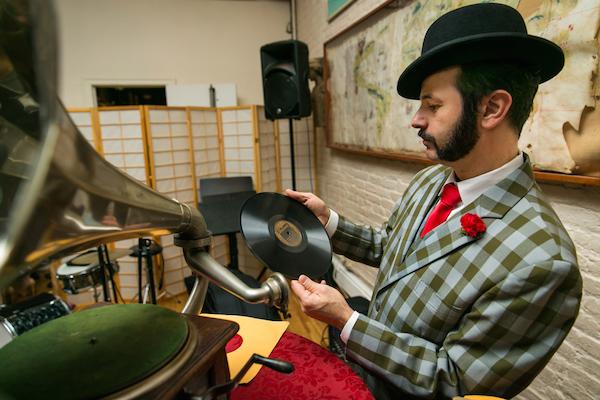
Vinyl Records Set To Outpace CD Sales For The First Time In 30 Years, Even Though They Suck
While streaming content has displaced all forms of physical media as the preferred medium for sonic consumption, nostalgia-driven audiophiles have driven Vinyl sales through the roof - at least compared to CDs.
According to the RIAA's 2019 mid-year revenue report published by Rolling Stone, LPs are on pace to outsell CDs this year, making them the most profitable form of non-streaming music for the first time since 1986.
Vinyl records earned $224.1 million (on 8.6 million units) in the first half of 2019, closing in on the $247.9 million (on 18.6 million units) generated by CD sales. Vinyl revenue grew by 12.8% in the second half of 2018 and 12.9% in the first six months of 2019, while the revenue from CDs barely budged. If these trends hold, records will soon be generating more money than compact discs. -Rolling Stone
That said, vinyl accounted for just four percent of total music revenues in the first half of 2019, while paid subscriptions to streaming services accounted for 62% of industry revenues according to the report.
"We welcome [the growth in vinyl]," said Warner Records co-chairman and CEO, Tom Corson. "It’s a sexy, cool product. It represents an investment in music that’s an emotional one. [But] it is a small percentage of our business. It’s not going to make or break our year. We devote the right amount of resources to it, but it’s not something where we have a department for it."
Rolling Stone notes that the resurgence in vinyl has been a boon for rock groups in particular. "The Beatles sold over 300,000 records in 2018, while Pink Floyd, David Bowie, Fleetwood Mac, Led Zeppelin, Jimi Hendrix, and Queen all sold over 100,000."
Opining on why vinyl sucks and the weird phenomenon of hipsters buying records is a 2016 article from Home Theater Review.
***
So what's the hype about vinyl these days? Vinyl is part of the cliché world of hipsters. If you don't know what a hipster is, I might suggest you don't read any further--as your world is likely better not knowing about this phenomenon. Those of us who have been to Brooklyn, Portland, or Silver Lake (and practically anywhere else in the country) in recent years can tell you that hipsters are a group of people who follow a certain "we're different" vibe, yet ironically they tend to follow many of the same trends. The men grow lumberjack beards, and they drive electric cars when their quirky bike has a flat. They enthusiastically eat Quinoa and kale and report to like it. The men wear berets (not raspberry or the ones you find in a second-hand store) and carry trendy messenger bags. The girls are apt to tattoo any and every part of their body and sometimes embrace hairstyles like "grandma hair"--where one bleaches out all of the color of one's hair and then dyes it gray, silver, or blue. Don't forget, any card-carrying hipster has his or her pair of thick-framed Warby Parker glasses.
On the plus side, hipsters love music, which is just fantastic. Live music--specifically, music festivals like Coachella and Bonnaroo--draw hipsters from all over the world to flaunt their style.
What's a head-scratcher about this new breed of music lover is the idea that, in every other aspect of their lives, they rock cutting-edge, high-resolution digital technology. They can't look away from their HD smartphones for any meaningful length of time. They've made the video-game industry bigger in terms of top-line sales than the motion-picture business. They love the potential of virtual reality, yet they are also the ones behind this resurgence in vinyl.
It's time for people who love music and have a taste for great-sounding audio to teach these young whippersnappers about HD music--because vinyl is a standard-definition, low-resolution format. Here, specifically, is why vinyl sucks.
Dynamic Range
Vinyl has a dynamic range of about 65 to 69 dB. In the days when vinyl ruled the world, much energy went into mastering vinyl releases to have better (or, at least, better perceived) dynamic range. If you go into a recording studio, mic a snare drum, and then hit it as hard as you can, you will record something in the 120- to 125-dB range. Vinyl reproduces roughly half of those dynamics. Compact Discs do drastically better in dynamic range, while HD files can reproduce ALL of the dynamics of a snare drum.
Vinyl has a dynamic range of about 65 to 69 dB. In the days when vinyl ruled the world, much energy went into mastering vinyl releases to have better (or, at least, better perceived) dynamic range. If you go into a recording studio, mic a snare drum, and then hit it as hard as you can, you will record something in the 120- to 125-dB range. Vinyl reproduces roughly half of those dynamics. Compact Discs do drastically better in dynamic range, while HD files can reproduce ALL of the dynamics of a snare drum.
Noise
Many listeners find the stereotypical sound of vinyl to be comfortable and reassuring. That "warmth" is because of second-degree harmonic distortion created by the stylus in the groves. This distortion is what keeps one from hearing all the pristine sound recorded on the master tape. Analog master tape in the studio doesn't have this kind (or volume) of distortion. The cracks and pops heard in vinyl come from flaws in the actual vinyl, as well as wear and dirt on the record. Hardcore vinyl lovers go to great lengths to keep the records clean and protected, which is wise on their part. The sad news is that, unlike a high-resolution digital file, vinyl will degrade over time as it's played.
Many listeners find the stereotypical sound of vinyl to be comfortable and reassuring. That "warmth" is because of second-degree harmonic distortion created by the stylus in the groves. This distortion is what keeps one from hearing all the pristine sound recorded on the master tape. Analog master tape in the studio doesn't have this kind (or volume) of distortion. The cracks and pops heard in vinyl come from flaws in the actual vinyl, as well as wear and dirt on the record. Hardcore vinyl lovers go to great lengths to keep the records clean and protected, which is wise on their part. The sad news is that, unlike a high-resolution digital file, vinyl will degrade over time as it's played.
My question is, given the amount of noise and distortion coming from an age-old source, why invest in a great, audiophile-quality amp or preamp? In effect, one is feeding it with a distortion-laden source component with poor dynamic range. It's tantamount to pumping 50-octane fuel into your new Lamborghini Aventador. Perhaps it's time to try out the higher-grade audiophile fuel, even if it costs a few bucks more, so that you can realize the potential of your music playback system.
Sent from Bloomberg Professional for Android
Sent from Bloomberg Professional for Android
Sent from Bloomberg Professional for Android
Jeffrey Epstein Used Opaque Charity Account at Deutsche Bank for Own Benefit
Gratitude America attempted to transfer money to St. Thomas foundation in lieu of Epstein paying Virgin Islands fine directly
When Jeffrey Epstein created his Gratitude America Ltd. foundation in 2012, the nonprofit’s purpose was to “support the expression of gratitude for the ideals of America,” according to incorporation records filed in the U.S. Virgin Islands.
Instead, the money that flowed through the nonprofit followed an opaque path that appears to be designed to generate tax benefits.
In one case, Mr. Epstein tried to use a donation from Gratitude America in 2017 to resolve a building violation on one of his Caribbean islands. The move was rejected.
The charity was funded with a $10 million gift in 2015 from financier Leon Black. The gift was made through a limited-liability company controlled by Mr. Black but didn’t bear his name. Gratitude America reported more than $1.8 million in charitable contributions in 2016 and 2017 combined, but some of the recipients listed in the charity’s filings said they never received any money. A spokeswoman for Mr. Black didn’t provide a comment.
Gratitude America banked through an account at Deutsche Bank AG , where Mr. Epstein was a customer in Deutsche Bank’s Key Client Partners group, which is reserved for the bank’s wealthiest and often most profitable customers, according to people who were close to the relationship. Members of the elite group have access to services including loans, trading desks and investment opportunities, people close to the bank say.
Mr. Epstein died by suicide last month in a Manhattan jail cell while facing federal sex-trafficking charges. Mr. Epstein’s finances, including his relationship with Deutsche Bank, have come under scrutiny amid the federal investigation, which is ongoing.
Deutsche Bank’s connection to Gratitude America and Mr. Epstein’s status at the bank haven’t been previously reported. The bank has said it is closely examining any business relationship with Mr. Epstein and is cooperating with all relevant authorities.
A lawyer for Mr. Epstein declined to comment.
Mr. Epstein amassed a fortune of more than $500 million over three decades through close relationships with several billionaire clients, including Mr. Black, who has said he hired Mr. Epstein for personal tax and estate advice. Mr. Black, the chief executive of Apollo Global Management Inc., was one of Mr. Epstein’s most prominent Wall Street clients and was one of a small number who had connections with Mr. Epstein after the guilty plea that were documented in public records.
In the years following his 2008 guilty plea on state prostitution charges to resolve a sex-trafficking investigation in Florida, Mr. Epstein announced millions of dollars in contributions through various nonprofits. Some of the reported donations never materialized, according to documents reviewed by The Wall Street Journal and people familiar with the matter.
Gratitude America’s activity could be of particular interest to federal investigators because transactions took place within the past five years—within the statute of limitations for fraud charges—and because they involved some of his closest associates. Two of his personal lawyers were on the foundation’s board, and his longtime accountant served as president. One of those lawyers, Darren Indyke, was named co-executor of Mr. Epstein’s estate in Virgin Islands court.
Tax records for Gratitude America show Mr. Indyke served as treasurer or vice president of the foundation since its 2012 founding.
Mr. Epstein was listed as Gratitude America’s president in the foundation’s 2012 incorporation records and in tax filings in several subsequent years. Although his name wasn’t listed on records in later years, he maintained control, according to people familiar with the matter.
Despite Gratitude America’s stated purpose, Mr. Epstein tried to use it to make a contribution to a nonprofit organization in St. Thomas, one of the U.S. Virgin Islands, in the hopes it would resolve a fine he faced from the Virgin Islands government, according to records and people familiar with the matter. If the payments were considered charitable donations, Mr. Epstein could have enjoyed a tax benefit.
Mr. Epstein had been cited in 2016 for violations tied to construction on Great St. James, one of his two private islands in the Virgin Islands. Instead of Mr. Epstein sending checks to the Virgin Islands government, Gratitude America and another Epstein foundation each wrote a $160,000 check to a Virgin Islands nonprofit, the St. Thomas Historical Trust, according to records. The Gratitude America check came from a Deutsche Bank account, and both checks were signed by Mr. Indyke, the records show.
Representatives of the St. Thomas Historical Trust said they never received the checks and weren’t aware of the checks’ existence until media reports this past summer.
“The representatives of Mr. Epstein would have liked the settlements to include the payments as charitable donations,” said the Virgin Islands planning department spokesman, Jamal Nielsen. “However, the department rejected the offer. The settlement had to be paid to the department.”
Mr. Indyke later signed a check to the department, from the other Epstein foundation, to cover the fine, the records show.
A person familiar with the transactions said the checks to the trust, which were issued at the orders of Mr. Epstein, stemmed from a misunderstanding: The department had called for some of the settlement to go toward a local preservation project, which Mr. Epstein thought was handled by the historical trust.
Some organizations listed as recipients of donations from Gratitude America said they didn’t receive money from the charity.
Gratitude America’s 2017 tax return says it made a $15,000 contribution to an Elton John charity with the same address as the Elton John AIDS Foundation. In a 2014 press release from a different Epstein foundation, Mr. Epstein is described as providing funding for the Elton John AIDS Foundation.
The Elton John AIDS Foundation has no record of a contribution from Mr. Epstein, Gratitude America or any organization affiliated with him, a spokesman for the Elton John nonprofit said. The spokesman couldn’t explain the 2014 press release, but said the Epstein foundation retracted it within days.
Gratitude America said it made a $75,000 donation to the Cancer Research Wellness Institute in California, according to the foundation’s 2017 tax return. A representative at the California nonprofit said it never received money from Gratitude America or any Epstein-connected entities.
On its 2016 and 2017 tax returns, Gratitude America listed donations to 27 entities, though some of them, including the Icahn School of Medicine, said they received donations from Mr. Epstein, but not from Gratitude America. A person close to the Bruce and Marsha Moskowitz Foundation confirmed it had received three $50,000 transfers from Mr. Epstein from 2015 to 2017. But the contributions are cited in the foundation’s tax returns as coming from Jeffrey Epstein/HBRK Assoc., a business in New York, not Gratitude America.
Deutsche Bank played a key role in Mr. Epstein’s financial dealings in recent years, helping him move millions of dollars in cash and securities through dozens of accounts, the Journal previously reported. The Gratitude America account, held with the German bank’s New York-based U.S. subsidiary, was among those the bank cut off in recent months, according to people familiar with the matter.
Banks typically pay extra attention to wealthy clients’ charities because sources and uses of cash can be difficult to trace and because charitable donations can have big tax benefits, according to experts in banking risk and tax evasion. Deutsche Bank managers knew Gratitude America was affiliated with Mr. Epstein, and the bank’s policy would have been to monitor the foundation’s cash flows closely, one of the people familiar with the matter said.
Deutsche Bank’s day-to-day relationship with Mr. Epstein was overseen by New York banker Stewart Oldfield, who joined Deutsche Bank in 2014 from Credit Suisse Group AG , according to people close to the bank. He advises wealthy and institutional clients, and inherited the Epstein relationship from another banker roughly three years ago, one of the people said. That banker, Paul Morris, left Deutsche Bank and is now with Bank of America’s Merrill Private Wealth Management in Manhattan, the person said.
Mr. Oldfield was closely involved in the decision late last year to sever Deutsche Bank’s relationship with Mr. Epstein, one of the people said. Mr. Oldfield declined to comment through a bank spokesman.