FT : R isks build in world’s largest bond funds

Risks build in world’s largest bond funds

Yield on Bloomberg Barclays US Aggregate bond index slips to 2.6%

US bond prices and record low yields have increased the risk of losses for investors © AP

Ultra-low interest rates and a flood of debt issuance by US companies have led to a silent accumulation of risks in some of the world’s largest bond funds.

Exchange traded funds managed by BlackRock, Vanguard, Charles Schwab and State Street control assets of about $140bn that follow the Bloomberg Barclays US Aggregate bond index, the most important benchmark in fixed income markets globally.

Additional trillions of dollars reside in mutual fund trackers and institutional mandates based on this index, known as the “Agg”, which plays a similar role for bond investors as the S&P 500 in the US equity market. Retail investors account for $1.7tn, up more than 180 per cent over the past decade.


But soaring US bond prices and record low yields have increased the risk of losses for investors in Agg tracking funds, according to GMO, the Boston-based fund manager. 

The US 10-year Treasury bond yield dropped to an all-time low at 1.47 per cent in September while the average yield across US investment grade bonds is currently hovering at a record low of 2.57 per cent.

As a result, the yield on the Agg has fallen to 2.6 per cent, which has led to a significant increase in its duration — the risk of losses if interest rates rise.

“The Agg is a portfolio that has turned prudence on its head,” said Peter Chiappinelli, a member of GMO’s asset allocation team.

Ultra-low interest rates have led to a massive increase in debt issuance by US companies, which has surpassed $13.6tn over the past decade, according to the Securities Industry and Financial Markets Association, a trade body. 

This has been accompanied by a deterioration in the quality of the corporate bonds held by the Agg, with more than half rated as BBB at a time when US companies’ capacity to service their debt from earnings has weakened. 

The real yield (after inflation) of the Agg is also close to zero and future returns are predicted to be lower than those achieved historically.

“The Agg offers some of the lowest expected returns in its history,” said Mr Chiappinelli.

BlackRock expects the Agg to deliver annualised returns of 1.8 per cent over the next decade.

BlackRock’s $74.3bn iShares US aggregate bond ETF, the largest exchange traded fund, which tracks the Agg index, attracted net inflows of $8.8bn last year. It returned 8.68 per cent in 2019 and has delivered annualised returns of 4.05 per cent since inception in September 2003. 

Vanguard's $259bn Total Bond Market Index fund tracks a modified version of the Agg index. This fund returned 8.82 per cent last year and has delivered annualised returns of 5.88 per cent since inception in November 1986.

Although Vanguard does not expect any material increase in returns from fixed income over the foreseeable future, it views US bonds as fairly valued because of loose monetary policy as well as the subdued outlook for economic growth and inflation.

“Expected returns for fixed income are modest, but this makes it all the more important to remember why you hold bonds in a portfolio in the first place - as ballast for portfolio’s equity risk. This hasn’t changed,” said Josh Barrickman, Americas head of fixed income indexing at Vanguard.


FT : Big drama in corporate bonds could be closer than you think

Big drama in corporate bonds could be closer than you think
Markets have gone back to the 1970s, when credit cycles were short and sharp

Corporate bonds can be dull. The period between 2004 and 2006, for example, was particularly tedious. Euro-denominated investment grade credit spreads — the extra yield over benchmark government bonds — were stuck in a narrow range of just 0.32 percentage points.

In 2020, many credit investors seem to think this unexciting pattern is back. Corporate bond spreads are already close to the floor of their trading range over the past 10 years, and there seems nothing on the horizon to make them widen. US and European growth is plodding along, and vigilant central banks are in the wings, ready to quash volatility as soon as it appears.

Yet such complacency is misplaced. Credit spreads are unlikely to move sideways for long, because cycles have become much more volatile since the global financial crisis.


In the 30 years before the 2008 crisis, a typical credit spread cycle lasted eight years. After widening for 18 months, spreads tended to tighten for two years, and then move sideways in a period of low volatility that could last up to five years.

In the past decade, however, cycles have shortened. The bear markets of 2007, 2011, 2015 and 2018 were swiftly followed by bull markets, while periods of sideways trading have become shorter.

To understand why cycles have contracted, investors need to go back further in history, to the dollar-denominated credit markets of the 1970s. Like Europe, the US also experienced long, drawn-out cycles in the 1980s and 1990s. In the 1970s, by contrast, US credit cycles were short and sharp — much like the cycles of the past 10 years.

Why have credit cycles returned to the patterns of the 1970s? Beards may be back, flares may be fashionable again, but the more important parallel between the two periods for investors lies in the level of government bond yields.

Nominal yields were high back then and have been low or even negative in the past decade; yet in both periods real yields were very low. Between 1973 and the end of 1979, real US bond yields — as measured by nominal 10-year yields, minus the annual inflation rate — averaged minus 0.3 per cent.

Between 1980 and 2010, real yields rose back to an average of 3.5 per cent, but over the last 10 years that average has dropped back to 0.6 per cent.

Real bond yields fell in both periods because of central banks. In the past decade, central banks depressed nominal yields below inflation rates by cutting short-term interest rates and purchasing bonds through quantitative easing. In the 1970s, governments did the same thing by capping nominal bond yields.

But why should low or negative real bond yields make credit spreads more volatile? There are two reasons. First, low real yields increase the propensity of companies to borrow. When nominal yields are at or close to the level of inflation, companies have to generate only very small real returns to cover their debt costs. Borrowing surges as a result. Although more leveraged balance sheets can be financed when yields are low, they do leave companies more vulnerable when the economy turns down.

At the same time, low real yields influence investor behaviour. Many of the buyers of bonds on both sides of the Atlantic are purchasing fixed-income assets to meet their liabilities. Insurance companies buy bonds to finance life insurance contracts, for example, while pension funds invest to provide retirement benefits. Both need positive real yields to generate the payments they have promised their investors. Therefore, as real yields in the government bond market fall, these investors move into riskier assets — like corporate bonds — to satisfy their needs.

Increased demand for borrowing from companies, along with increased demand for assets from investors, may look like a good match. But when supply and demand are finely balanced, small changes in the environment can lead to big changes in credit spreads. Investors know highly leveraged companies are vulnerable, so as soon as the outlook worsens, they head for the exit. Once the environment begins to improve, they flock back just as quickly, to get the extra yield that corporate bonds provide.

Instead of reducing the volatility of credit spreads, central bank policy is probably increasing it. The short credit spreads of the 1970s in the US returned to the longer, more normal cycles of the 1980s and 1990s only when Paul Volcker hiked interest rates and made US yields positive once more.

Global central banks still seem far from their “Volcker moment.” As a result, 2020 could be a much more exciting year for global credit markets than investors realise

(ZH) iMask? Companies Race To Build Next-Gen Facewear To Block Germs

iMask? Companies Race To Build Next-Gen Facewear To Block Germs

So, here's something you haven't heard unless you read ZeroHedge.
Several companies, as far as what we can see, are racing to build the next generation of wearable air purifiers for the face to block germs and dirty air, just because legacy masks aren't effective.
In the wake of the Covid-19 outbreak in China, South Korea, Japan, and quickly spreading across the world, personal protective gear sales had sharply moved higher in the last month, something we've documented on various occasions.
Earlier this month, we noted how Dyson patented a wearable air purifier that can also be used as headphones.


Now Ao Air's Atmos Faceware is the next generation of maks to block germs up to 50 times better than traditional masks currently on the market, reported AUT BioDesign Lab.
The company commissioned its own study (note: the research isn't published nor peer-reviewed) describes how Atmos Faceware is a much better solution against particulate matter than standard air filter mask certified by the National Institute for Occupational Safety and Health.
Ao Air claims Atmos Faceware is unlike traditional face masks because it doesn't require an airtight seal to be effective.
The new mask is considered an expensive choice and could be worn by the upper class while everyone else resorts to cheap 3M N95 masks. The new mask is expected to retail around $350-$400 this summer.
An emerging trend with the virus outbreak, wildfires, and leftist media claiming climate change is torching the world has been the explosion in protective gear sales.

AO Air and Dyson appears to be leading the push to blend technology into mask making.
Since Foxconn is getting into mask development, we're surprised Apple hasn't released plans for an iMask, or scheming Elon Musk hasn't touted a Cybermask.
To sum up, we could all be wearing masks one day – if you think that's crazy just look at what's happening across Asia. Mask wearing is coming to America – it's only a matter of time.

    (ZH) Researchers Find 61.5% Of Coronavirus Patients With Severe Pneumonia Won't

    Researchers Find 61.5% Of Coronavirus Patients With Severe Pneumonia Won't Survive

    Since the Wuhan coronavirus first appeared late last year, researchers have been studying it, though for the first month or so, only Chinese scientists had access to the data.
    But now that China has shared its data with the world, research has been appearing more quickly, with more opportunities for peer review.
    According to a study published in the Lancet on Friday, patients who are especially vulnerable to severe COVID-19 infections - a group that includes the very old, very young and those with co-occurring conditions - die at a higher rate from COVID-19 than they did from SARS and MERS.


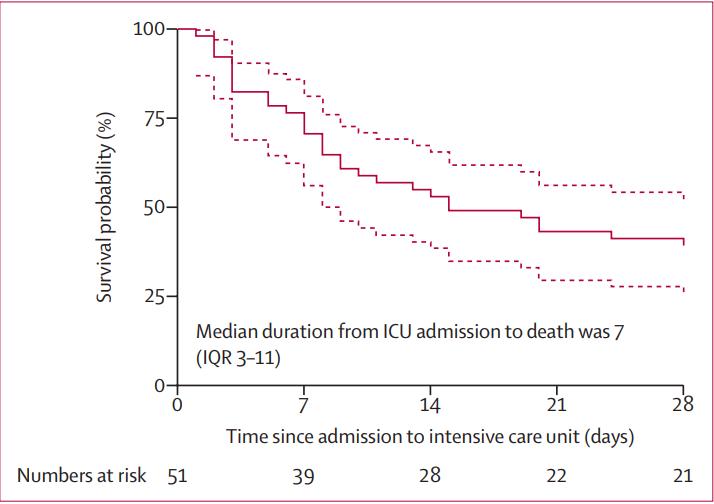
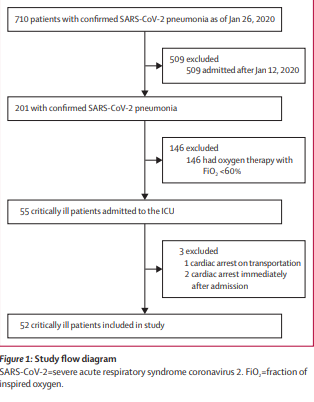
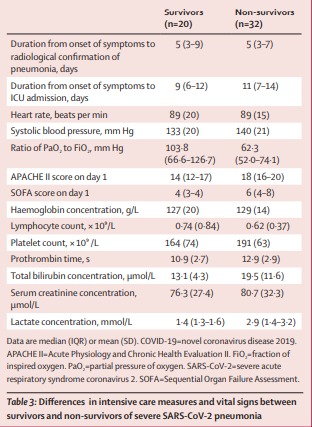
    A study of 52 critically ill adults at Wuhan Jin Yin-tan hospital found that 61.5% of patients requiring hospitalization and intense monitoring ended up becoming "non-survivors", to borrow some of the researchers' terminology.
    The researchers concluded that COVID-19 - or SARS-CoV-2, as they call it - is more lethal for vulnerable patients than SARS or MERS was.
    Like SARS-CoV and Middle Eastern respiratory syndrome (MERS)-CoV, SARS-CoV-2 is a coronavirus that can be transmitted to humans, and these viruses are all related to high mortality in critically ill patients.12 However, the mortality rate in patients with SARS-CoV-2 infection in our cohort is higher than that previously seen in critically ill patients with SARS. In a cohort of 38 critically ill patients with SARS from 13 hospitals in Canada, 29 (76%) patients required mechanical ventilation, 13 (43%) patients had died at 28 days, and six (16%) patients remained on mechanical ventilation. 17 (38%) of 45 patients and 14 (26%) of 54 patients who were critically ill with SARS infection were also reported to have died at 28 days in a Singapore cohort13 and a Hong Kong cohort,14 respectively. The mortality rate in our cohort is likely to be higher than that seen in critically ill patients with MERS infection. In a cohort of 12 patients with MERS from two hospitals in Saudi Arabia, seven (58%) patients had died at 90 days.15 Since the follow-up time is shorter in our cohort, we postulate that the mortality rate would be higher after 28 days than that seen in patients with MERS-CoV.
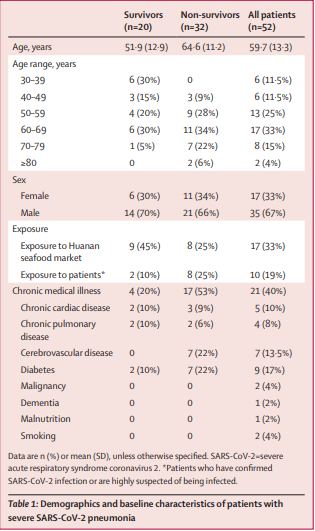
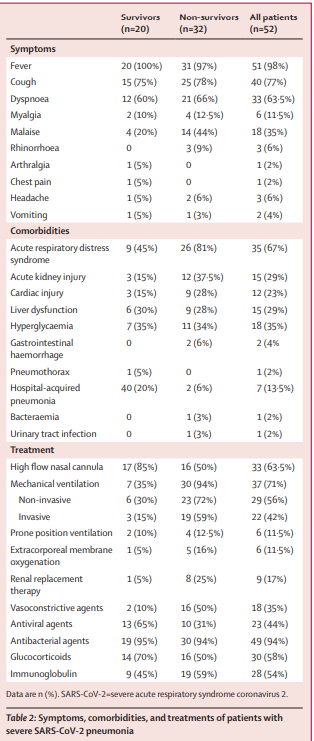
    Researchers presented their findings in a series of tables which clearly broke down each patient's symptoms and path to recovery (or death).
    The mean age of the 52 patients who participated in the study was 59 years old. 35 (67%) were men, 21 (40%) had been diagnosed with some kind of chronic illness, and 51 (98%)were found to have a fever.
    Readers can find the whole article attaxhwd:
    We expect to learn more about the virus when the team of WHO experts, which includes 2 Americans, delivers their press conference on Monday.

    WWD : Prada Taps Raf Simons as Co-Creative Director

    Prada Taps Raf Simons as Co-Creative Director
    The design duo will show their first joint collection in September for the spring-summer 2021 season.

    MILAN — Raf Simons is the new co-creative director of Prada.

    He is to work in partnership with Miuccia Prada “with equal responsibilities for creative input and decision making,” the company said Sunday.

    Simons starts April 2, and the duo’s first co-designed collection is to be unveiled for spring-summer 2021 during a fashion show in Milan in September.

    A collaboration between the Italian brand and the Belgian designer, which had been rumored for months, was announced at a press conference at Prada headquarters on the last day of Milan Fashion Week, and during the Boss fashion show.

    “We feel the need to join as creative people in a dialogue, to bring emotion and bring co-creation,” said Simons, who was dressed in a blue coat and seated on a podium next to Miuccia Prada, who was wearing a navy sweater, trousers and a major diamond necklace.

    Prada’s husband Patrizio Bertelli, co-chief executive of Prada Group, opened the meeting standing and speaking into a microphone in a conference room stuffed with paintings by Sigmar Polke, Frank Stella and Luc Tuymans.

    The development suggests Prada and Bertelli are readying a succession plan at the Italian fashion house they catapulted from a historic maker of nylon accessories to a luxury mega brand — albeit one whose performance has trailed its peers in recent years due to various design and business missteps.

    Asked if she was eyeing retirement at some point, Prada brushed off the suggestion.

    “I like working, and I’m very excited and this will bring new wind. Please don’t make me older than I am,” she said with a laugh.

    Asked about the length of the contract with Simons, Prada said, “In theory, it’s forever.”

    Simons clarified that his Raf Simons label would continue in tandem with his Prada project, and suggested that co-creation is an idea gaining currency today.

    “It’s hardly discussed openly, lots of designers are questioning their own position in an ever-evolving fashion system,” Simons said.

    The announcement underlines the strong complicity between Simons and the Prada Group, which had originally tapped him to become creative director of Jil Sander in 2005.

    Prada said she felt a need to reinforce the creativity in her company.

    “We like each other, we respect each other,” she said. “I was sometimes criticized for not doing collaborations, so now I am doing one,” she added, flashing a big smile.

    Simons suggested “there’s more strength when two creatives believe in it, than when one believes in it,” he said. “If we both believe in it, we’re going to do it.

    “I do believe a lot in collaboration,” Simons said. “I think it strengthens the result.”

    Simons is a longtime friend of Miuccia Prada’s and has attended several of her fashion shows.

    He is best known for his signature men’s wear brand, launched in 1995, and has also done stints as the creative director of Christian Dior in Paris, and Calvin Klein in New York.

    His challenge will be to continue improving the performance of the Prada brand.

    In the first half of fiscal 2019-20, the Prada brand grew 4 percent to 1.28 billion euros, accounting for 83 percent of total group sales, with largely positive full-price retail sales throughout the period.

    The company has also been the subject of takeover rumors, which Prada officials have denied.

    Simons suggested creativity is being overshadowed by business concerns and objectives.

    He acknowledged that strong businesses can be built without strong creation, but his conviction is that business is better with strong creativity.

    “I don’t want to look like we are rejecting our responsibilities,” Simons said.

    WSJ : HBO Max Will Include ‘Friends’ Reunion Special

    HBO Max Will Include ‘Friends’ Reunion Special
    Launching in May, new streaming service also will have previous episodes

    The new HBO Max streaming service will include a special reunion of the TV show “Friends” and all of the sitcom’s previous episodes when the service launches in May, WarnerMedia said Friday.

    The company said that all six of the show’s main stars will be a part of the show’s celebration. The Wall Street Journal previously reported that Warner Bros. was finalizing agreements with the cast of the show. Executive producers from “Friends” will also be involved in producing the special, WarnerMedia said.

    HBO Max will be free for HBO subscribers. For those who don’t have HBO, it will cost $14.99 a month. HBO’s current service will be a part of HBO Max as well as other Warner Bros. content.

    “Friends” was on the air for 10 seasons, spanning from 1994 through 2004. Netflix Inc. previously had the rights to stream the show.

    Terms of the deal weren’t disclosed. The Journal had reported that each of the six stars of “Friends”— Courteney Cox, Jennifer Aniston, Lisa Kudrow, Matt LeBlanc, Matthew Perry and David Schwimmer —will receive between $2.25 million and $2.5 million for the show, a person with knowledge of the negotiations said.

    The stars shared the news via social media on Friday with pictures captioned, “It’s happening” and tagged HBO Max.

    WSJ : Intuit Near Deal to Buy Credit Karma for $7 Billion

    Intuit Near Deal to Buy Credit Karma for $7 Billion
    Acquisition would be Intuit’s largest ever and the first sizable transaction under CEO Sasan Goodarzi

    Intuit Inc. INTU -1.22% is nearing a deal to buy personal-finance portal Credit Karma Inc. for about $7 billion in cash and stock, in a move that would push the bookkeeping-software giant further into consumer finance, according to people familiar with the matter.

    The maker of TurboTax could announce a deal to buy privately held Credit Karma by Monday, assuming talks don’t fall apart, the people said. Credit Karma was valued at roughly $4 billion in a private share sale about two years ago.

    The deal would mark Intuit’s largest acquisition by far in its 37-year history and the first sizable transaction under Chief Executive Sasan Goodarzi, who took over a little more than a year ago.

    Credit Karma offers its customers free access to their credit scores and borrowing history, alerts to possible data breaches, credit monitoring and tax preparation and filing. Customers in turn receive offers from other companies for credit cards and loans tailored to their credit history, and Credit Karma makes money when customers use those products.

    Adding the buzzy startup to its stable would give Intuit a stronger foothold in the burgeoning realm of online personal finance. In addition to TurboTax, the online software that millions of people use to file their taxes, Intuit’s offerings include QuickBooks bookkeeping software used by businesses and Mint, an online-budgeting platform that also pitches individuals financial products. Intuit has a market value of roughly $77 billion.

    Under the deal being discussed, Credit Karma would operate as a stand-alone unit with its chief executive, Kenneth Lin, remaining in charge, one of the people said. But joining forces could allow both Credit Karma and Intuit to fine-tune their recommendations to customers by expanding the trove of financial data they use to make suggestions.

    The move would cap a rapid rise for Credit Karma, which is backed by funders including private-equity firm Silver Lake and financial-technology venture firm Ribbit Capital. Based in San Francisco and founded in 2007 by Mr. Lin, Nichole Mustard and Ryan Graciano, Credit Karma at one point was eyeing an initial public offering no earlier than late 2019.

    But the IPO market has looked more dubious after the disappointing debuts of some startups including Uber Technologies Inc. The merger market, especially for financial technology companies, has remained strong. Such deals have accounted for several of the largest transactions announced so far this year, including Morgan Stanley’s $13 billion purchase of E*Trade Financial Corp., announced this past week, and Visa Inc.’s $5.3 billion acquisition of startup Plaid Inc. announced last month.

    Mountain View, Calif.-based Intuit was founded in 1983 and went public in 1993. Best-known for its bookkeeping software, the company has said it wants to push further into the finances of the individuals and businesses it serves by adding more offerings to its platform. It is set to report its fiscal second-quarter earnings Monday afternoon.