WWD : Matthew Williams is Givenchy’s New Designer

Matthew Williams is Givenchy’s New Designer
The founder of 1017 Alyx 9SM becomes the French house's seventh couturier.

Attention all hype beasts: Matthew M. Williams is Givenchy’s new creative director.

The American designer behind the 1017 Alyx 9SM label and a key ringleader of the luxury streetwear scene, Williams becomes the French house’s seventh couturier. He starts on June 16 and is expected to present his first designs for Givenchy in October.

In a statement shared first with WWD, Williams described Givenchy’s new era as one “based on modernity and inclusivity.”

“In these unprecedented times for the world, I want to send a message of hope, together with my community and colleagues, and intend to contribute towards positive change,” he said.

He expressed gratitude to Givenchy parent LVMH Moët Hennessy Louis Vuitton “for trusting me with the opportunity to fulfill my lifelong dream.

“The maison’s unique position and timeless aura make it an undeniable icon and I am looking forward to working together with its ateliers and teams,” he added.

Williams assumes all creative responsibilities, including women’s and men’s collections, Givenchy noted.

Williams led the list of candidates floated by WWD on April 13 when it was the first to report that Clare Waight Keller and Givenchy were ending their three-year collaboration.

His arrival thrusts Givenchy back into the realm of buzz, cool and cultural urgency that it last enjoyed under Riccardo Tisci, who deftly gave the aristocratic brand a subversive edge with his Rottweiler T-shirts, muscular tailoring and Goth-tinged gowns.

While perhaps best known for his rollercoaster buckle and collaborations with Nike, Moncler and Dior, Williams, 34, is seen as a driven, versatile fashion talent with a sharp vision, strong cultural and artistic connections, and formidable technical chops.
(ZH) Chinese Scientist, Escorted Out Of Canadian Biolab, Sent Deadly Viruses To

Chinese Scientist, Escorted Out Of Canadian Biolab, Sent Deadly Viruses To Wuhan


"We have a researcher who was removed by the RCMP from the highest security laboratory that Canada has for reasons that government is unwilling to disclose. The intelligence remains secret. But what we know is that before she was removed, she sent one of the deadliest viruses on Earth, and multiple varieties of it to maximize the genetic diversity and maximize what experimenters in China could do with it, to a laboratory in China that does dangerous gain of function experiments. And that has links to the Chinese military." -Amir Attaran
A Chinese scientist who was escorted out of Canada's only level-4 biolab over a possible "policy breach" shipped dealdy Ebola and Henipah viruses to the Wuhan Institute of Virology, according to the CBC, citing newly-released documents. The shipment is not related to COVID-19 or the pandemic.
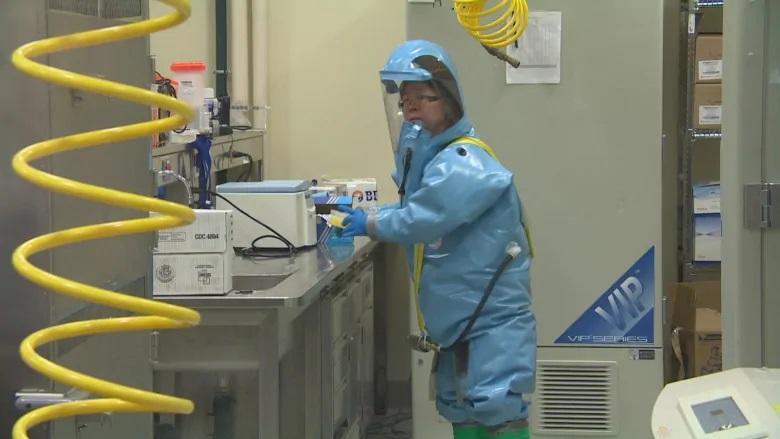
Dr. Xiangguo Qiu, her husband Keding Cheng and her Chinese students were removed from the Canadian lab after the Public Health Agency of Canada (PHAC) asked the RCMP to investigate several months earlier. According to PHAC, Qiu's eviction from the lab is not connected to the shipment.

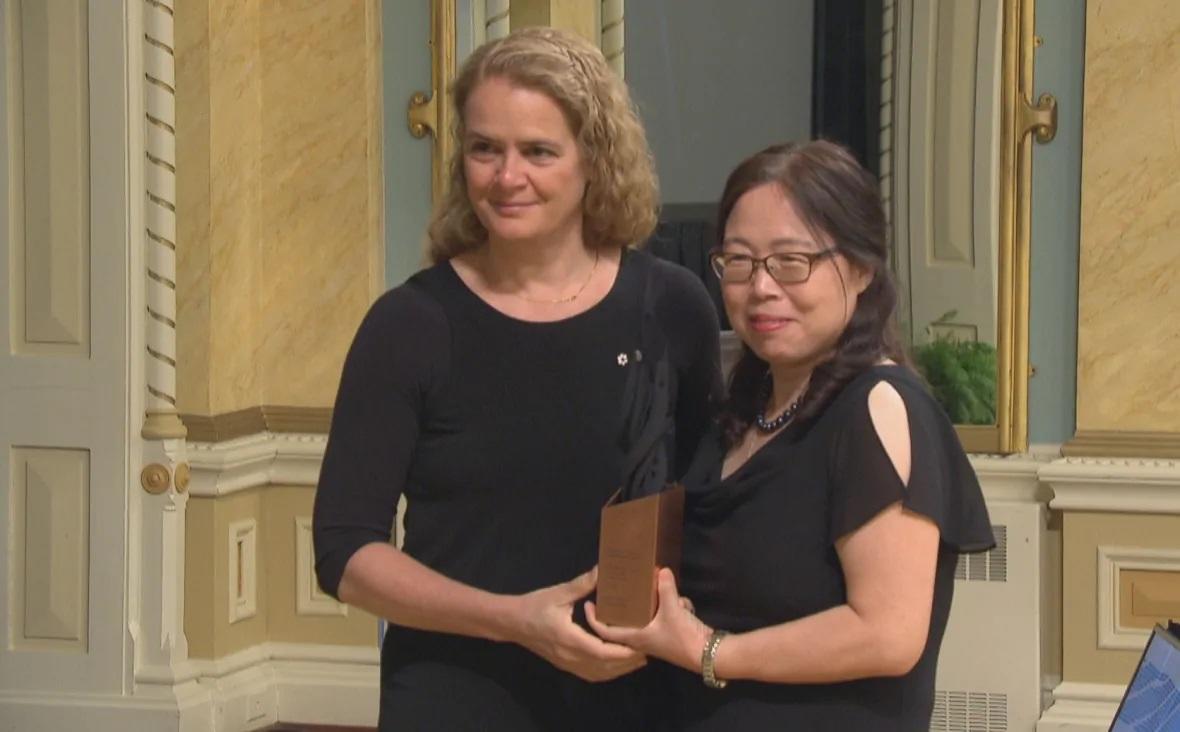
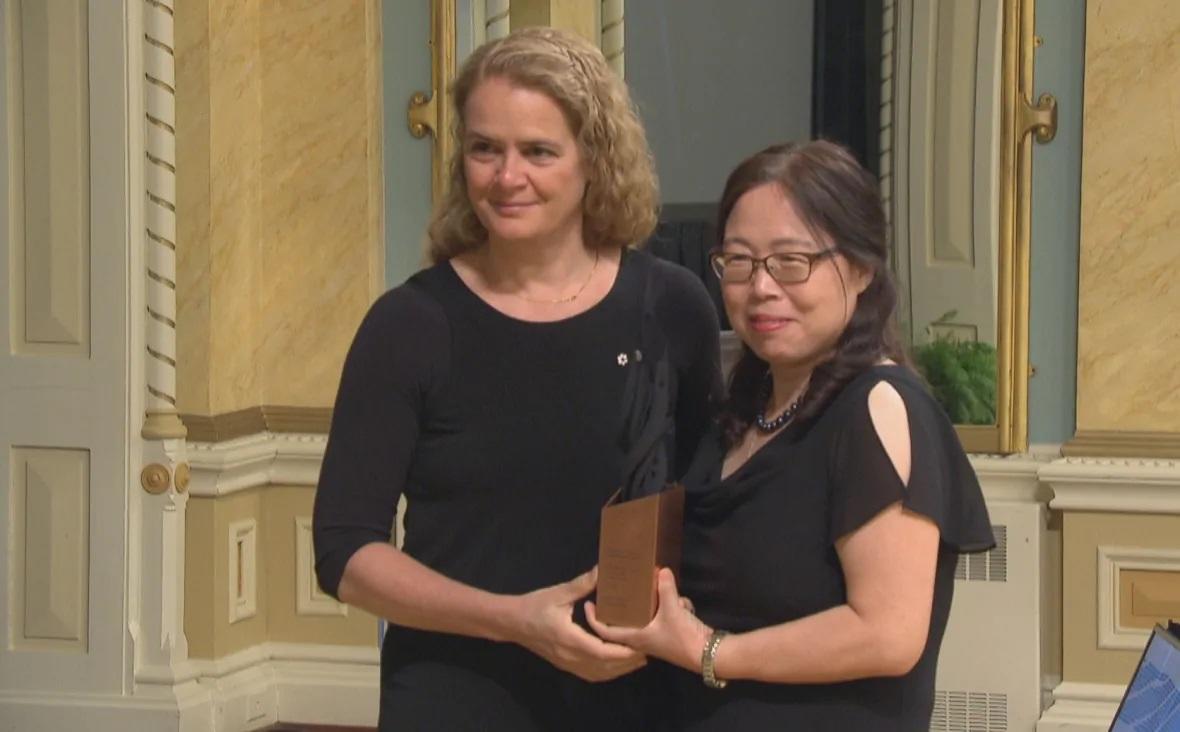
Dr. Xiangguo Qiu accepting an award at the Governor General's Innovation Awards at a ceremony at Rideau Hall in 2018. Qiu is a prominent virologist who helped develop ZMapp, a treatment for the deadly Ebola virus which killed more than 11,000 people in West Africa between 2014-2016. (CBC)
"The administrative investigation is not related to the shipment of virus samples to China, said PHAC chief of media relations, Eric Morrissette."
"In response to a request from the Wuhan Institute of Virology for viral samples of Ebola and Henipah viruses, the Public Health Agency of Canada (PHAC) sent samples for the purpose of scientific research in 2019."
To recap, a Chinese scientist, her husband and her Chinese students were escorted out of Canada's only Level-4 lab for reasons unknown, and which are not related to her shipment of deadly viruses to the Wuhan Institute of Virology.
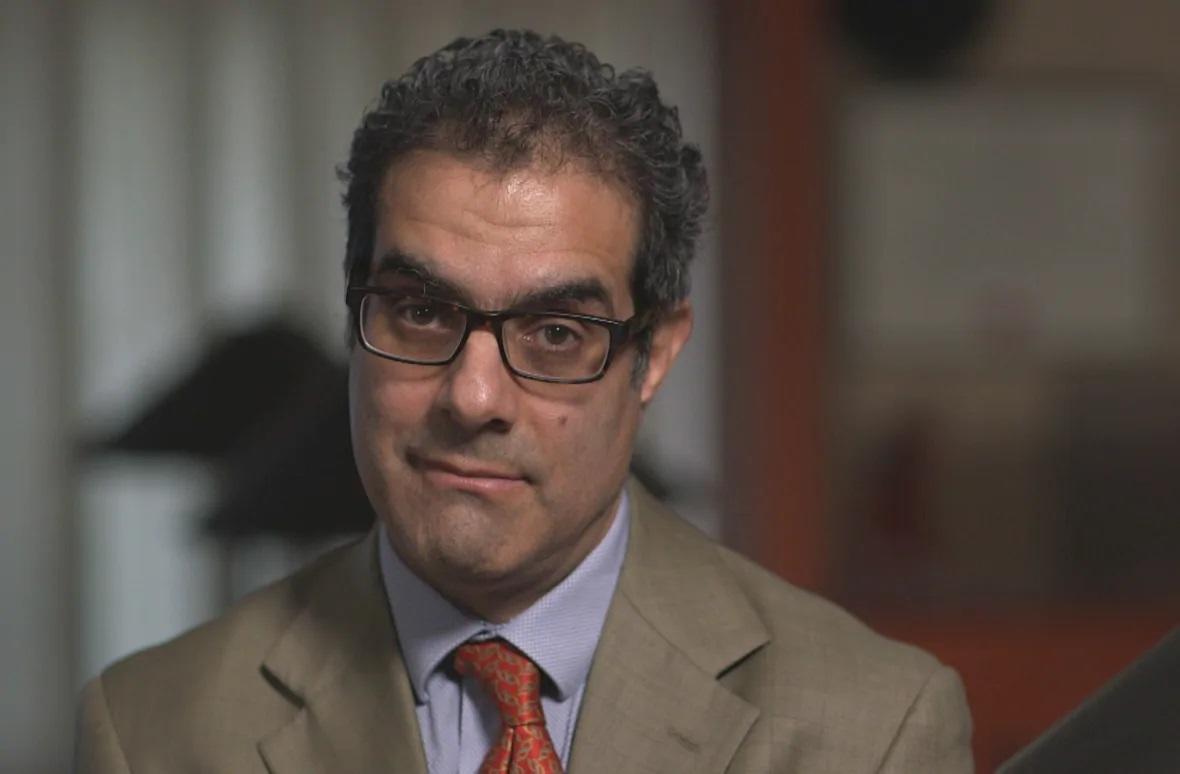
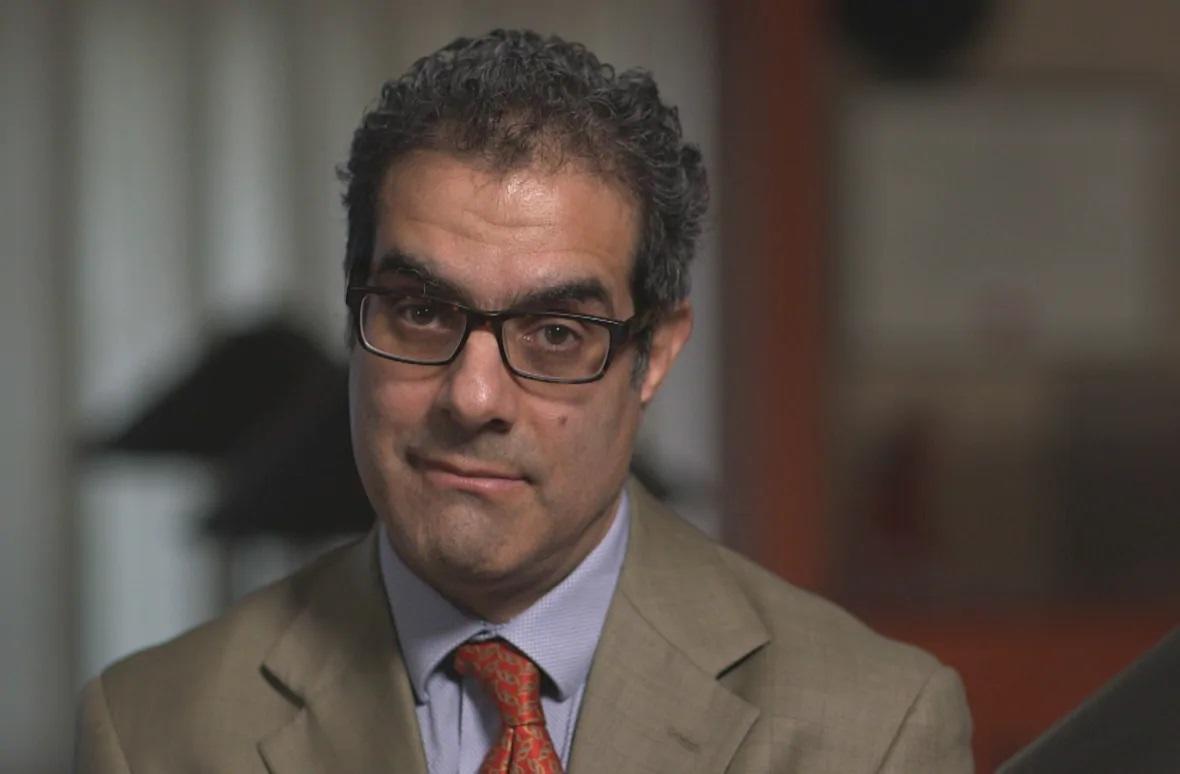
"It is suspicious. It is alarming. It is potentially life-threatening," said University of Ottawa law professor and epidemiologist, Amir Attaran.
Amir Attaran, professor in the Faculty of Law and the School of Epidemiology and Public Health at the University of Ottawa, is concerned about the shipment of dangerous viruses sent from Canada's only level-4 lab to China. (CBC)

While Canada doesn't do 'gain-of-function' experiments - which are where natural pathogens are mutated in a lab and assessed to see if it has become more deadly or infectious, "The Wuhan lab does them and we have now supplied them with Ebola and Nipah viruses. It does not take a genius to understand that this is an unwise decision," said Attaran.
"I am extremely unhappy to see that the Canadian government shared that genetic material."
Attaran pointed to an Ebola study first published in December 2018, three months after Qiu began the process of exporting the viruses to China. The study involved researchers from the NML and University of Manitoba.

The lead author, Hualei Wang, is involved with the Academy of Military Medical Sciences, a Chinese military medical research institute in Beijing.

All of this has led to conspiracy theories linking the novel coronavirus responsible for COVID-19, Canada's microbiology lab, and the lab in Wuhan. -CBC
According to the report, the RCMP and PHAC have repeatedly denied any connections between the virus shipments and COVID-19.
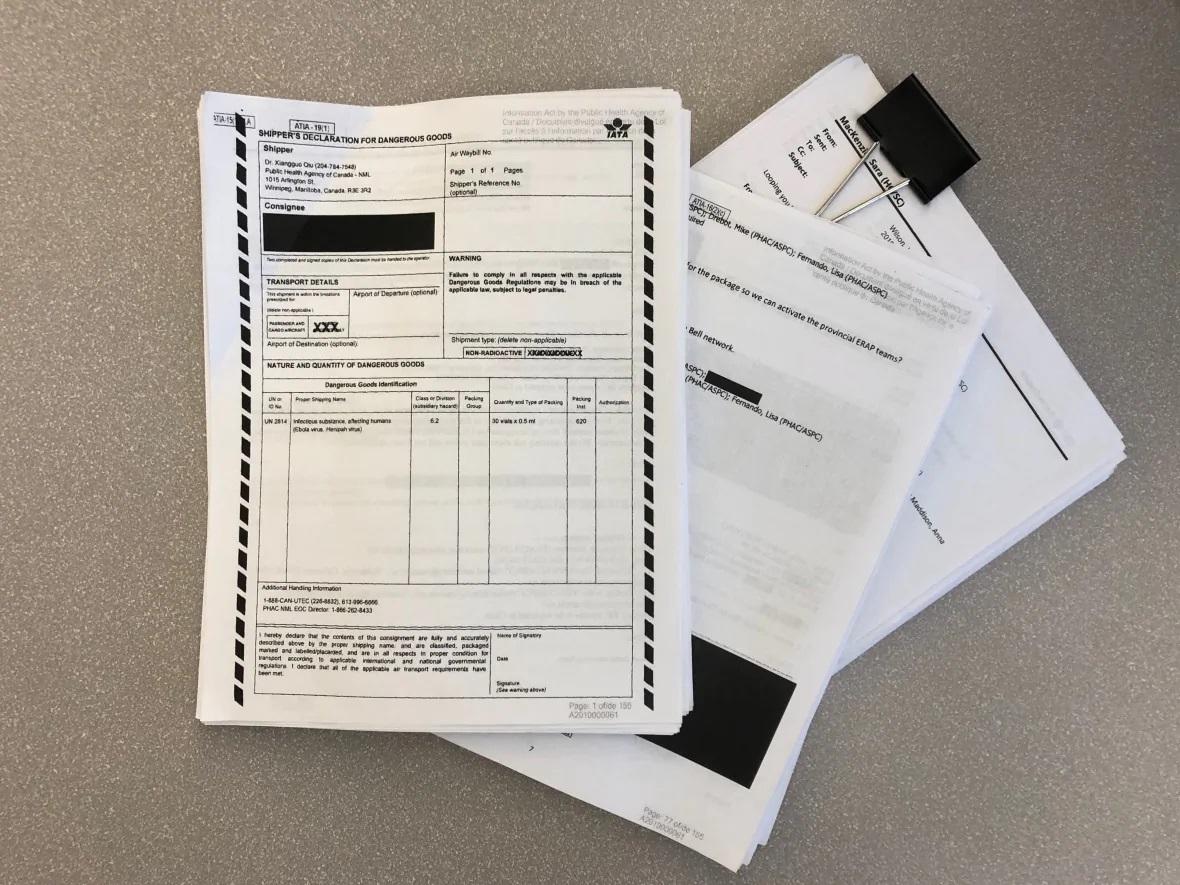
According to the newly-released documents, the following virus strains were shipped to the WIV (approximately 15 ml):
  • Ebola Makona (three different varieties)
  • Mayinga.
  • Kikwit.
  • Ivory Coast.
  • Bundibugyo.
  • Sudan Boniface.
  • Sudan Gulu.
  • MA-Ebov.
  • GP-Ebov.
  • GP-Sudan.
  • Hendra.
  • Nipah Malaysia.
  • Nipah Bangladesh.
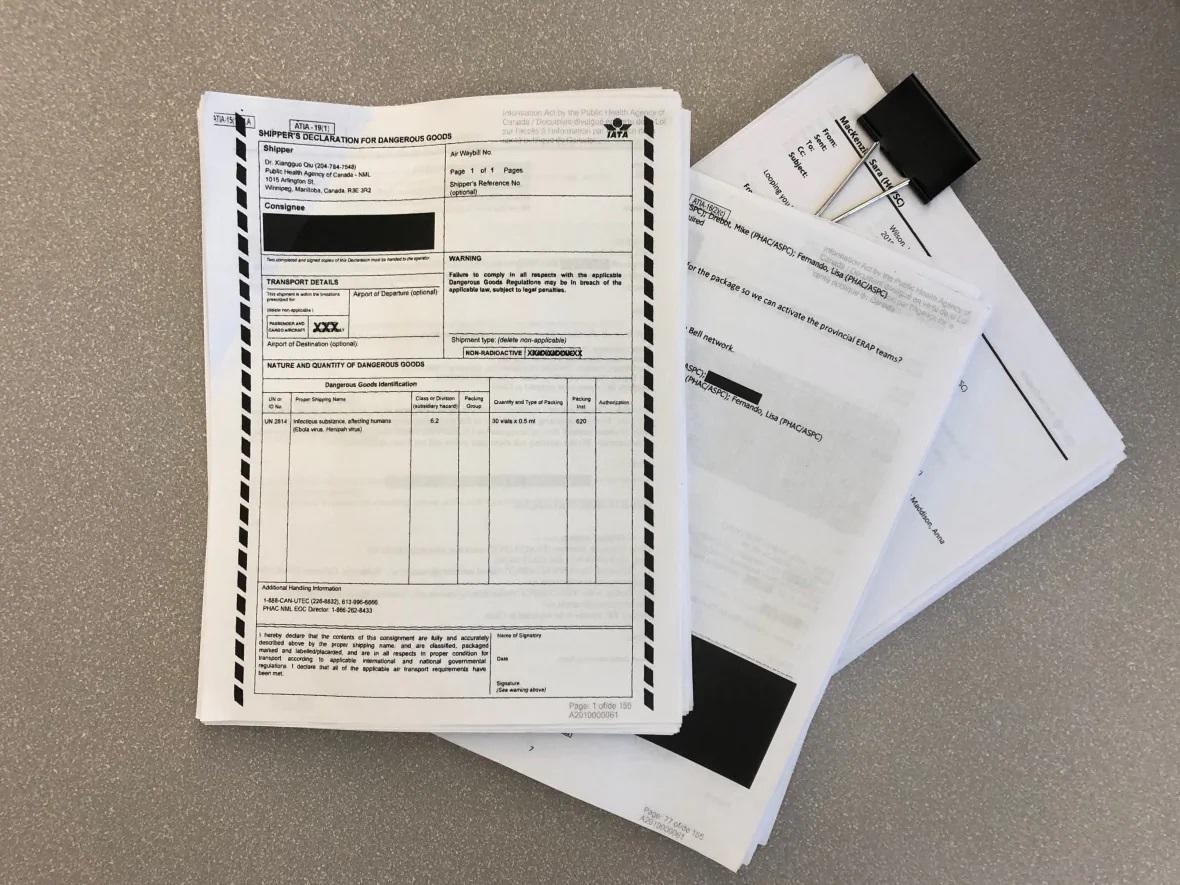
The documents also shed light on communications from the months leading up to the shipment - including confusion on how to package the viruses, along with a lack of decontamination of the package prior to its shipment, as well as concerns expressed by NML Director-General Matthew Gilmour to his superiors in Ottawa - particularly over where the package was going, what was in it, and whether its paperwork was in order.
CBC News received hundreds of pages of documents through an Access to Information request, detailing a shipment of Ebola and Henipah viruses sent from the National Microbiology Lab in Winnipeg, to the Wuhan virology lab in China. (Karen Pauls/CBC News)
In one email, Gilmour said Material Transfer Agreements would be required, "not generic 'guarantees' on the storage and usage."
He also asked David Safronetz, chief of special pathogens: "Good to know that you trust this group. How did we get connected with them?"
Safronetz replied: "They are requesting material from us due to collaboration with Dr. Qiu." -CBC
According to the report, the shipper of the viruses had originally planned to use inappropriate packaging, and only corrected the mistake when the WIV flagged the issue.
"The only reason the correct packaging was used is because the Chinese wrote to them and said, 'Aren't you making a mistake here?' If that had not happened, the scientists would have placed on an Air Canada flight, several of them actually, a deadly virus incorrectly packaged. That nearly happened," said Attaran.
Read the rest of the report here.

FT : JLR to cut 1,000 jobs as carmaker reels from £500m Covid-19 hit

JLR to cut 1,000 jobs as carmaker reels from £500m Covid-19 hit
UK group expands cost-cutting programme by £1bn to £5bn after sales slump

Jaguar Land Rover will expand its multibillion pound cost cutting programme and plans to shed more than 1,000 UK jobs after a £500m hit from coronavirus knocked the carmaker to an annual loss.

Britain’s largest carmaker booked a £422m pre-tax loss in the year to March, with a £500m pre-tax loss in the final quarter as showrooms and factories across the world closed because of the pandemic.

The group plans to reduce up to 1,100 agency staff, or contractors, “in the coming months,” from a total UK workforce of 32,000, and on Monday raised its cost-cutting target by £1bn to £5bn by March 2021.

The latest cuts come on top of some 5,000 roles that JLR axed through a cost-cutting programme launched last year, and are the latest job losses to sweep the UK industry as carmakers from Bentley, Aston Martin and McLaren to Nissan make deep cuts amid falling sales.

JLR’s sales between January and March fell a third compared with a year earlier, while April sales were down 60 per cent.

It has begun reopening factories in the UK and Europe, although many are running at low capacity, while the Castle Bromwich Jaguar plant remains closed.

“The company plans to resume production gradually to meet recovering demand,” the group said, adding that the Solihull and Halewood plants are open, as well as its new Slovakian site and a contract manufacturing facility in Austria.

In China, which came out of lockdown as Europe and America began closing their economies in March, sales have recovered to previous levels. Sales in May were 4 per cent higher than a year earlier, JLR said.

Annual revenues to March fell 5 per cent to £23bn, with total car sales down 12 per cent to 508,659 vehicles.

In response to the falls, JLR cut research spending this coming year to £2.5bn, compared with £3.3bn in the year just finished. 

The company had £3.7bn of cash at the end of March, as well as a £1.9bn credit facility, although the business spent £1.5bn during April and May and expects a cash outflow of around £2bn in the quarter to June.

This month JLR signed a deal with Chinese banks to raise £560m in a new loan facility, having been turned down by the Bank of England’s emergency funding scheme because of its junk-level credit rating.

FT : SoftBank/Credit Suisse: funnel vision

SoftBank/Credit Suisse: funnel vision
Supply chain finance can mask early signs of trouble in a situation such as the pandemic

Investing in SoftBank is an education. It may not make you any money. It will teach you about obscurer aspects of finance. One module concerns the ways a large investment business can funnel an extra dollop of capital into businesses it already backs.

The Japanese tech group has poured more than $500m into Credit Suisse’s supply chain finance funds, which are worth $7.5bn. These invest in turn in the debt of businesses that include start-ups supported by the Vision Fund, a SoftBank satellite. The Swiss bank’s asset management division does so through Greensill Capital.

This London-based financier helps businesses borrow against anticipated payments from their customers. That allows the cash-strapped companies to pay their own suppliers on time. Greensill is itself backed by the Vision Fund.

The potential conflict of interest is obvious. Vision Fund support might reduce the independence of Greensill’s investment decisions. Credit Suisse faces questions of impartiality too, given the close relationship of its asset management division with Greensill as a deal finder in the specialised arena of supply chain finance.

Risks may be concentrated too narrowly, given the reliance of Credit Suisse on Greensill. Supply chain finance typically provides a discounted advance on anticipated cash flow. Unfortunately, it can also mask early signs of trouble in a situation such as the pandemic, when sales collapses hit the creditworthiness of borrowers’ customers. Greensill is already wrestling with a string of client defaults, including that of Singaporean oil trader Agritrade.

All of this should worry investors in the relevant Credit Suisse funds, for all that some losses would be covered by credit insurance. SoftBank’s shareholders, many of which are relatively unsophisticated private investors, should be concerned as well. The shares fell more than 3 per cent on Monday.

SoftBank boss Masayoshi Son hoped the former traders and bankers he recruited to manage the Vision Fund would allow him to turbo-charge returns from smart investment in start-ups. Instead, their ingenuity appears to be concentrated on propping up returns rather than amplifying them.

>>> US Gapping down

Gapping down
In reaction to disappointing earnings/guidance
:

  • JKS -5.8%, MMM -2.6% (May sales)

Select ETFs showing early weakness:

  • XLE -3.9%, XLF -3.3%, IWM -3%, DIA -2.4%, SPY -2.1%, IGV -2.1%, QQQ -1.5%

Other news:

  • HTZ -24.4% (reports circulate indicating that the company has received approval for its proposed stock sale from a bankruptcy judge)
  • XPO -5.1% (provides list of actions taken to combat COVID-19 ahead of industry summit)
  • BP -4.6% (revises long-term price assumptions, reviews intangible assets and, as a result, expects non-cash impairments and write-offs)
  • BLDP -3.9% (files final short form base shelf prospectus, which provides the flexibility to make offerings of securities during the effective period of the Prospectus, until July 2022)
  • CTVA -3.8% (files motion to intervene in legal challenge to EPA registrations of Dicamba products)

Analyst comments:

  • MAC -6.2% (downgraded to Underperform from In-line at Evercore ISI)
  • VTR -3.6% (downgraded to Underperform from In-line at Evercore ISI)
  • EQNR -2.3% (downgraded to Sell from Neutral at Goldman)
  • KIM -2% (downgraded to Underperform from In-line at Evercore ISI)
  • DEO -1.6% (downgraded to Neutral from Outperform at Credit Suisse)

>>> US Gapping up

Gapping up
In reaction to strong earnings/guidance
:

  • IRBT +9% (guidance)

Other news:

  • ISEE +46.6% (announces "positive" 18 month results from the Company's first Phase 3 clinical trial (OPH2003) for Zimura)
  • VTVT +19.6% (Presents Two Late-Breaking Poster Sessions on Simplici-T1 Study at the American Diabetes Association's Virtual Sessions Supporting the Potential of TTP399 as First-in-Class Oral Adjunctive Therapy for Type 1 Diabetes Patients)
  • BYSI +19.3% (announces positive topline interim results from Protective-2 phase 3 trial; meets primary endpoint)
  • XERS +16.7% (announces "positive" results from the outpatient stage of a Phase 2 study of its developmental Gvoke Ready-to-Use (RTU) Micro glucagon in adults at risk of hypoglycemia during and after aerobic exercise)
  • VXX +10% (rising with US futures trading lower)
  • FLDM +8.4% (files for Emergency Use Authorization from FDA for saliva-based Advanta Dx SARS-CoV-2 RT-PCR Test for COVID-19)
  • CTLT +7.1% (will provide vial filling and packaging capacity to AstraZeneca PLC at Catalent's manufacturing facility in Anagni, Italy, and prepare for large-scale commercial supply of the University of Oxford's adenovirus vector based COVID-19 vaccine candidate, AZD1222)
  • WUBA +6.7% (following report that an investor group wants to bid over $55/ADS for the company)
  • MRNA +4.5% (Israel close to deal with MRNA to supply experimental coronavirus vaccine)
  • PRNB +3% (announces "positive" data from Phase 2 Part B BELIEVE-PV trial)
  • CNCE +2.7% (reports new data analyses from Phase 2 trial of CTP-543 in alopecia areata)
  • ZGNX +1.4% (files mixed securities shelf offering)
  • CDXC +1.2% (files for $125 mln mixed securities shelf offering)

Analyst comments:

  • SHOP +5.7% (upgraded to Overweight from Neutral at Piper Sandler)

Fwd:Briefing; SCANX; Early premarket gappers

Early premarket gappers

  • Gapping up:
    • ISEE +81.3%, VTVT +39.3%, FLDM +28%, VXX +10.7%, MRNA +4.4%, PRNB +3%, CNCE +2.7%, XERS +2.4%, ZGNX +1.4%, LXRX +1.1%, NVO +0.9%
  • Gapping down:
    • HTZ -20.8%, CDXC -6%, BP -4.8%, XLE -4.1%, XLF -3.7%, IWM -3.1%, DIA -2.7%, SPY -2.3%, JKS -2%, MMM -1.9%, QQQ -1.8%, CTVA -1.2%, IGV -1.2%

WSJ : EV Battery Makers’ Euro Trip Could End in China

EV Battery Makers’ Euro Trip Could End in China
Shares of Korean battery makers are on a tear thanks to new rules to promote EVs in Europe. China could be a spoiler, however.

Shares of battery producers and electric-vehicle makers are getting a jolt from the Old World. Developments in the Middle Kingdom, however, are less positive: Investors planning to jump in now should take a second look.

With a market capitalization of $173 billion, Tesla isn’t far behind the world’s most-valuable car maker— Toyota, at $203 billion—and a surge last week had it briefly even closer. Electric-truck startup Nikola briefly became larger than Ford —despite having no revenue yet.

Unsurprisingly, companies supplying batteries to EVs have been powering up too. Shares of Korea’s Samsung SDI and China’s Contemporary Amperex Technology (CATL) have gained about 50% this year, while their Korean rival LG Chem is up 35%.

Regulations have been the major tailwind. Tougher carbon-emission standards in the European Union kicked in at the beginning of this year, meaning car makers have to sell more EVs to offset emissions from their gasoline models. EV sales in Europe in the first four months of 2020 jumped 56% from a year earlier, according to Nomura. Sales took a hit in April due to the Covid-19 pandemic, but outperformed the broader car market. Countries like France and Germany are raising their EV subsidies as part of their economic stimulus packages.

Things, however, aren’t as rosy in China, the largest EV market last year. EV sales in the first five months were down 39% year-over-year, worse than the 23% decline for the overall car market. Sales of EVs fell 24% last month, even though China’s auto sales managed to rise 15% with the coronavirus under control in most of the country. The impact of slashed EV subsidies last year continues to linger even though the government has held back on further drastic cuts for now. Any potential government stimulus may be steered toward boosting sales of gasoline cars, which still make up most of the market.

Korean battery makers currently dominate the European market so they could do better than their Chinese rivals. But competition could get stiffer, especially since Chinese manufacturers like CATL are already making inroads. That could dash hopes that higher revenue growth eventually lifts margins; LG Chem’s battery business, for example, lost money last year. Chinese producers have a long, storied history of disrupting the new energy space and dragging down margins: Look no further than the solar-power industry for the clearest example. In unit terms, CATL is already the world’s largest EV battery producer.

The overall demand of EVs still hinges on the path of the global economic recovery, which is highly uncertain. Given the fast and furious rise in battery shares, investors may want to slow down before climbing aboard.