DAX:
- MTU Aero (MTX TH) +1.7%
- MTU Aero Positioned for Recovery, Earnings Can Double: Berenberg
- Linde (LIN TH) +1.1%
- Linde Raised to Buy at HSBC; PT $272
- Deutsche Telekom (DTE TH) +0.9%
- Continental AG (CON TH) -0.7%
MDAX:
- Thyssenkrupp (TKA TH) +2.5%
- Europe Steel Set For Rebound, See Selective Value: Deutsche Bank
- Varta (VAR1 TH) +1.6%
- Airbus (AIR TH) +1.5%
- Emirates Sees Return of Jumbo A380s by 2022 as Travel Recovers
- Deutsche Lufthansa (LHA TH) +1.4%
- Lufthansa Doubles Junk Debut to $1.2 Billion Amid High Demand
- Telefonica Deutschland (O2D TH) +1.3%
- Shop Apotheke (SAE TH) -1.1%
- Duerr (DUE TH) -1.4%
- Siltronic (WAF TH) -1.8%
SDAX:
- Borussia Dortmund (BVB TH) +3.7%
- Voleon Boosts Short Position in Borussia Dortmund to 0.63%
- Dermapharm (DMP TH) +2%
- Indus Holding (INH TH) +1.4%
- Indus Holding Roadshow Set By Hauck & Aufhaeuser for Dec. 1
- Leoni (LEO TH) +0.9%
- Salzgitter (SZG TH) -0.9%
- Salzgitter Rally Continues; Nord/LB Sees Crisis Nadir Passed
- Eckert & Ziegler Strahlen- und Medizintechnik AG (EUZ TH) -0.9%
- Kloeckner (KCO TH) -1.3%
- Deutsche Euroshop (DEQ TH) -1.4%
- Schaeffler (SHA TH) -2.4%
A rally in global equities cooled Wednesday as investors balanced optimism spurred by vaccine and political developments against a still challenging economic outlook amid the pandemic. The dollar steadied.
A gauge of Asia-Pacific shares gave up an earlier climb of about 1%. Stocks in South Korea and China turned lower, while Japan posted modest gains. S&P 500 futures edged up after the index closed at an all-time high and the Dow Jones Industrial Average topped 30,000 for the first time. Treasuries were little changed. Oil held at about $45 a barrel in New York, while copper touched the highest since 2014.
US After Hours HPQ +5.7%, JWN +4.5% up nicely on earnings; GPS -10.4%, VMW -1.5%, ADSK -0.6% lower on earnings; MESA +25.4% jumps on new contract
Nikkei +0.50% Hang Seng +0.40% CSI -0.90% Shanghai -0.79% Shenzen -1.29%
Eur$ 1.1894 CNH 6.5791 CNY 6.5815 JPY 104.50 GBP 1.3344 CHF 0.9116 RUB 75.5011 TRY 7.9710 WTI$ 45.13 +0.49%
S&P +0.07% Nasdaq +0.29% EuroStoxx +0.09% FTSE +0.27% Dax +0.08% SMI +0.22%
Macro :
- BofA Sees S&P 500 at 3800 With ‘Hockey Stick’ Earnings Recovery
- Dinan Walks Away From Hedge Funds to Focus on Debt
- U.K. to Relax Virus Rules Over Christmas to Allow Indoor Mixing
Keep an eye on :
- AA/ LN : AA Plc Agrees to Acquisition by Private Equity Groups: FT
- AC FP : Accor to Merge Lifestyle Business With Ennismore, Own Majority
- AC FP : Accor Buys Sbe Hotel & Restaurant Business in Deal Valued $650M
- ACROUD NA : ACROUD to Offer SEK80m Shares via ABG Sundal Collier
- AT1 GY : Aroundtown 9M Adjusted Ebitda EU723M Vs. EU556.8M Y/y
- ATC NA : Recommended Public Offer Is for EUR 4.11 in Cash for Each Common A & B Shares
- AZN LN : Astra Vaccine’s 90% Efficacy in Covid Came in Younger Population
- BSLN SW : China Accepts Basilea’s Cresemba for Aspergillosis for Review
- BMPS IM : Monte Paschi ABB to Offer ~24M Shares in ABB: Terms
- CLN SW : Clariant to Cut About 1,000 Positions, Sees CHF70M Provision
- CGG FP : CGG Exits Safeguard Plan by Anticipation: Statement
- DSY FP : Dassault Systemes Buys NuoDB; No Terms
- DWS GY : DWS Injects Almost $300,000 Into Money Fund That Suffered Losses
- EDP PL ; Fed Has Flexibility to Handle Financial Stress, Bullard Says
- ELIOR FP : Elior FY Adj. Ebita Loss EU69M; Sees Consolidation in Catering
- HAL NA : HAL 3Q Net Asset Value Per Share EU143.37
- ILD FP : French Billionaire Niel Is Said to Plan SPAC for Consumer Deals
- NESN SW : Nestle to Sell Yinlu Peanut Milk, Rice Porridge to Food Wise
- POM FP : Plastic Omnium Raises 2H Outlook; Sees Full Recovery in 2021
- SBBB SS : SBB CEO Says $3.3B Takeover Offer to Entra Is Tough to Beat
- SEV FP : Suez to Present Alternatives to Veolia Takeover at AGM, CEO Says
- SIGN SW : SIG to Buy Remaining 50% in Middle East, Africa JV From OIG
- SOP FP : Sopra Steria Cuts FY View; Sees Impact From October Cyberattack
- TLW LN : Tullow Sets 10-Year West Africa-Led Plan to Generate $7 Billion
- VOW3 GY : VW Chief’s Tensions With Board Reemerge in Clash Over Executives
>>> Up
* Air Liquide Cut to Hold at HSBC; PT 143 euros
* Deutsche Wohnen Raised to Neutral at Goldman; PT 37.20 euros
* Entra Raised to Hold at Pareto Securities; PT 170 kroner
* Linde Raised to Buy at Redburn
* Linde Raised to Buy at HSBC; PT $272
* MTU Aero Raised to Buy at Berenberg; PT 230 euros
* Salzgitter Raised to Buy at Nord/LB; PT 21 euros
* Thyssenkrupp Raised to Buy at Deutsche Bank; PT 8 euros
* Unibail Raised to Neutral at Goldman; PT 61 euros
* Volvo Raised to Buy at HSBC; PT 235 kronor
>>> Down
* ADP Cut to Underweight at Morgan Stanley; PT 110 euros
* Aperam Cut to Hold at Deutsche Bank
* Bankia Cut to Hold at HSBC; PT 1.51 euros
* CaixaBank Cut to Hold at HSBC; PT 2.20 euros
* Citycon Cut to Sell at ABN Amro Bank; PT 7 euros
* Codemasters Cut to Hold at Berenberg; PT 485 pence
* Collector Cut to Hold at ABG; PT 18 kronor
* Deutz Cut to Hold at HSBC; PT 5.50 euros
* Elkem Cut to Hold at SEB Equities; PT 31 kroner
* Ford Cut to Equal-Weight at Morgan Stanley; PT $9
* General Motors PT Raised to $53 from $44 at Morgan Stanley
* Kesko Cut to Sell at Handelsbanken; PT 18 euros
* Norden Cut to Hold at ABG; PT 113 kroner
* Voestalpine Cut to Hold at Deutsche Bank
* Zehnder Cut to Hold at Research Partners; PT 50 Swiss francs
>>> Initiation
* Clinigen Rated New Neutral at JPMorgan; PT 650 pence
* Datagroup Rated New Buy at Stifel; PT 57 euros
* Gamesys Group PLC Rated New Outperform at Davy
* MorphoSys ADRs Rated New Equal-Weight at Morgan Stanley
* MorphoSys Rated New Equal-Weight at Morgan Stanley
* MPC Container Ships Rated New Buy at Pareto Securities
* RELX Reinstated Buy at Goldman; PT 2,276.92 pence
* Teva ADRs Reinstated Market Perform at Oppenheimer
>>> Call
* Morgan Stanley Remains Cautious on Airports, Downgrades ADP
* MorphoSys Upside Must Wait on Pivotal Monjuvi Data, MS Says
* MTU Aero Positioned for Recovery, Earnings Can Double: Berenberg
* Nordic Banks Have Best Spot in Dividend Debate, Citi Says
https://www.arte.tv/fr/videos/084757-000-A/la-face-cachee-des-energies-vertes/
Technologies vertes mais polluantes, recyclage impossible… : cette vaste enquête menée à travers le monde révèle les effets pervers des solutions propres pour parvenir à la transition énergétique.
Face au changement climatique, de nombreux pays se sont engagés dans la transition énergétique. Depuis la COP21 qui a fixé en 2015 d'exigeants objectifs de réduction des gaz à effet de serre, les énergies vertes ont le vent en poupe. La voiture électrique est ainsi devenue la mascotte de cette révolution technologique. Mais les constructeurs restent discrets sur le bilan carbone de leurs automobiles fièrement estampillées ZE ("zéro émission"). Car non seulement elles consomment une électricité pas toujours propre mais, comme les panneaux solaires et les éoliennes, elles sont gourmandes en métaux rares (néodyme, cérium, cobalt, lithium, etc.) dont l'extraction cause des ravages à l'autre bout du monde. Pour que l'air de nos centres-villes s'allège en particules fines, la pollution est délocalisée à l'abri des regards, dans des pays émergents qui espèrent tirer profit de leurs minerais, sans égard pour leurs habitants. En Chine, par exemple, championne des métaux rares, dans la province de l’Heilongjiang, un tapis de poussière toxique recouvre les régions agricoles, arrachant les paysans à leur terre, provoquant des cancers et faisant des mineurs les "gueules noires" du XXIe siècle.
Nouvelle dépendance
Pour montrer les effets pervers de la révolution verte, cette enquête ambitieuse, inspirée de l'essai de Guillaume Pitron, La guerre des métaux rares (Les liens qui libèrent, 2018), voyage d'un bout à l'autre de la planète. Elle nous emmène de la France, où le secteur des panneaux solaires a ployé sous le dumping chinois, jusqu’au Chili ravagé par l'extraction du cuivre en passant par l'Allemagne, où s'entassent les pales d'éoliennes hors d'usage, la Chine, qui maîtrise déjà toute sa chaîne de valeur à la Bolivie, qui ne veut plus se contenter de la seule extraction des minerais. Car en misant sur ces trompeuses énergies vertes, les pays occidentaux ont troqué leur dépendance au pétrole contre une addiction aux métaux rares, un choix qui pourrait leur coûter cher sur le plan économique. Un nombre impressionnant d'entretiens, avec des ouvriers, chercheurs, ingénieurs, activistes, industriels, actuels ou anciens ministre – parmi eux, Arnaud Montebourg, écœuré –, étaie cette exploration de notre économie globalisée où chaque gain écologique se paie en émissions de CO2.
Ethical funds are booming but there are obstacles to momentum
A momentum trade in ESG stocks seems unlikely amid disagreement over what even is such an investment
It looks as if 2020 will be another year of outperformance for ESG funds — those focused on investments with a positive environmental (E) or social (S) impact, and companies with a record of good governance (G). Some conclude that we are in the early stages of a “momentum trade” that favours sustainable investments.
Philipp Hildebrand, former head of the Swiss central bank and now vice-chairman of investment manager BlackRock, predicted as much at the start of the year when he said the huge quantities of money coming into ESG funds would push up the prices of the investments they own. The message: Get in now while the ESG train is still picking up steam.
It is a seductive idea, especially in an era when longtime activist investors such as Chris Hohn in the UK and Jeff Ubben in the US have shifted their focus to the area. Hohn has been pressing companies to do more to tackle climate change, while Ubben, who left his hedge fund ValueAct to found a new ESG-focused asset manager, is sniffing the wind.
Money invested in ESG funds jumped from barely $300bn in 2011 to close to $900bn last year, says BlackRock, citing IMF data. Morningstar pegged the $1tn milestone as having been passed in the second quarter of 2020.
In Europe, where regulators are giving the movement a push, ESG funds could outnumber traditional funds as soon as 2025, according to one startling prediction from PwC. Could this mean the outperformance of ESG funds is preordained? Morningstar, tracking such funds in the US, found that in every year since 2015, a majority beat their respective markets. That was the case again in the first nine months of this year. ESG funds tend to be focused on the tech sector, which has been the big winner this year, but that does not seem to fully explain the outperformance.
According to a study by the World Resources Institute, a Washington think-tank, the stocks that are picked by ESG funds seem to be beating the market, raising the prospect that Hildebrand’s predicted “sustainability premia” are creeping into share prices. There are problems with this theory, and not just that, with equity markets worth $70tn globally and about $130tn in bonds, it is too early to expect ESG fund inflows to be large enough to move markets.
A momentum trade in ESG stocks, where investors buy shares they think will continue rising, seems unlikely while there is such disagreement over what constitutes an ESG investment. In this respect, matters are getting worse. As the number of funds has risen, so too has the number of indices and scoring systems purporting to identify companies with positive, or relatively positive, ESG performance. A study this year by academics in Geneva found very little correlation between stocks favoured by different environmental and social ratings providers (and basically no correlation at all between those given high governance scores).
You know things are bad when there is a Twitter account parodying the standards setters. “My standards bring all the boys to the yard. And they’re like, it’s better than yours,” reads a tweet from @makeESGgreat.
Wildly complex or subjective rules can lead to a lot of chopping and changing even within an ESG index, further disrupting the possibility of a momentum trade. The S&P 500 ESG index is trying to maintain a sectoral balance similar to the wider market, as well as weighting for ESG scores, and it also reviews corporate “controversies” — such as a labour dispute or a human rights issue that appears in the news — after which a stock may be kicked out for a year. It eliminated thermal coal producers recently, adding them to the list of no-go sectors along with tobacco and some weapons manufacturers.
That leads to a third problem for an ESG momentum trade. If the cancel culture that did for thermal coal takes out other constituents, funds may end up missing out on some of the investments that could drive their returns the most. Ubben at least is trying to avoid that, by explicitly planning to consider companies in fossil fuels and for-profit education, for example. “By virtue of being incumbents and thus being perceived as part of the problem, so-called ‘legacy’ companies show the greatest potential to become part of the solution and to be revalued,” his firm’s mission statement says.
None of which is to say aligning an investment portfolio with your social and environmental goals is not a good idea. Just don’t expect the momentum behind ESG investing to put any more wind behind your sails.
G4S on guard as bitter takeover battle rages
UK company faces critical juncture as global rivals consider fresh offers
G4S guards patrol the concrete corridors of prisons, the spiked iron perimeters of embassies and the glass lobbies of offices. Now the world’s biggest security company is defending its own walls.
In September, UK-based G4S received a £2.9bn hostile takeover bid from GardaWorld, its smaller Canadian rival. California-headquartered Allied Universal Security Services has since indicated that it might offer at least £3.3bn. G4S, whose market value has risen to £3.5bn, has rejected both as too low.
By the end of this week GardaWorld’s bid is due to expire, forcing it to raise it or walk away. Any firm offer from Allied would probably be made within days of a higher GardaWorld bid, though a move by the US company is far from certain.
The battle marks a critical juncture for G4S, which traces its roots back to a guarding business founded in Copenhagen in 1901 and has since become one of the British government’s largest contractors.
Over the past three decades, the company has taken the model of hiring security guards to do jobs once handled by state employees around the world — but has also been embroiled in a series of scandals, from a settlement with prosecutors over electronic tagging fraud to accusations of violence at youth detention centres.
Terror attacks, corporate and government cost-cutting, and a fear of crime are driving growth in the low-margin security business, where at least two-thirds of costs are staff and competitors are often small, unregulated companies, according to Freedonia, the market analysts.
For GardaWorld and Allied, buying G4S would widen their geographical footprint — and scale — at speed. Both are smaller than their London-based rival: while G4S’s revenues were £7.8bn in 2019, Allied’s reached $8.3bn (£6.2bn) and GardaWorld’s were C$3.7bn (£2.1bn) in the year to July.
G4S’s uniformed staff, with their black and red epaulettes, are already in fast-growing markets, such as China and India, which will account for 23 and 14 per cent of forecast growth, respectively, Freedonia said.
The US, the biggest security market worldwide, is also significant. G4S entered the US after the 9/11 terror attacks and has since become the country’s fourth-biggest operator, delivering 10 per cent annual revenue growth.
Stephan Crétier, the hard-hitting chief executive of GardaWorld, is a formidable foe for Ashley Almanza, the bookish accountant at the helm of G4S.
Fierce in his determination to seal a deal, Mr Crétier has launched a bitter attack on the company, calling G4S “deeply troubled” and in need of new management. “G4S has lost its way,” Mr Crétier told the Financial Times. “Its management lacks ownership of the business and deep understanding of the industry’s complexities.”
Mr Crétier pointed to a £276m pension deficit and a host of lawsuits, including allegations that G4S provided support to the Taliban in Afghanistan, a claim G4S says is “without merit and intends to vigorously dispute”. Restructuring and one-off charges related to litigation has cost G4S £1.6bn since 2013, more than £200m a year.
Mr Almanza has hit back, saying: “It is absolutely clear why GardaWorld needs G4S but this should not be at the expense of our shareholders and stakeholders.”
GardaWorld annoyed G4S executives with two initial lower offers in June, setting the scene for this autumn’s hostile battle, one person briefed on the matter said.
The Canadian group’s high leverage — its debts are about seven times its underlying earnings — could hamper its ability to pay more without diluting Mr Crétier’s stake in the business.
“Crétier wants to be the number-four security player and now GardaWorld is number six and the only way he’s going to close that gap is by acquiring a lot of mom-and-pop shops or acquiring G4S,” said Tyler Tebbs, analyst at Louis Capital.
Backed by private equity firm, BC Partners, GardaWorld has grown rapidly through acquisitions — nine purchases in the year to January — but there is a danger of the company becoming too complex. An investigation by the Tampa Bay Times reported that it took “dangerous shortcuts” in its armoured trucks businesses, resulting in a series of crashes. GardaWorld has called the report unfounded.
Allied’s interest has provided Mr Almanza an alternative to an increasingly aggressive approach from Mr Crétier.
Since G4S rejected Allied’s first approach, relations have warmed, two people close to the talks said. G4S’s senior managers, who have been the target of Mr Crétier’s attacks, would favour an Allied bid over GardaWorld because they “want to avoid Crétier at all costs”, one person involved in the process said.
G4S said it would “simply” take the option that delivered the best value, be it one of the bids or remaining independent.
While its shareholders have shunned Mr Crétier’s bid, they have also failed to fully rally behind Mr Almanza. “We are open to a deal but it has to be at a fair price,” said Sue Noffke, head of UK equities at Schroders, G4S’s largest investor.
Mr Almanza has stepped up his defence of G4S in recent days, selling its vision of a high-tech future away from its army of low-waged security guards, which accounts for 90 per cent of its work.
The company uses iris and fingerprinting technology to monitor incoming traffic for the Pentagon, and has said that its cash management business, which provides services for Walmart, should be compared to a fintech company.
G4S was an unpopular household name and a sprawling mess of unintegrated acquisitions when Mr Almanza took over as chief executive in 2013, just months after it had failed to deliver enough security guards for the London Olympics.
Since then he has shrunk the company from 620,500 staff at its peak to just 530,000 now, and sold off most of its cash-handling business.
Faced with high-profile public protests, Mr Almanza quit controversial contracts, including work installing security equipment at West Bank prisons for the Israeli government, and a job providing cleaners at the US detention centre at Guantánamo Bay.
But the run of bad news has continued. Last year the UK government stripped G4S of a contract to manage Birmingham prison seven years early, after inspectors found it “exceptionally violent”.
The company’s share price, which stood at 246p when Mr Almanza took over, has fallen to around 223p. The chief executive has taken nearly £20m in pay and perks in that time, while G4S has paid £1.2bn in dividends, most of it out of debt.
Mr Almanza has insisted that G4S is at an “inflection point”, poised for growth under its current management. But Stephen Rawlinson, analyst at Applied Value, said he had “failed to get the turnround he wanted”.
“He has downsized the business, not grown its strengths.”
Last week G4S’s share price rallied, suggesting that investors have faith in a bid.
Other than a change of uniform, a takeover may not make much difference to G4S’s security staff. But, for Mr Almanza and his team, getting out of Mr Crétier’s hostile clutches would be the ultimate great escape.
BlackRock aims for the very wealthy with $1.05bn Aperio deal
Asset manager is paying a hefty 50 times earnings for personalised indexing specialist
BlackRock is paying an estimated 50 times underlying earnings to buy a specialist in personalised index investing, demonstrating its keenness to expand in the arena that services very wealthy clients.
The world’s largest asset manager is to buy California-based Aperio Group, which manages $36bn in tax-optimised separately managed accounts, for $1.05bn in cash from Golden Gate Capital, a private equity firm, and Aperio’s employees who are part owners.
Aperio is a pioneer in so-called direct indexing. Its customer base of “ultra-high net worth” people and institutions are able to customise existing equity indices to create bespoke portfolios tailored to meet their personal preferences for investment factors, such as tilts to value, quality or momentum investing.
These portfolios can also be tweaked to encompass an individual’s personal environmental, social and governance (ESG) beliefs, and also to minimise tax liabilities via tax-loss harvesting, a technique that Aperio said can improve annual returns by 1.7 to 2.2 percentage points.
“The wealth manager’s portfolio of the future will be powered by the twin engines of better after-tax performance and hyper-personalisation,” said Martin Small, head of BlackRock’s US wealth advisory business.
The deal comes weeks after Morgan Stanley agreed to buy Eaton Vance for $7bn, citing the attraction of the US fund manager’s Parametric affiliate, which offers customised implementation of client-specified portfolio exposures.
The US separately managed account (SMA) sector oversees $1.7tn of assets and is expanding at 15 per cent a year, BlackRock said, of which it will manage $160bn after the deal is completed.
Michael Cyprys, equity analyst at Morgan Stanley, estimated BlackRock was paying about 50 times earnings before interest, tax, depreciation and amortisation (ebitda) to acquire Aperio, or 20 times revenues.
This would be a hefty premium to the market given that the S&P 500 Financials sector is currently trading at only 17.1 times net earnings. BlackRock itself is priced at 24 times earnings and has a trailing enterprise value-to-ebitda ratio of 16.9, while the industry median is just 6.3 times.
“While the purchase multiples appear rich versus publicly traded asset managers, we note that BlackRock is paying for an in-demand, highly complementary capability and for a business that’s organically growing at a 20-plus per cent rate and which accelerates the timetable for BlackRock to grow their SMA market presence,” said Mr Cyprys.
“In our view, the purchase price conveys BlackRock’s strategic priority to accelerate its participation in the fast-growing SMA market.”
Analysts at Jefferies said with its approach to “values-aligned investing”, Aperio “has been an early mover in recognising the demand for thoughtful ESG indexing that goes beyond the existing one-size-fits-all offerings in the marketplace”.
They added that “ESG capabilities and tax efficiency were cited by Morgan Stanley as rationale for its acquisition of Eaton Vance and this acquisition will check many of these boxes for BlackRock as well”.
Morgan Stanley had said only last month that merger and acquisition activity was likely to accelerate across the asset management industry, ironically in part because of “more intense competition” from exchange traded funds and other low-cost passive managers, spearheaded by BlackRock and heavyweight rival Vanguard.
BlackRock’s shares were up 2 per cent on Tuesday, ahead of the broader market.
Europe on way to recovery, say leading industrialists
Survey of executives finds sharp rebound in confidence in prospects for next six months despite fears of fragility
The heads of Europe’s biggest industrial companies have declared the bloc is on its way to recovery, showing a sharp rebound in confidence in prospects for their businesses and the economy over the next six months.
While cautioning that recovery was still fragile as a second wave of the pandemic sweeps the region, Europe’s leading industrialists said they had seen a large improvement in business conditions — even before news of successful vaccine trials broke last week, according to a twice yearly survey of members of the European Round Table for Industry.
The poll, which surveyed the chairs and chief executives of 55 companies with combined revenues of €2tn, found that a measure of their confidence had jumped from 34 out of 100 in May to 61 at the end of October. A score above 50 reflects more positive than negative responses.
At the same time, industrialists are preparing to kickstart investment in Europe, with the score rising from 35 to 54. Even more expect to increase investment outside Europe, with the score rising from 32 to 59.
Not everyone will share in the recovery, however, with 51 per cent of the industrialists signalling their expectations that employment will decline in Europe, according to the Conference Board Measure of chief executive confidence in Europe. This will be grim news for those who took heart from recent Eurostat data that showed employment in the bloc rose by 1 per cent in the third quarter, perhaps helped by generous government support schemes.
Moreover, the vast majority of industrial leaders — 81 per cent — said they intended to cut their office space by up to 25 per cent, with the balance planning even bigger reductions.
Siemens told the Financial Times it was planning permanent changes to allow employees to work away from the office for two to three days a week.
Carl-Henric Svanberg, chair of ERT and chairman of truckmaker Volvo Group, told the Financial Times that there was still a high risk that the recovery could be derailed.
“There is still a lot of fragility in the European economy — much of which can affect smaller companies that large industrials rely on in the supply chains,” he said.
Frans van Houten, chief executive of health technology group Royal Philips, also warned that “ongoing geopolitical tensions” — such as those between the US and China — and falling employment could hinder recovery.
Several of the industrialists stressed that while confidence would continue to grow along with hopes of a successful vaccine, there remained significant challenges.
European industry would have to remain competitive not only as it recovered from the impact of the virus but also as it dealt with the twin challenges of climate change and digitalisation.
The survey showed that 79 per cent of those who responded had no plans to reshore supply chains, despite the vulnerabilities exposed by the pandemic, when some factories were forced to shut for lack of components.
Martin Brudermüller, chairman of chemicals group BASF and head of the ERT competitiveness committee, said it was telling that European companies expected to invest more outside the bloc than within. “Europe’s economies have been heavily impacted by Covid-19 but are on a recovery now month by month,” he said. “The further recovery will strongly depend on how the various ambitions addressed by the EU Green Deal are translated into workable . . . conditions that ensure the international competitiveness of industry.”
The European poll echoes findings from a similar survey of leading US executives, said Dana Peterson, chief economist of The Conference Board. “Executives on both sides of the Atlantic are looking forward to sustained recovery in business conditions that will support — and be bolstered by — rising capital investment in 2021,” Ms Peterson said. “Recent promising news from vaccine trials is likely to further boost optimism that the end of the pandemic is in sight.”
Sin City New York nightlife never stopped. It just moved underground.
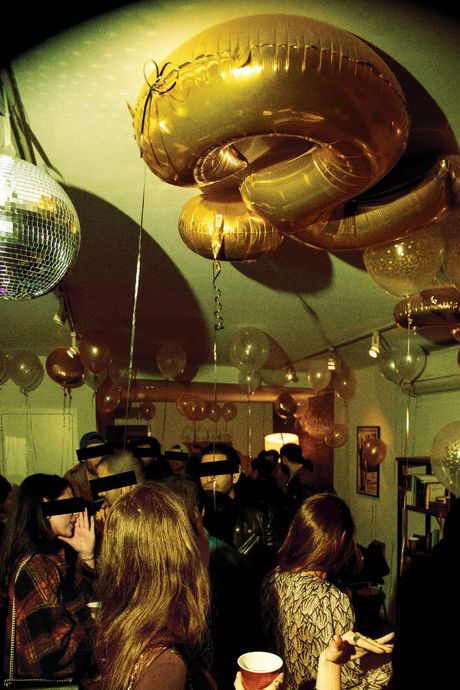
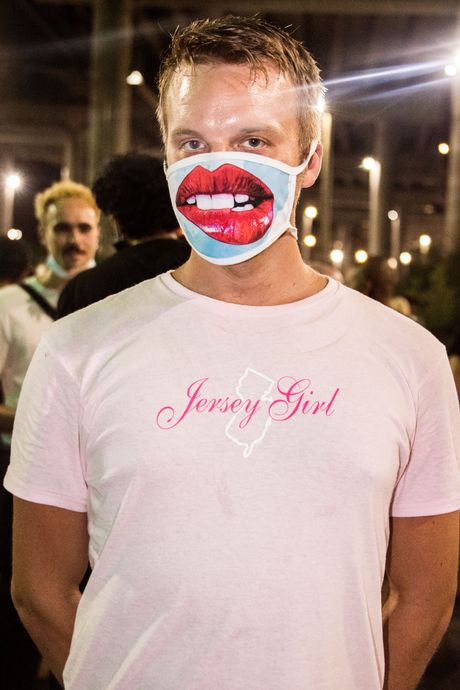

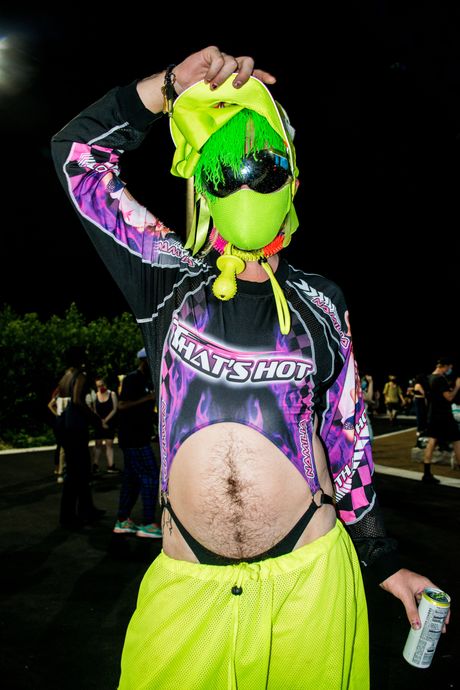
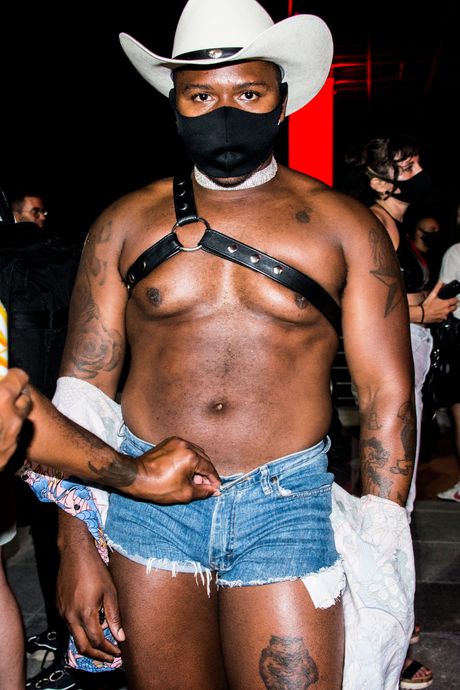
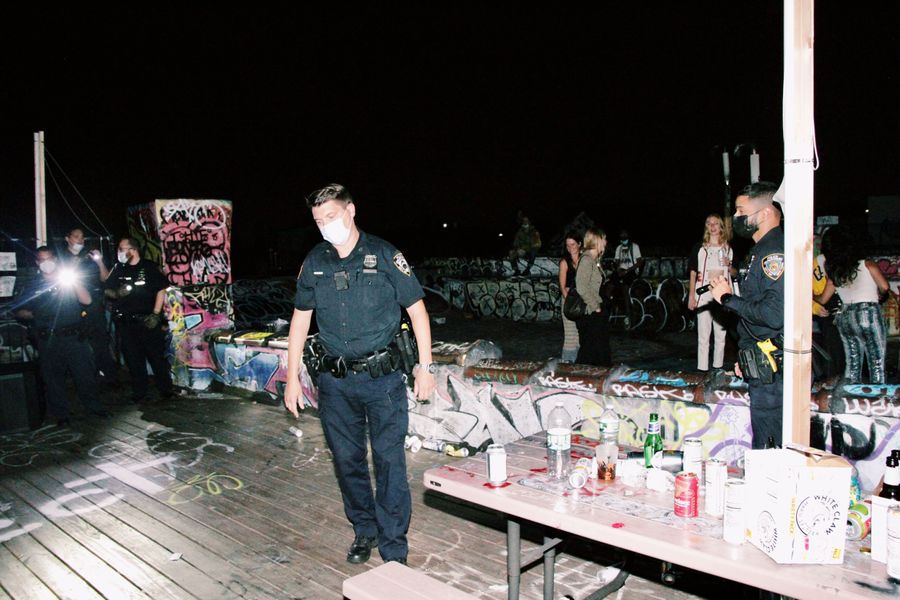
It’s 2 a.m., or, per the guy sitting next to me, “the hour where nothing is awkward,” on a Friday night less than two weeks before the presidential election and three weeks before COVID-19 positivity rates would creep back toward 3 percent in New York, prompting a series of new lockdown measures — a night and moment that, in retrospect, would be the twilight of New York’s pandemic reprieve. On the teeny back patio of a vacant industrial warehouse on the border of Bushwick and Williamsburg, at a covert party named, fittingly, “Dirty Dark Underground,” I can find only one person out of a couple dozen revelers who appears to even own a mask, though his is currently dangling under his chin. If you happened to wander into this party, lured from the street by the muffled sound of electronic dance music bumping off the walls of the 2,000-square-foot space, you might have thought it was 2019 again, when the bottom halves of our faces were left unadorned by swaths of fabric and sharing something you smoke, something you drink, or someone you sleep with didn’t put your life in danger.
“What are you smoking? Want to switch?” says a woman in leopard-print tights, grabbing my cigarette and offering her e-something in return, which I politely decline. “What is this?” she asks incredulously, though it’s just a Marlboro. A few puffs later, she offers it back to me. “Oh no! Please! Do keep it,” I tell her, and she seems to take it as a sign of generosity, rather than a desire to avoid exchanging saliva with a complete stranger in the middle of a global pandemic.
Partying in New York never really stopped. Even in April, as the virus swept through the city at a ferocious pace, stories circulated about secret events organized through Instagram DMs and held in private lofts, shuttered clubs, and emptied warehouses. On April 20, the NYPD busted a party of 38 people celebrating the holiday with a smoke at 4:20 p.m. on West 23rd Street. By that time, the virus was infecting 3,000 city residents a day, and the death toll had exceeded 10,000. Through executive order, Governor Cuomo had shut down all nonessential businesses and gatherings regardless of size.
By late July, when positivity rates lingered around 1.5 percent and the orders were eased to allow gatherings of up to 50 people, the underground party scene was as rich and varied as the aboveground one used to be. There were boat parties, pool parties, karaoke parties, sex parties, silent-disco parties, park parties, house parties, warehouse parties, and roof parties. There were Meatpacking table-service affairs that required shelling out a few grand for a couple of seats and hotel parties in Long Island City that mandated a dubious COVID test for entry.
The urge to party isn’t class-specific. For every good bottle of Champagne consumed on a Manhattan rooftop, there was a handle of Taaka vodka being passed around a circle somewhere. This illicit summer saw a Bushwick brownstone that threw enough parties to be declared the “Illmore,” along with crowded outdoor park events that took place in the light of day. In their most flagrant pandemic-defying jubilance, party organizers have staged warehouse ragers, spreading the word via Instagram about indoor and outdoor all-night events with rotating DJs and unlicensed bars. In July and August, a small park under the Kosciuszko Bridge became infamous for its giant parties, one of which was billed as a Black Lives Matter fund-raiser, according to Gothamist.
One weekend in October, I found myself at a different warehouse in Bushwick, near a gay bar that allowed indoor dancing if you didn’t leave after last call. In a crowded backyard, people danced as the organizers sold pre-rolled joints (“No one licked it. It’s corona. We get it, we get it”), hosted a twerking contest, and raffled off edibles. An Afroed emcee declared to the crowd, “I just want to remind everyone this is a 420 space,” and, soon after, “We all exist on a spectrum.”
Those who chose to flout the restrictions replaced the official guidelines with their own, based on some mixture of fear, selfishness, proclivity for danger, and digestion of scientific fact. Some adhered to frequent testing regimens or kept their partying outdoors; others relied on gut instinct to determine what was safe. And still others had strict boundaries, only to abandon them as the night wore on.
Not every COVID party skirted the rules: There have been plenty of perfectly legal places to spend your weekends (much to the rage of public-school parents whose children were just forced to go fully remote), like the gay bar, the straight bar, and the Latin restaurant I recently passed in the span of two blocks whose unmasked guests were spilling onto the sidewalk. According to a Washington Post analysis, the reopening of bars, on average, leads to a doubling of COVID cases in three weeks. Like the outdoor park hangs, bars aren’t perceived as real parties, even when they too involve unmasked dancing and boozed-up bodies crowded together. The pandemic party’s definition has been flexible, depending on your own personal COVID boundaries and how judgmental (or jealous) you are of those who flout the rules.
In October, 28 people faced charges after two warehouses were shut down for hosting costumed Halloween raves, one with 400 people in Brooklyn and the other with 550 in the Bronx. After that weekend, the New York Times wrote, “It was not clear if organizers failed to understand or simply ignored the dangers of large indoor gatherings.” But by “Joechella,” when New Yorkers dropped their chaste Saturday plans to celebrate the election results, few in the city could say they hadn’t at least dabbled in some risky socializing.
A 25th-birthday party in a one-bedroom downtown on November 14. Photo: Photograph by AP the Angel for New York Magazine
The party I find myself at this night isn’t an Instagrammable K-hole for downtown “It” kids. This party is shadier and danker. A Prohibition-style gathering of people who believe partying is not a pastime but a sacred right: electronic-music groupies and techno junkies who are here to dance, listen to the music, and forget about the state of the world for a few hours. The organizer, a mysterious online entity who promises a “collective techno and house music community” on the page @newyork_afterhours, has an Instagram full of posts like “YOU GOTTA FIGHT FOR YOUR RIGHT TO PARTY!” and “TECHNO IS NOT WHAT I DO. IT’S WHO I AM.”
“Most people go out to meet people or stand around. I’m actually out dancing,” says a young 20-something man taking a sweaty break on the patio. A zealot for this alternate lockdown reality, he has been going out for the past three months, risking it every weekend for the sake of the music. For the most part, he says, the parties he attends are not 500-person blowouts but closer to this size of 70-or-so people. Tonight, he brought along a date, a 21-year-old blonde clad in a skimpy white crop top and Chuck Taylors. She moved here from Russia last year, and they met when he slid into her Instagram DMs.
“I just said, ‘Do you want to go out dancing in Brooklyn?’ ” he explains of their e-meet-cute.
“Here we are,” she replies. “I hope you’re not a murderer.”
“I only kill it on the dance floor,” he coos.
As for personal safety, he tells me there’s nothing to worry about. He is sure to maintain social distancing, though it’s unclear what exactly that distance is as we chat side by side. His date, when asked why she feels safe surrounded by an alarming number of unmasked bodies, says, “I don’t know. My intuition, maybe? I hope it works.” And, quite honestly, she says she was expecting the party to be a lot bigger than it is. “Last weekend, I would say I had more fun, because I was out so late,” her date says, in an attempt to temper her expectations. “But the night’s not done yet.” Every night brings a palpable pressure to have fun, especially when there’s no other spot to check out around the corner, and who knows for sure if there will be a next time?
We’re interrupted by a blitzed man in a top hat who stumbles through several people to ask if we have any matches. In return for a light, he offers us a little rap about his current political stance: “I’m an anarchist. I believe Donald Trump is the worst thing that happened to gambling. Either side, I take the purple pill. I’m sorry, I’m outside of politics. The president doesn’t run my life, my state, and my species, or my life. My state is the shit … Suck my whole dick. I don’t give a fnck.”
If the backyard feels uncomfortably crowded, although admittedly not so different from having drinks at an outdoor bar, the inside of the party feels like pandemic porridge. The patio is on a strict five-minute rotation to prevent the noise from attracting attention and because the dance floor is the kind of place you want to escape from every few minutes since it’s so damn hot — a testament, I’m sure, to the exceptional ventilation.
Out of those dancing and drinking to the oomph-oomph-oomph of the music (“We wanted house,” someone whines), I can spot only two partygoers wearing masks, but one of them is the same man from outside. Around the edges, people do the things you do in the less congested spots of a party. Two fratty-looking white guys in matching white tees and baseball caps snort coke off the same apartment key. A dreadlocked dude lounging on a stairwell takes a rip off his hookah. Someone else takes his shirt off and makes out with the girl he’s dancing with. The high-ceilinged, skylit room is huge, big enough that it might not even be at quarter-capacity, but everyone is squished into a pulsating blob around the DJs.
Unofficial security people keep an eye on the entrance. At the back of the room, two women watch over a bar fit for a college basement party: two card tables, an empty White Claw box holding tips, and an assortment of well-quality liquor, soda, and juice mixers. Someone inexplicably serves me a vodka-and-orange-juice. Someone else tells me the bar is in the corner so it can be dismantled covertly should the police arrive.
At the entrance, more security guards block a sliding door to a vestibule where a guy is demanding $40 cash to come inside, “No ins or outs.” This isn’t a bad price. Some rave backrooms cost $80 and up, not including the price of drinks, which might be $9 or $15 for the same vodka-and-soda. Kristina Alaniesse, a longtime event promoter who became known over the summer for exposing these events, citizen-journalist style, on her Instagram account, says the parties are a fairly lucrative business, and it has attracted upstarts. “The bigger promoters are actually not throwing parties,” Alaniesse says. “I don’t want to seem like a snob, but I know everyone in nightlife and those people are definitely not big shots. The most serious people, the most serious DJs, they do not take the gigs.” Unlike the less-prominent party organizers, they have a reputation to lose. “They’re responsible people,” says Alaniesse. “If you have a real spot, you lose your liquor license. It’s on your record.” Thus the opportunity fell to these lesser-known pandemic profiteers. By Alaniesse’s estimates, there are between ten and 15 parties on any given weekend, with the largest warehouse-style events in Brooklyn and Queens, and the smaller, more exclusive ones in downtown Manhattan. “It’s on fire on the weekends, every, every, every weekend in Brooklyn,” she says.
Newbies or no, this party seems no different than any pre-pandemic rave. People are dancing, their bodies awkwardly oriented toward the DJs. The music is loud. And two very drunk girls are drawing attention to themselves. But according to a bubbly woman in leather pants who stumbles across the room to tell me she loves my outfit, this party is kind of a letdown. “Parties at the beginning of the year were better,” she tells me, reminiscing about a 450-person event she attended that was busted for drugs and solicitation. She’s here with her boyfriend, whose hand I just shook, and gets tested every four days to ensure she can keep dancing and keep her job. (Turns out, she’s a Department of Health employee.) “They’re all people I know here, and also I have the antibodies,” she semi-explains, when I ask why she feels comfortable going out.
It can be hard to find out about your first party, but after you find one, you will get text messages and Instagram DMs and Eventbrite emails about more and more and more. The locations are often kept secret until the afternoon of the party, but a few DMs to the DJs usually means you can find out the location, or at least what borough it’s in, earlier.
An older man in a ponytail sidles up next to me. “Look,” he says, gesturing Lion King–style to the unmasked clump of dancers before us. “This is how people should be.” He proceeds to go on an incomprehensible monologue about the hope he sees in the youth — not for their devotion to solving climate change or anything like that but for their devotion to partying. “I love to party with the gays,” he continues, though this event seems hopelessly straight. Then, in yet another throwback to the trials and tribulations of going out, he puts his hands on my waist and tries to pull me close. Across the room, I spot the one masked man from outside, in a fur-lined jean jacket and a black velvet hat with a peacock feather sticking out of it. “I need you to pretend to be my friend,” I whisper urgently. He puts his arm around my shoulders and leads me outside, commenting on the maskless dancers around us, “People want to be cute, but this is not the time to be cute, bitch! Safety first, bitch!”
Photo: Ruvan Wijesooriya.
A rave under the Kosciuszko Bridge on August 1. Photo: Ruvan Wijesooriya.
Back on the patio, the man, whom I’ll call Samuel, tells me he is a DJ-photographer who just moved from San Francisco to Crown Heights two months ago. “I don’t know anybody out here,” he remarks dejectedly, saying that his pandemic had one silver lining: the reduction in rent prices in Brooklyn. It provided him the opportunity to fulfill the young queer dream of moving to New York City.
This is his third pandemic party, and he has another one planned for Halloween night on a boat. He has been attending them alone, in hopes of meeting “genuine people,” but so far the search has been unsuccessful. “I met some people at my first party, and I thought they were cool. I tried to hang out with them again, and they just kept making a bunch of excuses,” he says. “I met some other people after that through a Tinder date. But then things got kind of weird. And so then … yeah, now it’s just me.”
Like many people I spoke with, Samuel thinks the parties need to happen so the people can just have some goddamn fun in this achingly depressing year. He calls DJ-ing an “art people need,” not unlike “dance or musical theater.” Despite his professed liberal beliefs, he doesn’t see a lot of irony in the scenario taking place around us: young, seemingly lefty people like him who believe in COVID but also possess a libertarian-tinged belief that partying is their constitutional privilege. It’s a collapse of the political spectrum. Bushwick kids and Ole Miss frat boys aren’t that different if their activities are isolated to the wee hours of the weekend.
The politics of partying is something no one here really wants to discuss. Ignoring reality is part of the premise. The 20-somethings sharing spit particles on the dance floor seem to have a generational nihilistic streak, born as they were into a dying world, addled by a bunch of bad shit left to them by their elders. And now, the pandemic. Not to mention that so many young people, despite the virus’s horrifying impact, never forgot those early days of being told they were less at risk. Eight months in, their sense of invincibility has just grown stronger.
Asked whether other people at the party believe in the virus, Samuel says, “That’s a funny question.” He returns to the subject of his mask (which he’s not wearing at the moment, and frankly neither am I), holding it up as the thing that allows him to excuse his own pandemic naughtiness. He doesn’t like to ask the difficult questions. He just wears his mask (sometimes). To him, that’s enough.
Suddenly, the music inside goes quiet and is replaced by the whispering of now 80-plus people. “I think the cops are outside,” says one man. “I see red lights,” says his friend. The supposed man in charge rushes outside to ask about our masks. “Do you have masks? Just in case, because the police are outside. We usually get rid of them pretty well, so just give us a minute. But it’s just in case. We’re all social distancing,” he says, seeming to believe his lie.
Eventually, after several rumors circulate and die, the flashing red-and-blue lights go away, and the music starts up again. I ask Samuel what he thinks happened. “What had happened was some little snitch-ass bitch over here thought that she was special. She thought she could just call 911. And that’s what had happened,” he jokes. I laugh. The two drinks I had earlier have mixed with the vodka-and-orange-juice and the weed pen I am now full-on sharing with Samuel. Although it’s the adrenaline of being six inches away from someone who was a stranger just two hours ago, and relishing that I still remember how to be a person in the world, that has me feeling buzzed.
Will Samuel party again after this? He laughs. “Oh! This ain’t fncking shit. Yeah. Of course. You think I grew up not having police show up to a party?” he says. “Like, fncking oooooh.” Still, we decide to head out as the hour creeps closer to 4 a.m. As my Uber arrives, the same car drops off a new crop of partygoers. “DM me!” Samuel yells.
Cops breaking up the September 26 rooftop party in Bushwick. Photo: Photograph by Daniel Galicia/Copyright 2020. All rights reserved.
Afew weeks later, infection rates are spiking in Brooklyn and Staten Island. One weekend, the city is celebrating Joe Biden’s victory in the sunshine, and the next it’s dreading the winter in the rain. For Alaniesse, though, not much has changed. “People are still doing a lot of parties,” she says, when we speak again early in November, after the city instituted a ten-person limit on private gatherings. “I don’t think that’s really going to calm them down.” If anything, she believes, recent crackdowns by the police are more of an incentive to be covert. Even as U.S. cases skyrocket, nervousness about the virus’s spread, she says, doesn’t factor into the party planning. Indeed, the same weekend in mid-November that Governor Cuomo reduced gym, bar, and restaurant capacity and closed bars an hour earlier — which Alaniesse thinks will only encourage illicit partying — the sheriff’s office shut down a 200-person party in Manhattan, a 200-person party in Brooklyn, and a fight club in the Bronx.
The police did not, however, shut down a surprise party for Brooklyn construction boss Carlo Scissura that same weekend, where dozens of the city’s power brokers, including the deputy Brooklyn borough president and Brooklyn’s former Democratic Party chairman, had gathered maskless and indoors. The following week, the city finally hit the 3 percent positivity threshold that would close public schools again, even as indoor dining at reduced capacity remained legal.
As for Samuel, he made it to the Halloween party on the boat. It was supposed to embark on the Manhattan side of the Hudson, but at the last minute, onboarding was relocated to an obscure parking lot in Jersey, which he scrambled to find. “It gave me an old-school renegade feel,” he tells me later. He estimates there were 200 people on the ship, which stayed out until 6 a.m., with house music on one floor and “super-dirty, dark techno” on another. “It was super-lit and super-interesting to see people dancing so freely,” he says. “You got to forget about things for a bit.” Still, even he has decided to give in to caution for the time being. “I’m probably going to wait until, like, December, New Year’s, to go out again.” And then, with a little less assurance: “Probably. I don’t know.”