>>> Asian Market Update

Asia Market Update: Mixed trading session for Asia, modest moves seen ahead of Thanksgiving holiday in the US

General Trend:
- Japanese sectors trade mixed; Decliners include Air Transportation, Auto and Insurance firms; Topix Information/Communication and Electric Appliances indices are among the gainers
- TECH and Finance indices rise in HK, Property shares drop after prior gains
- Shanghai Composite lagged during the morning session; Consumer and Property firms dropped
- Financial and Energy firms decline in Australia
- New Zealand 10-yr bond yield drops over 8bps, pares some of the recent rise; NZ debt agency sold bonds in 3 tranches
- BOK Gov expressed mild concern about recent gains in the KRW; BOK also raised growth forecasts, affirmed easing stance, did not specifically comment on the rate outlook or QE; Commented on monetary stabilization bond (MSB) issuance
- Tokyo confirmed plans to issue coronavirus bonds; Any implications for BoJ policy?

***Headlines/Economic Data***
Australia/New Zealand
-ASX 200 opened -0.1%
- (AU) AUSTRALIA Q3 PRIVATE CAPITAL EXPENDITURE Q/Q: -3.0% V -1.5%E; 2020-21 Capex estimate A$105.0B v A$98.6B prior
-(NZ) New Zealand Oct Trade Balance (NZ$): -0.5B v -0.5Be; Trade Balance 12-month YTD 2.2B v 2.2Be (largest annual surplus since July 1992)
- (NZ) New Zealand Gov General: There is a perverse impact of low rates on house prices
- BGA.AU Trading halted: Confirms acquisition of Lion Dairy and Drinks from Kirin for A$534M cash plus costs; announces A$401M capital raise
- (AU) Reserve Bank of Australia (RBA) to buy A$2.0B in Govt bonds v A$3.5B prior
-New Zealand Debt Management Office (DMO) sells NZ$600M v NZ$600M indicated in 2023, 2029 and 2033 bonds
- (NZ) New Zealand PM Ardern: Increasing housing prices are not a plan for growth; Not content with housing experience in New Zealand

Japan
-Nikkei 225 opened -0.2%
- (JP) Japan Government Pension Fund (GPIF) thought to have turned net seller of Japan equities in Q3, though equities maintain 25% portfolio weight target - Nikkei
- (JP) Tokyo, Japan to sell ¥60B in coronavirus bonds – Nikkei; Follow up, Tokyo Govt confirms to issue bonds for lending to companies that are affected by coronavirus pandemic
- (JP) Japan Cabinet Office (Govt) Nov Monthly Economic Report: Maintains overall economic assessment (yesterday after the close)
- (JP) Japan govt to extend employment subsidy program until the end of Feb – Nikkei
- (JP) Japan Chief Cabinet Sec Kato: Reiterates no need to declare state of emergency, will decide on employment subsidy extension appropriately
-(JP) Japan Sept Final Leading Index CI: 92.5 v 92.9 prelim; Coincident Index: 81.1 v 80.8 prelim

Korea
-Kospi opened +0.2%
- (KR) BANK OF KOREA (BOK) LEAVES 7-DAY REPO RATE UNCHANGED AT 0.50%; AS EXPECTED; raises 2020, 2021 GDP outlook; initiates 2022 outlook for GDP and CPI
- (KR) South Korea Health Min confirms daily virus cases >500 today (highest level since March) - Yonhap

China/Hong Kong
-Hang Seng opened +0.1%; Shanghai Composite opened -0.1%
- (CN) China analysts note that China will end stimulus as economy improves, however may not increase interest rates yet as market isn't ready - China Securities Journal front-page
- China PBoC Open Market Operation (OMO): Injects CNY80B in 7-day reverse repos v Injects CNY120B in 7-day reverse repos prior; Net inject CNY10B v Net inject CNY20B prior
- (CN) China PBOC sets Yuan reference rate: 6.5780 v 6.5749 prior

Other
- (SG) Singapore Oct Industrial Production M/M: -19.0% v -11.8%e; Y/Y: -0.9% v 7.3%e

North America
- (US) FOMC NOV MINUTES: PARTICIPANTS RECOGNIZED THAT CIRCUMSTANCES COULD SHIFT TO WARRANT ADJUSTMENTS TO PACE AND COMPOSITION OF ASSET PURCHASES. While participants judged that immediate adjustments to the pace and composition of asset purchases were not necessary, they recognized that circumstances could shift to warrant such adjustments.

Europe
- (DE) Germany Chancellor Merkel: confirms will extend Nov COVID measures to Dec 20th; Measures will continue afterwards in Jan unless we reach infection target
- (UK) Oct Auto Manufacturing 110.2K units, -18.2% y/y; YTD manufacturing 743.0K units, -33.8% y/y - SMMT

***Levels as of 12:15ET***
- Hang Seng +0.1%; Shanghai Composite +0.1%; Kospi +0.6%; Nikkei225 +0.7%; ASX 200 -0.7%
- Equity Futures: S&P500 0.0%; Nasdaq100 +0.4%, Dax 0.0%; FTSE100 +0.3%
- EUR 1.1929-1.1914; JPY 104.48-104.26; AUD 0.7375-0.7359; NZD 0.7015-0.6997
- Commodity Futures: Gold +0.2% at $1,808/oz; Crude Oil +0.5% at $45.93/brl; Copper +0.6% at $3.34/lb
>>> US After Hours Summary: Pretty quiet ahead of Thanksgiving holiday; YMAB +14.3% on FDA approval of DANYELZA; AMCX +5.6% as it will be moved to the the S&P SmallCap 600


After Hours Summary: Pretty quiet ahead of Thanksgiving holiday; YMAB +14.3% on FDA approval of DANYELZA; AMCX +5.6% as it will be moved to the the S&P SmallCap 600

After Hours Gainers:

Companies trading higher in after hours in reaction to news: YMAB +14.3% (FDA has approved DANYELZA for neuroblastoma in the bone or bone marrow), AMCX +5.6% (to be moved to the the S&P SmallCap 600), LCA +4.3% (receives New Jersey regulatory approval to acquire Golden Nugget Online Gaming), TRVG +2.7% (Altimeter Capital discloses 4.2% stake)

After Hours Losers:

Companies trading lower in after hours in reaction to news: RRD -6.4% (to be removed from the the S&P SmallCap 600), CERE -3.4% (stock offering), GRBK -2.1% (files for $500 mln mixed shelf offering; also files for offering by selling shareholders), IBIO -1.4% (files for $200 mln mixed securities shelf offering), AAN -0.1% (post spin-off will be added to the S&P SmallCap 600)

>>> US Close Dow -0.58% S&P -0.16% Nasdaq +0.48% Russell -0.46%

Closing Stock Market Summary

The Nasdaq Composite (+0.5%) set intraday and closing highs on Wednesday, while the S&P 500 (-0.2%), Dow Jones Industrial Average (-0.6%), and Russell 2000 (-0.5%) edged lower from record territory. 

Notwithstanding the Nasdaq's performance, today was a digestion kind-of-day for the broader market following a stretch of heroic gains this month. Granted, the S&P 500 energy (-2.4%) and materials (-1.1%) sectors did succumb to minor profit-taking interest, but overall, losses were kept in check.

Investors took defensive positions in mega-cap stocks like Apple (AAPL 116.03, +0.86, +0.8%) and Amazon (AMZN 3185.07, +67.01, +2.2%), which lifted the information technology (+0.2%) and consumer discretionary (+0.6%) sectors, and more conservative stocks like those in the real estate (+0.2%) and utilities (+0.1%) sectors.  

Among the data that was dumped to investors before Thanksgiving Day, two reports stood out: weekly initial claims were higher than expected at 778,000 (Briefing.com consensus 735,000), and the pace of October new home sales was better than expected at 999,000 units (Briefing.com consensus 977,000).

Separately, the FOMC Minutes for the November meeting indicated that participants were debating ways to enhance guidance for asset purchases. The current pace of purchases remained appropriate. 

In corporate news, The Wall Street Journal reported that Salesforce (CRM 246.82, -14.02, -5.4%) has been in talks to acquire Slack (WORK 40.70, +11.12, +37.6%), which sent CRM shares down 5% and WORK shares up 38%. Gap (GPS 21.60, -5.27, -19.6%) shares plunged 20% following its earnings report. 

U.S. Treasuries finished little changed in a lackluster session. The 2-yr yield was flat at 0.16%, and the 10-yr yield was flat at 0.88%. The U.S. Dollar Index decreased 0.3% to 91.96. WTI crude futures rose 1.9%, or $0.83, to $45.72/bbl.

Reviewing Wednesday's data dump:

  • Initial claims for the week ending Nov. 21 increased by 30,000 to 778,000 (consensus 735,000). Continuing claims for the week ending Nov. 14 decreased by 299,000 to 6.071 million.
    • The key takeaway from the report is the increase in initial jobless claims, as it is a reflection of the renewed challenges for the labor market that have been triggered by the surge in coronavirus cases and efforts/restrictions to contain the spread.
  • New home sales decreased 0.3% m/m to 999,000 in October ( consensus 977,000) from an upwardly revised 1.002 million (from 959,000) in September.
    • The key takeaway from the report is that demand for new homes is strong and inventory is limited, which is pushing up prices that could turn into a headwind for future sales as affordability factors come into play.
  • Personal income declined 0.7% m/m in October (Bconsensus 0.0%) following a downwardly revised 0.7% increase (from 0.9%) in September. Personal spending rose 0.5% (consensus 0.3%) following a downwardly revised 1.2% increase (from 1.4%) in September. The PCE Price Index was unchanged, as was the core CPE Price Index, which excludes food and energy. Economists surveyed by Briefing.com expected a 0.1% m/m increase in the core PCE price Index.
    • The key takeaway from the report is that income dropped as personal current transfer receipts declined 6.2%; moreover, this was an interest rate friendly report given the yr/yr deceleration in the price indices.
  • Total durable orders increased 1.3% in October (consensus 0.8%) following an upwardly revised 2.1% increase (from 1.9%) in September. Excluding transportation, durable orders were also up 1.3% m/m (consensus 0.4%) on top of a revised 1.5% increase (from 0.8%).
    • The key takeaway from the report is that it provides a positive input for Q4 GDP forecasts as shipments of nondefense capital goods, excluding aircraft, increased a healthy 2.3% following a 0.7% increase in September.
  • Q3 GDP was unchanged at 33.1% with the second estimate (Briefing.com consensus 33.1%). The GDP Price Deflator was also unchanged at 3.6% (Briefing.com consensus 3.6%).
    • The key takeaway from the report is that it is seen as being too dated (we're nearly 2/3 of the way through Q4) to have any market-moving impact.
  • The final University of Michigan Index of Consumer Sentiment for November dipped to 76.9 (consensus 77.0) from the preliminary reading of 77.0. The Index stood at 96.8 a year ago.
    • The key takeaway from the report is that the lack of a significant shift in the headline number masked another downtick in future expectations.
  • Advance International Trade in Goods deficit widened to $80.3 billion in October (prior -$79.4 billion); Advance Retail Inventories increased 0.8% (prior revised to 1.7% from 1.6%); and Advance Wholesale Inventories increased 0.9% (prior revised to 0.7% from 0.4%)

Looking ahead, there will be no economic data released on Friday. The market will be closed for Thanksgiving Day on Thursday.

  • Nasdaq Composite +34.8% YTD
  • S&P 500 +12.4% YTD
  • Russell 2000 +10.6% YTD
  • Dow Jones Industrial Average +4.7% YTD

WSJ : Fed Signals New Guidance Coming on Asset-Purchase Program

Fed Signals New Guidance Coming on Asset-Purchase Program
Ways that purchases could be changed to provide more stimulus to the economy, if needed, were discussed

Federal Reserve officials this month discussed plans to provide more concrete guidance about the central bank’s purchases of Treasury and mortgage-backed securities by linking the time frame for the program to economic conditions.

Minutes of the Nov 4-5 meeting released Wednesday showed officials were prepared to roll out the revised guidance as soon as their next meeting, set for Dec. 15-16. They also discussed ways that the purchases could be altered to provide more stimulus to the economy, if needed. But they didn’t indicate any imminent changes in that direction.

Since June, the Fed has been buying $80 billion a month in Treasurys and $40 billion in mortgage securities, net of redemptions, and its rate-setting committee said in its policy statement that those purchases would continue “over coming months.”

“Many participants judged that the committee might want to enhance its guidance for asset purchases fairly soon,” the minutes said.

In September, the Fed provided guidance about its interest-rate plans by laying out three economic conditions that would need to be met before it raised rates from near zero. The Fed said it would hold rates at that level until the labor market is healed, inflation hits 2% and inflation is projected to run moderately above 2%.

At their meeting this month, officials said it would be important for the new guidance around asset purchases to be consistent with the September guidance around interest rates “so that the use of these tools would be well coordinated,” the minutes said. A few officials said they were hesitant to make the change soon because the economic outlook was so uncertain.

Fed officials are navigating an outlook clouded by the risk that the economic recovery slows in the winter months amid rising coronavirus cases. At the same time, positive developments about vaccine trials raises the prospect of a stronger rebound later in 2021.

Central banks took aggressive actions earlier this year after the virus upended daily life and forced curbs on economic activity that had no precedent in peacetime. The Fed cut its benchmark rate to near zero in March and bought tens of billions of Treasurys and mortgage securities a day to unclog dysfunctional markets. It gradually slowed the pace of the purchases until June, when it fixed the monthly volumes at their current level.

The Fed also unveiled an array of emergency lending programs in the spring in partnership with the Treasury Department, which provided $195 billion in money set aside by Congress to backstop loan losses.

Last week, Treasury Secretary Steven Mnuchin said the programs were no longer needed, that the money would be better spent on other aid that Congress hasn’t agreed to approve and that he lacked the authority to extend the programs beyond December—provoking an unusual split with the Fed, which had pressed for an extension.

The Fed wanted to maintain the lending programs as a backstop in the face of threats posed by the coronavirus pandemic. “A few participants noted that it was important to extend them beyond year-end,” the minutes said.

Officials were briefed by staff economists about ways to provide more support for the economy by adjusting the asset purchases. One possibility would be to shift the composition of Treasury purchases towards longer-dated securities, as the Fed did during its 2012-14 bond-buying program. A second option would call for increasing the quantity of monthly purchases and a third would conduct purchases of the same pace and composition over a longer time horizon.

Officials discussed a fourth option in which the Fed would increase the share of long-term holdings while decreasing the overall pace of purchases, but they said such a change would be tricky to communicate because it could feed the false impression that the Fed was choosing to reduce the amount of support provided to the economy.

The minutes didn’t indicate a clear consensus for any particular change, but they said several officials saw limits to the potency of their asset purchases given the low level of long-term Treasury yields.

“Going forward, as we watch how the economy is evolving, how the outlook is evolving, we can think about any adjustments we want to make on those purchases,” New York Fed President John Williams said in an interview Tuesday. “I think they’re serving their purposes really well right now.”

Fed policy in the past decade has been guided by the theory that holding long-term securities stimulates financial markets and the economy by holding down long-term interest rates. That is thought to drive investors into riskier assets like stocks and corporate bonds and encourage business investment and consumer spending. Holding short-term securities, this theory holds, provides little stimulus.

The idea was at the core of former Chairman Ben Bernanke’s strategy to move the Fed’s holdings heavily into long-term Treasury bonds after the 2008 financial crisis. Fed estimates suggest the strategy lowered long-term interest rates by a full percentage point, making it less costly for millions of homeowners, car buyers, corporations and governments to borrow.

“We may reach a view at some point that we need to do more,” said Fed Chairman Jerome Powell at a Nov. 5 news conference. But he indicated comfort for now with the current program, which he described repeatedly as large.

Fed officials saw signs of better-than-expected economic improvement as households had built up a larger pool of savings during the pandemic, which could provide more momentum to consumer spending. Most officials saw the risk that insufficient government spending to cushion hard-hit households, businesses, cities and states would lead to a pace of weaker growth, the minutes said.

In their economic briefing prepared for the meeting, Fed staff removed from their outlook the assumption of additional spending from Congress and the White House given the lack of progress in reaching a new agreement.

Although the lack of new spending would cause “significant hardships for a number of households,” the economists judged that the savings cushion accumulated by other households this year would be enough to maintain overall spending over the next few months.

While reduced spending would lead to less demand over the medium-term, economists projected that state and local government funding woes would be less of a drag than previously anticipated due to new data on tax receipts.

As a result, the staff forecast expected the unemployment rate to continue to decline and inflation to gradually rise, moderately overshooting the Fed’s 2% target for “some time” after 2023, assuming that monetary policy provides continued support to the economy.

A separate briefing on financial markets warned that vulnerabilities associated with household and business borrowing were “notable,” and some Fed officials said their business contacts reported that many households and businesses were in a weaker position to weather additional economic shocks than they had at the beginning of the pandemic in March.

Breakingviews : Round 10, Trump could box Biden into a corner on China

Donald Trump has only two more months to lash out at China as U.S. president. But his successor, Joe Biden, will also feel the impact of whatever blows the outgoing commander in chief decides to land before he departs in January. The risk is that the president-elect will be left with little room to make his own mark.

Trump vowed to be tough on the People’s Republic, and there’s no reason to think he won’t continue until the end. The White House may expand an executive order barring Americans from buying, selling, or owning securities in Chinese companies linked to the mainland’s military, according to people familiar with the situation. That currently affects 31 companies including China Mobile. By the end of Trump’s term, there may be upwards of 300 names total.

Expanding sanctions is another option. Under a law enacted in July, the U.S. Treasury Department has until Dec. 13 to name foreign banks that do significant business with Hong Kong Chief Executive Carrie Lam and other officials deemed responsible for undermining the region’s autonomy. Those firms could be cut off from loans and other services provided by U.S. banks, in addition to U.S. dollar transactions.

Chinese companies listed on U.S. exchanges are also vulnerable. The Securities and Exchange Commission is considering a proposal to bar mainland firms if they don’t use auditors approved by American regulators. Chair Jay Clayton only has a few weeks to kick off the process before he leaves, at some point before the end of the year. Companies already listed would be given three years to comply.

While these crackdowns would hurt investors, they may be tolerable. Chinese politicians, companies, and investors have in theory had plenty of time to anticipate them. The biggest impact Trump could make, though, would be to reignite his tariff war, undoing a fragile truce reached in January. That would likely rattle markets. Such moves in 2018 and 2019 cut equity prices by 6 percentage points for about 3,000 firms, wiping out $1.7 trillion in market value, according to a May study by the National Bureau of Economic Research.

Biden can roll any of these potential moves back. Politically, though, whatever Trump does might box him into a corner. If the new president’s first move is to undo strictures on the People’s Republic, he will face pushback from lawmakers on both sides of the aisle who want the government to be tough on China. As different as Biden is from his predecessor, it may be Trump who sets the tone for the next administration’s relationship with an important trade partner.

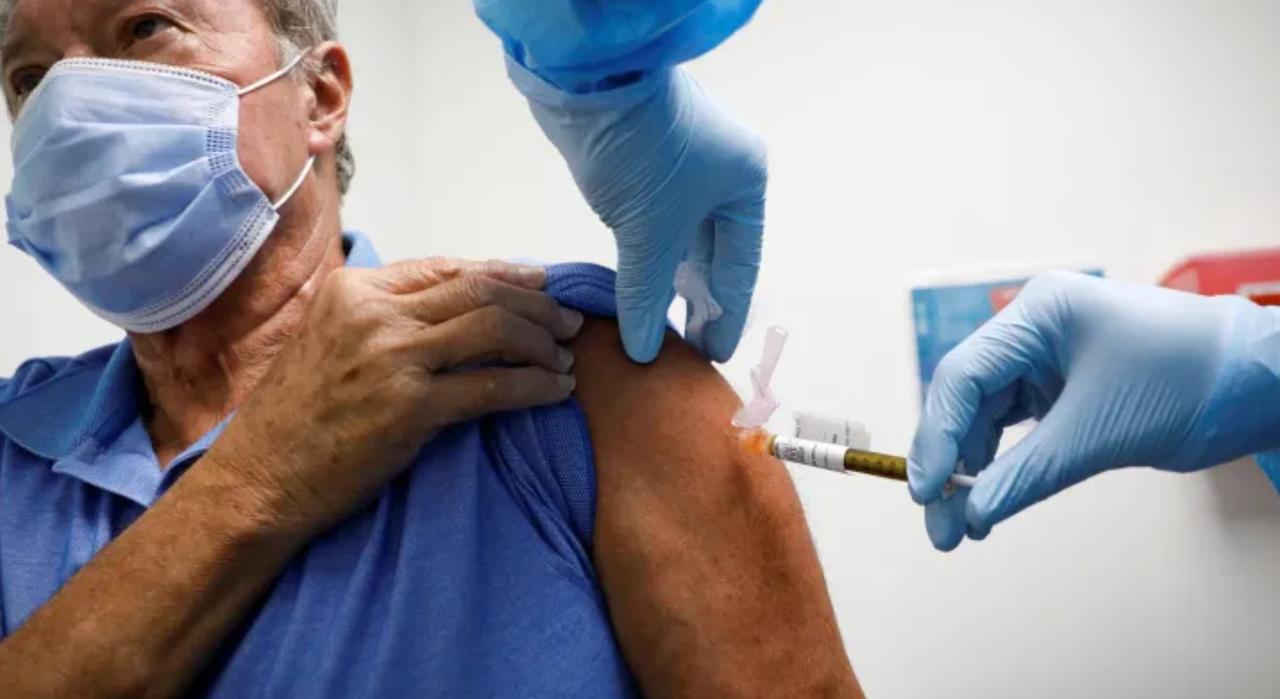
(ZH) Doctors Warn Side Effects From COVID-19 Vaccine "Won't Be A Walk In The Par

Doctors Warn Side Effects From COVID-19 Vaccine "Won't Be A Walk In The Park"

Fevers, sweats, migraines and muscle aches that last for days - these are just some of the symptoms reported by various 'Phase 3' trial participants who volunteered for the vaccine trials run by Pfizer, Moderna and others. Though AstraZeneca noted in its preliminary results that its vaccine (which uses the more traditional adenovirus vector) seemed to produce side effects that are less severe than some of its competitors.
As scientists try to ensure the US reaches a 70%+ vaccination rate (the cut-off point at which herd immunity is believed to kick in) a group of doctors just warned that public health officials and drugmakers need to be "transparent" with patients about the potential side effects of vaccination, and ensure precautions are taken to ensure patients don't skip their follow-up visit.
This is a top concern for Dr. Sandra Fryhofer of the American Medical Association, who warned that the side effects might deter many of her patients from receiving the follow-up shot. Dr. Fryhofer expressed her concerns during a virtual meeting on Monday with the CDC and representatives from various vaccine makers
"We really need to make patients aware that this is not going to be a walk in the park," Fryhofer said during a virtual meeting with the Advisory Committee on Immunization Practices, or ACIP, an outside group of medical experts that advise the CDC. She is also a liaison to the committee. "They are going to know they had a vaccine. They are probably not going to feel wonderful. But they've got to come back for that second dose."

During the meeting on Monday, Dr. Nancy Messonnier, director of the CDC's National Center for Immunization and Respiratory Diseases who frequently participated in CDC press briefings during the early days of the outbreak, said the agency would work to develop guidance if a health-care worker got a vaccine and then felt unwell the following day, since this could "impact planning on a hospital level in terms of which staff gets vaccinated which day?" she said.
Beyond ensuring hospitals aren't left in the lurch because they decided to vaccinate their entire staff at the same time, the doctors also discussed a novel strategy: using "positive" language to talk about the sideeffects. One example would be referring to side effects as a "response" to the vaccine.
Of course that won't actually do anything to mitigate the side effects.
As one might expect, some patients who participated in the study actually got upset when they didn't experience severe side effects post-vaccination, believing it was a sign they had received the placebo not the actual vaccine.
The doctors apparently brought in a anonymous North Carolina woman who participated in the Moderna study. "If this proves to work, people are going to have to toughen up," she said. "The first dose is no big deal. And then the second dose will definitely put you down for the day for sure...You will need to take a day off after the second dose."

Still, missing one day of work is certainly preferable to missing 14 days, which, as one doctor noted, is an "enormous" amount of time.

FT : Fed minutes signal readiness to shift bond-buying tactics

Fed minutes signal readiness to shift bond-buying tactics
Investors hope for more clarity on asset purchases in light of rift with US Treasury

Federal Reserve officials signalled that they were ready to make changes to their asset purchase programme if circumstances shifted, leaving the door open for new action but ruling out any immediate steps, according to minutes from their last policy meeting.

“While participants judged that immediate adjustments to the pace and composition of asset purchases were not necessary, they recognised that circumstances could shift to warrant such adjustments,” the minutes of the Federal Open Market Committee meeting held in early November said.

“Accordingly, participants saw the ongoing careful consideration of potential next steps for enhancing the committee’s guidance for its asset purchases as appropriate.”

The release of the minutes comes as US economic data — including an increase in new jobless benefit applications — has pointed to slowing or even stalling recovery because of the recent new surge in coronavirus cases and fading fiscal support.

The minutes revealed the extent to which the central bank is converging on further steps to boost the recovery through its asset purchase programme, but still lacking a firm consensus on the details and timing.

The minutes indicated that “many participants judged that the committee might want to enhance its guidance for asset purchases fairly soon”, while a “few” were “hesitant” to make changes in the near-term. The sceptics cited the “considerable uncertainty about the economic outlook and the appropriate use of balance sheet policies given that uncertainty”.

Several participants “noted the possibility that there may be limits to the amount of additional accommodation that could be provided through increases in the Federal Reserve’s asset holdings in light of the low level of longer-term yields, and they expressed concerns that a significant expansion in asset holdings could have unintended consequences”, the minutes said.

The release of the minutes also comes amid a rift between the Fed and the Treasury department over the fate of central bank’s crisis lending facilities rolled out since March to support financial markets. 

The bulk of the programmes are set to expire at the end of December, prompting concern among investors that the financial system will lose an important backstop at a time when coronavirus cases are surging globally and the economic recovery appears to be faltering. 

Strategists say the unexpected decision by the Treasury may compel the Fed to act preemptively at its December meeting to ward off any potential volatility. They are keeping a close eye on financial conditions, which by some measures are easier even than before the coronavirus outbreak roiled markets, for any indication that businesses are finding it harder or more expensive to raise capital. 

A team of analysts at Morgan Stanley led by Ellen Zentner wrote: “While we think the probability has increased that the Fed would choose to extend the duration of its asset purchases at its December meeting in response to these developments, we continue to emphasise just how much financial conditions have remained little moved since the announcement from the Treasury secretary, leaving little scope for additional monetary easing to make much of an impact.”

Still, the strategists said they see a 35 per cent chance the Fed opts for this policy pivot next month.

Investors have clamoured for more clarity from the central bank about its bond-buying plans, having committed since June to snap up $80bn of Treasury securities of all maturities each month. The Fed has since indicated the aim is to both support the economic recovery and ensure the smooth functioning of financial markets, but some fund managers believe the Fed should lay out more concretely the conditions under which it would consider adjusting either the composition or the aggregate size of its purchases.

According to the minutes, “most” FOMC members favoured eventually shifting to “qualitative outcome-based guidance for asset purchases that links the horizon over which the committee anticipates it would be conducting asset purchases to economic conditions”.

FT : Google ordered to hand over emails in £453m divorce battle

Google ordered to hand over emails in £453m divorce battle
Tatiana Akhmedova is trying to force her ex-husband to pay the world’s biggest settlement

A US court has ordered Google to hand over the personal emails of the son of a Russian oligarch as part of a bitter £453m divorce case.

Judge Virginia DeMarchi in California told the US tech group to surrender Temur Akhmedov’s emails for use as evidence in a lawsuit brought by his mother, Tatiana Akhmedova, the wife of an ally of President Vladimir Putin.

Ms Akhmedova has gone to court in the US and the UK in an attempt to force her ex-husband, Farkhad Akhmedov, to pay the world’s largest-ever divorce settlement.

Google said the order was a breach of its customer’s privacy.

The divorce case, which is being funded by litigation financier Burford Capital, has led to a legal battle over assets including a helicopter, a private jet and a superyacht called the Luna that used to belong to Chelsea Football Club owner Roman Abramovich.

Google sought to block the order to give up the emails this week on the basis that to do so would infringe Mr Akhmedov’s right to privacy because he had not given consent to share them.

Ms DeMarchi said Google’s concern for the “privacy and security of its account holders’ communications” was “commendable” but ruled the request did not breach the US Stored Communications Act, which governs voluntary and compelled disclosure of emails.

Google was ordered to produce all emails, documents and other information connected to two email accounts and preserve the accounts for 90 days.

The order comes days before the Akhmedovs are due to face each other in the High Court in London over the blockbuster settlement. The sum was awarded in 2016 by the High Court, but Mr Akhmedov senior claims it was superseded by their divorce in Moscow 20 years previously. 

Ms Akhmedova brought her son into the dispute last year when she accused him of helping her ex-husband to hide assets from her in order to avoid paying the court award. Her son, a commodities trader based in London, has since had his property raided after a UK judge accused him of destroying critical documents as part of the divorce case.

Lawyers for Ms Akhmedova were seeking items including a desktop computer, laptop, mobile phone and Apple Watch, all of which her son claimed to have lost in transit between France and London. 

Some 58 devices were ultimately recovered — 47 apparently belonging to Temur Akhmedov — which Mrs Justice Knowles said “appear to have been actively concealed from the wife, this court and Temur’s former solicitors”. 

In a statement on Wednesday a spokesperson for Temur Akhmedov called the exercise “futile” and said the seized devices included an old PlayStation and children’s Peppa Pig computer game belonging to his four-year-old daughter.

“As a result of this latest Google hearing, Temur hopes his mother and her backers will enjoy reading the contents of his old High School email account,” the spokesperson said. 

“This case and ruling are the latest evidence of the desperation of Tatiana and Burford Capital’s to find ‘evidence’ against him which simply does not exist,” the spokesperson said. Temur has nothing to hide despite his mother’s and Burford Capital’s “vastly expensive wild goose chase around the world’s courts”, the spokesperson added.