Reuters : Olympics: Nearly 60% of Japanese think Mori unfit for role as Tokyo 20

Olympics: Nearly 60% of Japanese think Mori unfit for role as Tokyo 2020 chief - poll
By Jack Tarrant

TOKYO (Reuters) - Nearly 60% of people in Japan think Tokyo 2020 President Yoshiro Mori is unfit for his role as head of the Olympics organising committee, according to a poll conducted by Kyodo News on Sunday.

The 83-year-old Mori, a former Japanese prime minister, said this week that women talked for too long in meetings. He later apologised at a meeting with the Japan Olympic Committee but has refused to resign.

The comments caused a storm on social media at home and abroad, with a petition calling for action against Mori gathering tens of thousands of signatures. Japanese tennis player Naomi Osaka said his comments were “ignorant”.

The poll, conducted by Kyodo over the telephone, found that of 1,023 people asked, nearly 60% said Mori was unfit for the position. Only 6.8% of respondents said he was fit for the role.

The Tokyo Olympic Games were postponed last year due to the COVID-19 pandemic and rescheduled to take place this year starting on July 23.

Kyodo also reported on Sunday that a female Japan Rugby Union Football board member said Mori’s comments were directed at her.

Yuko Inazawa, who became the first female board member of the JRFU in 2013, said “instinctively I thought he was referring to me”, Kyodo said.

“I think conferences dragged on as I was asking questions from my standpoint as an amateur,” said Inazawa, who is one of five women on the JRFU board.

“But that is absolutely not the same thing as saying women make conferences drag on.”

Mori served as JRFU president for 10 years through 2015 and was appointed honorary chairman until shortly before the 2019 Rugby World Cup.

Barron's : Squeeze Play Added Fuel to Rising Silver Prices. Here’s Why the Metal

Squeeze Play Added Fuel to Rising Silver Prices. Here’s Why the Metal Remains Undervalued.

Frenzied trading in silver recently lifted prices to an eight-year high. But fundamentals already pointed to a break out in the metal before the latest rally, some analysts say, and prices remain undervalued.

“Reddit-triggered buying” was a significant event that “lit a fuse,” says Paul Mladjenovic, author of “Investing in Gold and Silver for Dummies.” The physical market is extremely tight and demand is stronger than usual, so there is power to the upside for silver prices.

On Feb. 1, futures prices settled at $29.418 an ounce, the highest finish since February 2013. Traders attributed the climb that began on Jan. 28 to coordinated buying by investors gathering in social-media platforms, following a post on Reddit which suggested executing a short squeeze on silver.

It was really a combination of factors that led to silver’s rise, says Frank Holmes, chief executive officer of U.S. Global Investors. “Solar panels have been a massive industrial demand” source, and President Joe Biden’s climate change initiative are bullish for silver demand, he says.

In a late January blog post, Holmes wrote that silver would become a major beneficiary of emerging industrial applications, including an increase in solar power generation and the global rollout of 5G technology, which will boost the need for the metal.

Silver’s physical market was already stressed, with major world manufacturers and mines encountering more demand for certain fabricated bars and coins “than their ability to produce product since the Jan. 6 storming of the U.S. Congress.” That episode created a demand surge for gold and silver, says Dana Samuelson, president of American Gold Exchange.

The Reddit-driven surge strained supplies even further, pushing premiums that dealers charge each other higher, Samuelson says, as “dealers across the country rushed to buy any immediately deliverable production.”

“Rising investment demand could absolutely increase silver prices over the long run,” says Ryan Giannotto, director of research at GraniteShares. Precious metals had not captured the interest of young investors, but this event may have marked a turning point.

With the “inflationary pressures of low rates, continued stimulus and a falling dollar, all precious metals are in an environment conducive for materially higher price potential,” Giannotto says.

Samuelson believes silver remains undervalued relative to gold by 10% to 30%. With gold in the $1,825 to $1,875 an ounce range, silver should be trading at $30 to $35, he says.

Silver futures touched a high of $30.35 on Feb. 1, topping the $30 mark for the first time since February 2013.

They pulled back as of Feb. 3 but are still a long way from the all-time settlement high for most-active silver futures at $48.599 an ounce on April 29, 2011, based on FactSet data, according to Dow Jones Market Data.

Silver bullion prices climbed around 400% when the Hunt brothers cornered the silver market 40 years ago, with prices rising from $11 in September 1979 to $49.45 in January 1980, based on the London PM Fix, according to The Silver Institute. The institute noted that prices fell to below $11 an ounce two months later.

After those two attempts in the past to top $50, “the third time is the charm for silver,” says book author Mladjenovic, who estimates the price will hit and exceed $50.

“With or without the Reddit phenomena,’’ buying quality stocks and exchange-traded funds makes sense, Mladjenovic says. “The market is stronger now, especially with problems unfolding with inflation, debt, and spending.” Triple-digit silver—$100 or more—is a possibility in the near future, he adds.

TechCrunch : SoftBank files for a double scoop of SPAC

SoftBank files for a double scoop of SPAC

The SPAC mania continues unabated, with new SPACs being filed with the SEC on an almost hourly basis at times.

SoftBank, the Japanese telecom conglomerate which has also been running the gigantic Vision Fund and its successor, doesn’t want to be left out. Yesterday, it filed back-to-back SPAC registration statements for two new blank-check companies.

SVF Investment Corp 2 is $200 million and SVF Investment Corp 3 is a $350 million vehicle. Both SPACs have a standard roughly 15% over-allotment option, which means that their final sizes will likely end up at $230 million and $400 million respectively assuming that the underwriters take their option (number three has a slightly smaller over-allotment if you’re checking my math).

One interesting component of both SPACs is that they have what is known as a forward purchasing agreement connected to SoftBank’s Vision Fund 2. That agreement allows the second Vision Fund to purchase shares into these SPACs when they begin their business combinations with their target startups, essentially giving it the right to buy into the mergers. The Vision Fund has a $100 million agreement with SVF 2, and a $150 million agreement with SVF 3.

As with all SPACs, a registration statement is merely a filing of an intention to raise money, although these days, the vast majority of filings are later consummated.

As the numbering indicates, SoftBank had an earlier SPAC that it filed in December and officially closed on January 7 of this year. That vehicle targeted a total fundraise of $604 million including the underwriters’ over-allotment option. It also included a $250 million forward purchase agreement with the second Vision Fund similar to these latest two vehicles.

What are these SPACs looking for? Well, according to the filings, “We intend to identify, acquire and manage a business in a technology-enabled sector where our management team have differentiated experience and insights. Relevant sectors may include, but are not limited to, mobile communications technology, artificial intelligence, robotics, cloud technologies, software broadly, computational biology and other data-driven business models, semiconductors and other hardware, transportation technologies, consumer internet and financial technology.”

That seems to cover a lot, but just in case, the filings note that “However, we may consummate a transaction with a business in a different or related industry.” So basically anything.

There is no timeline yet for when the SPACs could potentially close, but typical timing is 4-8 weeks given market averages.

(ZH) The Curious Case Of The Hedge Fund That Made $700 Million On GameStop

The Curious Case Of The Hedge Fund That Made $700 Million On GameStop
While retail was "sticking it to the suits" - the actual suits at hedge fund Senvest Management were about to net a cool $700 million on GameStop's (GME) run higher.

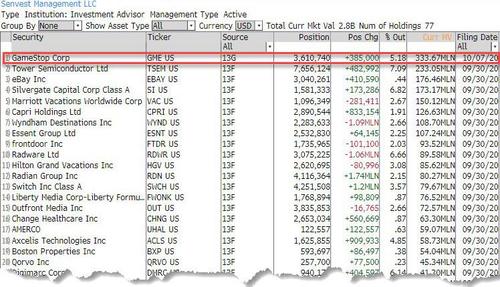
Senvest holding as of Oct 7, an oddity considering many within the hedge fund world at the time viewed it as a potential bankruptcy candidate - hardly a prudent move from a fiduciary standpoint, unless Senvest had a plan... and boy did it have a plan.
But let's back up.
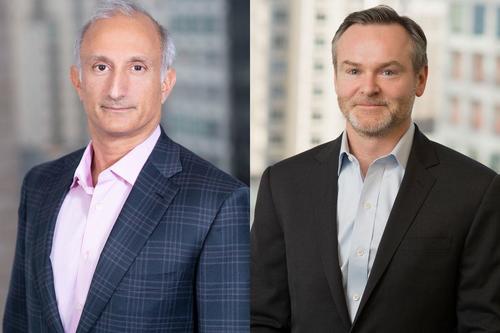
Senvest principles, Richard Mashaal and Brian Gonick, started buying GME stock equity in September, the Wall Street Journal report reveals, just weeks before they had accumulated a massive 3.6 million shares making Gamestop the fund's largest holding. Mashaal told the Journal: “When it started its march, we thought, something’s percolating here. But we had no idea how crazy this thing was going to get.”
In retrospect, he just might have had an idea.
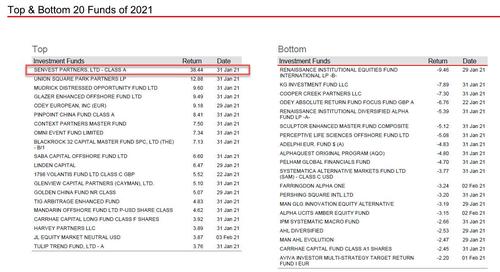
GameStop turned into the firm's most profitable ever investment by dollars earned and IRR. Senvest's fund has ballooned from $1.6 billion to $2.4 billion as a result of GameStop's move and, for the month of January, the fund was up 38.4%. Gamestop is also the reason why Senvest is currently the top performing fund tracked by HSBC's popular Hedge Weekly report.
Thomas Peterffy, chairman of Interactive Brokers, noted what many had suspected: “It is not just little people on the long side here. There are huge players playing both sides of GameStop.”
He was right. Senvest says their interest in the name was "piqued by a presentation from the new GameStop chief executive at a consumer investment conference in January 2020." The Journal writes:
But as they spoke with management, sussed out competitors and noted the involvement of activists in the stock, including Chewy Inc. co-founder Ryan Cohen, they eventually started buying. By the end of October, Senvest owned more than 5% of the company, paying under $10 a share for the bulk of the stock.
They thought that if GameStop could hold on until the next generation of videogame consoles came out and stoked demand for games and accessories, the company would get a boost. And they reasoned that if Mr. Cohen could help transform GameStop from a largely bricks-and-mortar operation into an online gaming destination, the company could be worth far more.
Sure there are fundamentals, but we doubt that was the reason for the accelerated accumulation of GME stock by Senvest. Something tells us there were other factors that prompted the urgent buying spree, especially since the original "short burn of the century" article on Reddit which sparked the retail interest in the name, appeared in early September right around the time Senvest started acquiring shares, according to the Journal. One almost wonder if the two aren't linked.
The post reads: "Sup gamblers. Feel bad about missing the gain train on TSLA? Fear not - something much greater and stupider is here. You know Citadel? The MM that took all our money today? Well now we finally won’t be at the mercy of the MMs. Instead, we’re going to temporarily join forces with the Galactic Empire and hijack the death star."
The post then launches into a relatively sophisticated explanation of the hows and whys of orchestrating a short squeeze:
The this turn around is going to make TSLA's short burn look like warm afternoon tea.
Why? Well, most short squeezes are mostly math. This one is special because we have math AND great underlying news.
To be clear, this will happen whether or not we participate. I prefer us idiots to be a part of history. Here’s what’s up:
Short interest:
GME currently has between 85% - 99.8% short interest, depending on what site you use. For context, 20% is already considered high as the moon. TSLA and NFLX were around 30-40% at their peak. But GME’S ACTUAL SHORT INTEREST IS OVER 110%.
Here is a simple way of framing the timeline:

Just a few months later, in December the GameStop long thesis got a major boost among both the retail (outside of WSB) as well as C-grade institutional community, when Hedgeye, which sells research to clients, pitched the name.
On Dec. 17, when GME stock closed at $14.83, Hedgeye told its clients that GameStop was one of their "Best Ideas" and held a presentation as to why the equity, then trading at $14.83 could eventually be worth $100. What Hedgeye's clients did not know - according to the WSJ - is that Senvest had pitched the idea to them.
Of course, for Hedgeye it would be a knockout blow if it emerged that the firm wasn't an "independent provider of research" but middle-man and facilitator for hedge funds who had put on trades and then used Hedgeye's client network as an amplification system... similar to what many accuse hedge funds of doing to r/wallstreetbets right now. Which is why the advisory denied that the upgrade was prompted solely by Senvest's whispers (we can only assume that Senvest is also a client): “I respect Senvest a lot. We vetted it independently and we came up with a similar conclusion,” said Hedgeye analyst Brian McGough said.
In any case, by late December - between wallstreetbets and Hedgeye clients, the thesis was already widely spreading among the retail community, a process that would eventually culminate with the explosion of the stock price in late January. Why? Because the prevailing narrative was one where one or more hedge funds would never be able to cover their shorts because there was not enough shorts available in the float to cover, a process the world first encountered with Volkswagen, leading to a huge squeeze that briefly made Volkswagen the world's most valuable company. A squeeze "process" which, incidentally, Senvest was all too familiar with. The WSJ writes:
Messrs. Mashaal and Gonick had been on the wrong end of short squeezes before at Senvest. One case was with opioid maker Insys Therapeutics Inc., though they ultimately made money on their short position. GameStop’s stock could soar if it got caught up in a situation in which its rising price forced bearish investors to start buying back shares to curb their losses, they thought.
They thought... and they were right. All they needed was the critical mass of buyers to ramp an initial buying cascade which would then trigger the squeeze and the rest is history. That's precisely what happened in mid to late January, when the stock price exploded from $20 to over $500.
Unable to believe their eyes (or perhaps knowing precisely how such a massive short squeeze would play out) Senvest was just waiting for the catalyst to dump it all. They got it on on January 26, when Tesla CEO Elon Musk joined the stock-pumping fray and Tweeted out: "GameStonk!!".
“Given what was going on, it was hard to imagine it getting crazier,” Senvest's Mashaal concluded.

So just a series of very lucky coincidences leading up to a record, $700 million payday, or a masterfully executed plan that was laid out and executed far better than most Hollywood scripts?
We hope to have the answer once Congress holds its Gamestop hearings, although considering that Maxine Waters is in charge we won't be holding our breath.

(ZH) Goldman: Does Valuation Still Matter?

Goldman: Does Valuation Still Matter?

One week ago, when traders were still enthralled by the ongoing marketwide short squeeze, which started off as an isolated reddit attempt to (successfully) punish GME shorts such as Melvin Capital, and which cascaded into a widespread liquidation of most popular names as a wave of VaR shocks hit countless hedge funds which had no choice but to rapidly degross and puke their most popular, liquid and profitable positions as their shorts spiked unleashing industrywide margin calls and leading to the biggest alpha drawdown in history...
... we summarized recent events in a simple and succinct fashion: "What it all boils down to: the market has been broken since 2009, but broken in moderation and everyone is happy, the rich get richer, etc. But if someone (WSB, whoever) take this breakage to its absurd extreme (where stock prices no longer reflect anything), everything breaks"
And for a few seconds... everything did break, and only the rapid intervention of regulators/DTCC forcing Robinhood to effectively shutdown trading is what gave the system on full tilt the critical time it needed to take a breath force a reset and reverse the momentum.
Now, in a post-mortem to recent events, Goldman - which last week warned that if the squeeze isn't halted, the consequences for market could be dire - wrote a somewhat lengthier take on what happened but its conclusion is similar: the price formation mechanism - and the fundamental investing process itself - broke when millions of retail investors (and a handful of very wily hedge fund investors) plowed into a the most shorted stocks, leading to an unprecedented disconnect between price and value.
It certainly explains why Goldman's David Kostin starts off with what may well be the best quote to describe recent events:
More than a century ago and written in a completely different context, Oscar Wilde, the Irish playwright, penned a perfect description of the social psychology underpinning a short squeeze. In Lady Windermere’s Fan, one character asks, “What is a cynic?” The friend responds, “A man who knows the price of everything, and the value of nothing.” The dialogue continues, and the original inquirer states, “And a sentimentalist is a man who sees an absurd value in everything, and doesn’t know the market price of a single thing.”
Needless to say, a lot of cynics and sentimentalists were unleashed in the past two weeks.
As Kostin recaps recent events, "every financial market participant knows the recent sequence of events. An extraordinarily high short interest position in a few small cap stocks, most prominently GameStop (GME), was stampeded by a group of social media inspired retail investors. A flurry of odd-lot cash orders and out-of-the-money call options supercharged the stock price and forced short-covering at higher and higher share prices. The situation was compounded because the retail buy orders were placed with broker-dealers which suspended processing trade orders in order to meet the minimum capital requirements of the Depository Trust & Clearing Corp (DTCC). This sequence of events happened within just a few days and caused an epic short squeeze. Billions of dollars were made and lost as share prices rocketed higher and then collapsed within the span of a week."
But so what: it's not like this was the first time something like this happened: after all back in Sept 2008 when the world was crashing, a similar short squeeze made Volkswagen the world's most valuable company... if only for a few hours.
Well, it appears this time was different because unlike back then, the current squeeze happened in a context where virtually everyone was forced to reassess the core principle and tenets of capital markets, or as Kostin poetically puts it:
The market implications of the stock price swings are both very significant and completely inconsequential.
Expounding on this claim, the Goldman chief market strategist says that "those two assessments are not in conflict." Laying out the case first for why the marketwide short squeeze was a tempest in a teapot, to use the parlance of Jamie Dimon, Kostin says that while what happened was although certainly dramatic, "the wild price action of a few small-cap stocks was dwarfed by the rest of the companies in the market both in terms of scale of business activity and equity capitalization. Corporate fundamentals have been much stronger than expected. During the past month, upward estimate revisions for full-year 2021 EPS have occurred across all 11 sectors. Last week, S&P 500 fell by 3.6% from a then-record high. This week, it rebounded to establish a new high and is up 3% YTD."
Ok fine, but good luck telling Melvin Capital (or Ken Griffin, or Steve Cohen for that matter) that what happened was "completely inconsequential." They are more likely to focus on the "yes but" part of Kostin's assessment, namely that...
The disorderly sequence of events has implications for market structure and oversight. The House Financial Services Committee has scheduled hearings on February 18th to explore recent market volatility in a session titled: “Game Stopped? Who Wins and Loses When Short Sellers, Social Media, and Retail Investors Collide.” Topics likely to be addressed include payment for order flow, capitalization of broker-dealers, rejection of customer trade orders, trade settlement, mechanics of price-vs. liquidity-driven short-covering, and the gamification of retail investing.
Going back to the actual squeeze, Goldman writes that several aspects of the trading in GME shares are worth noting.
First, from a positioning perspective, for more than a year the short interest in GME exceeded 100% of the float of the company, and it reached 140% in January, a "situation which is highly unusual" because during the last 10 years, Goldman has found only 15 instances when the short interest outstanding exceeded 100% of a company’s float, and as the bank explains, perhaps for the cheap seats, "extremely elevated short interest is a pre-condition if a major short squeeze is going to occur" (we wonder if Goldman, or WSB for that matter, has ever looked at the short interest in the XRT ETF)
Second, and going back to the quote above, Kostin notes that "the acerbic lines from Wilde’s 1892 play perfectly capture the situation: The entire episode was all about price, and nothing about valuation" as "social media commentary typically referenced price action with lofty targets sometimes illustrated with rocket ship emojis. We almost never read a comment about valuation because the rally implied an astronomical P/E multiple." Great point David - now maybe you can extrapolate a little beyond what you just said, and tell your clients some more about how the trillions in liquidity sloshing around market have made price and valuations so disonnected even you are forced to only showing the hilariously wrong Fed model as the only justification to keep buying stonks so they can hit your year-end price target of 4,300. Yeah, didn't think so...
Still, that didn't stop the Goldman strategist from decomposing Oscar Wilde's quote into its components as they applied to GME:
  • The price of everything. GME shares traded at an average price of $13.50 during 2018. The stock then fell sharply and between mid-2019 and mid-2020 (a period stretching from well before through the bottom of the Covidcrisis) the stock traded sideways at $5 per share. A 4Q rally pushed the shares to $19 at year-end. The explosion in stock price since the start of 2021 has been breathtaking. On Jan 13th the stock hit $30, rose to $40 the next day, and had jumped to $65 by Jan 22. The progression during the five days from Jan 25 to Jan 29 was epic: $77, $148, $348, $193, and the stock ended the month at $325, up 1,600% since the start of the year. However, this week the shares have plunged by 80% to $64.
  • The value of nothing. Long before the pandemic, revenues for GME fell by 22% from 2018 to 2019 followed by an additional 20% drop last year. The plunge in earnings has been even more dramatic. In 2019 –pre-pandemic –EPS fell by 92%. In 2020, GME posted a loss (-$2.18) and analysts expect a loss in 2021 (-$0.17). Consensus projects GME will return to profitability in 2022. However, the forecast EPS in 2022 (+$1.35) is only half the realized EPS in 2018 (+$2.70) back when the shares traded at an average price of $13.50 (low of $11; high of $17) (see Exhibit 3).
Next, the Goldman chief strategist stubbornly keeps trying to make the point that what happened was an aberration of efficient markets and a "completely inconsequential" impossibility from a fundamental standpoint, as if anyone would even dream of arguing that GME would ever trade above $500 on its own merits...
The absurdity of the January spike in GME share price becomes readily apparent when viewed through the lens of implied valuation. The implied P/E on projected 2022 EPS two years into the future soared from 14x at year-end 2020 to more than 250x at the peak on Jan 27, before retreating to the current P/E of 42x. For context, the shares of Tesla (TSLA), a stock that has both skeptics and cheerleaders around its valuation, but is widely viewed to have strong growth prospects –consensus forecasts a doubling in sales and a quadrupling of EPS between 2020 and 2022 –trades at 140x expected 2022 EPS following its stunning 780% rise last year (just half the percentage gain in GME shares in January 2021). The more mundane S&P 500 index trades at 20x our 2022E EPS of $196.
... without even for a second stopping to consider that it was the Federal Reserve that made this peak absurdity possible. Why? Because in a market where virtually all valuations are in their 100% percentile...
... and where the thread between price and value is barely present across most "serious" companies which are trading at 100x or even 1000x of future earnings and revenues, all the GME daytrading public did was to sever any pretense of linkages between fundamentals and prices and as a result, quickly took prices to their absurd extreme which in the case of GME meant $513.12 per share early in the morning of Thursday, January 28...

(GS) Goldman: Does Valuation Still Matter?

The Curious Case Of The Hedge Fund That Made $700 Million On GameStop
While retail was "sticking it to the suits" - the actual suits at hedge fund Senvest Management were about to net a cool $700 million on GameStop's (GME) run higher.

Senvest holding as of Oct 7, an oddity considering many within the hedge fund world at the time viewed it as a potential bankruptcy candidate - hardly a prudent move from a fiduciary standpoint, unless Senvest had a plan... and boy did it have a plan.
But let's back up.
Senvest principles, Richard Mashaal and Brian Gonick, started buying GME stock equity in September, the Wall Street Journal report reveals, just weeks before they had accumulated a massive 3.6 million shares making Gamestop the fund's largest holding. Mashaal told the Journal: “When it started its march, we thought, something’s percolating here. But we had no idea how crazy this thing was going to get.”
In retrospect, he just might have had an idea.
GameStop turned into the firm's most profitable ever investment by dollars earned and IRR. Senvest's fund has ballooned from $1.6 billion to $2.4 billion as a result of GameStop's move and, for the month of January, the fund was up 38.4%. Gamestop is also the reason why Senvest is currently the top performing fund tracked by HSBC's popular Hedge Weekly report.
Thomas Peterffy, chairman of Interactive Brokers, noted what many had suspected: “It is not just little people on the long side here. There are huge players playing both sides of GameStop.”
He was right. Senvest says their interest in the name was "piqued by a presentation from the new GameStop chief executive at a consumer investment conference in January 2020." The Journal writes:
But as they spoke with management, sussed out competitors and noted the involvement of activists in the stock, including Chewy Inc. co-founder Ryan Cohen, they eventually started buying. By the end of October, Senvest owned more than 5% of the company, paying under $10 a share for the bulk of the stock.
They thought that if GameStop could hold on until the next generation of videogame consoles came out and stoked demand for games and accessories, the company would get a boost. And they reasoned that if Mr. Cohen could help transform GameStop from a largely bricks-and-mortar operation into an online gaming destination, the company could be worth far more.
Sure there are fundamentals, but we doubt that was the reason for the accelerated accumulation of GME stock by Senvest. Something tells us there were other factors that prompted the urgent buying spree, especially since the original "short burn of the century" article on Reddit which sparked the retail interest in the name, appeared in early September right around the time Senvest started acquiring shares, according to the Journal. One almost wonder if the two aren't linked.
The post reads: "Sup gamblers. Feel bad about missing the gain train on TSLA? Fear not - something much greater and stupider is here. You know Citadel? The MM that took all our money today? Well now we finally won’t be at the mercy of the MMs. Instead, we’re going to temporarily join forces with the Galactic Empire and hijack the death star."
The post then launches into a relatively sophisticated explanation of the hows and whys of orchestrating a short squeeze:
The this turn around is going to make TSLA's short burn look like warm afternoon tea.
Why? Well, most short squeezes are mostly math. This one is special because we have math AND great underlying news.
To be clear, this will happen whether or not we participate. I prefer us idiots to be a part of history. Here’s what’s up:
Short interest:
GME currently has between 85% - 99.8% short interest, depending on what site you use. For context, 20% is already considered high as the moon. TSLA and NFLX were around 30-40% at their peak. But GME’S ACTUAL SHORT INTEREST IS OVER 110%.
Here is a simple way of framing the timeline:

Just a few months later, in December the GameStop long thesis got a major boost among both the retail (outside of WSB) as well as C-grade institutional community, when Hedgeye, which sells research to clients, pitched the name.
On Dec. 17, when GME stock closed at $14.83, Hedgeye told its clients that GameStop was one of their "Best Ideas" and held a presentation as to why the equity, then trading at $14.83 could eventually be worth $100. What Hedgeye's clients did not know - according to the WSJ - is that Senvest had pitched the idea to them.
Of course, for Hedgeye it would be a knockout blow if it emerged that the firm wasn't an "independent provider of research" but middle-man and facilitator for hedge funds who had put on trades and then used Hedgeye's client network as an amplification system... similar to what many accuse hedge funds of doing to r/wallstreetbets right now. Which is why the advisory denied that the upgrade was prompted solely by Senvest's whispers (we can only assume that Senvest is also a client): “I respect Senvest a lot. We vetted it independently and we came up with a similar conclusion,” said Hedgeye analyst Brian McGough said.
In any case, by late December - between wallstreetbets and Hedgeye clients, the thesis was already widely spreading among the retail community, a process that would eventually culminate with the explosion of the stock price in late January. Why? Because the prevailing narrative was one where one or more hedge funds would never be able to cover their shorts because there was not enough shorts available in the float to cover, a process the world first encountered with Volkswagen, leading to a huge squeeze that briefly made Volkswagen the world's most valuable company. A squeeze "process" which, incidentally, Senvest was all too familiar with. The WSJ writes:
Messrs. Mashaal and Gonick had been on the wrong end of short squeezes before at Senvest. One case was with opioid maker Insys Therapeutics Inc., though they ultimately made money on their short position. GameStop’s stock could soar if it got caught up in a situation in which its rising price forced bearish investors to start buying back shares to curb their losses, they thought.
They thought... and they were right. All they needed was the critical mass of buyers to ramp an initial buying cascade which would then trigger the squeeze and the rest is history. That's precisely what happened in mid to late January, when the stock price exploded from $20 to over $500.
Unable to believe their eyes (or perhaps knowing precisely how such a massive short squeeze would play out) Senvest was just waiting for the catalyst to dump it all. They got it on on January 26, when Tesla CEO Elon Musk joined the stock-pumping fray and Tweeted out: "GameStonk!!".
“Given what was going on, it was hard to imagine it getting crazier,” Senvest's Mashaal concluded.

So just a series of very lucky coincidences leading up to a record, $700 million payday, or a masterfully executed plan that was laid out and executed far better than most Hollywood scripts?
We hope to have the answer once Congress holds its Gamestop hearings, although considering that Maxine Waters is in charge we won't be holding our breath.

TechCrunch : Hasselblad X1D II 50C: out of the studio and into the streets

Hasselblad X1D II 50C: out of the studio and into the streets
We took the $10,000 camera kit for a socially-distanced spin

Image Credits: Veanne Cao
We crawled into an abandoned school bus, trespassed through dilapidated hallways, dodged fleeting thunderstorms and wandered through empty streets of Chinatown late into the evening. For two summery weeks, I couldn’t have been happier.
New York City was in lockdown. I’d been quarantined in my dinky apartment, disheartened and restless. I was anxious to do something creative. Thankfully, the Hasselblad X1D II 50C arrived for review, along with approval from the studio heads for socially-distanced, outdoor shoots.
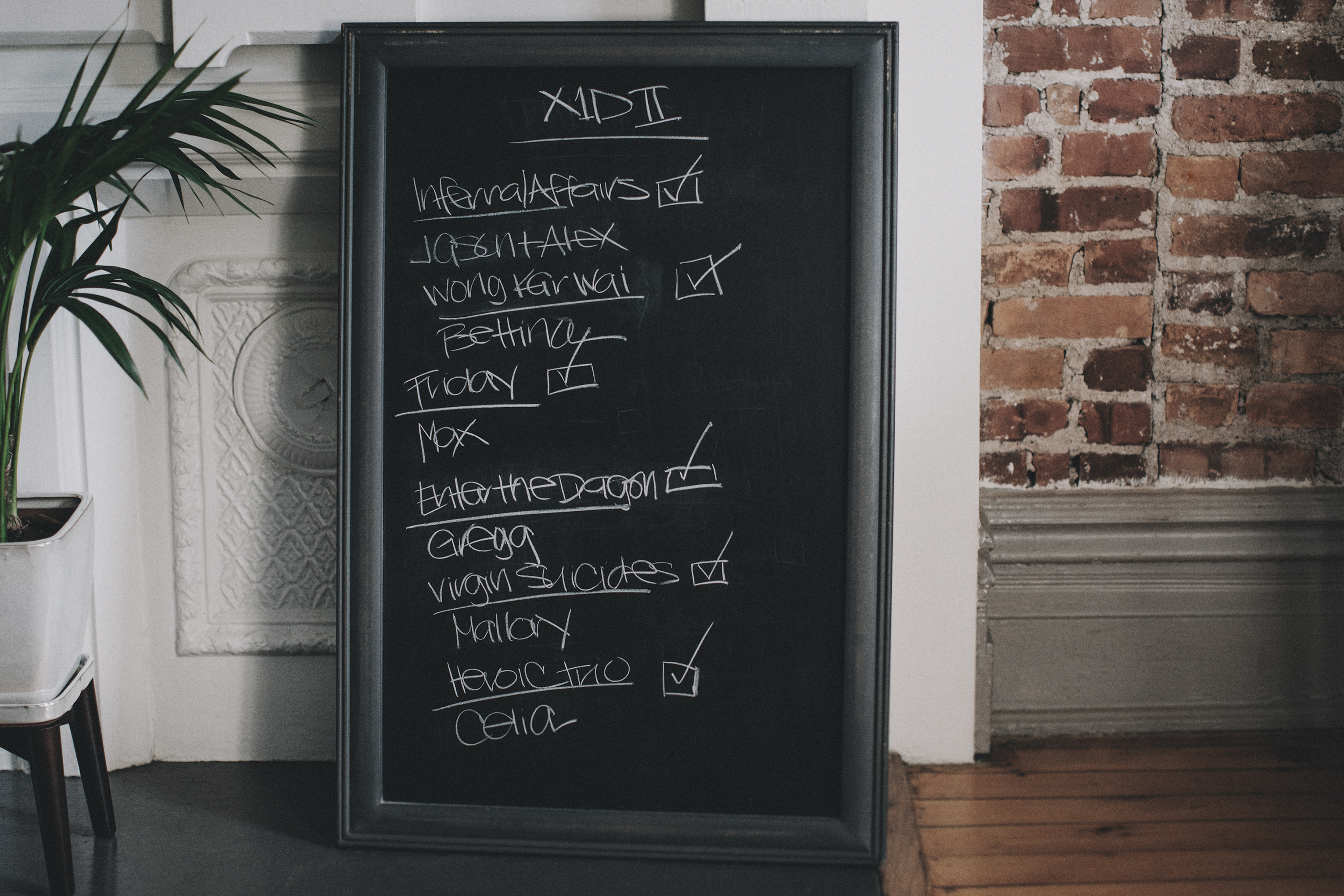
Taking pictures of the mundane (flowers, buildings, and such) would’ve been a disservice to a $10,000 camera kit, so instead, my friends and I collaborated on a fun, little project: we shot portraits inspired by our favorite films.


Image Credits: Veanne Cao

Equipped with masks and a bottle of hand sanitizer, we put the X1D II 50C and 80mm F/1.9 lens (ideal for close-ups without actually having to be close up) through its paces in some of NYC’s less familiar backdrops.


Before I get into any trouble for the last photo – Alex and Jason are professional stuntmen and that’s a rubber prop gun. They were reenacting the penultimate scene from Infernal Affairs – a brilliant piece of Hong Kong cinema (much better than the Scorsese remake).
While the camera is slightly more approachable in terms of cost and ease of use with a few upgrades (larger, more responsive rear screen, a cleaned-up menu, tethering capabilities, faster startup time and shutter release), the X1D II is essentially the same as its predecessor. So I skipped the standard review.
Image Credits: Veanne Cao
What it is, what it isn’t
The most common complaint about the X1D was its slow autofocus, slow shutter release and short battery life. The X1D II improved on these features, though not by much. Rather than seeing the lag as a hindrance, I was forced to slow down and re-wire my brain for a more thoughtful shooting style (a pleasant side effect).
As I mentioned in my X1D review, Apple and other smartphone manufacturers have made shooting great pictures effortless. As such, the accessibility has created a culture of excessively capturing everyday banalities. You shoot far more than you’ll ever need. It’s something I’m guilty of. Pretty sure 90% of the images on my iPhone camera roll are throwaways. (The other 10% are of my dog and he’s spectacularly photogenic.)
The X1D II, however, is not an easy camera. It’s frustrating at times. If you’re a beginner, you may have to learn the fundamentals (ISO, f-stops, when to click the shutter), but the payoff is worth it. There’s an overwhelming sense of gratification when you get that one shot. And at 50 megapixels, it’s packed with details and worthy of hanging on your wall. Shelling out a ton of money for the X1D II won’t instantly make you a better photographer, but it ought to encourage you to become one.
Without the contrived studio lights and set design, our outdoor shoots became an exercise in improvisation: we wandered through the boroughs finding practicals (street lights, neon lights… the sun), discovering locations, and switching spots when things didn’t pan out.
We explored, we had purpose.
My takeaway from the two weeks with this camera: pause and be meaningful in your actions.
Reviewed kit runs $10,595, pre-taxed:
Hasselblad X1D II 50C Mirrorless Camera – $5,750
Hasselblad 80mm F/1.9 XCD Lens – $4,845

Barron's : Biogen Bet Big on Its Alzheimer’s Drug. The Stock Will Soar or Dive o

Biogen Bet Big on Its Alzheimer’s Drug. The Stock Will Soar or Dive on the FDA’s Decision.

After 18 years without a new treatment for Alzheimer’s disease, an extra three months for the Food and Drug Administration to decide on Biogen’s aducanumab might not seem like long to wait.

Still, the delay, announced on Jan. 29, was unexpected. The agency’s panel of outside experts has already rejected the evidence for aducanumab. Under normal circumstances, that would have been the end of the company’s hopes.

But the FDA didn’t say no to aducanumab. Instead, it asked for more time. Which means there remains a chance for the drug—and for Biogen (ticker: BIIB), which is counting on the approval as its other products face challenges.

The delay adds one more wrinkle to a decision that could determine the fate of the giant biotech, as well as tens of billions of investor dollars and the health of millions of Americans.

If the FDA approves aducanumab, Wall Street expects the company’s shares, which traded recently at $263, to climb as much as 70%. Analysts estimate the drug could bring in $10 billion a year in sales, or more.

The consequences of failure are nearly as stark. Biogen’s core businesses are struggling, with many of its most important drugs facing growing challenges from competitors.

“It is basically a declining business,” says Mohit Bansal, an analyst with Citigroup. “In the case of an aducanumab non-approval, it just becomes a very difficult investment story.”

A drug to treat Alzheimer’s disease is an inherently risky bet. Even as the pharmaceutical industry has made huge advances in cancer and some genetic diseases, progress on neurological disorders in general—and Alzheimer’s in particular—has stagnated. Failed trial has followed failed trial, as one drug after another has disappointed.

If aducanumab fails, the nearest alternative on the horizon is a similar monoclonal antibody from Eli Lilly (LLY) called donanemab, which Lilly says performed well in a trial in early symptomatic Alzheimer’s patients. Lilly doesn’t plan to share details on the trial until mid-March.

Aducanumab’s journey toward approval would ordinarily have ended at least twice by now. Biogen said in March 2019 that it was stopping two late-stage trials because the drug wasn’t helping patients. Seven months later, it said that the drug actually had helped, after all. In November, the FDA convened a panel of experts that rejected Biogen’s analysis, voting overwhelmingly that the company’s data didn’t prove that aducanumab is an effective treatment for Alzheimer’s disease.

The FDA usually takes the advice of its expert panels. But Biogen shares are trading as if aducanumab has a real chance—largely because of an unusual back-and-forth between the drugmaker and the FDA.

Evidence came in the form of a document the FDA presented to its panel of experts in November. Normally, the agency will give the panel a lengthy briefing book independently analyzing the evidence for the drug it is asking the panel to review. This time, FDA submitted a 343-page document that it had prepared with Biogen.

“There was a special relationship,” says Marc Goodman, an analyst with SVB Leerink. “You could crystal-clearly see it. The briefing documents were unprecedented. I’ve been doing this job over 20 years and I’ve talked to people who have been doing it longer, and we’ve never really seen anything like that before, where the FDA is just working that closely with a company. They went to the [advisory committee] basically saying, ‘This drug’s getting approved.’ ”

That’s what’s different about aducanumab, and why investors are holding out hope. Biogen said that the FDA had requested additional data that needed more time for review. The FDA’s deadline has now been pushed to June 7 from March 7.

The delay and the unusual relationships between the drugmaker and the regulator make it difficult for investors to game out a decision. “This outcome remains unanalyzable,” wrote Piper Sandler analyst Christopher Raymond.

On an earnings call this past week, the company offered no further details on the delay, but said it remained confident in aducanumab’s approval. “We continue to stand behind our clinical data,” Biogen CEO Michel Vounatsos said on the call. “We believe our results support approval.”

The company plans to spend $600 million launching aducanumab in 2021, a third of which is reimbursable by its Japanese partner, Eisai (ESALY). Biogen’s chief financial officer, Michael McDonnell, said on the earnings call that the company has allocated a “significant portion of its manufacturing capacity to aducanumab,” a decision that would “impact 2021 results” if the drug doesn’t receive approval.

The full-court press comes as things begin to look grim for many of Biogen’s most important products.

Its best-selling drug, a multiple sclerosis treatment called Tecfidera, is competing with a brand-new generic version after an unexpected court ruling this past spring. Analysts expect its sales to fall to $1.7 billion this year from $4.4 billion in 2019, when it accounted for 31% of Biogen’s total sales.

In addition, Biogen anticipates “significant erosion” in U.S. sales of a cancer drug, Rituxan. Its other multiple sclerosis drugs are also facing growing competition, as is its $2 billion-a-year spinal muscular atrophy drug, Spinraza.

Biogen has another shot at a huge neurology market in the second quarter, when a large study of a depression drug it is developing with Sage Therapeutics (SAGE) returns data. A negative result, however, could hurt the stock even more.

Wall Street expects Biogen’s earnings to drop sharply in 2021, to $20.22 a share from $33.70 a share.

Biogen, meanwhile, has doubled and redoubled its bets on aducanumab, even authorizing two separate $5 billion share repurchases since December 2019. Analysts have seen the buybacks as a bet by the company on aducanumab’s approval; buying its own shares in anticipation of a spike when the FDA gives the nod.

“We are of the view that the more prudent choice would be to save the cash for [business development] in case the decision does not go in company’s favor,” Citigroup’s Bansal wrote in an October note about the second buyback announcement.

Biogen defended the buybacks. “Biogen is committed to allocating capital efficiently, effectively, and appropriately,” the company said in a statement. “While share repurchases are one component of our strategy, last year alone we executed eight business-development deals that have a total value of roughly $3 billion.”

If aducanumab makes it to market, it’s all fine for Biogen.

“The upside is incredible,” says Colin Bristow, an analyst at UBS, who says sales of aducanumab could be as high as $20 billion a year. “They would have unfettered access to the Alzheimer’s market for years.”

But if the FDA disagrees, Biogen could fall hard. The company issued 2021 sales guidance this past week that fell well short of Wall Street expectations, even though it included “modest” aducanumab revenue. In a note that day, Bansal wrote that if aducanumab isn’t approved, the conservative guidance “resets the downside much lower,” and could mean the stock will drop even further.


Aducanumab’s potential comeback began months after Biogen said in March 2019 that an independent data-monitoring committee had determined that two large trials of the drug were failing. (The company still acknowledges that one study failed.) After an analysis of data that wasn’t available when the trial was stopped, it now believes the second study actually found that patients on a high dose of aducanumab experienced 22% less clinical decline than those in the placebo group.

The FDA’s advisory committee disagreed. The votes of advisory panels aren’t binding, but the FDA rarely ignores them. “The chances of this getting approved in this cycle are extremely low,” Bansal says. “The panel was overwhelmingly negative.”

That isn’t reflected in how the stock is trading, however. Investors are taking the FDA’s collaboration with Biogen as a sign that the agency wants to say yes.

In meeting minutes quoted in the joint briefing document, the FDA said that the “wholly unique situation” of the aducanumab program in the summer of 2019, when Biogen was reviewing the data it received after the trials were stopped, required that analyses of the trial data be done “as part of a bilateral effort involving” the FDA and Biogen. The company says that it worked with the FDA “in a collaborative manner to achieve a maximum understanding of the existing data through a working group.”

That collaboration was unusual enough that the advocacy group Public Citizen voiced concerns to the FDA. Asked to comment on the criticism that officials had collaborated inappropriately, an FDA spokesperson said that the agency could not comment on pending applications.

“The reality is it probably deserves to have another study to prove that it really works,” Leerink’s Goodman says of aducanumab. “But it’s Alzheimer’s, and that’s why I think things are different....There’s nothing approved for Alzheimer’s. And I think that the [FDA] division head is frustrated by that.”

There is undoubtedly an urgent need to make new Alzheimer’s drugs available. According to the Alzheimer’s Association, 5.8 million Americans are living with the disease today, including 10% of Americans over 65.

“While the trial data has led to some uncertainty among the scientific community, this must be weighed against the certainty of what this disease will do to millions of Americans absent treatment,” an Alzheimer’s Association executive wrote in a public comment submitted to the FDA advisory committee.

So, it’s easy to understand the pressure on the FDA to say yes. But approving a drug that might work could make it harder to find one that definitely works.

“The reason we have a regulatory agency is because science is difficult, and we know that the only way we get through to correct answers is being rigorous and empirical,” says Dr. Peter Bach, director of the Center for Health Policy and Outcomes at Memorial Sloan Kettering Cancer Center.

Once a treatment is approved, it becomes harder to run trials of other, possibly better drugs. And allowing a drug company to reap huge profits from a drug that doesn’t actually work warps the incentive structure intended to push companies to discover useful drugs. “I think it would be a great pity to see the drug approved,” Bach says.

The FDA is caught in the middle, and it couldn’t come at a more delicate time as it seeks to shore up a reputation for rigor and independence that has suffered over the past year.

The Biden administration has yet to name an FDA commissioner; the agency is being led by a longtime senior official, Dr. Janet Woodcock, serving in an acting capacity.

If she is given the top job on a permanent basis, that could be taken as a positive sign for aducanumab. That’s because in 2016, in an eerily parallel situation, Woodcock backed the approval of a Duchenne muscular dystrophy drug, despite the opposition of the FDA’s advisory committee and opponents within the agency. (Despite the approval, insurers balked at paying for the drug.)

Complicating the picture is Eli Lilly’s announcement in January that its drug donanemab slowed decline in early symptomatic Alzheimer’s patients by 32%.

The implications for aducanumab are unclear: Some analysts suggest that Lilly’s apparent success could ease pressure on the FDA, with the possibility of another therapy backed by better data just a few years down the line. But the success of donanemab, which works on the same general principles as aducanumab, could also help shore up doubts around the science behind the Biogen drug and weigh in favor of approval.

If the FDA does approve aducanumab, analysts predict Biogen shares could soar to around $450. If it is rejected, Jefferies analyst Michael Yee expects the stock to drop to between $180 and $220.

Biogen shares, which trade at 13 times forward earnings, in line with that of major competitors, haven’t closed below $200 since 2013.

Even in a best-case scenario for Biogen, uncertainties remain. The megablockbuster sales estimates for aducanumab don’t factor in the possible near-term arrival of Lilly’s alternative. How deeply that could cut into Biogen’s sales depends on how quickly Lilly could get its drug to market.

In a statement, Biogen said it was too early to talk about competition between the drugs. “While we feel that it is premature to speculate on commercial uptake given that neither aducanumab or donanemab are approved products, we welcome innovation in Alzheimer’s disease where new treatments are desperately needed,” the company says.

The FDA’s delay gives investors more time to decide how to play the aducanumab conundrum. Precedent suggests that Biogen will be disappointed, and that the stock will dive. But it’s hard to dismiss the signs that something unexpected is in store.