FT : Cameron faces probe into links with Greensill at heart of government

Cameron faces probe into links with Greensill at heart of government
British standards committee to look at former PM’s lobbying efforts for financier

Former UK prime minister David Cameron is facing a probe by an influential standards watchdog over his links to Lex Greensill, the Australian financier whose eponymous company collapsed this month.

The Committee on Standards in Public Life, chaired by a former head of MI5, has privately indicated that it will consider submissions made by the opposition Labour party on Monday following reports in the Financial Times and Sunday Times.

The media investigations revealed how Greensill was given an unpaid but influential role at the heart of government years before hiring Cameron as an adviser and using him to lobby senior ministers at the start of the pandemic.

Sir Alistair Graham, former chair of the standards committee, on Monday called for a “full inquiry”, describing the allegations as a “genuine scandal”.

The Labour party has written to the committee urging it to investigate how Greensill, a former colleague and friend of ex-cabinet secretary Jeremy Heywood at Morgan Stanley, was given a desk and a pass inside the Cabinet Office a decade ago.

In his role as an adviser on supply chain financing, which was never announced, he had access to at least 11 government departments, before he was given a formal role as a “crown commissioner” in 2014.

In 2012 Cameron signed off a loan scheme for NHS-linked pharmacies even though an official report had rejected a proposal by Greensill himself. Greensill Capital took over the running of the scheme in 2018.

The committee has also been asked to look at how Cameron, who was hired by Greensill in 2018, went on to lobby senior UK government figures including chancellor Rishi Sunak to get the company improved access to Covid-19 loan schemes including the Bank of England’s CCFF scheme.

Although the lobbying ultimately failed, Greensill had 10 meetings with Treasury officials in the spring of 2020 and secured loans through the Coronavirus Large Business Interruption Loan Scheme.

The FT first revealed on March 3 that Cameron had share options in Greensill that could have been worth $70m if the company had floated.

Shadow chancellor Anneliese Dodds and shadow Cabinet Office secretary Rachel Reeves wrote to the committee on Monday asking it to examine Greensill’s links to Cameron and whether the lobbying register, set up by the former leader’s government in 2014, was fit for purpose.

Reeves said the stories about Greensill were “extremely worrying” and part of a “growing catalogue of allegations of cronyism” by the Tory government.

“Taxpayers deserve to know the true extent of government access given to Greensill Capital through the former Conservative prime minister,” she said.

The lobbying register examined Cameron’s lobbying for Greensill last week, but concluded that the work fell outside its remit because he was an in-house lobbyist rather than a third-party agent.

The standards committee has no remit to investigate specific allegations about particular individuals. However, insiders told the FT that the Labour complaint would be included in a review by the committee into standards in public life, dubbed “Standards Matter 2”, which is due to report in the autumn.

“The committee is at the evidence stage of its inquiry so Labour can make a submission to that and we rely on evidence so would welcome hearing from them,” said one person close to the organisation.

Despite lacking the ability to sanction individuals, the committee has influence over the government: its recommendations in the past have led to the creation of various standards bodies such as the “adviser on ministerial interests” and the Electoral Commission.

The standards committee — which is chaired by ex-MI5 chief Jonathan Evans and whose members include Margaret Beckett, a former Labour foreign secretary, and Jeremy Wright, a former Tory culture secretary — refused to comment on Monday.

Last week the committee took evidence from Eric Pickles, chair of the Advisory Committee on Business Appointments, who called for a “review of lobbying” in the wake of the revelations about Cameron.

Pickles, who was a Tory cabinet minister in Cameron’s government, told a hearing of the committee last week that it was important that lobbying should be “transparent and in the open”.

“Prime ministers and ex-prime ministers are powerful people,” he said. “It is important that the system is resistant to powerful people.”
>>> US Close Dow +0.30% S&P -0.09% Nasdaq -0.60% Russell -2.83%

Closing Stock Market Summary

The Dow Jones Industrial Average (+0.3%) closed at fresh record highs on Monday after starting the session modestly lower, while the S&P 500 (-0.1%) and Nasdaq Composite (-0.6%) finished with modest declines. The Russell 2000 closed at session lows with a sharp 2.8% decline, as small-caps remained subject to profit-taking interest. 

There was a cautious demeaner in the morning as investors digested some liquidation news. Specifically, Credit Suisse (CS 11.39, -1.48, -11.5%) and Nomura (NMR 5.68, -0.93, -14.1%) warned of potential substantial losses after one of their clients, reportedly Archegos Capital Management, defaulted on margin calls and was forced to sell more than $20 billion in stock last week.

The news highlighted the leveraged, speculative trading in the market right now and stirred some concerns about a contagion effect, although many strategists talked down contagion risks. The S&P 500 financials sector (-0.9%) was one of the weakest performers today, with quarter-end rebalancing as another possible influence.  

The energy (-1.3%), information technology (-0.5%), and consumer discretionary (-0.4%) sectors also closed lower, as did high-beta stocks within the ARK Innovation ETF (ARKK 111.17, -2.80, -2.5%) and the Philadelphia Semiconductor Index (-1.7%). They closed off session lows, though. 

On the upside, the utilities (+1.1%), communication services (+1.0%), and consumer staples (+1.0%) sectors rose at least 1.0% to provide offsetting support for the benchmark index. Within the industrials sector (unch), Boeing (BA 250.52, +5.65, +2.3%) rose 2% after Southwest Air (LUV 60.96, -0.33, -0.5%) agreed to 100 firm orders of the 737 MAX 7.

The Nasdaq almost turned positive intraday after being down 1.3%, but a turnaround in long-term interest rates may have impeded the rebound bid. The 10-yr yield, which was trading at 1.64% overnight, finished six basis points higher at 1.72%. 

The 2-yr yield was unchanged at 0.14%. The U.S. Dollar Index increased 0.2% to 92.93. WTI crude futures increased 0.9%, or $0.56, to $61.55/bbl. On a related note, the Ever Given was refloated on the Suez Canal. 

Separately, President Biden is expected to announce an infrastructure spending plan on Wednesday. In addition, the White House press secretary said that the administration will seek another stimulus bill after passing the infrastructure plan.

Investors did not receive any notable economic data on Monday. Looking ahead to Tuesday, investors will receive the Conference Board's Consumer Confidence Index for March, the FHA Housing Price Index for January, and the S&P Case-Shiller Home Price Index for January. 

  • Russell 2000 +9.3% YTD
  • Dow Jones Industrial Average +8.4% YTD
  • S&P 500 +5.7% YTD
  • Nasdaq Composite +1.3% YTD

FT : Archegos blow-up poses hard questions for Wall Street

Archegos blow-up poses hard questions for Wall Street
Hedge fund sell-off raises concerns over level of exposure enabled by big banks

It is still unclear exactly where Archegos Capital fits into the annals of spectacular hedge fund blow-ups. But the early signs are that it will probably prove the biggest since Long-Term Capital Management’s collapse in 1998.

The saga erupted into the open last Friday, when Goldman Sachs and Morgan Stanley broke cover and started dumping multibillion-dollar positions in US and Chinese stocks. They did it on behalf of an unnamed investment fund that had failed a “margin call” — essentially a demand to put up more collateral against its trades or face a forced liquidation. 

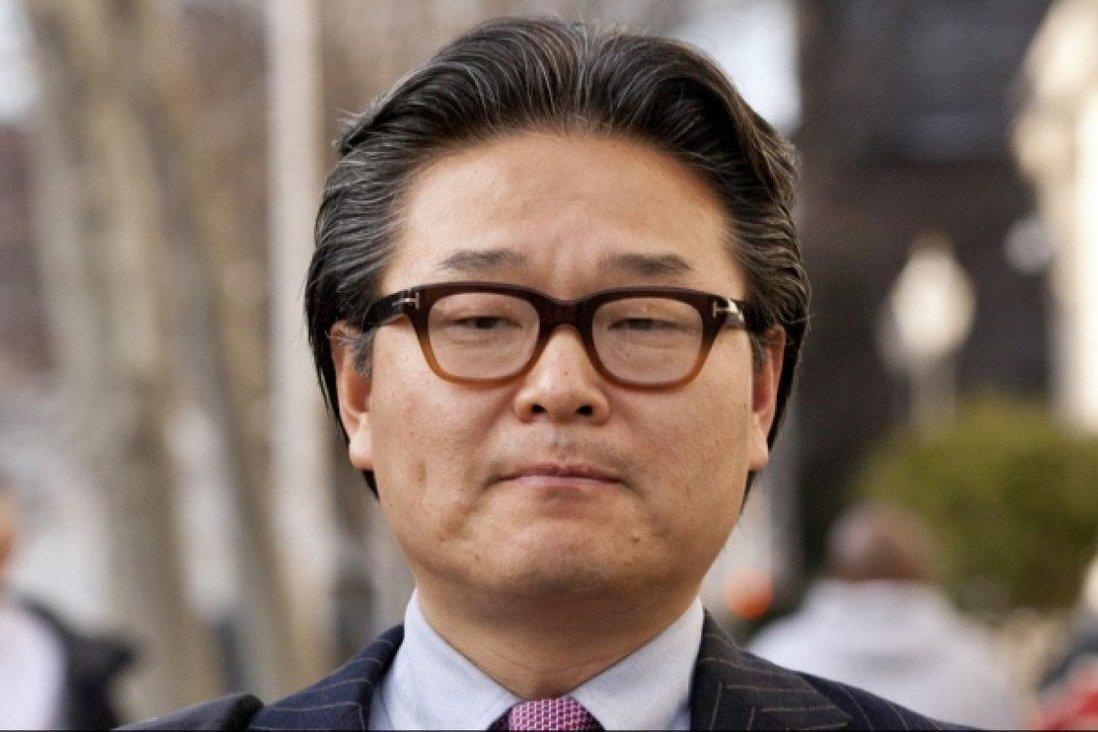
That sparked an epic whodunnit across markets, with Archegos — an obscure, remarkably opaque investment group run by Bill Hwang, a former Tiger Management hedge fund manager with a chequered past, quickly identified as the primary party involved. By Monday, Credit Suisse and Nomura were admitting that they would probably lose billions of dollars in the fallout. 

At this early stage, there are still far more questions than answers. Here are some of the more pressing ones.

First and foremost: What on earth were some of the world’s biggest investment banks thinking when they enabled an opaque family office whose founder had a history of regulatory issues to rack up multibillion dollars worth of leverage? Hwang paid $44m in fines to settle US illegal trading charges in 2012, and in 2014 he was banned from trading in Hong Kong.

True, Archegos’ status as a family office means that it was exempt from a lot of the standard regulatory disclosures demanded of hedge funds. But banks’ prime brokerage desks — which service hedge funds with research, trade structuring and leverage — appear to have failed basic “know your customer” processes. 

Each bank may have felt comfortable with their exposure to Archegos, assuming they could always ditch its positions to cover themselves. But they failed to appreciate that if everyone has to dump tens of billions of dollars worth of equities, the collateral they may have embedded in their contracts is going to be wholly inadequate.

In LTCM’s infamous blow-up in 1998, the fund adeptly took advantage of Wall Street’s hunger for fees to play banks up against each other and get access to hefty leverage from each of them — with each often unaware of their rivals’ true exposure. 

But at least LTCM was at the time the biggest hedge fund in the world, founded by storied Salomon Brothers traders and advised by Nobel laureates. Aside from the under-appreciated and obscured size of Archegos — and the fat fees they probably paid to prime brokers — the fund and Hwang were essentially non-entities on Wall Street. 

Which leads us to another question: What is Archegos Capital exactly? The size and leverage of its positions would be extreme even for one of the more aggressive members of the hedge fund industry, let alone a family office. In truth, it seems more like a Reddit day trader got access to a Goldman Sachs credit card and went bananas. 

Prime brokers have estimated that it managed about $10bn of capital before this debacle erupted, which is a lot for the family office of someone who was hardly a titan of the hedge fund industry. 

Historically, family offices have not had to register with the Securities and Exchange Commission because of an exemption for firms with 15 clients or fewer. The Dodd-Frank Act that tightened regulations in the wake of the 2008 financial crisis removed this exemption to shed more light on the hedge fund industry. However, the SEC has let family offices decide for themselves whether they should be registered and file regular reports. 

Given its size, does Archegos manage money from people other than Hwang, and if so should it have been required to make more disclosures to the SEC?

A search for Archegos on the SEC’s “Edgar” reporting system yields pretty much nothing — itself eye-catching. Its use of financial derivatives known as swaps to build positions might have allowed it to circumvent reporting requirements on big stakes. 

So far there have been about $20bn of stock sales from investment banks, but analysts say more could be in the pipeline. How much more though? Estimates vary wildly. And are there any other funds that are also being forcibly liquidated, with Archegos merely the first to be identified?

Finally, but most importantly: Can the Archegos blow-up trigger a wider financial conflagration, as LTCM did two decades ago? 

Luckily, the answer is probably no — with some caveats. LTCM was far bigger, more woven into the fabric of several systemically important markets and its collapse could have taken down several major banks had the authorities not orchestrated a bailout and co-ordinated its dismemberment. The Archegos losses will be humiliating to many banks, and in some cases ruin their financial year, but they are much better capitalised since 2008. 

That said, there is a danger that a debacle of this magnitude encourages the entire investment banking industry to scale back how much leverage they offer their hedge fund clients. If so, then the forced liquidation of an isolated, gung-ho investment group could become a snowball that triggers a broader hedge fund deleveraging. For now, markets are taking the debacle in their stride, but that could still change.

WSJ : Investors Shouldn’t Rush to Book a Sunny European Vacation

Investors Shouldn’t Rush to Book a Sunny European Vacation
Richer countries have an interest in giving priority to vaccinations over the summer tourist economy

For many European airlines—and some entire economies—much is riding on the hope that vaccination campaigns save the summer season. Too much, in fact, for investors’ comfort.

Just a few weeks ago, financial markets were feeling optimistic about the tourism industry, carriers in particular. Airport passenger numbers in the U.S. have jumped. Global booking data tracked by analysts point to a big revenue improvement in May, driven by online travel agents.

This seems to confirm theories that there is a lot of pent-up demand. In the U.K., airlines reported a surge in bookings to southern Europe right after Prime Minister Boris Johnson said international trips might resume on May 17. A survey by Swiss bank UBS shows that 39% of people would be comfortable traveling now, compared with only 29% a month ago.

Over the past week, however, U.K. officials have discouraged Britons from booking overseas vacations, given severe vaccine-supply problems in Europe and the spread of new coronavirus variants. Investors should be similarly cautious.

Weekly Covid-19 cases in Europe are rising again, as are travel curbs. A full 86% of flight routes involving top nations in the Group of 20 are restricted in some way, according to UBS data. The world is undoubtedly heading to a better place, but it isn’t impossible that many tourism companies will have a worse summer season than in 2020.

While nations like Spain and Greece are already preparing to reopen for the summer, and the EU is looking to roll out “vaccine passports” to accommodate them, southern Europe may soon find that individual countries in the richer North are unwilling to risk loosening restrictions much at a time when vaccination campaigns could finally start to bear fruit.

Meanwhile, scheduled airline capacity for the three summer months is only 15% below 2019 levels, versus a 53% drop last year, according to Oliver Wyman’s PlaneStats database. This is despite the fact that many restrictions were temporarily eased across Europe between June and September of 2020.

Of course, nowadays capacity is heavily revised closer to departure dates. But markets don’t seem alert enough either. European airline stocks are up 17% since the beginning of February and are no longer cheap bets on the recovery. With some exceptions, valuations are at 2019 levels or higher even when using post-Covid earnings forecasts. Europe’s top airline Ryanair now has an enterprise value of 6.4 times 2023 profit forecasts. Before the pandemic, it traded at 5.7 times 2019 earnings.

The risks facing Europe’s more leisure-focused airlines also apply to its more tourist-dependent economies. The consensus view among analysts is that European economic growth will quickly recover to pre-Covid trends, which is driving money managers to look to the continent for extra returns. Recent data for industrial northern countries is indeed encouraging. In Italy and Spain, though, another lost summer would be a huge blow. Tourism represents 13% and 14% of their output, respectively, compared with 9% in Germany and the U.S., the World Travel & Tourism Council estimates.

The European Union’s underwhelming fiscal stimulus plans won’t offer weaker nations nearly enough of the help they need. The bloc’s support package pales in comparison to the Biden administration’s $1.9 trillion stimulus bill, and has been saddled by delays.

For tourists and investors alike, Europe’s lopsided economy could be a bigger problem than they realize.

(ZH) CFDs - The Dirty Little Secret Behind The Collapse Of Archegos

CFDs - The Dirty Little Secret Behind The Collapse Of Archegos

Stop us if you've heard this one before - Wall Street prime brokers allowed hedge funds to dance while the music was playing with ever greater leverage in off-exchange and unregulated derivatives... until the first sign of trouble and the whole house of cards comes crashing down in a potentially systemic manner.
The bloodbath in various media stocks on Friday has brought light back to one of the dark corners of the equity trading business - so-called contracts-for-differences (CFDs).
As Bloomberg reports, much of the leverage used by Hwang’s Archegos Capital was provided by banks including Nomura and Credit Suisse - who have most recently admitted huge losses - as CFDs, which are made off exchanges, allow managers like Hwang to amass stakes in publicly traded companies without having to declare their holdings (far in excess of the 5% stakes that require regulatory reporting).
Crucially, as Bloomberg notes, this means Archegos may never actually have owned most of the underlying securities - if any at all - as the CFD is akin to a privately-arranged (i.e. off exchange and bespoke) futures contract where the differences in the settlement between the open and closing trade prices are cash-settled (there is no delivery of physical goods or securities with CFDs).
What makes the situation worse is that Archegos reportedly took positions in these CFDs with various prime brokers - and because these positions are by their nature not centrally cleared or aggregated, this left prime broker X unaware of their client's exposures with prime broker Y... which in this case was huge.
The leverage Hwang was given made him look like a trading genius as the various positions he took were pumped and pumped (and helped by gamma-squeezers) but now look like a reckless gambling fool as the bets collapsed.
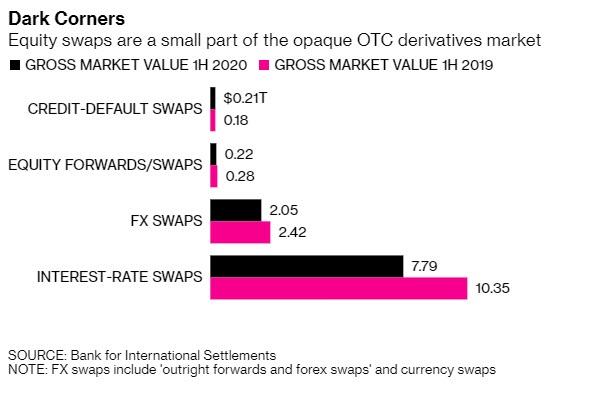
CFDs linked to stocks (with a gross market value of around $282 billion at end June 2020) are among bespoke derivatives that investors trade privately between themselves, or over-the-counter, instead of through public exchanges. This is exactly the kind of hidden risk that amplified the losses during the 2008 financial crisis.
As Bloomberg notes, regulators have begun clamping down on CFDs in recent years because they’re concerned the derivatives are too complex and too risky for retail investors, with the European Securities and Markets Authority in 2018 restricting the distribution to individuals and capping leverage. In the U.S., CFDs are largely banned for amateur traders... but not for hedge fund managers who are "sophisticated"?
But, banks still favor them because they can make a large profit without needing to set aside as much capital versus trading actual securities (driven to this opaque market as an unintended consequence of heavy regulation following the 2008 financial crisis).
In the case of Archegos, there is very little transparency about Hwang’s trades, but market participants suggest his assets had grown to anywhere from $5 billion to $10 billion in recent years with total exposure topping $50 billion. And bear in mind, this is not 'leverage' in the old-fashioned sense (i.e. banks allow you buy X-times the amount of stocks relative to your capital); this is purely synthetic - the firm has no actual underlying asset to fall back on, but is linearly exposed to losses (and gains) on a margined basis.
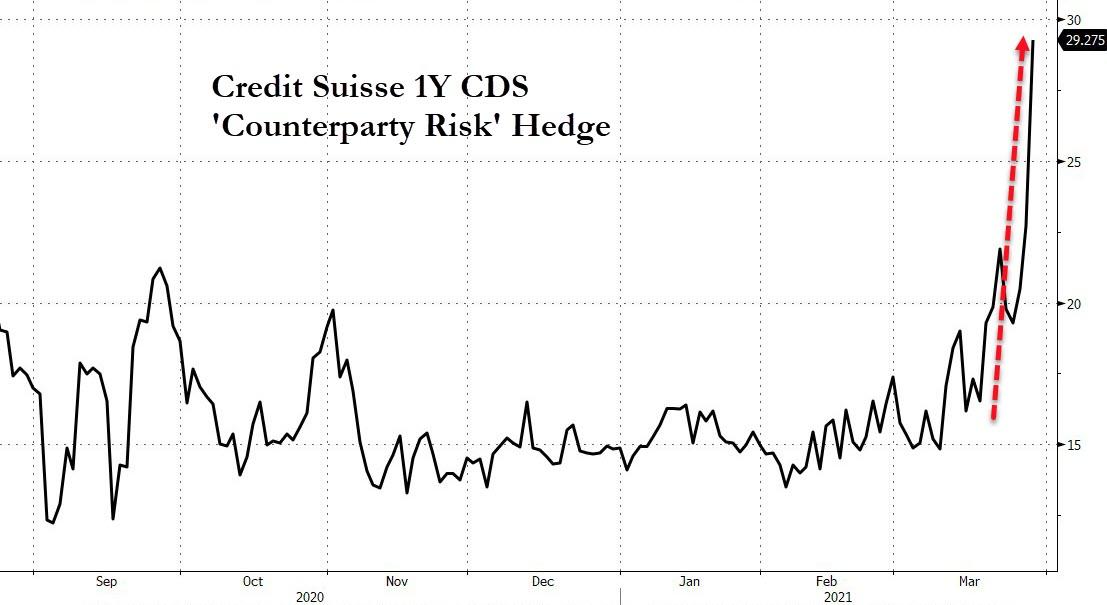
And as we noted at the beginning, this has the potential to be much more systemic as the losses created by Archegos' margin calls trigger more margin calls and more potential losses for the prime brokers. Think we are exaggerating, then explain why the costs of counterparty risk hedging for Credit Suisse for example, has exploded in the last few days...
Source: Bloomberg
Mohammed El-Erian told CNBC this morning that "It seems to be a one-off ... for now, it looks contained. And that's a good thing." But added "what we don't want is a pile-up."
We look forward to the Congressional hearings on this.

>>> Europe : Brokers Upgrades & Downgrades - 29th of March 2021 V2(+)

>>> Up
* Adecco Raised to Reduce at AlphaValue
* Ambu Raised to Buy at DNB Markets; PT 325 kroner
* Aryzta Raised to Add at AlphaValue
* BMW Raised to Buy at Jefferies; PT 115 euros
* BT Raised to Overweight at Morgan Stanley; PT 200 pence
* Compleo Charging Solutions Raised to Outperform at Oddo BHF (+)
* Credito Emiliano Raised to Outperform at Intermonte; PT 6 euros
* Crest Nicholson Raised to Buy at Jefferies; PT 474 pence
* Everest Re Raised to Buy at Deutsche Bank; PT $305
* Generali Raised to Buy at Nord/LB; PT 19 euros
* Johnson Controls Raised to Overweight at Morgan Stanley; PT $73
* Kone Raised to Buy at HSBC; PT 79 euros
* Pandora Raised to Buy at HSBC; PT 800 kroner
* SGL Raised to Add at AlphaValue
* Taylor Wimpey Raised to Overweight at JPMorgan; PT 220 pence
* VW Raised to Buy at Jefferies; PT 295 euros

>>> Down
* Barratt Cut to Neutral at JPMorgan; PT 850 pence
* BayWa Cut to Hold at M.M. Warburg (+)
* Bellway Cut to Hold at Jefferies; PT 3,820 pence
* Berkeley Cut to Reduce at HSBC; PT 3,940 pence
* BPER Banca Cut to Neutral at Intermonte; PT 2.10 euros
* Cerved Cut to Hold at Bestinver; PT 9.50 euros (+)
* Electrolux Cut to Underweight at JPMorgan; PT 220 kronor
* Hays Cut to Hold at HSBC; PT 160 pence
* Leoni Cut to Underweight at JPMorgan; PT 5 euros
* TechnipFMC Cut to Reduce at AlphaValue

>>> Initiation
* Dermapharm Rated New Buy at Stifel; PT 88 euros

>>> Call
* BASF ‘On Track’ for Upper End of 2021 Target: Commerzbank (+)
* BMW, Volkswagen Raised at Jefferies, Upbeat on OEM Transitioning
* BT Raised at Morgan Stanley on Cheap Valuation, Brighter Outlook
* Crest Nicholson Upgraded at Jefferies on Delivery, Bellway Cut