Business Of Fashion : The Future of Watches: The Pre-Owned Market Will Be Worth

The Future of Watches: The Pre-Owned Market Will Be Worth Up To $32 Billion
Watch brands must work hard to capitalise on the increasingly important second-hand market, while digital platforms will need to sharpen their business models.

The pre-owned watch market is coming of age, with a growing number of brands, retailers and digital platforms consolidating the offering into a more secure and professional service than ever before. However, online players have been the real game-changer. Compared with just 5 percent in the new product space, 30 percent of pre-owned watches spanning the premium to ultra-luxury value segments are now sold online, as companies such as Watchfinder, Chrono24 and Chronext saw double-digit growth over recent years.

At the same time, consumers are showing increasing willingness to pay for pre-owned, with pre-owned watches now routinely selling at auctions for hundreds of thousands of dollars. McKinsey’s forecast expects the pre-owned market to expand by as much as 8 to 10 percent per year between 2019 and 2025, reaching annual sales of $29 to $32 billion, up from $18 billion in 2019. Comparatively, the new watch market for value segments from premium to ultra-luxury is predicted to grow just 1 to 3 percent annually during the same period.

One of the fastest-growing pre-owned markets is China, which has seen around 20 percent year-on-year expansion over the past four years, despite the underlying challenges that have traditionally plagued pre-owned in the country, owing to stigmas around resale and the value attributed to newness. This increase in demand is being driven by a golden combination of factors: increasing numbers of luxury shoppers, a culture of gift-giving, an appetite for distinctive style choices, the availability of advanced marketplaces (such as luxury resale platform Plum) and the proliferation of cutting-edge services, including specialist authentication and livestream sessions with celebrity hosts.

Globally, rising demand for pre-owned watches has been driven by accelerating interest from younger consumers: some 30 percent of upper-income teens visited a pre-owned marketplace in late 2020, a rise of 5 percentage points from earlier in the year. This is on top of the changing perceptions of resale across other consumer categories, such as fashion, where the reframing of the second-hand narrative as “pre-loved” and a more sustainable buying choice has helped reduce the stigma of buying pre-owned items, particularly for younger consumers and those in territories where there is little vintage store culture.

While demand is rising, the intention behind pre-owned purchases is changing: pre-owned shoppers are no longer just looking for a good deal as a crop of new consumer types emerges. We now see three key customer types actively buying pre-owned: watch enthusiasts who are often looking for a particular model, year or edition; impatient shoppers who are turning to pre-owned to secure models that are limited in supply through traditional retail channels; and value seekers who are looking to purchase items or brands they otherwise would not have bought at full price, but have come to realise that pre-owned watches can be bought in as-new conditions for significant savings.

Watch enthusiasts and impatient shoppers, which together account for about two thirds of total pre-owned sales spanning all segments from premium to ultra-luxury, are most likely to be willing to pay a premium for a pre-owned watch. These consumers are typically searching for highly sought-after models that tend to command significant mark-ups from the retail price when sold as pre-owned — the Rolex Daytona, Patek Philippe Nautilus and Audemars Piguet Royal Oak are among this elite group of models, recently selling in the pre-owned market at premiums of 140 percent, 146 percent and 85 percent above their retail prices respectively. This class of watches sold at a premium has grown in importance in the pre-owned market, and while it makes up only 10 percent of pre-owned sales, it represents 40 percent of the revenue generated.

The remainder of pre-owned market sales are made up of watches sold at a discount, below first-hand retail value, which are often bought by value seekers who would otherwise not have access to them. As such, pre-owned offers an entry point into the brand.

Reflecting the broader consumer shift towards e-commerce and re-commerce specifically, the nexus of the current boom is digital marketplaces. From its headquarters in Germany Chrono24 has marched ahead of its rivals in recent years, listing some 186,000 watches on its marketplace, compared with just a few thousand on rival platforms. The platform attracts between 9 and 10 million unique visitors every month, said Chrono24 founder and co-chief executive Tim Stracke. “Watches is one of the few categories where the pieces stay alive for a long, long time... the value of stability we think always plays a certain role [in attracting customers],” he said.

Other third-party players have been keen to jump on the opportunity, creating a flurry of activity in the space. Most recently, US-based editorial and e-commerce watch platform Hodinkee entered the pre-owned segment, receiving $40 million in venture capital funding in December 2020, and later acquiring the online used luxury watch marketplace Crown & Caliber. Many luxury multi-category retailers, such as Vestiaire Collective, The RealReal and Rebelle, have added pre-owned watches to their assortment as well. While platforms originating from the watch category typically have a largely male and older customer base, multi-category players entering from fashion or jewellery, or with products at lower price points, may be able to capture younger segments and female consumers.

Though consumers have flooded onto pre-owned platforms, many mainstream brands have tended to sit on the sidelines. However, with the market growing at an unprecedented rate, brands’ time for waiting is over. With this significant opportunity comes significant risks in not engaging, in terms of the profit pool, relationships with customers, the ability to attract new consumers and market share. By actively participating in the pre-owned market, brands can open themselves up to the opportunity of “double dipping” on sales — once when sold first-hand, and again when taking a share of pre-owned sales. And while this model offers higher rewards for watches sold at higher price points, brands can benefit across the range of pre-owned offerings. Depending on the resale value, we estimate brands could capture an incremental 5 to 30 percent profit per product.

Among the companies already active in the pre-owned segment is Richemont — parent company of brands including Cartier, Vacheron Constantin and IWC — which acquired the Watchfinder platform in 2018 in a bid to develop its pre-owned business. Meanwhile, Richard Mille has partnered with the retailer Ninety to open a mono-brand shop dedicated to certified pre-owned and previous brand collections, while Audemars Piguet and MB&F are developing their pre-owned offerings either by allowing customers to trade in their old models in store, or by directly selling pre-owned watches within their own channels.

To capitalise on the growing pre-owned opportunity, we have identified three strategies that business leaders should consider:

Integrate Pre-Owned Into the Brand Offering
Brand leaders could build an integrated pre-owned, mono-brand offering, leveraging both physical points of sale and direct online channels. To pursue this strategy, those who already have a DTC distribution strategy would need to believe that pre-owned is a long-term investment, and that integration is a route to building brand equity (for example through a superior customer experience). They also need to believe the “double dip” effect on margins will outweigh any risk of cannibalisation of first-hand sales. Audemars Piguet has already shown its willingness to engage in this strategy by allowing customers to trade in old models when buying new watches directly in its stores.

Enable Pre-Owned Sales in Third Party Channels
A second option would be to collaborate with multi-brand platforms to develop offerings such as shop-in-shops, certification and trade-in arrangements. Again, the investment would be predicated on an assumption that pre-owned is a long-term trend, that the current crop of platforms will continue to dominate and that brands can maintain a level of control over their representation while collecting a worthwhile percentage of sales. Business leaders must also believe there is an opportunity to boost sales of new watches by building brand equity. Third-party channels give brands some protection against cannibalisation, by avoiding like-for-like price comparison with first-hand watches in their store, making it a more attractive option for brands whose watches are mostly sold at a discount second-hand. Richemont’s integration of its brands into its subsidiary resale platform Watchfinder may make it harder to manage the full customer journey as one integrated experience, but it will allow Richemont a much broader access to the pre-owned market opportunity.

Invest in the Pre-Owned Market Opportunities
Brands can also invest in pre-owned market opportunities with or without engaging their own products. Using this approach, brands would likely acquire a stake in a multi-brand platform to benefit from the trend without needing to engage with their own products or brands. The underlying belief would be that second-hand is a transitory rather than a long-term trend, or that the pre-owned market is not a good fit for the brand, yet there may be a tactical opportunity to generate value.

Given the projected size of the market and rising consumer demand, the bottom line is that brands should now be proactively operating in the pre-owned market if they want to maintain control over their brand image and maximise customer touchpoints. Engaging more actively in pre-owned will also help brands extend their reach to new customer groups.

From the perspective of platforms and independent retailers, increased brand engagement in pre-owned will likely lead to some erosion of their share of the pre-owned market, from 85 percent at present to around 70 percent by 2025. With this in mind, business leaders must think carefully about how they create a differentiated proposition.

While brands should choose engagement models that are aligned with their goals, those that participate directly will generate the biggest upside, with more control over brand representation and direct access to revenues. Many will also offer value-added services such as authentication and maintenance, helping to build trust, deepen engagement and encourage brand loyalty over time. Collectively, we expect brands to directly capture 25 percent of the pre-owned watch segment by 2025, representing $7 billion in incremental revenue. “The market has great potential,” said Michele Sofisti, the former chief executive of Girard-Perregaux. “If brands with a rich history focus on leveraging pre-owned to showcase brand heritage, you can create an interesting market.”

>>> What to look at today - 14th of June 2021

Treasury yields edged higher Monday as investors prepared for a key Federal Reserve meeting later in the week. Stocks were mixed in thin trading.
Ten-year Treasury yields inched up to around 1.46% after hitting three-month lows on Thursday and notching their biggest weekly slide since December last week. Stocks saw modest gains in Japan and fluctuated in South Korea. Trading volumes were light with a number of holidays in the region including in Australia, China and Hong Kong. U.S. futures edged up after stocks staged a late rally Friday, closing at another new high after a choppy day of trading.
The dollar was steady against Group-of-10 peers in the wake of a Group-of-Seven leadership meeting that emphasized unity.

Nikkei +0.62% Hang Seng +0.36% CSI -0.89% Shanghai -0.58% Shenzen -0.60%

Eur$ 1.2099 CNH 6.4059 CNY 6.3987 JPY 109.78 GBP 1.4109 CHF 0.8989 RUB 72.0157 TRY 8.3882 WTI$ 71.20 +0.41% Gold 1,865.28 -0.65% BTC 38,850 +1,810 ETH 2,480 +82

S&P +0.06% Nasdaq +0.16% EuroStoxx +0.29% FTSE +0.20% Dax +0.10% SMI0+0.04%

Macro :
- Bitcoin Jumps; Musk Says Tesla Will Use When Mining Cleaner
- Out-of-Control Shipping Costs Fire Up Prices From Coffee to Toys
- Bundesbank Sees Slight Rise in German Banks’ Capital Burden: HB
- ‘You Can Tokenize a Building’ in State Street’s New Digital Push
- Fed, BOJ Set Rates; Biden Meets Putin: Week Ahead June 14-18
- Biden Says U.S. May Be Able to Donate Billion More Shots in 2022

Keep an eye on :
- AIR FP : Airbus Needs to Review Industrial Structure, Obermann Says
- AF FP : Air France-KLM: New Pension Scheme Pact for KLM Ground Staff
- ATL IM : Italy’s CDP, Blackstone, Macquarie Reach Deal on Autostrade
- BAMI IM : Banco BPM, Credem Seek Data Room Access on Carige, Sole Reports
- BNP FP : BNP Client Complains About Allegedly Inappropriate FX Trades: FT
- BT/ LN : BNP, Morgan Stanley Advised Drahi on $3 Billion BT Stake Buy
- CLN SW : Clariant Sells Pigments Business to Heubach, SK Capital Partners
- CTT PL : CTT Starts Arbitration Proceedings Against Portuguese Government
- ESKN LN : Esken Terminates Contracts for Transactions With Ettyl
- FRA GY : Fraport May Frankfurt Airport Passengers +357%
- IMPN SW : Implenia Consortium Wins EU1.07B Rail Contract in Northern Italy
- PHIA NA : Philips Sees Increase of EU250m in Costs Linked to Parts Issue
_ PRY IM : Prysmian: EU750M Convertible Bonds to be Listed on Vienna MTF
- RENEW SS : Re:Newcell Holders May Sell Up to 1.2 Mln Existing Shares
- RDSA NA : Shell Mulls Sale of Holdings in Largest U.S. Oil Field: Reuters
- SHF GY : SNP Confirms Talks on Purchase of Software Specialist Datavard
- TIK1V FH : Tikkurila CEO Elisa Markula to Step Down After PPG Deal Closes
- 8TRA GY : Traton Explores Possible Capital Increase Worth Over EU1B: Rtrs
- UPONOR FH : Uponor Raises Guidance for 2021 as Key Markets Perform Well
- VOW3 GY : VW Had 3.3m Customers’ Data Exposed Due to Vendor: TechCrunch
- VOW3 GY : Volkswagen Halts 3 Brazil Plants Due to Lack of Semiconductors
- VOW3 GY : Traton Explores Possible Capital Increase Worth Over EU1B: Rtrs
- WDL GY : Reddit-Hyped German Retailer’s CEO Says Skepticism Makes Sense
- WLN FP : Worldline’s Ingenico Gets 3 Private-Equity Bids: Echos

>>> Europe Brokers Upgrades & Downgrades - 14th of June 2021

>>> Up
* Atlantia Raised to Buy at Bestinver; PT 19.50 euros
* Big Yellow Group Raised to Neutral at Kempen & Co
* Grifols Raised to Buy at Deutsche Bank; PT 30 euros
* Heidelberger Druck Raised to Buy at LBBW; PT 2 euros
* Holcim PT raised from 69 CHF to 73 CHF at Morgan Stanley
* K+S Raised to Buy at Commerzbank; PT 15 euros
* L'Oreal PT Raised to 405 euros from 370 euros at Deutsche Bank
* Nordea Bank Raised to Add at AlphaValue

>>> Down
* Campari Cut to Market Perform at Bernstein; PT 10.20 euros
* CRH Cut to Equal-Weight at Morgan Stanley; PT 45 euros
* Diageo Cut to Market Perform at Bernstein; PT 3,550 pence
* Diageo ADRs Cut to Market Perform at Bernstein; PT $189.50
* Kungsleden Cut to Neutral at Kempen & Co; PT 115 kronor
* Pernod Ricard Cut to Market Perform at Bernstein; PT 186 euros
* Remy Cointreau Cut to Underperform at Bernstein; PT 122.50 euros
* Sanne Group Cut to Sector Perform at RBC; PT 925 pence

>>> Initiation
* Aker Carbon Capture Rated New Buy at Citi
* Grupo Ecoener Rated New Buy at CaixaBank BPI; PT 7 euros
* Oatly Group ADRs Rated New Buy at Guggenheim; PT $32

>>> Call
* Aker Carbon Capture Has Potential Longer-Term, New Buy at Citi
* K+S Upgraded as Higher Potash Price to Boost Profit: Commerzbank

Business Of Fashion : The Future of Watches: A High Stakes DTC Shake-Up

The Future of Watches: A High Stakes DTC Shake-Up
$2.4 billion in annual revenues are set to shift from retailers to brands by 2025 as consumers demand better online shopping experiences and brands aim for higher margins.

The watch industry has historically been slow — and in some cases reluctant — to embrace change of any kind. The industry’s distribution model is no exception, which still relies heavily on offline channels and a network of retailers who are trusted to build the customer relationship. But consumers are beginning to demand more direct interactions with brands. In fact, globally, the majority of affluent consumers now prefer buying watches from mono-brand stores, according to a consumer survey by Agility. This shift in expectations is enabling brands to take over the reins of the customer relationship by expanding their DTC channels.

A parallel trend can be observed in consumer preferences for shopping online, where online sales of watches continue to gain traction. In China, 30 percent of consumers reported to have made a premium to ultra-luxury watch purchase online in the last 6 months, while a significant 53 percent of US consumers reported the same. Indeed, McKinsey research projects that by 2025, online sales of watches will more than double to $6 billion, amounting to 10 to 15 percent of all watch sales spanning the premium to ultra-luxury segments and representing a steep increase from 5 percent today.

Another signal that the shift to DTC is here for the long haul is the changing face of established B2B watch fairs such as Baselworld, which were once an industry mainstay. “In 2018, we knew a lot of things were not right and that we had to transform the show,” said Michel Loris-Melikoff, managing director of HourUniverse, which replaced the now-defunct 103-year-old Baselworld in 2021. Going forward, trade shows, such as HourUniverse, will be increasingly focused on engaging consumers directly, with other consumer-facing forums, such as the Dubai Watch Week and Geneva Watch Days, taking a prominent position on the annual calendar of both consumers and watchmakers.

Together, these factors will contribute to a fundamental shift in market dynamics as brands actively turn to DTC channels to increase margins and better connect with customers, to the extent that watchmakers in the premium to ultra-luxury segments could expand their share of DTC sales from 20 percent in 2019 to 27 to 30 percent by 2025. While some brands such as Rolex and Patek Philippe remain outliers to the DTC wave and are not expected to change that position, the industry as a whole could still see $2.4 billion in annual revenue transfer from retailers to watchmakers if the market is to follow the trajectory of adjacent industries like fashion.

“We are seeing more and more that brands want to cut out their channel partners to gain more margin and get closer to the customer,” says Jennifer Obayuwana, executive director of Polo Luxury Group, which sells brands such as Rolex and Piaget through its network of Polo multi-brand and mono-brand boutiques across the Nigerian market. “[But] not every brand will be able to make the switch to direct-to-consumer successfully. They would lose the edge of a deepened market penetration where channel partners have proven that understanding of local nuances [and local market know-how] can give significant advantage.” Mid-market brands in particular will face challenges in implementing a DTC strategy, owing to their narrower product assortments and their limited brand differentiation to date.

While the drive towards DTC will demand fundamental changes in the industry’s distribution model, the shift offers a wide range of advantages for both consumers and brands. For consumers, a direct relationship increases the sense of brand trust and enables direct interaction with service staff who have deep, rather than broad, product expertise. For brands, DTC sales enable greater control of the customer experience and brand image through consistent messaging, while generating higher margins by cutting out intermediaries.


At the same time, the model gives brands access to a wealth of data which can be used to create more personalised, time-sensitive and connected customer journeys across multiple channels — both online and off — with brands able to react speedily to changing preferences and needs. Zenith is one such company that has focused its strategy on creating an engaging online experience and seamless customer journey: through these efforts, the company made half of its sales though DTC channels in 2020. But not all watchmakers are ready or willing to move away from multi-brand distribution channels.

“When we launch a product, I give all my [communications] assets to [UK-based multi-brand retailer] Watches of Switzerland too. Ultimately, I don’t care who sells the watch,” says Georges Kern, chief executive of Breitling. “Yes, direct e-commerce is great because the margin is much higher and it’s great for cash flow because you get the payments immediately and you also get the consumer data. But we are not at that stage yet. We can’t channel 100 percent of our custom through our own channels.”

Online will be the fastest-growing DTC channel, rapidly expanding from just 5 percent of DTC sales in 2019 to 15 to 20 percent by 2025. However, the shift to DTC will be as much about physical retail as digital, where in-store brand experiences will continue to play a fundamental role in cementing the customer-brand relationship. Some 90 percent of Chinese consumers say that brands’ stores are one of the most important factors influencing their purchase, compared to 45 percent who cite e-commerce, according to a survey by McKinsey & Company.

However, the comparatively slow uptake of DTC sales by watchmakers to date has left the field open for new digital entrants. While brands hesitated, third-party platforms and those operating in the grey market have picked up the slack by offering consumers some of the elements they lack in the traditional retail model: online pure play platforms — which accounted for roughly 5 percent of the market for all value segments from premium to ultra-luxury in 2020 — offer an increasingly convenient and safe way to buy online, while grey market sites and retailers (accounting for around 4 percent) are able to offer greater price transparency.

The industry will witness several lasting impacts of these changing dynamics. Fundamentally, the switch to DTC will cause a shakeup of multi-brand independent retailers, with up to a third facing closure or consolidation as they struggle to offer brands a distinct value proposition or make the investments required to set up powerful online platforms. Meanwhile, mid-market brands will face additional pressure to redefine themselves as lower foot traffic in some multi-brand retailers renders it increasingly difficult to retain customer visibility and engagement. They will also find it more challenging to set up their own DTC channels, owing to less-compelling store economics and lower brand recognition.

Lastly, DTC-native brands will win market share as lower barriers to entry will enable smaller brands to talk directly to consumers and establish a distinct point of view. “We are much closer to [our customers] than most of the watch brands in the world. We’re able to have a relationship from day one, even before the purchase,” says DTC watch brand Christopher Ward’s chief executive and co-founder Mike France. The British brand has an online forum set up by Christopher Ward fans that the company leverages for research and to help make design decisions. “That’s one of the great advantages of being an online business,” he says.

Given these changes, how should brand decision-makers move forward? The bottom line is that they need to commit more firmly to developing DTC — leveraging both physical and digital to foster closer customer relationships. In making this happen, they also have an opportunity to take more control of the stories they tell, adjusting to individual customer preferences.

However, maximising the potential of DTC will not come easy for most brands, who will need to adopt radically new ways of working. “DTC will be a challenge for a lot of companies,” said Thomas Baillot, founder and chief executive of B2B watch database Watch Distributor Directory. “They are not store operators and, perhaps more importantly, they have not historically been consumer-facing, and so need a very different set of skills to manage those direct conversations.”

Brands will need to overcome three challenges:

The first challenge is to find the right balance across channels. Winners will find the right mix of both DTC and wholesale channels and will create an engaging and coherent customer experience across them. However, building a seamless omnichannel DTC offering can demand high investment costs, with stores alone generating overheads of as much as $3 to $4 million a year in prime real estate locations. Additionally, it may be difficult for brands to develop a DTC offering addressing all geographies or customer segments, and they will therefore need to be clear-eyed in strategically identifying areas where DTC will make the most economic sense.

An omnichannel presence has inherent complexities, too, such as maintaining consistency in prices and product availability. Decision-makers should therefore establish a clear channel strategy and risk assessment. Where a DTC strategy for particular geographies or customer segments does not make sense for a brand to pursue on its own, there may be opportunities to share risk with retailers or online platforms, as can be seen in the growing number of mono-brand stores opened in partnership with independent retailers.

Secondly, watch brands will need to define engaging store concepts. Given the mono-product nature of watch stores, their low foot traffic and the technical nature of the product that demands highly trained staff, the experience can be underwhelming if brands do not give consumers a distinct reason to visit. Decision-makers must therefore develop stores as a space for a holistic brand experience using both creativity and technology. This may mean highlighting the brand’s heritage or creating experiences that capture vital brand characteristics. For example, Audemars Piguet has launched a series of global “AP Houses,” which are concept stores designed to look more like a five-star hotel lounge or a private salon than a retail space, which offer an immersive brand experience in which customers are engaged in cultural events such as musical performances and masterclasses. In 2020, the company made 72 percent of its sales through DTC channels.

Lastly, translating the tactile experience of trying on a product in-store before buying, on which watch sales have depended for so many years, to the more sterile online environment will present challenges. Business leaders should focus on integrating human interactions at every stage of the customer journey — from considering a possible purchase, to buying and shipment. Online represents a unique opportunity for brands to connect with customers anytime, anywhere and expand their global audience. At the same time, they will need to develop the right technical and human capabilities to ensure the consumer journey remains seamless across channels. Deploying e-commerce infrastructure will entail executional challenges, including logistics, customer relationship management and data use, which itself will require significant investment in advanced analytics and artificial intelligence to get ahead.

As brand strategies evolve, multi-brand retailers must also adapt, adjusting their gatekeeper mentality to one of participation in a broader ecosystem. Those that already have an established footprint and market recognition in a given region could opt to consolidate to benefit from economies of scale. Alternatively, they could double down on customer insights and specific brand expertise, offering their retail know-how to brands as a strong value proposition, for example by opening mono-brand stores in partnership with brands. Finally, they might specialise, deepening access to a niche consumer group or demographic. Regardless of which route they choose, multi-brand retailers will also need to develop digital capabilities in line with watchmakers’ investments in order to provide a value-add across all channels and to stay relevant.

Over the next five years, the push for DTC will reshape the industry’s distribution model and will force all players within it to rethink their role. While there will be winners and losers in the DTC shakeup, the outcome will be a better understanding of customers for both brands and retailers and ultimately a more rewarding experience for consumers.

Business OfFashion : The State of Fashion: Watches and Jewellery Report — Bringi

The State of Fashion: Watches and Jewellery Report — Bringing the Sparkle Back
The Business of Fashion and McKinsey & Company are pleased to present our State of Fashion Watches and Jewellery Report. Download the full report here.

This article first appeared in the special edition of The State of Fashion: Watches and Jewellery, co-published by The Business of Fashion and McKinsey & Company. To learn more and download a copy of the report, click here.

With combined annual sales of over $329 billion in 2019, as estimated by McKinsey, fine jewellery ($280 billion) and watches ($49 billion) are highly significant industries in terms of their contribution to global business. They also represent meaningful cultural assets that have for centuries reflected human preoccupations with creativity, status, symbolism and self-expression. Yet today, both sectors find themselves at an inflection point.

As uncertainty caused by the Covid-19 pandemic rippled across the globe and short-circuited demand, the fine jewellery and watch industries suffered revenue declines of 10 to 15 and 25 to 30 percent respectively, according to McKinsey estimates, putting further strain on slow-to-adapt players and crystallising emerging trends in the market. Physical retail’s closure for extended periods revealed cracks in the fine jewellery and watch industries’ slow transition to digital — which lags far behind other luxury categories — with online sales representing approximately 13 percent of the market for fine jewellery and just 5 percent for watches. Meanwhile, the abrupt halt to global travel stifled fine jewellery and watch purchases made by consumers on trips abroad, which accounted for some 30 percent of the pre-pandemic market for both sectors.

While global travel is not expected to return to pre-pandemic levels much before 2024 according to McKinsey recovery scenarios, the fine jewellery and watch industries can get some of their sparkle back with a new set of rules that enable them to regain lost momentum. By 2025, we expect demand to increase from younger consumers as well as those shopping domestically, amid continuing restrictions on international travel and the rise of domestic duty-free zones in China. Already the biggest regional market, accounting for approximately 45 percent of branded global fine jewellery sales and approximately 50 percent for watches, Asia is set to expand its share even further, with China leading the way.

As part of the broader fashion industry, fine jewellery and watches share some common dynamics with luxury apparel and footwear. Yet, at the same time, the industries operate at a different pace from fashion and the direction of change is not always the same. They are set apart by different consumer behaviours, levels of brand penetration and paths to purchase, among other market dynamics. Moreover, since both the fine jewellery and watch industries have seen change accelerate throughout the pandemic, they merit a dedicated analysis that supplements our annual review of the broader fashion industry in The State of Fashion report.

This inaugural The State of Fashion: Watches and Jewellery special edition by The Business of Fashion and McKinsey & Company analyses the driving forces behind the industries’ changing dynamics. The scope of the market analysis featured in the report covers fine jewellery above the entry-level segment — that is jewellery which contains precious metals, such as gold and silver, and precious gems and is priced over $360 — in addition to watches spanning the premium to ultra-luxury value segments, meaning those priced over $180, in which the majority of industry value lies. This excludes the entry-level watch segment which is shaped by distinctly different market dynamics.

Through executive interviews and analysis of public and private companies, market intelligence and consumer surveys, we have identified six seismic industry shifts that we believe will influence transformational change in the fine jewellery and watch industries over the next five years. These cover a variety of perspectives ranging from consumer behaviour and business models to the products themselves. The report also spotlights several additional unfolding industry shifts. While these important shifts should be on industry leaders’ agendas over the next five years, they offer less certainty in terms of their trajectories, timing and magnitude of impact on individual players.

In the fine jewellery market, a brighter future lies ahead for branded jewellery, which according to McKinsey estimates will see compound annual growth rates (CAGR) of 8 to 12 percent from 2019 to 2025. As price points in branded jewellery can be around six times higher than of unbranded products, competition between established luxury jewellery brands, fashion brands and new direct-to-consumer (DTC) companies will heat up as players compete to win customers who are turning towards brands that reflect their distinct point of view.

Meanwhile, sustainability will play an increasingly important role in buying decisions. Purchases of fine jewellery that are influenced by sustainability will more than triple in the years ahead, presenting an opportunity for the industry to learn from its history and make positive change. To show consumers that they are sincere about driving environmental and social progress, companies will need to establish more transparency and traceability in their supply chains and move beyond the performative marketing that has plagued the industry in the past.

Finally, no business leader can ignore the game-changing impact of digital transformation in the years ahead. While the jewellery industry had been slow to make the leap to online sales, the pandemic has fundamentally reset expectations for both consumers and companies. The onus will be on business leaders to create compelling online solutions that serve a clear customer need and measure up to trusted face-to-face interactions which form part of the magic of the in-person buying experience.

In the premium to ultra-luxury watch industry, McKinsey analysis predicts a slower growth rate of 1 to 3 percent each year between 2019 and 2025 (compared to branded fine jewellery’s growth at 8 to 12 percent a year) which is a symptom of structural weaknesses in the short- to medium-term. Shifting consumer demand will require brands to fundamentally rethink their go-to-market strategies. As a result of this and a broader reshuffle of deeply embedded market dynamics, approximately $2.4 billion in revenue will transfer from retailers to watchmakers as direct-to-consumer business models take centre stage. This will fundamentally upend the industry’s current structure, requiring brands to improve client serving capabilities and multi-brand retailers to search for new ways to add value.

As brands forge closer relationships with their customers, they will also find opportunities to double-dip in the revenue pool by engaging in the pre-owned market. Driven by younger consumers in addition to collectors and cost-conscious shoppers — as well as an increasingly authenticated supply on digital marketplaces — the pre-owned watch market is set to become the industry’s fastest-growing segment, reaching $29 to $32 billion in sales by 2025. With digital pre-owned marketplaces currently dominating, brands must urgently decide how they want to participate.

Finally, established mid-market players, mainly based in Switzerland, will be squeezed at both ends: by smartwatches, digitally native brands and fashion players at the bottom, and at the top by a shift in demand to higher-value segments. As a result, they will risk foregoing $2.5 billion in value by 2025. Incumbents must breathe new life into both their products and brand narratives if they are to stem this revenue erosion.

While there is little doubt that the market will continue to present tough conditions for both the fine jewellery and watch industries, the next five years also offer significant opportunities for players to rewrite the rulebook across products, distribution models and engagement strategies. The impact of the global pandemic on the fine jewellery and watch industries has only made these necessary changes more apparent. The players who anticipate and embrace these marketplace shifts can take advantage of the glimmers of light that will punctuate an otherwise cloudy recovery period.

DTC Shakeup
Offline retail has been the life source of the watch industry for decades, with multi-brand retailers owning the customer relationship. But as consumers demand better online shopping experiences and brands aim for higher margins, watchmakers will grow their direct-to-consumer channels and take control of the customer relationship through a dynamic, omnichannel approach, as $2.4 billion in annual revenues are set to transfer from retailers to brands by 2025.

Mid-Market Squeeze
The traditional mid-market for watches is feeling pressure from both sides. At the entry level there is intense competition from digital natives, fashion brands and the fast-growing smartwatch category, and at the higher end many customers are trading up to luxury. Mid-market brands must revitalise their brand narratives to differentiate themselves, refine their product offerings and create more intimate connections with consumers, or risk foregoing revenues of up to $2.5 billion by 2025.

Pre-Owned Profits
Once the preserve of private dealers and small-scale retailers, the pre-owned watch market has become increasingly attractive thanks to digitisation, which turned it into the industry’s fastest-growing segment. The market is expected to reach $29 to $32 billion in sales by 2025, which will be more than half the size of the first-hand market at the time. Brands must work hard to capitalise on this shift, and digital platforms will need to sharpen their business models in an increasingly competitive environment.

Buying Into Brands
Despite the prominence of some of fine jewellery’s biggest players, with their iconic brand identities and global reach, sales of branded fine jewellery still account for just 20 percent of the market. But by 2025, brands are set to take a bigger slice from the unbranded segment, growing to represent between 25 and 30 percent of the market. Those able to convert consumers to branded jewellery will share in the spoils of the collective $80 to $100 billion up for grabs.

Online Magic
Fine jewellery sales are traditionally associated with a bespoke service and magical in-store experiences that do not easily translate online. With online jewellery purchases surging since the pandemic, the onus is now on brands and retailers to better understand the relationship between physical and digital channels to develop enchanting experiences that capture more of the online fine jewellery market. With online sales expected to grow from 13 percent to 18 to 21 percent of the overall market between 2019 and 2025, $60 to $80 billion are at stake.

Sustainability Surge
Fine jewellery purchases influenced by sustainability considerations are poised for dramatic growth. By 2025, an estimated 20 to 30 percent of global fine jewellery sales will be influenced by sustainability considerations from environmental impact to ethical sourcing practices. But leaders in a previously slow-to-act industry must look beyond sustainability as a factor in risk mitigation and embrace it as an opportunity to build brand equity by pursuing responsible business practices.

Business OfFashion : The State of Fashion: Watches and Jewellery Report — Bringi

The State of Fashion: Watches and Jewellery Report — Bringing the Sparkle Back
The Business of Fashion and McKinsey & Company are pleased to present our State of Fashion Watches and Jewellery Report. Download the full report here.

This article first appeared in the special edition of The State of Fashion: Watches and Jewellery, co-published by The Business of Fashion and McKinsey & Company. To learn more and download a copy of the report, click here.

With combined annual sales of over $329 billion in 2019, as estimated by McKinsey, fine jewellery ($280 billion) and watches ($49 billion) are highly significant industries in terms of their contribution to global business. They also represent meaningful cultural assets that have for centuries reflected human preoccupations with creativity, status, symbolism and self-expression. Yet today, both sectors find themselves at an inflection point.

As uncertainty caused by the Covid-19 pandemic rippled across the globe and short-circuited demand, the fine jewellery and watch industries suffered revenue declines of 10 to 15 and 25 to 30 percent respectively, according to McKinsey estimates, putting further strain on slow-to-adapt players and crystallising emerging trends in the market. Physical retail’s closure for extended periods revealed cracks in the fine jewellery and watch industries’ slow transition to digital — which lags far behind other luxury categories — with online sales representing approximately 13 percent of the market for fine jewellery and just 5 percent for watches. Meanwhile, the abrupt halt to global travel stifled fine jewellery and watch purchases made by consumers on trips abroad, which accounted for some 30 percent of the pre-pandemic market for both sectors.

While global travel is not expected to return to pre-pandemic levels much before 2024 according to McKinsey recovery scenarios, the fine jewellery and watch industries can get some of their sparkle back with a new set of rules that enable them to regain lost momentum. By 2025, we expect demand to increase from younger consumers as well as those shopping domestically, amid continuing restrictions on international travel and the rise of domestic duty-free zones in China. Already the biggest regional market, accounting for approximately 45 percent of branded global fine jewellery sales and approximately 50 percent for watches, Asia is set to expand its share even further, with China leading the way.

As part of the broader fashion industry, fine jewellery and watches share some common dynamics with luxury apparel and footwear. Yet, at the same time, the industries operate at a different pace from fashion and the direction of change is not always the same. They are set apart by different consumer behaviours, levels of brand penetration and paths to purchase, among other market dynamics. Moreover, since both the fine jewellery and watch industries have seen change accelerate throughout the pandemic, they merit a dedicated analysis that supplements our annual review of the broader fashion industry in The State of Fashion report.

This inaugural The State of Fashion: Watches and Jewellery special edition by The Business of Fashion and McKinsey & Company analyses the driving forces behind the industries’ changing dynamics. The scope of the market analysis featured in the report covers fine jewellery above the entry-level segment — that is jewellery which contains precious metals, such as gold and silver, and precious gems and is priced over $360 — in addition to watches spanning the premium to ultra-luxury value segments, meaning those priced over $180, in which the majority of industry value lies. This excludes the entry-level watch segment which is shaped by distinctly different market dynamics.

Through executive interviews and analysis of public and private companies, market intelligence and consumer surveys, we have identified six seismic industry shifts that we believe will influence transformational change in the fine jewellery and watch industries over the next five years. These cover a variety of perspectives ranging from consumer behaviour and business models to the products themselves. The report also spotlights several additional unfolding industry shifts. While these important shifts should be on industry leaders’ agendas over the next five years, they offer less certainty in terms of their trajectories, timing and magnitude of impact on individual players.

In the fine jewellery market, a brighter future lies ahead for branded jewellery, which according to McKinsey estimates will see compound annual growth rates (CAGR) of 8 to 12 percent from 2019 to 2025. As price points in branded jewellery can be around six times higher than of unbranded products, competition between established luxury jewellery brands, fashion brands and new direct-to-consumer (DTC) companies will heat up as players compete to win customers who are turning towards brands that reflect their distinct point of view.

Meanwhile, sustainability will play an increasingly important role in buying decisions. Purchases of fine jewellery that are influenced by sustainability will more than triple in the years ahead, presenting an opportunity for the industry to learn from its history and make positive change. To show consumers that they are sincere about driving environmental and social progress, companies will need to establish more transparency and traceability in their supply chains and move beyond the performative marketing that has plagued the industry in the past.

Finally, no business leader can ignore the game-changing impact of digital transformation in the years ahead. While the jewellery industry had been slow to make the leap to online sales, the pandemic has fundamentally reset expectations for both consumers and companies. The onus will be on business leaders to create compelling online solutions that serve a clear customer need and measure up to trusted face-to-face interactions which form part of the magic of the in-person buying experience.

In the premium to ultra-luxury watch industry, McKinsey analysis predicts a slower growth rate of 1 to 3 percent each year between 2019 and 2025 (compared to branded fine jewellery’s growth at 8 to 12 percent a year) which is a symptom of structural weaknesses in the short- to medium-term. Shifting consumer demand will require brands to fundamentally rethink their go-to-market strategies. As a result of this and a broader reshuffle of deeply embedded market dynamics, approximately $2.4 billion in revenue will transfer from retailers to watchmakers as direct-to-consumer business models take centre stage. This will fundamentally upend the industry’s current structure, requiring brands to improve client serving capabilities and multi-brand retailers to search for new ways to add value.

As brands forge closer relationships with their customers, they will also find opportunities to double-dip in the revenue pool by engaging in the pre-owned market. Driven by younger consumers in addition to collectors and cost-conscious shoppers — as well as an increasingly authenticated supply on digital marketplaces — the pre-owned watch market is set to become the industry’s fastest-growing segment, reaching $29 to $32 billion in sales by 2025. With digital pre-owned marketplaces currently dominating, brands must urgently decide how they want to participate.

Finally, established mid-market players, mainly based in Switzerland, will be squeezed at both ends: by smartwatches, digitally native brands and fashion players at the bottom, and at the top by a shift in demand to higher-value segments. As a result, they will risk foregoing $2.5 billion in value by 2025. Incumbents must breathe new life into both their products and brand narratives if they are to stem this revenue erosion.

While there is little doubt that the market will continue to present tough conditions for both the fine jewellery and watch industries, the next five years also offer significant opportunities for players to rewrite the rulebook across products, distribution models and engagement strategies. The impact of the global pandemic on the fine jewellery and watch industries has only made these necessary changes more apparent. The players who anticipate and embrace these marketplace shifts can take advantage of the glimmers of light that will punctuate an otherwise cloudy recovery period.

DTC Shakeup
Offline retail has been the life source of the watch industry for decades, with multi-brand retailers owning the customer relationship. But as consumers demand better online shopping experiences and brands aim for higher margins, watchmakers will grow their direct-to-consumer channels and take control of the customer relationship through a dynamic, omnichannel approach, as $2.4 billion in annual revenues are set to transfer from retailers to brands by 2025.

Mid-Market Squeeze
The traditional mid-market for watches is feeling pressure from both sides. At the entry level there is intense competition from digital natives, fashion brands and the fast-growing smartwatch category, and at the higher end many customers are trading up to luxury. Mid-market brands must revitalise their brand narratives to differentiate themselves, refine their product offerings and create more intimate connections with consumers, or risk foregoing revenues of up to $2.5 billion by 2025.

Pre-Owned Profits
Once the preserve of private dealers and small-scale retailers, the pre-owned watch market has become increasingly attractive thanks to digitisation, which turned it into the industry’s fastest-growing segment. The market is expected to reach $29 to $32 billion in sales by 2025, which will be more than half the size of the first-hand market at the time. Brands must work hard to capitalise on this shift, and digital platforms will need to sharpen their business models in an increasingly competitive environment.

Buying Into Brands
Despite the prominence of some of fine jewellery’s biggest players, with their iconic brand identities and global reach, sales of branded fine jewellery still account for just 20 percent of the market. But by 2025, brands are set to take a bigger slice from the unbranded segment, growing to represent between 25 and 30 percent of the market. Those able to convert consumers to branded jewellery will share in the spoils of the collective $80 to $100 billion up for grabs.

Online Magic
Fine jewellery sales are traditionally associated with a bespoke service and magical in-store experiences that do not easily translate online. With online jewellery purchases surging since the pandemic, the onus is now on brands and retailers to better understand the relationship between physical and digital channels to develop enchanting experiences that capture more of the online fine jewellery market. With online sales expected to grow from 13 percent to 18 to 21 percent of the overall market between 2019 and 2025, $60 to $80 billion are at stake.

Sustainability Surge
Fine jewellery purchases influenced by sustainability considerations are poised for dramatic growth. By 2025, an estimated 20 to 30 percent of global fine jewellery sales will be influenced by sustainability considerations from environmental impact to ethical sourcing practices. But leaders in a previously slow-to-act industry must look beyond sustainability as a factor in risk mitigation and embrace it as an opportunity to build brand equity by pursuing responsible business practices.

FT : Singapore offshore-listed companies consider ‘homecoming’ flotations

Singapore offshore-listed companies consider ‘homecoming’ flotations
Tech groups approached for share sales in potential boost to city-state’s struggling market

Some of Singapore’s largest offshore-listed companies have considered whether to hold “homecoming” share sales in the city-state after approaches from its stock market and investment bankers.

The talks, which followed a recent wave of homecoming listings by Chinese technology companies in Hong Kong, would provide a boost for the south-east Asian nation’s bourse, the Singapore Exchange.

Singaporean companies that have discussed the move include Sea, an internet company that listed in New York in 2017, ride-hailing and food delivery app Grab and Hong Kong-listed gaming group Razer, according to several people familiar with the talks. Grab is separately listing via a special purpose acquisition company, or Spac, in the US.

The homecoming listings in Hong Kong were driven by political pressure from the US, but they have allowed the groups to raise large amounts from investors closer to their China headquarters.

SGX’s equity trading business, meanwhile, has been hurt by a series of accounting scandals that have led to delistings as well as low trading volumes.

It has struggled to attract tech names despite partnerships with the Nasdaq and Tel Aviv exchanges and has looked for other routes to grow, including a proposal to become the first bourse in Asia to allow Spac listings.

A US investment banker in Singapore said: “Historically the idea you could do meaningful local listings was only possible for a very select group, but that has changed dramatically in the last couple of years. The homecoming exercise in Hong Kong has created a huge amount of extra liquidity for those companies.”

SGX told the Financial Times it had seen “increasing interest in our secondary listing framework as companies see the value of being listed closer to home”.

However, one senior investment banker said the SGX’s small size meant secondary listings there “make little sense from a capital markets perspective but there may be political pressure”.

The market capitalisation of Singapore’s equity market totalled about $690bn at the end of April — equivalent to about one-tenth of Hong Kong’s $6.9tn market, according to FT calculations based on figures provided by the exchanges.

Sea, whose market value of $145bn makes it larger than most US tech stocks, has been approached by SGX and bankers about a possible dual listing, according to a person familiar with the matter.

The company has talked to its bankers at Goldman Sachs about whether to explore such a deal, according to a second person. Sea and Goldman declined to comment. 

SGX has approached a string of other high-profile foreign-listed companies, according to a senior investment banker in Singapore familiar with the matter.

Grab, south-east Asia’s answer to Uber, has looked into whether to carry out a secondary listing in Singapore after it completes its $40bn Spac deal to list on Nasdaq, according to two people close to the matter.

The ride-hailing giant, whose backers include Singapore state investment fund Temasek, said: “We’ve explored opportunities in south-east Asia, but do not have plans for a secondary listing now.”

Hong Kong-listed Razer, which sells video game electronics, is in talks with banks about listing on a second exchange, according to two people familiar with the matter.

South-east Asia has benefited as international investors diversify away from China amid geopolitical tensions with the US, and following growth in its tech and consumer sectors. 

David Biller, head of investment banking for south-east Asia at Citi, said countries such as Indonesia, Malaysia and Thailand were “now at the forefront of investable growth in the region away from China and India”.

Martin Siah, head of south-east Asia global corporate and investment banking at Bank of America, said it had been a “breakout year” for investment banking activity in south-east Asia, particularly in Thailand and the Philippines.

This year, investment bank fees from deals in countries in the Association of Southeast Asian Nations, whose largest markets are Singapore, Indonesia, Thailand, Malaysia and the Philippines, are at a near-record level of $175m, according to data from Dealogic.

(ZH) Bombs In Paradise: How Hawaii Is Fast Becoming The Most Militarized Place O

Bombs In Paradise: How Hawaii Is Fast Becoming The Most Militarized Place On Earth

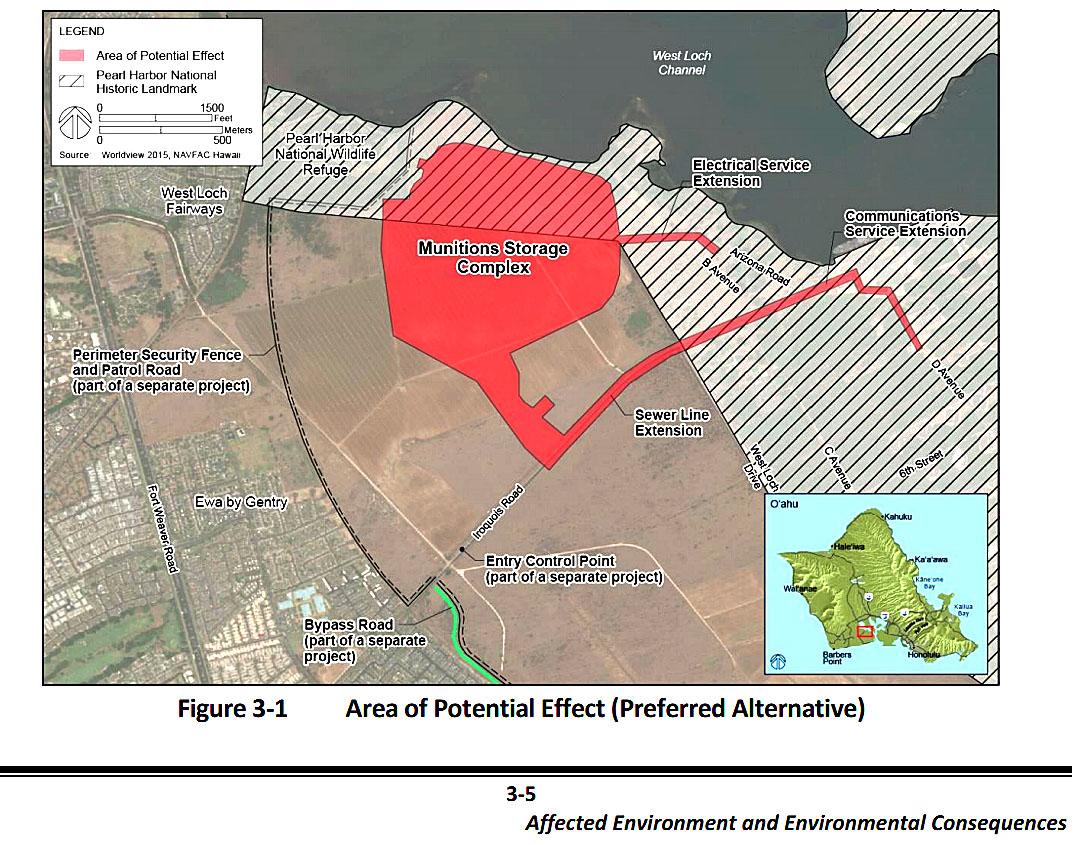
The United States Army plans to build an enormous weapons facility storing stockpiles of conventional warheads and explosives right next to the residential housing communities of Ewa Beach, Ewa Villages, West Loch Estates, and Ewa Gentry, as well as beside the Pearl Harbor National Wildlife Refuge in Hawaii. This Pacific island paradise already has the largest concentration of United States military bases and compounds in the country, making it one of the most militarized places on earth. Were it to secede from the Union, Hawaii would be a major military power on a global scale. And now, more weapons are on the way. A lot more.
The size, scope, and expense of this massive construction project must be considered, as well as the immediate danger placed on the residents of the surrounding communities. Equally important is whether the pre-positioning of such massive amounts of live warheads and munitions is in the interest and safety of the American public. Pre-positioning means ready to use. Locked and loaded. We’re off to war. This decreases the time for diplomacy and increases the likelihood of the weapons’ use. Do we really want to stockpile yet more weapons on this over-militarized island in preparation for the next big war? Is this a prudent strategy, or rash and perilous behavior?
Marine Corps Base at Kaneohe, Hawaii
In a 164 page report written by the Department of the Navy for the Army, titled :Finding Of No Significant Impact (FONSI) For The U.S. Army West Loch Ordnance Facilities At Joint Base Pearl Harbor-Hickman (JBPHH), Oahu, Hawaii," the Navy states this project will include 27 new box type "D" magazines, eight modular storage magazines, administrative and operational facilities, accessory roads and concrete pads, utility service and distribution, site drainage, security features, and fire lines. For the record, a box type "D" magazine has an estimated footprint of 8,000 square feet. Again, there will be 27 of these. An 86,000 square-foot vehicle holding yard, a 50,000 square-foot vehicle inspection area, and a 20,000 square-foot residue storage warehouse are among the other larger items to be built.
Despite this massive construction project, the Navy asserts no significant direct, indirect, or cumulative environmental impact to the area. The Navy then doubles-down on the absurdity, stating the proposed facility would actually result in beneficial impacts to public health and safety, an interesting argument for the storage of millions of pounds of explosive materials not more than a half mile from a housing development.
The report continues in the same vein using language meant to be innocuous and reasonable, but which is deadly serious, by arguing the massive weapons complex will cause no impact to cultural resources, biological resources, socioeconomic conditions, and minimal impact to land use. The Department of the Interior even signed off on the environmental impact argument, thereby proving the obvious, that all branches of the government work for the Pentagon.
Explosive munitions would be on and off-loaded at this site from a variety of ships, trucked and forklifted to warehouses, and then carted back to other ships ready for war. An accidental explosion would be devastating to these residential communities, carrying the potential to kill and injure hundreds. Homes, businesses, parks and schools all would be in the blast zone, or the "explosion arc."
Additionally, an accidental blast there could ignite even greater blasts at Pearl Harbor facilities and Hickam Field, a chain reaction of deadly explosions the Navy refers to as "sympathetic explosions." The 1969 USS Enterprise fire near Pearl Harbor began when a Zuni rocket accidentally detonated under a plane’s wing and ignited additional munitions, blowing holes in the flight deck which allowed jet fuel to ignite the ship. Twenty-eight sailors were killed, 314 were injured, and 15 aircraft were destroyed at a cost of over $126 million. This accidental explosion occurred offshore and far away from residential neighborhoods. Such an explosion at this new facility would cause far greater loss of life and property.
Especially noteworthy about this new weapons facility is the shortened safety distance between the bomb storage buildings and the residential population, less than a half mile from the new Ewa Gentry North Park housing development. Other storage facilities such as Indian Island in Washington State and the Earle Ammunition Loading facility in New Jersey have far greater explosion arcs, while the Army MOTSU site in North Carolina has a 3.5 mile explosion arc. The recent accidental explosion in Beirut, Lebanon, though not of military munitions, left a blast zone of 6.2 miles. The data used to calculate these explosion arcs is, according to the Navy, classified. Additionally, the types of ammunition and exclusive amounts to be stored are also classified. And so, explosion arc is a term whose actual meaning is held in close confidence by the Navy. Trust us, they say.
At the end of their lengthy report, the Navy, not surprisingly, concludes there is no alternative but this. They have, so they argue, done their due diligence. Weapons must be brought here, a new facility must be built, there is no danger to the public or the environment. They are merely fulfilling their obligations under the law by planning, pre-positioning, and preparing for war. Rest assured, they seem to say, all is well. No reason to worry. You are in safe hands. The military is in control. Construction begins in 2022.

WSJ : How Japan’s Big Bet on Hydrogen Could Revolutionize the Energy Market

How Japan’s Big Bet on Hydrogen Could Revolutionize the Energy Market
The country’s effort to be carbon-free by 2050 relies on a fuel source many see as too expensive and unrealistic

Japan built the world’s third-largest economy on an industrial base powered by imported oil, gas and coal.

Now, it is planning to shift a big chunk of that power to hydrogen, in one of the world’s biggest bets on an energy source long dismissed as too costly and inefficient to be realistic.

The change is a vital piece of the country’s plan to eliminate carbon emissions in 30 years. If it succeeds, it could also lay the groundwork for a global supply chain that would finally let hydrogen come into its own as an energy source and further sideline oil and coal—similar to the way the country pioneered liquefied natural gas in the 1970s, some experts say.

Hydrogen has been hyped before, and there are still big economic and technical challenges to overcome. Japan’s approach is likely to be a gradual process of moving away from fossil fuels over many years, so it won’t cut carbon emissions quickly at first. Nor will it resolve its dependence on foreign energy. The country is planning to use hydrogen produced largely from imported fossil fuels initially.

But like many countries, Japan is realizing it can’t achieve its goal of zero emissions by 2050 with renewable sources like solar and wind alone. Hydrogen emits water vapor when used, rather than greenhouse gases like carbon dioxide. It can be used to replace fossil fuels in industries where renewables don’t work as well.

The Japanese government more than doubled its hydrogen-related research-and-development budget to nearly $300 million in the two years to 2019, a figure that doesn’t include the millions invested by private companies.

In December, Japan published a preliminary road map that called for hydrogen and related fuels to supply 10% of the power for electricity generation—from virtually zero now—as well as a significant portion of the energy for other uses like shipping or steel manufacture by 2050. The government is honing a final energy plan now, which could contain official targets for hydrogen development and an estimate of how much it will cost.

Eventually, the government is expected to provide subsidies, as well as disincentives for carbon-emitting technologies. Japan’s industrial powerhouses are building ships, gas terminals and other infrastructure to make hydrogen a big part of everyday life.

Japan’s biggest power company, JERA Co., is planning to reduce carbon emissions by mixing the hydrogen compound ammonia into its coal-fired plants, and in May signed a memorandum of understanding with one of the world’s biggest ammonia manufacturers to develop supply.

The country’s conglomerates are seeking out places to source ammonia and hydrogen. Shipping companies like Nippon Yusen Kabushiki Kaisha are designing boats that run on those fuels.

The world’s first liquefied hydrogen carrier—a 380-foot vessel bearing the letters “LH2” in blue and black—sits at the port of Kobe in southwest Japan, preparing for its trial run to Australia, around 5,600 miles away.

“The real game-changer here is that if there is a breakthrough in Japan and the entire value chain is figured out to service the Japanese market, I think there will be rapid adoption” of hydrogen globally, says David Crane, the former chief executive of U.S. power producer NRG Energy Inc., who sits on the board of JERA.

Hydrogen has key advantages. One is that it can be used in modified versions of existing power plants and other machinery designed to run on coal, gas or oil. That will help countries avoid scrapping billions of dollars of legacy assets as they transition to a new-energy future.

It can also be stored and used in fuel cells, which pack more power into the same amount of space than electric batteries. That makes hydrogen better suited for airplanes or ships that have to carry energy supplies long distances.

Another advantage is that hydrogen is a technology in which Japan can take the lead and reduce reliance on China, which is emerging as a major alternative energy power and the world’s biggest supplier of solar panels and electric batteries.

With 80% of solar panels now coming from China, “we have some concern” about future energy security, says Masakazu Toyoda, chairman of the Institute of Energy Economics, Japan, who also sits on a committee advising the government on energy strategy.

The International Energy Agency said in May that hydrogen would be needed, along with solar and wind energy, if the world is to reach net-zero carbon emissions by 2050. Its road map for the most “technically feasible” way of getting there predicted hydrogen and related fuels would make up 13% of the total energy mix that year, while investment could exceed $470 billion annually.

In the U.S., some states and companies are investing in hydrogen projects like fuel stations, although the efforts are still sporadic.

The European Union last year rolled out its own hydrogen strategy and estimated investment in the industry could reach hundreds of billions of dollars by 2050. Several European oil companies, including Royal Dutch Shell PLC and BP PLC, are backing new hydrogen projects. Airbus this year unveiled plans for three hydrogen-fueled airplanes.

Elsewhere in Asia, a consortium of South Korean conglomerates including Hyundai in March announced $38 billion in hydrogen-related investment by 2030. China plans to have hundreds of hydrogen buses ready for the Beijing Winter Olympics in early 2022.

A key problem is that hydrogen isn’t found by itself in nature, which means it must be extracted from compounds such as water or fossil fuels. That takes energy. More energy goes into producing pure hydrogen than comes out when that hydrogen is consumed.

The most common ways of making hydrogen, by extracting it from natural gas or coal, also produce a lot of carbon dioxide. The long-term goal is to make hydrogen the “green” way, using electricity from renewable-energy sources, but for now that is pricier.

Storing and carrying hydrogen is tough, too. The gas is so light and takes up so much space at normal temperatures that it has to be compressed or liquefied to be transported efficiently. Hydrogen doesn’t turn into liquid until it is cooled to minus 253 degrees Celsius, just 20 degrees warmer than absolute zero.

Japan’s plan could be one of the world’s most consequential because of its bold idea of using ammonia. Ammonia, a compound of nitrogen and hydrogen that also emits no carbon dioxide, solves some of hydrogen’s problems. It is more expensive to make, but much easier to transport and store—and thus trade—than pure hydrogen. And it is already produced in large quantities world-wide, mostly for fertilizer.

Critics say hydrogen and related fuels aren’t worth the effort. Generating electricity from pure hydrogen in Japan would currently cost around eight times as much as from natural gas or solar and nine times more than coal, according to some estimates.

Greenpeace has panned Japan’s ammonia power-generation plans. It concluded in a March analysis that the idea was “expensive greenwash,” because it will likely still involve some greenhouse gas emissions and cost more than producing power with renewable energy.

Volkswagen estimates hydrogen-powered electric vehicles use as much as three times more energy than battery-powered ones. Tesla chief executive Elon Musk has called hydrogen fuel cells for cars stupid.

But Japan’s circumstances mean it has limited options. It imports almost 90% of the energy it uses, and has limited room to build out solar or wind arrays. Japan shut down most of its nuclear plants after a 2011 tsunami caused meltdowns at one in Fukushima; the public remains largely opposed to nuclear power.

The zero-carbon road map that Japan’s Ministry of Economy, Trade and Industry unveiled in December called for importing millions of tons of ammonia.

“It is a huge endeavor,” says Ryo Minami, director general of METI’s oil, gas and mineral resources department, which is leading its ammonia strategy. “Japan is embarking on something that’s never been done anywhere in the world.”

Although Japan has been plugging hydrogen since the 1970s, commercialization was slow. Attitudes started changing a few years ago, after a government-sponsored research project led by Shigeru Muraki, a former vice chairman at Tokyo Gas Co. Mr. Muraki proposed starting with ammonia until technologies using pure hydrogen matured.

Mr. Muraki’s group found it could be burned in existing coal- and gas-powered thermal plants, which currently produce three-quarters of Japan’s electricity. Although the combustion emits nitrous oxide, a greenhouse gas, Japanese engineers have worked to get the emissions down and say the rest can be filtered out so it doesn’t get released.

Japanese utilities could first secure ammonia made from fossil fuels and find ways to capture or offset the carbon dioxide emitted during that process, Mr. Muraki reasoned. They could switch to “green” ammonia as demand grows and prices come down.

Mr. Muraki talked up the idea to government officials, like the economy ministry’s Mr. Minami. The problem was that Japan needed economies of scale to bring down hydrogen or ammonia prices, and no big consumer had emerged.

That is where JERA came in. The power producer was formed after the Fukushima nuclear plant disaster left its operator, Tokyo Electric Power Co., in bad financial straits. In 2019, Tepco and another major utility transferred their thermal power plants to JERA, leaving it with facilities that supplied around a third of Japan’s electricity.

JERA calculated that switching Japan’s power to entirely renewable energy would mean rebuilding the country’s electric grid, a costly and time-consuming process, says Hisahide Okuda, head of JERA’s strategy department. But the existing grid could support enough renewable power to meet half the country’s demand.

To decarbonize the rest, Mr. Okuda turned to ammonia and won over skeptical board members. JERA unveiled its plan to shift its coal plants to an ammonia mix in October.

In Yokohama, heavy-industry manufacturer IHI Corp. is adapting gas turbines to burn an ammonia-gas mix.

All you have to do is replace the burner, says Masahiro Uchida, an IHI senior researcher, pointing to a bronze-colored cylinder atop the main turbine chamber. IHI has also figured out how to retrofit coal furnaces, and hopes to sell them in countries like Australia or Malaysia, as well as Japan.

JERA and IHI are starting a government-sponsored trial to burn a 20% ammonia mix at one of JERA’s biggest coal-burning plants. If that goes well, JERA says it hopes to roll out the technology at all its coal plants by 2030, and then gradually raise the percentage of ammonia used, reducing the carbon emitted.

That would require a massive boost in ammonia supply. JERA’s initial test calls for around 500,000 tons a year—around half of what Japan consumes now. By 2050, Japan could consume 30 million tons of ammonia and 20 million tons of hydrogen a year, according to projections from METI and an advisory group. Roughly 20 million tons of ammonia are traded globally now.

The task of figuring out how to develop that supply is falling to companies like Mitsubishi Corp. and Mitsui & Co. that import much of the fuel and chemicals Japan uses today.

The biggest challenge is price. Government officials and industry executives estimate it would cost around 24% more to produce electricity if utilities mixed in 20% ammonia than by just burning coal. Industry executives say that price gap could be manageable with government support and incentives.

Mitsui is discussing the possibility of a big new ammonia plant in Saudi Arabia, which the conglomerate has concluded is the cheapest source. Mitsubishi is in talks with potential suppliers in North America, the Middle East and Asia, and is also talking to Japanese shipping companies about building bigger ammonia carriers.

Shipping firm Nippon Yusen is seeking preliminary approval for a massive ammonia tanker that would be fueled by ammonia as well, and hopes to have it ready for delivery by 2028.

Meanwhile, companies are making investments they hope will hasten the day when pure hydrogen can be used. Japanese car, truck and heavy equipment makers including Toyota Motor Corp. are pushing for more hydrogen-powered vehicles. High prices and a dearth of fueling stations have limited adoption so far.

Kawasaki Heavy Industries Ltd. is developing the technology needed to handle liquefied hydrogen, including tanks and pipes made from double-layered stainless steel, with a vacuum between layers for insulation.

On a windy day in April, the world’s first liquefied hydrogen carrier was preparing for an inaugural run to southern Australia, where the government has built a trial project to make hydrogen out of coal.

The tank sits on sliders that let it expand and contract from extreme temperature changes from storing hydrogen without breaking the struts that hold it to the boat. The tangle of pipes above the deck are also engineered to withstand expansion and shrinkage, running in a series of right angles rather than straight.

Farther out in the bay, Kawasaki has built a globe-shaped storage tank and what could become Japan’s first liquefied-hydrogen loading terminal.

“We’re coming into the critical period” for hydrogen development, says Motohiko Nishimura, the executive officer in charge of Kawasaki’s hydrogen push. “At the very least, it is our job to show that this is all technically possible.”

WSJ : The Best Sports Sunglasses for Cycling, Running and More

The Best Sports Sunglasses for Cycling, Running and More
Sweat-resistant. High-performance. Our top picks to stay on your face and help keep you cool through the hottest runs and steepest biking trails this summer.


SHADES OF GLORY Your favorite poolside wayfarers are no match for the athletic performance of the Roka Matador, Spy Optic Monolith, Oakley Kato, Smith Shift Mag or Adidas Sport Sunglasses SP0025
PHOTO: F. MARTIN RAMIN/THE WALL STREET JOURNAL

Listen to Article 4 minutes

00:00 / 03:47
1x


This article is in your queue.
PRO CYCLIST Payson McElveen, 28, never leaves home without two biking accessories: his helmet and, for less obvious reasons, his specialized sport sunglasses. Whether bombing down a mountain, leaning into turns or ducking to avoid malevolent branches, the Durango, Colo., resident needs his sunnies to stay firmly on his face to block glare and shield his eyes from debris. And he knows his favorite poolside Wayfarers can’t begin to suffice. “The field of view is much greater, which makes reading the terrain easier,” Mr. McElveen said of the athlete-friendly design.
Even if you’re not a pro, upgrading your shades will keep you more comfortable and protected while riding, running, hiking, golfing or paddling this summer. We tried on the newest crop to check for fit and clarity. Here, our five top picks.

PHOTO: F. MARTIN RAMIN/THE WALL STREET JOURNAL
1. The Clingers
Despite their modern style, these Roka Matador sunglasses employ Jurassic technology. The textured, grippy rubber nosepiece and arms are designed to mimic the soft and sticky feet of a clingy gecko, so they stay put no matter how much you sweat or move. When you buy, pick from nine lens options, from one for bright sun to another that makes the whites of road lines or golf balls pop. Additional lenses are easily swapped in and available from $70. From $235, roka.com

PHOTO: F. MARTIN RAMIN/THE WALL STREET JOURNAL
2. The Skier’s Pair
You might doubt the claim that the Spy Optic Monolith’s high-contrast lens tech is scientifically tuned to boost your mood—but the fun factor of these oversize sunglasses might make you smile anyway. The shades’ curved design works hard to follow the shape of your face, while front-facing vents capture breezes to cool you. In the winter, you can use them as ski goggles to knock the edge off snow glare and shield your eyes from snowblowers. $150, spyoptic.com


PHOTO: F. MARTIN RAMIN/THE WALL STREET JOURNAL
3. The Minimalists
With this Oakley Kato model, instead of connecting the arms to an actual frame, the brand bolted them right to the lenses for a sparer look. These also might be the most comfortable pair we tried: You can customize the fit by choosing from three sizes of nose piece and by tilting and locking the adjustable arms into different positions. $291, oakley.com

PHOTO: F. MARTIN RAMIN/THE WALL STREET JOURNAL
4. The Transformers
By pressing buttons on the arms of these Smith Shift Mag shades, you can release a magnetic catch—making it a breeze to swap the optics without smudging them with fingerprints. These are also the only option we tried that ships with two lenses, including a clear one for riding at dawn or dusk when you need only shield your eyes from wind, not sun. $259, smithoptics.com

PHOTO: F. MARTIN RAMIN/THE WALL STREET JOURNAL
5. The Discreet Shades
Unlike many of the more far-out-looking sunglasses here, the Adidas Sport Sunglasses SP0025 let you chase down fly balls and then confidently stride into the coffee shop without provoking stares. A dozen vents line the top of the frame to keep you cool and the lenses fog-free. While the lack of polarization on the model pictured means it won’t shield your eyes from glare on the water, these are the most affordable swap for your daily sunglasses. From $120, adidas.com