Uniper takes €1bn Nord Stream 2 hit and signals shift from Russian gas
German utility plays down prospect of supply disruptions as it pledges no new contracts with the country
Uniper is taking a €1bn hit from writing off its exposure to the suspended Nord Stream 2 gas pipeline, following fellow investors in the project in turning its back on Russia after the invasion of Ukraine
The German utility disclosed late on Monday it had written off €695mn in loans to Nord Stream 2 plus €292mn in accrued interest payments, adding that it would take an annual hit of €100mn as it forgoes future interest payments on the loan.
Uniper, majority-owned by Finnish utility Fortum, is one of Europe’s biggest importers of Russian gas, with 200 terawatt hours of long-term supply contracts.
It is among five European companies that lent money to Russia’s Gazprom to build the contentious Nord Stream 2 link between Russia and Germany. Three of the other companies — German group Wintershall Dea, UK-listed Shell and Austria’s OMV — have made similar moves since Berlin froze the project a fortnight ago.
Authorities in Switzerland, where Gazprom-controlled Nord Stream 2 is incorporated, said this month the company was facing insolvency. Its website is now offline.
Uniper’s share price, which has fallen by about 40 per cent since Russia launched its attack on Ukraine last month, was up 6 per cent in morning trading on Tuesday.
Uniper chief financial officer Tiina Tuomela said the company did not at present expect disruptions to gas supplies from Russia, which last year accounted for 55 per cent of all German natural gas imports.
“At this point in time, we assess the probability of [a possible interruption of Russian gas supplies] as low,” she said. “Currently, all parties seem committed to continue gas supplies and there are no indications of a restriction of supply so far.”
Should flows from Ukraine be interrupted, she added, European gas imports from Russia could be sourced via “alternative routes”.
Uniper said it would “gradually” shift from natural gas to greener alternatives and would not sign “new long-term supply contracts for natural gas with Russia”.
It also said it wanted to build an LNG terminal in Wilhelmshaven on Germany’s North Sea coast and would stop sourcing coal for power plants from Russia by the end of this year.
The company announced it had shelved the planned sale of its Russian utility Unipro “due to the current situation”. The German group holds an 84 per cent stake in the Moscow-listed company with 11 gigawatts in generation capacity and 4,300 employees.
Uniper said it was “currently impossible to predict how potential Russian sanctions could affect Unipro’s business and financial situation”.
In 2021, Unipro accounted for a fifth of Uniper’s total operating profit. The German company had decided to sell Unipro at the end of 2021.
“This process has been halted for the time being and will be restarted as soon as it is feasible,” the company said, adding it had frozen new investments in Russia and “will not transfer any funds to Unipro until further notice”.
Qatar mediates between Iran and US in nuclear talks
Gulf state acts as intermediary at request of Washington and Tehran as negotiations reach crucial stage
Qatar has stepped up its role in mediating between the US and Iran as western powers have been striving to convince wary Iranian leaders to ink a deal to revive the 2015 nuclear accord, according to people briefed on the talks.
After 11 months of EU-brokered indirect talks in Vienna, officials say time is running out. The Gulf state has been acting as an intermediary at the request of both Washington and Tehran, complementing the talks in the Austrian capital, in an effort to build trust between the longtime foes.
Doha has ferried messages between the protagonists and sought to allay Iranian concerns, including those related to its demand that the Biden administration provide a guarantee that no future US government is able to unilaterally abandon the deal, as former president Donald Trump did in 2018.
Qatari officials have also been working to facilitate direct talks between Washington and Tehran, should a deal be reached, to ensure that any outstanding issues, such as prisoner exchanges and additional sanctions relief, could be addressed in the future, a diplomat briefed on the talks said.
“Both sides really need a deal, and there’s a willingness on both sides, but the biggest problem is trust,” the diplomat said. “They each think the other side doesn’t want it, which is not legitimate.”
A senior US official said Qatar had been “extremely, extremely helpful in supporting efforts to resume full implementation of the JCPOA [the nuclear accord]”.
An Iranian official declined to discuss Qatar’s specific role, but said it “and one or two other countries have brought messages [from the US] in some cases”.
Western officials are pressuring Iran to agree to a deal within days, arguing that if it does not the moribund accord would be redundant because of the advances Tehran has made to its nuclear programme. They said they are close to an agreement, but caution that some outstanding issues still need to be resolved.
Moscow’s demand at the weekend that it needs guarantees that US sanctions imposed on Russia after Vladimir Putin invaded Ukraine will not impede its trade with Iran has threatened to complicate matters and added to the sense of urgency. Russia is a signatory to the accord with France, Germany, the UK and China, and involved in the main talks in Vienna.
The diplomat said that both the US and Iran want to continue negotiations “if they reach an agreement”.
“The biggest mistake with the 2015 deal was the talks stopped after it was signed,” said the diplomat. “Initially, neither side trusted one another, and needed signs of good faith, but now there are positive movements. The Iranians now see Biden as someone they can negotiate with.”
Gas-rich Qatar, home to the biggest US military base in the region, has previously facilitated talks between the US and its adversaries, including the Taliban. The role of Qatar stepped up after its emir, Sheikh Tamim bin Hamad al-Thani, was hosted by US president Joe Biden at the White House in January. Biden used the visit to designate Qatar a “major non-Nato ally”.
Doha’s ties to Tehran strengthened after the Islamic republic boosted trade with the Gulf state as it endured a four-year regional embargo led by Saudi Arabia and the United Arab Emirates, before it was lifted a year ago.
After Sheikh Tamim’s trip to Washington, his foreign minister, Sheikh Mohammed bin Abdulrahman al-Thani, made an unannounced visit to Tehran last month — his second trip to Iran this year. Sheikh Mohammed also had a phone call with his Iranian counterpart, Hossein Amirabdollahian, last week about the outstanding issues at Washington’s request.
Days earlier, Sheikh Tamim held talks with president Ebrahim Raisi in Doha, the first visit by an Iranian president to Qatar in a decade.
Ali Vaez, an Iran expert at Crisis Group, said the issue with the intermediaries at the Vienna talks was that there was no one both sides fully trusted to “share things they were not comfortable with”. He added that Rob Malley, the US’s top negotiator, has for a long time had a “very good relationship” with Sheikh Mohammed, Qatar’s foreign minister.
“Qatar’s relationship with Iran changed post the regional embargo and so all the stars aligned for the Qataris to step in,” Vaez said. “There was no one else who had the personal ties to both sides and was better placed geostrategically at this point in time to play the role.”
Iranian officials have said outstanding issues include Tehran’s demands for guarantees from the US, as well as disagreements over which sanctions would be lifted if Iran reverses its nuclear activity to agreed limits. Tehran wants all Trump-era sanctions lifted, including those related to alleged human rights abuses and terrorism allegations, not just those related to economic activity.
The diplomat briefed on the Qatari talks said Tehran initially wanted its differences with the US lumped together within an agreement to revive the nuclear accord. But the message from Europeans, Qataris and other mediators was “that is going to be very difficult, agree on the JCPOA, which both sides need urgently, and either keep other topics in separate talks or continue talks on other issues, like other sanctions, after the deal is signed,” the diplomat said.
Experts said it is almost impossible for Biden to guarantee that no future administration would withdraw from the accord. “The worry with no guarantee is the Iranians will go into it with one eye open and be prepared that in two years the US could leave again,” the diplomat said. “The Iranians could use these two years to develop trust and relations with the EU and Asia, and build further institutional trust and other negotiations with the US.”
Google in Talks to Buy Mandiant, a $4.5 Billion Cybersecurity Firm
Google is in talks to buy cybersecurity consultancy Mandiant, which two years ago discovered the infamous SolarWinds hack, according to a person with knowledge of the discussion. A deal could bolster Google’s cloud computing business, which generates more than $19 billion annually but has been losing billions of dollars a year, and help it compete with bigger rival Microsoft, which also is reportedly interested in buying Mandiant.
Google’s multibillion-dollar acquisition effort, if consummated, would be its second-largest ever. It comes as some employees have privately discussed the need for more security firepower to compete with Microsoft, which offers more security products for its Azure cloud customers, as well as with Amazon Web Services.
THE TAKEAWAY
• Bids for Mandiant were due at the end of February
• Purchase could help Google beef up cloud business
• Deal would prompt in-depth review by antitrust regulators
Google’s talks with publicly traded Mandiant could still fall through, according to the person. Microsoft is also making a move to acquire Mandiant, Bloomberg reported early last month. Bids for Mandiant were due at the end of February, the person said. The potential deal value couldn’t be learned, but Mandiant has a market capitalization of just under $4.5 billion.
Any deal involving Microsoft or Google is likely to get a close look from competition regulators, which have become increasingly wary of acquisitions made by the biggest tech companies.
Google and Mandiant did not immediately have a comment for this article. Microsoft did not have a comment.
The centerpiece of Google Cloud’s security strategy is Chronicle, a product that monitors the flow of data across PCs, devices and networks to detect signs of stealthy cyberattacks. Chronicle started out as an independent company within Alphabet but was moved into Google Cloud in mid-2019. In January, Google upgraded Chronicle by acquiring Siemplify, an Israeli startup whose software helps security teams respond quickly to threats, for a reported $500 million.
“Right now Google wants to buy [software] that companies are regularly and repeatedly buying,” said a former Google Cloud manager who didn’t have knowledge of any acquisition talks. Google Cloud CEO Thomas Kurian, a former longtime Oracle executive, “just wants more transaction volume on his books,” this person said.
While Google Cloud has disclosed $51 billion in contractual commitments from customers to spend money on its services, “customers are saying, ‘Gimme more [products] I can buy,’” the former manager said. Plus, those initial commitments may not always translate to revenue, as The Information has reported, and Google Cloud faces a host of costs and business challenges that its rivals do not have.
Forensics Expertise
Kevin Mandia, a former U.S. Air Force officer, founded Mandiant in 2004 as a cybersecurity consultancy that helped companies and government organizations protect their networks from attacks. In some cases, Mandiant’s researchers would deliberately hack customers’ computers to find security holes, while in others they would conduct investigations to understand the cause of breaches.
Mandiant’s profile grew over the years after it was able to trace the origin of several cyberattacks on U.S. companies to state-sponsored hackers based in China. In 2013, cybersecurity firm FireEye acquired Mandiant for $1 billion to serve as the security threat research arm of the company. Mandia was named CEO of FireEye three years later. But FireEye struggled under Mandia’s leadership and last June sold its products unit—which includes software that protects PCs, servers, email systems and cloud services—to a private equity consortium led by Symphony Technology Group, leaving Mandiant as the publicly traded piece that was left over (and with Mandia still at the helm).
Mandiant sells a subscription-based product that depicts security threat data in charts and graphs to help security operations teams respond quickly to threats. But Mandiant’s chief strength is its in-house cybersecurity research and forensics expertise and its ability to handle investigations when attacks happen, according to Andrew Plato, founder and CEO of Zenaciti, a cybersecurity consulting firm.
In late 2020, Mandiant (then called FireEye) discovered and announced the breach of network systems management firm SolarWinds, which attackers subsequently used to gain access to the networks of dozens of private companies and government agencies. Mandiant has also set up a task force to track cybersecurity threats tied to Russia’s war against Ukraine.
“They’re pretty much the go-to company that most law firms recommend to their corporate clients when they’re breached,” Plato said. “And they also have a lot of experience tracking state-sponsored hackers.”
In addition to adding top-notch cybersecurity research talent to the buyer’s portfolio, Mandiant would also bring in some revenue. Mandiant’s sales grew 21% to $483 million last year while its annual recurring revenue—which represents customer commitments to buy its subscription software in the next 12 months—grew 23% to $279 million. Mandiant generates a small amount of cash from its operations.
Antitrust Scrutiny
Google and Microsoft are bitter rivals, dating back to the earliest days of the search giant. The Department of Justice’s antitrust case against Microsoft, which it settled in 2001, is widely believed to have slowed the company’s progress, paving the way for Google’s rapid growth. And in recent years Microsoft has played a key role in lobbying antitrust officials and lawmakers to go after rivals including Google and Apple.
Mandiant is not the first company Google and Microsoft have competed for. In 2018 the two companies were both looking to buy open-source code repository GitHub, which Microsoft ultimately acquired for $7.5 billion, as a way to buttress their respective cloud software businesses. And more than a decade earlier, the companies competed to buy online display-advertising firm DoubleClick, which Google bought for $3.1 billion en route to becoming a top seller of display ads.
A deal by either company to buy Mandiant is likely to elicit a double take from competition regulators. Google is facing multiple lawsuits from antitrust enforcers around the world. U.S. and European antitrust officials reviewed Google’s last large acquisition, a $2.1 billion purchase of smartwatch maker Fitbit in 2019, for more than a year before clearing it. However, Google’s $2.6 billion acquisition of data analytics firm Looker Data Sciences in 2019, also aimed at helping the Google Cloud unit, didn’t face regulatory obstacles.
A Microsoft-Mandiant deal would likely get an even closer look than a deal involving Google because Microsoft has a substantial position in the cybersecurity software market.
“The odds are pretty good that the [U.S. Department of Justice or Federal Trade Commission]…will try to come up with a theory for why it should block the deal,” said Doug Ross, a lecturer at the University of Washington School of Law and a longtime antitrust defense attorney.
While its rivals have faced more antitrust heat, Microsoft has been among the biggest and most active acquirers of tech companies in recent years. Microsoft’s recent $69 billion deal to buy games developer Activision Blizzard is expected to draw antitrust reviews around the world well into 2023. Separately, Microsoft breezed through reviews for its $19 billion acquisition of speech recognition company Nuance Communications, which closed last week after regulators in the U.S., EU and U.K. raised no objections.
Antitrust authorities would likely examine whether the companies would limit access to competitors or customers of the acquired company, Ross said. He pointed to Nvidia’s failed takeover of Arm, which the FTC recently challenged over similar concerns.
Among the three major cloud providers, Microsoft has the biggest security business, though its major software products have been among the biggest targets for hackers. Still, a senior manager at a major customer of both Microsoft and AWS told The Information that Microsoft has long had an advantage in bundling security products with its broader cloud computing services, such as storage, computing and productivity apps.
Boris Johnson looks to increase North Sea oil and gas production
Prime minister prepares new UK energy strategy, seeking self-sufficiency following Russia’s invasion of Ukraine
Boris Johnson is preparing to unveil a new UK “energy supply strategy” following Russia’s invasion of Ukraine that could involve more North Sea oil and gas production.
The prime minister insisted he was not dropping the government’s commitment to cut carbon emissions but said the UK needed greater self-sufficiency in its energy sources.
As Britons grapple with a broad-based cost of living crunch, the government’s new energy supply strategy is not expected to provide further immediate relief for households contending with soaring electricity and gas bills.
But with mounting pressure on energy suppliers, government officials said the Treasury was preparing a second bailout package worth hundreds of millions of pounds for Bulb, the electricity and gas provider that went into special administration in November, unless a surprise bidder emerges.
The UK energy market is being roiled by further sharp increases in the cost of oil and gas following Moscow’s full invasion of Ukraine.
Johnson told a press conference on Monday that ministers were considering the option of using more oil and gas from British sources.
“It is completely the right thing to do to move away from dependence on Russian hydrocarbons, but we have to do it step by step,” he said.
“We have got to make sure we have substitute supply. One of the things we are looking at is the possibility of using more of our own hydrocarbons . . . We need to increase our self-reliance.”
As well as potentially increasing UK North Sea oil and gas production, Johnson’s strategy is expected to involve more nuclear power and renewable energy.
Kwasi Kwarteng, business secretary, does not see shale gas as part of Britain’s energy mix and is resisting calls from Conservative MPs to end a ban on fracking.
Johnson, who has championed the UK’s commitment to net zero emissions by 2050, said western countries would work together to find alternatives to Russian hydrocarbons.
UK wholesale gas prices followed oil higher on Monday after the US said it was in “active discussions” with European countries about a ban on imports of Russian crude.
UK gas prices hit a fresh record of 800p per therm at one point in a volatile trading session, before falling back to 501p, up 8 per cent on the day. A year ago UK gas prices were trading around 40p per therm.
Brent crude surged to $139 a barrel, before falling back to about $120. Average petrol prices in the UK have topped £1.55 per litre for the first time, according to motoring group the RAC.
Even before Russia’s invasion of Ukraine, UK energy bills were due to soar after regulator Ofgem said the price cap for 22mn households would rise 54 per cent in April to almost £2,000 a year.
Experts say the price cap could reach between £3,000 and £3,400 a year in October when it is next due to be adjusted.
Chancellor Rishi Sunak in February announced a £9bn package to help households with their energy bills, which included a £150 council tax rebate for properties in bands A to D in England.
Sunak in November set aside £1.7bn in working capital for Bulb to keep the company operational until April, after Ofgem concluded it could not transfer its customers to rivals.
But with just three weeks to go before that support package expires, industry insiders said the special administrator was unlikely to find a buyer for Bulb, meaning Sunak is expected to have to provide more working capital.
Highlight text
A government spokesperson said the special administrator was obliged to keep the costs of the process “as low as possible”.
Last year the UK met about 40 per cent of its gas demand from domestic production, but analysts said the proportion could rise marginally this year with projects such as the Elgood and Blythe fields in the North Sea due to come on stream.
Climate change campaigners said bringing on new projects takes years and would not quickly relieve the problem of soaring energy bills for households.
It takes three years on average to produce the first gas from a project after a company has received development consent, according to figures from the Oil and Gas Authority, the North Sea regulator.
Saudi Crown Prince Gives Biden The Cold Shoulder: "I Do Not Care" What He Thinks
Last week, geopolitical pundits were struck after three middle-eastern power brokers - among them one of the closest US allies in the Gulf region, Saudi Arabia which not too long ago rejected US appeals to pump more oil, signed onto an Arab League statement that did not condemn Russia and instead called for diplomacy, an avoidance of escalation and consideration of the humanitarian situation. We now know why.
In a recent interview in The Atlantic, Saudi Crown Prince Mohammed Bin Salman (MbS) was asked some tough questions concerning the Biden administration's taking a harder line on the kingdom and MbS personally compared to when Trump was in office.
In particular the murder and dismemberment of Saudi journalist and Washington Post columnist Jamal Khashoggi has brought MbS under continued international scrutiny, albeit for the most part global elites started cozying up to Riyadh again by a mere year out from the October 2018 gruesome killing at the consulate in Istanbul. Biden himself had previously said he would make the crown prince "a pariah" in global opinion.
MbS responded to The Atlantic on this point by saying, "I feel that human rights law wasn't applied to me," he said. "Article XI of the Universal Declaration of Human Rights states that any person is innocent until proven guilty." Thus he once again implied his own innocence in the killing.
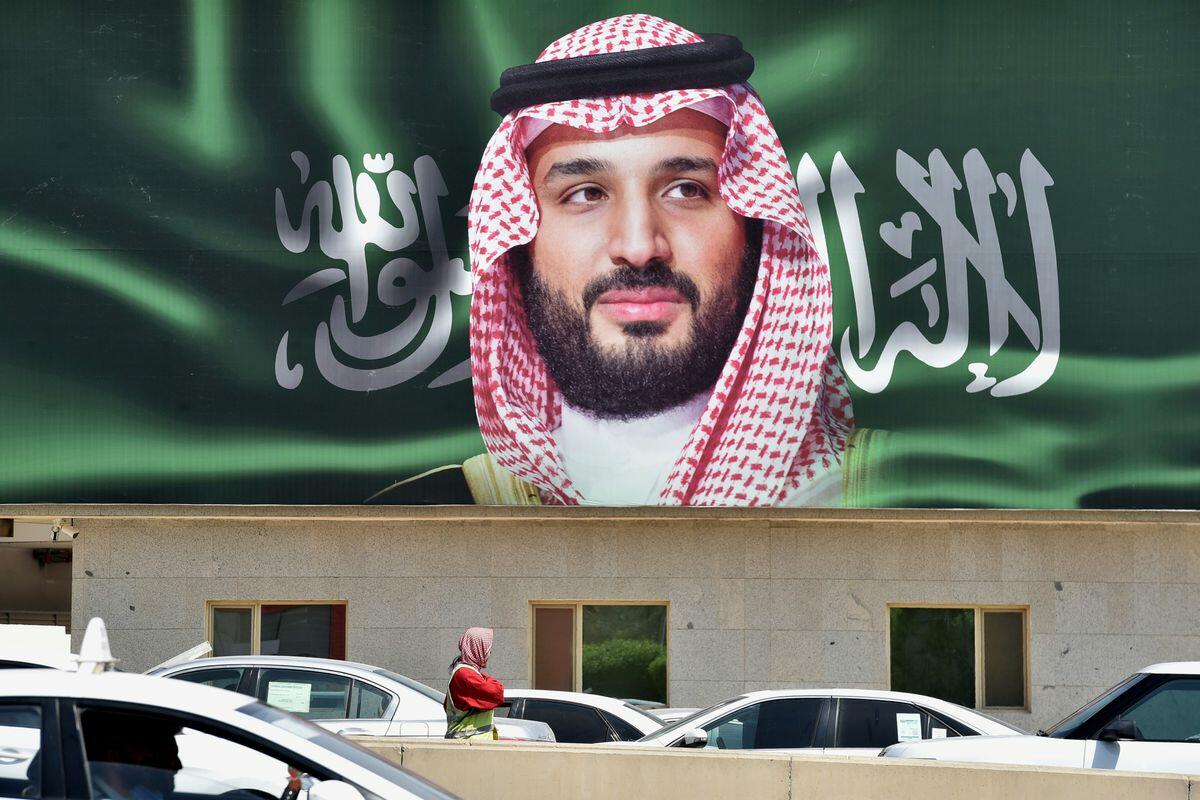

AFP via Getty Images
And perhaps even more interesting was his response when asked about the deteriorated relationship with the Biden White House, and whether he thinks Biden "understands" him. "Simply, I do not care," the crown prince said, and explained that it is up to Biden "to think about the interests of America."
"We don’t have the right to lecture you in America," he said. "The same goes the other way."
He also warned Washington not to "interfere" in the kingdom's internal affairs, which also comes after years ago a high level CIA investigation named bin Salman as the top Saudi government figure that likely ordered the Khashoggi assassination:
The de facto ruler of the world's top oil exporter, known as MbS, also warned the United States not to interfere in the internal affairs of the absolute monarchy.
He said that assuming this doesn't happen, he's devoted to pursuing Saudi Arabia's "long, historical" relationship with the United States.
It's likely that MbS feels perfectly comfortable responding to Biden with tough words of "I don't care" about his personal relationship with the Democratic president given the weapons relationship has continued unabated.
Biden had actually campaigned on ending US involvement in the Saudi-UAE war on Yemen - but this hasn't happened. Instead the Pentagon has stayed the course in terms of providing targeting intelligence and the steady flow of advanced weaponry - alongside the usual defense contractors of course. So in many ways it's business as usual on this front.
But now with the Russia-Ukraine war raging, there's something Biden needs. Starting last month the US began urging Saudi Arabia to boost oil production amid rising energy prices and attempts to find additional supplies for Europe. This was part of what Biden at the time described as his "taking active steps to alleviate the pressure on our own energy markets."
That request was quickly rejected by the Saudis, as Middle East Eye reviewed at the time: "At an energy forum in Riyadh on Wednesday, Saudi Energy Minister Prince Abdulaziz bin Salman rejected calls to pump more oil and said renegotiating quotas among Opec members risked stoking more volatility in oil markets..."
Covid May Cause Changes in the Brain, New Study Finds
Brain scans before and after infection showed more loss of gray matter and tissue damage, mostly in areas related to smell, in people who had Covid than in those who did not.
Covid-19 may cause greater loss of gray matter and tissue damage in the brain than naturally occurs in people who have not been infected with the virus, a large new study finds.
The study, published Monday in the journal Nature, is believed to be the first involving people who underwent brain scans both before they contracted Covid and months after. Neurological experts who were not involved in the research said it was valuable and unique, but they cautioned that the implications of the changes were unclear and did not necessarily suggest that people might have lasting damage or that the changes might profoundly affect thinking, memory or other functions.
The study, involving people aged 51 to 81, found shrinkage and tissue damage primarily in brain areas related to sense of smell; some of those areas are also involved in other brain functions, the researchers said.
“To me, this is pretty convincing evidence that something changes in brains of this overall group of people with Covid,” said Dr. Serena Spudich, chief of neurological infections and global neurology at the Yale School of Medicine, who was not involved in the study.
But, she cautioned: “To make a conclusion that this has some long-term clinical implications for the patients I think is a stretch. We don’t want to scare the public and have them think, ‘Oh, this is proof that everyone’s going to have brain damage and not be able to function.’”
The study involved 785 participants in UK Biobank, a repository of medical and other data from about half a million people in Britain. The participants each underwent two brain scans roughly three years apart, plus some basic cognitive testing. In between their two scans, 401 participants tested positive for the coronavirus, all infected between March 2020 and April 2021.
The other 384 participants formed a control group because they had not been infected with the coronavirus and had similar characteristics to the infected patients in areas like age, sex, medical history and socioeconomic status.
With normal aging, people lose a tiny fraction of gray matter each year. For example, in regions related to memory, the typical annual loss is between 0.2 percent and 0.3 percent, the researchers said.
But Covid patients in the study — who underwent their second brain scan an average of four and a half months after their infection — lost more than noninfected participants, experiencing between 0.2 percent and 2 percent additional gray matter loss in different brain regions over the three years between scans. They also lost more overall brain volume and showed more tissue damage in certain areas.
“I find it surprising in the sense of how much more was lost and how generalized it is,” said Dr. Spudich, who has studied the neurological effects of Covid. She added, “I wouldn’t have expected to see quite so much percentage change.”
The effects may be particularly notable because the study involved mostly people who — like the majority of Covid patients in the general population — were mildly affected by their initial Covid infection, not becoming sick enough to need hospitalization.
The study’s lead author, Gwenaëlle Douaud, a professor in the department of clinical neurosciences at the University of Oxford, said that although the number of hospitalized patients in the study, 15, was too small to yield conclusive data, results suggested that their brain atrophy was worse than the mildly afflicted patients.
People who had Covid also showed greater decline than uninfected people on a cognitive test related to attention and efficiency in performing a complex task. But outside experts and Dr. Douaud noted that the cognitive testing was rudimentary, so the study is very limited in what it can say about whether the gray matter loss and tissue damage the Covid patients experienced affected their cognitive skills.
“None of them got thorough enough cognitive testing to know if they had significant deficits in these many regions where they found these changes in volume,” said Dr. Benedict Michael, an associate professor of neurological infections at the University of Liverpool, who is researching the neuropsychiatric effects of Covid and was not involved in the study. “We don’t know that it actually means anything for the patient’s quality of life or function.”
For example, although some of the largest gray matter loss was in areas related to smell, including the orbitofrontal cortex and parahippocampal gyrus, those areas are also involved in memory and other functions. But the Covid patients did not perform worse than noninfected participants on memory tests, Dr. Douaud said, although she added that the memory tests they took were brief and basic.
The main cognitive assessment where Covid patients showed a deficit was the trail-making test, a connect-the-dots type of exercise involving alternating letters and numbers. Covid patients took longer to complete the task, which might suggest weaknesses in focus, processing speed and other skills.
Dr. Douaud said this diminished ability correlated with loss of gray matter in a specific region of the brain’s cerebellum. But the study doesn’t prove cause and effect, said Dr. Spudich, who also said that the cerebellum, primarily associated with balance, coordination and movement, “is not the first brain structure you think of” to explain changes in ability on the trail-making test.
One significant limitation to the study, Dr. Douaud said, is that researchers did not have information about people’s symptoms, including whether they lost their sense of smell. The researchers also could not identify whether any patients had long Covid, so it’s unclear if the findings relate to that long-term condition.
Differences between infected and uninfected people increased with age. On the trail-making test, for example, performance was similar in both groups for people in their 50s and early 60s, but the gap widened significantly after that. “I don’t know if that’s because younger people recover faster or they were not as affected to start with,” Dr. Douaud said. “Could be either or it could be both.”
Dr. Michael cautioned that the findings could not be extrapolated to the many younger people experiencing post-Covid brain fog and other cognitive issues. And since gray matter and tissue damage were measured at only one time-point after infection, “we don’t know if it’s just a transient change that gets better with recovery,” he said.
Outside experts and the study’s authors said the range of brain areas where Covid patients experience more gray matter loss raised intriguing questions.
“There’s no one part of the brain that does one thing,” Dr. Douaud said. “There are parts of the brain in the infected participants with additional gray matter loss that have nothing to do with the smell, and the ones that are related to smell also are involved in other brain functions.”
The cause of the brain changes is unclear. The authors mentioned theories including inflammation, evidence of which has been found in other studies, and “sensory deprivation” from disrupted sense of smell.
Dr. Avindra Nath, chief of the section on infections of the nervous system at the National Institute of Neurological Disorders and Stroke, who was not involved in the study, said another “critical question” was whether the brain changes could make Covid patients more prone to dementia or other deficits in the future.
And while the researchers did not find the same brain changes in patients with non-Covid pneumonia, Dr. Nath recommended studying patients with other coronaviruses or the flu “to see if these findings are distinct for Covid-19 or more generalizable.”
Dr. Spudich said the study’s greatest value may be its indication that “there’s been something that’s happened in the brain in these people,” adding that “I think people have felt that it’s so vague, so hard to measure.”
Other scientists can now build on these findings, she and others said.
“It’s an important study, they’ve done good work,” Dr. Michael said, adding, “now we need to do the studies to look at cognition and psychiatric symptoms and behavioral stuff and neurological stuff and find out what does this mean for patients.”