WSJ : Saudi Sovereign-Wealth Fund Buys Stake in Royal’s Investment Firm

Saudi Sovereign-Wealth Fund Buys Stake in Royal’s Investment Firm
Public Investment Fund agrees to pay Prince al-Waleed bin Talal $1.51 billion for 16.9% of Kingdom Holding

Saudi Arabia’s sovereign-wealth fund bought a stake Sunday in a firm owned by billionaire Prince al-Waleed bin Talal, further intertwining the government with a high-profile investor who was once detained by the state over corruption allegations.

The Public Investment Fund agreed to pay Prince al-Waleed $1.51 billion for 16.9% of Kingdom Holding Co., a figure based on the closing price on the last trading day before the transaction was announced, according to a filing with the Saudi stock exchange.

Prince al-Waleed will retain a majority 78.13% stake in Kingdom Holding, with 5% of the company listed on the exchange, the filing said. An executive at PIF, which is tasked with transforming the Saudi economy from oil dependence, will join the investment firm’s board, the company said in a separate filing. Kingdom’s shares rose 10% in trading Sunday.

Prince al-Waleed, 67, owns a stake in Twitter Inc. and has recently backed Elon Musk’s bid to take over the social-media company.

The prince was the highest-profile detainee in a 2017 roundup of businessmen and royals in Riyadh’s Ritz Carlton Hotel. He was asked to hand over $6 billion in assets to secure his freedom, The Wall Street Journal reported at the time, though details of his settlement were never made public.

It couldn’t be determined whether this transaction was related to that settlement. A spokeswoman for Prince al-Waleed said the deal was a “commercial transaction” and referred to the stock exchange filing. A spokesman for PIF declined to comment. The Saudi government didn’t immediately respond to requests for comment.

The purchase by PIF, whose chairman is de facto Saudi leader Crown Prince Mohammed bin Salman, deepens the connection between the Saudi state and Prince al-Waleed at a moment when the investor has again become publicly vocal after a quiet few years following his arrest.

Prince al-Waleed in a tweet initially rejected Mr. Musk’s offer last month to buy Twitter, a company in which the royal and his company have held stakes for years.

But the Saudi prince, who is a nephew of Saudi King Salman bin Abdulaziz and a cousin of Prince Mohammed, later tweeted that he had connected with his “new friend” Mr. Musk, who he said would be “an excellent leader” for Twitter and maximize its value.

Prince al-Waleed agreed to retain a stake in Twitter valued at $1.9 billion as part of Mr. Musk’s takeover, which the entrepreneur has said was on hold.

Saudi Arabia has a checkered relationship with Twitter. In 2019, U.S. federal prosecutors charged two former Twitter employees and a Saudi national with spying on some users of the social-media platform who were critical of Riyadh and providing that information to the kingdom’s officials.

Saudi Arabia, in the past, has been accused of aggressively going after the regime’s detractors and using Twitter to push positive messages about the kingdom.

The Central Intelligence Agency in 2018 concluded that Jamal Khashoggi, a journalist critical of Saudi Arabia, was killed under order of Prince Mohammed. Saudi Arabia denied the claim.

Prince al-Waleed became prominent on Wall Street in the 1990s when he bought a stake in a predecessor of Citigroup Inc., a bank that has become more active in Saudi Arabia in recent years. With the backing of Prince al-Waleed, Citi has become one of the main financial institutions supporting Prince Mohammed’s economic transformation.

>>> Dr. Ashish Jha, W.H. COVID-19 response coordinator: Daily case number is now

Dr. Ashish Jha, W.H. COVID-19 response coordinator: Daily case number is now above 100K/day and we should be wearing masks in indoor spaces"; A new generating of vaccines are needed - ABC Interview
- Monkeypox is concerning and I would not be surprised if we detect additional cases identified in the next few days and weeks
- Expects a US FDA decision on authorizing Moderna's Spikevax (mRNA-1273) vaccine for children under age five within the next few weeks

The information : Panic at the Discord

Panic at the Discord
A stablecoin crash sent the crypto world into a tailspin last week. As the industry mops up the mess, 12 investors, founders, traders and DAO members describe the carnage.

he crypto party was as raucous as ever—and then someone turned on the lights. After a year of record-high token prices and newfound support from legacy financial institutions like Fidelity and BlackRock, reality bit hard the second week of May when the algorithmic stablecoin terraUSD (known as UST) crashed, taking down some $400 billion in crypto market cap with it.
The events that led to the meltdown have already become crypto industry lore—“the biggest ponzi death spiral collapse in the history of crypto, by a factor of 16,” according to one anonymous trader. They are, for some, an object lesson in the dangers of investing in poorly understood coins. For others, they are just the latest excuse to buy the dip. The UST token, launched by Korean entrepreneur Do Kwon’s Terraform Labs, was pegged to the U.S. dollar using a complicated supply-and-demand algorithm linked with the luna token. Over the past year and a half, UST became the third largest stablecoin on the market, as traders increasingly used it to shield their currency from the volatilities of popular coins like ether or bitcoin. Luna’s total value, in turn, swelled to over $40 billion.
But when the token’s $1 value stumbled last week after a series of large UST withdrawals, UST and luna owners panicked, sending the price of the UST token as low as $0.20 and luna practically to zero. “Welp, lost $50k in a night,” wrote one user on the terraluna Reddit group, where dozens of traders chronicled their own devastating losses.
As of this writing, UST and luna have been declared all but dead (although eccentric founder Kwon is still fighting the good fight on Twitter, proposing a “terra 2.0” chain), and cryptocurrency prices are down across the board. There’s an undeniable chill in the air, with traders bundling up for a “crypto winter” of reduced investing and trading that could last months or even years. (The last winter toiled on from 2018 to 2020.)
But if there’s anything you can count on, it’s crypto maximalists’ optimism in the face of financial ruin. Venture firm Andreessen Horowitz is euphemistically calling the post-luna environment a new “‘price-innovation’ cycle,” waxing poetic about how “winter thaws in the heat of summer.” Entrepreneurs, usually with a weary smile, are declaring the upcoming months a time for productivity. “This is when the building happens,” said Leah Callon-Butler, director of tech consulting firm Emfarsis. “Some of the biggest success stories to come out of this recent bull run were built in the last crypto winter.”
After all, industry veterans have seen the market faceplant before. Ask longtime crypto fans about 2014’s Mt. Gox hack, which saw the loss of almost half a billion dollars in cryptocurrency, or the 2016 hack of The DAO, when 3.64 million eth was stolen (currently worth about $7 billion). Sure, those fans’ voices might waver when describing past catastrophe, but plenty held firm and lived to get filthy rich another day.
Will the latest crypto crisis echo the previous ones? We asked 12 front-row observers of last week’s market crash to tell us what they’re going through. (Interviews have been edited for clarity and length.)—Margaux MacColl

“Things are so crazy that you don’t know what normal is.”
Anisha Sunkerneni, investor at Cyphr, an early-stage venture firm
Last week was so chaotic and catastrophict? Like UST and stablecoins being depegged? That’s not supposed to happen, period. Things are so crazy that you don’t know what normal is. People are just glued to their phones and the markets. What if something else crazy happens?
I actually met some other VCs at a social thing last week. There were these two camps of people: some just in shock, like, holy shit, we have to figure out what to do. Then there’s the camp of people that are like, “This week was really painful. We’re just not going to talk about it.” I’m sure they’re not in actual denial, but it was definitely a shock to the entire ecosystem.
So many [venture] funds put their money in these stablecoins like UST. Are they still a billion-dollar fund, or are they 200 million now? That directly impacts the capital available to deploy to the entire ecosystem. If founders aren’t able to raise and founders aren’t able to build, is that going to slow down the pace of innovation in our space?
It just feels like it has a much more far-reaching impact than simply eth or bitcoin crashing.—As told to Margaux MacColl
“Within hours, all the NFT project’s Discords turned into literal support groups.”
Karma, anonymous core team member of Galactic DAO, a decentralized autonomous organization built on the terra blockchain
For the first few days, nobody believed truly that terra was gone. People believed it would return. So we didn’t want to act too rashly, because if we took the DAO’s treasuries and swapped it into another stablecoin and then UST returned, the entire Galactic DAO community would be incredibly angry with us for wasting funds.
At some point, however, we understood that this is all a house of cards coming down. We didn’t want to be accused of withdrawing or doing anything with this money against users’ wishes. So before we withdrew any money from UST, we first posted a proposal on May 12 asking members to vote on it. But we saw that the vote was progressing too slow. If we waited longer, we would not be able to save any money at all. The core team just went ahead with it a few hours later. We transferred the money out to ethereum and then swapped it for another stablecoin. It was an executive decision.
We had $1.6 million in the treasury when luna was worth around $120. The majority was in luna—however, we had $400,000 in UST. Out of that $400,000, we managed to save $136,000. The rest is almost worthless now. It’s very, very painful.
Within hours, all the NFT project’s Discords turned into literal support groups. Basically a $40 billion ecosystem was wiped out within 48 hours—that’s not something anyone can process on their own. Especially because, for most of these people, this is not a hobby. This is a way of living. This is a mindset of fighting for decentralized finance. For many people, their world fell apart. —As told to Margaux MacColl
“Ijumped ship a little bit sooner than most. By Monday evening, I had exited.”
Emery Andrew, CEO of Kado, a payment processor for stablecoin transactions
There were a couple of signs early last week that the terra peg was starting to go under a dollar. By Sunday evening [May 8], transactions had started to fail—that was really the first red flag, before even crypto Twitter popped. And then over the course of the 48 hours between Sunday and Tuesday, it just really avalanched.
As crypto builders, you’re usually investors in the space as well. I jumped ship a little bit sooner than most. By Monday evening, I had exited. The price of luna was still above $10 at that point. By the next morning it was $1. By the following morning it was $0.01.
We didn’t expect this. Nobody could have—I mean, there were risks, but nobody expected it to be as fast as it was. We were very fortunate that, before things got out of hand, we’d already implemented incident response policies to ensure that our customers would be protected. We take that very, very seriously. Trust is one of those things that you build up over time, like a drop in the bucket. But, you know, you can kick the bucket over in one go.—As told to Jillian Goodman
“Everyone is panicking because they’re like, OK, this means either only the terra ecosystem collapses or everything collapses.”
Eshita Nandini, analyst at Messari, a crypto research firm
The tweet I saw on Monday [May 9] was that terra’s bitcoin wallet was completely empty. They moved all the reserves and everyone was like, what’s happening?’
Then there were rumors of, oh, it’s happening to other stablecoins. It was kind of a manic moment because there were so many rumors and so much misinformation. Everyone is panicking because this means either only the terra ecosystem collapses or everything collapses. There was a risk of bitcoin collapsing too.
I think it confirmed in everyone’s mind that we’re going to head towards a bear market. Like, what’s our plan? What are we going to do? Are our jobs OK? I have a lot of friends who are just freelancing their lives away on Web3 and working for DAOs, so I think they’re a little bit more panicked.
Everything just moves so quickly. People are building new projects. People have jumped to the next new idea. Like terra crashed, and they’re onto the next thing. They’re back to their jobs and they’re back to building whatever they’re building. So I kind of appreciate that, but it also feels like each month is so excruciatingly long. So much happens—if you miss out on something, it feels like you’ve really missed out.—As told to Margaux MacColl
“Idon’t know if there will ever be an accounting for this. If there’s not, then inevitably, people in crypto will do it again and again and again.”
Cory Klippsten, co-founder and CEO of Swan bitcoin, a bitcoin purchasing platform
You can go back through my tweets. I’ve been calling terraUSD out for two and a half months or so.
In one respect, I’m glad that bitcoiners learned a lesson here. I don’t care about different alt coins at all unless they try to wrap themselves in the bitcoin flag. I call it orange washing. So if they try to pull a bitcoin affinity scam, which is like, I love bitcoin, buy my shit coin, which is exactly what Do Kwon did with [the Luna Foundation Guard, the nonprofit managing the luna token], then it’s going to garner my attention, I’m going to dig in. Otherwise I don’t care.
I don’t know if there will ever be an accounting for this. If there’s no penalties [for propping up projects like terra], then inevitably people in crypto will do it again and again and again. Because if there’s no consequence whatsoever, then just do it again. Why wouldn’t you if you made money on it?—As told to Aidan Ryan
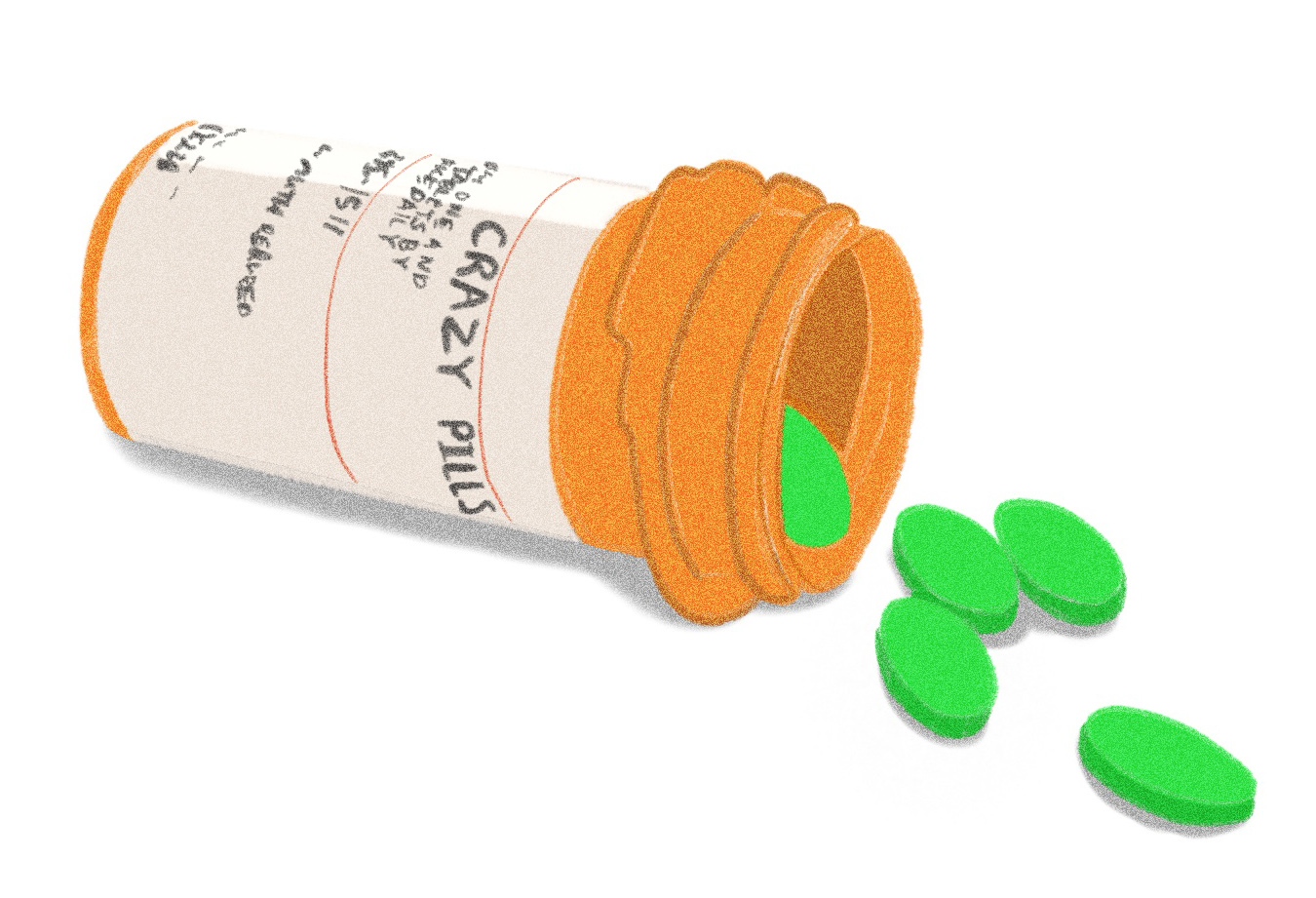
“I felt like I’ve been taking crazy pills for the last two years.”
KathleenBreitman, co-founder of the Tezos blockchain
My poor husband, Arthur (who co-founded the Tezos blockchain), will hear about a project and he’ll look into it in earnest, and you know, sometimes he’ll say, “Oh, that’s a good idea but I wouldn’t have done it that way.” And then sometimes I feel like I could hear him pull his hair out from the other room because he looks up something like the terra pitch, and he’s like, “This is obviously a Ponzi scheme!”
I felt like I’ve been taking crazy pills for the last two years. In game theory, you have this concept of a repeated game, where if you know that you’re going to see someone over and over again, you treat them a little bit differently than someone who you might just have one transaction with. And I don’t think a lot of people in this space have been treating business as a repeated game.
I hope that this is an inflection point because a lot of the positive momentum going into crypto last year masks a lot of really terrible engineering and really pernicious marketing practices. And if the bright silver lining of this downturn is that, at the very least, people become more suspicious, then I’d say that’s a great outcome.—As told to Aidan Ryan
“It was a very expensive trip to New York to sit in the hotel room and trade.”
Alexander Blum, managing partner at Two Prime, a crypto derivatives trading firm
Both my chief investment officer and I had flown out to New York for client meetings during the week. And we were just in our hotel rooms the entire time, watching charts and trading, and slept, you know, two or three hours each night. Somebody on the team was up at all hours. It was a very expensive trip to New York to just sit in the hotel room and trade.
The thing is, when the price starts to fall, nobody knows how far it’s going or how severe the issue is. Everybody on Twitter thinks the world is ending. So you have to filter things out, just look at the statistics, and not freak out or get emotional about things.
There was a lot of adrenaline. With crypto, there’s no Bloomberg terminal where you know exactly what’s going on. So it’s stressful just to make sure you’re keeping up with, you know, quick decisions that are being made that might affect the price of the market. That, plus sleep deprivation is, yeah, really stressful.—As told to Akash Pasricha
“We actually have real-world expenses. So we were like, huh, we probably should have gotten some out before.”
Devin Lewtan, co-founder of Mad Realities, a crypto media company that produces the dating show “Proof of Love”
We had our initial NFT sale, [which raised 172 ethereum]. So that’s been sitting in our treasury until we find it’s time to actually convert it into U.S. dollars and put it towards the production of “Proof of Love.”
When we saw the price of ethereum go down, we’re like, OK, we have less in the treasury in U.S. dollars than we did before. Right now, 172 eth is worth about $340,000. And for a while it was hovering around $500,000. For a lot of DAOs, that doesn’t matter. Like, one eth is one eth. But for us, we actually have real-world expenses [like the show’s set design or film cameras]. So we were like, huh, we probably should have gotten some out before.
For the most part, I would say that we feel pretty unfazed. As builders, you feel less affected by a bear market because you are building and aren’t distracted by the hype of bull runs. And so for us, it’s actually a really nice time to build without any distraction and just kind of work towards the larger goal rather than try and ride some wave of the moment.—As told to Margaux MacColl
“In just 10 days, we were up 60 percent.”
Suman Saurabh, head of quant research at crypto fund Phobos Capital
I’ve been talking to other colleagues who were working at different hedge funds. Everybody is losing money. But we have done pretty well.
We started fully systematic trading very recently at the end of April and we’re still in the testing phase with execution. The model had only been tested on a small amount of money. There was a time when I worked 16 hours a day for 7 days a week, but that phase was the pure startup phase. Now we have gotten to the point where the machine is doing things.
The model adapts to the current scenario with minimal lag. We see that when things have gone south in the market, the model itself changes to some other parameters that work well. On May 1, the market started going down. When we found the bottom of this meltdown, literally one and a half days later we went long for a brief period, when some coins like Solana rallied 40%. We entered long and exited again and went short again because the market was back in a meltdown situation. I call this the “smart switch.” Around May 11, in just 10 days, we were up 60%.
Our year-end target that we communicated to clients was to reach a 50% return on investment. I don’t want to say we will keep making this amount of money but the model is doing what it is intended to do. When there’s a meltdown, it captures that very beautifully; when the market is good, it captures that very beautifully. —As told to Becky Peterson
“Just get on the sidelines for a week or two and let things settle down.”
Scott Freeman, co-founder and partner at JST Capital, a crypto trading firm
We went into the weekend before the UST meltdown very concerned about the markets, honestly. We started having discussions with our clients and our traders. And then when markets really started getting choppy late in the day on Saturday [May 7], we went into full crisis mode.
We had people working around the clock, reaching out to clients, explaining to them what we’re seeing in the market, understanding what their positions are and what their concerns are. We actively encouraged clients to de-risk early in the week. And our message wasn’t just to get out of UST and luna, it was: Look at every stablecoin position you have, understand what’s behind that stablecoin, and understand if you really still want that. Just get on the sidelines for a week or two and let things settle down. These markets were too uncertain and too hard to predict.
Honestly, the whole week was a blur. Whether I was at home or at the office, it was 24/7. We were up until 10, 11, 12. And then the phone rings at 2 or 3 in the morning. When the week ended, Friday at noon, we were exhausted. I went home and took a nap.—As told to Akash Pasricha
“The conversations that I’ve had with people who are OG crypto, they’re just riding the wave.”
Mark Basa, director at Hokk Finance, a company building decentralized finance products
I expect things to crash—until they get good. My game is 5, 10 years. Our token [hokkaido inu] is shit right now along with everything else, but we don’t really care because our thing is not to market a meme token. Our long game is to build a decentralized finance ecosystem, which young people in crypto can use and big blockchain companies can use.
If you’re new to crypto, you would look at this crash and you would not want to buy. When stocks dip like this, it feels like the end of the world is coming. But this is crypto and it hasn’t yet found its place. We don’t even have 1% of global transactions yet happening on crypto, so I think that this is a really good time to build things if you want to build in crypto now.
You have to really, as the term in crypto is called, ape it. You have to change your mindset, knowing you have to lose quite a bit before you win. The conversations that I’ve had with people who are OG crypto, they’re just riding the wave.—As told to Annie Goldsmith
“All I can say is I hope people just remain optimistic.”
Medha Kothari, a research partner at Variant, an early-stage crypto-focused investment fund
I think the bear market is the best time to invest—the quality of projects is just so much higher. Also, I focus on infrastructure investment, a lot of scalability stuff, things that require a lot of time and focus and concentration. We saw a crazy consumer boom in the last year, especially in the NFT space, and usually whenever that happens, the infrastructure has to catch up. So I think for those builders, this is the best time to build without distraction. I’m really pretty excited about it.
A lot more people lost a lot more money than the last two bear markets, which is super unfortunate. All I can say is I hope people just remain optimistic, remain fundamentally absorbed in the technology and the philosophy, and everything will work out OK.—As told to Jillian Goodman

>>> These Are The Most-Downloaded Apps So Far In 2022

These Are The Most-Downloaded Apps So Far In 2022

Whether they’re providing a service like ride-sharing or acting as a mere source of entertainment, mobile apps have become an integral part of many peoples’ day-to-day lives.
But which apps are most popular among users?
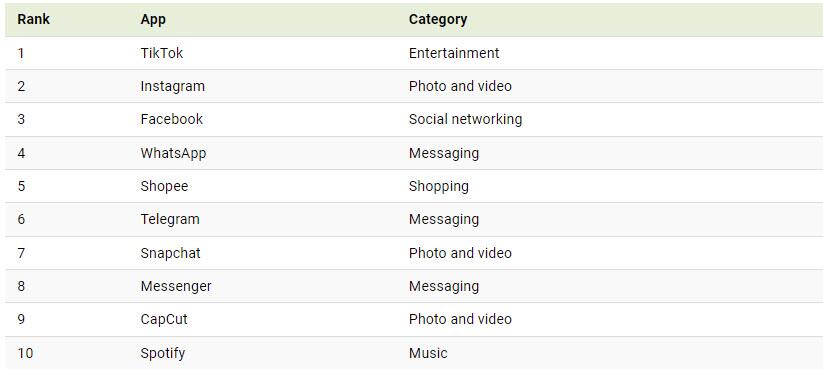
In the graphic below, Visual Capitalist's Carmen Ang uses data from a recent report by Sensor Tower to show the top 10 most downloaded apps around the world in Q1 2022 from the Google Play and Apple App Store.
Social Reigns Supreme
According to the report, total app downloads reached 36.9 billion in Q1 2022, a 1.4% increase compared to Q1 2021.
A majority of the top 10 most downloaded apps were social media platforms, with Meta and ByteDance owning six of the top 10.

Meta’s four platforms on the list are Instagram, Facebook, WhatsApp, and Messenger, while ByteDance owns TikTok and video-editing platform CapCut.

Just outside the top 10 are Zoom and WhatsApp Business (yet another Meta-owned app).
TikTok’s Winding Road to the Top
In Q1 2021, TikTok exceeded 3.5 billion all-time downloads, becoming the fifth app (and the first non-Meta app) to reach this milestone. This is impressive considering the app has been banned in India as of June 2020. Prior to the ban, India accounted for 30% of TikTok’s downloads.
India’s not the only country that’s banned the use of TikTok. Pakistan has blocked TikTok multiple times because of concerns over “inappropriate” content. However, it’s worth noting that the bans in Pakistan only lasted a few days before being lifted, and currently, Pakistanis are able to access the platform.
Top 10 Highest Grossing Apps
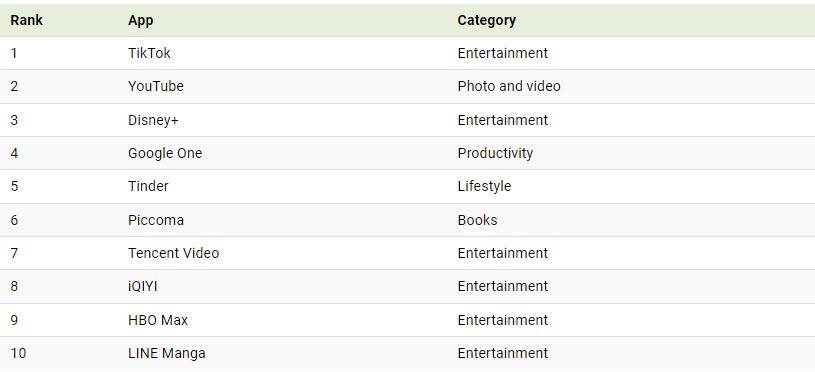
TikTok isn’t just the most downloaded app in the world—it’s also the highest-grossing non-game app, based on Q1 2022 revenue from the App Store and Google Play:

TikTok generated an impressive $821 million in consumer spending in the last quarter. The video-sharing platform was the top-grossing app on the App Store, and the second-highest-grossing on Google Play, coming just after Google One.

While none of Meta’s platforms made it onto the top 10 list for gross revenue, these platforms make a ton of money that doesn’t necessarily flow through app stores. In 2021, Meta generated more than $117.9 billion in revenue, with over 97% of that coming from ads.

Growth’s on the Horizon
The pandemic had a massive impact on the app market.
In 2020, app spending on things like premium access, in-app purchases, and subscriptions surged by 30% year-over-year to reach $111 billion.
And while COVID-19 restrictions are easing in most places around the world, app spending isn’t likely to taper off anytime soon. By 2025, spending is expected to grow to $270 billion.

WWD : Gucci Is Still Italy’s Most Valuable Brand, According to BrandZ

Gucci Is Still Italy’s Most Valuable Brand, According to BrandZ
Prada is the second-most valuable brand among fashion and luxury players, followed by Fendi, which reported the greatest growth, also thanks to the Fendace collection.

MILAN — Gucci has confirmed its top position in the BrandZ 2022 Top 30 Most Valuable Italian Brands ranking by Kantar, which measures the value of brands by combining financial data with brand equity research.

The fashion house leads the list for the fourth year with a brand value that increased 12 percent to $37.9 billion compared to 2021.

Gucci’s brand value is nearly one third of the total value of all Italian brands in the ranking, which were up 12 percent to $128.7 billion compared to last year. The Florentine fashion house also reported more than three times the value of second-tier utilities company Enel.

Prada is the second-most valuable brand among fashion and luxury players with a value of more than $5.6 billion, which secured the house the sixth position on the list, behind automotive company Ferrari.

Fendi ranked seventh but reported the greatest growth, as its brand value jumped 47 percent to $4.7 billion. The Fendace collection, with its swap formula and media resonance, played a key role in this performance, benefiting also Versace, which was the only newcomer of the luxury segment in this year’s ranking.

Overall, Italian luxury brands continued to contribute the most to the top 30, accounting for 44 percent of the total brand value. According to the list, the top 10 luxury brands included Bulgari — among the overall top five risers along with Fendi and Prada — Giorgio Armani, Bottega Veneta, Salvatore Ferragamo, Valentino and Dolce & Gabbana.

Another 11 categories were represented in the overall ranking, too, with telecommunication companies, energy, insurance, food and automotive players also appearing in the first 10 positions. In particular, the second-most valuable Italian brand Enel reported $12.6 billion in brand value, followed by Kinder, Tim and Ferrari, valued at $9.8 billion, $8.9 billion and $8.3 billion, respectively.

The report spotlighted the positive momentum experienced by the country’s brands, showing that in the last four years they have grown in value by 51 percent.

Even if highlighting that the “Made in Italy” stamp of quality still bolsters the international growth of local brands, Kantar urged local companies to implement stronger and most effective communication to further build brand equity.

“Excelling with innovative products and a superb brand experience is no longer sufficient to guarantee success. Brands must address new values of consumers who want the brands they buy to align with their own beliefs. They no longer think only about how things are made, but by whom, under what conditions, and whether their materials are ethically sourced,” said Federico Capeci, managing director Italy, Greece & Israel — insights division, Kantar.

“Leading brand Gucci, for example, has tackled this challenge head on. It trades not just in fabrics, leather goods and gemstones, but commitment, authenticity, and conviction,” he added.

Capeci continued emphasizing the increasing importance of exposure as a business lever, especially because “as the value that Italy and its brands derive from exports overseas risks being impacted by instability, inflation and rising material costs, there is a greater need to focus on ensuring that consumers properly understand that brands are worth their value.”

The BrandZ Italian list is compiled by combining financial analysis of each label for the most recent fiscal year with surveys distributed to almost 70,000 Italian consumers. A Top 100 Most Valuable Global Brands list is also issued annually, combining market data with opinions of more than 4 million consumers worldwide.

WWD : Augustinus Bader Is Building a Supersonic Skin Care Business

Augustinus Bader Is Building a Supersonic Skin Care Business
Charles Rosier talked brand strategy and the future of beauty.

Augustinus Bader is a case study of how to build a supersonic skin care business.

Charles Rosier had a career in finance when a mutual friend who knew of his interest in biotech and medicine introduced him to the doctor Augustinus Bader. The friend called Bader “the best stem cell researcher in the world today.”

In his own words, Bader described his stem cell technology in a video shown at the Summit. “It is a different approach to medicine,” he said. “If there is an auto-regenerative mechanism only in terms of neuro-degenerative diseases, auto-immune diseases and any skin disorders, we can now target the area and induce and unfold the auto-regenerative process with the [aim] to create healing where it was not possible before. We are facing a shift of paradigm.”

Rosier had heard of Bader’s research in wound healing, and was interested in helping to finance it. Although launching a beauty business had not occurred to him, he had an epiphany and envisaged potential applications for Bader’s work that extended it beyond the medical realm.

“Augustinus’ discovery is really a communication mechanism [to awaken stem cells],” explained Rosier. “I was just mesmerized by that technology.”

Augustinus Bader — the brand, which launched in March 2018 — is among beauty’s fastest-growing today. In 2020, its annual sales tripled to $70 million, and The Cream and Rich Cream were voted the top skin care product in a poll of more than 300 beauty industry insiders conducted by Beauty Inc in 2021.

Rosier outlined a few pillars of growth for Augustinus Bader. Number one is having products that deliver. “That was the foundation of our brand,” he said.

Then there was also the support of celebrities and journalists who praised its efficacy.

When Augustinus Bader launched on Violet Grey, the platform’s total business was $5 million. “It’s a symbiotic relationship, because we broke the record of anyone there the first year we launched, and then we tripled our size — and probably doubled the size of Violet Grey’s business as a whole,” Rosier said.

“What is the future for us?” he mused. It’ll surely be based on technology.

“We’re very excited about the hair care category,” said Rosier, referring to a segment the brand entered with a big-bang launch last year — to sell-out effect.

He explained Augustinus Bader isn’t focused on hair care because it’s a surging category at present. “We want to be a problem-solver,” Rosier said. “So we need to be driven by creating solutions.”

Consumers inform the brand’s direction. It asked them what they wanted in a body cream, and the answer was solutions to stretch marks and cellulite. Those therefore became focal points.

The future will be robust with scientific studies into people’s individual biological age and longevity, Rosier said. And findings stemming from those could be applied to cosmetics.

“The focus is really on the convergence of beauty, health and longevity,” he said.

Business Of Fashion : Can Farfetch Change the Narrative Around Fashion Tech?

Can Farfetch Change the Narrative Around Fashion Tech?
This week, everyone will be talking about earnings from Farfetch and Gap Inc., plus the amfAR Gala.

Running Out of Moves
  • Farfetch reports first-quarter results on May 26
  • The company’s stock is down more than 80 percent over the last year, mirroring declines seen across the tech sector
  • Investors are concerned about online brands’ and retailers’ ability to grow and achieve profitability as consumers return to brick-and-mortar stores

Farfetch is a master at reinventing itself to ride the latest trends in online retail. But it’s having a tough time convincing investors it’s not just another pandemic stock. Like most other e-commerce companies, the luxury marketplace benefitted hugely from the boom in online retail in 2020 and 2021. Now, with consumers reverting to their pre-Covid shopping habits, Farfetch must make the case that it has a plan B.

Earlier this year, Farfetch made a high-profile push into beauty, though adding a new category doesn’t solve e-commerce’s post-pandemic problems. A $200 million investment in Neiman Marcus Group marks a major expansion of the marketplace’s ambitions to provide e-commerce services to less-wired retailers. That’s potentially a lucrative market, though the rapid decline in Shopify’s fortunes indicates running the back end of online retail is not as dynamic a business as it might have looked a year or two ago.

The Bottom Line: The real game-changer for Farfetch would be a partnership with Richemont that includes a minority investment in Yoox Net-a-Porter. Such a deal would neutralise a major competitor and open up new relationships with luxury brands. But the parties have said little about the deal since it was announced late last year. Last week, Richemont’s stock plunged after the company failed to indicate progress toward an agreement.

Business Of Fashion : Is This the Beginning of the End for Free Returns?

Is This the Beginning of the End for Free Returns?
For much of the last two decades, online retailers have competed to offer cheaper, more convenient shopping experiences. What happens when one of the world’s biggest apparel sellers bucks the trend?

This week, the BBC reported that Zara had earlier this month begun charging UK customers £1.95 ($2.44) to return online purchases by mail. The policy — already in place in 37 other countries — doesn’t apply to online orders returned in stores.

Outraged shoppers took to social media to complain. Some told horror stories about long queues and slow service when they attempted to bring items back to Zara’s stores. Others argued that Zara should improve its sizing and fits if they were going to charge for returns. A few applauded the new policy, saying it would nudge consumers toward more mindful consumption habits (the retailer said that it had begun charging for some returns in an effort to reduce its carbon footprint).

The environmental case for Zara’s switch is iffy — a delivery van picking up multiple returns will likely generate fewer emissions than individual customers driving to stores to avoid the fee, Deutsche Bank analysts wrote in a research note this week.

The economic case is clearer.

Online shopping, which boomed over the pandemic, has a much higher rate of customer returns than in-store purchases. Shipping and processing returned items create mounting logistical costs, as well as carbon emissions. Still, retailers fear turning back the clock now that many shoppers have become accustomed to free and easy returns: in a 2021 survey by the payments firm Klarna, 57 percent of respondents said they would never buy from a retailer that charged for returns.

But some companies are looking to dial back these expensive perks that attracted shoppers during the pandemic. In October and November 2021, just under 40 percent of retailers said they charge for mailed returns, while about 2 percent planned to incur charges over the holiday period and 19 percent were undecided on what measures they would take, according to a survey by Appriss Retail and the US National Retail Federation.

Online returns “have been abused, and are more costly [not only] in terms of the logistical cost, but in terms of the environment as well,” said Joaquin Villalba, chief executive of retail analytics firm Nextail Labs, which counts River Island and Guess among its clients. He is also a former head of Zara-owner Inditex’s European logistics operations.

Zara is by no means the first retailer to charge for returns — in the UK, Uniqlo and Next charge customers for returning products via parcel shops or home collection. Retail experts suspect it will not be the last, especially if consumers prove more willing to pay the fee than they have indicated in surveys.

The Burden of Returns

E-commerce returns have always posed a logistical headache to retailers, but the costs have risen significantly in the past two years, as online sales overall rose dramatically and parcel carriers raised their rates to deal with surging volumes. In January, UPS said it would handle a record 60 million returns following on from the holiday season, 10 percent higher than the year prior. At the beginning of the year, shipping company Fedex increased average prices by 5.9 percent.

As consumers buy fewer stretchy sweatpants and more party dresses, those costs will only continue to rise. At Revolve, 54 percent of orders were returned, the highest rate in at least two years, according to Cowen. In its full-year results reported earlier this month, Boohoo recorded a return rate of 33.7 percent in its core UK market, up nearly 10 percentage points from the year prior.

“Returns are a big mess, especially in the fashion space … [and] always a profitability drain for brands,” said Balaji Santhanam, associate partner covering consumer goods, retail and logistics at consultancy Infosys.

Online shopping bears a prodigious environmental cost as well, from packaging to the millions of home deliveries. The bulk of the fashion industry’s environmental impact takes place in manufacturing, however. Carbon emissions associated with returns are minimal in comparison.

Cutting overproduction, or the volume of clothes discounted at end of season, from 40 percent to 30 percent every year could save 158 million tonnes of carbon emissions, according to a 2020 report by McKinsey and Global Fashion Agenda. Reducing an e-commerce return rate from 35 percent to 15 percent, meanwhile, could save 12 million tonnes of greenhouse gas emissions per year, the report found.

Formulating the Best Policy

Whatever the motivation, charging for online returns will no doubt reduce the number of orders sent back. Incentivising in-store returns, which immediately puts products back in circulation, can also prevent waste, said Santhanam.

Other tactics include improving product pages and virtual sizing technology, or letting customers know about fit and styling advice if they start to add multiple sizes of the same item to their online cart. Some retailers offer repair and alteration services, hoping some minor adjustments to fit will ward off some returns. Ganni, for example, partnered with London-based tailoring app Sojo in November last year to offer on-demand alterations (this service isn’t limited to brands selling $400 dresses; Uniqlo also offers in-store tailoring).

Consumer psychologist Kate Nightingale also argues that, counterintuitive as it may seem, brands could benefit from adding a little more friction to the customer’s online shopping journey. Instead of constantly pushing new product, they could provide personalised styling tips for customers’ older purchases, thereby reducing the number of impulse buys that ultimately get returned.

“It’s more about a long-term mentality change,” she said. “It’s a big ask, because it [involves] a lot of permutations, but imagine the savings in returns that could make, without charging the customer.”

WSJ : More Subprime Borrowers Are Missing Loan Payments

More Subprime Borrowers Are Missing Loan Payments
Borrowers with limited or troubled credit histories are defaulting on credit cards, car loans and personal loans

Consumers with low credit scores are falling behind on payments for car loans, personal loans and credit cards, a sign that the healthiest consumer lending environment on record in the U.S. is coming to an end.

The share of subprime credit cards and personal loans that are at least 60 days late is rising faster than normal, according to credit-reporting firm Equifax Inc. In March, those delinquencies rose month over month for the eighth time in a row, nearing their prepandemic levels.

Rising delinquencies were inevitable following their decline during the pandemic, many lenders and analysts said. Even so, the increase is getting attention from investors partly because the Federal Reserve, facing the highest inflation since the early 1980s, is embarking on what is expected to be the sharpest series of interest-rate rises in years. Higher loan delinquency figures can indicate stress on the part of consumers whose spending is a significant driver of economic activity.

Fears that rising rates will throw the economy into recession have fueled the worst start of the year for stocks in decades. A poor earnings season for major U.S. retail chains has intensified those concerns this week, prompting large declines in major retail shares and sending the Dow Jones Industrial Average to its steepest drop of the year Wednesday.

Delinquencies on subprime car loans and leases hit an all-time high in February, based on Equifax’s tracking that goes back to 2007.

Many people, including those with less-than-perfect credit, paid off debts and built up savings during the pandemic, a surprising outcome considering that lenders at first thought borrowers would default en masse when Covid-19 hit. The government’s response, including stimulus payments and child tax credits, boosted many families’ financial health.

But now many of those benefits have run out. Subprime borrowers, who sometimes have lower incomes or less savings, are being hit hard. Inflation, running near its highest point in four decades, is also forcing many households to choose between paying for essentials and paying their monthly loans.

There is also a broader concern among some lenders about the ability of consumers overall to keep up with payments when some of their financial benefits, including excess savings that they accrued during the early stages of the pandemic, taper off.

Wells Fargo & Co. Chief Executive Charlie Scharf said Tuesday that higher prices for food and gasoline will constrain U.S. households. “We are still in the best credit environment we have ever seen in our lives,” Mr. Scharf said at The Wall Street Journal’s Future of Everything Festival. But, he added, “There will be deterioration in people’s ability to pay.”

The jump in subprime delinquencies could reduce lenders’ willingness to make loans to riskier borrowers.

Lenders have kept their standards for mortgage loans relatively strict. A red-hot housing market and a flood of mortgage applications meant lenders could be picky with their offerings and the type of borrowers they approved.

But last year, many lenders embraced subprime customers for other types of loans, comforted by low unemployment and fueled by an eagerness to rebuild loan balances that took a hit early in the pandemic. Subprime lending hit records last year when measured by the total dollar amount of personal loans originated and spending limits on new general-purpose credit cards, according to Equifax.

Some 11% of general-purpose credit cards held by consumers with credit scores below 620 were at least 60 days behind on payment in March compared with 9.8% a year prior, according to the latest data available from Equifax. Personal loans and lines of credit delinquencies came in at 11.3%, up from 10.4% a year prior. Both categories hit Covid-19-era lows of 7.5% and 8.3%, respectively, in July.

Car loan and lease delinquencies hit a record in February, based on Equifax’s tracking, with 8.8% of subprime accounts behind on payment by at least 60 days. That edged down to 8.5% in March but was still the second highest level on record.

Fewer people are in subprime credit-score brackets than when the pandemic began. Some 18.6% of U.S. adults with credit scores had a score lower than 600 in 2020, compared with 15.5% last year, according to Fair Isaac Corp. , creator of FICO scores.

Lenders say that delinquencies are going up from artificially low levels and that their credit portfolios overall remain strong. Many refer to what is happening as a normalization, where delinquency rates return to levels more in line with prepandemic times. Some say their delinquencies remain below their first-quarter 2020 levels.

Capital One Financial Corp. recorded a higher U.S. credit-card 30-day-or-more delinquency rate in the first quarter from a year prior. Lender Bread Financial Holdings Inc. also reported a higher delinquency rate for its cards and other loans for the quarter. Both lenders issue credit cards to subprime borrowers. Other large card lenders didn’t record this increase for the year-over-year period, said Michael Taiano, senior director at Fitch Ratings’s U.S. banks group.

“It would be an unnatural thing for credit to stay where it is,” Capital One Chief Executive Richard Fairbank said on the bank’s last earnings call. “We would expect this is an across-the-board kind of return toward normal over time.”

Upstart Holdings Inc., Oportun Financial Corp. and OneMain Holdings Inc., which facilitate or extend personal loans to people with limited credit histories or low credit scores, also reported increased delinquencies for the first quarter.

Upstart said on its earnings call last week that government stimulus led to a temporary overperformance of consumers. It recently reintroduced loan modifications for borrowers who are struggling to keep up with payments.

Consumers are dealing with a mixed bag of rising gasoline prices and rent, while employment and wage growth remain strong, Raul Vazquez, Oportun’s chief executive, said in an interview. “How that all mixes out we are all going to see in the next few months.”

WSJ : China Spends Far More Than Others to Help Favored Industries, Report Finds

China Spends Far More Than Others to Help Favored Industries, Report Finds
State-directed funds, cheap loans and incentives surpass those of other major economies

China spends much more in helping favored industries with state-directed funds, cheap loans and other government incentives than other major economies, according to a new study expected to intensify the debate in Washington and elsewhere over Beijing’s use of industrial policy.

The study, to be published by the Center for Strategic and International Studies on Monday, finds that China’s backing of its companies amounted to at least 1.73% of its gross domestic product in 2019—the most recent year for which comprehensive data is available—and the trend is continuing.

In dollar terms, that is more than $248 billion based on market exchange rates—exceeding estimated Chinese military spending—or $407 billion based on exchange rates that adjust for differing costs across countries.

China’s spending, both as a share of GDP and in dollar terms, is significantly higher than that of seven other economies analyzed in the report, including South Korea, France, Germany, Japan, Taiwan, the U.S. and Brazil. By comparison, according to the study, the U.S. spends 0.39% of its GDP on industrial support, while South Korea, the No. 2 spender, devotes 0.67% of its output.

“China is a large outlier,” said Scott Kennedy, an expert on China’s economy at the Washington-based think tank and an author of the report. “It spends an enormous amount on industrial policy and also uses more tools for such spending than anybody else.”


Beijing’s disclosure of subsidies is murky at best, China analysts say, and its use of industrial policy is one of the most contentious issues involving the country’s statist economic model. The CSIS study is the first trying to put a total tally on China’s overall manufacturing support and to assess how it stacks up against other economies that have directed resources to help manufacturers rather than leaving their development to market forces.

Since late last year, the Biden administration has been looking for ways to confront Beijing with its use of industrial subsidies that give Chinese companies an edge over their foreign rivals.

The new study, which has been months in the works and already generated some buzz in Washington, could offer administration officials a grasp of the scale of the Chinese support as they are considering whether to launch a new investigation into Chinese subsidies, potentially using Section 301 of the Trade Act, which allows the U.S. to take punitive action against certain practices of a trading partner.

The report also comes as industrial policy is coming back in vogue in the U.S. and among its allies in both Europe and Asia, fueled by pandemic-driven disruptions to supply chains as well as the competition with China.

From Washington and Brussels to Seoul and Tokyo, officials have been rushing out government subsidies to promote industries they deem strategic, including semiconductors, electric-car batteries and pharmaceuticals.

The renewed interest in the use of interventionist measures by developed economists has prompted Chinese officials to argue that Beijing’s industrial support isn’t all that different and countries like the U.S. are simply trying to thwart China’s rise by targeting its policies.

A purpose of the report, say the authors, who also include CSIS analysts Gerard DiPippo and Ilaria Mazzocco, is to spark more substantive discussions among policy makers, business leaders and academics about the impact of China’s industrial spending on the rest of the world.

Many economists and Western officials once assumed that Beijing would gradually reduce the state’s role in directing credit and other resources as the economy matured. However, government interventions have increased in China over the years, especially under President Xi Jinping, who sees industrial policy as vital to reducing China’s economic dependence on other countries while increasing their dependence on China.

The study points out that Beijing’s industrial initiatives have become more ambitious in recent years, with their focus shifting from “catching up” to the West technologically to targeting industries at the frontier of innovation, such as electric vehicles and artificial intelligence.

To quantify Chinese spending, the analysts made estimates based on data such as direct government subsidies, tax incentives, below-market credit and state investment funds. To avoid overestimating or double-counting, the study excludes tools that are hard to quantify, including restrictions on foreign firms’ market access in China and government purchases, which often include incentives for domestic suppliers.

Mr. DiPippo noted that government-guided funds are one unique instrument China has used for industrial policy. “China’s state ownership of much of its financial sector gives Beijing enormous capabilities to direct financial resources in a way that other economies can’t,” he said.

These funds are intended to be more commercially oriented vehicles with funding from both the government and the private sector. In practice, however, the state still maintains a heavy hand in running them. “They end up crowding out private capital and distorting the market,” Mr. DiPippo said.

By the end of 2020, some 1,851 government-guided funds had been established in China, with a total designated funding target of $1.7 trillion, according to research firm Zero2IPO. The actual funds raised were around $820 billion. One of them is the semiconductor-focused National Integrated Circuit Industry Investment Fund, dubbed the “Big Fund,” which has raised more than $29 billion.

The value of funding raised by these state funds from 2015 to 2020 was equal to roughly two-thirds of the total venture-capital and private-equity investments made in China during those years, according to the report.

The study also expands on some of the existing sector-based research on Chinese subsidies, such as those involving chip-making, aluminum and electric vehicles.

For instance, China provided an estimated $58 billion to its EV makers between 2009 and 2017, the report shows. Beijing’s largess has in part fostered overcapacity and a fragmented industry, with the government now calling for consolidation.