Panic at the Discord



A stablecoin crash sent the crypto world into a tailspin last week. As the industry mops up the mess, 12 investors, founders, traders and DAO members describe the carnage.
he crypto party was as raucous as ever—and then someone turned on the lights. After a year of record-high token prices and newfound support from legacy financial institutions like Fidelity and BlackRock, reality bit hard the second week of May when the algorithmic stablecoin terraUSD (known as UST) crashed, taking down some $400 billion in crypto market cap with it.
The events that led to the meltdown have already become crypto industry lore—“the biggest ponzi death spiral collapse in the history of crypto, by a factor of 16,” according to one anonymous trader. They are, for some, an object lesson in the dangers of investing in poorly understood coins. For others, they are just the latest excuse to buy the dip. The UST token, launched by Korean entrepreneur Do Kwon’s Terraform Labs, was pegged to the U.S. dollar using a complicated supply-and-demand algorithm linked with the luna token. Over the past year and a half, UST became the third largest stablecoin on the market, as traders increasingly used it to shield their currency from the volatilities of popular coins like ether or bitcoin. Luna’s total value, in turn, swelled to over $40 billion.
But when the token’s $1 value stumbled last week after a series of large UST withdrawals, UST and luna owners panicked, sending the price of the UST token as low as $0.20 and luna practically to zero. “Welp, lost $50k in a night,” wrote one user on the terraluna Reddit group, where dozens of traders chronicled their own devastating losses.
As of this writing, UST and luna have been declared all but dead (although eccentric founder Kwon is still fighting the good fight on Twitter, proposing a “terra 2.0” chain), and cryptocurrency prices are down across the board. There’s an undeniable chill in the air, with traders bundling up for a “crypto winter” of reduced investing and trading that could last months or even years. (The last winter toiled on from 2018 to 2020.)
But if there’s anything you can count on, it’s crypto maximalists’ optimism in the face of financial ruin. Venture firm Andreessen Horowitz is euphemistically calling the post-luna environment a new “‘price-innovation’ cycle,” waxing poetic about how “winter thaws in the heat of summer.” Entrepreneurs, usually with a weary smile, are declaring the upcoming months a time for productivity. “This is when the building happens,” said Leah Callon-Butler, director of tech consulting firm Emfarsis. “Some of the biggest success stories to come out of this recent bull run were built in the last crypto winter.”
After all, industry veterans have seen the market faceplant before. Ask longtime crypto fans about 2014’s Mt. Gox hack, which saw the loss of almost half a billion dollars in cryptocurrency, or the 2016 hack of The DAO, when 3.64 million eth was stolen (currently worth about $7 billion). Sure, those fans’ voices might waver when describing past catastrophe, but plenty held firm and lived to get filthy rich another day.
Will the latest crypto crisis echo the previous ones? We asked 12 front-row observers of last week’s market crash to tell us what they’re going through. (Interviews have been edited for clarity and length.)—Margaux MacColl
“Things are so crazy that you don’t know what normal is.”
Anisha Sunkerneni, investor at Cyphr, an early-stage venture firm
Last week was so chaotic and catastrophict? Like UST and stablecoins being depegged? That’s not supposed to happen, period. Things are so crazy that you don’t know what normal is. People are just glued to their phones and the markets. What if something else crazy happens?
I actually met some other VCs at a social thing last week. There were these two camps of people: some just in shock, like, holy shit, we have to figure out what to do. Then there’s the camp of people that are like, “This week was really painful. We’re just not going to talk about it.” I’m sure they’re not in actual denial, but it was definitely a shock to the entire ecosystem.
So many [venture] funds put their money in these stablecoins like UST. Are they still a billion-dollar fund, or are they 200 million now? That directly impacts the capital available to deploy to the entire ecosystem. If founders aren’t able to raise and founders aren’t able to build, is that going to slow down the pace of innovation in our space?
It just feels like it has a much more far-reaching impact than simply eth or bitcoin crashing.—As told to Margaux MacColl
“Within hours, all the NFT project’s Discords turned into literal support groups.”
Karma, anonymous core team member of Galactic DAO, a decentralized autonomous organization built on the terra blockchain
For the first few days, nobody believed truly that terra was gone. People believed it would return. So we didn’t want to act too rashly, because if we took the DAO’s treasuries and swapped it into another stablecoin and then UST returned, the entire Galactic DAO community would be incredibly angry with us for wasting funds.
At some point, however, we understood that this is all a house of cards coming down. We didn’t want to be accused of withdrawing or doing anything with this money against users’ wishes. So before we withdrew any money from UST, we first posted a proposal on May 12 asking members to vote on it. But we saw that the vote was progressing too slow. If we waited longer, we would not be able to save any money at all. The core team just went ahead with it a few hours later. We transferred the money out to ethereum and then swapped it for another stablecoin. It was an executive decision.
We had $1.6 million in the treasury when luna was worth around $120. The majority was in luna—however, we had $400,000 in UST. Out of that $400,000, we managed to save $136,000. The rest is almost worthless now. It’s very, very painful.
Within hours, all the NFT project’s Discords turned into literal support groups. Basically a $40 billion ecosystem was wiped out within 48 hours—that’s not something anyone can process on their own. Especially because, for most of these people, this is not a hobby. This is a way of living. This is a mindset of fighting for decentralized finance. For many people, their world fell apart. —As told to Margaux MacColl
“Ijumped ship a little bit sooner than most. By Monday evening, I had exited.”
Emery Andrew, CEO of Kado, a payment processor for stablecoin transactions
There were a couple of signs early last week that the terra peg was starting to go under a dollar. By Sunday evening [May 8], transactions had started to fail—that was really the first red flag, before even crypto Twitter popped. And then over the course of the 48 hours between Sunday and Tuesday, it just really avalanched.
As crypto builders, you’re usually investors in the space as well. I jumped ship a little bit sooner than most. By Monday evening, I had exited. The price of luna was still above $10 at that point. By the next morning it was $1. By the following morning it was $0.01.
We didn’t expect this. Nobody could have—I mean, there were risks, but nobody expected it to be as fast as it was. We were very fortunate that, before things got out of hand, we’d already implemented incident response policies to ensure that our customers would be protected. We take that very, very seriously. Trust is one of those things that you build up over time, like a drop in the bucket. But, you know, you can kick the bucket over in one go.—As told to Jillian Goodman
“Everyone is panicking because they’re like, OK, this means either only the terra ecosystem collapses or everything collapses.”
Eshita Nandini, analyst at Messari, a crypto research firm
The tweet I saw on Monday [May 9] was that terra’s bitcoin wallet was completely empty. They moved all the reserves and everyone was like, what’s happening?’
Then there were rumors of, oh, it’s happening to other stablecoins. It was kind of a manic moment because there were so many rumors and so much misinformation. Everyone is panicking because this means either only the terra ecosystem collapses or everything collapses. There was a risk of bitcoin collapsing too.
I think it confirmed in everyone’s mind that we’re going to head towards a bear market. Like, what’s our plan? What are we going to do? Are our jobs OK? I have a lot of friends who are just freelancing their lives away on Web3 and working for DAOs, so I think they’re a little bit more panicked.
Everything just moves so quickly. People are building new projects. People have jumped to the next new idea. Like terra crashed, and they’re onto the next thing. They’re back to their jobs and they’re back to building whatever they’re building. So I kind of appreciate that, but it also feels like each month is so excruciatingly long. So much happens—if you miss out on something, it feels like you’ve really missed out.—As told to Margaux MacColl
“Idon’t know if there will ever be an accounting for this. If there’s not, then inevitably, people in crypto will do it again and again and again.”
Cory Klippsten, co-founder and CEO of Swan bitcoin, a bitcoin purchasing platform
You can go back through my tweets. I’ve been calling terraUSD out for two and a half months or so.
In one respect, I’m glad that bitcoiners learned a lesson here. I don’t care about different alt coins at all unless they try to wrap themselves in the bitcoin flag. I call it orange washing. So if they try to pull a bitcoin affinity scam, which is like, I love bitcoin, buy my shit coin, which is exactly what Do Kwon did with [the Luna Foundation Guard, the nonprofit managing the luna token], then it’s going to garner my attention, I’m going to dig in. Otherwise I don’t care.
I don’t know if there will ever be an accounting for this. If there’s no penalties [for propping up projects like terra], then inevitably people in crypto will do it again and again and again. Because if there’s no consequence whatsoever, then just do it again. Why wouldn’t you if you made money on it?—As told to Aidan Ryan
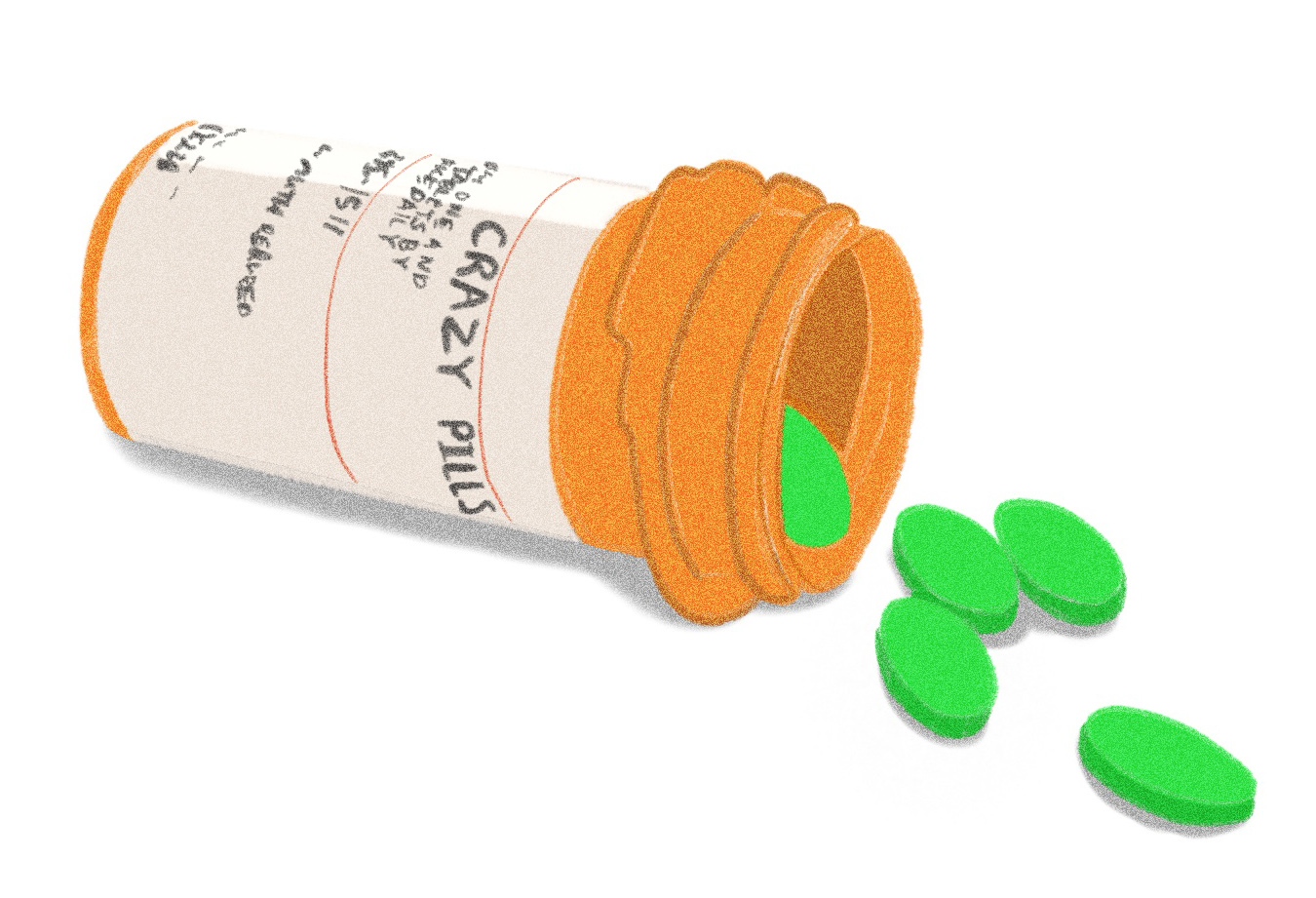
“I felt like I’ve been taking crazy pills for the last two years.”
KathleenBreitman, co-founder of the Tezos blockchain
My poor husband, Arthur (who co-founded the Tezos blockchain), will hear about a project and he’ll look into it in earnest, and you know, sometimes he’ll say, “Oh, that’s a good idea but I wouldn’t have done it that way.” And then sometimes I feel like I could hear him pull his hair out from the other room because he looks up something like the terra pitch, and he’s like, “This is obviously a Ponzi scheme!”
I felt like I’ve been taking crazy pills for the last two years. In game theory, you have this concept of a repeated game, where if you know that you’re going to see someone over and over again, you treat them a little bit differently than someone who you might just have one transaction with. And I don’t think a lot of people in this space have been treating business as a repeated game.
I hope that this is an inflection point because a lot of the positive momentum going into crypto last year masks a lot of really terrible engineering and really pernicious marketing practices. And if the bright silver lining of this downturn is that, at the very least, people become more suspicious, then I’d say that’s a great outcome.—As told to Aidan Ryan
“It was a very expensive trip to New York to sit in the hotel room and trade.”
Alexander Blum, managing partner at Two Prime, a crypto derivatives trading firm
Both my chief investment officer and I had flown out to New York for client meetings during the week. And we were just in our hotel rooms the entire time, watching charts and trading, and slept, you know, two or three hours each night. Somebody on the team was up at all hours. It was a very expensive trip to New York to just sit in the hotel room and trade.
The thing is, when the price starts to fall, nobody knows how far it’s going or how severe the issue is. Everybody on Twitter thinks the world is ending. So you have to filter things out, just look at the statistics, and not freak out or get emotional about things.
There was a lot of adrenaline. With crypto, there’s no Bloomberg terminal where you know exactly what’s going on. So it’s stressful just to make sure you’re keeping up with, you know, quick decisions that are being made that might affect the price of the market. That, plus sleep deprivation is, yeah, really stressful.—As told to Akash Pasricha
“We actually have real-world expenses. So we were like, huh, we probably should have gotten some out before.”
Devin Lewtan, co-founder of Mad Realities, a crypto media company that produces the dating show “Proof of Love”
We had our initial NFT sale, [which raised 172 ethereum]. So that’s been sitting in our treasury until we find it’s time to actually convert it into U.S. dollars and put it towards the production of “Proof of Love.”
When we saw the price of ethereum go down, we’re like, OK, we have less in the treasury in U.S. dollars than we did before. Right now, 172 eth is worth about $340,000. And for a while it was hovering around $500,000. For a lot of DAOs, that doesn’t matter. Like, one eth is one eth. But for us, we actually have real-world expenses [like the show’s set design or film cameras]. So we were like, huh, we probably should have gotten some out before.
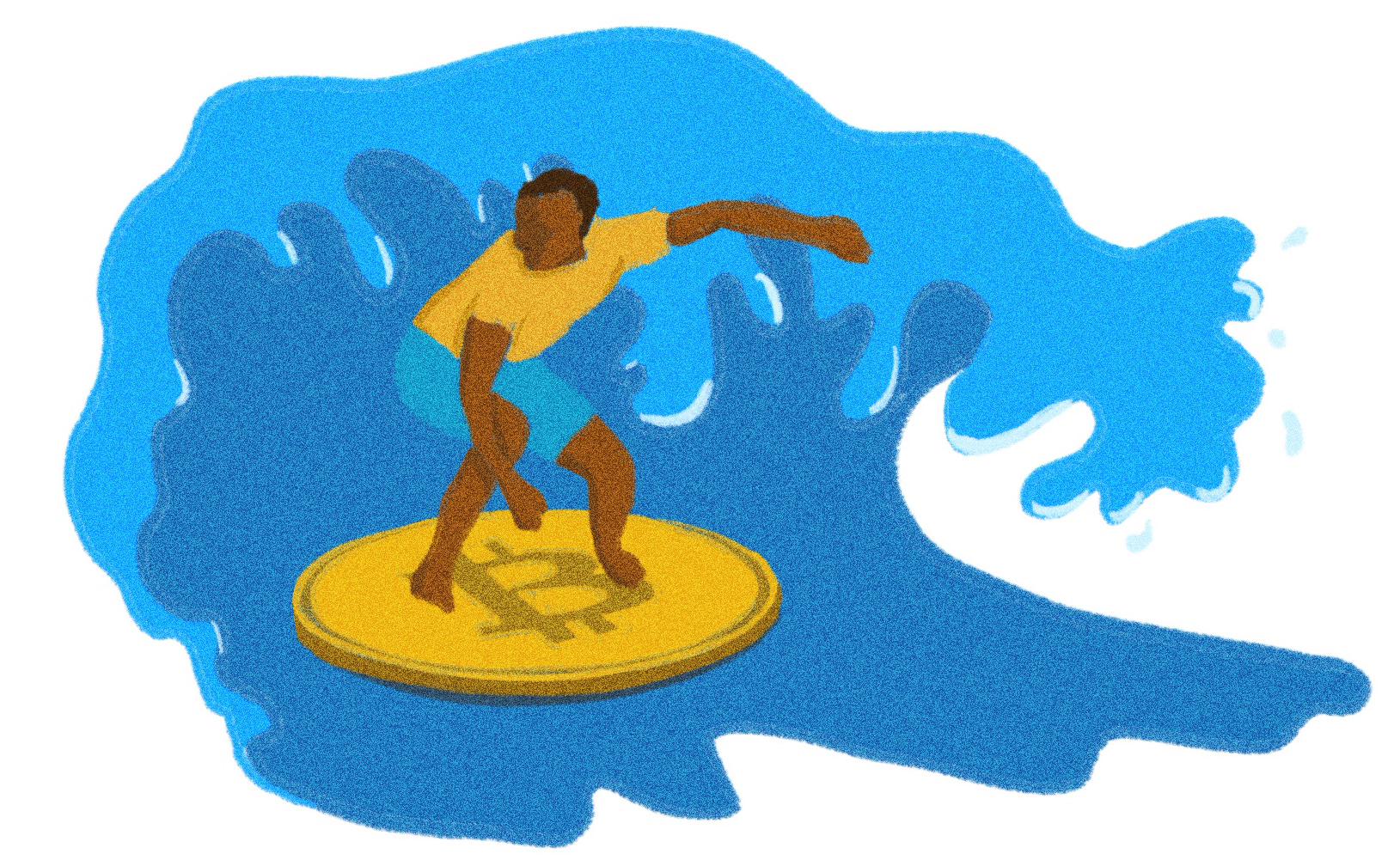
For the most part, I would say that we feel pretty unfazed. As builders, you feel less affected by a bear market because you are building and aren’t distracted by the hype of bull runs. And so for us, it’s actually a really nice time to build without any distraction and just kind of work towards the larger goal rather than try and ride some wave of the moment.—As told to Margaux MacColl
“In just 10 days, we were up 60 percent.”
Suman Saurabh, head of quant research at crypto fund Phobos Capital
I’ve been talking to other colleagues who were working at different hedge funds. Everybody is losing money. But we have done pretty well.
We started fully systematic trading very recently at the end of April and we’re still in the testing phase with execution. The model had only been tested on a small amount of money. There was a time when I worked 16 hours a day for 7 days a week, but that phase was the pure startup phase. Now we have gotten to the point where the machine is doing things.
The model adapts to the current scenario with minimal lag. We see that when things have gone south in the market, the model itself changes to some other parameters that work well. On May 1, the market started going down. When we found the bottom of this meltdown, literally one and a half days later we went long for a brief period, when some coins like Solana rallied 40%. We entered long and exited again and went short again because the market was back in a meltdown situation. I call this the “smart switch.” Around May 11, in just 10 days, we were up 60%.
Our year-end target that we communicated to clients was to reach a 50% return on investment. I don’t want to say we will keep making this amount of money but the model is doing what it is intended to do. When there’s a meltdown, it captures that very beautifully; when the market is good, it captures that very beautifully. —As told to Becky Peterson
“Just get on the sidelines for a week or two and let things settle down.”
Scott Freeman, co-founder and partner at JST Capital, a crypto trading firm
We went into the weekend before the UST meltdown very concerned about the markets, honestly. We started having discussions with our clients and our traders. And then when markets really started getting choppy late in the day on Saturday [May 7], we went into full crisis mode.
We had people working around the clock, reaching out to clients, explaining to them what we’re seeing in the market, understanding what their positions are and what their concerns are. We actively encouraged clients to de-risk early in the week. And our message wasn’t just to get out of UST and luna, it was: Look at every stablecoin position you have, understand what’s behind that stablecoin, and understand if you really still want that. Just get on the sidelines for a week or two and let things settle down. These markets were too uncertain and too hard to predict.
Honestly, the whole week was a blur. Whether I was at home or at the office, it was 24/7. We were up until 10, 11, 12. And then the phone rings at 2 or 3 in the morning. When the week ended, Friday at noon, we were exhausted. I went home and took a nap.—As told to Akash Pasricha
“The conversations that I’ve had with people who are OG crypto, they’re just riding the wave.”
Mark Basa, director at Hokk Finance, a company building decentralized finance products
I expect things to crash—until they get good. My game is 5, 10 years. Our token [hokkaido inu] is shit right now along with everything else, but we don’t really care because our thing is not to market a meme token. Our long game is to build a decentralized finance ecosystem, which young people in crypto can use and big blockchain companies can use.
If you’re new to crypto, you would look at this crash and you would not want to buy. When stocks dip like this, it feels like the end of the world is coming. But this is crypto and it hasn’t yet found its place. We don’t even have 1% of global transactions yet happening on crypto, so I think that this is a really good time to build things if you want to build in crypto now.
You have to really, as the term in crypto is called, ape it. You have to change your mindset, knowing you have to lose quite a bit before you win. The conversations that I’ve had with people who are OG crypto, they’re just riding the wave.—As told to Annie Goldsmith
“All I can say is I hope people just remain optimistic.”
Medha Kothari, a research partner at Variant, an early-stage crypto-focused investment fund
I think the bear market is the best time to invest—the quality of projects is just so much higher. Also, I focus on infrastructure investment, a lot of scalability stuff, things that require a lot of time and focus and concentration. We saw a crazy consumer boom in the last year, especially in the NFT space, and usually whenever that happens, the infrastructure has to catch up. So I think for those builders, this is the best time to build without distraction. I’m really pretty excited about it.
A lot more people lost a lot more money than the last two bear markets, which is super unfortunate. All I can say is I hope people just remain optimistic, remain fundamentally absorbed in the technology and the philosophy, and everything will work out OK.—As told to Jillian Goodman