FT : UK moves closer to US-style class actions

UK moves closer to US-style class actions
Landmark case signals shift for consumers towards mass lawsuits over antitrust breaches

Millions of UK consumers are currently embroiled in Britain’s biggest ever “class action” lawsuit — even if they don’t yet realise it.

Walter Merricks, the former financial ombudsman, is representing 46.2mn people in a £10bn lawsuit against payments company Mastercard, a case that is testing new ground in the English legal system.

Merricks claims that Mastercard infringed EU competition law by imposing unfair fees — known as “interchange fees” — on customers between May 1992 and June 2008 for the use of debit and credit cards. Mastercard contests the lawsuit, saying it is “confident that once the facts are presented in court, it will be thrown out”.

The action has paved the way for a British wave of US-style class actions — antitrust lawsuits filed on behalf of millions of consumers — against large companies such as BT, Apple and Qualcomm.

In 2015, the UK passed the Consumer Rights Act allowing for the first time collective suits on behalf of consumers and businesses over breaches of competition law. However, the legislation only gained momentum in the wake of a landmark Supreme Court ruling in late 2020 allowing Merricks’ case to proceed.

These types of lawsuits involve large numbers of consumers due to an “opt-out” clause, which means those who are potentially affected are automatically included unless they choose to “opt out.” As a result, many consumers have no inkling they are part of a lawsuit, say solicitors.

The flood of recent such cases in the UK has been underpinned by cash-rich litigation funders keen to deploy their capital by backing collective lawsuits. A recent study by law firm RPC found litigation funders had a £2.2bn “war chest” of capital to use.

“Class actions can bring big rewards for litigation funders,” said Chris Ross, partner at RPC. “They allow a funder to deploy a lot of capital at once as they are expensive cases to run, but they can also be efficient investment vehicles, because each class action can attract hundreds or thousands of claimants.”

“There has been an explosion of interest in this area over the past few years and this allows people to assert their rights,” said David Greene, senior partner at law firm Edwin Coe, who specialises in competition and shareholder claims, and who is also co-president of the Collective Redress Lawyers Association.

Since the 2015 legislation, seven class action lawsuits have been allowed to proceed to trial, including a case on Friday, with at least a dozen more waiting approval. To proceed to trial, cases must first be heard and certified in the Competition Appeal Tribunal.

Large technology companies are fast becoming the targets of such class actions. The latest to be filed is a £768mn lawsuit, led by market researcher Justin Gutmann on behalf of 25mn UK iPhone users against Apple and which has yet to be certified; it claims the tech giant misled customers by allegedly concealing a tool in software updates that slowed their devices.

Apple said: “We have never — and would never — do anything to intentionally shorten the life of any Apple product, or degrade the user experience to drive customer upgrades.”

In another case, Which?, the Consumers’ Association, has brought a £480mn lawsuit against Qualcomm, the US chip supplier, on behalf of 29mn owners of Apple and Samsung phones. If successful at trial, it could see customers receive an estimated £5 and £30 each.

The case alleges the company abused its dominant position in relation to the royalties charged to smartphone manufacturers for the licensing of its patents for chipsets.

Qualcomm said the claims “have no merit and rehash old allegations from a lawsuit brought by the Federal Trade Commission in the US — a lawsuit that Qualcomm won”.

Class actions are also being used to challenge the telecoms sector. BT is currently involved in an estimated £600mn class lawsuit spearheaded by Justin Le Patourel, a telecoms expert, on behalf of approximately 2.3mn BT landline customers.

The case centres on BT’s alleged abuse of its dominant position and could see consumers receive £200 to £500 each if successful. BT said: “We strongly disagree with the speculative claim being brought against us.”

Le Patourel believes the new legal regime is a vital tool to help consumers: “The opt-in regime is good . . . because many people don’t want to put their head above the parapet and would be reluctant to sign up to a legal case if they don’t know what it involves.”

Kate Pollock, partner and head of competition litigation at Stewarts Law, agrees that these collective actions are “one of the most active areas of litigation at the moment”.

However, lawyers say the new regime ushered in by the 2015 Consumer Rights Act has plenty of practical hurdles. Some question, for example, how easy it is to track down millions of customers who might be owed a few hundred pounds of compensation.

But many believe the legislation is now starting to deliver the change promised. “It has been helpful in allowing consumers and small businesses . . . to assert their rights,” said Luke Streatfeild, partner at law firm Hausfeld.

“It also creates a deterrent for businesses to engage in anti-competitive behaviour.”
>>> Scientists across the world flagged the emergence of a new coronavirus varia

Scientists across the world flagged the emergence of a new coronavirus variant in India, the BA.2.75; May have increased ability to infect people who have been infected before, as well as those who are vaccinated
- Scientists across the world have flagged the emergence of a new coronavirus variant in India, the BA.2.75, which is said to be cropping up increasingly in samples, and may have an increased ability to infect people who have been infected before, as well as those who are vaccinated.
- BA.2.75 is a sub-lineage of the Omicron variant. Sub-lineages of Omicron have become the dominant variants circulating across the globe, with new mutations continuously evolving.
- At least 23 samples of the BA.2.75 variant have been detected in India so far, in Maharashtra, Karnataka and Jammu & Kashmir, according to the data uploaded on Nextstrain, an open-source platform of genomic data.
- Worldwide, just about 37 samples of the variant have been detected, including in Australia, Germany, Canada and New Zealand, according to the Nextstrain data.
- There has been no official communication about the variant from the Indian government, or the Indian SARS-CoV-2 Genomics Consortium (INSACOG), a genomic surveillance agency functioning under the health ministry. However, independent scientists from many parts of the world have flagged BA.2.75 on various online platforms, pointing out that the accumulation of different mutations on the spike protein of this variant is a cause for concern.
- The BA.2.75 variant includes new mutations in the spike protein, in addition to the mutations that are already present in the Omicron variant, explained the Indian genomic scientist quoted earlier. Spike proteins are the protrusions seen on the outer surface of the novel coronavirus.
- Of particular concern, said the scientist, are the mutations ‘G446S’ and ‘R493Q’, both of which are associated with significant changes in the protein structure of the spike protein, with the potential to give the variant the ability to evade several antibodies.
- As a result, the variant is expected to infect people who have been vaccinated, or have been infected previously.
- However, currently, there is a lack of data on how fast the infection from this particular variant is spreading, owing to insufficient surveillance. There is also not enough data currently to ascertain if the variant has the potential to cause severe infection.
- But according to the scientists who have been discussing the BA.2.75 on various forums, the variant is unlikely to cause severe infection, since G446S is also better recognised by vaccine-induced T-Cells — a type of white blood cell that helps recognise and target pathogens in the body.

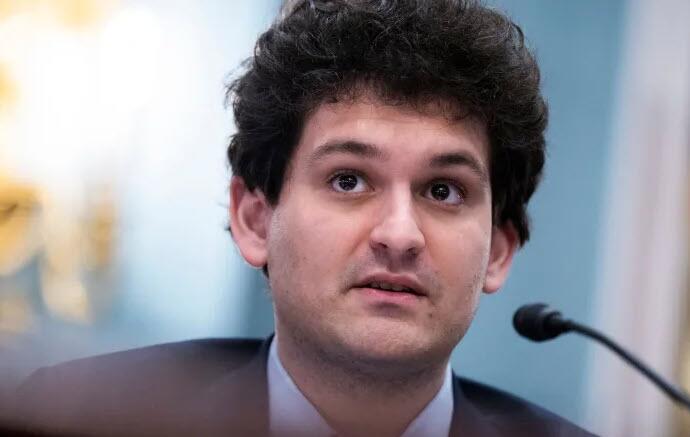
(ZH) Does Sam Bankman-Fried Own Everything Now: Recap Of Last Week's Top Crypto

Does Sam Bankman-Fried Own Everything Now: Recap Of Last Week's Top Crypto News

By Donavan Choy of Bankless
Three Arrows Capital Contagion, Act III
The dominoes continue to fall from 3AC’s collapse.
The fund was ordered into liquidation by a British Virgin Island court after failure to repay debts.
Singapore’s central bank MAS — where 3AC was previously headquartered — then stated that the fund willfully submitted false information on its balance sheets, and exceeded its allowed assets under management for several months.
The collateral damage from 3AC’s implosion has spilled over into other crypto companies, namely Voyager Digital and BlockFi.
Last week, Voyager halted withdrawals on its platform. This week saw Voyager issuing 3AC a default notice after the latter failed to make payments on a $670M loan.
Meanwhile, SBF’s Alameda Ventures stepped in with a $500M loan package to save Voyager, of which $75M has already been accessed. VOYG shares have taken a hit of ~60% in the past two weeks after news of its exposure to 3AC broke.
BlockFi’s troubles include an overcollaterized loan of $1B to 3AC, which was liquidated early on in the domino charge. In a public message released today, BlockFi reported a loss of ~$80M in the past month’s events, as well as a credit line of $400M from FTX (also an SBF joint) which to-date has not yet been drawn on.
Both FTX and Morgan Creek Digital are competing to acquire BlockFi, as BlockFi continues to pursue a public offering.
How 3AC ended up in this mess is beyond the scope of this newsletter, but it’s a heady brew of bad investment decisions and poor risk management involving overleveraged loans from other institutions and DeFi protocol treasuries.
With FTX and Alameda scooping up the rubble from the fallout across the contagion, this looks like an effective power play by Sam Bankman-Fried, see:
* * *
Grayscale sues the SEC
Grayscale Investments’ application to convert its GBTC asset into a spot-based Bitcoin ETF saw rejection by the SEC this week.
The official press release charges that:
“... the SEC is failing to apply consistent treatment to similar investment vehicles, and is therefore acting arbitrarily and capriciously in violation of the Administrative Procedure Act and Securities Exchange Act of 1934”.
As it stands, the Grayscale GBTC financial product is a trust that enables investors to gain exposure to Bitcoin without buying it directly (with an initial lockup period of six months).
Why buy GBTC at all when you can buy BTC directly? Because it’s a legal way for mainstream investors to gain exposure to crypto.
But it’s also terribly market-inefficient. In theory, GBTC is meant to mirror Bitcoin in value. In reality it trades at a premium or discount depending on market sentiment. This opens an arbitrage opportunity that transforms GBTC from a “Buy this if you like Bitcoin” financial product into a hybrid speculative futures-based product.
That lured institutions like 3AC into scooping huge stakes in GBTC when numbers were going up, and we’ve seen how that ended up.
Of course, modern finance has an easy fix to this like: an ETF which trades at a 1:1 parity with the underlying asset.
But access to crypto ETFs are still blocked up as the SEC continues to drag its feet on regulatory approvals. But that’s not stopping institutions from pursuing the license, as VanEck files another application this week.
* * *
DeFi DAO governance dynamism
Two big DAO governance items dominated this week. The first was a contentious Maker DAO proposal to centralize the protocol’s governance in a “core unit.” It failed to pass. The proposal saw an unprecedented ~30% of MKR tokens participating.
The second big governance proposal is a Lido initiative to self-limit the amount of ETH deposits into the liquid staking protocol. The context of this proposal lies in the potential risks that a concentration of ETH in Lido might pose to the underlying Ethereum protocol.
It’s hardly a surprise that the proposal was overwhelmingly shot down by LDO holders - that’s a little bit like asking an investor if you’d like to see a company you own a part of to stop growing.
* * *
Web3 News Roundup
Arbitrum Odyssey paused, Optimism numbers go up
The Arbitrum Odyssey campaign was paused this week due to blockchain congestion from the overwhelming success of Odyssey.
Meanwhile, Arbitrum’s closest L2 competitor Optimism is also booming, with a big uptick in DEX trading volume.
Horizon bridge gets hacked
The Horizon bridge by L1 blockchain Harmony endured a $100M exploit this week, allegedly by the North-Korean hackers Lazarus Group. Those are the same guys that hit the Axie Infinity Ronin bridge in March.
Microstrategy goes Bitcoin shopping
Microstrategy is a small software company, but it has come a long way from doing small software things. CEO Michael Saylor shut down market rumors of any potential insolvency in perhaps the most demonstrative way possible: a $10M purchase of another 480 Bitcoins.
El Salvador too checks out another purchase of 80 Bitcoin.

WSJ : Investment Banks Prepare for Lean Times as Deal Spree Sputters

Investment Banks Prepare for Lean Times as Deal Spree Sputters
Weak markets and uncertain economic outlook slow M&A and curtail IPOs

Wall Street’s latest deal-making boom began to weaken in 2022. The industry is bracing for the slowdown to drag into the second half of the year.

The stimulus from governments and central bankers in response to the pandemic led to a swift recovery from a recession and ebullient capital markets. That recovery, coupled with changes in how customers and businesses operate, sent executives on a shopping spree for deals. A host of startups went public.


The result was a bonanza for Wall Street. Goldman Sachs Group Inc GS 0.74%▲. and Morgan Stanley MS 0.91%▲ booked record profits. They scrambled to hire enough workers and paid out billions of dollars in additional compensation. Global merger and acquisition volumes approached $6 trillion last year, including a record $1.56 trillion in the third quarter, according to Dealogic data.

Goldman Chief Executive Officer David Solomon warned in February that last year’s results weren’t sustainable. He was right. Deal making has slowed, and bankers aren’t expecting activity to pick up soon. Investment-banking revenue fell 36% at Goldman Sachs and 37% at Morgan Stanley in the first quarter, and analysts expect similar declines for the full year. Citigroup Inc C 1.91%▲. executive Andrew Morton said last month the bank is expecting a 50% to 55% drop in second-quarter investment-banking revenue.

Analysts have grown more pessimistic. In January, Wall Street forecasts called for about $21 billion in combined investment-banking revenue this year at Goldman Sachs and Morgan Stanley, according to FactSet. Those forecasts now call for about $17 billion in combined revenue.

Global merger and acquisition volumes topped $1 trillion in the first half of the year, which is still high by historical standards. Some big deals are still in the works. Merck & Co. is in talks to acquire the biotech Seagen Inc., while Elon Musk continues his bid to purchase Twitter Inc.

Stock underwriting, meanwhile, has gone dormant. The total value of U.S. initial public offerings was below $4 billion in the second quarter, down 97% from the record high in the first quarter of 2021. IPOs might not resume in earnest until business leaders have better insights on the outlook for inflation and economic growth.

Rising interest rates and tumbling markets have wounded the market for deal financing, clouding the outlook. Walgreens Boots Alliance Inc. dropped plans last week to sell its Boots and No7 Beauty Co. businesses, saying bids came in too low in part because potential buyers couldn’t line up enough funding. Kohl’s Corp. cited the weak financing market when it called off deal talks with Franchise Group Inc.

Clarity has been elusive. U.S. inflation continues to come in higher than expected, reaching levels unseen in decades. The Federal Reserve raised rates by 0.75 percentage point last month, the largest increase since 1994, and indicated that more increases are likely this summer. Fed Chairman Jerome Powell said Wednesday that he was more concerned about high inflation than the possibility that higher rates could tip the economy into a recession.

The S&P 500 fell 21% in the first half of 2022, while government bond yields and commodity prices soared, marking the worst start to a year for markets in decades. The consumer-confidence index, a measure of Americans’ views on the economy’s short-term outlook, fell in June to its lowest point in nearly a decade.

CEO confidence is key for a strong deals market, and that confidence has wavered, Evercore ISI analyst Glenn Schorr said. Weak and volatile capital markets are another hurdle to deal making, he said.

“Sellers want yesterday’s price, and buyers want today’s price,” Mr. Schorr said. “It takes time to get both on the same page.”

WSJ : Celsius Customers Are Losing Hope for Their Locked-Up Crypto

Celsius Customers Are Losing Hope for Their Locked-Up Crypto
Three weeks since the crypto lender said it was halting withdrawals, users want answers

It has been three weeks since crypto lender Celsius CELH 1.07%▲ Network LLC took the drastic step of halting customers’ withdrawals. Many people are starting to wonder if they will ever see their money again.

Alla Driksne says she has six figures worth of bitcoin and ethereum—her life savings—tied up in a Celsius account. On June 12, a Sunday, the company said it had paused customer withdrawals, saying it needed “to stabilize liquidity and operations.” Ms. Driksne couldn’t sleep for two days.

“Since it is such a huge company and there are so many people that trusted them, somewhere in the back of my head, I’m hoping maybe there’s a small, small chance of not losing everything,” said Ms. Driksne, who is 34 and creates online cooking courses.

The crypto market is crashing, and the resulting credit crunch is pummeling small-time traders and big-name companies. At least four other crypto firms—Babel Finance, CoinFlex, Voyager Digital Ltd. VOYG -17.14%▼ and Finblox—have told customers that they can’t withdraw their money or capped the amount they can take out.

Crypto companies like Celsius have sprung up in recent years to offer services that seem like traditional banking tasks, like paying interest on deposits and making loans. They often offer eye-popping interest rates on deposits, sometimes near 20%.

What some customers are learning the hard way is crypto lenders might look and act like the traditional finance system, but they lack the investor oversight and legal protections built into banks and brokerages. Notably, their deposits aren’t guaranteed by the federal government.

Celsius didn’t respond to requests for comment. State securities regulators in Texas, Alabama, Kentucky, New Jersey and Washington state are investigating Celsius’ decision to freeze customer accounts.

In a blog post Thursday, Celsius said it continues “to take important steps to preserve and protect assets and explore options available to us.”

“Our relationship with the community and our clients has been a source of pride for all team members at Celsius, and we will continue to share information with our customers as and when it becomes appropriate,” the company added.

Celsius has hired restructuring attorneys and consultants for advice on a potential bankruptcy filing, The Wall Street Journal previously reported. Terms of use on the Celsius website say that in a bankruptcy, customers might not be able to recover the cryptocurrencies in their accounts or the collateral they put up for loans.

Ms. Driksne opened a Celsius account after a friend mentioned its high interest rates. She started getting a bad feeling in early June, she said, after reading Twitter chatter about mounting financial troubles at the company. On Friday, June 10, Ms. Driksne tried to withdraw her money. Throughout the weekend, her transaction was listed as pending, she said. It was eventually canceled that Sunday, she said, the day Celsius announced the freeze. She had planned to put the money toward buying a house.

The plunge in prices for bitcoin and other cryptocurrencies is partly because of wider macro concerns. Stiff inflation is making the Federal Reserve increase interest rates, which is raising concerns about a potential recession and sending investors running from risky assets.

But investors also have concerns about the crypto industry in particular. Prices took a turn for the worse in early May after the collapse of two sister cryptocurrencies, Luna and TerraUSD.

The panic spread quickly. The market value of the entire crypto sector crashed, falling from about $1.7 trillion on May 1 to $872 billion as of last week, according to CoinMarketCap data.

Many crypto customers took out loans in which they pledged their crypto as collateral. Now that the value of their collateral is plunging, lenders can in many cases issue margin calls and seize it all.

John Buzolits, a 35-year-old commercial real-estate broker in Philadelphia, opened a Celsius account in March for his bitcoin. Using bitcoin as collateral, Mr. Buzolits took out a loan of $62,500 in a stablecoin called USD Coin.

Stablecoins are meant to maintain a peg to the dollar. Investors can earn high yields when they deposit stablecoins into so-called DeFi projects, short for decentralized finance.

In the wee hours of Sunday morning, June 12, Mr. Buzolits grew concerned and repaid his loan. He then proceeded to withdraw his six bitcoin, worth more than $170,000 at the time. The transaction got ensnared in a security check. He hasn’t gotten his bitcoin back.

Mr. Buzolits said he filed a complaint last week with the secretary of state’s office in Indiana, where he was living when he took out the loan.

“I think I’m a pretty levelheaded person, but it’s definitely causing anxiety because the six bitcoin is a healthy portion of my retirement,” he said. “Now I have to start over and rebuild from zero.”

Multiple traders complained about a lack of communication from the company. One is Jackson Ling, a 37-year-old angel investor in Malaysia who has about $2,000 of bitcoin in Celsius.

“Everyone’s been left in the dark here, nobody knows exactly what’s going on with them,” Mr. Ling said. “Are they insolvent or simply illiquid?”

Jake Greenbaum, a 32-year-old crypto influencer in Miami, is betting on a rebound. Mr. Greenbaum has solana tokens in his Celsius account that were worth more than $107,000 when the company announced the freeze.

Mr. Greenbaum, who calls himself the Crypto King on social media, assumes he isn’t getting his money back and chalks it up as the cost of doing business. He recently started selling his watches. He plans to use the money to buy more crypto.

WSJ : Coinbase Launches Derivatives Product in Crowded—and Depressed—Market

Coinbase Launches Derivatives Product in Crowded—and Depressed—Market
While Coinbase looks for new lines of revenue, rival crypto exchanges dominate derivatives trade

Coinbase COIN 4.30%▲ Global Inc. just launched a derivatives product, its latest attempt to move into a new field and offset weakness in its core spot-trading business. It has a lot of competition.

The largest U.S.-based crypto exchange acquired a U.S.-regulated derivatives exchange called FairX in February for $330 million, according to research firm PitchBook. This past week, it relaunched it with a focus on cryptocurrencies. Its first product is a “nano bitcoin” futures contract that will be offered through brokers while Coinbase awaits regulatory approval to offer them directly. Derivatives are financial instruments that are based on and allow traders to bet on the price of an underlying asset, like bitcoin.

Coinbase could use a new source of revenue. Its trading volume, which is all spot trading, was likely down by about 30% in the second quarter from the first, Oppenheimer analyst Owen Lau estimated. And its highly publicized launch of an NFT exchange hasn’t driven much activity.

Coinbase’s first few quarters as a public company were wildly profitable, but since the crypto selloff began in November, the company has struggled. In the first quarter of 2022, it reported a loss of $429.7 million, or $1.98 a share, and said users were fleeing.

Since its launch on Monday, the Coinbase futures product traded an average of 32,000 contracts a day, according to the company. “It’s a pretty solid launch,” said Boris Ilyevsky, the head of Coinbase Derivatives Exchange.

The derivatives market, though, is a crowded one. Rival crypto exchanges such as Binance, Bybit and OKX dominate the derivatives trade, and traditional exchanges like CME are in it as well.

Moreover, a class of crypto exchanges called decentralized exchanges are becoming larger players in the derivatives market. Decentralized exchanges, or DEXes, basically automate the functions of traditional exchanges and allow traders to invest without an intermediary.

Most of this activity is offshore, and largely unregulated.

Over the past few years, decentralized exchanges have steadily been increasing their share of the trading pie. Today, they account for about 55% of “on-chain” trading volume—the trading settled directly on a blockchain—compared with 45% for centralized exchanges, according to research firm Chainalysis.

The comparison isn’t absolute because centralized exchanges such as Coinbase and Binance handle most of their transaction volume internally, or “off chain.” And centralized exchanges are still larger than decentralized exchanges.

But the growth of decentralized exchanges does point to the degree of competition among the different trading venues, something likely to only increase in an environment where activity has been depressed by the selloff in bitcoin and other cryptocurrencies.

The differences between decentralized and centralized exchanges are mainly below the surface. Centralized crypto exchanges are essentially brokering trades, matching orders, and executing and settling the orders. They are the central intermediary, and if something goes wrong, they are the party responsible.

Decentralized exchanges aren’t actually brokering trades on behalf of their customers or facilitating the execution or settlement of the trades. All of those functions are handled through software automation. The liquidity to ensure trades get executed comes from the users, too, collected into large “liquidity pools.”

The arrangement also means that even the companies that created the exchanges don’t assume legal responsibility for them. The Uniswap terms of service include this line: “We are not responsible for any of these variables or risks, do not own or control the protocol, and cannot be held liable for any resulting losses that you experience.”

The biggest products for decentralized exchanges are derivatives, which comprise about two-thirds of their total volume, according to Antonio Juliano, the chief executive of dYdX Trading Inc., which created the second-largest derivatives exchange, dYdX.

The exchange is focused on derivatives mainly because it is the most popular trade in the crypto market, Mr. Juliano said, but he envisions a future where decentralized exchanges compete with centralized exchanges for any type of trading.

“We’re starting to think more about other types of products,” he said. “That kind of stuff takes time to build.”

WSJ : China’s Fast-Fashion Giant Shein Faces Dozens of Lawsuits Alleging Design

China’s Fast-Fashion Giant Shein Faces Dozens of Lawsuits Alleging Design Theft
Rapid rise of company valued at more than $100 billion has been accompanied by copyright complaints; Shein says any infringement isn’t intentional

HONG KONG—In just a few years, the Chinese apparel giant Shein has captured the market for bargain-seeking Gen-Z shoppers by offering huge varieties of cheap apparel every day. Along the way, it has picked up a long list of complaints of copyright theft from big brands and boutique designers.

Valued at more than $100 billion and backed by big-name investors such as Sequoia Capital China and General Atlantic, Shein—pronounced “she-in”—has enjoyed booming growth. Its appeal includes cut-rate prices, successful tie-ups with online influencers and an endlessly refreshing wardrobe of up to 6,000 new items a day.

Its rise has seen a growing number of lawsuits that allege the company is profiting from other people’s designs. Shein or its Hong Kong-based parent company, Zoetop Business Co., has been named in the past three years as a defendant in at least 50 federal lawsuits in the U.S. alleging trademark or copyright infringement, according to public records.

Plaintiffs range from small-time designers operating out of home studios to retail giants including a unit of Ralph Lauren Corp. and sunglasses maker Oakley Inc., court records show. On social media, independent designers complain to fans and swap stories of products or designs that they say have appeared for sale by Shein without permission.

In many cases, Shein has settled with plaintiffs, often for an undisclosed amount, court records show. In some instances, Shein has responded to complaints about knockoffs of their work by blaming third-party suppliers, complainants say.

In March, streetwear brand Stussy Inc. sued Shein alleging that the company was selling products including shirts and shoes bearing its logo without permission. In one image attached to the lawsuit, Shein was offering for sale on its website a black T-shirt with “Stussy” emblazoned across the front. The shirt was listed on Shein’s website for $17.67, according to Stussy’s lawsuit. Shein in a legal filing denied the allegations in Stussy’s lawsuit.

“It is not our intent to infringe anyone’s valid intellectual property and it is not our business model to do so,” a Shein spokesman said in a statement, without commenting on specific cases. “Shein suppliers are required to comply with company policy and certify their products do not infringe third-party IP. We continue to invest in and improve our product review process.”

When legitimate complaints are raised by valid IP-rights holders, Shein promptly addresses the situation, the spokesman added. An attorney for Stussy declined to comment.
Allegations of copyright infringement aren’t uncommon in the fast-fashion industry, where retailers are under pressure to keep prices low and continuously refresh their offerings. But the number of lawsuits against Shein stands out among rivals: Since 2019, it has been named as a defendant in almost 10 times as many federal copyright or trademark-infringement cases as fast-fashion rival H&M Hennes & Mauritz AB, a search of public legal records shows.

“Shein is one of several ultrafast fashion retailers that are the new ‘usual suspects’ in design piracy,” said Susan Scafidi, a professor at Fordham Law School and founder of the school’s Fashion Law Institute. The risk of lawsuits is a cost of doing business for such companies, she added.

In January, Shein reached an undisclosed settlement with Nirvana LLC, the copyright owner to the 1990s grunge band. Nirvana had accused Shein of using the band’s artwork in its apparel without permission, including using at least two Nirvana album covers on its T-shirts.

Shein’s ability to put up for sale thousands of new items a day at rates that deeply undercut rivals is in part due to its leveraging of China’s well-developed garment supply chain. Staples such as T-shirts and shorts often fetch $5 or less on its website.

By targeting Western consumers and eschewing bricks-and-mortar stores, Shein was catapulted by the pandemic-era online shopping craze. The privately held company’s sales grew sixfold in two years to $19 billion in 2021, roughly matching the revenue generated that same year by H&M, according to estimates by Credit Suisse.

The number of intellectual-property claims against Shein reflects the sheer volume of items the company puts up for sale each day, said Simon Irwin, an apparel industry analyst at the bank.

Not all complaints against Shein become lawsuits. Tiina Menzel, a Germany-based artist who designs prints and stickers, said she complained to Shein multiple times after discovering that the retailer was carrying products bearing her art.

In July 2020, she wrote an email to the company demanding the removal of a T-shirt it was selling with a print she said she had clearly designed, showing a cat and a skull. A Shein employee responded that the company had sold 15 of the shirts and offered her the stated profits, amounting to $40. The employee said an investigation found the products weren’t manufactured by Shein but were bought as finished products from a Chinese vendor.

“We will check more thoroughly in the future,” the employee said in the email, which was seen by The Wall Street Journal.

Ms. Menzel declined the offer, calling it unacceptable—T-shirts bearing Ms. Menzel’s designs go for $19 from a licensed retailer. As Ms. Menzel went back and forth with Shein, other designs of hers began appearing elsewhere from the company, including on another T-shirt and a phone case, she said. Altogether, Shein has used her designs without permission on products nine times, Ms. Menzel said. She said she hasn’t hired a lawyer because of the cost.

Shein declined to comment on the complaint.

Raeha Keller, a designer in Los Angeles, said a fellow artist tipped her off a few years ago that Shein was selling multiple pins virtually identical to those for sale on her own website, but for a fraction of her prices, which are typically around $13 or so. They included a pin of an anatomical heart broken in two, and a floral pin containing the stylized word “feminist,” according to a lawsuit she filed in November. Shein has denied stealing the artist’s work.

Ms. Keller said she is a member of a Facebook group called “Pin Theft” where she and fellow pin designers swap examples of alleged design theft by the retailer.

“It’s out of control,” she said. “So many people buy from Shein.”

FT : China’s self-styled Warren Buffett haunted by Fosun’s $40bn debt

China’s self-styled Warren Buffett haunted by Fosun’s $40bn debt
Guo Guangchang’s conglomerate increases global divestments after punishing rout on property bonds

Chinese billionaire Guo Guangchang, whose global empire includes French resort group Club Med, Portugal’s biggest bank and the English football club Wolverhampton Wanderers, was among the last men standing.

A decade ago, Guo’s Fosun along with conglomerates HNA, Dalian Wanda, CEFC and Anbang drove an explosion in offshore Chinese investment but most were undone after President Xi Jinping called time on the debt-fuelled acquisition spree.

Guo survived the crackdown. But he is now back in the spotlight after a sudden sell-off in property bonds put scrutiny on a liquidity crunch and $40bn debts at his expansive conglomerate.

Moody’s, the rating agency, launched a review of the Shanghai-based group over “contagion” risk spreading to a portfolio that includes scores of companies in China, Europe and the US, as well as hundreds of smaller subsidiaries.

The Fosun bond rout led to two of the company’s Hong Kong-traded dollar bonds slumping by more than 35 per cent in mid-June before paring back losses over the past week.

The strains on Guo’s empire stemmed not only from higher interest rates and worsening consumer sentiment but also “unknowable political risks”, said Victor Shih, professor of Chinese political economy at the University of California.

“Private entrepreneurs in China continue to face this very opaque and difficult to predict political risk, because no one knows if they’re going to run afoul of the authorities,” Shih said. “It is just extremely difficult to know whether a private entrepreneur will get in trouble.”


The immense challenge facing Guo marks the latest twist in an operatic life. But increasing questions over Fosun’s debt obligations highlight how the turbulence in China’s property sector is spilling across the country’s corporate landscape and hitting investors and assets overseas.

“Fosun has a weak financial profile. The company’s recurring income, mainly dividends from underlying investments, is inadequate to cover the interest and operating expenses at the [holding company] level,” said analysts from Moody’s.

Fosun’s total consolidated debt stands at Rmb260bn ($38bn), said Moody’s, adding that about 45 per cent of its debts at the holding company level mature before the end of March 2023. S&P puts Fosun’s holding company debt at Rmb112bn, including both offshore and onshore borrowing but excluding various consolidated investees’ debt.

Refinancing via the offshore dollar bond market — in the past a key channel for Chinese developers to tap investors — is difficult for Fosun because funds have soured on China’s companies after a series of defaults, including by property developer Evergrande, which has $300bn or more in liabilities.

Xiaoxi Zhang, a financial sector analyst with research group Gavekal, said not only have Chinese property developers been “shut out” of the offshore bond market for months, but in China investors are “more than ever” turning their backs on companies such as Fosun without state backing.

“Those who have a tight cash situation may soon run out of cash as refinancing is difficult, and therefore may default on bonds,” she said.


Fosun told the Financial Times it was in a “sound and healthy position”, pointing to a debt-to-capital ratio of 54 per cent and total cash, bank balances and term deposits of Rmb96.78bn at the end of 2021.

“[Fosun] and its subsidiaries have established partnerships with more than 100 Chinese and foreign banks around the world and have signed strategic co-operation agreements with many international banks and multiple Chinese banks,” it added.

The group also announced plans to repurchase the outstanding principal of two offshore bonds maturing this year, totalling about $800mn.

According to Citi analysts, Guo and his top lieutenants have signalled plans to use existing cash and credit facilities, as well as asset sales, to meet their obligations.

Illustrating Guo’s intensifying efforts to shore up liquidity, the company’s divestments this year already exceed $2bn, compared with $85mn last year and $420mn in 2020, according to Dealogic data.

Fosun reached a deal in March to sell its fashion division, Lanvin Group, via a special purpose acquisition company. Weeks later the company agreed to sell its US insurance group AmeriTrust to US provider AF Group. In late May, Fosun sold its last chunk of shares in Tsingtao Brewery for $523mn.

The group is also offloading shares in infrastructure investments, selling down stakes in Zhongshan Public Utilities and Shandong Taihe Water Treatment Technologies.

Moody’s noted that the company’s credit quality, which directly affects its ability to refinance, would probably be weakened because continued divestitures would mean less income from dividends and shrink the size of its portfolio. However, others including Morgan Stanley as well as Japan’s Daiwa Securities argue that the market has overreacted to Moody’s move to review the company.

Guo, who started life in the eastern province of Zhejiang during the poverty-stricken chaos of Mao Zedong’s Cultural Revolution, has demonstrated a strong survival instinct.

After a poor rural upbringing, he earned admission to Shanghai’s elite Fudan University then set about building one of China’s biggest private companies. His wealth is estimated at more than $4.2bn as of Friday, according to Forbes.

Abroad, the acquisitive conglomerate has counted among its investments Hollywood film production venture Studio 8, New York’s One Chase Manhattan Plaza, Canadian circus operator Cirque du Soleil and British travel company Thomas Cook, though the latter two failed.

At home, where Guo remains a household name, Fosun amassed a sizeable property portfolio, a stake in Minsheng Bank, one of the country’s largest privately owned lenders, as well as a large pharmaceuticals division that has partnered with BioNTech in a bid — so far unrealised — to bring Covid-19 vaccines to China.


The group’s core remaining assets are stakes in more than 40 companies across healthcare, tourism, asset management, mining, steel and tech manufacturing. In 2021, the group’s total revenue stood at Rmb161bn and its assets amounted to Rmb806bn, according to the company.

Yet lingering questions stemming from a lack of transparency and complicated structure hang over the group, according to analysts. These are problems that have been hallmarks of collapsed Chinese conglomerates.

Fosun has for many years been among the groups dubbed “grey rhinos” because of the unseen but potentially immense risk they posed to China’s financial stability.

After Xi’s administration in late 2016 called time on the rhinos’ highly leveraged outbound investments, many tycoons went out of business.

In late 2016, Guo himself was suddenly detained by authorities in Shanghai for several days. After his detention, his company privately downplayed the incident as a routine procedure in an investigation into the then vice-mayor of the city Ai Baojun, who was later jailed for graft.

But one person familiar with Guo’s situation told the FT that the probe was more serious and that when he re-emerged days later the typically dispassionate billionaire told a group of fellow tycoons the release was “the most special day” of his life.

Many of his peers were less fortunate. Xiao Jianhua, the enigmatic financier with ties to top leaders in Beijing, was snatched from Hong Kong’s Four Seasons Hotel in January 2017 and is believed to be detained in Shanghai.

Wu Xiaohui, the head of Anbang, was jailed for embezzlement. Two top executives from travel-to-finance conglomerate HNA were arrested last year. Co-founder Wang Jian fell to his death in France in 2018. Ye Jianming, the head of state-backed conglomerate CEFC has not been seen since being detained in early 2018.

Shih, of the University of California, said Guo’s future hinges in part on whether his key political connections — most of whom are believed to be party and business elites from Shanghai — are still in positions of influence.

“I think he still has some degree of protection. But the 20th Communist party Congress may spell the end to the power of the Shanghai faction,” Shih said. “On the other hand, he might have been cultivating new backers.”