>>> TradeGate Pre-Market Indications

DAX:
  • Porsche SE (PAH3 TH) -0.8%
  • Mercedes (MBG TH) -0.8%
  • Beiersdorf (BEI TH) -0.9%
    • Henkel, Danone Cut as Berenberg Factors in Recession, Costs
  • SAP (SAP TH) -1.2%
  • Henkel (HEN3 TH) -2.4%
    • Henkel, Danone Cut as Berenberg Factors in Recession, Costs
MDAX:
  • Thyssenkrupp (TKA TH) -1%
  • Evotec SE (EVT TH) -1.3%
  • Uniper (UN01 TH) -1.4%
  • Telefonica Deutschland (O2D TH) -1.5%
  • Delivery Hero (DHER TH) -2.4%
SDAX:
  • Deutz (DEZ TH) +0.9%
  • flatexDEGIRO (FTK TH) -1.2%
  • Bilfinger (GBF TH) -1.4%
  • Synlab (SYAB TH) -1.8%

>>> Stoxx 600 Pre-Market Indications

  • Haleon (H6D0 TH) +3.4%
    • Haleon Rated New Equal-Weight at Barclays; PT 348 pence
  • Uniper (UN01 TH) -1.4%
  • Infineon (IFX TH) -1.5%
    • Watch European Apple Suppliers as Company Said to Slow Hiring
  • ASML (ASME TH) -1.6%
  • Aroundtown (AT1 TH) -1.7%
  • Bechtle (BC8 TH) -1.7%
  • United Internet (UTDI TH) -2%
  • Verbund (OEWA TH) -2%
  • TUI (TUI1 TH) -2.1%
  • Henkel (HEN3 TH) -2.3%
    • Henkel, Danone Cut as Berenberg Factors in Recession, Costs
  • Delivery Hero (DHER TH) -2.4%

>>> What to look at today - 19th of July 2022

Asian shares were subdued Tuesday after Apple Inc.’s plans to slow hiring highlighted concerns that aggressive monetary tightening to tackle inflation portends an economic downturn. An Asian equity gauge dipped, hampered by a drop in technology stocks in Hong Kong and a retreat in China amid rising Covid infections and deepening turmoil in the nation’s property sector. US futures inched up in the wake of another reversal for the S&P 500 on Monday. The index erased a 1% gain and ended lower on Apple’s intention to moderate some hiring and spending.  A dollar gauge remained near a record high and Treasuries were steady, leaving the 10-year yield below 3%. The bond market reflects expectations for a short, sharp Federal Reserve interest-rate hiking cycle that gives way to cuts next year to shore up growth. Crude dipped but held above $100 a barrel and will likely stay therefor the rest of the year, according to Iraq’s energy minister. Etherwas among the leaders of a cryptocurrency rally.  orporate updates such as Apple’s are helping markets to calibrate the risk of recession. Signs that high inflation and monetary tightening are squeezing consumers and employment could feed into worries that an equity revival since mid-June is merely brief respite in a bruising bear market. In China, officials may allow homeowners to temporarily haltmortgage payments on stalled property projects without incurring penalties. Authorities are racing to prevent a crisis of confidence in real estate from upending the world’s second-largest economy. Meanwhile, India’s rupee tumbled to a fresh record low as foreign investors continued to pull money out from the nation’s stocks. US After Hours IBM -4.3% heads lower on earnings; MRTN +2.4% higher on earnings; CDXS -2.3% lower as it names new CEO

Nikkei +0.65% Hang Seng -1.03% CSI -1.14% Shanghai -0.56% Shenzen -0.49%

Eur$ 1.0151 CNH 6.7517 CNY 6.7469 JPY 137.97 GBP 1.1962 CHF 0.9759 RUB 57.1656 TRY 17.4835 WTI$ 102.55 -0.05% Gold 1,710.20 +0.05% BTC 22,060 +2.65% ETH 1,537.30 +4.45%

S&P +0.30% Nasdaq +0.29% EuroStoxx -0.60% FTSE -0.42% Dax -0.43% SMI -0.40%

Macro :
- EU to Call on Member States to ‘Immediately’ Cut Gas Usage: FT
- *THREE ARROWS SAID TO OWE DIGITAL CURRENCY GROUP $1.2 BLN
- Race For UK Leadership Tightens as Rivals Vie For Run-Off Spot

Keep an eye on :
- ADP FP : ADP Raises 2022 Passenger Traffic Forecasts
- AFRY SS : Afry CFO Juuso Pajunen Decided to Leave Company
- AIR FP : Air Lease Said to Be in Advanced Talks for Large Airbus Order
- AIR FP : Easyjet Signs LOI With Airbus on Carbon Removal Solutions
- AIR FP : *AIRBUS, ALC SAID TO NEGOTIATE ORDER FOR DOZENS OF A320 FAMILY
- ALO FP : Alstom 1Q Sales EU4.00B Vs. EU3.70B Y/y
- AAPL US : Apple Sued Over Apple Pay, Accused of Antitrust Violations
- ATL IM : Atlantia CEO Bertazzo to Step Down: Repubblica
- BAR BB : Barco Sees FY Ebitda Margin 10% to 12%
- COV FP : Covivio 1H EPRA EPS EU0.69 Vs. EU0.19 Y/y
- DIS US : Disney Scores $9 Billion in Upfront Ad Sales With 40% Online
- ELK NO : Elkem 2Q Ebitda Beats Estimates
- EQT SS : EQT Seeks to Sell Its 49% Stake in French Water Firm Saur: Echos
- HNSA SS : Hansa Biopharma to Get $70M Financing From NovaQuest
- ISP IM : Fondazione Cariplo Raises Stake in Intesa to 4.812% From 3.948%
- LAGRB SS : Lagercrantz 1Q Net Revenue Beats Estimates
- NCCB SS : NCC 2Q Net Sales Beats Estimates
- NOVN SW : Novartis 2Q Core EPS Beats Estimates
- ORA FP : *ORANGE, MASMOVIL GET EU6.6B LOAN FOR SPAIN MERGER: EXPANSION
- RBI AV : Raiffeisen Review of Russian Unit to Take More Time: Boersianer
- CFR SW : Richemont Gets Request From Bluebell for Board Changes
- RIEN SW : Rieter Sees FY Sales About CHF1.40B, Est. CHF1.45B
- RIO LN : Steel Shares Rise as BHP’s Output, Guidance Meet Expectations
- SAB SM : *SABADELL HIRES BARCLAYS TO SELL PAYMENT BUSINESS: EXPANSION
- SAS SS : SAS Reaches Pacts With Pilots’ Unions, Ending Strike
- SGSN SW : SGS 1H Adjusted Operating Income Misses Estimates
- SWEDA SS : Swedbank 2Q Net Income Misses Estimates
- TEL NO : Telenor 2Q Ebitda Beats Estimates
- TEL2B SS : Tele2 2Q Net Sales Beats Estimates
- DG FP : Vinci, Cape Verde Sign 40-Year Concession for Seven Airports
- VOLVB SS : Volvo Profit Beats Despite Persisting Supply-Chain Snarls
- YAR NO : Yara 2Q Adjusted Ebitda Beats Estimates

>>> Europe : Brokers Upgrades & Downgrades - 19th of July 2022

>>> Up
* Danone Raised to Hold at Berenberg; PT 52 euros
* Melia Hotels Raised to Buy at Intermoney Valores; PT 7 euros

>>> Down
* Babcock Cut to Reduce at Numis; PT 270 pence
* Fevertree Drinks Cut to Equal-Weight at Barclays; PT 1,000 pence
* Fevertree Drinks Cut to Reduce at HSBC; PT 800 pence
* Gamma Communications Cut to Underperform at Oddo BHF
* GSK Cut to Reduce at AlphaValue/Baader
* Henkel Cut to Sell at Berenberg; PT 50 euros
* Neoen Cut to Underweight at Morgan Stanley; PT 35 euros
* UBS Group Cut to Underweight at Barclays on Buyback Concerns
* United Internet Cut to Neutral at Oddo BHF; PT 30 euros
* Voltalia Cut to Equal-Weight at Morgan Stanley; PT 22 euros

>>> Initiation
* Breedon Rated New Buy at Stifel; PT 80 pence
* Deutsche Telekom Reinstated Outperform at Oddo BHF; PT 23 euros
* Julius Baer Rated New Equal-Weight at Barclays
* Telecom Italia Reinstated Outperform at Oddo BHF
* Telefonica Reinstated Underperform at Oddo BHF; PT 4.80 euros
* Vodafone Reinstated Neutral at Oddo BHF; PT 140 pence

>>> Call
* Cboe Double-Upgraded at MS With Higher Volatility a Tailwind
* Henkel, Danone Cut as Berenberg Factors in Recession, Costs
* Neoen, Voltalia Cut; MS Turns Selective on Pure-Play Renewables
* Watch Remy Cointreau, Heineken as Citi Sees 2Q FX Tailwinds
* Zurich Airport Less Exposed to Disruption, Raised to Buy at Citi

>>> US After Hours Summary: IBM -4.3% heads lower on earnings; MRTN +2.4% higher

After Hours Summary: IBM -4.3% heads lower on earnings; MRTN +2.4% higher on earnings; CDXS -2.3% lower as it names new CEO

After Hours Gainers:

Companies trading higher in after hours in reaction to earnings/guidance: AXGN +5.5% (guides Q2 revs above consensus; also makes changes to its commercial organization), MRTN +2.4%

Companies trading higher in after hours in reaction to news: MNDT +2.2% (DOJ grants early termination of the waiting period re merger with Google), MARA +0.6% (APLD enters into hosting contract with MARA for 200-MW of Bitcoin mining capacity), LH +0.1% (expands its automated clinical trial kit production line in Belgium), EE +0.1% (signs MOU with Bulgaria's Overgas relating to regasified LNG downstream sales)

After Hours Losers:

Companies trading lower in after hours in reaction to earnings/guidance: IBM -4.3%, NVTA -2.2% (provides guidance, realigns operations, names new CEO)

Companies trading lower in after hours in reaction to news: CDXS -2.3% (CEO to retire, names new CEO), RARE -0.9% (provides update on GTX-102, including interim data from Phase 1/2 study), ACAD -0.1% (submits NDA for Trofinetide for the treatment of Rett Syndrome), NFLX -0.1% (asking customers in five Latin America countries to pay a fee to use shared passwords, according to Bloomberg)

>>> US Closed Dow -0,69% S&P -0,84% Nasdaq -0,81% Russell -0,34%

Closing Stock Market Summary

The stock market opened decidedly higher, attempting to build on Friday's gains. The early upward momentum in the S&P 500 found some resistance around the 3,900 mark. The release of the July NAHB Housing Market Index at 10:00 a.m. ET took the steam out of the broader market. After that, the market held onto modest gains and moved mostly sideways until a Bloomberg article suggested Apple (AAPL 147.07, -3.10, -2.1%) plans to slow hiring and spending for some divisions next year to ease the impact of the economic downturn. The market sold off on the news and closed barely above session lows.

The early buying conviction was fueled by a general rebound attempt as well as positive corporate news from Goldman Sachs (GS 301.26, +7.39, +2.5%) and Boeing (BA 147.72, -0.02, -0.01%). Goldman Sachs reported better-than-expected earnings and approved a 25% increase in its quarterly dividend. Boeing traded up on news that Delta Air Lines (DAL 31.14, +1.05, +3.5%) will modernize its single-aisle fleet with up to 130 Boeing 737 MAX jets.

Also adding to the early sentiment was a Wall Street Journal article that noted the Fed is likely to hike 75 basis points at its next meeting, versus a feared 100 basis point rate hike.

The market started its deterioration today after the July NAHB Housing Market Index release came in at 55. The drop from 67 to 55 was the largest monthly drop in the 37-year series other than the drop seen in April 2020.

Each of the main indices was able to keep above the unchanged mark until a Bloomberg report suggested Apple plans to slow hiring and spending for some divisions, which let the rest of the air out of the market. With a lack of leadership, just about everything slumped into the close.

Eight of the 11 S&P 500 sectors closed in the red with losses ranging from 0.5% (financials) to 2.2% (health care). The only sectors to gain on the day were energy (+2.0%), materials (+0.2%), and consumer discretionary (+0.2%).

Market breadth was mixed with advancers slightly outpacing decliners at the NYSE and decliners slightly outpacing advancers at the Nasdaq.

The 2-yr Treasury note yield closed the session three basis points higher at 3.16% and the 10-yr note yield rose three basis points to 2.96%.

Tomorrow's economic data will be limited to June Housing Starts (Briefing.com consensus 1.598 million; prior 1.549 million) and Building Permits (Briefing.com consensus 1.680 million; prior 1.695 million) at 8:30 a.m. ET.

Ahead of tomorrow's open, the earnings reports will be headlined by Johnson & Johnson (JNJ 174.23, -4.00, -2.2%), Lockheed Martin (LMT 387.28, -11.10, -2.8%), Halliburton (HAL 28.85, +0.99, +3.6%), and Hasbro (HAS 79.42, +0.21, +0.3%).

  • Dow Jones Industrial Average: -14.5% YTD
  • S&P 400: -19.1% YTD
  • S&P 500: -19.6% YTD
  • Russell 2000: -22.5% YTD
  • Nasdaq Composite: -27.4% YTD

FT : SoftBank halts work on Arm’s London IPO following political turmoil

SoftBank halts work on Arm’s London IPO following political turmoil
Japanese tech investor pauses plan for dual primary UK-US listing for chip designer after Johnson quits

SoftBank has put on hold plans for a London initial public offering of Arm because of the political turmoil in the UK government, throwing doubt on Britain’s place as the future home of the Cambridge-based tech giant.

UK prime minister Boris Johnson has personally lobbied SoftBank’s billionaire founder Masayoshi Son to secure at least a partial listing for the chip designer on the London Stock Exchange.

As Johnson’s government collapsed earlier this month, investment minister Lord Gerry Grimstone and digital minister Chris Philp resigned. They had both played leading roles in talks with the Japanese tech investor.

The departures have led SoftBank to pause discussions about a UK listing of Arm in the next year, according to people briefed on the talks. An Arm IPO would be one of the biggest-ever tech flotations for the London market.

The political upheaval could pave the way for SoftBank to pursue a more straightforward US listing, which Son had originally favoured.

SoftBank was in talks with officials and exchange executives over an unusual dual primary listing, in which it would have simultaneously floated in both New York and London, according to people with knowledge of the situation.

Companies have shunned this approach in the past because of the cost and complexity of effectively having to run two IPOs simultaneously, with prospectus and other regulatory requirements needed for both the US Securities and Exchange Commission and the UK’s Financial Conduct Authority.

Two people familiar with SoftBank’s thinking said that work on the London side of the IPO had effectively halted within the company. One of these people added that a London listing was looking less likely than it had in the past.

Bankers close to SoftBank have warned that the group only considered a share sale in London because of the strong incentives offered by the UK government, which had tasked officials with working out the right conditions for the listing, promising to make Arm a national champion for British tech.

London has been criticised for being unattractive to fast-growing companies given the potential for higher valuations and deeper pools of investor cash in the US. 

Officials in the Department for Digital, Culture, Media and Sport and Department for Business, Energy and Industrial Strategy are still working on a package to attract an Arm listing, according to a person familiar with the government’s efforts.

Philp had been replaced by new digital minister Matt Warman, a former tech journalist, they added. Executives at the London Stock Exchange were also still working to convince SoftBank of the UK’s merits.

Grimstone, who quit the government after Johnson announced he would make way for a new prime minister in the coming weeks, led the lobbying efforts as minister for investment, including flying to Tokyo to personally meet Son.

One City executive close to the lobbying efforts urged the government to step up its efforts, saying: “The main ministers that are dealing with SoftBank have left. Gerry was instrumental.”

The ruptures within the government have also prompted fears within Whitehall that SoftBank will no longer feel obliged to bring Arm to London markets because the political pressure will ease over the summer months.

“It’s a concern now that Gerry has gone,” said one official. “There is a vacuum right now and [SoftBank] never really wanted to do it anyway; they just wanted to play ball with the UK government.”

Work on a dual jurisdiction Arm IPO had reached a “mature” stage in the UK, said an official close to the talks. This unusual route would mean that Arm could get index inclusion in both markets, which would boost the number of funds that could invest in the company, and means it would be fast-tracked into the FTSE 100.

A UK banker close to Arm said that a dual listing would not “be crazy”.

“Arm used to trade at a huge premium in the UK and it had a huge fan club when it was listed over here, and that group has never found anything else as attractive to buy. The first ever company that’s in the FTSE 100 and the S&P 500 — can you imagine how excited [Son] would be?”

One option would be to include a retail offering for the IPO to attract the sort of older and wealthier private investors who remember the early days of the company when it spun out of Acorn Computers in Cambridge.

SoftBank had recently invested in PrimaryBid, which provides a platform for retail investors to buy into IPOs, which one person said could be used as a means to attract private investors to the company in the UK. PrimaryBid last year worked on a British members’ offering for the US listing of private club Soho House.

Anand Sambasivan, chief executive of PrimaryBid, said: “A retail offer in the UK would recognise Arm’s distinctive British history, be well received by investors and represent a win for the country.”

SoftBank and Arm declined to comment. Arm has previously said it planned to keep its headquarters in the UK, regardless of where it lists.

The UK government did not immediately respond to a request for comment.
>>> What to look at today - 19th of July 2022


Macro :


Keep an eye on :
- ADP FP : ADP Raises 2022 Passenger Traffic Forecasts
- AIR FP : Air Lease Said to Be in Advanced Talks for Large Airbus Order
- AIR FP : Easyjet Signs LOI With Airbus on Carbon Removal Solutions
- AIR FP : *AIRBUS CEO: SLIGHTLY BEHIND DELIVERY TARGET AFTER TOUGH 1H
- AAPL US : Apple Sued Over Apple Pay, Accused of Antitrust Violations
- HNSA SS : Hansa Biopharma to Get $70M Financing From NovaQuest
- ISP IM : Fondazione Cariplo Raises Stake in Intesa to 4.812% From 3.948%
- RBI AV : Raiffeisen Review of Russian Unit to Take More Time: Boersianer
- SAS SS : Scandinavian Airline SAS Says No Deal Signed With Pilots Yet
- DG FP : Vinci, Cape Verde Sign 40-Year Concession for Seven Airports

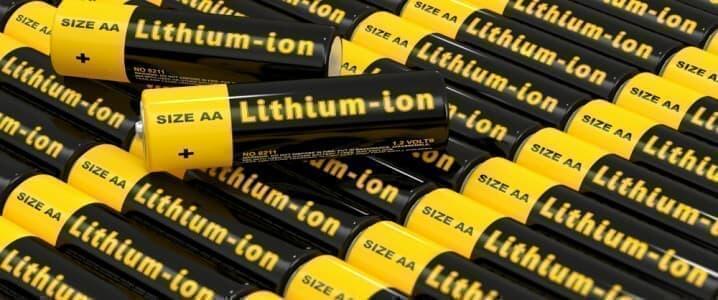
(ZH) A New Threat To The European Battery Boom

A New Threat To The European Battery Boom

  • Some EU lawmakers are aiming to classify lithium as a hazardous substance.
  • The move is being met with backlash from the battery and metals industries.
  • Industry experts argue that the scientific evidence used to make the decision is weak.
As the global demand for batteries looks set to continue rising in line with the growth of the EV market and renewable energy projects, the E.U. may soon throw a spanner in the works by labeling lithium batteries as harmful to humans. As the battery and metals industries fight against this move, some European countries are going all-in in their battery investments, demonstrating the wide support for battery industry growth across the region.
Many experts worry that if the E.U. classifies lithium as a hazardous substance, it could delay progress being made in the development of green energy. With governments across Europe battling to balance energy security with a rapid transition away from fossil fuels to renewable alternatives, the new regulations could make it that bit harder.
Europe is quickly becoming a hub for electric vehicles (EVs), vying with Asia to develop the most efficient, longest-range EVs as the market expands. Several countries have already announced a ban on the sale of new internal combustion engine (ICE) vehicles in the 2030s, and many industry groups fear that the labeling move could hinder these efforts. China has been dominating the EV sector in recent years, rapidly establishing its lithium industry and battery manufacturing capabilities to solidify its position in the global market. But Europe has gradually expanded its position in the battery market to meet European demand as uptake increases.
A letter from seven industry groups – the European Battery Recycling Association, the European Geothermal Energy Council, Eurobat, Eurometaux, Euromines, the International Lithium Association and Recharge – has been sent to E.U. legislators voicing their “deep concern” over a proposal by the European Chemicals Agency's (ECHA) risk assessment committee aimed at labelling three lithium compounds as dangerous for human health. The compounds include lithium carbonate, chloride, and hydroxide. The final decision is expected to be made in late 2022 or early 2023.
But industry experts argue that the scientific evidence used to make the decision is weak. While the classification does not place a ban on the import of lithium products, it could mean higher prices due to stricter processing, packaging, and storage regulations. It could also allow countries without these regulations to undercut costs to produce cheaper lithium products, making their markets more competitive.
The letter states, “Europe is at a critical period in its energy transition, needing to stimulate new investment into a full Electric Vehicle battery value chain. This European Commission can be proud of real industrial success in already mobilising high levels of investment into new battery gigafactories. Its looming challenge is now to secure the battery metals that will be in very short supply over the next 15 years.” Adding, “This is a race where Europe is playing catch-up to China, which is already over a decade ahead, now controlling most global processing for lithium and other battery metals.”
But the move by the E.U. isn’t stopping some countries from developing their battery manufacturing capabilities. Norway’s oil and gas giant Equinor announced this week that it will be acquiring U.S.-based battery storage developer East Point Energy, taking on a 4.1-gigawatt pipeline of “early to mid-stage battery storage projects focused on the US East Coast.” The purchase is expected to be finalised in Q3 of this year
Equinor stated, “Battery storage will play an important role in the energy transition as the world increases its share of intermittent renewable power.” The company added, “Battery storage is key to enabling further penetration of renewables, can contribute to stabilizing power markets and improve the security of supply”.
With greater numbers of battery cell plants being announced, Europe is experiencing a gigafactory boom. Several gigawatt-scale battery cell manufacturing plants have been announced over the last year, and more are expected to follow, giving it the potential to become a global hub for battery production.
In fact, Europe’s EV battery market is expected to reach a value of $94.41 billion by 2029, at a CAGR of 45.8 percent between 2022 and 2029. Greater EV uptake will support the growth of the battery market. As well as seeing significant levels of private investment from companies such as Tesla and several Asian automakers, the European Commission and several state governments are supporting the development of a European-made battery industry. In 2017, the E.U. established the European Battery Alliance for manufacturing, charging infrastructure, and electric-car uptake. Following this, in 2021, the European Commission announced funding of $3.5 billion to subsidize Tesla, BMW, and other companies looking to produce batteries in Europe.
While the introduction of new regulations by the E.U. classifying lithium as harmful may increase the price of lithium product production, it is unlikely to dissuade companies from investing in their battery sectors. With EV uptake increasing substantially year-on-year in Europe, the region is expected to quickly become a battery manufacturing hub. However, increased restrictions on lithium could make the European battery industry less competitive if means an increase in costs.