FT : What comes next for Italy and the European Central Bank

What comes next for Italy and the European Central Bank
Post-Draghi era may accelerate ECB use of anti-fragmentation tool

Mario Draghi may stay on as Italy’s caretaker premier until early elections in September, but then all bets are off, including on the European Central Bank’s firing of its brand-new weapon, carefully named to avoid spooking markets even further. We’ll bring you up to speed with what ECB chief Christine Lagarde had to say (or rather, not say) about the situation in Rome.

Governments in Europe were relieved yesterday that the flow of Russian gas through Nord Stream 1 has resumed, but there were also some indications that the pipeline is still not operating at full capacity. More good news could emerge from Turkey today, where a grain transit deal between Russia and Ukraine is expected to be signed.

In sanctions news, I’ll bring you the latest on the round of restrictions (don’t call it a package) formally adopted yesterday, including a ban on gold and jewels.

And on the Brexit front, Brussels is set to start more legal action against London as it responds to the Northern Ireland Protocol Bill.


Lagarde walks the line
Christine Lagarde managed to avoid mentioning Italy by name in her press conference yesterday, but there was little doubt how heavily events in Rome are hanging over the euro area, writes Sam Fleming in Brussels.

The European Central Bank’s president unveiled not only a half-point rate increase, but she teed up a brand-new bond-buying programme which will be aimed at countering any disorderly surges in the cost of borrowing for the region’s more vulnerable governments.

This “Transmission Protection Instrument” would, she stressed, be available to any euro area country that meets the ECB’s criteria.

The country that looks most vulnerable right now is undoubtedly Italy, which is preparing for snap elections after three parties boycotted a vote of confidence in prime minister Mario Draghi, prompting him to tender his resignation.

Having won plaudits for its efforts under Draghi to push through wide-ranging economic and legal reforms and keep cut public finances on a sustainable trajectory, Italy is now facing a period of extreme political uncertainty which will cast serious doubts on its ability to maintain fiscal discipline and stick to its commitments.

On the face of it, the tool put forward by the ECB has landed at the nick of time, given the risk of a major loss of confidence in bond markets as Rome descends back into internecine political infighting.

The central bank is, after all, handing itself some genuinely impressive firepower, given there are no upfront limits to the scale of bond purchases that the ECB will conduct if there are “unwarranted, disorderly” movements in a country’s bond yields.

The ECB has also given itself a pretty free hand when it comes to deciding whether to act. The central bank set out a number of criteria, including that the country in question is sticking to the EU’s fiscal rules and its recovery plan targets, but these are mere “inputs” into the ECB’s decision-making.

The ECB will, however, have to tread an enormously delicate path as it decides when, and if, to intervene in Italy’s bond markets. Some difficult choices may not be that far off, given the yield on Italy’s 10-year government bond yesterday rose as much as 0.27 percentage points to almost 3.7 per cent.

Getting all 25 governing council members on board behind the bond-buying scheme was far from easy, given the scepticism in northern member states such as Germany and Austria about innovations that even hint at bailing out imprudent fiscal authorities.

The ECB cannot afford to allow its new crisis-fighting instrument to appear to be a free lunch that shields policymakers in Italy — or elsewhere — from self-inflicted economic wounds. Events in Italy in the coming weeks will provide an immediate test of the central bank’s resolve.

Wear your bling
The EU yesterday adopted its so-called maintenance and compliance package of sanctions in response to Russia’s war in Ukraine, which now also covers gold, including jewellery. But if you happen to have a Russian brooch on you when travelling, that’s OK, say EU officials familiar with the matter.

The inclusion of jewellery in this latest round of restrictive measures (that do not amount to a proper sanctions package, as we wrote here) was the only mildly contested issue. “In the end, jewels were included, but there are exceptions on personal use,” one official said.

The EU sanctions regime was expanded to 50 additional areas, mainly to align with restrictions already put in place by the US and the UK, covering €400mn worth of prewar trade. These areas range from police helmets, batons and chemicals used for tear gas to nuclear technology and fracking.

On the “maintenance” side, there was some tightening of exemptions, for instance by adding a handful of entities that work with the Russian military in the fields of aeronautics, space and naval. The ban on Russian ships docking in EU ports has also been extended after ships were circumventing it by offloading their cargo at sea, in locks which were off the coast of EU states. The ban now applies to such practices, too.

Following the recent German model of passing a law obliging listed persons to declare their assets, the EU has introduced similar obligations for sanctioned persons to indicate what possessions they have in the bloc. Failure to comply can lead to their assets being confiscated rather than just frozen. “If they are frozen, at some point they can be de-frozen. If they are confiscated, they are gone, so this is an incentive to self-report,” said another EU official.

Trading with Russia’s largest bank, Sberbank, is now also banned (in addition to it having been previously kicked off the international messaging system Swift). One exemption that has been clarified for Sberbank and all the other Russian banks is for payments relating to food imports and fertilisers.

On the question of whether the sanctions regime is aggravating a food supply crisis in low-income countries, EU officials were quite defensive. “We have very systematically checked with practically every single developing country concerned, where potential issues could lie. Responses were underwhelming,” insisted a third official.
>>> Stoxx 600 Pre-Market Indications

  • Norsk Hydro (NOH1 TH) +3.5%
    • Norsk Hydro 2Q Adjusted Net Beats Estimates
  • Rio Tinto (RIO1 TH) +2%
  • Equinor (DNQ TH) +1.6%
  • Akzo Nobel (AKU1 TH) +1.5%
    • Akzo Nobel Raised to Buy at Jefferies on Net Positive Pricing
  • Siemens Energy (ENR TH) +1%
  • Sartorius (SRT3 TH) +0.7%
  • ArcelorMittal (ARRD TH) +0.7%
  • Delivery Hero (DHER TH) -0.8%
    • Watch European Tech, Ad Stocks After Snap Sales Disappoint
  • Aixtron (AIXA TH) -0.9%
  • Infineon (IFX TH) -0.9%
  • BASF (BAS TH) -0.9%
    • BASF 2Q Beat Highlights 2H Risk, But Breadth Helps: 2Q Preview
  • TUI (TUI1 TH) -1.1%
  • Henkel (HEN3 TH) -1.3%
  • Uniper (UN01 TH) -1.5%
    • Nord Stream Turbine Still in Germany With No Russia Permit: Rtrs
  • GSK (GS71 TH) -2.3%
  • Legal & General (LGI TH) -2.7%
  • Haleon (H6D0 TH) -3.9%

>>> TradeGate Pre-Market Indications

DAX:
  • Hannover Re (HNR1 TH) +0.4%
    • Hannover Re Raised to Buy at SocGen
  • Henkel (HEN3 TH) -0.7%
  • Infineon (IFX TH) -0.9%
MDAX:
  • Siemens Energy (ENR TH) +1.9%
  • Uniper (UN01 TH) -1.4%
SDAX:
  • About You (YOU TH) +1.1%
  • PNE AG (PNE3 TH) -1.1%
  • Ceconomy (CEC TH) -10%
    • Ceconomy Cuts FY Sales Ex-FX, Adj. Ebit Guidance

>>> What to look at today - 22nd of July 2022

US equity futures fell Friday and Asian stocks wavered after disappointment over technology earnings stoked worries about the economic outlook and took some of the shine off this week’s global equity rebound. An Asian share index edged up amid listless performance across the region after a China tech jump fizzled. Nasdaq 100 contracts came close to shedding 1% while European futures fluctuated. The downbeat mood in stocks followed a drop of about 27% in social-media firm Snap Inc. in extended trading on poor results that flagged worries about advertising and therefore wider economic slowdown. The plunge weighed on Facebook parent Meta Platforms Inc. and Google’s Alphabet Inc., overshadowing the best three-day S&P 500 gain since late May. Treasuries trimmed a surge from the Wall Street session but the 10-year yield is still below 3%. Rising US jobless claims, a dimming regional factory outlook and a weaker leading economic indicator signaled recession risks amid tightening monetary policy, bolstering demand for bonds. Traders are also watching President Joe Biden’s condition after he tested positive for Covid and showed mild symptoms. A dip in the dollar in recent days that suggested less fear in markets has helped to put global stocks on course for their best week in a month, paring this year’s equity market rout to about 18%.  the euro pared an advance sparked by the European Central Bank’s 50 basis-point interest-rate hike, the first increase in 11 years.  crude scaled $97 a barrel, while gold and Bitcoin slipped. BTC navigating around the $23,000, didnt managed to break the 24,450 Resistance watch 21,500 support. US After Hours SNAP -26.6% sells off on earnings, takes online ad space with it; ISRG -12.9%, STX -10.2%, SAM -8.6% also down big on earnings; HNGR +24.3% jumps as it gets acquired.

Nikkei +0.40% Hang Seng -0.20% CSI -0.65% Shanghai -0.76% Shenzen -1.20%

Eur$ 1.0189 CNH 6.7755 CNY 6.7664 JPY 137.65 GBP 1.1962 CHF 0.9682 RUB 57.6624 TRY 17.7283 WTI$ 97.25 +0.93% Gold 1,713.92 -0.30% BTC 22,913 -0.90% ETH 1,564.85 -1.35%

S&P -0.48% Nasdaq -0.85% EuroStoxx -0.25% FTSE +0.14% Dax -0.32% SMI -0.20%

Macro :
-ECB Rate Hike Puts QBE on Track for 50%-Plus Profit Jump: React

Keep an eye on :
- ANA SM : Cemex to Buy Clean Power From Acciona for Spain Operations
- ATUS US : Altice USA Said to Weigh Suddenlink Sale for Up to $20 Billion
- BEAN SW : Belimo 1H Sales CHF416M Vs. CHF384.7M Y/y
- CEC GY : Ceconomy Cuts FY Sales Ex-FX, Adj. Ebit Guidance
- CEC GY : Ceconomy Gives In on Ebit as Slow Sales, High Costs Meet: React
- CIBUS SS :
- COV FP : Covivio Appoints Jean-Luc Biamonti as Chairman
- DASNKE DC : Danske Bank 2Q Common Equity Tier 1 Ratio Misses Estimates
- EDF FP : EDF Asks UK to Trigger Force Majeure in Hinkley Nuclear Contract
- GALP PL : Galp Buys Remaining 25% Stake in Titan Solar Energy Venture
- GFC FP : Gecina 1H Recurring Net Income Meets Estimates
- INTER NA : Intertrust Says CSC Offer Period Further Extended
- DEC FP : JCDecaux Wins 16-Yr Advertising Deal in Aix Region; No Terms
- BAER SW : Julius Baer to Stop Charging Clients Negative Interest Rates
- KINDSDB SS : Kindred 2Q Adjusted Ebitda Beats Estimates
- LONN SW : Lonza 1H Core Ebitda Beats Estimates
- LOOMIS SS : Loomis to Repurchase Up To SEK200m Shares July 25-Sept. 28
- MC FP : Arnault Reorganizes Holding to Ensure Family Control of LVMH
- NVG PL : Navigator Co 1H Net Income EU161.9M Vs. EU64.4M Y/y
- NVG PL : Navigator, P2X Eye EU600m Sustainable Aviation Fuel Investment
- NHY NO : Norsk Hydro 2Q Adjusted Net Beats Estimates
- OBEL BB : Orange Belgium Maintains FY Ebitda After Leases Forecast
- OKDBV FH : Oriola 2Q Net Sales Misses Estimates
- SCHP SW : Schindler 1H Revenue Misses Estimates
- SIKA SW : Sika Sees FY Sales Above CHF10B, Est. CHF10.82B
- SINCH SS : Sinch Weighs Legal Action Over Ningi Report, Chairman Tells DI
- SO FP : Somfy 2Q Sales EU434M Vs. EU429.3M Y/y
- SSABA SS : SSAB 2Q Adjusted Operating Profit Beats Estimates
- STOCKA FH : Stockmann 2Q Adj. Ebit Grows 32% to EU35.4 Mln Driven by Lindex
- STERV FH : Stora Enso 2Q Operating Ebit Misses Estimates
- TIT IM : Vivendi Sees Tel. Italia Netco Valuation EU31b-EU34b: Reppublica
- TIETO FH : TietoEVRY 2Q Net Sales Beats Estimates, Tietoevry Sales Beat, Starts Banking Unit Review, Lifts Outlook
- TEMN SW : Temenos’s Confirmed Guidance May Face Skepticism: Street Wrap
- TRUEB SS : Truecaller 2Q Revenue SEK480.4M Vs. SEK240M Y/y
- UBI FP : Ubisoft 1Q Net Bookings Meets Estimates
- UBSG SW : BNP Paribas Prime-Brokerage Boss Wilson Departs for Rival UBS
- UCG IM : FSI Said to Seek Stake in Italy Banks’ Debt Card Payments Giant
- WSU GY : Washtec Boosts FY Revenue Forecast
- WHA NA : Wereldhave 1H EPS EU0.81 Vs. EU0.93 Y/y

>>> Europe : Brokers Upgrades & Downgrades - 22nd of July 2022

>>> Up
* Akzo Nobel Raised to Buy at Jefferies; PT 81 euros
* Allegro Raised to Buy at Trigon Dom Maklerski; PT 30 zloty
* Asseco South Raised to Buy at Trigon Dom Maklerski; PT 48 zloty
* Cyfrowy Raised to Buy at Trigon Dom Maklerski; PT 24 zloty
* Gamivo Raised to Buy at Trigon Dom Maklerski; PT 90 zloty
* Hannover Re Raised to Buy at SocGen
* ING Slaski Raised to Buy at Trigon Dom Maklerski; PT 177 zloty
* JSW Raised to Buy at Trigon Dom Maklerski; PT 61.80 zloty
* Nokia Raised to Buy at Handelsbanken
* Orange Polska Raised to Buy at Trigon Dom Maklerski; PT 7 zloty
* PGE Raised to Buy at Trigon Dom Maklerski; PT 13.80 zloty
* Publicis Raised to Overweight at JPMorgan; PT 70 euros
* SRV Group Raised to Accumulate at Inderes; PT 5.30 euros
* Stillfront Raised to Hold at SEB Equities; PT 25 kronor
* Storebrand Raised to Add at AlphaValue/Baader
* Tesla PT Raised to $410 from $385 at JPMorgan
* Wise Raised to Overweight at Morgan Stanley; PT 570 pence

>>> Down
* Alumetal Cut to Hold at Trigon Dom Maklerski; PT 70.10 zloty
* AT&T Cut to Equal-Weight at Barclays; PT $20
* Boliden Cut to Hold at Handelsbanken
* Fevertree Drinks Cut to Underperform at RBC; PT 700 pence
* Hochschild Mining Cut to Hold at Berenberg; PT 100 pence
* Innofactor Cut to Reduce at Inderes; PT 1 euro
* KGHM Cut to Sell at Trigon Dom Maklerski; PT 92 zloty
* Norma Cut to Add at Baader Helvea; PT 25 euros
* Quilter Cut to Neutral at JPMorgan; PT 115 pence
* S4 Capital Cut to Equal-Weight at Morgan Stanley; PT 160 pence
* Shoper Cut to Hold at Trigon Dom Maklerski; PT 40 zloty
* Snap Cut to Inline at Evercore ISI; PT $14
* Snap Cut to Hold at Stifel; PT $14
* Snap Cut to Sector Weight at KeyBanc
* Snap Cut to Hold at Truist Secs; PT $12
* Snap Cut to Inline at Evercore ISI; PT $14
* Snap Cut to Market Perform at Oppenheimer
* Snap Cut to Neutral at Goldman; PT $12
* Trelleborg Cut to Hold at DNB Markets; PT 255 kronor

>>> Initiation
* Bifire Rated New Buy at Alantra Equities; PT 5.40 euros
* Devolver Digital Rated New Buy at Numis; PT 90 pence
* EDP Renovaveis Reinstated Neutral at Redburn
* Neoen Rated New Buy at Redburn
* Scatec Rated New Neutral at Redburn
* Solaria Energia Rated New Buy at Redburn

>>> Call
* Akzo Nobel Raised to Buy at Jefferies on Net Positive Pricing
* Bernstein Disagrees With BofA Survey on Capitulation
* Carnival Equity Raise Isn’t Nearly Enough, Morgan Stanley Says
* Cibus Nordic Real Estate Drops; Kepler Cheuvreux Says 2Q ‘Weak’
* HSBC Strategists See Growth Slowdown Starting to Be Priced in

(ZH) Blackstone Prepares A Record $50 Billion To Snap Up Real Estate During The

Blackstone Prepares A Record $50 Billion To Snap Up Real Estate During The Coming Crash

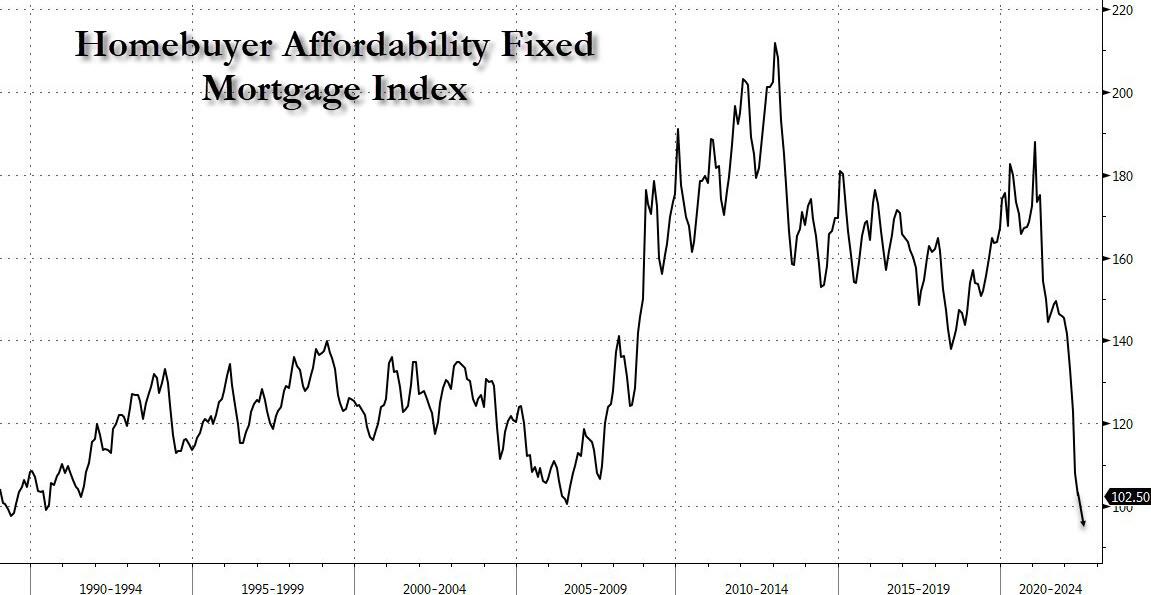
The past two months have seen a barrage of negative news coverage focusing on the US housing market...
... which is predictable: after all, with mortgage rates soaring at the fastest pace on record to decade highs, and sending US housing affordability to the lowest in history...
... only a handful of the "1%" can afford the American Dream.
Alas, it also means that just like in 2007, a housing crash is now just a matter of time.
That much is known. What is also know, is that once housing craters, the largest US residential and commercial landlord - private equity giant Blackstone - is about to get even bigger. That's when it will deploy some (or all) of the record $50 billion in dry powder it has raised to prepare for just the coming housing crash.
According to the WSJ, Blackstone is the final stages of raising a new real-estate fund that would set a record as the biggest vehicle of its kind, defying market volatility and a crowded landscape for fundraising.
The private-equity giant said in a regulatory filing Wednesday it has closed on commitments totaling $24.1 billion for Blackstone Real Estate Partners X, the latest iteration of its main real-estate fund.
According to the WSJ, Blackstone is committing about $300 million of its own capital and has allocated an additional $5.9 billion to investors, which will bring the fund to $30.3 billion when it is finalized. The firm raised the fund, expected to be the largest traditional private-equity vehicle in history, in just three month. It was also Blackstone that set the prior record, with the $26 billion buyout fund it raised in 2019. The new real-estate fund will be 50% larger than its predecessor, a $20.5 billion pool raised in 2019.
Together with funds dedicated to real estate in Asia and Europe, Blackstone will have a war chest of more than $50 billion to do so-called opportunistic investments, which tend to be higher-risk deals with the potential for higher returns.
That, according to the WSJ, "could allow the firm to take advantage of a downturn in the public markets." Translation: at a time when Americans are liquidating their housing en masse to shore up liquidity when the bottom falls out from the economy, Blackstone will step in and buy all the distressed properties at pennies on the dollar, becoming an even bigger presence in US, and global, real estate.
Not surprisingly, many of Blackstone’s best-performing deals—like its 2014 purchase of the Cosmopolitan casino and hotel in Las Vegas and its 2016 deal for life-sciences buildings owner BioMed Realty Trust —were struck during periods of market turmoil.
It won't be just Blackstone that goes bottom fishing in a few months: a slew of private-equity funds are in the market this year, with many trying to raise huge sums even after stocks fell and deal-making dried up. The surge in requests for new cash has overwhelmed investment teams at institutions such as pension funds and endowments and has meant many have delayed making commitments to all but the top managers.
The size of Blackstone’s new fund and the speed at which it was able to raise the money demonstrate that institutional investors are still eager to participate in vehicles being offered by established managers with good records. And while the ranks of $20 billion-plus buyout funds have been growing, there are still relatively few real-estate megafunds comparable with Blackstone’s.
As the WSJ adds, just like the firm as a whole, Blackstone’s $298 billion real-estate business has embraced a thematic investment strategy with the goal of targeting areas of the economy where growth is outpacing inflation. That has led it to focus on four key areas: warehouses used for e-commerce; life-sciences office buildings; rental housing; and hospitality tied to travel and leisure. It has also excelled in all four areas, long ago becoming the largest US residential landlord much to the chagrin of tens of millions of Americans who dutifully pay Steve Schwarzman for the privilege of having a roof over their head.

FT : Sports rights to sports betting: what next for Blavatnik-backed DAZN?

Sports rights to sports betting: what next for Blavatnik-backed DAZN?
Lossmaking streaming service looking for wins after failure to acquire BT Sport

The new chief executive of DAZN has one goal: to make the sports streaming group profitable and end its reliance on the pockets of billionaire owner Leonard Blavatnik, who has poured more than $5bn into the lossmaking company. 

In his first interview since joining the London-based group last year, Shay Segev told the Financial Times that his aim was “to make this business sustainable and profitable in the next 12 to 18 months”.

To do so, Segev, who was born in Israel and previously led FTSE 100 gambling group Entain, wants to expand beyond sports rights and into new areas such as betting, ecommerce and digital assets including non-fungible tokens.

“Streaming is clearly a fundamental part of our business . . . but we are much broader than that,” Segev said.

Blavatnik in 2018 rebranded and restructured his sports media holdings so that he could build the Netflix of sport. But his ambitious plans have to date resulted in billions of dollars of losses. DAZN lost about $3.7bn between 2019 and 2021, with the pain exacerbated by the freeze on sport during the pandemic. Blavatnik’s Access Industries in February agreed a $4.3bn recapitalisation to clear DAZN’s debt.

Blavatnik told the FT: “Generally, I’m not a patient person, but I understand that it takes time and money to build a global broadcasting platform for the 21st century.”

Segev has already put his own mark on the business, hiring executives such as Entain operations boss Sandeep Tiku as chief technology officer and BT’s Pete Oliver as marketing chief.

DAZN owns the rights to air coveted sports such as British boxer Anthony Joshua’s fights, as well as the domestic rights for Italy’s Serie A, Spain’s La Liga and Germany’s Bundesliga football league matches. 

Still, Segev has his work cut out. 

The challenge is that competition for sports rights and content is high. Newer entrants such as Apple and Amazon, as well as traditional media giants such as Disney-owned ESPN and Comcast’s Sky, have fuelled the market.

“If Apple comes to Europe and starts buying rights, like Amazon, at some point prices may start rising again”, said François Godard, who covers media for research group Enders Analysis. “I don’t know if there will be room left for someone like DAZN”.

Segev, who learned to code from a young age, says DAZN’s specific focus on sport is an advantage in the fight against its far larger streaming rivals.

Rather than simply buying up rights he wants to “engage” with viewers and differentiate the group through features such as chat boxes, a choice between a traditional commentator or YouTube personality, online “watch parties” with friends, games and betting.

DAZN and its larger rivals all face the same challenge: how to make sports viewing on the internet a viable business. Broadcast rights for sports are expensive, only last for a few years, and are typically limited by territory. Meanwhile streaming services are priced far lower than cable television, making it harder to earn a profit.

For these reasons, some industry executives warn that the numbers might never add up. “Sports is a very specialised, complicated business to be in,” acknowledged chair Kevin Mayer, who previously oversaw the launch of Disney’s streaming services, including ESPN Plus. He also had a shortlived stint as head of Chinese video app TikTok. “Unless it’s your entire focus, which it is ours, I think it offers a lot of challenge.”

DAZN is hoping to break even next year on revenue of $3.5bn, and become profitable in 2024. But that could change if the company expands to new markets, said Segev. This year, it hopes to increase revenues to $2.5bn from around $1.4bn in 2021.

While consumers are constrained by soaring inflation, Segev said subscriptions are stable at about 11mn and that DAZN has not “seen any impact yet” from the cost of living crisis.

The group will launch its own sports betting service in the UK next month.

Segev says regulatory change is shifting the market away from a “heavy casino betting [with] high stakes” model. “You can see the market is going: lower stake, recreational, mass market, more fun, more entertainment,” he said. “This is exactly what I hope DAZN will do.”

His goal is to emulate the success of Sky Bet, which was formed in 2001 and cashed in on the development of online gambling to become one of the UK’s biggest players. It is now part of Flutter Entertainment, the world’s largest listed gambling group.

Enders’ Godard is “sceptical” about DAZN’s ambitions in these areas. “Betting has far less barriers to entry than sports video,” he said. “Once you have the broadcast rights, nobody can launch against you. In betting, it’s much more fluid, it’s much more competitive and almost anybody can create something.”

In its core business of sports broadcasting, DAZN is licking its wounds after the collapse of a bid to acquire BT Sport, which screens English Premier League and Uefa Champions League football matches in the UK. Instead, BT announced in May a joint venture with Warner Bros Discovery.

Blavatnik’s Access Industries “really wanted BT Sport to give them credibility and a name”, said one person involved in the deal.

As for DAZN’s future, analysts have speculated that the company is preparing for a sale to one of its larger tech rivals.

Mayer said this was “not the goal” but added: “I’m not saying it won’t happen or it couldn’t happen. Our goal is to make a great business, which . . . can be a public company in its own right.”

Blavatnik, like any shareholder, wants to see progress, said Segev. DAZN’s “capital requirement is reducing”, he added. When asked when Blavatnik could cease propping up DAZN, Mayer said that by 2024 the need for cash would be “mitigated, if not entirely gone”.

“From Len’s point [of view], the sooner the better obviously”, he said.

FT : Top Centrica investors say energy group must reinstate dividend

Top Centrica investors say energy group must reinstate dividend
Move by British Gas owner to bring back payout after two years would be sensitive given rising customer bills

Leading shareholders in Centrica are calling on the British energy group to reinstate its dividend when it announces results next week, even though households are facing another steep jump in their energy bills.

The company behind British Gas, the UK’s biggest energy supplier, suspended its dividend at the height of the first Covid wave in 2020. But it is now under pressure to resume payments to investors after it building up a £700mn net cash pile from disposals such as the sale of its US business in 2021.

“The reinstatement of the dividend is an absolute must because the recovery of this business has been long and hard for shareholders,” one top-10 investor told the Financial Times.

Another investor said shareholders had “waited a long time for the dividend to be restored and, aside from this year, put up with a lot of share price underperformance”.

Centrica has benefited from high commodity prices; it still owns gas production assets in UK waters and a 20 per cent stake in Britain’s current fleet of nuclear power plants. Its performance has improved under chief executive Chris O’Shea, who replaced Iain Conn in 2020, with its share price gaining 76 per cent in the past year.

However any move to reinstate a payout to investors at a time when customers are facing a sharp cost of living crisis would be politically difficult.

Another shareholder said the company would have to be “careful with the messaging, at a time when everyone’s energy bills are surging”.

Households are facing a further painful increase in their energy costs in October when Britain’s price cap — which dictates bills for 23mn households — is forecast to rise by a further 65 per cent to more than £3,200 a year on average. Ofgem, which sets the cap, will announce the new level in August.

Analysts are expecting O’Shea to reinstate the dividend at a “modest” level when the company reports first-half results on July 28. An average of analysts’ forecasts points to an interim dividend of 0.75p per share and a full-year payout of 3.3p, compared with 3.5p in 2019.

Investec analyst Martin Young is forecasting adjusted operating profit of £1.3bn for the first half, including the final contribution from Centrica’s Norwegian oil and gas assets, which were sold in May.

O’Shea this year waived a £1.1mn bonus payment. He is next week expected to highlight that Centrica has around 500,000 retail investors — a legacy of when British Gas was privatised in 1986 — who would benefit from a restored dividend.

However, Simon Francis, co-ordinator of the End Fuel Poverty Coalition, said that while the energy market was “a complex beast”, it didn’t “sit right” that energy firms and their investors “are profiting while millions of families are facing a very real choice between using energy or putting food on the table”.

Centrica struggled during Conn’s five-year tenure with profit warnings, mass job cuts and steep losses, after it failed to stem a tide of customer defections to cheaper rivals who were offering cut-price deals. The company did not meet ambitious revenue targets for new products such as devices for the home.

However it has benefited from the collapse of more than 30 rival energy suppliers in the past 18 months, as rivals’ cut-price deals ultimately proved to be unsustainable.

Centrica, which declined to comment on the possible reinstatement of the dividend, has added around 750,000 customers since the start of January 2021 as it rescued those from collapsed competitors via Ofgem’s “supplier of last resort process”.