Research Calls
- Upgrades:
- Nordex (NRDXF) upgraded to Buy from Neutral at Citigroup
- Okta (OKTA) upgraded to Neutral from Sell at Guggenheim; tgt lowered to $65
- Salesforce (CRM) upgraded to Neutral from Sell at Guggenheim; tgt $150
- Downgrades:
- Air Liquide (AIQUY) downgraded to Neutral from Conviction Buy at Goldman
- Arkema S.A. (ARKAY) downgraded to Neutral from Buy at Goldman
- Azure Power (AZRE) downgraded to Sector Perform from Outperform at RBC Capital Mkts; tgt lowered to $5
- Dow (DOW) downgraded to Neutral from Overweight at JP Morgan; tgt lowered to $47
- Givaudan SA (GVDNY) downgraded to Sell from Neutral at Goldman
- Henkel AG (HENKY) downgraded to Sell from Neutral at Goldman
- LyondellBasell (LYB) downgraded to Neutral from Overweight at JP Morgan; tgt lowered to $80
- NVIDIA (NVDA) downgraded to Neutral from Outperform at Daiwa Securities; tgt lowered to $133
- Tilly's (TLYS) downgraded to Neutral from Buy at Seaport Research Partners
- Others:
- CrowdStrike (CRWD) initiated with a Neutral at Atlantic Equities; tgt $200
- Fortinet (FTNT) initiated with an Overweight at Atlantic Equities; tgt $76
- Palo Alto Networks (PANW) initiated with a Neutral at Atlantic Equities; tgt $495
- PROCEPT BioRobotics (PRCT) initiated with an Overweight at Wells Fargo; tgt $49
- Relay Therapeutics (RLAY) initiated with a Buy at Stifel; tgt $40
Early premarket gappers
- Gapping up:
- HCP +12.4%, LULU +9.7%, PD +8.7%, HUMA +8.4%, RKLB +4%, NCNO +3.8%, OOMA +3.5%, MNTS +3.5%, MMS +2.8%, SHEL +2.1%, GOLD +1.9%, XOM +1.7%, FREY +1.6%, AVGO +1.5%, HSBC +1.4%, NOVA +1%, NTLA +0.7%
- Gapping down:
- OXM -4.8%, NX -1.8%, SPWH -1.4%, RYI -0.5%
- Siemens Energy (ENR TH) +1.5%
- Citi Lifts Wind Market Estimates, Upgrades Nordex to Buy
- Linde (LIN TH) +1.4%
- STMicroelectronics (SGM TH) +1.3%
- European Chip Stocks in Focus as Broadcom Gives Strong Forecast
- Puma (PUM TH) +1.2%
- Watch Adidas, Puma, Kering as Lululemon Jumps on Outlook Boost
- TUI (TUI1 TH) +1.2%
- Adyen (1N8 TH) +1.1%
- Reckitt (3RB TH) +1.1%
- Shell (R6C0 TH) -0.1%
- *SHELL CEO VAN BEURDEN PREPARES TO STEP DOWN NEXT YEAR: REUTERS
- Rheinmetall (RHM TH) -0.3%
- Equinor (DNQ TH) -0.7%
- Equinor Completes Exit Process From Russia
- Air Liquide (AIL TH) -0.7%
- Air Liquide Cut to Neutral at Goldman; PT 124 euros
- Henkel (HEN3 TH) -1.3%
- Henkel Cut to Sell at Goldman; PT 62 euros
DAX:
- Zalando (ZAL TH) +1.5%
- Shares down 5.2% so far this week
- Infineon (IFX TH) +1.4%
- European Chip Stocks in Focus as Broadcom Gives Strong Forecast
- Mercedes (MBG TH) +1.3%
- Porsche SE (PAH3 TH) +1.3%
- Deutsche Post (DPW TH) +1.2%
- Henkel (HEN3 TH) -1.3%
- Henkel Cut to Sell at Goldman; PT 62 euros
MDAX:
- Thyssenkrupp (TKA TH) +1.7%
- Lufthansa (LHA TH) +1.6%
- Lufthansa Raised to Add at AlphaValue/Baader
- Uniper (UN01 TH) +1.4%
- Nokia, Nordea to Join Euro Stoxx 50; Kone, Philips to Exit (1)
- Kion (KGX TH) +1.2%
- Commerzbank (CBK TH) +1.1%
SDAX:
- Deutz (DEZ TH) +2%
- Salzgitter (SZG TH) +1.8%
- Heidelberger Druck (HDD TH) +1.6%
- Deutsche PBB (PBB TH) +1.3%
- Eckert & Ziegler (EUZ TH) +1.2%
- Schaeffler (SHA TH) +0.9%
>>> Up
* Chr. Hansen Raised to Buy at Goldman; PT 570 kroner
* Chr. Hansen Raised to Buy at Goldman; PT 570 kroner
* Flutter PT Raised to 16,000 pence from 14,500 pence at Peel Hunt
* Nordex Raised to Buy at Citi; PT 12 euros
>>> Down
>>> Down
* Air Liquide Cut to Neutral at Goldman; PT 124 euros
* Arkema Cut to Neutral at Goldman; PT 96 euros
* Barratt Cut to Hold at HSBC; PT 430 pence
* Bellway Cut to Hold at HSBC; PT 2,370 pence
* Berkeley Cut to Reduce at HSBC; PT 3,220 pence
* Crest Nicholson Cut to Hold at HSBC; PT 260 pence
* Givaudan Cut to Sell at Goldman; PT 3,100 Swiss francs
* Henkel Cut to Sell at Goldman; PT 62 euros
* Nvidia Cut to Neutral at Daiwa; PT $133
* Persimmon Cut to Hold at HSBC; PT 1,530 pence
* Redrow Cut to Hold at HSBC; PT 600 pence
* Taylor Wimpey Cut to Hold at HSBC; PT 120 pence
* Vitec Software Group Cut to Hold at SEB Equities; PT 425 kronor
* WSO1 GR Cut to Hold at Pareto Securities; PT 10 euros
>>> Initiation
* Assystem Rated New Buy at Stifel; PT 50 euros
* WSO1 GR Cut to Hold at Pareto Securities; PT 10 euros
>>> Initiation
* Assystem Rated New Buy at Stifel; PT 50 euros
* Hermes Rated New Buy at Sealand Securities
* Proximus Resumed Underweight at Morgan Stanley; PT 14 euros
>>> Call
>>> Call
* Centrica Headwinds Are Priced In to ‘Depressed’ Valuation: RBC
* Citi Lifts Wind Market Estimates, Upgrades Nordex to Buy
* Gambling Stocks’ Resilience Is Attractive in 2H, Peel Hunt Says
* Proximus Underweight at Morgan Stanley on Structural Headwinds
* Proximus Underweight at Morgan Stanley on Structural Headwinds
An Asian stock index fell Friday and a dollar gauge hovered near a record high ahead of key US jobs data that could stir expectations for another sharp Federal Reserve interest-rate hike. Drops in Japan and Hong Kong sapped the region-wide equity index, while China’s bourses were mixed. US futures wavered after Wall Street snapped a four-day losing streak to eke out modest gains. The jobs update Friday is expected to show healthy payrolls growth and follows a stronger-than-expected US manufacturing report. Traders increasingly anticipate another large 75 basis points Fed rate rise to cool inflation. The two-year Treasury yield was close to the highest since 2007 against that backdrop, while the Bloomberg Dollar Spot Index inched back from the unprecedented level hit Thursday. The yen and the euro strengthened. Global bonds as a whole slumped into their first bear market in a generation: the Bloomberg Global Aggregate Total Return Index of government and investment-grade corporate bonds is down more than 20% from a 2021 peak. Oil bounced above $87 a barrel, undoing some of the losses sparked by China’s move to lock down the metropolis of Chengdu to curb Covid. The latter step amplified worries about the commodity demand outlook. US After Hours LULU +9.3%, PD +7.4%, AVGO +2%, SMAR +1.9% higher on earnings; OXM -6.1%, NX -2.1% lower on earnings
Nikkei -0.18% Hang Seng -1.14% CSI -0.72% Shanghai -0.15% Shenzen +0.10%
Eur$ 0.9962 CNH 6.9087 CNY 6.9021 JPY 140.29 GBP 1.1543 CHF 0.9811 RUB 60.1116 TRY 18.2083 WTI$ 88.32 +1.99% Gold 1,699.25 +0.10% BTC 20,190 +0.60% ETH 1,595.90 +0.98%
S&P -0.18% NAsdaq -0.19% EuroStoxx +0.89% FTSE +0.49% Dax +1.06% SMI
Macro :
- Investors Flee From Junk Bond Funds Amid $5 Billion Outflow
- Germany Turns More Pessimistic on Russian Gas This Winter
- Oil Sinks Further in Test of OPEC’s Resolve Amid Demand Concerns
- BofA Sees Cracks Finally Forming in Traders’ S&P 500 Bearishness
- EU Sees Limits in What Power-Price Intervention Can Achieve
- Bitcoin Dips Below $20,000 for a Sixth Session as ‘Fear’ Sets In
Keep an eye on :
- ABVX FP : Announces successful oversubscribed €49.2M cross-over financing with top-tier US and European Biotech investors; May consider further equity financing
- ADS GY : Lululemon Jumps on Outlook Boost, Defying Inflation’s Drag
- AGLX NO : Agilyx Offering of 6.26m Shares Prices at NOK24/Share
- BARRA NO : Barramundi Group Exploring Strategic Options for Australian Ops
- BAYN GY : Bayer Wins Fifth Straight Trial Over Roundup Cancer Claims
- CSGN SW : Credit Suisse to Launch China Wealth Business in 2023: Reuters
- DTE GY : FCC Concludes 2.5 GHz Auction; Awards T-Mobile $304M in Bid
- DIE BB : Belgian August Car Registrations Rise 7.0%; D’Ieteren Has 22.2%
- EDF FP : EDF Ex-Trading Chief Marcello Romano Joins Energy Hedge Fund
- GEM NO : Green Minerals Offering of 1.16m Shares Prices
- NFLX US : EU Wants Telcos to Prove Netflix, YouTube Should Pay for Traffic
- NOKIA FH : Nokia, Nordea to Join Euro Stoxx 50; Kone, Philips to Exit
- NDA SS : Nokia, Nordea to Join Euro Stoxx 50; Kone, Philips to Exit
- PSH NA : Pershing Square Holdings Aug. Net Performance +2.9%
- PHIA NA : Nokia, Nordea to Join Euro Stoxx 50; Kone, Philips to Exit
- PRX NA : Prosus Sells Over 3.9 Million Tencent Shares in the First Falf
- RIO LN : SailingStone Doesn’t Support Rio Tinto Offer for Turquoise Hill
- RIO LN : Rio Bid for Turquoise Hill Stake Too Low, Says Top Five Investor
- SGO FP : Saint-Gobain Enters Talks to Divest Crystals and Detectors Unit
- SHEL LN : Shipper Wellnord May Buy Shell Stake in Russian JV: Kommersant
- SHEL LN : Shell to Sell Aera Energy Stake to IKAV for About $2b Cash
- AM3D GY : Nikon Is Said to Near Deal to Buy Elliott-Backed SLM Solutions
Germany Responds After Poland Demands $1.3 Trillion In WWII Reparations
Germany has responded after Poland demanded $1.32 trillion in reparations over losses suffered during WWII.
On Thursday, Poland's Deputy Prime Minister Jaroslaw Kaczynski said that Warsaw would officially demand reparations from its largest trade partner and a fellow member of both the EU and NATO.
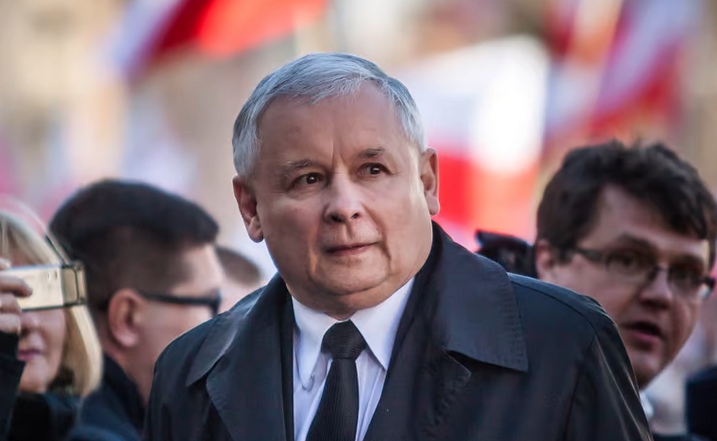
Poland's new estimate tops the $850 billion estimate by a ruling party lawmaker from 2019. The ruling Law and Justice (PiS) party has repeated calls for compensation several times since it took power in 2015, but Poland hasn't officially demanded reparations. -Reuters
"The sum that was presented was adopted using the most limited, conservative method, it would be possible to increase it," said Kaczynski, leader of Poland's Law and Justice (PiS) party during a news conference. "Germany has never really accounted for its crimes against Poland," he added.
Kaczynski - who is Poland's chief policy maker, and Prime Minister Mateusz Morawiecki, attended a ceremonial release of a long-awaited reparations report held at the Royal Castle in Warsaw, which was rebuilt from wartime ruins.
The release of the three-volume report was the focus of national observances of the anniversary of the war that began Sep. 1, 1939, with Nazi Germany’s bombing and invasion of Poland that was followed by more than five years of brutal occupation.The head of the report team, lawmaker Arkadiusz Mularczyk, said it was impossible to place a financial value on the loss of some 5.2 million lives he blamed on the German occupation.He listed losses to the infrastructure, industry, farming, culture, deportations to Germany for forced labor and efforts to turn Polish children into Germans.A team of more than 30 economists, historians and other experts worked on the report since 2017. The issue has created bilateral tensions.The war was “one of the most terrible tragedies in our history,” President Andrzej Duda said during early morning observances at the Westerplatte peninsula near Gdansk, one of the first places to be attacked in the Nazi invasion. -ABC News
Germany hit back in a statement from its foreign ministry, which said that the question of reparations was 'concluded' long ago with Poland renouncing further claims, and that the German position that compensation was paid to East Bloc nations in the years after the war, has not changed.
Poland's combative stance towards Germany has intensified after Russia's invasion of Ukraine.
In 1953, Poland's then-communist rulers relinquished all claims to reparations amid pressure from the USSR, which wanted to free the soviet satellite of East Germany from any liabilities. According to Poland, the agreement is invalid because Poland was unable to negotiate fair compensation, according to Reuters.
Donald Tusk, leader of Poland's biggest opposition party Civic Platform, said on Thursday that Kaczynski's announcement was "not about reparations"."It's about an internal political campaign to rebuild support for the ruling party," he said.
Germany's top official for German-Polish cooperation, Dietmar Nietan, said in a statement that Sept. 1 "remains a day of guilt and shame for Germany that reminds us time and again not to forget the crimes carried out by Germany" that are the "darkest chapter in our history."
What Is ‘The Merge’ and What Does It Mean for Fashion NFTs?
BoF explains how a long-in-the-works upgrade to the Ethereum blockchain promises to solve one of the biggest hurdles to NFTs going mainstream — if its backers can pull it off.
This month, an event years in the making — a fundamental change to how one of the most popular blockchains operates rumoured for so long some doubted it might ever happen — is finally scheduled to take place.
If carried off successfully, it would address the aspect of NFTs that’s arguably hardest for fashion brands to justify: the extraordinary amounts of energy used by the Ethereum blockchain that most NFT collections are built on, a fact that has been impossible for brands to square with their publicised efforts to reduce their energy and carbon footprints as the world faces a climate crisis.
What Is “The Merge”?
Currently scheduled to start on or around Sept. 15, “the merge” will see the Ethereum blockchain transitioned from its existing proof-of-work mechanism to a more efficient proof-of-stake system. Currently, every time there’s a transaction on Ethereum, computers compete to validate it by racing each other to solve complex equations, requiring enormous processing power but yielding a reward for the winner.
The new system will dispense with this competition and instead involve investors “staking” ether — the native currency of the Ethereum blockchain — in a pool, entering them into a lottery that will select one to validate the transaction and claim the reward.
Why Does It Matter For Fashion?
The amount of electricity proof-of-work blockchains like Ethereum and Bitcoin gobble up is notoriously huge. Researchers have estimated that, as of July 2021, Ethereum used more electricity annually than Romania and slightly less than Switzerland. Its annual carbon emissions were just below Tunisia’s. (Bitcoin’s impacts were even greater.)
The merge is supposed to reduce that energy use by more than 99 percent.
For the many fashion companies with Ethereum-based NFTs, such as Adidas, Nike and Gucci, there’s a lot at stake for their sustainability credentials.
Adidas, for instance, landed at the top of one list calling out the environmental impact of fashion NFT projects because of its release of 30,000 “Into the Metaverse” NFTs last year, much more than the typical NFT release by fashion brands. At the same time, the sports giant says it is “committed to decarbonisation by reducing our absolute energy consumption and GHG emissions.”
Adidas said in a statement that it has tried to mitigate its impact by monitoring its emissions, taking steps such as minimising unnecessary and energy-intensive blockchain transactions and reinvesting earnings into non-profits “focused on advancing sustainability in the metaverse.” It added that its carbon emissions related to web3 activities represent approximately .05 percent of its total carbon footprint and that it continues seeking to reduce the figure.
How Bad Are Fashion’s NFT Projects For the Environment?
It’s difficult to measure the impact of any NFT collection. Because of the way blockchains work, there isn’t a simple one-to-one relationship between the number of transactions and total energy use, as noted by the University of Cambridge.
One argument is that it’s more accurate to think of an individual NFT like a passenger on a train rather than a car on the road. Each passenger contributes to the overall demand that keeps the train running, but it’s hard to calculate what share of the train’s energy use and emissions any one passenger owns. Still, there’s no denying Ethereum uses a lot of electricity from carbon-emitting grids, prompting criticism of fashion’s plunge into NFTs.
Some brands have tried to dodge these issues by using other blockchains. Gap’s NFT collection earlier this year was built on the Tezos blockchain, which operates on a proof-of-stake mechanism. Gap noted it’s more energy-efficient than the labour-intensive systems underlying Ethereum and Bitcoin.
Why Don’t More NFT Projects Use Other Blockchains?
Even if it ceded some market share to rivals this year, Ethereum remains by far the preferred blockchain for NFT projects. Since it went live in 2015 with the aim of offering a more flexible network than Bitcoin, it has become the go-to blockchain for developers building all sorts of applications beyond just currencies. Today, Ethereum-based NFTs tend to have higher selling prices and are supported by the biggest NFT marketplaces, making them attractive to brands and their customers, who might want to resell their digital assets one day.
In theory, the merge will allow Ethereum to continue as the blockchain of choice for many NFT projects while letting the creators behind them claim they’re using an energy-efficient infrastructure. It’s a complex and tricky process, though. If anything goes wrong, any applications running on Ethereum could face major disruptions.
“It’s flying the jet, and changing the engine in the sky,” one critic told The New York Times.
But those supervising the Ethereum blockchain clearly feel the risk is worth it.
Will The Merge Do Anything Besides Reduce Energy Use?
The promised benefits don’t end with Ethereum being less of an energy hog. It should also make Ethereum more scalable and lay the ground work for updates to make it faster. (Don’t expect noticeable changes in performance right away, though.) The group most vocally opposed to the merge are generally the Ethereum “miners” who dropped large sums on supercharged computers that have been powering the current proof-of-work system.
The idea for the merge came up even before Ethereum’s 2015 debut, and programmers have now been working in earnest for years to make it happen. Despite numerous delays, it now appears ready to take place. If it really does, the dramatic energy savings will be one bright spot at least in the suffering crypto market and likely give fashion businesses one more reason to believe there’s a long-term future for their web3 ambitions.
Téthys Joins General Atlantic to Back DTC Brand Sézane
The Bettencourt-Meyers family office is taking a minority stake in the Paris-based fashion label, whose sales have skyrocketed in recent years.
Téthys, the family office of the Bettencourt-Meyers family, best known as the largest shareholders of L’Oreal, is taking a minority stake in French direct-to-consumer label Sézane, joining previous investor General Atlantic in the apparel brand’s latest round of funding. (In 2018, General Atlantic acquired an undisclosed minority stake.)
A representative for Téthys declined to share the terms of the transaction, but said there would be no change to Sézane’s governance. Founder Morgane Sézalory will remain CEO and creative director of the brand, which has grown exponentially in recent years as consumer appetite for its accessibly priced, French-lifestyle-inspired women’s separates and dresses accelerated. In 2016, the company launched Octobre Editions, a menswear offshoot, which currently makes up about 10 percent of the business and is in expansion mode.
Sales are projected to surpass €250 million in 2022, according to sources familiar with the business, with 85 percent coming from e-commerce. The remaining 15 percent is generated by eight permanent retail outposts, including a directly operated shop-in-shop in the Paris department store Le Bon Marché. (While the brand first made an impression in the US with a Madewell collaboration, followed by pop-ups with Nordstrom, the Sézane main line is sold entirely direct-to-consumer.)
Although Sézalory said she aims to keep the majority of sales online, the company — which has been growing 20-to-30 percent year-on-year for several years — continues to open permanent stores and pop-ups, with another London store opening set for 2023 and San Francisco and Amsterdam pop-ups planned. (The brand is growing fastest in the US and Europe, and has yet to expand to China.)
Over the summer, Sézane was one of the many fashion businesses said to be seeking additional funding, and market sources indicate that there was no shortage of interested parties. Partnering with the Bettencourt-Meyers family, which set up its investment firm in 2016, made sense because they have a “long-term approach,” Sézalory said. “Téthys Invest has a family mindset and they are dedicated to supporting entrepreneurs over the long run, being very respectful of people, of creativity and of entrepreneurs like me.”
While many brands have sought investment or a sale over the past several months, few have managed to close a deal. Sézane’s impressive growth, coupled with its ability to limit discounting, made it attractive. Several of the brand’s French competitors have struggled to capture the interest of US consumers, mostly due to a lack of understanding of the market. Sézane, on the other hand, has managed to get the price, fit and store experience right so far.
The investment is Téthys’ first in the fashion space.