9to5 : Instagram hit with $400 million fine for violation of EU children privacy

Instagram hit with $400 million fine for violation of EU children privacy rules

Instagram has received the second-highest fine under the European Union General Data Protection Regulation with a €405 million bill – the highest was a €746 million penalty to Amazon last year. This fine is due to a violation of children’s privacy, including the publication of kids’ email addresses and phone numbers.

The report comes from Politico. The publication says this is the third time the Irish Data Protection Commission fined a Meta-owned company and that the regulator imposed the fine “after having to trigger a dispute-resolution mechanism to resolve other European data protection authorities’ input on the penalty,” meaning this decision took extra time

According to TechCrunch, this complaint focused on the “platforms’ processing of children’s data for business accounts and on a user registration system it operated.” Previously, children’s accounts were set to “public” by default, making them more easily targeted by ads, apart from other safety concerns.

The publication talks about the fact that the GDPR contains “strong measure requiring privacy by design and default generally,” something Instagram wasn’t able to deliver at the moment.

To Politico, a Meta spokesperson commented on the matter:

“This inquiry focused on old settings that we updated over a year ago, and we’ve since released many new features to help keep teens safe and their information private,” a Meta spokesperson said. “Anyone under 18 automatically has their account set to private when they join Instagram, so only people they know can see what they post, and adults can’t message teens who don’t follow them. We engaged fully with the DPC throughout their inquiry, and we’re carefully reviewing their final decision.”

The Irish DPC has still another six investigations into Meta-owned companies and it declined to comment on this penalty to Instagram.

In February, Meta threatened to pull Instagram and Facebook in Europe over privacy laws. Regulators have challenged the company, which not only didn’t go out of business in the country, but it’s now facing its third fine. You can read more about it here.

WSJ : Ernst & Young Leaders Expected to Approve Plan to Split Accounting Company

Ernst & Young Leaders Expected to Approve Plan to Split Accounting Company
Decision to push ahead with proposal to spin off consulting arm could lead to firm splitting in late 2023

Ernst & Young’s leaders are expected this week to give the green light to splitting its auditing and consulting businesses, paving the way for the biggest shake-up in the accounting profession in more than 20 years, according to people familiar with the matter.

The accounting giant’s global executive committee, which oversees the firm’s 312,000-person worldwide network, met on Labor Day to put the finishing touches to the plan for a worldwide breakup, the people familiar with the matter said. The committee is expected to approve the plan later this week, which will trigger votes on the deal by EY’s roughly 13,000 partners, who stand to make windfalls averaging more than a million dollars each.

The split, penciled in for late next year, would separate EY’s accountants who check the books of companies such as Amazon Inc. from its faster-growing consulting business of advising on technology, deals and other issues.

EY’s move could radically reshape the accounting landscape if it goes to plan, industry watchers said.

An EY spokeswoman said discussions were ongoing and that “at this time, no decision has been made on moving to the next phase.”

WSJ : Germany to Delay Closure of Two Nuclear-Power Plants as Energy Crisis Bite

Germany to Delay Closure of Two Nuclear-Power Plants as Energy Crisis Bites
Berlin breaks domestic political taboo about postponing its longstanding nuclear phaseout after Russia shut down gas supplies

BERLIN—Germany will keep two of its three remaining nuclear-power plants online past their December shutdown deadline in an effort to buttress its power supply after Russia halted gas flows, the government said Monday.

The decision, earlier reported by The Wall Street Journal, is a compromise between members of a government that includes nuclear-energy supporters and the Greens, a party that was born from the antinuclear movement.

The move, which will require new legislation and a vote in parliament, marks the latest policy U-turn for Germany, which has for decades pursued a policy of simultaneously phasing out nuclear power, coal and—soon—gas in a bid to transition Europe’s biggest economy to renewable energy.

Russia’s invasion of Ukraine in February prompted Germany to increase military spending after decades of underinvestment, to deliver weapons to Ukraine despite a longstanding ban on supplying weapons to conflict zones, and to reopen coal- and oil-fueled power plants despite a commitment to reducing climate-warming CO2 emissions.

Two nuclear-power plants in the south of the country—Isar 2 in the state of Bavaria and Neckarwestheim 2 in Baden-Wurttemberg, which are operated by E.ON SE and EnBW AG , respectively—will remain online until April, instead of being switched off in December as intended under a 2011 plan. A third will be shut down and replaced by oil-powered plants, Economy Minister Robert Habeck said.

“Nuclear energy is and will remain a highly risky technology, and its highly radioactive waste will burden countless future generations,” Mr. Habeck, a Green leader, said. “There is no playing with nuclear energy.”

Nuclear power plays a marginal role in Germany’s energy mix, contributing 6% of all power generated in the country in the first quarter of the year, according to government figures—down from more than 12% over the same period last year, when Germany had twice as many nuclear-power plants.

Still, Mr. Habeck unveiled the decision after an expert analysis of the power grid he had commissioned showed that Germany might need the extra power provided by the plants under certain scenarios. This is especially the case for the south of the country, which is home to some of Germany’s largest businesses but whose grid is poorly connected with northern Germany’s numerous wind farms.

Germany’s European Union neighbors, as well as the bloc’s executive body, have called on Berlin to extend the life of its nuclear plants to stem the crisis caused by the economic confrontation with Russia.

Mr. Habeck ruled out extending the life of the two plants after April. No new nuclear fuel would be purchased for the extension, he said, and the plants would run on their existing fuel.

The decision could still create tension in the government. Christian Lindner, finance minister and leader of the pro-business Free Democratic Party, said Monday that the nuclear plants should remain online at least until 2024, when Germany is expected to start receiving gas exports from Gulf states and the U.S.

While Germany’s nuclear phaseout has enjoyed cross-party backing for years, opinion polls in recent months have shown broad support for extending the lives of the country’s last nuclear-power plants, and even a majority for restarting recently decommissioned plants.

FT : Deliveroo faces fresh UK Supreme Court challenge over riders’ rights

Deliveroo faces fresh UK Supreme Court challenge over riders’ rights
Move is IWGB union’s latest step in its six-year campaign for formal collective bargaining

Deliveroo is being challenged in the UK Supreme Court over the rights of its riders, just months after the delivery app signed a voluntary agreement with the GMB union that granted self-employed members collective bargaining on pay.

In May, the London-based company pledged to pay its 90,000 riders at least the minimum wage after costs, but only while the riders were actively delivering an order, rather than during the full working day — including while they were waiting to collect food at a restaurant.

The IWGB union, which has the largest membership of app-based couriers in the UK, has been seeking to get formal collective bargaining rights since 2016, a campaign that has escalated to the Supreme Court, although a date for the hearing has not yet been set.

The fresh challenge comes as Deliveroo faces headwinds as consumers cut back on spending on non-essential items like takeaways, and operational and staffing costs increase with inflation.

The IWGB argues that the company’s arrangement with the GMB does not change Deliveroo’s working practices as riders are still classified as independent contractors and are therefore not entitled to rights such as sick or holiday pay. The agreement with the GMB is voluntary and called a “partnership deal” rather than formal union recognition.

“It is outrageous that Deliveroo is continuing to spend hundreds of thousands of pounds fighting the IWGB in court over collective bargaining rights when it has just granted collective bargaining rights to another . . . union,” said Alex Marshall, president of the IWGB. “Deliveroo should be investing this money in courier pay and conditions, rather than trying to silence its workers who only want a seat at the table.”

A series of UK court rulings challenged gig economy employment models last year. While the courts ruled that drivers for ride-hailing app Uber were workers, Deliveroo riders were classed as self-employed.

“This case focuses solely on narrow issues related to the right to collective bargaining in the UK,” the company said. “Deliveroo is proud to offer flexible, self-employed work enjoyed by tens of thousands of riders across the country. Deliveroo riders can be their own boss while also having security while they work.”

The company offers riders free insurance, which covers some periods of illness and includes support for new parents, it added.

In its half-year results last month, Deliveroo’s pre-tax losses widened to £147mn; a noticeable contributing factor was a rise in staffing costs driven partly by the company employing more people in its technology team.

La Lettre A : Le fisc relance son bras de fer contre LVMH pour cibler son magot

Le fisc relance son bras de fer contre LVMH pour cibler son magot belge
Après l'invalidation par la justice de leur descente dans les locaux du siège de LVMH à l'automne 2019, les limiers de Bercy persistent et attaquent la décision devant la Cour de cassation. Les services de la Direction générale des finances publiques cherchent à percer les mystères d'une holding belge du groupe de Bernard Arnault, qui affiche 18 milliards d'euros d'actifs.

Après une "perquisition" administrative annulée par la justice, la Direction générale des finances publiques (DGFIP) repart à l'assaut du groupe LVMH. Le fisc français suspecte depuis plusieurs années le groupe de luxe dirigé par Bernard Arnault de réduire ses impôts en concentrant sa trésorerie au sein de LVMH Finance Belgique. Cette structure, basée à Bruxelles depuis 2008, fait office de "banque interne" pour les filiales du groupe et a longtemps bénéficié d'une fiscalité plus clémente accordée par le royaume de Belgique.

D'après nos informations, loin de jeter l'éponge, les services de Bercy ont entamé un nouveau recours devant la Cour de cassation contre LVMH. Représentée par le cabinet Foussard-Froger, la DGFIP a obtenu une audience devant la haute juridiction le 8 novembre et tentera de sauver son contrôle fiscal.

La descente avenue Montaigne invalidée
Au cœur du litige, la visite domiciliaire que la Direction nationale d'enquêtes fiscales (DNEF) a effectué au siège de LVMH. Les limiers du fisc s'étaient rendus par surprise avenue Montaigne à Paris les 11 et 12 septembre 2019. Les 66 agents fiscaux en étaient repartis avec près d'un million de documents comptables concernant 64 sociétés du groupe de luxe. Une opération rondement menée et juridiquement cadrée par une ordonnance, accordée la veille par un juge des libertés et de la détention du TGI de Paris.

Mais, en juin 2020, LVMH est parvenu à annuler l'ensemble de la procédure fiscale devant la Cour d'appel de Paris. La brigade de vérification de la DNEF a même été condamnée à remettre les documents récoltés à son propriétaire. Un sérieux revers pour les services de la DGFIP qui ont vu l'intégralité de leurs saisies annulée. Et une victoire par KO pour LVMH et le Cabinet Turot qui le défendait, l'un des plus réputés en matière de litiges fiscaux. Son fondateur, Jérôme Turot - major de l'Ecole nationale d'administration (ENA) et issu de la promotion Voltaire -, était épaulé dans ce dossier par la firme Cleary Gottlieb Steen and Hamilton pour mettre hors d'état de nuire la DGFIP, conseillée pour sa part par le cabinet Urbino Associés.

Ultrasensible, cette affaire est d'autant plus intrigante que les services fiscaux ont enchaîné les déconvenues juridiques. Leur entrain à contrôler le premier groupe français a été stoppé une seconde fois aux portes de la Cour de cassation. Son premier président a purement et simplement radié le dossier porté par la DGFIP en 2021, privant cette dernière de développer ses arguments devant la plus haute juridiction. Ceux avancés par LVMH semblent avoir été entendus. D'après ses conseils, le fisc n'aurait pas exécuté la décision d'appel en raison de la conservation de copie de documents originaux récupérés lors des visites de saisie. Toujours selon le groupe de luxe, les limiers auraient emporté à Bercy une quantité "non proportionnée" de documents. Sur les 1 098 333 pièces saisies, LVMH a fait valoir que 35 479 d'entre elles comprenaient des échanges par e-mail avec un avocat. Après avoir identifié les documents par mots-clés, les requérants considèrent que ces fichiers étaient couverts par le secret professionnel.

Les soupçons du fisc
Les services de Bercy se sont résignés à restituer ces documents. Ils ont ainsi pu obtenir l'examen de leur pourvoi par la Cour de cassation, qui se déroulera le 8 novembre. L'enquête sur le rôle joué par LVMH Finance Belgique, la société du groupe de luxe dans le collimateur du fisc français, pourrait donc être relancée en cas de victoire. Si la DGFIP a ciblé une série de sociétés du groupe (UFIPAR, Sofipar, LVMH Investissements, Sofidiv, etc.), c'est bien cette holding belge qui a motivé l'action coup de poing dans les locaux de Bernard Arnault. LVMH Finance Belgique exercerait, selon les arguments du fisc transmis au magistrat ayant autorisé la saisie administrative, "une activité de gestion de trésorerie intra-groupe sans souscrire les déclarations fiscales y afférentes" et qui "omettrait de passer ainsi les écritures comptables correspondantes". Autre objet de curiosité : le rôle exact de cette holding dans des opérations financières menées sur des produits dérivés complexes.

A quelques semaines de l'audience, le rythme des réunions devrait donc s'intensifier entre les équipes de Montaigne à Paris et celles de l'avenue Louise à Bruxelles, où la Blue Tower abrite de multiples sociétés financières appartenant au magnat du luxe. Car le fisc suspecte également LVMH Finance Belgique de "se soustraire au paiement des impôts sur les bénéfices et de la taxe sur la TVA, en se livrant à des achats ou des ventes sans facture ou en délivrant des factures ne se rapportant pas à des opérations réelles". Parmi les autres griefs listés, tous contestés par le groupe de luxe en justice, le fait que l'équipe belge ne serait compétente que pour une simple activité de back-office administrative et comptable.

L'absence de professionnels aguerris pour gérer des opérations complexes au sein de cette structure renforce les suspicions des services de la DGFIP. Celle-ci y voit davantage une boîte aux lettres, l'ensemble des opérations financières étant en réalité pilotées depuis l'avenue Montaigne. Un argument là aussi contesté par le groupe de luxe. Au total, les services de Bercy s'intéressent à 400 comptes bancaires, propriété de 120 filiales du groupe et gérés outre-Quievrain. C'est cette même société belge qui centralise la trésorerie du Groupe Les Echos-Le Parisien, dont le cash traverse tous les jours la frontière pour atterrir en Belgique.

Les actifs bondissent de 4 milliards d'euros
Au-delà de cette procédure en référé, de nombreuses questions de fonds restent en suspens. Plusieurs exercices de la holding LVMH Finance Belgique consultés par La Lettre A apportent déjà un premier lot de réponses. Premier constat : le boom des affaires de LVMH depuis la pandémie s'est traduit par une augmentation colossale de l'actif circulant - celui qui peut être monétisé à moins d'un an - de LVMH Finance Belgique. Il passe de 16,8 milliards à 20,8 milliards d'euros sur le dernier exercice. Un bond essentiellement constitué par l'augmentation des créances détenues sur les autres sociétés du groupe. D'autre part, la holding fait état de multiples opérations sur des produits dérivés complexes, avec des contrats de swaps de devise atteignant 11 milliards d'euros (calls) et 13 milliards d'euros (puts).

Sans conteste, la Belgique reste depuis plus de dix ans une véritable martingale en matière fiscale. Comme l'a constaté La Lettre A, une petite dizaine de sociétés financières du groupe de Bernard Arnault y sont encore implantées. Le Canard enchaîné avait révélé en 2017 que le groupe de luxe a pu bénéficier de près de 900 millions d'euros de déductions diverses d'impôts au plat pays entre 2010 et 2016 à travers deux sociétés, Le Peigné - absorbée en 2021 - et le fameux LVMH Finance Belgique. Si plusieurs des ristournes fiscales ont depuis été remises en question, l'absence d'imposition des plus-values financières y est toujours de mise, et le plat pays demeure un petit paradis fiscal pour les sociétés financières des grands groupes européens.


Comment Bernard Arnault prépare sa succession
Le patron de LVMH, Bernard Arnault, avait tenté d'acquérir la nationalité belge en 2013 pour sécuriser la transmission de son patrimoine via une fondation, dont la présidence aurait été confiée à l'ancien PDG d'Atos, Thierry Breton. Face à la polémique, le magnat du luxe a aujourd'hui changé son fusil d'épaule, projetant de transformer la société de tête Agache, installée à Paris, en commandite, statut réputé être "une arme dissuasive contre les OPA hostiles". L'annonce a été faite fin juillet à Paris. Le contrôle d'Agache sera in fine exercé par son associé commandité Agache Commandité SAS, dont le capital sera détenu à parité par les cinq enfants de Bernard Arnault.

>>> Europe : Brokers Upgrades & Downgrades - 5th of august 2022 V2(+)

>>> Up
* Aker Solutions Raised to Buy at Pareto Securities; PT 45 kroner
* Betsson Raised to Hold at Deutsche Bank; PT 64 kronor
* Brenntag Raised to Outperform at Oddo BHF; PT 97 euros (+)
* Clearvise AG Raised to Buy at AlphaValue/Baader
* Conduit Raised to Outperform at RBC; PT 375 pence
* Lufthansa Raised to Buy at SocGen
* Swedish Match Raised to Reduce at AlphaValue/Baader

>>> Down
* Admicom Cut to Accumulate at Inderes; PT 65 euros
* Tod's Cut to Neutral at Banca Akros (ESN) (+)
* Yara Cut to Equal-Weight at Morgan Stanley; PT 470 kroner

>>> Initiation
* Ebusco Holding Rated New Underperform at Oddo BHF (+)
* LXI REIT Plc Rated New Buy at Stifel; PT 170 pence (+)
* SES-imagotag Rated New Buy at Berenberg; PT 140 euros

>>> Call
* Asos Estimates, PT Cut at Peel Hunt Amid Macro Concerns (+)
* Akzo Nobel Still Top Chemicals Pick at MS, Arkema Underweight (+)
* Dechra Pharma Shows Company in ‘Strong Position,’ RBC Says (+)
* Morgan Stanley Strategists Say Europe Profit Estimates Too High (+)
* RBC Remains Constructive on Specialty Insurance, Conduit Raised
* SES-Imagotag Initiated Buy as Berenberg Sees Growing Penetration
* Tyman Cut at Berenberg on Lack of Catalysts for Re-Rating
* Yara Cut at Morgan Stanley on ‘Clouded’ Natural Gas Outlook

Business Of Fashion : Why European Brands Are Still Betting on America

Why European Brands Are Still Betting on America
A packed New York Fashion Week schedule points to resilience in the US market. But for how long? Plus, what else to watch out for in the coming week.

In a somewhat surprising turn, New York Fashion Week has become a key staging ground for European labels looking to capitalise on recent momentum in America. New York generally faces perpetual questions about its place in the fashion calendar, when the luxury sector is so firmly centred in Paris and Milan. But over the next 10 days a host of brands from across the Atlantic will put in an appearance, including Fendi, Marni, Cos, Bottega Veneta and Puma.

Though some European journalists, buyers and celebrities will be in attendance, these companies are consciously playing to a American crowd. Fendi’s event, for instance, is celebrating the 25th anniversary of the Baguette, a handbag that can trace its popularity in part to a cameo on “Sex and the City.” Bottega is collaborating with The Strand on leather bags that pay homage to the bookstore’s totes, which are deeply iconic to Manhattanites and few beyond the city’s borders. London-based Cos is looking to spread the word about its new wholesale partnership with Nordstrom. Vogue’s “VOGUE World: New York” live shopping event will feature plenty of European luxury brands, including Balenciaga and Valentino.

Doubling down on America makes sense, when economists are predicting runaway inflation in other parts of the world, like the UK and the euro zone. Including traditionally resilient Germany, which is expected to slide into recession if Russia follows through on threats to cut off natural gas supplies this winter. Meanwhile, China’s zero-Covid policy is holding back the country’s recovery.

The America-focused strategy only works for certain brands though: Zegna, Lululemon and Nordstrom are among the companies reporting that their high-net-worth customers continue to spend, but mass retailers are seeing US demand start to buckle. The dollar’s strength against the pound and euro is also a factor — Americans haven’t had this kind of spending power when it comes to European luxury goods in decades.

That’s not to say that Marni or Bottega are just playing the foreign-exchange market when they come to New York. Fashion weeks have come roaring back after a nearly two-year interruption, as brands discovered during the pandemic that there was no replacing real-world, in-person marketing opportunities. Next week’s activations are likely to pay off no matter what happens with the American economy this winter. Worst case, a sharp recession forces even wealthy consumers to temporarily cut back on spending. When consumer sentiment bounces back, labels that put in the work in those last good months before it all went wrong will have a head start. Best case, any downturn is short and shallow, and those who can afford to ignore rising home heating bills spend right through it.

(ZH) China Warns Of 'Counter-Measures' After Biden Approves $1.1bn Arms Sales To

China Warns Of 'Counter-Measures' After Biden Approves $1.1bn Arms Sales To Taiwan

China is "firmly opposed" to the Biden administration's approval of more than $1.1 billion in armssales to Taiwan, and says to expect "counter-measures" in response.
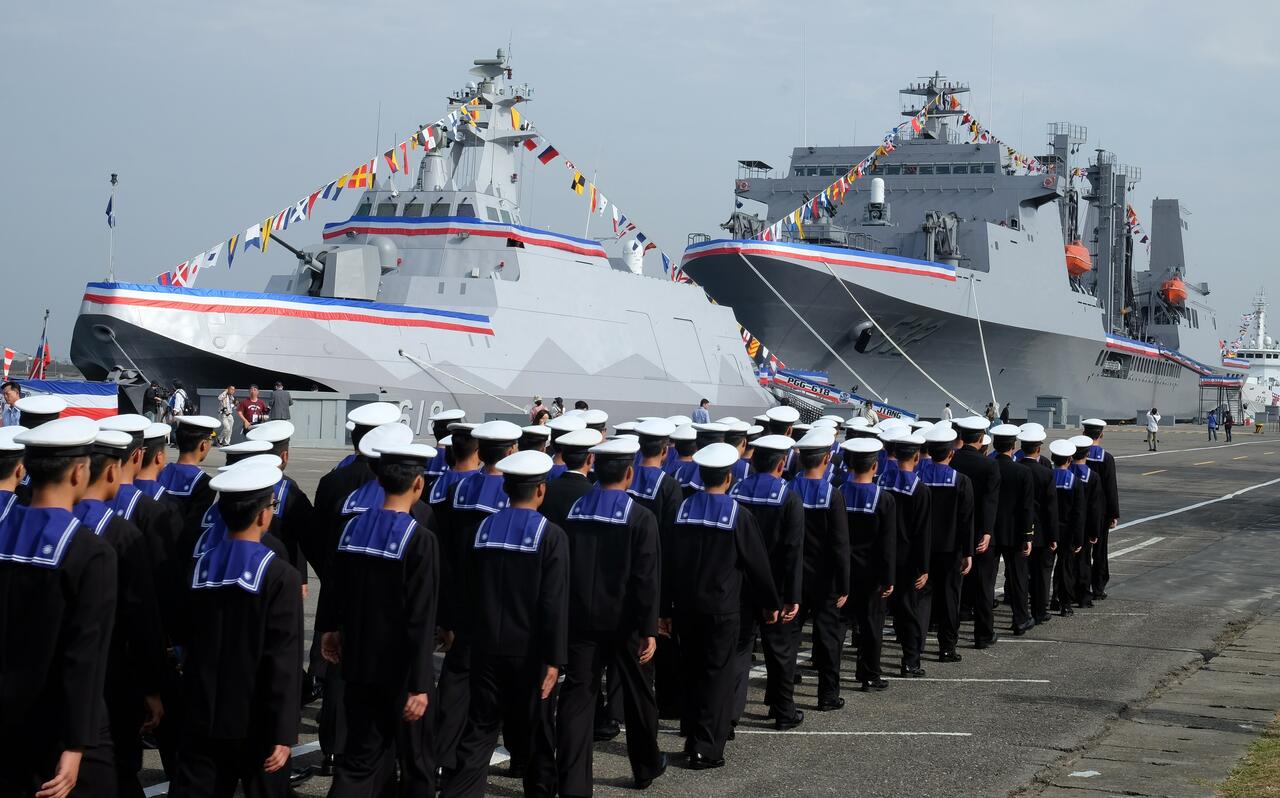
Navy soldiers walk past a 500-tonne corvette (L) named 'Tuo Chiang' -- 'Tuo River' -- is the first of its kind ever produced by Taiwan as "the fastest and most powerful" in Asia at the Tsoying navy base in southern Kaohsiung on March 31, 2015. (SAM YEH/AFP/Getty)
Chinese embassy spokesman Liu Pengyu said on Saturday that the sales "severely jeopardize China-US relations and peace and stability across the Taiwan Strait," and has called on Washington to "immediately revoke" them.
Full statement (via Twitter):
#Taiwan is an inalienable part of the #Chinese territory. The United States interferes in #China's internal affairs and undermines China's sovereignty and security interests by selling arms to the Taiwan region. It runs counter to international law and basic principles in international relations, and violates the one-China principle and provisions of the three China-US joint communiques, especially the August 17 Communique.
It sends wrong signals to "Taiwan independence" separatist forces, and severely jeopardizes China-US relations and peace and stability across the Taiwan Strait. China is firmly opposed to this.China urges the US side to honor its commitment, earnestly abide by the one-China principle and the three China-US joint communiques,stop arms sales to and military interactions with Taiwan, and immediately revoke relevant arms sales to Taiwan, lest it should cause more damages to China-US relations and peace and stability across the #TaiwanStrait.
China will resolutely take legitimate and necessary counter-measures in light of the development of the situation.
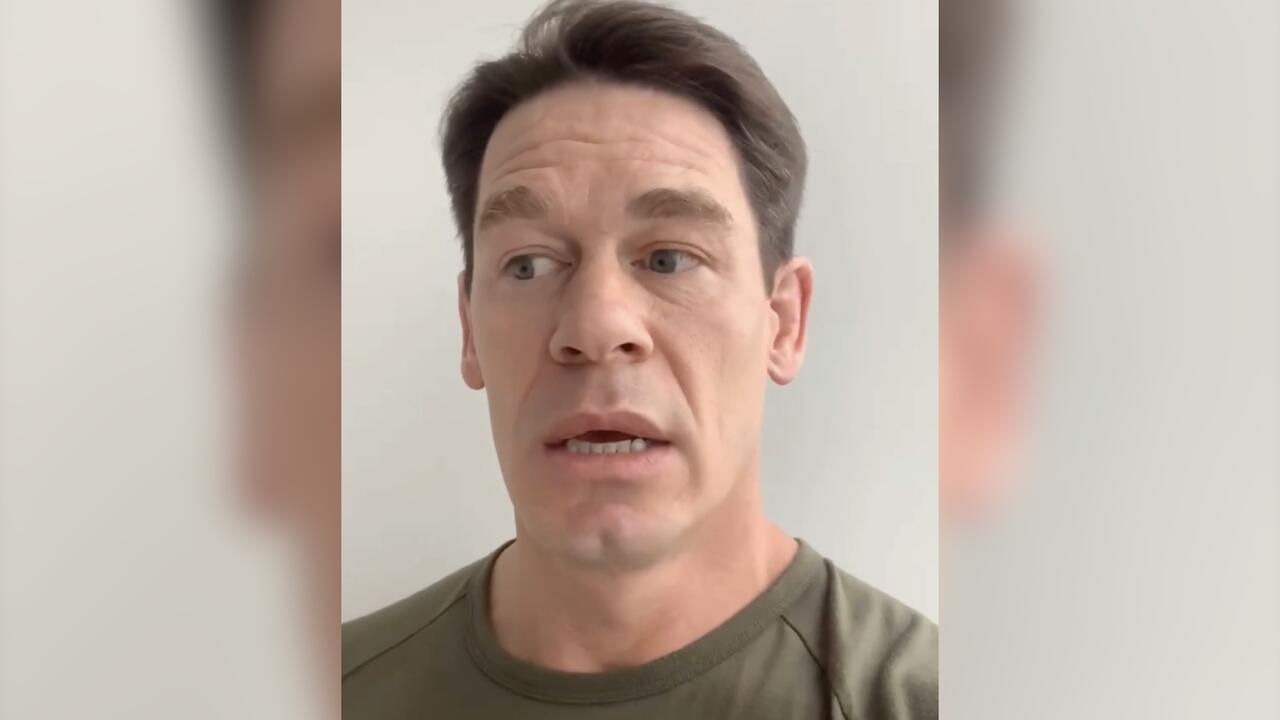
Paging John Cena...
Tensions between Washington and Beijing have intensified since House Speaker Nancy Pelosi's visit last month, which China had warned against - and responded to by ordering military drills around the island nation after she had left.
On Saturday, Taiwan said it "highly welcomes" the arms, and thanked the Biden administration for "continuing to implement its security commitments to Taiwan."
"In response to China's recent continuous military provocations and unilateral changes in the status quo and creating crises, Taiwan's determination to defend itself is extremely firm," Taiwan's Ministry of Foreign Affairs said in a statement, adding "This batch of arms sales includes a large number of various types of missiles that are needed to strengthen Taiwan's self-defense, which fully demonstrates that the great importance the US government attaches to Taiwan's defense needs, assisting our country to obtain the equipment needed for defense in a timely manner and to enhance our national defense capabilities."
On Thursday, Taiwan's military shot down a drone near one of its island outposts near the Chinese coast, which happened just one day after Taiwan was able to repel drones hovering over three of the islands it occupies near the Chinese port city of Xiamen.