Early premarket gappers
- Gapping up:
- BMEA +5.3%, VOR +4.9%, RICK +4.8%, NDSN +3.4%, PL +2%, BIGC +1.8%, WBX +1.7%, AGX +0.8%, CNC +0.7%, LW +0.7%, HON +0.6%, PODD +0.5%
- Gapping down:
- NVAX -9.9%, PSNL -7.8%, NFE -6.1%, FSM -3.9%, LEN -3.9%, TSLA -2%, PRTA -1%, O -0.7%, ERIC -0.6%, DFS -0.6%
free speech secret flight
Volkswagen aims to meet EU emissions rules without Chinese help
Carmaker will no longer rely on electric vehicle sales from Geely and SAIC
Volkswagen plans to meet European emissions standards this year without relying on electric car sales by other companies, the first time the world’s largest carmaker has complied with carbon rules in its home region using its own vehicles.
Since 2020 carmakers in the EU have been bound to keep their average fleet emissions to 95g of CO₂ per kilometre driven or face significant fines. Laggards are, however, allowed to pay cleaner rivals to “pool” with them, creating artificially lower averages.
Delays to its planned electric car rollout saw VW include China’s Geely, NIO and SAIC, which owns the MG brand, in its “pool” for 2021.
But this year it has removed the Chinese companies, relying on its own brands which include Audi, Porsche, Škoda and Seat, according to public documents filed with the European Commission.
“This shows their confidence in meeting EU CO₂ compliance without the need of other parties — the fact that they don’t need the Chinese insurance policy shows CO₂ bullishness,” said Matthias Schmidt, a Berlin-based automotive analyst.
VW said: “We confirm that we have switched to a closed pool and that we are confident of reaching EU emission targets on our own.”
Previous years also saw Fiat Chrysler team up with Tesla to pass the standards, although FCA later pulled out of the arrangement. So far in 2022, Honda and Tesla have reached a pooling deal.
The penalty for missing the target is €95 for each gramme per kilometre above the limit, multiplied by the number of newly registered vehicles in a year.
VW had to pay more than €100mn in fines last year after it narrowly missed the targets, despite its pool arrangement and the launch of its first mass-market electric vehicle, ID.3.
Domestic rivals Mercedes-Benz and BMW last year met the rules, thanks to a late surge in demand for plug-in hybrid vehicles, which count towards the targets.
Electric car sales have risen across Europe, driven by a wave of new models from manufacturers and government subsidies that encourage consumers to buy them. Around 1.45mn new battery electric cars have been registered in Western Europe this year, around 14 per cent of the total expected car sales for the year.
Some markets, such as Norway, have a significantly higher share, driven by government incentives.
Spanish investigators raid Repsol, Cepsa and BP in petrol pricing probe
Regulator investigates oil groups over alleged anti-competitive practices
Spanish investigators have raided the offices of Repsol, Cepsa and BP in a dramatic escalation of a probe into allegations that the companies have abused their power in the petrol market.
The three companies confirmed that officials from the National Markets and Competition Commission had entered their country headquarters in Madrid after the regulator revealed it had raided “several” unnamed operators in the energy sector.
The competition watchdog’s previously unknown probe is a new source of tension in relations between the Spanish authorities and the energy sector, as the government grapples with the consequences of prices driven higher by the fallout from Russia’s invasion of Ukraine.
One person familiar with the regulator’s probe said it stemmed from complaints from small petrol station operators that they were being squeezed by larger groups such as Repsol, Cepsa and BP.
The big groups play a dual role as refiners that sell petrol to fuel station operators while competing directly with them as owners of their own-branded petrol stations.
Small operators say that by charging higher wholesale prices then offering consumers generous discounts at the pump the big players have left them struggling to compete financially.
Repsol and Cepsa have long been the two dominant players in the oil business in Spain, although both are seeking to reduce their reliance on fossil fuels and are investing in renewable power projects. BP has been in the country since the 1950s.
The CNMC said it had “inspected” the headquarters of the companies between November 28 and December 2, saying it was “analysing alleged anti-competitive practices that could violate the Spanish Competition Act” and EU law.
If evidence of wrongdoing was found, disciplinary proceedings would be initiated, it said. “Anti-competitive practices and abuses of a dominant position constitute a very serious infringement of competition law, which can lead to fines of up to 10 per cent of the total [annual] turnover,” it noted.
But it added that the inspections “do not prejudge the outcome of the investigation or the culpability” of the targets.
It said it had opened its investigation having received several complaints. The person familiar with the probe said the complaints had come from groups representing small businesses that own petrol stations.
Repsol said it “has co-operated fully with the CNMC. The company strongly denies the allegations and affirms that it strictly complies with competition regulations.” Cepsa said it had “made all the required information available to the regulator in the full conviction that our company has acted correctly in competition matters”. BP said: “We assisted the [competition] authority with their inquiries.”
The raids come two weeks before the expiry of a government subsidy that reduces prices by €0.20 per litre.
Some of the largest petrol station owners supplemented the subsidy — introduced to lessen the impact of higher prices due to the Ukraine war — with extra discounts of their own, which smaller rivals found hard to match.
The government has signalled that the subsidy is likely to be maintained in some form in 2023 for certain vulnerable groups.
The average petrol price in Spain on Wednesday was €1.60 per litre, according to the website dieselogasolina.com.
History Is Loud And Clear: This Is The Last Fed Hike
It's not just Academy strategist Peter Tchir who bucks the prevailing consensus of at least two more rate hikes in 2023, and expects that today's 50bps rate hike will be last one by the Fed: Bloomberg strategist Simon White is also in this contrarian camp, and here's why - looking at historical data back to 1972, White finds that the last Fed hike takes place, in average terms, about 22 weeks after the peak in CPI. With the peak CPI in this cycle hitting in June, about 22/23 weeks ago, that would put the last Fed hike of the cycle at today’s meeting. After that, the first cut then happens - in median terms - about 16 weeks later, which in the current cycle would put us in early April 2023. In short, today the tightening cycle and, and the easing cycle begins in 4 months.
Here is White's full forecast which, if correct, will be sufficient to spark the next bull market:
A Fed pivot could happen faster than even fairly dovish market expectations anticipate.Tuesday’s softer-than-expected CPI report cemented the notion that peak Fed hawkishness is behind us, and makes a 50 bps hike today a very high likelihood.The market is expecting the first full 25 bps cut from the Fed by November next year. But the historical record says it could come even sooner, surprising the market and (further) disappointing the Fed’s desire for higher-for-longer.Looking back to 1972, the last Fed hike takes place, in average terms, about 22 weeks after the peak in CPI. Peak CPI in this cycle was in June, about 22/23 weeks ago, which would put the last Fed hike of the cycle at today’s meeting. The first cut then happens, in median terms, about 16 weeks later, which in the current cycle would put us in early April 2023.Restricting the above analysis to the inflationary recessions of the 1970s and early 1980s does not much alter the length of time between peak CPI and last Fed hike.There is no reason for history to repeat, of course, but this ties up nicely with the state of play. Traders in recent months have pushed the expected peak in Fed Funds ahead of the Dots, meaning for the first time that the market was amplifying rather than inhibiting desired Fed policy, and increasing the chance that peak Fed hawkishness has indeed elapsed.Further, recession risk is rising and while one is not likely to be imminent, recessions often come on faster than expected. Jobs data still look fairly robust on the surface, but cracks are appearing, e.g. in unemployment claims, and there is a material risk that the data we are seeing today could be revised much lower.Even though the Fed has talked tough on keeping policy restrictive for longer than normal, a rapid deterioration in the economic outlook could easily push policy makers to reverse course much quicker than most expect.This is especially the case if inflation keeps falling at its current pace. This week’s report showed that the transport component (which was contributing the most to CPI) continues to fall at a rapid clip, overwhelming the steady rise in shelter, and keeping pressure on the headline number.


Kremlin Vows To Take Out Patriot Batteries If US Sends To Ukraine

Russia has responded Wednesday to the prior day report from Pentagon sources that the Biden administration is finalizing plans to send Patriot anti-air defense missiles to Ukraine, in what will constitute the longest range defense systems transferred from the West to date.
"The Kremlin said on Wednesday that U.S. Patriot missile defense systems would be a legitimate target for Russian strikes against Ukraine, should the United States authorize them to be delivered to support Kyiv," Reuters reports.
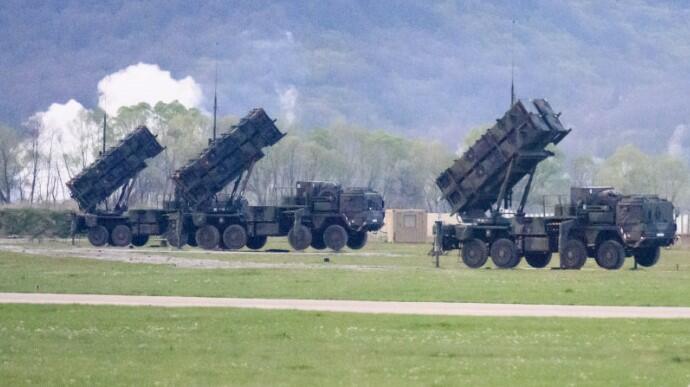
The Russian military has long sought to target both Western arms depots inside Ukraine, as well as inbound shipments traversing the country, which is part of the reason why early on in the invasion it heavily targeted the national rail network.
Deputy chairman of the Security Council of Russia Dmitry Medvedev posted the following warning statement directed at the US to his Telegram account (machine translation):
"If, as Stoltenberg hinted, NATO supplies Kyiv fanatics with Patriot complexes along with NATO personnel, they will immediately become a legitimate target of our Armed Forces. I hope the Atlantean impotents understand this."
As for potential delivery of Patriot systems, The Washington Post reports according to the latest, "The plan is not yet approved by President Biden or Defense Secretary Lloyd Austin, but it could be soon, the officials said, speaking on the condition of anonymity to detail sensitive internal deliberations."
An initial CNN report said approval could come as early as this week, but it could take a significant amount of time to train the Ukrainians on the sophisticated Patriots' operation. Training would likely occur in Germany and could take months.
The Washington Post notes further that the "Patriot-launched missiles can fly to altitudes as high as 79,000 feet, with an operational range, depending on the type of munition used, from a dozen to 100 miles, for use against ballistic and cruise missiles, as well as aircraft. It was not clear what kind of munitions the Pentagon will propose supplying."
Range largely depends on the specific missile munition used, and it's possible the Pentagon could limit ranges - as it reportedly did with HIMARS recently shipped to Ukraine, in order to prevent its systems being used by the Ukrainians to strike inside of Russia.