FreightWaves : How will Maersk-MSC split redraw container shipping landscape?

How will Maersk-MSC split redraw container shipping landscape?
In-depth: What analysts are saying about demise of 2M alliance

The decision by MSC and Maersk — the world’s two largest container lines — to terminate the 2M vessel-sharing alliance was predictable. The bigger surprise will be what happens next.

Will both MSC and Maersk go it alone after 2M ends in January 2025? Will Maersk join another alliance or create a new one? How will this affect the remaining two global alliances: Ocean Alliance and THE Alliance? And how will it affect cargo shipper pricing?

MSC big enough to stand alone
MSC grew far faster than any other ocean carrier over the past two years, taking over the top slot from Maersk.

According to Alphaliner, MSC has acquired 271 secondhand ships since August 2020, with capacity of just over 1 million twenty-foot equivalent units. MSC’s recent secondhand acquisitions exceed the entire capacity of HMM, the world’s eighth-largest carrier.

MSC has over 1.8 million TEUs of newbuild capacity on order, more than double the orderbook of any other carrier. Its orderbook capacity is higher than the existing tonnage of Hapag-Lloyd, the world’s fourth-largest shipping line.

“To me, it is obvious that MSC will go on its own,” Alphaliner shipping analyst and Europe editor Stefan Verberckmoes told American Shipper. “It will have enough resources to offer a worldwide network without any partners, which is what it was used to doing before it joined 2M in 2015.


“It is indeed no surprise [that 2M will end],” said Verberckmoes. “That was really a forced marriage, because at that time, economies of scale were very important, everybody wanted to have large vessels, and the only way to fill them was to cooperate. Now times are completely different. MSC is now able to fly on its own wings.”

Sea-Intelligence CEO Alan Murphy said in an interview with American Shipper: “If MSC was going to invest itself out of the alliance, it has done all the right things, through its secondhand purchases and newbuilding expansion.”

Questions on Maersk
In sharp contrast to MSC, Maersk has kept its fleet capacity flat over the past three years. It focused instead on being an end-to-end logistics integrator, seeking to earn more from long-term customers’ logistics spend.

“For Maersk, the question is completely different,” said Verberckmoes. “They have chosen another strategy and not focused on fleet expansion, so if they want to keep the same network they have now, they need to find a replacement. They will have to review their options.”

American Shipper asked Maersk whether it could provide the same level of service coverage and quality to its customers post-2M without a new alliance partner, and whether it was committed to finding an alliance replacement.

The company responded: “Maersk will continue to be active in vessel sharing agreements [VSAs]. We are already active in over 40 VSAs in other geographies and we remain open to more targeted VSAs than the broad scope of 2M after the agreement ends in 2025.”

For several reasons, Murphy believes it is unlikely that Maersk will replace MSC with a major carrier in a new alliance, or join an existing alliance.

“What I think is more likely is that Maersk will do VSAs. You see how they’ve managed to integrate with Zim [NYSE: ZIM], which is not a 2M member, on the Asia-East Coast trade. They can also do slot charters with THE Alliance on some trades and slot charters with Ocean Alliance on others.

“Rather than formally being in an alliance, I think it’s more likely they will focus on the key markets where they can provide end-to-end services and then find [VSA and slot-charter] partners in the other markets.”

Strategies ‘completely at odds’
One difficulty Maersk faces in replacing MSC relates to a core problem with 2M itself. “The strategic focuses of the two shipping lines have been completely at odds with each other,” explained Murphy.

“Maersk has staked everything on being an end-to-end logistics integrator. If you’re focused on the customer experience and end-to-end logistics, ocean transport becomes just a cog in a big machine. That cog just needs to work. You don’t need to necessarily make money on it because you’re making money on end-to-end logistics.

“But MSC’s focus has seemingly been: We need to make money as a vessel operator. That might very well mean blanking [canceling] sailings at a much higher rate and not wasting money on schedule recovery. In some trades where MSC operates independently, it looks more like tramp [unscheduled] than liner service.

“These two strategies have led to friction within the alliance. I wouldn’t say anybody is wrong here. It’s just that they don’t seem to be a good match.”

Maersk is much more focused on the end-to-end integrator model than any other carrier. So, replacing MSC would present Maersk with the same friction yet again.

“Joining another alliance is very unlikely although not impossible,” said Murphy. “But it would just open Maersk up to all of the challenges it already had with MSC.”

Other hurdles to replacing MSC
Several analysts believe that the 2M divorce will ultimately lead to a broader reshuffling of alliances.

Vespucci Maritime’s Lars Jensen — who has been predicting the demise of 2M for months — said in an online post, “My view is that this is only the beginning of a reshaping of the alliance/VSA constellations, especially on the major east-west trades. In essence, this should be seen as the first domino of many to fall over the next one to two years.”

According to Verberckmoes, “In every alliance breakup, there is always an opening for new perspectives. We have seen in the past that every change in big alliance structures might trigger other changes.”

But Murphy pointed to multiple hurdles, beyond the issue of Maersk’s integrator strategy.

In the case of 2M, Maersk and MSC were roughly equal-sized partners. Maersk would be the dominant partner of any alliance it joined. “You can bring in a Hyundai [HMM], because they’re tagging along, but to bring in an alliance partner that will now dominate the alliance would be very difficult,” he said.

There’s also the regulatory challenge. Chinese regulators barred the proposed P3 alliance among MSC, Maersk and CMA CGM, prior to the formation of 2M. “Can you disallow P3 but allow the Ocean Alliance plus Maersk? I can’t see that,” said Murphy.

Consultancy Drewry said in a research note on Wednesday, “Competition authorities will probably block any move [by Maersk] to join one of the other two alliances, which are contractually committed beyond the termination of 2M. Ocean Alliance runs to 2027 and THE Alliance to 2030.”

Another possibility is that Maersk could woo away a carrier in one of the two remaining alliances, such as France’s CMA CGM, and create a new alliance. “That’s not impossible, because CMA CGM and Maersk cooperated in the past, prior to P3. But there are a lot of challenges with siphoning off someone like CMA CGM,” said Murphy.

Cycle timing
Yet another complication is cycle timing. “You have to remember that alliances were the consequence of massive oversupply,” said Murphy. Carriers overordered large-size vessels and needed alliances to fill them effectively.

“Alliances come under pressure when things are going really well,” he continued. “There’s probably many a carrier that felt hemmed in and restricted by alliance obligations during the pandemic, because they couldn’t make tactical decisions on their own.

“Are things going to go well for shipping lines over the next two years? Probably not. In my opinion, we’re heading into a repeat of 2015-16, with massive oversupply and freight rates at or below cost. It’s going to be a bad two or three years.

“So, it makes no sense to leave an alliance now. But they’re not leaving an alliance now. They’re leaving in two years. It might make sense then. There is an expectation that at some point, [the market] will turn again. I assume that both shipping lines believe that when it does, they will be better positioned outside of an alliance.”

As for Maersk finding a new alliance home, the market outlook is highly uncertain, raising questions about whether other carriers would be willing to play the game of alliance “musical chairs” in the midst of a container shipping recession.

“I think the other alliance [partners] will be cautious about making any major changes now, heading into what is clearly a bear market,” said Murphy.

Bearish or bullish for rates?
Drewry outlined two scenarios in which the end of 2M could lead to lower shipping costs.

In one, an independent MSC faced with rapid fleet growth could “return to its old market-share/low-cost model, which could destabilize the market.”

In another, Drewry speculated that “a radical shake-up of the alliances” while “a remote possibility,” could “lead to carnage in the freight-rate market as new members court shippers over to their new teams.”

But Verberckmoes and Murphy do not see the alliance situation lowering shipping costs.

“I don’t think that alliances have had an impact on price,” said Verberckmoes. “If prices are declining, that means one or two carriers are going for market share, and I don’t think alliance changes have any effect on that. When it comes to rates, it is always the market that decides.”

According to Murphy, “A lot of customers hate alliances and believe them to be the source of all evil in the world. I think a lot of shippers will look at this [the 2M breakup] and think this is good for them.

“That depends on what they mean by ‘good.’ If they mean ‘cheap,’ probably not. In every simulation we’ve done where we look at how you could operate services more independently, with fewer VSAs and fewer alliances, the price goes up.”

He argued that alliances have led to reduced freight costs, in part because members of alliances must compete with each other on price while providing the same ocean service. “In an alliance, you lose all product differentiation on your liner product,” said Murphy. “You’re offering the exact same product — which was a massive driver of very low freight rates pre-pandemic.”
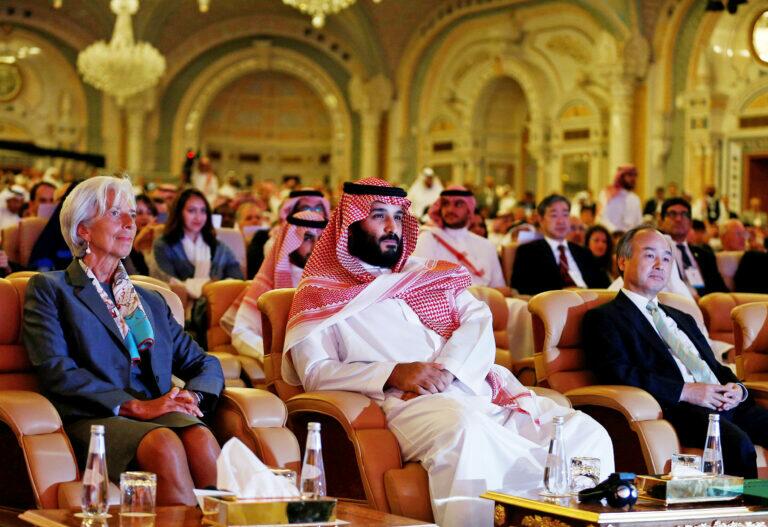
(ZH) A Dollar Collapse Is Now In Motion, Saudi Arabia Signals The End Of 'Petro'

A Dollar Collapse Is Now In Motion, Saudi Arabia Signals The End Of 'Petro' Status

The decline of a currency’s world reserve status is often a long process rife with denials. There are numerous economic “experts” out there that have been dismissing any and all warnings of dollar collapse for years. They just don’t get it, or they don’t want to get it. The idea that the US currency could ever be dethroned as the defacto global trade mechanism is impossible in their minds.
One of the key pillars keeping the dollar in place as the world reserve is its petro-status, and this factor is often held up as the reason why the Greenback cannot fail. The other argument is that the dollar is backed by the full force of the US military, and the US military is backed by the US Treasury and the Federal Reserve – In other words, the dollar is backed by…the dollar; it’s a very circular and naive position.
These sentiments are not only pervasive among mainstream economists, they are also all over the place within the alternative media. I suspect the main hang-up for liberty movement analysts is the notion that the globalist establishment would ever allow the dollar or the US economy to fail. Isn’t the dollar system their “golden goose”?
The answer is no, it is NOT their golden goose. The dollar is just another stepping stone towards their goal of a one-world economy and a one-world currency. They have killed the world reserve status of other currencies in the past, why wouldn’t they do the same to the dollar?
Globalist white papers and essays specifically outline the need for a diminished role for the US currency as well as a decline in the American economy in order to make way for Central Bank Digital Currencies (CBDCs) and a new global currency system controlled by the IMF. I warned about this years go, and my position has always been that the derailment of the dollar would likely start with the end of its petro status.
In 2017 I published an article titled ‘Saudi Coup Signals War And The New World Order Reset’. I noted at the time that the sudden power shift over to crown prince Mohammed Bin Salman indicated a change in Saudi Arabia’s relationship to the US. I stated that:
To understand how drastic this coup has been, consider this — for decades Saudi Kings maintained political balance by doling out vital power positions to separate, carefully chosen successors. Positions such as Defense Minister, the Interior Ministry and the head of the National Guard. Today, Mohammed Bin Salman controls all three positions. Foreign policy, defense matters, oil and economic decisions and social changes are now all in the hands of one man.”
The rise of MBS was backed by the Public Investment Fund (PIF), a fund comprised of trillions of dollars supplied by globalists within Carlyle Group (Bush family, etc.), Goldman Sachs, Blackstone and Blackrock. MBS garnered the favor of the globalists for one specific reason – He openly supported their “Vision For 2030”, a plan for the dismantling of “fossil fuel” based energy and the implementation of carbon controls. Yes, that’s right, the head of Saudi Arabia is backing the eventual end of oil based energy, and part of that includes the end of the dollar as the petro currency.
In exchange for their cooperation, the Saudis are being given access to ESG-like funding as well as access to AI advancements and the so-called “digital economy.” It sounds crazy, but there is much talk of AI developments to cure numerous health problems and extend lifespan. With those kinds of promises, it’s not surprising that Saudi elites would be willing to dump the dollar and even oil.
In 2017 I noted that:
I believe the next phase of the global economic reset will begin in part with the breaking of petrodollar dominance. An important element of my analysis on the strategic shift away from the petrodollar has been the symbiosis between the U.S. and Saudi Arabia. Saudi Arabia has been the single most important key to the dollar remaining as the petrocurrency from the very beginning.”
I believed that the threat to petro status would ultimately be spurred on by a proxy war between East and West:
World economic war is the real name of the game here, as the globalists play puppeteers to East and West. It is a geopolitical crisis they will have created to engineer public support for a solution they predetermined.”
Back then I thought that such a proxy war would be initiated in the Middle East, possibly in Iran. However, it’s clear that Ukraine is the powderkeg the globalists have chosen, at least for now, with Taiwan being the next shoe to drop.
In the years since I made these predictions the relationship between Saudi Arabia, Russia and China has grown very close. Arms deals and energy deals are becoming a mainstay of trade and this has led to a quiet but steady distancing of the Saudis from the dollar. This past week, the dominoes were set in motion for dollar collapse when Saudi Arabia announced at Davos that they are now willing to trade oil in alternative currencies.
In response, Xi Jinping pledged to ramp up efforts to promote the use of the Chinese yuan in energy deals. This falls in line with another article I wrote in 2017 titled ‘The Economic End Game Continues,’ in which I described how conflict with Eastern nations (China and Russia) would be exploited to create a catalyst for the end of the dollar’s petro status.
The importance of the Saudi announcement cannot be overstated; this is the beginning of the end of the dollar. The dollar’s world reserve status is largely dependent on its petro-status. Without one, you cannot have the other. This is almost the exact same dynamic that led to the implosion of the British Sterling decades ago as the global petro currency which resulted in the rise of the dollar to take its place.
This time, though, it will not be a single foreign currency that takes on the role of world reserve, it will be a basket currency system controlled by the IMF called Special Drawing Rights, along with a single global digital currency that is yet to be named but is now under development.
The consequences of the loss of reserve status will be devastating to the US economy. It is the only glue holding our system together – The ability to defer inflation by exporting it overseas is a superpower only the US enjoys. The Fed can print money perpetually if it wants to in order to fund the government or prop up US markets, as long as foreign central banks and corporate banks are willing to absorb dollars as a tool for global trade. If the dollar is no longer the primary international trade mechanism, the trillions upon trillions of dollars the Fed has created from thin air over the years will all come flooding back to the US through various avenues, and hyperinflation (or hyperstagflation) will be the result.
This dynamic is already in play, as foreign holders of US debt and dollars have been dumping them at record pace since 2017. The process continues at a time when the Federal Reserve is cutting it’s balance sheet and raising interest rates, which means there is no longer a buyer of last resort.
This may be why multiple foreign central banks have renewed their purchases of gold reserves and are once again stockpiling precious metals. They seem to be well aware of what is about to happen to the dollar, while the American public is kept in the dark.
The effects of the decline of the dollar may not be immediately felt, or become obvious for another year or two. What will happen is consistent inflation on top of the high prices we are already dealing with. Meaning, the Federal Reserve will continue to hold interest rates higher and prices will barely budge or they may climb in spite of monetary tightening. Even in the face of a major recessionary contraction, which I predict will be triggered starting in April, prices will STILL remain higher.
All the while the mainstream media and government economists will say they have “no idea” why inflation is so persistent, and that “nobody could have seen this coming.” Some of us saw it coming, but only because we accept the reality that the dollar’s days are numbered.

>>> US Early premarket gappers

Early premarket gappers

  • Gapping up:
    • NOG +7.3%, LHX +3%, RMD +2.3%, SBCF +2.2%, GVA +1.7%, AX +1.6%, AJG +1.6%, V +1.3%, GOEV +0.8%, ABG +0.7%, CVX +0.6%, LMT +0.5%, FFBC +0.5%
  • Gapping down:
    • INTC -9.4%, PACW -8%, WRB -5.8%, KLAC -5.7%, HAS -5.1%, ARCE -4.7%, RHI -4.7%, APPF -3.9%, EMN -3.1%, MQ -2.8%, ABCB -2.7%, AMD -2.5%, FICO -2.5%, MAT -2.2%, NVDA -2%, FHI -2%, FIBK -2%, SSB -1.9%, TSE -1.9%, LPG -1.7%, ARGX -1.4%, KNX -1.4%, BLD -1.3%, AROC -1.2%, MRNA -1.1%, NI -0.9%

FT : Costcutter owner Bestway takes 3.45% stake in Sainsbury’s

Costcutter owner Bestway takes 3.45% stake in Sainsbury’s
Wholesale and retail conglomerate says it may look to buy more shares in the UK supermarket chain

Bestway Group, the wholesale and retail conglomerate, has agreed to buy a 3.45 per cent stake in UK supermarket chain J Sainsbury and may buy more in the future.

Bestway on Friday said it had agreed to acquire more than 80mn shares in Sainsbury’s, or 3.45 per cent of its capital. The stake is worth about £193mn.

The family-backed conglomerate, which owns Costcutter convenience stores, said it would hold its shares in Sainsbury’s for investment purposes and “looks forward to supporting the executive management team”. It said it was not considering making an offer for the company.

Bestway also said it “may look” to buy more shares in the supermarket chain.

Sainsbury’s said it would engage with Bestway “in line with our normal interactions with shareholders”.

Bestway’s portfolio includes the UK’s second-largest wholesaler, pharmacy chain Well, and other businesses in Pakistan such as a cement manufacturer and a bank.

La Lettre A : Le caillou fiscal d'Atos avant le lancement d'Evidian

Le caillou fiscal d'Atos avant le lancement d'Evidian

Les financiers du groupe Atos doivent jongler avec une ligne fiscale d'un milliard d'euros héritée avec l'absorption de Bull en 2014. Ces flux comptables pourraient devenir imposables et impacteraient alors les comptes d'Evidian, entité dont l'introduction en bourse doit intervenir au second semestre, après la scission du groupe en deux.
Edition du 27/01/2023 Lecture 2 minutes Robin Carcan
L'état-major d'Atos prépare toujours la scission du groupe en deux entités. D'un côté, la pépite Evidian regroupant les activités cyber et numériques doit être propulsée en bourse à partir de juin, tandis que Tech Foundations (TFCo) abritera les activités historiques d'Atos dédiées aux infrastructures. Mais pour opérer cette réorganisation, le groupe se confronte à un casse-tête sur le volet fiscal, depuis l'annonce de la séparation en juin 2022.

Au sein d'entité Atos France, cinq sociétés disposent d'un stock de déficits fiscaux reportables : Bull SA, Bull SAS, Bull ISS, Evidian et Atos Worldgrid. Le groupe Bull avait adopté de longue date cette pratique consistant à considérer le déficit fiscal d'un exercice comme une charge déductible du bénéfice des exercices suivants, et ce, sans limitation dans le temps. L'un des objectifs est de réduire le montant de l'impôt des années ultérieures. L'attention est portée sur la société Bull SA, qui dispose d'un "stock" très important de déficit fiscal, héritage d'une accumulation opérée depuis des années quand l'entreprise ne faisait pas encore partie du groupe. Pour l'exercice 2021, ce "stock" dépasse le milliard d'euros.

Perte du droit à reporter
En accord avec la loi, Bull SA impute son déficit fiscal reportable sur une base élargie aux résultats des sociétés de l'ancien groupe, comprenant par conséquent Bull SA et aussi Bull SAS, BISAS, Avantix, Agarik, Bull ISS, AI24 mais aussi Elexo. En pratique, les déficits fiscaux cessent d'être reportables dès lors qu'une société se trouve en état de cessation ou change d'activité. Une dernière condition que les futures entités Evidian et Tech Foundations rempliraient, au vu du contenu du projet de scission Boost à l'œuvre. Par conséquent, Atos pourrait perdre son droit à reporter le colossal stock de déficits issu de la galaxie Bull. Ce n'est certes pas du cash mais la perte comptable potentielle peut être conséquente, avec un milliard d'euros pouvant devenir imposable au taux légal.

Régimes différents selon les structures
De fait, les grands argentiers du groupe et les conseillers fiscaux ont les mains dans le cambouis et examinent chaque entité. Les activités de Bull ISS vont être ainsi réparties à la fois dans Evidian et dans Tech Foundations. Les activités digitales et big data et sécurité (BDS) sont programmées pour atterrir dans la filiale Avantix tandis que les autres seront accueillies par Atos France.

Toujours en raison du changement d'activité, ces cessions risquent de faire perdre le stock de déficit. A l'inverse, Bull SAS pourrait échapper au couperet fiscal sur les déficits reportables. Il n'est en effet pas encore certain que le changement d'activité soit caractérisé à l'arrivée, son activité infrastructures, bientôt transférée dans Tech Foundations, étant destinée à rester prépondérante.

>>> Europe : Brokers Upgrades & Downgrades - 27th of January 2023 V2(+)

>>> Up
* 888 Raised to Overweight at JPMorgan; PT 165 pence
* Adidas Raised to Buy at M.M. Warburg; PT 180 euros (+)
* Aena Raised to Equal-Weight at Barclays; PT 139 euros
* Akero Therapeutics Raised to Overweight at Morgan Stanley (+)
* Credit Suisse Raised to Equal-Weight at Morgan Stanley
* Equinor Raised to Neutral at Goldman; PT 390 kroner
* Evli Raised to Accumulate at Inderes; PT 19 euros (+)
* Foot Locker PT Raised to $43 from $31 at Williams Trading
* Geberit Raised to Outperform at Exane; PT 588 Swiss francs
* Granges Raised to Hold at Handelsbanken
* HeidelbergCement Raised to Neutral at Exane; PT 55.50 euros
* JCDecaux Raised to Overweight at Barclays; PT 27.50 euros
* Monte Paschi Raised to Equal-Weight at Barclays; PT 2.40 euros
* Rockwool Raised to Neutral at JPMorgan; PT 1,810 kroner
* Sabadell Raised to Neutral at Exane; PT 1.20 euros

>>> Down
* Adevinta Cut to Hold at Nordea
* Airbus Cut to Hold at Jefferies; PT 130 euros
* Almirall Cut to Neutral at Oddo BHF; PT 10 euros
* Antofagasta Cut to Reduce at Peel Hunt; PT 1,400 pence
* CBRE Cut to Market Perform at KBW; PT $88
* Close Brothers Cut to Hold at Peel Hunt; PT 1,031 pence
* Flutter Cut to Neutral at JPMorgan; PT 15,900 pence
* Hess Cut to Neutral at Goldman; PT $170
* HMS Networks Cut to Hold at DNB Markets; PT 405 kronor
* Mitchells & Butlers Cut to Hold at Jefferies; PT 170 pence
* Northrop Grumman Cut to Peerperform at Wolfe
* Safilo Cut to Hold at Intesa Sanpaolo; PT 1.69 euros (+)
* Smurfit Kappa Cut to Equal-Weight at Morgan Stanley
* STMicroelectronics Cut to Accumulate at Banca Akros (+)
* Travis Perkins Cut to Underperform at Exane; PT 866 pence

>>> Initiation
* CBRE Reinstated Buy at Citi; PT $100
* CNH Industrial Rated New Buy at Berenberg; PT $31
* Elia Group Reinstated Neutral at Goldman; PT 140 euros (+)
* Hoegh Autoliners Rated New Buy at Fearnley; PT 80 kroner (+)
* Jones Lang Rated New Neutral at Citi; PT $200
* Schaeffler Reinstated Buy at Deutsche Bank; PT 8 euros (+)
* Vale ADRs Reinstated Outperform at Credit Suisse; PT $25.50 (+)

>>> Call
* Aena Raised to Equal Weight as Bear Case Unwinding: Barclays (+)
* Airbus Cut to Hold at Jefferies on Delivery Miss, 2023 Guidance (+)
* Antofagasta Cut to Reduce on Above Average Multiples: Peel Hunt (+)
* Billerud Called Down on Earnings, Dividend Miss: Handelsbanken (+)
* Close Brothers Cut at Peel Hunt on Limited Short-Term Upside (+)
* CNH Industrial Rated New Buy at Berenberg, Sees Further Gain (+)
* Credit Suisse Resumed Equal-Weight, Execution Risk High: MS (+)
* Italian Banks Estimates Raised, Paschi Upgraded: Barclays (+)
* Ferragamo Sales Update ‘as Challenging as Expected’: Jefferies (+)
* Siemens Cut at Berenberg as Expectations Getting Harder to Beat
* Time to Take Profits on Packaging Stocks, Smurfit Kappa Cut: MS