WWD : Manchester City Beats Real Madrid in Brand Value, According to a New Surve

Manchester City Beats Real Madrid in Brand Value, According to a New Survey
The "Sky Blues" saw their brand value jump 13 percent compared to last year.

PERFECT PITCH: Professional football — better known as soccer in the U.S. — thrives on rivals, sponsorships and moneymaking ventures. Now Manchester City FC has reached a new benchmark by surpassing Real Madrid CF to become the world’s most valuable soccer brand, according to a just-released annual report.

The Manchester-based club saw its brand value shoot up 13 percent — to just over 1.5 billion euros, according to the annual report released by Brand Finance. Conversely, Real Madrid CF, which held the stop slot for the past four years, saw its brand value decline 4 percent to just shy of 1.5 billion euros. The top-valued team is also known as the “Sky Blues,” a reference to their preferred colors dating back to 1894, when they were originally known as Ardwick FC.

Puma and Dsquared2 are among the sponsors of Manchester City. Adidas and Zegna are among those supporting Real Madrid.

But Manchester City has been generating more green as of late. Its brand value hiked up 34 percent, since the COVID-19 pandemic, and now rests at an all-time high. Manchester City has the highest revenue in this year’s report, due primarily to its on-field performance, including its recent win over Real Madrid CF in the Champions League semi-finals. In addition, the club’s successes in major tournaments have led to major broadcasting revenues and additional global brand exposure and popularity.

Looking ahead, a 300 million euro investment in their Etihad Stadium is in the works and the club is vying for a Champions League win — the golden ring that Sheikh Mansour, who took over the club 15 years ago, has been seeking. Real Madrid’s day-to-day operations are led by Spanish businessman Florentino Perez but the club — which has 14 continental titles — is one of the last fan-owned ones in the world. Fans or “socios,” as they are known, can pay a yearly 150 euro membership fee, and after 50 years the membership fee is waived.

Manchester City has been building a base through other forms of investment. In 2019, the-then Premier League champion Manchester City became the first billion-dollar team, after investing 1.01 billion ($1.12 billion) in its squad. Despite Manchester City’s bolstered branding, the club stands on somewhat shaky ground considering the Premier League has charged the club with more than 100 breaches of financial rules.

Following Real Madrid in this year’s survey was FC Barcelona, whose brand value increased by 4 percent to 1.4 billion euros. Nike and Spotify are two of the club’s main partners, and Herno is one of its global partners. Like Real Madrid, Barcelona does not follow the traditional ownership model and is owned by the fans of the club.

FT : Half of big multinationals plan to cut office space in next three years

Half of big multinationals plan to cut office space in next three years
Survey shows how companies are adapting their property portfolios to changed working patterns

About half of large multinationals are planning to cut office space in the next three years as they adapt to the rise of homeworking since the pandemic.

A Knight Frank survey of executives in charge of real estate at 350 companies round the world that together employ 10mn people found that, among major groups cutting their footprint, the largest number was aiming to reduce space by 10 to 20 per cent.

“Better but less space is probably the strap line for the larger organisations,” said Lee Elliott, a commercial real estate expert at Knight Frank. “It is not the death knell of property markets because what you are seeing is a shortfall of supply, and therefore an increase in rents, for the prime buildings.”

The prospect of big companies making further cuts to office space has prompted worries about the future of older buildings and unpopular locations, as the commercial property market negotiates a painful downturn prompted by higher interest rates.

Nearly half of the companies surveyed are also planning to change their headquarters in the next three years. However, a majority of smaller companies are planning to expand their office space.

Elliot said many companies had paused real estate decisions in the past three years, waiting to assess post-pandemic working habits. Many would still have to wait for their leases to expire before making changes, he added. 

“There have been lots of people talking up change, but we haven’t seen a lot of evidence of it. I think we are now at that tipping point,” he said. “Change in the occupier market is a 3-6 year play, not a 3-6 month play.” 

Companies are taking different approaches to working from home. BlackRock, the investment manager, last month ordered all employees back to the office four days a week, following JPMorgan’s decision in April to ask senior staff to work in person full time.

Roughly a third of companies have opted for fully or mostly in-person work, according to the Knight Frank research, which covered companies worldwide in industries ranging from tech to financial services. The majority, or 56 per cent, of companies have settled on a hybrid policy, while about 10 per cent plan to be mostly or entirely remote. 

Following a round of lay-offs, ride-sharing group Lyft in April reversed a policy to allow fully remote working and told employees to come back to the office part-time later this year. 

A Savills study predicted that US cities like San Francisco and Washington DC will have the most surplus office space in the next decade, while the Asian market will be tighter and Europe will “sit in the middle of the pack”. 

“This isn’t about offices just becoming empty due to some cities seeing lower return to work levels post-pandemic. It’s about how long-term economic, demographic and development trends interact with working patterns,” said Savills research associate Kelcie Sellers. 

In London, companies agreed a record number of office moves last year but took less space than the pre-Covid average, according to data from Cushman & Wakefield.

FT : Activists clash with leading German chemical group over board vote

Activists clash with leading German chemical group over board vote
The tussle between proxy agency-backed PrimeStone and Engine and Brenntag over strategy and governance intensifies

Activist investors have clashed with Germany’s Brenntag over the timing of the chemical group’s annual shareholder meeting, escalating an already acrimonious battle over strategy and governance.

Shareholders in Essen-based Brenntag are scheduled to vote in two new supervisory board members to replace those whose terms expire this year, including chair Doreen Nowotne, at its annual meeting on June 15.

Activist investors PrimeStone Capital and Engine Capital, who own 3 per cent of Brenntag’s shares between them, have openly rejected the candidates proposed by the company, including Richard Ridinger, who has been on the board since 2020 and is Nowotne’s designated successor as chair.

Instead, they have put forward Geoff Wild, a chemicals industry veteran, and former Goldman Sachs banker Joanna Dziubak, as their own external candidates. In a rare move, both leading proxy advisers ISS and Glass Lewis endorsed the activists’ candidates, recommending shareholders not to support the company-backed candidates.

The tussle over the board comes on top of the activists’ demands to hive off what they see as Brenntag’s non-core operations.

The Essen-based group, which reported €19.4bn in sales last year, is the world’s largest distributor of chemicals, with the main business division generating 55 per cent of its operating profit. A separate, smaller unit produces speciality chemicals such as acetone and phosphoric acid.

Both PrimeStone and Engine have called for a separation of those activities, arguing they generated little if any synergies and added to the complexity of the corporate structure.

“Brenntag has been underperforming consistently over more than a decade,” PrimeStone argued in a recent presentation, adding the company had “low growth, poor cost control, questionable M&A, lack of direction”. The investor estimated that Brenntag’s total shareholder return over the past five years was 40 per cent below peers, adding that this destroyed €2.5bn “in the past two years alone”.

Chief executive Christian Kohlpaintner, in charge since 2020, has launched a restructuring programme, separating the production of chemicals and the distribution. People familiar with his thoughts say he is open for a full split in the future but was concerned that a rushed split could generate two stunted entities.

Brenntag has €12bn in market capitalisation. Its shares are up 3.3 per cent over the past year, compared to a 10 per cent increase in the wider Dax.

ISS in its proxy report backed the claims, calling Brenntag’s “a story of missed opportunities and potential”, partly because of “management actions that directly destroyed shareholder value”.

As a compromise over the board composition, Engine Capital on Monday suggested to enlarge the supervisory board by two members to a total of eight to accommodate both the company’s candidates as well as those backed by the activists.

Under German law, such a motion would require a change in the annual meeting’s agenda, which could only be implemented if it was suspended by a few weeks.

“Brenntag remains unwilling to engage and seems intent on extending a costly and unnecessary election contest to maintain the status quo,” Engine Capital said in a statement on Monday.

Primestone’s managing partner, Franck Falezan, said he had nothing personal against the company-backed board members, noting that “a more diverse and fresher board is needed”. He added that Brenntag had the smallest supervisory board of any German blue-chip company in the Dax 40 index.

However, he accused the current board of being “totally out of touch with the reality of the performance of the business” and said it made “very big mistakes” with regard to a lack of cost control as well as an ill-fated attempt to take over US rival Univar Solutions.

Brenntag said it “strongly disagrees” with the recommendations by ISS and Glass Lewis, and repeated its advise to shareholders to vote in favour of the management. Brenntag told the Financial Times it would not postpone its annual meeting, pointing to the legal requirement to hold it six months after the end of the fiscal year.

Any postponement would also delay dividend payments to shareholders, and would not be in their interest, company said.

Flossbach von Storch, a large German asset manager and one of Brenntag’s top shareholders with more than a 5 per cent stake, said it was backing the company-backed candidates, adding that a postponement of the meeting would squander time.

TechCrunch : Apple WWDC 2023: Everything announced from the Apple Vision Pro hea

Apple WWDC 2023: Everything announced from the Apple Vision Pro headset to iOS 17, MacBook Air and more

It’s WWDC 2023 keynote time! Each year Apple kicks off its Worldwide Developer Conference with a few hours of just straight announcements, generally covering things from OS to watchOS to new and updated gadgets. Here’s how to tune in — someone even created a BINGO game.

By now, you’ve prepared yourself with what we think will be unveiled. Now sit back and relax while the team runs down all of the biggest news in an easy-to-skim digest.
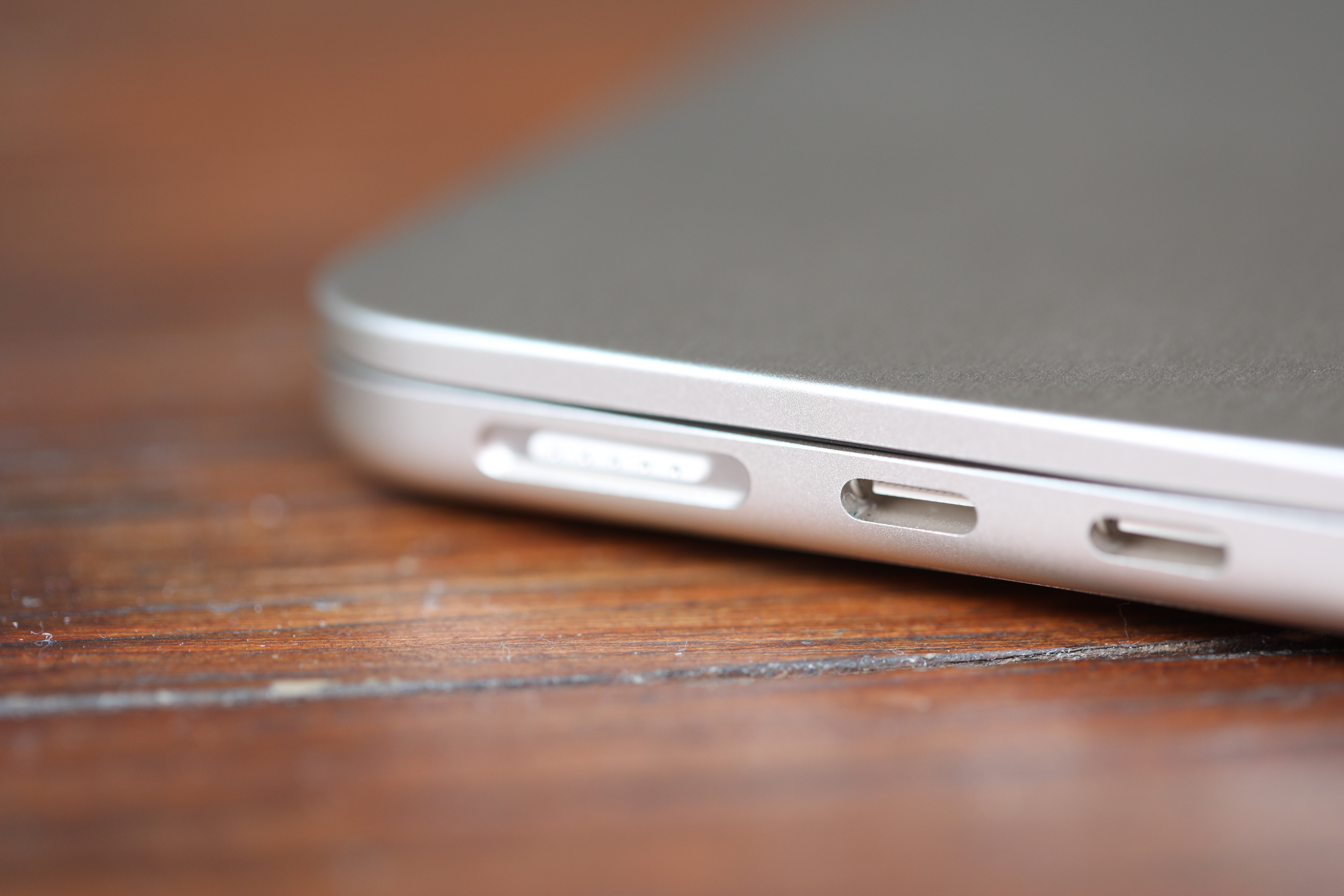
Mac 15-inch

Image Credits: Brian Heater

Dream big indeed. It’s Apple’s largest consumer laptop.
  • Three pounds and 11.5 mm thin, touted as the “thinnest 15-inch laptop to date.”
  • 18 hours of battery life.
  • Six speakers.
Mac Studio

Image Credits: Apple

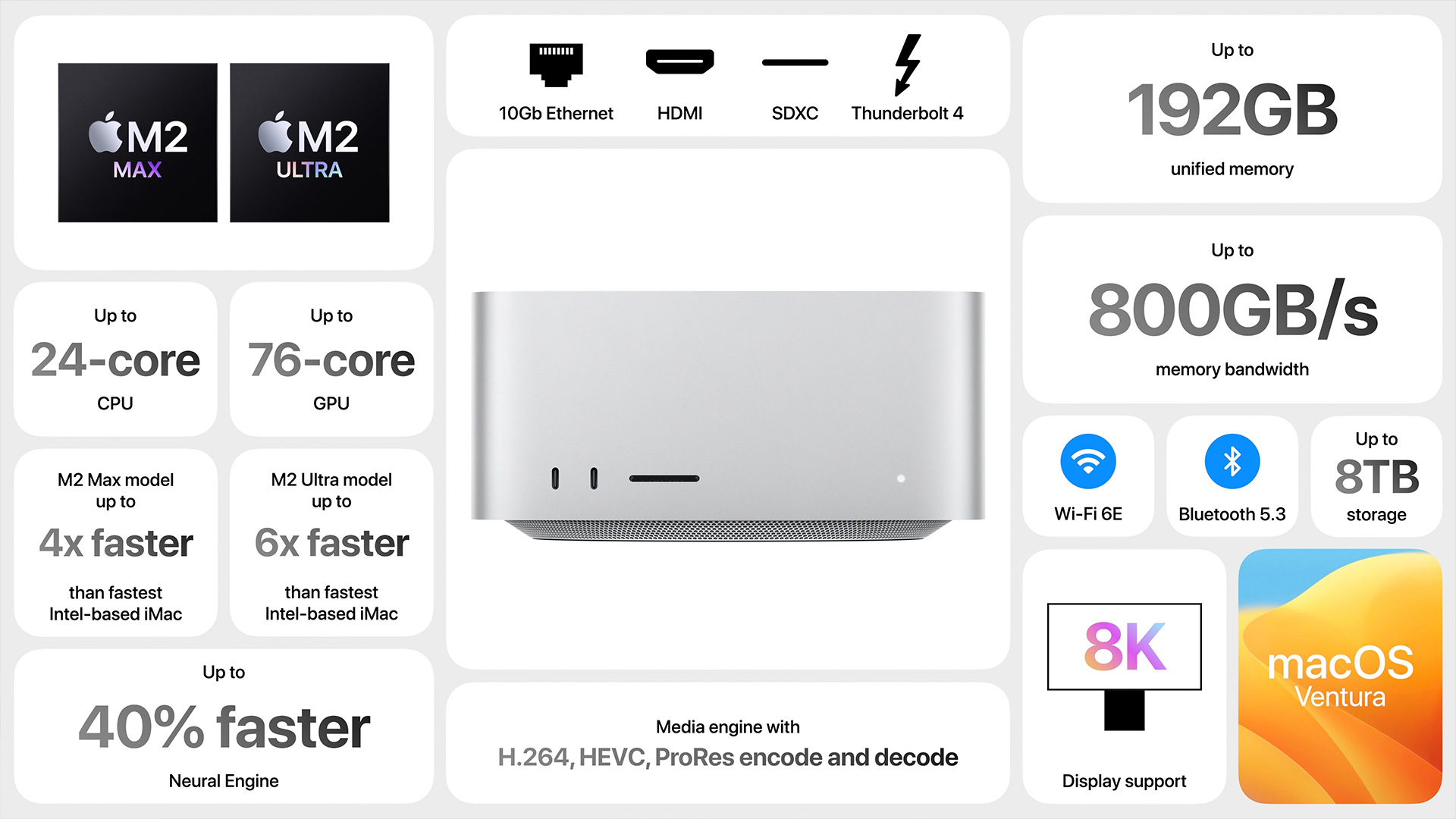
The Mac Studio, Apple’s small yet powerful desktop computer, is receiving a product update, including the silicon and replacing the M1 Max and M1 Ultra with the M2 Max and M2 Ultra.

  • Roughly three times as tall as a Mac Mini.
  • The main difference is that the new chip unlocks new performances.
  • When it comes to the neural engine, it is 40% faster.
  • Video bandwidth has been increased, which means that you can connect 8K display at a fast refresh rate.
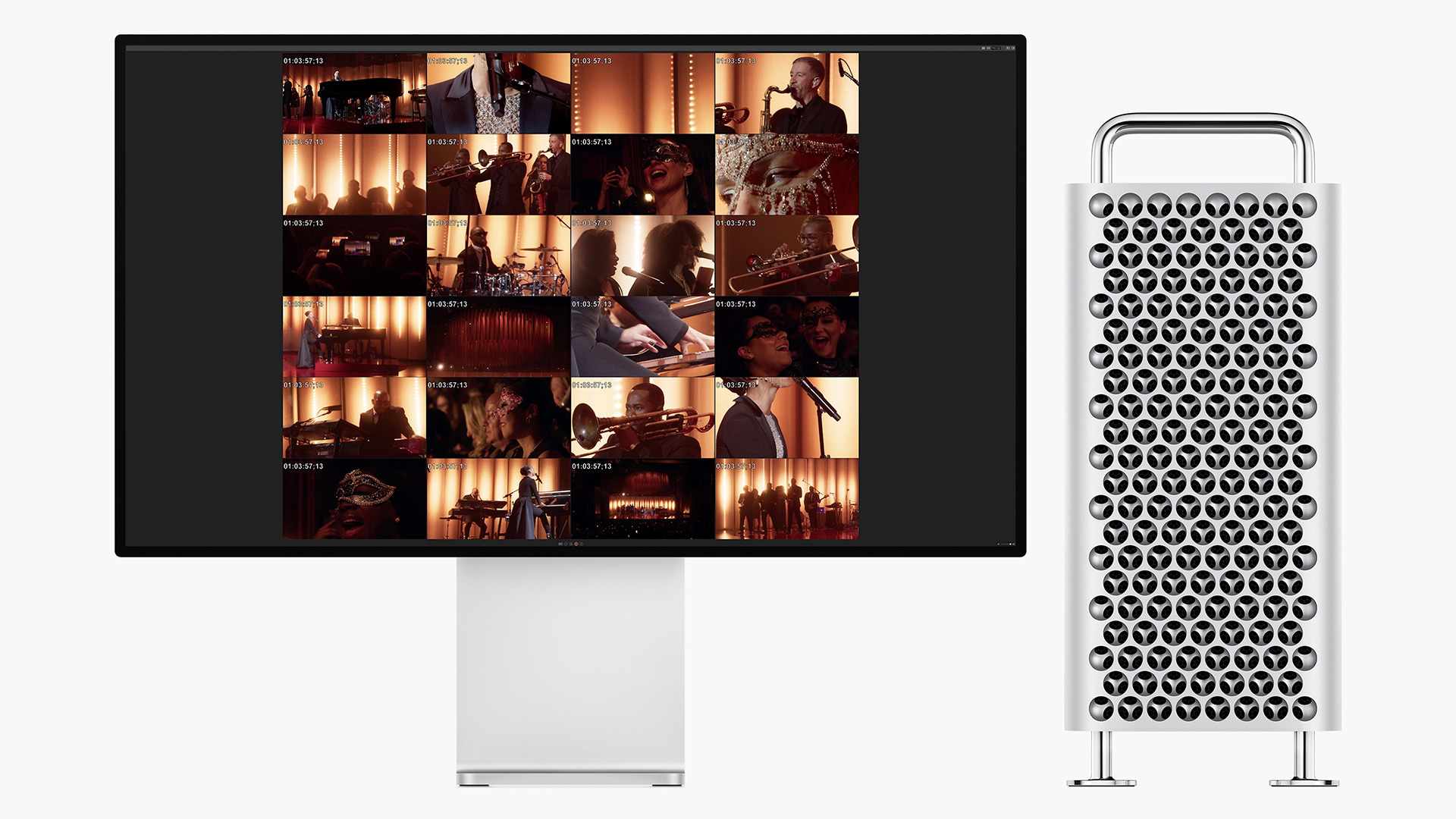
MacPro

Image Credits: Apple

This was a surprise announcement about the Apple Silicon–powered desktop and rack-mounted Mac Pro workstation. Get the scoop.
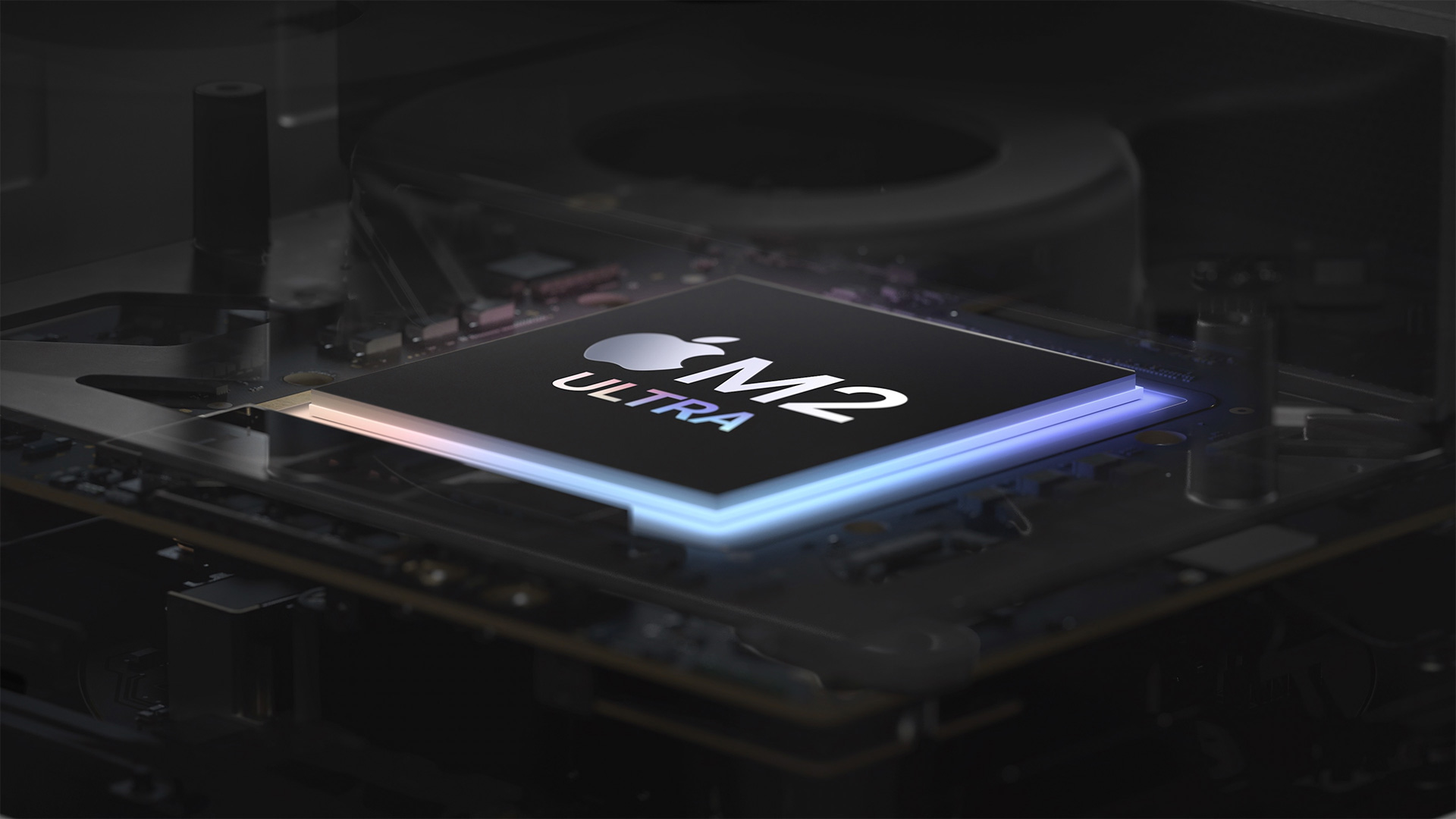
M2 Ultra

Image Credits: Apple

M2 Ultra is the most powerful Apple Silicon chip yet; however, Apple continues with its M1 playbook.
  • With Ultra, the M2 version is also essentially two M1 Max dies fused into a single package.
  • It is built using 5 nm technology and featuring 134 billion transistors and will feature 24 CPU cores, up to 76 GPU cores (there’s also a 60-core option) and a 32-core Neural Engine. The CPU consists of 16 next-gen high-performance cores and eight high-efficiency cores.
  • One major change is that the M2 Ultra supports up to 192 GB of unified memory, backed by 800 GB of memory bandwidth.
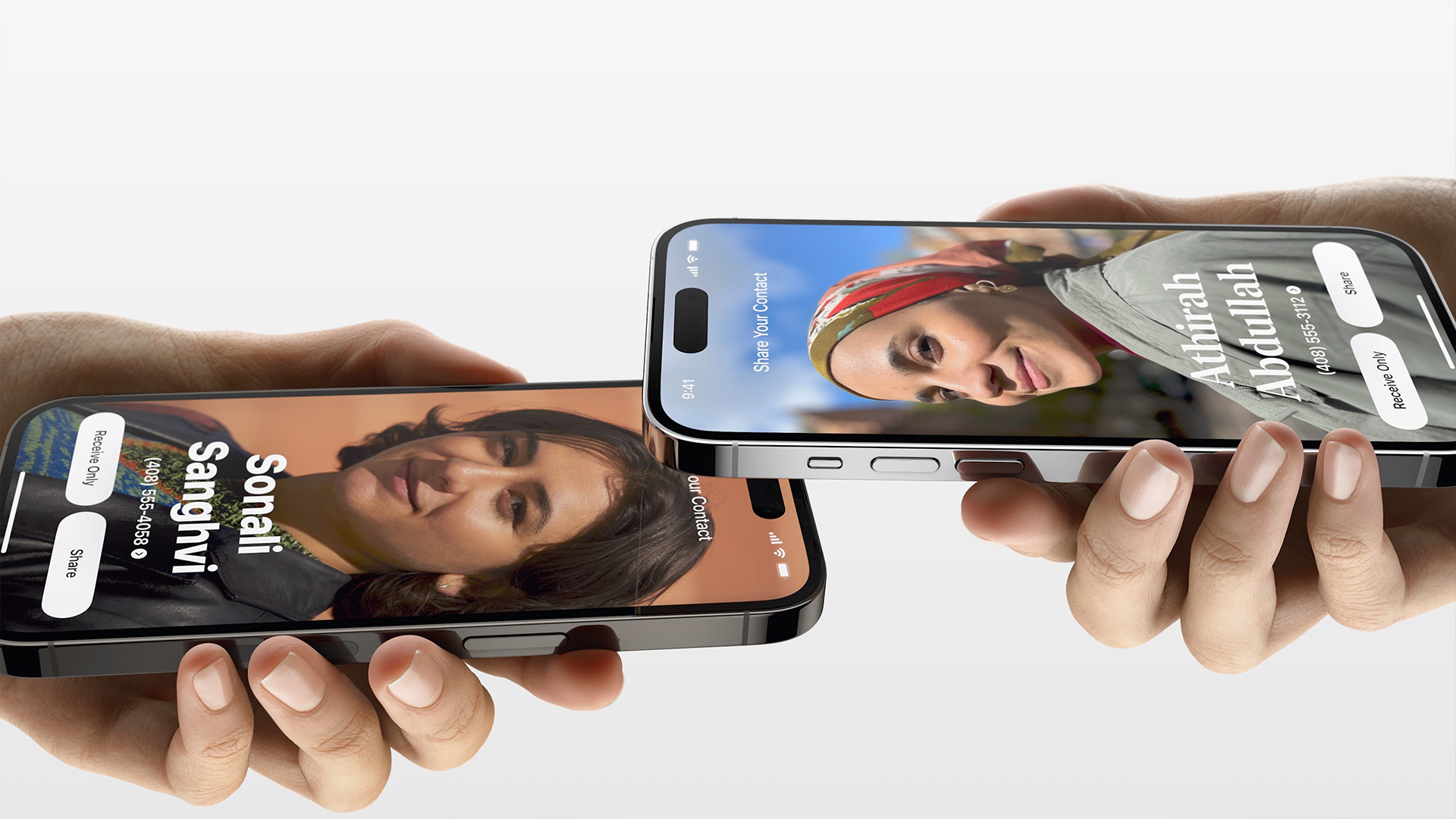
New features: NameDrop, Journal app, Standby, Autocorrect, no more “hey Siri”

Image Credits: Apple

  • A new AirDrop feature called NameDrop lets you easily and seamlessly share your phone number, and even photos, with another person. Here’s how it works: When you bring your phones close together, you can choose to share your phone number and email address. You can use NameDrop with an iPhone and an Apple Watch too. Read more here and here.
  • Apple is introducing a new journaling app simply called Journal. Using on-device machine learning, the iPhone creates personalized suggestions around your photos, activities, location, music, workouts, etc. Developers can take advantage of Journal and provide prompt suggestions from third-party app data. Here’s more.
  • Now over to Standby, which is a new full-screen experience for your nightstand. When you put your phone down at night, you can see the time on your phone or an alarm or you can personalize what’s on the display. Standby also helps you use your iPhone as a dynamic photo slideshow device to show some of your best shots and refresh them regularly. At the office, Standby can turn your iPhone into a calendar with your upcoming events. Learn more.
  • In terms of autocorrect, Apple has upgraded its autocorrect, now powered by an AI model that can more accurately predict the next words and phrases you might use. Over time, it’ll personalize, learning your most frequently used words — including swear words. Read more.
  • One of the more unexpected additions from iOS 17: Apple is dropping the “hey” from “Hey Siri.” Get the scoop.
Apple Messages

Image Credits: Apple

Apple is introducing an overhaul of one of our most-used apps on the iPhone, the Messages app.
  • Notable tweaks: ability to view transcribed voice messages and an interface change that hides away iMessage apps.
  • New feature: the safety-focused “Check In” option that will allow iPhone users to let their friends and family know they got home safely — or where they were last.
  • Also, there is a faster and more convenient search experience and the ability to view a transcription of voice messages.
iPadOS 17 and new iPad features

Image Credits: Apple

Apple’s latest version of iPadOS is called iPadOS 17. The new version includes upgrades such as improved widgets featuring better live interactions, the Home Screen can be customized similarly to the iPhone, and there are new native apps, including the Health app and an improved Notes app. Learn more.
Now let’s take a look at new features introduced for the iPad.
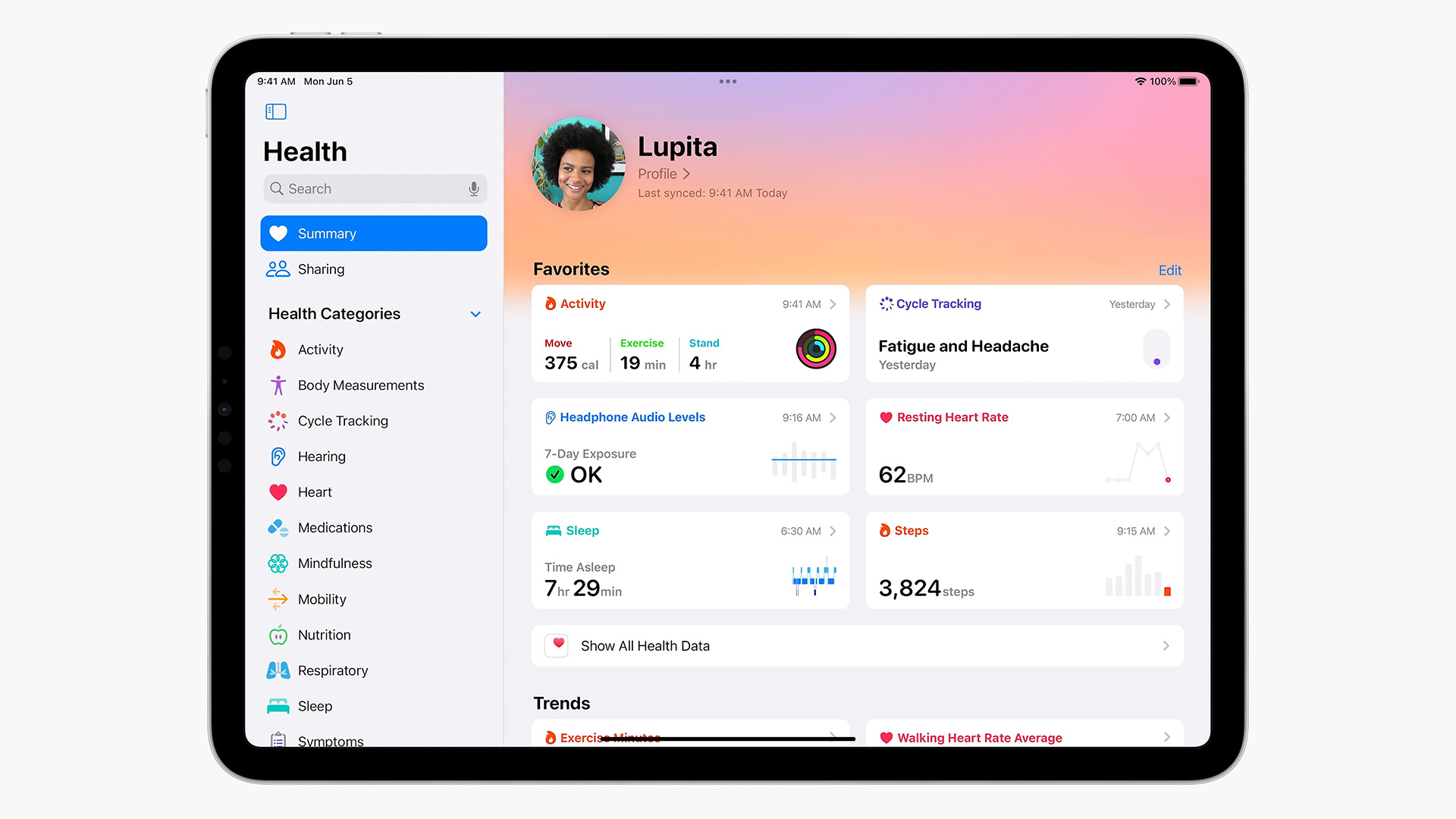
The new Health app for the iPad will launch as part of iPadOS 17 later this year. Previously, the app was available only on the iPhone.
  • Users will be able to see their health data, such as electrocardiogram results, on a larger screen.
  • Privacy: Health data is securely synced, so you can see your health information from your iPad, iPhone, Apple Watch, as well as compatible third-party apps and devices all in one place.
  • For developers, HealthKit is coming to iPad, opening up new ways to build health and fitness experiences for the devices.
  • Users will have more real estate when it comes to viewing health metrics, prescriptions, lab tests and more. Read more about Health.
Speaking of health, Apple also announced that it will focus on mental health with some new features for the Apple Watch and iPhone. Get the scoop.
Also, Apple is adding Live Collaboration to improve the experience of working with PDFs. Using machine learning technology, the iPad OS 17 can identify fields in a PDF so that you can fill them out quickly — that’s big for people who don’t have easy access to Adobe Acrobat. This also functions with photos of documents that you scan onto your iPad. Read more about Live Collaboration.
MacOS 14 Sonoma

Image Credits: Apple

Apple’s latest desktop operating system, macOS 14, is named for another California town, this time, Sonoma.
  • What’s new: The desktop is getting interactive widgets and there is a game mode designed to limit distractions amid a growing selection of silicon titles.
  • What else: In a nod to all of the teleconferencing we do, there is a new overlay feature that cuts out the speaker, playing them in front of a dynamic background. There are new effects like fireworks as well.
AirPods

Image Credits: Apple

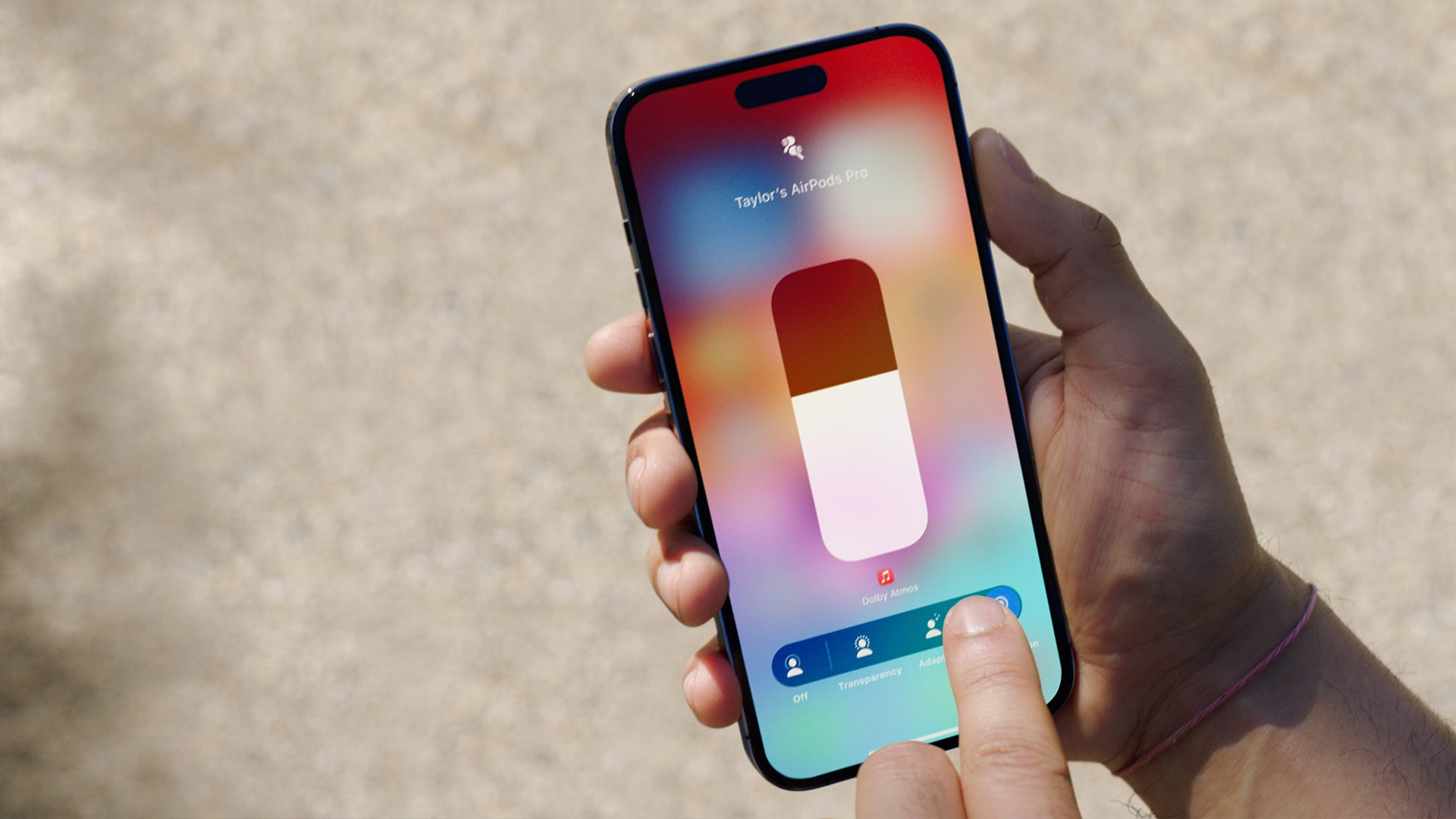
Don’t worry, AirPods were not forgotten today. Updates to these gadgets were meant to improve user experience. Enter the new Adaptive Audio feature that can blend active noise cancellation mode and transparency mode to make it easier to use noise cancellation features and still remain aware while walking down the street. Apple said that it is also working on improving the automatic switching feature. Read more.
Apple TV

Image Credits: Apple

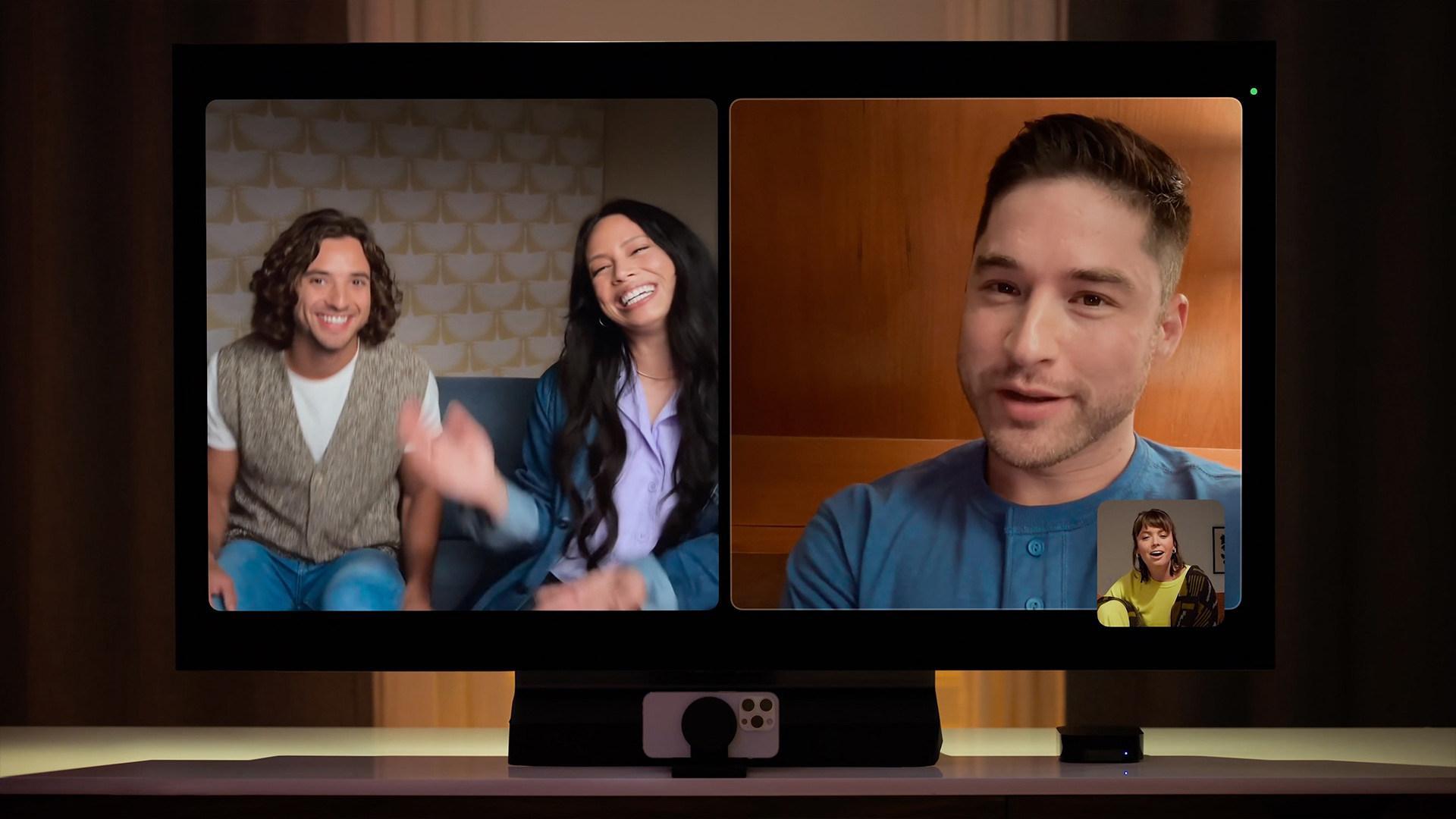
FaceTime on your television? Yes, please! If you have Apple TV, look out for this new feature. This will use Continuity Camera on an iPhone or iPad to double as a webcam and will also use Center Stage, Apple’s AI-powered tech that adjusts the iPhone’s and iPad’s front-facing camera in video apps, to frame you while you look at the TV. Read more about the FaceTime on Apple TV.
Let’s be real — that Apple TV remote is a slippery little bugger that likes to go where it wants. If yours likes to disappear, Siri will now help you find it. Get the scoop.
Vision Pro AR headset

Image Credits: Apple

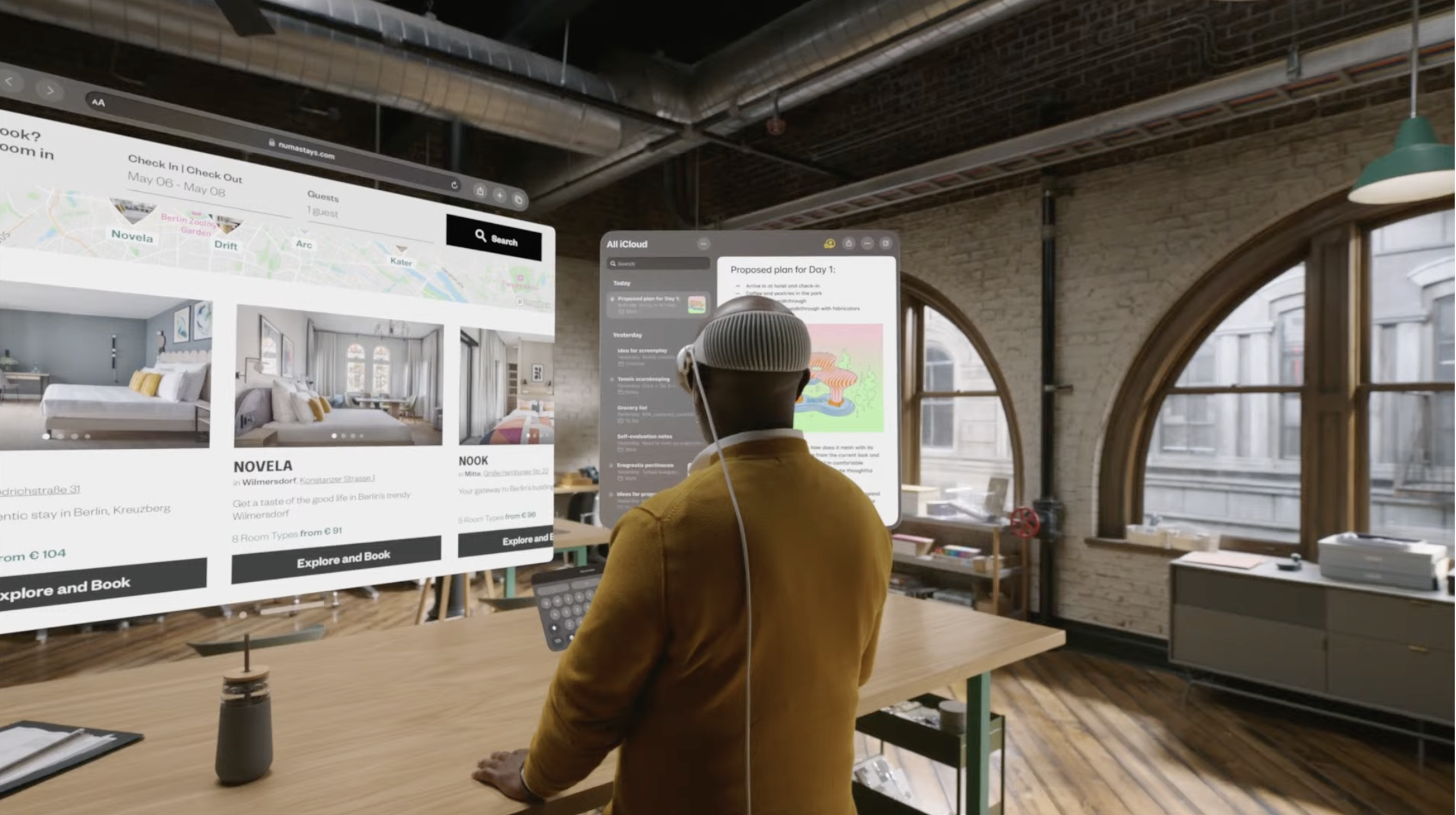
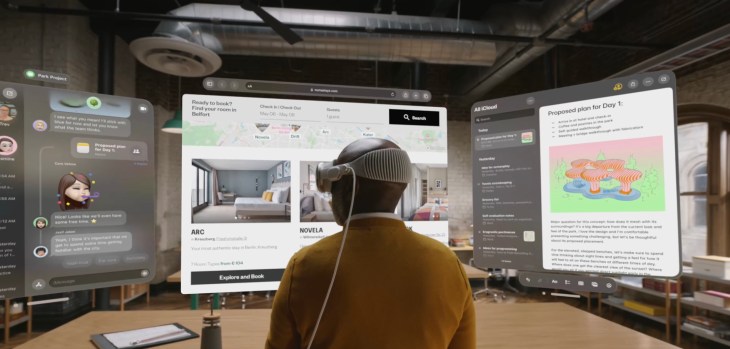
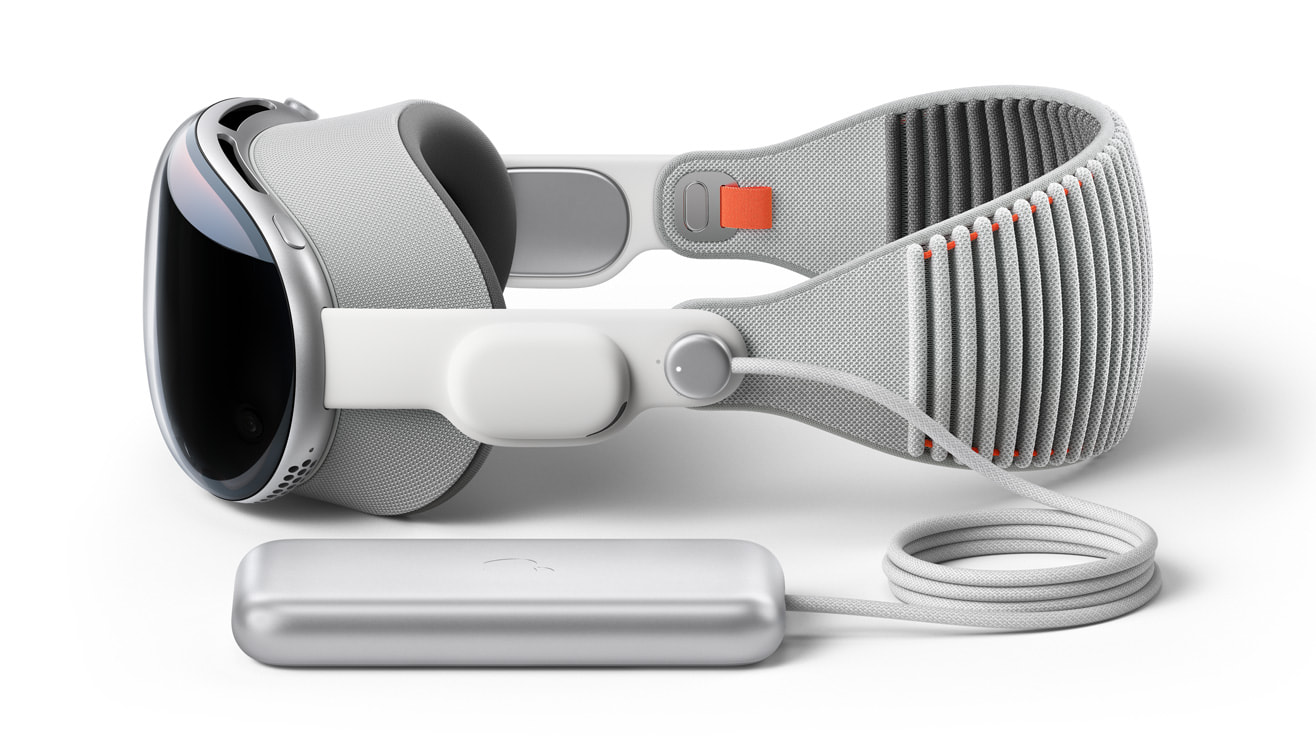
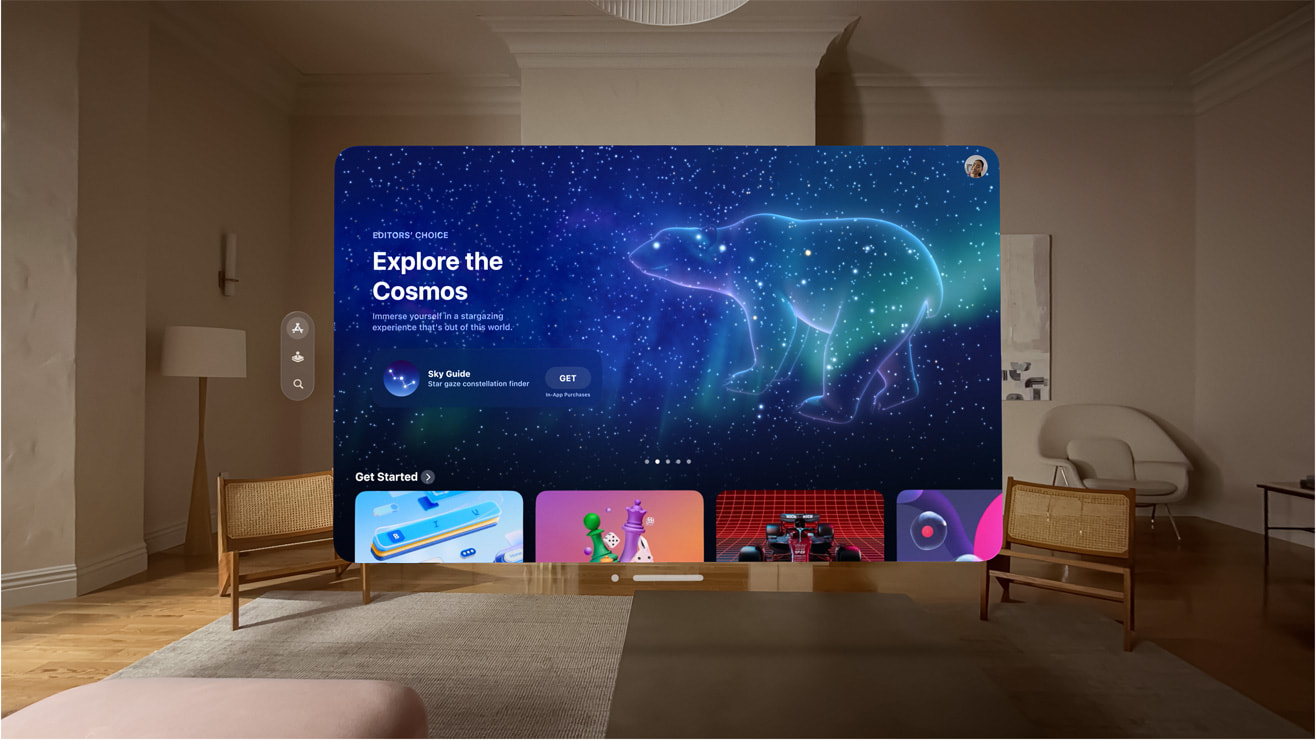
And here it is: Apple’s Vision Pro AR headset. It’s has a fully 3D interface, controlled by eyes, hands, and face.
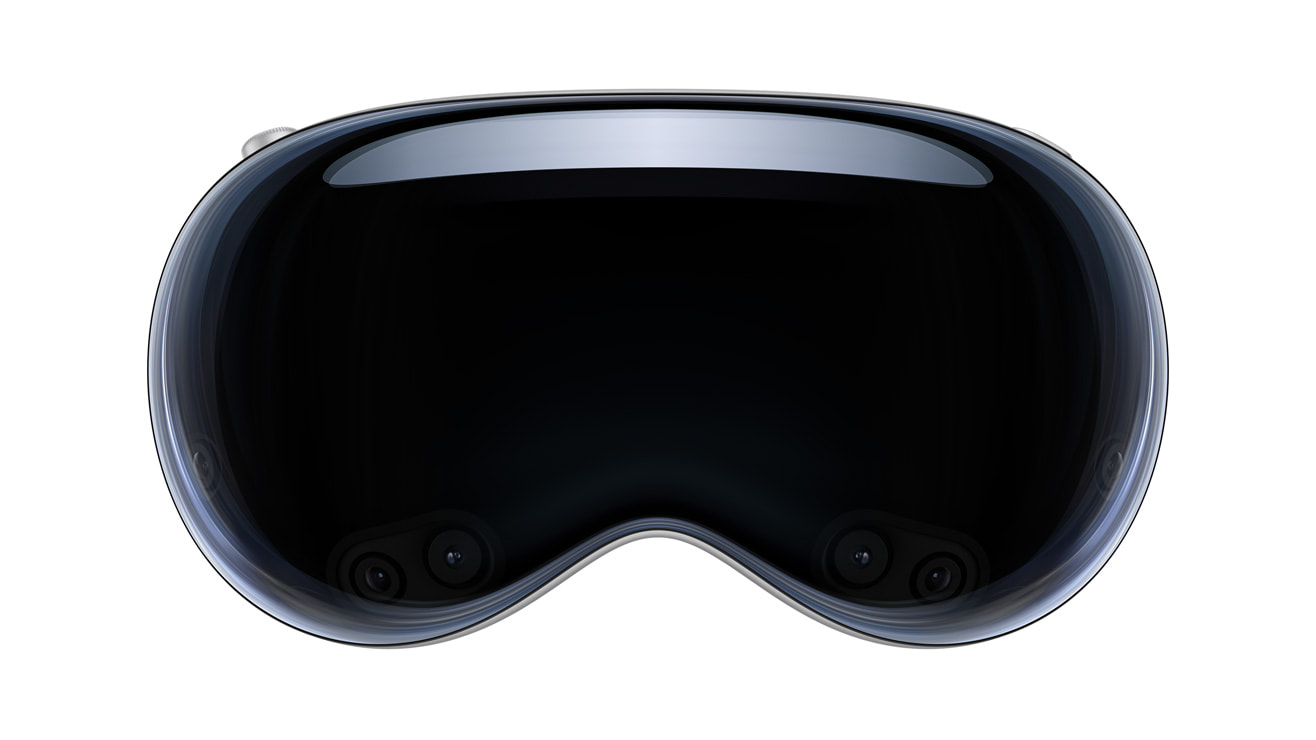
  • The hardware utilizes a new feature called “EyeSight,” which uses a front-facing display to reveal your eyes to other people in the room (compensating for the opaque visor. While the product is, indeed, mixed reality (owing to the need for on-board passthrough), the company seems disinterested in engaging with the virtual reality conversation.
  • Interestingly, it does appear to be a work-first device focused on things like email rather than gaming. In fact, users can actually bring a version of their Mac desktop over, projected out in front of them.
  • Disney CEO Bob Iger announced that Disney+ will be available on the tech giant’s new Apple Vision Pro at launch. Get the scoop.
  • There is now VisionOS, the newest operating system specifically for the Vision Pro.
WatchOS 10

Image Credits: Apple

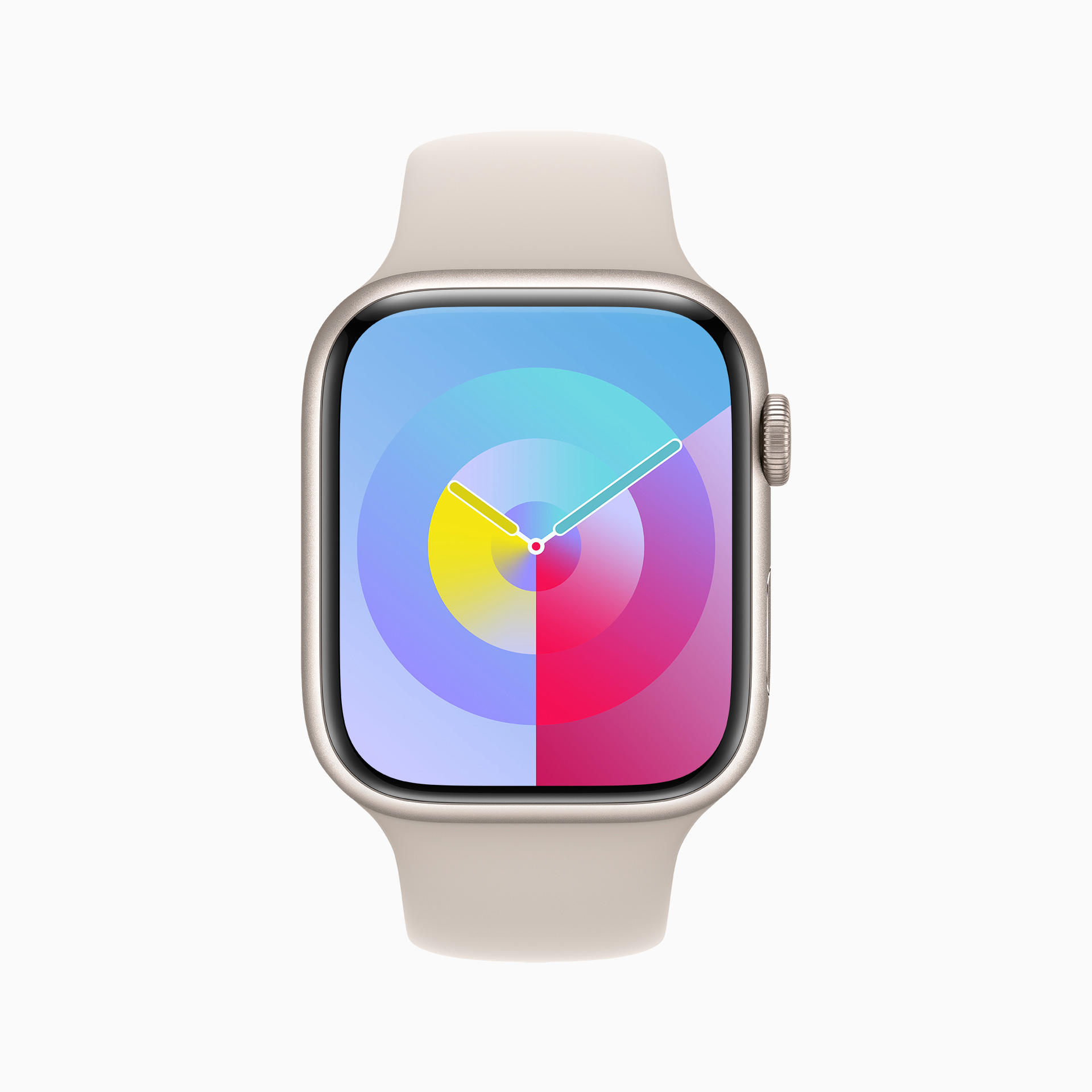
Apple previewed some improvements coming up to its smartwatch operating system:
  • They include an updated user interface with a renewed focus on widgets, plus refreshed first-party apps and other new features.
  • Why is the user interface part important? The user interface for Apple Watch hasn’t seen a sizable update in many years, and a number of top third-party apps have pulled out of the Apple Watch App Store in recent years.
  • To access the new watchOS 10 widgets, you can simply turn the Digital Crown. Previously, pressing the Digital Crown on the side of the Apple Watch would take you to the home screen.
  • Look out for a refresh of some of the core apps, including World Clock.

TechCrunch : First impressions: Yes, Apple Vision Pro works and yes, it’s good.

First impressions: Yes, Apple Vision Pro works and yes, it’s good.
After a roughly 30 minute demo that ran through the major features that are yet ready to test I came away convinced that Apple has delivered nothing less than a genuine leapfrog in capability and execution of XR — or mixed reality with its new Apple Vision Pro.

To be super clear, I’m not saying it delivers on all promises, is a genuinely new paradigm in computing or any other high powered claim that Apple hopes to deliver on once it ships. I will need a lot more time with the device than a guided demo.

But, I’ve used essentially every major VR headset and AR device since 2013’s Oculus DK1 right up through the latest generations of Quest and Vive headsets. I’ve tried all of the experiences and stabs at making fetch happen when it comes to XR. I’ve been awed and re-awed as developers of the hardware and software of those devices and their marquee apps have continued to chew away at the “conundrum of the killer app” — trying to find something that would get real purchase with the broader public.

There are some genuine social, narrative or gaming successes like Gorilla Tag, VRChat or Cosmonius. I’ve also been moved by first person experiences by Sundance filmmakers highlighting the human (or animal) condition.

But none of them had the advantages that Apple brings to the table with Apple Vision Pro. Namely, 5,000 patents filed over the past few years and an enormous base of talent and capital to work with. Every bit of this thing shows Apple-level ambition. I don’t know whether it will be the ‘next computing mode’, but you can see the conviction behind each of the choices made here. No corners cut. Full tilt engineering on display.

The hardware is good, very good, with 24 million pixels across the two panels, orders of magnitude more than any headsets most consumers have come in contact with. The optics are better, the headband is comfortable and quickly adjustable and there is a top strap for weight relief. Apple says it is still working on which light seal (the cloth shroud) options to ship with it when it releases officially but the default one was comfortable for me. They aim to ship them with varying sizes and shapes to fit different faces. The power connector has a great little design as well that interconnects using internal pin-type power linkages with an external twist lock.

There is also a magnetic solution for some (but not all) optical adjustments people with differences in vision may need. The onboarding experience features an automatic eye-relief calibration matching the lenses to the center of your eyes. No manual wheels adjusting that here.

The main frame and glass piece look fine, though it’s worth mentioning that they are very substantial in size. Not heavy, per-se, but definitely present.

If you have experience with VR at all then you know that the two big barriers most people hit are either latency driven nausea or the isolation that long sessions wearing something over your eyes can deliver.

Apple has mitigated both of those head on. The R1 chip that sits alongside the M2 chip has a system-wide polling rate of 12ms, and I noticed no judder or framedrops. There was a slight motion blur effect used in the passthrough mode but it wasn’t distracting. The windows themselves rendered crisply and moved around snappily.

Of course, Apple was able to mitigate those issues due to a lot of completely new and original hardware. Everywhere you look here there’s a new idea, a new technology or a new implementation. All of that new comes at a price, $3,500 is on the high end of expectations and firmly places the device in the power user category for early adopters.
Here’s what Apple got right that other headsets just couldn’t nail down:
The eye tracking and gesture control is near perfect. The hand gestures are picked up anywhere around the headset, that includes on your lap or low and away resting on a chair or couch. Many other hand tracking interfaces force you to keep your hands up in front of you, which is tiring. Apple has high resolution cameras dedicated to the bottom of the device just to keep track of your hands. Similarly, an eye tracking array inside means that, after calibration, nearly everything you look at is precisely highlighted. A simple low-effort tap of your fingers and boom, it works.

Passthrough is a major key. Having a real-time 4k view of the world around you that includes any humans in your personal space is so important for long-session VR or AR wear. There is a deep animal brain thing in most humans that makes us really, really uncomfortable if we can’t see our surroundings for a length of time. Eliminating that worry by passing through an image should improve the chance of long use times. There’s also a clever ‘breakthrough’ mechanism that automatically passes a person who comes near you through your content, alerting you to the fact that they’re approaching. The eyes on the outside, which change appearance depending on what you’re doing, also provide a nice context cue for those outside.

The resolution means that text is actually readable. Apple’s positioning of this as a full on computing device only makes sense if you can actually read text in it. All of the previous iterations of ‘virtual desktop’ setups have relied on panels and lenses that present too blurry a view to reliably read fine text at length. In many cases it literally hurt to do so. Not with the Apple Vision Pro – text is super crisp and legible at all sizes and at far ‘distances’ within your space.
There were a handful of really surprising moments from my short time with the headset as well. Aside from the sharpness of the display and the snappy responsiveness of the interface, the entire suite of samples oozed attention to detail.

The Personas Play. I was HIGHLY doubtful that Apple could pull off a workable digital avatar based off of just a scan of your face using the Vision Pro headset itself. Doubt crushed. I’d say that if you’re measuring the digital version of you that it creates to be your avatar in facetime calls and other areas it has a solid set of toes on the other side of the uncanny valley. It’s not totally perfect, but they got skin tension and muscle work right, the expressions they have you make are used to interpolate out a full range of facial contortions using machine learning models and the brief interactions I had with a live person on a call (and it was live, I checked by asking ‘off script’ stuff) did not feel creepy or odd, it worked.

It’s crisp. I’m sort of stating this again but, really, it’s crisp as hell. Running right up to demos like the 3D dinosaur you got right down to the texture level and beyond.

3D Movies are actually good in it. Jim Cameron probably had a moment when he saw Avatar: Way of Water on the Apple Vision Pro. This thing was absolutely born to make the 3D format sing — and it can display them pretty much right away so there’s going to be a decent library of shot on 3D movies that will bring new life to them all. The 3D photos and videos you can take with Apple Vision Pro directly also look super great, but I wasn’t able to test capturing any myself so I don’t know how that will feel yet, awkward? Hard to say.

The setup is smooth and simple. A couple of minutes and you’re good to go, very Apple.

Yes, it does look that good. The output of the interface and the various apps are so good that Apple just used them directly off of the device in its keynote. The interface is bright and bold and feels present because of the way it interacts with other windows, casts shadows on the ground and reacts to lighting conditions.

Overall, I’m hesitant to make any broad claims about whether Apple Vision Pro is going to fulfill Apple’s claims about the onset of spatial computing. I’ve had far too little time with it and it’s not even completed — Apple is still working on things like the light shroud and definitely on many software aspects.

It is, however, really, really well done. The platonic ideal of an XR headset. Now, we wait to see what developers and Apple accomplish over the next few months and how the public reacts.
>>> US After Hours Summary: GTLB +23.1%, HQY +4.9%, CXM +3% all up on earnings;

After Hours Summary: GTLB +23.1%, HQY +4.9%, CXM +3% all up on earnings; NVRO -4.6% down following guidance; CDRE -11.1%, BLBD -9.3%, SKWD -5% a few of the names slipping on secondary public offerings

After Hours Gainers:

Companies trading higher in after hours in reaction to earnings/guidance: GTLB +23.1%, HQY +4.9%, CXM +3%, IDT +0.1%

Companies trading higher in after hours in reaction to news: ERAS +6.4% (update on clinical program), CHRS +3% (announces positive results), RMAX +1.6% (grows presence in South Pacific), BNL +1.3% (provides business update), OCUL +1.2% (to present data from Phase 1 trial), ATRO +1% (provides EmPower update; also files $150 mln mixed shelf), CBOE +0.5% (May trading volume), RTX +0.3% (awarded $2.02 bln U.S. Navy contract mod), RPHM +0.2% (secondary public offering)

After Hours Losers:

Companies trading lower in after hours in reaction to earnings/guidance: NVRO -4.6% (guidance), EXC -0.7% (guidance)

Companies trading lower in after hours in reaction to news: CDRE -11.1% (secondary public offering), BLBD -9.3% (secondary public offering), SKWD -5% (secondary public offering), MBLY -4.5% (secondary public offering), CRBG -4% (secondary public offering), LVWR -3.9% (appoints new CEO), PGEN -3.7% (announces positive phase 1 data), CLS -3.5% (secondary public offering), GEHC -3% (secondary public offering), CRGY -2.3% (increasing public float), RHP -1.9% (to acquire JW Marriott San Antonio; also files stock offering), ROL -1.3% (files $1.5 bln mixed shelf and secondary stock offering), TWST -1.2% (files mixed shelf), ODFL -0.9% (provides Q2 metrics), MTAL -0.4% (shareholders approve business combination), SNAP -0.2% (hired new SVP from Google, according to Reuters), RIVN -0.2% (hiring Tesla cybertruck exec, according to The Information), DLR -0.1% (updates funding plan), TSLA -0.1% (Panasonic boosting battery output at Gigafactory, according to Nikkei)

>>> US Close Dow -0.59% S&P -0.20% Nasdaq -0.09% Russell -1.32%

Closing Stock Market Summary

The stock market closed on a softer note today after Friday's broad-based rally. Things were more mixed in the early going, though, with relative strength from mega cap stocks supporting the broader market. The major indices ultimately settled near their worst levels of the day. Still, there wasn't any concerted selling interest and index losses were relatively modest. 

The market started to fade around 1:00 p.m. ET after Apple (AAPL 179.58, -1.37, -0.8%), which reached a record high and was up as much as 2.2% today, also started to fade along with other mega cap stocks. The Vanguard Mega Cap Growth ETF (MGK), up as much as 0.8%, fell 0.1% today while the Invesco S&P 500 Equal Weight ETF (RSP) declined 0.3%. 

Also, the S&P 500 being unable to breach 4,300 today contributed to the afternoon pullback. 

Growth concerns were part of the market narrative. Those concerns were piqued by the May ISM Non-Manufacturing Index, which fell to 50.3% from 51.9% in April. The dividing line between expansion and contraction is 50.0%.

Notably, weakness in bank stocks was another factor holding the broader market in check today. This occurred after The Wall Street Journal reported that large banks could face a 20% increase in capital requirements. The SPDR S&P Regional Banking ETF (KRE) fell 2.6% and the SPDR S&P Bank ETF (KRE) fell 2.2%. The S&P 500 financials sector was among the worst performers, down 0.6%.

The industrials (-0.7%) and energy (-0.6%) sectors were also among the worst performers today. The latter declined despite rising oil prices ($71.98/bbl, +0.33, +0.5%) in response to Saudi Arabia saying it will implement an additional voluntary cut in its production of crude oil, amounting to one million barrels per day starting in July.

The communication services (+0.6%), utilities (+0.5%), and health care (+0.4%) sectors led the outperformers. 

The health care sector was supported by outperforming biotech, which maintained some strength as the broader market declined. This came as the American Society of Clinical Oncology ASCO Annual Meeting 2023 continued in Chicago. 

The SPDR S&P Biotech ETF (XBI) rose 0.3% and the iShares Biotechnology ETF (IBB) rose 0.4%. Amgen (AMGN 221.88, +3.81, +1.8%), Regeneron (REGN 750.27, +10.32, +1.4%), and Biogen (BIIB 302.13, +1.93, +0.6%) were among the top performers from that space.

Treasuries settled the session flattish. The 2-yr note yield fell three basis points to 4.48% and the 10-yr note yield was unchanged at 3.69%.

  • Nasdaq Composite: +26.4% YTD
  • S&P 500: +11.3% YTD
  • Russell 2000: +2.6% YTD
  • Dow Jones Industrial Average: +1.3% YTD
  • S&P Midcap 400: +2.0% YTD

Reviewing today's economic data:

  • The IHS Markit Services PMI rose to 54.9 in the final reading for May from 53.6.
  • The ISM Non-Manufacturing Index for May decreased to 50.3% ( consensus 52.3%) from 51.9% in April. The dividing line between expansion and contraction is 50.0%, so the May reading reflects continued growth in the services sector, but at a slower pace than the prior month.
    • The key takeaway from the report is that the majority of respondents indicate business conditions are currently stable, yet concerns relative to the slowing economy have been noted, evidenced in part by the downturn in the employment index into contraction territory after three months of growth.
  • Factory orders increased 0.4% month-over-month in April (consensus 0.8%) following a downwardly revised 0.6% increase (from 0.9%) in March. Shipments of manufactured goods decreased 0.4% month-over-month after declining 0.6% in March.
    • The key takeaway from the report is that business spending picked up nicely from March.

There is no U.S. economic data of note tomorrow.