>>> Europe : Brokers Upgrades & Downgrades - 9th of June 2023

>>> Up
* Atos Raised to Buy at Invest Securities SA; PT 18 euros
* DocMorris AG Raised to Buy at HSBC; PT 52 Swiss francs
* Hammerson Raised to Overweight at Barclays; PT 30 pence
* JM Raised to Hold at SEB Equities; PT 141 kronor
* Raute Raised to Buy at Inderes; PT 11.50 euros
* Salmar Raised to Buy at DNB Markets; PT 565 kroner
* SocGen PT Raised to 43 euros from 40 euros at Jefferies

>>> Down
* Avanza Cut to Hold at SEB Equities; PT 249 kronor
* Liberty Global PT Cut to $20 from $24 at Morgan Stanley
* Oxford Nanopore Cut to Sell at Peel Hunt
* Shop Apotheke Cut to Reduce at HSBC; PT 72 euros
* Systemair Cut to Hold at DNB Markets; PT 90 kronor

>>> Initiation
* Antin Rated New Neutral at Oddo BHF; PT 14.60 euros
* Archer Rated New Buy at SpareBank; PT 1.25 kroner
* Chemring Group Cut to Hold at Panmure Gordon; PT 320 pence
* ON Semi Rated New Buy at William O'Neil

>>> Call
* Dufry AG Rated New Outperform at Credit Suisse
* Lloyds Removed from Citi’s EMEA Banks Focus List, Natwest Added
* Oxford Nanopore Downgraded at Peel Hunt on Slower Growth Path
* SocGen PT to Street-High at Jefferies on Upcoming Catalysts
* Stocks Drop 20% If Bonds Have Inflation Right in JPMorgan Model

Electrek : Porsche says electric Mission X concept would be fastest road-legal c

Porsche says electric Mission X concept would be fastest road-legal car ever

Porsche has unveiled the Mission X, a new electric hypercar concept, which the automaker says could be the fastest road-legal vehicle ever to do a lap around the famous Nürburgring racetrack… if it goes into series production.

The hypercar was shown as part of Porsche’s celebration of its 75th anniversary of making sports cars since the original Porsche 356 came out on June 8, 1948.

Porsche says the Mission X has an “ultra high-performance, efficient electric powertrain,” but though it doesn’t give tech specs, it gives us an idea of what they might be. The design considerations for this car include these points, which we’ll break down one by one:

Be the fastest road-legal vehicle around the Nürburgring Nordschleife
Have a power-to-weight ratio of roughly one hp per 2.2 lbs
Achieve downforce values that are well in excess of those delivered by the current 911 GT3 RS
Offer significantly improved charging performance with its 900-volt system architecture and charge roughly twice as quickly as the current Porsche frontrunner, the Taycan Turbo S
The first point is Porsche’s most common benchmarking method for its vehicles. Nürburgring Nordschleife, also known as “The Green Hell,” is a famously long and difficult track that runs through the Eifel forest in Germany. Recently, Porsche has been in a battle with Tesla over whose electric car is fastest around the track, and Tesla just struck back at Porsche to take back the record this past week.

Porsche would like to get that record back, but it sounds like it’s not just throwing down the gauntlet at Tesla but at all other cars. Tesla’s new production EV record 7:25 time is respectable (slotting near the Lamborghini Aventador, Ferrari Enzo, Mercedes AMG Black, and KTM X-Bow R) and is ten seconds ahead of Porsche’s previous EV record (but well behind the NIO EP9’s “production” EV lap record). However, Tesla is still nearly a minute off the plug-in hybrid Mercedes AMG One’s record of 6:30.705 for a street-legal vehicle.

But the AMG One is 1,049 hp in a 1,695 kg (3,737 lb) package. That’s powerful but also heavy, and weight is a killer in racing, especially around the curves that make up about five minutes of that six-minute Nürburgring lap. So that’s where the Mission X’s power-to-weight ratio comes in, and if Porsche meets its intentions, it’ll be a doozy.

A power-to-weight ratio of 1 horsepower per 2.2 lbs – or 1 hp/kg – is almost unheard-of, especially in road-legal vehicles. Only a few low-production hypercars have managed to achieve this feat, though most rely on forced induction (turbocharging). The Lotus Evija is the only other electric car claiming a similar power-to-weight ratio (1,970 hp in a 1,680 kg package).

High downforce is also a key component of racing, allowing cars to stick to the road better around turns at high speeds. Porsche says the Mission X will have more downforce than the GT3 RS, which is the best in the business at 409 kg (900 lbs) of downforce at 200 km/h (124 mph).

The Mission X will use active aerodynamics, so you have downforce when you need it and not when you don’t. This helps boost speeds on long straights (like the very long straight at the end of each Nürburgring lap) but also helps improve aerodynamic efficiency, which means less energy wasted, less battery needed, and more weight saved for more performance.

And lastly, Porsche wants to improve on its fast-charging performance from the Taycan, the current fastest-charging car on the road, by upgrading to a 900-volt system (like that seen on its previous Mission R concept) and doubling the Taycan’s peak 350 kW charge rate.

While we haven’t seen road cars capable of more than 350 kW, there have been proposals for 600 kW and 700 kW charging in Formula E and Electric GT racing, respectively. So if Porsche is targeting the Mission X as a racing monster, these are the numbers it would need to aim for.

The Mission X’s entire body is made of a carbon fiber reinforced plastic (CFRP) “exoskeleton.” CFRP is an expensive but light material that helps to keep power-to-weight ratios high. Carbon fiber body panels have been used on other EVs, namely the Tesla Roadster and CFRP in the BMW i3 and i8, and the Mission X’s forebear, the Carrera GT, had carbon fiber body panels as well.

The interior is driver-focused, with an asymmetrical design and color touches indicating such. The “yoke” steering wheel is reminiscent of racing wheels, featuring an open top for visibility, mode switches, and shift paddles (though Porsche makes no other mention of transmission in its press release).

And the battery is placed in a part of the car that we don’t see often anymore – behind the driver, instead of underneath. Most EV makers put batteries at the bottom of the car to help reduce the center of gravity, which is important for performance. But Porsche chose to put it behind the driver in the Mission X.

This means a slightly higher center-of-gravity but allows for a vehicle that is otherwise shorter – a height of 47.2 inches, just an inch and change taller than Porsche’s previous 918 and Carrera GT (and three inches taller than the original Tesla Roadster, which also carried the battery behind the driver).

It also makes for more traditional vehicle handling. Racing-focused cars are traditionally built with a mid-engine layout, where the heaviest part of the vehicle is behind the driver and in front of the rear axle. This enhances traction but reduces rotational inertia, which helps cornering ability. Housing the battery in that position will give a more traditional handling feel compared to the flat and low batteries of most road EVs these days.

Porsche has not yet committed to production officially. However, one line in its press release suggests this vehicle is likely to make its way into production in some form. Usually, concept cars make no mention of series production, but Porsche explicitly says, “If the Mission X goes into series production, then it should…” before listing the car’s capabilities. This explicit callout to series production suggests that this is more of a possibility than in the case of most concepts.

Further, the name is similar to Porsche’s Mission E, which was the concept name for what eventually became the Taycan. That concept attracted plenty of excitement and eventually made it to production, and this feels like an intentional callback.

If it were to make it to production, it would do so as the latest entry in a storied list of low-production Porsche hypercars. It started with the Porsche 959, which was designed as a Group B rally car and ended up selling about 300 units to the public. Then came the Carrera GT, a 1,500-unit line that is thought of as one of the ultimate drivers’ vehicles of all time.

And more recently, the Porsche 918 plug-in hybrid brought electrification to the world of hypercars, with only 918 units made (carrying a base price of $845k). This was the first road vehicle to break the seven-minute barrier at Nürburgring. But its power-to-weight ratio was about 0.5 hp/kg, so the Mission X offers twice the relative power as its immediate predecessor.

All of these cars commanded high prices, and given the specs of the Mission X, we can imagine it would fit more into this market than into any of Porsche’s more common mass-production vehicles.

What do you think of the Mission X concept? Will Porsche make it? Can it deliver on its promises? Do you have seven figures of cash burning a hole in your pocket and are ready to order one? Let us know in the comments below.


(ZH) New Forecast Shows Wildfire Risks Explode In Northeast As El Nino Looms

New Forecast Shows Wildfire Risks Explode In Northeast As El Nino Looms

Millions of people in major US cities throughout the Northeast and Mid-Atlantic are breathing "unhealthy" air as smoke-filled skies persist for the third day. While the smoke from Canadian wildfires might dissipate in the coming days, troubling weather outlooks reveal new fire risks for the Eastern Half of the US.
Hopefully, the apocalyptic Blade Runner 2049-esque scenes from Washington, DC, to New York City will be over by the end of the week.

However, a new forecast from the National Significant Wildland Fire Potential Outlooks reveals beginning in July -- wildfire risks will explode to "above normal" conditions in several Northeast states, as well as the Upper Midwest and East North Central states.
Also, notice how California fire risks are "below normal" for many areas this summer while the Pacific Northwest will see "above normal" risks.
June
July
August
September
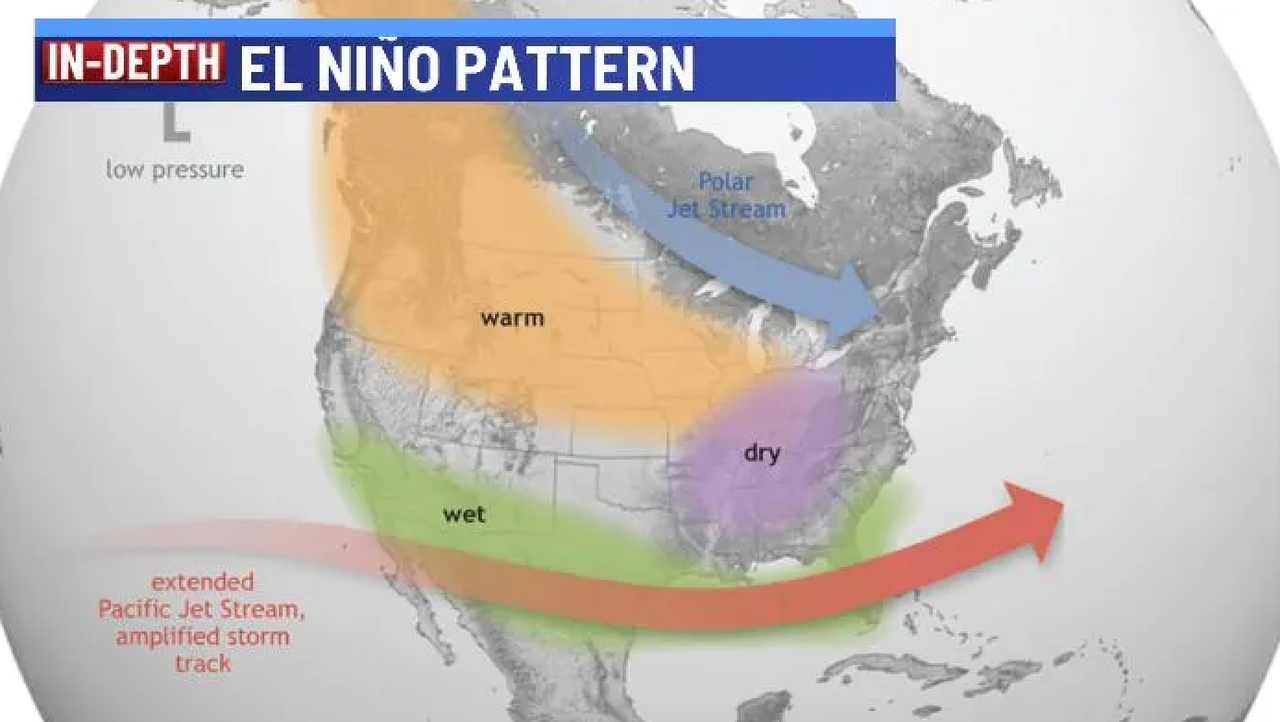
Meanwhile, corporate media has sounded the alarm about "global warming" as the culprit for the fires. There may be a more logical reason behind the fires, such as an emerging El Nino weather phenomenon that usually tends to change the climate in these regions to hotter and dryer conditions.
And for those continuing to promote that humans are responsible for all this weather chaos, well, we have some bad news: "No, El Niño and La Niña are naturally occurring climate patterns and humans have no direct ability to influence their onset, intensity or duration," United Nations Office for the Coordination of Humanitarian Affairs has stated.

WPost : Saudi crown prince threatened ‘major’ economic pain on U.S. amid oil feu

Saudi crown prince threatened ‘major’ economic pain on U.S. amid oil feud

It is unclear whether the crown prince’s threat was conveyed directly to U.S. officials or intercepted through electronic eavesdropping, but his dramatic outburst reveals the tension at the heart of a relationship long premised on oil-for-security but rapidly evolving as China takes a growing interest in the Middle East and the United States assesses its own interests as the world’s largest oil producer.

The U.S. intelligence document was circulated on the Discord messaging platform as part of an extensive leak of highly sensitive national security materials.

A spokesperson with the National Security Council said “we are not aware of such threats by Saudi Arabia.”

“In general, such documents often represent only one snapshot of a moment in time and cannot possibly offer the full picture,” the official said, speaking on the condition of anonymity to discuss an intelligence matter.

“The United States continues to collaborate with Saudi Arabia, an important partner in the region, to advance our mutual interests and a common vision for a more secure, stable, and prosperous region, interconnected with the world,” the official added.

The Saudi Embassy in Washington did not respond to a request for comment.

Mohammed, 37, is the de facto ruler of Saudi Arabia, after his father King Salman appointed him to be prime minister in 2022.

Biden, who pledged to make Saudi Arabia a “pariah” as a presidential candidate, scarcely communicates with the crown prince but the president’s top aides have gradually rebuilt ties with him hoping the two nations can work together on pressing issues, including a long-sought peace deal in Yemen, a sustained cease-fire in Sudan, counterterrorism challenges and continued disagreements over the supply of oil.

The improved rapport has disappointed human rights advocates who hoped for a sharper break with the kingdom in light of Mohammed’s role overseeing the war in Yemen and the U.S. intelligence community’s assessment that he ordered the 2018 murder of Washington Post columnist Jamal Khashoggi.
Mohammed denies ordering the killing but has acknowledged that it happened “under my watch.”
U.S. officials say the U.S.-Saudi relationship is too important to let languish given Riyadh’s economic and political clout and Beijing’s courtship of traditional U.S. partners in the Middle East.

“Together, we can drive real progress for all our people, not only to address the challenges or crises of the moment, but to chart an affirmative vision for our shared future,” Blinken said at a joint news conference in Riyadh on Thursday alongside Saudi Foreign Minister Faisal bin Farhan.
Blinken met with the crown prince, also known as MBS, for an hour and 40 minutes on Tuesday during this three-day visit to the kingdom, U.S. officials said. The men had a “candid, open” conversation that included U.S. efforts to broker normalization between Israel and Saudi Arabia, the conflict in Yemen, human rights and the fighting in Sudan.

Secretary of State Antony Blinken meets with the crown prince. (Pool/via REUTERS)
Following Blinken’s meetings, differences appeared to remain over Saudi Arabia’s ambitions to generate nuclear power, seen by Washington and others as a potential proliferation risk, and the notion that the United States has a right to admonish the kingdom over its human rights record.

Saudi Arabia’s foreign minister noted that while Riyadh would welcome U.S. support in building its civilian nuclear program, “there are others that are bidding,” a not-so-subtle reminder that the kingdom could deepen its cooperation with China on the initiative.

On human rights, he struck a defiant note, saying Saudi leaders “don’t respond to pressure.”
“When we do anything, we do it in our own interests. And I don’t think that anybody believes that pressure is useful or helpful, and therefore that’s not something that we are going to even consider,” he said.

Blinken’s visit caps a steady stream of high-level U.S. meetings in the kingdom in recent months, including trips by national security adviser Jake Sullivan, CIA Director William J. Burns, Biden’s top Middle East adviser Brett McGurk, and his senior energy security official Amos Hochstein.

The surge of meetings appeared to serve as a counterweight to the frosty personal relations between Biden and Mohammed, said David Ottaway, a Gulf scholar at the Wilson Center, noting that the two leaders have not spoken since their meeting in Riyadh last July.

“The Biden administration decided it had to figure out how to work with MBS even if Biden and he still do not talk to each other,” Ottaway said.

The oil-rich country has sought to present itself as a global player unmoored to Washington. In recent months, Riyadh has been on a diplomatic tear, winding down hostilities in Yemen, restoring relations with arch-nemesis Iran, inviting Syrian President Bashar al-Assad back into the Arab League after a decade-plus ban, and ending its regional tiff with Qatar.

“Riyadh is returning to a more traditional foreign policy that avoids conflict and favors accommodation with rivals,” said Bruce Riedel, a Middle East expert at the Brookings Institution.
The dramatic changes in Saudi foreign policy come as Washington seeks Saudi help on some regional matters. Days before Blinken’s arrival, Saudi Arabia announced it would deepen oil production cuts in July on top of a broader OPEC Plus agreement to limit oil supply in an effort to raise prices — a move opposed by the Biden administration.

“The administration has a big agenda for Blinken to work with the Saudis: Keeping the cease-fire in Yemen, getting one in Sudan, fighting ISIS, and above all keeping oil prices from rising out of control,” Riedel said.

Most difficult of all appears to be normalizing ties between Saudi Arabia and Israel, particularly as Israeli-Palestinian tensions worsen under the far-right coalition government led by Prime Minister Benjamin Netanyahu.

“Biden has put a big priority on securing Saudi public recognition of Israel. That is unlikely absent serious progress on the Palestinian front,” Riedel said. “The Palestinian issue still has deep resonance in the kingdom, especially with King Salman.”

Some moves by the Saudi government have pleased U.S. officials, including its assistance to Ukraine announced during a foreign minister visit to Kyiv in February and its plans to purchase a large order of Boeing jetliners.

The crown prince greets Chinese President Xi Jinping late last year. (Untitled/AP)
Saudi Arabia’s relationship with China, which the United States considers its top economic and security competitor, was also raised during Blinken’s news conference in Riyadh. The top U.S. diplomat denied any suggestion that the United States was forcing Saudi Arabia to choose between Washington and Beijing.

A second leaked U.S. intelligence document from December warned that Saudi Arabia plans to expand its “transactional relationship” with China by procuring drones, ballistic missiles, cruise missiles and mass surveillance systems from Beijing. But U.S. officials say those warnings were exaggerated and did not come to fruition.

Saudi’s foreign minister, when asked during Thursday’s news conference about his country’s relationship with China, insisted it was not a threat to Saudi Arabia’s long-standing security partnership with the United States.

“China is the world’s second-largest economy. China is our largest trading partner. So naturally, there is a lot of interaction … and that cooperation is likely to grow,” he said. “But we still have a robust security partnership with the U.S. That security partnership is refreshed on an almost daily basis.”

FT : Norway seeks to open vast ocean area to deep-sea mining

Norway seeks to open vast ocean area to deep-sea mining
Country could become first to extract battery metals from its ocean floor

Norway’s government is readying plans to open an area of ocean nearly the size of Germany to deep-sea mining as it seeks to become the first country to extract battery metals from its sea floor.

The country’s energy ministry is racing to submit to parliament in the next two weeks a proposal to open the vast area to applications for exploration and extraction. The plan would then face a parliamentary vote in autumn.

But Oslo faces a battle with fishing businesses and environmentalists over the proposals, and risks opening a dispute with other nations as it pushes to enable mining close to Svalbard, the Norwegian archipelago in the Arctic. Norway argues it commands exclusive mining rights over a larger area of water there than Russia, the UK and the EU contend it does.

Volcanic springs up to 4,000m deep that surge from the Earth’s crust on faultlines between tectonic plates in the proposed area contain an estimated 38mn tonnes of copper, more than is mined around the world each year.

Amund Vik, state secretary in the Norwegian Ministry of Petroleum and Energy, told the Financial Times that deep-sea mining would help Europe meet the “desperate need for more minerals, rare earth materials to make the transition happen”. The government would take a “precautionary approach” on environmental issues, he added.

The fluid that emerges from hydrothermal vents such as those in Norway’s waters also contains other metals used in electric car batteries, including cobalt. Metallic seabed crusts can meanwhile be mined for rare earth metals such as neodymium and dysprosium. These are used to make the magnets in wind turbines and in the engines of electric vehicles, but their supply chain is largely controlled by China.

Of the region earmarked for potential mining, the most contentious part would be the area close to Svalbard. The Svalbard Treaty, which gives Norway sovereignty over the islands, also gives other countries the right to mine on land and in the territorial waters around the archipelago. Russia, the EU and the UK are at odds with Norway over how large an area of water this treaty covers.

Fishing operations are meanwhile concerned that pollution from the mining may taint their catch. Jane Sandell, chief executive of UK Fisheries — whose super trawler Kirkella is one of the last UK fishing vessels to operate so far north — said she was “deeply concerned” about the possibility of toxic heavy metal particles being released.

Sverre Johansen, general secretary of the Norwegian Fishermen’s Association, said Norway’s fishing industry was “not at all impressed” by the proposal. The government says the “conflict potential” is small, given limited fishery activity and ship traffic in the area.

Norway’s environment agency has strongly opposed the plan. It said in a consultation response this year that the proposal violated Norway’s legal framework for seabed exploration by failing to provide enough sustainability data.

It warned of “significant and irreversible consequences for the marine environment” from mining, and argued that volcanic smokers, or hydrothermal vents, should remain untouched and only small areas be opened up to mining.

One problem for the energy ministry is Norway’s claim on the international stage that it is a protector of its oceans, and a source of sustainably sourced fish.

Kaja Loenne Fjaertoft, a marine biologist at the Norwegian branch of the campaign group WWF, said “the government is speaking in two tongues” by defending marine conservation while “bulldozing ahead” with mining plans.

Norwegian prime minister Jonas Gahr Støre, currently co-chair of the Ocean Panel network of world leaders committed to protecting the oceans, told a local newspaper in March that deep-sea mining could be done without harming biodiversity.

Miners operating in other countries including China, Papua New Guinea, the Cook Islands, Japan and New Zealand have been exploring how to extract metals from coastal waters. The UN-backed regulator overseeing bids to mine international waters, primarily in the Pacific, is expected to reach a crunch point in negotiations next month.

Egil Tjaland, secretary-general of the Norwegian Forum for Marine Minerals, an industry group, said deep-water was a “speciality” for Norway because of its strong offshore oil and gas base. The group recently held a workshop in Berlin to discuss partnerships between Norwegian and German industry on deep-sea mining.

“If someone gets there first it should be us,” said Walter Sognnes, chief executive of Loke Marine Minerals, which plans to mine Norway’s metallic crusts and recently took on two UK-sponsored exploration contracts in the Pacific. “We are a big fishery nation, we live by the sea, the ocean is our biggest resource . . . We would not be reinventing the wheel.”

FT : LetterOne chair Mervyn Davies receives bumper payout after Russian oligarch

FT : LetterOne chair Mervyn Davies receives bumper payout after Russian oligarchs’ exit
City grandee received total of $40mn last year after Russian billionaire shareholders were targeted by UK sanctions

City grandee Mervyn Davies received $40mn last year as LetterOne’s non-executive chair, enjoying a sharp increase in pay as the firm’s sanction-hit Russian founders had to relinquish control, according to documents seen by the Financial Times.

The two separate payouts, which covered Davies’ work for 2021 and 2022, exceed those received in the years before the war in Ukraine, according to two people familiar with the company’s affairs and a review of accounts filed in Luxembourg. Davies, a former UK trade minister in Gordon Brown’s Labour government, and the other top LetterOne executives have been receiving “pretty sizeable amounts”, said a third person familiar with the firm.

The financial arrangements coincide with a turbulent period at LetterOne, which has highlighted how western sanctions imposed on prominent Russians have disrupted some western businesses.

The investment firm, which manages $27bn in assets including the Holland & Barrett health food chain and a stake in mobile operator Turkcell, had to put in place a new governance after founders Mikhail Fridman, Petr Aven, German Khan and Alexei Kuzmichev were targeted by UK sanctions last March, following Russia’s invasion of Ukraine.

As a result of the punitive measures the oligarchs have been barred from exercising their rights as shareholders. The billionaires also face limits on some of their personal spending.

Meanwhile, executives and directors at LetterOne have received large payouts while operating with an unusual degree of independence.

Davies, who became LetterOne’s deputy chair in 2015 and chair three years later, received about $18mn for his work in 2022, according to the documents. The figure included a $4mn “staff retention” payment and a discretionary bonus, as well as his base salary and a contractual bonus.

Davies separately received $22mn for 2021, the documents show.

In a statement, LetterOne said that “all remuneration relating to 2021” was agreed with shareholders in February 2022 and approved at a meeting that Khan chaired on March 2, before sanctions were imposed. (Fridman, Khan, Aven and Kuzmichev have been subject to UK sanctions since March 15).

LetterOne added that the money paid to Davies for 2021 included a payout stemming from a “long-term incentive agreement” that ran over previous years and was “triggered by favourable asset sales in 2021”.

As a comparison, Bridgepoint, the UK-listed private equity group with €38bn in assets under management, paid its chair about £900,000 in 2022 and £1.6mn in 2021, the year of its initial public offering.

Ten LetterOne executives received discretionary bonuses totalling $35mn for 2022, along with $30mn in newly introduced “staff retention” payments, the documents also show. Two people with knowledge of the company’s affairs said the figures were broadly correct.

LetterOne said it “does not comment on individuals’ pay, which is private”, adding that 2022 was an extraordinary year during which its survival had at times been “in serious doubt”.

With some large shareholders no longer involved in running the company, payments related to 2022 “were approved by our independent and hugely experienced international board” on advice from outside experts, the company said.

Staff had “worked tirelessly, in unprecedented circumstances [to save] the business and protected the 120,000 jobs”, LetterOne added. They had received “appropriate recognition in the 2023 bonus cycle to reflect their exceptional efforts and impact”.

Davies, who is on leave from the UK parliament’s House of Lords, declined through a LetterOne spokesperson to be interviewed for this story.

In an interview in December, he said: “We had to mentally cut the umbilical cord [to LetterOne’s Russian owners]. We had to mentally say: Look, we’re now in charge of this thing, we’ve got to do what we think is right.”

LetterOne’s top earners have enjoyed a significant pay bump since 2020, when two LetterOne entities paid $9.6mn “for compensation relating to key management personnel employed by the company”, according to accounts filed in Luxembourg. The company owed an additional $1.1mn in “long-term incentives” that year, the filings show.

Corresponding details for 2021 and 2022 may be included in subsequent years’ accounts. Those documents have not yet been filed.

The $150mn in wartime remuneration came on top of an additional $100mn in “carried interest” received by six executives who were contractually entitled to a share of the profits of deals that they helped to close. Davies did not receive any carried interest, according to the documents reviewed by the FT.

The Information : Wall Street Firm Citadel Securities Courts AI Startups for Tra

Wall Street Firm Citadel Securities Courts AI Startups for Trading Edge

Citadel Securities, a prominent high-frequency trading firm, has told startup founders and investors it is looking to license software from artificial intelligence startups working on large-language models or to buy stakes in them, according to two people with knowledge of the conversations.

The discussions highlight how interest in the latest wave of AI advances has spread to Wall Street, where firms have long battled to eke out gains by making price predictions using vast quantities of data. Citadel Securities hopes to use knowledge gained from relationships with AI startups to potentially develop new trading strategies, one of these people said. LLMs, which power ChatGPT and its ilk, can allow developers to build software that analyzes a wide range of data, including corporate financial statements.

To build those startup ties, Citadel Securities hosted a dinner on May 18 at Selby's, a restaurant near Atherton, Calif., in Silicon Valley. Attendees included representatives from startups such as ChatGPT creator OpenAI and venture capital firms such as Insight Partners and General Catalyst, the people said. Those VC firms have led key investments in startups involved with LLMs.

Citadel Securities is looking to invest in AI startups alongside Sequoia Capital, one of these people said. Sequoia and Citadel Securities have a history: Sequoia took a stake in Citadel Securities in 2021, and last year they both invested in cryptocurrency exchange EDX Markets, according to PitchBook. Sequoia Capital has bought shares in LLM startups such as OpenAI and Harvey, which uses LLMs to analyze legal documents.

Spokespeople for Citadel Securities and Sequoia Capital said in a joint statement for this article that they are “not currently working together on AI investments.” The Citadel spokesperson, David Millar, said the firm is “in talks with developers and researchers working in generative AI about potential strategic or commercial partnerships, and is currently identifying opportunities to use AI across the organization.”

Hedge funds and other investment firms have been experimenting with LLMs to automate parts of their operations, including summarizing earnings calls and market research, as well as writing software code.

The hype around LLMs also has caught the eye of Miami-based Citadel Securities, one of the world’s top market makers, a kind of middleman that pays brokers like Robinhood to buy its customers’ stocks and options rather than routing them to public exchanges. Citadel Securities then usually sells those securities at a premium. The firm generated $7.5 billion in trading revenue last year, Bloomberg reported. It is the sister company to Citadel, a large hedge fund. Ken Griffin founded both firms.

Still, Griffin spoke this week about his belief that tech executives and investors had created too much hype regarding the technology. He said the models still had trouble with accuracy, which was a particularly serious problem in fields like finance and law. “Here’s the problem with large-language models: They are built on the past. Everything we do is about the future,” Griffin said, according to CNBC. “We are at the start of the journey of large-language models.”

‘Better Prices’

Peng Zhao, Citadel Securities’ CEO, said publicly in May that his firm was exploring ways to use LLMs, which train on a massive amount of text and other data to learn the nuances of human language. Businesses are turning to them to automate tasks involving writing, spreadsheet building and software coding. The technology “allows us to change how we organize info, query knowledge and communicate with each other,” Zhao said at the Milken Institute Global Conference in Los Angeles.

The firm is still trying to figure out how the technology could improve its trading, he said. That could be tricky due to the tech’s limitations as well as regulatory considerations.

Zhao added that most of Citadel Securities’ data science work involves numerical data that

powerful new language models may have little impact on. But, he added, “to the extent we’re taking in some language inputs already, we can do so more efficiently and in larger quantities that will help us come up with better prices,” he said.

LLMs have some clear potential uses for traders, said Chris White, CEO of BondCliq, a provider of data for fixed-income traders. He said traders of mortgage, corporate and municipal bonds often sift through reams of “unstructured data” about the assets to figure out at what prices to buy and sell, a process that LLMs could simplify by quickly making sense of the data.

Citadel and other “firms that have done really well with systematic trading are constantly focused on what’s the next frontier,” he said.

FT : Recep Tayyip Erdoğan taps former Goldman Sachs banker to head Turkey’s cent

Recep Tayyip Erdoğan taps former Goldman Sachs banker to head Turkey’s central bank
Hafize Gaye Erkan, the first woman to lead the institution, could raise interest rates to combat inflation

Recep Tayyip Erdoğan has appointed a former US banker as the country’s central bank chief in the latest sign that Turkey’s president may be changing course on his unorthodox policies that have ignited a painful cost of living crisis and sent the lira sinking to record lows against the dollar.

Hafize Gaye Erkan, who has held senior roles at Goldman Sachs as well as failed regional US lender First Republic, will be the first woman to head Turkey’s central bank. She will take the reins from Şahap Kavcıoğlu, who had sharply cut interest rates at Erdoğan’s behest.

The president’s decision to tap Erkan came just days after he picked Mehmet Şimşek, a former deputy prime minister popular with global investors, as finance minister. He also appointed Cevdet Yilmaz, who is seen as a supporter of orthodox economic policies, as vice-president.

The appointments have stoked cautious optimism among investors that Erdoğan, who was re-elected on May 28, will pivot to more conventional policy as Turkey’s economy suffers intense strain.

Erdoğan, a life-long opponent of high borrowing costs, has pushed the central bank to cut its main interest rate from 19 per cent two years ago to 8.5 per cent, a move that has been blamed for inflaming an inflation crisis and sending the lira plummeting against the dollar.

Investors and economists have said Turkey must raise rates substantially to slow runaway price growth and woo foreign investors who have deserted the country in recent years.

Turkey’s dollar-denominated bonds have risen in price since it became clear Şimşek would be appointed finance minister, while the cost to protect against a Turkish debt default has eased. But many investors are still waiting for clarity on policy before making any decisions.

Erkan holds a PhD in financial engineering and operations research from Princeton University and led financial institution group analytics at Goldman before spending nearly eight years as a senior executive at First Republic.

The 44-year-old Turkish-American had a choppy end to her tenure at First Republic, where she was appointed co-chief executive in July 2021 before exiting the lender by year-end. First Republic was bought by JPMorgan in a fire sale this year after a run on deposits held by its wealthy clientele.

Erkan will be confronted with an economy in deepening peril. The central bank has burnt through about $25bn in foreign currency reserves this year to finance a yawning current account deficit, with many economists warning that Turkey’s war chest is dangerously depleted.

She will also need to contend with a lira that is under heavy pressure, having fallen more than 60 per cent in the past two years after Erdoğan’s rate cut cuts left interest rates in deeply negative territory after accounting for inflation.

>>> US After Hours Summary: DOCU +5.4% higher on earnings; TSLA +3

After Hours Summary: DOCU +5.4% higher on earnings; TSLA +3.3% and GM +3.2% higher on charging station deal

After Hours Gainers:

Companies trading higher in after hours in reaction to earnings/guidance: BRZE +10.5%, DOCU +5.4%, NAPA +5%, AVO +3.8%

Companies trading higher in after hours in reaction to news: ODC +15.4% (increases dividend, also reports earnings), ANGO +4.6% (MMSI acquires portfolio of dialysis catheter products from ANGO), TSLA +3.3% (GM to collaborate with TSLA to integrate the charging standard connector design into its EVs), GM +3.2% (GM to collaborate with TSLA to integrate the charging standard connector design into its EVs), DRS +1.4% (awarded a $94 mln US Army contract for infrared weapon sights), RTX +0.9% (awarded $372 mln US Navy contract)

After Hours Losers:

Companies trading lower in after hours in reaction to earnings/guidance: AMSWA -10.7%, AGX -7.5%, CMTL -6.7%, BBCP -5.5%, MTN -2.7%

Companies trading lower in after hours in reaction to news: CHPT -5.1% (GM/TSLA deal seen as possible negative for EV charging names), EVGO -4.8% (GM/TSLA deal seen as possible negative for EV charging names), FWRG -3.8% (files for 3 mln share offering by selling shareholders), DISH -3% (desperate to raise money ahead of 5G deadline, according to NYPost ), BLNK -0.3% (GM/TSLA deal seen as possible negative for EV charging names), BMY -0.2% (receives FDA approval for new cell therapy facility), RNG -0.2% (files for 428,121 share offering by selling shareholders)