FT : Watches of Switzerland: Rolex decision on Bucherer is awkwardly timed

Watches of Switzerland: Rolex decision on Bucherer is awkwardly timed
The temptation to sell more through the Swiss retailer will exist

A Bavarian, Hans Wilsdorf, founded what became Rolex more than a century ago in London to distribute Swiss wrist watches. Rolex may have turned back the clock. This week it agreed to acquire Switzerland’s leading Rolex retailer, privately held Bucherer.

That news wound up shareholders of London-listed Watches of Switzerland. They fear Rolex may favour Bucherer as a stockist of one of the world’s top luxury marques. The share price fell more than a quarter on Friday to 555 pence.

One can understand the concern. The pricey timepieces are in short supply. Used Rolexes in good condition often cost more than new, which can take years to arrive. Rolex has plans to expand capacity but this will not come on stream until around 2028.

Watches of Switzerland is the top seller of Rolex worldwide. But owner Jörg Bucherer’s family too has a longstanding relationship with the foundation that owns Rolex. He has no direct descendants.

Bucherer has about 100 sales outlets throughout Europe and America. The foundation tightly controls not only which retailers can sell Rolex, but also any dealer’s number of authorised shops.

Watches of Switzerland aims to expand throughout the US and Europe. Rolex could offer more of its precious output to Bucherer, fears Peel Hunt. Only half of Bucherer shops sell Rolex and thus the temptation to sell more through the Swiss retailer will exist. This will weigh on the shares, which have already retreated from their December 2021 peak of 1470p when they traded more than 30 times forward earnings. That valuation has more than halved since.

About half of Watches of Switzerland’s sales come from Rolex, so less supply would hit growth. Analysts on Visible Alpha forecast revenues climbing more than a third by April 2026. The retailer says it had discussed with Rolex this outcome and asserts that the foundation has no plans for a direct to consumer model. Unfortunately, a retailer with no control over its main supplier is on borrowed time.

CrunchBase : Saudi Arabia Investment Is Increasing In US-Based Startups

Saudi Arabia Investment Is Increasing In US-Based Startups

Earlier this month, U.S.-based networking startup Nile announced a large $175 million Series C co-led by March Capital and Saudi Arabia sovereign wealth fund Sanabil Investments.

That was followed this week by Houston-based Axiom Space locking up a $350 million round led by Saudi Arabia’s Aljazira Capital — its first investment in a U.S.-based startup, per Crunchbase data — and Korean health care company Boryung Pharmaceutical.

Although the two rounds may not seem to have much in common, they do share something — they illustrate the growing appetite Saudi Arabia-based investors have in U.S. startups.

While Saudi Arabia investment in energy and even sports — think LIV Golf merging with the PGA Tour — has been well highlighted, Saudi sovereign wealth funds, corporate venture arms and other firms are exploring more deals, worth more money, involving U.S.-based startups than ever before, Crunchbase data shows.

Since 2019, Saudi Arabia-based firms have steadily increased the number of funding deals they are taking part in, as well as the number of rounds they are leading or co-leading. That includes an increase in 2022 numbers from 2021 — a time when most big VC and growth firms were pulling back in the market.

Saudi investment in U.S. startups, by the numbers
A quick analysis of Crunchbase numbers show Saudi Arabia-based firms took part in only nine total funding rounds in 2019. That number jumped to 16 the following year and 23 in 2021, when the venture market was at its height.

In 2022, that number rose by nearly 40% — to 32 funding deals — despite the venture market already starting a significant slowdown. Thus far in 2023, the investment pace actually has tailed off, with such firms taking part in only 13 deals.

In that same time, Saudi Arabia-based firms led or co-led only 14 deals between 2019 and 2021. However, last year alone those firms led or co-led 12 deals, and thus far have done the same for six deals this year.

Top investors
So who is investing?
More than three dozen different forms or funds based in Saudi Arabia have made investments in U.S. startups since 2016 — with many leading or co-leading some of them.

Saudi Arabia’s Public Investment Fund has led or co-led the most deals worth the most cash since 2016, however, most of those deals are older. In 2016, the firm led a $3.5 billion investment in Uber, and a $1 billion round for Lucid Motors in 2018.

In total, the fund has led or co-led four rounds for U.S.-based startups totaling more than $5.3 billion.

Sanabil comes in next on the list of firms from the region that have led or co-led the most U.S.-based deals. Sanabil has led or co-led a half-dozen deals worth more than $600 million. Aside from co-leading the Series C for San Jose-based Nile, the investment firm also co-led a $123 million Series E for another California company, Redwood City-based data intelligence platform Alation in November.

Another very active venture fund has been Prosperity7 — the venture capital fund of Saudi Arabia-based Aramco Ventures — which just opened an office in Silicon Valley.

The venture arm has led or co-led 11 rounds in the U.S., totaling more than $490 million.

Some of the more recent deals include leading a $56.7 million Series A in San Mateo, California-based automated data orchestration system Hammerspace in July. In April it co-led a $150 million round for San Carlos, California-based medical robotics startup Noah Medical.

Prosperity7 also took part in the recent Nile Series C. The firm has been involved in a total of 17 funding rounds to U.S. startups totaling nearly $900 million.

No firm has been busier than Saudi Aramco Energy Ventures since 2016. The firm has taken part in 34 different rounds — totaling more than $900 million — in the last seven-plus years and has led or co-led a dozen of them worth $157 million.

However, similar to the Public Investment Fund, most rounds are from more than a year ago. Most recently the firm co-led a $44 million Series C in San Diego-based cybersecurity company AttackIQ in 2021.

An international game
It is not surprising Saudi Arabia-based firms have spread more dollars into the U.S. startup market. The U.S. tech startup scene is one of the most mature in the world and venture capital is an international game.

However, as the two rounds this month show, Saudi Arabian firms are staying aggressive even in a recoiling venture market, and if recent trends mean anything, there is no reason to think investment from the Middle Eastern nation will slow any time soon.

>>> US Research Calls

Research Calls
  • Upgrades:
    • Abercrombie & Fitch (ANF) upgraded to Equal-Weight from Underweight at Morgan Stanley; tgt raised to $51
    • Ardelyx (ARDX) upgraded to Overweight from Neutral at Cantor Fitzgerald; tgt raised to $10
    • Avista (AVA) upgraded to Sector Weight from Underweight at KeyBanc Capital Markets
    • Cullen/Frost (CFR) upgraded to Neutral from Sell at UBS; tgt raised to $100
    • Netflix (NFLX) upgraded to Buy from Hold at Loop Capital; tgt raised to $500
    • Shift4 Payments (FOUR) upgraded to Equal-Weight from Underweight at Morgan Stanley; tgt raised to $57
  • Downgrades:
    • Clarivate (CLVT) downgraded to Sector Perform from Outperform at RBC Capital Mkts; tgt lowered to $8
    • Crestwood Equity Partners (CEQP) downgraded to Mkt Perform from Outperform at Raymond James; tgt $30
    • Digital Realty Trust (DLR) downgraded to Hold from Buy at Deutsche Bank; tgt raised to $131
    • Domo (DOMO) downgraded to Market Perform from Outperform at TD Cowen; tgt lowered to $14
    • FactSet (FDS) downgraded to Sector Perform from Outperform at RBC Capital Mkts; tgt lowered to $464
    • Fidelity Nat'l Info (FIS) downgraded to In-line from Outperform at Evercore ISI; tgt lowered to $60
    • Frontline (FRO) downgraded to Hold from Buy at Deutsche Bank; tgt $17
    • Olaplex (OLPX) downgraded to Underweight from Neutral at Piper Sandler; tgt lowered to $2
    • Weibo (WB) downgraded to Hold from Buy at The Benchmark Company
  • Others:
    • Advanced Drainage Systems (WMS) initiated with an Overweight at Stephens; tgt $148
    • The Beauty Health Company (SKIN) resumed with a Buy at Canaccord Genuity; tgt $10
    • Western Alliance Bancorp (WAL) resumed with an Overweight at Piper Sandler; tgt $60
    • Zura Bio Limited (ZURA) initiated with an Outperform at Oppenheimer; tgt $17

>>> US Gapping up/down: HIBB +9%, AFRM +7.5%, WDAY +3% and ULTA +1.5%

Gapping up/down: HIBB +9%, AFRM +7.5%, WDAY +3% and ULTA +1.5% after earnings, FOUR +2% after upgrade; JWN -3% and MRVL -3% after earnings
Gapping up
In reaction to earnings/guidance
:
  • HIBB +8.7%, AFRM +7.5%, CRDO +4.8%, WDAY +2.6%, ULTA +1.5%
Other news:
  • GRCL +2.7% (stock offering by selling shareholders)
  • AU +2.3% (AngloGold Ashanti Brasil places Corrego do Sitio mine in Brazil on care and maintenance after sustained operating losses; appoints Richard Jordinson as COO)
  • WOLF +0.9% (Director bought 5000 shares)
  • ETRN +0.9% (provides Rager Mountain storage facility update)
  • HSAI +0.9% (announces initial determination from ITC Administrative Law Judge granting Hesai's motion to terminate patent infringement investigation brought by Ouster (OUST))
  • NVS +0.8% (receives FDA approval of TYRUKO according to FDA website)
  • ERIC +0.8% (Ericsson and Huawei renew global patent license agreement)
Analyst comments:
  • ARDX +4% (upgraded to Overweight from Neutral at Cantor Fitzgerald)
  • FOUR +2% (upgraded to Equal-Weight from Underweight at Morgan Stanley)
  • AVA +1.9% (upgraded to Sector Weight from Underweight at KeyBanc Capital Markets)
Gapping down
In reaction to earnings/guidance
:
  • DOMO -31.6%, PAGS -5.6%, JWN -3.4%, MRVL -3.1%, INTU -2.1%
Other news:
  • HE -20.2% (Co disclosed investor update; expects 95% of customers to in the affected areas will have had their power restored by the end of this week; Hawaiian Electric drew $200 million under their existing revolving unsecured credit facilities; suspends dividend)
  • DOCN -5.7% (CEO to step down reaffirms Q3 and FY23 guidance)
  • CEPU -3.4% (decided on the terms of conditions for the acquisition of own shares issued by the Company for up to $10 mln)
  • ELP -2.4% (launches new Voluntary Dismissal Program)
  • HOLI -2% (buyer consortium confirms offer to acquire HOLI)
  • AMRX -1.7% (JAMA Neurology publishes phase 3 results of IPX203)
  • VMD -0.8% (files $150 mln mixed shelf securities offering)
Analyst comments:
  • CLVT -1.8% (downgraded to Sector Perform from Outperform at RBC Capital Mkts)
  • DLR -0.9% (downgraded to Hold from Buy at Deutsche Bank)

>>> US Early premarket gappers

Early premarket gappers
  • Gapping up:
    • AFRM +8.6%, CRDO +3.8%, WDAY +3.1%, GRCL +2.7%, HSAI +2.5%, AU +1.8%, HOLI +1.5%, ULTA +1.2%, KIM +0.7%, MBLY +0.7%
  • Gapping down:
    • DOMO -30.6%, HE -20.2%, PAGS -6.9%, DOCN -6%, MRVL -3.6%, CEPU -3.4%, ELP -2.4%, HTZ -2.1%, INTU -0.9%, VMD -0.8%, JWN -0.7%, BIP -0.6%

Challenges : Escroquerie : Procès en vue pour un millionnaire chinois propriétai

Escroquerie : Procès en vue pour un millionnaire chinois propriétaire de vignobles bordelais

EXCLUSIF. Naijie Qu, fondateur du conglomérat Haichang, qui avait fait grand bruit en rachetant 24 châteaux dans les années 2010, est renvoyé en correctionnelle. Il est accusé de fraude fiscale, escroquerie et blanchiment.

C’est l’épilogue d’un feuilleton qui a agité le petit monde viticole bordelais pendant près d’une décennie. Le millionnaire chinois, Naijie Qu, fondateur du conglomérat privé Haichang, s’était fait connaître, au début des années 2010, en rachetant pas moins de 24 châteaux totalisant 500 hectares de vignes, pour la bagatelle de 55 millions d’euros.

Le voilà maintenant qui est renvoyé en correctionnelle par la justice française, en compagnie d’un de ses anciens employés et d’une société locale d’expertise comptable. Il est accusé de fraude fiscale, blanchiment et escroquerie. Le procès, censé se tenir initialement le 28 août à Paris, devrait avoir lieu en février 2024, nous a indiqué le Parquet national financier.

Vague chinoise dans le Bordelais
Naijie Qu a été le principal représentant de la vague de fortunes chinoises ayant déferlé sur le Bordelais à la fin des années 2000, aux côtés de Jack Ma, le fondateur d’Alibaba. L’homme d’affaires, qui a fait fortune dans l’immobilier et les hydrocarbures, est à la tête du groupe Haichang, vaste conglomérat privé, dont les activités vont du transport maritime aux parcs de loisirs.

La plupart de ses châteaux ont été acquis entre 2010 et 2013, officiellement sous la bannière de la société Lamont, filiale française de Haichang. Parmi eux, le château Chenu-Lafitte, qui sera rebaptisé Chenu-Lamont suite à un contentieux intenté par le prestigieux château Lafite Rothschild. A cette époque, Naijie Qu organise même, une fête du vin, en partenariat avec la chambre de commerce et d’industrie de Bordeaux, dans son fief de Dalian, à l’Est de Pékin.

Mais cette fièvre acheteuse attire rapidement les soupçons des autorités française et chinoise. En 2013, Tracfin, la cellule de renseignement de Bercy, appelle les notaires et les banques à la plus grande vigilance lors de rachats de vignobles par des investisseurs russes et chinois, pointant des montages financiers opaques passant par des paradis fiscaux.

Puis, en 2014, la Cour des comptes chinoise accuse certaines sociétés dont Haichang, d’avoir utilisé des fonds publics, destinés à acquérir des technologies étrangères, pour acheter les vignobles français. Le début des ennuis pour Naijie Qu. Après un article du journal Sud-Ouest, révélant ces accusations, une enquête préliminaire est confiée à la police judiciaire de Bordeaux, avec l’appui des spécialistes de l’Office central de répression de la grande délinquance financière (OCRGDF).

Faux actes notariés
Des perquisitions sont menées chez des notaires bordelais et au siège parisien de l’Industrial and Commercial Bank of China (ICBC). La banque chinoise a, en effet, accordé un prêt de 30 millions à Lamont, sur la foi de faux actes notariés présentant la filiale d’Haichang comme propriétaire des châteaux. Or, les investigations montrent que Lamont n’a servi qu’à dissimuler la véritable identité des acquéreurs: des sociétés hongkongaises dirigées par l’épouse de Naijie Qu.

Sur les 30 millions obtenus, Lamont en a viré 18 sur le compte d’une société domiciliée aux Iles Vierges Britanniques, paradis fiscal bien connu, également dirigée par l’épouse Qu. Une partie des fonds a ensuite servi à acheter certains domaines. Le solde de 12 millions a lui été versé directement aux notaires pour régler d’autres transactions, en produisant là encore des faux.

Désireuse de montrer patte blanche, l’ICBC a porté plainte pour escroquerie contre la filiale d’Haichang, fin 2017, et collaboré avec la justice française. Les enquêteurs ont aussi découvert des flux financiers provenant d’un compte chinois d’une autre filiale française de Haichang, non déclaré au fisc. Ces éléments vont permettre au parquet de justifier la saisie spectaculaire de dix châteaux, au printemps 2018. Leur valeur est estimée à 22,9 millions par les services de l’Etat dont la moitié pour les châteaux historiques Jonqueyres et Sogeant. Certains domaines ont été, entre-temps, revendus. D’après le site Internet des vignobles Lamont, les équipes françaises continuent à commercialiser des vins issus de six ou sept châteaux et proposent à la location le domaine Chenu-Lamont pour des évènements.

"Ces saisies ne signifient absolument pas que mon client est coupable, confiait, en 2019, l’avocat Maxime Delhomme, à notre collègue Antoine Izambard, journaliste à Challenges et auteur de France-Chine, Les liaisons dangereuses. Cette affaire fait beaucoup de bruit alors que les éléments reprochés à Haichang sont assez minces. C’est à se demander si les Chinois ont encore le droit d’acheter la terre et le vignoble français."

L’avocat n’a pas pu être joint pour cet article. Des recours ont bien été déposés pour contester les saisies mais ils ont été rejetés par la Cour de cassation en 2020, ouvrant la voie à un procès et à de possibles confiscations définitives.
Challenges : Le Japon testera une technologie d'alunissage de haute précision

Le Japon testera une technologie d'alunissage de haute précision

Dans la course à la Lune, le Japon reste sur plusieurs échecs. Le succès indien ajoute à la pression qui pèse sur les épaules des équipes qui feront décoller dimanche la fusée qui emportera un module programmé pour se poser d'ici quatre à six mois sur notre satellite.

La course mondiale à l'exploration de la Lune s'intensifie après que l'Inde a réussi mercredi à y poser un engin spatial. Avant elle, seuls les Etats-Unis, l'Union soviétique et la Chine avaient déjà réussi des alunissages. Preuve que les nouvelles technologies ne facilitent pas forcément la tâche des ingénieurs, la Russie vient pour sa part d'échouer dans une nouvelle tentative, sa sonde Luna-25 s'étant écrasée samedi dernier sur le sol lunaire.

Voilà qui ajoute à la fébrilité des Japonais chargés de faire décoller dimanche une fusée qui emportera un petit module d'alunissage. Une nouvelle tentative après des essais nippons infructueux et un report d'un jour, en raison de mauvaises conditions météo attendues samedi sur le site de lancement de l'agence spatiale japonaise (Jaxa) à Tanegashima (sud-ouest du pays).

Le Japon veut effacer le souvenir de ses échecs répétés
Le Japon avait déjà tenté en novembre dernier de poser une mini-sonde sur la Lune qui avait été embarquée à bord de la mission américaine Artemis 1. Mais la communication avec "Omotenashi" ("hospitalité" en japonais) avait été perdue peu après son éjection dans l'espace, en raison d'une défaillance de ses batteries.

Après l'échec de son lanceur de petite taille Epsilon-6 peu après son décollage en octobre dernier, la Jaxa a connu deux autres revers en février et mars de cette année avec son lanceur de nouvelle génération H3, qui n'a toujours pas réussi une première mission. Et en avril de cette année, une jeune entreprise privée japonaise, ispace, a échoué à faire alunir son module Hakuto-R, qui s'est probablement écrasé sur la surface du satellite naturel de la Terre.

Atteindre un point d'alunissage précis reste un défi technique
Le projet en préparation consiste notamment à tester (après quatre à six mois de vol en orbite lunaire) une technologie d'alunissage de haute précision, à 100 mètres maximum de sa cible contre plusieurs kilomètres habituellement, avec une sonde de petite dimension et légère (700-730 kg). D'où le nom de ce module, SLIM (Smart Lander for Investigating the Moon), et son surnom de "Moon Sniper".

Pour les robots mobiles d'exploration, "parcourir des pentes raides et un terrain accidenté représente encore un niveau de difficulté élevé. C'est pourquoi il est important de réussir à poser (des engins spatiaux, NDLR) avec une haute précision pour permettre une exploration efficace à l'avenir", a expliqué la Jaxa sur son site. En outre, les zones propices à l'exploration des régions polaires de la Lune "se limitent à une surface très réduite".

"Les alunissages restent une technologie très difficile" à maîtriser, a souligné jeudi devant la presse le responsable du projet SLIM, Shinichiro Sakai, qui a exprimé par la même occasion son respect pour le succès de la mission indienne. En cas d'alunissage réussi, SLIM devra aussi mener à l'aide d'une caméra multispectrale des analyses de la composition de roches censées provenir du manteau lunaire, la structure interne de la Lune encore très mal connue.

La fusée H2-A de la Jaxa, qui doit décoller dimanche à 09H30 heure japonaise (00H30 GMT), doit aussi emmener dans l'espace un satellite appelé XRISM, une mission d'imagerie en rayons X et spectroscopie, fruit d'une collaboration entre la Jaxa, la Nasa et l'ESA. "L'astronomie en rayons X nous permet d'étudier les phénomènes les plus énergétiques de l'Univers. Elle détient la clé pour répondre à des questions importantes de l'astrophysique moderne : comment les plus grandes structures de l'Univers évoluent, comment la matière dont nous sommes finalement composés a été distribuée dans le cosmos, et comment les galaxies sont façonnées par des trous noirs massifs en leur centre", a expliqué Matteo Guainazzi, scientifique du projet de l'ESA pour XRISM.

>>> Sleeping Rough In London On The Rise Again

Sleeping Rough In London On The Rise Again

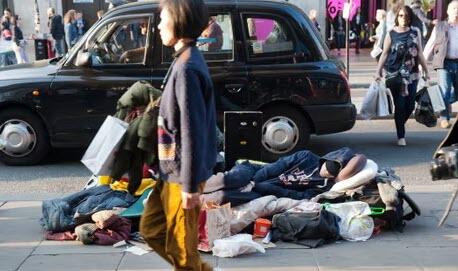
More than 10,000 people slept rough in London between April 2022 and March 2023, marking a 21 percent increase from the previous year, according to data from London’s Combined Homelessness and Information Network (CHAIN).
The news comes as the deadline for the UK Conservative government’s pledge to end rough sleeping in England by 2024 looms near.

Statista's Anna Fleck reports that a total of 10,053 people were counted sleeping rough between 2022/23, up from the 8,329 people in 2021/22. The latest figure is 54 percent higher than the figure of 6,508 people seen sleeping rough a decade ago, in 2013/14. As the following chart shows, the number has risen year-on-year, with only 2017/18, and 2021/22 as exceptions, the latter of which is likely at least in part due to resources having been allocated temporarily during the pandemic.
You will find more infographics at Statista
But with those Covid-19 emergency provisions phasing out, as well as the cost of living crisis placing more people under more pressure, these figures have surged once more, with CHAIN finding that the number of people spotted sleeping rough for the first time has increased by 26 percent from 5,091 in 2021/22 to 6,391 in 2022/23.

The report’s data also serves to highlight vulnerable groups lacking sufficient support or access to support in society. For example, nearly a third (29 percent) had been in prison historically, while 8 percent had been in care at some point in their life.

The nationalities of people sleeping rough in London remained diverse in 2022/23. After the UK (48.6 percent of the people counted), the most counted nationals were people from Romania (11.7 percent of total), Poland (6.3 percent), India (2.9 percent) and Eritrea (2.9 percent).

While CHAIN’s figures are considered more accurate than several other sources due to the fact they are based on the number of rough sleepers over time rather than on a single night, it is worth noting that rough sleeping is only one form of homelessness, and so these figures are reflective of just one part of an even larger issue. According to a report by the Museum of Homelessness charity, homelessness includes those living in temporary accommodation (an estimated 35.5 percent of the population experiencing homelessness), rough sleepers accommodation (24.4 percent), supported accommodation (13.8 percent), street homeless (10.6 percent), B&B or hotel (4.4 percent), emergency accommodation (4.3 percent), or ‘other’ accommodation types (6.9 percent).

FT : Heineken exits Russia at a loss of €300mn

Heineken exits Russia at a loss of €300mn
Deal follows criticism of delayed departure after invasion of Ukraine

Heineken has finally sold its Russian operations, at a loss of €300mn, after criticism of the time it took the Dutch brewing group to exit the country following Russia’s full-scale invasion of Ukraine.

Heineken will sell the business, which has seven breweries and 1,800 employees, to Russian manufacturer Arnest Group for €1. The deal would result in an expected loss of €300mn, the company said on Friday.

Although many European companies announced plans to sell or close their Russian operations after the invasion, some have been slow to withdraw, citing the scale of operations or the need to protect staff still in the country. 

The brewer has already pulled brands including Heineken, Miller and Guinness from Russian shelves, although Amstel has remained on sale in part to keep the local business afloat, and new products have been launched by local management.

“While it took much longer than we had hoped, this transaction secures the livelihoods of our employees and allows us to exit the country in a responsible manner,” chief executive Dolf van den Brink said on Friday.

Yale professor Jeff Sonnenfeld, who created a global list of foreign companies that trade in Russia, has accused some western groups that have not left the country of breaking their promises.

In response to his criticism this year, Heineken said it had been working hard to transfer its business to a buyer in challenging circumstances.

The Russian business was ringfenced and self-funding, it added, with no exchange of funds between Heineken and the local operation. The deal has taken months to gain regulatory approval.

Van den Brink said that the priorities were to safeguard local employees, prevent assets from being taken by the Russian state and avoid any suggestion that the company would make a profit.

“I wish we would have been able to close this deal many months before,” he added. “There was a real risk for legal prosecution of our local people, there was a real risk of nationalisation.”

As part of the deal, Heineken said there would be a three-year licence for “some smaller regional brands which are required to ensure business continuity and secure transaction approval”.

But it said it would provide no brand support and receive no proceeds, royalties or fees from Russia. There is no option in the agreement for a buyback or other return to Russia.

Arnest Group has agreed to repay the historical intercompany debt of the Russian business of €100mn due to Heineken in instalments. The Dutch brewer said its full-year 2023 outlook would not be affected by the sale.

The business, which produced about 10mn hectolitres of beer, represented about 4 per cent of global volumes. “It was key to get the vast majority of our international brands out because we didn’t want them to stay in the country,” Van der Brink said.