FT : Albemarle warns of losing lithium market share to China as prices fall

Albemarle warns of losing lithium market share to China as prices fall
World’s biggest producer has scaled back its growth plans at a time when Chinese rivals pursue development

Albemarle, the world’s largest lithium company, has warned it could lose market share to Chinese producers after a $4.2bn deal to buy an Australian rival foundered and a collapse in prices prompted a pullback on expansion plans.

The US company last week revealed a review — entailing a reduction and reordering — of its capital expenditure plans in response to investor concerns over spending heavily during a market downturn.

Last month Gina Rinehart, Australia’s richest woman, wrecked Albemarle’s bid to take over Liontown Resources, a crucial acquisition for the company to grow its pool of resources after she built up a strategic stake.

Kent Masters, chief executive of Albemarle, acknowledged the group would be likely to lose market share to Chinese rivals as plummeting prices for the metal vital to batteries in electric cars have led it to pursue a more conservative approach.

“We’re being a little more cautious and investing behind the market, so there’s a risk we lose that share,” he said. “This will probably be helpful for Chinese suppliers.”

Albemarle is on course to hold a 13 per cent share of the global market this year versus 63 per cent for Chinese companies, according to Fastmarkets, while it is the biggest lithium group by market capitalisation.

The scaling back of growth plans by Albemarle highlights a strategic dilemma facing western metals groups as they struggle to invest while commodity prices fall. In contrast, Chinese companies are pushing ahead with development plans, despite the weak market.

Metals analysts say the inability of western companies to invest when cash flows drop is creating a problem for the US and Europe in the race against Beijing for critical minerals in the EV supply chain.

Despite the bumper profits over the previous two years, lithium producers have huge outlays of spending to meet forecasts of a big jump in demand. Albemarle predicts the market will increase fourfold by 2030.

Lithium prices have dropped more than 70 per cent this year to just over $22,000 a tonne, according to Benchmark Mineral Intelligence, on weak EV demand in China and the battery supply chain using up stockpiled material rather than buying fresh material.

As a result of weaker prices, net income for Albemarle tumbled 65 per cent to $320mn in the third quarter and cut its annual sales growth forecast from 40-55 per cent three months ago to 30-35 per cent.

Executives at Albemarle said they were puzzled as to why lithium prices have fallen so low, given that they believe EV demand remains strong.

Despite the likes of LG Energy Solution, Tesla and General Motors warning that high interest rates would hit EV expansion plans, Albemarle believes global sales in 2023 are still on track to hit almost 15mn units, growth of more than 40 per cent year-on-year.

“What we would have thought and believed was that they wouldn’t have gone below $25 per kilogramme. They have. I think all that says is we are in for more volatility,” said Eric Norris, president of Albemarle’s lithium business unit.

“When you have prices that low, inventories that low and the market is still growing, you’re going to see a pretty hard bounce at some point,” he added.

Rinehart also threw a spanner in the works for another Australian deal for the battery metal after building a strategic stake in Azure Minerals that Chilean lithium powerhouse SQM agreed to buy.

Despite the risk of her intervening in deals, Masters insisted Albemarle still had appetite to consider acquisitions of Australian producers and said they have yet to give serious consideration to partnering with Rinehart.

FT : US says reliance on Russian nuclear fuel presents national security risk

US says reliance on Russian nuclear fuel presents national security risk
Dependence on supplies from Moscow-controlled Rosatom also threatens climate goals, official warns

US reliance on Russia’s nuclear fuel poses a critical threat to national security and climate goals, said a senior Biden administration official, who urged Congress to provide funds to rebuild its domestic supply chain and restrict imports from the country.

Kathryn Huff, assistant secretary for nuclear energy, told the Financial Times it was “gravely concerning” that about 20 per cent of fuel used by the US nuclear reactor fleet is supplied through enrichment contracts with Russian suppliers.

Russia controls almost 50 per cent of global enrichment capacity and had worked successfully to undermine the US nuclear supply chain over many years by dumping cheap enriched uranium products on world markets, she said.

“It’s really critical that we get off of our dependence, especially from Russia,” Huff said in an interview.

“Without action Russia will continue to hold on to this market . . . this is really important for national security, for climate, for our energy independence.”

The US and its allies imposed sanctions against Russia’s oil and gas industries following Vladimir Putin’s full-scale invasion of Ukraine last year, costing Moscow tens of billions of dollars in lost revenues. But Washington has refrained from preventing Russia’s nuclear giant Rosatom from selling nuclear fuel and enrichment services to US and western power plant operators, as there are few alternative supply sources.

The nuclear fuel supply chain begins with mining and milling uranium ore. But it is the chemical process of converting the ore into uranium hexafluoride gas and then enriching the uranium-235 isotope to a level of about 5 per cent that is required for standard forms of nuclear fuel — and this is dominated by Rosatom, experts say.

There are only a handful of western suppliers of enrichment for nuclear fuel, including France’s Orano and Urenco, a UK, German and Dutch consortium. Tenex, a subsidiary of Rosatom, is the only company in the world providing commercial sales of a new type of fuel called Haleu — high-assay low-enriched uranium — that is enriched to between 5-20 per cent and could power a new generation of smaller, more efficient reactors.


Huff said the Biden administration had asked Congress for an extra $2.16bn to support a strategy to incentivise US-based companies to boost enrichment and conversion capacity. The plan would make the Department of Energy a long-term buyer of last resort for companies to assure adequate fuel supply for the expanding future nuclear reactor fleet, she said.

However, the success of this public investment would depend on imposing long-term restrictions on Russian nuclear products and services, she said.

“We have seen in the past that the dumping of cheap Russian enriched uranium products has historically really damaged our fuel cycle and has brought us to where we are today,” said Huff, adding there was bipartisan support for nuclear energy in Congress.

A bill banning uranium imports from Russia passed a subcommittee in the House of Representatives in May. A similar bill is before the Senate.

Concerns about the west’s reliance on Russian nuclear products have helped push up the price of uranium and related products, as utilities seek alternative sources of supply.

“There is alignment in our industry to step away from Russia, but you need something to step to. We really need to increase capacity in that part of the supply chain,” said Maria Korsnick, chief executive of the Nuclear Energy Institute, an industry group in Washington.

The nuclear industry is growing as China and others expand their reactor fleet to meet emissions reduction targets while increasing baseload power capacity.

Huff said five to 10 contracts to build new reactors needed to be signed within the next two to three years if the US were to meet its 2050 climate goals.

“In the next two or three years we need to see those contracts in hand, or else we will not reach the commercial lift-off that is required to get to the amount of clean power we need for 2050,” she said.

The US is working closely with allies — Canada, France, Japan and the UK — to secure the supply chain and has begun funding some projects. It is supporting an expansion of capacity at Urenco’s enrichment plant in New Mexico, which is expected to be complete by 2027.

The Department of Energy has also co-funded a pilot project led by Centrus, which expects to produce its first batch of Haleu fuel within weeks.

“Legally, Russian materials are still available and being bought and sold,” said Daniel Poneman, Centrus chief executive. “But the politics around it have transformed dramatically and not all, but many of the current importers of Russian enriched uranium would like to move to other sources of supply.”

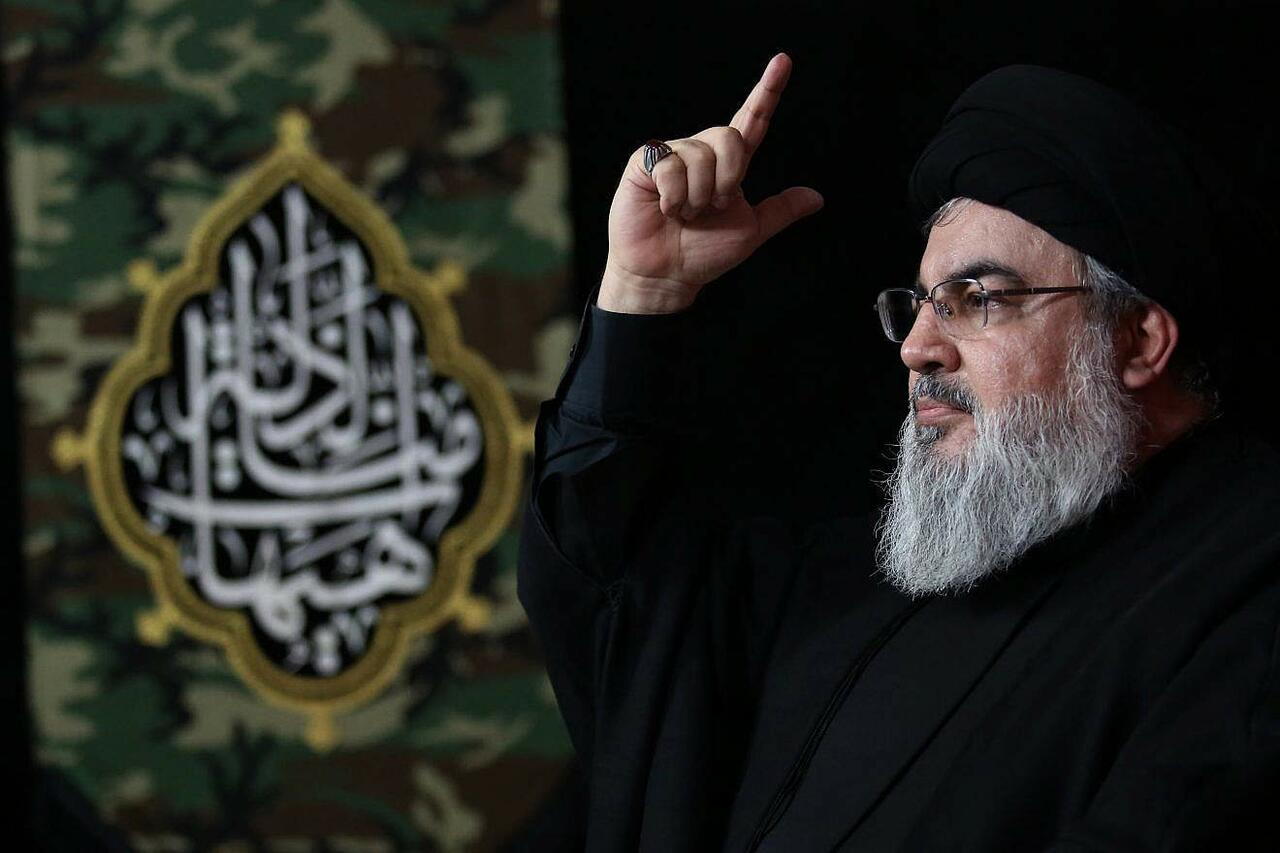
(ZE) Hezbollah's Nasrallah & The Future Of The War

Hezbollah's Nasrallah & The Future Of The War

The expectations for Hizbullah leader Hasan Nasrallah’s speech on Friday were very high; even the U.S. National Security Council’s spokesperson at the White House admitted that they too were awaiting the speech. In the Arab world there was anticipation or a general wish that Nasrallah would declare an official entry into the larger war, thereby igniting a regional conflict that would change the shape of the Middle East.

Hizbullah, unwisely, increased expectations by releasing video teasers showing Nasrallah walking or seated. Israelis and much of the world were holding their breaths. Lebanese were nervous but hopeful that Nasrallah would take their plight into consideration.

But Nasrallah does not operate in a vacuum. There is a very complex context in which he does. In the Arab world, the Western-Gulf alliance has spent billions to demonize Nasrallah and to undermine his standing in the Arab and Muslim worlds; and his standing reached new heights in the wake of the 2006 war with Israel.

Hizbullah’s involvement in Syria, and the circulation of slogans that were sectarian and religious in nature, aided the Gulf regimes’ campaign against Nasrallah and the party, portraying them as purely Shiite and merely puppets of Iran. The Gulf’s mission was to push the party into a sectarian corner, and the party — through its political behavior in Lebanon — unintentionally aided that mission.

Since the Lebanese economic collapse in 2019, Hizbullah has pursued political options focusing on solidifying Shiite political ranks. This is only understandable from the perspective of the party protecting itself from a Gulf-Israel plot to instigate a Shiite, intra-sectarian, civil war.

Thus it’s not easy to assess the speech with disregard to the political context in which it took place. Nasrallah was addressing many audiences: the party’s rank-and-file, the Lebanese scene, the Arab scene, and his enemies in the West and Israel.

The video teasers before the speech would have worked if there was a dramatic announcement in the form of a major escalation or a declaration of war. When that did not materialize, it made those teasers feel hollow even though they succeeded in a form of psychological warfare against the Israeli enemy (an Israeli newspaper commented that Nasrallah succeeded in tearing the nerves of Israelis).

Hizbulllah is the first Arab political party, or even state if we add them to the mix, which devotes energy and resources to engage in psychological warfare against the Israelis. The PLO had no notion of that, and the speeches of its leaders (and of Arab leaders) were bombastic and emotional and did not rely on a base of military power and preparedness. Nasrallah is an expert on Israel; he spends hours reading about Israel and its politics and military.

Tied Hands
Nasrallah must have felt enormous pressure before the speech. For a leader who uniquely (in the history of Arab leaders and of Israel) makes decisions on the basis of a cost-benefit analysis, Nasrallah’s hands were a bit tied in Lebanon. Half of the country (at least) is under the influence of Gulf regimes and have relatives in the Gulf and fear for their expulsion (Gulf regimes remind Lebanon regularly that if Lebanon were to take stands against the Gulf regimes, those Lebanese immigrants would be expelled en masses).

Furthermore, there is an enormous U.S. media apparatus headquartered in Dubai that coordinates with Israel and Gulf countries in the war on enemies of Israel, especially those who are engaged in resistance against Tel Aviv.

Weeks before Nasrallah’s speech, journalists on the payroll of Gulf regimes and journalists who work for media funded by NATO governments and George Soros came together and promoted a petition rejecting the war between Lebanon and Israel, insisting that Lebanon is too fatigued to participate in a war against Israel. Money was mysteriously made available for those people to buy billboards sending the same message: that Hizbullah should keep Lebanon out of the war.

The movement did not spread much, but it registered with people who are worried about their living conditions, in the wake of the economic collapse and the elimination of people’s life savings. It did not help that Israeli leaders make weekly threats that they would turn Lebanon back to the pre-industrial age or that they would threaten to eliminate Lebanon altogether.
Those genocidal statements don’t get covered in the Western press, but they alarm the Lebanese population; Lebanese know full well that in war Israel targets civilians first and foremost.

Most of the casualties in Israel in the July 2006 war were combatants, while most of the casualties in Lebanon were, typically, civilians. Lebanese infrastructure is in decrepit shape and Israel in the past consistently targeted Lebanese hospitals, power stations, airports, schools, and refugee camps.

That must weigh heavily on Nasrallah’s mind when he makes the cost-benefit analysis.

But there are also the party-stalwarts who have been raised on the slogan, nay expectation, of the liberation of Palestine. They genuinely believe that Israel would reach its demise in the next war.

Those supporters of the party needed to hear from their leader to understand the regional ramifications of the war.

And Nasrallah, it must be pointed out, is now probably the most senior figure in the “axis-of-resistance” in the Middle East. Even Qassim Suleimani (murdered by the U.S.) was lower in rank than Nasrallah ( footage of meetings between the two men confirm that Nasrallah was the senior person in the relationship). Photos of family mourning in Suleimani’s home show a picture of Nasrallah in the house).
Even Ayatollah Khamenei, who is the most senior religious figure in the hierarchy of the axis, defers to Nasrallah on strategic matters (Iranian officials regularly briefed Nasrallah on nuclear negotiations with the West).

Three Signals
When it comes to war with Israel, Nasrallah is the ultimate decision maker.

So he knew expectations were high and that this was a historic moment with the Arab people unified in support of Palestine. He could not stand by or act indifferently. He has not only opened (since the Hamas attack on Israel) the front in the South where his has party lost 55 members so far in clashes with the Israeli occupation army, but he also allowed Palestinian factions (namely Hamas and Islamic Jihad) to use Lebanese territories to fire short range missiles at Israel targets.

The entire political class in Lebanon (in the form of the government and the prime minister) has said that Lebanon does not want war with Israel.

So Nasrallah did not declare war, but sent out these important signals:
  • He made it clear that the planning and the timing of the Hamas operation was entirely Hamas and Hamas alone. He said that not even allies of Hamas in Gaza (clearly a reference to Islamic Jihad) knew of the operation because Hamas maintained absolute secrecy. Iran was not involved and that was important to stress because in the Western media all Iranian allies are presented as mere puppets of Iran. The picture is more complicated. In 2011, Hamas supported the Syrian revolt against the Syrian regime although the regime provided Hamas with sanctuary and military support. That stance poisoned the relationship between Hamas and Iran, and even between Hamas and Hizbullah. Hamas later reconciled with Hizbullah, but the Hizbulalh leadership still refuses to meet with Khalid Mishal, the leader behind Hamas’ decision to support the Syrian armed rebellion (he took that decision consistent with the stance of Qatar and Turkey, with which he is very close). Moreover, even the US has finally concluded (according to CNN) that Hizbullah does not merely follow Iranian orders in its decision making.
  • Nasrallah wanted to make clear that the front from Lebanon to Syria to Gaza is one and that all members of the resistance camps will be fighting together. He made a reference to the Iraqi allies of Hizbullah.
  • Nasrallah was preparing the Lebanese for the next phases of the war. He all but made it clear that a larger war is inevitable but he did not want to be the one to announce it, thereby opening the door for the Gulf-paid media to blame him for that decision. He spoke about phases of this war and reminded the audience about Israeli losses and Hizbullah’s successes in clashes in South Lebanon.
  • Nasrallah sent a message to the U.S.: His group won’t be intimidated by the presence of the fleet in the Mediterranean and reminded the U.S. that some of those who fought against the U.S. in Lebanon in 1982-84 are still alive and trained others. He made it clear that Hizbullah would retaliate against U.S. forces if the U.S. strikes Lebanon.
It was not Nasrallah’s best speech, and it did not meet the very high expectations by many. But it achieved what he wanted from the occasion: to put the enemy on notice that Hizbullah would not rule out a major confrontation with Israel and that such eventualities are related to developments on the ground in Gaza.
>>> Capri Holdings and Tapestry (TPR) receive request for additional info from F

Capri Holdings and Tapestry (TPR) receive request for additional info from FTC related to its review of the two companies' previously announced transaction (50.66 -0.39)
  • Both Capri and Tapestry expect to promptly respond to the Second Request and to continue to work cooperatively with the FTC in its review of the transaction.
  • Capri continues to expect that the Transaction will be completed in calendar year 2024.

>>> After Hours Summary: VMEO +16.1%, TRIP +12%, JELD +6.5% making nice moves fo

After Hours Summary: VMEO +16.1%, TRIP +12%, JELD +6.5% making nice moves following earnings; AMRC -11.7%, SANM -10.1% struggling after earnings; KMI -0.2% steady on NexEra Energy (NEE) M&A news

After Hours Gainers:

Companies trading higher in after hours in reaction to earnings/guidance: TMDX +36.1%, VMEO +16.1%, AYX +14.9%, TASK +13.5%, UIS +13.5%, PAY +12.7%, TRIP +12%, DCGO +7.8%, RNG +7.6%, MYGN +7.1%, JELD +6.5%, QTRX +6.5%, HIMS +6.4% (also announced repurchase program), SKWD +6.1%, NEO +6.1%, ROVR +5.9%, IFF +5.5% (continuing agreement with Icahn Capital), CBT +5.3%, MTTR +5.2%, CRGY +4.5%, KIDS +4.2%, ATEC +3.9%, PRAA +3.6%, CTRA +2.9%, AOSL +2.8%, WTRG +2.8%, VECO +2%, FN +1.9%, AMK +1.7%, STEP +1.6% (also appoints new CFO), VNOM +1.5%, FSK +1.4%, TDC +1.1%, COHR +1.1%, GH +0.9%, AAON +0.7%, O +0.6%, FANG +0.5%, NXPI +0.5%, RCKT +0.5%

Companies trading higher in after hours in reaction to news: CPRI +4% (receives additional info request from FTC), MGNX +2.8% (files mixed shelf), VLRS +2.3% (reports October capacity), VTLE +2.2% (stock offering), CWCO +1.7% (acquires Ramey Environmental Compliance), DRS +1.6% (awarded $134 mln production order), SPLK +1.3% (stock offering), BATRA +0.5% (stock offering)

After Hours Losers:

Companies trading lower in after hours in reaction to earnings/guidance: AMRC -11.7%, SANM -10.1%, EVCM -8.5%, SWAV -7.4%, OPK -5.2%, AZPN -5.1%, CXW -2.5%, ICHR -2%, MED -1.9%, VRTX -1.7%, DHT -1.6%, OLO -1.1%, SKT -0.8%, RVMD -0.8%, GT -0.8%, CRSP -0.2%, CXT -0.1%, TALO -0.1%

Companies trading lower in after hours in reaction to news: VTYX -76.9% (announces Phase 2 results), AURA -15.9% (stock offering), CPG -5.7% (to acquire Hammerhead Energy for $2.5 bln; files CDN$500 mln common stock offering), COCO -5.7% (stock offering), MMS -5.6% (completes divestiture of employement services operations), CWAN -3.5% (stock offering), TSLA -2.4% (SpaceX eyeing $15.0 bln in revenue next year, according to Bloomberg), KNF -2.3% (stock offering), -1.9%, WELL -1.8% (stock offering), AEP -0.9% (files mixed shelf), KTOS -0.6% (awarded $579 mln U.S. Air Force contract), LCID -0.3% (integrating NACS by 2025), TPR -0.3% (receives additional info request from FTC), NEE -0.3% (to be acquired by KMI), ABCM -0.2% (shareholders approve DHR acqusition), ASR -0.2% (reports October passenger traffic), KMI -0.2% (to acquire NextEra Energy for $1.815 bln), MCB -0.1% (appoints new CFO)

>>> US Close Dow +0,10% S&P +0,18% Nasdaq +0,30% Russell -1,29%

Closing Stock Market Summary
The market experienced some consolidation today following the best week of the year for the stocks. The major indices were largely supported by mega cap gains while many other stocks declined due to profit-taking activity.

The Vanguard Mega Cap Growth ETF (MGK) rose 0.8% while the market-cap weighted S&P 500 closed with a 0.2% gain. Meanwhile, the Invesco S&P 500 Equal Weight ETF (RSP) fell 0.5% and market breadth was negative at both the NYSE and the Nasdaq. Decliners led advancers by a 5-to-2 margin at the NYSE and a nearly 2-to-1 margin at the Nasdaq.

The S&P 500 real estate sector (-1.4%), which jumped 8.6% last week, saw the steepest decline today followed by energy (-1.2%). The next worst performing sector was materials, which closed with a modest 0.5% loss.

The heavily-weighted information technology sector (+0.8%) led the pack followed by health care (+0.7%) and consumer discretionary (+0.2%).

Rising market rates were another factor keeping stocks in check. Like equities, Treasuries experienced some consolidation after last week's big gains. The 2-yr note yield rose eight basis points to 4.94% and the 10-yr note yield rose ten basis points to 4.66%.

The Treasury market will see a rush of new supply this week, beginning with the $48 billion 3-yr note auction on Tuesday, followed by the $40 billion 10-yr note auction on Wednesday and the $24 billion 30-yr bond auction on Thursday.
Separately, some individual stocks made outsized moves on specific news catalysts. Paramount Global (PARA 12.69, -1.07, -7.8%), which was downgraded to Underperform from Buy at BofA Securities, and Albemarle (ALB 119.46, -8.52, -6.7%), which was downgraded to Neutral from Buy at UBS, were among the losing standouts in that respect.

There was no U.S. economic data of note today.
  • Nasdaq Composite: +29.2% YTD
  • S&P 500: +13.7% YTD
  • Dow Jones Industrial Average: +2.9% YTD
  • S&P Midcap 400: +1.0% YTD
  • Russell 2000: -1.3% YTD

Looking ahead, Tuesday's economic calendar features:
  • 8:30 ET: September Trade Balance ( consensus -$60.1 bln; prior -$58.3 bln)
  • 15:00 ET: September Consumer Credit ( consensus $9.0 bln; prior -$15.6 bln)

FT : European countries boost funding for Ariane 6 rocket programme

European countries boost funding for Ariane 6 rocket programme
Deal between France, Germany and Italy reflects continent’s effort to build capacity for independent launches

France, Germany and Italy struck a deal on Monday to pump €340mn a year more into the troubled Ariane 6 heavy-lift rocket programme, in a bid to ensure the future of Europe’s sovereign access to space.

As part of the long-awaited tripartite agreement, Europe’s approach to commissioning launch services will open up to competition, in a fundamental shift that will put pressure on Airbus and Safran, the joint owners of ArianeGroup.

Italy has also opted to withdraw its Vega-C medium-lift rocket from ArianeGroup’s marketing arm, Arianespace. Vega-C will eventually be operated by Italian group Avio.

The agreement underscores Europe’s anxiety to close the gap in low-cost launch capacity with Elon Musk’s SpaceX in the US, which is dominating the race to exploit the rapidly developing commercial space economy.

In a decision that has been widely criticised since the programme was launched in 2014, Ariane 6 was not designed to be reusable, in order to preserve jobs.

Bruno Le Maire, French finance minister, said the three-way deal “opened a new era for European launch. It will allow Europe to continue to play a role as a great space power.”

The three countries have agreed to provide €340mn a year in extra funding to cover the costs of flights 16 to 42 of Ariane 6, which are expected to launch between 2027 and 2029-30.

The maiden flight is set for next year, but it is running some four years behind schedule. The delays have left Europe with no sovereign launch capability.

Ariane 5 made its last flight in July, while the new Vega-C medium-lift rocket was grounded after a flight failure late last year. Europe stopped using Russia’s Soyuz rocket after the full-scale invasion of Ukraine. 

Europe has had to book flights on SpaceX vehicles for next year’s planned launch of satellites into its Galileo navigation system.

The decision to give extra funding to Ariane 6 was hard won. Le Maire said it had come only after months of discussion and negotiation. France and Germany in particular have been at odds over funding for Ariane 6, which is expected to be more expensive than SpaceX’s Falcon 9. 

France funds 55 per cent of the Ariane 6 programme and will continue to assume that proportion of the extra funding, Le Maire said.

Josef Aschbacher, director-general of the European Space Agency, hailed the progress on Ariane 6 as an important step towards solving the “crisis” in European access to space. Europe was on the brink of a “historic moment” in space transportation as it moved to a more competitive model for the development of launchers, he added.

He said he hoped to be able to announce a date for Ariane 6’s inaugural flight after a test later this month. “We need to get Ariane 6 on to the launch pad as soon as possible.”

WSJ : U.S. Plans $320 Million Weapons Transfer to Israel as Gaza Toll Mounts

U.S. Plans $320 Million Weapons Transfer to Israel as Gaza Toll Mounts
The Biden administration notified Congress of plans to send American-made precision Spice bombs

The Biden administration is planning a $320 million transfer of precision bombs for Israel, a major weapons deal that comes amid heightened concerns in Congress and among some U.S. officials about the rising civilian death toll during the Israeli military campaign in Gaza.

The administration sent formal notification on Oct. 31 to congressional leaders of the planned transfer of Spice Family Gliding Bomb Assemblies, a type of precision guided weapons fired by warplanes, according to correspondence viewed by The Wall Street Journal.

Under the agreement, weapons manufacturer Rafael USA would transfer the bombs to its Israeli parent company Rafael Advanced Defense Systems for use by the Israeli defense ministry, the correspondence says. The plan also includes the provision of support, assembly, testing and other technology related to the weapons use. It follows a $402 million transfer of the same weapons that the administration first sought congressional approval for in 2020.

The planned weapons deal comes as the death toll in Gaza from Israel’s continuing assault on the enclave surpassed 10,000 people on Monday, according to the local Health Ministry in the Hamas-run enclave. The figure doesn’t distinguish between civilians and combatants but more than two-thirds of those killed in Gaza have been women, children and the elderly, according to the Health Ministry affiliated with the Palestinian Authority.

Officials at the departments of State and Defense didn’t immediately respond to a request for comment on the matter.

Israel launched the current offensive in Gaza in response to a cross-border incursion by Hamas militants on Oct. 7 that killed more than 1,400 Israelis including many civilians. Israel has vowed to remove Hamas from power in response to the mass killing.

The Pentagon has refused to say how much military weapons, equipment and other aid it has provided Israel since the Oct. 7 attack.

After being the recipient of widespread Western and other international support in the aftermath of the Hamas attack, Israel is now facing a growing international outcry over killings of civilians and the deepening humanitarian crisis in Gaza.

Israel has imposed a total siege on Gaza, cutting off supplies of food, water, electricity, medicine and other essentials. The military offensive has also displaced nearly 1.5 million people according to the United Nations. Some humanitarian aid has arrived via convoys of trucks from Egypt, but the delivered supplies are not nearly enough for the entire population of Gaza, according to the U.N. and aid groups.

A series of Israeli bombings that caused extensive casualties have heightened scrutiny on the Israeli military campaign, including a pair of bombings in Gaza’s Jabalia area last week that flattened apartment blocks and killed dozens of people. Israel said it was targeting Hamas personnel and infrastructure.

The Israeli bombing campaign has also hit U.N. installations including schools used as shelters for people who have fled their homes, hospitals and ambulances, and other civilian targets.

Israel has urged civilians to leave the north of the Gaza Strip as it encircles the area and attempts to crush Hamas. An Israeli military spokesman also said Israel’s forces limited capacity for precision strikes because they are stretched thin. The Israeli air force has said its strikes are causing “maximum damage.”

FT : OpenAI set to launch store as ChatGPT reaches 100mn users

OpenAI set to launch store as ChatGPT reaches 100mn users
Group aims to turn artificial intelligence interface into a digital platform

OpenAI is launching custom versions of ChatGPT that can be adapted and tailored for specific applications, turning the chatbot interface into a digital platform like iOS or Android.

Known as GPTs, the tools can be built using plain English for cases such as tutoring a child in maths, creating a travel concierge or designing a website. The Microsoft-backed artificial intelligence company said it planned to launch a GPT Store in the coming weeks, to collate the best apps, and eventually split revenues with the most popular GPT creators.

The store’s launch comes exactly a year after the public debut of ChatGPT, echoing Apple’s decision to launch the iOS App Store a year after the iPhone, which brought it into the software services business.

In an event for developers on Monday, OpenAI said ChatGPT had 100mn weekly active users, and launched a new AI model, GPT-4 Turbo, for developers, which can analyse more than 300 pages of text in a single prompt, and is more than two times cheaper than its previous offering.

“We believe if you give people better tools, they will do amazing things. Eventually you’ll ask a computer for what you need and it will do all these tasks for you,” said Sam Altman, chief executive of OpenAI.

Allowing people to build these chatbots without coding makes it more “accessible and gives agency to everyone”, Altman said, adding that “gradual iterative deployment” was OpenAI’s approach to creating autonomous AI safely.

Satya Nadella, the chief executive of Microsoft, joined Altman on stage, saying OpenAI had “built something magical” and that ultimately the groups’ partnership was about “getting benefits of AI broadly disseminated to everyone”.

Altman said: “I think we have the best partnership in tech and I’m excited to build [artificial general intelligence] together.”

Some of the examples of GPTs showcased by the company include a computer science lesson planner from its partner Code.org, a non-profit that teaches kids to code, as well as an Airbnb house manual, for which its AI models such as Dall-E2 automatically generated images and instructions based on user prompts.

“We believe natural language will be a big part of how people use computers in the future. This is an interesting early example,” Altman said.

Since launching its conversational chatbot last November, OpenAI has introduced a mobile app version, and added features including image generation and analysis to ChatGPT. The new custom GPTs can be created by existing ChatGPT Plus subscribers, and shared online using a link or designed for internal use by its enterprise customers, OpenAI said.

The tools can also be used to complete actions, such as booking restaurant tables. Altman said AI chatbots like GPTs would start to handle online tasks autonomously, turning them into so-called agents. “They will gradually be able to plan and perform more complex actions on your behalf,” he said.

As OpenAI expands its ambitions in building a viable business and developing cutting-edge AI, it is under pressure to raise significant capital for infrastructure and computing costs. The company is in talks with existing investors including Thrive Capital about selling shares at a valuation of $86bn, roughly three times what it was worth six months ago.

A stock sale at the level OpenAI is targeting would make the San Francisco-based group one of the world’s most highly valued private companies.