>>> US Research Calls

Research Calls
  • Upgrades:
    • AXIS Capital (AXS) upgraded to Outperform from Mkt Perform at Keefe Bruyette; tgt raised to $66
    • Booking Holdings (BKNG) upgraded to Mkt Perform from Underperform at Bernstein
    • Enact Holdings (ACT) upgraded to Buy from Neutral at BofA Securities; tgt $30
    • Guardant Health (GH) upgraded to Outperform from Mkt Perform at Raymond James; tgt $27
    • Health Catalyst (HCAT) upgraded to Overweight from Neutral at Piper Sandler; tgt lowered to $11
    • HP Inc. (HPQ) upgraded to Buy from Neutral at Citigroup; tgt raised to $33
    • Montauk Renewables (MNTK) upgraded to Sector Outperform from Sector Perform at Scotiabank; tgt $9
    • Natera (NTRA) upgraded to Strong Buy from Outperform at Raymond James; tgt $68
    • Noah Holdings (NOAH) upgraded to Buy from Neutral at UBS; tgt raised to $18
    • Oracle (ORCL) upgraded to Buy from Hold at Edward Jones
    • TripAdvisor (TRIP) upgraded to Outperform from Mkt Perform at Bernstein
  • Downgrades:
    • Barings BDC (BBDC) downgraded to Equal Weight from Overweight at Wells Fargo; tgt lowered to $8.50
    • Crescent Capital BDC (CCAP) downgraded to Equal Weight from Overweight at Wells Fargo; tgt lowered to $16
    • Highwoods Prop (HIW) downgraded to Neutral from Buy at BofA Securities; tgt lowered to $20
    • Hudson Pacific Properties (HPP) downgraded to Underperform from Neutral at BofA Securities; tgt lowered to $4
    • Paramount Group (PGRE) downgraded to Underperform from Neutral at BofA Securities; tgt lowered to $4
    • Plug Power (PLUG) downgraded to Peer Perform from Outperform at Wolfe Research
    • Regions Fincl (RF) downgraded to Hold from Buy at Odeon; tgt $17.10
    • Southwest Air (LUV) downgraded to Sell from Hold at Melius
    • Unity Software (U) downgraded to Peer Perform from Outperform at Wolfe Research
    • W.P. Carey (WPC) downgraded to Mkt Perform from Mkt Outperform at JMP Securities
    • Waters (WAT) downgraded to Underweight from Equal Weight at Barclays; tgt lowered to $230
  • Others:
    • ABM Industries (ABM) initiated with a Hold at Truist; tgt $43
    • Boston Beer Co (SAM) initiated with a Hold at Jefferies; tgt $375
    • Brookfield Business Partners (BBU) resumed with an Outperform at RBC Capital Mkts; tgt $28
    • Brookfield Renewable Partners (BEP) resumed with an Outperform at RBC Capital Mkts; tgt $29
    • Cameco (CCJ) resumed with an Outperform at RBC Capital Mkts
    • Celsius (CELH) initiated with a Buy at Jefferies; tgt $217
    • Church & Dwight (CHD) initiated with a Hold at Jefferies; tgt $99
    • Cintas (CTAS) initiated with a Buy at Truist; tgt $625
    • Clorox (CLX) initiated with an Underperform at Jefferies; tgt $117
    • Coca-Cola (KO) initiated with a Hold at Jefferies; tgt $64
    • Colgate-Palmolive (CL) initiated with a Buy at Jefferies; tgt $87
    • Constellation Brands (STZ) initiated with a Buy at Jefferies; tgt $292
    • GitLab (GTLB) initiated with a Buy at BTIG Research; tgt $56
    • Keurig Dr Pepper (KDP) initiated with a Buy at Jefferies; tgt $39
    • Mirum Pharmaceuticals (MIRM) initiated with an Overweight at Morgan Stanley; tgt $60
    • Molson Coors Brewing (TAP) initiated with a Hold at Jefferies; tgt $62
    • Monster Beverage (MNST) initiated with a Buy at Jefferies; tgt $65
    • Olin (OLN) initiated with a Buy at Citigroup; tgt $50
    • PepsiCo (PEP) initiated with a Buy at Jefferies; tgt $203
    • Procter & Gamble (PG) initiated with a Buy at Jefferies; tgt $177
    • The Duckhorn Portfolio (NAPA) initiated with a Buy at Jefferies; tgt $13
    • The Vita Coco Company (COCO) initiated with a Buy at Jefferies; tgt $33
    • V2X (VVX) initiated with a Mkt Outperform at JMP Securities; tgt $65
    • WK Kellogg Co (KLG) initiated with an In-line at Evercore ISI; tgt $13
WSJ : Electricity Use Booms in Texas, a Harbinger for the Country

Electricity Use Booms in Texas, a Harbinger for the Country
Power demand is climbing across the nation as industrial users connect to the grid, populations grow and weather gets more extreme

Everything is bigger in Texas, including its electricity use, which is increasing at historic rates in a sign of what is to come for much of the U.S.

The country’s largest electricity producer and user saw sales grow at five times the national rate for the past decade, roughly like adding Louisiana. A crushing heat wave this summer broke 10 peak demand records for the main Texas grid operator, which narrowly avoided blackouts one hot evening.

Texas is an extreme example with a big population that needs a lot of air conditioning, but it is also at the center of trends pushing electricity use higher in pockets of the country: the reshoring of manufacturing, the growth of power-hungry data centers and a push to electrification.

Some analysts say they are concerned the U.S. grid isn’t ready for accelerated growth in industries that want to plug in or the concentrated nature of the new demand in certain states. While there is room for more customers on the grid, planning is complex, and it is hard for the system to absorb if everyone tries to connect at the same place and time.

Texas is among a handful of states seeing dramatic upswings in demand.

Growth in semiconductor manufacturing has helped push electricity use higher in Oregon. States like Virginia and Iowa are seeing the addition of more large-scale data centers. Oil fields in North Dakota and New Mexico are hooking up to the grid and driving some of the nation’s biggest upswings in electricity use.

Electricity demand typically inches higher slowly with economic and population growth, canceled out by efficiency gains. Nationally, sales grew just 5% in the past decade. Texas electricity demand grew by 25% during that period, according to government data.

New customers that have connected to the Texas grid in recent years include the Tesla gigafactory outside of Austin, a liquefied natural gas export facility on the Gulf Coast touted as the world’s largest all-electric plant and bitcoin miners.

Texas is experiencing new demand on the electric grid that hasn’t been seen since the 1950s, ’60s and ’70s, said Michael Skelly, chief executive of transmission developer Grid United.

“Are we on the brink of such a moment now with electrification of transportation, with more extreme weather?” Skelly asked, noting that Texas companies are pursuing carbon capture and hydrogen projects that will tap grid power. “And we’re going to do AI,” he added.

Many utilities and grid operators across the U.S. are adjusting demand forecasts higher.

In coming years, computing power for artificial intelligence and wider adoption of electric vehicles will add to the demand. In addition, more manufacturing is relocating to the U.S. because of incentives in last year’s Inflation Reduction Act.

The U.S. is also making a historic transition from conventional power plants fueled by coal and natural gas to cleaner forms of energy such as wind and solar power. Grid operators across the U.S. have been warning that power-generating capacity is struggling to keep up with demand, and that gaps could lead to rolling blackouts during hot or cold weather extremes.

Data centers are one of the biggest new power consumers, and demand from them could double by 2030. Some new data centers requesting grid connections are as large as 500 megawatts, as much as it takes to power hundreds of thousands of homes, said Rob Chapman, senior vice president of energy delivery and customer solutions at the Electric Power Research Institute, a nonprofit researcher and advisory.

In Virginia, the state’s largest utility, Dominion Energy, has connected 75 new data centers since 2019, much of it fueled by streaming and work-from-home trends. Statewide electricity sales are up 7% year-to-date since then, according to government data. The utility expects electric demand to grow by about 85% over the next 15 years, spokesman Aaron Ruby said.

In the Pacific Northwest, electricity demand is expected to increase 20% in the next five years, much of it because of industrial growth, according to the Pacific Northwest Utilities Conference Committee, a trade association. That new demand is like adding four Seattles to the grid.

In New Mexico, electricity sales have jumped largely because of the Permian Basin shale patch in the southeastern corner of the state, said Commissioner Gabriel Aguilera of the New Mexico Public Regulation Commission. Producers there are connecting pumps, compressors and other equipment to the grid as they try to reduce greenhouse gas emissions.

The utility serving a large slice of the oil field, which straddles New Mexico and Texas, has seen its industrial sales increase an average of 15% for the past five years, a rate Aguilera called “astounding.”

Likewise, North Dakota has seen oil-field electrification while also courting both bitcoin miners and data centers, causing electricity sales to jump more than 58% in the past decade, the biggest increase in the country.

In Texas, electricity demand soared this summer as users cranked their air conditioning, but heat alone doesn’t explain it, said Barbara Clemenhagen, vice president of market intelligence at Customized Energy Solutions and a former board member of the Texas grid operator.

“There’s a ton of relatively cheap and available land in Texas, with relatively easy access to energy, and relatively low-cost energy compared to other parts of the country,” Clemenhagen said.

As a result, a range of industries has been expanding and electrifying operations in Texas, from EV makers to oil-and-gas companies to bitcoin miners. While Texas’ pro-business climate has spurred significant economic development, some say it has also made the grid more precarious.

Texas politicians have rolled out the welcome mat for bitcoin miners, though their enormous energy use is controversial. Miners typically operate warehouses of computer servers that unlock new bitcoin by solving mathematical puzzles that become increasingly complex and require more computing power—and more electricity.

Bitcoin miners argue they benefit the grid with their flexibility to turn on and off. Critics say they make electricity more expensive for household users.

Meanwhile, Texas added nearly 9.1 million residents between 2000 and 2022, according to the U.S. Census Bureau, more than any other state. San Antonio municipal utility CPS Energy connects around 30,000 new electric customers each year and “every utility in the state can give you a similar statistic” said Rudy Garza, president and chief executive.

“You’ve got to have every megawatt of power that can be produced whether it is wind or solar or batteries or new thermal generation,” Garza said. “Beggars can’t be choosers in an environment where the conditions in the market are tight.”

TechCrunch : Bose QuietComfort Ultra earn their name and maybe even their $429 p

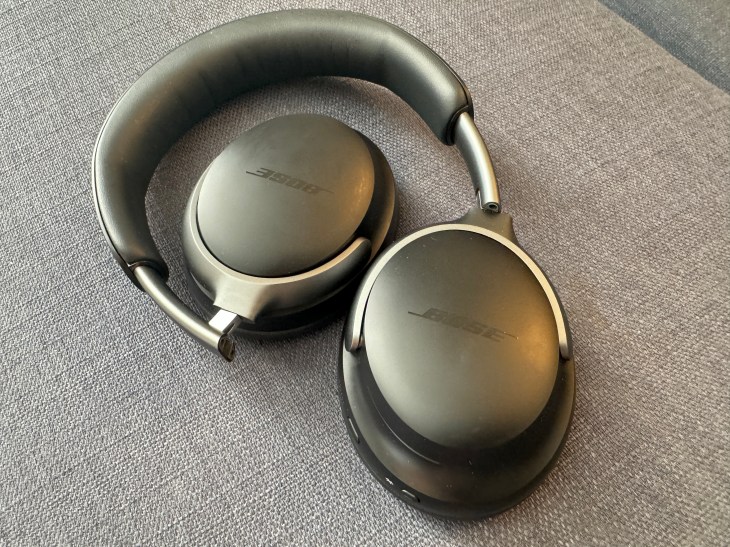
Bose QuietComfort Ultra earn their name and maybe even their $429 price tag
Image Credits: Brian Heater

For years, any time someone asked what brand of headphones they should buy for a flight, the answer was a simple one syllable: Bose. The company’s QuietComfort line had long been synonymous with drowning out plane noise on long flights. But over the last several years, the question has become an increasingly difficult one, as companies like Apple and Sony have shot to the top of the category.

Back in mid-September, the company planted its flag in the sand once again. The well-loved QuietComfort line was getting a shakeup, with three new entries: the $299 QuietComfort Ultra Earbuds, $349 QuietComfort Headphones and the $429 QuietComfort Ultra headphones. The latter (which, as the headline suggests, is our focus today) replaces the $379 (now $279) Bose Noise Cancelling Headphones 700.

As naming conventions go, it’s certainly simpler and more streamlined. At least you know where the Quiet Comfort Ultra Headphones stand relative to the QuietComfort Headphones (they’re, you know, more ultra). You’ve probably already balked at the price tag, as any reasonable, non-independently wealthy person would. The premium headphone race may have heated up, but it’s not making the products any cheaper. We’re eyewateringly close to hitting half-a-grand here.

Are any noise-cancelling Bluetooth headphone worth $429? That’s a question I certainly can’t answer for everyone. What I can say is that if any are, these are them. Bose has created some of the most comfortable and best sounding headphones I’ve ever tested, coupled with best in class noise cancelation. These things are, indeed, the real deal.

Image Credits: Brian Heater

Thankfully, Bose managed to deliver the pair before a cross country flight earlier this week. Unfortunately, it didn’t occur to me to double check the size of the auxiliary jack. What can I say, it’s been a while since I’ve actually worn a pair of Bose headphones on a flight (thank Sony for that), so I’d forgotten that the headphones themselves sport a 2.5mm port, rather than the more standard 3.5mm. When all else fails, just go whatever they ship you in the box.

So, no seatback entertainment through the new QuietComfort for me this trip. That’s fine, there’s was nothing good on anyway. As for the rest of the flight, you’re not going to beat these things in terms of comfort — they’re lightweight and well-padded with a soft lining. The active noise canceling also did an excellent job eliminating the plane white noise and even a bit of the shrieking child toward the back. Not fully on that last bit, however – the technology just isn’t there yet.

The ANC is good enough, however, that I had to actively switch to “aware” mode when using the headphones during a podcast. With it activated, it was honestly too difficult to hear myself speaking, which threw me off (apologies to the interviewee on that one).

Pricing aside, there is one notable complaint. The battery life isn’t on-par with other over-ear pairs, like Sony’s ‎WH-1000XM5 and the Beats Studio 3. It got me through the aforementioned cross country flight, and should get you through a day no problem, but be forewarned that it’s the one place where the Ultras fall short of the competition.

FT : Where global equity fund managers see opportunity in Asia

Where global equity fund managers see opportunity in Asia

Global equity fund managers view India as the primary investment opportunity in Asia Pacific.

James Dowey, manager of the Liontrust Global Dividend fund, said the demographic advantages inherent in India made it both an economy and a market worth investing in.

He said: “The biggest and best source of opportunity in Asia Pacific in the decade ahead is India. The reasons are simple – its huge potential scale due to its exceptionally young population and great growth prospects from a low base unlocked by reforms and innovation over the past decade. India’s median age is 28 compared with China’s at 38 and while China is set for a decline of one or two million of its working age per year over the next decade India will gain about 10mn a year.”

Many emerging market economies get stuck in what economists call the middle income trap - when a country can no longer compete internationally in the market for labour-intensive goods because wages are too high, but it cannot also compete in higher value-added markets because productivity is too low

Attempting to escape this trap usually involves regulatory and supply-side economic reforms, which can be unpopular with voters.

Dowey’s view is that these regulatory reforms have already happened in India, while the economy is also moving up the value chain and not reliant on being the lowest-cost manufacturer.

He said: “This can already be seen in the recent strong growth of the technology and high value manufacturing sectors alongside signs, finally after many years, of a major build out of infrastructure and real estate. These factors should set the scene for structural economic growth north of 5 per cent a year.”

Alex Stanic, manager of the Artemis Global Select fund, which is no longer owned by any of the allocators we cover, said that while there are enormous globally-focused companies throughout the Asia Pacific region, exposure to domestic economies offers greater diversification potential.

His view is that India is taking over from China as the growth engine of the region.

Stanic said: “It’s invested heavily in transport and energy infrastructure in the past decade and that’s continuing. It has more of its rail network electrified than France or the UK these days. India has just overtaken China as the world’s most populous country. The long-term potential there is very strong and it’s quite an internalised market. We have a holding there in HDFC, a well-run bank. And one of our team is heading to India this month for further in-depth research with companies.”

Stanic still sees a role for China in a global portfolio, believing it is now less aligned with the rest of the world’s economy, and consequently is a good diversifier.

>>> US Gapping down

Gapping down
In reaction to earnings/guidance
:
  • TSEM -5.5%, HSIC -3.1%, HIVE -1%, TSN -1%
Other news:
  • ACRS -83.2% (Announces Top-line Results from 12-Week Phase 2b Trial of Oral Zunsemetinib (ATI-450) for Moderate to Severe Rheumatoid Arthritis and Provides Corporate Update)
  • VERV -35.9% (Interim Data for VERVE-101)
  • CREV -16% (provides provides share count and cash position ahead of meetings with investors)
  • ALNY -5% (Presents Positive Results from the KARDIA-1 Phase 2 Dose-Ranging Study of Zilebesiran)
  • MLYS -2% (Further Defines Endotype-Specific Targeted Approach to Treatment of Uncontrolled or Resistant Hypertension with Lorundrostat Data at AHA Scientific Sessions 2023)
  • JRVR -2% (files to delay its 10-Q; requires additional time to complete its procedures relating to its quarter-end financial reporting processes)
  • AL -1.8% (announces delivery of first of nine new Airbus A321-200neo Aircraft to ITA Airways)
  • MU -0.9% (Barron's out cautious on MU)
Analyst comments:
  • PGRE -3.4% (downgraded to Underperform from Neutral at BofA Securities)
  • HPP -3.2% (downgraded to Underperform from Neutral at BofA Securities)
  • CCAP -1.9% (downgraded to Equal Weight from Overweight at Wells Fargo)
  • HIW -1% (downgraded to Neutral from Buy at BofA Securities)
  • BBDC -0.9% (downgraded to Equal Weight from Overweight at Wells Fargo)

>>> US Gapping up

Gapping up
In reaction to earnings/guidance
:
  • STNE +4.8%
Other news:
  • FREY +16.3% (Publishes Shareholder Letter)
  • ABOS +5.3% (entered into a senior secured loan and security agreement with K2 HealthVentures, a healthcare-focused specialty finance company)
  • BA +3.4% (Emirates orders nearly 100 more Boeing Widebody Airplanes; announces flydubai Ordered 30 Boeing 787 Dreamliners; announces agreement with SunExpress to buy up 90 Boeing 737 MAX Jets)
  • BBIO +3.3% (presents additional clinical outcomes data from the Phase 3 ATTRibute-CM Study of Acoramidis in Patients with Transthyretin Amyloidosis Cardiomyopathy)
  • EP +3.3% (amended and restated the Bridge Loans with Empire North Dakota)
  • MIST +3.1% (Presents Results from ReVeRA Phase 2 Study of Etripamil in AFib-RVR at the American Heart Association Scientific Sessions 2023)
  • LGND +3.1% (discloses finalized accounting changes subsequent to the issuance of the Company's November 8, 2023 earnings release)
  • TMC +3% (The Metals Company and PAMCO sign binding MOU to complete feasibility study to process polymetallic nodules into battery metal feedstocks)
  • HE +2% (amends late 10-Q filing)
  • ETNB +1.9% (Announces Additional Data from the ENLIVEN Phase 2b Trial of Pegozafermin)
  • GNL +1.5% (amended equity distribution agreement) SSL +1.4% (Chairman steps down)
  • IONS +1.4% (shares positive clinical update from ongoing trial of ION582 for Angelman syndrome)
  • LXRX +1% (reports INPEFA Use Associated With Early Clinical Benefit in Heart Failure and Atherosclerotic Events in Analysis of Clinical Data)
  • AVIR +1% (Presents Promising Bemnifosbuvir and Ruzasvir Combination Data for the Treatment of Hepatitis C Virus at AASLD The Liver Meeting 2023) .
Analyst comments:
  • NTRA +4% (upgraded to Strong Buy from Outperform at Raymond James)
  • GH +3.1% (upgraded to Outperform from Mkt Perform at Raymond James)
  • ACT +2.1% (upgraded to Buy from Neutral at BofA Securities)

>>> Tyson Foods beats by $0.08, misses on revs; guides FY23 revs below consensus

Tyson Foods beats by $0.08, misses on revs; guides FY23 revs below consensus (46.95)
  • Reports Q4 (Sep) earnings of $0.37 per share, excluding non-recurring items, $0.08 better than the FactSet Consensus of $0.29; revenues fell 2.8% year/year to $13.35 bln vs the $13.72 bln FactSet Consensus.
  • Co issues downside guidance for FY23, sees FY23 revs of flat yr/yr from $52.9 bln vs. $53.26 bln FactSet Consensus.

FT : UK to pare back new takeover screening powers, says deputy PM

UK to pare back new takeover screening powers, says deputy PM
Oliver Dowden says revisions to National Security and Investment Act will lower burden on business

The UK’s investment screening powers are to be pared back to make them “more business friendly”, the deputy prime minister has said, less than two years after they were introduced.

Oliver Dowden will launch a review this week aimed at “narrowing and refining” the National Security and Investment Act, which allows the government to scrutinise and ultimately block takeovers.

In an interview with the Financial Times, Dowden said he wanted to ensure “government regulation keeps up with the dynamism of the private sector” and that the state applies “as little regulatory burden as necessary”.

The government’s position has shifted from a laissez-faire approach that led it in 2016 to celebrate the acquisition of Britain’s biggest tech company, Arm, by Japan’s SoftBank to adding the new screening powers in January last year, to now relaxing them.

“We can’t have yesterday’s regulation for tomorrow’s world,” said Dowden.

It is the second time in a month that the government has signalled it will water down its own corporate rules, having taken the rare step of ditching governance legislation after it had been laid before parliament.

The UK brought in the new screening powers in January 2022 to address security concerns that overseas powers such as China were too easily able to buy UK companies with national significance in technology and other industries. 

Last year ministers used the act to block the sale of Newport Wafer Fab — one of Britain’s few semiconductor companies — to Chinese-owned Nexperia despite questions over how significant the Welsh business was to the industry. 

The proposed merger of the UK businesses of Vodafone and CK Hutchison Holdings — a Hong Kong-based group — will also attract scrutiny under the act.

The government is also facing a legal challenge to its use of the act to retrospectively block the acquisition of broadband business Upp by LetterOne, the investment group backed by sanctions-hit Russian oligarchs.

Companies considering British deals, and their advisers, have criticised the legislation as being opaque and excessively broad; they argue it has contributed to the slowdown in UK M&A.

It enforces the mandatory notification of proposed acquisitions — by any entity, from any country, including the UK — in 17 sensitive areas of the economy, spanning defence, quantum technologies, civil nuclear and synthetic biology.

Peter Lu, a partner at law firm McDermott Will & Emery, said: “Narrowing and refining the scope of the NSIA will reduce the burden it places on investors and promote a more open and transparent frame under which advisers can give more definitive advice to their clients. Legal certainty is one of the main attractions for investment.”

As Chancellor for the Duchy of Lancaster, Dowden is the legal decision maker under the Act, advised by the investment security unit that sits within the Cabinet Office.

In the latest audited year, the government was notified of 866 acquisitions, of which 65 were subject to further assessment and 14 were subject to final orders from Dowden intervening on specific deals, 40 per cent of which involved companies or investors from China.

He will propose removing internal restructures from the regime. “Ultimately the beneficial owner [of the company] remains the same, so I’m looking at whether to take those out of scope of the regulation,” he said.

He is also set to shrink the scope of the legislation by reviewing which areas of the economy are subject to the notification regime.

At present all deals involving artificial intelligence are covered by the Act. Dowden will look at narrowing this remit. “AI is becoming ubiquitous across the entire economy. An awful lot of that is going to have very little national security implications,” he said.

He will look instead at focusing the regulations on certain “high-end” AI that may have a military “dual use”, or AI technologies that could be purchased by an entity to “enhance an adversary’s capabilities or diminish ours”.

The deputy prime minister also intends to bring greater clarity, including making semiconductors and critical minerals standalone categories in the list of sensitive areas of the economy that are subject to the regulation. At present they are subcategories of other sectors.

The move was designed to give “more signal” to business about the areas the government is interested in on security grounds, Dowden said.

On Monday, Dowden will launch a nine-week consultation, inviting domestic and international businesses, investors, academics and advisory firms to provide feedback.

If the government “can be absolutely clear about where risks lie, then we’re reducing business uncertainty”, he said.

He expected the remit of the regulation would be “net smaller” at the end of his review. “I always want to adhere to this principle of a small yard or garden and a high fence. So if I can get things outside the scope of the legislation, I will do,” he said.

Wendy Saunders, head of financial services regulatory at Lewis Silkin, said: “Any ‘narrowing and refinement’ of the scope of the NS&I regime would boost certainty and confidence in the UK as an investable jurisdiction.”

>>> Alphabet (GOOG / GOOGL) discloses updated portfolio positions in 13F filing:

Alphabet (GOOG / GOOGL) discloses updated portfolio positions in 13F filing: New ARM NMRA positions, Exited LYFT HOOD
Highlights from Q3 2023 filing as compared to Q2 2023:
  • New positions in: ARM (~1.96 mln shares), NMRA (~0.2 mln)
  • Maintained positions in: PL (~31.94 mln shares), PATH (~14.07 mln shares), PRME (~11.86 mln shares), DM (~11.05 mln shares), VERV (~10.55 mln shares), FRSH (~4.04 mln shares), GTLB (~2.65 mln shares), CRWD (~1.28 mln shares), SNOW (~536K)
  • Closed positions in: LYFT (from ~3.7 mln shares), HOOD (from ~0.61 mln), OPRT (from ~0.09 mln)
  • Decreased positions in: OSCR (to ~14.48 mln shares from ~24.04 mln shares), DNTH (to ~0.21 mln from ~3.34 mln), DXCM (to ~0.65 mln from ~1.21 mln)

>>> US Early premarket gappers

Early premarket gappers
  • Gapping up:
    • FREY +21.3%, STNE +4.8%, LXRX +4%, BA +3.5%, EP +3.3%, MIST +3.1%, HE +2.1%, IONS +2%, SSL +1.6%, ALNY +1.6%, GNL +1.5%, HVT +1.1%, NVO +0.9%, GSK +0.9%, BBIO +0.6%
  • Gapping down:
    • VERV -27.2%, CREV -11.8%, VALN -4.1%, HSIC -3.9%, JRVR -3.4%, HIVE -2.2%, MLYS -2%, AL -1.8%