WSJ : These GOP Lawmakers Could Sink Trump’s ‘Big Beautiful’ Tax Bill

These GOP Lawmakers Could Sink Trump’s ‘Big Beautiful’ Tax Bill
As Congress returns, small blocs of Republican dissidents on SALT, Medicaid and other issues could thwart the GOP agenda

Key Points
  • GOP aims to pass a tax and spending package by Memorial Day, facing intraparty disagreements over its multitrillion-dollar cost.
  • Budget hawks insist on pairing tax cuts with at least $1.5 trillion in spending cuts, potentially targeting Medicaid.
  • Some Republicans demand raising the state and local tax deduction cap, while others want to protect clean-energy investments made under the Inflation Reduction Act.

WASHINGTON—Republicans pushed President Trump’s “big, beautiful” tax and spending package closer to the finish line with votes earlier this month approving a budget framework. But as lawmakers return to work this week, hard intraparty fights remain in writing and ironing out the multitrillion-dollar package.

Most GOP lawmakers are on board with the broader plan to extend expiring pieces of the 2017 tax law, introduce new tax breaks such as “no tax on tips,” boost border spending and cut other government outlays. Speaker Mike Johnson (R., La.) wants to get the bill finished by Memorial Day. Still, fights are smoldering over the details, and several small groups of lawmakers have painted certain issues as nonnegotiable.

Republicans are using a process called budget reconciliation that requires a simple majority in both chambers, which allows them to pass the package without Democratic votes. With the Senate split 53-47 and a House divided 220 to 213, any small group of Republican dissidents can block the broader GOP agenda. Here is a look at key groups that could throw up roadblocks.

Deficit hard-liners
A group of so-called budget hawks have hinged their support of the president’s reconciliation bill on the idea that the tax cuts must be paired with significant spending cuts. These Republicans are willing to allow some deficit increases because they assume that economic growth will cover some of the costs. But they’ve indicated that—even though they’ve moved the process along so far—they aren’t automatic yes votes.

While government funding and federal spending battles often center around the pushback of members of the ultraconservative House Freedom Caucus like Reps. Chip Roy (R., Texas) and Andrew Clyde (R., Ga.), others are raising concerns as well. Rank-and-file Republicans like Reps. David Schweikert (R., Ariz.) and Lloyd Smucker (R., Pa.), a Budget Committee member, are among those also warning about a bill that would expand deficits too much.

It’s a tough balance to strike. The House’s budget calls for at least $1.5 trillion in spending cuts over a decade, with a goal of at least $2 trillion. The budget hawks say they’re going to insist that the final bill hits those targets. Cuts that deep could clash with the desires of others in the party who would be comfortable with smaller reductions. So far, Johnson has privately told GOP holdouts that he plans to stick to the House budget instructions that require a minimum of $1.5 trillion.

Medicaid defenders
One area likely to be targeted in the pursuit of steep spending cuts is Medicaid, a health insurance program that covers more than 70 million people who are low-income and is a big part of state budgets and the healthcare economy. There is a bloc of Republicans warning that deep reductions in coverage will hurt constituents and make GOP efforts to keep the House majority more difficult in 2026.

Such members include Reps. David Valadao (R., Calif.) and Rob Bresnahan (R., Pa.), who are both in battleground district seats. And in the Senate, Sens. Susan Collins (R., Maine), Lisa Murkowski (R., Alaska) and Josh Hawley (R., Mo.) have opposed deep cuts.

“The reality is Medicaid plays a huge role in my district,” said Valadao, whose constituency has among the highest levels of Medicaid recipients in the nation. Biden won the district by 13 points in 2020, while Trump won it by 5 points in 2024. Making sure that Medicaid “is sustainable and it is around to protect the most vulnerable is something that is first and foremost in my thought process” heading into a vote, he said.

Many Republicans in safe red districts also have among the highest number of Medicaid users nationwide, including Speaker Johnson as well as GOP Reps. Jay Obernolte of California, Clay Higgins of Louisiana, Hal Rogers of Kentucky and Eli Crane of Arizona, according to a list circulated among Republicans.

One open question is what lawmakers would consider a Medicaid cut. Despite Trump repeatedly vowing against slashing Medicaid benefits, Republicans could still opt to lower the program’s price tag by categorizing certain parts of the program spending as waste or abuse. They could also opt to impose work requirements on certain recipients, which would reduce the number of people on the rolls.

SALT caucus
A group of Republican lawmakers are vowing that their support for the Trump tax bill depends on raising the cap on state and local tax deductions, which was limited to $10,000 in 2017 as part of Trump’s tax law.

Most of these lawmakers hail from states that have higher costs of living and property taxes, like New York, New Jersey and California. Reps. Nick LaLota, Mike Lawler and Andrew Garbarino of New York, and New Jersey’s Jeff Van Drew and Tom Kean Jr. are among those pushing strongly to address the issue, with some threatening to withhold their support from the GOP package if the cap isn’t raised.

Some Republicans are suggesting the cap could be raised to $30,000 or more, but higher caps reduce revenue that could be used elsewhere.

“Our party needs Blue State Republicans’ votes to pass reconciliation,” LaLota said. “Our price will be a reasonable increase in the SALT cap— it’s a matter of fairness, political pragmatism, and simple vote math.”

Inflation Reduction Act protectors
Republicans whose states and districts received billions in funding that went towards clean energy projects through the Biden administration’s Inflation Reduction Act are also warning party leaders against clawing back this funding and limiting tax credits that provide incentives. Such a clawback could be used to help offset the cost of other tax cuts, and Trump has repeatedly vowed to repeal the law.

Recently, Murkowski and Sens. Thom Tillis (R., N.C.), John Curtis (R., Utah), and Jerry Moran (R., Kan.) sent a letter to Senate Majority Leader John Thune (R., S.D.) detailing the fallout if the buzzsaw comes for the Inflation Reduction Act-related investments.

“While we support fiscal responsibility and prudent efforts to streamline the tax code, we caution against the full-scale repeal of current credits, which could lead to significant disruptions for the American people and weaken our position as a global energy leader,” they wrote.

These senators joined nearly two dozen House Republicans who have argued in favor of preserving some of the Biden-era green energy tax credits. Those members include Garbarino as well as centrists like Reps. Don Bacon (R., Neb.), Jen Kiggans (R., Va.) and Mariannette Miller-Meeks (R., Iowa).

Eurasia Times : India Wants Its “Crimea” Back! Will Delhi Seize The Strategic Re

India Wants Its “Crimea” Back! Will Delhi Seize The Strategic Region “Gifted” To Pakistan 60 Years Ago? OPED
The Bible tells us that ‘the sins of the fathers are visited upon the children.’ In the wake of the recent terror attack in Jammu and Kashmir’s Pahalgam, this prophetic warning has come to remind Indians of their ‘historical mistake’ of ‘epic proportions’ 60 years ago, when New Delhi squandered on the negotiating table, the hard-fought battlefield victories in the strategic ‘Haji Pir Pass.’

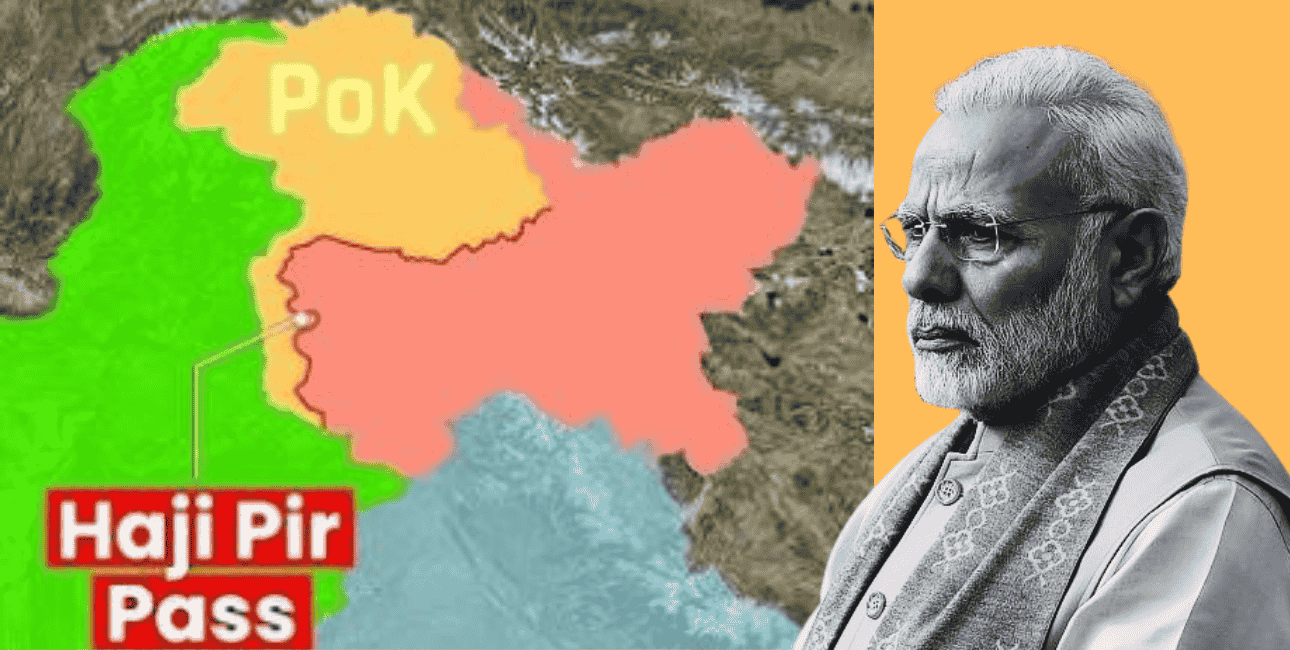
The Haji Pir Pass, located in the formidable Pir Panjal range, connects Poonch in Jammu & Kashmir to Rawalakot in Pakistan-occupied Kashmir (PoK).

Situated at the commanding height of 2,637 meters (8,652 feet), the strategic pass overlooks the PoK valley and today serves as one of the main infiltration routes for Pakistani terrorists in the Kashmir valley.

India could have denied Pakistan its main infiltration route in J&K by keeping the Haji Pir Pass, substantially reducing Islamabad’s ability to foment trouble in India’s Jammu & Kashmir.

The Haji Pir Pass held other advantages for India: It significantly shortened the road distance between Poonch and Uri, from 282 km to 56 km, and would have provided India better connectivity between Jammu and Kashmir valley, improving military logistics and trade.

Before partition, the main road connecting Jammu valley with the Kashmir valley passed through Haji Pir. However, this route became unusable as Pakistan captured PoK including Haji Pir Pass in 1948.

The strategic Pass would also have provided India with easy access to much of the PoK, continuously reminding Pakistan of its precarious position there.

However, showing a tremendous lack of foresight, India squandered its battlefield gains at the negotiating table despite holding a stronger bargaining position and returned the Haji Pir Pass to Islamabad.

That ‘Original Sin,’ is still haunting India after three generations, and Pakistan continues to bleed India through a thousand cuts by using Haji Pir Pass for infiltration and terrorism in Kashmir.

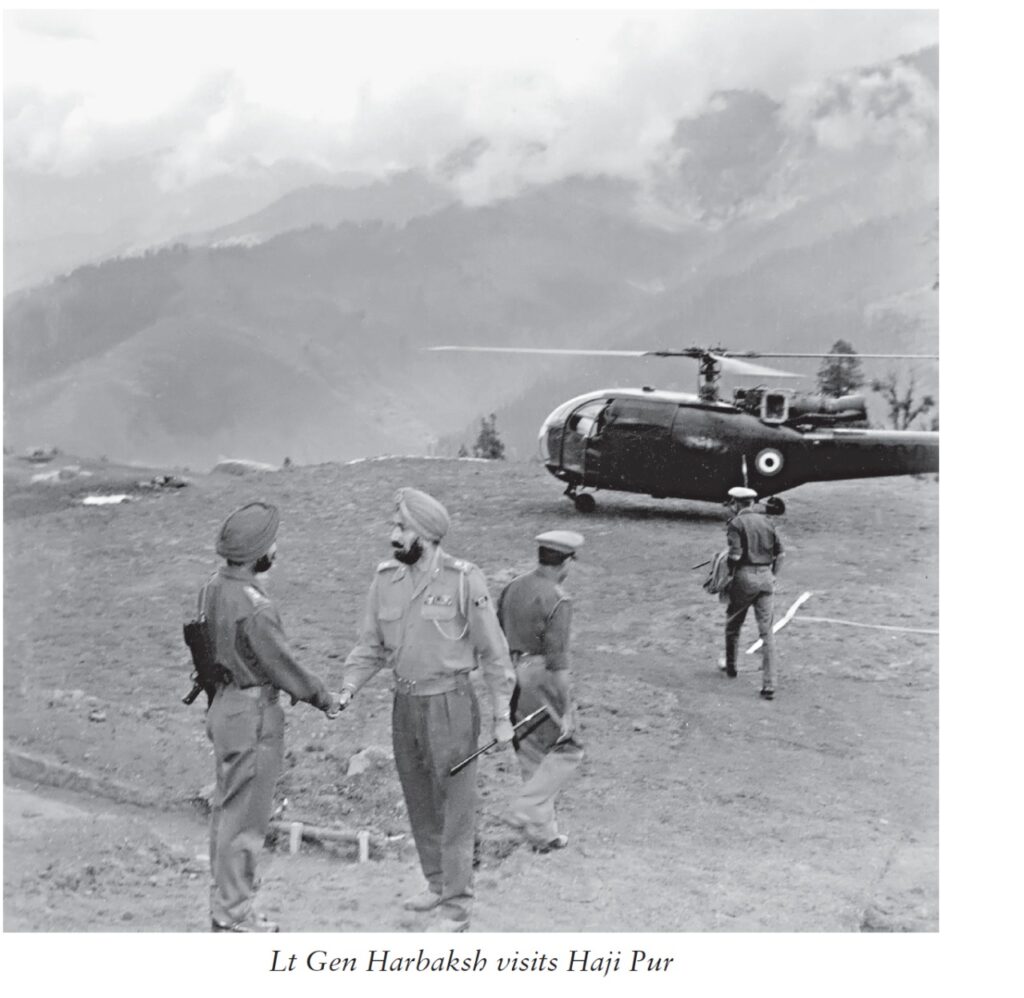
Lt Gen Harbaksh Singh, Western Army Commander during the 1965 war, being shown around by Brig Bakshi.

Reviewing the lessons from the 1965 India-Pakistan War, Lieutenant General D B Shekatkar (retd) once remarked: “A lesson we need to learn is that if you start losing the gains of war at the negotiating table, they become a disincentive for future wars.”
As Lt Gen Shekatkar predicted, the foolish return of Haji Pir Pass at the negotiating table became a disincentive for India in future wars.

New Delhi failed to correct the historical wrong first in the 1971 war when India had a decisive upper hand, and again in the 1999 Kargil war, when the Indian armed forces had the battlefield initiative and momentum in their favor.

How India Went Deep Inside Enemy Territory To Capture Haji Pir Pass
Buoyed by the success of the 1948 India-Pakistan war, where Islamabad was able to capture nearly one-third of Kashmir, and India’s humiliating defeat in the 1962 Indo-China war, Pakistan once again thought of capturing the whole of Kashmir in 1965.
In August of that year, Pakistan’s President, Ayub Khan, sanctioned Operation Gibraltar to clandestinely infiltrate a large number of guerrillas into Kashmir to destabilize the region and eventually capture it with the help of the Pakistan Army.
Interestingly, President Ayub was hoping for a spectacular and swift victory. As he wrote while approving Operation Gibraltar: “As a general rule, Hindu morale would not stand more than a couple of blows delivered at the right time and place. Such opportunities should, therefore, be sought and exploited.”

However, contrary to what President Ayub expected, the local population of Kashmir did not rebel against India. By mid-August, India warned Pakistan that if infiltration does not stop, India will take the “fight to the other side.”
On 15 August 1965, the Indian Army crossed the Ceasefire Line (CFL) and captured three hills. A decision was also taken to capture the Haji Pir Bulge, as it was the main infiltration route used by Pakistan. The operation was codenamed Operation Bakshi.

Haji Pir Pass was dominated by the hill features of Bedori (3760m) on the east, Sank (2895m) on the west and Ledwali Gali (3140m) to the South-West, all of which required capture before tackling Haji Pir Pass. Bedori was approximately 14 km southeast of Uri and Haji Pir Pass, a further 10 km beyond Bedori.
Lt Gen Harbaksh Singh, Western Army Commander during the 1965 war, visits Haji Pir. Credits – 1965: Turning the Tide.

The task of capturing Haji Pir Pass was given to 19 Infantry Division commanded by Major General SS Kalaan and the Corps reserve of 68 Infantry Brigade commanded by Brigadier ZC Bakshi.

On August 21, Brigadier Bakshi briefed his officers: “Gentleman, since 1947 we have been cribbing that government does not allow us to attack, go into offensive but this time, we have been given a clear mandate to capture Haji Pir at any cost. Where I say at any cost, a civilian may mean 100 per cent casualties, but I, as an Infantryman, say only when you have had 40 per cent casualties, come back to me; otherwise, press home.”

On August 26, 1 Para battalion moved towards Sank. They had to climb steep terrain under heavy rain. Pakistan’s positions were well defended. After capturing Sank, the Indian Army pressed further on Ledwali Gali, capturing it the next day.

The plan was to capture Bedori next. However, Brigadier Bakshi understood that by now Pakistan would have realized that Indians were pressing for Haji Pir Pass. So, he took a unilateral decision to go in straight for Haji Pir Pass.

Giving the task to Major Ranjit Singh Dayal, Brigadier Bakshi said: “If you win Haji Pir you will be a hero but if you can’t I will be arrested for taking a unilateral decision.”

Major Ranjit Singh Dayal trekked the whole night of August 27 in heavy rain and captured Haji Pir Pass on August 28, despite heavy odds. Pakistan tried to recapture the strategic pass on August 29, but Indian forces repelled those attacks.

A Historic Mistake Of ‘Epic Proportions’
What Pakistan could not win on the battlefield, it won at the negotiating table.

The Tashkent Agreement, signed on January 10, 1966, entailed the withdrawal of Indian and Pakistani forces to positions that existed before August 5, 1965. This status quo ante also included the return of the bravely fought Haji Pir Pass captured with considerable grit and determination.

Notably, India had captured 1,920 sq km of Pakistani territory, mainly the fertile land of Sialkot, Lahore, and Kashmir sectors, including the strategic Haji Pir Pass.

Pakistan had 550 sq km of Indian territory, mainly in the deserts opposite its Sindh province, and Chhamb in Akhnoor. Yet, despite holding almost four times more Pakistani land including in strategic areas like Haji Pir Pass and near Lahore, India did not get any advantages in Tashkent agreement.

The Hero of capture of Haji Pir, Lt Gen Ranjit Singh Dyal, awarded Maha Vir Chakra for his bravery and leadership in the operation, said in an interview in 2002, “The pass would have given India a definite strategic advantage … It was a mistake to hand it back… our people don’t read maps.”

Commenting on the Tashkent Agreement, Lieutenant General Dr D B Shekatkar told Rediff: “We don’t know what the reasons were that we gave back the Haji Pir Pass which was strategically very important. Today, the entire infiltration into Kashmir takes place from that area. If we had retained the post that we had captured, things could have been different. Haji Pir was given to Pakistan because of the Indian government’s magnanimity.”
PM Modi and Haji Pir Pass on Map. Edited Image.
He also warned that losing the gains of war at the negotiating table becomes a disincentive for future wars. His warning was proved correct in 1971 when India once again lost the Chhamb sector, which Pakistan had occupied in the 1965 war but vacated as per the terms of the Tashkent agreement. However, India did not retake Haji Pir Pass.

Also, once again, despite having 93,000 Pakistani PoWs, India failed to press Pakistan to vacate the Chhamb sector. So effectively, while India won and returned Haji Pir Pass in 1965, Pakistan still occupies the Chhamb sector.

Pakistan has continuously used this same Haji Pir Pass for infiltration in India and supporting terrorism in Kashmir.

Regretting the Indian government’s mistake in 1965, India’s Defense Minister Rajnath Singh said in January this year that after the 1965 war with Pakistan, had the Indian government converted the “strategic advances” gained by military into “strategic advantages” on the negotiating table, the problem of cross-border infiltration would have been solved.

Speaking in Jammu’s Akhnoor at a function to mark Armed Forces Veterans Day on January 14, Rajnath said Indian forces had succeeded in unfurling the Tricolour at Haji Pir in 1965, and “if it was not returned to the negotiation table, the infiltration routes of militants could have been closed.”

India lost two historic opportunities in 1971 and 1999 to retake the Haji Pir Pass and permanently shut Pakistan’s main infiltration route into Kashmir.

In the wake of the latest terror attack, one thing is clear. For addressing a critical security lacuna in Kashmir, India must wrest back the control of its strategic Crimea (Haji Pir Pass) that New Delhi gifted to Islamabad in 1966. Just like the Soviet Union gifted Crimea to Ukraine in 1954, India gifted Haji Pir Pass to Pakistan in 1966. The time has come to correct that historical wrong.

India must get its Crimea back!

Eurasia Times : India “Beats” Pakistan In Nuclear Warheads For 1st Time In Over

India “Beats” Pakistan In Nuclear Warheads For 1st Time In Over Two Decades Amid Boiling Tensions After Terror Attacks: FAS
India has quietly surpassed Pakistan in nuclear warhead numbers for the first time in over two decades, signaling a shift in South Asia’s strategic balance.
As tempers flare between two nuclear-armed neighbors, after a brutal terror attack in Kashmir that killed 26 tourists, South Asia edges dangerously closer to a potential military confrontation.

In the idyllic Baisaran Valley, terror struck with a cruelty that shattered Kashmir’s fragile calm. Pakistan-backed militants ambushed 26 unsuspecting tourists, staining the meadows of Pahalgam with blood and setting in motion a chain of events that now threatens to spiral far beyond the valley’s borders.

The Indian government’s response has been swift and unforgiving. Homes of suspected militants have been razed. Security forces stormed suspected hideouts. Hundreds of overground workers — civilians accused of aiding militants — have been rounded up for intensive interrogation, officials reported on Saturday.

Meanwhile, the Union Ministry of Information and Broadcasting has instructed media outlets to halt live broadcasts of military operations, aiming to safeguard both operational security and public order.

But Kashmir’s agony is only the beginning of a much larger, far graver crisis. As New Delhi points an accusing finger squarely at Islamabad, blaming Pakistan for harboring and enabling terror networks, diplomatic relations between the two nuclear-armed neighbors are unraveling with frightening speed. Pakistani diplomats have been expelled. Borders sealed. Water-sharing agreements suspended.

South Asia stands once again on the edge of a knife.

Dangerous Nuclear Reality
Just as tensions erupt, another unsettling development demands attention: the balance of nuclear power between India and Pakistan has shifted.

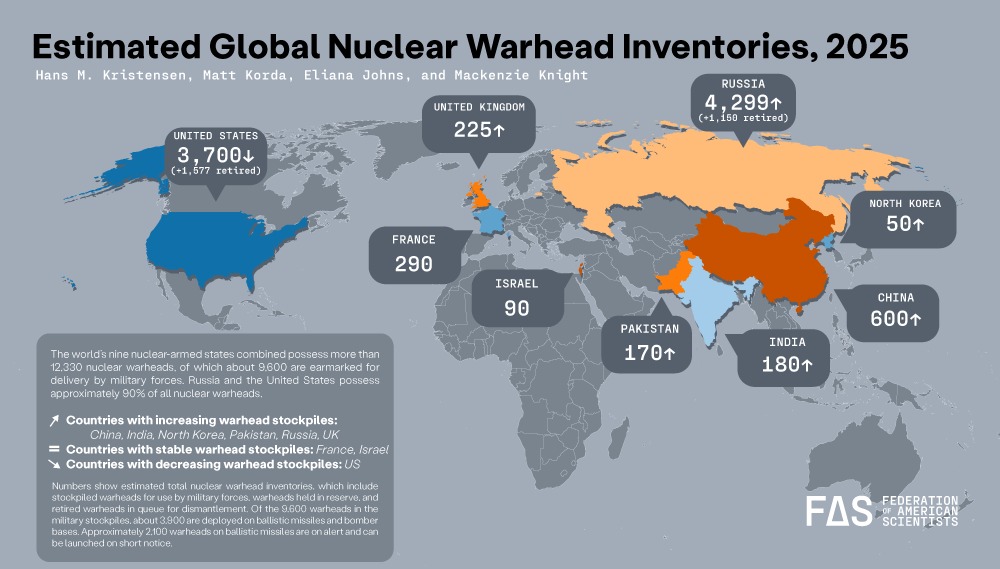
According to the latest Status of World Nuclear Forces report released by the Federation of American Scientists (FAS), India now possesses roughly 180 nuclear warheads, surpassing Pakistan’s estimated 170.

Via: FAS
It’s the first time in over two decades that India has surpassed its rival in nuclear stockpile size, signaling a subtle yet critical shift in South Asia’s strategic landscape.

This shift had been foreshadowed by the Stockholm International Peace Research Institute (SIPRI) in its 2024 report, which estimated India’s stockpile at around 172 nuclear warheads — narrowly surpassing Pakistan’s count of 170.

India’s nuclear journey began in 1974, when it conducted its first nuclear test, emerging as the sixth country in the world to demonstrate nuclear capability. Pakistan followed nearly a quarter-century later, conducting its own tests in 1998 in response to India’s moves, locking both countries into a delicate and volatile nuclear competition.

For much of the past two decades, Pakistan maintained a slight numerical advantage, in part by developing tactical nuclear weapons designed to offset India’s superior conventional forces.
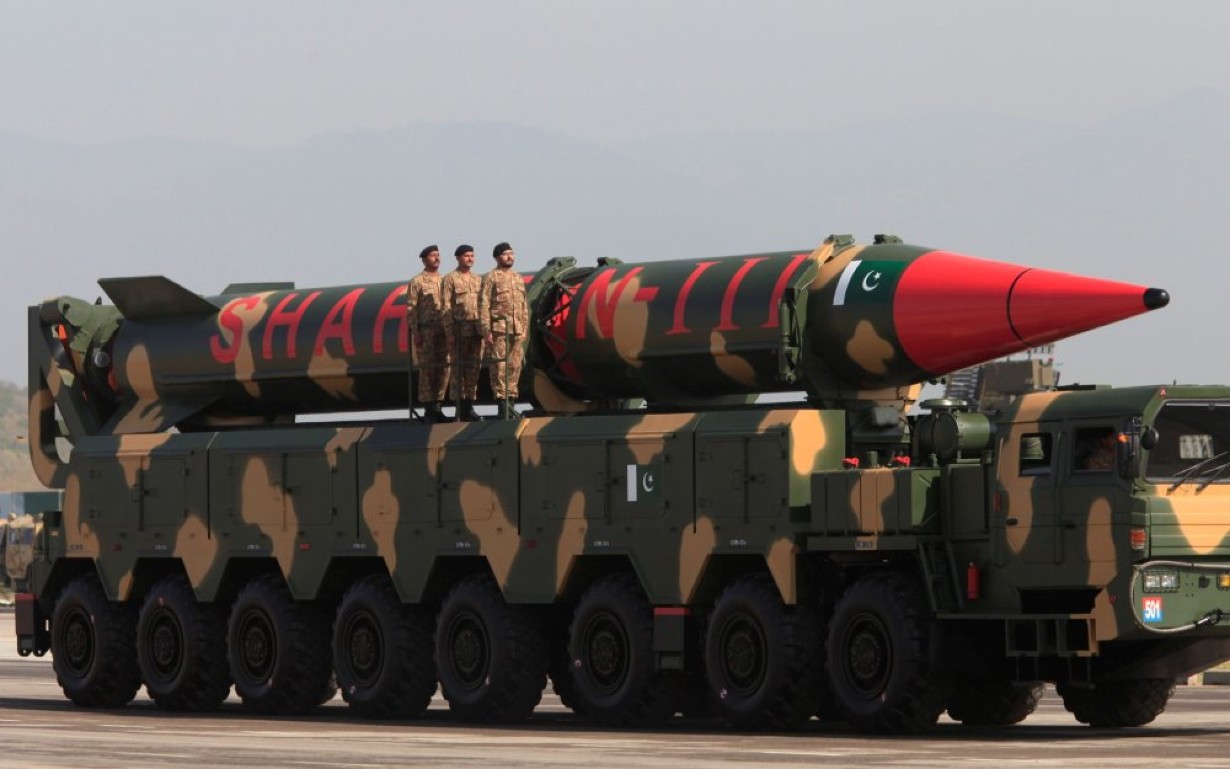
Pakistan nuclear weapon /File Image
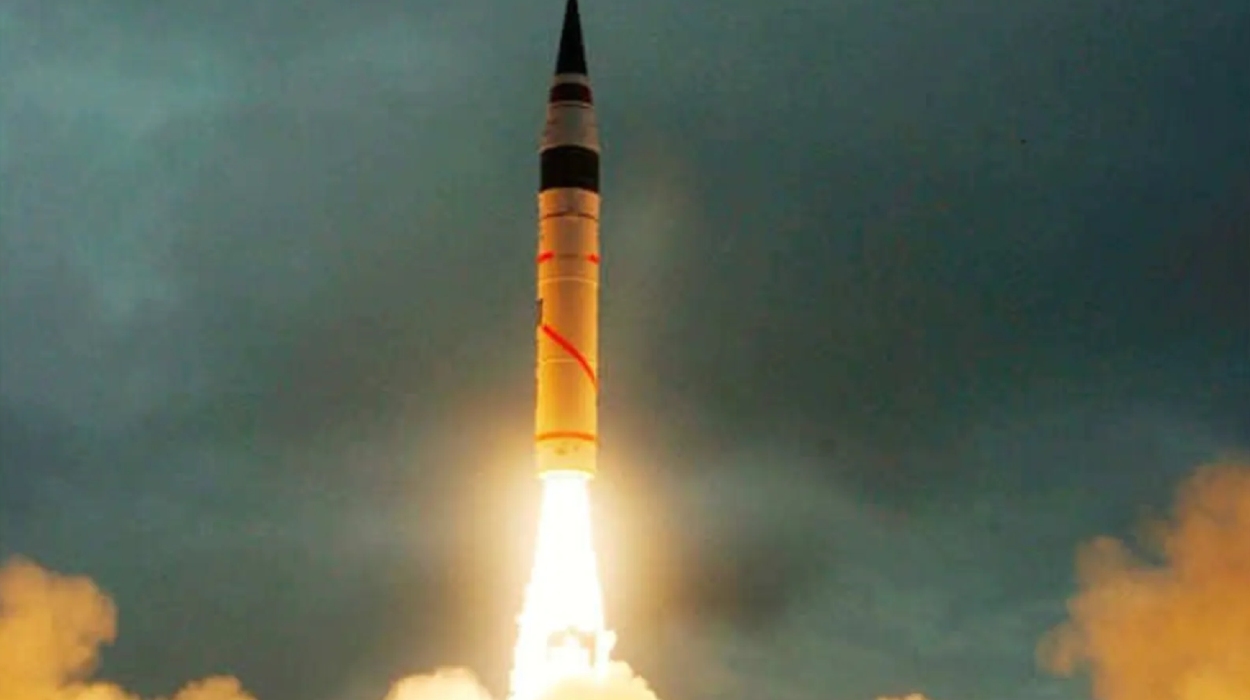
But New Delhi’s nuclear modernization drive, particularly the successful test of its Agni-5 ballistic missile armed with Multiple Independently Targetable Reentry Vehicles (MIRVs) earlier this year, dramatically increases its nuclear reach and flexibility. MIRV technology enables a single missile to strike multiple targets — a major leap in offensive capability, complicating the strategic calculus not only for Pakistan but also increasingly for China.

Both India and Pakistan are now racing to develop MIRV capabilities, opening a new and more volatile chapter in their nuclear rivalry — one defined by speed, sophistication, and the terrifying potential for miscalculation.

The Gulf In Military Power Grows Wider
The shifting nuclear balance is accompanied by another, even starker disparity: defense spending.

India’s defense budget for 2025–26 has increased to an estimated $79 billion, a nearly 10% rise from the previous year. Pakistan’s budget, by contrast, struggles at around a mere $8 billion. In simple terms, India now spends nearly ten times more than Pakistan on its military.

This financial muscle translates directly into hardware and capabilities. India has expanded its arsenal with Rafale fighter jets, Russian-made S-400 air defense systems, and a sweeping modernization of its Army, Navy, and Air Force.

Meanwhile, Pakistan, heavily burdened by maintaining a large standing army and a credible nuclear deterrent, is increasingly forced to pick and choose among its modernization needs, stretching limited resources ever thinner.

India’s deepening conventional superiority, paired with its growing nuclear capabilities, is reshaping the regional balance of power, leaving Pakistan more reliant than ever on asymmetric strategies and its nuclear deterrent to offset the widening gap.
File Image: India’s Agni Nuclear Missile

The Specter Of Escalation
The Pahalgam massacre has unleashed a tide of rage and retribution. Yet the true danger lies not just in India’s muscular response, but in the volatile nuclear backdrop against which it unfolds.

India’s nuclear policy, formally centered on a “No First Use” policy, has shown signs of flexibility in recent years. Senior Indian leaders have hinted that a major terrorist attack, particularly one linked to Pakistan, could trigger nuclear retaliation under certain circumstances, especially if chemical or biological weapons are involved.

Meanwhile, India’s pursuit of a fully operational nuclear triad, the ability to launch nuclear strikes from land, sea, and air, gives it unprecedented options for response and deterrence.

Longer-range missiles like Agni-V and the upcoming Agni-VI are designed not just for Pakistan, but to hold Chinese cities at risk — another sign that India’s strategic horizons are expanding.

While India actively participates in international non-proliferation initiatives, such as the Missile Technology Control Regime (MTCR), and seeks membership in the Nuclear Suppliers Group (NSG), it remains outside the Nuclear Non-Proliferation Treaty (NPT) and the Comprehensive Test Ban Treaty (CTBT). Its nuclear policy remains very much its own — flexible, opaque, and tailored to its unique regional challenges.

A Fragile Region In A Volatile World
At a time when the Israel-Gaza war continues to rage in the Middle East and the Russia-Ukraine conflict grinds on in Europe, the emergence of yet another flashpoint in South Asia is deeply concerning.

The international system is already stretched thin, with major powers preoccupied and diplomatic resources strained.

In such an environment, the risks of miscalculation and escalation become even higher, especially between nuclear-armed states like India and Pakistan, whose historic mistrust and unresolved disputes could easily magnify a local incident into a larger crisis.

At this fragile moment, strategic patience, robust crisis management, and backchannel diplomacy are more critical than ever.

Reuters : Panic in Pakistan as India vows to cut off water supply over Kashmir

Panic in Pakistan as India vows to cut off water supply over Kashmir

LATIFABAD, Pakistan/NEW DELHI, April 27 (Reuters) - Spraying pesticides on his parched vegetables one street away from the Indus River, Pakistani farmer Homla Thakhur is worried about his future. The sun is at its peak, the river is running very low, and India has vowed to cut supplies upstream after a deadly militant attack in Kashmir.

"If they stop water, all of this will turn into the Thar desert, the whole country," said Thakhur, 40, before heading back to the river to refill the tank for the spray gun.

WSJ : After 15 Years, John Paulson Is Finally Winning Big on Gold

After 15 Years, John Paulson Is Finally Winning Big on Gold
Billionaire is spending $800 million to buy a big stake in an Alaskan mine

Key Points
  • John Paulson, known for betting against the housing market, is now profiting from rising gold prices.
  • In the midst of global tensions and a weak dollar, Paulson is investing further in gold, including an Alaskan mine stake.
  • Paulson sees gold miners’ profits rising with prices.

John Paulson made a vast fortune betting against the U.S. housing market in what was dubbed “the greatest trade ever.” And his next act—a yearslong wager on gold—is finally turning out to be a another great trade.

More than a decade and a half after Paulson went big on gold, the billionaire investor has emerged as one of the winners from the record-setting surge in the price of the precious metal.

President Trump’s trade war and threats to fire the head of the Federal Reserve shook confidence in the dollar and propelled gold prices above $3,500 a troy ounce last week. Gold rose this year even as stocks and bonds floundered.

Rather than cashing out, Paulson is doubling down, tossing in $800 million to buy a big stake in a remote gold mine in a rugged region of southwestern Alaska.

“There’s only one reserve that in physical form will protect you against all these things for literally millennia,” said Paulson, rattling off a list of scenarios ranging from inflation to the confiscation of assets by governments.

Gold has been prized at least as far back as ancient Egypt, where King Tut was buried with a golden mask. It functioned for a long time as the bedrock of the monetary system. While President Richard Nixon unpegged the dollar from gold in 1971, tons of the metal still sits at Fort Knox and in central-bank reserves globally.

Survivalists and big money managers alike assert that gold is a proven hedge against various shocks: inflation, war, catastrophe and currency devaluation. Most of those crises aren’t currently materializing in the U.S. But global geopolitical tensions, combined with a sliding dollar and expectations that central banks will keep buying the metal, have strengthened Paulson’s conviction in bullion.

Owning gold isn’t always a winner. It costs money to store and doesn’t pay interest, as bonds do. And there have been long stretches during which stocks and bonds have left gold in the dust.

Paulson became a gold believer when he was relishing the riches of his bet that the U.S. housing market would collapse. His hedge-fund firm had just made $15 billion in 2007, with Paulson’s personal cut amounting to nearly $4 billion—equivalent to more than $10 million a day.

The Fed had embarked on quantitative easing in response to the 2008-09 financial crisis, and Paulson worried the program would lead to a surge of inflation.

He piled into gold when it traded at around $900 a troy ounce. His early bets paid off. He at one point offered investors gold-denominated versions of his hedge-fund strategies.

But Paulson’s expectation of an inflation burst never materialized, and parts of his wagers—including bets on mining stocks—suffered. Investments in other sectors, such as pharmaceutical companies and bank stocks, also dragged on returns.

He converted his hedge-fund firm into a private investment manager in 2020, handling money for himself, his employees and related entities.

In the years since, he became entangled in a bitter legal dispute with a former employee whom he fired in Puerto Rico, hosted a fundraiser for Trump at his Florida mansion and was briefly considered to be in the running for Treasury secretary.

Gold eventually started to glitter again, burnished by Covid-era stimulus, inflation, war and sanctions.

Paulson doesn’t disclose the entirety of his gold holdings. He has exposure to the metal through derivatives positions, he said, but mostly invests through miners. He doesn’t own physical gold.

His investments in listed mining companies are valued at around $840 million, according to Marcelo Kim, a partner at Paulson’s investment firm who oversees gold investments. All eight of the mining stocks he reported holding to U.S. regulators as of December are up this year—with many of them increasing more than 30%.

As Paulson sees it, miners’ profits increase—sometimes several times over—as gold prices rise, while the costs of mining remain relatively fixed. He still sees room for profit even if the metal’s price retreats.

Most of his current bets are on upstart miners. Through his private investment firm, Paulson & Co., he owns stakes in companies including Perpetua Resources, Agnico Eagle Mines and International Tower Hill Mines.

“We really shifted our focus to mine development because that’s where you can get your biggest bang for the buck,” Paulson said. “You don’t need the gold price to go up to receive high returns.”

Kim has visited some 150 mines in Africa, Australia, Asia, Europe and North America, including the gold deposit in Alaska that Paulson agreed to invest in last week.

To buy the stake in the Alaskan mine, Paulson teamed up with a fellow gold advocate, Thomas Kaplan, chair of the exploration company NovaGold Resources. They agreed to purchase Barrick Gold’s 50% stake in the Donlin project in Alaska for $1 billion. Paulson’s $800 million contribution gives him a 40% stake in the mine.

Paulson is looking at what he believes will be a windfall at Donlin: The undeveloped high-grade deposit contains an estimated 39 million ounces of gold, equivalent to about a quarter of the holdings at Fort Knox.

It is a big undertaking. A 2021 technical report suggested that capital costs would be about $7.4 billion, plus $1.7 billion over the mine’s life.

A 30-mile road to the nearest port and a natural-gas pipeline might need to be built, according to the Alaskan natural-resources department. The closest population center to the mine site, which sits on native lands, is a tiny village called Crooked Creek. Industry players said even if everything goes to plan, the mine isn’t likely to start producing gold until the early 2030s.

“This is going to be a monster asset that’s going to last for 50 years plus,” Paulson said.

WSJ : Wall Street’s New Tariff Safe Haven: High-Tax Biotech Stocks

Wall Street’s New Tariff Safe Haven: High-Tax Biotech Stocks
As tariffs loom over the sector, biotechs with U.S.-based manufacturing and intellectual property are soothing investor concerns

Key Points
  • Pharma firms with U.S.-based intellectual property and manufacturing are now seen as safer due to potential tariffs, despite higher taxes.
  • Gilead and Vertex, with U.S. focus and higher tax rates, are outperforming; analysts highlight their insulation.
  • The Trump administration is targeting pharma imports, probing firms using low-tax hubs and pushing for increased U.S. manufacturing.

Chief Executives don’t usually brag about paying high tax rates.

But with pharma tariffs looming, being a tax sucker is suddenly a badge of safety in the industry. That isn’t because Wall Street is suddenly in love with taxes. Rather, with so much uncertainty, investors are prizing biotech companies that base their intellectual property and manufacturing in the U.S., which up until now often meant higher taxes.

On a Thursday earnings call, Gilead Sciences GILD -2.81%decrease; red down pointing triangle Chief Executive Daniel O’Day proudly pointed out that the biotech’s corporate tax rate of approximately 20% “reflects the fact that the substantial majority of our intellectual property is already registered in the United States.”

Before the Trump era, many pharma and biotech firms established intellectual property and manufacturing operations in low-tax hubs such as Ireland. This allowed them to reduce their tax bills through transfer pricing. Essentially, the Irish unit of the company sells the drug to a U.S. unit at a high internal “transfer price,” enabling the parent company to book most of the profit in the lower-tax jurisdiction. (Ireland currently offers a headline 15% corporate tax rate to big companies, compared with 21% in the U.S.) On paper, the U.S. unit appears to earn little—even though the end-sales are largely happening in America.

While the 2017 tax overhaul under Trump was meant to curb offshore profit shifting, in practice it left key loopholes intact. Now the second Trump administration appears to be preparing to use tariffs to target the practice, with the goal of inducing companies to increase manufacturing in the U.S. Earlier this month, the Trump administration—which has repeatedly lambasted Ireland for luring American pharma companies—announced probes into pharmaceutical imports, citing national-security concerns. “If you look across the board,” says Citigroup healthcare strategist Traver Davis, “companies with more complex supply chains are going to face the greatest exposure.”

Of course, investors aren’t going to buy companies simply based on their tariff exposure. But in the case of Gilead, it aligns with a growth story as the company prepares to launch its twice-yearly HIV-prevention drug lenacapavir.

An even more compelling case can be made for Vertex VRTX 0.28%increase; green up pointing triangle. The company manufactures most of its products in the U.S. and books most of its profits here. Its effective tax rate of close to 20% reflects that U.S. exposure. On top of that, Vertex’s top-selling drugs for cystic fibrosis are exempt from Medicare price negotiations thanks to their orphan-drug status, which is given to medications treating rare conditions. That makes Vertex a rare winner in today’s regulatory environment.

“There is a startlingly short list of biotech and therapeutic stocks that have largely U.S. sales, I.P. (intellectual property) domiciled in the U.S.,” and limited impact from tariffs and drug pricing policies, Jefferies analyst Akash Tewari noted in a recent presentation.

Gilead and Vertex shares are up 12% and 23%, respectively, this year, compared with a 1% gain for the NYSE Arca Pharmaceutical Index.


Of course, unpacking what goes into a company’s tax rate is notoriously complex. A headline number often masks a tangle of factors—from where goods are made, to how companies set internal prices to the impact of global tax treaties, explains Christine Kachinsky, partner and Life Sciences Tax Sectors Leader at KPMG. A high effective tax rate doesn’t necessarily mean a company is insulated from tariffs: It may still import key raw materials from abroad. Conversely, a low tax rate might reflect a range of shifting variables—such as tax credits or temporary incentives—that don’t neatly correlate with exposure. “Unless you can see a company’s precise import and export data and run it through a model,” she says, “you’re not going to have a true sense of a company’s exposure to tariffs.”

What is clear is that as a group, the industry is bracing for impact. A recent analysis of 10 large biopharma companies from Citi estimated there would be a 9.7% hit to 2026 operating income across the group.

Citi’s analysis of Merck’s manufacturing outside the U.S. led it to conclude that the Rahway, N.J.-based company is at the higher end of exposure. For instance, the patent rights to Merck’s top-selling drug, Keytruda, are registered in the Netherlands and it manufactures the drug in Ireland, allowing the company to reduce its U.S. tax bill, according to a Senate Finance Committee letter.

Of course, multinationals have strategies available to limit their exposure. In its annual guidance released last week, Merck says it will absorb a $200 million hit from tariffs—mostly due to U.S.-China trade friction, not sector-specific levies, which are pending. The company said it has enough supply on hand to limit tariff effects for the rest of the year and is ramping up manufacturing in the U.S. to cut future costs. “Our global supply chain and current inventory levels put us in a good position to navigate potential near-term impacts,” Chief Executive Rob Davis said in a call with analysts.

Besides company-specific factors, there are also too many policy unknowns to fully model Trump’s proposed pharma tariffs. Will they target active ingredients, cost of goods, or transfer pricing? What exceptions will apply—and how quickly? Will tax reform accompany them to spur U.S. manufacturing?

Regardless, companies that already base a lot of manufacturing and intellectual property in the U.S., and already pay high taxes, look relatively well insulated. That gives investors a relatively short list to focus on.

WSJ : China’s Huawei Develops New AI Chip, Seeking to Match Nvidia

China’s Huawei Develops New AI Chip, Seeking to Match Nvidia
Superpower rivalry over semiconductors heats up despite Washington’s attempts to block Beijing

SINGAPORE—Huawei Technologies is gearing up to test its newest and most powerful artificial-intelligence processor, which the company hopes could replace some higher-end products of U.S. chip giant Nvidia NVDA 4.30%increase; green up pointing triangle.

The steady advance by one of China’s flagship technology companies points to the resilience of the country’s semiconductor industry despite efforts by Washington to stymie it, including by cutting off access to some Western chip-making equipment.

Huawei has approached some Chinese tech companies about testing the technical feasibility of the new chip, called the Ascend 910D, people familiar with the matter said. The company is slated to receive the first batch of samples of the processor as early as late May, some of the people said.

The development is still at an early stage, and a series of tests will be needed to assess the chip’s performance and get it ready for customers, the people said.

Huawei hopes that the latest iteration of its Ascend AI processors will be more powerful than Nvidia’s H100, a popular chip used for AI training that was released in 2022, said one of the people. Previous versions are called 910B and 910C.

Huawei has emerged as China’s champion in a technology field where the U.S. remains ahead. The Shenzhen-based company has developed some of the country’s most promising substitutes for Nvidia’s AI chips. It is part of Beijing’s effort to groom a self-sufficient semiconductor industry.

Huawei, which has been on a U.S. trade blacklist for nearly six years, showed its ability to shrug off American restrictions by releasing a high-end smartphone in 2023. The model, the Mate 60, was powered by a locally produced processor and raised eyebrows within the U.S. government when it was introduced during a visit to Beijing by then-Commerce Secretary Gina Raimondo.

Earlier this month, Washington added Nvidia’s H20 chip—the most advanced processor the company could sell in China without a license—to a growing list of semiconductors whose sales are restricted there. Nvidia said it would take a $5.5 billion charge as a result.

The restrictions offer an opportunity to Nvidia’s Chinese rivals such as Huawei and Beijing-based Cambricon Technologies, which have developed similar chips.

This year, Huawei is poised to ship more than 800,000 Ascend 910B and 910C chips to customers including state-owned telecommunications carriers and private AI developers such as TikTok parent ByteDance, people familiar with the matter said. Some buyers have already been in talks with Huawei to increase orders of the 910C after the Trump administration restricted the exports of Nvidia’s H20s, the people said.

Despite manufacturing bottlenecks, Huawei and several Chinese chip firms have already been able to deliver some products comparable to Nvidia chips, albeit with a lag of a few years. Chip makers have been turning to technologies that can pack several chips together to create more powerful processors, as it gets harder and more expensive to make the circuitry inside chips smaller.

Beijing has also encouraged Chinese AI developers to increase purchases of domestic chips. State data centers have said most chips they used were from Chinese suppliers.

Still, previous Huawei chips have struggled to live up to their hype. The 910C was marketed to clients as comparable to Nvidia’s H100, but engineers who have used the two chips said Huawei’s performance fell short of its rival.

Huawei faces challenges in producing such chips at a significant scale. It has been cut off from the world’s largest chip foundry, Taiwan Semiconductor Manufacturing. China’s closest alternative, Semiconductor Manufacturing International, is blocked from purchasing the most advanced chip-making equipment.

Washington has also blocked China from directly accessing some key components for AI chips, such as the latest high-bandwidth memory units.

Given such constraints, Huawei executives have talked about focusing on building more efficient and faster systems to leverage their chips, instead of making individual chips more powerful.

In April, Huawei introduced the CloudMatrix 384, a computing system connecting 384 Ascend 910C chips. Some analysts said the system was more powerful than Nvidia’s flagship rack system, which contains 72 of Nvidia’s Blackwell chips, under some circumstances, even though the Chinese system consumes more power.

Connecting more chips in a system isn’t a trivial task. It requires stable networks as well as software and engineering to prevent network failures, industry practitioners said.

“Having five times as many Ascends more than offsets each GPU being only one-third the performance of an Nvidia Blackwell,” research firm SemiAnalysis wrote in a report. “The deficiencies in power are relevant but not a limiting factor in China.”

>>> FT WeekEnd - 26th & 27th April 2025

* FT : Clean energy will be critical to winning the AI race with China
Rather than choosing one energy source over another, the US must quickly create the conditions for a mix to meet demand

* FT : Darktrace CEO: ‘We didn’t have the valuation we knew we could get’
Jill Popelka has tried to strengthen the cyber company’s operations and cast off the shadow of early backer Mike Lynch

* FT : Maltese ‘golden’ passports were sold to Russians with Ukraine war links
Paid-for citizenship that could be banned by European court was handed to people who later faced sanctions

* FT : European airlines’ emissions on course to exceed pre-pandemic levels
Environmental data shows carbon dioxide from flights has risen, as airlines struggle to decarbonise

* FT : Swiss franc surge sparks bets on return to negative interest rates
Switzerland’s currency has soared as investors seek a haven from US President Donald Trump’s trade war

* FT : Vestas warns wind industry is falling behind global climate goals
Europe’s largest turbine maker notes ‘big discrepancy’ between ambitious targets and reality on the ground

* FT : Zealand Pharma says obesity drug deal with Roche will help it stay independent
Danish biotech is developing petrelintide in partnership with the Swiss pharma group

* FT : Saudi Aramco steps up e-fuel investment to prolong combustion engine era
World’s largest oil company says synthetic fuels have a part to play despite global shift towards electric vehicles

* FT : DeepMind UK staff seek to unionise and challenge defence deals and Israel links
Move by employees at Google’s AI arm follows discontent after weapons and surveillance pledge is dropped

* FT : US stocks underperform rest of world by widest margin since 1993
Investors fear Trump’s tariff blitz will lead to US stagflation while weak dollar adds to woes

* FT : Barbarians at the sluice gate: KKR’s Thames Water quest
US private equity firm is preferred bidder for UK utility trying to avert renationalisation

* FT : Deliveroo opens door to £2.7bn meal deal with DoorDash
UK food delivery group valued at £7.6bn in London listing four years ago

* FT : Dan Loeb’s Third Point builds stake in maker of Tylenol and Neutrogena
Johnson & Johnson spin-off Kenvue may become takeover target as activists circle the consumer health group