>>> Walgreens misses by $0.01, revs in-line with March 5 preannouncement; raises

Walgreens misses by $0.01, revs in-line with March 5 preannouncement; raises Alliance Boots synergy target

Reports Q2 (Feb) earnings of $0.91 per share, excluding non-recurring items, $0.01 worse than the Capital IQ Consensus Estimate of $0.92; revenues rose 5.1% year/year to $19.61 bln (in-line with March 5 preannouncement) vs. the $19.54 bln consensus.
  • Front-end comparable store sales (those open at least a year) increased 2.0% in the second quarter, customer traffic in comparable stores decreased 1.4% and basket size increased 3.4%, while total sales in comparable stores increased 4.3%.
  • GAAP total gross profit dollars increased $43 million, or 0.8%, compared with the year-ago second quarter, with gross profit margins decreasing 1.3 % points versus the year-ago quarter to 28.8 as a%age of sales. Adjusted gross profit dollars increased $22 million, or 0.4%, compared with the year-ago second quarter. Pharmacy gross profit dollars were primarily impacted by the shift in the generic drug wave from a peak in the prior year to a trough in the first half of fiscal 2014. A less severe flu season in this year's second quarter compared with a year ago also negatively impacted pharmacy gross profit dollar growth. Front-end margins decreased as the company invested in promotions. The LIFO provision was $51 million in this year's second quarter versus $72 million last year.
  • "Our second quarter performance, in spite of expected headwinds from slower generic drug introductions, comparisons with last year's flu season and severe weather, was marked by solid top-line growth driven by record quarterly sales and record second-quarter prescriptions filled," said President and CEO Greg Wasson. "We also continued to gain prescription market share while we maintained a firm hold on our costs. "We head into the second half of the year with nearly 80 million active members in our Balance® Rewards loyalty program and with expectations that the generic drug headwind that affected the first half will ease and turn around by the end of the year.
  • In addition, our joint synergy program with Alliance Boots is expected to exceed its second-year estimate, and we are bringing critical elements of the Well Experience to additional stores." The combined synergies for Walgreens and its strategic partner, Alliance Boots, in the first half of fiscal 2014 were ~$236 million. The joint synergy program is now estimated to deliver second-year combined synergies of $375-$425 million, an increase from the previous second-year estimate of $350-$400 million. Alliance Boots contributed 8 cents per diluted share to Walgreens second quarter 2014 adjusted results. The co estimates that the accretion from Alliance Boots in the third quarter of fiscal 2014 will be an adjusted 13 to 14 cents per diluted share. This estimate does not include amortization expense, the impact of AmerisourceBergen warrants or one-time transaction costs, and reflects the company's current estimates of IFRS to GAAP conversion and foreign exchange rates.
>>> Fed's Plosser (hawk, voter): Fed did not really change its position on rate

Fed's Plosser (hawk, voter): Fed did not really change its position on rate hikes at the last FOMC meeting; 6-month time frame not an unexpected time frame for rate hike after taper ends - CNBC

- Was surprised by market reaction after Yellen press conference
- Given the current schedule of the taper, bond purchases would end in Nov
- Once the taper is over, Fed will be assessing economic conditions before hiking rates.

>>> HP: We have solved 3D printing’s biggest problems. Just wait until June

--> CEO Meg Whitman said the company will make a big announcement about its first 3D printer in June. She said it’s fast and prints at a higher quality.

HP will issue a major update later this year on its first 3D printer, which will supposedly print faster and at a higher quality than current printers, CEO Meg Whitman told shareholders at an annual meeting Wednesday, according to PCWorld. HP clarified on March 24 that the announcement will occur by October 31 instead of in June, as originally stated by Whitman.

Whitman said 3D printing is currently “like watching ice melt,” and the surface quality of 3D printed objects needs improvement. She did not say how HP plans to increase PRINTING speed, but Wired reported last year that HP is developing its own polymer for printing.

HP will enter the 3D printing market in phases, according to PCWorld. It will first target businesses with employees that need to print prototypes and finished products. Other business-oriented printers generally cost at least $5,000, if not $10,000 or $100,000. Whitman said that HP was also focusing on cost when news of an HP 3D printer first broke in October. The most innovative business 3D printers of late have been on the cheaper end of that spectrum, so the company will need to target that $5,000 mark to be truly competitive.

There’s no word yet on exactly when HP will begin selling its first printer. But if the 2D printing veteran really has solved the speed problem, it will be major news in the 3D printing industry.

Quality and cost have improved consistently, but no one has really been able to significantly speed up the process of printing in plastic. That could be HP’s big chance to leapfrog over market-leading 3D printing companies Stratasys and 3D Systems.

This post was updated on March 24 to include a revised statement from HP that the announcement will occur by the end of the company’s fiscal year in October.

>>> US Early premarket gappers

Early premarket gappers

Gapping up: VTNR +10%, OFIX +8.9%, SONC +7.1%, NPSP +5.3%, RLD +4.5%, SOL +4.4%, TSL +2.7%, RIO +2.3%, ABX +1.5%, BHP +1.4%, AU +1.4%, UN +1.4%, AWAY +1.2%, GDX +1.2%, GSK +1.2%, GOLD +1.1%, TWTR +1.1%, SHPG +1.1%, BUD +1%, WEN +0.9%, ING +0.8%, RDS.A +0.6%

Gapping down: AI -3.5%, PFSI -2%, COMM -1.8%, SQI -1.4%, VEEV -1.4%, SWHC -1.2%, SGY -1.1%

FT : Zombie hordes thrive, await further hedge fund corpses

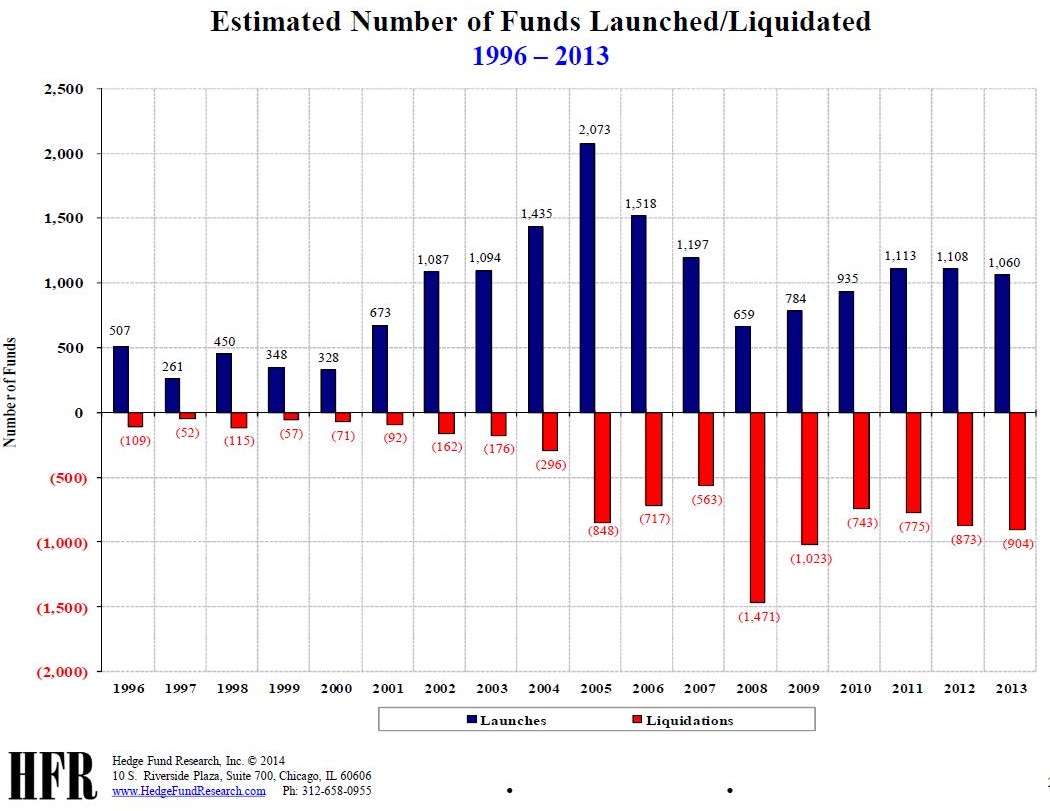
Close to a tenth of all hedge funds tracked by HFR succumbed to the inevitable last year as 904 hedge funds liquidated.
Their historic performance will live on in the databases of hedge fund returns, but like more than two-thirds of all hedge funds that have ever existed, they are dead, defunct and arguing with their investors over valuations for those lingering illiquid assets.
To put that in perspective, half of all individual hedge funds have closed in the last five years. It is exactly what should be expected, given that the average life of a hedge fund which makes it past the 12 month mark is just over five years, but it is a salient fact that seems to escape the promotion of hedge funds as an asset class, a diversifier or a handy set of uncorrelated investment returns.
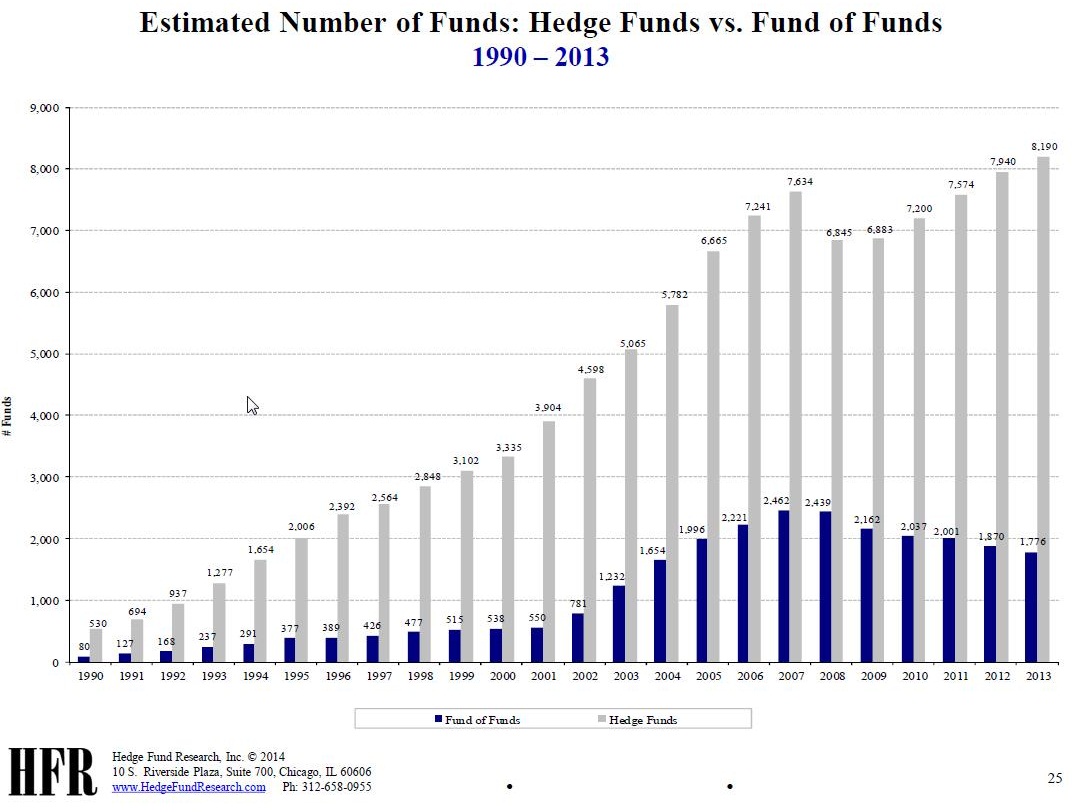
The overall number of hedge funds reporting to HFR has grown, to 8,190 last year from 6,895 at the end of 2008, but only because new funds constantly spring into life.
In the last five years 4,318 hedge funds have closed. If we add on the 1,471 zombies added to the hoard in 2008, that is 5,789 dead funds, set against the 7,634 live hedge funds and 2,462 fund of funds that existed at the end of 2007.
That total of closures includes fund of fund numbers that have shrunk by 686 over the same period, very slim times for fund of fund launches, so the number for individual fund closures looks to be in the 4,000 to 5,000 range.
All of which surely makes the selection problem insurmountable for any pension fund of size. To invest in hedge funds given such turnover means selecting a fresh portfolio of funds every single year. There is a small window after a fund has proven itself (say two or three years) and grown to sufficient size, but before the five year mark at which the average fund becomes a zombie.
Remember also that there is no persistence in returns – good investment performance in one year really has no bearing on investment performance in following years. Oh, and the hedge fund industry as a whole hasn’t produced alpha/added value to simple portfolios for years, since its assets under management ballooned.
But lets say you are an investment consultant paid to advise pension funds on manager selection. One solution would be to focus on the quality of a hedge funds infrastructure as big solid asset gathering funds funds are less likely to become zombies.
Hence, perhaps, what the Financial Conduct Authority reports in its latest survey of the UK hedge fund industry, capturing 49 firms offering 106 individual funds:
Over time, the industry has become more concentrated. The survey shows that the 20 largest firms control 82% of the sample’s NAV(net AUM). The concentration ratio rises significantly when considering gross notional exposure (GNE) at the fund level. The 20 largest funds account for 94% of the sample GNE. These 20 funds are managed by 12 different firms.
We would be very interested to hear how a portfolio made up of large, broadly based asset gathering hedge funds has fulfilled the promise of diversification, alpha and low correlation (at a portfolio level) on which hedge funds are sold. Given the size of institutional allocations to hedge funds there should be plenty of evidence for this, right?
But on that question of survivability, the FCA paper is also interesting for highlighting the very high levels of gross leverage related to interest rate derivatives held by a small number of very large hedge funds.
As shown in the chart above, previous editions of the survey had highlighted a notable deleveraging since 2010-2011 by a small number of large users of leverage – mostly macro funds.
While the median leverage has remained relatively stable on six months ago, the largest funds have increased leverage thus pulling the mean higher. The high speed with which funds can alter their market exposure is an important part of our assessment of the systemic risk posed by this sector.
The increase in leverage at the largest funds over the course of 2013 is mostly due to an increase in Interest Rate Derivative (IRD) positions.
As with derivative books at banks, the gross exposure number is too high, due to contract netting, while the net number is probably too low as an indication of risk. But two-thirds of those contracts are still over the counter, rather than centrally cleared through an exchange.
What will be very interesting is if there are any shocks to interest rate markets – either one-offs or a faster than expected tightening cycle as in 1994, which will require very large amounts of money to change hands all at once as collateral shifts through the system. Zombie-proofness might be tested.

(WPT) Notorious Leader of Ukraine’s Protests Dragged Out of Car, Shot Dead


Notorious Leader of Ukraine’s Protests Dragged Out of Car, Shot Dead
2014-03-25 10:31:17.759 GMT

 
By Terrence McCoy
     March 25 (Washington Post) -- Oleksandr Muzychko, an
ultra-nationalist member of Ukraine's recent protests who was
wanted in Russia for alleged war crimes, was dragged from a car
and shot dead just before midnight in the western Ukrainian city
of Rivne, local media reports.
     There were conflicting accounts of what happened to the man
also known as Sashko Biliy.
     According to Ukrainian lawmaker Oleksandr Doniy, writing in
a Facebook update, unknown assailants cut off Muzychko's car on
Monday night, bringing it to a halt. Muzychko, a bald bear of a
man who led the ultra-nationalist group Right Sector, was dragged
out of the car, cuffed, and shot twice in the chest.
     "Those who killed him made sure that he was not wearing a
bulletproof vest and then shot him in the heart," said Right
Sector activist Yaroslav Hranitskiy, reports the Moscow Times.
     Interfax, the Russian news agency, said Muzychko opened fire
on law enforcement officers.
     Russia had accused Muzychko of perpetrating terrible acts of
brutality during the Chechen war. Earlier this month, nearly two
decades after the Chechen conflict subsided, the Russian
Investigative Committee opened a criminal inquiry against
Muzychko.
     Spokesperson Vladimir Markin accused Muzychko of "killing at
least 20 [Russian] soldiers held in captivity," and put him on
the "international most wanted list."
     A photograph on Twitter shows a man identified as Muzychko
dead on the ground. His shirt is open revealing what appear to be
several gunshot wounds.
     Muzychko was a man of combustible temperament. Late last
month, a video of him grabbing a man by the necktie and shouting
obscenities circulated widely in pro-Kremlin media. Around that
same time, he also expressed suspicion the Ukranian Prosecutor
General's Office had plans to kill him, according to the Moscow
Times.
     "I am not afraid of death," he reportedly said in a YouTube
video. My "friends, brothers, patriots" will "continue the
battle."
     Washington Post correspondent Will Englund contributed to
this story from Moscow.

-0- Mar/25/2014 10:31 GMT

>>> ECB's Weidmann: Bond buys according to ECB capital key problematic, reiterat

ECB's Weidmann: Bond buys according to ECB capital key problematic, reiterates interest rates still appropriate
- Firm Euro no reason to cut medium term inflation forecast yet; further euro rise may significantly impact inflation.
- Negative rates could counter impact of strong euro, but sees no imminent decision on negative deposit rates.
- Still scope on conventional measures, but limited.
- Must weigh impact and costs of unconventional tools.
- ECB purchases of private top-rated assets an option.

(BFW) *TFL SAYS LONDON’S VICTORIA STATION CLOSED FOR SECURITY ALERT

+------------------------------------------------------------------------------+

BN 03/25 09:19 *TFL SAYS LONDON'S VICTORIA STATION CLOSED FOR SECURITY ALERT

+------------------------------------------------------------------------------+

*TFL SAYS LONDON’S VICTORIA STATION CLOSED FOR SECURITY ALERT 2014-03-25 09:21:02.662 GMT

--CORMAC MULLEN

-0- Mar/25/2014 09:21 GMT