TechCrunch : Laser-powered fusion experiment more than doubles its power output

Laser-powered fusion experiment more than doubles its power output

The world’s only net-positive fusion experiment has been steadily ramping up the amount of power it produces, TechCrunch has learned.

In recent attempts, the team at the U.S. Department of Energy’s National Ignition Facility (NIF) increased the yield of the experiment, first to 5.2 megajoules and then again to 8.6 megajoules, according to a source with knowledge of the experiment.

The new results are significant improvements over the historic experiment in 2022, which was the first controlled fusion reaction to generate more energy than the it consumed.

The 2022 shot generated 3.15 megajoules, a small bump over the 2.05 megajoules that the lasers delivered to the BB-sized fuel pellet.

None of the shots to date have been effective enough to feed electrons back into the grid, let alone to offset the energy required to power the entire facility — the facility wasn’t designed to do that. The first net-positive shot, for example, required 300 megajoules to power the laser system alone. But they are continued proof that controlled nuclear fusion is more than hypothetical.

The NIF uses what’s known as inertial confinement to produce fusion reactions. At the facility, fusion fuel is coated in diamond and then encased in a small gold cylinder called a hohlraum. That tiny pellet is dropped into a spherical vacuum chamber 10 meters in diameter, where 192 powerful laser beams converge on the target.

The cylinder is vaporized under the onslaught, emitting X-rays in the process that bombard the fuel pellet inside. The pellet’s diamond coating receives so much energy that it turns into an expanding plasma, which compresses the deuterium-tritium fuel inside to the point where their nuclei fuse, releasing energy in the process.

The other main approach to fusion, magnetic confinement, uses powerful superconducting magnets to compress and contain plasma in a space tight enough to create the conditions necessary for fusion. While no magnetic confinement experiments have produced net-positive results, several are being constructed or designed with the expectation that they’ll hit that milestone.

Several startups are pursuing inertial confinement, including Xcimer Energy and Focused Energy.

Frank Sinatra armed himself after learning he was on Charles Manson's hit list:

Frank Sinatra armed himself after learning he was on Charles Manson's hit list: book
Joseph Paris shares how the summer of 1969 haunted Hollywood's elite in his memoir 'Hairman of the Board'

The summer of 1969 haunted everyone in Hollywood — including Frank Sinatra.

The late singer’s hairdresser, Joseph Paris, recalled how the star was among those targeted by Charles Manson and his followers after masterminding the gruesome murders of pregnant actress Sharon Tate and six others.

Paris recently wrote a memoir, "Hairman of the Board," which details his friendship with "Ol’ Blue Eyes," who passed away on May 14, 1998, at age 82.
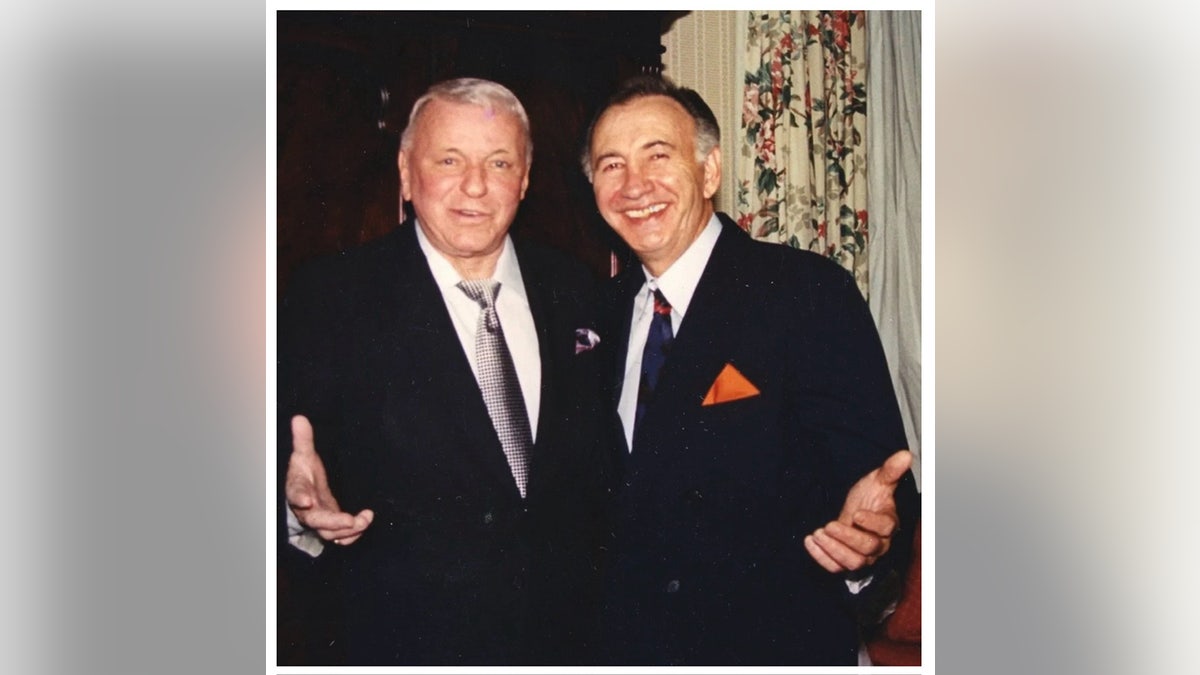
Joseph Paris, right, is seen here with his client and pal Frank Sinatra. (Courtesy of Joseph Paris)
"He [got] two Doberman Pinschers for his house in Los Angeles," Paris told Fox News Digital about how Sinatra responded to the news of the slayings.

"He had iron gates [installed]," he recalled. "The hairdresser [Jay Sebring] got killed, who used to cut everybody’s hair in Las Vegas. And Sharon Tate got killed. So, this was serious stuff."
Actress Sharon Tate and hairdresser Jay Sebring pose for a portrait in 1966. Both were murdered in 1969. (Michael Ochs Archives/Getty Images)
"He was concerned about his well-being," said Paris. "He had some security ride shotgun. He always had a .38 when he traveled for his own protection because people would jump on stage… they couldn’t control themselves. They were such fans, especially if they had two or three drinks. And in Vegas, everybody drank."
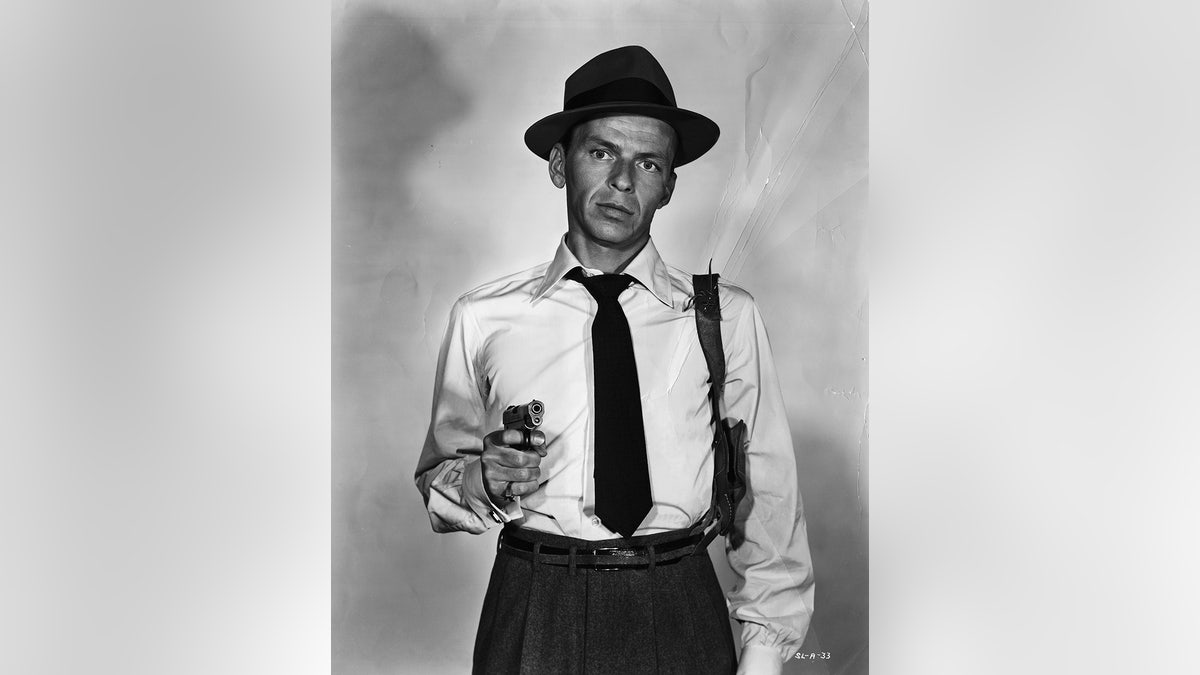
Frank Sinatra made sure to arm himself following the summer of 1969, Joseph Paris claimed. (Getty Images)
Sinatra had good reason to worry about Manson, the hippie cult leader who became the hypnotic-eyed face of evil across America. According to Paris, Sinatra, along with Elizabeth Taylor and Steve McQueen, "somehow made nutcase Charles Manson’s hit list."
"Frank began traveling with a beautiful, silver, .38-caliber, snub-nosed pistol that he’d received as a gift," Paris wrote.
Sharon Tate was 8 ½ months pregnant at the time of her death. (Silver Screen Collection/Getty Images)

Manson was a petty criminal who had been in and out of jail since childhood. In the ‘60s, he portrayed himself as a charismatic guru who embraced runaways and lost souls. He went on to order his loyal disciples to butcher some of L.A.’s rich and famous in what prosecutors said was a bid to trigger a race war — an idea he got from a twisted reading of the Beatles song "Helter Skelter."
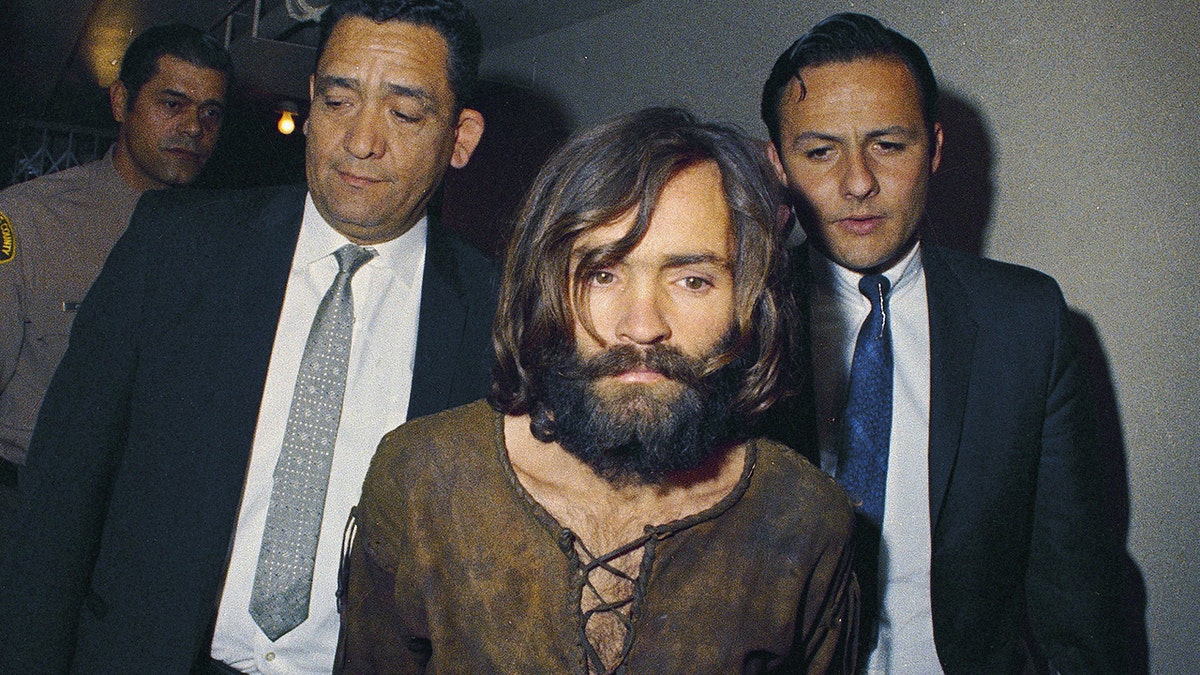
In this 1969 file photo, Charles Manson is escorted to his arraignment on conspiracy-murder charges. (AP)
Before the killings, the so-called family established a commune-like base at the Spahn Ranch, a ramshackle former movie location outside Los Angeles. It was there where Manson manipulated his followers with drugs, oversaw orgies and subjected them to bizarre lectures.
He had musical ambitions and befriended rock stars, including Beach Boy Dennis Wilson. He also met Terry Melcher, a music producer and the son of actress Doris Day, who had lived in the same house that "Rosemary’s Baby" director Roman Polanski and wife Tate later rented.
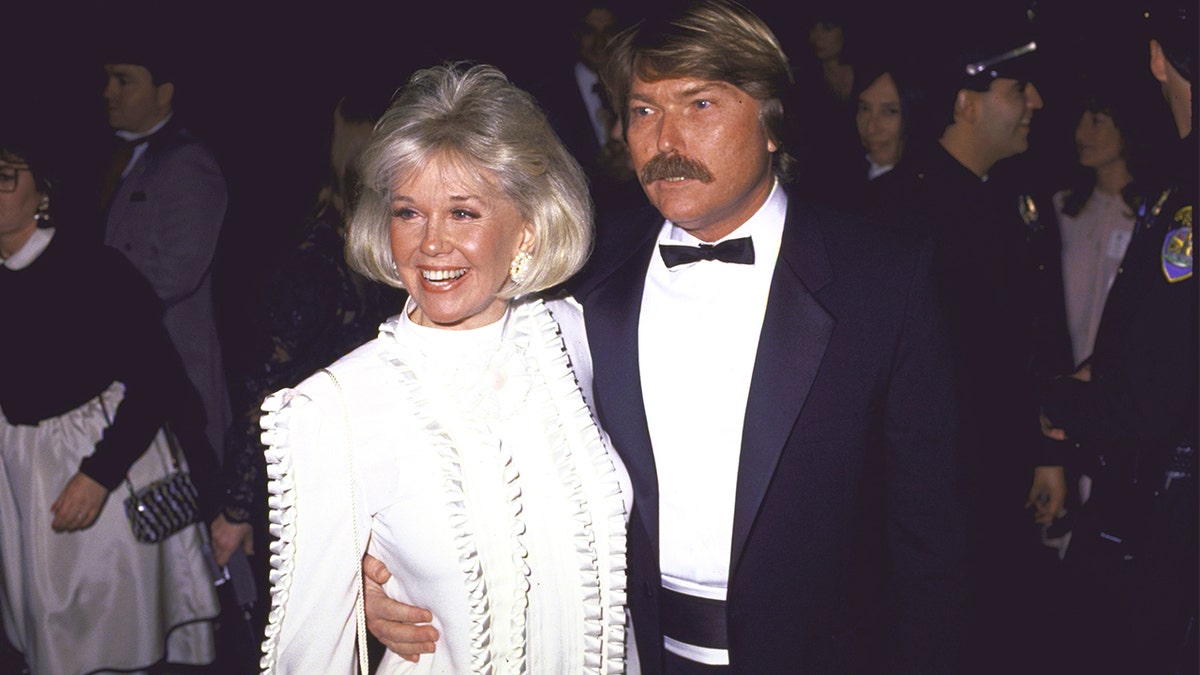
Terry Melcher is seen here with his mother, singer/actress Doris Day. In his attempt to become a musician, Manson met the music producer, who had lived in the same house that Roman Polanski and Sharon Tate later rented. (David Mcgough/DMI/The LIFE Picture Collection via Getty Images)

But by the summer of 1969, Manson had failed to sell his songs. He alleged that Wilson took one of his songs, "Cease to Exist," revised it into "Never Learn Not to Love," and recorded it with The Beach Boys without giving him credit.
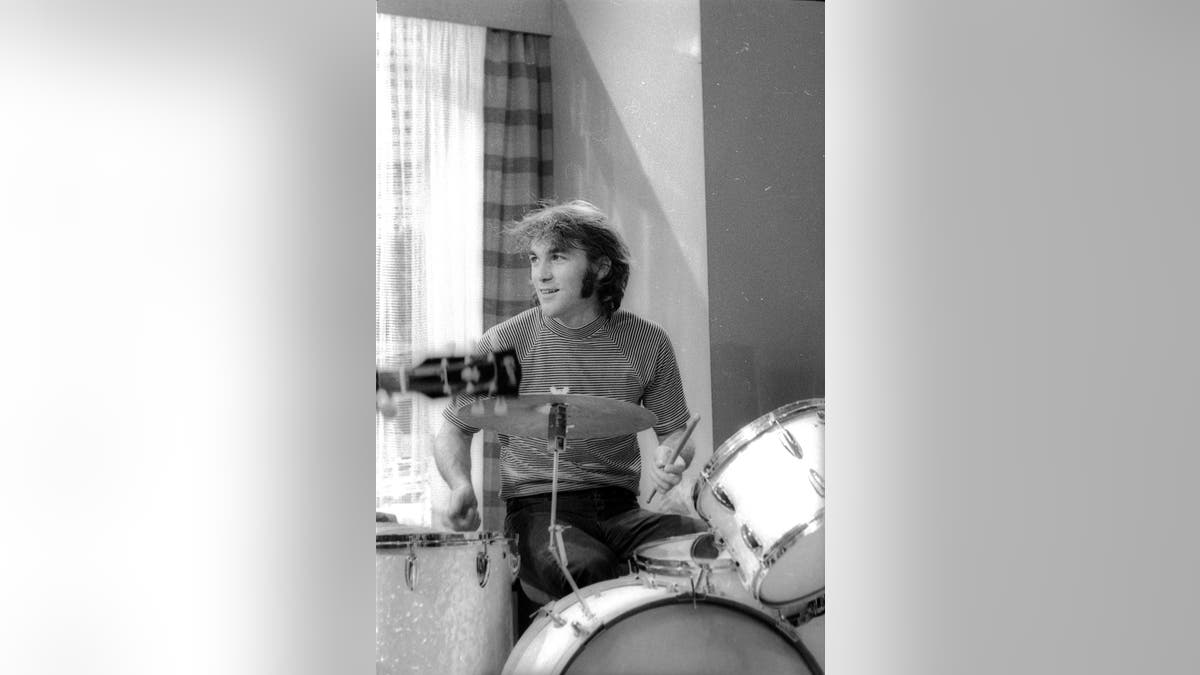
Dennis Wilson, American drummer and co-founder of The Beach Boys, is seen on June 16, 1969. Manson was hoping Wilson could help him score his big break in music. (Christian Rose/Roger Viollet via Getty Images)
On Aug. 9, 1969, Manson’s followers slaughtered five of their victims at Polanski and Tate’s home: the actress, who was nearly nine months pregnant; coffee heiress Abigail Folger; celebrity hairdresser Jay Sebring; Polish film director Voityck Frykowski; and Steven Parent, a friend of the estate’s caretaker. Polanski was out of the country at the time.
The next night, a wealthy grocer and his wife, Leno and Rosemary LaBianca, were stabbed to death in their home across town.
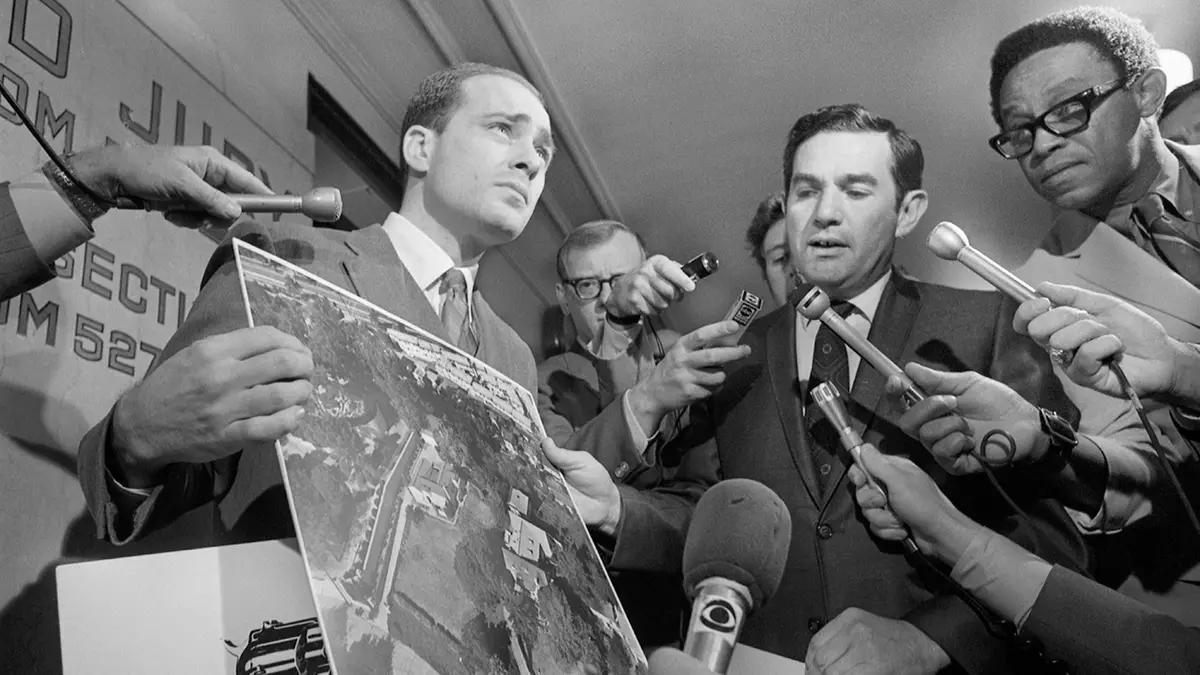
Deputy District Attorneys Aaron Stovitz, left, and Vince Bugliosi display an aerial photograph of the home of Leno and Rosemary LaBianca, victims of the Manson Family. (Getty Images)
The killers scrawled such phrases as "Pigs" and a misspelled "Healter Skelter" in blood at the crime scenes. Manson was arrested three months later.

WATCH: FRANK SINATRA WAS ON CHARLES MANSON'S HIT LIST AFTER SHARON TATE'S MURDER: BOOK
Paris told Fox News Digital that at the time, a local newspaper had published a list of celebrities Manson wanted his followers to target. Sinatra was among them.
"That was no secret," said Paris. "[And] after they found [Tate] dead and blood writing on the walls, this was some lunatic for sure. Just a horrible human being."
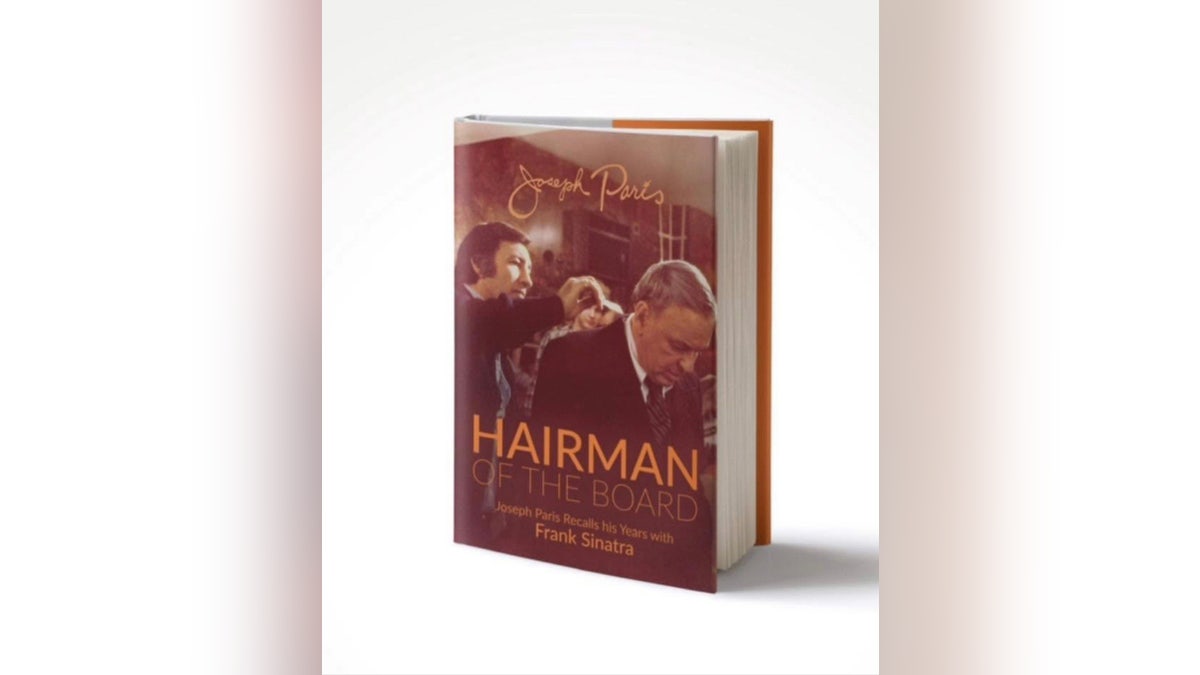
Joseph Paris' book, "Hairman of the Board," is out now. (Gatekeeper Press)
"Everybody who was on that list has something to worry about, because there’s a lunatic out there planning your death with five other psychos," he said. "There are some sick people in this world. [But] when somebody says they’re out to kill you, and they make an announcement of it, what are you supposed to do? Hide? Put on a bulletproof vest? That’s enough to drive you crazy."
Sharon Tate and Roman Polanski on their wedding day in 1968. Polanski directed Sinatra's third wife, actress Mia Farrow, in "Rosemary's Baby." (Keystone/Getty Images)

According to a report from the University of Missouri — Kansas City School of Law, Manson follower Susan Atkins claimed to another inmate, Virginia Graham, that she and other Family members had a list of celebrities they had "planned to kill in the future." They included Richard Burton and Tom Jones, as well as Taylor, McQueen and Sinatra.
"Through an inmate friend of Graham’s, Ronnie Howard, word of Atkins’s amazing story soon reached the LAPD," the report read.
Susan Atkins testified before the Los Angeles Grand Jury in December 1969, which indicted five individuals (including Atkins and Charles Manson) for the Tate-LaBianca killings. (Getty Images)
Manson and Atkins, as well as Patricia Krenwinkel and Leslie Van Houten, were found guilty and sentenced to death. Another defendant, Charles "Tex" Watson, was convicted later. All were spared execution and given life sentences after the California Supreme Court struck down the death penalty in 1972.
From left: Susan Atkins, Patricia Krenwinkel and Leslie Van Houten laugh after receiving the death sentence for their part in the Tate-LaBianca killings at the orders of Charles Manson. (Bettmann Archive via Getty Images)

Another Manson devotee, Lynette "Squeaky" Fromme, tried to assassinate President Gerald Ford in 1975, but her gun jammed. She served 34 years in prison.
Over the decades, Manson and his followers appeared sporadically at parole hearings, where their bids for freedom were repeatedly rejected. The women claimed they had been rehabilitated. Manson said prison had become his home.
Debra Tate, sister of slain actress Sharon Tate, reacts after convicted mass murderer Charles Manson was denied parole at his 12th parole hearing for the 1969 Tate-LaBianca murders on April 11, 2012. (Reuters)
In 2017, Manson died of natural causes after nearly half a century in prison. He was 83.
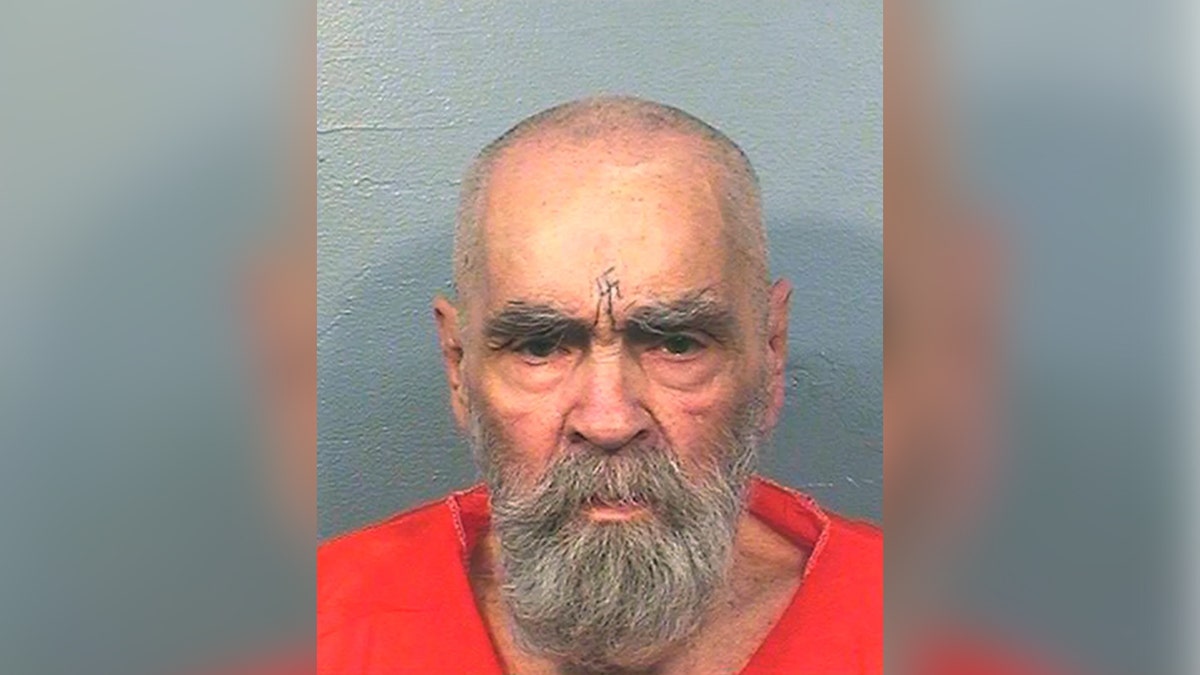
A mugshot of Charles Manson from Aug. 14, 2017, a month before he died of natural causes behind bars at 83. (California Department of Corrections and Rehabilitation)
For years, it had been speculated that Sinatra had ties to another family — the mafia. He was even tracked for over 40 years by the FBI, History.com reported. According to the outlet, while Sinatra always denied he was connected to the mob, he did interact with famous gangsters, including Chicago mob boss Sam Giancana, with whom he was close friends.

Paris scoffed at the claims.
Frank Sinatra performs on stage in Las Vegas. (Diamond Images/Getty Images)
"Who were the nightclubs owned by? Bishops and priests?" he told Fox News Digital. "If you had to work for somebody in a nightclub, were you supposed to say, ‘You’re not my friend, goodbye?’ Or ‘You’re providing a living for me and my children?’ I don’t believe it was bishops and cardinals that owned the nightclubs years ago."
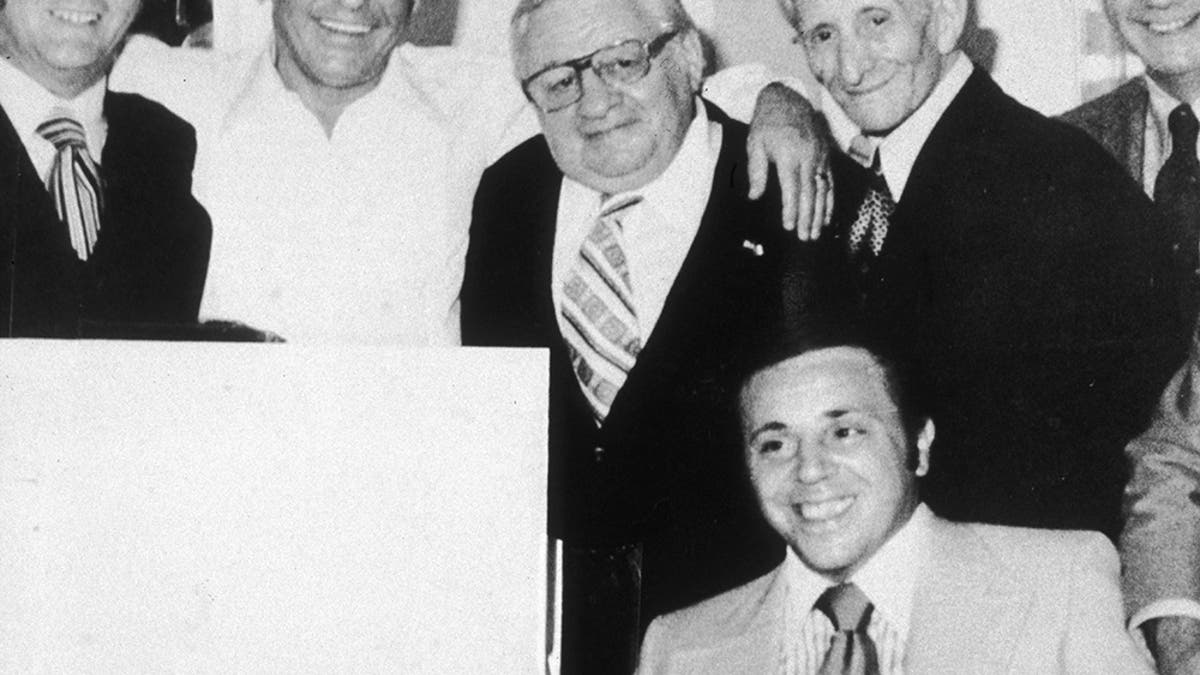
Frank Sinatra poses with a group of reputed mobsters at a Westchester theater in New York in 1978. From left: Gregory DePalma, Sinatra, Thomas Marson, Carlo Gambino, James Fratianno and Richard Fusco. Unseen in the photo is boss Joey Gambino. (Fred R. Conrad/New York Times Co./Getty Images)
"So much for the wise guys, because he was not a mafia member," Paris stressed. "He did not support the mafia. He was an Italian who had a heart of gold."

Today, Paris hopes readers will get to see a new side of Sinatra, the man he knew, through his book.
In his book, Joseph Paris detailed his close bond with Frank Sinatra. The singer passed away in 1998. (Courtesy of Joseph Paris)
"He treated me like royalty," said Paris. "I was a kid from Brooklyn who didn’t graduate from school, who went to work as a butcher thinking that was going to be my life… But with Sinatra, life was always an adventure."
The Associated Press contributed to this report.

WSJ : Hamas Wanted to Torpedo Israel-Saudi Deal With Oct. 7 Attacks, Documents R

Hamas Wanted to Torpedo Israel-Saudi Deal With Oct. 7 Attacks, Documents Reveal
Militant leader Yahya Sinwar feared progress on peace would doom the Palestinian cause

Top leaders of Palestinian Islamist group Hamas launched their Oct. 7, 2023, attack on Israel aiming to torpedo peace negotiations between Israel and Saudi Arabia, according to minutes of a high-level meeting in Gaza that Israel’s military said it discovered in a tunnel beneath the enclave.

Days before the assault that left nearly 1,200 dead, Yahya Sinwar, Hamas’s Gaza chief, told fellow militants that an “extraordinary act” was required to derail the normalization talks that he said risked marginalizing the Palestinian cause, the document, reviewed by The Wall Street Journal, said.

The plan worked—at a terrible price.

Iran-backed Hamas’s onslaught of killing and kidnapping sparked an Israeli military campaign to destroy the militants that has killed more than 60,000 Palestinians, according to Gaza health authorities, and left the territory in ruins. That has fueled anger across the Arab world and beyond, halting progress toward normalization, at least for now.

President Trump, visiting Riyadh on Tuesday, acknowledged as much, calling on Saudi Arabia to establish relations with Israel but saying, “You’ll do it in your own time.”

The meeting minutes—from an Oct. 2, 2023, gathering of Hamas’s political bureau in Gaza—cite Sinwar as saying, “There is no doubt that the Saudi-Zionist normalization agreement is progressing significantly.” He warned a deal would “open the door for the majority of Arab and Islamic countries to follow the same path.”

For Sinwar and Hamas, who have called for total destruction of Israel and the creation of a Palestinian state between the Jordan River and the Mediterranean Sea, this was unacceptable. Sinwar said it was time to unleash an attack that had been in the planning stages for two years.

The goal, he said, is “to bring about a major move or a strategic shift in the paths and balances of the region with regard to the Palestinian cause.” He expected to get help from the other Iranian-backed forces of the so-called axis of resistance to Israel.

Hamas didn’t respond to a request for comment on the authenticity of the document or its contents. Arab intelligence officials familiar with Hamas and its records said the document appears to be genuine, as do others the Israeli military says it found in Gaza.

Those documents, reviewed by the Journal, show mounting concern among Hamas leaders about the progress of U.S.-brokered talks between Israel and Saudi Arabia. Officials of all three countries were saying in 2023 that differences were narrowing.

This newest cache of Hamas records adds a new link in the chain of events leading up to Oct. 7, 2023, the deadliest day for Israelis since the country’s founding.

The Journal, citing senior members of Hamas and Hezbollah, has reported that another meeting connected to the attack took place on Oct. 2 that year, this one in Beirut involving representatives of Hamas and Iranian security officials. Iran approved the planned attack, those people said.

Other Hamas and Hezbollah officials have disputed that, saying details of the attack, including the scope and the date, were kept tightly under wraps by Hamas’s military wing in Gaza.

Senior officials from Iran and Hezbollah had been discussing attack options with Hamas since the summer of 2021. Iran also gave Hamas weapons, financing and training over a long period, including combat training in the weeks before Oct. 7, according to intelligence officials from several countries.

But Tehran and Hezbollah made it clear to Hamas that they didn’t want to end up in a direct, all-out war with Israel, according to officials from the axis as well as Israeli intelligence.

Many of the figures directly involved in planning the Oct. 7 attacks are now dead. Sinwar was killed by Israeli troops in Gaza last October. Most of Hamas’s other top leaders in Gaza have also been killed, including some who were present at the Oct. 2 political bureau meeting, such as Marwan Issa.

Israel has also killed top Hamas leaders in exile, including Ismail Haniyeh, who was the most powerful person in the movement along with Sinwar. On Tuesday, an Israeli airstrike in Gaza targeted Sinwar’s brother, Mohammed, head of Hamas’ military operations; it wasn’t clear whether he had been killed.

Among the other internal Hamas documents found by the Israeli military and reviewed by the Journal was a September 2023 report that recommended escalating the conflict in the West Bank and Jerusalem to make Saudi-Israeli normalization more difficult.

The report expressed mistrust of Saudi pledges to uphold Palestinian interests, calling them “weak and limited steps to neutralize” Hamas and stop it from fighting back against normalization.

Saudi relations with the Iranian-backed Hamas had been frosty ever since Hamas violently wrested control of the Gaza Strip from rival Palestinian faction Fatah.

An internal briefing marked “secret” from August 2022, written by Hamas’s military leadership, concludes: “It has become the duty of the movement to reposition itself to … preserve the survival of the Palestinian cause in the face of the broad wave of normalization by Arab countries, which aims primarily to liquidate the Palestinian cause.”

In response, Hamas was strengthening its coordination with Hezbollah as well as other Palestinian militant factions, the briefing says.

Saudi-Israeli normalization would mark the biggest change in Israel’s political standing in the Middle East since it signed peace treaties with Jordan and Egypt decades ago. In 2020, Israel also established full diplomatic relations with the United Arab Emirates and Bahrain, agreements known as the Abraham Accords.

But a deal with Riyadh has long been the true prize for Israel—and a major goal for Washington, as it seeks to organize a regional coalition to contain Iran.

The heavy toll of death and destruction in Gaza has changed the political calculus for Saudi Crown Prince Mohammed bin Salman. The prince has told a number of foreign visitors in the past year that he can’t proceed with normalization unless Israel meets two conditions: halting the war in Gaza, and agreeing to a diplomatic process would eventually lead to a Palestinian state.

But the Oct. 7 attack hardened attitudes in Israel, potentially for years to come. Palestinian statehood has become anathema for most of the Israeli political spectrum.

Also among the documents that Israel’s military said it found is a Hamas job advertisement from October 2022, seeking a person to spearhead diplomatic efforts to derail normalization. It isn’t clear where the advertisement was posted—or how much the job paid.

The vacancy at Hamas’s Department of Arab and Islamic Cooperation sought a university graduate skilled in negotiation and communication. Part of the job description: “Marketing the movement’s programs to confront normalization,” including by getting grassroots organizations in the Arab world to boycott entities that supported normal relations with Israel.

WSJ : Just How Expensive Are Stocks After All the Ups and Downs? We Check the Ma

Just How Expensive Are Stocks After All the Ups and Downs? We Check the Math.
A look at different methods for valuing stocks and what that might suggest going forward

Key Points
  • Stocks appear expensive by typical measures such as price/earnings ratios.
  • Measures of relative valuation have helped predict the performance of stocks versus bonds.
  • Investors can compare stocks’ earnings yields with yields on U.S. Treasurys.

The market has absorbed the early blows of President Trump’s tariffs, making up all its lost ground. Yet that rekindles a Wall Street worry from earlier this year: By the typical measures, stocks look very pricey right now.

Following outsize gains in recent years, some analysts entered 2025 concerned that high valuations left share prices especially vulnerable to any hint of trouble in the economy. And so far, stocks have delivered slightly worse returns than bonds this year—even after their recent rebound.

Here is a look at how expensive stocks are currently, and what that might mean for their future performance:

Price/earnings ratios
There are myriad ways to value stocks. The most well-known is the price/earnings ratio.

The most common applications of this metric compare stock prices with a company’s past 12 months of corporate earnings, analysts’ expectations for its next 12 months of earnings or so-called cyclically adjusted earnings: the average annual earnings of the past 10 years, adjusted for inflation.

When the whole S&P 500 is looked at, all three currently show investors paying a high price for every dollar of earnings compared with what they have paid in the past.


Earnings yield vs. Treasury yield
Wall Street analysts often like to flip the price/earnings ratio upside down, creating an earnings-to-price ratio. Known as the earnings yield, it is expressed as a percentage and sometimes used as a rough guide to the annual return that investors can expect over an extended period.

Investors can then compare stocks’ earnings yields with yields on U.S. Treasurys. That offers a sense of how much investors are being
compensated to hold riskier investments over ultrasafe government bonds.

Based on real cyclically adjusted earnings, the S&P 500’s earnings yield is currently around 2.8%, or 1.4 percentage points above the inflation-adjusted 10-year Treasury yield, according to data from the economist Robert Shiller. That gap, sometimes known as the excess CAPE yield, is well below its historical average, suggesting investors are so eager to buy stocks that they are willing to accept a smaller premium for the risk of losses.

History as a guide
Just because stocks look expensive by these measures doesn’t mean they are about to plunge. In periods such as the Roaring ’20s and the 1990s tech bubble, frothy markets defied gravity for years.

Still, those rallies eventually ended, leading to years of price declines. There is, as a result, a fairly tight relationship between valuations and what stocks have historically returned over longer periods, such as 10 years.

Measures of relative valuation, like the excess CAPE yield, have been especially good at predicting the relative performance of stocks versus bonds. A smaller excess yield has typically led to a smaller return compared with bonds over the next 10 years; a bigger premium has led to a bigger excess return.


The drawbacks
Aswath Damodaran, a professor at the Stern School of Business at New York University, is widely known on Wall Street as “the dean of valuation.” He says one drawback of a standard S&P 500 earnings yield is that it doesn’t account for future earnings growth, effectively treating stocks like bonds with fixed annual payments. He has seen little evidence that valuations can be used to time swings in the market.

Damodaran has devised his own estimate of the risk premium that stocks offer over bonds. His incorporates analysts’ expectations for companies’ earnings growth. Right now, that calculation suggests that stocks are more reasonably priced than other metrics—although Damodaran says that he uses it as a tool to value individual stocks, rather than a guide to buying or selling the overall index.


Putting them to use
Others are happy to employ valuation metrics in their investment strategies.

As a reasonable guide to future returns, valuations are one tool that investors can use to build portfolios that match their risk tolerance and to make adjustments over time, said Victor Haghani, founder of Elm Wealth. It might make sense for a young person to own 100% stocks, but most people by the middle of their careers want something less volatile, he said.

An investor who put $1 into the S&P 500 some 60 years ago could have outperformed the market by switching completely to 10-year Treasurys when the excess CAPE yield fell to particularly low levels, according to a Wall Street Journal analysis of the data compiled by Shiller.

For example, investing in bonds after any month that the excess CAPE yield averaged less than 1.75%—and stocks otherwise—would have yielded a real annualized return of 6.6%, or 0.5 percentage point more than holding stocks the entire time.

WSJ : U.S. Allies Are Still Waiting for Tariff Relief Even After Speedy China Tr

U.S. Allies Are Still Waiting for Tariff Relief Even After Speedy China Truce
Talks with Japan, South Korea and European Union bog down over auto tariffs and U.S. reneging on past deals

The U.S. hammered out a trade truce with its foremost geopolitical rival in record time. Reaching agreement with longtime allies is proving more of a slog.

The U.S. drew up a list of 18 key trading partners to focus on in negotiations following President Trump’s April 2 tariff blitz, when he slapped “reciprocal” tariffs on almost all U.S. imports.

Yet aside from one quick agreement with the U.K. and now the tariff rollback with China, none have so far yielded the kind of breakthrough that would bring relief for painful import levies.

For some of the biggest targets on that list, such as Japan, South Korea and the European Union, one sticking point is cars. The U.S. has so far been reluctant to drop a crippling 25% tariff on imported autos, which particularly hits these allies.

The U.K. did secure a lower auto tariff in its rapid-fire agreement with U.S. negotiators—but only on the first 100,000 vehicles imported each year, far fewer than the carmaking powerhouses send to the U.S. each year.

In earnings reports this month, Toyota, Honda and Nissan blamed tariffs for souring profit forecasts, while data Friday showed Japan’s economy shrank in the first quarter, underlining its vulnerability to an export decline.


Japan’s top trade negotiator, Ryosei Akazawa, said Japan was still seeking the removal of all tariffs Trump has recently imposed, including those on autos and steel as well as the baseline 10% “reciprocal” tariff. He called these levies “deeply regrettable.”

Seoul is also seeking an exemption from tariffs and its trade minister met Friday on South Korea’s Jeju Island with U.S. Trade Representative Jamieson Greer. Noting the local auto-parts industry creates about 330,000 jobs, South Korea’s minister for small and midsize businesses recently pledged support to minimize the damage.

Trade officials from several EU member states said they would push for a better deal than the one the U.K. reached with the U.S., which left tariffs in place for most goods. “I don’t think that’s the level of ambition Europe would be happy with,” said Michał Baranowski, Poland’s deputy economy minister.

Trump on April 2 announced plans to hit U.S. allies and adversaries alike with steep new tariffs aimed at reining in the U.S.’s yawning trade deficit and rebuilding U.S. manufacturing.

Japan received a 24% tariff, while the EU got 20%. The Trump administration said the tariffs reflected not just other countries’ tariffs on imports from the U.S. but also onerous regulations and other nontariff barriers.

The levy on South Korea was set at 25%, while the U.K., with which the U.S. runs a trade surplus, got the baseline 10% rate that Trump wants to be a floor on almost all U.S. imports.

Days after announcing the new levies, the White House decreed most of those new tariffs would be suspended for 90 days, while car and steel tariffs remained in force. A rush to negotiate better terms began.

Japan was the first country out of the block to start talks, and officials were hoping for a quick deal.

Trump has frequently spoken of his regard for former Prime Minister Shinzo Abe, who presented him with a golden golf club after he won the presidency in 2016. Abe’s widow visited Mar-a-Lago late last year following Trump’s second election victory, and the current prime minister, Shigeru Ishiba, was one of the first global leaders to visit the White House after inauguration day.

Unlike China, Japan didn’t retaliate against Trump’s tariffs and Ishiba has been careful to avoid public criticism of the president.

“The Japanese are very careful to not have Trump lose face,” said Shihoko Goto of the Washington-based Mansfield Foundation.

Yorizumi Watanabe, president of Fuji Women’s University in Japan and a former top Japanese trade negotiator, said Tokyo was among the nations most susceptible to U.S. pressure.

“Japan is maybe the easiest one to negotiate because we are totally dependent on the U.S. market and also U.S. defense,” he said.

At the same time, he said, Japan is wary of giving too much away in talks. It already signed a trade pact with the U.S. in 2019 during Trump’s first term in which Japan lowered tariffs on some U.S. agricultural products, such as frozen beef and pork, while the U.S. lowered tariffs on some Japanese goods such as machine tools.

Trump has shown by levying a host of new tariffs that he doesn’t consider the 2019 deal with Japan binding, much as he dispensed with the U.S.-Mexico-Canada agreement he also negotiated during his first term.

In Tokyo, that about-face stung. “Even assuming we reach a new agreement built on a win-win relationship, it’s important to reaffirm that they’re going to observe the rules fully this time,” Yoshihiko Noda, leader of the opposition Constitutional Democratic Party, said in an interview.

Trade experts say Japan could offer to increase imports of U.S. cars and align its car-safety standards with America’s. It could propose buying more corn and other agricultural products, this time including rice, which was excluded from 2019 talks. Japan’s shipbuilding expertise could help the U.S. Navy and rebuild the long-dormant U.S. industry, a Trump priority.

There are hurdles other than tariffs. Analysts say some U.S. trading partners might balk at demands to loosen economic ties with China, or agree to let their currencies appreciate against the dollar. Still, the U.S.-China deal reached in Geneva clears some space for Trump’s team to turn its attention to other countries.

“I’ve been focused on the Asia deals, of which obviously China is the largest,” Treasury Secretary Scott Bessent said Tuesday. “We’ve had very productive discussions with Japan,” he said, adding that across Asia “things are going very well.”

>>> Barron’s Weekend Summary

Cover:
-No update

Interview:
-
Tech Trader:
-President Donald Trump visited Saudi Arabia to discuss artificial intelligence, focusing on the creation of onshore "sovereign AI" data centers. Saudi Arabia wants to control its own AI future and has sought approval from Trump to acquire the highest-powered AI chips from Nvidia. Nvidia has been highlighting sovereign AI as a growth driver since its November 2023 earnings call. National investment in computing capacity is a new economic imperative, as people cannot afford to export their country's knowledge and culture for someone else to resell AI back to them. Saudi Arabia announced its vehicle for sovereign investment into AI, called Humain, as part of its $100B "Project Transcendence" aimed at making Saudi Arabia an international tech hub. Humain will initially use AI chips from start-up Groq, which already operates a data center in Saudi Arabia. Over the next five years, Humain plans to build massive Saudi data centers populated by advanced chips from Nvidia and Advanced Micro Devices.

The Trader:
-Federal Reserve Chair Jerome Powell warned of erratic inflation in the coming years, while retail sales slowed from March levels. Walmart warned of higher prices, consumer sentiment tumbled, and Meta Platforms fell on reports of delaying its large-language model rollout. President Donald Trump's budget bill seemed to get delayed in the House. However, none of these issues mattered, as the artificial-intelligence trade made a grand return and the US and China agreed to reduce their reciprocal tariffs by 115 percentage points for 90 days. The AI trade also gained a boost, with Nvidia jumping double digits. Trump's visit to Saudi Arabia highlighted the growing appetite for sovereign AI, with nations racing to use US chips for onshore projects. The United Arab Emirates is expected to be the latest buyer of American AI technology, easing concerns that Silicon Valley was losing its edge to rivals in China. The US is expected to be the second biggest source of global AI capex, with spending expected to grow steadily in the coming years.
-Adobe stock has underperformed this year, falling 10% and ending 2024 with disappointing earnings. However, Heard Capital Founder William Heard argues that AI isn't the enemy, as Adobe is still the top tool for editing with its AI tool Firefly offering control at the pixel level. Adobe's products are trained on ethically sourced data with proper licensing, allowing images to be used for commercial purposes. Heard also points to Adobe's metrics being the best among peers and its gross margins approaching 90%. Adobe is trading well south of 20 times forward earnings, compared with historical values in the 30 to 40 times range. Heard believes that the market for AI is not a zero-sum game, with room for Adobe and peers to grow. He believes consensus estimates for Adobe to deliver earnings per share growth of more than 10% to $20.57 are still too low, and the shares should trade up to $700, representing a price-to-earnings ratio of 34 times, more in-line with historical levels. He also likes the company's seasoned management team, which has shown itself willing to remain innovative and relevant.

Features:
-The Federal Reserve is planning to reduce its head count by 10% over the next couple of years, according to Fed Chair Jerome Powell. The move is aimed at attrition across the Federal Reserve system, including the Washington, DC headquarters and 12 reserve banks nationwide. Powell has directed the leadership to find incremental ways to consolidate functions, modernize business practices, and ensure the agency is right-sized to meet its statutory mission. The reduction will be achieved through normal attrition and retirements, with the Board offering a voluntary deferred resignation program for Board staff eligible to retire by Dec. 31, 2027. Powell has previously defended the Fed's staffing levels, stating that the Fed runs a careful budget process and is not overstaffed, but "overworked, maybe." The Fed system employed nearly 24,000 workers as of 2023.

Europe:
-Lockheed Martin is focusing on increasing military spending in Europe to benefit the weapons maker, according to its vice president for international business, Raymond Piselli. Lockheed is establishing more production and supply chains in Europe, with about one-quarter of its sales going to international customers. From 2022 to 2024, international sales grew almost 5% a year on average, while U.S. business grew closer to 3% a year. European business was a standout, up about 11% a year on average. Lockheed exports about $20 billion in American-made military equipment annually, with exports of F-35 fighter jets, missiles, and Black Hawk helicopters expected to drive more growth in the coming years. The company also collaborates with European partners, such as Rheinmetall on rocket artillery produced in Germany.

Emerging Markets:
-No update

Commodities:
-No update

Streetwise:
-Fair Isaac, a credit analytics company, has risen from humble beginnings to bodacious territory, now worth $51B, which is close to FedEx at $55B. The company, based in Bozeman, Mont., has gone public decades earlier, selling 1.4M shares at $9.50 apiece in July 1987. An investor who bought that day has since made 172,000%. Fair Isaac has ridden powerful business trends, starting in 1956 when credit assessment was shifting from paper records to computers. Engineer Bill Fair and mathematician Earl Isaac put up $400 apiece in start-up capital and sold their first credit score within two years. The Fair Credit Reporting Act in 1970 laid out rules for what would become the big three reporting firms: Equifax, Experian, and TransUnion. Fair Isaac was the obvious choice to interpret the different reports, and the company has since outperformed Apple over the long run. The company's success can be attributed to its ability to adapt to business trends and its ability to interpret different reports.

FT : Portugal blames France for delays to power links after Iberian blackout

Portugal blames France for delays to power links after Iberian blackout
Last month’s outage has revived a decades-long dispute over cross-border electricity connections

Portugal will appeal to the European Commission to pressure France over cross-border electricity links after a blackout last month, claiming that French delays on new connections have left the Iberian peninsula vulnerable.

The catastrophic outage, which began in Spain and took down Portugal’s electricity system, has reignited long-standing tensions over interconnections for trading power with France.

Madrid has yet to determine the root cause of the blackout on April 28 but some experts argue more power links to France would have made Spain part of a bigger and sturdier network, better able to withstand the initial shocks.

Portugal’s energy minister Maria da Graça Carvalho told the Financial Times that insufficient interconnections between France and Spain represented a “barrier” to the EU’s internal market, which meant European law gave Brussels the power to intervene.

“We will involve the president of the European Commission on this to make sure that we are all integrated and . . . we help each other to solve the problems,” said Carvalho, whose government is seeking another term in an election on Sunday. “This is a European question, it’s not a question between the three countries.”

The Iberian peninsula has some of the lowest levels of connectivity to the rest of the EU and France-Spain power links automatically disconnected to protect the wider grid on April 28, after the Spanish system began to collapse.

Madrid has for decades accused Paris of standing in the way of more electricity connections between the two countries, with suspicions it wants to shield France’s nuclear power plants from an influx of cheap Spanish solar and wind energy.

The French energy minister declined to comment. France’s grid operator, RTE, has rejected the idea it was blocking progress on cross-border links.

Xavier Piechaczyk, president of RTE, said: “We have always treated interconnections with Spain as a very serious issue, one on which there are French and European commitments. So it is wrong to say that France is not a driving force in interconnections with Spain.”

Piechaczyk pointed out that work was under way on a new connection via the Bay of Biscay, due to be completed in 2028, which will double the interconnection capacity between France and Spain to 5 gigawatts. A possible link between Landes in France and Navarre in Spain was given an €11mn EU grant for initial studies in January.

However, Nicolas Goldberg, an energy expert at Colombus Consulting, said “France hasn’t always been very accommodating on interconnections”.

He added that “strong biodiversity concerns” about the impact of construction in the Pyrenees mountain range had also slowed new projects.

Spain’s energy and environment ministry said more interconnections were a “priority” and that it was working “jointly” with France and the commission on the issue.

Despite the commission decreeing in 2015 that the EU should have a fully integrated energy market, the goal is yet to be achieved.

“If there is a breach of the internal market, the European Commission can act,” Carvalho said. “We have to put it in this perspective as . . . an internal market question, because it’s there that the European Commission can put pressure on France to speed up this interconnection.”

The commission has in the past opened legal proceedings over grid connections between EU countries, but there have been none related to the Iberian peninsula or that cite internal market rules. An EU official said interconnectors across the Pyrenees were, however, “a priority for the commission”.

Portugal is taking the fight to France even as it continues to put a post-blackout limit on its own imports of Spanish electricity, a “precaution” that has driven up Portuguese electricity prices.

Portugal was importing 35 per cent of its electricity from Spain on the morning of April 28 because of the low cost of Spanish solar power.

Spain’s Prime Minister Pedro Sánchez has dismissed arguments that his country’s dependence on renewables was to blame for the widespread blackout.

Brussels in 2002 set targets for member states to have an electricity import capacity equal to 10 per cent of their domestic generation by 2020 and for that figure to reach 15 per cent by 2030. Madrid says the France-Spain connection is below 3 per cent.

FT : ECB may have to cut interest rates below 2%, former hawk says

ECB may have to cut interest rates below 2%, former hawk says
Downside risks to growth and inflation have become bigger, Belgian’s central bank governor warns

The European Central Bank must stand ready to lower borrowing costs to “slightly below” 2 per cent as global trade wars threaten to drag down consumer prices, a top official has said.

“If I look at the economy — the shocks we are confronted with and the uncertainty on growth — it might warrant to be mildly supportive,” Belgium’s central bank governor Pierre Wunsch told the Financial Times in an interview ahead of the ECB’s next meeting on June 5.

This could imply lowering the central bank’s key deposit facility rate to “slightly below 2 per cent”, he said. The ECB has lowered its benchmark interest rate seven times since June from 4 per cent to 2.25 per cent.

Markets currently expect that the ECB will cut borrowing costs by a quarter-point in June and again by the same amount in the second half of the year to bring the deposit facility rate to 1.75 per cent, according to Reuters data. Some economists forecast the cental bank might have to increase rates again in 2026.

Wunsch said he was “not shocked” when he looked at market forecasts. “The way I read them is that, somewhere around the end of 2025, we could be mildly supportive,” he said.

Wunsch’s comments in favour of further cuts mark a stark departure from his relatively hawkish stance in the past. In February he had told the FT the ECB should not “sleepwalk to 2 per cent [interest rates] without thinking about it”.

His remarks also mean that ECB hawk Isabel Schnabel appears to be increasingly isolated among the 26 members of the ECB’s governing council that decide rates. Schnabel argued in a speech in the US on May 9 that global trade wars threatened to push up inflation in the Eurozone, limiting the room for further interest rate cuts.

Explaining his change in view, Wunsch said developments since US President Donald Trump’s sweeping tariffs announcements on April 2 had created clear “downside risks to inflation” in the Euro area, as well as additional threats to economic growth.

Eurozone inflation remained above the ECB’s 2 per cent target at 2.2 per cent in April, although economists said factors such as lower oil prices had yet to feed through to consumer prices.

Wunsch also pointed to the surprise appreciation of the euro against the dollar after so-called liberation day, when Trump announced steep tariffs on most US trading partners — including levies of 20 per cent on nearly all exports from the EU. These “reciprocal tariffs” were lowered to 10 per cent on April 9 for 90 days to allow for negotiations.

The stronger euro meant that imports had become cheaper for European consumers, which could slow down inflation, Wunsch argued. The sharp drop in energy prices since early April and the prospect of cheaper goods from China were likely to have similar effects, he added.

Germany’s new €1 trillion debt-funded spending plans to strengthen its army and public infrastructure won’t offset the drag on inflation from the tariff wars over the short term, Wunsch said.

“Fiscal policy takes time before it becomes supportive,” he said, arguing that the euro area may be exposed to a “negative [economic] shock in the short term” which may be followed by a “positive shock in 2026 and 2027.”

While arguing against an overly hawkish stance, the Belgian central bank governor currently saw no case for a larger, half-point cut in the foreseeable future. Wunsch also stressed that he was currently “not pleading” to lower interest rates below 2 per cent “but I’m open to contemplate this possibility”.

European Commission president Ursula von der Leyen said this month that the EU remained “fully committed to finding negotiated outcomes with the US” but the bloc was preparing for “all possibilities”.

Wunsch warned that even in the UK’s trade deal with the US, Trump’s “reciprocal tariff” was 10 per cent.

“That’s big,” Wunsch said, adding it was likely to lead to “lower growth in the US, potentially higher prices and less efficient value chains”.

FT : Swiss footwear upstart On bets big on China

Swiss footwear upstart On bets big on China
Fast-growing trainer maker backed by Roger Federer joins brands taking global market share from Nike and Adidas

On, the Swiss footwear company backed by tennis star Roger Federer that is one of the world’s fastest-growing running brands, is stepping up a push to tap the booming health and fitness industry in China as it looks to the Asian powerhouse economy to drive further expansion.

Known for the distinctive holes in their springy “CloudTec” soles, On’s shoes have become a popular choice both among runners and leisure consumers, from Silicon Valley tech entrepreneurs to trendsetters in the trainer hotspot of Japan.

Shares in the company, which launched in 2010, have roughly doubled since it listed in New York in 2021, giving it a market capitalisation of almost $20bn and confirming its status as one the leading upstart brands taking market share from industry leaders Nike and Adidas.

Having enjoyed a meteoric rise in the US thanks to partnerships with the likes of Hollywood star Zendaya and luxury group Loewe, On is now banking on Asia, particularly mainland China and Japan, to drive a large chunk of its future growth.

“Very soon China will be among the top three markets for us . . . our goal is to bring China to 10 per cent of our global net sales over the next two to three years,” co-chief executive and chief financial officer Martin Hoffman told the Financial Times.

The company last week reported first-quarter net sales in Asia that were up 130 per cent on a year earlier to Sfr120mn, its strongest growth of any major market. Global net sales were up 40 per cent to SFr726.6mn on a constant currency basis.

On already has a presence in mainland China, where it is part of a wider boom in sports and leisurewear. The brand has a store in Shanghai’s upmarket shopping and entertainment district Xintiandi — part of a cluster that also includes Lululemon, Descente, Salomon and a nearby Hoka — and in April it opened a new flagship store in Chengdu, its biggest in China.

The growth in China of premium sportswear brands such as On, whose Cloud X 4 AD shoes are priced at Rmb1,190 ($165), is at odds with the broader luxury downturn, which has hit global companies from France’s LVMH to its Swiss rival Richemont.

“We clearly see that customers are moving away from luxury into the premium segment which is right where we are,” Hoffman said.

Restarting manufacturing in China for the Chinese market, after shifting much of its production to Vietnam and Indonesia, was also on the “road map”, he said.

Hoffman said the tariffs imposed by the Trump administration had exposed the company to uncertainty but that its latest results had shown it was on the “right track”.

However, it faces stiff competition in the country, and not just from its upstart rivals — Adidas, which reported double-digit sales growth in China last year, has also been expanding its store presence in the mainland.

Meanwhile, domestic brands such as Anta Sports, Li-Ning, and Xtep have gained significant market share and revenue as they tap into the appeal of homegrown companies. Anta, China’s biggest sportswear group, reported better than expected sales in 2024 after benefiting from an endorsement deal with US basketball star Kyrie Irving.

Hoffman said it was “very early” for On in China, and it was focused on setting new standards for consumers.

“We provide a very unique product, we have a unique identity [as a ]Swiss brand, which also, we hope, helps in the current environment,” he said.