After Hours Summary: EA +7%, OCLR +6%, PBPB +5.8% higher following earnings/guidance, HLS +6% S&P400 addition news... ADPT -50%, ZAGG -20%, DXCM -18%, X -9%, DATA -8% following earnings/guidanceAfter Hours Gainers:
Companies trading higher in after hours in reaction to earnings/guidance: TTOO +13.8% (also T2 announces a collaboration with Allergan to develop a novel diagnostic panel to detect Gram-negative bacterial species and antibiotic resistance; will receive $4 mln in milestone payments), EA +6.6%, OCLR +6.3%, TNET +6.2% (ticking higher), PBPB +5.8%, IPHI +5.6% (also announced will acquire ClariPhy Communications for $275 million in cash as well as the assumption of certain liabilities at the close), KNOP +5%, BGFV +4%, SQ +3.9%, LNTH +3.9%, PZZA +3.7%, ENPH +3% (ticking higher), CYH +2.6% (light volume), CIM +2.1% (ticking higher), EXTR +2%, DVN +1.9%, ETSY +1.2% (also CFO leaving), TRNC +1% (ticking higher)
Companies trading higher in after hours in reaction to news: PTN +65.2% (reports the Reconnect Studies met the pre-specified co-primary efficacy endpoints in both Phase 3 clinical trials), AVXS +18.7% (provides update after receipt of FDA minutes from Type B meeting; AVXS-101 study will reflect a single-arm design, using natural history of the disease as a comparator, and enroll approximately 20 patient), HLS +6.3% (will replace Rackspace in the S&P Midcap 400 after the close of trading on November 3), URRE +5.6% (announces expansion of its claim position at the Sal Rica Lithium Brine project in Utah), ATVI +2.1% (following EA earnings/guidance), TSRO +1.5% (announces that it has completed the niraparib rolling New Drug Application submission to the FDA for the maintenance treatment of patients with platinum-sensitive, recurrent epithelial ovarian, fallopian tube, or primary peritoneal cancer who are in response to platinum-based chemotherapy), AVH +1.3% (following late move higher on reports that UAL / DAL nearing bid)
Optical names are higher following Oclaro (OCLR) earnings: FNSR +4.6%, NPTN +2%, ACIA +0.2%
After Hours Losers:
Companies trading lower in after hours in reaction to earnings/guidance: ADPT -49.9% (also appoints Gregory Scott as Chairman), ZAGG -19.9%, DXCM -17.9%, MEMP -15% (also exploring strategic alternatives; decides to not make an interest payment on its senior notes that was due on Nov 1), DHT -10.8%, MYGN -9.9%, SBAC -9.8%, X -8.9% (agrees to terms with Bedrock Industries regarding the sale and transition of ownership of U. S. Steel Canada), DATA -7.9%, TISI -6.3%, CERN -6.1%, ZEN -5.6%, BYD -5.4% (ticking lower), PAYC -4.3%, PXD -3.9%, TSE -3.6%, HWAY -3.4% (appoints Chief Accounting Officer Glenn Hargreaves as interim CFO, effective immediately), TRUP -3.3%, FTR -3.3%, TRP -2.8% (also confirms agreement to purchase all of the common units of Columbia Pipeline Partners LP for $17.00/unit; updates on a series of strategic initiatives), MTCH -2.6%, HLF -2.1% (also announces that CEO Michael O. Johnson will transition to the role of executive chairman; Richard P. Goudis, currently COO will succeed Johnson as CEO), ILMN -1.8%, GILD -1.1%
Companies trading lower in after hours in reaction to news: RDHL -5.9% (intends to offer its American Depository shares in an underwritten public offering), VRX -3% (after making late move higher on Salix sale speculation; issues statement, confirms it is currently in discussions with third parties for various divestitures including but not limited to Salix), CXRX -1.5% (enters into an additional cross currency swap agreement as part of its ongoing currency hedging program), TSLA -1.2% (Tesla Motors provided update on proposed SolarCity merger), NEE -1.1% (plans to make an offering of 12,000,000 shares of its common stock in a registered underwritten offering)
Asia Mid-Session Market Update: Risk off environment persists amid US political uncertainty; NZD rallies on better employment data
***US Session Highlights***
- (US) OCT FINAL MARKIT MANUFACTURING PMI: 53.4 V 53.2E (highest reading since Oct 2015); new orders rise
- (US) OCT ISM MANUFACTURING: 51.9 V 51.7E; PRICES PAID: 54.5 V 54.3E; employment rises
- (US) SEPT CONSTRUCTION SPENDING M/M: -0.4% V 0.5%E
- (NZ) Fonterra Global Dairy Trade Auction: Dairy Trade price index: +11.4% v +1.4% prior (markets were anticipating a big jump)
***US markets on close: Dow -0.7%, S&P500 -0.6%, Nasdaq -0.7%***
- Best Sector in S&P500: Basic Materials
- Worst Sector in S&P500: Utilities
- Biggest gainers: ADM +7.3%, MLM +4.1%, FIS +4.0%, HRS +4.0%, WYNN +3.9%
- Biggest losers: YUM -29.7%, AA -19.9%, PBI -18.5%, HCP -11.0%, LB -7.9%
- At the close: VIX 18.6 (+1.5pts); Treasuries: 2-yr 0.83% (-2bps), 10-yr 1.82% (-2bps), 30-yr 2.57% (-2bps)
***US movers afterhours***
- EA: Reports Q2 $0.53 v $0.43e, R$898M v $1.09Be; +5.9% afterhours
- OCLR: Reports Q1 $0.14 v $0.10e, R$135.5M v $131Me; +5.6% afterhours
- SQ: Reports Q3 -$0.09 v -$0.11e, R$439M v $432Me; +3.9% afterhours
- CERN: Reports Q3 $0.59 v $0.60e, R$1.19B v $1.25Be; -6.0% afterhours
- X: Reports Q3 $0.40 v $0.88e, R$2.69B v $2.84Be; -8.7% afterhours
- DATA: Reports Q3 $0.16 v $0.07e, R$206M v $215Me; -9.0% afterhours
- MYGN: Reports Q1 $0.23 v $0.26e, R$177.5M v $170Me; -9.9% afterhours
- ZAGG: Reports Q3 $0.29 v $0.14e, R$124.7M v $121Me; cuts outlook; -19.9% afterhours
- ADPT: Reports Q3 $0.06 v $0.52e, R$85.4M v $92.5Me; Engaged Goldman Sachs to explore various financing alternatives; -49.9% afterhours
***Asia Session Notable Observations, Speakers and Press***
- Selloff in US equities has carried over into the overnight futures and Asian markets amid tightening of polls going into next Tuesday's US elections; Gold and Silver are up sharply, Vix was up for the 6th straight day to test 20 handle for the first time since early Sept, and Yen is stronger in the wake of overnight reluctance by BOJ to signal more intended easing.
- AUD is underperforming after yesterday's post-RBA rally on risk-off sentiment and selling in stocks, even though Basic Materials sector in US hours was the least hit by volatility. NZD is rallying however after much stronger than expected employment data, gradual rise in inflation expectations, and a big jump in dairy auction prices. BNZ and KiwiBank have all repriced their RBNZ rate cut expectations to just one more move this month. AUD/NZD cross is near a 1-month low, while AUD/JPY is around 1-week lows.
- BOJ Gov Kuroda reiterated his view that the economy is continuing to recover gradually, adding there are more downside than upside risks but still expressing confidence of hitting 2% inflation target in FY18. JCER GDP estimate for Sept also registered its first monthly increase in 3 months.
- In China, former NDRC official warned that GDP growth would hardly return about 7% after bottoming out in the near term, adding there are concerns about property bubbles in some cities translating into financial risks. Separately, Commerce Ministry expressed worries of uncertain environment for trade in 2017 despite some stabilization thus far in 2016.
***Asia Key economic data:***
- (NZ) NEW ZEALAND Q3 UNEMPLOYMENT RATE: 4.9% (8-year low) V 5.1%E; EMPLOYMENT CHANGE Q/Q: 1.4% V 0.5%E; Y/Y: 6.1% V 5.4%E; Participation rate 70.1% v 69.7%e; multi-year high
- (NZ) NEW ZEALAND Q4 2-YEAR INFLATION EXPECTATION SURVEY Q/Q: 1.68% V 1.65% PRIOR
- (AU) AUSTRALIA SEPT BUILDING APPROVALS M/M: -8.7% V -3.0%E; Y/Y: -6.4% V +2.1%E
- (JP) JAPAN OCT MONETARY BASE Y/Y: 22.1% v 22.7% PRIOR; MONETARY BASE END OF PERIOD: ¥417.6T v ¥412.8T PRIOR
***Asian Equity Markets (00:30ET)***
- Nikkei -1.9%, Hang Seng -1.3%, Shanghai Composite -0.5%, ASX200 -1.3%, Kospi -1.4%
***FX ranges/Commodities/Futures/Fixed Income (00:30ET):***
- EUR 1.1050-1.1070; JPY 103.65-104.15; AUD 0.7610-0.7660; NZD 0.7180-0.7225
- Dec Gold +0.4% at 1,293/oz; Dec Crude Oil -0.8% at $46.28/brl; Copper -0.9% at $2.21/lb
- SLV: iShares Silver Trust ETF daily holdings rise to 11,235 tonnes from 11,218 tonnes prior
- GLD: SPDR Gold Trust ETF daily holdings rise 2.7 tonnes to 945.3 tonnes
- Equity Futures: S&P e-mini -0.3%, Dax -0.5%, FTSE100 -0.3%
- USD/CNY: (CN) PBOC SETS YUAN MID POINT AT 6.7562 V 6.7734 PRIOR (strongest CNY setting since Oct 21st)
- (CN) PBOC to inject CNY80B in 7-day reverse repos, CNY30B in 14-day reverse repos, and CNY10B in 28-day reverse repos
- (AU) Australia MoF (AOFM) sells A$1B in 2027 Bonds; avg yield: 2.4189%; bid-to-cover: 2.36x
- (CN) China MoF sells 10-yr bonds at 2.7014%, bid-to-cover 3.39x; Sells 1-yr bonds at 2.1%, bid-to-cover 3.12x
- (KR) BOK sells KRW2.0T in 2-yr bonds at 1.46%
***Asia movers***
- Consumer discretionary: Bega Cheese BGA.AU -2.5% (aware of market-sensitive Information); Harvey Norman HVN.AU -1.7% (Q1 result)
- Consumer staples: China Shengmu Organic Milk 1432.HK -3.3% (Yili to acquire stake)
- Financials: Eclipx Group ECX.AU +0.9% (FY16 result); Sumitomo Corp 8053.JP +0.7% (H1 result)
- Industrials: CSR CSR.AU +6.7% (H1 result); Virgin Australia VAH.AU -3.3% (Q1 result); Toyota Motor Corp 7203.JP -2.0% (Oct result); Mazda Motor Corp 7261.JP -3.3% (Oct result); Nissan Motor Co 7201.JP -2.6% (Oct result); CNHTC Jinan Truck Co 000951.CN +3.4% (outlook)
- Technology: Samsung Electronics 005930.KR -0.3% (officials to be probed for Choi scandal); Sony Corp 6758.JP -2.1% (Q2 result); Itochu Techno Solutions 4739.JP +7.6% (H1 result); Yahoo Japan Corp 4689.JP +4.2% (H1 result)
- Materials: Regis Resources RRL.AU +4.2%, Resolute Mining RSG.AU +4.4%, St Barbara SBM.AU +2.9% (gold climbs to one-month high); Showa Denko 4004.JP +5.9% (9-month result); Nippon Steel & Sumitomo Metal Corp 5401.JP +3.8% (H1 result)
- Energy: Sumitomo Electric Industries 5802.JP -12.1% (H1 result); Idemitsu Kosan Co 5019.JP -1.7% (H1 result)
- Telecom: KDDI Corp 9433.JP -4.7% (H1 result)
Closing Market Summary: Stocks Slide as November BeginsThe stock market ended the Tuesday affair on a lower note as equities endured a broad-based selloff. The downturn was stoked by rising political uncertainty, further losses in crude oil, volatility in the Treasury market, and weakness in the heavily-weighted technology (-0.8%) and consumer discretionary (-0.8%) sectors. The Russell 2000 ended down 1.0% while the Nasdaq Composite (-0.7%) and the S&P 500 (-0.7%) each finished with narrower losses.
Equity indices stumbled in the first hour of trade as a move higher in bond yields and shifting U.S. polling data derailed an initial move higher. Mixed U.S. economic data halted a retreat in the Treasury complex this morning. The October ISM Index registered at 51.9 (consensus 51.7), signaling continued expansion. Meanwhile, September Construction Spending fell 0.4% (consensus +0.5%) after declining 0.5% in the prior month.
The Treasury complex carved out a session low in the opening hour of trade, pressuring defensively-oriented real estate (-2.0%), utilities (-1.8%), and telecom services (-1.0%). The yield on the benchmark 10-yr note rose to 1.88% in the opening hour before backpedaling from that level.
The U.S. presidential race was also in focus today after a new joint poll conducted by ABC News and the Washington Post showed that Republican nominee Donald Trump is leading Democratic nominee Hillary Clinton. The reversal of fortune comes on the heels of last Friday's announcement that the FBI is investigating Mrs. Clinton regarding recently-discovered emails.
The poll unnerved participants who had previously priced in a Clinton presidency. Accordingly, the CBOE Volatility Index (VIX 18.58, +1.52) rose more than one point.
The broader market narrowed its loss in the final hour, but ten sectors finished in negative territory. The heavily-weighted consumer discretionary (-0.8%) and the technology (-0.8%) sectors finished behind the broader market.
Retail names underperformed in the consumer discretionary space (-0.8%) as L Brands (LB 66.50, -5.69) plunged 7.9%. The company issued an earnings warning, stating that it sees third-quarter earnings in the lower end of previously issued guidance. The company also estimated that October same-store sales would be short of consensus estimates, rising just 1.0%. The broader SPDR S&P Retail ETF (XRT 41.53, -0.70) fell 1.7%.
The technology sector (-0.9%) displayed relative weakness as top-weighted Apple (AAPL 111.47, -2.07) fell by 1.8%. The name was under pressure after a UBS Survey indicated that demand in China remains weak. The stock has declined 5.7% since the company reported underwhelming quarterly results and guidance last Tuesday. Elsewhere, the PHLX Semiconductor Index fell 0.9%.
In the health care sector (-0.5%), Dow component Pfizer (PFE 31.07, -0.64, -2.0%) finished at the bottom of the price-weighted average. The pharmaceutical name reported weaker-than-expect bottom line results and narrowed its full-year guidance. Separately, the biotechnology sub-group outperformed as the iShares Nasdaq Biotechnology ETF (IBB 259.09, +2.41) gained 0.9%.
The commodity-sensitive energy space (+0.1%) eked out a slim gain as crude erased the bulk of an intraday loss, shedding 0.3% to $46.68/bbl. Investors will receive the latest inventory data from the American Petroleum Institute this evening while the Department of Energy will release its more influential inventory data tomorrow morning at 10:30 ET.
Bond prices jumped in the late afternoon as extended losses in equities and some short covering pushed yields lower. The yield on the 10-yr note finished the day up one basis point (1.84%).
Today's trading volume was above the average of 850 million as more than one billion shares changed hands at the NYSE floor.
Today's economic data was limited to September Construction Spending and the October ISM Index:
- The ISM Manufacturing Index for October checked in at 51.9 (consensus 51.7), up from 51.5 in September.
- Construction spending declined 0.4% in September (consensus +0.5%) on the heels of an upwardly revised 0.5% decline (from -0.7%) for August.
Tomorrow's economic data will include the 7:00 ET release of the weekly MBA Mortgage Index and the 8:15 ET release of the ADP Employment Change Report for October (consensus 165k). Separately, the Fed will issue its November Policy Statement at 14:00 ET.
Gundlach’s flagship bond fund faces first outflow since 2014
Could the first tiny trickle out of Jeffrey Gundlach’s $61.6bn DoubleLine Total Return Bond fund be a sign of things to come?
Last month the outspoken West Coast bond investor’s flagship fund saw its first, albeit tiny, outflow since January 2014. A net $33.2m leaving the fund in October, representing a miniscule proportion of its overall assets, writes Miles Johnson in New York.
Even so flows into the mutual fund are closely watched as a barometer of retail investor sentiment. A recent rise in bond yields across the world has prompted renewed debate over whether a multi-decade bull market for bonds – which helped propel investors such as Mr Gundlach to celebrity status – may finally be coming to a close.
The last outflow from the Total Return Bond fund of $251m back in early 2014 came in the wake the so-called Taper Tantrum of late 2013 when investors started to get jittery that rising US interest rates would hit bonds.
Valeant, in Push for Cash, Looks to Sell Stomach-Drug Business
Deal to sell Salix unit for $10 billion would reverse acquisition made in March 2015
Valeant Pharmaceuticals International Inc. is in advanced talks to sell a big stomach-drug business to Japan’s Takeda Pharmaceutical Co. for about $10 billion, a move seen easing pressure on Valeant over its hefty debt load.
The companies could reach a deal for Salix Pharmaceuticals Ltd., which Valeant bought just a year-and-a-half ago, in the coming weeks, people familiar with the matter said. The purchase price would include about $8.5 billion in cash and future royalty payments to Valeant, the people said.
There is no guarantee the companies will reach a deal and, indeed, there is another unnamed potential bidder in the mix, according to a person familiar with the matter.
Should Valeant strike a deal, it would allow the company to largely pay back its bank lenders, removing a big area of concern for investors ever since the drugmaker became embroiled in an accounting scandal last year. Valeant has told investors it would work to reduce its debt load, but the company was expected to do so through a series of smaller steps.
It would also likely allow Valeant’s new chief executive, Joseph Papa, to focus on rebuilding Valeant’s core franchises in skin and eye drugs, which include Bausch & Lomb brands, have been struggling.
Salix makes treatments for stomach disorders like traveler’s diarrhea and irritable bowel syndrome, or IBS.
For Takeda, the purchase would come after it lost out on earlier attempts to buy Salix and deliver big-selling gastrointestinal drugs it has been seeking to bolster its lineup of stomach remedies.
At the time of the Salix deal, the Canadian drug company was riding high on a strategy of acquiring companies and consolidating their research-and-development budgets.
But then Valeant’s business tactics and accounting came under intense scrutiny, leading to government investigations and the departure of its CEO, Michael Pearson, and other executives.
Valeant’ highflying stock plunged on fears it wouldn’t be able to keep up its prior pace of acquisition-led growth and that its $30 billion of debt is too much. Investors have been particularly focused on the roughly $12 billion Valeant owes banks, given that the vast majority of its $19 billion in public bonds don’t start coming due before 2020. Valeant took on roughly half its current debt load to pay for Salix after it won a heated bidding war for the company.
The company—with a market value of about $6 billion Tuesday afternoon after its stock dropped more than 90% from its highs in 2015—has been working with a number of banks to explore sales of various assets that are also progressing, the people said. Valeant preferred to sell other parts of its business, but Salix was viewed as the most attractive asset for rivals, they said.
Even with a price of less than the $11 billion it paid for Salix in April 2015, a deal could hand Valeant a loss it could use to offset gains from other asset sales.
Following The Wall Street Journal’s report of the Salix talks, Valeant shares jumped 34% to $23.86.
Takeda, which has been seeking gastrointestinal treatments, swooped in with an offer to start the talks. Takeda, Japan’s largest drugmaker by revenue, vied for Salix in the previous auction, and combined on an abortive offer for all of Valeant with private-equity TPG, The Wall Street Journal reported earlier this year.
Salix would give Takeda a drug for IBS called Xifaxan that Valeant had predicted could have $1 billion in sales this year. Sales haven't done as well as some analysts expected, however. Many Salix sales representatives left the company, and Xifaxan has faced fierce competition from a competing drug, Viberzi, from Allergan PLC. Meanwhile, Teva Pharmaceutical Industries Ltd. also is working on a generic version of Xifaxan.
Takeda is likely betting that its sales force, which already sells products like a fast-growing ulcerative-colitis drug called Entyvio, could help increase sales of Xifaxan and other Salix products.
Like other Japanese drug companies, Takeda is seeking growth in the U.S. and other lucrative markets to offset pressures in its home country. The Japanese company has singled out stomach treatments as a priority. In March, its U.S. unit said it was reorganizing to focus on gastrointestinal disorders, along with a few other conditions.
Typical VIX level on election day: 17.6
The VIX has a history back to 1990, which covers six U.S. presidential elections. The median closing VIX level on election day has been 17.6. With
exactly one week to go prior to the U.S. presidential election, how is the VIX trading relative to its typical pre-election pattern? After a four point rise
over the last week, the VIX closed out October at 17.1 and now stands just below its typical election-day level. The VIX has been rising despite one of
the lowest levels of S&P 500 realized volatility recorded for an October.
Isn’t October supposed to be scary? October 2016 was one of the lowest volatility Octobers on record at 6.6.
Two pieces of post-Halloween vol candy:
- S&P 500 realized volatility during the calendar month of October was 6.6, the lowest for an October in 23 years (1993).
- The average VIX level of 14.6 in October ranked as the 4th lowest for the calendar month of October back to 1990.
The fact that investors are purchasing broad based macro hedges ahead of the election, even though the market isn’t moving, is causing a large spread between implied volatility (the market price of option hedges) and realized volatility (how much the market is actually moving).
VIX – S&P 500 1m realized volatility spread is elevated
S&P 500 10-day and 1m trailing realized volatility measures stood at 5.4 and 6.6 as of the end of October. That puts the VIX versus 1m realized volatility spread at 10.5 vol points (17.1 vs. 6.6). That is a 95th percentile ranking back to 1990 and 2.6x higher than the average spread of 4.1 points back to 1990.
The dislocation may close quickly post election
The wide dislocation between the VIX and realized volatility could result in a quick drop in the VIX and a rise in the S&P 500 post election if election uncertainty declines, as we expect.
Instagram tests shoppable photo tags

Instagram wants you to shop without always having to interrupt your scrolling with a browser window. That’s why today it will start showing shoppable tags on photos from 20 retail brands like Kate Spade and JackThreads to iOS users in the US.
The retailers tag products in their photos, which are hidden behind a “Tap to view products” button. After selecting their product of choice, users see an in-app details page with a specific product’s price, description, additional photos, and a “Shop Now” button to buy it on the web.
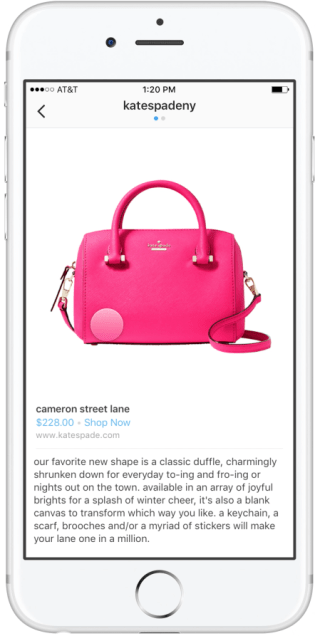 You can think of shoppable photos as Facebook Instant Articles for products. Since the product pages load inside Instagram, they show up quicker than immediately getting booted to a browser. And if the details don’t entice a shopper, they can swiftly tap back to their beloved feed.
Instagram won’t take a cut of purchases, and instead plans to monetize the product by later allowing brands to pay to show their shoppable photos to people who don’t follow them, says Instagram’s VP of monetization James Quarles. Instagram now has 500,000 advertisers and is finally earning some serious cash four years after Facebook acquired it for nearly $1 billion.
Purchasing products entirely inside of Instagram, as Facebook is now trying with chatbots, isn’t something the company is working on yet. That might put it at a slight disadvantage to Pinterest, which is testing Buyable Pins with in-line checkout flow. But both are emerging as powerful discovery mechanisms for users who aren’t sure what they want to buy yet and therefore aren’t just searching for it on Amazon.
Eventually Instagram wants to add a “Save” feature so you can bookmark product posts as you browse and come back to them. Users aren’t always ready to buy on impulse. That’s why unlike Instagram’s existing product ads that immediately link to checkout sites, these shoppable photos give you time to compare different color options and the price so you have true intent if you go to buy.
Facebook’s VP of monetization James Quarles tells me shoppable tags will eventually expand to video posts, photo carousels, and other countries. Instagram hopes to open the product to more brands over time, and allow them to generate their own product pages instead of manually sending Instagram’s team the materials as it works now.
 Thanks to shoppable tags, brands won’t have to resort to clumsy “check link in bio” captions on their photos, since Instagram doesn’t allow links in organic posts, and only lets profiles include a single URL. The full list of test launch partners is Abercombie&Fitch BaubleBar, Coach, Hollister, JackThreads, J.Crew, Kate Spade, Levi’s Brand, Lulus, Macy’s, Michael Kors, MVMT Watches, Tory Burch, Warby Parker, and Shopbop.
The design of shoppable photos is wisely lightweight. Instead of making product tags immediately visible, they’re only revealed if you tap the little tag button, so they don’t ruin the beauty of images. They don’t feel as intrusive as the buy buttons Facebook and Twitter have tested. The product was built off of the emergent behavior of celebrities tagging the products their seen with, which often come from their sponsors.
And shoppable photos match user behaviors as well. According to a study run by Instagram, 60% of Instagrammers say they learn about products and services on the app, while 75% say they take actions like visiting sites, searching, or telling a friend after being influenced by a post on Instagram.
Now they won’t have to close the app, open the browser, and track down the product they were just looking at. The company did focus groups in LA and Chicago, where Quarles says it found that the main gripe of shoppers on Instagram was “I want to learn more, but it’s very hard to go do a web search from another app. The product details are hard to find.”
Making it easier for users to get shopping value from Instagram could keep it on people’s homescreens. Meanwhile, brands might eventually pay to show their shoppable photos to more users, or buy ads to get more followers who’ll see their products organically in the feed. It’s been obvious for years that Instagram would embrace shopping, but the execution demonstrates its dedication to prioritizing a clean user experience so its community keeps growing.