FT : UK investors pull more than £31bn from equities and bonds

UK investors pull more than £31bn from equities and bonds
Alternative investments, such as private equity and property, are poised to benefit

UK insurers, pension funds and trusts controlling £4tn of assets have pulled more than £31bn from equities and bonds in the 12 months to the end of September, marking the heaviest withdrawals from asset markets since 1987.

The widespread retreat from stocks and bonds is a rare occurrence that industry insiders said demonstrates growing nervousness among institutional investors about where to place their money.

In its first assessment of UK investor trends since the British referendum on EU membership last June, the Office for National Statistics described the widespread retreat from markets as “unusual”.

The UK’s largest independent producer of official statistics added that the outflows may have been “influenced by changes in investor confidence in the economic environment”.

In 2015 as a whole, by contrast, institutional investors poured £28bn into equity and bond markets, according to ONS data.

Net withdrawals by UK institutional investors have only occurred in five quarters over the past 30 years. Two of those quarters were in 2016.

The other times that large UK investors moved en masse out of bond and equity markets were in the third quarter of 2001, when the September 11 terrorist attacks took place, and the fourth quarter of 2008, at the start of the global financial crisis.

The biggest falls in investment were in overseas stocks, which registered £33.5bn of withdrawals in the 12 months to the end of September, and UK stocks, which suffered £14bn of withdrawals. UK corporate bonds also experienced £4.6bn of outflows over the same period.

Paul Farrell, head of UK institutional investment at JPMorgan Asset Management, which has $1.8tn of assets under management, said there were two probable drivers behind the recent retrenchment: institutions parking assets in cash to lock in high returns from stocks, and others selling assets to make up for negative cash flows.

“The [asset] flows are indicative of institutional investors’ increasingly urgent focus on income-generating investments and on securing stable cash flows to meet future obligations,” he said.

He added that alternative investments, such as private equity and property, are poised to benefit in the current environment as investors seek to “harvest the illiquidity premium of alternatives”.

It is not just large UK clients that are pulling back from markets. According to Platforum, the research company, there are 2m fewer adults in Britain with savings or investments than there were at the end of 2015.

Amin Rajan, chief executive of Create Research, an asset management consultancy, said the move is likely to squeeze asset managers. “Investors suspect that the punch bowl is nearly empty and the party may be over before long,” he said.

“Asset managers have to recognise that business as usual is not an option. Now they face severe headwinds on many fronts. They need resilient business models that can provide the necessary shock absorbers.”
FT : Industry frustrated by continuing EU retail regulation saga

Industry frustrated by continuing EU retail regulation saga
Asset managers could be left with little time to prepare for Priips

An influential MEP has warned that the asset management industry could be left with little time to prepare for new rules aimed at protecting retail investors because of a wrangle among European officials.

Sven Giegold, a member of the European Parliament’s committee on economic and monetary affairs (Econ), said he feared the finalisation of the draft rules, which form part of a wider piece of regulation known as Priips, could be delayed because of disagreements between different EU bodies.

He said: “We are losing time. This means the [fund] industry will have less time to adapt. This is not good law making.”

The disagreement stems from the rules underpinning the so-called key investor document (Kid), which is being introduced to make it easier for consumers to compare different investment products, from funds to insurance products.

Last month, the EU’s trio of watchdogs warned that their boards had failed to reach an agreement on proposed amendments to the rules, casting doubt on whether Brussels can meet its plan to sign off the Priips regulations in February.

Sean Tuffy, head of regulatory intelligence at Brown Brothers Harriman, the bank, said the fund industry is frustrated by the continuing Priips saga. He said: “The recent twist means asset managers remain in a holding pattern. Asset managers have had to adopt a stop-start approach to the implementation [of Priips], which can be costly.”

Priips had been due to come into place this month, but the European Commission, the EU’s executive arm, had to push back the introduction by a year because of a clash in Brussels last autumn.

The parliament, in a first for financial services regulation, rejected the first set of draft rules in September, forcing the commission to revise the regulations.

Several amendments were then submitted to Europe’s regulators, which includes the insurance, banking and markets watchdogs.

However, while the boards of the markets and banking regulators signed off the plans to amend the rules, Europe’s insurance watchdog did not. It is concerned over various changes, including the treatment of so-called multi-option products.

It is understood that the commission and the regulators will meet next week to discuss the stand-off.

London MEP Syed Kamall, a member of the Econ board, said: “The [regulators] need to work together to achieve this outcome and the European Parliament will keep up the pressure on them.”

A spokesperson for the European Insurance and Occupational Pensions Authority, speaking on behalf of all the regulators, said that while some differences remain between the regulators’ boards, they are “ready to provide support to the European Commission, European Parliament and council in finding solutions on the detail”.

She added: “Despite the complex cross-sectoral nature of this dossier, stakeholders agree that it is important to find practical ways forward as soon as possible to ensure enough time for the implementation by the beginning of 2018.”

The commission said that it plans to sign off the rules, which includes changes to how asset managers and insurers calculate and display fund charges and investment performance, “as soon as possible”. They will then be sent to the parliament and European Council for final agreement.

Le Figaro : Grâce à Google Earth, regardez comment la Terre a changé depuis 30 a

Grâce à Google Earth, regardez comment la Terre a changé depuis 30 ans


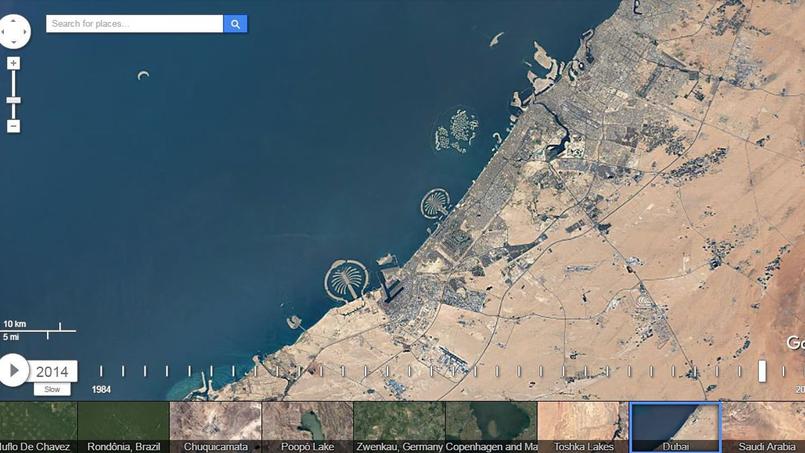
L'application de cartographie de Google permet de comparer des images prises depuis 1984 par les satellites américains Landsat avec des images européennes plus récentes. Le résultat est sidérant.
En 30 ans, l'activité humaine a, par endroits, profondément modifié la surface de notre planète, comme l'illustre à merveille une nouvelle fonction de Google Earth, la célèbre application de cartographie mondiale de l'entreprise californienne. En compilant 5 millions d'images de la surface de la Terre prises depuis 1984 par les multiples satellites américains Landsat (NASA/USGS), et plus récemment avec celles issues de Sentinel-2A, du programme européen Copernicus (UE/ESA), Google Earth permet désormais de voir l'évolution de notre planète, année après année.
Parmi les mauvaises nouvelles pour l'environnement, on peut constater la rapidité de la déforestation en Amazonie, avec un grignotage systématique de la forêt le long des routes nouvelles, ou suivre quartier par quartier l'empreinte grandissante des villes dans de nombreuses régions du globe, de Dubaï à Las Vegas en passant par les mégalopoles chinoises. Les changements climatiques laissent aussi des traces visibles, comme la dislocation des glaciers de l'Antarctique ou la fonte d'un immense glacier en Alaska. Mais tous les changements visibles ne sont pas négatifs, avec l'apparition rapide dans certains déserts d'immenses centrales solaires, ou des parcs d'éoliennes off-shore, au large de certaines côtes européennes, comme entre le Danemark et la Suède dans la Baltique par exemple.

Dans l'État de Rondonia au Brésil, dans l'ouest de l'Amazonie la déforestation progresse le long des routes percées dans la forêt, créant de grandes structures en râteau, jusqu'à ce que toute trace de la forêt vierge ne finisse pas disparaître. L'échelle du phénomène peut être constatée en dézoomant sur la carte ci-dessus.

Le glacier Columbia en Alaska se jette jusque dans la mer dans la baie du Prince William. Il détient le triste record d'être celui qui recule le plus rapidement dans le monde à cause du réchauffement. Depuis les années 1980, il a perdu près de 17 km en longueur, et 400 mètres en épaisseur.

La ville de Dubaï symbolise tous les excès d'une urbanisation galopante, avec la plus haute tour du monde, des quartiers entiers gagnés sur le désert, mais surtout d'impressionnants archipels artificiels très clairement visibles par des satellites orbitant pourtant à 700 km d'altitude.

En Arabie Saoudite, d'immenses systèmes d'irrigation à pivot central ont donné naissance à des grandes structures circulaires verdissantes au milieu du désert. Mais ce boom de l'agriculture saoudienne risque de ne pas durer: l'eau pompée dans des nappes phréatiques profondes, allant jusqu'à 1 km de profondeur, est une ressource fossile, qui ne se renouvelle pas. Et une étude estime que 80% de l'immense ressource initiale, 500 kilomètres cubes d'eau potable, a déjà été pompée en moins d'une génération.

A Longyangxia, dans le nord est aride de la Chine, une centrale solaire de grande taille (visible à partir de 2012) est désormais reliée au réseau électrique d'un tout proche barrage hydroélectrique, à peine visible sur la rive est du grand lac sombre, alimenté en eau par le fleuve jaune. La capacité totale de la centrale solaire est de 500MW, et la variation de sa production en fonction de la météo et de l'alternance des jours et des nuits est parfaitement compensée par le barrage.

Recode.net : Nvidia and Mercedes-Benz to bring an AI car to market within a year

Nvidia and Mercedes-Benz to bring an AI car to market within a year

Nvidia already announced a partnership at CES to bring a AI self-driving car to production, and now Mercedes-Benz is also teaming up with the GPU-maker on a vehicle with AI on board. Nvidia and Mercedes-Benz are also setting an ambitious timeline for their goal; the two will field this new vehicle within the next 12 months, Nvidia confirmed to TechCrunch.

The news came out on stage at a talk between Mercedes-Benz VP of Digital Vehicle and Mobility Sajjad Khan, and Nvidia CEO and co-founder Jen-Hsun Huang on Friday at CES. It’s the result of a project the two began together three years ago, which helps explain why the car will be ready to get to customers by 2018.

Mercedes and Nvidia have been working together with a specific focus on deep learning and AI. Nvidia announced additional AI features powered by its in-car computing at its keynote earlier in the week at CES. These include Co-Pilot, which is a system that combines facial recognition, gaze tracking and more to help assist human drivers as a way to increase safety ahead of the advent of true autonomous driving on the roads.

Co-Pilot also uses voice recognition, and a vehicle’s external sensors to track objects outside the car including other vehicles and pedestrians, and can give the driver a head’s up if it also detects they might not be aware of potential road danger.

It’s not yet clear how the AI integration will work in the Mercedes-Benz vehicle, and whether it will be a version of Co-Pilot or something else, but Nvidia tells TechCrunch it will provide more details leading up to the launch.

REcode.net : Tim Cook’s compensation not spared as Apple misses performance goal

Tim Cook’s compensation not spared as Apple misses performance goals

As a result of Apple’s performance based executive compensation packages, CEO Tim Cook and other leaders within the company will be taking pay cuts. Apple missed internal revenue and operating income targets for 2016 by 3.7 and 0.5 percent respectively, resulting in a 15 percent cut for the CEO.

Apple is reporting annual sales of $215.6 billion and operating income of $60 billion for the period ending September 24th 2016, according to a regulatory filing. Had the numbers not missed, Cook could have expected his 2015 compensation of $10.3 million to serve as a floor for 2016. Instead, the CEO will be hauling in $8.75 million.

The drop is more severe than Apple’s actual miss, relatively speaking. Other Apple executives saw a slightly more modest 9 percent drop in compensation. Mr. Cook’s base salary did increase by 50% to $3 million — not to mention his large Apple stock holdings which haven’t been touched.

This is the first time the company has missed its internal targets since 2009. Apple’s growth story has been somewhat cyclical, but every time the company’s value was in question, it delivered. Coming off a year that was neither failure nor success, the obvious question is whether the company can rebound.

While some see the forthcoming 10th anniversary iPhone as make or break product for Apple, others point to the company’s growing services business as a potential salve. Left in the dark by Apple’s highly secretive R&D team, we can speculate near infinitely about a game-changing VR or AR device or heck even a self-driving car.

Apple’s trading today doesn’t reflect a particularly hostile investor reaction. Apple shares are up over a percent on the day.

The news about Cook’s compensation just simply isn’t that surprising. This was the year that Apple showed its vulnerability — the year that the sales volume of the company’s most important product, the iPhone, fell for the first time…ever.

Eyes will be on Apple when it reports details on its first quarter results later this month on January 31st. This should provide additional clarity on sales of the iPhone 7 among other things.

Barron's : Credit Suisse Shares Could Gain 13%

Credit Suisse Shares Could Gain 13%
The Zurich-based bank’s recent settlement with U.S. regulators and improved performance should ease investor worries.

Credit Suisse has struggled to restructure its business and address costly legacy issues in recent years, but the Swiss bank appears to have persuaded investors it’s finally on the right course. It could be right.
The Zurich-based bank overcame a crucial hurdle in December by agreeing to a $5.3 billion settlement with the U.S. Justice Department over mortgage securities it sold ahead of the U.S. subprime meltdown. It will pay a $2.48 billion penalty and make consumer-relief payments worth $2.8 billion over the next five years.

The total cost outstripped the $2 billion provision Credit Suisse Group (ticker: CSGN.Switzerland) had set aside and means it will take a $2 billion charge against fourth-quarter earnings. The consumer-relief element surprised some analysts and pushed the overall settlement well beyond consensus forecasts of around $2 billion.
Despite that, Credit Suisse’s shares have held up well. Although its stock closed almost 1% lower on the day the Justice Department agreement was announced, it had risen by 2.2% early in the session. Since then it has gained around 6%.

The positive market reaction is a measure of how relieved investors were that the bank’s U.S. spat was over and its impact could be quantified—albeit at a higher-than-expected cost. Credit Suisse stock has also been supported by more favorable market conditions, with a steepening government bond yield curve since the summer lifting bank profitability. The bank’s shares hit their lowest point of 2016 in early July and have since risen 64%.
Barclays analyst Jeremy Sigee reckons the stock still has plenty of upside. He upgraded the bank last week to Overweight from Equal Weight and raised his price target to 18 Swiss francs ($17.71) from CHF12. The shares closed Friday at CHF15.89, giving them room to rise 13% based on Sigee’s estimate.
He says the stock remains cheap relative to its peers and the broader market, at 0.8 times its price-to-tangible book value and with a price-earnings ratio of nine.
“Credit Suisse shares have rerated substantially from their July 2016 low point…However, [that] has not been directly proportional to the derating in the earlier part of the year, with Credit Suisse the biggest faller but only middling in the rebound,” Sigee says.
Credit Suisse’s improving fortunes have helped vindicate the strategic overhaul launched by Chief Executive Tidjane Thiam since he took control in 2015.
He aims to build up the bank’s substantial private banking and wealth management business while reducing risk-weighted assets at its more volatile investment bank. Those moves, along with a $6.3 billion capital increase, were intended to bolster Credit Suisse’s financial strength. In all, the bank had CHF820.8 billion in assets at the end of 2015.
Last March the bank admitted that its restructuring was being hampered by weak investment markets that had pushed client activity at its global markets division to historic lows. It booked write-downs worth almost $1 billion over the fourth quarter of 2015 and the first quarter of 2016 as it reduced exposure to less profitable activities. At the same time it ramped up its cost-saving plans to CHF4.3 billion from CHF3.5 billion through 2018.
AT THE BEGINNING of December it said it had largely completed revamping its global markets unit, lowering risk and reducing capital consumption while investing selectively and preserving its core client activities in stocks and fixed income.
Still, weak market activity continued to weigh on asset management fees, prompting the bank to lower the pretax income target for its international wealth management business to CHF1.8 billion by the end of 2018 from CHF2.1 billion previously. Once again it accelerated cost savings, saying that it now hopes to reduce its operating cost base to below CHF17 billion through 2018, compared with its previous target of less than CHF18 billion. Investors saw it as a positive update, pushing the shares 7.4% higher when it was announced and another 3%-plus the following day.
“Growth initiatives are more focused, and cost reductions should make a positive impact,” Sigee says. “Management has demonstrated much better control and delivery over the past couple of quarters. Plan targets represent upside to consensus [9% return on tangible equity compared with 7% consensus] and valuation.”
He says earnings should be stronger than current consensus forecasts, helped by improved trading results.
Credit Suisse’s capital ratio remains at the low end of the sector average, but its settlement with U.S. authorities has alleviated much of the pressure from litigation risks.
Its core equity Tier 1 ratio was 12% at the end of September, up from 10.2% a year earlier. The bank is pushing ahead with plans to float up to 30% of its Swiss domestic business, which offers retail, private, and investment banking services to mainly Swiss-based clients, a move that could raise CHF4 billion more to bolster its capital position. That should help make the bank’s case to investors.

Recode.net : Apple was absent from CES, in a worse-than-usual way

Apple was absent from CES, in a worse-than-usual way
It's never on the show floor, but usually Apple is a big part of the conversation.

Apple doesn’t normally have a booth or events at CES, but this year its absence went further.
Normally, Apple manages to be a big part of the conversation even without setting foot in Las Vegas. And while CES is never the place for new iPhones, iPads or Macs, it is often the place for cool products that connect to those devices.
This year, though, it wasn’t Apple that everyone was rushing to connect with. If there was a hot platform, it was Amazon’s Alexa, with many CES products either building in the Amazon voice assistant or adding their own capabilities to her skill set.
There were some new products for Apple’s HomeKit, but they were comparatively few and far between.
And though Apple itself doesn’t have a booth, there is a whole section of the North Hall of the convention center that is devoted to the companies that make Apple add-ons.
The large iProducts section of the convention hall boasted the usual array of cases and chargers, but not a lot that was really new or exciting. Perhaps the biggest area of innovation was around trying to replace all the ports Apple took away on its latest MacBook Pro.
If there was any good news for Apple, it was that there really weren’t a lot of killer products from any of its major rivals.
The tablet space seems to be on a years-long innovation hiatus, while most of the new phones at CES were niche products from bit players. (This year’s real phone competition kicks off with the new phones to be announced at next month’s Mobile World Congress).
The Apple product that got the most competition at CES was the Mac. While Apple has been slow to update its computer line, especially its desktops, there has been rapid innovation on the Windows side.
Dell took one of its most popular laptops, the XPS 13, and made it into a laptop-tablet convertible. Dell also introduced a giant new touchscreen designed to offer some of the capabilities of Microsoft’s Surface Studio for the rest of the Windows 10 ecosystem.
Meanwhile, Qualcomm introduced the Snapdragon 835, which, in addition to powering many of this year’s upcoming smartphones, will also be the chip at the heart of a new wave of power-efficient Windows PCs that come out later this year.
The ball is back in Apple’s court, especially on the Mac side, to follow through on Tim Cook’s year-end promise that more great desktops are on the way.

>>> Engie will not take over Suez, future acquisition not ruled out (translated)

Engie will not take over Suez, future acquisition not ruled out (translated)

French energy company Engie [EPA:ENGI] will not take over utilities group Suez [EPA:SEV], reported Belgian daily De Tijd based on a quote by Engie CEO Isabelle Kocher. The quote was a reaction to rumors that Engie would buy the shares of Suez which it doesn't yet own.
Suez, formerly known as Suez Environnement, was until 2008 a subsidiary of Engie, at that time named GDF Suez. According to the report, however, Kocher did not rule out a future takeover.

>>> Weekly Performance

Weekly Market Update: Dollar Rally Stalls, DJIA Falls Short of 20K

After a slow start to the New Year, the stock market closed the week on an up-note, with NASDAQ and S&P posting new highs; the DJIA was flirting with the 20,000 barrier again. Investor sentiment over the past week saw a stark change from how the year closed 2016. The markets saw some unwinding of the post-election reflation trade mid-week as buying bonds became popular again, pressuring Treasury yields and the greenback. Big retailers like Macy's and Kohl's revealed holiday season results fell short of expectations, but large-cap tech stocks found renewed favor, with FANG stocks leading the NASDAQ to fresh highs. For the week, the Dow gained 1%, the S&P climbed 1.7% and the Nasdaq rose 2.6%.

The US dollar retreated from 14-year highs against most major currencies, as profit-taking and concerns on the pace of Fed hikes prompted traders to close long-dollar positions. Friday's non-farm payrolls came in at a healthy 156k, although less than expected, which helped the US dollar get back on course, sending it to higher levels for the day. The data also propelled the US stock market higher on the back of solid improvement in wages, but US Treasuries ended the week lower on concerns the salary data could spark faster inflation gains. The 10-Year Notes yield was up by 7bps at 2.42%.

China took steps to protect its currency from further devaluation -- simply mentioning the possibility of market intervention was enough to send the Yuan higher by 2.5% over two days. There was talk of the government having plans to obligate State Owned Enterprises to buy yuan to prop up the currency. In Mexico, the central bank actively intervened in defense of the peso, as the local currency reached new all-time lows against the US dollar. The central bank sold over $1 billion to dampen the effects on the peso following President-elect Trump's comments cautioning auto manufacturers from building plants in Mexico.