>>> US : This week's biggest % gainers/losers

This week's biggest % gainers/losers
The following are this week's top 20 percentage gainers and top 20 percentage losers, categorized by sectors (over $300 mln market cap and 100K average daily volume).

This week's top 20 % gainers
  • Healthcare: GBT (21.5 +33.54%), FMI (25.15 +24.81%), CPSI (27.05 +24.37%), AKAO (20.84 +20.25%), MDSO (58.43 +19.24%), IMMU (5.23 +18.86%)
  • Materials: CLF (11.15 +26.85%)
  • Industrials: BCO (52.45 +18.93%)
  • Consumer Discretionary: SKX (27.78 +18.16%), HAS (97.63 +18.15%)
  • Information Technology: SWIR (24.45 +36.97%), CRAY (21.95 +28.74%), INFN (11.96 +27.64%), COHR (197.19 +24.45%), LITE (47.45 +22.14%), ATEN (9.52 +20.2%), QUOT (13.2 +20%), NSIT (45.18 +19.78%)
  • Financials: BANC (19.9 +21.71%), UIHC (16.16 +19.79%)
This week's top 20 % losers
  • Healthcare: BIOB (0 -42.86%), CHRS (23.25 -14.68%), ENSG (17.35 -14.57%), ONVO (3.19 -13.78%)
  • Materials: CDE (9.44 -19.25%)
  • Industrials: DNB (100.75 -18.73%), BGC (16.8 -17.44%)
  • Consumer Discretionary: IRBT (54.31 -13.44%), MOD (11.7 -13.01%)
  • Information Technology: SCOR (22.81 -29.69%), CATM (45.49 -18.3%), UBNT (53.43 -15.88%), SNCR (33.97 -13.12%)
  • Financials: FSC (4.56 -16.48%)
  • Energy: MTRX (17.95 -19.69%), CIE (0.81 -15.33%), BRS (17.54 -14.61%), ATW (10.93 -13.6%)
  • Telecommunication Services: NIHD (2.15 -14.85%), GSAT (1.35 -14.01%)

(ZH) Tsipras Warns IMF, Schauble To "Stop Playing With Fire" Over Greek Debt

Tsipras Warns IMF, Schauble To "Stop Playing With Fire" Over Greek Debt

One day after Greek 2Y bond yields tumbled following press reports that for the first time in the latest Greek mini-crisis, the IMF and Eurozone creditors finally agreed on a "common stance" regarding what the Greek fiscal surplus and debt profile would look like, despite talks between Greece and its creditors ending in Brussels with no breakthrough, Greek PM Alexis Tsipras on Saturday warned the IMF and German Finance Minister Wolfgang Schaeuble to "stop playing with fire" in handling his country's debt.
Nonetheless, striking a positive tone, Tsipras opened a meeting of his Syriza party by saying he was confident a solution would be found, and urged a change of course from the IMF. "We expect as soon as possible that the IMF revise its forecast so that discussions can continue at the technical level", AFP reported, suggesting that contrary to initial reports, the bid-ask between the Troika and Greece still remains irreconcilable .
Tsipras also attacked Greek nemesis Wolfgang Schauble - who earlier in the week ruled out a Greek debt cut, saying "for that Greece would have to exit the currency area"- and called for German Chancellor Angela Merkel to "encourage her finance minister to end his permanent aggressiveness" towards Greece.
As documented before, ongoing feuding with the IMF has raised fears of a new debt crisis. Greece, whose economic collapse is now worse than the US Great Depression - remains embroiled in a row with its eurozone paymasters and the IMF over debt relief and budget targets that has rattled markets and revived talk of its place in the euro.
A silver lining emerged on Friday, when Eurogroup chief Jeroen Dijsselbloem said progress had been made in the Brussels talks with Greek Finance Minister Euclid Tsakalotos and other EU and IMF officials. But he provided few details.“Today the Greek minister of Finance, the institutions (European Commission, ECB, ESM and IMF) and I had a constructive meeting on the state of play of the second review,” Dijsselbloem said in statement sent by text message to Bloomberg. “There is a clear understanding that a timely finalization of the second review is in everybody’s interest" and added that "we made substantial progress today and are close to common ground for the mission to return to Athens the coming week."
Judging by the latest comments from Tsipras - who now badly lags behind New Democracy in the polls, and may have no choice but to stand strong on his anti-austerity promises or else lose risking control - that may have been an optimistic assessment.
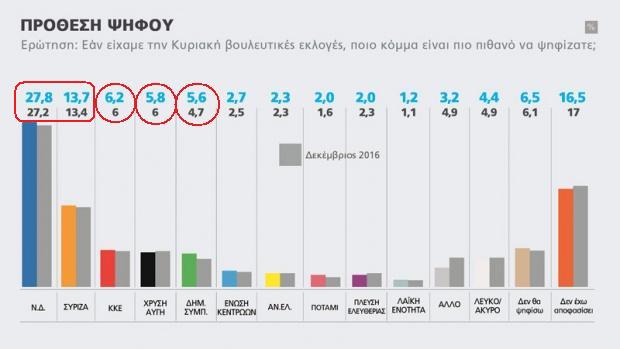
Then again, with Greece nothing happens until the last minute, and conveniently that particular deadline once again coincides with a major debt repayment deadline: the Athens government faces €7 billion in maturities this summer that it cannot afford without conceding to Troika demands which are holding up new loans from Greece's 86 billion euro bailout.
However, Greece does not have much time. Breaking the stalemate in the coming weeks is seen as paramount with elections in the Netherlands on March 15 and France in April through June threatening to make a resolution even more difficult. Dijsselbloem also warned Friday that the next meeting of eurozone ministers on February 20, seen as an unofficial deadline ahead of the votes, would still be too early for a breakthrough.
"We will take stock of the further progress (during that meeting)", said Dijsselbloem, who is also the Dutch finance minister.
With a barrage of European political risk events in the coming months, including elections in France, the Netherlands and Germany, a potential undiffused Greek time bomb lurking in the background could be just the catalyst that breaks the record low volatility doldrums that the market has found itself in in recent months.

>>> Stadium Capital discloses updated portfolio positions in 13F filing

Stadium Capital (Alexander Medina Seaver) discloses updated portfolio positions in 13F filing: Increased CIVI / CPSI positions, Closed out BKE
Highlights from 2016 Q4 filing as compared to 2016 Q3 filing:
  • Increased positions in: CIVI (to ~1.58 mln shares from ~0.3 mln shares), CPSI (to ~1.38 mln from ~0.87 mln)
  • Maintained positions in: ASNA (~14.75 mln shares), BLDR (~8.58 mln shares), UTI (~3.53 mln shares)
  • Closed positions in: BKE (from ~0.56 mln shares), WSBF (from ~0.03 mln)
  • Decreased positions in: BGFV (to ~0.85 mln shares from ~2.58 mln shares), EXPR (to ~0.04 mln from ~1.74 mln), HSII (to ~0.28 mln from ~0.59 mln), RBCAA (to ~0.16 mln from ~0.41 mln

>>> Bridgewater Associates (Raymond Dalio) discloses updated portfolio positions

Bridgewater Associates (Raymond Dalio) discloses updated portfolio positions in 13F filing: New FCX KORS BAC IPG stakes
Highlights from 2016 Q4 filing as compared to 2016 Q3 filing:
  • New positions in: FCX (~0.77 mln shares), KORS (~0.4 mln), BAC (~0.34 mln), IPG (~0.33 mln), SLF (~0.28 mln), TSN (~0.24 mln), MGM (~0.21 mln), NTAP (~0.2 mln), AET (~0.19 mln), WFC (~0.19 mln)
  • Increased positions in: SWN (to ~2.33 mln shares from ~1.45 mln shares), GME (to ~0.88 mln from ~0.12 mln), ENDP (to ~1.54 mln from ~0.89 mln), CTL (to ~1.08 mln from ~0.44 mln), JCP (to ~1.6 mln from ~1.13 mln) NE (to ~3.76 mln from ~3.31 mln), CHK (to ~0.77 mln from ~0.37 mln) FE (to ~0.47 mln from ~0.13 mln), TAP (to ~0.28 mln from ~0 mln),
  • Closed positions in: ESV (from ~0.6 mln shares), DO (from ~0.43 mln), TU (from ~0.43 mln), BMY (from ~0.39 mln), CAG(from ~0.31 mln), KO (from ~0.29 mln), WFT (from ~0.25 mln), KR (from ~0.21 mln)
  • Decreased positions in: JNPR (to ~0.37 mln shares from ~1.09 mln shares), INTC (to ~0.95 mln from ~1.52 mln), AMAT (to ~0.24 mln from ~0.74 mln), PFE (to ~0.28 mln from ~0.63 mln), NRG (to ~0.1 mln from ~0.41 mln), KSS (to ~0.06 mln from ~0.31 mln), VFC (to ~0.04 mln from ~0.28 mln), GILD (to ~0.08 mln from ~0.32 mln), PBR (to ~1.5 mln from ~1.71 mln), DHI(to ~0.07 mln from ~0.22 mln)

>>> Third Point (Dan Loeb) discloses updated portfolio positions in 13F filing

Third Point (Dan Loeb) discloses updated portfolio positions in 13F filing: New BAC ZAYO JPM SWN PVTB TWX stakes
Highlights from 2016 Q4 filing as compared to 2016 Q3 filing:
  • New positions in: BAC (~17.5 mln shares), ZAYO (~7 mln), JPM (~5.25 mln), SWN (~5 mln), PVTB (~3 mln), TWX (~3 mln),RICE (~2.65 mln), HDS (~2.25 mln), HON (~1.38 mln), ANTM (~1 mln), GS (~0.4 mln), AVGO (~0.3 mln)
  • Increased positions in: HUM (to ~2.4 mln shares from ~1.4 mln shares), STZ (to ~3 mln from ~2.2 mln), DVMT (to ~2.6 mln from ~2.3 mln), MHK (to ~1.2 mln from ~0.9 mln), SHW (to ~1 mln from ~0.88 mln)
  • Maintained positions in: BAX (~51.9 mln shares), BID (~6.66 mln)
  • Closed positions in: WMB (from ~4 mln shares), AGN (from ~3.79 mln), LBTYA (from ~3 mln), BABA (from ~2.6 mln), V(from ~2.1 mln), BUD (from ~1.6 mln), AME (from ~1.25 mln), SHPG (from ~0.9 mln), YUM (from ~0.5 mln)
  • Decreased positions in: DOW (to ~17 mln shares from ~20 mln shares), MON (to ~1.1 mln from ~3.7 mln), FB (to ~3.5 mln from ~5.45 mln), SUPV (to ~2.74 mln from ~4.5 mln), CAG (to ~3 mln from ~4.25 mln), DHR (to ~3.25 mln from ~4.5 mln),TDG (to ~0.25 mln from ~1.13 mln), AAPL (to ~1.85 mln from ~2.5 mln), CB (to ~1.2 mln from ~1.8 mln), SPGI (to ~1.6 mln from ~2 mln), CHTR (to ~0.85 mln from ~1 mln), GOOGL (to ~0.43 mln from ~0.55 mln)

FT : Lenders rethink sale of Britain’s M6 toll road

Lenders rethink sale of Britain’s M6 toll road
Banks that own motorway may refinance business after failing to secure £1.9bn price

The banks that own Britain’s only pay-to-use motorway, the M6 Toll, are considering refinancing the business after struggling to secure a £1.9bn sale price.

Bidders, including a consortium formed by Spanish toll-road operator Abertis and IFM Investors, are unwilling to meet the price, forcing the sellers to reconsider, according to people close to the vendors.

Abertis said it understood that an offer it made had not been accepted but that it had not yet been officially notified. “Our financial discipline does not allow us to make a higher bid,” it added. IFM declined to comment.

The toll road is owned by a group of 27 lenders including Crédit Agricole, Commerzbank and Novo Banco, which took control of the asset from infrastructure group Macquarie in December 2013 following a debt restructuring.

A spokesperson for the lenders said the sales process was continuing and that other unnamed bidders remained in the frame.

But people involved in the sale process said they were assessing whether to sell the company at a lower price — or refinance the debt to make it cheaper to hold on to while they tried to secure a higher offer.

The toll, a 27-mile stretch of road designed to ease congestion on the main M6 in the West Midlands, has not lived up to expectations since it opened in 2003. It was originally forecast that 72,000 vehicles a day would use the route, which charges cars up to £5.50 and lorries up to £11, but the daily average is only about 48,000.

The problems facing the toll road, operated by Midland Expressway, a subsidiary of Macquarie, have been compounded by its £1.9bn debt.

The sale, which has already been delayed by the UK’s Brexit vote, is intended to generate enough money to fully recover that debt. The price tag represents a multiple of about 27 times the company’s earnings before interest, tax, depreciation and amortisation in 2015.

While the toll road failed to meet its initial expectations, traffic numbers have increased over the past few years as the UK’s economy improved. About 17.4m vehicles used the M6 toll road in 2015, a 12.6 per cent increase from the year before. The compound annual growth rate in traffic over the past four years has been 10.1 per cent.

However, Nathalie Tidman, an analyst at Inframation Group, an infrastructure specialist, said the economic uncertainty of Brexit had made traffic revenues “difficult to predict”.

“People might use the free alternative road or not get in their cars as frequently to save on petrol,” she said.

The six-lane highway has come in for criticism, with calls in 2013 for the road to be nationalised to relieve congestion around Birmingham.

Critics at the time blamed excessive tolls for pushing vehicles back on to the M6. It runs on a 53-year concession with 37 years remaining.

(BI) A $30 billion hedge fund's foreboding letter on Trump starts with quotes fr

A $30 billion hedge fund's foreboding letter on Trump starts with quotes from The Joker, 'Lord of the Flies,' and Thomas Jefferson

Baupost Group's Seth Klarman is worried about what the election of President Donald Trump means for global markets.

In a private letter to investors dated January 20, reviewed by Business Insider, he starts with three quotes:

"In matters of style, swim with the current; in matters of principle, stand like a rock." — Thomas Jefferson
"The world, that understandable and lawful world, was slipping away." — William Golding, "Lord of the Flies"
"Do I really look like a guy with a plan? You know what I am? I'm a dog chasing cars. I wouldn't know what to do with one if I caught it. You know, I just ... do things." — The Joker, "The Dark Knight"
The rest of the letter serves as an explanation for the inclusion of those three quotes. Klarman runs through his thoughts on Trump, volatility, and the stock market. You can read more about the letter at The New York Times.

Baupost, the Boston-based hedge fund firm, managed $29.2 billion as of mid-2016, according to the Hedge Fund Intelligence Billion Dollar Club ranking. A spokeswoman for Baupost didn't immediately respond to a request for comment.

(TheVerge) WhatsApp is rolling out two-step verification to all billion-plus use

WhatsApp is rolling out two-step verification to all of its billion-plus users, after debuting the feature in the beta version of the app last year.

Otherwise known as two-factor authentication, this optional feature adds an extra layer of security to users’ accounts. To enable it, users need the latest version of WhatsApp and should then navigate to Settings > Account > Two-step verification > and Enable. Once this feature is turned on, users will have to enter a six-digit passcode every time they register their phone number with WhatsApp again. So, for example, if you get a new phone but keep the same SIM card and number.

WhatsApp’s implementation isn’t like two-factor authentication with Google or Facebook, which generates a code with an app or sends one via text. You’ll have to remember your WhatsApp passcode, or you can set up a backup email, which will allow you to disable two-factor on your account if you ever forget your six-digit passcode. You can also disable two-factor from within the app, without a passcode.

And although you won’t need to use the passcode every time you open the app, WhatsApp will ask you for it “periodically” (The Guardian says every seven days) “to help you remember” what it is.

>>> Renault CEO says closer ties with Nissan possible if French government sells

Renault CEO says closer ties with Nissan possible if French government sells stake - FT

Renault [EPA:RNO], a French car manufacturer, and Nissan [TYO:7201], its Japanese counterpart, are ready to consider a closer relationship if the French government sells its shareholding in Renault, the Financial Times reported. The newspaper quoted Carlos Ghosn, CEO of both companies, who said on Friday, 10 February that “everything” is on the table should the French government decide to exit its investment.

Renault and Nissan entered into an alliance after the French car maker rescued Nissan in 1999. As a result of the alliance, both companies have shareholdings in each other, although Renault effectively has control over its Japanese counterpart, the report explained.

The alliance was strained in 2015 after the French government added to its stake in Renault, the article said, noting that the government now holds a 19.74% stake.

Ghosn said Japan will never agree to be involved in a group in which the French government will hold a stake in “Japanese assets,” the item continued.

The French government would probably not sell its entire shareholding in Renault due to the strategic position of the automotive industry, the item said.

Renault reported FY16 net income of EUR 3.5bn (USD 3.72bn) on Friday, a 20% increase on the previous year. Revenues increased by 13% to EUR 51.2bn, the item noted.

Renault’s market capitalisation stood at EUR 24.78bn at the close of trading in Paris on Friday.

FT : Full Article --> http://on.ft.com/2lAbr0C

Renault and Nissan open to forging closer ties
Chief says deeper relationship possible if Paris sells stake in French carmaker

Renault and Nissan are open to forging closer ties if Paris sells its stake in the French carmaker, the head of both companies said on Friday.

Carlos Ghosn, chief executive of Renault and Nissan, said that “the day the French state decides to get out, everything is open”.

He was speaking as Renault outlined an ambitious six-year plan to boost its revenue and earnings, and reported better than expected results for last year. In afternoon trading on Friday, Renault’s shares were up 1.4 per cent at €83.95.

Renault rescued Nissan from near collapse in 1999, and the two companies formed an alliance that involves each having an equity stake in the other.

But Renault wields de facto control over Nissan, and this led to tensions between the two companies in 2015 after Paris increased its stake in the French carmaker.

Mr Ghosn said the two companies could deepen their ties, but not until the French government sells its 19.74 per cent stake in Renault.

“The Japanese will never accept to be part of an entity where the French state will be a shareholder of Japanese assets,” he added.


Mr Ghosn described the 2015 tensions as a “soap opera”, and said his relationship with the French government was “complicated but constructive”.

His comments are consistent with private statements from several executives within the alliance, who have previously told the Financial Times that a full merger between Renault and Nissan cannot happen while the French government is a shareholder in the French carmaker.

Paris is unlikely to sell all its stake in Renault because the car industry is regarded as strategic.

The French government also holds a stake in PSA Peugeot Citroën, the country’s other major carmaker.

Renault reported net income of €3.5bn for last year, up 20 per cent compared with 2015.

The group operating margin rose from 5.2 per cent in 2015 to 6.4 per cent last year.

Renault sold a record 3.2m vehicles in 2016, and its revenue rose 13 per cent to €51.2bn last year.

Outlining its financial plan from 2017 to 2022, Renault said it aimed to boost annual revenue to €70bn at constant currencies by 2022, and raise its operating margin to 7 per cent.

Among other things, Renault is counting on sales growth in emerging markets over the next six years, and further efficiency savings through its alliance with Nissan.

Stuart Pearson, analyst at Exane BNP Paribas, said the results required to meet Renault’s new targets were “well ahead of consensus estimates”.

Renault booked €702m of foreign exchange losses last year, partly because of the fall in the value of sterling after the UK’s vote to leave the EU in June.

Mr Ghosn said Renault faced some “Brexit uncertainty”, adding that the “potential depreciation of the British pound might accelerate the expected drop of the British market”.

Renault’s Avtovaz unit, which manufactures Lada cars as well as making Renault vehicles in Russia, continued to be a drag on the French carmaker’s results last year.

However, Avtovaz’s losses narrowed from €620m in 2015 to €89m in 2016, and Renault wants the unit to be profitable by 2018.

Mr Ghosn said Russia had the potential to be a “cash machine” for Renault once the economy recovers.

Renault invested in the Russian market while other carmakers were pulling out, he added.