(MacRumors) Apple Expected to Announce New Products as Soon as Next Week, Supply

Apple Expected to Announce New Products as Soon as Next Week, Supply Chain Sources Say
Apple is likely to announce new products later this month, most likely between Monday, March 20 and Friday, March 24, according to reputable supply chain analysts we spoke to who wish to remain anonymous.


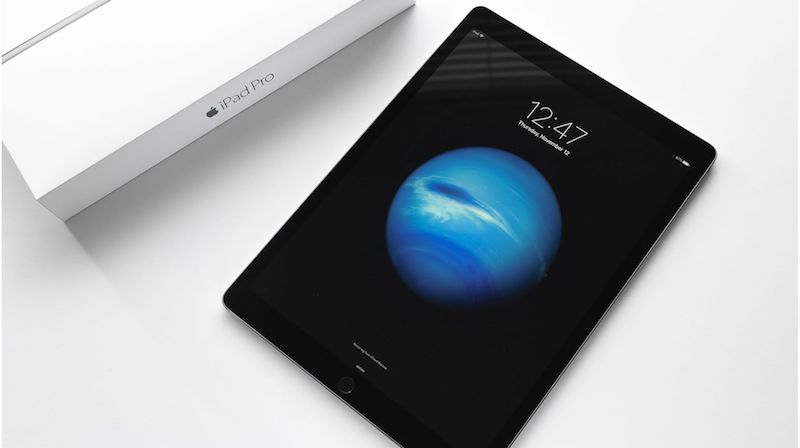
The research firm did not disclose which products it expects Apple to announce, but rumors have widely suggested at least a trio of new iPad Pro models will be unveiled as early as this month, including an all-new 10.5-inch model with slimmer bezels and updated 9.7-inch and 12.9-inch versions.

The sources expecting an iPad refresh include, among others, KGI Securities analyst Ming-Chi Kuo, Barclays analyst Blayne Curtis, and Japanese blog Mac Otakara. The latter of the three also expects a new 7.9-inch model that would supplant the iPad mini 4, but others have denied or yet to mention that particular claim.

Last month, Japanese blog Mac Otakara said Apple will host a March event where it will debut its new iPad Pro lineup, a larger iPhone SE model with 128GB storage, and new Apple Watch bands. The report also claimed Apple will add a red color option for iPhone 7and iPhone 7 Plus, which could be part of (PRODUCT)RED.

Apple has yet to invite the media to an event this month, however, and those invites would be on shorter notice than usual if it is indeed planning to announce new products as early as next week. In each of the past two years, Apple invited the media to its March event roughly 11-12 days beforehand, including February 26 invites for a March 9 eventin 2015 and March 10 invites for a March 21 event last year.

There are three plausible scenarios: Apple is indeed planning a March event, and invites will go out soon; Apple is planning a Spring event, but not this month; or Apple will share its announcements through a press release as it did when it dropped the price of the fourth-generation iPad to $399 in March 2014.

Apple has hosted March events four times in the past six years. In 2011 and 2012, it introduced new iPad models at the Yerba Buena Center for the Arts. Two years ago, it revealed Apple Watch pricing and release date information. Last year, Apple debuted the 9.7-inch iPad Pro and iPhone SE at its Town Hall.

One rumor suggested Apple could be planning an event on April 4, but this date was based on Personal Pickup for the 12.9-inch iPad Pro, which is generally not a reliable indicator of an event. The in-store pickup date for 12.9-inch iPad Pro models is a rolling target, as evidenced by the April 10 date now shown.

The all-new 10.5-inch iPad Pro is expected to have slimmer bezels, and possibly no Home button, allowing it to have the same overall footprint as the 9.7-inch iPad Pro. This design could foreshadow the rumored 5.8-inch iPhone. The tablet is also rumored to have a higher-resolution display and quad microphones.

The updated 12.9-inch iPad Pro is said to feature a 12-megapixel rear camera and True Tone display like the current 9.7-inch model, using advanced four-channel ambient light sensors to automatically adapt the color and intensity of the display to match the light in the surrounding environment.

A few reports have suggested the 10.5-inch iPad Pro could face shipping delays, while the other models are expected to start shipping sooner.

(9to5) iPhone 8: Everything we currently know about this year’s iPhone & making


A few months ago, we rounded up everything that had been rumored about this year’s flagship iPhone. Since then, however, things have changed. Some new details have emerged, some old rumors have been squashed, and more.
As we inch closer to the announcement of the tenth anniversary iPhone, we’re starting to narrow down what exactly the device might feature. It can get overwhelming with all of the contradicting reports, so read on for our full, updated breakdown of 2017 iPhone rumors…


Display + Function Area
Originally, it was believed that the iPhone 8 would feature a 5.8-inch OLED display. We’ve now learned, however, that some of that display will be taken up by a new function area, making the usable screen real estate somewhere between 5-inches and 5.15-inches, though the display as a whole will come in at 5.8-inches. While there were rumors that Apple would introduce a 5-inch iPhone, it now seems as if those rumors were referring to the same flagship 5.8-inch model, but not counting the function area towards the total screen size.
Following a report from KGI’s Ming-Chi Kuo, we dove a little bit deeper into the math of the iPhone 8’s screen resolution and came to the determination that the device, if rumors hold true, will feature a 521 pixel-per-inch display. This number is significantly higher than the 4.7-inch and 5.5-inch iPhones, which have 325 PPI and 401 PPI, respectively.
The area of the screen dedicated to the apps and interface is expected to be 2436×1125, which makes for a 21:9 aspect ratio, roughly. This could spell trouble for watching content that is 16:9, but would bring the iPhone up to par with competing Android phones in terms of screen resolution and pixels-per-inch.
In terms of display technology, it is still believed that the iPhone 8 will be the first iPhone to make the jump to OLED. This, however, seems to be one of the most uncertain aspects of the device right now and really depends on Apple’s ability to source enough of the component.
As for the function area, it is said to take up the bottom portion of the display and offer navigation buttons and more. Specific details are still somewhat unclear, but it sounds awfully similar to the Touch Bar on the new MacBook Pros, allowing for contextually aware buttons and controls.
Read below for all of the details we know thus far on the iPhone 8 display and function area:
Design
Not much has changed in what we expect the iPhone 8 to feature in terms of design. It’s expected to feature an all-glass design with metal casing around the sides, similar to what we saw with the iPhone 4 and iPhone 4s. The ideal setup here is the beautiful design of the ‘Jet Black’ iPhone 7 and iPhone 7 Plus, but instead of the scratch-prone gloss that it uses, we’ll get a more sturdy glass design.
In terms of overall size, it has been said that the iPhone 8 will be around the same physical footprint as the current 4.7-inch iPhone, but that the larger screen is possible because of the nearly bezel-less design that the iPhone 8 will incorporate.
We’re still expecting the device to feature 2 cameras on the back, much like the current iPhone 7 Plus. The cameras could, however, be vertically aligned as opposed to horizontally, which would allow for more advanced 3D and sensing technology, but more on that later.
Read all of the design rumors for the iPhone 8 below:
Home Button + Touch ID
The addition of the function area and nearly bezel-less design means we will likely see the demise of the Home button as we know it this year. Apple paved the way for this change last year with the solid-state Home button, but this year we expect an entirely new embedded Home button. The Home button is expected to be embedded in the display itself, meaning that it will no longer be a separate button at the bottom of the front of the device.
As for Touch ID, it seems likely that Touch ID will also be embedded in the display. Apple has a patent that theoretically allows for such a technology. Instead of the capacitive solution that Touch ID uses today, an embedded solution would use ultrasonic imaging technology that is believed to be much more accurate:
The most accurate but least common finger-scanning technology is ultrasound imaging. In this type of sensor, two transducers are placed on the x- and y-axes of a plate of glass–one each for receiving and transmitting–for propagating ultrasound waves through a glass plate; when the finger is placed on top of the glass, the finger impedes the waves and the receiving transducer can measure the alteration in wave patterns.
This type of scanner is very new and largely untested in a variety of conditions, but initial results show promise for the technology. It combines the large plate size and ease of use of the optical scanners with the ability to pervade dirt and residue on the scanner, an advantage of capacitive scanners.
Read all of the Home button and Touch ID rumors below:
Wireless Charging
One of the biggest iPhone 8 expectations that has changed recently relates to wireless charging. Originally, it was widely rumored that the iPhone 8 would feature a long-range wireless charging technology. This would have been a major technological achievement on Apple’s part, but according to more recent reports, the iPhone 8 will feature inductive wireless charging.
Most reports have suggested that Apple will sell the wireless charging technology separate from the iPhone 8 itself. This likely refers to something like a charging pad or mat. Even though it is expected to be using an inductive solution, it is believed that Apple has been working on its own inductive solution with Broadcom.
It’s unclear how much Apple could potentially sell its wireless charging technology for, but you can read all of the latest wireless charging rumors below:
USB-C or Lightning?
Well, both. While one Wall Street Journal report suggested that Apple would make the jump to USB-C with the iPhone 8, that doesn’t necessarily appear to be the case. Instead, it seems like the iPhone will stick to the smaller and proprietary Lightning connector, but rather start including a Lightning to USB-C cable in the box with a USB-C wall adapter.
Doing this will allow for owners of recent MacBooks and MacBook Pros to plug their iPhone directly into their laptop, while USB-C charging would also be faster than Lightning to USB-A.
There are several reasons as to why Apple likely isn’t switching to USB-C all around this year. For one, regulating USB-C accessories is much harder as it is an open standard. Lightning, however, is Apple’s own standard and thus it can more strictly regulate what type of accessories are produced using the connection. Apple also, of course, collects royalties on all certified Lightning accessories.
3D Sensing + AR Technology
Apple’s plans for 3D sensing and augmented reality are a bit more unclear, but it’s widely believed that Apple has a relatively large team working on the technologies. Apple has also made a number of acquisitions in this area.
Most recently, it has been reported that the iPhone 8 will feature a revolutionary 3D-sensing front camera that detects depth for games and facial recognition. This type of technology also lends itself to face recognition for unlocking the iPhone, providing another secure biometric way of doing so.
We also recently outlined the two ways 3D depth-sensing could work on the iPhone 8, both of which can be seen in the image above. The first way:
The simplest way to sense 3D space is to use what the note calls Time of Flight (ToF). An emitter transmits a signal (for example, in infrared) and times how long it takes to bounce off an object in front of the iPhone and return to a sensor. From a series of timed returns, the iPhone can build up a 3D image of what is in front of it.
The other, more advanced, technology:
Known as Structured Light, a known pattern such as a grid is projected onto whatever is in front of the iPhone. This grid will be distorted by the 3D shape of the object it hits, and the iPhone can then analyze this deformation to calculate the shape of the object.
Tim Cook has continually spoken fondly of augmented reality, so it shouldn’t come as a surprise that Apple is working diligently on implementing it into the iPhone. Read all of latest AR/sensing iPhone 8 reports below:
Name + Pricing + Availability
What Apple will call this year’s flagship iPhone is still completely up in the air. Throughout this post, I’ve referred it as the iPhone 8, but a recent report suggested that it may be called the iPhone Edition instead. We really don’t know and probably won’t know until we get much closer to the fall unveil…
As for that fall unveil, it’s believed that Apple will announce the iPhone 8 in September, but that because of the advanced production technology the device will require, it won’t actually hit store shelves until a couple of months after that. According to reports, the 3D sensing technology and OLED display are what’s causing Apple to push the release back.
The iPhone 8 is expected to be the most expensive iPhone to date, according to a Fast Company report. The device could come in at above $1000, but that’s not necessarily insane when you take into consideration the monthly payment plans that most smartphones are purchased on nowadays.
Wrap Up
It seems clear that this year’s iPhone will be the biggest release in the device’s history. With an all-new design, wireless charging, an OLED display, and much more, it looks as if Apple is pull out all of the stops to celebrate the 10th anniversary of the device.
Some aspects still remain uncertain, though, and it’s likely that things will continue to evolve and change. As of right now, though, these are the features we’re expecting the iPhone 8, or whatever it is called, to adopt.
If the device turned out exactly like we outlined in this post, would it be enough for you to shell out over $1000? Let us know down in the comments.
(CNBC) Oil market is about to get 'ugly' - Link : http://cnb.cx/2n0Pb4s

CNBC - Oil market is about to get 'ugly' - Link : http://cnb.cx/2n0Pb4s

It was a rough week for the crude oil market.
After months of relative price stability, with WTI oil prices pinned between $50 and $55 per barrel, the floodgates of selling opened wide, as the record amount of long positions that was built up by speculators over the preceding weeks was, quite obviously, liquidated, as evidenced by sky-high volume in both futures and option contracts.
ADVERTISING

There were several catalysts: Crude oil inventories in the United States hit a new, record level, according the Department of Energy's weekly status report, which also showed U.S. oil production rebounding to within five percent of last year's record to nearly 9.1 million barrels per day.

Of course, the steadily rising oil rig count indicates that even more production is on the way, and it is not impossible to foresee overall production rising toward 10 million barrels per day over the course of the next 12 months.
There was also a large gathering of global energy interests in Houston, Texas this week that included officials from several OPEC countries and Russia.
Statements by Saudi Arabia's oil minister and OPEC's Secretary General were hardly reassuring about them continuing the current production limiting accord, after June 30, when it is set to expire.
The Saudi oil minister explicitly said that the accord adherents would not abide "free-riders," which is how he referenced the shale producers, in particular. Apparently, sideline discussions among this disparate group was even more pointed.
The production deal has been shouldered almost entirely by Saudi Arabia. If you take out their over-compliance, the OPEC compliance rate with the cutbacks is under 50%.
Up until this week, rosy rhetoric about limiting output from OPEC and Russia, among others, lifted prices and kept them elevated. At one point, a run at $60 per barrel looked possible, if not likely. Not anymore.
It is natural to think that the renewed sell-off would harden the resolve of producers to limit production, and restore the market balance, but that looks increasingly unlikely.

Saudi Arabia's patience has been tried, and they have come to realize that their efforts have only served to resuscitate the U.S. shale competition, which is increasingly taking the battle for global market share to OPEC by ramping up exports that have at times exceeded 1 million barrels per day.
In response, Saudi Arabia announced that it would, once again, supply full contract volumes of crude oil to its Asian customers, and it has aggressively discounted its pricing.
In truth, the most effective strategy for Saudi Arabia, in terms of dealing with competitive threats, is to exploit its position as the low-cost producer (by a lot) and flood the market with oil.
The price crash last year was a result of unbridled production by OPEC members, when the quota system was scrapped. It sent a shudder through the energy market and wreaked havoc on the U.S. shale industry. The U.S. rig count fell by more than two-thirds from its 2015 peak, but has since recovered.
The Saudis have done this in the past. In 1998, they sought to teach Venezuela a lesson about competing for market share. They cratered prices, but not only did the kingdom squash Venezuela, U.S. oil production was gutted, and it did not recover, until the nearly decade long oil price close to $100 per barrel spurred the tight oil or fracking revolution and the ensuing rebound in output.
This could get ugly, again, for oil producers, especially if the OPEC-NOPEC production accord is scrapped.
With U.S. refiners undergoing seasonal maintenance right now, U.S. oil inventory levels will only grow further, until the units return to service, in the coming weeks.
Prices for WTI will likely fall steadily back to the November lows near $42 per barrel over the next few weeks.
The real test comes after that.
Could we retrace the entirety of the gains off the February 2016 low at $26.05? It is quite possible.
If the Saudis won't abide free-riders, then they need to act against them.
While it is painful to all concerned to undertake a price war, you can bet the lowest cost producers will be the last ones standing.
Commentary by John Kilduff, a partner at Again Capital, an investment-management firm that specializes in commodities. Follow him on Twitter @KilduffReport.

>>> US Gapping up

Gapping up
In reaction to strong earnings/guidance
:
  • ADAP +8.5%, ANY +7.1%, GNRT +6.6%, KOPN +4.8%, KRO +2%, DVAX +0.9%
M&A news:
  • .MBLY +31.1% (confirms it has agreed to be acquired by Intel (INTC) for $63.54/share in cash, or ~ $15.3 bln (shares halted))
  • AMFW +14.4% (to be acquired by John Wood Group (WDGJF) valued at GBP2.23 bln)
Select metals/mining stocks trading higher:
  • RIO +3.6%, MT +3.3%, AG +3.1%, CLF +3%, VALE +3%, BBL +2.5%, X+2.4%, FCX +2.2%, AUY +1.9%
  • BHP +1.9%, AKS +1.8%, AA +1.4%, NEM +1.2%, GG +1.2%, PAAS +1.1%,GDX +0.7%
Other news:
  • HTBX +44.4% (achieves the efficacy endpoint for its Phase 1b trial evaluating HS-110 in combination with Bristol-Myers Squibb's (BMY) nivolumab)
  • SDRL +9.7% (reports settlement in West Mira arbitration; to receive $170 mln as settlement in dispute)
  • OCRX +7.9% (continued weakness post Friday's earnings)
  • FATE +7.3% (FDA has cleared an investigational new drug application for FATE-NK100)
  • IBN +3.7% (following India elections; PM Modi re-elected)
  • AMD +3.5% (to be added to S&P MidCap 400)
  • HEBT +3.2% (to acquire a majority equity interest in Shanghai Xinxiao)
  • BX +2.5% (NCR Corp enters into an agreement with Blackstone (BX), under which Blackstone is granted an early release from its lockup to sell a portion of its holdings to allow it to recoup its investment;)
  • INCY +1.8% (files Form 424B7 prospectus for 34,033,451 shares of common stock held by selling stockholder Baker Bros)
  • HSBC +1.3% (appoints Mark Tucker as Group Chairman to succeed Douglas Flint Sep 1)
  • ZYNE +1% (completes enrollment for ZYN002 in two Phase 2 clinical trials for epilepsy and osteoarthritis)
Analyst comments:
  • SALT +5.2% (upgraded to Outperform from Neutral at Credit Suisse)
  • IT +3.8% (upgraded to Top Pick at RBC Capital Mkts )
  • MRVL +2.3% (upgraded to Buy at Needham)
  • HIIQ +1.9% (initiated with a Buy at Canaccord Genuity)
  • FNSR +1.5% (upgraded to Strong Buy from Outperform at Raymond James)
  • RACE +0.9% (initiated with a Buy at Jefferies)

>>> US Gapping down

Gapping down
In reaction to disappointing earnings/guidance
:
  • HLTH -20.5%, SUNW -11.2%, BLPH -5.9%, TACO -1.5%, ARLZ -0.8%
M&A news:
  • INTC -1.5% (to acquire Mobileye (MBLY) for ~$15.3 bln)
Other news:
  • PRKR -16.7% (announces the filing of a motion to terminate the ITC investigation following ruling to disallow key evidence)
  • OSIR -7.7% (will be suspended at the opening of business on March 14, 2017; anticipates that its common stock will be quoted on the Pink OTC Markets)
  • KPTI -4% (receives notice of partial clinical hold from FDA to pause Enrollment in Selinexor trials)
  • FSLR -1.5% (to be replaced in the S&P MidCap 400)
  • NVDA -0.9% (after Intel buys Mobileye (MBLY))
Analyst comments:
  • AIG -1.7% (downgraded to Sell from Hold at Deutsche Bank)
  • BA -0.9% (downgraded to Equal-Weight from Overweight at Morgan Stanley)
  • TD -0.7% (downgraded to Sector Perform at RBC Capital Mkts)