(CS) European Integrated Oils : Postcards from across Europe


Postcards from across Europe Encouraging progress. Brent was at the same average level in 2Q17 as in 3Q15 (~$50/bbl). However, in the intervening period the industry has made good progress on the things it can control, and hence 2Q17 compares favourably to 3Q15 (this is despite the fact that 3Q15 saw peak earnings from downstream). Both organic and inorganic FCF generation looked encouraging across the sector in 2Q17, thereby continuing to de-risk balance sheet strains. Bottom line: whilst the low-hanging fruit may have been picked, there is more the industry can do; RDS (a Focus List stock) has only passed the halfway mark of its 'cultural evolution'. In addition, there are other variables coming into play that could make the industry 'fitter'; e.g. benefits from automation, big data and data analytics, all of which are still in the early stages.

* Changes: While companies in the industry are making progress and oil markets are rebalancing, the latter is taking longer than expected (i.e., to work through excess inventory), which recently led us to lower our nearand medium-term oil price forecasts (see Oil Price: Lower and Longer, 24 July), the latter of which, however, is mostly driven by improved capital efficiency. Downstream helps, but as far as upstream is concerned, in a 'world of resource abundance', we continue to prefer those companies with resources that sit on the left side of the cost curve, which allow for more timely value creation and portfolio improvements. With this report, we also increase our EURUSD forecast to 1.20 (from 1.10) which puts a bigger cash burden on those dollar earners that set their dividends in euros (i.e., TOT, Eni, Repsol). Our preferred/Outperform-rated names remain RDS, Galp and BP. We downgrade Eni to Neutral (from Outperform) and Repsol to Underperform (from Neutral) on valuation grounds.

(TechCrunch) WTF is bitcoin cash and is it worth anything?

Early yesterday morning bitcoin’s blockchain forked — meaning a separate cryptocurrency was created called bitcoin cash.

The way a fork works is instead of creating a totally new cryptocurrency (and blockchain) starting at block 0, a fork just creates a duplicate version that shares the same history. So all past transactions on bitcoin cash’s new blockchain are identical to bitcoin core’s blockchain, with future transactions and balances being totally independent from each other.
For practical matters, all this really means is that everyone who owned bitcoin before the fork now has an identical amount of bitcoin cash that is recorded in bitcoin cash’s forked blockchain.
But it’s not exactly this easy. If you control your own private keys, or hold your bitcoin in an exchange that said it would credit users’ balances with bitcoin cash, you’re fine and can access your newfound cryptocurrency right now.
If you held your bitcoin with a provider like Coinbase, which said before the fork they aren’t planning on distributing bitcoin cash to users or even interacting with the new blockchain at all, then you may be out of luck.
Follow
Coinbase

✔@coinbase
Update for customers asking if Coinbase is keeping their bitcoin cash (BCC)

  • 102102 Replies

  • 206206 Retweets

  • 369369 likes


To be clear — this doesn’t mean companies like Coinbase and Gemini are taking your bitcoin cash for themselves. It’s just that they think it’s a distraction and not really going to be worth anything in the long run. If this proves to be false and the coins hold value, these companies will most likely end up distributing them to users.
What’s so special about bitcoin cash?
If you know anything about cryptocurrencies you know there are a ton of them. Like thousands of them. Some are legitimate and substantially different (arguably better) than bitcoin, and some are pretty much just copycats trying to make a quick buck.
Bitcoin cash is just another modified cryptocurrency.
But it’s getting more attention right now for a few reasons:

First, it was created as a result of forking bitcoin core, and not created from scratch. But this isn’t new — other cryptocurrencies have also forked from bitcoin in the past, and are nowhere near as valuable as bitcoin cash currently is. That being said, it does mean that anyone who held bitcoin before yesterday now potentially has access to an equal amount of bitcoin cash, which is giving it a lot of attention, as people are saying it’s “free money.”
Secondly, it’s getting attention because the hard fork was timed to coincide with bitcoin core activating a change in its code called BIP 148, which was a highly publicized event in itself. This Bitcoin Improvement Proposal was the result of months of negotiation among major players and activated Segregated Witness, something that will help bitcoin core scale going forward.
Is it worth anything?
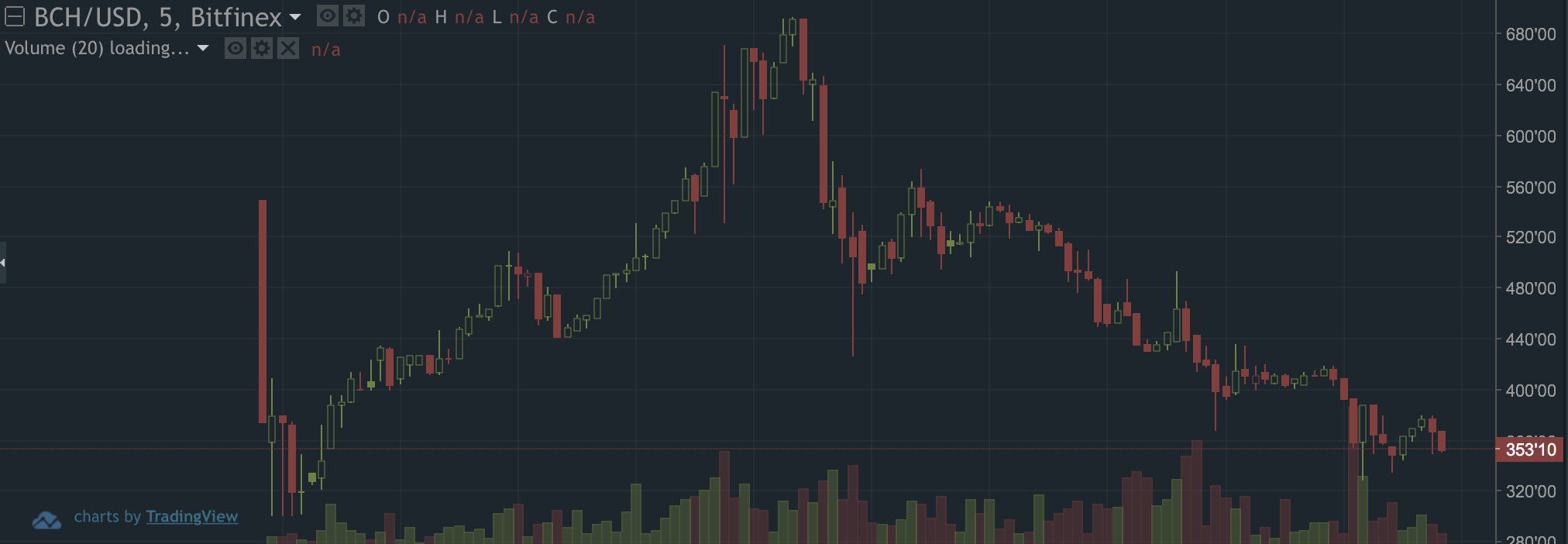
Right now, bitcoin cash is actually worth quite a bit — on paper at least. Some are trading it at around a value of $400 per coin, which makes it the fourth-largest cryptocurrency by market cap right now.
But here’s the thing — it’s currently really hard to sell bitcoin cash. While some exchanges have added the new currency for trading, liquidity is super low, which is why some say the price is being artificially inflated. Because most exchanges aren’t accepting deposits yet, the only bitcoin cash available to trade is currency that was credited by exchanges after the fork. Users holding bitcoin cash outside of exchanges, or in exchanges that don’t support trading, are stuck waiting.
So the moral of the story is that there’s probably a ton of bitcoin cash waiting to be sold, as soon as people can transfer it. That’s because there’s not a whole lot of incentive to keep the coins, especially when people think it is overvalued and want to quickly cash out. And the price has already fallen — take a look at the price moment today in USD. It’s already down from a high of $680 to around $350 on Bitfinex, one exchange that is offering a market for the new currency.
Now this isn’t to say it’s going to be worthless. Just look at Ethereum Classic, a hard fork of Ethereum. After that fork it dropped to about $1 per ETC, but a few months later is now worth around $15 per ETC. Of course, this price pales in comparison to the $220 that regular Ethereum currently trades at.
By the way, if you’re wondering why exchanges aren’t accepting deposits of bitcoin cash, it’s because it’s nearly impossible to send bitcoin cash over the blockchain right now. This is because the newly forked blockchain hasn’t yet adjusted its difficulty, which happens automatically every 2016 blocks. So it’s taking way too long to mine blocks and confirm transactions. For reference, one block today took 10 hours to mine, compared to the 10 minutes it should. Most exchanges require 6 or 7 block confirmations before they credit a deposit, so you can see how it’s basically impossible to move around bitcoin cash.
Now what?
So what’s next? The general consensus in the cryptocurrency community is that most people are just going to sell bitcoin cash as soon as they get the chance to — which, if happens, will further drive down the price. But there’s always a chance that people will flock to this coin and it actually retains or appreciates in value. Essentially, like everything else in crypto, no one knows what’s about to happen next.

(TechCrunch) Instagram Stories turns 1 as daily use surpasses Snapchat

Instagram Stories turns 1 as daily use surpasses Snapchat

Instagram Stories has blossomed from a Snapchat clone into an integral part of the world’s largest dedicated visual communication app in the first year since its launch. Half of the businesses on Instagram produced a story in the last month, and it’s boosted the app’s average usage to 32 minutes per day for those under 25, and 24 minutes per day for those 25 and up.
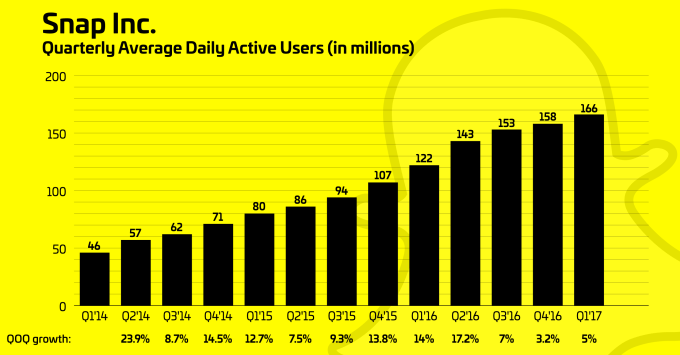
If Facebook’s goal was stop Snap in its tracks, it’s largely succeeded with Instagram Stories. Snapchat’s monthly active user growth rate has plummeted from 17.2% per quarter to just 5%, while Snap’s share price has fallen from its $17 IPO to $13. Instagram Stories now has 250 million daily users compared to Snapchat’s 166 million. Instagram’s usage per day beats the “more than 30 minutes per day” of usage Snapchat claims on average now, as well as the over 30 minutes per day for under 25s and 20 minutes per day for over 25s Snap cited in its IPO filing.
[Update: News of Instagram surpassing Snapchat’s daily usage has caused Snap’s share price to sink to an all-time low aroun $12.67]
It’s clear to see why users are flocking to Instagram. It has stolen some of Snap’s primary use cases and party tricks. Instagram’s most popular augmented reality filter is the same as the Snap one it copied: virtual puppy ears. Also in the top five Instagram face filters are bunny ears at #3 and Koala ears at #5, both inspired by the meme-worthy popularity of Snap’s dog face. Meanwhile, Instagram keeps iterating with new features and sticker packs, like the one below to celebrate Instagram Stories’ first birthday.
Instagram is actually getting more efficient at copying Snapchat. While it took almost 3 years to launch its own version of Stories, Instagram needed just 4 months to copy Snapchat’s create-your-own-stickers feature launched in April.
Instagram not only copied Snapchat’s Stories, but has turned its Instagram Direct feature into a full-fledged Snapchat ephemeral private messaging competitor. By allowing people to send quick visual messages that disappear, Instagram Direct has grown to 375 million monthly users. Snap’s influence has helped Instagram’s chat feature one of the most popular messaging apps in the world behind WhatsApp, Messenger, and WeChat. Now one in five Instagram Stories posted by a business receives a Direct Message reply, allowing Instagram to seduce advertisers who want private channels for communicating with customers.

Instagram writes that “Stories made Instagram a place for people to share all of their moments – the highlights and everything in between”. If CEO Kevin Systrom set out to make Instagram an app for displaying everything fun in your life, not just the perfectly polished meals and vacations, it’s succeeded. And for better or worse, Instagram Stories has emboldened Facebook to put Stories into all its apps. WhatsApp Status has boomed to 250 million daily users, while Facebook Stories and Messenger Day are seeing weaker traction since they’re respectively redundant or obtrusive.
The flood of apps where you can post them is creating ‘Stories fatigue’ in some users like me. If the audience is fractured across five different apps and I have to go through a ton of work to post to them all, I sometimes reconsider whether it’s worth disrupting life in the present in order to show off to my friends. So while Instagram and Facebook are further popularizing the Stories format Snap invented, they may also be commoditizing it. Either way, the Snap threat is being neutralized.
Snapchat’s iconic flower crown face filter on the right, and Instagram’s good-enough clone on the left.
Unless Snap can pull off a big uptick in growth when it reports earnings later this quarter, it may see Wall Street sour on its future the same way it did with Twitter. But you can bet Instagram won’t let up the heat.
A year ago, it looked like Snapchat was destined to rule social media. Its full-screen sharing would be impossible to outdo. There was no way to give a more immersive window into friends’ lives. But Facebook and Instagram didn’t have to outdo Snapchat. They just needed to copy it and put it in a more convenient place in apps that people of all ages already use.

(TechCrunch) Meadow is the Amazon of weed

Meadow is the Amazon of weed

Marijuana legalization is sweeping the nation, and The Green Rush is upon us. As pot sellers scramble to comply with complex regulations, one startup has built the full-stack of specialized commerce software they need. Meadow offers everything from an eye-catching digital storefront for teasing tasty plants, to automated patient records management for which you’ll go to jail if you screw up.

That’s why Meadow is emerging as the Amazon of weed. But it’s not just the website where you go to buy the best buds from a variety of top local shops. It’s the AWS powering the back end of the THC trade.
Meadow already provides:
  • Online and mobile ordering
  • Delivery logistics
  • In-store point of sale
  • Inventory management
  • Returns and discounts
  • Patient intake and registration
  • Analytics
  • Security
Today Meadow launches that final piece of its marijuana dispensary software suite: loyalty. It lets ganja buyers earn points for shopping at the same place, which they can redeem for cash back, discounts, free products and prizes. Customers can earn and apply points in-store or online, and track how many they’ve racked up at all of Meadow’s vendors. It could be especially helpful for sellers who want to get rid of pot before it goes stale or another shipment comes in, without screwing with their public pricing.
“The ability to accrue points gives the dispensary a tool to build a deeper relationship with the customer,” says Meadow co-founder David Hua. “We’ve seen a lot of dispensaries fail at managing a loyalty program. Creating one is easy, tracking it with inventory and your reporting often can be super onerous for the operator.”
Meadow co-founder, CEO and smoker David Hua
Hua is a stoner, no doubt. But Meadow’s CEO is also a shrewd businessman who won it TechCrunch’s 2015 Crunchies award for best bootstrapped startup, led it through Y Combinator and raised its $2.1 million seed round last year. Operating out of a warehouse in San Francisco’s Mission District, pungent smoke often wafts in from the courtyard of Meadow HQ. Its willingness to serve as a community hub and event space has established Meadow as the commerce layer connecting players in the burgeoning legal pot business.
Meadow frequently gets compared to fellow weed software startup Eaze. While both run a virtual doctor’s office where you can get prescribed marijuana over video chat, and both offer an aggregated online storefront and delivery logistics service, that’s where the similarities end.

Eaze has aggressively raised more than $24 million for marketing in a bid to become the Uber for weed, organizing deliveries without formally employing the couriers. But Hua sees that as a more generic piece of the marijuana commerce puzzle that could get commoditized. It’s the hardcore back-end office software for navigating heavy regulation that’s harder to copy, but critical for running an upstanding pot business.
Meadow’s point of sale software lets marijuana dispensaries offer loyalty programs
Meadow’s vision is that if a dispensary relies on it for everything from scanning bar codes on jars of weed in their store to securely storing patient medical data, they’ll tack on its online storefront and delivery logistics for convenience sake.
That plot is panning out. Despite having raised just $2.1 million in April 2016, Hua says “We still have plenty of runway. We’re good on funding.” In fact, now that the 10-person startup can serve 70 percent of California counties that allow medical marijuana, Hua tells me Meadow is “getting close to profitability.”
The pot market is poised to get much more exciting as marijuana becomes legal for all adults in California at the start of 2018. “Looking at Colorado, Washington, Nevada [where weed recently became recreationally legal], those markets tripled, quadrupled, 5Xed over night. We expect to have a nice multiplier.” While only focused on California for now, Meadow has enormous growth potential as more states decriminalize.
A customer checks out using Meadow’s tablet-based point-of-sale software
Legalization brings challenges too, though, as regulations change, competition increases and more established businesses try to muscle in on the weed trade. That’s why Hua has raced to bring in best practices from outside of the pot world, watching how Square, Belly, FiveStars and other commerce platforms handle point-of-sale and loyalty.
With the end of any prohibition comes massive opportunities for new ventures. Some jumped into holding and selling weed themselves. Others like Eaze have vied to handle how it gets to your door. But Meadow has taken the unsexy path of building serious commerce software. As weed finally becomes a serious business in 2018, all that time coding could blossom into a very sticky service.

>>> Bunge CEO reiterates willingness to consider consolidation, would prefer reg

Bunge CEO reiterates willingness to consider consolidation, would prefer regional asset partnerships
03 AUG 2017
Bunge Limited [NYSE:BG] Chief Executive Soren Schroder has said the White Plains, New York-based agricultural commodities trader is willing to consider opportunities for consolidation, according to a newswire report.
A Bloomberg Markets report on Wednesday, 2 August quoted Schroder, who said Bunge’s board is not entrenched and is attentive to investors amid consolidation talks in the industry.
The Wall Street Journal reported on 23 May that the Switzerland-based commodities trader Glencore [LON:GLEN] had made an informal approach to Bunge, a move confirmed by Glencore on 24 May.
Bunge said the same day that it had not entered into talks with Glencore Agriculture Limited or Glencore plc about a business combination.
Schroder said shareholders have been giving the company feedback about strengthening its performance over the past two years, but added that there have been more inquiries in the past few months.
The CEO said that although Bunge would consider consolidation, he would prefer to enter into regional partnerships for Bunge’s assets. Schroder mentioned Bunge’s ports as an example of assets that he would enter into partnerships for.
The CEO went on to caution that Bunge might not meet its target of a 9% return on capital invested in 2017 and 2018.
Bunge Ltd’s market capitalisation stood at USD 10.89bn (EUR 9.19bn) at the close of trading in New York on Wednesday.

>>> Italian state could use golden power for STX/Fincantieri and Telecom Italia

Italian state could use golden power for STX/Fincantieri and Telecom Italia (translated)
03 AUG 2017
The Italian government would “firmly” apply the Golden Power rule, reported Italian-language daily Il Sole 24 Ore, citing the Italian minister of Economical Development, Carlo Calenda, yesterday.
The paper noted the Golden Power rule would apply to both the STX/Fincantieri saga as well as for Telecom Italia [BIT:TIT].
The Golden Power refers to Article 1 (defence and national security) and 2 (communication). The Power involves strategic companies that are of national interest and imposes a notification be made to the Italian government within 10 days.
When asked about Telecom Italia, Calenda said they asked the Italian Parliament whether the French media group Vivendi [EPA:VIV], majority shareholder of TI, has to notify its intentions involving the Italian telecom.
As of yesterday, Vivendi has yet to notify its intentions. The report said that between today and tomorrow, the Vivendi committee could meet to decide on a conclusion to be submitted to the Italian Parliament, which has then 15 days to reply.

>>> Abertis/Atlantia: Ferrovial considers and rules out counter offer - report (

Abertis/Atlantia: Ferrovial considers and rules out counter offer - report (translated)
03 AUG 2017
Spanish infrastructures group Ferrovial [BME:FER] has analysed an offer for Abertis Infraestructuras [BME:ABE], Cinco Diasreported, citing sources.
Ferrovial’s management team has, however, recommended the board of directors not to make a counter offer for the Spanish motorways group, the Spanish-language paper said.
Abertis is the target of a EUR 16.5bn takeover bid from Atlantia [BIT:ATL] of Italy.
According to the report, Ferrovial's board was easily convinced, though other sources said that as Atlantia’s offer may take some time, Ferrovial may still consider a bid. Official sources from Ferrovial declined to comment, Cinco Dias said.

>>> Leica shareholder Blackstone talking to buyers for its 45% stake - report

Leica shareholder Blackstone talking to buyers for its 45% stake - report
03 AUG 2017
US private equity firm Blackstone is in talks with various parties to sell its 45% stake in German camera maker Leica, according to a report in French newspaper L'Agefi citing sources close who spoke to Reuters.
Potential buyers will have to convince Leica's majority owner, the Austrian Kaufmann family, the report noted. The report said that Leica is believed to be worth EUR 700m.

>>> What to look at today - 3rd of August 2017

Dow +0,24% S&P +0,05% Nasdaq -0,00% Russell -1,08%
The stock market spent much of Wednesday's session in negative territory as weakness in the broader market outweighed Apple's (AAPL 157.14, +7.09) post-earnings report rally. However, the S&P 500 (+0.1%) managed to sneak into positive territory in the final minutes to eke out its second win of the week. In total, five of the eleven sectors--technology (+0.5%), utilities (+0.5%), industrials (+0.4%), financials (+0.1%), and materials (+0.1%)--finished Wednesday's session in the green. On the downside, the telecom services space (-1.3%) finished at the bottom of the leaderboard as investors took some money off the table following the sector's six-session rally. Despite today's slide, the telecom services sector sits 7.1% above where is settled on July 25. The real estate space (-0.5%) also showed notable weakness, but the remaining laggards finished with losses of no more than 0.3%. WTI 0.9% to $49.61/bbl, Small caps finished solidly lower on Wednesday, pushing the Russell 2000 lower by 1.1%. The small-cap index closed right at its 50-day simple moving average (1,413.93), which has acted as an area of support since June 1. US After Hours TTWO +12%, TSLA / OSUR +8%, OCLR +7% higher and PMTS -29%, CENX -12%, DDD / MOH -10%, CRUS / PRU -2% following earnings/guidance. Asian Mkt : Equities markets opened slightly lower across the region. AUD/USD saw some weakness falling to 0.7915 after June trade balance figures. PBOC adjusted its open market operations (OMO) by just injecting 7-day reverse repos and skipped 14-day operations. Markets seem to be cautious ahead of BOE rate decision later today and US jobs report Friday morning.

Nikkei -0.30% Hang Seng -0.17% CSI -0.63% Shanghai -0.33% Shenzen +0.10%

Eur$ 1.1847 CNH 6.7293 CNY 6.7253 JPY 110.67 GBP 1.3229 CHF 0.9695 RUB$ 60.5937 WTI$ 49.41 -0.36%

S&P -0.08% EuroStoxx -0.06% FTSE +0.08% Dax -0.27% SMI +0.33%

Macro :
- Brexit Risk Premiums Are Evaporating as Markets Move On (1)

Keep an eye on :
- ADS GY : Adidas Second-Quarter Earnings Boosted by North America, China
- ALV GY : Allianz Is Said to Buy Stake in LV= Insurance Unit: Sky
- CS FP : Axa 1H Net EU3.27b; Est. EU3.15b
- BYW6 GY : BayWa First Half Ebit EU72.8 Mln
- BEAN SW : Belimo First Half Ebit Beats Estimates
- BB FP : Bic Cuts FY Sales Growth Target, Citing Brazil, Volatile Mkts
- BMPS IM : Paschi Reaches Binding Deal with Quaestio, Cerved for NPLs
- BMW GY :  BMW Second Quarter Ebit Beats Highest Estimate, Sees ‘Slight’ Increases in 2017 Pretax Profit, Deliveries
- BUCN SW : Bucher First Half Ebit CHF115 Mln
- ACA FP : Credit Agricole 2Q Net Beats Estimates; Trading Rev. Up 10%
- DTE GY : Deutsche Telekom Lifts Profit Target as Earnings Beat Estimates
- DUE GY : Duerr Second Quarter Sales Miss Estimates
- ENEL IM : Enel Is Said Working on Sale of Fortuna Plant in Panama: Reuters
- EVK GY : Evonik 2Q Profit Beats Estimates, Confirms Goals for 2017
- FRA GY : Fraport First Half Ebitda Beats Estimates
- FUR NA : Fugro First Half Revenue EU774 Mln
- GAM LN : GAM Holding First Half Net Inflows CHF1.9 Bln
- GSK LN : Glaxosmithkline Moves China Neuroscience Research to U.S.
- IDIA SW : Idorsia Posts 1H Operating Loss; Total Liquidity of Over CHF1b
- LEHN SW : Lem First Quarter Ebit CHF16 Mln
- MDG1 GY : Medigene Sees Full Year Ebitda Loss EU16 Mln To EU18 Mln
- MOR GY : MorphoSys Sees Full Year Revenue EU46 Mln To EU51 Mln
- KGF LN : Kingfisher Buys Romanian Praktiker for About EU50 Million: ZF
- PST IM : Poste Italiane First Half Net Income EU510 Mln
- REP SM : Repsol Says It Suspends Exploration Operations Off Vietnam
- RHM GY : Rheinmetall First Half Sales EU2.81 Bln
- RHK GY : Rhoen Klinikum Sees Full Year Ebitda EU85 Mln To EU105 Mln
- RIO LN : Rio Tinto Seen Boosting Returns Further in 2018: Street Wrap
- SAZ GY : Stada First Half Adjusted Ebitda EU237.7 Mln
- SIE GY : Siemens 3Q Profit, Revenue Miss Estimates; Outlook Confirmed, Siemens Plans Health IPO for 2018 After Profit Misses Estimates
- SKFB SS : SKF, BMW Settle Legal Dispute; Financial Impact Insignificant
- TEN IM : Tenaris 2Q In Line, Net Cash Drop Is Key Element: Natixis
- TSLA US : Tesla Says Considering Raising Money Through Debt Offering
- TLW LN : Tullow Returns to Sites Seized by Kenyan Community: Bus. Daily
- UCG IM : UniCredit Second Quarter Net Income Beats Highest Estimate
- YNAP IM : Yoox Net-a-Porter Revenue Strong, Margins Positive: Goldman

>>> Europe : Brokers Upgrades & Downgrades - 3rd of August 2017

>>> Up
* DS Smith Raised to Buy at Berenberg
* Natixis Raised to Buy at Jefferies, PT EU7.45
* Plus500 Raised to Buy at Berenberg
* Standard Life Raised to Outperform at Exane, PT 480p

>>> Down
* Fuchs Petrolub Cut to Sell at Berenberg
* Hiscox Cut to Market Perform at KBW, PT 1,370p
* Kuehne + Nagel Cut to Underweight at Barclays, PT CHF135
* Panalpina Cut to Equal-weight at Barclays, PT CHF125
* Pernod Ricard Cut to Neutral at Natixis
* Standard Chartered Cut to Hold at CICC, PT HK$96
* Steinhoff Cut to Sell at Goldman, PT EU3.80
* Takeaway Cut to Equal-weight at Morgan Stanley, PT EU37
* WebMD Cut to Sector Weight at Keybanc

>>> Initiation
* Allied Irish New Equal-weight at Morgan Stanley, PT EU5
* Allied Irish New Neutral at JPMorgan, PT EU5.15
* Allied Irish New Neutral at Goldman, PT EU5.20
* Galp New Neutral at MedioBanca, PT EU15
* Greene King New Add at Peel Hunt, PT 750p
* Inwit New Hold at HSBC, PT EU5.70

>>> Call