WSJ : Brother, Tesla Can’t Spare a Dime Elon Musk’s electric-vehicle pioneer is

Brother, Tesla Can’t Spare a Dime
Elon Musk’s electric-vehicle pioneer is running out of cash and out of time, even after a recent capital increase

Investors shouldn’t expect much mileage out of Tesla’s latest capital increase.
The electric car company raised a total of $2.7 billion in convertible debt and stock earlier this month, its first trip to the capital markets since August 2017. That nearly two-year stretch was the company’s longest between raises since it went public in 2010. It would be a big surprise, however, if Tesla can wait that long next time.
Elon Musk’s decision to shore up Tesla’s finances was certainly the right one given its likely trajectory without fresh cash. The auto maker posted a 31% sequential decline in first-quarter vehicle deliveries and burned nearly $1 billion in free cash. That left Tesla with $2.2 billion in cash and $3.2 billion in accounts payable at the end of the quarter, putting its long-term growth story, and even its medium-term survival, very much in question.
The fresh infusion hasn’t boosted Tesla’s flagging stock price, though. It is down nearly 30% so far this year. In the past, issuing equity usually has sparked a rally. It didn’t assuage debtholders either. Tesla’s senior unsecured bonds due in 2025 yield about 600 basis points more than a comparable U.S. Treasury note—close to a record high.

One reason is that intense competition, both in the luxury and mass-market ends of the electric-vehicle market, is much closer. Most is coming from legacy auto makers able to absorb poor or no profits to meet environmental goals.
Another reason this time has been different: $2.7 billion won’t go nearly as far as in the past. For starters, Tesla spent a net $300 million to hedge its dilution risk from convertibles it just issued. Repaying debts will eat up another large chunk of the fresh cash. A $180 million term loan comes due at the end of June, while about $566 million in convertible bonds mature in November.

Suppliers, too, will take their cut. Tesla could spend the entire remainder of the offering on paying down its bills and still owe vendors about $1.5 billion. Meanwhile, the auto maker says it will devote $2 billion to $2.5 billion this year to capital spending following a meager just $280 million in the first quarter.
Tesla can certainly make that cash last longer by generating positive cash flow from its operations. Free cash flow in the final six months of 2018 was nearly $1.5 billion.
A repeat performance is unlikely, though. Tesla benefited from years of pent-up demand for the Model 3 sedan in those quarters. Now it faces a shrunken retail presence, reduced U.S. tax incentives and the aforementioned wave of competitors.
The company can conserve cash in other ways, like reducing capital spending or laying off more employees. But such moves risk further impairing its shaky growth prospects and suddenly fragile stock price. A recent flurry of IPOs shows that capital markets are, for now, still willing to fund unprofitable growth stories.
Given that backdrop, Tesla would be wise to sell more stock when it can, not when it must.

WSJ : The Best Truly Wireless Headphones—Besides AirPods Apple AirPods started t

The Best Truly Wireless Headphones—Besides AirPods
Apple AirPods started the revolution in totally wireless, internet-accessible headphones—but they are no longer your only option


A good pair of headphones is one of modern life’s most useful accessories. They drown out the din of the open office and the commotion of everyday life—and tell others to leave you alone. They pipe in all the podcasts and audiobooks the internet can deliver. And they help turn your Spotify account into an always-on soundtrack to your entire life.
If you just want headphones for listening to music, look into a pair of noise-canceling cans. But for a broader array of everyday purposes (and yes, a little music as well), there’s the new kind of completely wireless headphones, with two separate buds you put into your ears and nary a cable in sight. You likely know them as AirPods, but this world is big enough for more than just AirPods.
You can get a pair of truly wireless headphones in many shapes and sizes, for anywhere from $60 to $300 and beyond. They all have the most important thing in common: no cables anywhere in sight. PHOTO: EMILY PRAPUOLENIS/THE WALL STREET JOURNAL
These buds are designed to be worn for hours at a time, and are concerned less with audio fidelity than with making sure Siri, Google Assistant or whatever virtual helper you use is always within earshot. Now that we communicate through Instagram stories and FaceTime chats, these earbuds also help keep your listening private. These “truly” (or “totally”) wireless headphones, as they’re often called, do more than play music. They bring the internet into your ears.
Apple ’s AAPL -1.39% $159 buds are the most popular, even though they look like you’ve got toothbrush heads sticking out of your ears. Over the past few months, I’ve tested more than a dozen other pairs, including a few I like even more.
I’ve also discovered that with the right pair of headphones, I can accomplish all sorts of simple tasks without ever looking at my phone—and then go straight back to jamming to Taylor Swift. My new favorite computer is the one in my ears.
Try This On for Size
The earbuds I’ve been testing range in price from $60 (Anker’s Soundcore Liberty Neo) to $300 (Master & Dynamic’s MW07), but they have most things in common. They all have two separate buds connected wirelessly to your phone and to each other. When you’re wearing your buds, you can tap to change songs or access Siri. Their batteries typically last between four and five hours. When you’re not using them, the buds go back in a battery case, which provides a few extra charges.
Apple now makes two great wireless earbud options: the $159 AirPods, and the new $249 Beats Powerbeats Pro.PHOTO: DAVID PIERCE/THE WALL STREET JOURNAL
There are three basic categories of wireless earbuds, which I’ve taken the liberty of naming:
• Danglers: The AirPod-style headphones that rest on your ears rather than wedging into them.
• Crammers: Ones with tips made of foam or silicone that you actually shove into your ear canals.
• Hangers: Ones that drape a support over the top of your ear to keep everything in place.
All three have their uses: The Danglers tend to be most comfortable, the Crammers tend to sound best, and the Hangers tend to be most secure when you’re running or jumping around.

The most important feature of a headphone is the way it fits, and everyone’s ears are slightly different. You ought to put on a pair of earbuds before you buy it, to make sure the fit is right—or at least check the return policy. Many of the pairs I tested also come with several sizes of tips. Try every tip in the box to see what feels best: I found the smallest size nearly always felt best, because apparently I am Opposite Dumbo and have teeny-tiny ears.
Once in your ear, a pair of wireless earbuds needs to do three things well:
Sound good. Headphones are still for music, after all. There isn’t much sound-quality variance among the models I tested—they mostly range from “pretty bad” to “kinda OK.” With the Crammer style buds, putting the tip into your ear creates a seal that can make things sound better and deeper, and block out other sounds. I particularly liked the sound of the $99 Tivoli Go Fonico and those pricey Master & Dynamics. They can’t match up to larger, more powerful over-ear headphones, but they piped through cleaner, more dynamic audio than my other test subjects.

Truly wireless headphones come in virtually every shape and size. Test before you buy to see how they work in your ears, and try all the available silicone or foam tips to see what feels best. PHOTO: DAVID PIERCE/THE WALL STREET JOURNAL
Hear you talk. Siri and Google Assistant are no good if they can’t hear you, right? Unfortunately, this was the most disappointing part of my tests. No pair of headphones I tested could transmit my words with as much fidelity as holding my phone to my face. A number of them—the $150 Plantronics BackBeat Fit 3100, the $249 Earin M-2 and even the great-sounding Tivoli buds—were basically unusable for phone calls or chatting with Siri. Even the iPhone’s in-the-box wired headphones were better.
Which passed the “good enough” test? Samsung’s $129 Galaxy Buds, the $200 Bose SoundSport Free and the $300 Sennheiser Momentum True Wireless all delivered solid noise-cancellation, and voices came through loud and clear(ish). Apple’s AirPods and the company’s new $250 Beats Powerbeats Pro also sound good, but picked up more background noise than some others.
Work easily. You shouldn’t have to spend an hour getting your music going. This is where Apple really shines. Both the AirPods and the Powerbeats Pro are remarkably easy to pair to any other Apple device—and when you’ve connected your headphones the first time, they’re automatically paired to your other Apple devices. Even on Android phones, they seem to connect more seamlessly than most, and the feature that pauses your music whenever you take your headphones out works great on any phone. Samsung’s Galaxy Buds are the closest Android analog, but nobody matches Apple here.
Five totally wireless headphones stood out. Clockwise from top left, the $300 Sennheiser Momentum True Wireless, which did well across the board; the $249 Beats Powerbeats Pro, the best overall option; the $300 Master and Dynamic MW07, which excels on sound quality; Apple’s $159 AirPods, the comfiest pair; and the $129 Samsung Galaxy Buds, which offer Samsung phone owners super-simple connections and handy extra features. PHOTO: DAVID PIERCE/THE WALL STREET JOURNAL
Overall, the Powerbeats Pro is my favorite pair of the bunch; they sound good and connect easily, and the Hanger style keeps the buds securely on my ears. They’re one of the more expensive options, though. Plus, the case is so stupidly large it’s like carrying a hockey puck in my pocket. Which I don’t ordinarily do.
Samsung’s Galaxy Buds also offered a nice mix of easy connection, especially for Galaxy phone owners, and impressive audio and microphone quality. The Galaxy Buds and Powerbeats also will pair well with other Android phones such as Google’s Pixels, but without frills—they just work like any other Bluetooth headphones.

If spending more than $100 on a pair of headphones seems crazy to you (which I totally understand), the Soundcore Liberty Neo pair look and sound better than their $60 price. Just be prepared for an older MicroUSB charger and shorter battery life (about three hours).
And yes, silly as they look, Apple’s AirPods are still pretty great.

There’s still a lot of work to do before ear-computers work everywhere for everyone—for one thing, they need a way to connect to those airplane TV screens. But simply by taking away the wires, headphones become something you can wear all the time. Just please, I beg you, take your headphones off before you try to talk to me. Don’t make me shout over Siri.

(CBS News) Generic drug makers accused of price fixing Some of the biggest gener


From: Laurent Chekroun (MAKOR SECURITIES LO) At: 05/12/19 21:20:40
Subject: (CBS News) Generic drug makers accused of price fixing Some of the biggest gener
Generic drug makers accused of price fixing - https://cbsn.ws/2PYqstD

Some of the biggest generic drug makers in the industry are being sued for what the attorney general of Connecticut calls an industry-wide conspiracy to fix the prices of generic drugs. Sunday on 60 Minutes

Connecticut and more than 40 states and Puerto Rico filed suit today against some of the biggest generic drug makers in the industry accusing them of illegally fixing the prices of generic drugs to maximize profits. Connecticut Attorney General William Tong says the lawsuit highlights corporate greed on a scale he has never seen. Bill Whitaker speaks to Tong and the attorneys in his office who cracked the case for a report to be broadcast on 60 Minutes, Sunday, May 12 at 7:00 p.m., ET/PT on CBS.

"I think that what we have come upon is that the generic drug industry is the largest private sector corporate cartel in history," Tong says. Tong's lead investigators on the case are seasoned antitrust attorneys Michael Cole and Joe Nielsen. They tell Whitaker they found evidence of price fixing dating back to 2006. The Connecticut attorney general only had to look in his own medicine cabinet to be convinced. "This is my bottle of doxycycline… I take every day for a skin condition and there is a conspiracy around doxycycline…I'm one of the victims." The price of the commonly prescribed antibiotic surged 8,281 percent, from $20 to more than $1,849, between 2013 and 2014.

The generic drug industry points to drug shortages and market forces as reasons behind the price increases. In court filings related to a separate, but similar, ongoing case against them, generic drug makers argue there is no proof of an overarching conspiracy to fix prices. But, after two years of digging, Joe Nielsen says he found evidence, including e-mails, phone records, and text messages, pointing to illegal price fixing as the reason behind the price spikes.

"This is an organized, systematic effort to conspire and fix prices and avoid competition. This is criminal behavior," says Nielsen.

(9to5) UBS: iPhone sales improving in China, but US trade tensions could affect

UBS: iPhone sales improving in China, but US trade tensions could affect May performance
Following Apple’s Q2 earnings report two weeks ago, UBS analyst Timothy Arcuri is out with a new investor note covering iPhone demand in China. According to UBS, iPhone performance dramatically improved during the month of April.

Arcuri says that China iPhone sales were down 3 percent year-over-year in April, which is a drastic improvement in comparison to previous months. During December, January, February, and March of this year, iPhone sales were down an average of 66 percent, UBS says. The data is based on government smartphone sell-through data.
The UBS analyst attributes this improvement in iPhone performance to “overall market strength” in China. The overall Chinese smartphone market was up 6 percent during April after declining in 9 of the last 10 months.
This improvement was driven by overall market strength (China smartphones were up 6% after declining in 9 of the prior 10 months) as well as slightly easier comps.
It still appears, though, that the overall China smartphone market remains a little stronger than Apple (29% month-over-month growth compared to 19% for Apple) and Apple may have lost a little more share, though it is hard to read into monthly data as there are seasonal factors.
Going foward, Arcuri ssays that the month of May will be an important one for the iPhone in China. With trade tensions between the United States and China again growing, Arcurci warns that this could affect China consumer sentiment:
One of the reasons Apple CEO cited for China improvement was increased consumer confidence due to easing of US-China trade tensions. However, in recent days, trade tensions have escalated and it bears watching whether this affects China consumer sentiment.
The Trump adminstration on Friday increased tariffs on Chinese imports, but so far Apple has been sparred. This, of course, could change at any moment – and could counteract Apple’s improving iPhone sales in China.

FT : How to guard against Mifid’s unplanned effects EU rules should not cut off

How to guard against Mifid’s unplanned effects
EU rules should not cut off smaller companies from capital markets

It has been in effect for a much shorter time than its ill-tempered gestation, but the EU’s second Market in Financial Instruments Directive (or Mifid II) is already shaking up equity investing throughout Europe and beyond. It is a year since one of Mifid II’s most contentious rules came into effect — requiring stock brokers to charge investors separately for company research and securities trading. As an FT series has shown, the reaction in equity markets has been significant. Beyond the predictable bleating from those losing their previously privileged positions, there are legitimate worries about unintended effects on market functioning — but nothing that undermines the validity of the Mifid II approach.

The ban on “bundling” research with brokerage aimed to remove conflicts of interest that might harm investors. One was investment banks and brokerage houses’ obvious interest in encouraging trading, which could bias their research. Another was that asset managers might not choose brokers in their clients’ best interest — the cheapest ones — when brokerage costs were both obscured by bundling and wrapped up with hard-to-price but useful services such as access to top executives.

Requiring asset managers to pay separately for research, thereby forcing brokers to name its cost explicitly, has led to a clear drop in spending. That has affected brokerages’ bottom lines, leading many to reduce the quantity and quality of research they do. That may seem like a bad thing; some surly voices will charge that the EU messed up. But this slashing of research spending is in many ways a feature, not a bug.

First, the conflicts of interest meant that the money spent on research was in part a vehicle for fattening the pockets of financial intermediaries to the detriment of end investors. Mifid II is one among many reasons for the welcome downward trend in the rip-off costs savers have long had to bear for having their money invested.

Second, if price transparency lowers demand, the most obvious explanation is that the research produced before was not worth the price. Still, much as the press was upended by the end of cross-subsidies from print advertising, there is a systemic cost from brokers’ retrenching from company research. Smaller companies are the ones research providers have dropped from their coverage. If less broker attention turns out to mean less investor attention, losing research coverage could make such companies’ stocks less liquid — making them still less attractive for investors, in a vicious cycle.

One remedy for this — research paid for by the companies themselves — is worse than the disease, in terms of conflicts of interest. Better for asset managers to undertake their own research, or non-brokerage companies to find a profitable niche in providing it.

If that does not happen, and Mifid II unintentionally makes capital markets less accessible to smaller companies, that reflects a failure in the market for company information. The cost of researching a company is probably the same regardless of its size — hence why smaller companies are undercovered. When markets underprovide a public good, such as valuable information, there is a case for public intervention.

There are various appropriate solutions if the problem turns serious: subsidies or tax credits for small company research; public-private collaboration; and EU-wide standardisation and reporting requirements, making research cheaper. All should be pursued within the EU’s capital markets union agenda. That agenda will itself deepen the liquidity pool for smaller EU companies — which could turn a vicious cycle into a virtuous one.

TechCrunch : Where cannabis investors see the next big wave? In precision dosing

Where cannabis investors see the next big wave? In precision dosing - https://tcrn.ch/2VwODp5

Women and seniors are joining the cannabis movement, and that’s presenting new investing opportunities, according to a panel of cannabis investors who we interviewed several days ago at an event organized by the cross-border venture firm DCM.
Specifically, they say, expect to see an uptick in products of all types that make it easier to consume small and controlled amounts of THC, the main psychoactive ingredient in pot.
The trend isn’t so surprising. Anecdotally, women increasingly see cannabis as a potential way to take the edge off without getting plastered, which is not a small concern. Women’s bodies are affected differently by alcohol than are men’s, including because they produce less of a particular enzyme that breaks down alcohol in the body. They’re also working more, drinking more, and developing cirrhosis at a faster rate. According to the Centers for Disease Control and Prevention, the related death rate for women ages 45 to 64 soared a stunning 57 percent between 2000 and 2015, compared with men, whose death rate owing to cirrhosis rose 21 percent over the same period.
Meanwhile, the case for seniors is even more widely understood. Many live with chronic discomfort, including because of arthritis or osteoporosis or sometimes autoimmune diseases that can cause fatigue, joint pain and worse. A growing number is also addicted to OxyContin and other pain killers and looking for a way to lessen their dependence of them. It’s also the case that cannabis isn’t viewed as scandalously as it once was. Former Speaker of the House John Boehner — who is pushing 70 and long opposed he legalization of marijuana — even joined the board of cannabis distributor Acreage Holdings last summer, alongside former Massachusetts Governor Bill Weld. (Age: 73.)
One product promising newcomers a more predictable experience with cannabis is a two-year-old, Woodland, Ca.-based vaporizer company called Indose, whose tagline is “greatness comes with control.” The outfit, which just closed on $3.5 million in funding led by Casa Verde Capital, enables users to adjust how many milligrams of THC they are inhaling from a modest 1 to 2 milligrams, to a more impactful 3 to 4 milligrams, per puff.
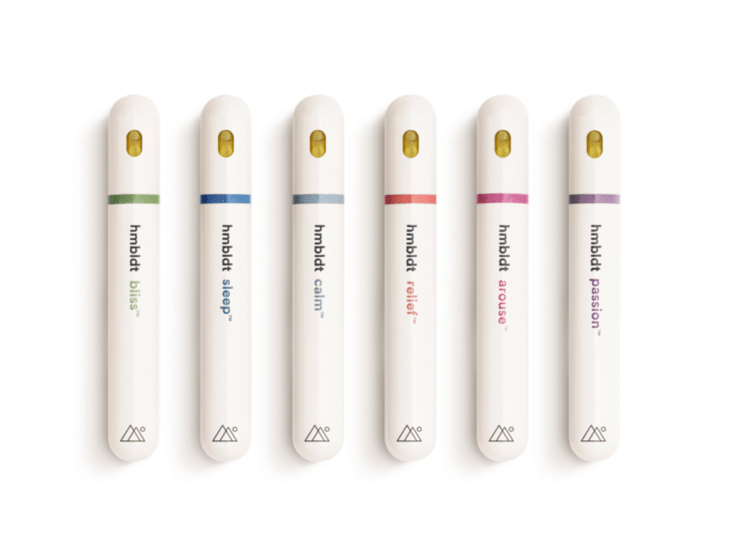
Dosist, a Santa Monica, Ca.-based maker of vape pens, similarly appeals to new users. Its pens vibrate when a user has inhaled for three-seconds, a way to help that person calibrate his or her experience. Dosist also markets strains that it formulates in ways that accessible to new users, including selling one strain called simply “Sleep,” and another called “Bliss.”
Yet another area of growth centers on so-called sublinguals, or products delivered under the tongue, like cannabis tinctures, which are becoming more popular among newer cannabis users, largely because the THC dosage is easier to manage. In fact, the cannabis wholesale ordering platform Leaflink has said that cannabis-infused sublingual and tincture products, drops, tablets and strips were the fastest growing cannabis product categories last year.
But perhaps the biggest opportunity going forward may be edibles, which have been around forever but will most certainly begin to look and be marketed differently. DCM, for example, just bet $5 million on a new beverage brand that, beginning this summer, intends to sell flavored THC-infused shots that tell users know exactly how many milligrams they are consuming — along with how they might feel and when.
The company’s target market, as we wrote earlier this week, is women who wouldn’t necessarily smoke a joint but who — thanks to easing regulations, advertising, and smart packaging — are becoming “canna curious,” much like one of the firm’s cofounders, a former consumer packaged goods exec who began experimenting with cannabis herself last year.
And more form factors may be on the horizon. As Karan Wadhera, a managing director at Casa Verde Capital, told us during the panel discussion: “There’s a massive market opportunity out there in many areas” now that the industry has “started to show us that people really do care about actual precise dosing.”
Narbe Alexandrian, the president of the cannabis investment firm Canopy Rivers, fully agreed. He told attendees that “when you look at consumer data, and you look at intenders,” meaning those who currently don’t use cannabis but are open to it, “then look at rejectors,” or people who haven’t used cannabis in the last six months and aren’t likely to consider it, “a lot of rejectors have tried cannabis. But they were turned off by it because they had a weed brownie that hit them too hard, and they never want to touch the substance again.”
The opportunity to sell both camps micro-dosing products is “huge,” said Alexandrian, suggesting that most people welcome more control when offered it. He also hinted that it’s also a wide open field, thanks to the awkward math of many current retailers. As he explained it, it’s often the case today that a store will focus on how many milligrams it’s selling, instead of focusing on the products themselves. “So they’re thinking about selling a 100-milligram beverage for $10 and a 50-milligram beverage for $5” and forcing the customer to figure out how to dilute what they are buying. That will change in the near future, he said.
When she weighed in, panelist and longtime cannabis investor Emily Paxhis echoed the sentiments of both men. More specifically, she said, she has grown “very interested in lower-dose platforms,” especially as women begin seeking out more “moderate dosing” opportunities. She said to think of it as “akin to having a glass of wine or glass of beer, as opposed to, ‘I’m buying straight in for the double martini lunch.'”
Added Paxhis — who cofounded in 2013 the cannabis-focused investment firm Poseidon Asset Management, which hold stakes in a wide variety of companies, including Pax Labs, Juul, an HR startup for the cannabis industry, and a data and analytics company solely focused on it — “There are many ways we can educate the consumer and help them feel more comfortable with [cannabis]. Having these lower-dose products in the market is one great way to do it.”

WSJ : Volatility in Stocks Could Unravel Bets on Calm Markets Computer-driven fu

Volatility in Stocks Could Unravel Bets on Calm Markets
Computer-driven funds amassed big equity positions while markets were sleepy

Recent swings in the stock market are threatening to unravel multibillion-dollar bets that rely on calm markets, potentially adding to investors’ jitters over the past week.

Computer-driven volatility-targeting funds generally scoop up riskier assets like stocks during calmer periods, hoping to gain as markets grind higher. When volatility hits, it sends them scrambling to sell their stocks and move into safer assets like Treasurys. Asset managers like Vanguard Group and insurance companies run some of the bigger strategies of this type.

Because markets have been so quiet this year, with the exception of episodes like last Tuesday’s trade-driven pullback, the funds are especially loaded up on stocks. That has left volatility-targeting funds carrying the highest level of exposure to U.S. stocks since the fall, a troubling sign for those who believe the funds exacerbated some of the market’s worst selloffs in 2018.

Volatility-targeting funds had an estimated 44% equity exposure Tuesday. That marked their highest level of equity exposure since early October, when they had a more-than 60% exposure to stocks, according to Pravit Chintawongvanich, an equity derivatives strategist at Wells Fargo Securities.

After stocks tumbled Tuesday, Mr. Chintawongvanich estimates those funds sold about $10 billion in stocks a day later, knocking their allocations down to 41%—still around their highs for the year.

“If the next spike [in volatility] is higher, then you’ll see a more extended downmarket and we’d remove equities. You can get easily whipsawed,” said Duy Nguyen, a portfolio manager and chief investment officer of Invesco Solutions who helps manage these strategies.

That is especially true because analysts estimate volatility-targeting funds manage as much as $400 billion in assets—giving them considerable heft in the stock market.

To be sure, small bouts of volatility—like Tuesday’s selling—wouldn’t necessarily spur major changes within volatility-targeting funds, money managers said. Instead, they could actually boost returns because many of the funds tend to focus on stocks that have a lower level of volatility than the broader market.

And few analysts believe the bull market is necessarily in danger of an imminent end. U.S. economic data have pointed to steady, if moderating, growth. Inflation has also continued to be muted, which traders believe will allow the Federal Reserve to keep interest rates low.

Besides that, trade tensions ratcheted down by the end of the week after Treasury Secretary Steven Mnuchin said negotiations with Chinese officials were “constructive.” The Cboe Volatility Index, or VIX, fell 16% Friday, while the S&P 500 added 0.4%. The S&P 500 still fell 2.2% over the week, its worst weekly performance since late December.

But critics argue that such funds, along with the growing prevalence of automated trading, have altered the market’s natural tendencies, from sharpening moves in the S&P 500 to fueling historic stretches of tranquility, like in 2017.

With dozens of volatility-targeting funds employing similar, but nuanced, automated approaches around insulating investors from the stock market’s shocks, they typically sell stocks simultaneously during the worst downdrafts, analysts said. The group’s equity allocations swung from 83% in late December 2017 to 21% in February following 2018’s early selloff, according to Wells Fargo. Allocations rose again in subsequent months, hitting 67% in early October, before the market’s decline, and bottomed out at 16% in late December.

Those moves weren’t spread over a long period. Instead, funds sold most of those assets over a few trading sessions, making their impact on the market that much more apparent, analysts said. If Tuesday’s decline had been more severe, on the scale of a 3% pullback in the market, Wells Fargo estimates that volatility-targeting funds would have sold roughly $36 billion worth of stocks.

That pales in comparison to October, when stocks began their fourth-quarter plunge, draining more than $100 billion from volatility-targeting strategies in a short span, Mr. Chintawongvanich said.

“You can see these funds moving together,” said Damian McIntyre, a portfolio manager at Federated Investors, who manages a volatility-targeting fund that is near the top of its equity-allocation range. “That can exacerbate any selloff and add a couple percentage points to the pullback.”

In some ways, the worries cropping up about volatility-targeting funds reflect broader concerns that investors have gotten complacent after a broad market rebound.

Because investors have grown increasingly confident that risky assets will extend their rise, some traders worry that unexpected developments like a further breakdown of trade talks or disappointing economic data could send markets sharply lower.

Stocks, commodities and even ultrarisky assets like bitcoin have jumped this year, thanks to central banks signaling a pause in their rate-increase campaigns and global growth showing some signs of stabilizing. The S&P 500 has risen 15% this year, extending gains after logging its best quarterly performance since the financial crisis. U.S. crude-oil prices have soared 36%, and bond yields, which fall as prices rise, have retreated from the multiyear highs they hit in 2018.

The rally has encouraged investors to pour money into riskier corners of the market while betting on declines in so-called haven assets. Individual investors have also grown more confident that stock prices will continue climbing, according to the American Association of Individual Investors, whose most recent weekly survey showed above-average levels of bullishness.

“We may not be getting close to the top, but it looks like we’re getting close to the end of the pendulum where the market has gone a bit too far one way,” said Frank Cappelleri, senior equity sales trader and chief market technician at Instinet.