WWD : Apple Watch Eclipsed Entire Swiss Watch Industry in 2019, Report Says

Apple Watch Eclipsed Entire Swiss Watch Industry in 2019, Report Says
Apple Watch sold an estimated 31 million units in 2019, according to Strategy Analytics. Here's what it means for the Swiss watch business.

According to the latest estimates from Strategy Analytics, 2019 sales for the Apple Watch dwarfed shipments from the entirety of the Swiss watch world.

If true, this is the first time the Apple wrist gizmo beat out the aggregate of traditional brands, including their analogue or even techier timepieces — at least for sustained period of time. There was a 2017 spike in Apple Watch sales that briefly overtook Swiss watches.

Now Strategy Analytics’ numbers peg Apple’s dominance across a full year. The firm figures that the tech giant sold as many as 31 million Apple Watches in 2019, far outpacing Swiss watch brands’ 21.1 million units. The sales trajectory here matters, too: Apple Watch shipments jumped 36 percent year-over-year, while those of umbrella watch houses such as Tag Heuer and Swatch collectively dropped 13 percent.

It’s a remarkable scenario, considering the tech sector had declared smartwatches dead a few years ago.

Since then, the Apple Watch has emerged as the clear leader in the smartwatch market, and it’s remained so for years now. Granted, it’s been all too easy to chalk that up to a “big fish, small pond” situation. It will be harder to do that. And these estimates potentially recast tech wearables in general — and Apple’s wrist gadgets in particular — as mainstays that won’t be going anywhere anytime soon.

“Apple’s blend of cool design, user-friendly tech and slick marketing have proved a big hit with consumers around the globe,” Strategy Analytics executive director Neil Mawston wrote. “Swiss watch players, like Swatch, have badly missed the transition from analog wristwatches to digital smartwatches.”

Strategy Analytics’ numbers, based on data from retail partners and vendors, add to Apple’s narrative over its booming watch business.

Although the tech-maker doesn’t break out Apple Watch sales specifically, it does report figures from its larger category of wearables, home and accessories. During the last earnings call covering the first fiscal quarter of 2020, the business unit reported $10 billion in revenue — a first for the company.

But Apple chief executive officer Tim Cook didn’t leave it there this time.

Wearables, like the Apple Watch and the AirPods Pro, grew 44 percent during the quarter, he said, making the segment “now the size of a Fortune 150 Company.” Apple Watch revenue alone broke records, he added.

Old-fashioned analogue watches aren’t completely obsolete, as they still enjoy some popularity among older customers, Mawston noted, but “younger buyers are tipping toward smartwatches and computerized wristwear.”

Added Steven Waltzer, senior analyst at Strategy Analytics, “Traditional Swiss watchmakers, like Swatch and Tissot, are losing the smartwatch wars. Apple Watch is delivering a better product through deeper retail channels and appealing to younger consumers who increasingly want digital wristwear.

“The window for Swiss watch brands to make an impact in smartwatches is closing. Time may be running out for Swatch, Tissot, Tag Heuer and others,” he said.

(ZH) Exiled Chinese Billionaire Claims 1.5 Million Infected With Coronavirus, 50

Exiled Chinese Billionaire Claims 1.5 Million Infected With Coronavirus, 50,000 Dead

Summary:
  • Virus death toll surpasses SARS (total: 813)
  • Exiled Chinese billionaire says true death toll closer to 50k, 1.5 million infected
  • New cases confirmed in UK, Spain, Singapore
  • Passengers aboard 'Diamond Princess' warn authorities aren't doing enough to protect them - and others
  • Officials in Shenzen say they won't block Foxxconn factory reopening
  • Cruise ship quarantined in Hong Kong allowed to leave after 4 days
* * *
Update (1300ET): A lot of epidemiologists and 'citizen journalists' have been throwing out numbers that they believe to be the true accurate counts of the number of people infected with the Wuhan coronavirus in China, as well as the true death toll.


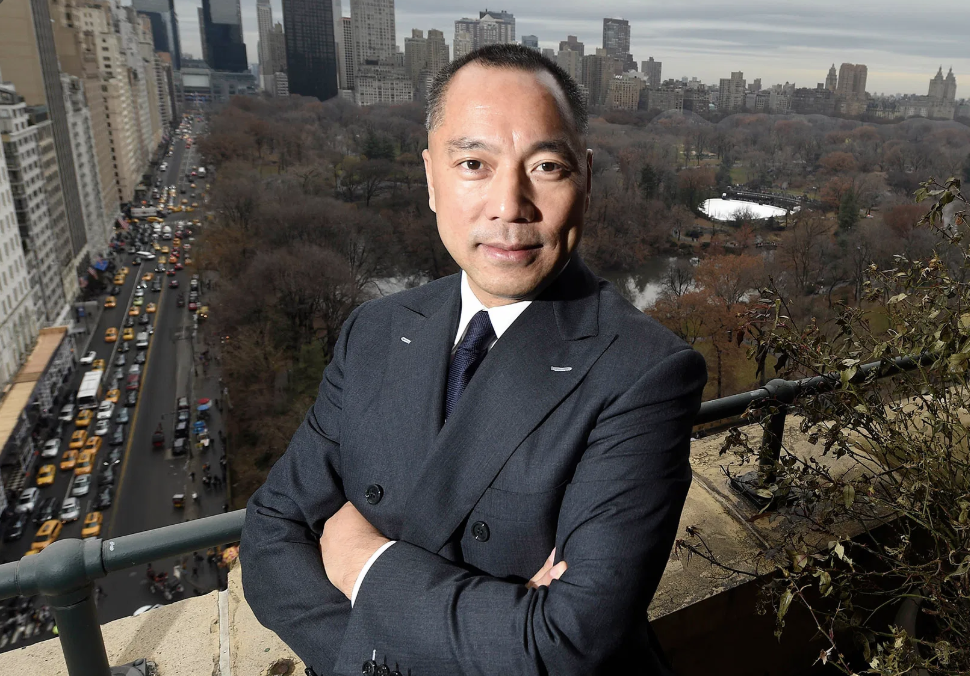
But exiled Chinese billionaire Guo Wengui said Sunday, citing leaked information out of Wuhan, that the death toll could be as high as 50,000, as Chinese officials burn bodies to cover up the true extent of the crisis.
Darren of Plymouth @DarrenPlymouth

1.5 million chinese infected with #coronavirus.

50,000 cremated.


1,543 people are talking about this


This isn't the first time we've heard about the regime burning bodies, rather, it's one of those 'conspiracy theories' that grows more credible every day.
One reporter from the Epoch Times shared this map earlier showing the sulfur dioxide content in the air spiking over Wuhan.
曾錚 Jennifer Zeng@jenniferatntd

數據網站http://windy.com 的數字顯示,#武漢 地區的二氧化硫含量遠高於其他地區,而這通常是由在機物的焚燒所引起的……#武汉肺炎 疫情中,到底死了多少人了? https://twitter.com/inteldotwav/status/1226267582740811777 …
Windy as forecasted
Wind map and weather forecast
windy.com
INTELWAVE@inteldotwav

Data from http://windy.com  shows a massive release of sulfur dioxide gas from the outskirts of Wuhan, commonly associated with the burning of organic matters. Levels are elevated, even compared with the rest of China.

138 people are talking about this


Wengui also said he has information showing 1.5 million confirmed coronavirus cases in China. To be sure, this would contradict the theory that the ~3,000 or so new cases confirmed every day in China reflects restrictions on the supply of tests.
50,000 deaths would be an incredible thing to cover up...but then again, this outbreak is the without a doubt the greatest crisis of cinfidence faced by the regime since the June 4th incident back in 1989.
* * *
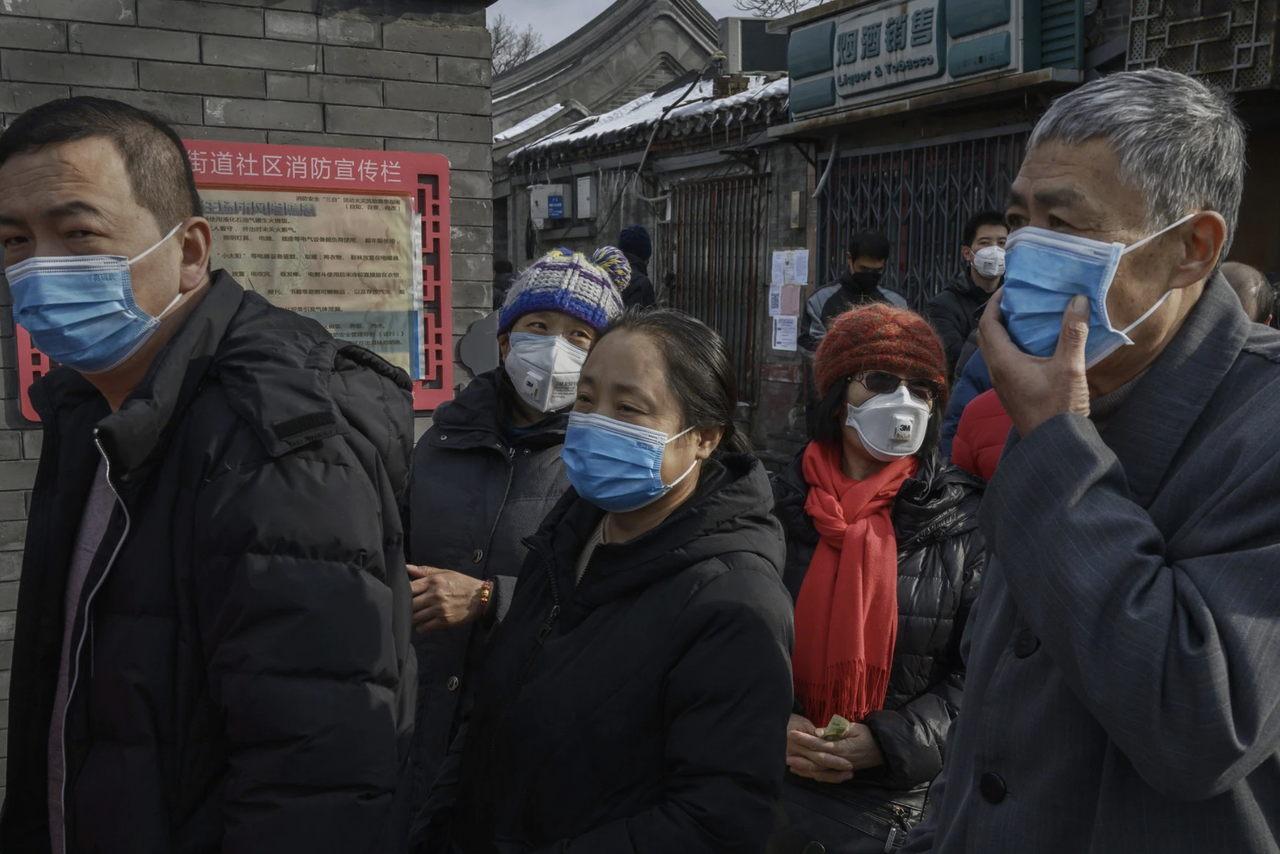
Last night, we reported that Chengdu had been placed under strict lockdown, adding another 14.4 million Chinese to the 400 million+ already living under virtual house arrest across the country as Beijing struggles to contain the coronavirus outbreak that has already claimed more lives than SARS did during its nearly year-long run.
And as fears about the economic fallout from the outbreak grow, the government in Shenzen, a city that has been on lockdown for a couple of days, reportedly denied rumors that it would prevent Foxconn from re-opening local factories. In a transparent to boost confidence in China's frozen manufacturing sector, local officials said the factor would reopen asap after inspections had finished.
*Walter Bloomberg@DeItaOne

The local government of the city of Shenzhen in southeastern China said on Sunday it had not blocked plans by Apple supplier Foxconn to resume production, adding that the company would restart once inspections were completed$AAPL

See *Walter Bloomberg's other Tweets


CNBC's Eunice Yoon, a reporter who has doggedly covered the outbreak from Beijing, warned that factories won't go back online across the country tomorrow, as Chinese officials had said. Instead, she expects the switch back to work would be gradual and depend largely on the whims of local officials. Only minutes ago, Chinese state media reported that the first workers would return to factories in 'batches'.
In other news, one reporter from the Epoch Times, a newspaper that has assiduously covered the virus despite threats from the mainland government, said she believed based upon her research that the virus might be artificial, a question that others have raised.
曾錚 Jennifer Zeng@jenniferatntd

不太清楚。各种说法很多,各种可疑之处也很多。我趋于相信是人造病毒。希望科学家能尽快调查清楚。 https://twitter.com/romeoalanya07/status/1226485788701069313 …
Bay doğru ( sorarlarsa Adem dersiniz)@romeoalanya07
Replying to @jenniferatntd
Hi Jen. Can this be real ? 事情正在起变化。国际社会已经注意到新型冠状病毒是在武汉P4病毒实验室,由石正丽团队人工合成。石正丽2015年在融资计划说明书中,明确提出要把舟山蝙蝠分离出的冠状病毒改造成适合人际传播的新病毒。现在流行的新冠病毒就是在这种病毒中加入了艾滋,艾博拉基因片段

43 people are talking about this


Out of all 31 provinces in China, Guangdong Province is quickly becoming the second-worst-hit after Hubei, even though the two provinces don't share a land border. The ET shared a video of a third makeshift nCoV hospital being built somewhere in the province, apparently.
曾錚 Jennifer Zeng@jenniferatntd

Probably somewhere in #Guangdong province(the man in the video speaks Cantonese), a huge temporary "hospital" under construction. 据说是 #广东 某地,大型临时医院在建,收容 #武汉肺炎 #新冠肺炎 病人。#Coronavirus #coronaviruschina #CoronavirusOutbreak #全民反抗 #全民自救


234 people are talking about this


Meanwhile, more disturbing videos of Chinese resisting the forced quarantines have surfaced.
曾錚 Jennifer Zeng@jenniferatntd

Woman fighting fierecly, with a knife, against forced quanrantine, one of the many scenes in #China during #CoronavirusOutbreak. It was said she got taken away nevertheless. #Coronavirus #coronaviruschina 女子揮刀反强制隔离。据说最后还是被制服带走了。#武汉肺炎 #新冠肺炎


317 people are talking about this


曾錚 Jennifer Zeng@jenniferatntd

Someone says what she is saying is "People are innocent", or "People are guiltless". https://twitter.com/jenniferatntd/status/1226281659861028864 …
曾錚 Jennifer Zeng@jenniferatntd

Woman can no longer bear the lockdown...seems she is saying “people are suffering” . One of the many scenes in #China during #coronaviruschina #coronavirus #coronavirusoutbreak 说什么好呢?很多人早就在担心这种情况。#武汉肺炎 #新冠肺炎


65 people are talking about this


Tensions between villagers and outsiders continue to run high as well.
曾錚 Jennifer Zeng@jenniferatntd

In an era of #coronavirus in #China , villagers failed to stop someone from going somewhere. #coronaviruschina 与其 #全民互害 互斗,不如全民一起反抗中共。#全民反抗 #全民自救 #全民互救 #武汉肺炎 #新冠肺炎


217 people are talking about this


The bitterness felt toward the government has prompted the creation of memes and videos like this.

255 people are talking about this


Quarantines have lasted for more than two weeks in some places, yet many outsiders still have no idea how those living under quarantine are surviving. This video offers an important clue:
曾錚 Jennifer Zeng@jenniferatntd

This is how you get your food supplies at the age of #coronavirus quarantine in a village in #China. #新冠肺炎 的封村时代,大家都过上平等的社会主义新生活了? #武汉肺炎 #coronaviruschina


209 people are talking about this


Expanding on the death toll we reported last night, local officials confirmed 89 new deaths from the virus on Saturday, a number that many suspect might be wildly underrated following additional reports of Beijing cremating bodies that haven't yet been counted in the local statistics. Still, 89 is up from 86 fatalities on Friday, according to figures released early on Sunday by the country’s health authority, per the SCMP.
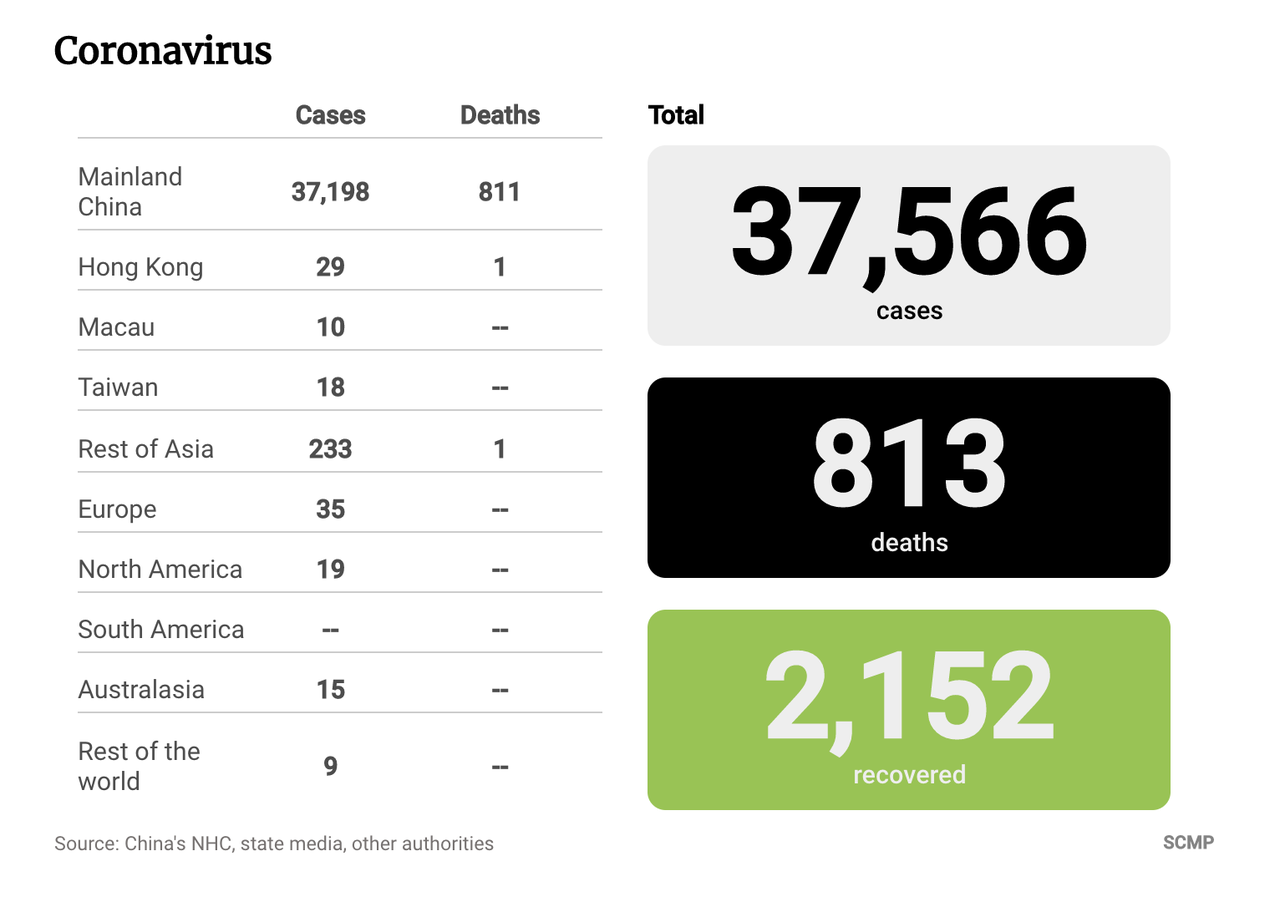
Beijing also touted the fact that the number of new cases dropped on Saturday. Newly confirmed coronavirus cases in the mainland rose by 2,656 on Saturday, down from 3,385 new cases on Friday, according to China’s National Health Commission. The total number of mainland cases now stands at 37,198, plus an additional ~350 confirmed cases outside China. A local party chief in Wuhan has called on local health officials to finish testing all suspected cases in the city (remember, the government rounded them all up a few days ago) within two days, before the people riot and Beijing sends in the tanks.
Britain and Spain on Sunday confirmed a new coronavirus case, bringing the total cases in the UK to four, while Spain now has two. In the UK, the infected person was a "known contact of a previously confirmed U.K. case" (who allegedly contracted the virus in a French ski chateau). The case in Spain is a British man who lives on Majorca. 6 new cases were confirmed on the cruise ship in Japan (we'll get into more on that later), while authorities in Hong Kong ended the four-day quarantine of another ship after finding no evidence of infections among its 3,600 passengers and crew, per NYT.
New cases were also confirmed in Singapore (three new cases), while a new study published by Kyodo News found that half of all new infections occur within the virus's incubation period, bolstering theories that it spreads "silently" - ie before infected patients display symptoms.
At least one of every two instances of human-to-human transmission of the new coronavirus is believed to occur while the first patient is not yet showing symptoms, according to an estimate by a group of Japanese university researchers.
Based on its determination, the team, headed by Hokkaido University professor Hiroshi Nishiura, has called for preventive measures as well as reinforcing the medical care system against a potential sharp rise in coronavirus patients, rather than focusing exclusively on isolation as a way to contain the disease.
According to the estimate based on 26 human-to-human infection cases released by six countries such as China, Thailand and the United States, the timing of the secondary infection was shorter than previously thought.
Elsewhere, the government is fighting back against the torrent of criticism unleashed by the death of Dr. Li by claiming that the disruption is the work of foreign state actors - a classic trope invoked by the Chinese government to whitewash its mistakes. The Global Times, a pro-Communist Party tabloid, accused "Hong Kong secessionists and foreign entities" of trying to provoke public discord in China by sensationalizing Dr. Li Wenliang's death (he succumbed to the virus late last week).
On Sunday morning, the NYT published one of the most extensive looks at life aboard the 'Diamond Princess', where more than 2,600 passengers (minus those who have tested positive and been taken to a hospital) are understandably going stir crazy while simultaneously being consumed by paranoia as they try to avoid a monster that can't be seen or heard.
So far, more than 70 passengers and crew have tested positive for the virus, making the ship host to the largest coronavirus outbreak outside China. Quarantining the ship was a coup for Japanese health authorities:they successfully prevented what probably would have been a brutal outbreak in Japan, a country where more than 20% of the population are elderly and/or ailing.
The NYT reporter makes it seem like she's talking to passengers directly, as if she were aboard the ship. But judging by the Dateline, the piece was reported entirely from Tokyo. Most of these conversations must have occurred via phone.
One passenger described keeping track of the number of cases by counting the ambulances that arrive to cart away the infected.
"Now we will start counting ambulances and know that’s the number being removed," said Sarah Arana, 52, a medical social worker from Paso Robles, Calif.
The same individual discussed strategies for limiting stress, since it weakens the immune system and makes one more vulnerable to infection.
"I know that stress and anxiety compromise my immune system," said Ms. Arana, who is on her first cruise. "My whole thing is just to stay calm, because no matter what, I’m here. But every day it’s anxiety-provoking when we see the ambulances line up on the side of the ship."
The quarantine of the Diamond Princess was imposed by Japanese health officials who learned that a man who had disembarked on Jan. 25 tested positive for the virus in Hong Kong.
Another passenger told the NYT that they didn't understand why authorities were only testing people with symptoms (aka fevers) or who had direct contact with the infected man.
"I do not now believe they are containing this epidemic by keeping us quarantined," said Gay Courter, 75, an American novelist and avid cruisegoer who was isolated in a cabin with her husband, Philip. "Something is wrong with the plan."
Some passengers speculate that the virus might be transmitted through the ship's ventilation system. Others worry it could be spread via the food. This is that kind of all-consuming paranoia, the kind that injects an element of terror into every daily interaction.
"Nobody can tell us for certain," said Ms. Courter. "There’s no scientific evidence this is not being spread through food handlers or the people delivering the food, even in rubber gloves."
Passengers have been speculating that the virus could be transmitted through the ship’s air ventilation system. Some shared their concerns with the United States Embassy in Tokyo.
One rumor that spread like wildfire across the ship claimed the US government was working to evacuate Americans aboard the cruise ship. So far, that has not happened. Some passengers with chronic health issues like diabetes are extremely worried about running out of medicine.
On Wednesday, Carol Montgomery, 67, a retired administrative assistant from San Clemente, Calif., had a low-grade fever. Her husband John, 68, a retired city planning director, was concerned about his diabetes, and about whether he should clean the air ventilator he uses every night for sleep apnea.
"We’re sitting inside this room and the number of cases is slowly rising," Mr. Montgomery said. "It’s just very disconcerting that we can’t get tested to figure out if we have it."
About as interesting as that NYT story is this piece by WSJ. It's a blatant piece of access journalism - the worst kind when you think about it since the reporters clearly got the green light from Communist Party officials - but the reporters found a way to outsmart censors and embed clues and hinted-at criticisms within the text.
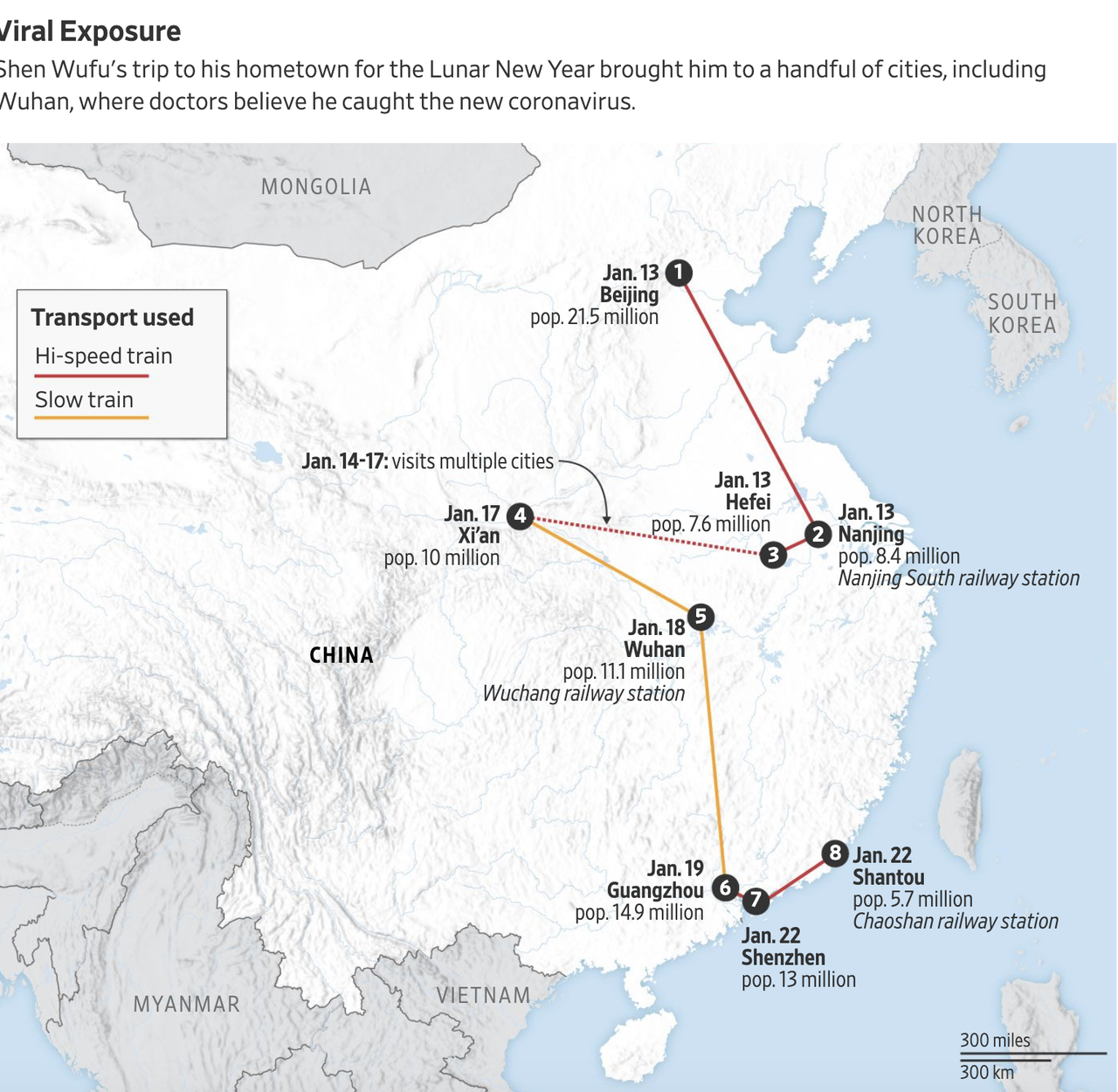
The report recounts a cross country journey undertaken by Shen Wufu, a young businessman who was quarantined in the Chinese city of Shantou after picking up the virus during a multi-city journey. Authorities aren't certain where he picked up the virus, but he believes it was during a brief stop in Wuhan on Jan. 18, a time when government officials were still actively suppressing news about the outbreak (or so many suspect).
A map of his journey shows how the government's sluggish initial reaction to the virus placed millions in jeopardy. In reality, Shen isn't so different from the super-spreader we mentioned earlier, though the government might argue that they acted quickly enough to prevent this.
To be sure, the paper noted that Shen is "living proof that some Chinese countermeasures are working," like the fact that he was eventually quarantined thanks to a pair of quick-thinking local officials (who we imagine will be scapegoated for failing to suppress the virus at the orders of the leadership).
As it becomes increasingly clear that the outbreak is getting worse, not better, despite the supposed 'decline' in new cases (which is supposed to show that the state's heavy handed methods are working), the World Health Organization cautioned on Sunday against reading too much into those numbers, saying that Wuhan and Hubei remain in the middle of a "very serious outbreak."
Though we didn't need the New York Times to figure that out.

NYT : Uber Posts Faster Growth, but Loses $1.1 Billion

Uber Posts Faster Growth, but Loses $1.1 Billion
Uber’s ride-hailing business grew faster in the fourth quarter of 2019, even as the company grappled with continued challenges.

SAN FRANCISCO — Uber capped a difficult 2019 by posting faster growth in its ride-hailing business, even as it lost more money.

On Thursday, Uber said its revenue in the fourth quarter of 2019 increased 37 percent to $4 billion from a year ago, faster than the 30 percent growth it recorded in the previous quarter. The company lost $1.1 billion, more than the $887 million it lost a year earlier.

“We recognize that the era of growth at all costs is over,” said Dara Khosrowshahi, Uber’s chief executive. “I’m gratified by our progress, steadily delivering against the commitments we’ve made to our shareholders on our path to profitability.”

The results were driven by Uber’s main ride-hailing business, with the number of trips rising 28 percent to more than 1.9 billion from a year earlier and revenue increasing 27 percent to more than $3 billion. In contrast, Uber’s food delivery business, Uber Eats, lost $461 million on revenue of $734 million.

Mr. Khosrowshahi previously said Uber aimed to make an operating profit by 2021. But on Thursday, he said the company would reach that milestone by the final quarter of 2020.

Nelson Chai, Uber’s chief financial officer, added that Uber expected to earn adjusted revenue of $16 billion to $17 billion this year as it worked to become profitable. The company also plans to cut back on the discounts and coupons it has used to grow, he said, calling them “bookings that are essentially empty calories.”

Uber had gone into retreat for much of 2019 after staging a disappointing initial public offering in May. The company, which spends a lot of money to attract passengers and drivers, immediately faced doubts over whether it could ever make a profit. Since then, Uber’s stock has plunged.

In response to its critics, Mr. Khosrowshahi has cut costs at the company and pulled back parts of its business. Last year, he laid off more than 1,000 employees and withdrew Uber’s food delivery service from South Korea. Last month, Mr. Khosrowshahi also sold Uber’s food delivery business in India to a local competitor, Zomato.

“Clearly, Uber has put out a somewhat aggressive timeline for profitability,” said Tom White, a senior equity research analyst at D.A. Davidson. “These exits are partly a function of them making sure they meet that target.”

Editors’ Picks

This Professor’s ‘Amazing’ Trick Makes Quadratic Equations Easier

The Money Behind Trump’s Money

The Day I Realized I Would Never Find Weapons of Mass Destruction in Iraq
Uber is dealing with other challenges. On Jan. 1, California legislation went into effect that may force the company to reclassify its drivers, who are freelancers, as employees. That would drive up Uber’s costs because it would have to provide them with benefits and other perks. Uber sued to block the law last year and has asked for a preliminary injunction that would give it a reprieve from the new rules until the case was resolved.

The company also faces hurdles in London, one of its biggest markets. In November, London authorities decided not to extend Uber’s taxi operating license because of persistent safety problems. Uber continues to operate there while it appeals the decision.

“Regulation of ride sharing is finally catching up,” Mr. White said. “These businesses are looking less and less like these completely transformative, transportation-as-a-service models, and more and more like tech-enabled taxi companies. You have a lot more regulation, a lot more fees and a lot more oversight, which generally raises costs.”

It has not been all bad news for the company. A court in Brazil ruled on Wednesday that Uber’s drivers could not be considered employees.

WSJ : Trump to Propose $4.8 Trillion Budget With Big Safety-Net Cuts

Trump to Propose $4.8 Trillion Budget With Big Safety-Net Cuts
White House seeks savings through curbs on Medicare, Medicaid while boosting funds for military, veterans

WASHINGTON—President Trump is expected to release a $4.8 trillion budget Monday that charts a path for the start of a potential second term, proposing steep cuts to social-safety-net programs and foreign aid and higher outlays for defense and veterans.

The plan would increase military spending 0.3%, to $740.5 billion for fiscal year 2021, which begins Oct. 1, according to a senior administration official. The proposal would cut nondefense spending by 5%, to $590 billion, below the level Congress and the president agreed to in a two-year budget deal last summer.

A White House budget reflects an administration’s priorities and represents the opening bid in spending negotiations for the next fiscal year. The new budget is unlikely to become law, however, as Democrats control the House and spending bills in the GOP-led Senate need bipartisan support.

This year, the budget also reveals Mr. Trump’s fiscal policy objectives should he win reelection in November, and his campaign messaging will likely reflect its broad strokes. The president’s aides have been meeting since late last year to craft a second-term agenda.

Among the agencies that would receive the biggest boost is NASA, which would see a 12% increase next year as Mr. Trump seeks to fulfill his goal of returning astronauts to the moon by 2024. On the other hand, the Environmental Protection Agency’s spending would be slashed by 26%.

The plan would request $2 billion in new funding for construction of the wall the southern U.S. border, the senior administration official said—Mr. Trump’s signature 2016 campaign promise that sparked fights with Democrats in Congress, leading the president to trigger a historic five-week government shutdown last winter after lawmakers refused to fund the project. The latest $2 billion request is significantly less than the $5 billion the administration sought last year.

The White House proposes to cut spending by $4.4 trillion over a decade. Of that, it targets $2 trillion in savings from mandatory spending programs, including $130 billion from changes to Medicare prescription-drug pricing, $292 billion from safety-net cuts—such as work requirements for Medicaid and food stamps—and $70 billion from tightening eligibility access to federal disability benefits.

In campaigning for the White House Mr. Trump had promised voters he would protect funding for Medicare and Medicaid. His new budget’s proposals to find savings through changes to those programs reflect longstanding GOP efforts to reduce federal safety-net spending, and come a week after all but one Republican senator voted to acquit the president of impeachment charges passed by House Democrats.

The budget assumes the $1.5 trillion tax-cut package enacted in 2017, set to expire by 2025, is extended, and projects revenues in line with last year’s proposal. It also expects economic growth will be faster than most economists predict if the president’s policies are implemented.

The White House projects the economy will grow 3.1% in the fourth quarter of 2020 compared with a year earlier, and 3% in 2021, and that it will continue to expand at that pace for the rest of the decade. But the administration expects year-over-year growth—comparing total GDP for the year—to be slightly lower in 2020 than it forecasted last year, the senior administration official said, echoing Treasury Secretary Steven Mnuchin last week.

In his State of the Union address last week, Mr. Trump touted the strength of the economy, foreshadowing a central theme of his reelection campaign.

“We are moving forward at a pace that was unimaginable just a short time ago, and we are never going back,” he said.

After a brief pickup in 2018, however, growth last year settled back to the roughly 2% pace that has prevailed during the decade since the last recession ended, where many economists expect it to remain. At the same time, unemployment has fallen close to a 50-year low.

The federal budget deficit would shrink to $966 billion next year from an estimated $1 trillion in 2020. The administration forecasts an end to annual deficits by 2035. During his 2016 campaign, Mr. Trump discussed paying off the federal debt within eight years.

Though Mr. Trump’s budget officials have pushed routinely for spending cuts to reduce deficits, the president has reached two separate agreements with congressional Democrats to boost spending above limits set in 2011.

Meanwhile, tax cuts enacted in 2017 have reduced government revenues as a share of economic output, pushing deficits as a share of GDP to 4.7%, well above the 2.7% average over the past 50 years.

The administration forecasts the 10-year Treasury yield, which reflects the cost of government borrowing to finance the deficit, will average 2% in 2020 and rise gradually over the next decade, well below the rates forecast in last year’s budget. The change reduces projected net interest costs by $600 billion over the next decade.

Winners in Mr. Trump’s budget include the Department of Veterans Affairs, with a 13% increase next year, and the Department of Homeland Security, with 3%. The National Nuclear Security Administration’s budget would get a 19% boost.

On the other hand, the Department of Housing and Urban Development’s budget would be cut by 15%, although the proposal includes $2.8 billion in homelessness assistance grants. Mr. Trump has repeatedly criticized Democratic-led cities, saying they have failed to address homelessness.

The Commerce Department’s budget would be reduced by 37% from 2020, but officials said much of that cut can be attributed to the completion of the census. Foreign aid would be slashed by 21%.

The Centers for Disease Control and Prevention would see its budget decline 9%, but with the coronavirus sparking global panic, $4.3 billion in funding for fighting infectious diseases would be preserved.

Separately, the administration has notified Capitol Hill that it might reprogram $136 million in funds from fiscal year 2020 to address the virus, the administration official said, though no decision has been made on whether the money is needed.

The budget also proposes moving the U.S. Secret Service from DHS to the Treasury Department, in a win for Mr. Mnuchin, who has pushed for such a move. The change would require congressional approval.

Security assistance to Ukraine would remain at current levels following Mr. Trump’s decision last summer to suspend congressionally approved aid as he pushed the country to investigate 2020 Democratic candidate Joe Biden, an episode at the center of the impeachment saga.

The budget eliminates funding for the Yucca Mountain Nuclear Waste Repository in Nevada. Mr. Trump has said he hopes to work with state politicians, who widely oppose the repository, on an alternative. Nevada is a battleground state in the coming presidential election.

WSJ : Prada and the New Fashion Police

Prada and the New Fashion Police
A legal settlement threatens designers’ artistic expression.

Move over, Anna Wintour. New York City regulators now have the final say over what constitutes a fashion faux pas. This week the city’s Commission on Human Rights announced a sweeping settlement with Prada over some of its designs, and the terms threaten artistic expression across the industry.

The brouhaha began in December 2018 when Chinyere Ezie, a lawyer at a social-justice nonprofit, discovered Prada’s Pradamalia collection. Prada described its bag charms, figurines and other trinkets as “a new family of mysterious tiny creatures that are one part biological, one part technological, all parts Prada.” Ms. Ezie instead saw “blackface imagery” and “Sambo like imagery,” she wrote in a Facebook post that went viral.

Within days, Prada pulled the merchandise and said it “never had the intention of offending anyone and we abhor all forms of racism and racist imagery." Ms. Ezie still filed a complaint. In this week’s settlement Prada denies engaging in unlawful discriminatory practices. Yet the agreement gives New York City bureaucrats broad influence over the fashion house’s day-to-day operations, including its creative process, training and hiring.

Prada now must appoint a diversity and inclusion officer who can review all of “Prada’s designs before they are sold, advertised or promoted in any way in the United States.” The diversity cop will ensure that “Prada’s activities, including, without limitation, its production, advertising, and business activities, are conducted in a racially equitable manner.”

Commissioner Carmelyn Malalis said this “really never became about a free speech issue” because Prada was “immediately very cooperative” with regulators. But it’s only a matter of time before the inclusion czar nixes creative content over a political sin.

Prada also must create an advisory council to help the company “stay abreast of global social issues related to race, culture and diversity” and “create meaningful and cooperative partnerships with social justice organizations, including organizations who advance equity for marginalized communities, including communities of color.”

The settlement requires Prada to provide the human-rights commission with “a report describing the demographic make-up of Prada’s staff at all levels” and “evidence that it has taken meaningful steps towards increasing the number of people from protected classes under-represented in the fashion industry, including people of color, among all levels of its staff.”

Ms. Malalis says that hiring “decision-making still falls squarely within Prada,” but “if anything, we are helping them with input as to who could be good people in order to influence their decisions or what questions they may not be thinking themselves, what profiles they may not be thinking of themselves.” These will be offers Prada can’t refuse.

Prada said in a statement that it is “gratified to have been able to collaborate with the New York City Commission on Human Rights on a mutually agreeable conclusion.” No doubt it wants all this to go away, but the settlement sends a chilling signal that the social-justice left can now use government to dictate and censor business designs and artistic choices.

WSJ : Stocks Surge to Record Highs, but Few CEOs Cash Out

Stocks Surge to Record Highs, but Few CEOs Cash Out
Corporate chiefs who sell often trade when their companies are doing buybacks; a ‘real governance problem’

The stock market is surging, but few chief executives are selling.

The S&P 500 jumped 30% and set record highs in 2019, but only 80 CEOs in the index reduced personal holdings in the businesses they led during the year, according to a Wall Street Journal analysis. Insiders generally want to avoid sending negative signals about their companies by cashing out.

Of the corporate chieftains who pared their stakes, the majority—67 of them—did so while their companies were repurchasing shares in the market.

A company’s use of cash to buy back stock typically signals that the board sees the shares as undervalued. But a sale of stock by the boss during a buyback period tends to contradict the board’s message, since people generally don’t sell shares that they expect to rise in value.

“I think this a real governance problem,” Rob Jackson, a commissioner at the Securities and Exchange Commission, said in an interview. Mr. Jackson has conducted research showing that corporate insiders sell more of their stock immediately after a buyback announcement as compared with an ordinary trading day.

Mr. Jackson said the SEC hasn’t changed its rules on share repurchases since 2003, and further transparency is needed for shareholders to know what their executives and boards are doing.

“Boards of directors who are allowing buybacks to occur without being transparent about allowing CEOs to sell into them raise real questions about the leadership of that board,” said Mr. Jackson, who plans to leave the SEC this month to return to teaching.

The WSJ’s analysis of CEO stock sales included regulatory disclosures of executive holdings at the start and end of 2019 as compiled by FactSet, along with share repurchase data provided by S&P Global Market Intelligence. The group of sellers includes CEOs who gifted shares to charity or who transferred stock as part of a divorce. Most sold their shares through 10b5-1 trading plans, which permit executives to schedule trades for particular times or prices.

The list of CEOs reducing their holdings last year is dominated by a pair of famous tech company founders: Amazon.com Inc.’s Jeff Bezos and Facebook Inc.’s Mark Zuckerberg. Mr. Bezos reduced his holdings by more than $38 billion, including the transfer of more than $35 billion in his divorce, along with charitable gifts and sales to fund his space venture, Blue Origin. Mr. Zuckerberg sold about $1.8 billion in shares.

Even after the sales, each CEO remains his company’s biggest individual shareholder. Facebook spent $4.1 billion on buybacks in 2019, while Amazon didn’t repurchase shares. Facebook shares gained 56% last year; Amazon advanced 23%.

A Facebook spokesman pointed to previous filings detailing the stock sales of Mr. Zuckerberg and his wife to fund their charity work, including the majority of the 2019 stock sales. An Amazon spokeswoman declined to comment.

Excluding founders, the biggest CEO seller was PNC Financial Services Group Inc.’s PNC 0.33% William Demchak, who sold nearly $24 million of company shares in 2019, according to the analysis. About $20 million of that came on a single day in early November, less than a week after the bank’s stock price crossed $150 for the first time in 18 months.

In 2019, PNC repurchased about $3.5 billion of its own stock with about $1 billion of that coming in the last three months of the year. PNC shares had a total shareholder return of 41% in 2019, according to FactSet.

A PNC spokeswoman said Mr. Demchak’s stock sales were his first since becoming CEO in 2013, aside from exercising options or making charitable gifts.

“This past year’s sales were simply in connection with efforts to improve diversification and effectuate family planning, and are in no way inconsistent with PNC’s determination that its corporate decision to buy back shares was a prudent use of capital,” she said. The company recently expanded its stock repurchase program.

Nell Minow, vice chair of ValueEdge Advisors, said CEOs and other top executives shouldn’t sell any company shares while in the job and for three years after they leave the company. Her firm advises institutional investors on corporate governance issues.

“The one thing that the buyback is supposed to communicate is confidence in the stock and the future,” she said. “That message is completely undermined by executive sales of the stock.”

The common argument that executives want to diversify investments or need to pay taxes isn’t a reason to sell, she said, citing their annual compensation and leadership role. If needed, they can borrow against the stockholdings, she said.

“We want CEOs to be thinking long-term up until the day that they leave,” Ms. Minow said. “The more stock they have, the better they do at looking long-term.”

Some top executives don’t ever sell shares, a message that sets the tone for underlings, according to experts. Jeffrey Immelt, the former CEO of General Electric Co., had such a policy.

TJX Cos TJX -0.71% . CEO Ernie Herrman sold about $14 million of the retailer’s stock last year, according to the Journal’s analysis. Half of those sales happened on a single day, Nov. 26—the Tuesday before Black Friday, the biggest day of the holiday shopping season.

The company repurchased about $1.2 billion in stock in the first nine months of the year. TJX’s total shareholder return in 2019 was about 39%.

A TJX spokeswoman said the company has repurchased shares regularly since 1997 and executives are permitted to trade in company shares only during limited windows of time.

“Mr. Herrman has sold TJX stock over many years, continues to hold very large stakes in the company, and exceeds our stock-ownership requirements,” she said, noting the stock’s return. In the past 10 years, the stock rose to above $60 a share from below $10.

Executives at public companies are restricted in how they can sell shares without running afoul of insider-trading rules and are usually careful about timing their sales to not send negative messages, said Douglas Chia, a corporate governance expert at Soundboard Governance.

Executives now are required to report sales within two days, but those transactions could be made public almost instantly, he said. Otherwise, he doesn’t think more regulation is needed.

“I’m not a fan of the government putting restrictions on when people can buy or sell,” Mr. Chia said. “The companies should have policies in place to restrict this kind of activity.”

WSJ : The Mormon Church Amassed $100 Billion. It Was the Best-Kept Secret in the

The Mormon Church Amassed $100 Billion. It Was the Best-Kept Secret in the Investment World.
A look inside the vast but little-known fund of the Church of Jesus Christ of Latter-day Saints: ‘We’ve tried to be somewhat anonymous.’

For more than half a century, the Mormon Church quietly built one of the world’s largest investment funds. Almost no one outside the church knew about it.

Some of that mystery evaporated late last year when a former employee revealed in a whistleblower complaint with the Internal Revenue Service that the fund, called Ensign Peak Advisors, had stockpiled $100 billion. The whistleblower also alleged that the church had improperly used some Ensign Peak funds. Officials of the Church of Jesus Christ of Latter-day Saints, colloquially known as the Mormon Church, denied those claims.

They also declined to comment on how much money their investment fund controls. “We’ve tried to be somewhat anonymous,” Roger Clarke, the head of Ensign Peak, said from the firm’s fourth-floor office, above a Salt Lake City food court. Ensign Peak doesn’t appear in that building’s directory.

Interviews with more than a dozen former employees and business partners provide a deeper look inside an organization that ballooned from a shoestring operation in the 1990s into a behemoth rivaling Wall Street’s largest firms.

Its assets did total roughly $80 billion to $100 billion as of last year, some of the former employees said. That is at least double the size of Harvard University’s endowment and as large as the size of SoftBank’s Vision Fund, the world’s largest tech-investment fund. Its holdings include $40 billion of U.S. stock, timberland in the Florida panhandle and investments in prominent hedge funds such as Bridgewater Associates LP, according to some current and former fund employees.

Church officials acknowledged the size of the fund is a tightly held secret, which they said was because Ensign Peak depends on donations—known as tithing—from the church’s 16 million world-wide members. The church is under no legal obligation to publicly report its finances.

But the whistleblower report—filed by David Nielsen, a former Ensign Peak portfolio manager—has heaped pressure on the church to be more transparent about its finances, something the church has avoided for decades.

The firm doesn’t tell business partners how much money it manages, an unusual practice on Wall Street. Ensign Peak employees sign lifetime confidentiality agreements. Most current employees are no longer told the firm’s total assets under management, according to some of the former employees; few employees understand what the money is intended for.

In their first-ever interview about Ensign Peak’s operations, Mr. Clarke and church officials who oversee the firm said it was a rainy-day account to be used in difficult economic times. As the church continues to grow in poorer areas of the world like Africa, where members cannot donate as much, it will need Ensign Peak’s holdings to help fund basic operations, they said.

“We don’t know when the next 2008 is going to take place,” said Christopher Waddell, a member of the ecclesiastical arm that oversees Ensign Peak known as the presiding bishopric. Referring to the economic crash 12 years ago, he added, “If something like that were to happen again, we won’t have to stop missionary work.”

During the last financial crisis, they didn’t touch the reserves Ensign Peak had amassed, church officials said. Instead, the church cut the budget.

A former employee and the whistleblower in his report said they heard Mr. Clarke refer to the second coming of Jesus Christ as part of the reason for Ensign Peak’s existence. Mormons believe before Jesus returns, there will be a period of war and hardship.

Mr. Clarke said the employees must have misunderstood his meaning. “We believe at some point the savior will return. Nobody knows when,” he said.

When the second coming happens, “we don’t have any idea whether financial assets will have any value at all,” he added. “The issue is what happens before that, not at the second coming.”

Whereas university endowments generally subsidize operating costs with investment income, Ensign Peak does the opposite. Annual donations from the church’s members more than covers the church’s budget. The surplus goes to Ensign Peak. Members of the religion must give 10% of their income each year to remain in good standing.

Dean Davies, another member of the ecclesiastical arm that oversees Ensign Peak, said the church doesn’t publicly share its assets because “these funds are sacred” and “we don’t flaunt them for public review and critique.”

Mr. Clarke said he believed church leaders were concerned that public knowledge of the fund’s wealth might discourage tithing.

“Paying tithing is more of a sense of commitment than it is the church needing the money,” Mr. Clarke said. “So they never wanted to be in a position where people felt like, you know, they shouldn’t make a contribution.”

Some members are now asking why details about the fund have been tightly held for so long, what the money is for, and whether tithing so much to the church should still be the standard practice.

Carolyn Homer, a church member who lives in Virginia, resolved to tithe less and give more to other charities after she heard about the money managed by Ensign Peak. A theme of the Book of Mormon, she said, is that God condemns churches that care more about wealth than feeding the poor. “When I hear members of the church say, ‘It’s none of your business how wealthy we are,’ that to me is echoing the very scripture we revere, and not in a good way.”

The church officials and Mr. Clarke declined to disclose the size of the church’s annual budget or to say how much money goes to Ensign Peak but gave estimates for its main areas of expenditure that, collectively, total about $5 billion.

A majority of the money held by Ensign Peak is from returns on existing investments and not member donations, according to Mr. Clarke. In recent years, the fund has gained about 7% annually, he said.

The former employees offered more details of Ensign Peak’s operations. During the bull market of the last decade, some of them said, the fund grew from about $40 billion in 2012 to $60 billion in 2014 to around $100 billion by 2019. About 70% of the money is liquid, one of the former employees said. As its assets swelled, Ensign Peak grew more secretive, said some of the former employees.

The firm doesn’t borrow money–the church warns members against going into debt. It also doesn’t invest in industries that Mormons consider objectionable—including alcohol, caffeinated beverages, tobacco and gambling. Mr. Clarke said the fund has pulled some of its money from an investment firm called Fisher Investments after the founder, Ken Fisher, made remarks last year that Mr. Fisher later called “inappropriate.” A spokesman for Fisher declined to comment.

A Calling

The church established the investment division, which would later become Ensign Peak, in the 1960s, during a period of economic hardship for the faith. In 1969, construction on the church’s office building was halted when the money for construction ran out.

Church leaders had long told members to put away provisions for hard times. Nathan Eldon Tanner, a counselor of the first presidency, the highest level of church leadership, said the church itself should do the same.

At first, the investment division had just three employees, and one of the church’s top three leaders had to approve every trade. By the late 1970s, the division managed about $1 billion, according to the Sovereign Wealth Fund Institute.

The investment division reported monthly to an oversight body called the investment committee, which included ecclesiastical leaders. They would compare the division’s performance against market benchmarks.

“If we were not doing as well, they’d ask, ‘How come?’” one former employee said.

In 1997, the investment division was spun off into Ensign Peak Advisors, a separate legal entity named after a hill that overlooks downtown Salt Lake. The peak has its own significance: in 1847, Brigham Young and other Mormon pioneers scaled it to survey the valley as a potential settling place.

Mr. Clarke was tapped to lead the firm and charged with “bringing the investment department into the 20th Century,” a former employee said.

Previously, Mr. Clarke had worked as a professor at Brigham Young University, which is owned by the church. He was running an investment firm in Los Angeles when the presiding bishopric called him.

“It certainly wasn’t the most attractive financial office,” Mr. Clarke said. “But you want to make a difference in your life...This was an opportunity.”

The firm has steadily grown under Mr. Clarke’s tenure. When the 2008 financial crisis hit, “We got whacked, like everybody else,” Mr. Clarke said. Ensign Peak went into a hiring freeze, but soon resumed adding staff.

It now employs about 70 people. About one in seven are women, Mr. Clarke said.

In most respects, Ensign Peak’s offices look much like those of any other investment firm. CNBC plays on the television by the entrance and newspapers are strewn across a lobby table.

But the walls hint at Ensign Peak’s religious nature. Paintings depict scenes from the Bible and Mormon history, including several that depict pioneers who trekked in the 1800s to what is now Utah.

Employees need a temple recommend—an honor, which allows them to enter the faith’s holiest spaces, that is not afforded to all members —to work at Ensign Peak. They earn far less than they would on Wall Street. One former employee said they make less than $150,000 a year, a fraction of the fortunes possible in finance.

“It was not glamorous or religious 99.9% of the time,” one of the former employees said. For most, working at the firm was “a religious calling,” he said.

Executives used to share information about the assets under management with employees. That changed in recent years; now few employees are explicitly told the number, according to Mr. Clarke and some of the former employees.

The firm also created a system of more than a dozen shell companies to make its stock investments harder to track, according to the former employees and Mr. Clarke. This was designed to prevent members of the church from mimicking what Ensign Peak was doing to protect them from mismanaging their own funds with insufficient information, according to Mr. Clarke.

Neuburgh Advisers LLC, one of the shell companies, held hundreds of stocks, including Apple Inc. shares valued at more than $175 million and Amazon.com Inc. shares worth more than $70 million, according to a recent regulatory filing.

From time to time, church leaders in the ecclesiastical arm that oversees Ensign Peak arranged lunch meetings with Ensign Peak employees. During Q&A sessions at the end, employees sometimes asked what the money might be used for, according to one of the former employees, who attended.

Church leaders responded by saying they wanted to know that, too, according to this person.

“It was so amorphous,” the former employee said. “It was always, ‘When we have direction from the prophet.’ Everyone was waiting, as it were, for direction from God.” The prophet is the president of the church.

The Quiet Giant

Ensign Peak’s scale went relatively unknown on Wall Street. The firm doesn’t tell business partners how much money it manages, an unusual level of secrecy in the financial world.

One outside expert said the financial industry didn’t suspect it might be approaching $100 billion. “People thought it was between $30 and $40 billion,” said Michael Maduell, president of the Sovereign Wealth Fund Institute, which tracks large pools of money.

Employees in the fund rarely shared with outsiders much of what they did, even to friends in the same line of work. A person who worked at a money management firm said when that firm sought an investment from Ensign Peak, officials at the Mormon fund declined to share how much money they managed. Ensign Peak told this person that a small investment for the fund would be about $30 million and a large investment about $350 million.

The fund invests conservatively, Mr. Clarke said, in part because it has “a longer term horizon” than many other firms. In recent years, Mr. Clarke developed a quantitative stock trading program, incorporating one of the hottest recent trends in finance.

On his office bookshelf, Mr. Clarke keeps a copy of “Principles” by Ray Dalio, the founder of Bridgewater Associates. He said Bridgewater deputies have visited in the past, and that Mr. Dalio’s firm “helped us think about what’s happening kind of in the broader economy.” Bridgewater declined to comment.

Mr. Clarke also keeps an ancient Roman coin in his office, a reference to the biblical story of the widow’s mite, in which a poor widow donates to the temple treasury.

“It’s just a reminder of the purpose of the funds,” he said. “Many of the funds come from people who don’t make a lot of money.”

A Debate That Started in Salt Lake

Among rank-and-file members of the church, the whistleblower report unleashed an intense debate about tithing and how the church uses its vast resources.

On a recent snowy Sunday at a Salt Lake City meetinghouse, members said they trusted church leaders with their own money, and would continue to donate 10% of their income. “They use it well,” said Lasi Kioa, a 61-year-old immigrant from Tonga and a lifelong church member. “They help other people. They build the church. I believe in that.”

But Sam Brunson, a church member and tax law professor at Loyola University, said he wished church officials would use the $100 billion to help those in need today.

“They could go a good way to eradicating malaria, or fix Puerto Rico’s electrical grid,” he said. Alternatively, he said, the church could change what it considers tithing, allowing members to give 10% of their income to charity, rather than to the church itself.

Mr. Waddell, the member of the ecclesiastical arm that oversees Ensign Peak, said that with more than 16 million members there would always be some difference of opinion, but the vast majority of members have “expressed appreciation for the success we have had in managing the finances.”

Mr. Nielsen’s report, which was first reported by the Washington Post, stoked this debate. The report alleged the fund made no charitable contributions despite being incorporated as a tax-exempt charity. Fund and church officials said they haven’t violated any tax laws, and that the church organization as a whole, of which Ensign Peak is a part, puts nearly $1 billion a year toward humanitarian causes and charities. The IRS, which hasn’t accused the church of any wrongdoing, said it doesn’t comment on specific whistleblower claims. Mr. Nielsen didn’t respond to requests for comment.

Tax specialists familiar with the IRS’s whistleblower program said they didn’t expect the claim against Ensign Peak to be successful. The program receives many more claims than it acts on, and it has historically been reluctant to pursue tax issues involving churches, which have special status under the tax code. If the whistleblower’s claim is successful, that person could receive up to 30% of the proceeds collected by the IRS.

The whistleblower also accused Ensign Peak of illegally using tax-exempt donations to bail out two business ventures during the financial crisis—a life insurance company the church owned and construction of the City Creek Center, a Salt Lake City mall across the street from the church’s offices. Church officials confirmed to the Journal they had made these payments but denied they were illegal.

Gerald Causse, the presiding bishop, said the payouts during the financial crisis weren’t charitable disbursements at all, but investments. “It’s not an expenditure,” he said. “Tomorrow we can sell it and it will come back with a return.”

In the interview with the Journal, church officials maintained the payouts were not made with tithing funds, because, they said, most of the money in Ensign Peak doesn’t come directly from tithing but from returns on investment.

Tax lawyers have publicly debated whether Ensign Peak violated any laws as alleged by the whistleblower. Mr. Brunson, the tax law professor, doesn’t think so. But as a church member, he said he finds the lack of transparency frustrating, even if it is legal.

“I’m a stakeholder in the church, and society has some stake in the church too,” he said. “Even though I’m willing to tithe blindly, I would like to see what’s happening with that money.”
FT : Private equity and Britain’s care home crisis

Private equity and Britain’s care home crisis
A battle over care home provider Four Seasons raises troubling questions for a sector Boris Johnson has pledged to fix

At the Whitchurch Care Home, emergency buzzers went unanswered, some medicines were not dispensed and many of its frail and elderly residents had not been given a bath, shower or a wash for a month, an official inspector’s report found. A broken elevator meant residents on the second floor could not be taken to hospital appointments.

The dismal conditions at the care home in Bristol, south-west England, found in January last year, were a sign of the financial pressures on its manager Four Seasons, Britain’s second-largest care home provider.

Four Seasons’ owner was, until two years ago, Terra Firma, the buyout group owned by private equity veteran Guy Hands. 

Since December 2017, when Four Seasons failed to meet a £26m debt interest payment, the fate of the company and its 16,000 residents has lain in the hands of its largest creditor — the Connecticut-based hedge fund H/2 Capital Partners, which was set up by Spencer Haber, who made his fortune in the 1990s as a property dealmaker at the now-defunct Wall Street bank Lehman Brothers.

Four Seasons’ troubles have now deepened and more of its 320 homes have been taken over or closed, including the Whitchurch, where local authorities were forced to step in last April and find alternative accommodation for the residents. But if its slow-burning financial crisis is unsettling for residents and their families, it also points to deeper issues in England’s strained social care system, which has since the 1980s outsourced state-funded provision to the private sector.

The problems at Four Seasons are in part a result of a long-term decline in fees paid to providers for social care, an issue that Prime Minister Boris Johnson is under pressure to redress in next month’s Budget. 

But there are also growing questions over the public accountability of some of the larger private equity-owned care homeowners, with their short-term investment focus and labyrinth structures, involving scores of subsidiary companies, many of which are listed offshore.

“What has happened is that care homes have become financialised,” says Nick Hood, analyst at Opus Restructuring & Insolvency, which has advised several care home chains. “Their owners are playing with the debt and expecting returns of 12 or 14 per cent and that is simply unsuitable for businesses with huge social responsibilities.”

Global private equity, sovereign wealth and hedge funds have piled into the sector in the past three decades, lured by the promise of a steady government income and the long-term demographics of Britain’s ageing population.

Three of the biggest chains — HC-One, Four Seasons and Care UK — are in the hands of buyout groups.

Now the sector is in crisis. All three have been up for sale in the past two years and not found buyers. Hurt by a state mandated rise in the minimum wage, and a decline in funding for local governments, which pay for 60 per cent of their residents, their owners are clamouring for more support.

Those care homes that take in state-funded residents under Britain’s means tested social care system are subsidising them by charging higher fees for residents who pay for their own accommodation. Hundreds have closed in recent years, putting pressure on hospitals, or leaving the elderly stranded in their houses.

A new set of social care proposals has been promised by the prime minister this year — but there have been 12 consultation and policy papers as well as five independent commissions since 1998, all trying to grapple with the issue of how to provide a sustainable adult social care system, which costs the government more than £22bn a year.

Martin Green, chief executive of Care England, which represents private care homes, says the sector has endured “chronic underfunding for many years”.

“Ultimately more independent care homes may close, with terrible consequences for residents forced to find new homes and staff losing their jobs,” he adds. 

But there are also calls for more scrutiny of the industry’s finances. “The corporate debt burden has definitely contributed to the social care crisis,” says Mr Hood. “No one thinks twice if a department store loads itself up with debt, makes a profit and then takes a commercial bet that may or may not fail. But in this case most of the money to fund the trading at Four Seasons and the other care home operators is coming from taxpayers or from middle class people running down their savings — and the people who suffer when it goes wrong are elderly and infirm.”

The story of Four Seasons is also the story of the three decades since state-funded care for the elderly was outsourced by local authorities, which used to run care homes, to the private sector. William Laing, founder of healthcare consultancy LaingBuisson, says such a wholesale transformation “would have been unthinkable in the National Health Service”. 

“The fundamental difference is that social care is largely staffed by low-paid workers with weak representation by unions and professional organisations,” he says. 

Four Seasons was started by Robert Kilgour, a former hotelier, who converted a disused building in Fife in Scotland into a care home in May 1989. The prime minister, Margaret Thatcher, had just forced local authorities to put social care services out to competitive tender, creating opportunities for investors.

“There was a shortage of beds and the banks really liked it because you had a secure income from the government,” says Mr Kilgour, who quit the business in 2004 and now runs the Renaissance care home chain in Scotland.

During the 2000s, Four Seasons changed ownership four times in a pass-the-parcel game whereby almost all the sellers made a profit because the next buyer was prepared to pay more and cover the cost by issuing debt — a so-called leveraged buyout.

When Terra Firma bought the chain in a £825m deal in 2012, there was still £780m of outstanding borrowings hanging over the business.

Keen to avoid a repeat of the 2011 collapse of Southern Cross, then Britain’s largest care home chain, Terra Firma injected £390m of equity. But the high interest costs weakened its balance sheet and strained its financial viability. “They overpaid for it and loaded it with borrowings,” says Mr Kilgour. Terra Firma declined to comment for this article.

Tracing the finances at Four Seasons is all but impossible; the company’s sprawling structure consists of 200 companies arranged in 12 layers in at least five jurisdictions, including several offshore territories.

But the most recent figures for Elli Investments, the group’s holding company, for the quarter ending 31 March 2019 show that it carries around £1.2bn of interest-bearing debt and loans from unspecified “related” parties.

Four Seasons argues that £545m of this is a legacy of its purchase by Terra Firma and neither the debt nor the interest on it will be paid.

But even if that debt is put to one side, the residual borrowings of some £625m is equivalent to almost £2m per home or some £39,000 per bed each year. That amounts to £71 a week per bed going towards debt repayment or around 8 per cent of the average £860 a week paid per resident.

Furthermore, even as Four Seasons hurtled towards insolvency in 2016, directors’ pay totalled£2.71m, of which the highest paid received £1.58m. 

In 2017 five company directors shared £2.04m, and the highest paid received £833,000. An additional £325,000 was paid that year to an unnamed director for “restructuring services”. “It is unlikely to be all the non-productive cash that has flowed out of the business,” says Mr Hood. 

Peter Folkman, a former board member of the British Private Equity & Venture Capital Association who teaches at Manchester Business School, calls it the “football player problem”. He adds: “There is a lack of shame around executive pay which is writ large in care homes where many staff are on the minimum wage.” 

The payouts may not seem excessive relative to other companies. But other financially stressed and lossmaking government outsourcers have faced criticism over pay and dividends, whereas none of the care home operators are listed, protecting them from public scrutiny.

“Pay packages like this are completely inappropriate for an activity like social care, where revenue comes largely from the government,” says Mr Folkman. “There are no clear criteria for performance, it happens within complex group structures and it is just not clear who is paying how much for what.”

Now Four Seasons is the business no one wants. H/2 Capital, which bought the debt at deep discounts from 2015 onwards, initially appeared keen to take on the entire portfolio of care homes, engaging a new board in October 2018.

But Mr Haber appeared to lose enthusiasm after losing to Terra Firma in an acrimonious court battle that gave the private equity group ownership of 24 of Four Season’s most lucrative care homes, which had been bought separately. “Terra Firma walked off with the crown jewels,” says one person close to the case.

That division has since been sold, cutting Terra Firma’s loss on its care home venture to around £425m. 

Meanwhile, Four Seasons care homes continued to close. In October, the company started playing hardball with landlords — refusing without warning to pay rent. Since then the business has shrunk further. 

H/2 may still take on the company’s 185 freehold homes. But many of the leasehold sites still need to be renegotiated, raising the potential for further closures, particularly in the north-east of England where more homes are reliant on taxpayer-funded residents. 

“We continue to make progress in our negotiations with landlords across our leasehold estate, as a first stage in putting Four Seasons into a sustainable position,” says Four Seasons. H/2 Capital was unavailable for comment for this article.

Thirty years since private capital was brought in to improve services for the elderly, the business model is under pressure.

While 84 per cent of care homes run by local authorities were rated good or outstanding, this compared with just 77 per cent of for-profit homes, according to a LaingBuisson analysis of regulatory reports last August.

Now the government faces a “stark choice”, says Care England’s Mr Green, who is calling for at least £4bn a year to stabilise the industry in next month’s Budget. “Either put in significant amounts of investment or seek that money from elsewhere. That includes investors, who obviously need to seek a return.”

But even some private equity voices are now calling for reform. Jon Moulton, the private equity veteran who ran Four Seasons in the early 2000s, believes that regulators should be taking stiffer action, requiring care home chains to hold a certain amount of capital, much like the Financial Conduct Authority requires of banks.

“There is no easy answer but I would not want my relations to be residents in something awash with debt and either going bust or skimping on care — whether that’s private equity or anyone,” he says. “Regulators should do more to ensure that operators have a stable financial base and prevent excessive profit extraction.”

Mr Hood agrees that better regulation is needed “at the very least”. He says the watchdog — the Care Quality Commission — should require the entire corporate structure to be held within the UK to ensure “full public disclosure and scrutiny of an operator’s finances”. 

“That way the government can ensure that these businesses pay their fair share of taxes in return for the huge contribution to the sector from the public purse,” he adds.

But Kate Terroni, chief inspector of adult social care at the CQC, says that for now it has no authority to introduce minimum capital requirements or to intervene to prevent business failure. “Our powers are to provide a notification to assist local authorities who are responsible for ensuring continuity of people’s care,” she says.

For some residents that could be cold comfort. 

FT : Payments groups join forces to survive

Payments groups join forces to survive
Big is better in a sector where fixed costs are high and the threat from new rivals is growing

Join or die. That appears to be the motto of the payments services industry, which is integrating vertically, horizontally, geographically — and quickly. The latest merger came last week, when Worldline agreed to buy Ingenico for $7.8bn, forming the largest European payments company in a sector dominated by US-based giants.

Like previous tie-ups, this one joined companies with strengths in different parts of the payments value-chain. Worldline is strongest in payments software for merchants, while Ingenico — long mooted as a takeover target — specialises in merchant hardware and online transactions.

The tie-up follows a blizzard of payments mergers in just the past few years, including FIS’s $43bn acquisition of Worldpay; Fiserv’s $39bn purchase of First Data; Global Payments’ $21.5bn deal for TSYS; and a series of smaller transactions. All of these companies help merchants accept in-store or online payments and route them though credit card networks or allow banks to accept payments from those networks — or, after consolidation, both.

“Imitation is the sincerest form of flattery,” said Jeff Sloan, Global Payments chief executive, in an interview. He said that the Worldline deal “validates our strategy” of seeking greater scale to enable more investment in technology.

A number of factors make the logic of consolidation compelling in the payments industry, once a sleepy backwater of finance that has emerged in the past few years as one of its most exciting sources of growth. Like many finance businesses, fixed costs — namely the required technology investments — are high, while the marginal costs of processing more transactions are negligible. Companies processing lots of payments therefore enjoy higher margins, and can reinvest the profits in better technology to extend their advantage over smaller rivals.


“You need to do [deals] because the amount of investment needed to keep up is going to make you unprofitable otherwise,” said an investment banker who has worked on several European payments deals. “If you don’t invest you’ll be out of the market very soon.”

Darrin Peller, payments analyst at Wolfe Research, said companies have also come under pressure to better reach smaller merchants in different industries and markets, as providing services to the largest retailers has become increasingly commoditised.

“Value-add services and software matter for small business,” he said. “These mergers enable companies that had one offering to offer three or four to a small business, and small businesses pay more per transaction.”

The greatest driving factor in a wave of transactions that has driven three consecutive years of record dealmaking in the sector may be the sheer amount of money at stake. Companies that establish oligopolistic positions at the heart of payments networks are nearly impossible to dislodge. They benefit from a global trend of consumers moving away from cash to electronic payments, driven by the ubiquity of smartphones and the rise of online shopping.

The Visa/Mastercard card network duopoly is the ultimate example of this. Both companies have grown their revenues at double-digit annual rates over the past decade and their shares, some of the hottest on Wall Street, enjoy very high valuations. Both networks’ shares trade at price/earnings ratios over 30, three times the rating of JPMorgan, the best-performing bank.

FIS, Fiserv and Worldpay have price/earnings ratios in the 20s, but aim higher. Mr Sloan said when his company bought TSYS that the deal made it “a kind of mini-Visa or Mastercard.”


All of this means that there are undoubtedly more deals to come, particularly in Europe, where the industry remains fragmented.

Italy’s Nexi, which was originally set up by a consortium of Italian banks before being sold to private equity groups Advent and Bain, listed its shares last year and has already purchased another payments business from Intesa Sanpaolo. It has been linked with Italian peer Sia, and also shares its major investors with Nets, which is active across the Nordic region and Germany.

Other European groups, including Adyen, the Dutch newcomer, could also have a role to play in consolidation, according to industry insiders.

Nor is US consolidation finished. Mr Sloan of Global Payments said that “now the integration [of TSYS] is in good shape, we have a full pipeline of deals we’re looking at — as we approach the spring and summer I’d expect to see more activity.”

It is hard to see what will stop the industry from consolidating into a small group of powerful players. A widespread economic downturn would hit the pace of growth, but executives are confident that processing volumes would continue to rise thanks to the structural shift away from cash payments.

Specialists are also facing renewed competition from banks — which used to dominate the sector — with lenders such as Royal Bank of Scotland, Santander and Bank of America all investing in the space.

Mr Sloan said banks could benefit “in certain markets” that complement their existing corporate banking services, but said competing with international specialists such as Global Payments was “a much higher bar”.


A bigger fear, familiar across other parts of the financial sector, would be encroachment by major tech platforms. Tencent, Ant Financial and Alibaba have already transformed payments in China, while US groups like Google and Amazon have been increasingly moving into financial services.

So far the Chinese groups’ initiatives in Europe and the US have been limited to providing services for Chinese tourists. Meanwhile executives have hoped that western tech giants will be put off by the heavy regulation that comes with running payments networks.

Nonetheless, some believe that the real threat for these companies is the likes of Amazon, Google and Apple.

“Payments companies just intermediate between Visa and Mastercard — who own the systems — and the final consumer,” said the European investment banker. “If tomorrow morning Apple decides to say, ‘I don’t have to go through these payment companies any more’, this is what would really hurt these guys.”

FT : UK gambling market comes under siege

UK gambling market comes under siege
Tighter regulation, higher tax and action against problem betting force shake-up of industry

When the little-known betting website, Royal Panda, was snapped up by the Swedish group LeoVegas in 2017, it was supposed to be a gateway to the booming UK gambling market.

But in January the website — which made half of its €9.8m revenues in the UK — abruptly shut down, telling customers they should withdraw funds before the end of the month. As the requirements for safer gambling increased, so did costs, and Royal Panda’s UK operation had become unsustainable.

Two other betting websites, Aston Casino and MaxEnt, also pulled out of the UK last month. Another, Black Type, fell into administration.

The rapid disappearance of small players is a sign of an industry under siege.

Tighter regulation, higher taxes and a barrage of negative media coverage exposing betting companies’ exploitation of vulnerable customers, contributed to the UK gambling sector’s first ever decline last year.

Revenues in the world’s largest regulated gambling market fell from £5.6bn to £5.3bn in the year to March 2019, according to Gambling Commission figures.

“Is the game up? It’s a good question,” said Paul Leyland, an analyst at Regulus Partners. “[The crackdown] is definitely reducing the appetite to be in the UK market.”

Restricting gambling has become a rare cross-party issue in parliament. Already this year the Gambling Commission has banned betting with credit cards and is considering a £2 stake limit on online casino games.

Previous efforts to curb problem gambling include stopping advertising during sports matches and a punitive cut to the maximum stake permitted on highly profitable — but addictive — fixed odds betting terminals.


But many expect a much tougher crackdown is looming.

This week, a House of Lords select committee grilled gambling executives about advertising around sport and controversial “VIP” schemes, used by companies to encourage high-spending gamblers to bet more. Both could be stopped in an upcoming review of the UK’s Gambling Act 2005.

“It is a sector that is under enormous pressure in terms of its licence to operate, because of the damage it is doing. It reminds me of the conversations on cigarettes,” said one major fund manager.

One industry banker said regulatory headwinds had caused a number of UK M&A deals to fall through. “It’s a real problem . . . because there is uncertainty about it people are a bit more cautious,” he said.

A former industry executive pointed to the failure of William Hill, one of the UK’s oldest bookmakers, to secure any major deals since it walked away from a £3bn merger with Rank and 888 group in 2016.

Already larger companies have turned their attention to more lucrative markets — an expansion that has helped boost their share prices despite the tougher UK environment.

GVC, the owner of Ladbrokes Coral, is preparing to expand in Brazil. Bet365 is focusing on unregulated territories in Asia. Flutter and Stars Group, owners of Paddy Power and Sky Bet respectively, announced a £10bn merger — now under review by the UK competition authority — in October with the aim of cracking the newly regulated US market. William Hill is due to announce a partnership with the US TV network CBS this week, according to two people with knowledge of negotiations. GVC signed a similar deal with Yahoo Sports in October.

Many in the industry fear a more severe clampdown would blunt the rapid growth of the UK market, which first legalised bookmakers’ shops in 1961 and now has more than 2,800 licensed operators.

“We’re not worried about credit card bans or shirt sponsorship bans but any blanket restrictions in relation to online stakes would be a concern [for the industry],” said Michael Mitchell, an analyst at Davy.

The UK market accelerated after the Gambling Act 2005 increased competition and allowed betting companies to advertise. In the decade to March 2019, total gross gambling yield — the amount kept by operators after winnings are paid — rose from £8.4bn to £14.3bn.

But as the industry boomed, so gambling addiction grew. The most recent NHS figures show that the percentage of gamblers who identified as problem gamblers increased from 0.9 per cent in 2012 to 1.2 per cent in 2016.

Gambling Commission surveys show some improvement in recent years.

But Warwick Bartlett, chief executive at the research firm Global Betting and Gaming Consultants, said that had prompted a change in direction.

“At the start the Gambling Commission was concerned about addictive gamblers. Now that the industry is succeeding in getting addictive play under control they have shifted the goal to gamblers who may be at risk.”

The big providers argue that sweeping limits on betting stakes will drive punters into the offshore market, which an industry funded report showed accounted for 1 per cent of online stakes.

“Beware the law of unintended consequences,” said Kenny Alexander, GVC’s chief executive. “If licensed operators become less attractive to punters then the size of the black market in the UK will only increase.”

But some investors said the stricter limits would improve the sector’s credibility. 

“The industry needs to do more to self regulate. But [it] is clearing up its act and becoming more investible,” said Simon Gergel, chief investment officer in UK equities at Allianz Global Investors.

Already there are signs gambling companies are seeking to skirt legislation.

Some operators have increased the number of self-service betting machines that have few limits to boost flagging retail revenues. Others have been slow to adopt technology that would alert them to potentially problematic customers.

Simo Dragicevic, founder of BetBuddy, an analytics tool that monitors gambling behaviour, said many of the operators that buy such software do not use it.

“Even the biggest operators aren’t doing real time intervention with customers, even though the tech exists,” he said.