Lebanon to default on $1.2bn debt
Beirut to seek new payment terms as it struggles to cope with its worst financial and economic crisis
Lebanon will not pay a $1.2bn debt due on Monday and will seek new payment terms with its creditors, marking a new phase for one of the world’s most heavily-indebted countries as it struggles to cope with its worst financial and economic crisis for decades.
This is the first time that Beirut has defaulted on its nearly $90bn debt pile, on which it was spending around half of government revenues just to pay interest. It has around $30bn of foreign currency dominated debt.
The cabinet’s decision came after crunch talks between senior politicians and banking representatives on Saturday, following weeks of fierce debate over whether to conserve dwindling foreign currency reserves by defaulting, or maintain Lebanon’s spotless borrowing record.
“How can we pay foreign creditors when the Lebanese can’t access their deposits,” said prime minister Hassan Diab as he announced the default in an address to the nation, adding that foreign reserves had reached “danger level”.
With Lebanese citizens able to withdraw as little of their own money as $200 every two weeks from liquidity-starved local banks, the politics of paying a $1.2bn Eurobond maturing this Monday had become toxic.
Meanwhile a hard currency shortage has put pressure on imports, which Lebanon depends on.
The country’s economic slump has been exacerbated by protests over political corruption since mid-October, which toppled the previous government and led to the appointment of Mr Diab, who heads a cabinet portrayed as technocratic rather than political.
The default is a blow to Lebanon’s large banking sector, which has become a focus for public anger, and Mr Diab said the government would prepare a plan to overhaul it.
Local banks will have to writedown the value of their large holdings of hard currency-denominated government debt.
The banks had previously rejected proposals to swap the imminently maturing notes for longer-dated ones, although they earn a high proportion of their revenues from the interest accrued by the government bonds.
Attention will now turn to the government’s negotiations with foreign bondholders, particularly London-based asset manager Ashmore, which has bought enough of the March Eurobond that it could block Beirut’s attempts to negotiate easier repayment terms.
At the end of December the emerging markets specialist held just over 25 per cent of the March bond, above the threshold required to block a restructuring, according to filings compiled by Bloomberg.
The government recently engaged legal and financial advisers to help it thrash out a deal with its creditors.
The March 2020 bond was trading at 57 cents on the dollar on Friday. While that level indicates investors foresaw a high chance the bond would not be repaid, hope lingered that the government might pay now and delay a sovereign default until later.
Lebanese debt that must be paid off in full at later dates has been trading at around 25 cents on the dollar for the past few weeks — meaning investors expected a higher likelihood of default in the long-term.
Lebanon’s presidency had earlier on Saturday hinted that the default was coming, saying it would support any decision made by the government to manage the debt, “except for the payment of the debt maturities”.
The IMF is advising the Lebanese government over its multiple crises, but has not yet been asked to help the government pay its bills. These include the de facto devaluation of its local currency, which has been pegged to the dollar for nearly two decades but whose black market value has plunged to around half the official rate.
Carrefour’s Hypermarkets Shook Up Retailing. Now It Has to Play Defense.
Europe’s largest retailer, Carrefour , has been hit hard by competition from Amazon.com and other online rivals. Shares in the grocer, which also sells clothes and electronics through its hypermarkets, fell from 83.70 euros ($93) in 2000 to €14.55, recovering slightly to €16.78, as consumer shopping habits shift from expensive-to-run shops to the internet.
But the French-listed supermarket group launched a turnaround plan in 2018, and its cost-cutting (€1 billion of savings in 2019) and online investments are beginning to show the potential of boosting earnings and shares.
In a February note, Goldman Sachs deemed Carrefour (ticker: CA.France) a Buy, saying it could rise 26.9% to a target price of €20 due to higher profitability in its key French market and higher growth in Brazil. Goldman analyst Rob Joyce wrote, “Across a range of metrics, Carrefour looks very cheap on our estimates at the current price.”
Broker Bryan Garnier set a target price even higher, at €21.
Carrefour, which has a market value of €13.2 billion, fetched 11.7 times this year’s expected earnings, a price/earnings ratio in line with its peers. In February, it posted sales growth of 3.1% for the fourth quarter from the same number of stores as the previous year and posted 12-month results for the year ending in December 2019 of €2 billion recurring operating profit on total revenue of €74 billion.
Carrefour was started in 1959 by three families, the Fourniers, Badins, and Defforeys, who ran a discount supermarket in Annecy, a lakeside town in southeast France. It pioneered the hypermarket concept, selling food and items typically found in department stores.
By 1970, it floated on the Paris stock market and spent the next 30 years expanding into Spain, Brazil, China, Mexico, Malaysia, Thailand, Korea, Singapore, and Poland, while also growing through acquisitions.
Carrefour now has 12,300 stores in more than 30 countries. Like many other retailers founded before the internet, Carrefour, with its network of large stores, has been going through a tough time.
Shopping habits have changed. Consumers are spending less time in malls and on Main Street, preferring to buy online. Pre-internet retailers are facing fierce competition from online rivals unburdened by physical stores with costly rent, rates, staff, and heating costs.
To address this, CEO Alexandre Bompard has been reducing the firm’s reliance on nonfood items—it’s a key plank of the turnaround plan. Boosting growth in the important French market and nursing hypermarkets back to health are also priorities.
Bompard told Barron’s that “the Carrefour 2022 plan is generating solid results and sets the group on a profitable growth trajectory. We…raise or confirm all the Carrefour 2022 targets.”
The initiatives appear to be improving financial results. Operating margins expanded by at least about a third of a percentage point over the second half of 2019, which hasn’t been seen, for a comparable period, in five years.
“This has been driven by a combination of cost-cutting initiatives (head-count reduction, space, and range rationalization),” Goldman’s Joyce wrote. Strategic changes, such as less reliance on price promotions, and driving customers toward higher-margin private-label products have also helped. Strong performance in Brazil and Argentina has boosted performance, too.
However, the wheels could come off the shopping cart in the short term on fallout from the coronavirus, or a recurrence of last year’s public-transport strikes. But Bompart’s program of cost-cutting and online investment could see investors checking out with bigger gains.
Saudi Authorities Widen Security Crackdown After Detaining Two Rivals to Crown Prince
Sweep has sent a chill across the leadership in Saudi Arabia
DUBAI—Saudi Arabian Crown Prince Mohammed bin Salman has embarked on a broad security crackdown by rounding up royal rivals, government officials and military officers in an effort to quash potential challenges to his power, Saudi royals and advisers familiar with the matter said Saturday.
Members of the Saudi royal court have told allies that they detained two princes and their supporters because they were plotting a palace coup largely aimed at arresting the rise of Prince Mohammed, these people said.
On Friday, as reported by The Wall Street Journal, masked guards with the royal court arrested Prince Ahmed bin Abdulaziz al Saud, a brother of Saudi King Salman, and Prince Mohammed bin Nayef bin Abdulaziz al Saud, the king’s nephew known as MBN. The guards also arrested one of MBN’s brothers.
At the same time, security forces detained dozens of Interior Ministry officials, senior army officers and others suspected of supporting a coup attempt, according to these sources.
Prince Saud bin Nayef, the father of the current interior minister and the governor of the kingdom’s eastern province has also been summoned for questioning by the royal court, according to two of these sources.
The security sweep has sent a chill across the leadership of Saudi Arabia, where Prince Mohammed has spent three years consolidating power in anticipation of his expected ascension to the throne when 84-year-old King Salman dies, or if he decides to abdicate.
The widening cracks within the royal family are surfacing as the kingdom faces stiff economic headwinds. Global crude prices are in retreat and Prince Mohammed’s efforts to wean the economy off oil have sputtered, with risk-shy investors largely staying clear of the kingdom. Foreign investment hit its lowest point in 14 years in 2017, and while it has ticked up since then, it remains far below levels before the financial crisis.
On Saturday, allies of Prince Mohammed expressed public support for the crown prince on social media.
The Saudi government didn’t immediately respond to requests for comment.
Prince Ahmed and MBN were once seen as potential successors to King Salman. But Prince Mohammed moved swiftly to sideline his two rivals when he was named crown prince in 2017.
The internal crackdown comes amid efforts by Prince Mohammed to refurbish his tarnished international image. Prince Mohammed has won international support for enacting a series of social and economic reforms that allow women to drive in Saudi Arabia for the first time and opened up the country to tourism.
But those efforts have been clouded by the prince’s protracted targeting of Saudi critics, including jailing prominent women’s rights activists and the 2018 killing of Jamal Khashoggi, a Washington Post columnist dismembered by a Saudi hit team after being lured to the Saudi consulate in Istanbul.
In 2017, Prince Mohammed ordered the detention of scores of powerful businessmen and royals who were locked up at the Riyadh Ritz-Carlton Hotel until many agreed to pay tens of millions of dollars to the royal court.
The latest security sweep reignited concerns that King Salman’s health may be failing. U.S. officials said Saturday the king seemed to be in good health when he met Secretary of State Mike Pompeo two weeks ago in Riyadh.
“The king was seen just a day earlier, so he is OK and none of us are aware of any plans of abdication,” said one the Saudi government advisers. “The trigger for the arrests is still a mystery.”
Until the death of Mr. Khashoggi, Prince Ahmed kept a relatively low profile and resided mostly in London. He returned to Saudi late 2018, after receiving guarantees of protection from the U.K. and the U.S. In the weeks following his return to Riyadh, Prince Ahmed met senior members of the royal family, presenting himself as a kingmaker capable of rescuing the monarchy at a time of crisis.
Prince Ahmed told them he wasn’t interested in a leadership position, according to people close to him. But he said he was backing several candidates within the royal family as potential replacements for Prince Mohammed as heir to the throne.
While Prince Ahmed has been publicly quiet since then, members of the royal family spoke often in recent months about how he had removed the photographs of King Salman and MBS from the wall of his Majlis, a meeting area for those who come to visit the prince, said a person who participated in those discussions.
“He is popular among the royals, but he is not seen as someone who would scheme and plot a coup,” said one Saudi royal familiar with the detentions. “His life was pretty quiet.”
Prince Ahmed returned from a hunting trip on Wednesday and was detained early Friday, sources said. It couldn’t be learned whether his two sons, who have been unreachable since then, were also detained.
How Many People Will Get Sick From the Coronavirus? Epidemiologists Model Answers
Scientists quietly see a best-case scenario of tens of thousands of deaths; 10 million over two years is the worst case
The coronavirus has so far infected more than 100,000 people around the world and killed almost 3,500 as of Friday. The question that scientists are scrambling to figure out is how far and fast it will spread and how deadly it could become.
Hundreds of teams of epidemiologists, mathematicians and statisticians are scouring for data, dialing into conference calls and communicating on Slack channels to share information about the disease. They are pumping reams of data into computer models to refine predictions.
The answers they generate will enable governments to better formulate policies to slow it down and let hospitals prepare for who might be coming through their doors—and when.
Most forecasters are reluctant to predict—at least publicly—how this will play out over months or even years. Amesh Adalja, a senior scholar at Johns Hopkins Center for Health Security, said the outbreak is still in the first inning. It isn’t yet clear how many people have the disease, how quickly it is spreading or even how deadly it is.
Ashleigh Tuite, an epidemiologist at University of Toronto, has been working on a model of the spread of the disease in China that stretches out through mid-March.
She said there were too many moving pieces to make predictions beyond that. “Forecasting is a really tricky game, I don’t want to put a number on it,” she said.
But quietly, forecasters are refining their predictions about the possible spectrum of what could be coming, and several agreed on a range. The coronavirus could kill as few as tens of thousands of people, said Dr. Narges Dorratoltaj, senior scientist at AIR, which provides forecasting for governments, corporations and the insurance industry.
Or, as Jeffrey Shaman sees it, the virus could kill as many as five million to 10 million in two years. The professor of environmental health sciences at Columbia University and director of the Climate and Health Program called that a worst-case scenario if all of the efforts to slow the disease failed.
The spread of the disease, as well as the fatality rate, are challenging to calculate, because there are so many variables. It isn’t clear how many people who contract the virus are actually seeking treatment. The World Health Organization has stated the death rate is 3.4% globally. U.S. officials have said it is likely much lower than that.
“The risk in the United States as a whole is still low,” said Anthony Fauci, head of the National Institute of Allergy and Infectious Diseases.
Forecasters have to wrestle with under-reporting, much as with the flu season. If you come down with the flu but don’t go to the doctor, you will likely not show up in an official tally as infected.
To get a better estimate of who is sick, scientists look for alternative signals like finding out how many people are Googling “flu,” or opening the Wikipedia page for flu, or buying medication for fever or calling in sick to work.
“All these behaviors leave a pattern,” said Roni Rosenfeld, head of the Machine Learning Department at Carnegie Mellon University who has focused on forecasting epidemics.
The next step is to estimate how rapidly the virus is spreading and then to plug that information into models that already exist. At the University of Texas, Austin, Dr. Lauren Ancel Meyers is retrofitting a model that was already under development for the federal Centers for Disease Control and Prevention for pandemic flu preparedness.
The model contains detailed demographic breakdowns of populations in cities across the country, as well as behavioral information such as commuting patterns. That helps scientists better understand how a disease might move around.
One Toronto-based health surveillance company uses airline flight information to predict disease vectors.
Eventually, scientists will try to measure how changes in behavior will impact the spread of the virus. Will people stop shaking hands? Will schools close? Will governments impose a quarantine? Will airlines cancel flights?
These responses can flatten the rate at which the virus spreads, giving hospitals more time to prepare and limits overcrowding.
As the models become populated with data, scientists run simulations of how the disease could spread through the entire U.S. population, using high-performance computers.
“Because there are so many uncertainties and variables, I’m running thousands of millions of variables across different possible parameters,” Dr. Meyers said.
Goldman: A Corona Recession Will Send The S&P To 2,450 By Year End
It wasn't supposed to play out this way: on the day Jerome Powell surprised markets with an emergency intermeeting 50bps rate cut, the biggest cut by the Federal Reserve since 2008...
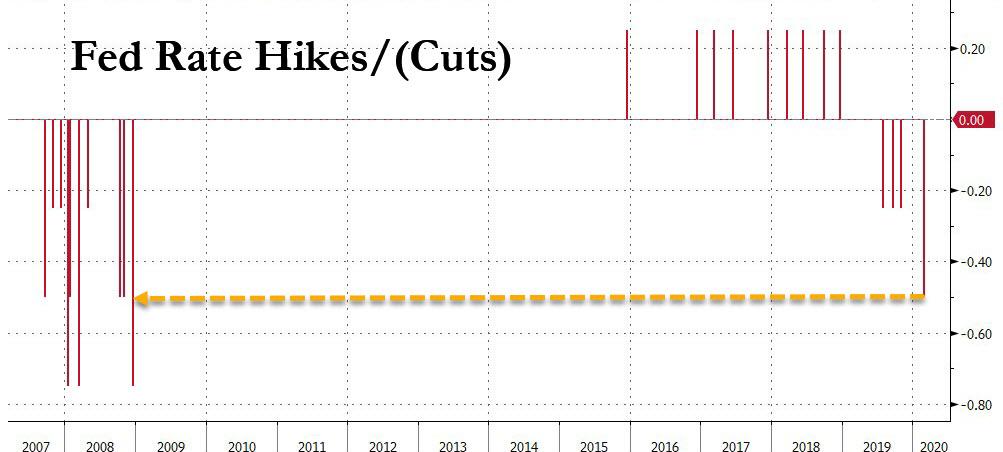
... stocks crashed, sparking a reflexive market panic because as BMO explained, "the biggest risk was always that by acting too proactively and aggressively Powell would signal that the situation is worse than initially feared. Check." And indeed, following the the rate cut, volatility exploded in the subsequent days as traders panicked from one market extreme to the other, with the VIX eventually blowing out above 54 on Friday, its highest print since the Lehman failure (as a Chicago market-maker reportedly blew up).

Amid this series of volatile moves, the S&P 500 tumbled 12% from its all-time high of 3,386 hit less than three weeks ago on February 19, and 4% since the Fed delivered its cut.
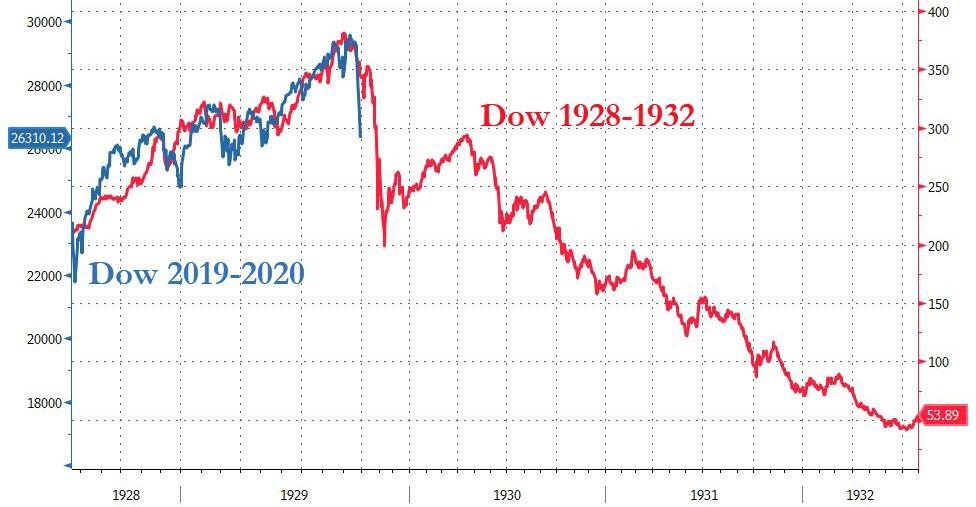
Initially, US stocks fell by 13% over the span of just 7 trading sessions, the fastest 10% correction in the Dow Jones index since a few weeks before the Great Depression started.
From the market peak, the decline in equity prices has lowered the P/E multiple from 19.4x to 17.0x while 10-year US Treasury yields have fallen by 80 bp to the lowest level in history (0.77%). Put together, Goldman notes that the yield gap (S&P 500 earnings yield less 10-year US Treasury yield) has widened to 510 bp, the widest since 2013 and considerably wider than the long-term average of 230 bp.
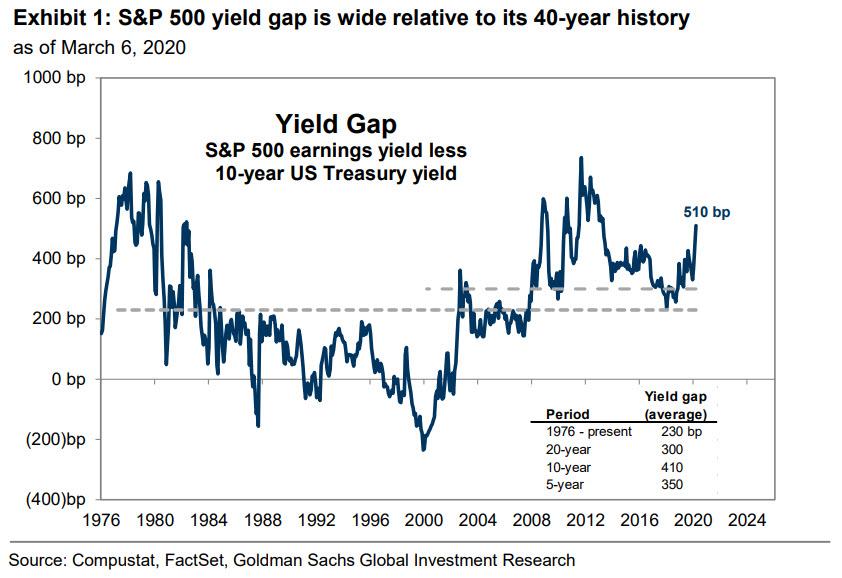
And speaking of Goldman, the bank's equity strategist David Kostin writes that - as one would expect - all its clients care about is the coronavirus correction. To allay their fears, the perpetually cheerful Kostin writes that his baseline assumption "is the COVID-19 virus becomes widespread but is relatively short-lived. We forecast flat earnings in 2020 followed by 6% growth in 2021. We estimate the yield gap will narrow to 395 bp by year-end as economic activity and confidence rebound, leading S&P 500 P/E to recover to 19.4x and the index to reach 3400, 14% above the current level."
That's the optimistic case.
In the not so optimistic one, Kostin admits that "the US economy could slip into a recession if the coronavirus contagion lasts for an extended period of time"; as a reminder, just yesterday we noted that a global recession is now Bank of America's baseline assumption. In such a situation, Goldman estimates S&P 500 EPS would fall by 13% to $143 in 2020 and the index would decline to 2450 by year-end.
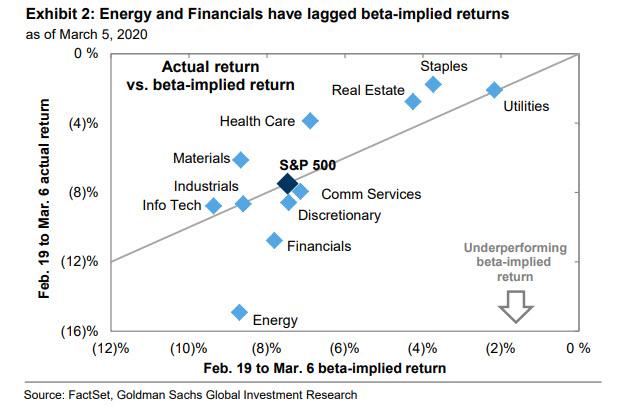
Extending Kostin's observations, he notes that under the surface of the S&P 500 volatile decline, "sector performance has been well-ordered" and since the S&P 500 peak, "realized sector performance has generally been in line with the return implied by each sector's beta to S&P 500 (Exhibit 2)." Sectors with the most notable deviation from this trend have been Energy (-15% vs. -9% implied), which has been driven by the 23% decline in Brent crude oil prices to $46/bbl, and Financials (-11% vs. -8% implied), which has underperformed sharply given the large decline in interest rates.
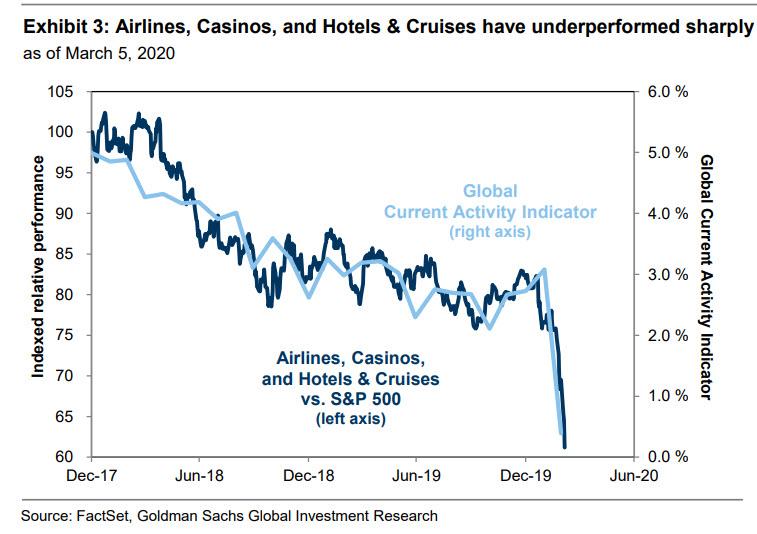
Looking at distinct industries, travel stocks have been among the most heavily monkeyhammered as virus concerns have intensified. Airlines, Casinos, Hotels, and Cruises have underperformed S&P 500 by 19 pp since February 19 (Exhibit 3). United Airlines announced that it would be cutting flights in April due to weaker demand amid coronavirus concerns. News broke on Thursday that authorities are holding another Princess cruise ship off the coast of California after a passenger died from the coronavirus and hotels have warned that occupancy rates are likely to dip amidst increasing travel restrictions
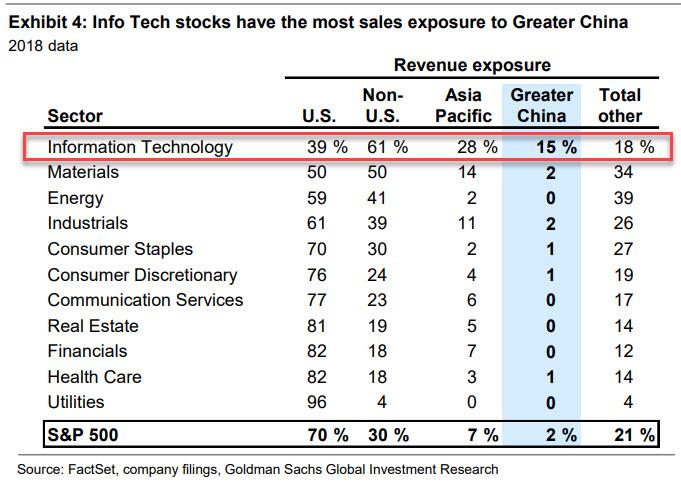
Meanwhile, as we warned almost a month ago, semiconductor stocks have also come under pressure due to the industry’s outsized exposure to China. Semiconductors derives 85% of revenues from international sources, the highest of any S&P 500 industry group. 47% of sales come explicitly from Greater China. Despite a recent spate of negative guidance, the median semiconductors firm has experienced a 1-month 2020E EPS revision of just -0.2%. Goldman also cautions that while most companies have slashed 1Q guidance, they have not yet addressed the longer-term or full-year outlook.
Finally, looking at single-names, a number of companies we which Goldman had previously screened as secular growth stocks have also been hard-hit by virus concerns. While coronavirus may reduce the near-term earnings of some of these firms, certain companies have declined by more than 20%. Some of these secular growth companies trade at valuations below the 20th percentile relative to the past 5 years. In contrast, 19 S&P 500 stocks have actually generated a positive absolute return since the market’s recent peak. Regeneron Pharmaceuticals, which expects to have a vaccine ready for human trials by August, is the bestperforming stock and has risen by 23% during the past week. Gilead Sciences (GILD, +19%), Newmont Corp. (NEM, +13%), Kroger Co. (KR, +8%), and Campbell Soup (CPB, +8%) round out the top five stocks
* * *
It's not just the coronavirus that is behind the market's violent moves: also this week, Joe Biden celebrated a number of big
wins on Super Tuesday, increasing his prediction market-implied probability of winning the Democratic primary to 83% from as low as 7% in early February.
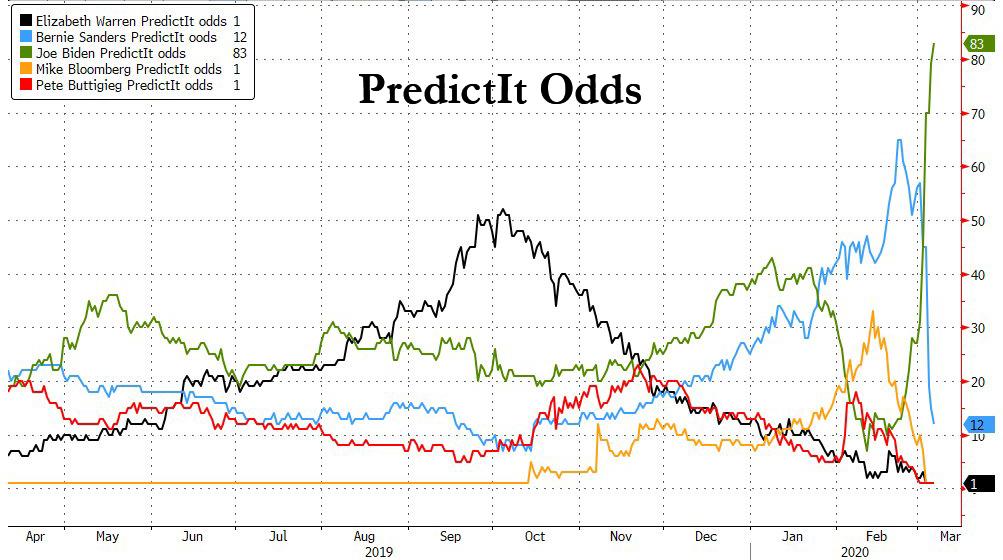
Biden currently leads with 664 pledged delegates compared to Senator Bernie Sanders’ 573 delegates. Candidates will need to amass 1991 delegates to win the nomination on the first ballot.
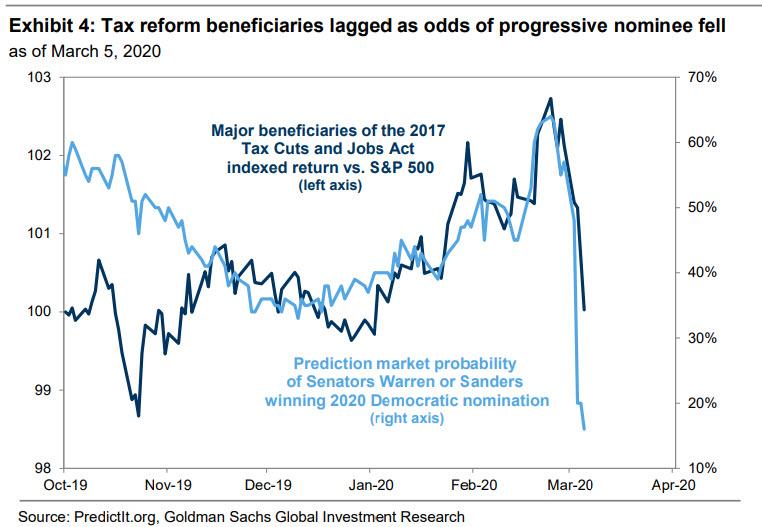
Managed Care stocks have outperformed sharply this week as the odds of a progressive candidate winning the Democratic nomination have fallen. During the last several months, Managed Care stocks have demonstrated the strongest sensitivity among US equity industries to the Democratic primary race. These stocks outperformed by 6% on Wednesday after Joe Biden’s Super Tuesday win dramatically decreased the perceived likelihood of major health care policy reform.
On the other hand, the recent performance of stocks with high tax rates appears to reflect the increasing likelihood that Democrats could control both the White House and Senate after November. Following Super Tuesday, the prediction market odds of a Democratic president have risen to the highest level since early February (49%) and the odds of Democratic control of the Senate have risen to the highest level in more than a year (41%). As Goldman previously noted, prospective changes to tax policy would likely be similar regardless of which Democratic candidate won the White House. Exhibit 5 shows a list of 40 S&P 500 stocks that experienced a large boost to earnings from the Tax and Jobs Act of 2017 and outperformed their beta-implied returns in the months following the law’s passage. These stocks have lagged the S&P 500 by 130 bp since Super Tuesday.
Cuomo Declares State Of Emergency As 21 More Coronavirus Cases Confirmed In New York: Live Updates
Update (1255ET): Gov Cuomo has declared a state of emergency in New York after 21 new cases of Covid-19 were confirmed, bringing the state-wide total to 76, according to NBC 4 New York.
Seven of the cases are in NYC. Total cases in the tri-state area have hit 80.
There have been at least 80 total cases found in New York, New Jersey and Connecticut, with the biggest portion of infected patientsin NY's wealthy Westchester County, just north of the Bronx. There have been 57 people to test positive there, Gov. Andrew Cuomo said Saturday, almost all of which are connected to the cluster that started with the midtown Manhattan lawyer Lawrence Garbuz and his family.
* * *
Update (1240ET): Now that every country in Europe has been infected with the virus, Italian health officials confirmed on Saturday that the national death toll has hit 233 after officials reported another 36 deaths.
- DEATH TOLL IN ITALY OF CORONAVIRUS PATIENTS RISES TO 233 FROM 197 ON FRIDAY
- TOTAL NUMBER OF CONFIRMED CASES OF CORONAVIRUS IN ITALY RISES TO 5,883 FROM 4,636 ON FRIDAY
The epicenter of the outbreak in Europe is seeing shit go straight parabolic.

Italian government officials announced that they would adopt a new decree on Saturday with measures to to try and stem the contagion, but it's not clear yet what exactly they're planning.
Meanwhile, as more European countries track infected Italians spreading the virus within their borders, Sweden - of all places - is presenting a model of how to swiftly identify and quarantine those who have been exposed. All cases of Swedes who traveled to Northern Italy to ski during the holidays have been tracked, all people who came into contact with the possibly infected have been quarantined.
Unfortunately, the outbreak is no longer limited to the north of Italy.On Saturday, CNN reports, a US Navy sailor stationed in Naples tested positive for the virus, marking the first case for a US servicemember stationed in Europe.
The servicemember was stationed at a naval support facility in Naples. They are receiving medical and other support in accordance with CDC guidelines.
* * *
Democratic Party leader Nicola Zingarelli, one of the most powerful politicians in Italy, has tested positive for the coronavirus, Italian media reported on Saturday.
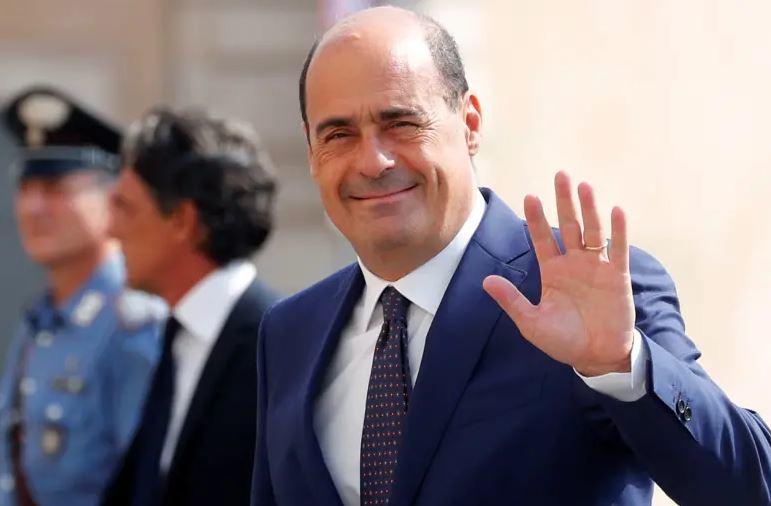
Zingarelli
Since the beginning of the outbreak, Italy has been the epicenter of the outbreak in Europe; on Friday, the total number of confirmed cases in the country climbed above 4,500, with 197 deaths confirmed.
"I have coronavirus too," Zingaretti said in a video posted on Facebook, adding he was in self-isolation at home and that all the people he had been in contact with in the latest days were being contacted for checks. He said he was well.
As the outbreak has spread to nearly every country in North America, Asia and Europe. On Friday, Slovakia, the last remaining nation in Europe without any confirmed cases of the virus, confirmed its first case and almost immediately implemented a ban on flights from Italy, which has been blamed for spreading the virus across the continent, per NYT.
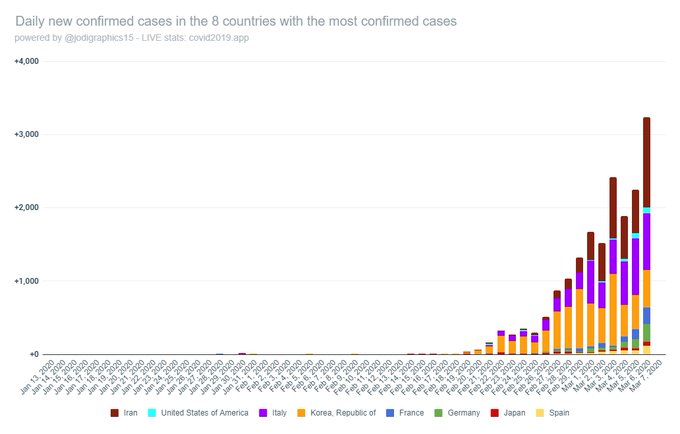
Since the number of new cases being confirmed outside China surpassed the number of new cases being confirmed inside China early last week, South Korea, Italy, Iran and now the US have emerged as the new epicenters, though Europe's largest economies are all struggling with largely uncontained outbreaks.
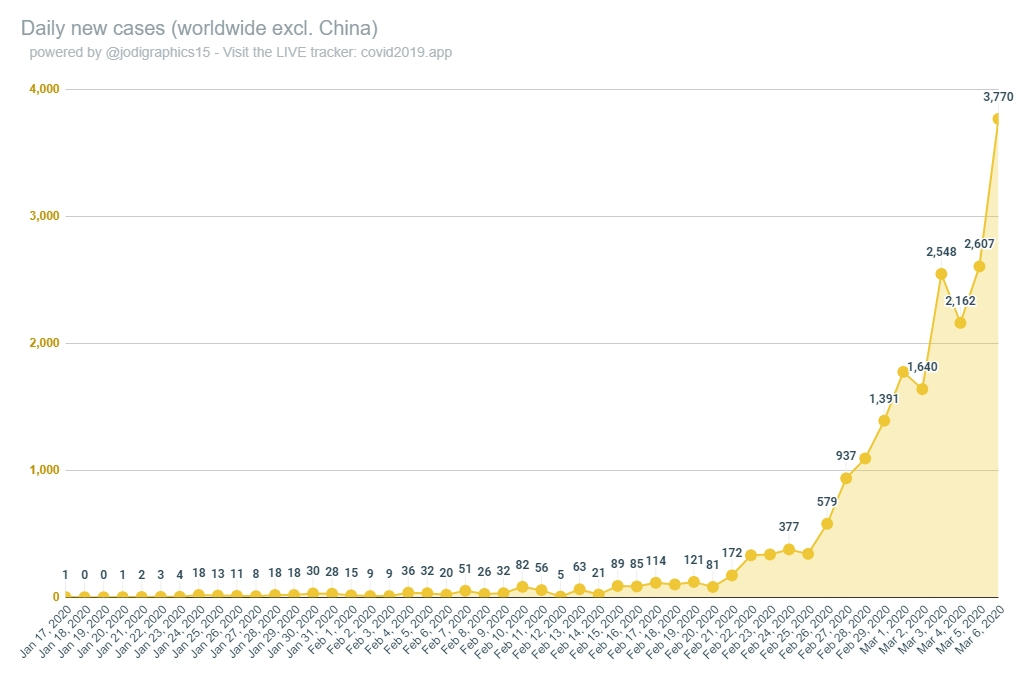
Across Europe, bureaucrats have been hesitant to suspend Schengen area free-travel, allowing the virus to effortlessly spread across the continent.
#COVID2019 Daily new confirmed cases in the 8 countries with the most confirmed cases
Visithttp://covid2019.app & follow
@covid2019app for the latest updates

See Jo Di  's other Tweets
's other TweetsItaly has been the European country hardest hit by the epidemic, with a total of 4,636 cases and 197 deaths on Friday, and is currently reporting more deaths per day form the virus than any other country in the world.
The coronavirus death toll in the United States reached 17 when Florida health officials reported two fatalities, the first in the state, late Friday, the Washington Post reports. They were the first deaths recorded outside the West Coast, where Washington State and California have emerged as the hardest hit states.
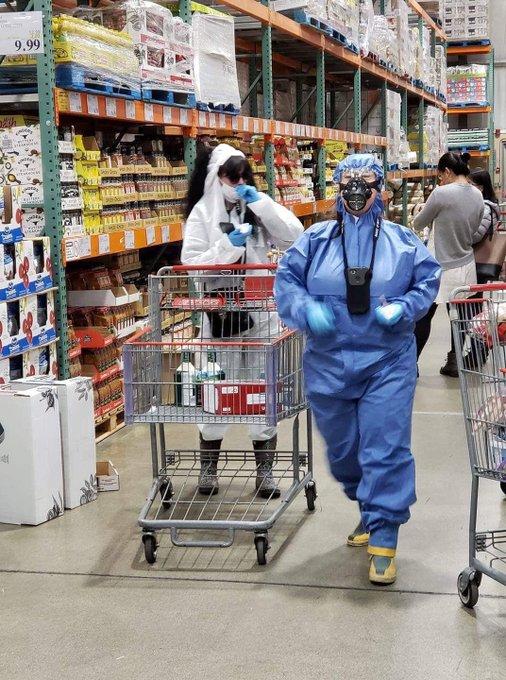
In Iran, officials reported 1,076 new cases of coronavirus and 21 new deaths on Saturday, bringing the total to 5,823 cases and 145 deaths. And a newly elected Iranina MP has died after two dozen Iranian lawmakers were infected, as well as several senior government officials.
In the Balkans, Bulgaria has closed all schools due to "influenza panic" - even though it's only reported a handful of suspected cases.
Across the US, there are more than 300 cases reported (though not yet 'confirmed' by the CDC) and at least half of all states have confirmed cases. On Friday, Hawaii, Kentucky, Oklahoma, Connecticut, Nebraska, Indiana, Minnesota, Pennsylvania and South Carolina all confirmed their first cases of the virus.
In Connecticut, a hospital employee has tested positive for novel coronavirus, the first case detected in the state after several close calls back in January, per NBC. The patient lives in Westchester County and is currently there under quarantine.
"We believe she was infected in New York," said Kerry Eaton, COO of Danbury Hospital.
As we noted last night, a Hawaii resident who traveled on the Grand Princess but disembarked in Hawaii has been confirmed with the virus.
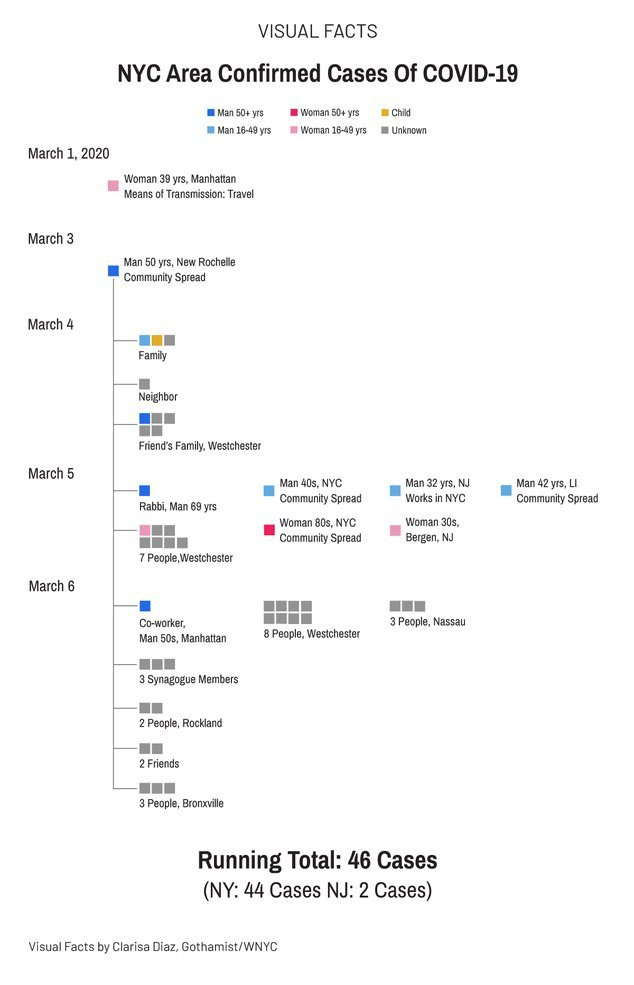
Over in the tri-state area, where the virus has spread rapidly, nearly 50 cases have been confirmed (between NYC area, NJ & Connecticut). Here's a flow-chart showing the progression of infections in the NYC area.
Kentucky Gov. Andy Beshear confirmed the state's first case of the virus late Friday afternoon, Kentucky.com reports.
Oklahoma Gov. Kevin Stitt announced Oklahoma's first case yesterday during a press conference where he was flanked by health officials. The Tulsa County man had testied positive and is now in quarantine, according to Oklahoma's Newson6.
Nebraska Gov. Pete Ricketts and health officials also confirmed their first case on Friday (though a military base in the state hosted some of the evacuees from the 'Diamond Princess' and Wuhan). According to Nebraska health officials, the patient was traveling in the UK when she became ill.
Officials insisted it isn't a case of 'community spread', suggesting she caught the infection abroad.
The 36-year-old woman from Omaha first checked into the Methodist hospital emergency room Thursday, after presenting with symptoms of pneumonia. Before that, she had relatively mild conditions, KETV reports.
Indiana officials Friday urged the public to take necessary precautions after reporting the state's first case of the virus. The person is an adult from Marion County who traveled to Boston where he attended a conference, officials said. He is in stable condition, is self-isolated and does not require hospitalization, according to Indy Star.
The risk to the public is low, health officials said. They said they have no indications so far that the man transmitted the disease to anyone else. They also said that the diagnosis did not come as a surprise.
"The question has never been if Indiana would get a case but when we would see one," said Indiana State Health Commissioner Dr. Kris Box. "This is an isolated case at the time."
She was confirmed to be infected on Friday afternoon. She started showing symptoms 10 days before arriving at the hospital, and the state health department is working to find everyone she had contact with.
Universities, other major institutions and event planners canceled public gatherings and took other steps to combat the rapidly spreading virus. Stanford University said all classes would be conducted online for the remainder of the winter quarter, following the lead of the University of Washington in Seattle. Minutes ago, NBC Bay Area reported that Stanford officials confirmed a faculty member who works in a clinic has tested positive for the virus, while two undergraduates are also under quarantine.
The biggest news overnight was that Austin's South by Southwest festival has been cancelled. The cancellation is a huge blow to Austin's economy - the event is one of the main drivers of Austin's transformation from a quirky Texas college town to a 'destination city' for white middle-class post-grads with no real plans or ambition, other than to maybe work on-set during the next Linklater production.
Circling back to Iran, two lawmakers have now died, according to the Times of Israel, which cited reports from Iranian state news agency IRNA.
An Iranian lawmaker died from the novel coronavirus on Saturday, becoming the latest lawmaker or senior government official to succumb to the deadly respiratory illness in a country that is experiencing probably the most lethal outbreak in the world.
In California, negotiations between the state and federal officials about where to dock the 'Grand Princess', the cruise ship stranded off the cost of San Francisco with at least 21 infected passengers and crew (mostly crew) on board. A state source close to the ongoing negotiations told the LA Times that talks would resume on Friday. The Princess Cruises ship remained at sea last night, but moved 20 nautical miles off the coast for easier delivery of supplies and other 'logistical reasons'.
Officials have scrambled to provide updates as quickly as possible, but passengers aboard the ship have taken to the Internet to share their experiences independently. Two women have been posting videos offering their takes on the news. They offered some interesting details about how officials put the pieces together to figure out that the cruise ship might be infected. Notice how the women are clearly ill, but claim to have been tested and come back negative for the virus.
These two Youtubers shared a copy of the letter they received from the Captain, which was also shared by a Redditor posting in the r/Coronavirus subreddit.
Here's the letter:
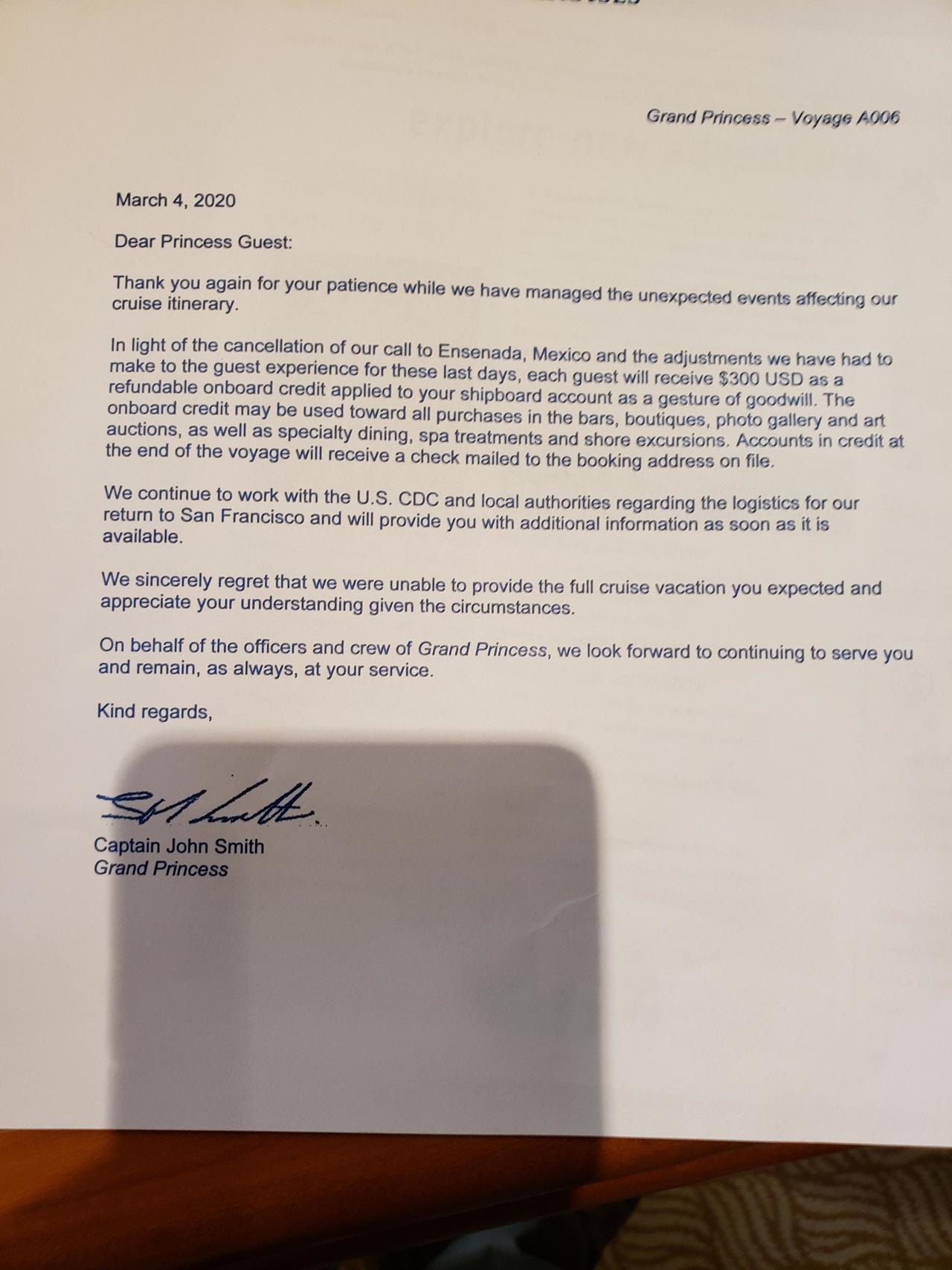
Just like with the Diamond Princess, which reportedly led the staff to work in unbelievably brutal conditions, the staff aboard the Grand Princes, (so far, mostly staff have been infected) are being put in similarly undesirable conditions.
MSCI president defends decision to include China
Baer Pettit hits back at suggestions the index provider is in cahoots with Beijing
Baer Pettit is introduced as “front and centre” of MSCI’s work with clients by an enthusiastic press officer for the indices and data analytics provider.
“I am?” asks Mr Pettit with mock surprise.
He has in fact helped position MSCI at the heart of some of the most powerful trends shaping global finance as he rose through a number of senior roles over two decades to become company president.
The huge power of index providers and their role helping to direct investor inflows globally is attracting mounting scrutiny from regulators and politicians.
Marco Rubio, a Republican senator, accused MSCI last year of funnelling US investor cash to China’s communist party by lifting the weight of Chinese companies with links to government’s military and intelligence services in its flagship emerging markets index.
“MSCI’s decision to include Chinese companies in its indices raises serious questions and concerns about the quality of depth of the diligence undertaken throughout its decision making process,” said Mr Rubio.
MSCI executives were outraged, pointing out that the decision to include Chinese equities followed detailed consultations with clients and lengthy negotiations with Beijing that resulted in market reforms.
Mr Pettit phrases his responses diplomatically.
“We will see more critics arguing that index providers have too much influence but we stand by the integrity of our processes. There really isn’t anything sinister going on. The inclusion of countries within MSCI indices is technically driven and our processes are transparent to regulators and our clients,” he says.
Throughout the interview in MSCI’s office in London, he appears entirely relaxed, leaning back in his chair while answering questions.
European regulators introduced new rules governing financial benchmarks in 2018 to prevent a repeat of the Libor scandal. Index providers had effectively been unregulated before this but Mr Pettit says the new rules have had minimal impact.
“Index companies are coming under greater regulatory scrutiny for sure. We are fine with it. The rule changes involve more logging of our actions, the editorial processes and decisions. But it would be a concern if regulators started to impose divergent rules in different markets as we effectively run a global process,” he says.
Arguably the biggest challenge facing investors across the world is assessing the potential risks of climate change for their portfolios, a process fraught with uncertainties.
MSCI is aiming to help clients to better integrate environmental considerations into their investment processes with a new climate value-at-risk model, which has just been launched following the acquisition last year of Carbon Delta, a specialised data and analytics provider.
“The climate VAR model can provide clients with a means to identify assets that are at risk from extreme weather hazard such as flooding. Nearly 7 per cent of the facilities owned by the 3,046 companies in the MSCI All Country World index are threatened by coastal flooding. Half of these facilities might become untenable by 2050,” he says.
MSCI expects to see large-scale reallocation of capital over the next few decades because of the shift to a low-carbon economy and a significant repricing of financial assets as investors integrate environmental, social and governance considerations more fully into their asset allocation decisions.
“More and more data is showing that incorporating high ESG standards can reduce risks. It will become harder to argue going forward that ESG is not part of an asset owner’s fiduciary duty,” says the 55-year-old and father of three.
In November, MSCI made ESG ratings on more than 2,800 companies publicly available. The ratings are constructed using 1,000 data points from company reports and alternative data sources. MSCI plans to expand the ESG ratings to 7,500 companies before the end of this year.
“We want to encourage an open discussion among investors and companies on how to improve sustainability across the board,” he says.
He adds that “real regulation” will be needed from governments to curtail damaging carbon emissions. “ESG can be a positive accelerant but it will not be sufficient on its own to reduce carbon emissions.”
MSCI in January agreed to pay $190m to acquire a minority stake in Burgiss Group, a provider of performance data covering close to 10,000 private investment vehicles that hold assets of $7tn.
Mr Pettit says that MSCI aims to bring more transparency to the reporting of private assets. MSCI will also gradually integrate its ESG analytics with Burgiss private markets data.
“Private equity firms are showing an interest in ESG for sure. The main problem is data availability and some frictions may arise around transparency requirements. A lot of work needs to be done but it is moving in the right direction.”
About $12.3tn in assets is benchmarked against MSCI’s public market indices, the core of its highly profitable business. MSCI’s indexing unit generated a 72.8 per cent profit margin in 2019. Fee rates for ETF managers have been declining slowly but price declines have been more than offset by huge increases in assets in tracker funds.
Assets in ETFs linked to MSCI indices reached $934bn at the end of 2019, up 34 per cent on the previous year-end. The combination of massive investor inflows into index tracking funds and multiple stock markets reaching new peaks has helped to turbo-charge MSCI’s earnings growth. It reported net profits of $564m in 2019, up 11 per cent.
MSCI shares, which have returned 2,325 per cent (including dividends) since the US stock market reached its post-crisis low in 2009, trade on an eye-wateringly high valuation, about 40 times estimated earnings for 2020.
Manav Patnaik, an analyst at Barclays, who has an “overweight” recommendation, says investors frequently question the high valuation. But he believes the premium is justified because prospects for MSCI revenue streams related to its derivatives, private markets and analytics operations are under appreciated.
“MSCI addresses the themes that are growing in importance to investors including the shift from active into passive strategies, the globalisation of financial markets, ESG investing, multi-asset risk analysis and the rise of illiquid private assets,” says Mr Patnaik.
Mr Pettit’s recipe for MSCI’s future is straightforward.
“We survive and prosper if what we do is transparent, high quality and reliable. Investors have a choice whether to use MSCI or not,” he says.
Grindr sold by Chinese owner after US national security concerns
Deal for gay dating app comes a year after regulators forced Beijing Kunlun Tech into a disposal
The Chinese owner of Grindr, the world’s most popular gay dating app, has reached a deal to sell the platform a year after US regulators forced the company into a disposal because of national security concerns.
Beijing Kunlun Tech, a gaming company, announced on Friday in a stock exchange filing that it had agreed to sell Grindr to San Vicente Acquisition for about $608.5m.
The sale brings to an end a year of uncertainty over the ownership of Grindr, and highlights the depth of US concern over the threat of Beijing using sensitive data harvested by its tech companies against US citizens. US regulators are still investigating TikTok, the Chinese short-video app, on similar grounds.
After acquiring the platform in a series of purchases starting in 2016, Kunlun announced a plan to list the unit in 2018.
But that was scuppered by the Committee on Foreign Investment in the United States (Cfius), the government’s investment watchdog, which last year forced Kunlun to sell Grindr. Kunlun said it signed a “National Security Agreement” with Cfius to dispose of the unit by the end of June 2020.
Cfius had feared that the Chinese government could use personal data given to the app by its 3.3m users to blackmail US citizens — for example over their sexual preferences, or HIV status. Grindr’s users may include US officials and military personnel. In response, Kunlun had promised it would not transfer any sensitive data from Grindr to China, and that it would stop its operations there, keeping its headquarters in the US.
Last year, Kunlun looked set to revisit its old plans to list the company after Cfius dropped its opposition.
Cfius’s intervention in 2019 was a rare instance of a retrospective veto of a deal that had already been completed, coming three years after Kunlun had first acquired its majority stake in Grindr.
The valuation of the dating app has quadrupled in the past four years, from the $151m implied by Kunlun’s first purchase of a 61.53 per cent stake in the unit in 2016.
The sale of Grindr had the blessing of Cfius, according to two people briefed about the matter, and should be considered a done deal, although it will still need to be technically assessed by the committee.
Grindr said any suggestion that the Grindr transaction was a ‘done deal’ or had regulatory approval was “incorrect and wholly speculative.”
“As stated in the public disclosure filed by Kunlun, the transaction remains subject to final Cfius review and approval, and per Kunlun-Grindr’s agreement with Cfius, the buyer must be acceptable to Cfius. While we are excited about the transaction and look forward to it closing, no such approval has yet been received or assured,” the company said.
It took several months to get the US government agencies that compose Cfius, which include the Treasury and the departments of defence, state, commerce and homeland security, to agree to the terms of the deal.
Several members of Congress, from both the Republican and Democratic sides, also put pressure on the foreign investment committee to make sure that adequate guarantees had been made as part of the sale.
Details of the discussions and negotiations with Cfius remain highly classified. However, Kunlun was not under threat of having its agreement blocked again by Cfius, said the people with those with direct information about the matter said.
Grindr made a net loss in 2018 of Rmb28.7m, and a profit of Rmb160m ($23m) in the first three quarters of 2019, the stock exchange filing revealed. Its total revenues in the first three quarters of 2019 were Rmb553m.
Grindr’s senior management and core employees will continue to hold 1.41 per cent of the shares in their company after the transaction.