Multi-strategy hedge funds post double-digit gains
Citadel, Millennium and Balyasny are among the big winners during first half of year
Large multi-strategy hedge funds have posted double-digit gains for the first half of the year, reversing losses from March, as markets defied the economic downturn brought on by the coronavirus pandemic.
Citadel Advisors, Millennium Management and Balyasny Asset Management were among the big winners after the Federal Reserve intervened aggressively to support the US financial system.
Chicago-based Citadel, which has close to $30bn in assets under management, gained 1.7 per cent in June in its flagship Wellington fund and is up 13.3 per cent year to date, according to people familiar with the group.
Izzy Englander’s Millennium Management, with $42bn in assets, gained 2.9 per cent in June and is up 10 per cent in the first six months of the year, according to investors in the fund.
Balyasny, which manages about $6.8bn in assets, saw a 2.5 per cent increase in its Atlas Enhanced fund last month, taking gains this year to about 15 per cent, said people familiar with its performance.
Meanwhile, Steve Cohen’s Point72 Asset Management gained 1 per cent in June and is up 3.9 per cent year to date, according to people who have seen its results.
Multi-strategy hedge funds employ tens or hundreds of traders, who
trade instruments including equities, bonds and currencies, as well as
corporate events like mergers and restructurings. Their risk is
carefully monitored to try to run winning bets while quickly cutting
losing positions to avoid big losses.
Their double-digit gains stand well above the average 1 per cent posted by funds this year to July 1, according to data group HFR. The S&P 500 was down 4 per cent in the first half of the year.
The performance is a further sign that the coronavirus crisis is helping drive a bifurcation in the $3tn hedge fund industry. Many large funds have been able to make money and attract assets from investors. In contrast, smaller funds have often underperformed and struggled to raise money.
Multi-strategy hedge funds have managed to chalk up substantial gains this year despite being caught off guard in early March as governments shut down large swaths of the economy to stop the spread of coronavirus.
Groups such as Citadel and Millennium were hurt by the so-called basis trade, a popular bet among hedge funds, where managers seek to profit from slight discrepancies between almost-identical US Treasuries, or Treasury bonds and Treasury futures. The strategy failed when these spreads widened instead of narrowed.
The panic in the markets was short lived, however, as the Fed stepped in. The S&P 500 surged more than 20 per cent in the second quarter, its strongest since 1998.
Multi-strategy hedge funds also delivered strong gains in 2019 with Citadel’s Wellington fund up 19.4 per cent. Point72 was up 16 per cent last year and Millennium gained 9 per cent.
Uber Under Pressure to Beef Up Food Delivery
Company eyes deal with Postmates as Covid-19 surge dims hopes for near-term recovery in rides business
After a failed bid for Grubhub Inc., GRUB 1.07% the ride-hailing giant is trying to buy much smaller food-delivery company Postmates Inc. as it seeks surer footing in the era of Covid-19.
The San Francisco-based company needs to get stronger in the competitive world of food delivery as the pandemic has crushed its rides business and surging infections have subsumed early hopes for an economic recovery and people returning to offices.
The food-delivery industry was ripe for consolidation even before the pandemic hit, as the biggest companies turned their sights toward making profits on the heels of fast and expensive growth and amid increasingly overlapping markets. As consumers stayed home to stop the spread of the virus, food-delivery became a lifeline for restaurants battered by lockdowns and a relative area of activity in a deteriorating economy.
“Uber’s back is against the wall to do a deal in food delivery given the consolidation phase has kicked off,” said Dan Ives, an analyst for Wedbush Securities. “They’re at the prom looking for a dance partner and there’s really only one in the room: It’s Postmates.”
Mr. Ives estimates that Uber Eats could save itself seven to 10 years of trying to grow its business with a Postmates acquisition.
In May, Uber cut roughly a quarter of its workforce and Chief Executive Dara Khosrowshahi said the company planned to trim $1 billion in fixed costs after stay-at-home orders to halt the spread of the coronavirus ravaged the company’s core business. Rides, which accounted for three-quarters of Uber’s revenue before the pandemic, plunged as much as 80% in April. Last month Mr. Khosrowshahi said that had improved somewhat to a 70% decline.
He said in May that Uber Eats, the company’s delivery arm, was a bright spot. In the first quarter, Eats gross bookings surged 52% from the year-earlier period to $4.68 billion. Analysts surveyed by FactSet, on average, expect the category’s second-quarter gross bookings to jump 65% from last year to $5.6 billion.
Shares of the ride-hailing giant soared after reports this week that it’s in talks to acquire San Francisco-based Postmates for $2.6 billion, as investors bet a tie-up would allow the company to find savings amid the costly work of building out a delivery operation. When news emerged June 10 that Grubhub had spurned Uber for another suitor, Uber’s shares had one of their worst days of the year, underscoring the importance of some kind of deal.
The ride-hailing giant’s shares have recovered from lows hit in March as Uber cut jobs and costs and made clear efforts to reposition itself amid the pandemic, but they haven’t returned to levels preceding news of GrubHub’s sale.
Food delivery is an expensive undertaking, and companies have offered steep discounts to get consumers to try out their services. Morgan Stanley projects that Eats will lose $340 million next year globally.
Uber didn’t respond to a request for comment.
A deal would boost the ride-hailing company’s food footprint in Los Angeles and Phoenix, where Postmates has 35% and 19% of those markets, respectively, according to research firm Second Measure.
Brian Nowak, an analyst at Morgan Stanley, estimates U.S. food-delivery sales will grow to about $45 billion this year from $31 billion in 2019. Mr. Nowak raised his estimate for 2020 based on an expected shift to online ordering amid shelter-at-home orders. He sees the industry growing to $86 billion in sales in 2025.
With about 23% of the U.S. market, Uber Eats slightly edged out Grubhub in meal delivery sales in May, to be ranked No. 2 behind DoorDash’s 45%, according to Second Measure. Postmates had 8% of the U.S. sales that month, the most recent full-month data available from the researcher.
Uber’s attempt to acquire Grubhub fell apart in June, in part because of regulatory concerns that it would create a monopoly in New York City. Instead, Grubhub turned to Dutch food-delivery giant Just Eat Takeaway.com in a deal valued at $7 billion.
After that, Postmates, the smallest among the major U.S. players, was seen as the next likely target for Uber. Should a deal come together, it could be announced next week if not sooner, according to a person familiar with the matter. There’s no guarantee a deal will be reached and Postmates, which has held discussions with other possible buyers since at least last year, has been simultaneously planning an initial public offering.
When Uber reported results for the first quarter in May, Mr. Khosrowshahi said that along with growth in food delivery, he was encouraged by early signs from markets that were beginning to open back up.
But a return to normal is unlikely soon, as a recent surge in Covid-19 cases and hospitalizations in states such as Florida, Texas and California force or extend shutdown measures indefinitely.
California’s turn from bright spot to hot spot is especially troublesome for Uber, as two of its largest markets—Los Angeles and San Francisco—are located in the state. Those cities along with New York City, Chicago and London made up almost a quarter of the company’s gross ride bookings last year. Analysts surveyed by FactSet, on average, expect Uber’s ride-hailing gross bookings to decline 62% in the second quarter compared with the first three months of the year.
Gov. Gavin Newsom on Wednesday rolled back some reopening plans as cases explode across America’s most populous state. Among the latest directives: mandatory closure of many indoor restaurants.
Banijay boss stands by €2bn bet on Europe’s biggest indie TV producer
Acquisition of Endemol Shine makes ‘even more sense’ post-pandemic, says Marco Bassetti
The executive behind a €2bn bet to create the biggest independent television producer outside America has insisted the debt-heavy takeover makes “even more sense” after coronavirus, giving it the scale to compete with the biggest studios in the streaming era.
Marco Bassetti, chief executive of French entertainment group Banijay, said the deal with Endemol Shine will create a “resilient and totally independent” producer that generated €2.7bn of combined revenues last year from 200 separate units worldwide.
Banijay’s acquisition of the larger Anglo-Dutch producer, a deal agreed last autumn that closed on Friday after a drawn-out sale process, will bring together a library with 88,000 hours of shows including Big Brother, Black Mirror, The Kardashians and Peaky Blinders.
Even before the pandemic struck, Banijay’s financial stretch to become the only European producer approaching the size of US rivals was laden with risk. The Paris-headquartered group raised €2.4bn of debt just weeks before the crisis shuttered production in many countries, borrowing that has since weighed on its credit rating. The loans were used to fund most of the acquisition, as well as to refinance €440m of existing Banijay debt.
Mr Bassetti denied any regrets on the price fixed last year, telling the Financial Times the combined group would have the clout and diversity to exploit opportunities in the crisis.
“To be honest with you, after Covid it made even more sense to do this because we have more opportunities in the market — today scale is even more important,” he said.
The former Endemol executive played down media reports that Banijay, which is effectively controlled by Stéphane Courbit’s Lov Group and part-owned by Vivendi and Italian group De Agostini, tried and failed to renegotiate the price in the wake of the pandemic.
“There were some details but these were the usual details before closing,” he said, referring to talks with Endemol’s former owners Walt Disney and private equity group Apollo Global Management.
Like many film and television producers since the shutdown, Banijay and Endemol have had to cut costs and move hundreds of staff off the payroll. Big buyers of their content, such as broadcasters, are also feeling the strain from the slump in advertising.
Both Moody’s and S&P Global Ratings have downgraded Banijay since the crisis, pointing to the revenue hit from the shutdown. S&P estimates adjusted debt will increase to more than nine times the expected operating profit for the combined group in 2020.
“Our main goal, financially speaking, is to deleverage the company,” said Mr Bassetti. “We believe that having this diversity, this strong geographic footprint, can be worth a lot even in the face of a crisis like this.”
He added that low fixed costs, geographic spread and strong franchises have helped absorb the shock. While he declined to give precise figures, he said the financial hit to the combined group’s revenues was below the 25 per cent suffered by some broadcasters.
“The stronger and more well known your IP, the less you are impacted by this,” he said. “Having said that, we have a huge pressure on margin, because at least for 2020, we can see our clients have to face a difficult financial situation.”
Banijay’s main business remains selling unscripted and reality shows to traditional broadcasters. The merger will modestly increase Banijay’s drama output, but Mr Bassetti expects streaming services to be more interested in unscripted shows following the success of Netflix’s Tiger King and The Last Dance.
“They are not our shows but they have a huge audience and they are not so expensive,” he said. “Our view is that the balance between scripted and unscripted on linear television will end up being not so different from what we will see on streaming platforms,” he said.
Interest in the genre is both an opportunity and a threat for Banijay. With streamers such as Netflix insisting on full ownership of a show’s rights, one big challenge for Banijay’s business will be retaining the ability to export formats to other markets — the model that made franchises such as Big Brother or Survivor so lucrative.
Mr Bassetti thinks local streaming services — the Viaplay in Scandinavia or Movistar in Spain — will allow the rights model to survive and help Banijay attract more entrepreneurial talent. “This is the history of audiovisual production and I think will remain the same with streamers,” he said.
>>> Up
* ALD Raised to Outperform at Credit Suisse; PT 10.70 euros (+)
* Aptitude Software Group Raised to Buy at Investec; PT 500 pence (+)
* Auto Trader Raised to Buy at HSBC; PT 650 pence
* HeidelbergCement Raised to Overweight at Morgan Stanley
* Landis + Gyr Raised to Equal-Weight at Morgan Stanley
* Sandvik Raised to Equal-Weight at Barclays; PT 170 kronor
>>> Down
* AB Foods Cut to Neutral at Goldman; PT 2,360 pence
* Chr. Hansen Cut to Hold at Danske Bank Markets; PT 720 kroner (+)
* DNB Cut to Hold at SEB Equities; PT 140 kroner
* Europcar Cut to Hold at HSBC; PT 2.30 euros
* Forterra Cut to Hold at Goodbody; PT 323 pence
* John Laing Group Cut to Add at Investec; PT 320 pence
* Neles Oyj Cut to Hold at SEB Equities; PT 9.30 euros
* Next Cut to Sell at Goldman; PT 4,400 pence
* Software AG Cut to Hold at DZ Bank; PT 37 euros (+)
>>> Initiation
* 2020 Bulkers Rated New Buy at Arctic Securities; PT 103 kroner
* Genmab Rated New Sell at SocGen; PT 1,620 kroner
* GN Store Nord Rated New Outperform at Exane; PT 425 kroner
* Hafnia Rated New Buy at Arctic Securities; PT 25 kroner
* Manolete Partners Rated New Buy at Liberum; PT 710 pence (+)
* Scandic Re-Initiated Hold at Handelsbanken; PT 35 kronor
>>> Call
* Cause for Some Optimism as U.K. Pubs Reopen, Berenberg Says
* Cement Stocks Well Placed, HeidelbergCement Double-Upgraded: MS
* CMC Estimates Raised After ‘Yet Another’ Positive Update: RBC (+)
* Delivery Hero 2Q ‘Meaningfully Ahead of Expectations:’ Berenberg (+)
* Fevertree Price Target Raised at Jefferies on ‘Recent Momentum’ (+°
* Genmab Gets Sell Initiation as SocGen Frets Over Patent Expiry
* Land Securities Dividend Guidance Likely to Be Welcome: Goodbody (+)
* Landis + Gyr Upgraded at Morgan Stanley on Valuation Grounds (+)
* RSA Shares Oversold as Virus Impact Limited, Peel Hunt Says (+)
Dr. Fauci Warns Mutations Could Make COVID-19 More Infectious
Scientists around the world are trying to unravel the many mysteries of SARS-CoV-2, ranging from the broad-strokes (what was so special about this virus that it succeeded in going global where many others have failed) to the intensely specific (how mutations impact the virus's ability to bind to the human ACE2 receptor). In recent days, much ink has been spilled about a mutation found in 70% of the hundreds of thousands of COVID-19 genetic samples compiled in a shared open scientific database.
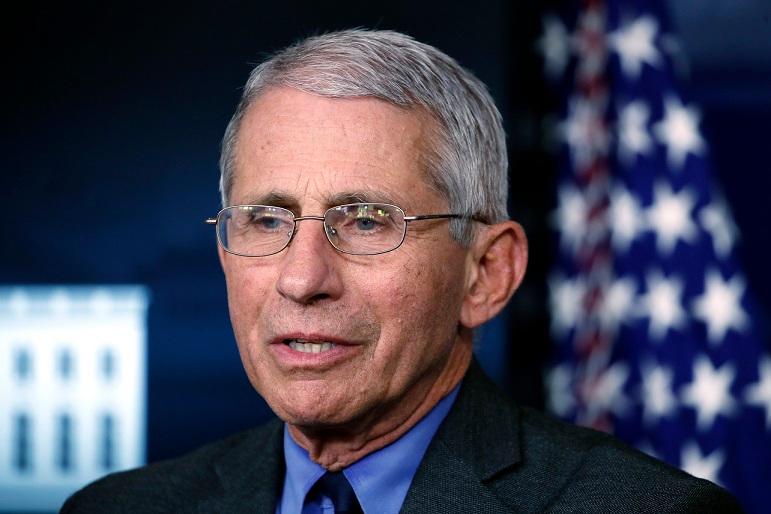
Just a day after Dr. Fauci repeated his reassurances that the US could have a working coronavirus vaccine by January, the doctor warned during an interview on Thursday that an unforeseeable mutation could create serious problems for humanity, such as by making the virus even more infectious.
After explaining to the Senate that the US is "going in the wrong direction", Dr. Fauci warned the US may see as many as 100k new COVID-19 cases a day if drastic actions weren't taken. States from California to New York have rolled back their reopening plans.
Asked about the research in an interview published Thursday, Dr. Fauci said it appears a mutation has helped enhance the virus's infectious potential.
"It does look like a particular mutation may make the virus more transmissible," Fauci said.
Though he of course cautioned that more research is needed before conclusions are drawn.
During a COVID-19 Q&A with JAMA Network, Fauci added not all scientists are in agreement over the development. He said more research is needed."There’s a little dispute about it, but I think the data is showing that there is a single mutation that actually makes the virus be able to replicate better and maybe have high viral loads,” Fauci said.
Infections are rising rapidly across the West and South, and right now, fewer than a dozen are still seeing cases decline, as even places like New York have seen numbers plateau.
But when the economy tanks because we don't have a vaccine by New Year's Eve, will critics cite these comments as evidence that Fauci has been peddling false hope?
Oil slides as fears grow that coronavirus resurgence could stunt fuel demand recovery
SEOUL (Reuters) - Oil prices fell on Friday, reversing earlier gains, as the resurgence of the coronavirus globally and in the United States, the world’s largest oil consumer, stoked worries that a fuel demand recovery could stall.
Both benchmarks rose more than 2% on Thursday, buoyed by stronger-than-expected U.S. jobs data and a fall in U.S. crude inventories. For the week, Brent is up 4.3% and WTI is up 4.7%.
Increases in the daily cases of the coronavirus, however, globally and in the United States pressured prices. New U.S. COVID-19 cases rose by more than 50,000 on Thursday, setting a record for a third consecutive day, according to a Reuters tally.
“Crude oil prices are notoriously fickle when it comes to oscillations in global sentiment,” said Dimitri Zabelin, analyst at DailyFX.
Should the number of coronavirus cases continue to grow and increase the need to take stronger measures to stem the spread of the virus, the weakened growth implications of such policies could weigh on crude oil prices, Zabelin said.
“The market has become increasingly confident that easing restrictions on travel and business would boost demand for crude oil, but the pandemic’s progress threatens to derail this recovery,” ANZ Research said in a note.
Gasoline demand will be closely watched as the United States heads into its July 4 holiday weekend when many Americans are expected to hit the road
“The recovery in gasoline demand will plateau until the U.S. economy improves,” ANZ Research added.
U.S. gasoline stocks USOILG=ECK rose by 1.2 million barrels in the week to June 26, according to data from the Energy Information Administration released on Wednesday.