Early premarket gappers
- Gapping up:
- OPCH +25.3%, AVT +14.7%, HLIT +11.2%, MOS +8.9%, TLSA +7.7%, BP +7.6%, SEDG +7.3%, VRNS +6.5%, TXRH +6.4%, SPNS +5.9%, TTWO +5.7%, BRX +4.9%, EXPI +4.7%, AMRC +4.2%, IR +4.2%, FRPT +3.7%, OTTR +3.7%, PRIM +3.4%, SNE +3.1%, UGI +3%, JELD +3%, WBT +2.9%, HHC +2.4%, AMRN +2.2%, TECH +2.2%, DOOR +2%, IT +1.9%, ONTO +1.8%, O +1.8%, LDOS +1.7%, NBIX +1.6%, ARCC +1.6%, AWK +1.5%, ONE +1.4%, ICHR +1.3%, BA +1.1%, NEX +1.1%, WRK +1%
- Gapping down:
- DBVT -31.7%, VYGR -11.7%, IMUX -11.1%, SPCE -8.4%, KBAL -6.9%, KRTX -6.3%, VNOM -6.2%, THC -5.5%, SITE -5.3%, KMT -5.1%, EMN -4.9%, VCYT -4.6%, ACHV -4.3%, VVV -3.9%, RMBS -3.8%, CAMP -3.7%, TREX -3.7%, AMK -3.4%, DEO -3.4%, SALT -3.3%, HLIO -3.3%, KLAC -3%, LEG -2.9%, MNK -2.7%, RRC -2.6%, ITRI -2.5%, NCMI -2.3%, INVH -2.2%, BWXT -2.2%, CW -1.7%, NSP -1.5%, FBM -1.4%, RNG -1.3%, RBC -1%, NNN -0.9%, DKNG -0.9%
Virgin Galactic debuts design of future Mach 3 high-speed aircraft, signs deal with Rolls-Royce

Image Credits: Virgin Galactic
Virgin Galactic is making strides towards its goal of creating high-speed commercial aircraft that operates a little closer to Earth than its existing passenger spacecraft. The company revealed the initial design of the commercial passenger airplane it’s creating that’s designed to fly at speeds in excess of Mach 3 – faster than the average cruising speed of around Mach 2 that the original Concorde achieved.
This concept design comes alongside a new partnership for Virgin Galactic, by way of a memorandum of understanding that the company signed with Rolls-Royce, one of the world’s leading aircraft engine makers. Rolls-Royce is also responsible for the engine of the Concorde, the only supersonic commercial aircraft ever used for passenger travel.
Virgin Galactic announced in May that it would be partnering with NASA to work towards high-speed, high altitude point-to-point travel for commercial airline passengers. The plan is to eventually create an aircraft that can fly above 60,000 feet (the cruising altitude of the Concorde) and carry between 9 and 19 people per fly, with a cabin essentially set up to provide each of those passengers with either Business or First Class-style seating and service. One other key element of the design is that it be powered by next-gen sustainable fuel for more ecological operation.

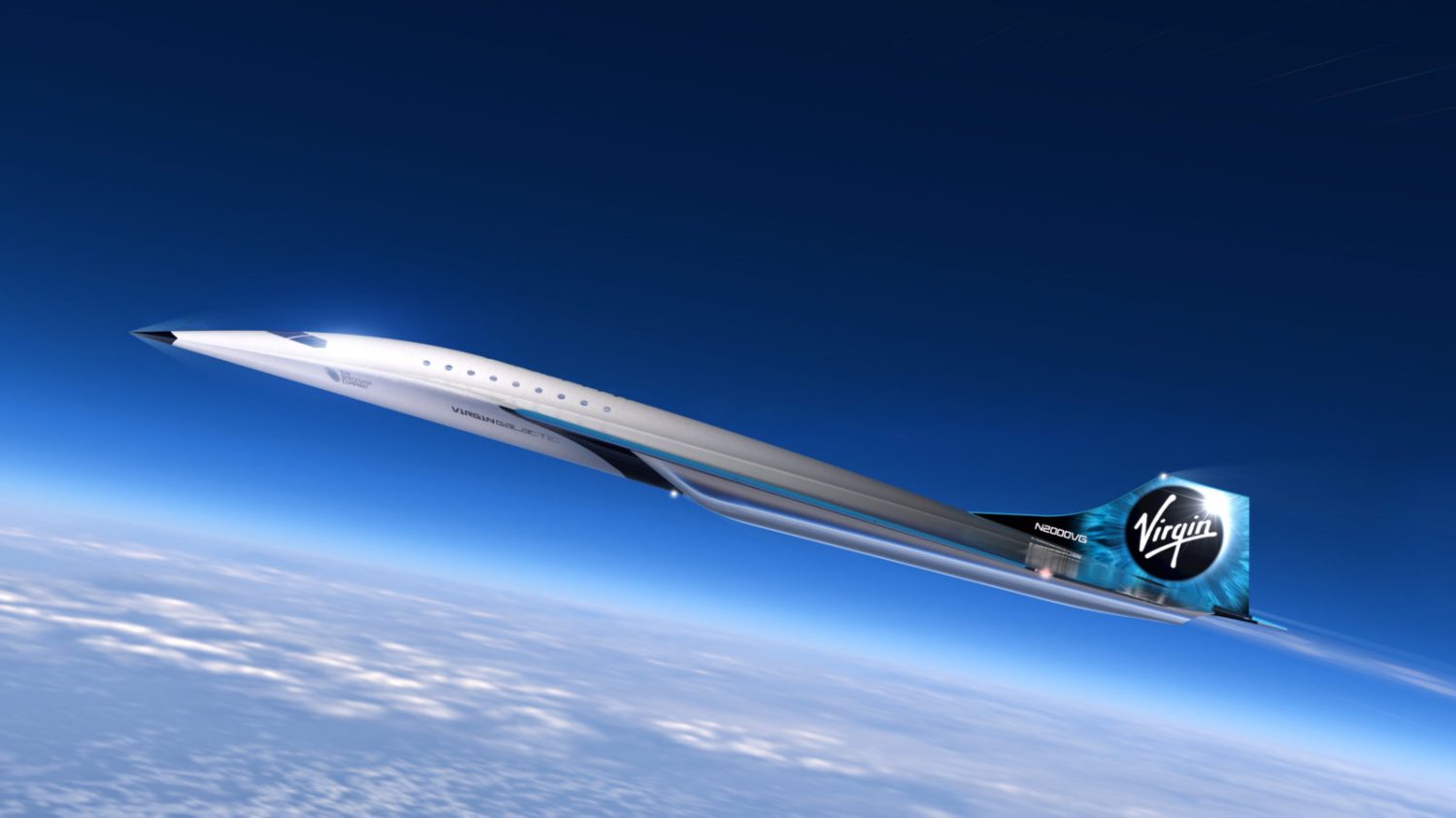

In some ways, this project has many of the same goals that NASA has with its X-59 Quiet Supersonic research aircraft. Both aim to inspire the industry at large to do more to pursue the development of high-Mach point-to-point travel, and Virgin says that one of its aims is to “act as a catalyst to adoption in the rest of the aviation community” by coming up with baseline “sustainable technologies and techniques.”
Virgin Galactic’s manufacturing subsidiary, The Spaceship Company, also has a partnership in place with startup Boom Supersonic to help develop their supersonic civil passenger aircraft. Boom is set to unveil and begin testing its XB-1 prototype at an event in October, and also recently announced a new partnership with Rolls-Royce to assist with the design and manufacture of the engines for its eventual Overture commercial plane.
Cayman, Curaçao and Cyprus: the hunt for $240m of Russian bank bonds
An owner of a fertiliser company and wine merchant walk into a Russian bank.
That may sound like the first line of a below-average joke but in 2017 these two individuals, along with close to 250 other savers, did so and walked out proud owners of $240m of guaranteed loan notes.
As it turns out, the joke was on the investors. And it wasn’t a funny one. Three years later, they are embroiled in a legal battle that stretches across the European continent.
The notes were sold by Promsvyazbank (PSB), a bank founded and owned by billionaire brothers Dmitri and Alexei Ananyev. The securities promised a coupon of more than 5 per cent and carried guarantees from two companies owned by the brothers, who were well regarded in Russian society.
Later in 2017, it all went Pete Tong. After growing concerns about the bank’s stability, the Russian central bank stepped in. It first told PSB to increase its reserves and then put the bank into administration, effectively nationalising it.
The brothers fled Russia — Alexei to the UK and Dmitri to Cyprus. Russian authorities have a warrant for their arrest and have charged them with embezzlement of around $1.6bn and money laundering. Dmitri has said he is the victim of a political plot to take control of the bank. The brothers could not be reached for comment.
Caught up in this unfortunate set of circumstances are the noteholders, who are desperately trying to get their money back. Critical to their case are a rather unusual set of transactions in PSB’s shares, executed just hours before the bank was placed into administration. These transactions, some noteholders allege, were used by the brothers to extract around $1.6bn for themselves just before the central bank took over.
This task, however, is made more difficult by the spaghetti-junction structure of the brothers’ offshore companies.
They each owned a UK-based company — Antracite Investment and Urgula Platinum - which each owned just under half of a Dutch company — Promsvyaz Capital — which owned a majority stake in PSB.
A Cypriot company, Menrela Limited, jointly owned by the brothers held the remaining, tiny stake in the Dutch company. The notes, meanwhile, were guaranteed by the Dutch company and by a company in the Dutch Antilles called Peters International Investment NV, which owned a Cayman company called Peters International (Cayman) that issued the notes. (We’ve linked to the individual companies in case any of our readers want to have a rummage.)
That leaves the noteholders with the perplexing question of where to bring their court case. It also highlights how victims of alleged frauds or financial collapses can struggle to know which countries have jurisdiction in their cases, and which are simply the domicile for yet another layer in the corporate Matryoshka doll.
The first port of call for one group of noteholders was London’s High Court, chosen because it was the domicile of two of the brothers’ companies.
It was initially successful. The High Court granted a freezing order on the brothers assets - which the noteholders said included ski chalets in Megeve, France and two Bombardier Challenger corporate jets — in July 2018. The order was lifted several weeks later when Dmitri paid the frozen amount to the court. But in September last year a judge decided England was not the correct jurisdiction and ordered the money to be repaid to Dmitri.
With courts in the Dutch Antilles, the Cayman Islands and Russia all looking less enticing and/or too expensive, the group of noteholders are now trying their luck in Amsterdam. Two directors of the Dutch company — Katalin Rozsnyai and Wolfgang Ijsbrand Out — are Dutch citizens. The hope is if the noteholders can get hold of documents showing the directors acted on the orders of the brothers, they can go back to the High Court in London and ask it to reconsider the freezing order.
Ms Rozsnyai did not respond to a request for comment. Mr Out could not be reached for comment.
Meanwhile, the scandal is becoming increasingly international. A member of Germany’s Bundestag has written to authorities in Cyprus, as well as to UK Home Secretary Priti Patel and the National Crime Agency, as he says some German and US citizens are also victims. A second member of the Bundestag has written to the European Banking Authority.
The two German MPs, who call the brothers actions a “fraud”, say the “increased internationality” of frauds “leaves national legal systems unable to cope with such cases” and are calling for more international co-operation.
In an increasingly fractured world, that looks unlikely.
Gapping down
In reaction to disappointing earnings/guidance:
- HSBC -5.6%, UUUU -1.8%, CLX -0.6%
Other news:
- TLSA -11.9% (prices follow-on offering of 11,009,615 of American Depositary Shares at $5.20 per ADS)
- TNAV -3.7% (files for $100 mln common stock offering)
- DT -2.6% (commences public offering of 25 mln shares of common stock by certain selling stockholders)
- VBIV -1.7% (files for $125 mln mixed securities shelf offering)
- COF -1.2% (reduces quarterly dividend to $0.10/share from $0.40/share)
- OTIS -0.5% (files mixed securities shelf offering, no amount given)
Analyst comments:
- RDFN -3.3% (downgraded to Neutral from Buy at Compass Point)
- HP -2% (downgraded to Underweight from Equal Weight at Barclays)
- FSK -1.8% (downgraded to Neutral from Overweight at JP Morgan)
- SEDG -0.6% (downgraded to Mkt Perform from Mkt Outperform at JMP Securities)
Gapping up
In reaction to strong earnings/guidance:
- EME +5.9%, MCK +4.6%, MPLX +4.5%, LGND +4.1%, MCY +4.1%, GPN +3.1%, TKR +2.7%, BCC +2%, TSN +0.9%
M&A news:
- ZVO +24.4% (to sell Ashford University to a newly formed non-profit entity that will bear the name of The University of Arizona Global Camp)
- VAR +22.4% (to be acquired ty Siemens Healthineers for $177.50 per share)
- MPC +8.9% (agrees to sell Speedway to 7-Eleven for $21 bln; also reported earnings)
- MSFT +2.8% (to continue discussions on potential TikTok purchase in the United States)
Other news:
- ADT +96.7% (ADT and Google partner to create leading smart home security offering; Google to invest $450 million to acquire 6.6% ownership in ADT)
- IMUX +39.3% (reports Phase 2 EMPhASIS trial of IMU-838 met primary and key secondary endpoints)
- CBAY +29.9% (announces topline results from ENHANCE, a placebo-controlled, randomized, Phase 3 study evaluating the safety and efficacy of seladelpar for the treatment of primary biliary cholangitis)
- CODX +9.6% (Co-Diagnostics Technology to be used in FDA-authorized self-collected COVID-19 saliva test)
- BCRX +8.1% (granted FDA Fast Track designation for its oral Factor D inhibitor, BCX9930, for the treatment of paroxysmal nocturnal hemoglobinuria)
- VNDA +7.3% (FDA has accepted for priority review Vanda's applications for Smith-Magenis Syndrome)
- TNP +5.6% (files for $500 mln mixed securities shelf offering)
- INCY +5.4% (Incyte and MorphoSys receive FDA approval for Monjuvi in combination with Lenalidomide)
- NIO +5.1% (reports July deliveries increased 322.1% yr/yr to 3533 vehicles)
- ETON +4.9% (files for 3.5 mln share common stock offering by selling shareholder)
- LCI +4.2% (announced the launch of Cediprof, Inc.'s FDA approved Levothyroxine Sodium Tablets USP, under the companies recently announced interim exclusive supply and distribution agreement)
- GWPH +4% (FDA has approved Epidiolex oral solution to treat seizures associated with tuberous sclerosis complex in patients one year of age and older)
- OTIC +4% (announced an exclusive license agreement with KYORIN Pharma to develop, manufacture and commercialize a novel compound for the treatment of sensorineural hearing loss)
- ATRS +3.4% (entered into an exclusive distribution agreement with Lunatus Global Medical Supplies to distribute and promote the sale of XYOSTED in Saudi Arabia and the UAE)
- SPCE +3.3% (unveils Mach 3 aircraft design for high speed travel, and signs memorandum of understanding with Rolls-Royce)
- CERC +3.3% (receives FDA Orphan Drug Designation to CERC-006, a dual inhibitor of mTOR complexes 1 and 2 for the treatment of lymphatic malformations)
- RDHL +2.4% (replaces existing 2015 co-commercialization agreement with Daiichi Sankyo, Inc. for Movantik)
- NVS +1.8% (Cosentyx receives EU approval for first-line systemic treatment in pediatric psoriasis)
- LLY +1.8% (initiates Phase 3 trial of LY-CoV555 for prevention of COVID-19 at long-term care facilities in partnership with the national institute of allergy and infectious diseases)
- AAPL +1.7% (positive Barrons article)
- GSK +1.4% (GlaxoSmithKline and Sanofi in advanced discussions with EU to supply up to 300 mln doses of COVID-19 vaccine)
Analyst comments:
- UMC +7.6% (upgraded to Buy from Neutral at Goldman)
- MTX +6.5% (upgraded to Overweight from Neutral at JP Morgan)
- MGI +4.9% (upgraded to In-line from Underperform at Evercore ISI)
- MIRM +4.1% (initiated with a Buy at H.C. Wainwright)
- PINS +2.5% (upgraded to Buy from Hold at Pivotal Research Group)
- BLDR +2.1% (upgraded to Buy from Neutral at B. Riley FBR)
- QCOM +1.5% (upgraded to Outperform from Mkt Perform at Bernstein)
- FND +1.2% (upgraded to Buy from Neutral at BofA Securities)
- MRK +0.9% (upgraded to Buy from Neutral at Goldman)
- YUM +0.9% (upgraded to Buy from Hold at Deutsche Bank)
Early premarket gappers
- Gapping up:
- ADT +52.5%, IMUX +43.6%, VAR +22.6%, INCY +6.5%, MPC +6%, TNP +5.6%, NIO +5.5%, CODX +5%, ETON +4.9%, CLX +2.7%, MSFT +2.1%, BCC +2%, NVS +1.8%, BHC +1.1%, AAPL +1%, AMZN +0.9%, GSK +0.8%
- Gapping down:
- TLSA -7%, HSBC -6.3%, TNAV -3.7%, UUUU -2.3%, ESRT -1.4%, COF -1.2%, VBIV -1.2%, OTIS -0.8%, BPMC -0.7%
Arnaud Lagardère coupe en deux sa holding personnelle

Renaud Khanh/ABACA
INFO CAPITAL. Bernard Arnault doit prochainement prendre 25% de Lagardère Capital & Management, la holding personnelle d’Arnaud Lagardère. Mais, auparavant, les activités de cette holding sont scindées en deux.
Le 25 mai, Arnaud Lagardère a annoncé un accord avec Bernard Arnault. Selon cet accord, l'empereur du luxe doit acquérir, pour près de 100 millions d’euros, 25% de la holding personnelle d’Arnaud Lagardère baptisée Lagardère Capital & Management (LCM). Plus de deux mois plus tard, cet accord n’a toujours pas été finalisé. Explication : cette transaction s’avère visiblement complexe et nécessite plusieurs étapes préalables. Un des problèmes est que LCM a fini, au fil des années, par remplir moult fonctions assez diverses. Les deux nouveaux alliés ont donc décidé de réorganiser LCM en la scindant en deux.
En pratique, LCM va conserver le paquet d’actions qu’elle détient dans le groupe Lagardère (7% du capital), la lourde dette vis-à-vis du Crédit agricole (166 millions à fin 2018) et la filiale Arco (associé-commandité et co-gérant du groupe Lagardère). Le reste des activités va être transféré vers une nouvelle société, baptisée Lagardère Management et créée mi-juin. Il s’agit notamment des contrats de travail des membres du comité exécutif (Pierre Leroy, Thierry Funck-Brentano, Ramzi Khiroun et Gérard Adsuar), de leur salaires, de leurs frais professionnels, mais aussi de leur retraite chapeau. Tout ceci représente une coquette somme (19 millions d’euros en 2019) financée par le groupe Lagardère, qui la versera désormais, non plus à LCM, mais à la nouvelle société. La nouvelle société empochera aussi à la place de LCM la marge réalisée sur ces prestations, qui est fixée à un million d’euros par an.
Cette nouvelle société est une filiale à 100% de LCM. Mais il est prévu qu’elle soit immédiatement transférée aux actionnaires de LCM. Or aujourd’hui, LCM reste détenu à 100% par Arnaud Lagardère. Autrement dit, si le transfert intervient avant l’arrivée de Bernard Arnault dans LCM, alors la nouvelle société restera détenue en totalité par Arnaud Lagardère. Dans ce cas, Bernard Arnault détiendra donc 25% de LCM, mais aucune action dans la nouvelle société. On peut donc supposer que cette nouvelle société regroupe les actifs dont Bernard Arnault ne veut pas.
Cette scission vise peut être aussi à séparer le bon grain de l’ivraie. En effet, le traité d’apport conclu le 31 juillet, consulté par Capital, prévoit que “LCM ne sera pas tenue solidairement des engagements relatifs aux actifs apportés et aux passifs transférés [à Lagardère Management]. Lagardère Management sera subrogé en lieu et place de LCM dans toute procédure judiciaire se rapportant à l’activité LCM [transférée à Lagardère Management]”. Autrement dit, si un procès est engagé concernant les émoluments des dirigeants de Lagardère ou leurs notes de frais, seule la nouvelle société en serait responsable…
Une fois réglée la scission de LCM, Arnaud Lagardère et Bernard Arnault ne seront pas au bout de leurs peines. En effet, leur communiqué du 25 mai indique que l’accord doit être “approuvé par les organes sociaux compétents au sein des entités concernées”.
Le communiqué ajoute que Arnaud Lagardère et Bernard Arnault “agiront de concert vis-à-vis du groupe Lagardère”. En clair, cela signifie que l’héritier de Jean-Luc lagardère ne décidera désormais plus seul, mais devra d’abord se mettre d’accord avec l’empereur du luxe. D’un point de vue juridique, LCM, jusque là contrôlée par le seul Arnaud Lagardère, passerait donc sous le contrôle conjoint d’Arnaud Lagardère et Bernard Arnault. De même pour Arco, filiale de LCM qui est associé-commandité et co-gérante du groupe Lagardère. Autrement dit, l’opération entraînerait un changement de contrôle de LCM et Arco, et par là du groupe Lagardère. Telle est en tous cas l’analyse faite Colette Neuville, présidente de l’Association pour la défense des actionnaires minoritaires, dans un courrier à l’AMF du 31 mai révélé par l’Agefi.
Cela aurait plusieurs conséquences. Notamment, les statuts du groupe Lagardère imposent que tout changement de contrôle d’Arco soit “soumis à l'agrément préalable du conseil de surveillance“ du groupe Lagardère, ce que le conseil actuel devrait approuver sans problème.
A noter que le règlement général de l’AMF n’impose pas de lancer une OPA sur le flottant d’une société en commandite en cas de changement de contrôle de l’associé commandité. L’OPA sur le flottant est imposé uniquement si un actionnaire dépasse 30% du capital, comme pour toute société cotée.
Trump gives Microsoft 45 days to clinch TikTok deal
NEW YORK/WASHINGTON (Reuters) - President Donald Trump only agreed to allow Microsoft Corp (MSFT.O) to negotiate the acquisition of popular short-video app TikTok if it could secure a deal in 45 days, three people familiar with the matter said on Sunday.
The move represents an about-face for Trump and prompted the U.S. tech giant to declare its interest in the blockbuster social media deal that could further inflame U.S.-China relations. Trump said on Friday he was planning to ban TikTok amid concerns that its Chinese ownership represents a national security risk because of the personal data it handles.
The proposed acquisition of TikTok, which boasts 100 millions U.S. users, would offer Microsoft a rare opportunity to become a major competitor to social media giants such as Facebook Inc (FB.O) and Snap Inc (SNAP.N). Microsoft also owns professional social media network LinkedIn.
Trump had dismissed the idea of a sale to Microsoft on Friday. But following a discussion between Trump and Microsoft CEO Satya Nadella, the Redwood, Washington-based company said in a statement on Sunday that it would continue negotiations to acquire TikTok from ByteDance, and that it aimed to reach a deal by Sept. 15.
This is a deadline that was put to ByteDance and Microsoft by the Committee on Foreign Investment in the United States (CFIUS), which scrutinizes deals for potential national security risks, according to the sources.
Trump changed his mind following pressure from some of his advisers and many in his Republican party, one of the sources said. Banning TikTok would alienate many of its young users ahead of the U.S. presidential election in November, and would likely trigger a wave of legal challenges. Several prominent Republican lawmakers put out statements in the last two days urging Trump to back a sale of TikTok to Microsoft. [L1N2F4087]
“A win-win in the making,” Republican Senator Lindsey Graham tweeted in response to Trump’s new stance on Sunday.
The negotiations between ByteDance and Microsoft will be overseen by CFIUS, a U.S. government panel that has the right to block any agreement, according to the sources, who requested anonymity ahead of a White House announcement. Microsoft cautioned in its statement that there is no certainty a deal will be reached.
“Microsoft fully appreciates the importance of addressing the President’s concerns. It is committed to acquiring TikTok subject to a complete security review and providing proper economic benefits to the United States, including the United States Treasury,” Microsoft said in a statement.
ByteDance and the White House did not immediately respond to requests for comment on the Microsoft talks. In a statement issued late on Sunday that did not mention TikTok, ByteDance said it faced “complex and unimaginable difficulties” in going global.
As relations between the United States and China deteriorate over trade, Hong Kong’s autonomy, cyber security and the spread of the novel coronavirus, TikTok has emerged as a flashpoint in the dispute between the world’s two largest economies.
State-backed newspaper China Daily on Monday called ByteDance the victim of a “witch hunt” from the United States, and said Washington had not provided evidence to support its allegation that TikTok posed a threat to U.S. national security.
Under the proposed deal, Microsoft said it would take over TikTok’s operations in the United States, Canada, Australia and New Zealand. It said it would ensure that all private data of TikTok’s American users is transferred to and remains in the United States.
Microsoft may invite other American investors to acquire minority stakes in TikTok, the company added. About 70% of the outside capital ByteDance has raised has come from the United States.
It is not clear how much Microsoft could pay for TikTok. Reuters reported last week that ByteDance’s valuation expectations for the app exceeded $50 billion, although U.S. pressure to divest it could lower that price tag.
A key issue in the negotiations will be separating TikTok’s technology from ByteDance’s infrastructure and access, to alleviate U.S. concerns about the integrity of personal data. ByteDance owns a Chinese short video app called Douyin that was based on the same code used for TikTok.
One idea under consideration is to give Microsoft and ByteDance a transition period to develop technology for TikTok that will be completely separate from ByteDance, one of the sources said.
Microsoft said it did not intend to provide further updates until there was a definitive outcome in the negotiations.
APP SCRUTINY
The United States has been increasingly scrutinizing app developers over the personal data they handle, especially if some of it involves U.S. military or intelligence personnel. Ordering the divestment of TikTok would not be the first time the White House has taken action over such concerns.
Earlier this year, Chinese gaming company Beijing Kunlun Tech Co Ltd (300418.SZ) sold Grindr LLC, a popular gay dating app it bought in 2016, for $620 million after being ordered by CFIUS to divest.
In 2018, CFIUS forced China’s Ant Financial to scrap plans to buy MoneyGram International Inc (MGI.O) over concerns about the safety of data that could identify U.S. citizens.
>>> Up
* Ageas SA/NV Raised to Buy at Oddo BHF (+)
* Applus Raised to Overweight at JPMorgan; PT 9 euros
* Befesa PT Raised to 44 euros from 38 euros at Commerzbank
* Bertrandt Raised to Buy at M.M. Warburg; PT 45 euros (+)
* Biesse Raised to Accumulate at Banca Akros (ESN) (+)
* Big Yellow Group Raised to Neutral at Kempen & Co
* Delivery Hero PT Raised to 120 euros (from 80 Euros) at Deutsche Bank
* Elekta Raised to Neutral at JPMorgan; PT 75 kronor
* Engie Raised to Buy at HSBC; PT 14.60 euros
* Fincantieri Raised to Neutral at Exane; PT 61 euro cents
* Gym Group Raised to Buy at Citi; PT 245 pence (+)
* Just Eat Takeaway PT Raised to 9,000 (from 6,200) pence at Deutsche Bank
* Mediobanca PT Raised to 9 euros at Morgan Stanley
* Mersen Raised to Buy at Gilbert Dupont; PT 29 euros (+)
* Mitie Raised to Buy at Jefferies; PT 55 pence
* Neste PT Raised to 49 euros from 39 euros at RBC
* Nordex PT Raised to 15.60 euros at Bankhaus Metzler (+)
* PostNL Raised to Buy at KBC Securities; PT 2.70 euros (+)
* Robert Walters Raised to Buy at HSBC; PT 560 pence
* Safestore Raised to Buy at Kempen & Co; PT 810 pence
* Schroders PT Raised to 3,200 pence at Berenberg
* TOTAL SE Raised to Overweight at Morgan Stanley
>>> Down
* Aegon Cut to Neutral at Oddo BHF (+)
* CGG Cut to Hold at SocGen; PT 83 euro cents
* Doric Nimrod Air Three Cut to Positive at Stifel
* Doric Nimrod Air Two Cut to Positive at Stifel
* Eni Cut to Underweight at Morgan Stanley
* Euronext Cut to Equal-Weight at Barclays; PT 93 euros
* IAG PT Cut to 188 pence from 335 pence at Barclays
* Lanxess Cut to Hold at SocGen; PT 48 euros
* Oxurion Cut to Hold at KBC Securities; PT 3 euros (+)
* Pets at Home Cut to Hold at Shore Capital (+)
* Technogym Cut to Neutral at Citi; PT 7.70 euros (+)
* Unite Group Cut to Hold at Panmure Gordon; PT 993 pence
>>> Initiation
* Alstom Rated New Buy at Commerzbank; PT 59 euros (+)
* Aroundtown Rated New Underweight at Morgan Stanley; PT 5 euros
* Sats Rated New Neutral at Citi; PT 23.50 kroner (+)
* Swiss Re Resumed Neutral at Citi (+)
>>> call
* Aroundtown Gets First Sell With MS Cautious Given Uncertainty
* DSV, Kuehne & Nagel Poised for More M&A Opportunities: Jefferies (+)
* Dufry’s Guidance on Liquidity, Cash Is a Positive Surprise: MS (+)
* Eni’s Price Target Raised by RBC Capital on Upside Over Time
* Hammerson Equity Raise Won’t Solve Long-Term Issues: Liberum (+)
* Heineken Market Share Is Positive, Estimates May Fall: Jefferies (+)
* IAG Preferred at Barclays After ‘Clearer Strategy’ Outlined
* Neste Outperform Case Still Strong, RBC Hikes PT to Street-High
* Nordex Pipeline Deal Significantly Boosts Balance Sheet: Metzler (+)
* Societe Generale Results Are ‘Underwhelming’: Goldman Sachs (+)
* Total Upgraded, Eni Cut at Morgan Stanley on Dividend Outlooks
* Total Seen as Differentiated Pick Among Energy Shares: Berenberg