WSJ : Tropical Storm Laura Could Become Hurricane, Forecasters Say

Tropical Storm Laura Could Become Hurricane, Forecasters Say
Storm could gather strength and strike mid-week along Louisiana or Texas coasts

Forecasters warned that Tropical Storm Laura could strengthen to a powerful hurricane before making landfall later this week in Louisiana, or possibly Texas.

“A period of rapid strengthening is possible once Laura reorganizes an inner core after its passage over western Cuba,” the National Hurricane Center said Monday. “The regional hurricane models remain quite bullish on intensification.”

The storm is expected to arrive Wednesday or Thursday, on the heels of Tropical Storm Marco, which may bring high winds and storm surge to eastern Louisiana beginning late Monday. Marco is weakening and was expected to become a tropical depression beginning Monday night as it moves west along the Louisiana coast. It could bring flooding and property damage before the arrival of the larger potential hurricane, if they strike the same places, forecasters warned.

“It’s a one-two punch here with this,” said Joel Cline, tropical program coordinator with the National Weather Service. “You wouldn’t have any time for repairs.”

Forecasters said that Laura, meanwhile, was a highly unpredictable storm.

“Everyone from Corpus Christi to NOLA absolutely needs to watch this forecast closely,” tweeted Matt Lanza, a meteorologist with Houston’s Space City Weather. “A lot of viable track options remain very much on the table.”

The Space City website, which provides forecasts for the Houston area, said Laura could strengthen to a powerful hurricane.

The governors of Louisiana and Texas requested and received White House approval of emergency declarations in anticipation of the storms. They warned communities to take precautions. Authorities in some Louisiana parishes urged people living in coastal or flood-prone areas to consider evacuating.

In a Sunday briefing, the Federal Emergency Management Agency said about 32,000 customers in Puerto Rico were without power and 13,700 without water service after Laura passed through the island. In the U.S. Virgin Islands, 4,763 customers were without power.

The governor of Puerto Rico requested an emergency declaration Friday, which was granted on Saturday by President Trump. Mississippi Gov. Tate Reeves issued a state of emergency on Saturday.

Previous forecasts indicated that both storms could strengthen into hurricanes while simultaneously in the Gulf of Mexico, which would be a first. However, Mr. Cline said it now seemed unlikely that Marco and Laura would be in the Gulf of Mexico at the same time or influence each other.

(ZH) For First Time, Iran's Nuclear Agency Confirms Natanz Facility Blast Was "S

For First Time, Iran's Nuclear Agency Confirms Natanz Facility Blast Was "Sabotage Operations"

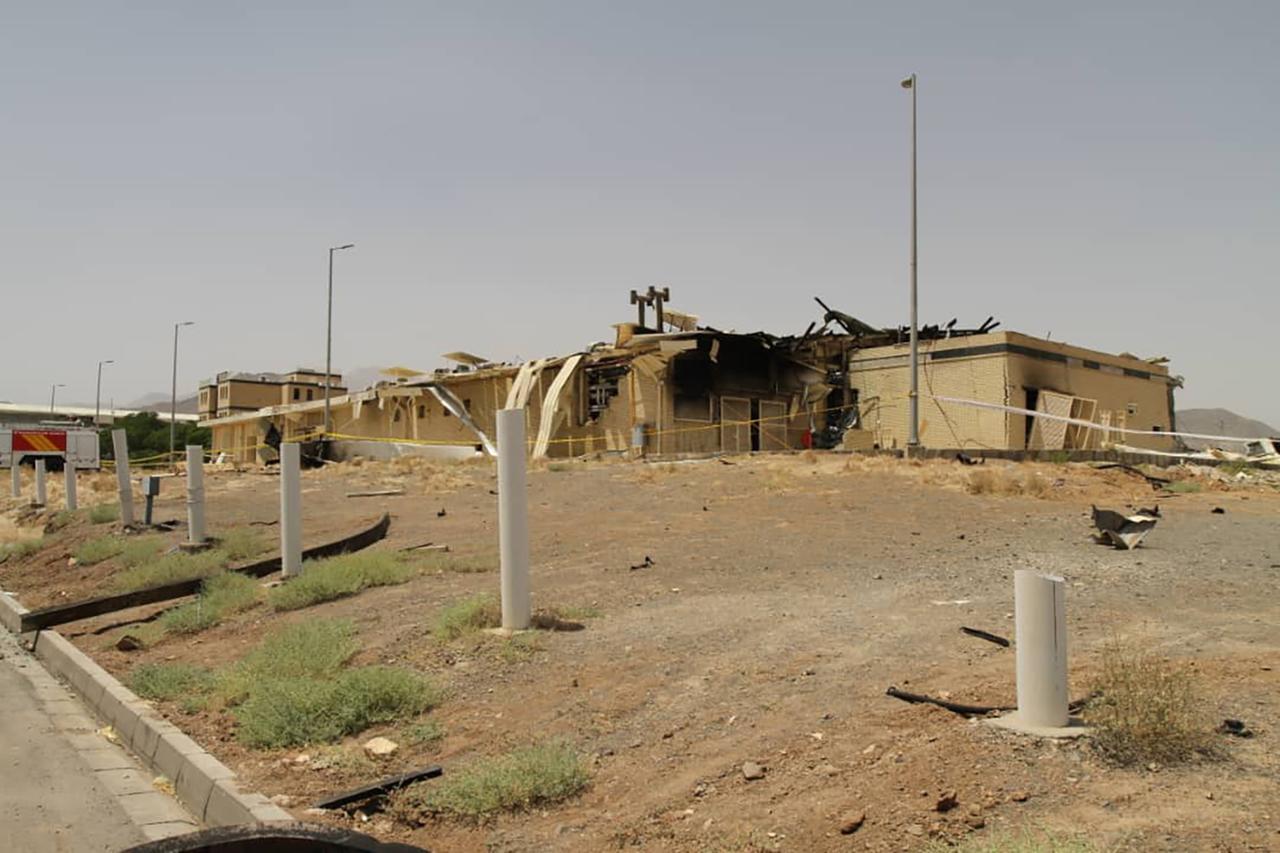
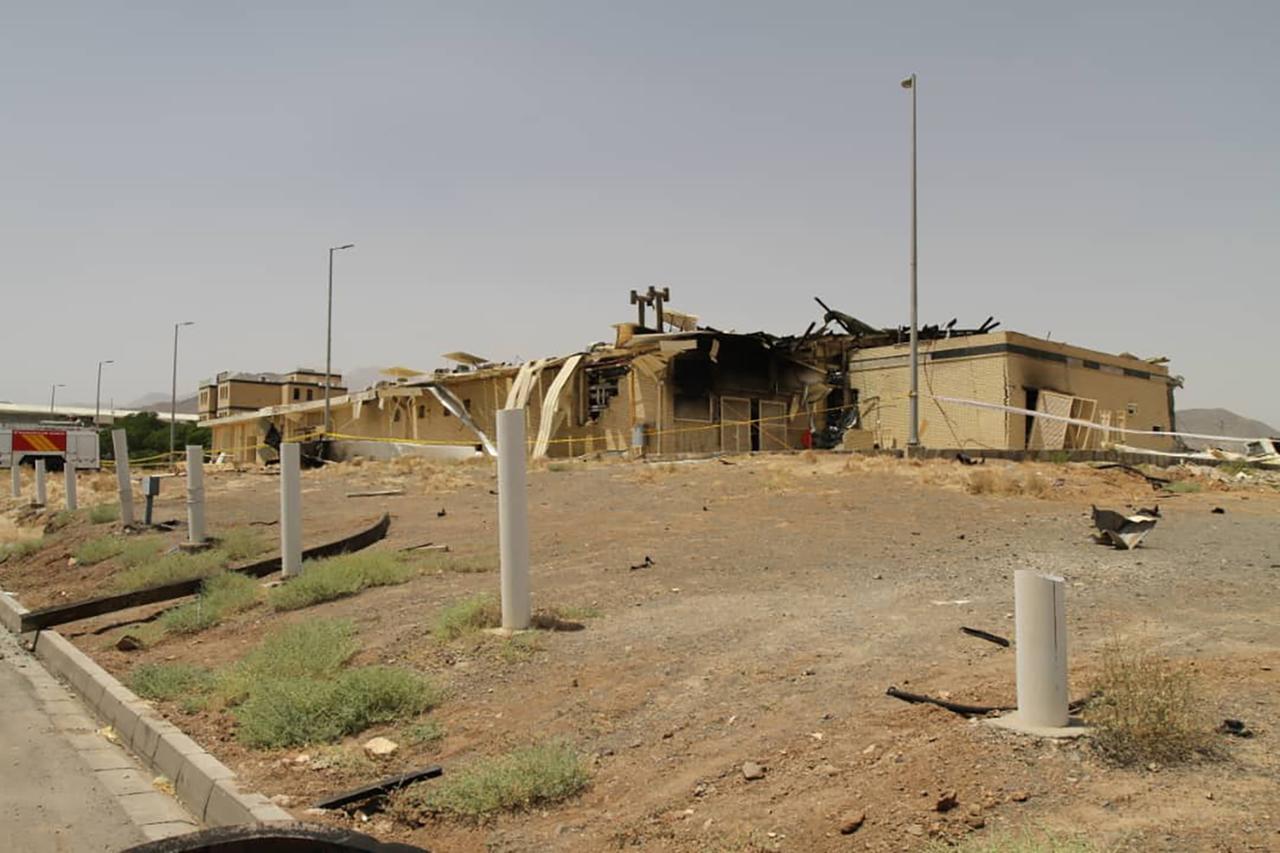
For the first time, a top Iranian nuclear official has described the July 2nd fire at Natanz nuclear facility as sabotage, and not due to an accident.
“The explosion at Natanz nuclear facility was a result of sabotage operations,” Behrouz Kamalvandi, a spokesman for Iran’s Atomic Energy Organization announced Sunday. “Security authorities will reveal in due time the reason behind the blast,” he added.
Badly damaged Natanz facility, via the Atomic Energy Organization of Iran.
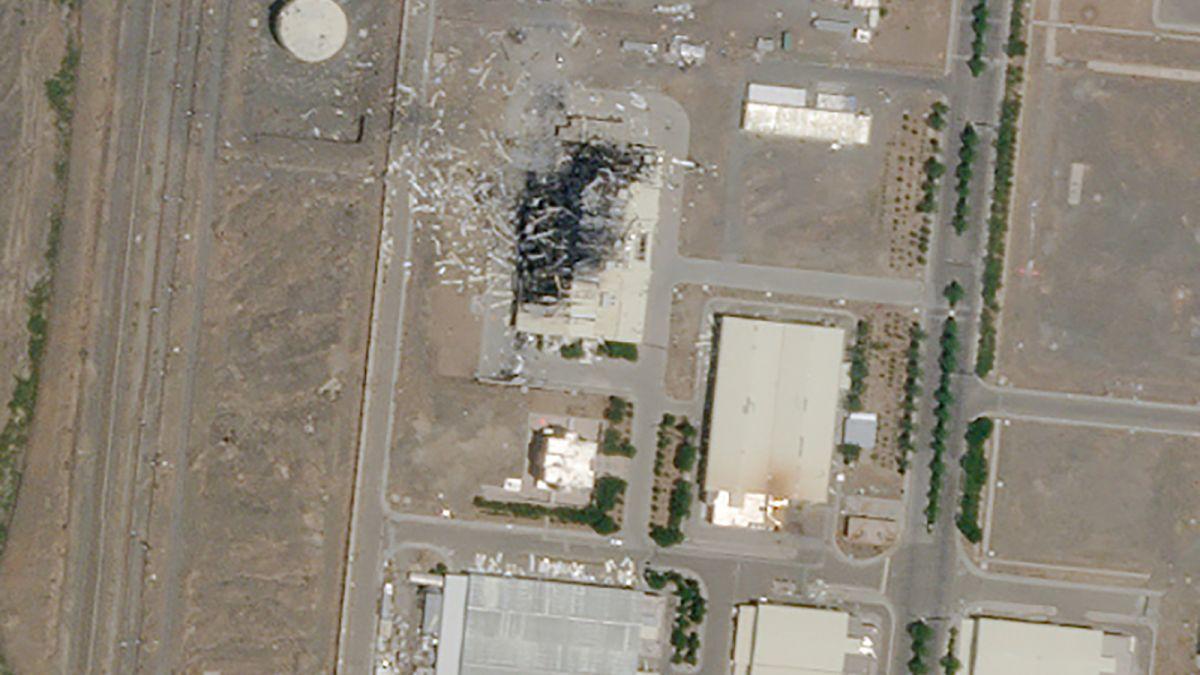
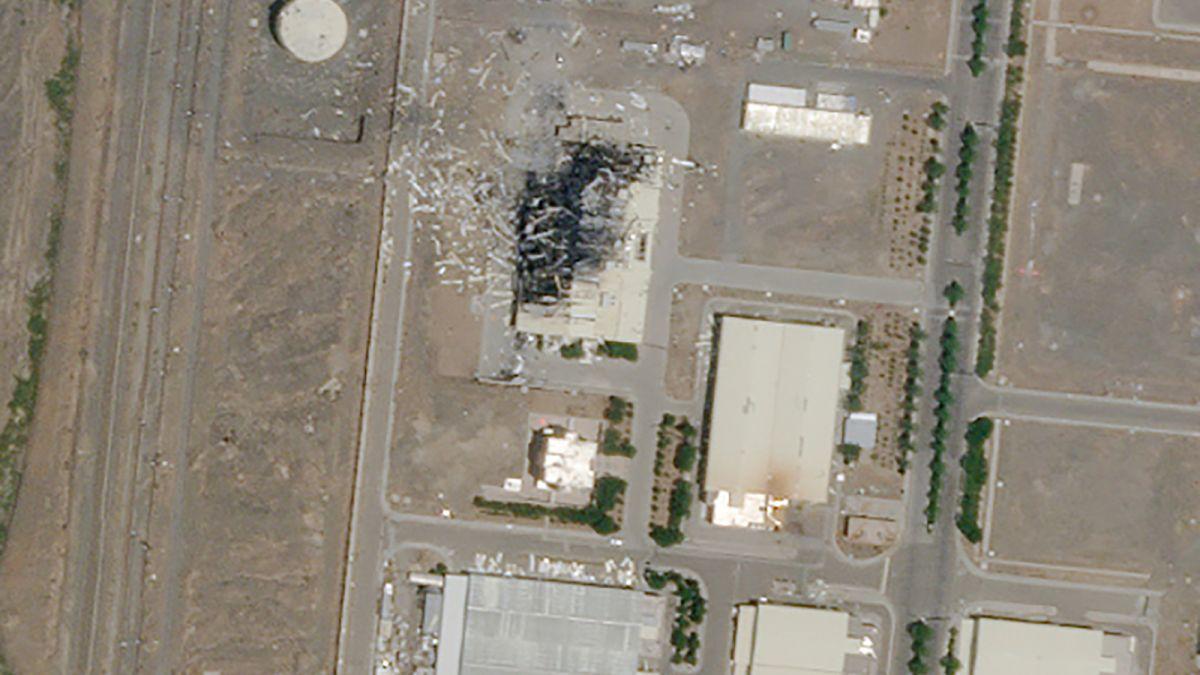
Recall that before and after the fire which caused severe damage, setting back the development of advanced uranium enrichment centrifuges, there was a series of 'mystery' explosions and fires at various military and industrial sites across Iran, raising suspicions of a major Israeli or even US-backed covert campaign to destabilize the country's defense infrastructure.

But the Natanz incident stood out as the most likely to have been the result of covert sabotage operations, with even The New York Times citing intelligence sources to say it was the result of "a powerful bomb":
"A Middle Eastern intelligence official with knowledge of the episode said Israel was responsible for the attack on the Natanz nuclear complex on Thursday, using a powerful bomb," NYT wrote last month.
This satellite image from Planet Labs Inc. showing extent of damage at Natanz, which reportedly destroyed an advanced centrifuge assembly plant.
"A member of the Islamic Revolutionary Guards Corps who was briefed on the matter also said an explosive was used," the report added.
Iranian media has at the same time suggested a cyber-attack by outside entities, but has stopped short of naming the US or Israel, while also quoting Iranian leaders as saying they would retaliate if proven.

Iranian authorities have until now kept mum on their suspicions in the midst of an investiation; however, they have assured Iran's enemies on repeat occasions that retaliation is coming, possibly in the form of cyber-warfare or other sabotage against Israel or the US.

FT Lex : SPACs: auto traders

SPACs: auto traders
Luminar is the latest company to announce a reverse merger listing but the risks are substantial

Who needs credentials when you’ve got potential? Austin Russell, founder of autonomous vehicle start-up Luminar, dropped out of Stanford in 2013 with support from entrepreneur Peter Thiel. On Monday, the bet paid off. Luminar announced plans to list shares at an equity value just above $3bn via a reverse merger with special purpose acquisition company (Spac) Gores Metropoulos. 

Spacs are the hottest fad on Wall Street and futuristic vehicles are their favourite target. Luminar is at least the sixth such company to have announced a reverse merger listing this year.

Yet Spacs are already known to be risky. The pitfalls are heightened when investors in blank-check vehicles are asked to make a bet on revenue and profits from an emerging technology.

Luminar specialises in “lidar” — light detection and ranging — designed to make self-driving vehicles possible. It is a promising idea. The likes of Thiel and Volvo Cars Tech Fund say they want to be part of a group putting another $170m into the company. Luminar claims that by 2030, its revenue could reach $5bn and its operating profits could be about half that. Yet it does not anticipate selling more than 1,000 sensors until 2023. Growth depends on rapid adoption of autonomous vehicles — something that seems uncertain at best.

Still, shares in Gores Metropoulos rose to $11 on Monday, above the standard $10 price at which Spacs raise cash. Electric and autonomous vehicle start-ups that are waiting for Spac mergers to close include Hyliion, Lordstown Motors, Fisker, and Velydyne Lider. All of these companies admit that broad commercialisation is years away. All four deals trade between $12 and $30.

Nikola, the electric truck manufacturer whose Spac deal closed in June, is the gold standard. It trades at nearly $40, implying a $15bn market cap. Nikola justified its valuation at the time that its Spac merger was announced by using predicted 2027 revenue of $10.6bn, discounted back seven years. That is about the same time it would take to acquire two college degrees.

FT : Wirecard board expected to quit as administrator appointed

Wirecard board expected to quit as administrator appointed
Munich court likely to announce on Tuesday it has formally taken next step to start insolvency proceedings

Wirecard’s chairman is expected to resign with the rest of its supervisory board as early as this week, leaving the collapsed German payments company to be broken up and sold by the administrator.

A Munich court is likely to announce on Tuesday that it has formally appointed the administrator to start insolvency proceedings at Wirecard, an important step that transfers power away from the company’s directors to the administrator.

Thomas Eichelmann, who joined the Wirecard board last year and took over as chairman at the start of this year, is expected to respond by announcing that the five-person supervisory board has resigned, according to two people briefed on the matter.

Wirecard, which was worth as much as €24bn at its height, collapsed into insolvency in June after the revelation of one of postwar Germany’s largest ever accounting frauds.

Munich-based lawyer Michael Jaffé was appointed interim administrator at the start of July and has been working since then on preparing the company to be dismantled.

Wirecard’s supervisory board has not been paid since its insolvency filing and once its members lose their decision-making power, they are likely to decide that it is time to quit, the people said.

They added that the administrator is expected to conclude in its initial report to the Munich court that there is little chance of keeping Wirecard going as a single entity and that the best option is to break it up and sell it in pieces.

After the discovery that about €1.9bn in cash was missing from Wirecard’s accounts and large parts of its Asian operations were a sham, there is likely to be a rush of lawsuits against the company’s directors and EY, its auditors.

Wirecard’s management team has already been turned upside down by the scandal. Markus Braun, its former chief executive, and three other former top managers are in custody. Mr Braun denies allegations of fraud and embezzlement. Jan Marsalek, Wirecard’s former second-in command, is on the run and wanted by police.

It is unclear whether the remaining members of the executive team will also quit when the administrator is formally appointed. James Freis was initially hired from Deutsche Börse to become Wirecard’s chief compliance officer in July, but after the scandal erupted he was chosen as an emergency replacement for Mr Braun as CEO on June 19. 

The other two members of the management board have been at Wirecard much longer. Alexander von Knoop, joined the company in 2005 and was made chief financial officer in 2018. Susanne Steidl joined in 2006 and has been chief product officer since 2018.

Last week, Wirecard’s UK business agreed to sell much of its technology, staff and clients to Railsbank, a UK start-up backed by Visa. The administrator has also agreed to sell the payment company’s Brazilian offshoot and it expects to receive final bids shortly for Wirecard North America, formerly Citigroup’s Prepaid Card Services business. 

Among the company’s supervisory board members is Wulf Matthias, a 75-year-old former Credit Suisse private banker who was chairman of Wirecard for almost 12 years before handing over to Mr Eichelmann at the start of this year.

The second-longest-serving member of the supervisory board is deputy chairman Stefan Klestil, who joined the board in 2009. The other two members — Vuyiswa M’Cwabeni and Anastassia Lauterbach — joined in 2016 and 2018, respectively. 

Wirecard, its administrator and Mr Eichelmann all declined to comment.

FT : Pearson: new principal

Pearson: new principal
The company has stumbled in the past through an inability to read consumer trends

Andy Bird is neither fish nor fowl. Pearson’s new boss-elect, already serving as a non-executive on the education publisher’s board, brings neither the familiarity of a true insider nor the fresh start promised by an outsider.

Still, Pearson is pinning a lot on him: a best-case $18m, if you tot up salary, pension substitute, incentive plans and a one-off co-investment scheme under which he receives 1.2m shares. Use of a New York apartment is thrown in for business purposes too. Lest that sounds unduly generous, Pearson is at pains to point out it is only half what he was earning on an annual basis at Disney — a role, incidentally, he left more than two years ago.

That is multiples of current boss John Fallon, who will take away a £1.85m package this year. But context is everything. Mr Fallon presided over seven profit warnings in a seven-year tenure. Shares over the period have more than halved. Even with dividends reinvested investors would be down by a third during a period in which the All Shares Index has returned 43 per cent.

Mr Bird, who takes up the reins in October, inherits a company still struggling to pivot to digital learning. Once a collection of diverse but blue-blooded assets — stakes in Lazards Bank, Madame Tussauds Waxworks and Royal Doulton potteries — by 2013 Pearson had slimmed down to a media conglomerate. Mr Fallon went further, shedding a stake in Penguin Random House and the Financial Times. 

There is a long way to go before Pearson becomes the premier global and digital learning company it aspires to be. It is heavily tilted to North America, which makes up nearly two-thirds of business. By far the bulk of sales are B2B. Just 5 per cent are direct to consumers, an area that Pearson is targeting. But Pearson has stumbled in the past through an inability to read consumer trends. It failed to spot that students shunning its textbooks would turn to second-hand versions rather than go online.

Mr Bird has three factors in his favour: a strong balance sheet, a patient but activist shareholder in Cevian Capital and an incentive package that gives him a lot of skin in the game. But Lex has noted before that Mr Fallon’s successor must possess vision. Mr Bird needs to prove he can migrate his digital and international chops from Mickey Mouse to education. 

>>> Hedge Fund 13F Filing Intelligence - see attached

>>> Consensus New Buys
* Walt Disney (DIS): Managers that initiated new stakes in DIS include Duquesne Family Office, Appaloosa, and Sequoia Fund, among others. And while not a new position, Third Point added sizably to the stake it started in Q1 and it’s now one of their top holdings. The company’s theme parks have been hurt by the global pandemic, but its Disney+ streaming platform has been a huge early success, achieving 60 million subscribers in less than nine months (for comparison, it took Netflix seven years to achieve the same number). This is the main attraction for these funds, as they see the company’s total addressable market expanding.
* TransDigm Group (TDG): Maverick Capital, Coatue Management, and Hound Partners all initiated new positions in the company. TDG is an aerospace aftermarket parts supplier. The company is run like a private equity-style roll-up, acquiring complementary businesses. TDG is highly focused on parts where they are the sole supplier, giving them pricing power. Given the pandemic has dulled demand for travel, planes are flying less frequently and as such need less replacement parts (and airlines are also retiring older planes early). The company also has a lot of leverage, so these two reasons explain the volatility shares saw over the first half of the year. These funds used that volatility to look past near-term headwinds and enter what they view as a good business.
* Qiagen (QGEN): This is a merger arbitrage play, so it should come as no surprise that Farallon Capital and Paulson & Co are the main funds showing new positions in the name, but Maverick Capital also bought shares. QGEN is set to be acquired by Thermo Fisher Scientific. After agreeing a deal in March, the terms were amended in July to increase the offer price from €39 to €43 per QGEN share in cash.
* T-Mobile Subscription Rights (TMUSR): This entry is included mainly for explanation as it is both
backwards-looking (the rights have already expired) and many holders show a position in them not necessarily
because they bought them outright, but likely received them directly as a result of being a TMUS common
stock holder to begin with. The company announced a rights offering in order to buy a block of its own stock
back from Softbank. These rights expired 7/27/20 and the offering was over-subscribed.

>>> Consensus Increased Positions
* Facebook (FB): This is the third consecutive quarter this stock has landed on this list and it remains one of the
higher consensus picks. This time around, Tiger Management, Brave Warrior, Farallon, Maverick, Sequoia,
and Lone Pine Capital all added to their pre-existing positions. While FB has been impacted by the pandemic
given its focus on advertising, it has also shown resilience. For instance, when one pool of advertisers pulled
back spend or cut it entirely, another bidder was ready to fill the void because lower demand led to lower
prices, which attracted bidders. CEO Mark Zuckerberg also recently testified before the House Judiciary
subcommittee on antitrust along with the CEOs of Amazon, Apple, and Google. While all faced tough
questions and ‘gotcha’ statements, some analysts believe that of the four, FB’s business practices are
potentially the least anti-competitive.
* Microsoft (MSFT): Shares of the tech giant were acquired by Appaloosa, Maverick, Duquesne, Lone Pine,
and Tiger Global. The company continues to ride the cloud computing trend behind its successful Azure
platform. And in recent news, the company is reported to be in talks to acquire TikTok, after the Chinese
company faced an ultimatum from President Trump to sell or be banned from the US. This is a fluid situation,
but perhaps could be quite a fortuitous one for a company that missed two of the biggest recent trends: mobile
and social media (Windows Phone and LinkedIn notwithstanding). Detractors to a possible combination point
to MSFT’s failure to execute after acquiring companies like Skype in the past. It would also be a bit ironic if
the US government, which is concerned about the power of ‘Big Tech,’ basically forces the fastest growing
social media upstart into the arms of… Microsoft (who was notably not invited to the antitrust hearing
mentioned above).
* JPMorgan Chase (JPM): Maverick, Omega Advisors, Brave Warrior, and Viking Global all boosted their financial sector exposure via this moneycenter bank. Interest rates are at historic lows and economic uncertainty provides potential potholes for their lending division. Not to mention, they also have a large credit card portfolio. But funds utilized the market volatility to bet on Jamie Dimon, widely considered the best operator in the space.
* Micron Technology (MU): Rounding out this list, shares of the chipmaker were accumulated by the likes of Tiger Management, Coatue, Maverick, and Appaloosa.

>>> Consensus Sold Positions
* IQVIA (IQV): Hedge funds that exited IQV shares include Coatue, Hound Partners, and Tiger Management,
among others. This company houses the combination of the former Quintiles and IMS Health entities.
* Berkshire Hathaway (BRK.B): Greenlight Capital and Maverick Capital both exited shares of Warren
Buffett’s holding company during the second quarter. And most notably, Bill Ackman’s Pershing Square
liquidated its position too. This had previously been his second largest holding worth almost $1 billion.
During Q2, Berkshire actually bought back $5.1 billion worth of its own stock, so there’s a very real chance
they were actually buying from these very funds
* Centene (CNC): Funds that liquidated exposure to CNC include Glenview, Greenlight, and Third Point. Centene closed its $17 billion merger with WellCare Health Plans in the first quarter.
* Allergan (AGN): Allergan no longer trades due to its merger with AbbVie (ABBV) closing. Hedge funds that were previously playing the deal include Appaloosa, Farallon, Maverick, Paulson & Co, and Third Point.
* Luckin Coffee (LKNCY): Shares of the Chinese coffee company were suspended and will be delisted following an accounting scandal was uncovered where they inflated sales fraudulently. Luckin’s CEO and COO were fired in May. The company was only founded in 2017 and went public last year as investors bet on a pureplay way to get exposure to the Chinese coffee market as the company took on the colossus in the space, Starbucks (SBUX). Coatue and Duquesne no longer show positions in the name. Neither does Lone Pine, perhaps Luckin’s most notable investor casualty here. At the end of Q1 it was their 20th largest US-listed holding worth over $360 million. A 13G filed with the SEC shows they blew out of the position on April 2nd, just after the fraud became public. This goes to show that even some of the most respected investors make mistakes too, but also showcases just how quickly they take action when a mistake is made, even if it means taking a big loss.

>>> Consensus Decreased Positions
* Amazon (AMZN): This quarter this list is basically a ‘FAANG stock’ compilation (save for Facebook and Apple). Positions in AMZN were reduced by the likes of Tiger, Pennant Investors, Duquesne, Sequoia, Coatue, Third Point, Appaloosa, Lone Pine, and Viking. Needless to say, this was the most consensus decision from funds in the newsletter during Q2. There’s probably not a consensus as to ‘why’ they were selling, though. Shares have outperformed significantly as the company has widely benefited from trends exacerbated by COVID-19. Customers are ordering things online more than ever and its cloud computing division (AWS) is being fueled by the work from home trend. Some funds may have trimmed for position size management reasons, while others might simply be looking for sources of capital to put to work in more compelling ideas given AMZN’s surge
* Alphabet (GOOG): This is the second consecutive quarter this name lands on the decrease list. Funds that
reduced exposure in Q2 include Hound, Maverick, Baupost Group, Farallon, Appaloosa, and Sequoia Fund.
CEO Sundar Pichai recently appeared in front of the House Judiciary subcommittee on antitrust along with the
CEOs of Amazon, Apple, and Facebook. While all took tough questions, Google saw the most heat. Some
analysts feel that of the four, Google is the most likely to be in trouble. After the hearing, the conclusion was
basically that it’s not ‘if’ an antitrust case will be brought against them, but ‘when.’ The bull counter to this
potential development is that any regulation could actually have the opposite intended effect: it could just
entrench incumbents further and make it more expensive and harder for upstarts to compete.
* UnitedHealth Group (UNH): Hedge funds that reduced holdings of the US’s largest healthcare insurer
include Maverick, Glenview, Appaloosa, Bridger Capital, Brave Warrior, and Lone Pine.
* Netflix (NFLX): Positions in the streaming giant were trimmed by the likes of Appaloosa, Duquesne, Viking Global, Coatue, and Lone Pine. Like Amazon above, Netflix has also benefited from the pandemic in the sense that more people are spending more time in their homes and are looking for sources of entertainment since a lot of out-of-home options have been eliminated or curtailed in the mean time. Shares held up quite well during the volatility in the first half of the year.
WSJ : How Vail Resorts Could Wipe Out

How Vail Resorts Could Wipe Out
Investors may be underestimating how challenging this ski season will be

Investors who think Vail Resorts MTN +1.01% ’ business will be anything close to normal in the coming ski season risk mistaking a mountain of trouble for a molehill.

True, hitting the slopes this winter carries even more allure than usual. After spending so much time cooped up at home, plenty of people already have more than a touch of cabin fever. Time spent on the mountain seems like a good way to dispel it. Safe, too—it is an outdoor activity, after all. To judge by the rebound in Vail’s shares since this spring, that is what many investors are thinking.

But the chances are that coronavirus will still be circulating for most of the coming ski season. Even optimistic forecasts, such as the one from Goldman Sachs economists, who expect the Food and Drug Administration to approve a Covid-19 vaccine by the end of the year, don’t predict enough people will be inoculated for the U.S. to achieve herd immunity until the end of next year’s second quarter.

That makes logistics of pulling off a ski trip dicier for vacationers and more problematic for resorts like the ones that Vail runs. First you have to get to the mountain, and for one of Vail’s marquee areas, such as Vail Ski Resort in Colorado or Whistler Blackcomb in British Columbia, that often entails getting on a plane. You have to stay someplace, and if it is an inn or hotel, that carries additional concerns in the time of Covid-19. Getting on chair lifts and gondolas with strangers could be risky, as could grabbing a bite in the lodge or engaging in any aprés-ski socializing. One of the worst outbreaks early in the U.S. epidemic was at a festival for Black skiers in Idaho this past winter, where more than 100 people became infected.

That Idaho incident didn’t occur at one of Vail’s hills, but it underscores an additional risk: If another outbreak at a ski area occurs, it could cast a pall over the entire industry. Nor are health authorities about to give skiers a free pass—especially considering the limited hospital capacity in many ski towns. So capacity restrictions on lifts and restaurants are likely, and that will place limits on revenue. Vail says it plans to update guests on its plans for the season in the weeks ahead.

Moreover, it is by no means a given that Canada will have lifted its strict restrictions on international travelers by the time ski season begins, putting business at Whistler Blackcomb—the largest ski resort in North America—at risk.

Investors hoping to catch some air on Vail’s stock could be in for a hard landing.