FT : Israeli VC firm and Dubai merchant family form tech funding alliance

Israeli VC firm and Dubai merchant family form tech funding alliance
Tie-up between OurCrowd and Al Naboodah unit is first since normalisation of relations

A leading Israeli venture capital firm is teaming up with a major Dubai merchant family to launch a funding platform to facilitate technology investments between the United Arab Emirates and the Jewish state, in the first such tech alliance since the normalisation of UAE-Israeli relations.

The tie-up between OurCrowd and Abdullah Al Naboodah’s business development unit, dubbed Phoenix Capital, will aim to create a bilateral venture-funding corridor, with an initial $100m raised from Emirati and other Gulf investors.

Phoenix will act as a platform to channel Gulf investment into OurCrowd’s 220 portfolio companies, building on the pent-up demand in the UAE for opportunities in the thriving Israeli start-up scene.

The Israeli company, a $1.5bn fund that deploys capital on behalf of small and medium-sized investors, hopes to launch its companies into the UAE, capitalising on the diversified nature of the Al Naboodah Group conglomerate, which spans from the automotive and construction industries to travel and real estate.

Founded by Israeli-American tech entrepreneur Jon Medved, OurCrowd will also identify UAE-based start-ups seeking to grow in Israel by collaborating with its portfolio companies.

“This is not the governments that are trying to impose things or get some window dressing,” Mr Medved told the Financial Times. “This is real people who want to get things moving.”

Within days of the announcement of the historic normalisation deal in August, talks began between the two sides. A memorandum of understanding is expected to be announced this week.

Despite not having formal relations, the UAE and Israel had for years been dealing with each other secretly, with contacts especially strong in the tech sector.

Mr Naboodah, chairman of Al Naboodah Group’s investment arm, said the deal would open the path for a “two-way street” of investments, with a focus on agritech and robotics.

“This will also enhance start-ups in the Gulf, and at the same time we will with OurCrowd raise funds to invest between the UAE and Israel,” he said. The partnership would seek to deploy the capital in 25 to 30 opportunity-driven deals within the first year, he added.

Sabah al-Binali, an Abu Dhabi-based private equity investor, has been appointed as OurCrowd’s head of the Gulf region to lead its expansion.

“The commodity-fuelled excess financial capital of the UAE fits well with Israel’s surplus technology and innovation,” he said. “This will accelerate investing in opportunities both in Israel and the UAE.”

Mr Medved believes the surge of money and ideas between the two nations will extend into “billions of dollars” of trade and investment.

Opportunities under consideration — from desert agriculture and logistics, to smart cities and education — will amount to “serious investments”, he said.

“For OurCrowd, we’re talking about big checks — hundreds of millions of dollars,” he said. “I would be disappointed if over the next several years we didn’t see those kinds of numbers.”

TechCrunch : The Little Black Door app makes luxury wardrobes shareable, resalab

The Little Black Door app makes luxury wardrobes shareable, resalable, and sustainable
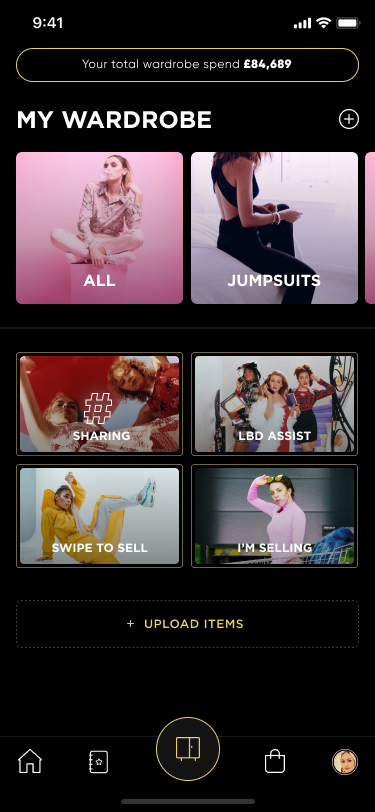
When Lexi Willetts and Marina Pengilly realized they could make as much as £30,000 a year reselling their luxury clothes and accessories online, they resolved to create a solution for modern women who are already well-versed in the behaviors of Instagram and the sharing economy. Their solution, Little Black Door, has just gone live on the iOS store, and allows women to see, style and share their wardrobes with friends and followers. It also connects them to resale platforms, unlocking a vastly more environmental-friendly and sustainable way to shop for high-quality fashion. And with the COVID-19 pandemic hitting the fashion world, the app is set to benefit, as consumers head to the re-sale of luxury, rather than new items.
As Willetts puts it: “This started as a response to our own bad wardrobe behaviors. Our overbuying often because we forgot what we had, often thinking to buy rather than borrow from friends. Plus, we saw the headache of creating resale listings. Realizing that so much of our interactions were online, thus producing very rich e-receipt data, we set about thinking of how we could make use of that to create better wardrobe engagement and reduce our overbuying of irrelevant, cheap fashion.”

The problem with platforms like this has always been: how to digitize the wardrobe in the first place. Most people can’t be bothered to go to the trouble. But this app takes a fresh approach. It concentrates on using wardrobe purchase data and leveraging social sharing behavior to more easily create a digital wardrobe. It also allows the wardrobe to be connected with retail, making it far easier to start the resale journey of selling unwanted items.
The resulting LBD app appears at first to be a sort of ‘Instagram and Depop’ mashup. Users add items to their virtual wardrobe which then employs image recognition AI and natural language processing to figure out what the item is, and tries to categorize it as well. It checks with the user if something is a t-shirt, black, short sleeve, minimalism, urban casual, etc. before it’s confirmed into the wardrobe.
But perhaps more interestingly, the LBD app will ingest receipts of items purchased via email. This means the wardrobe can be built up from new or existing data the user already has. Once the wardrobe is built inside the app, the user can see the clothes and categories, their total wardrobe spend, and create “lookbooks” which they can share with friends and followers to comment on. Friends can then borrow items or users can send items to resale via the ‘swipe to sell’ feature.
Most other wardrobe apps haven’t created a ‘viral loop’ whereby the user is incentivized to use the app daily. LBD has added social features to create a community-driven platform that is almost like an ‘Instagram for fashion’.
Previous ‘wardrobe apps’ like this have obsessed over whether the app can recognize clothes or not, but most don’t work well. The better use of AI, as LBD has realized, is to use receipts data and purchase histories, plus retail partner links, to add to wardrobes. This means the wardrobe upload feature isn’t the primary focus, as it is trumped by wardrobe item data. It’s on this basis that they can create more useful and – crucially – playful features.
“We’ve designed features to entertain and engage the user relating to their wardrobe. We create ease of sharing with friends, tapping into the sharing economy mindset… Moreover, the app is designed to build a culture of conscious consumption, encouraging users to buy less ‘fast fashion’, invest in quality pieces, and wear and share the contents of their closets,” says Willetts.
So the app is interesting, but what about the business model? Effectively, LBD is creating a data play around women’s wardrobes. They could use the data to create advertising for relevant and sustainable brands; partnerships with retailers; value-added services; a resale platform with commissions; verified sellers; and a premium version for high-end users with high-end wardrobes.
LBD is hitting four key trends. The rise of resale (see Real Real, Depop); the rise in sharing wardrobe behaviors (rentals like Rent the Runway, Hurr); the rise in the use of AI in e-commence; and the rise of re-receipts and online sales.
The fashion market is big. The global clothing and apparel market is worth $758.4bn and is over 50% female. But although that market has been hit by the COV-19 pandemic – as people needed to dress up less during lockdown – it is recovering, and now with a client base far more aware of the issues of sustainability. So LBD is set to benefit from that general ‘re-set’.
And, in the coming recession, it will be cheaper to shop second hand from sellers you have an insight into (your friends) as well as selling items to re-sale. For retail partners, they get better data on what consumers really do within the privacy of their wardrobes, allowing them to produce and sell more relevant and more targeted collections, reducing inventory waste, and generating a positive environmental impact.

TechCrunch : GrubMarket raises $60M at a $500M+ valuation as food delivery stays

GrubMarket raises $60M at a $500M+ valuation as food delivery stays center stage

Companies that have leveraged technology to make the procurement and delivery of food more accessible to more people have been seeing a big surge of business this year, as millions of consumers are encouraged (or outright mandated, due to Covid-19) to socially distance or want to avoid the crowds of physical shopping and eating excursions.
Today, one of the companies that is supplying produce and other items both to consumers and other services that are in turn selling food and groceries to them, is announcing a new round of funding as it gears up to take its next step, an IPO.
GrubMarket, which provides a B2C platform for consumers to order produce and other food and home items for delivery, and a B2B service where it supplies grocery stores, meal-kit companies and other food tech startups with products that they resell, is today announcing that it has raised $60 million in a Series D round of funding.

Sources close to the company confirmed to TechCrunch that GrubMarket — which is profitable, and originally hadn’t planned to raise more than $20 million — is now valued at around $500 million.
The funding is coming from funds and accounts managed by BlackRock, Reimagined Ventures, Trinity Capital Investment, Celtic House Venture Partners, Marubeni Ventures, Sixty Degree Capital, Mojo Partners alongside with previous investors GGV Capital, WI Harper Group, Digital Garage, CentreGold Capital , Scrum Ventures, and other unnamed participants. Past investors also included Y Combinator, where GrubMarket was part of the Winter 2015 cohort), and for some more context, GrubMarket last raised money in April 2019, $28 million at a $255 million valuation.
Mike Xu, the founder and CEO, said that the plan remains for the company to go public (he’s talked about it before) but given that it’s not having trouble raising from private markets and is currently growing at 100% over last year, and the IPO market is less certain at the moment, he declined to put an exact timeline on when this might actually happen, although he was clear that this is where his focus is in the near future.
“The only success criteria of my startup career is whether GrubMarket can eventually make $100 billion of annual sales,” he said to me over both email and in a phone conversation. “To achieve this goal, I am willing to stay heads-down and hardworking every day until it is done, and it does not matter whether it will take me 15 years or 50 years.”
I don’t doubt that he means it. I’ll note that we had this call in the middle of the night his time in California, even after I asked multiple times if there wasn’t a more reasonable hour in the daytime for him to talk. (He insisted that he got his best work done at 4.30am, a result of how a lot of the grocery business works.) Xu on the one hand is very gentle with a calm demeanor, but don’t let his quiet manner fool you. He also is focused and relentless in his work ethic.
When people talk today about buying food, alongside traditional grocery stores and other physical food markets, they increasingly talk about grocery delivery companies, restaurant delivery platforms, meal kit services and more that make or provide food to people by way of apps. GrubMarket has built itself as a profitable but quiet giant that underpins the fuel that helps companies in all of these categories by becoming one of the critical companies building bridges between food producers and those that interact with customers.
Its opportunity comes in the form of disruption and a gap in the market. Food production is not unlike shipping and other older, non-tech industries, with a lot of transactions couched in legacy processes: GrubMarket has built software that connects up the different segments of the food supply chain in a faster and more efficient way, and then provides the logistics to help it run.
To be sure, it’s an area that would have evolved regardless of the world health situation, but the rise and growth of the coronavirus has definitely “helped” GrubMarket not just by creating more demand for delivered food, but by providing a way for those in the food supply chain to interact with less contact and more tech-fueled efficiency.
Sales of WholesaleWare, as the platform is called, Xu said, have seen more than 800% growth over the last year, now managing “several hundreds of millions of dollars of food wholesale activities” annually.
Underpinning its tech is the sheer size of the operation: economies of scale in action. The company is active in the San Francisco Bay Area, Los Angeles, San Diego, Seattle, Texas, Michigan, Boston and New York (and many places in between) and says that it currently operates some 21 warehouses nationwide. Xu describes GrubMarket as a “major food provider” in the Bay Area and the rest of California, with (as one example) more than 5 million pounds of frozen meat in its east San Francisco Bay warehouse.
Its customers include more than 500 grocery stores, 8,000 restaurants, and 2,000 corporate offices, with familiar names like Whole Foods, Kroger, Albertson, Safeway, Sprouts Farmers Market, Raley’s Market, 99 Ranch Market, Blue Apron, Hello Fresh, Fresh Direct, Imperfect Foods, Misfit Market, Sun Basket and GoodEggs, all on the list, with GrubMarket supplying them items that they resell directly, or use in creating their own products (like meal kits).
While much of GrubHub’s growth has been — like a lot of its produce — organic, its profitability has helped it also grow inorganically. It has made some 15 acquisitions in the last two years, including Boston Organics and EJ Food Distributor this year.
It’s not to say that GrubMarket has not had growing pains. The company, Xu said, was like many others in the food delivery business “overwhelmed” at the start of the pandemic in March and April of this year. “We had to limit our daily delivery volume in some regions, and put new customers on waiting lists.” Even so, the B2C business grew between 300% and 500% depending on the market. Xu said things calmed down by May and even as some B2B customers never came back after cities were locked down, as a category B2B has largely recovered, he said.
Interestingly, the startup itself has taken a very proactive approach in order to limit its own workers’ and customers’ exposure to Covid-19, doing as much testing as it could — tests have been, as we all know, in very short supply — as well as a lot of social distancing and cleaning operations.
“There have been no mandates about masks, but we supplied them extensively,” he said.
So far it seems to have worked. Xu said the company has only found “a couple of employees” that were positive this year. In one case in April, a case was found not through a test (which it didn’t have, this happened in Michigan) but through a routine check and finding an employee showing symptoms, and its response was swift: the facilities were locked down for two weeks and sanitized, despite this happening in one of the busiest months in the history of the company (and the food supply sector overall).
That’s notable leadership at a time when it feels like a lot of leaders have failed us, which only helps to bolster the company’s strong growth.
“Having a proven track record of sustained hypergrowth and net income profitability, GrubMarket stands out as an extraordinarily rare Silicon Valley startup in the food technology and ecommerce segment,” said Jay Chen, managing partner of Celtic House Venture Partner. “Scaling over 15x in 4 years, GrubMarket’s creativity and capital efficiency is unmatched by anyone else in this space. Mike’s team has done an incredible job growing the company thoughtfully and sustainably. We are proud to be a partner in the company’s rapid nationwide expansion and excited by the strong momentum of WholesaleWare, their SaaS suite, which is the best we have seen in space.”

WSJ : NYPD Prepares for Potential Unrest After Presidential Election

NYPD Prepares for Potential Unrest After Presidential Election
City officers, like others across nation, are being trained in dealing with peaceful as well as violent protests

The nation’s largest police department is training its 35,000 uniformed officers on responding to protests to prepare for the possibility of widespread unrest after the U.S. presidential election and the vote on the nomination of a new Supreme Court justice.

New York Police Department officials said they began training officers in July, following weeks of mostly peaceful demonstrations around the country, including New York City. The large-scale protests came after the May 25 killing of George Floyd, a Black man, in the custody of Minneapolis police.

The NYPD hasn’t undertaken protest-policing training on this scale since at least the 1990s, said NYPD Deputy Chief Samuel Wright, who is leading the department’s current efforts. The NYPD has so far trained nearly 8,600 officers at its Police Academy in College Point, Queens, with the remainder of the force slated to receive instruction by November, he said.

“We haven’t been engaged, in a number of years, in demonstrations like this,” Deputy Chief Wright said in an interview. “We found that it was necessary to review with our officers proper techniques and rules and procedures as it relates to policing demonstrations and large crowds.”

Over the summer, police departments in cities nationwide found their tactical expertise tested by protests. The demonstrations have led to some violent clashes between police, protesters and counterprotesters, including injuries and deaths in Kenosha, Wis., and Portland, Ore.

With the Nov. 3 election a month away, police departments around the country are likely reviewing their strategies for handling protests, according to Frank Straub, director of the Center for Mass Violence Response Studies at the National Police Foundation, a nonprofit organization that seeks to improve policing.

“Within the current environment, the need to do that would be accelerated to make sure that the response to what may come is going to be reflective of the best practices and lessons that we’ve learned as a result of the protests that followed Mr. Floyd’s death in Minneapolis,” Mr. Straub said.

Michael Harrison, the commissioner of the Baltimore Police Department, said in an interview that his department has been training officers in preparation for possible protests this fall.

“We’re creating operational plans for potential deployment of officers to voting places and strategizing how we will handle multiple protests at the same time,” he said.

Commissioner Harrison said departments in other cities are undertaking similar training efforts as well. Some have incorporated de-escalation techniques including the start of dialogues with protesters, while others have begun gathering intelligence to predict where hot spots in protests may occur. The NYPD has deployed some officers on bicycles to keep up with fast-moving marches.

Some New York City elected officials and Black Lives Matter protesters have criticized the NYPD for its handling of this summer’s demonstrations, which have called for an end to police brutality and for the defunding of police departments.

Since June, NYPD officers have arrested hundreds of protesters at scores of demonstrations that were sometimes accompanied by violence, the destruction of property and looting. In some instances, officers, protesters and bystanders suffered injuries.

The NYPD’s response to the demonstrations is currently the subject of official investigations. One officer in June was arrested and charged with assault after he was seen on video shoving a protester in Brooklyn. Multiple officers are under investigation for alleged misconduct in the protests, according to police officials.

Chelsea Miller, a New York City protest organizer and co-founder of Freedom March NYC, a youth-led civil-rights organization, said in an interview that the NYPD used heavy-handed tactics this summer to deter peaceful protesters.

“At any given day, there’s a level of unpredictability when it comes to how they choose to operate and the tactics the NYPD use,” Ms. Miller said.

NYPD officials said the department supports the exercise of free speech and peaceful protest.

Keith Taylor, a former NYPD SWAT supervisor and an adjunct assistant professor at John Jay College of Criminal Justice, said in an interview that the presidential election and a vote on President Trump’s nomination of Amy Coney Barrett to fill the seat of the late Supreme Court Justice Ruth Bader Ginsburg could prompt disruptive protests.

“If Trump loses, there may be some right-wing extremists that commit violence as a result of that,” he said. “The police have to keep the public safe from extremists and any segment of society. There may be violence if he wins, and there may be violence if he loses.”

Under the NYPD’s two-day protest-training program, groups of 150 to 200 officers receive 2½ hours of classroom instruction on the handling of public gatherings. The officers are taught how to assess crowds for possible safety problems and to identify potentially disruptive situations and people, Deputy Chief Wright said.

The officers receive another 4½ hours of tactical training on the academy grounds, Deputy Chief Wright said, where they engage in role-playing with cadets and other officers who portray crowds of protesters with behaviors that range from peaceful to disorderly.

The instruction complements efforts by other sectors of the NYPD, including intelligence assessments of possible protest actions and the department’s video system, which provides live feeds of public spaces, Deputy Chief Wright said.

Officers are instructed in tactics for de-escalating tension and defusing violence, he said, including methods for understanding crowd psychology and remaining calm when facing hostile crowds.

“All this training is to make the people of New York City safe and to make our officers safe, and to ensure that the First Amendment right is able to be practiced freely without disturbances,” he said.

FT : Deutsche Börse pushes for Dax overhaul after Wirecard debacle

Deutsche Börse pushes for Dax overhaul after Wirecard debacle
Exchange operator proposes enlarging blue-chip index and only admitting profitable companies

The chief executive of Deutsche Börse, Theodor Weimer, wants to enlarge Germany’s Dax and only admit profitable companies, part of a far-reaching overhaul of the country’s leading stock market index triggered by the Wirecard accounting scandal.

The German exchange operator on Monday announced a series of reform proposals to revise the membership rules and improve the quality of companies that are listed in the blue-chip Dax index. 

The overhaul comes as German regulators seek to avoid a repeat of the supervisory failures that allowed Wirecard to build up a €1.9bn hole in its accounts before it fell into insolvency in June, becoming the first sitting member of the Dax to do so.

When the once high-flying payments company entered the Dax in 2018, replacing German lender Commerzbank, it displayed a lack of basic corporate governance requirements. Wirecard’s supervisory board did not have an audit committee, and it repeatedly missed the statutory deadline for the publication of quarterly and annual results.

On Monday Deutsche Börse proposed that only profitable companies should be admitted to the index, and said that those who do not publish quarterly reports on time should be expelled.

It also suggested increasing the number of constituents in the index, making it less exposed to the vagaries of individual members. 

“It is no secret that I personally would welcome the expansion of the DAX 30 to a DAX 40”, said Mr Weimer in an emailed statement. 

Selection criteria for the Dax at present only focus on quantitative criteria such as a stock’s market capitalisation and liquidity. With just 30 members, it is one of the smallest blue-chip indices in Europe, compared with 40 in Italy and France and 100 in the UK. 

Uwe Streich, equity strategist at German public-owned lender LBBW, said the size of a country’s blue-chip index was partly a function of the depth of its stock market.

“In 1988, when the Dax was founded, Germany had relatively few big listed companies. Back then, having 30 constituents was rather ambitious,” he said. Today, 50 Dax members could be justified, he added. 

Large investors welcomed the idea of an enlarged Dax. “This would lower the relative weight of the current constituents,” said Jürgen Hackenberg, head of equities diversified at Union Investment, Germany’s third-largest asset manager.

Christian Strenger, a corporate governance specialist and former head of asset manager DWS, said the Dax needed to be upgraded to live up to its image of reflecting “the elite of the German economy”.

“In future, quantitative criteria [for Dax membership] should be emphasised as much as possible,” he said.

Mr Strenger added that while the reform ideas were a step into the right direction, “many details need to be discussed”, such as the benchmark for a company’s profitability. A company’s earnings before interest, taxes, depreciation and amortisation “is a rather weak benchmark, this should be tightened”, he said. 

Investors now have until November 4 to file their response to Deutsche Börse’s proposals. The exchange operator will publish the results of the consultation and any decision on changes by November 23. 

The arrival of Wirecard’s successor in the Dax, online food delivery group Delivery Hero, also raised eyebrows among analysts and investors because it has never generated any profits since it was founded in 2011. 

FT : Mulberry warns on sales after falling to £14m loss

FT : Mulberry warns on sales after falling to £14m loss
British luxury group shares hit as its says footfall to stores is ‘alarmingly low’

Mulberry has suspended its dividend as the British luxury handbag maker warned that “alarmingly low levels of footfall” in city centres and the absence of wealthy tourists would continue to hit sales.

The group said revenues fell 10 per cent to £149m in the year ending in March as the pandemic impact first started to be felt. Losses before tax, adjusted for coronavirus-related impairments, swung to £14m compared with a £1m profit last year.

Thierry Andretta, the company’s chief executive, told the Financial Times that Mulberry had been on track to record a pre-tax profit in the second half before the pandemic forced stores to shut.

Mulberry, he said, had been particularly hit by the pandemic-induced absence of deep-pocketed tourists from China, the Middle East and the US, which make up about a tenth of the company’s sales.

“When you add that there is a project in the UK to move out of tax-free it is even more scary,” the chief executive said, referring to the UK’s decision to withdraw from the EU’s value added tax relief for overseas visitors when the Brexit transition period ends in December.

The group in June announced that it would cut a quarter of its workforce as it expected lower demand, and about 350 jobs have since been axed in its offices, factories and retail network.

Fashion retailers, from high street chains to upmarket brands, continue to suffer in the pandemic as people have remained reluctant to visit shops even after lockdown restrictions have been lifted.

The Aim-listed company said, however, that it had been “able [to] withstand some of the pressures” facing the sector and expected losses to narrow this financial year. But it warned that revenues were down 29 per cent in the six months to September, which it blamed on persistently low footfall in its 120 stores and concessions across Europe, North America and Asia.

Mulberry’s share price, which has almost halved since February, was down 9 per cent on Monday morning.

Mr Andretta said the company had stuck to its plan to manufacture more bags, such as its popular Bayswater, in the UK but warned that Brexit and the depreciation of the pound meant leather and other materials were now more expensive.

The chief executive was, however, upbeat about the company’s digital sales, which rose 69 per cent in the six months ending in September to £23.5m. He said Mulberry’s online strategy was ahead of rivals in the luxury market, which has struggled to convince consumers to buy expensive products through the internet.

Frasers, the retail company controlled by magnate Mike Ashley, in February bought a 12.5 per cent stake in Mulberry, which was worth about £20m at the time. Mr Ashley, whose group owns Sports Direct and House of Fraser department stores, has warned of more shop closures and job losses as retailers seek to weather the pandemic crisis.

>>> US Gapping down

Gapping down

M&A news:

  • BMY -0.7% (to acquire MYOK for $225 per share)

Other news:

  • DKNG -5.5% (files for 16 mln share Class A common stock by company and 16 mln shares by selling shareholders)
  • RMG -3% (RMG Acquisition and Romeo Power Technology form business combination that would result in Romeo Power becoming a publicly listed company)
  • VXX -1.2% (trading lower with US futures rebounding)

Analyst comments:

  • IBP -1.9% (downgraded to Hold from Buy at The Benchmark Company)
  • DNKN -1.6% (downgraded to Neutral from Buy at BTIG Research)
  • BLD -0.9% (downgraded to Hold from Buy at The Benchmark Company)
  • T -0.8% (downgraded to Underweight from Sector Weight at KeyBanc Capital Markets)

>>> US Gapping up

Gapping up

In reaction to earnings/guidance:

  • NPTN +4.8%, AOSL +4.1% (Q1 guidance), FTV +2.7%

M&A news:

  • EIDX +69.3% (BridgeBio Pharma to acquire all of the outstanding common stock of Eidos (EIDX) it does not already own)
  • MYOK +58.5% (to be acquired by Bristol Myers Squibb (BMY) for $225.00/share in cash)

Select financial related names showing weakness:

  • IWM +1%, SPY +0.7%, QQQ +0.7%, DIA +0.7%

Other news:

  • CRVS +40.5% (announced updated data from its ongoing Phase 1 study investigating the potential for CPI-006 to provide a novel immunotherapy approach for patients with COVID-19)
  • IMGN +18.1% (announces FDA breakthrough therapy designation for IMGN632 in relapsed or refractory blastic plasmacytoid dendritic cell neoplasm)
  • MGTX +9.6% (reports nine-month data from Phase 1/2 trial of AAV-RPGR demonstrating significant and sustained vision improvement)
  • CYTK +9.4% (presented data at the Heart Failure Society of America Virtual Annual Scientific Meeting 2020)
  • XPEV +8% (reports Q3 deliveries increased 266% to 8,578 vehicles)
  • AVRO +5.6% (AVROBIO announced an exclusive, worldwide license agreement and a collaborative research funding agreement with The University of Manchester for an investigational lentiviral gene therapy for mucopolysaccharidosis type II (MPS II), or Hunter syndrome)
  • REGN +5.3% (President Trump treated with a dose of Regeneron's polyclonal antibody cocktail)
  • SMMT +4.9% (announces agreement for fundraising of ~$50 million; believes that the net proceeds of the Fundraising will extend its cash runway to the third quarter of 2021)
  • TRGP +4.8% (announces $500 million common share repurchase program and provides updated 2020 outlook)
  • QDEL +4.5% (receives EUA for ABC Test - a combination diagnostic assay for Influenza A+B and COVID-19)
  • GILT +3.8% (Gilat Satellite and Comtech Telecommunications (CMTL) terminate merger agreement)
  • GILD +3.3% (President Trump is taking GILD's remdesivir for his coronavirus treatment)
  • TEX +3.3% (positive Barrons article)
  • TRIL +2.9% (received Notices of Allowance from the United States Patent and Trademark Office for two patent applications covering the use of SIRPaFc for the treatment of cancer)
  • SRNE +2.5% (will host a R&D Day conference call and simultaneous webcast on October 13th, 2020 focusing on its comprehensive multi-modal approach to COVID-19)
  • PTEN +2.3% (had an average of 60 drilling rigs operating in September and average of 60 drilling rigs operating in Q3)
  • VALE +1.9% (Reuters report that co is in talks with Tesla and others about securing nickel)
  • ARGX +1.6% (reports Phase 3 ADAPT data consistent with positive topline results)

Analyst comments:

  • JELD +6.7% (upgraded to Overweight from Equal Weight at Wells Fargo)
  • ATUS +4.2% (upgraded to Outperform from Mkt Perform at Bernstein)
  • ST +3.4% (upgraded to Outperform from Market Perform at Cowen)
  • INTU +3.1% (upgraded to Overweight from Equal-Weight at Morgan Stanley)
  • DOCU +2.9% (upgraded to Overweight from Equal-Weight at Morgan Stanley)
  • LBRT +2.5% (upgraded to Overweight from Equal Weight at Barclays)
  • OKE +2.5% (upgraded to Overweight from Equal Weight at Wells Fargo)
  • HP +2.3% (upgraded to Equal Weight from Underweight at Barclays)
  • PII +2.2% (upgraded to Outperform from Neutral at Robert W. Baird)
  • CRWD +2.2% (resumed with a Buy at Goldman)
  • CCOI +1.5% (upgraded to Mkt Perform from Underperform at Raymond James)