>>> TradeGate Pre-Market Indications

DAX:
  • Deutsche Boerse (DB1 TH) +1.1%
  • SAP (SAP TH) +1.1%
  • HeidelbergCement (HEI TH) +1.1%
  • Siemens (SIE TH) +0.9%
  • RWE (RWE TH) +0.9%
    • RBC Says Time to Be More Selective on European Renewables Stocks
  • Vonovia (VNA TH) +0.3%
  • Infineon (IFX TH) +0.3%
  • Covestro (1COV TH) +0.3%
  • Delivery Hero (DHER TH) +0.2%
  • BMW (BMW TH) -0.5%
    • BMW Lacks Clear Path to Electrification, Morgan Stanley Says
MDAX:
  • Fraport (FRA TH) +3.2%
    • Germany Plans EU1 Billion in Aid for Airports: Handelsblatt
  • Lufthansa (LHA TH) +2.1%
  • Grenke (GLJ TH) +1.8%
  • Kion (KGX TH) +1.7%
  • Puma (PUM TH) +1.6%
  • Aareal Bank (ARL TH) -0.6%
  • K+S (SDF TH) -0.6%
  • CTS Eventim (EVD TH) -1.3%
  • Shop Apotheke (SAE TH) -1.6%
  • HelloFresh (HFG TH) -4.3%
SDAX:
  • Borussia Dortmund (BVB TH) +5.5%
  • Bilfinger (GBF TH) +5.2%
  • Global Fashion Group (GFG TH) +4.8%
  • Dermapharm (DMP TH) +4.4%
  • SNP Schneider-Neureither (SHF TH) +3.4%
  • Kloeckner (KCO TH) -0.5%
  • Sixt (SIX2 TH) -0.7%
  • Hamborner REIT (HAB TH) -0.9%
  • Takkt (TTK TH) -1%
  • Leoni (LEO TH) -2%

(ZH)The Collapse In Luxury Sales This Year "Wiped-Out More Than Six Years Of Gro

The Collapse In Luxury Sales This Year "Wiped-Out More Than Six Years Of Growth"


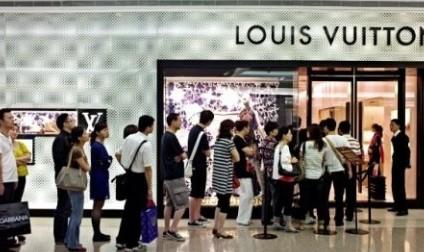
Luxury retail sales for 2020 are forecasted to crash globally as a result of the pandemic, with estimates that luxury apparel, jewelry and beauty products could fall by 23% for the year.
The plunge "wipes out more than six years of growth," according to AP. The silver lining, if there is one, is that the crash is actually lower than the 35% plunge that was predicted at the beginning of the pandemic. That has mostly been due to a recovery in China, which generates about 33% of all luxury goods sales.
The sector is expected to generate $256 billion in sales for 2020, which is lower than 2014 levels and is down nearly $80 billion from 2019. It's the first decrease in the sector, which has been buoyed just like all senselessly expensive assets have by Central Bank policies globally, since 2009.

A further bounce back is uncertain, especially as global governments brace for a second set of shutdowns heading into the winter.
Bain partner Claudia D’Arpizio, who helped write the report on the sector, said: “I see a lot of uncertainty for next year, with less uncertainty for the longer term.”
Additionally, forecasts for 2021 have been unclear. While they fall in a growth range of 10% to 19%, it's a small respite after profits have dropped an estimated 60% this year. They are only expected to recover half of that in 2021.
In China, Bain sees a "full global recovery" heading from 2022 into 2023. They expect Chinese consumers will make up almost half of all sales by 2025.
Apparel sales plunged 30% and footwear sales fell 12% due to the pandemic and its ensuing lockdowns. Jewelry sales fell 15%, even after being "cushioned" by a recovery in Asia.

D’Arpizio warned some brands could wind up "running out of cash" and being forced to restructure. She concluded: “The pandemic has eliminated the excuses for brands that didn’t understand the trends, to give a sense of urgency to the right investments. The more the situation is sustained, the more we risk the crisis will be permanent.”

>>> What to look at today - 23rd of November 2020

Asian stocks began the week with gains alongside European and U.S. equity futures as traders took solace from progress toward a vaccine and signs of a recovering global economy. The dollar dipped.
South Korean equities outperformed Monday after encouraging trade data, putting the Kospi index on course for a record close. S&P 500 futures rose along with Asia-Pacific shares, while global equities remain within a whisker of the all-time high set earlier this month.
Vaccinations against Covid-19 in the U.S. will “hopefully” start in less than three weeks, according to the head of the federal government’s program to accelerate a vaccine. Japan is shut for a holiday and Treasuries won’t trade until the London open.

Nikkei -0.42% Hang Seng -0.04% CSI +1.26% Shanghai +1.09% Shenzen +0.57%

Eur$ 1.1875 CNH 6.5567 CNY 6.5659 JPY 103.76 GBP 1.3321 CHF 0.9100 RUB 76.1018 TRY 7.7249 WTI$ 42.68 +0.59%

S&P +0.57% Nasdaq +0.54% EuroStoxx +0.72% FTSE +0.35% Dax +0.69% SMI +0.59%

Macro :
- Sunak Plans Spending to Ease Enormous Strain on U.K. Economy (1)
- Biden Unlikely to Quickly Unwind China Tariffs, Democrat Says
- Germany Set to Extend Lockdown to Slow Virus Before Christmas
- Moderna CEO Says Close to Reaching Vaccine Deal With EU: Welt
- Putin Says He’s Not Ready to Recognize Biden as U.S. President
- KKR Is Said to Prepare for New European Buyout Fund
- JPMorgan Sees Possible $300 Billion Rebalancing Flow From Stocks
- RBC Says Time to Be More Selective on European Renewables Stocks

Keep an eye on :
- ACKB BB : Ackermans Still Sees Clear Improvement in 2H Results
- AKSO NO : Aker Solutions Wins Equinor Frame Agreement in Brazil
- ALV GY : German Life Insurers Get Business Boost From Covid: Tagesspiegel
- ALPHA GA : Alpha Bank Selects Davidson Kempner to Buy $12b Bad Loans: Rtrs
- AQUA NO : Aqualisbraemar Offering Prices 22.1m Shares at NOK6.10/Share
- ARGX BB : Argenx to Buy Efgartigimod Priority Review Voucher for $98m (1)
- ARYN SW : Elliott Confirms Offer to Buy Aryzta Shares at CHF0.80 Each
- ARYN SW : Aryzta Says Some Elliott Offer Conditions Cannot Be ‘Satisfied’
- AZN LN : Israel Nears Deal for AstraZeneca’s Coronavirus Vaccine: Reuters
- BAMNB NA : PGGM Infrastructure Fund Plans to Acquire 50% in BAM PPP Unit
- BARC LN : Green Is Good for Power Traders Chasing $430 Billion Market
- GBF GY : Buyout Firm CVC Capital Is Said to Vie With CD&R for Bilfinger
- CCL LN : Watch Cruise Operators After U.S. CDC Raises Warning Level
- CFEB BB : CFE 9M Revenue EU2.4B Vs. EU2.76B Y/y
- ACA FP : Credit Agricole Offers EU10.50/Shr for Credito Valtellinese
- CVAL IM : Credit Agricole Offers EU10.50/Shr for Credito Valtellinese
- DAI GY : Daimler, Geely Holding to Collaborate on Powertrain System
- BN FP : Danone to Cut Up to 2,000 Jobs, Aiming for $1.2 Billion Savings
- DLG IM : De’ Longhi to Acquire Capital Brands Holdings for About $420m
- ENGI FP : Engie Has Set Stage for Return to Growth, Clamadieu Tells Echos
- EQT SS : EQT Is Said to Select BofA, Morgan Stanley to Lead SUSE IPO
- FRA GY : Germany Plans EU1 Billion in Aid for Airports: Handelsblatt
- HFG GY : Hellofresh Buys Factor75 in $277m Deal
- JMAT LN : Johnson Matthey Drops; Analysts Positive, But Flag ELNO Costs
- MC FP : Luxury Groups Warn GBP1b in Investment at Risk From VAT Cut: FT
- MB IM : Mediobanca Shifts Some Bankers From London to Milan: Reuters
- NANO FP : Nanobiotix Files for U.S. IPO, Seeks Nasdaq Listing Under ‘NBTX’
- PRS SM : Prisa Board Rejects Herrero’s Offer to Buy Media Unit: Vozpopuli
- PRX NA : Prosus On Hunt for Deals After Cash Reserves Reach $4.3 Billion
- RLF SW : Relief Proposes Increase of Authorized, Conditional Capital
- ROG SW : Regeneron Gets Emergency U.S. Clearance for Covid-19 Therapy
- TIT IM : Telecom Italia, Tiscali Sign Joint Investment Through Fibercop
- TUI LN : U.K. MPs Call on Travel Co. TUI to Furlough U.K. Workers: FT
- UCG IM : Italy, UniCredit Intensify Talks on Takeover of Monte Paschi
- VNA GY : Vonovia CEO Says Fewer Tenants Seeking Rent Deferrals: Die Welt
- ZURN SW : Zurich Insurance Nears $4 Billion Deal for MetLife Unit: Reuters

>>> Europe : Brokers Upgrades & Downgrades - 23rd of November 2020

>>> Up
* Credit Suisse Raised to Outperform at KBW; PT 14 Swiss francs
* Kojamo Raised to Buy at Goldman; PT 21.40 euros
* Meggitt Raised to Outperform at Bernstein; PT 479 pence
* Neles Raised to Buy at Handelsbanken; PT 13 euros
* Next Fifteen Raised to Buy at Peel Hunt; PT 590 pence
* Sparebanken Telemark Raised to Buy at Norne Securities
* SSE Raised to Outperform at RBC; PT 1,625 pence
* Swiss Re Raised to Buy at Citi
* Swiss Re Raised to Buy at Oddo BHF
* VAT Raised to Neutral at Kempen & Co; PT 180 Swiss francs

>>> Down
* Amedeo Air Four Plus Cut to Hold at Jefferies
* ASML Cut to Neutral at Kempen & Co; PT 350 euros
* BMW Cut to Equal-Weight at Morgan Stanley; PT 66 euros
* ContourGlobal Cut to Sector Perform at RBC; PT 205 pence
* EDP Renovaveis Cut to Sector Perform at RBC; PT 17.50 euros

* Fortum Cut to Reduce at AlphaValue
* HelloFresh Cut to Underweight at JPMorgan; PT 35 euros
* Maersk Drilling Cut to Sell at SEB Equities; PT 170 kroner
* Orsted AS Cut to Sector Perform at RBC; PT 1,050 kroner
* Solaria Energia Cut to Sector Perform at RBC; PT 18 euros
* United Utilities Cut to Sector Perform at RBC; PT 950 pence

>>> Initiation
* BEWi Rated New Buy at SpareBank; PT 30 kroner
* DWF Group Rated New Hold at Liberum; PT 90 pence
* Elekta Rated New Market Perform at Bernstein; PT 120 kronor
* Gateley Rated New Buy at Liberum; PT 220 pence
* Knights Rated New Buy at Liberum; PT 485 pence
* Northern Data Rated New Buy at Stifel; PT 90 euros

>>> Call
* BMW Lacks Clear Path to Electrification, Morgan Stanley Says
* Lundin Mining Candelaria Labor Progress is Positive Catalyst: MS
* Sell Latour Shares as High NAV Premium Hard to Justify: DI
* Swiss Re Upgraded at Citi With 2021 to Mark Earnings Inflection

FT : Luxury groups warn £1bn in investment at risk from VAT relief cut

Luxury groups warn £1bn in investment at risk from VAT relief cut
Brands such as Mulberry and Chanel say decision could cost billions in tourist spending

More than a dozen of the UK’s largest retail and luxury brands have warned that £1bn will be lost in investment following the Treasury’s decision to abolish tax-free shopping for international visitors.

Companies such as Heathrow, Selfridges, Harrods, Burberry, Paul Smith and Value Retail, which owns the Bicester Village outlet centre in Oxfordshire, have warned that the decision could cost billions of pounds in spending from overseas tourists.

Visitors outside the EU had been able to claim a refund on the VAT on items bought in the UK and taken home, but this will be abolished at the start of next year.

As a result, many tourist-focused companies said that they will need to rethink their own investment plans, including store expansions and refurbishments, jobs and new stores, warehouses and other production because of lower demand. 

Retail groups have held meetings with officials in Downing Street and the Treasury in recent weeks, according to one person close to the talks, where the risk to future investment was raised. Executives at 17 luxury and retail companies have provided estimates over capital expenditure totalling £1bn for periods between 18 months to five years.

“Most of the businesses have privately shared information with the Treasury in meetings and warned that this will be the outcome if the policy is introduced,” the person said.

“Duty-free is a high volume business so refurbishments generally take place more frequently than in other parts of the retail sector.”

John Holland-Kaye, chief executive at Heathrow airport, said that it was “being forced to rethink our investment decisions in part driven by the forecasted reduced visitor numbers from the removal of tax-free shopping and the loss of billions of pounds of consumer spend in the UK”.

Other companies that have warned over the potential hit to their capital expenditure plans include Mulberry, Hermes, Longchamp, Jimmy Choo, Chanel and Church’s, while organisations such as the British Retail Consortium, luxury goods advocacy group Walpole and the New West End Company have also lobbied the Treasury over the change.

Anne Pitcher, managing director at Selfridges Group, said: “The Treasury’s decision to end tax-free shopping from January 2021 will have a substantial impact on tourism spend. We have a duty as a business to take into consideration the effect this will have in the coming years as we make long-term plans on where it makes most sense for us to invest.”

Retailers have complained the decision to abolish a VAT refund that allows tourists to buy British goods at a discount will mean that visitors will spend their money elsewhere in Europe where the VAT rebate has been extended.

James Lambert, deputy chairman at Value Retail, said that the VAT rebate was a strong incentive for international visitors “and imposing a 20 per cent tax would encourage them to choose France or Italy over the UK”. 

He added: “This would cause significant damage to the UK’s economy, hurting British brands and businesses, as well as capital investment, whilst handing a competitive advantage to our European neighbours.” 

William Bain, trade policy adviser at the British Retail Consortium, said: “The Treasury has overestimated the cost of extending the scheme to the EU, and severely underestimated the risks associated with scrapping it altogether.”

Gerry Murphy, chairman at Burberry, said that “even if they come to the UK, the likely outcome is that high-spending international visitors will choose to shop elsewhere in Europe”.

A Treasury spokesperson said that tax-free shopping would still be available in store when goods are posted to overseas addresses, adding:

“We do not recognise these figures. Around 92 per cent of visitors to the UK don’t use the VAT Retail Export Scheme.”

FT : Deliver ooh! The elite world of personal shopping

Deliver ooh! The elite world of personal shopping
Net-a-Porter’s client service caters to the creme of its customers. But what are the advantages? HTSI becomes an EIP (Extremely Important Person)

It’s a Thursday evening and I’m rummaging through giant bags of clothes piled high on the bed in my Hackney flat. Inside I find a cuddly knit from The Row, a cotton and faux-leather trimmed Balenciaga coat and a pair of heeled wellies from Chloé. This luxury haul has been selected and shipped to me by my brand-new personal shopper, Alli, and has required almost no effort on my part.

Unfortunately, I have not suddenly come into a large sum of money, nor have I been sent a bunch of freebies. Rather, I am spending the week as an EIP. In Net-a-Porter speak, that stands for Extremely Important Person – even more important than a VIP, if such a thing can be imagined – and is the name given to the retailer’s top spenders. EIPs have privileges that mere mortals do not: personal shopping, complimentary premium delivery and invitations to special events. They also have priority access to shop new launches before they go live on the site, twice-yearly private sales and the option to pre-order clothes six months in advance. To become an EIP, you have to spend a certain amount each year with the retailer across any category. Sadly, Net-a-Porter will not disclose how much this is, although my account was credited with £10,000 for the purposes of this seven-day assignment, if that is any indication. (For the record, at the end of the week, everything had to be returned.)

The programme has, until now, not been widely promoted, as is usual for any service involving high-spending, and usually highly private, clients. But recently Net-a-Porter has been persuaded to broaden and demystify this previously closed-door service in order to entice more customers in. “If you think about it, our whole industry has thrived on exclusivity and a sense of mystery,” says Alison Loehnis, the president of Net-a-Porter and Mr Porter. “Some of that still holds solid today, but some of that is changing, and what is important is this idea of transparency and opening access a little bit.”

From early next year, the EIP programme will include four tiers, the privileges of which are clearly communicated to the public. If you’re a member of one tier, for example, you’ll know what higher-level members have access to, and how much you need to spend to get there. The company is also introducing Private Client Partners, a new kind of personal shopper reserved to service the top quarter of the retailer’s highest-spending customers.

High-net-worth individuals are an increasingly vital feature of the luxury-goods market. VIP shoppers are to retailers what high-rollers are to casinos: butter them up and they will continue to spend. That’s why last year Yoox Net-a-Porter Group announced that its luxury division was set to double its personal shopping and client relations team, hiring more than 100 people to work from hubs in New York, California, Dubai, London and Hong Kong. London-based MatchesFashion has reported double-digit growth of its private shopping sales this year in comparison to last; while Munich-based retailer Mytheresa has just expanded its personal-shopping service to include a team in New York. Once a customer has a personal shopper, these retailers know they will be up to 50 per cent more engaged with the brand, and in some cases sales increase by double-digit figures.

The need to cultivate, nurture and retain these top‑tier clients, who may only account for a single-digit percentage of the total number of customers but make up around one third of the sales, has become even more urgent this year, in which the luxury-goods market has been predicted to contract by up to 35 per cent. And when that market is projected to be worth an estimated €320bn-€330bn by 2025, it’s no wonder that personal shopping is growing across the board. 

“The market has become more and more fragmented, and there’s so much competition that brands now need to go above and beyond to make customers feel special,” says Euromonitor International’s head of global luxury goods, Fflur Roberts. “It goes back to the foundations of luxury shopping, which are personalisation, customer service and exclusivity.”

My own extremely important week began with a call from Alli, an incredibly poised and polite senior member of the personal-shopping team, who speaks in the kind of buzzword-heavy language you’d expect from a Net-a‑Porter staffer. We go through my privileges and an initial wardrobe consultation, from the types of clothes I am looking for to my preferred colours and cuts. I say I’m after styles I can wear both to the (relatively casual) Financial Times office and around the neighbourhood where I live without attracting any sideways glances. I also note that I usually wear quite boxy shapes in neutral tones. Am I interested in trying colour? Sure, I say, knowing full well that I am not.

A few hours later, I receive a PDF file with an initial edit of clothes via WhatsApp – the preferred method of communication between EIPs and their shoppers, apparently – as well as a voice memo from Alli talking me through the selection. It’s a mix of established houses and brands I’ve never heard of, which is a pleasant surprise. I message back screenshots of the pieces I like, including a textured cream suit from Totême, a pair of lace-up Legres boots and a pleated faux-leather shirt from Nanushka. And after a few back and forths, my order is confirmed and a delivery slot is booked in; I haven’t yet needed to log into my own account. When the clothes arrive, I’m a little taken aback by how accurately they reflect my taste, especially considering the fairly scant information I handed in.

I refrain from making any kind of outlandish demands, although I’m convinced that Alli would have watered my plants during my next holiday, if I’d asked. Indeed, in the world of personal shopping there’s no request too big, nor any demand unreasonable. Stories abound of the lengths retailers and brands will go to satisfy the needs of their clients. “I’ve borderline sold the shirt off my back,” says Loehnis. “One time, I was wearing a blouse from a previous season at a dinner, and the EIP next to me was like, ‘Oh my gosh, I love that’. I somehow managed, with the help of the team, to find one for her.” Another EIP client once requested 800 last‑minute items to create outfits to attend fashion week; her personal shopper had them delivered within 24 hours, and even helped her to pack. 

Roberts has heard stories of personal shoppers in Russia flying to London to shop for their clients, travelling back with the products, and then flying again to return the ones they didn’t want to keep. “There was a couple in the Middle East who were very interested in this priceless piece from Boodles, and you can’t ship a product like that, so the chairman actually flew himself there with the necklace,” adds Roberts. “Eventually, they did buy it.”

Khaite founder Catherine Holstein, who is stocked on Net-a-Porter, has taken cues from the EIP programme to establish her own service: the brand gives VIP customers front-row seats to its fashion shows, access to pre-order collections, and the option to create custom pieces for big events. “We have seen double-digit increases year-on-year in sales from repeat customers, many thanks to our personal-shopping programme,” says Holstein. “Our pre-order sales to VIPs have made up to 40 per cent of our business during key months.”

For some, personal shopping is merely a convenient method for buying clothes. Others relish the added level of customer service and care. “The relationship between the personal shopper and the client is not always just a transactional one,” says Loehnis. “They really get to know these women, and these women really get to know our team – so much so that they are invited to weddings, bar mitzvahs… They become a sort of extended part of their special network, and in some cases, almost family.”

Meruyert Ibragim, who is based between London, Kazakhstan and Dubai, has been an EIP with Net-a-Porter for around three years. She describes her personal shopper, Kunduz Ablet, as being more of a friend than a salesperson. “Personal shoppers know your taste and style, and you know that you can always contact them,” she tells me. “It doesn’t feel as if you are in a huge department store – you feel like you are in a boutique, and everyone is there to help only you.” In particular, Ibragim enjoys the perks of being able to preview and reserve items before they go live on the site, and attending the events that Net-a-Porter throws. “Even during quarantine they held different events with designers and invited customers. We got to watch an amazing talk by [jeweller] Anita Ko, and I had a 30-minute consultation with Dr Barbara Sturm – my favourite brand. We talked through all the beauty products and she gave me advice on how to use them properly. It’s great that you get access to something that is not open to everyone.”

Beauty, and specifically skincare, is one area of significant interest within Net‑a-Porter’s personal-shopping portfolio. Another is fine watches and jewellery. “For us it’s really exciting to be able to work with clients on one-off pieces,” says Loehnis. “In some cases, they will go directly with us to a jewellery brand or one of the watchmaker brands and get something special just for them.” In terms of ready-to-wear, Loehnis says runway pieces usually get snapped up quickly, as well as products that are exclusive to Net-a-Porter. Handbags, especially the currently trendy tan-coloured styles, are always big sellers, “even at a time when people aren’t going out as much”. She also notes the success of “power brands” such as Loewe and Bottega Veneta. 

While established houses perform well, personal shoppers also wield huge power in introducing their clients to up-and-comers, which can be an invaluable resource for younger brands. London-based Brazilian jeweller Fernando Jorge, who launched his business in 2010, has experienced this first-hand; he even says it changed his business.

“Most jewellery companies, like me, would have to have a store, or would have had to rely on investors to scale up. But through personal shopping I’ve managed to connect with enough customers early on, which means I can remain focused on design and on new collections.” From his east London studio in Shoreditch, Jorge hosts groups of high-profile clients who have flown in from all over the world. “They show up in three or four cars, and treat it as an adventure, coming all this way to a different part of London. They make an event out of it.” And when the personal-shopping team gets in touch to request specific pieces, Jorge makes sure they are available right away – even if they have to be flown in from Brazil, or finished being made in the atelier. “We always have to find a way to get them to London immediately.” 

As the direct contact between a retailer and their top clients, personal shoppers are incredibly valuable to a company. “They are our direct pipeline to the customer,” says Loehnis. “They are our magicians.” So what does it take to be a good one? “You have to be a creative thinker, you have to be customer-obsessed, and you have to love the product,” says Loehnis, adding that “it’s obvious that you have to adore selling, and be very service-orientated”. Shoppers also have to be willing to be at a client’s disposal seven days a week, as well as have an encyclopedic knowledge about different brands and products. And there’s a lot to learn – a search for “blazer” on Net-a-Porter returns 594 results. “There’s a lot of choice out there on the market,” says Loehnis, “so it’s a way to cut through that.”

With shopping increasingly focused online, brands are still figuring out ways to make luxury more personable. “Having the human-to-human element is more important than ever,” says Roberts. “Being a bit more engaging, a bit more authentic, and being empathetic too.”

This isn’t lost on Loehnis. Her goal is to further harness technology – automation and more sophisticated tooling – to allow Net-a-Porter’s personal shoppers to do their jobs more effectively as well. It all comes down to keeping the client happy. Whether that’s flying in bracelets from Brazil, helping to pack suitcases or intuiting that those cream leather Legres boots would be perfect for traversing the streets of Hackney, this retail army is doing it very well.

FT : How MercadoLibre emerged as ecommerce titan

How MercadoLibre emerged as ecommerce titan
Latin America’s answer to Alibaba valued at $63bn as consumers turn to online shopping

Captured on camera at a New Year’s Eve party at the turn of the millennium, Marcos Galperín confidently declared that the dotcom start-up he had co-founded just five months earlier would become the biggest company in Latin America.

Almost 21 years later, he has been proved right. MercadoLibre, Latin America’s answer to China’s Alibaba, is now worth $63bn on Nasdaq, more than doubling its value over the past year as it powered past old-economy Brazilian giants like Vale and Petrobras to become the region’s biggest winner from the coronavirus crisis.

“This pandemic has moved us forward maybe three to five years,” the 49-year-old Argentine chief executive of MercadoLibre (or “free market” in Spanish) told the Financial Times. He predicted that his ecommerce business, which has benefited from this year’s boom in online shopping, will keep growing for at least another decade, “if not more”. 

Such optimism is based on the fact that Latin America remains at an early stage in the digital transformation of retail. In the third quarter of this year, MercadoLibre’s net revenues jumped by 85 per cent year-on-year to $1.1bn. Meanwhile total payment volume was up by 92 per cent to $14.5bn.


Before the pandemic, ecommerce had penetrated about 5 per cent of the regional economy, and is expected to reach almost 10 per cent by the end of this year.

But that is still far below levels in the world’s most digital economies including the US, the UK and China, where ecommerce represents at least 30 per cent of transactions.

“MercadoLibre is an incredible story of entrepreneurship and resilience. It’s not like it was an overnight success. It went through difficult times and got stronger after each test,” said Francisco Alvarez-Demalde, managing partner of Riverwood Capital, a private equity firm based in Silicon Valley.

“It’s a force of positive value creation for the Latin American tech sector for sure, although there is a question mark around how small retailers adjust to the new reality,” he added.

Mr Galperín — who is worth $4.2bn according to Forbes, making him the second richest Argentine — stepped down as MercadoLibre’s chief executive in Argentina earlier this year but remains in charge of the company in the region.

He said he believes that the fintech arm of his business, MercadoPago, a digital payments system now used far beyond his online marketplace, has even further to go.

“Almost everything remains to be done in terms of fintech in Latin America,” he said, pointing to insurance, asset management, loans to the unbanked, and enabling payments with mobile telephones. 

The long game

Since its founding in Mr Galperín’s parents’ garage in a leafy neighbourhood of Buenos Aires, MercadoLibre’s heady growth is all the more impressive given the particular difficulties of starting an internet company in Latin America.

“We had to solve payments and logistics from zero . . . And we had to solve it for many countries that were fragmented — and that makes it much, much harder,” he said, pointing to the 18 countries where the company operates, all with different currencies and regulations.

Asked what he would have done differently, he replied that he “would have built a larger and better technology team. Because at the end of the day, that is what determines the pace of execution [and] progress.”

Morgan Stanley estimates that MercadoLibre controls 28 per cent of Latin America’s ecommerce market, up from 19 per cent in 2015. But it is faced with increasingly stiff competition from the likes of Amazon, whose market share in Latin America has doubled over the past five years to around 4 per cent.

Mr Galperín said that his biggest challenge is to grow his team of some 4,000 web developers and engineers, which the company plans to double in size over the next year. 

“It’s a huge challenge . . . that’s what keeps me awake at night,” he confessed.


MercadoLibre is working to build up its logistics infrastructure to fend off the growing competition, but this has hit the company’s profitability. “Five years ago we had no idea how to do logistics and infrastructure and warehousing and today we are doing it all in the region,” he said, admitting that “we are not even close to where we want to be.”

Now with around 100m people either buying, selling or paying through MercadoLibre’s platforms — out of a population of nearly 650m in Latin America — another challenge will be to expand the company’s presence beyond its core markets of Brazil, Mexico and Argentina, which account for 60 per cent of the region’s inhabitants but 95 per cent of the business’s revenues.

“We aspire to be the leading player in all of Latin America, not just in the largest markets,” said Mr Galperín, who is encouraged by an “unprecedented” performance this year in Chile, where revenues more than doubled in the second quarter.

‘A company of builders’

Andrew Ruben, an analyst covering Latin American retail and ecommerce at Morgan Stanley, argued that thanks to the “aggressive” expansion of MercadoLibre’s logistics capacity in Brazil, what was once a “headwind [can become] a competitive advantage”.

“Competition remains a persistent challenge, and MercadoLibre will need to continue to invest to drive growth across Latin American countries in both its commerce and fintech operations,” said Mr Ruben, noting that growing its logistics network and technology team remain key challenges.

Mr Galperín is tight-lipped about whether that growth will be fuelled by acquisitions, despite rumours that the company may be interested in buying the Brazilian state postal network, Correios, for its logistics infrastructure.

“We are much more a company of builders than of buyers. We have typically built our way into MercadoLibre: we built our logistics platform, we built our payments platform, we have written the code and developed the software for each one of these things,” he insisted. “We don't believe in shortcuts.”


Some have raised the concern that MercadoLibre could run into trouble if it amasses too much monopoly power at a time when countries like the US and China are waking up to antitrust issues. This is an especially sensitive problem for MercadoLibre, given its mixture of retail and banking activities. 

“Is it sustainable to run the largest marketplace in the region at the same time as forcing people to transact on MercadoPago if they want to buy on MercadoLibre?” asked a senior executive at a rival of MercadoLibre in the region, pointing out that the division of commerce and finance is standard practice in the US. Mr Galperín dismissed this concern, given the “highly competitive environment” faced by MercadoLibre.

Others have warned against the danger of complacency — but Mr Galperín assured that he is not resting on his laurels. He has seen too many examples of tech companies that shot to stardom and then sank into irrelevance after a couple of years.

“The only way to continue to be relevant five years from now is [to stay] very, very focused — not [too much] on our competitors — but on where our users are going, and where technology is going,” he said. “That is the key to success.”

FT : Mutual fund conversions to ETFs set to gather momentum, experts say

Mutual fund conversions to ETFs set to gather momentum, experts say
Latest attempt by Dimensional could be start of ‘significant trend’ if move proves to be successful

Moves by two US asset managers to convert some of their mutual funds into exchange traded funds could trigger a wave of copycat manoeuvres by rival houses, industry figures believe.

Texas-based Dimensional Fund Advisors said this week it intends to convert six of its mutual funds, with total assets of $20bn, into actively managed ETFs during 2021. It has also launched its first ever standalone ETFs, two of which listed last week.

DFA is following in the footsteps of Guinness Atkinson, a small Californian boutique, which hopes to convert two mutual funds with assets of $21m into ETFs by the end of the year in an industry first.

Few believe the two providers will be the last to transition towards the faster-growing fund structure.

“I think in hindsight we could very well look back at this moment and say this is a significant trend,” said Ben Johnson, director of global ETF research at Morningstar.

“I think we will see other asset managers taking notes, observing this closely and looking to re-platform current strategies, which they already have as a mutual fund, as an ETF.”

Sean Tuffy, head of market and regulatory intelligence at Citigroup Securities Services, said it was a “significant step in the evolution of the ETF industry”, and “an efficient way to launch a scale ETF business”.

Robert Tull, president of asset management-to-consultancy Procure Holdings and an ETF industry veteran, said he was “surprised” other houses had not already taken the step.

“It’s very unusual for people to do what DFA is doing, but I think it’s the right thing to do. I think more people could do it if they can show it works,” he said. “The ETF is giving the investor a better product for less money.”

Although the US mutual fund industry is still far larger than its ETF counterpart, with assets of $21.3tn at the end of 2019, versus $4.4tn for ETFs, according to the Investment Company Institute, investors are increasingly voting with their wallets in favour of the latter.

Just 32 per cent of US mutual fund complexes saw net inflows of fresh money last year, according to the ICI. This figure has sat below the 50 per cent break-even mark every year since 2014.

In contrast, 74 per cent of ETF sponsors saw positive share issuance last year, a continuation of the rapid growth witnessed for the past decade as assets have quadrupled.


US mutual funds are being hurt by regulations that trigger a capital gains tax liability for all shareholders whenever the manager is forced to sell holdings in order to meet redemption requests. ETFs, by dint of their structure, are generally immune from such liabilities.

As investors increasingly switch to ETFs, which tend to be cheaper, an acceleration in redemptions can potentially trigger rising tax liabilities for those mutual fund investors that remain — assuming they are not investing via tax-exempt accounts. This is creating a damaging feedback loop.

Simultaneously, the advent of semi-transparent ETFs in the US, which do not need to reveal their portfolios on a daily basis, has made the format more attractive for active fund managers, rather than just passive ones.

Mr Johnson characterised DFA’s move as “a defensive play”, given that the six funds to be converted had $2.4bn pulled from them in the first 10 months of the year. He also said there was a preference for ETFs among DFA’s core clientele of registered investment advisers.

“These six funds have been plagued by outflows and there is a very little mutual fund managers can do to address the tax issues when there are outflows. They have to distribute taxable capital gains,” Mr Johnson said.

Gerard O’Reilly, co-chief executive and chief investment officer of DFA, said the six funds to be converted already had similar tax efficiency to ETF products, but that the move would “provide an additional tool to manage capital gains”.

He accepted that DFA had seen investor outflows, but said the timing was driven more by regulatory changes that have eased the way to launch active ETFs. DFA describes itself as a systematic active manager.

DFA is also cutting fees on the funds by an average of 27 per cent, a move it said was part of a multiyear process of lowering charges across the board. Mr Tull said that did not necessarily mean lower margins, as it might save on distribution and shareholder record-keeping costs.

Even if fund conversions did lower margins, though, he believed asset managers would increasingly have to bite the bullet, even if this meant losing assets from their remaining mutual funds.

“If you don’t control the process, someone else will. If you are worried about cannibalisation, you can eat your young or someone else will. It’s your choice. ETFs are bleeding assets out of the mutual fund industry,” Mr Tull said.

Moreover, converting an existing mutual fund into an ETF rather than simply launching a sister vehicle has the advantage of maintaining a track record and immediately having the scale needed to attract large investors.

DFA will become the 12th largest ETF manager in the US, ahead of Goldman Sachs, Fidelity and DWS, according to data from TrackInsight.

Given that the discrepancy in tax treatment is a purely US issue, Mr Johnson did not believe that fund conversion was “going to catch on anywhere outside US borders”.

However Mr Tuffy disagreed, arguing that the growing popularity of ETFs was a broader phenomenon.

“Once a few managers have successfully undergone the process, I think it’s something European fund managers will consider,” he said. “European managers may try to replicate it.”