WSJ : Dropping WhatsApp? Nostalgia Drives Users to ICQ

Dropping WhatsApp? Nostalgia Drives Users to ICQ
Before social media was about algorithms and viral misinformation, kids in Hong Kong loved a clunky instant-messaging service used on dial-up PCs. Now they’re grown up, and back.

HONG KONG—WhatsApp users around the world who are worried about the company’s shifting policy on data privacy are flocking to rival messaging apps such as Signal and Telegram.

In Hong Kong, some are choosing an alternative that reminds them of their childhood—before algorithms, Big Tech and viral misinformation.

ICQ was a pioneering, mid-1990s internet messaging service then used on bulky PCs on dial-up. It was a precursor to AOL Instant Messenger, and was last in vogue when the TV show “Friends” was in its prime and PalmPilots were cutting edge.

It’s been modernized over the years, and now is an app for smartphones. Lately it has skyrocketed up Hong Kong’s app charts, with downloads jumping 35-fold in the week ending Jan. 12.

“It recalls my childhood memories,” said 30-year-old risk consultant Anthony Wong, who used ICQ when he was in grade school. He has since connected with more than two dozen friends on the platform after some bristled this month at a privacy policy update by WhatsApp that would allow some data to be stored on parent Facebook Inc.’s servers.

Some users were also exasperated by what they saw as Facebook’s efforts to curry favor with China. WhatsApp, which has about two billion users, says it doesn’t have access to the contents of personal messages and that its planned privacy-policy changes are related to business users.

The ICQ app doesn’t necessarily address users’ privacy concerns. Its messages are encrypted, but it is owned by a company in Russia—where the government holds technology firms by a tight leash.

An ICQ spokeswoman said user messages are “never shared with anyone,” except by court order.

For the revived Hong Kong users, a change driven by concerns about privacy was mostly overtaken by nostalgia for the days when technology was a fun pastime for kids in the know.

Long before texting, ICQ—a homonym of “I seek you”—permitted users on PCs to communicate with friends across the street or around the world.

With its green flower logo, goofy message alert sounds and numerical user IDs, it provided a way for instantaneous communication before smartphones and social-media apps were developed.

Although “instantaneous” in those days was relative: Mr. Wong remembers how slow it was to share music files with friends. “It took forever to download a song,” he said.

Earlier this month, Alvis Sio and her friends were brainstorming a replacement for WhatsApp. “Why don’t we go back to ICQ?,” one said. Ms. Sio found the idea of returning to an IT relic reminiscent of a less complicated era.

“Back in the days with ICQ, you needed both people to be ready at their computers in order to send messages,” said the 30-year-old postgraduate student, who used the service in her early teens. She said the elaborate sequence of logging on, connecting to the internet, finding friends and starting a chat was like a ritual.

Tel Aviv-based Mirabilis Ltd. launched ICQ in 1996, and it was one of the first instant-messaging programs to gain global popularity. America Online Inc. two years later acquired it for $287 million, and near the turn of the millennium it had about 100 million users.

The Russian internet firm now called Mail.Ru Group Ltd. bought ICQ from AOL in 2010, and has since expanded its offerings beyond its original desktop service to include a smartphone app with group video calling, audio messages and more. The ICQ spokeswoman declined to say how many total users the service has but said it was most popular in countries such as Russia, Nigeria and Germany. Mail.Ru Group runs VK, also known as VKontakte, Russia’s most popular social network.

The spokeswoman said downloads in Hong Kong during one week earlier in January surpassed those during last year’s entire fourth quarter. In the week ending Jan. 12, downloads soared to 7,000, compared with 200 the previous week, according to San Francisco, Calif.-based app analytics firm Sensor Tower. Google searches for “ICQ” are at a level not seen in a decade, Google Trends data shows.

Vicky Choi and her husband, Jay Pang, both 38 years old, used ICQ as teens—although they were each dating other people at the time. “Hello,” Ms. Choi wrote to her husband in recent days on the platform, her first message in more than two decades. “Hi,” Mr. Pang immediately responded, “after so many years.”

Mr. Pang, an airline ground crew worker, said his contact list of friends had been “frozen in time,” with status updates from 20 years ago. One read: “I’ll find my way,” a cryptic phrase invoking the aesthetic of angst-ridden “emo” rock music popular at the time.

He said he has helped four or five friends to look up their ICQ numbers—he still has them on his old friend list—and get online.

Some of ICQ’s original elements remain, such as its classic “uh-oh” notification sound. One feature now dropped: “random chats,” in which a user would be randomly assigned a chat partner from somewhere in the world.

“There would always be someone to chat with,” said Mr. Pang, who said he was occasionally connected with strangers in locations such as Taiwan, Europe, the U.S. and the Middle East.

Ms. Choi said she misses another eliminated feature, so-called invisible mode, which allowed users to “lurk” without anyone knowing they were online. “When my boss texts me and I don’t feel like getting back to him right away, I wish I could go on invisible,” she said.

A hitch for users trying to restart their old accounts—it is hard to remember decades-old passwords.

Joyce Lai, a 30-year-old aerial exercise instructor, tried to take to ICQ again in recent days. She had committed her ICQ user number to memory in fourth grade, but she can’t log in because she forgot her password.

“I’ve tried so many combinations of my ex-boyfriends’ birthdays and phone numbers, but none of them worked,” Ms. Lai said.
FT : Sweden to close border with Norway after Oslo locks down

Sweden to close border with Norway after Oslo locks down
Move follows deaths from new coronavirus variant near Norwegian capital

Sweden is closing its border with Norway after the government in Oslo introduced its strictest measures of the Covid-19 pandemic so far following several deaths close to the Norwegian capital from the more contagious variant first discovered in the UK.

Mikael Damberg, interior minister in Stockholm, said on Sunday that the border to Norway would be closed until mid-February. Similar bans will be in place with Denmark and the UK, both due to the new variant.

Norway, Denmark, and Finland all closed their borders to Sweden last year as they fretted about its much higher coronavirus infection and death rates, leading to warnings by ministers in Stockholm including Mr Damberg about the risks to Nordic co-operation.

Both Denmark and the region around Oslo have now locked down a second time due to concerns about the spread of the variant first found in the UK, and which British prime minister Boris Johnson has warned may be deadlier.

Norwegian prime minister Erna Solberg said she had “no complaints” about Sweden’s decision to close the border. People who live or work in Sweden, those transporting goods, and those with urgent family reasons will all still be allowed to enter from Norway.

Norway’s centre-right government on Saturday ordered all shops except for food stores, pharmacies and petrol stations closed in the capital and nine nearby municipalities. It moved all schools and kindergartens in the same region to the so-called red level, which means class sizes are made smaller and local authorities can shut them if needed.

Norwegian authorities moved quickly after it emerged on Friday that two deaths in a care home 20km south of Oslo earlier in January involved the more contagious variant of coronavirus.

Norway has been one of the least affected countries in Europe by Covid-19 with low infection and death rates. Health authorities and the government have been credited with taking rapid decisions both to close down and reopen society.

But the latest restrictions come only five days after Norway became one of the first European countries to ease its restrictions from the first wave. Children’s sports and leisure activities that were allowed to restart on Thursday were halted again on Saturday in Oslo and the other nine municipalities.

“This is a very serious situation and we must do everything we can to stop the outbreak,” Norwegian health minister Bent Hoie said, speaking from his winter cabin.

He said that the measures were the strictest since Norway initially locked down on March 12 last year and in some areas “we are going even further”.

He added: “We are doing what we can now to stop this outbreak with powerful measures, so that we can quickly regain control and ease the most intrusive restrictions. Together we have managed to beat down the virus several times, and together we can manage it again.”

Norway, with a population of 5.3m people, has the lowest death rate per capita of any European country with 544 Covid fatalities during the pandemic. That compares with 11,055 in neighbouring Sweden, which has double the population and eschewed a formal lockdown.

The current restrictions will initially last to the end of January as authorities gauge how far the variant has spread. Norwegian state TV NRK reported on Sunday that authorities had not found the more contagious variant in hundreds of tests over the weekend.

Some local politicians in and around Oslo have criticised health authorities for how long it has taken to test samples for the new variant. The samples that led to the lockdown were taken on January 3.

There is no curfew or bar on movement in Oslo, although Norway's government recently asked for the legal power to introduce one if necessary.

FT : It is not the time for Britain to raise taxes

It is not the time for Britain to raise taxes
Chancellor Rishi Sunak’s determination to curb borrowing will harm the economy

Britain’s governing Conservative party faces a trilemma. It wishes to be the party of sound public finances but also wants to avoid raising taxes. Prime Minister Boris Johnson has also ruled out cuts to public services, and pledged not to go “back to the austerity of 10 years ago”. The party, however, cannot have all of these things at once.

Rumours of tax rises ahead of the Spring budget should be understood in this context: the chancellor, Rishi Sunak, wishes to remind his party and a prime minister with a tendency towards people-pleasing of this troublesome fact. Floating potential increases in corporation tax is a reminder that, eventually, a decision must be made on which two, out of the three, the Tories can live with.

There is, however, no need to resolve this trilemma at the next Budget, scheduled for March. First, the Conservative party has yet to decide what its commitment to “sound public finances” actually means in an era of low interest rates; borrowing might be at a record high but debt service costs are still falling. There is not yet a post-coronavirus fiscal framework, nor any targets on which to base tax and spending policy. Neither is there any clarity on how much of the damage to economic capacity is permanent, nor how easily the economy will bounce back.

More fundamentally, Britain now needs government support rather than fiscal consolidation. Even on the most optimistic assumptions on the delivery of vaccines and the effectiveness of lockdown measures, the economy will still be operating under severe restrictions when the chancellor delivers his statement. An expansionary fiscal stance is essential to offset the contractionary impact on the private sector of coronavirus restrictions. The bigger risk, even for the public finances, remains doing too little. The priority must be to avoid scarring that makes the country permanently poorer.

The UK would be the only major economy aiming to rein in public spending — which would give few investors confidence in its approach. In her Senate confirmation hearing, the incoming US Treasury secretary Janet Yellen said “the smartest thing we can do is act big”. International organisations such as the OECD have said that spending should be maintained.

In the longer run, the UK will need to make changes. Coronavirus will only make the country poorer, as will Brexit. If it wishes to maintain the same standard of public services with an ageing society it will need somewhat higher taxes. This is the hard truth facing the Conservative party. Dressing up tokenistic cuts to the foreign aid budget, a public-sector pay freeze or a small increase in corporation tax as “difficult choices” is not a sustainable response to this challenge.

The Conservatives are hamstrung by their manifesto commitment not to raise any of the three main rates of taxes: national insurance, income tax and value added tax. This promise, however, was made before the coronavirus pandemic. Few would fault the government for adjusting to the changed circumstances. Many wealthy taxpayers, in the knowledge they have been isolated from the worst effects of the pandemic and have even saved money, would not object to being asked to contribute a bit more.

Ultimately, though, a broader look at taxation is called for. Tinkering by successive chancellors has narrowed the tax base, partly through the proliferation of numerous “tax reliefs”. These, as well as other distortions, should be re-examined. For now, however, the Conservative’s difficult choice can be put off for another day.

FT : Two Austrians arrested for organising Wirecard’s Jan Marsalek’s escape

Two Austrians arrested for organising Wirecard’s Jan Marsalek’s escape
Former secret service official and ex-MP in custody after former chief operating officer absconded to Belarus

Vienna police have arrested two men — a former senior official of the Austrian secret service and a former rightwing MP — who are accused of having organised the escape of Wirecard’s former second-in-command Jan Marsalek to Belarus last summer.

Mr Marsalek absconded in June 2020, shortly after he was suspended from Wirecard and days before Munich prosecutors issued an arrest warrant against him. The former chief operating officer of the disgraced German payments firm is seen as a mastermind of an accounting fraud that brought down Wirecard last year.

Prosecutors suspect that the 40-year-old Austrian citizen, who is on Interpol’s most-wanted list, personally embezzled hundreds of millions of euros. Mr Marsalek’s whereabouts is still unknown. A police document seen by the Financial Times is the first official confirmation that he escaped to Belarus via Austria last summer using a private jet he paid for with cash.

Austrian prosecutors last week arrested two men they believe organised the jet, after months of surveillance by Vienna police, people familiar with the investigation told the Financial Times.

Vienna criminal prosecutors on Sunday confirmed that two people were in police custody over Mr Marsalek’s escape but declined to comment on their identities.

According to the official police document, one of the men arrested is a former Austrian secret service official who has been a long-term confidant of Mr Marsalek and met him for dinner at a Munich restaurant on the evening of June 18, hours after Mr Marsalek was suspended at Wirecard.

On the following day, Mr Marsalek took a taxi to a private airfield in Bad Vöslau in Austria. After arriving late because the taxi driver struggled to find the entrance to the small airport, Mr Marsalek paid two pilots in cash and boarded a chartered Cessna Citation Mustang 510 that flew him to Minsk in Belarus, according to the document.

On Sunday, another employee of Austria's secret service BVT was arrested, Vienna prosecutors told the FT. This person is alleged to have misused official authority by passing on confidential information to the payments company. 

The collapse of Wirecard is one of Europe’s biggest postwar accounting frauds that was triggered by the disclosure that €1.9bn of corporate cash was missing. Former chief executive Markus Braun and several other former Wirecard managers have been in police custody in Germany for months over the fraud. Mr Braun denies any wrongdoing.

They are accused of faking Wirecard’s balance sheet and defrauding creditors who lent the company €3.2bn.

A Munich-based lawyer for Mr Marsalek did not respond to an FT request for comment.

WSJ : If It Looks Like a Bubble and Swims Like a Bubble...

If It Looks Like a Bubble and Swims Like a Bubble...
Several parallels between the dot-com bubble and today’s stock market are strong

I have been resisting the comparison between the dot-com bubble and today’s stock market, but the similarities have grown too strong to ignore. Here are five areas where the parallels are strong, along with one caution about applying the bubble label to the broader market.

Exponential growth in the price of story stocks
Anything connected to electric vehicles or clean energy has gone ballistic in the past few months. Electric-car maker Tesla TSLA 0.20% is the most obvious example, becoming the fifth-largest U.S. company by value after rising eightfold last year. This year so far, it has added $134 billion to its market capitalization, far more than the $78 billion it was worth at the start of 2020.


A flood of early-stage IPOs tapping into the popular themes
Initial public offerings and the cash shells of special-purpose acquisition companies, or SPACs, now used as an alternative have been booming, attracting celebrity backers and allowing companies without any revenue, let alone profit, to join the market. The Renaissance IPO index, which tracks new listings, more than doubled last year, by far the best performance since it started in 2009. Perhaps most extreme was QuantumScape, QS -0.64% part-owned by Volkswagen, which hopes to commercialize its experimental solid-state batteries. It tripled in value to more than $25 billion during December, according to Refinitiv, before falling by more than half.

New investors who don’t know what they are doing
Don’t get me wrong, there are plenty of smart and well-informed small investors. But stocks are again being swung about by the sort of amateur mistakes made by a beginner hoping to win big. One I wrote about recently is to buy a stock purely because its share price is low, which should be all but irrelevant but which drove performance in the first couple of weeks of this year.

Even more excruciating is to buy the wrong stock, as happened with last year’s rush into Zoom Technologies, owner of the ticker ZOOM and not a lot else, rather than the better-known Zoom Video Communications ZM 0.15% (ticker ZM). This month Elon Musk’s call to use Signal, an alternative to Facebook’s FB 0.60% WhatsApp messaging software, led to the unrelated biotech stock Signal Advance SIGL -4.73% (ticker: SIGL) leaping from 60 cents a share to $38.70. It has plunged since but is still at $6.25, bafflingly.

These sort of mistakes made headlines in the dot-com bubble, too, as droves of newcomers rushed to trade stocks based on message-board rumors.

Old-economy stocks soaring as they tap into the popular theme
Detroit stalwarts General Motors GM 0.58% and Ford F -0.09% have both managed to sprinkle the magic dust of electric motors over themselves this year, along with South Korea’s Hyundai. Shares in the three have gained about a third this year, and GM and Ford are among the best performers in the S&P 500.

In 1998 and 1999 simply adding “.com” to a company’s name led to gains averaging 74% in the next 10 days, according to research from Purdue University academics in 2001. Aside from a few tiny stocks trying to cash in on bitcoin mania, the only notable example of this so far is the Hong Kong-listed health division of one of China’s biggest property developers, which changed its name to China Evergrande New Energy Vehicle Group 708 -1.97% last summer. Its shares soared, and it plans to launch electric cars this year. I mean, GM used to make fridges, and Toyota started out making looms, so sure, build apartments and electric cars.

Story Stocks Boom
Stocks in fashionable areas such as electric cars and solar power have soared.

Early investors who rode the stocks up selling out
Many of those who were early investors in renewable power or electric cars have cashed in some or all of their gains to shift to other, cheaper, areas offering growth, even as they continue to believe in the underlying theme.

James Anderson, partner and investment manager at Edinburgh fund manager Baillie Gifford, was an early investor in Tesla and even after selling a lot is still one of the largest shareholders. He is concerned about the wild demand for IPOs and SPACs in anything connected to batteries, solar and electric vehicles. “Is it rational? I don’t really think so,” he said.

David Older, head of equities at French fund manager Carmignac, has sold Chinese electric-car stocks that soared in favor of established car makers he thinks will succeed in the electric-car business.

“There does seem to be some irrational exuberance, especially with companies that have no products today,” he said.

Even if you agree that today’s glamour stocks are overly frothy, there is still a question about whether that extends to the broader market. There’s a good reason to think not, at least not as a true bubble:

The Federal Reserve has the market’s back
Treasury yields are superlow, and the Fed has promised not to raise interest rates. That justifies higher prices for stocks with reliable long-term cash flows, including Big Tech stocks such as Apple AAPL 1.61% or Facebook. Compared to a 10-year bond, U.S. stocks don’t look expensive.

Of course, investors might be wrong either about future cash flows (antitrust, people!) or about the outlook for bond yields. Either could lead to the stocks going down, perhaps by a lot. But falling because fundamentals changed isn’t the same as falling because a bubble burst, which typically leads prices to plummet further and faster.

FT : US warns Beijing over incursion into Taiwanese air defence zone

US warns Beijing over incursion into Taiwanese air defence zone
Biden administration signals it will maintain tougher stance on China

The US has urged China to stop intimidating Taiwan after Chinese fighter jets and bombers flew into the country’s air defence zone, in the second warning to Beijing since Joe Biden became US president on Wednesday.

“We urge Beijing to cease its military, diplomatic and economic pressure against Taiwan and instead engage in meaningful dialogue with Taiwan's democratically elected representatives,” the US state department said.

Taiwan said four Chinese J-16 fighter jets, six H-6 bombers and one anti-submarine aircraft had entered its “air defence identification zone” on Saturday. On Sunday, after the US statement, an even larger group of 15 Chinese military aircraft including 12 fighters harassed the country's air defences, according to Taiwan's defence ministry.

Ned Price, state department spokesperson, said the US was concerned about China’s “pattern” of intimidating Taiwan — and other neighbours — and reminded Beijing that the US relationship with Taipei was “rock solid”.

The warning came three days after the US presidential inauguration, which was attended by Hsiao Bi-khim, Taiwan’s representative to the US. The invitation marked the first time that a de facto Taiwanese ambassador to Washington had attended an American presidential inauguration.

The weekend incursions were the biggest in more than four months and included the largest number of Chinese bombers to enter Taiwan's air defence identification zone for several years. They were the most significant since China sent 16 fighters, accompanied by bombers and spy planes, across the unofficial median line in the Taiwan Strait for two straight days in September when Keith Krach, then a senior US official, was visiting Taipei.

The state department statement marked the second time the Biden administration has criticised Beijing, underscoring how the US-China relationship will be one of the biggest challenges for the new president. The White House this week criticised Beijing for placing sanctions on 28 Americans, including Mike Pompeo, the former secretary of state. 

Ahead of the US election, some critics had expressed concern that Mr Biden would not take an assertive stand towards China. But his team has already shown signs it will take China to task over a range of issues, including the repression of Muslim Uighurs in Xinjiang, the intimidation of Taiwan, and Beijing’s clampdown on the pro-democracy movement in Hong Kong.

Last month, Jake Sullivan, now national security adviser, said he was “deeply concerned” about the arrests of pro-democracy activists in Hong Kong, and accused China of conducting an “assault on Hong Kong’s freedoms”.

Appearing before the US Senate for their confirmation hearings this week, Tony Blinken, the nominee for secretary of state, and Avril Haines, the newly installed director of national intelligence, said Washington needed to take a harsher stance towards China. Mr Blinken said he disagreed with the way Donald Trump had implemented his hawkish China policy but that the former president “was right in taking a tougher approach”.

China, which claims sovereignty over Taiwan and threatens to invade the island if Taipei refuses indefinitely to submit to its control, started crossing the Taiwan Strait with military aircraft regularly in March 2019, something both sides had largely avoided for the preceding two decades.

Over the past year, the People’s Liberation Army has started flying almost daily sorties into the south-western corner of Taiwan’s air defence identification zone, an important transit area between the Chinese coast, the western Pacific and the South China Sea.

But according to reports from Taiwan’s defence minister, the majority of the sorties are by one to three surveillance or anti-submarine warfare aircraft. Only during visits by then US secretary of health Alex Azar and Mr Krach last year did China send larger number of planes including fighters.

Taiwanese observers believe China’s latest sortie might be a signal of its displeasure over Ms Hsiao’s invitation to the inauguration.

(ZH) Not As Green As You Think - Global EV Push Sparks Cobalt Chaos

Not As Green As You Think - Global EV Push Sparks Cobalt Chaos

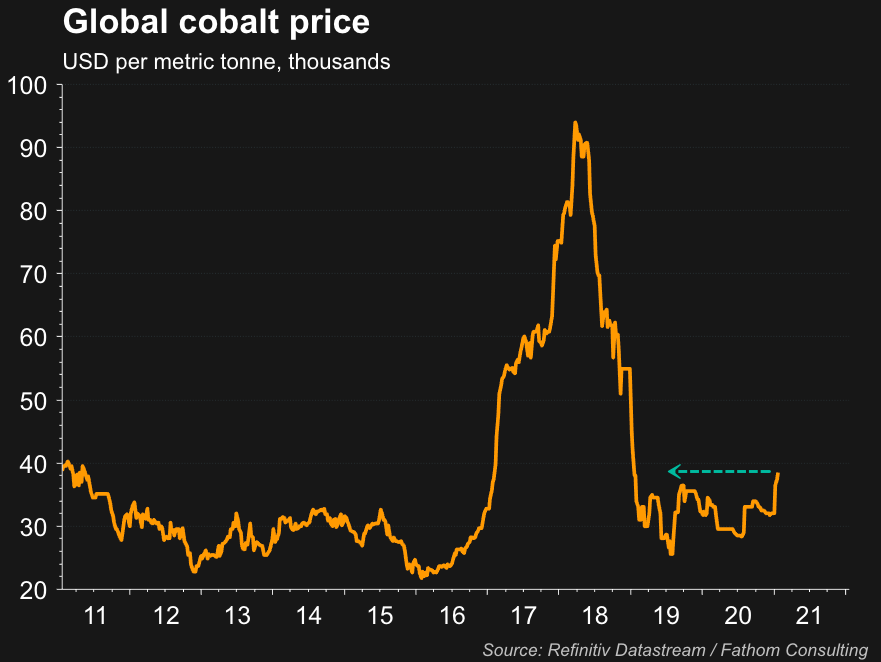
Global cobalt prices per metric ton are up more than 20% since the beginning of this year as increasing electric vehicle demand has strained global supply chains.
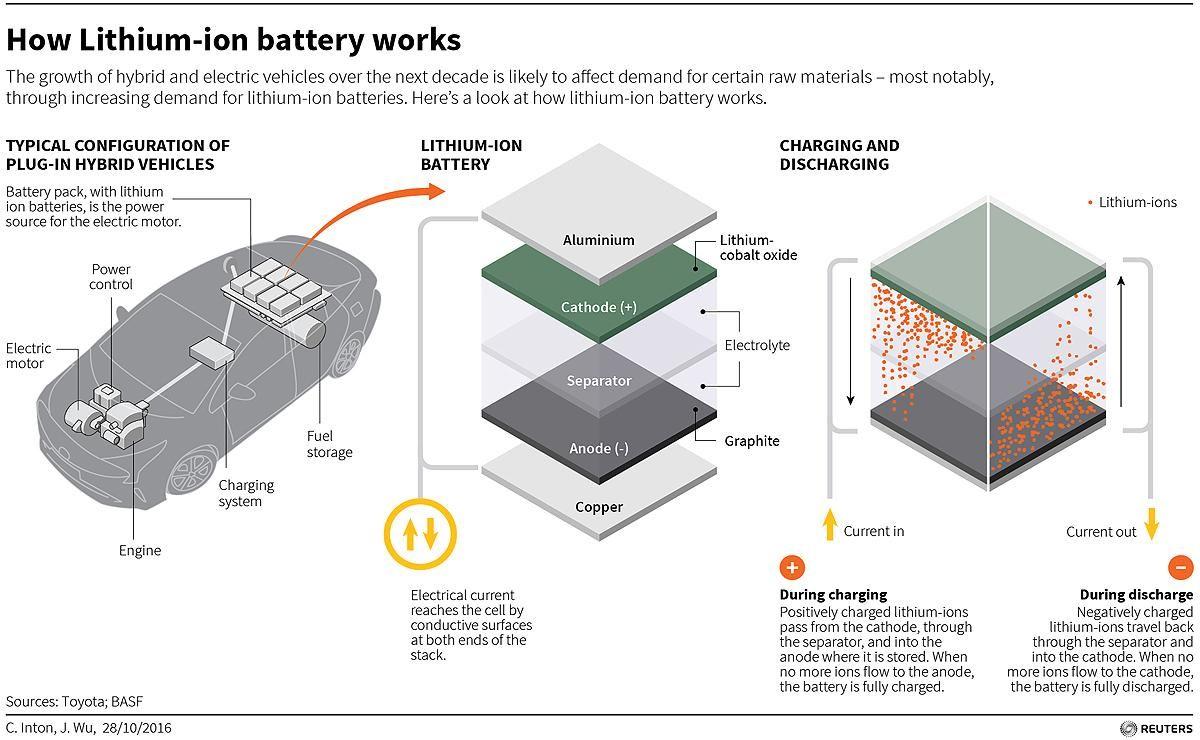
WSJ spoke with auto and battery experts about cobalt, a metal found in lithium-ion batteries. Besides EVs, the blue metal is found in virtually every consumer electronics like cell phones, laptop computers, and tablets.
Ying Lu, an analyst at London-based commodity research firm Roskill, was quoted by WSJ as saying, "demand is not going to shrink any time soon, while the supply remains tight mainly due to logistics disruptions in South Africa during the pandemic."
As explained by InsideSources, every EV battery contains cobalt, with most of it mined in the Democratic Republic of Congo (DRC).
DRC has sustained years of destabilization as the Congo government and armed militants duke it out over the control of mines. Much of the DRC cobalt is then hauled to South Africa and shipped to China for processing.
It's not just automakers and suppliers buying cobalt from DRC, many are trying to recycle cobalt from old batteries and exploring other regions around the world for alternative sourcing.
As a reminder, the Trump administration has signed an executive order in the US mining industry, highlighting America's dangerous overdependence on China for rare-earth metals.
In 2016 and 2018, massive interest poured into EVs with the Model 3 Tesla launch. Cobalt prices nearly quadrupled in that timeframe before crashing down in 2019. A recent move higher in prices could suggest that speculators have entered the market with the idea that President Biden's effort for a greener economy could result in higher demand for the metal.
Biden plans one million new auto industry jobs in manufacturing, supply chains, and infrastructure for an economy powered by new technologies to reduce greenhouse gas emissions. The government's push to electrify the economy would increase demand for cobalt, nickel, and manganese, among other components needed for battery-making.
Even with the US expected to boost EV production and supply chains under a new administration, China will continue to dominate the EV space.
What a difference six months makes. The last time we reported on cobalt, prices fell to a ten-month low on waning demand from aerospace and EVs.
Automakers need lithium-ion battery packs around $100 per kilowatt-hour mark for automakers to manufacture mass-market EVs - currently, at $137 per kilowatt-hour, surging prices for battery components is terrible news for automakers who are still not turning a profit on selling EVs.
Are speculators about to dive headfirst into cobalt markets and push prices higher based on Biden's new green economy?

(ZH) "It Was All A Lie": Biden-Linked WHO Adviser Says COVID-19 'Likely' Leaked

"It Was All A Lie": Biden-Linked WHO Adviser Says COVID-19 'Likely' Leaked From Wuhan Lab

A World Health Organization (WHO) adviser who previously worked under President Clinton and then-Senator Joe Biden has broken his silence over the origins of the COVID-19 pandemic.
Jamie Metzl - who served as Deputy Staff Director of the Foreign Relations Committee under Biden (2001-2003), after serving on the National Security Council (1997-1999) and the State Department (1999-2001) under Clinton, waited until three days after Biden's inauguration to tell the Toronto Sun that he thinks COVID-19 was most likely an accidental lab leak in Wuhan.

"There’s no irrefutable evidence," said the Kansas-born Metzl, a senior Atlantic Council fellow who was appointed to the WHO expert advisory committee on human genome editing in 2019. "There’s just more evidence and as more evidence arrives, the case for accidental lab leak, in my view, increases."
More from Metzl's interview with the Sun (emphasis ours):
What about the original theory that this all started in a wet market in Wuhan?
That was a lie. And the Chinese government knew very early on that that was a lie. And so in the face of overwhelming evidence in May of last year, the Chinese government shifted its position.
Do you get the idea of scary viruses being created in a lab may seem a little sci-fi?
It may feel like sci-fi to people but what’s happening is sci. There is a field of study called “gain of function” research, which is highly controversial in which some scientists amplify the virility of viruses. We know that the Wuhan Institute of Virology was involved in gain of function research on bat coronaviruses.
Is it because this specifically started in China that we still don’t know how COVID-19 started?
If there had been an outbreak in Congo or some country in Africa and that country, in the earliest days of the pandemic, prevented World Health Organization investigators from going onto the scene of the outbreak, for nearly a month, the world would have gone berserk.
Will a change of the U.S. administration help find an answer?
Biden will be tougher on China than President Trump because President Biden is very smart and strategic and he understands that American power and American strength doesn’t rest on bluster, it rests on principles, it rests on partnerships, and alliances and accountability. And the Trump administration unfortunately gave China a pass by over politicizing the question of the origin of the virus by alienating America’s partners and allies.
* * *
All of this begs a simple question; if a senior Atlantic Council fellow who operated at high levels of government under Democratic presidents is suddenly 'coming out' with the Wuhan lab leak theory, three days after Biden's inauguration, is the official narrative about to change?