(ZH) The "Fundamental" Economic Design Driving Crypto Valuation Above $2 Trillio

The "Fundamental" Economic Design Driving Crypto Valuation Above $2 Trillion

This week, we look at:
  • The crypto asset class breaking $2 trillion in market capitalization
  • The practice of token economics and token engineering, and how incentive design can create vary different operating outcomes (e.g., Fei protocol vs. The Graph)
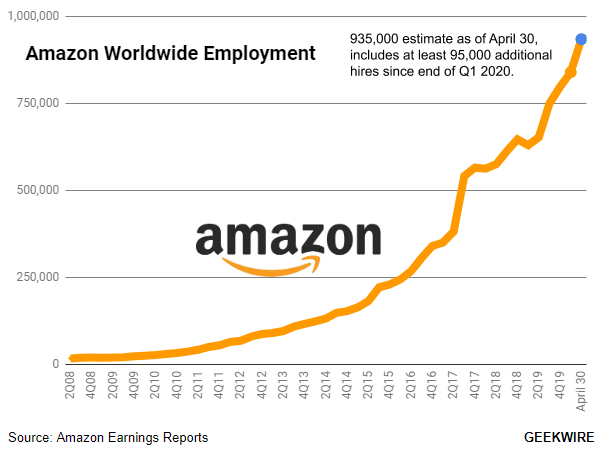
  • How incentive design is already encoded into social norms at companies like Amazon, which can scale to a million employees and retain an identity
Crypto isn’t magic. It’s math. Two trillion dollars worth of math.
We are still, often, asked incorrect questions about the crypto currency markets. Questions like — “but what is the fundamental value?”
You have to unpack the word “fundamental”. That word signals a Warren Buffet view of the world: there are companies out there, they have equity shares well specified by corporate law in a particular jurisdiction, some are expensive while some are cheap, and that bargain shopping can be determined by a spreadsheet analysis of their cashflows relative to others. It’s so fundamental!
The story of such fundamental truth is anchored in our cultural and social history. We can point to the intellectual tradition of rationalism and classical economics, and talk about the theory of the firm, and its production function. We can point to how these things grew out of governance by religion, and natural rights as granted by a deity, and all sorts of other non-empirical hand waving.
We can talk about supply and demand, and equilibria, and describe some agents in a perfect market with perfectly formed property rights. And some of these agents, surely, will be “good” (i.e., cheap relative to performance) and some will be “bad” (i.e., expensive tulips).
Anyway. Then we look at the real world and learn that markets are imperfect and deceptive, that humans behave irrationally because of their evolutionary biology programming, that top-down rationalist models don’t square with reality, that some of Warren Buffet’s best investments are in fact political and derive from monopoly market structure, and that the whole machine is careening off a cliff into imagination land.
That doesn’t mean that equities traded on a stock market, as circumscribed by their full supporting human history, can’t be valued relative to each other. On the contrary, they demonstrate that having people agree on a mathematical framework for structuring economic exchange can create that specific economic exchange. As another example, once the Black–Scholes options pricing model was used for options pricing, it is how options were priced.
But we are living in a system that exhibits complexity, and which appears random not due to some underlying randomness, but due to the exponential interaction of underlying mechanisms. Any math that we put around it is an approximation. This is famously stated as “The map is not the territory”, and cleverly articulated by Elizier Yudkowsky on LessWrong, as well as by Rene Magritte in pointing out that a painting of a pipe is not a pipe.

And so the financial models we trade on the markets are not companies; they are representational beliefs derived from financial models correlated to the promise of legal enforcement on some physical plane.
Let’s assume that we’ve budged your conviction about what is financially real. Turning to crypto networks, we can see that many of the elements of “assets traded on a stock market” do not apply to them. They are not always companies duly organized in Delaware, but often a global smattering of individuals across the Twitterverse. While some deliver cashflows, it is not always the financial attributes that networks seek to grow but economic or operating ones.
So instead of using questions like “How can we maximize profit to accrue to owners?”, they use questions like “How can we get this industry to create a virtuous cycle for storing data for itself on this network?” This is the type of question that a community manager or online game designer may ask. It is also the type of question that a well-cultured traditional company may ask if it has a Steve Jobs or Jeff Bezos customer orientation, supplanted with an open source ethos.
This is what is worth two trillion dollars.
Re-Discovering Token Engineering
Sometimes things fail, even though they were the right idea at the time: Morgan Stanley roboadvisors from 2001, machine learning algorithms from the 1970s, video streaming in the mid-2000s. The surrounding infrastructure was not the right soil for that particular idea to grow at the time. All you get is a bunch of salty entrepreneurs.
When the first token offering wave hit in 2017 and 2018, various smart people began to establish a formal practice of token engineering, sometimes called crypto economics or tokenomics. It is rooted in rigorous game theory, mechanism design, and mathematical simulation. There was a notable difference in the quality of thinking across the industry. Some teams used terms from this field as if they were magic summoning words, and that in saying those words, correct outcomes would simply appear. Other teams built concepts for the long term with system design in mind.
There was a lot less data around in 2017 about what would end up working. Overly mathematical papers looked like nonsense in an environment where Telegram and EOS were raising over $1 billion each based on business logic and hype. Much of that vapor would dissipate, and the unpopular inventors went onto new frontiers.
Yet over the long run, there are stark differences between successful and unsuccessful token design. This practice is the closest “truth” we get to the concept of fundamentals in the crypto ecosystem. You can create a network or protocol with incentives that drive usage and value into the ground — a Nash equilibrium with bad payoffs.
Sometimes those paths to a bad equilibrium come from edge conditions, such as too much demand and popularity. The Fei protocol, which attempts to create an algorithmic stablecoin with punishing mechanics for selling the pegged coin, ran a fundraise which attracted over $1 billion of capital, but quickly lost its mark-to-market value. While we are not endorsing any particular view on this asset, the following threads are instructive in showing how incentive design created the opposite of the desired outcome, and is now resulting in emergency action.
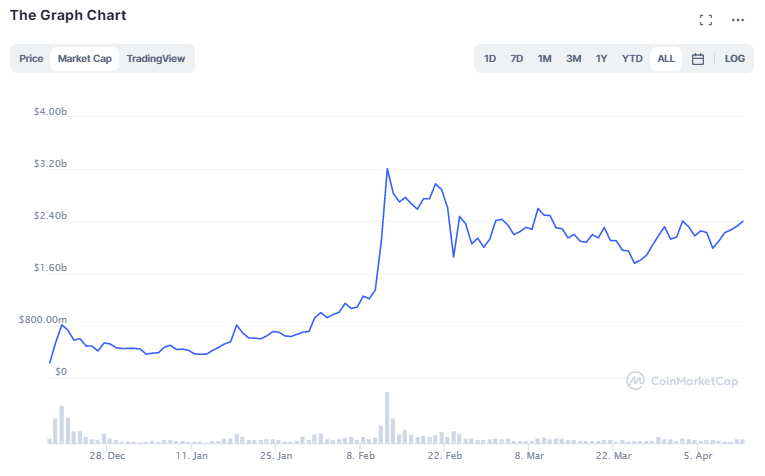
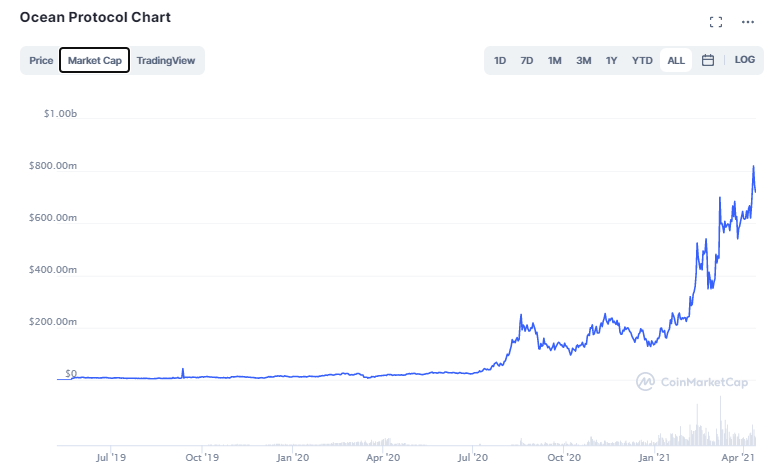
In a counter example, we can look at Ocean Protocol and The Graph. Both projects had spent years sweating their tokenomics and openly discussing design ideas (not that Fei hasn’t). The result looked over-engineered during the summer of DeFi growth and downright unnecessary in the crypto winter of 2018-2019. But it was built for the long run. And when these projects launched, their machines ground into gear, generating purpose-built economic activities.
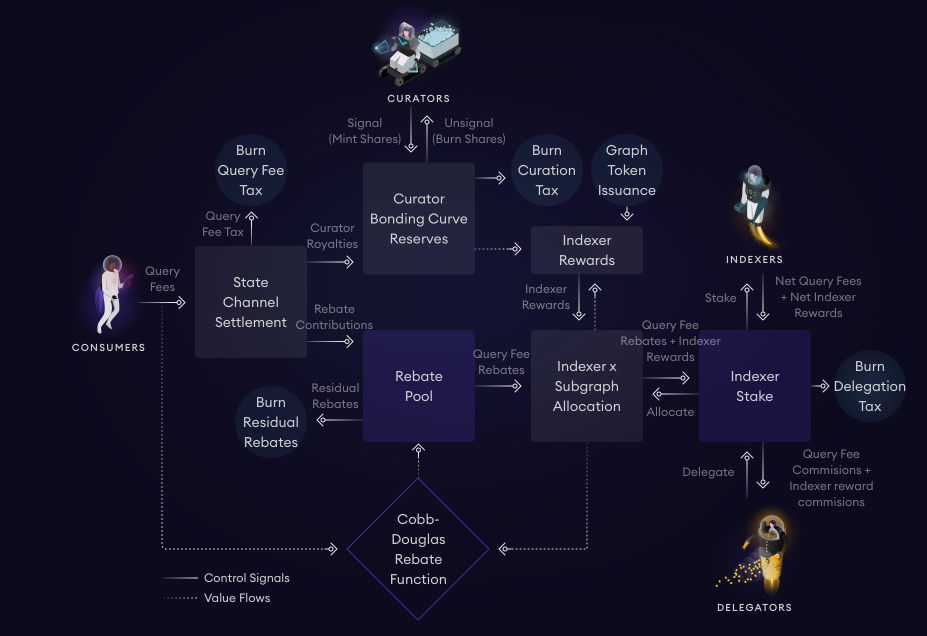
Certainly, crypto asset prices will wiggle around and should not be taken for granted. Our examples might be wrong, and flip in relative performance. But if you are looking to build confidence into understanding what drives the value of a particular token, you have to build the mathematical understanding of what drives the value of a particular economic system.
Bitcoin rewards miners in order to generate digital scarcity of its native store of value. The correlation between increased computation to get those rewards and the value of a secure digital asset is a well-designed game theoretical equilibrium. It posits players trying to achieve certain self-interested outcomes for themselves, and in their competitive interactions with others they generate an ecosystem. It is the first and best example of the token engineering principles.
Key Takeaway
There is one last mental model we want to share about token engineering.
It is imperative to have clarity and insights into what exactly one is trying to grow and optimize. In the parlance of linear programming or machine learning, you have to know your objective function — the exact equation, and thereby outcome, that you want to maximize. And as a corollary, you have to know how that function actually works: its inputs, its outputs, and how the gears turn to generate the outputs. This is the opposite of meme-based investment frameworks, and should be comfort to asset allocators looking for “fundamentals”.
However, the objective function also needs the magic touch of marketers and community organizers to align the financial machine to help real customers, rather than imagined hypothetical ones.
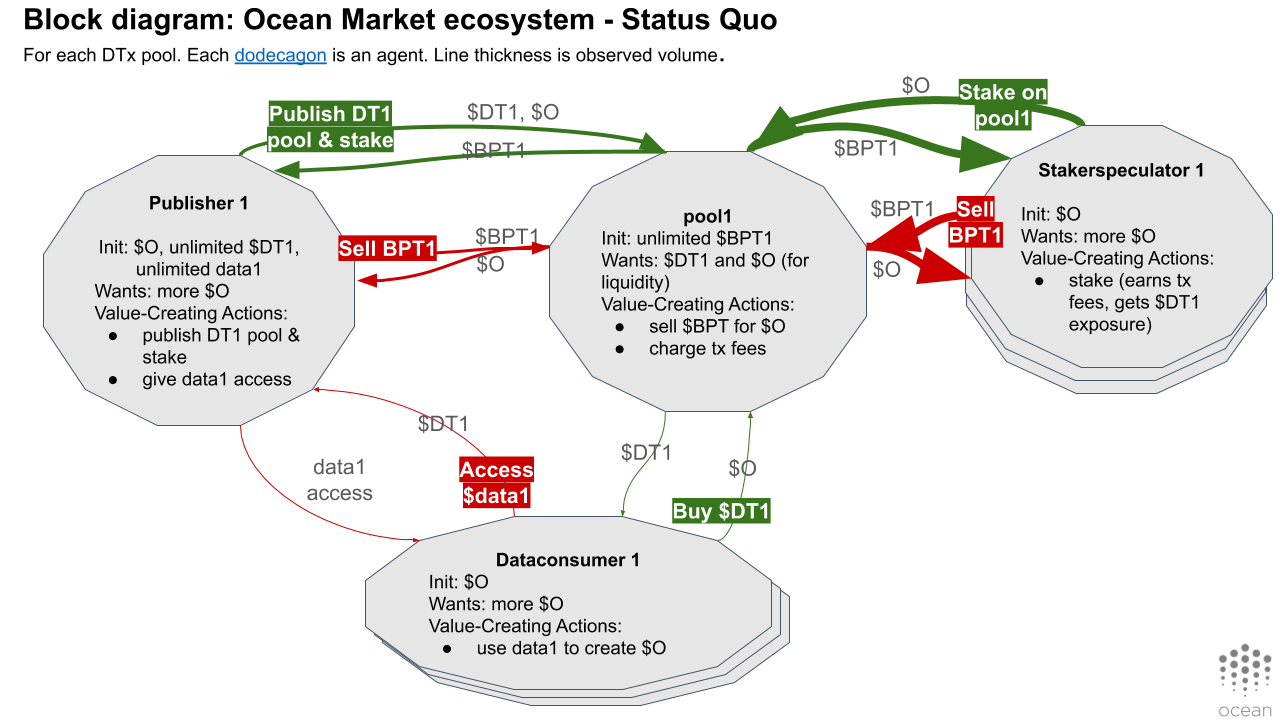
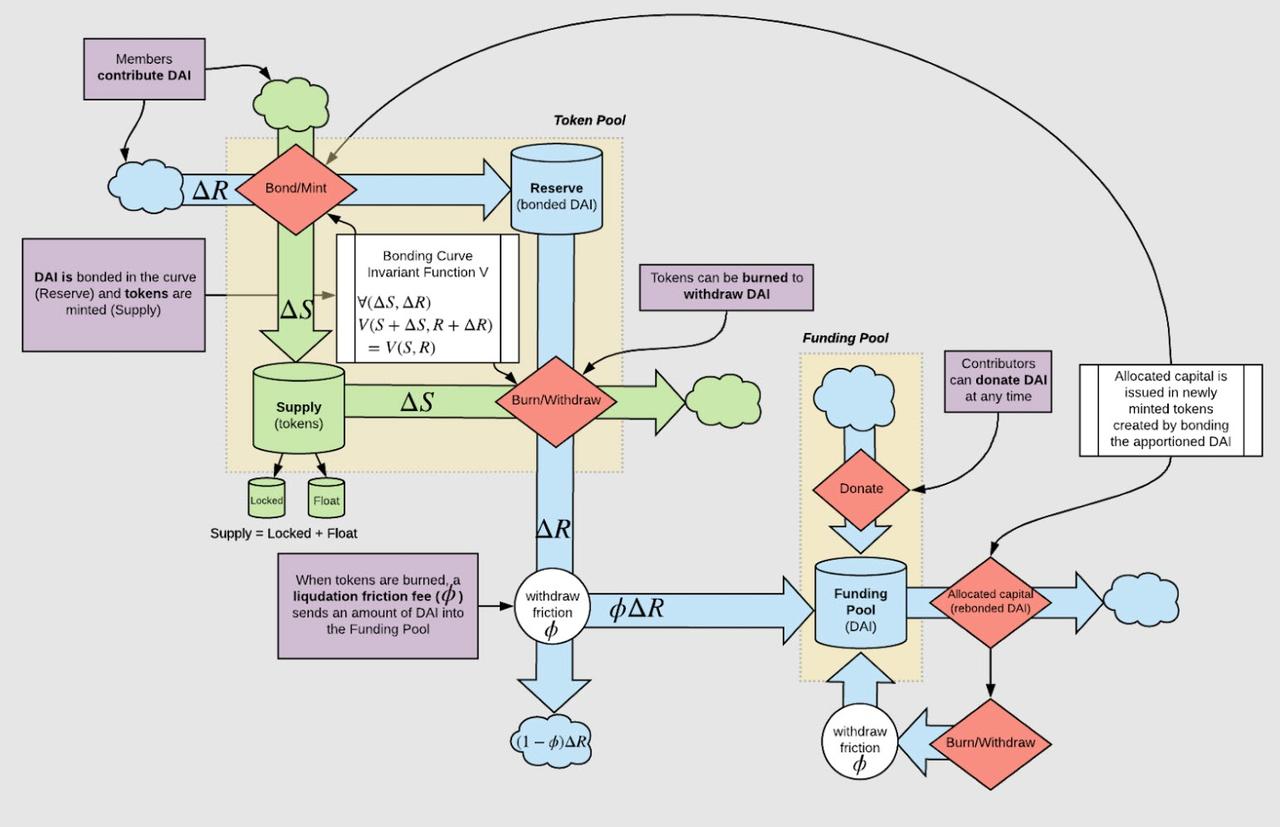
But you also need to think about where the incentives are plugging in. Per the diagram above, some will be nested into the actual legal and economic system, or equivalently the underlying blockchain network. We can think of this as monetary policy, or cooperation through capitalist competition, or the trade-offs between blockchain miners and software developers. Others will live at the equivalent level of the firm, and be structured as protocols or platforms. Such projects will have incentives focused on particular digital assets, their adoption, and customer behaviors. Yet other digital assets will be self-contained products, like the art NFTs now coming to market, and power only the asset itself.
While each layer can have financial flows, they require radically different design considerations.
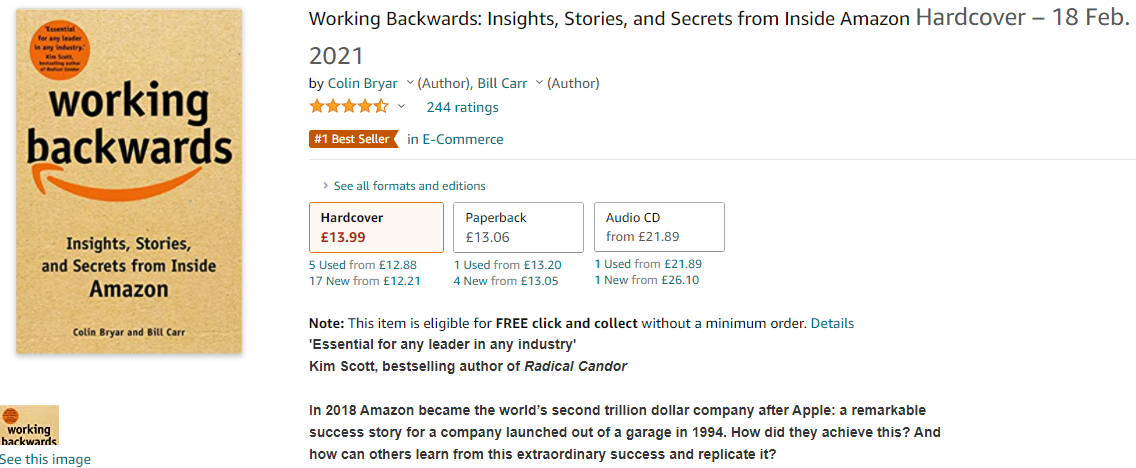
This approach to growing organizations sounds novel, but can be actually found internally at high-performing companies. We recently read Working Backwards, the book about Amazon’s culture and approach to tackling market opportunities by solving from the customer’s point of view. It’s an operating guide on how to build scalable teams, improve organization and process, and implement rules to make good decisions across a million employees.
These operating rules are about a particular way of being, like algorithms for decision making. Some of them relate to compensation and financial incentives. Others create intangible social capital, or set cultural norms. There is either well-catalogued incentive design or clear and transparent prioritization of values to grow the Amazon organization.
It is like a fractal expanding with a particular generative pattern. Amazon can enforce its rules through economic force, but it does it instead with social norms.
The same thing can be said about crypto networks, just at the level of the software. Software has much higher precision around the specification of what agents can do with the software itself. Therefore, network-orchestrated organizations are currently more quantitative rather than the qualitative human social norm. It is this mathematics that is creating the $2 trillion of value now attributed to digital asset ecosystems. And it is this practice that will be a core part of valuing our future economies.
FT : Europe’s low-tax nations braced for struggle over US corporate tax plan

Europe’s low-tax nations braced for struggle over US corporate tax plan
Agreement at OECD would save Brussels from having to push through its own proposal

Europe’s low-tax nations have responded positively to the Biden administration’s plans for a radical reform of global corporate taxation, even though they will lose out — but signalled that Washington can expect a fight over much of the detail.

The proposal, which first emerged last week, seeks to break the deadlock in long-running global talks hosted by the OECD club of wealthy nations. It would give countries the power to raise corporate tax from US tech giants and other large multinationals, and introduce a global minimum corporate tax rate.

That would be a blow to Ireland, the Netherlands, Luxembourg, Malta and Cyprus, all popular bases for the world’s largest companies, which have fiercely defended their right to set corporate tax at a level of their choosing.

Despite this, Dublin said it was “in favour of an agreement . . . that can bring stability to the international tax framework”, while Hans Vijlbrief, the Netherlands state secretary for finance, said the Biden plan was a “huge step towards finding global solutions and developing effective rules”. 

“Few countries will ever criticise plans to root out tax avoidance. But it is only when you start walking the talk that some countries walk in the other direction,” said Tove Maria Ryding, policy manager at the European Network on Debt and Development in Brussels. 

The ease with which the world’s biggest multinationals can channel their profits through these jurisdictions to reduce their overall tax burden has long been a cause for complaint among major European economies that lose out on revenue generated in their countries.

However, any new EU-wide taxes require the unanimous agreement of all 27 member states, handing a veto to governments that are fiercely protective of their taxation rights. As a result, EU finance ministries have been struggling for years to agree on bloc-wide policies to root out multinational tax avoidance.

In 2018 an alliance of smaller countries blocked plans for a European tech tax in favour of holding international talks at the OECD.

And earlier this year countries including Ireland, Malta and Luxembourg opposed draft EU plans to force multinationals with more than €750m in annual turnover to report how much profit and tax they paid in all EU member states. The proposal, which is subject to final negotiations between MEPs and national governments, is seen by its exponents as a first step towards documenting the scale of tax avoidance in Europe. 

Brussels’ legal assaults on “sweetheart” tax arrangements between governments and corporate giants have had mixed results. The European Commission suffered an embarrassing defeat last year when its landmark decision to force Apple to repay €14.3bn in unpaid taxes to the Irish government was annulled by the EU’s general court. The commission will appeal against the decision, but in the meantime efforts to use EU law to crack down on multinationals have been stymied.

All this helps to explain why the US proposals were greeted relatively warmly: the agreement under negotiation through the OECD would cover 135 countries and all of the world’s largest corporations, in effect taking the task out of Brussels’ hands.

“The OECD measures mean the EU won’t need its own digital tax,” said an EU diplomat.

Paolo Gentiloni, EU economics commissioner, on Tuesday welcomed the US initiative and said a new set of global rules for the taxation of digital giants was the “best solution”. 

“The second best solution is to have a European [digital tax] proposal. The most difficult is to have national solutions which is what is happening now,” he said. However he noted the US plans were “not exactly the same” as those being developed in Europe.

“The criteria will be crucial but I think we can find very strong common solutions,” he said.

That leaves plenty of room for dispute over the details of how the scheme would be implemented.

The biggest battle is likely to be the level of the global minimum rate. The US proposes a 21 per cent effective minimum corporation tax. While the Netherlands and Luxembourg have headline rates higher than this, Ireland’s corporate tax rate stands at 12.5 per cent.

The Irish finance ministry stressed that a global minimum rate had yet to be agreed in principle.

“Small countries, such as Ireland, need to be able to use tax policy as a legitimate lever to compensate for advantages of scale, resources and location enjoyed by larger countries,” the finance ministry said. “At the same time, we accept that there need to be boundaries to ensure any competition is fair and sustainable.”


Feargal O’Rourke, managing partner of PwC in Ireland, said an international minimum would be resisted by Ireland and countries such as Hungary, which has a 9 per cent rate. “Ireland is saying ‘we’re going to fight our corner’, as you’d expect,” O’Rourke said, noting that “in good times and bad times Ireland held on to the rate . . . it’s a symbol of stability and predictability”. 

However, he said, there was “no panic” in Dublin about the potential erosion of Ireland’s tax advantage. Ministers believe the country’s highly skilled international workforce and longstanding relationships with multinational companies will make it competitive even if its tax position changes.

“Tax is now just one of the many points of attraction Ireland has [for multinational companies]. If this had happened 20 years ago it would have been more of a concern.”

The scope of the US proposals is contentious in parts of Europe: member states such as France and Italy have long wanted to impose international taxes on tech giants, but Germany could seek to protect its powerful carmakers, which were not covered by the initial OECD proposals but would be hit by the US plan.

The definition of what the tax is levied on could also be contested, Ryding said: “One way of watering down [the minimum tax proposal] would be to push for the rules to apply only to profits that are not compliant with existing OECD measures on profit shifting.”

Ultimately, the OECD talks will need to reach a broad consensus, leaving ample room for coalitions of countries to band together and water down elements of the US proposals.

Ryding said that despite most governments’ desire to generate more tax revenues, the history of recent international tax negotiations suggests the talks will veer towards a lowest common denominator deal.

“In the EU and the OECD we don’t have coalitions of progressive countries calling for more, but alliances of tax havens who want less,” she said.

FT : Amazon’s Leonardo: portrait of the genius as a young man

Amazon’s Leonardo: portrait of the genius as a young man
The creators of a new screen drama about the young Leonardo da Vinci — and its star, Aidan Turner — talk about seeking to portray the artist’s humanity

Shortly before Aidan Turner began shooting Leonardo, Amazon’s atmospheric new drama about the early career of Leonardo da Vinci, he visited the artist’s retrospective at the Louvre in Paris. The Irish actor had already read a handful of books on Leonardo, including Charles Nicholl’s biography The Flights of the Mind, but nothing, he says, compared to standing in front of the work. “I was one of a dozen people at a private view, and I got to spend some time alone with these paintings . . . It was profound and strange. I was a week away from playing him and I’m staring at his masterpieces. Up close, they were like high-definition photographs.”

Leonardo attempts to put flesh on the bones of what is known about the artist: that he was the illegitimate son of a peasant girl and a legal notary, and was sent as a boy to live with his grandparents; that he had no formal education; that he was arrested for sodomy in his early twenties after an anonymous tip-off, though avoided jail. The series shows the young Leonardo suffering the after-effects of a loveless childhood and taking refuge in art and science. As an apprentice in the workshop of the painter, sculptor and goldsmith Andrea del Verrocchio, his restlessness and hunger to learn isolate him from his peers, who become envious of his talent.

Each episode is also loosely built around a landmark Leonardo work — early instalments feature “The Baptism of Christ”, a Verrocchio painting in which one of the angels is attributed to his star pupil, and “Adoration of the Magi”, which was commissioned in 1481 by the monastery of San Donato a Scopeto but was never finished.

Turner says the series’ objective is to provide a more three-dimensional portrait of the artist. “We know some of his famous works, his inventions, his philosophies, but we’re trying to get to the core of what was driving him emotionally.” He adds that the word “genius”, which is routinely applied to Leonardo, can make us forget his humanity — “You’re playing a person, ultimately, and we’re all human.”

For the show’s American co-creator Frank Spotnitz (whose previous credits include The X-Files and The Man in the High Castle), the challenge lay in finding a clear narrative. “It’s hard to do a series about an artist, as the dramatic stakes are not obvious. It was a challenge to think about what we had to say about him and why people would care 500 years later, as great as Leonardo is. What does he mean to a modern audience?”

When Spotnitz was initially approached in 2017 by the Italian production company Lux Vide about a series on Leonardo, he declined. He had just finished work on Medici, about the Italian dynasty that rose to prominence in the 15th century, and was suffering from Renaissance fatigue. But a year later they asked him again. “They wouldn’t give up,” he recalls. “By this time, they also had Steve Thompson, a wonderful writer who has done Sherlock and Doctor Who, and I said, ‘Ah, maybe if I’m working with Steve . . . ’”

To plug the historical gaps and give the show some structure, Spotnitz and Thompson came up with various fictional strands, including one involving Caterina de Cremona (played by The Undoing’s Matilda De Angelis), the model who appears in the drawing “Leda and the Swan” and who, in the series, becomes close friend and muse to Leonardo. There’s also Leonardo’s fictitious arrest for suspected murder, prompting Freddie Highmore’s police detective, Stefano Giraldi, to cross-examine him in prison and tell his story in flashback.

“This can only be an approximation of Leonardo,” says Highmore, who, as well as playing Giraldi, is also executive producer on the show. “But I do feel like the version that we present is closer to him than [has] been done before, or hasn’t been discussed, and perhaps purposely so. He feels like a very modern man. In this show he’s an outsider, he’s an illegitimate child [and] he’s a gay man.”

Da Vinci’s sexuality has long been the subject of debate, variously from Giorgio Vasari, the 16th-century author of Lives of the Artists, to Sigmund Freud, who speculated that his homosexuality was never acted upon, to Charles Nicholl, whose biography is unequivocal about the artist’s lust for his young assistant, Salaì. Nonetheless, Leonardo is the first screen rendering of the artist that attempts to examine his attraction to men — in the early episodes we see him rejecting the advances of Caterina and later going home with a young male model, which leads to his arrest on sodomy charges.

Spotnitz notes that the series is “entertainment, not a documentary, but having said that [it provides] a lot of real history and insight into his art, what made it great and the struggles he encountered. The fictional elements of Freddie’s character and the character of Caterina — who is actually a real person, we just don’t know anything about her — are there to get to the human truth of Leonardo. There’s a method to this. By using fiction, I think you get closer to the truth than you would if you stuck to the documentary approach.”

Along with the challenge of creating a convincing protagonist, Leonardo’s creators encountered more practical problems. Shooting began in Italy in December 2019 but, because of Covid-19, the production shut down in March 2020 when they still had nine weeks’ filming left. Location work had been planned in Milan and Mantua, but was abandoned. Instead, the backlot — the location for the exterior sets — was expanded and the numbers of extras reduced when filming resumed in June. Spotnitz says he rewrote some of the dialogue to allow for fewer actors in single scenes, “but I don’t think the audience would suspect. It’s pretty seamless.”

For Turner and Highmore, this meant rethinking how they worked. “Something we might have shot in half a day was now a two-day shoot,” Turner says. “And just the social element of talking to other actors about a scene, that’s all gone. Instead, you’re in a green room on your own with a mask on and a visor. You want to compare notes and talk about the thing you’re doing, and just relate to the person before you get into the character. You don’t realise that’s so important until it’s not there.”

Nonetheless, Turner — whose previous roles have included the dwarf Kíli in Peter Jackson’s Hobbit trilogy, the Pre-Raphaelite painter Dante Gabriel Rossetti in Desperate Romantics and, most famously, the eponymous lead in the hit BBC drama Poldark — is proud of the series which was produced in extraordinary circumstances and through which they all had a crash course in problem-solving. I note that Leonardo sees him once again in period costume, swathed in an array of muslin shirts. Does he ever want to play a modern-day police detective or a drug dealer, just so he can wear normal clothes?

“That’s got to be next, right?” he laughs. “I’m hoping something more contemporary will be in the pipeline where I can wear a pair of jeans. But you get an offer to play someone like Leonardo da Vinci and, well, there are some things you can’t say no to.”

‘Leonardo’ launches on Amazon Prime Video on April 16

>>> US After Hours Summary: SAP +3.7% jumps as it raises FY21 outlook; TEAM +3%

After Hours Summary: SAP +3.7% jumps as it raises FY21 outlook; TEAM +3% also had strong guidance; SFIX -5.4% lower on news its founder and CEO will transition to Exec Chair, making room for new CEO; MRNA +2.2% as it provides clinical and supply updates

After Hours Gainers:

Companies trading higher in after hours in reaction to earnings/guidance: FLXN +3.7% (guides to Q1 ZILRETTA sales of $24.6 mln), SAP +3.7% (raises FY21 outlook reflecting the strong new cloud business performance), TEAM +3% (guides MarQ revs well above consensus, but co believes it's short-term event-driven), PKI +2.3% (issues upside Q1 revenue guidance), BRKR +0.8% (issues upside Q1 revenue guidance)

Companies trading higher in after hours in reaction to news: MN +10.4% (reports March AUM of $21.1 bln), PFMT +9.4% (CMS awarded Performant an 8.5 year contract), MRNA +2.2% (provides clinical and supply updates on COVID-19 vaccines), PRQR +1.3% (announces publication in Nature Medicine), ENDP +1% (announces publication of Phase 3 data evaluating Qwo), GME +0.7% (announces voluntary early redemption of senior notes), MO +0.2% (Juul Labs is reportedly facing new RICO claims, according to Bloomberg), PG +0.1% (increases quarterly dividend by 10%), PFE +0.1% (PFE and BNTX say they can deliver 10% more vaccine doses by end of May, according to CNBC), AL +0.1% (announces delivery of one new Airbus A321-200neo LR)

After Hours Losers:

Companies trading lower in after hours in reaction to earnings/guidance: SCR -0.7%, SWI -0.3% (issues upside Q1 revenue guidance)

Companies trading lower in after hours in reaction to news: SFIX -5.4% (Founder and CEO to transition to Exec Chairperson; Elizabeth Spaulding will become CEO), DISCK -5.4% (Credit Suisse reportedly selling 19 mln share block of DISCA, and 22 mln share block of DISCK, according to CNBC's David Faber), DISCA -4.2% (Credit Suisse reportedly selling 19 mln share block of DISCA, and 22 mln share block of DISCK, according to CNBC's David Faber), STSA -3.3% (stock offering), AVNW -1.5% (files for $200 mln mixed securities shelf offering ), BNTX -0.5% (PFE and BNTX say they can deliver 10% more vaccine doses by end of May, according to CNBC), GILD -0.3% (FDA grants accelerated approval of Trodelvy)

(ZH) "There Is Significant Internal Weakness": Why The "Flight To Quality" In Th

"There Is Significant Internal Weakness": Why The "Flight To Quality" In The Nasdaq Stinks

From Larry McDonald of The Bear Traps Report, April 10, 2021 edition
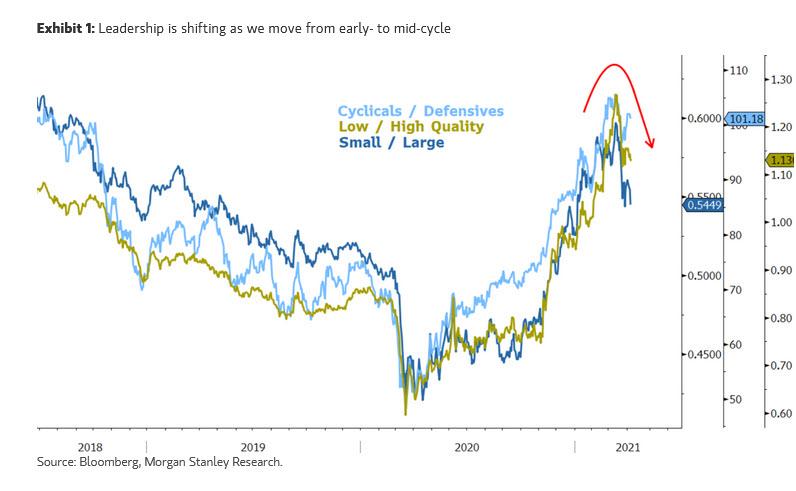
There is a clear flight to “quality” inside the Nasdaq which is HIGHLY unusual with the colossal threat of higher rates - reopening hanging over the Nasdaq’s head. SELL Nasdaq signals are getting much louder.

Isn’t the entire street going to tighten limits? We went from the Nasdaq Whale, to Robinhood leveraged up traders blowing up Melvin Capital, and then to Archegos blowing up on leverage. In our view, a meaningful amount of the last few hundred handles in the S&P’s rally were through pure leverage. What happens when this leverage is taken down across the Street?
In Q1, investors borrowed a record $814 billion against their portfolios, up 49% from one year earlier, the fastest annual increase since 2007. The last time investor borrowings had grown so rapidly was in 1999. Leverage has been the marginal buyer. As the leverage shocks pile up the probability of deleveraging is rising sharply.
The ‘Flight to Quality' in the Nasdaq smells, there is significant internal weakness:
  • NYSE new highs is at 90 vs. 405 in February
  • The Russell 2000 rolling over and under performing its peer indices
  • AAII sentiment is at nose bleed bullish levels (6th best all time)
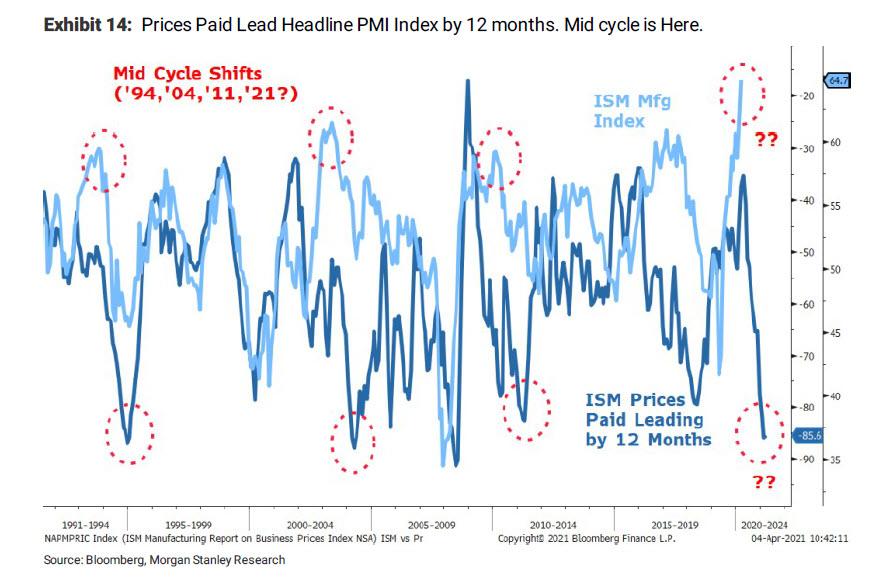
  • ISM Manufacturing is at the highest since 1983, which points to weak forward returns
  • High yield spreads are near 2007 tights
  • Tax hike risk is higher
  • We have large fiscal spending that is certain to come, but that is a Q3 Q4 event
  • Ukraine/Putin risk
  • Taiwan (known unknowns)
Above all, Softbank whale (September), Robinhooders spiking GameStop (January), Greensill (February), the SPAC sell off and issuance freeze (February), and Archegos blowing up (March) the reasons to delever are piling up.
Leverage tremors have been mounting, the system is breaking down, but has the marginal buyer been neutered? They have been wounded for sure (see ARKK), but recent lows in VIX Volatility speaks to cheap protection vs. the risks.
Late Comers to the Party: Investors have injected more money into equity funds in the last five months than over the last 12 years, per BofA.
Bottom YOU DO NOT want to be fully invested with ISM at record levels, AAII bulls printing near its best levels all time and high yield spreads near 2007, pre-subprime blowup tights. It just is POOR risk management. Raise capital for the next shock. Since 2015, this is the ONLY strategy that has really worked. You can say “Buy and Hold” but very few investors can weather the shocks.
S&P Weak Returns after High ISM Prints
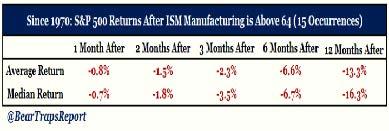
The March U.S. ISM Manufacturing print came in at 64.7, its highest reading since 1983. Looking at data since 1970, the S&P 500's forward returns are very poor when ISM (and optimism) is this high.
Notably, the weakness isn't just a few months out, over the past 50 years, ISM prints this high have been correlated with market cycle peaks. Meanwhile, 95% of S&P 500 companies are trading above their 200 day moving average, overbought

High flyers have fallen low
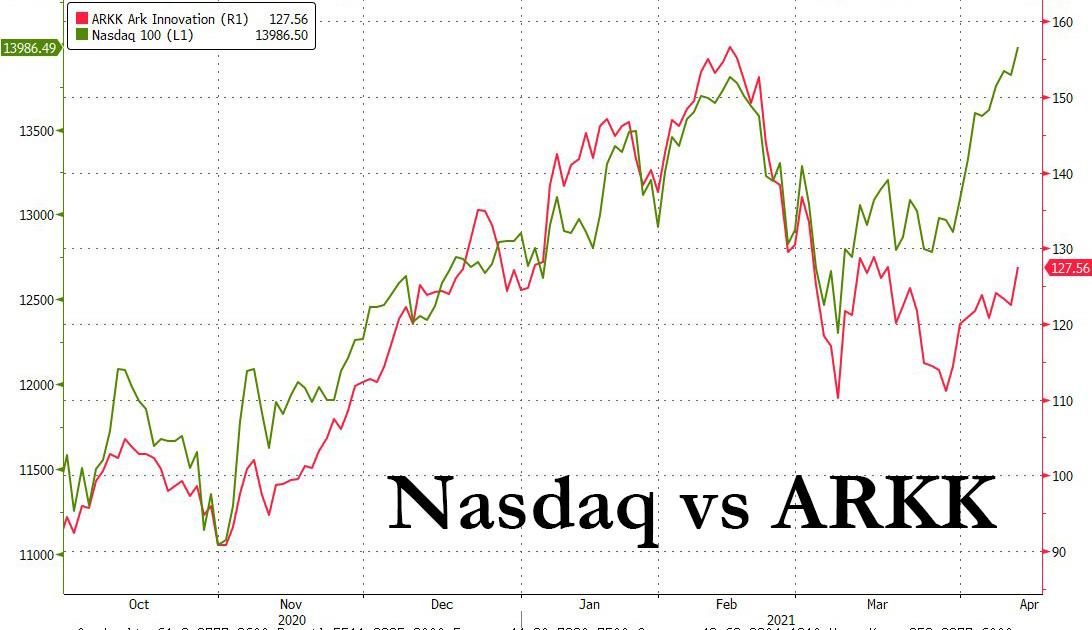
A noticeable trend in recent weeks has been the underperformance of high-flying, highly levered growth names. Keep in mind, most of these companies have very weak balance sheets. For months the Nasdaq 100 and the ARKK Ark Innovation ETF were tightly correlated, however, this correlation has broken down.
While the 'stronger' tech companies like Apple (large cash balance) have headed back towards their highs, the high growth names in ARKK have struggled to get of their recent lows.
Weak Breadth
”In the last 21 days, the Nasdaq is up 6% with the average breadth (advancers decliners) across the Nasdaq at 147. This hasn’t happened in the history of Bloomberg data. So, as ARKK, TSLA, and SPACs are all wounded. There is a flight to safety into large cap names. We remember this action vividly in 2007. Notably, a 5% rally in the Nasdaq in 20 days with an average breadth of 125 (slightly less extreme breadth divergence) HAS occurred a few times in the past 15 years. The prior occasions pointed to poor forward returns. One of these weak breath time period was the days before the February 2020 high and the other two were in 2007 and 2011.”

WSJ : Do J&J and AstraZeneca Vaccines Cause Blood Clots, and What Are the Sympto

Do J&J and AstraZeneca Vaccines Cause Blood Clots, and What Are the Symptoms?
U.S. recommends suspension of Johnson & Johnson’s Covid-19 vaccine while authorities investigate rare clotting cases

U.S. health authorities recommended that vaccination sites suspend use of Johnson & Johnson’s JNJ -1.34% Covid-19 vaccine to investigate rare cases of blood clots. The move comes after European health regulators said they were probing reports of clots among four people who got J&J’s shot, while also looking into clotting in people who had received a Covid-19 vaccine developed by AstraZeneca AZN -0.47% PLC and the University of Oxford.

Why is the J&J vaccine being paused?
U.S. health authorities recommended the pause while they investigate six reported cases of blood clots, including one death. Six women, ages 18 to 48 years, were reported to have experienced the clots as well as low levels of platelets, which help with clotting.

The cases were extremely rare—more than 6.8 million doses of the shot have been given in the U.S. so far—but the U.S. Food and Drug Administration said it was making the recommendation out of an abundance of caution. Regulators and researchers still don’t know whether the vaccines cause the side effects, or something else.

What are the symptoms of blood clots I should look out for?
If you’ve gotten the J&J vaccine within the past three weeks, you should look for symptoms such as severe headache, abdominal pain, leg pain or shortness of breath. If you have any of those symptoms, which differ from the flulike symptoms that people have reported following vaccination, you should contact your doctor or other healthcare provider.

For each of the six clotting cases, symptoms occurred six to 13 days post-vaccination, whereas the flulike symptoms tend to occur within a day or so of receiving the vaccine.

But health authorities say there is no need to panic. For those who got the J&J vaccine more than a month ago, the risk for blood clotting is very low, said Anne Schuchat, the principal deputy director at the CDC. People who recently received the vaccine within the last couple of weeks and have any of those symptoms should contact their healthcare provider and seek medical treatment, Dr. Schuchat said.

“This is an extremely rare event,” but it can also be very serious, said Vivek Cherian, an internal medicine physician affiliated with the University of Maryland Medical System. “Just be aware of those side effects. And if you get them, don’t sit on them.”

How serious is the risk of blood clots? Don’t all vaccines have risk?
The risk appears low, given there were only a handful of cases reported among the millions of doses given. And all drugs and vaccines can come with risks. But health authorities want to be especially careful with shots like the Covid-19 vaccines, which are being given so widely, especially since there are alternatives available.

What is concerning is that blood clots can be serious or life-threatening if they do occur and aren’t treated properly. The FDA and CDC told doctors to avoid a blood thinner called heparin.

Who is most at risk?
It is still unclear. The six cases all occurred among women between 18 and 48 years, suggesting younger women might be at higher risk. A similar pattern was seen with clotting side effects among people given AstraZeneca’s Covid-19 vaccine. In fact, the U.K.’s medicines regulator recently recommended that people under 30 years shouldn’t get the AstraZeneca shot, while Canadian authorities urged stopping its use for people under 55 years.

How Viral Vector Vaccines Work
Johnson & Johnson and AstraZeneca’s vaccines rely on a different mechanism for conferring immunity than traditional vaccines.

How is J&J’s vaccine different from the others that are available?
The J&J vaccine, like the shot from AstraZeneca, uses a new technology to help people’s immune systems mobilize against the new coronavirus. The two viral-vector vaccines contain a virus that causes the common cold, but which has been rendered harmless. That virus is engineered to include genetic instructions that trigger a protective immune response.

The Pfizer and Moderna vaccines use a different technology, called messenger RNA, to achieve the same goal. A CDC official said authorities weren’t seeing clotting and low platelet counts among patients who received those vaccines. Researchers are investigating whether the viral-vector technology may play a role in the clotting side effects.

Should people who want a one-shot vaccine keep waiting, or get an mRNA vaccine?
Health authorities have been encouraging people to get vaccinated as soon as they can, regardless of the shot’s maker. And the pause may only last a few days, as the FDA and CDC investigate. The CDC is working with public-health departments and providers to reschedule appointments for people who anticipated getting the J&J vaccine in the days ahead, Dr. Schuchat said.