- Telecom Italia (TQI TH) +1%
- Apollo May Be Interested in Telecom Italia: MF
- Unilever (UNVB TH) +0.5%
- Deutsche Bank (DBK TH) -2.1%
- Linde (LIN TH) -2.1%
- Delivery Hero (DHER TH) -2.3%
- HeidelbergCement (HEI TH) -2.4%
- Builders’ Guidance at Risk on Energy Costs, Morgan Stanley Says
- Watch EU Luxury, Steel, Iron Shares on Fresh Russia Sanctions
- Eni (ENI TH) -2.4%
- Eni Says Strong Diesel Margins in Asia Likely to Be Short-Lived
- BNP Paribas (BNP TH) -2.5%
- Commerzbank (CBK TH) -2.8%
- Evotec SE (EVT TH) -3.2%
- Equinor (DNQ TH) -5.7%
- Prosus (1TY TH) -8.8%
- Wild Swings Rule China Stocks as Bonds, Yuan Also Slide
DAX:
- Porsche SE (PAH3 TH) +0.5%
- Airbus (AIR TH) -1%
- HeidelbergCement (HEI TH) -1.4%
- Builders’ Guidance at Risk on Energy Costs, Morgan Stanley Says
- Delivery Hero (DHER TH) -1.5%
- Linde (LIN TH) -1.6%
- Deutsche Bank (DBK TH) -1.8%
- Watch EU Luxury, Steel, Iron Shares on Fresh Russia Sanctions
MDAX:
- Wacker Chemie (WCH TH) +1.3%
- Wacker Chemie Sees 2022 Ebitda EU1.2B to EU1.5B, Est. EU1.32B
- Uniper (UN01 TH) +0.8%
- Russia Sanctions Could Slash Fortum, Uniper Earnings by 20% (1)
- Grand City Properties (GYC TH) -1%
- Commerzbank (CBK TH) -1.7%
- Lufthansa (LHA TH) -2.1%
- Evotec SE (EVT TH) -2.8%
- Fraport (FRA TH) -3.7%
- Fraport FY Ebitda Beats Estimates
SDAX:
- SUSE (SUSE TH) +1.4%
- SUSE Growth Set to Accelerate, Jefferies Upgrades on Sell-Off
- LPKF (LPK TH) -1.3%
- Traton (8TRA TH) -2.4%
Stocks and bonds nursed losses Tuesday as the war in Ukraine and looming U.S. monetary-policy tightening to quell inflation hit sentiment. Asian equities fell for a third session amid a drop in Chinese shares, including another selloff in the technology sector. Robust economic data in China failed to ease the gloom much. A weaker yen helped export-reliant Japan to climb. U.S. equity futures made modest gains and European contracts retreated. Wall Street shares dropped Monday, leaving the Nasdaq 100 in a bear market. Bonds remain under pressure, with the U.S. 10-year Treasury yield near the highest level since 2019. The dollar slipped, while the europushed higher. A volatile jump in commodities stemming from Russia’s invasion and the Fed’s expected interest-rate liftoff Wednesday are creating tough market conditions. Some of the commodity rally is waning. Oil fell below $100 a barrel as traders weighed Ukraine-Russia talks and demand risks from China’s Covid lockdowns. Traders have begun to price in a more forceful path for Fed hikes and now expect about seven quarter-point moves in 2022. Inflation was already high before the war and sanctions on Russia sparked a commodity shock, aggravating global economic challenges. Russia has started the payment process of two bond coupons due this week. Investors are waiting to see if the nation defaults after the U.S. and its allies froze Russia’s foreign-currency reserves. Nickel trading will resume on the London Metal Exchange on Wednesday, over a week after being suspended amid a historic short squeeze. US After Hours COUP -28.1% falls sharply on earnings/guidance; WING +3.5% gets a new CEO; ANAB -11.9% and EXEL -4.5% fall on clinical data
Nikkei +0.15% Hang Seng -5.54% CSI -3.89% Shanghai -4.27% Shenzen -3.80%
Eur$ 1.0975 CNH 6.3945 CNY 6.3791 JPY 118.33 GBP 1.3039 CHF 0.9397 RUB 120.0625 TRY 14.80.44 WTI$ 98.38 -4.49% Gold 1,930.20 -1% BTC 38,850 +0.30% ETH 2,550 +1%
S&P -0.07% Nasdaq +0.05% EuroStoxx -1.05% FTSE -0.55% Dax -0.83% SMI -0.60%
Macro :
- Europe Is Getting Caught by a Covid Resurgence After Rushed Exit
- Oil Drops Below $100 as Traders Eye Supplies
- Oil Drops Below $100 as Traders Eye Supplies
- Chelsea Suitor Candy Says Funds Ready to Bid for Football Club
- Quant Giant’s Rare Advice to Pull Cash Shows China Market Woes
Keep an eye on :
- AC FP : Accor Plans to Open More Than 300 Hotels, Resorts in 2022
- ADDVA SS : ADDvise Group Offers SEK100m Shares via Pareto Securities, 15.4m Shares Prices at SEK6.5/Share
- ALV GY : Allianz, Swiss Re Cutting Back on Business in Russia: Reuters
- AGAS NO : Avance Gas Holding CEO Resigns as Chairman Also Steps Down
- AZA SS : Avanza, Safello Examine Partnership for Crypto Asset Trading
- IAG LN : Heathrow, Virgin, BA to Ease Mask Rules as U.K. Ends Curbs
- BYS SW : Bystronic Sees 2022 Revenue +10% to +12%
- CARLB DC : Carlsberg Chairman Sees Risk of Russia Seizing Assets: Borsen
- COUP US : Coupa Software Plunges After 1Q Revenue Forecast Misses --> -28% in After Hours
- DIE BB : D’Ieteren to Buy Parts Holding Europe for EU540m From Bain
- Discord IPO : Discord Said to Interview Banks for Possible Direct Listing
- DUFN SW : Dufry Extends Duty-Free Concession, Ups Retail Space in Bali
- ENGB BB : Rosier Seeks Extension of Trading Suspension in Brussels
- EQNR NO : Equinor Confirms to Stop Trading in Russian Oil, Oil Products
- ERG IM : ERG 4Q Adjusted Ebitda EU180M Vs. EU119M Y/y
- ERICB SS : ISS Recommends No Discharge From Libaility for Ericssons CEO: DI
- FAGR BB : Fagron Sees Adj. Ebitda Margin Consistent With 2017-2021 Average
- Ferretti IPO : Italian Yachtmaker Braves Luxury Storm With H.K. IPO
- FFARM NA : ForFarmers Halts Buyback Due to Uncertainty from Ukraine War
- G IM : Generali Proposes Donnet as CEO, Sironi as Chairman
- G IM : Generali Full Year Profit Spurred by Higher Operating Income
- INF LN : Informa 2022 Revenue Forecast Beats Estimates
- KIN BB : Kinepolis Reaches Pact to Extend Covenant Holiday Until Year-End
- KIN BB : Kinepolis Reaches Pact to Extend Covenant Holiday Until Year-End
- METN SW : Metall Zug FY Net Sales Beats Estimates
- NEOEN FP : Neoen Sees 2022 Ebitda EU360M to EU375M, Est. EU371.2M
- NOKIA FH : Nokia stock rallies after Raymond James says it's OK to buy now
- NDA SS : Nordea Bank to Launch $1.1 Billion Share Buyback
- PPGN SW : PolyPeptide Group FY Revenue EU282.1M Vs. EU223.0M Y/y
- PAH3 GY : Porsche SE and Bridgepoint Buy Econolite Group; No Terms
- RLF SW : Relief’s APR UNIT Signs Pact to Commercialize PKU Drug; No Terms
- SAF FP : Safran Suspends Exports, Services to Russia on War Sanctions
- SAN FP : Sanofi, Blackstone Life Sciences Announce EU300M Collaboration
- SENS SW : Sensirion 2022 Revenue Forecast Beats Estimates
- SWMA SS : Swedish Match Suspends Its Spin-Off of the Cigar Business
- SREN SW : Allianz, Swiss Re Cutting Back on Business in Russia: Reuters
- SOLB BB : Solvay Plans to Spin Off Materials, Solutions Units in 2H 2023
- SRAIL SW : Stadler Rail FY Net Revenue Misses Estimates
- TEG GY : TAG Immobilien FY FFO per Share Matches Estimates
- TECN SW : Tecan FY Sales Misses Estimates
- TIT IM : Apollo May Be Interested in Telecom Italia: MF
- TSLA US : Tesla Increases Prices Across Whole Lineup: Electrek
- URW NA : Unibail-Rodamco-Westfield Sells U.S. Dev. Parcel for $150M
- VOW GY : China Lockdowns Hit Production for Toyota, VW to Apple Suppliers
- VOW GY : Volkswagen Cuts Overhead Costs by 10% A Year Ahead of Schedule
- WCH GY : Wacker Chemie Sees 2022 Ebitda EU1.2B to EU1.5B, Est. EU1.32B
>>> Up
* Aryzta Raised to Buy at Baader Helvea; PT 1.30 Swiss francs
* Danske Bank Raised to Hold at Nordea
* Deutsche Boerse Raised to Outperform at Exane; PT 180 euros
* EssilorLuxottica Raised to Hold at SocGen; PT 179 euros
* Mosaic Raised to Buy at Goldman; PT $83
* Repsol Raised to Reduce at AlphaValue/Baader
* Shelf Drilling Raised to Buy at SpareBank; PT 12 kroner
* SUSE Raised to Buy at Jefferies; PT 31 euros
* Swedbank Raised to Neutral at Goldman; PT 169 kronor
* Unibail Raised to Buy at SocGen; PT 71 euros
* Zalando Raised to Neutral at Exane; PT 52 euros
>>> Down
>>> Down
* AB Foods Cut to Neutral at Exane; PT 2,050 pence
* Aperam Cut to Neutral at Exane; PT 56 euros
* Ashmore PT Cut to 200 pence from 250 pence at Berenberg
* Asos Cut to Underperform at Exane; PT 1,900 pence
* Asos Cut to Underperform at Exane; PT 1,900 pence
* Bank of Ireland Cut to Sell at AlphaValue/Baader
* BCP Cut to Add at AlphaValue/Baader
* Boozt Cut to Sell at Nordea; PT 130 kronor
* Coupa Software Cut to Neutral at Piper Sandler; PT $70
* Currys Cut to Underperform at Exane; PT 85 pence
* Currys Cut to Underperform at Exane; PT 85 pence
* HeidelbergCement Cut to Equal-Weight at Morgan Stanley
* Sabadell Cut to Reduce at AlphaValue/Baader
>>> Initiation
>>> Call
>>> Initiation
>>> Call
* Ashmore PT Cut to Street-Low at Berenberg on Further Downside
* Builders’ Guidance at Risk on Energy Costs, Morgan Stanley Says
* Nokia Rises as Raymond James Upgrades on Market Opportunity
* Nokia Rises as Raymond James Upgrades on Market Opportunity
* SUSE Growth Set to Accelerate, Jefferies Upgrades on Sell-Off
The Tudor mansion fit for a king, and possibly a Russian oligarch
How do you seize a house if you can’t prove who owns it?
That’s the question facing the UK government which, having talked tough about sanctioning oligarchs, could now be hamstrung by the country’s knotty property ownership structures.
The scale of the challenge facing ministers is brought to life by the curious case of Sutton Place, a sprawling, Grade I-listed manor house built in Surrey for a courtier of Henry VIII.
Almost 20 years after the home last changed hands, the identity of its ultimate buyer remains a mystery.
The government claims the house now belongs to Alisher Usmanov, the Uzbekistan-born Russian multi-billionaire who once tried to buy Arsenal football club and was recently slapped with sanctions. But Usmanov’s people have cast doubt on that assertion.
A spokesperson for billionaire Alisher Usmanov cast doubt on the oligarch’s ownership of Sutton Place. The registered owners are listed on the Land Registry as two Cyprus-incorporated companies © David Cooper/Alamy
The ownership of the estate can be traced back as far as 1521 when it was entrusted by Henry VIII to the diplomat Sir Richard Weston.
Fast forward to more recent times and the manor was bought in the late 1950s by the American oil baron John Paul Getty, who sold it to the art collector Stanley J. Seeger until it was purchased by the late industrial scion Frederick R. Koch (not to be confused with his Republican mega-donor younger brothers). But since the eldest Koch put the place up for sale in 1999, the trail became harder to follow.
George Hammond, the FT’s property correspondent, tried to find an answer by pulling at a thread that runs from the 16th-century house, through an office in Nicosia, Cyprus, and has tangential links to a battered industrial estate in Bounds Green, north London.
It was there where opposite a nursery and a shop selling bathroom tiles he found the registered offices of one company named “Arsenal Minerals” and another directed by a Russian who built his fortune in vodka and real estate and who once was a business partner of Usmanov.
But among the clues, there was no definitive answer to the vexed question of the Tudor manor’s ownership.
Instead, the hunt for an owner shines a light on the opaque, convoluted ownership structures that have helped make UK property a preferred destination for the global wealthy to park their millions (or billions) discreetly.
The government is looking to rein in the system by introducing a register of ownership long called for by transparency campaigners.
The measures used by the super-rich to disguise ownership date back to the Middle Ages, when noblemen fighting wars overseas placed their land in trusts, while retaining rights to use the land and benefiting if it was sold.
“That’s how landed estates remained intact in England,” explained one property lawyer. “But no one was using offshore companies in Antigua during the Crusades.”
Tim Leissner’s testimony in 1MDB trial shines light on vast fraud
Case against former Goldman banker Roger Ng hangs on evidence from colleague turned foe
In 2012, Goldman Sachs banker Tim Leissner was paid a total of $12mn, a personal record, after arranging blockbuster bond deals for state investment fund 1MDB, the proceeds from which he would later help steal.
But that was not enough. The former Goldman partner would go on to work on three 1MDB bonds overall in 2012 and 2013, raising roughly $6.5bn, to feed a fraudulent scheme that, the US Department of Justice alleges, siphoned more than $2.7bn off from the Malaysian fund.
While vigorously pursuing deals for Goldman, Leissner also moonlighted as an adviser on potential deals in the Philippines and Vietnam in violation of bank policy. When prosecutors in a New York court asked why, he replied in a deadpan tone: “To earn more money than I was being paid”.
Leissner’s testimony in the long-awaited trial of former Goldman banker Roger Ng — who has been charged by US authorities with conspiring to bribe officials and launder billions of dollars from 1MDB — has provided a unique window into one of the key players in an embezzlement scheme that US officials have labelled “kleptocracy at its worst”.
The jury’s perception of Leissner’s testimony, which concluded last week, could be critical to the outcome of the trial. The ex-partner, who has pleaded guilty to charges of conspiring to launder money and violate foreign bribery laws in connection with the 1MDB fraud, struck a co-operation agreement with the US government in the hope of receiving a more lenient sentence.
Leissner’s role as the government’s star witness pits him directly against his former colleague Ng in a showdown that will prove consequential for both. If convicted, Ng — who has pleaded not guilty — faces 30 years in prison. Leissner faces up to 25 years in prison when he is sentenced.
During 10 days of testimony, Leissner, a 52-year old born in Germany, explained what happens when a cocktail of hubris, greed and ambition mixes with a platform like Goldman — one of the most prestigious and hard-nosed banks on Wall Street.
“I was a very ambitious child” and investment banking was an “environment feeding off the ambition I had built”, Leissner told prosecutors in one of several instances where he tried to explain his crimes by pointing to the industry’s hyper-competitiveness. “I wanted to be a hero at Goldman Sachs.”
Very few investment bankers become ensnared in multibillion dollar scandals, but Leissner’s testimony nonetheless sheds light on how far some dealmakers are willing to go to secure lucrative transactions — and pay cheques — even accepting corruption as a cost of doing business.
“I can’t say I was surprised,” Leissner said of his reaction when recounting a meeting in London where Jho Low, the Malaysian financier accused of masterminding the fraud, allegedly said government officials would need to be paid bribes for the 1MDB bond deals to go ahead. Low maintains his innocence and is at large.
Powerful people the world over were dragged into the 1MDB scandal by Leissner’s testimony, from Malaysian politicians and Abu Dhabi government officials to celebrities who allegedly attended lavish parties thrown by Low.
Leissner emerged as a driven deal-chaser, his excitement over closing complex transactions palpable during parts of his testimony, including his recollection of a desperate dash to secure final approval for one of the bond deals after a signatory had disappeared to the south of France.
“I would have flown to the North Pole . . . to make this happen,” the ex-partner said about the second 1MDB transaction, which generated $200mn in fees for Goldman.
Leissner estimated the bank made close to an “unprecedented” $700mn from the 1MDB bond deals — about $100mn more than the figure given by prosecutors.
The bank has declined to comment on Leissner’s higher estimate and has said it was lied to by “certain members of the former Malaysian government and 1MDB”. Leissner admitted to lying during Goldman’s internal reviews of the 1MDB deals. The bank struck a settlement of up to $3.9bn with Malaysia and paid a record $2.9bn in a global settlement in 2020. Its Malaysian subsidiary pleaded guilty to a bribery charge.
Leissner told prosecutors that joining the group of Goldman partners in 2006, the elite group that makes up 1 per cent of the bank’s staff, was “a dream come true”. The appointment cemented Berlin-born Leissner’s ascent from a “fairly modest” family in Germany. But the promotion was not “enough,” Leissner told the court. “Greed and ambition took over.”
Marc Agnifilo, Ng’s lawyer, sought to question Leissner’s credibility by cataloguing the lies he told Goldman, US authorities and his partners. “He’s strategic in every area of his life . . . he’s a deal closer,” Agnifilo told the judge.
Leissner described a personal life that was just as convoluted as his professional one. He testified to Photoshopping divorce papers so he could marry his estranged wife, former model Kimora Lee Simmons, and to faking a document linked to a previous divorce in the Dominican Republic. He said he was also temporarily engaged to the niece of a Malaysian state’s chief minister while married to another woman.
Leissner also had alleged affairs with the daughter of a former Malaysian ambassador and Rohana Rozhan, the former CEO of Astro Malaysia Holdings, a Malaysian media group. Leissner testified he bought Rozhan a $10mn apartment in London with stolen 1MDB funds because she threatened to expose his involvement in the scheme after he ended their 10-year relationship. Rozhan’s lawyers, who did not respond to a request for comment, have said she is co-operating with Malaysian authorities, according to media reports.
In his pursuit of a glitzy lifestyle, Leissner spent his share of the stolen 1MDB proceeds, roughly $60mn, on a 170ft yacht and real estate in New York and London as well as investments in Italian football team Inter Milan. After burning through the cash, he was forced to ask friends for money, some of whom have not been repaid.
Leissner’s pursuit of riches and status came to a screeching halt when US authorities arrested him at a Washington airport in 2018. He told the court now was the “time to do the right thing” and “take responsibility” for actions that have “destroyed” his life. He has forfeited $44mn of embezzled 1MDB funds to the US as part of his co-operation agreement.
Leissner testified that while talking to the government following his arrest, he initially minimised his involvement in the scheme but came “clean” after realising a paper-trail of documents would reveal the truth.
When a prosecutor asked him what sentence he hoped to receive, Leissner responded: “I hope I don’t have to go to prison, sir.”
10 Signs The War In Ukraine Is Part Of The Great Reset

Welcome to the second phase of the Great Reset: war.
While the pandemic acclimatised the world to lockdowns, normalised the acceptance of experimental medications, precipitated the greatest transfer of wealth to corporations by decimating SMEs and adjusted the muscle memory of workforce operations in preparation for a cybernetic future, an additional vector was required to accelerate the economic collapse before nations can ‘Build Back Better.’
I present below several ways in which the current conflict between Russia and Ukraine is the next catalyst for the World Economic Forum’s Great Reset agenda, facilitated by an interconnected web of global stakeholders and a diffuse network of public-private partnerships.
1. The war between Russia and Ukraine is already causing unprecedented disruption to global supply chains, exacerbating fuel shortages and inducing chronic levels of inflation.
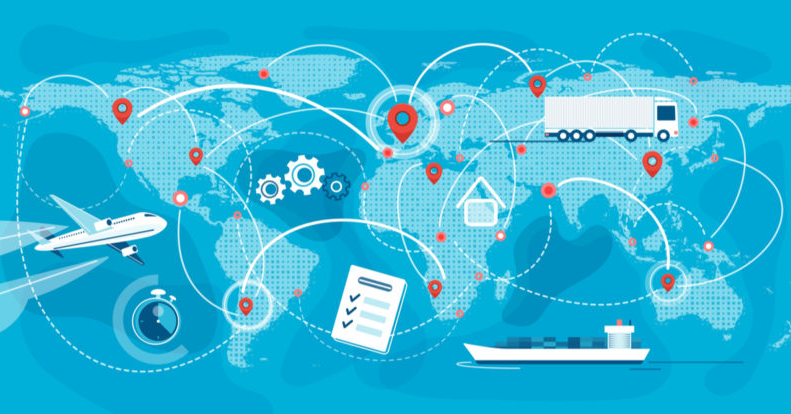
As geopolitical tensions morph into a protracted conflict between NATO and the Sino-Russia axis, a second contraction may plunge the economy into stagflation.
In the years ahead, the combination of subpar growth and runaway inflation will force a global economic underclass into micro-work contracts and low-wage jobs in an emerging gig economy.
Another recession will compound global resource thirst, narrow the scope for self-sufficiency and significantly increase dependence on government subsidies.
With the immiseration of a significant portion of the world’s labour force looming on the horizon, this may well be a prelude to the introduction of a Universal Basic Income, leading to a highly stratified neo-feudal order.
Therefore, the World Economic Forum’s ominous prediction that we will ‘own nothing and be happy’ by 2030 seems to be unfolding with horrifying rapidity.
2. The war’s economic fallout will lead to a dramatic downsizing of the global workforce.
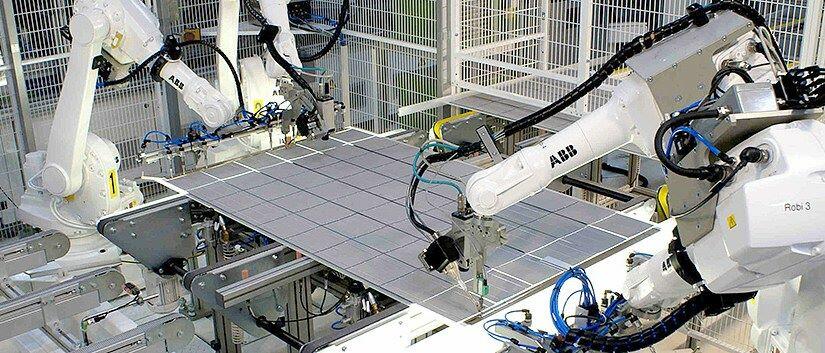
The architects of the Great Reset have anticipated this trend for a number of years and will exploit this economic turbulence by propelling the role of disruptive technologies to meet global challenges and fundamentally alter traditional business patterns to keep pace with rapid changes in technology.
Like the pandemic, disaster preparedness in the age of conflict will rest significantly on the willingness to embrace specific technological innovations in the public and private spheres so that future generations can supply the labour demands of the Great Reset.
A recurring theme in Klaus Schwab’s Shaping the Future of the Fourth Industrial Revolution is that groundbreaking technological and scientific innovations will no longer be relegated to the physical world around us but become extensions of ourselves.
He emphasises the primacy of emerging technologies in a next generation workforce and highlights the urgency to push ahead with plans to digitise several aspects of the global labour force through scalable technology based solutions.
Those spearheading the Great Reset seek to manage geopolitical risk by creating new markets which revolve around digital innovations, e-strategies, telepresence labour, Artificial Intelligence, robotics, nanotechnology, the Internet of Things and the Internet of Bodies.
The breakneck speed in which AI technologies are being deployed suggest that the optimization of such technologies will initially bear on traditional industries and professions which offer a safety net for hundreds of millions of workers, such as farming, retail, catering, manufacturing and the courier industries.
However, automation in the form of robots, smart software and machine learning will not be limited to jobs which are routine, repetitive and predictable.
AI systems are on the verge of wholesale automation of various white collar jobs, particularly in areas which involve information processing and pattern recognition such as accounting, HR and middle management positions.
Although anticipating future employment trends is no easy task, it’s safe to say that the combined threat of pandemics and wars means the labour force is on the brink of an unprecedented reshuffle with technology reshaping logistics, potentially threatening hundreds of millions of blue and white collar jobs, resulting in the greatest and fastest displacement of jobs in history and foreshadowing a labour market shift which was previously inconceivable.
While it has long been anticipated that the increased use of technology in the private sector would result in massive job losses, pandemic lockdowns and the coming disruption caused by a war will speed up this process, and many companies will be left with no other option but to lay off staff and replace them with creative technological solutions merely for the survival of their businesses.
In other words, many of the jobs which will be lost in the years ahead were already moving towards redundancy and are unlikely to be recovered once the dust is settled.
3. The war has significantly reduced Europe’s reliance on the Russian energy sector and reinforced the centrality of the UN Sustainable Development Goals and ‘net zero‘ emissions which lies at the heart of the Great Reset.
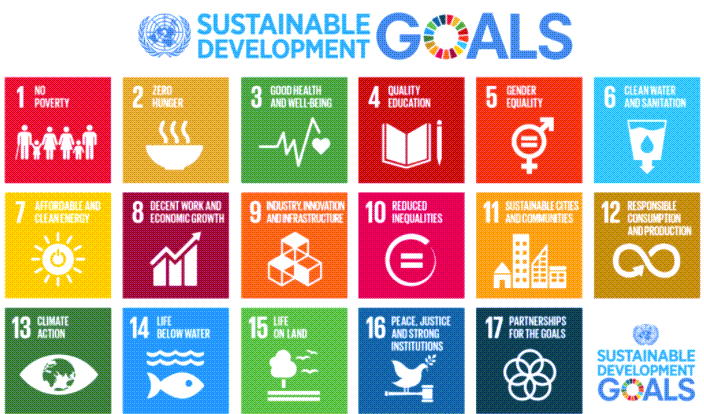
Policymakers marching lockstep with the Great Reset have capitalised on the tough sanctions against Russia by accelerating the shift towards ‘green’ energy and reiterating the importance of decarbonisation as part of the ‘fight against climate change’.
However, it would be very short-sighted to assume that the Great Reset is ultimately geared towards the equitable distribution of ‘green’ hydrogen and carbon-neutral synthetic fuels replacing petrol & diesel.
While UN SDGs are crucial to post-pandemic recovery, more importantly, they are fundamental to the makeover of shareholder capitalism which is now being vaunted by the Davos elites as ‘stakeholder capitalism’.
In economic terms, this refers to a system where governments are no longer the final arbiters of state policies as unelected private corporations become the de facto trustees of society, taking on the direct responsibility to address the world’s social, economic and environmental challenges through macroeconomic cooperation and a multi-stakeholder model of global governance.
Under such an economic construct, asset holding conglomerates can redirect the flow of global capital by aligning investments with the UN’s SDGs and configuring them as Environmental, Social, and Corporate Governance (ESG) compliant so that new international markets can be built on the disaster and misery of potentially hundreds of millions of people reeling from the economic collapse caused by war.
Therefore, the war offers a huge impetus for the governments pushing the reset to actively pursue energy independence, shape markets towards ‘green and inclusive growth’ and eventually move populations towards a cap-and-trade system, otherwise known as a carbon credit economy.
This will centralise power in the hands of stakeholder capitalists under the benevolent guise of reinventing capitalism through fairer and greener means, using deceptive slogans like ‘Build Back Better’ without sacrificing the perpetual growth imperative of capitalism.
4. Food shortages created by the war will offer a major boon to the synthetic biology industry as the convergence of digital technologies with materials science and biology will radically transform the agricultural sector and encourage the adoption of plant-based and lab-grown alternatives on a global scale.
Russia and Ukraine are both breadbaskets of the world and critical shortages in grains, fertilisers, vegetable oils and essential foodstuffs will catapult the importance of biotechnology to food security and sustainability and give birth to several imitation meat start-ups similar to ‘Impossible Foods’ which was co-funded by Bill Gates.
One can therefore expect more government regulation to usher a dramatic overhaul to industrial food production and cultivation, ultimately benefiting agribusiness and biotech investors, since food systems will be redesigned through emerging technologies to grow ‘sustainable’ proteins and CRISPR gene-edited patented crops.
5. Russia’s exclusion from SWIFT (The Society for Worldwide Interbank Financial Telecommunication) foreshadows an economic reset which will generate precisely the kind of blowback necessary for corralling large swathes of the global population into a technocratic control grid.

As several economists have opined, weaponizing SWIFT, CHIPS (The Clearing House Interbank Payments System) and the US Dollar against Russia will only spur geopolitical rivals like China to accelerate the process of de-dollarisation.
The main benefactor of economic sanctions against Russia appears to be China which can reshape the Eurasian market by encouraging member states of the Shanghai Cooperation Organisation (SCO) and BRICS to bypass the SWIFT ecosystem and settle cross-border international payments in the Digital Yuan.
While the demand for cryptocurrencies will see a massive spike, this is likely to encourage many governments to increasingly regulate the sector through public blockchains and enforce a multilateral ban on decentralised cryptocurrencies.
The shift to crypto could be the dress rehearsal to eventually expedite plans for programmable money overseen by a federal regulator, leading to the greater accretion of power in the hands of a powerful global technocracy and thus sealing our enslavement to financial institutions.
I believe this war will bring currencies to parity, therefore heralding a new Bretton Woods moment which promises to transform the operation of international banking and macroeconomic cooperation through the future adoption of central bank digital currencies.
6. This war marks a major inflection point in the globalist aspiration for a new international rules-based order anchored in Eurasia.
As the ‘father of geopolitics’ Halford Mackinder opined over a century ago, the rise of every global hegemon in the past 500 years has been possible because of dominance over Eurasia. Similarly, their decline has been associated with losing control over that pivotal landmass.
This causal connection between geography and power has not gone unnoticed by the global network of stakeholders representing the WEF, many of whom have anticipated the transition to a multipolar era and return to great power competition amid America’s receding political and economic influence and a pressing need for what technocrats call smart globalisation.
While America tries desperately to cling to its superpower status, China’s economic ascent and Russia’s regional ambitions threaten to upend the strategic axial points of Eurasia (Western Europe and Asia Pacific).
The region in which America previously enjoyed uncontested hegemony is no longer impervious to cracks and we may be witnessing a changing of the guard which dramatically alters the calculus of global force projection.
Although China’s ambitious Belt and Road Initiative (BRI) has the potential to unify the world-island (Asia, Africa and Europe) and cause a tectonic shift in the locus of global power, the recent invasion of Ukraine will have far-reaching consequences for China-Europe rail freight.
The Ukrainian President Zelensky claimed that Ukraine could function as the BRI’s gateway to Europe. Therefore, we cannot ignore China’s huge stake in the recent tensions over Ukraine, nor can we ignore NATO’s underlying ambition to check China’s rise in the region by limiting the sale of Ukrainian assets to China and doing everything in its capacity to thwart The Modern Silk Road.
As sanctions push Russia towards consolidating bilateral ties with China and fully integrating with the BRI, a Pan-Eurasian trading bloc may be the realignment which forces a shared governance of the global commons and a reset to the age of US exceptionalism.
7. With speculation mounting over the war’s long term impact on bilateral trade flows between China and Europe, the Russia-Ukraine conflict will catapult Israel –to even greater international prominence.a leading advocate of the Great Reset –
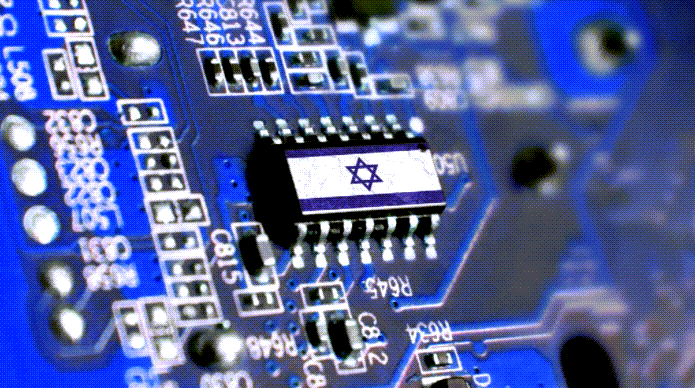
Israel is a highly attractive BRI market for China and the CCP is acutely aware of Israel’s importance as a strategic outpost connecting the Indian Ocean and the Mediterranean Sea through the Gulf of Suez.
Furthermore, the Chinese government has for many years acknowledged the primacy of Israel as a global technology hub and capitalised on Israel’s innovation capabilities to help meet its own strategic challenges.
Therefore, Naftali Bennet’s mediation between Moscow and Kiev is likely to factor the instrumental role of the Belt and Road Initiative (BRI) in expanding both China and Israel’s regional and global strategic footprint.
Israel’s status as among the leading tech hubs of the future and gateway connecting Europe and the Middle East is inextricably tied to the web of physical infrastructures, such as roads, railways, ports and energy pipelines which China has been building over the past decade.
Already a powerhouse in auto-technologies, robotics and cybersecurity, Israel aspires to be the central nation in the millennial Kingdom and the country’s tech startups are predicted to play a key role in the fourth industrial revolution.
Strengthening its evolving relationship with China amid the Russia-Ukraine crisis could help propel Israel into a regional hegemon par excellence with a large share of centralised economic and technological power converging in Jerusalem.
As Israel embarks on efforts to diversify its export markets and investments away from the United States, it begs an important question.
Is Israel in the formative stages of outsourcing its security interests away from the US and hedging its bets on the Sino-Russia axis?
8.It is now common knowledge that Digital IDs are a central plank in the World Economic Forum’s Great Reset agenda and are to be streamlined across industries, supply chains and markets as a way of advancing the UN 2030 SDGs and delivering individualised and integrated services in future smart cities.

Many have cottoned on to how such a platform can be used to usher in a global system of technocratic population control and compliance by incorporating humanity into a new corporate value chain where citizens are mined as data commodities for ESG investors and human capital bond markets and assigned a social and climate score based on how well they measure up against the UN SDGs.
This seamless verification of people and connected devices in smart environments can only take place once our biometrics, health records, finances, education transcripts, consumer habits, carbon footprint and the entire sum of human experiences is stored on an interoperable database to determine our conformity with the UN SDGs, thus forcing a monumental change to our social contract.
Vaccine passports were initially touted by public-private partnerships as an entry point for Digital IDs. Now that such a logic has run its course, how might the present geopolitical tensions contribute to scaling what is the key node in a new digital ecosystem?
Ukraine has traditionally been called Europe’s breadbasket and alongside Russia, both nations are major global suppliers of staple grains. Therefore, the war has all the makings of a black swan for commodities and inflation.
With an economy teetering on the brink of collapse due to a global supply crunch, I believe the resulting economic tremors will trigger wartime emergencies across the world and the public will be told to brace themselves for rationing.
Once this takes place, the multilateral adoption of Digital IDs which interface with Central Bank Digital Currencies can be touted as the solution to efficiently manage and distribute household rations under an unprecedented state of emergency and exception.
The Bank of England has already floated the prospect of programmable cash which can only be spent on essentials or goods which an employer or government deem sensible.
Once the issuer is granted control over how it is spent by the recipient, it will become nigh impossible to function adequately without a Digital ID, which will be required to receive food parcels and obtain a basic means of subsistence. Think UBI (Universal Basic Income).
If food inflation continues on an upward trajectory with no signs of abating, governments may institute price controls in the form of rationing and ration entries could be logged on blockchain ledgers on the Digital ID to track our carbon footprint and consumptive habits during a national emergency.
9. Europe is directly in the line of fire once a hybrid war between NATO and the Sino-Russia axis is underway.
It would be remiss to ignore the clear and present danger posed by a cyber attack on banks and critical infrastructure or even a tentative and tactical nuclear exchange with intercontinental ballistic missiles (ICBMs).
I can’t see how any warring party will not be limited by the doctrine of mutually assured destruction so a thermonuclear fallout is unlikely.
However, the use of remote access technologies to erase system memory from the SWIFT banking apparatus or Cross-Border Interbank Payment System can potentially render much of the international economy non-operational and send the dollar into a tailspin.
If an event of such cataclysmic proportions was to occur, it will undoubtedly lead to increasing demands to overhaul cyber security.
The fallout from such an event could very well establish a new global security protocol according to which citizens must possess a Digital ID as a necessary national security measure.
One can imagine how accessing the internet or public services in the aftermath of a nationwide cyberattack may require citizens to use a Digital ID to authenticate that their online activities and transactions are from a legitimate and non-malicious source.
There are few coincidences in politics.
10. The economic implications of this war will be so disastrous that governments and the public sector will require a significant injection of private capital to address the financing shortfall.
This will effectively render the traditional separation of powers between central banking institutions and governments obsolete, as the former will be positioned to disproportionately influence the fiscal trajectory of nation states, whose sovereignty will be hollowed out by the wholesale capture of governments by the central banks and hedge funds.
Therefore, the nation-state model is gradually being upended by a global technocracy, consisting of an unelected consortium of leaders of industry, central banking oligarchs and private financial institutions, most of which are predominantly non-state corporate actors attempting to restructure global governance and enlist themselves in the global decision-making process.
Therefore, the future of international relations and the social, economic and political transformation which the world is presently undergoing in light of the pandemic and Russia-Ukraine conflict will not be decided through multilateralism and elected representatives of sovereign states.
Rather, it will be decided through a network of multi-stakeholder partnerships which are motivated by the politics of expediency and not accountable to any electorate or beholden to any state and for whom concepts like sovereignty and international law are meaningless.
Why Did Vladimir Putin Invade Ukraine?
- Those who believe Putin is trying to reestablish Russia as a great power say that once he gains control over Ukraine, he will turn his focus to other former Soviet republics, including the Baltic countries of Estonia, Latvia, and Lithuania, and eventually Bulgaria, Romania and even Poland.
- "The Eurasian Empire will be constructed on the fundamental principle of the common enemy: the rejection of Atlanticism, the strategic control of the USA, and the refusal to allow liberal values to dominate us." — Aleksandr Dugin, Russian strategist, "Foundation of Geopolitics: The Geopolitical Future of Russia."
- "Normally wars that take place between states are about conflicts they have between them. Yet this is a war about the existence of one state, which is denied by the aggressor. That's why the usual concepts of peacemaking — finding a compromise — do not a apply. If Ukraine continues to exist as a sovereign state, Putin will have lost. He is not interested in territorial gain as such — it's rather a burden for him. He is only interested in controlling the entire country. Everything else for him is defeat." — Ulrich Speck, German geopolitical analyst.
- "Because the primary threat to Putin and his autocratic regime is democracy, not NATO, that perceived threat would not magically disappear with a moratorium on NATO expansion. Putin would not stop seeking to undermine democracy and sovereignty in Ukraine, Georgia, or the region as a whole if NATO stopped expanding." — Michael McFaul, former U.S. Ambassador to Russia, and Robert Person, a professor at the United States Military Academy.
- "I don't think that this war is about NATO; I don't think this war is about Ukrainian people or the EU or even about Ukraine; this war is about starting a war in order to stay in power. Putin is a dictator, and he's a dictator whose intention is to stay in power until the end of his natural life. He said to himself that the writing's on the wall for him unless he does something dramatic. Putin is just thinking short-term ... 'how do I stay in power from this week to the next? And then next week to the next?'" — Bill Browder, American businessman and head, Global Magnitsky Justice Campaign.
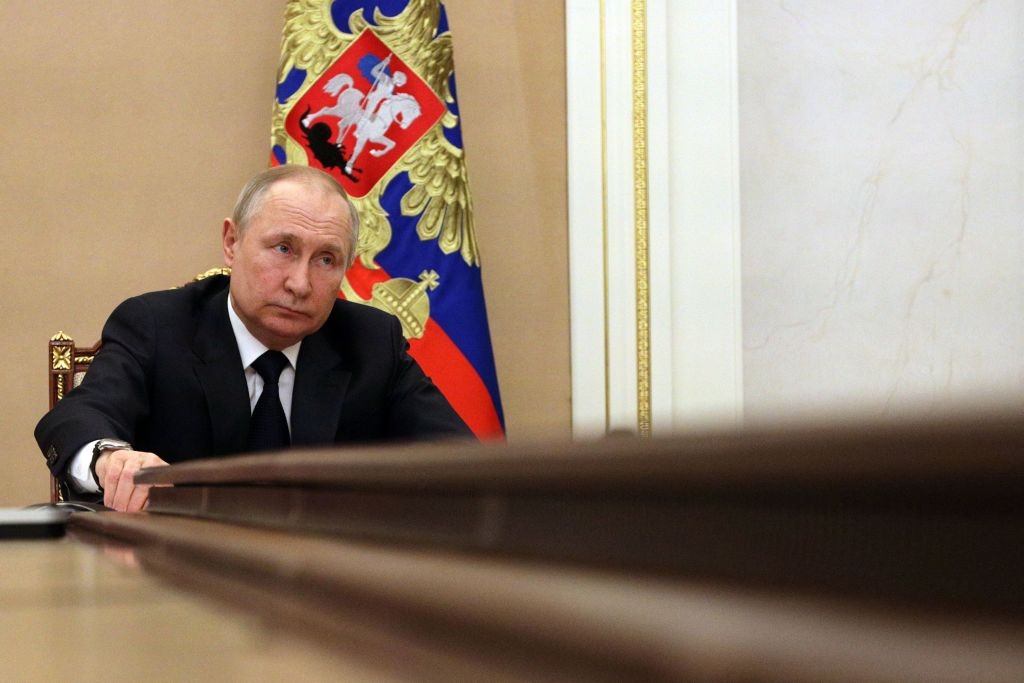 Those who believe President Vladimir Putin is trying to reestablish Russia as a great power say that once he gains control over Ukraine, he will turn his focus to other former Soviet republics, including the Baltic countries of Estonia, Latvia, and Lithuania, and eventually Bulgaria, Romania and even Poland. (Photo by Mihail Klimentyev/Sputnik/AFP via Getty Images)
|
Nearly three weeks have passed since Russian President Vladimir Putin began his invasion of Ukraine, but it still is not clear why he did so and what he hopes to achieve. Western analysts, commentators and government officials have put forward more than a dozen theories to explain Putin's actions, motives, and objectives.
Some analysts posit that Putin is motivated by a desire to rebuild the Russian Empire. Others say he is obsessed with bringing Ukraine back into Russia's sphere of influence. Some believe that Putin wants to control Ukraine's vast offshore energy resources. Still others speculate that Putin, an aging autocrat, is seeking to maintain his grip on power.
While some argue that Putin has a long-term proactive strategy aimed at establishing Russian primacy in Europe, others believe he is a short-term reactionary seeking to preserve what remains of Russia's diminishing position on the world stage.
Following is a compilation of eight differing but complementary theories that try to explain why Putin invaded Ukraine.
1. Empire Building
The most common explanation for Russia's invasion of Ukraine is that Putin, burning with resentment over the demise of the Soviet Empire, is determined to reestablish Russia (generally considered a regional power) as a great power that can exert influence on a global scale.
According to this theory, Putin aims to regain control over the 14 post-Soviet states — often referred to as Russia's "near abroad" — that became independent after the collapse of the Soviet Union in 1991. This is part of greater plan to rebuild the Russian Empire, which territorially was even more expansive than the Soviet Empire.
The Russian Empire theory holds that Putin's invasion of Georgia in 2008 and Crimea in 2014, as well as his 2015 decision to intervene militarily in Syria, were all parts of a strategy to restore Russia's geopolitical position — and erode the U.S.-led rules-based international order.
Those who believe Putin is trying to reestablish Russia as a great power say that once he gains control over Ukraine, he will turn his focus to other former Soviet republics, including the Baltic countries of Estonia, Latvia, and Lithuania, and eventually Bulgaria, Romania and even Poland.
Putin's ultimate objective, they say, is to drive the United States out of Europe, establish an exclusive great-power sphere of influence for Russia on the continent and dominate the European security order.
Russian literature supports this view. In 1997, for instance, Russian strategist Aleksandr Dugin, a friend of Putin, published a highly influential book — "Foundation of Geopolitics: The Geopolitical Future of Russia" — which argued that Russia's long-term goal should be the creation, not of a Russian Empire, but of a Eurasian Empire.
Dugin's book, which is required reading in Russian military academies, states that to make Russia great again, Georgia should be dismembered, Finland should be annexed and Ukraine should cease to exist: "Ukraine, as an independent state with certain territorial ambitions, represents an enormous danger for all of Eurasia." Dugin, who has been described as "Putin's Rasputin," added:
"The Eurasian Empire will be constructed on the fundamental principle of the common enemy: the rejection of Atlanticism, the strategic control of the USA, and the refusal to allow liberal values to dominate us."
In April 2005, Putin echoed this sentiment when, in his annual state of the nation address, he described the collapse of the Soviet empire as "the greatest geopolitical catastrophe of the 20th century." Since then, Putin has repeatedly criticized the U.S.-led world order, in which Russia has a subordinate position.
In February 2007, during a speech to the Munich Conference on Security Policy, Putin attacked the idea of a "unipolar" world order in which the United States, as the sole superpower, was able to spread its liberal democratic values to other parts of the world, including Russia.
In October 2014, in a speech to the Valdai Discussion Club, a high-profile Russian think tank close to the Kremlin, Putin criticized the post-World War II liberal international order, whose principles and norms — including adherence to the rule of law, respect for human rights and the promotion of liberal democracy, as well as preserving the sanctity of territorial sovereignty and existing boundaries — have regulated the conduct of international relations for nearly 80 years. Putin called for the creation of a new multipolar world order that is more friendly to the interests of an autocratic Russia.
The late Zbigniew Brzezinski (former National Security Advisor to U.S. President Jimmy Carter), in his 1997 book "The Grand Chessboard," wrote that Ukraine is essential to Russian imperial ambitions:
"Without Ukraine, Russia ceases to be a Eurasian empire.... However, if Moscow regains control over Ukraine, with its 52 million people and major resources as well as its access to the Black Sea, Russia automatically again regains the wherewithal to become a powerful imperial state, spanning Europe and Asia."
The German historian Jan Behrends tweeted:
Ukraine expert Peter Dickinson, writing for the Atlantic Council, noted:
"Putin's extreme animosity towards Ukraine is shaped by his imperialistic instincts. It is often suggested that Putin wishes to recreate the Soviet Union, but this is actually far from the case. In fact, he is a Russian imperialist who dreams of a revived Czarist Empire and blames the early Soviet authorities for handing over ancestral Russian lands to Ukraine and other Soviet republics."
Bulgarian scholar Ivan Krastev agreed:
"America and Europe aren't divided on what Mr. Putin wants. For all the speculation about motives, that much is clear: The Kremlin wants a symbolic break from the 1990s, burying the post-Cold War order. That would take the form of a new European security architecture that recognizes Russia's sphere of influence in the post-Soviet space and rejects the universality of Western values. Rather than the restoration of the Soviet Union, the goal is the recovery of what Mr. Putin regards as historic Russia."
Transatlantic security analyst Andrew Michta added that Putin's invasion of Ukraine was:
"The culmination of almost two decades of policy aimed at reconstructing the Russian empire and bringing Russia back into European politics as one of the principal players empowered to shape the Continent's future."
Writing for the national security blog 1945, Michta elaborated:
"From Moscow's perspective the Ukrainian war is in effect the final battle of the Cold War — for Russia a time to reclaim its place on the European chessboard as a great empire, empowered to shape the Continent's destiny going forward. The West needs to understand and accept that only once Russia is unequivocally defeated in Ukraine will a genuine post-Cold War settlement finally be possible."
2. Buffer Zone
Many analysts attribute the Russian invasion of Ukraine to geopolitics, which attempts to explain the behavior of states through the lens of geography.
Most of the western part of Russia sits on the Russian Plain, a vast mountain-free area that extends over 4,000,000 square kilometers (1.5 million square miles). Also called the East European Plain, the vast flatland presents Russia with an acute security problem: an enemy army invading from central or eastern Europe would encounter few geographical obstacles to reach the Russian heartland. In other words, Russia, due to its geography, is especially difficult to defend.
The veteran geopolitical analyst Robert Kaplan wrote that geography is the starting point for understanding everything else about Russia:
"Russia remains illiberal and autocratic because, unlike Britain and America, it is not an island nation, but a vast continent with few geographical features to protect it from invasion. Putin's aggression stems ultimately from this fundamental geographical insecurity."
Russia's leaders historically have sought to obtain strategic depth by pushing outward to create buffer zones — territorial barriers that increase the distance and time invaders would encounter to reach Moscow.
The Russian Empire included the Baltics, Finland and Poland, all of which served as buffers. The Soviet Union created the Warsaw Pact — which included Albania, Bulgaria, Czechoslovakia, East Germany, Hungary, Poland and Romania — as a vast buffer to protect against potential invaders.
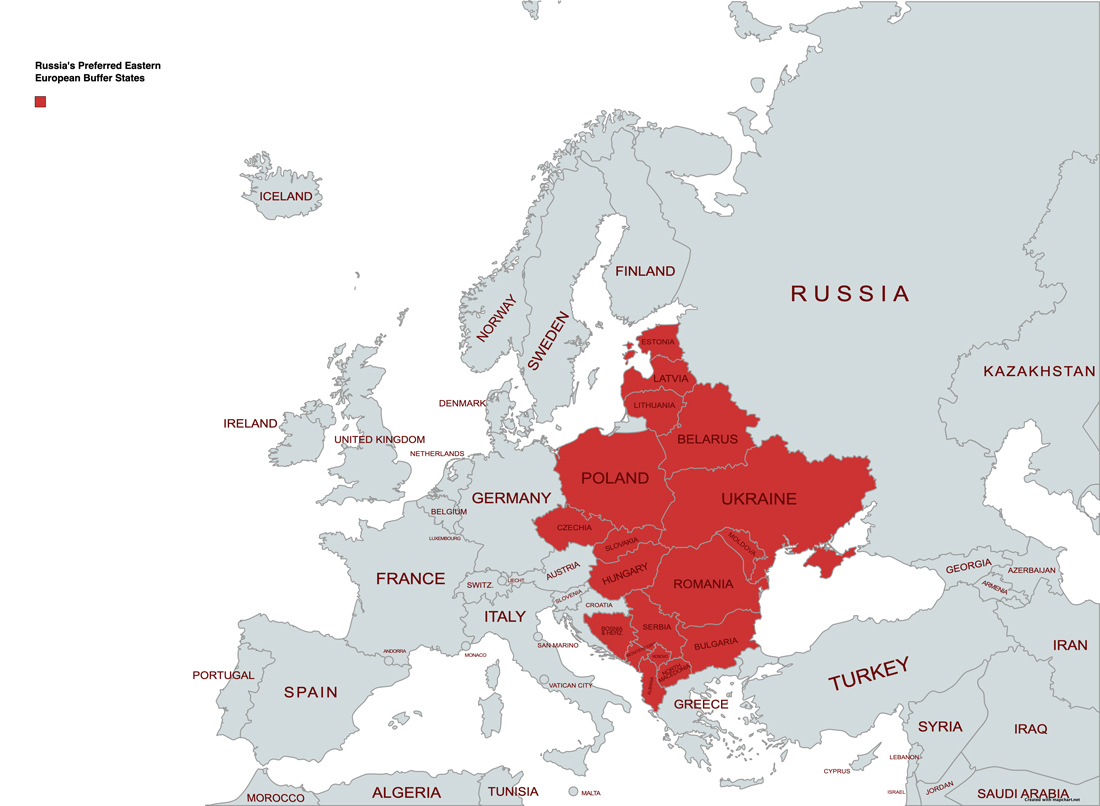
Most of the former Warsaw Pact countries are now members of NATO. That leaves Belarus, Moldova and Ukraine, strategically located between Russia and the West, as the only eastern European countries left to serve as Russian buffer states. Some analysts argue that Russia's perceived need for a buffer is the primary factor in Putin's decision to invade Ukraine.
Mark Galeotti, a leading British scholar of Russian power politics, noted that the possession of a buffer zone is intrinsic to Russia's understanding of great-power status:
"From Putin's point of view, he has built so much of his political identity around the notion of making Russia a great power and making it recognized as a great power. When he thinks of great power, he is essentially a 19th century geopolitician. It's not the power of economic connectivity, or technological innovation, let alone soft power. No. Great power, in good old-fashioned terms, has a sphere of influence, countries whose sovereignty is subordinate to your own."
Others believe that the concept of buffer states is obsolete. International security expert Benjamin Denison, for instance, argued that Russia cannot legitimately justify the need for a buffer zone:
"Once nuclear weapons were invented ... buffer states were no longer seen as necessary regardless of geography, as nuclear deterrence worked to ensure the territorial integrity of great powers with nuclear capabilities.... The utility of buffer states and the concerns of geography invariably changed following the nuclear revolution. Without the concern of quick invasions into the homeland of a rival great power, buffer states lose their utility regardless of the geography of the territory...."Narrowly defining national interests to geography, and mandating that geography pushes states to replicate past actions throughout history, only fosters inaccurate thinking and forgives Russian land-grabs as natural."
3. Ukrainian Independence
Closely intertwined with theories about empire-building and geopolitics is Putin's obsession with extinguishing Ukrainian sovereignty. Putin contends that Ukraine has been part of Russia for centuries, and that its independence in August 1991 was a historical mistake. Ukraine, he claims, does not have a right to exist.
Putin has repeatedly downplayed or negated Ukraine's right to statehood and sovereignty:
- In 2008, Putin told William Burns, then the U.S. ambassador to Russia (now director of the CIA): "Don't you know that Ukraine is not even a real country? Part of it is really East European and part is really Russian."
- In July 2021, Putin penned a 7,000-word essay — "On the Historical Unity of Russians and Ukrainians" — in which he expressed contempt for Ukrainian statehood, questioned the legitimacy of Ukraine's borders and argued that modern-day Ukraine occupies "the lands of historical Russia." He concluded: "I am confident that true sovereignty of Ukraine is possible only in partnership with Russia."
-
In February 2022, just three days before he launched his invasion, Putin asserted that Ukraine was a fake state created by Vladimir Lenin, the founder of the Soviet Union:"Modern Ukraine was entirely created by Russia or, to be more precise, by Bolshevik, Communist Russia. This process started practically right after the 1917 revolution, and Lenin and his associates did it in a way that was extremely harsh on Russia — by separating, severing what is historically Russian land.... Soviet Ukraine is the result of the Bolsheviks' policy and can be rightfully called 'Vladimir Lenin's Ukraine.' He was its creator and architect."
Russia scholar Mark Katz, in an essay — "Blame It on Lenin: What Putin Gets Wrong About Ukraine" — argued that Putin should draw lessons from Lenin's realization that a more accommodating approach toward Ukrainian nationalism would better serve Russia's long-term interests:
"Putin cannot escape the problem that Lenin himself had to deal with of how to reconcile non-Russians to being ruled by Russia. The forceful imposition of Russian rule in part — much less all — of Ukraine will not bring about such a reconciliation. For even if Ukrainians cannot resist the forceful imposition of Russian rule over part or all of Ukraine now, Putin's success in imposing it is only likely to intensify feelings of Ukrainian nationalism and lead it to burst forth again whenever the opportunity arises."
Ukraine's political independence has been accompanied by a long-running feud with Russia over religious allegiance. In January 2019, in what was described as "the biggest rift in Christianity in centuries," the Orthodox church in Ukraine gained independence (autocephaly) from the Russian church. The Ukrainian church had been under the jurisdiction of the Moscow patriarchate since 1686. Its autonomy dealt a blow to the Russian church, which lost around one-fifth of the 150 million Orthodox Christians under its authority.
The Ukrainian government claimed that Moscow-backed churches in Ukraine were being used by the Kremlin to spread propaganda and to support Russian separatists in the eastern Donbas region. Putin wants the Ukrainian church to return to Moscow's orbit, and has warned of "a heavy dispute, if not bloodshed" over any attempts to transfer ownership of church property.
The head of the Russian Orthodox Church, Patriarch Kirill of Moscow, has declared that Kyiv, where the Orthodox religion began, is comparable in terms of its historic importance to Jerusalem:
"Ukraine is not on the periphery of our church. We call Kiev 'the mother of all Russian cities'. For us Kiev is what Jerusalem is for many. Russian Orthodoxy began there, so under no circumstances can we abandon this historical and spiritual relationship. The whole unity of our Local Church is based on these spiritual ties."
On March 6, Kirill — a former KGB agent who is known as "Putin's altar boy" due to his subservience to the Russian leader — publicly endorsed the invasion of Ukraine. In a sermon he repeated Putin's claims that the Ukrainian government was carrying out a "genocide" of Russians in Ukraine: "For eight years, the suppression, extermination of people has been underway in Donbass. Eight years of suffering and the entire world is silent."
German geopolitical analyst Ulrich Speck wrote:
"For Putin, destroying Ukraine's independence has become an obsession.... Putin has often said, and even written, that Ukraine is not a separate nation, and should not exist as a sovereign state. It is this fundamental denial that has led Putin to wage this totally senseless war that he cannot win. And that leads us to the problem of making peace: either Ukraine has the right to exist as a nation and a sovereign state, or it hasn't. Sovereignty is indivisible. Putin denies it, Ukraine defends it. How can you make a compromise about the existence of Ukraine as a sovereign state? Impossible. That's why both sides can only fight on until they win."Normally wars that take place between states are about conflicts they have between them. Yet this is a war about the existence of one state, which is denied by the aggressor. That's why the usual concepts of peacemaking — finding a compromise — do not apply. If Ukraine continues to exist as a sovereign state, Putin will have lost. He is not interested in territorial gain as such — it's rather a burden for him. He is only interested in controlling the entire country. Everything else for him is defeat."
Ukraine expert Taras Kuzio added:
"The real cause of today's crisis is Putin's quest to return Ukraine to the Russian orbit. For the past eight years, he has used a combination of direct military intervention, cyber-attacks, disinformation campaigns, economic pressure, and coercive diplomacy to try and force Ukraine into abandoning its Euro-Atlantic ambitions...."Putin's ultimate objective is Ukraine's capitulation and the country's absorption into the Russian sphere of influence. His obsessive pursuit of this goal has already plunged the world into a new Cold War...."Nothing less than Ukraine's return to the Kremlin orbit will satisfy Putin or assuage his fears over the further breakup of Russia's imperial inheritance. He will not stop until he is stopped. In order to achieve this, the West must become far more robust in responding to Russian imperial aggression, while also expediting Ukraine's own Euro-Atlantic integration."
4. NATO
This theory holds that Putin invaded Ukraine to prevent it from joining NATO. The Russian president has repeatedly demanded that the West "immediately" guarantee that Ukraine will not be allowed to join NATO or the European Union.
A vocal proponent of this viewpoint is the American international relations theorist John Mearsheimer, who, in a controversial essay, "Why the Ukraine Crisis Is the West's Fault," argued that the eastward expansion of NATO provoked Putin to act militarily against Ukraine:
"The United States and its European allies share most of the responsibility for the crisis. The taproot of the trouble is NATO enlargement, the central element of a larger strategy to move Ukraine out of Russia's orbit and integrate it into the West...."Since the mid-1990s, Russian leaders have adamantly opposed NATO enlargement, and in recent years, they have made it clear that they would not stand by while their strategically important neighbor turned into a Western bastion."
In a recent interview with The New Yorker, Mearsheimer blamed the United States and its European allies for the current conflict:
"I think all the trouble in this case really started in April 2008, at the NATO Summit in Bucharest, where afterward NATO issued a statement that said Ukraine and Georgia would become part of NATO."
In fact, Putin has not always opposed NATO expansion. Several times he went so far as to say that the eastward expansion of NATO was none of Russia's concern.
In March 2000, for instance, Putin, in an interview with the late BBC television presenter David Frost, was asked whether he viewed NATO as a potential partner, rival or enemy. Putin responded:
"Russia is part of the European culture. And I cannot imagine my own country in isolation from Europe and what we often call the civilized world. So, it is hard for me to visualize NATO as an enemy."
In November 2001, in an interview with National Public Radio, Putin was asked if he opposed the admission of the three Baltic states — Lithuania, Latvia and Estonia — into NATO. He replied:
"We of course are not in a position to tell people what to do. We cannot forbid people to make certain choices if they want to increase the security of their nations in a particular way."
In May 2002, Putin, when asked about the future of relations between NATO and Ukraine, said matter-of-factly that he did not care one way or the other:
"I am absolutely convinced that Ukraine will not shy away from the processes of expanding interaction with NATO and the Western allies as a whole. Ukraine has its own relations with NATO; there is the Ukraine-NATO Council. At the end of the day the decision is to be taken by NATO and Ukraine. It is a matter for those two partners."
Putin's position on NATO expansion radically changed after the 2004 Orange Revolution, which was triggered by Moscow's attempt to steal Ukraine's presidential election. A massive pro-democracy uprising ultimately led to the defeat of Putin's preferred candidate, Viktor Yanukovych, who eventually did become president of Ukraine in 2010 but was ousted in the 2014 Euromaidan Revolution.
Former NATO Secretary-General Anders Fogh Rasmussen, in a recent interview with Radio Free Europe, discussed how Putin's views about NATO have changed:
"Mr. Putin has changed over the years. My first meeting took place in 2002...and he was very positive regarding cooperation between Russia and the West. Then, gradually, he changed his mind. And from around 2005 to 2006, he got increasingly negative toward the West. And in 2008, he attacked Georgia.... In 2014, he took Crimea, and now we have seen a full-scale invasion of Ukraine. So, he has really changed over the years."I think the revolutions in Georgia and Ukraine in 2004 and 2005 contributed to his change of mind. We shouldn't forget that Vladimir Putin grew up in the KGB. So, his thinking is very much impacted by that past. I think he suffers from paranoia. And he thought that after color revolutions in Georgia and Ukraine, that the aim [of the West] was to initiate a regime change in the Kremlin — in Moscow — as well. And that's why he turned against the West."I put the blame entirely on Putin and Russia. Russia is not a victim. We have reached out to Russia several times during history.... First, we approved the NATO Russia Founding Act in 1997.... Next time, it was in 2002, we reached out once again, established something very special, namely the NATO-Russia Council. And in 2010, we decided at a NATO-Russia summit that we would develop a strategic partnership between Russia and NATO. So, time and again, we reached out to Russia."I think we should have done more to deter Putin. Back in 2008, he attacked Georgia, took de facto Abkhazia and South Ossetia. We could have reacted much more determinedly already in that time."
In recent years, Putin repeatedly has claimed that the post-Cold War enlargement of NATO poses a threat to Russia, which has been left with no other choice than to defend itself. He also has accused the West of trying to encircle Russia. In fact, of the 14 countries that have borders with Russia, only five are NATO members. The borders of those five countries — Estonia, Latvia, Lithuania, Norway and Poland — are contiguous with only 5% of Russia's total borders.
Putin has claimed that NATO broke solemn promises it made in the 1990s that the alliance would not expand to the east. "You promised us in the 1990s that NATO would not move an inch to the east. You brazenly cheated us," he said in during a press conference in December 2021. Mikhail Gorbachev, then president of the Soviet Union, countered that such promises were never made.
Putin recently issued three wildly unrealistic demands: NATO must withdraw its forces to its 1997 borders; NATO must not offer membership to other countries, including Finland, Sweden, Moldova or Georgia; NATO must provide written guarantees that Ukraine will never join the alliance.
Writing for Foreign Affairs, Russian historian Dmitri Trenin, in an essay — "What Putin Really Wants in Ukraine" — argued that Putin wants stop NATO expansion, not to annex more territory:
"Putin's actions suggest that his true goal is not to conquer Ukraine and absorb it into Russia but to change the post-Cold War setup in Europe's east. That setup left Russia as a rule-taker without much say in European security, which was centered on NATO. If he manages to keep NATO out of Ukraine, Georgia, and Moldova, and U.S. intermediate-range missiles out of Europe, he thinks he could repair part of the damage Russia's security sustained after the Cold War ended. Not coincidentally, that could serve as a useful record to run on in 2024, when Putin would be up for re-election."
5. Democracy
This theory holds that Ukraine, a flourishing democracy, poses an existential threat to Putin's autocratic model of governance. The continued existence of a Western-aligned, sovereign, free and democratic Ukraine could inspire the Russian people to demand the same.
Former U.S. Ambassador to Russia Michael McFaul and Robert Person, a professor at the United States Military Academy, wrote that Putin is terrified of democracy in Ukraine:
"Over the last thirty years, the salience of the issue [NATO expansion] has risen and fallen not primarily because of the waves of NATO expansion, but due instead to waves of democratic expansion in Eurasia. In a very clear pattern, Moscow's complaints about NATO spike after democratic breakthroughs...."Because the primary threat to Putin and his autocratic regime is democracy, not NATO, that perceived threat would not magically disappear with a moratorium on NATO expansion. Putin would not stop seeking to undermine democracy and sovereignty in Ukraine, Georgia, or the region as a whole if NATO stopped expanding. As long as citizens in free countries exercise their democratic rights to elect their own leaders and set their own course in domestic and foreign politics, Putin will keep them in his crosshairs...."The more serious cause of tensions has been a series of democratic breakthroughs and popular protests for freedom throughout the 2000s, what many refer to as the "Color Revolutions." Putin believes that Russian national interests have been threatened by what he portrays as U.S.-supported coups. After each of them — Serbia in 2000, Georgia in 2003, Ukraine in 2004, the Arab Spring in 2011, Russia in 2011-12, and Ukraine in 2013-14 — Putin has pivoted to more hostile policies toward the United States, and then invoked the NATO threat as justification for doing so...."Ukrainians who rose up in defense of their freedom were, in Putin's own assessment, Slavic brethren with close historical, religious, and cultural ties to Russia. If it could happen in Kyiv, why not in Moscow?"
Ukraine expert Taras Kuzio agrees:
"Putin remains haunted by the wave of pro-democracy uprisings that swept Eastern Europe in the late 1980s, setting the stage for the subsequent Soviet collapse. He sees Ukraine's fledgling democracy as a direct challenge to his own authoritarian regime and recognizes that Ukraine's historical closeness to Russia makes this threat particularly acute."
6. Energy
Ukraine holds the second-biggest known reserves — more than one trillion cubic meters — of natural gas in Europe after Russia. These reserves, under the Black Sea, are concentrated around the Crimean Peninsula. In addition, large deposits of shale gas have been discovered in eastern Ukraine, around Kharkiv and Donetsk.
In January 2013, Ukraine signed a 50-year, $10 billion deal with Royal Dutch Shell to explore and drill for natural gas in eastern Ukraine. Later that year, Kyiv signed a 50-year, $10 billion shale gas production-sharing agreement with the American energy company Chevron. Shell and Chevron pulled out of those deals after Russia annexed the Crimean Peninsula.
Some analysts believe Putin annexed Crimea to prevent Ukraine from becoming a major oil and gas provider to Europe and thereby challenge Russia's energy supremacy. Russia, they argue, was also worried that as Europe's second-largest petrostate, Ukraine would have been granted fast-track membership to the EU and NATO.
According to this theory, Russia's invasion of Ukraine is aimed at forcing Kyiv to officially acknowledge Crimea as Russian, and recognize the separatist republics of Donetsk and Lugansk as independent states, so that Moscow can legally secure control over the natural resources in these areas.
7. Water
On February 24, the first day of the Russian invasion of Ukraine, Russian troops restored water flow to a strategically important canal linking the Dnieper River to Russian-controlled Crimea. Ukraine blocked the Soviet-era North Crimean Canal, which supplies 85% of Crimea's water needs, after Russia annexed the peninsula in 2014. The water shortages resulted in a massive reduction in agricultural production on the peninsula and forced Russia to spend billions of rubles each year to supply water from the mainland to sustain the Crimean population.
The water crisis was a major source of tension between Ukraine and Russia. Ukrainian President Volodymyr Zelensky insisted that the water supply would not be restored until Russia returns the Crimean Peninsula. Security analyst Polina Vynogradova noted that any resumption of water supply would have amounted to a de facto recognition of Russian authority in Crimea and would have undermined Ukraine's claim to the peninsula. It would also have weakened Ukrainian leverage over negotiations on Donbas.
Even if Russian troops eventually withdraw from Ukraine, Russia likely will maintain permanent control over the entire 400-kilometer North Crimean Canal to ensure there are no more disruptions to Crimea's water supply.
8. Regime Survival
This theory holds that the 69-year-old Putin, who has been in power since 2000, seeks perpetual military conflict as a way of remaining popular with the Russian public. Some analysts believe that after public uprisings in Belarus and Kazakhstan, Putin decided to invade Ukraine due to a fear of losing his grip on power.
In an interview with Politico, Bill Browder, the American businessman who heads up the Global Magnitsky Justice Campaign, said that Putin feels the need to look strong at all times:
"I don't think that this war is about NATO; I don't think this war is about Ukrainian people or the EU or even about Ukraine; this war is about starting a war in order to stay in power. Putin is a dictator, and he's a dictator whose intention is to stay in power until the end of his natural life. He said to himself that the writing's on the wall for him unless he does something dramatic. Putin is just thinking short-term ... 'how do I stay in power from this week to the next? And then next week to the next?'"
Anders Åslund, a leading specialist on economic policy in Russia and Ukraine, agreed:
"How to understand Putin's war in Ukraine. It is not about NATO, EU, USSR or even Ukraine. Putin needs a war to justify his rule & his swiftly increasing domestic repression.... It is really all about Putin, not about neo-imperialism, Russian nationalism or even the KGB."
Russia expert Anna Borshchevskaya wrote that the invasion of Ukraine could be the beginning of the end for Putin:
"Though he is not democratically elected, he worries about public opinion and protests at home, seeing them as threats to retaining his grip on power.... While Putin may have hoped that invading Ukraine would quickly expand Russian territory and help restore the grandeur of the former Russian empire, it could do the opposite."
Are the US oil majors a bargain?
Lots of people don’t want to own oil stocks, and that is reasonable.
Of course, it won’t make any difference to the environment if even a large majority of public market investors take fossil fuels out of their portfolios. The industry is not capital constrained, and there are ample sources of private, ethically flexible capital that can supply such needs as it has. As long as demand for oil, gas and coal persists, who owns what financial instrument will not change industry operations.
But if you don’t want to collect dividends from (say) ExxonMobil, I get that. I myself pray that a faster than expected energy transition crushes the fossil fuel industry. So it’s odd for me to bet my savings on that not happening.
What follows puts all that aside. There has been a shock to the energy market, and we’re all trying to figure it out. One lens on that is analysing equity prices. So here goes.
Despite a big run-up, the big US exploration and production companies still look very cheap, on first blush. Some stats on six of the biggest (these are percentages, except for the first column):
Companies on low double-digit price/earnings ratios with revenues growing at 50 per cent or more are enticing, but remember that commodity stocks’ PE ratios are deceptive. Commodity-extraction groups’ earnings are volatile. The denominator (earnings) rises very quickly when the price of the commodity rises, pushing the ratio down. Often it makes sense to buy them when their PE ratios are high (trench earnings) and sell then when they are low (peak earnings) — the very opposite of most stocks.
The key column to look at, then, is the last: free cash flow yield. This is the amount of distributable cash a company generates, as a percentage of its stock market value. Take Pioneer’s 19 per cent cash flow yield. What that means, in essence, is that at its current level of profitability, it will make enough money to buy itself in just a little over five years. If all that money ends up in investors’ hands, either through dividends or share buybacks and price appreciation, then you can think of buying the stock as an investment where you get all your principal back over five years, and then you get a free option on whatever the company is worth after that.
With free cash flow generation and shareholder value, though, there is many a slip between cup and lip. For example, a company may decide to do an acquisition or an investment project rather than pay a dividend or buy back shares.
Recently, though, American producers have been focusing on returns over investment to such a degree that, with petrol prices rising, politicians are mad about it. From a story last week by my colleague Derek Brower:
Scott Sheffield, chief executive of Pioneer Natural Resources, the shale patch’s biggest oil producer, said in an interview that his shareholders wouldn’t let him spend more [on increased production]. Were any of them willing to budge at $120 crude? “None. Not at all,” he said.
Amos Hochstein, the state department official co-ordinating much of Joe Biden’s energy strategy, told the Financial Times that wasn’t good enough. “They should call their financiers and tell them there’s a war going on,” he said of the shale producers. “The American public is paying the price.”
The good news for investors is that the oil companies don’t seem to care. From a recent note by Credit Suisse analyst William Janela:
We caught up with most of our large-cap E&Ps [exploration and production companies] in recent days and heard a consistent message that there is no appetite to ramp up production in response to bans/sanctions on Russian oil imports . . . companies and shareholders alike are wary of jeopardising the low-growth, FCF/cash return value proposition that’s taken years to materialise and is finally resonating with investors.
American oil companies would rather make more money than produce more oil. At least that is what they are saying and, so far, doing. This is the central plank of a bull case on oil prices (and therefore US oil producers). The other big planks would be:
- Oil is a hedge against inflation.
- Oil companies are in all the value indices. If we are in the middle of a growth-to-value rotation, oil groups will benefit.
- The nightmare in Ukraine is nowhere near over, and the shocks to the oil market will keep rolling in, making stable supply from US majors more valuable.
At this point in the argument, the US oil majors do look very cheap. But the stock market does not tend to leave money lying around. There are two very big uncertainties reflected in the price of the majors. The first is obvious: no one knows how this war plays out.
One strategist at an energy consultancy put the second uncertainty to me as follows:
Does this war accelerate the energy transition, and by how much? If it accelerates it from 30 years to 20 years, I’m buying Conoco. If it accelerates it from 30 to 10, it gets pretty tough [to own these stocks].
The investment proposition for the oil majors depends a lot on what happens in nuclear, wind, solar and energy storage technology.
European markets are worried, rationally
A US recession, we told you on Monday, is a fair possibility, but not anyone’s base case. Europe, though, is a different story. Last month Germany’s central bank warned the country may have already veered into a technical recession (ie, two quarters of negative growth). That was before Russia invaded Ukraine.
Forecasters are split, putting an average one-in-four chance on a eurozone recession in 2022, according to Bloomberg data. Recent projections I’ve seen are playing down recession risk. Here’s one, published on Monday from Pantheon Macroeconomics:
The war in Ukraine will knock 0.6 percentage points off [eurozone] GDP growth this year in our baseline scenario. We have revised down our GDP forecast to 3.2 per cent. In a worst-case scenario, where the war lasts past the end of this year and gas and oil prices rise substantially more, we still do not expect a recession. Fiscal policy should prevent this.
But markets aren’t waiting for forecasts. They’re already braced for something bad. Since Russia’s invasion in late February, the Euro Stoxx 50 is off 6 per cent, versus 3 per cent for the S&P 500. Over the same period, Europe’s main stock volatility index has shot up twice as fast as America’s Vix.
European credit markets are getting jumpy too, as frequent Unhedged correspondent Dec Mullarkey of SLC Management notes. Spreads on European investment-grade bonds, after trading close to US equivalents, have widened. Investors want an extra dollop of yield to make up for the geopolitical risk they’re taking by owning European businesses. I’ve recreated Mullarkey’s key chart below:
Something similar is happening with bank stocks. European banks have long lagged America’s much more profitable banks, but the recent divergence is unusually big:
The most obvious fear is that Russia’s war drags on, sanctions tighten further, Russia cuts off Europe’s gas and a fresh energy crisis erupts. The European Central Bank would have to choose — raise interest rates even as growth stumbles, or hold them steady and let inflation run hot. The risk of slower rate rises helps explain how badly European bank stocks are performing.
Nervous markets are broadly a good sign, though. We aren’t seeing panicked fire sales, nor complacency. Staring down a crisis that could worsen, investors are weighing up the risks. Perhaps it is another indication markets are functioning as they should, despite circumstances that would test even the most level-headed investor.