Barrons : Crypto’s Wild West Days May Be Coming to an End With New Bipartisan Se

Crypto’s Wild West Days May Be Coming to an End With New Bipartisan Senate Bill

Republicans and Democrats have struggled to reach a consensus on crypto. But a bipartisan bill may soon be introduced in the Senate, and it would dramatically overhaul regulation of the industry.

Barron’s has obtained a draft of the bill, which contains substantial changes from a widely circulated version that we reported on in May.

A few things stand out in the revised bill, co-authored by Senators Cynthia Lummis (R., Wyo.) and Kirsten Gillibrand (D., N.Y.).

For one, it would split oversight of the industry, granting the Commodity Futures Trading Commission primary authority over the crypto spot markets, while leaving the Securities and Exchange Commission with oversight of a broad swath of tokens.

The latest draft also scales back a provision that would have allowed for a new crypto self-regulatory organization.

The bill would also broaden the definition of tokens that would be policed by the SEC as compared to the old draft. Provisions would give the SEC authority to regulate some types of digital tokens, including those that derive profit from others’ managerial efforts or that provide a financial interest in the token’s issuing entity.

The latest version also allows courts to make exceptions to the presumption that a token counts as a commodity. The earlier version had given that power to both the courts and the SEC.

Lummis and Gillibrand have said they plan to release the final bill next Tuesday.

“The bill clarifies the universe of digital tokens that would fall under the SEC’s jurisdiction,” said a spokesperson for Lummis. The latest draft “restricts the SEC’s authority instead of expanding it,” the spokesperson added.

“There have been multiple drafts circulating recently,” said a spokesperson for Gillibrand. “This is not the final draft and further changes are still being made.”

The earlier version of the bill had attracted sharp criticism from part of the industry. Some lobbyists viewed it as creating an unwieldy regulatory regime, carving up oversight among the SEC, CFTC, and a new self-regulatory organization. They also said that version gave the SEC too much leeway in determining that a token qualified as a security.

The more recent version includes significant changes, some of which seem to be in response to industry feedback. It is unfinished and will likely change further before the bill is released, according to people familiar with the matter.

Rather than authorizing a new regulatory body, for instance, the 67-page draft would ask the SEC, CFTC and industry groups to analyze the creation of such an organization. While some crypto organizations and companies had supported the creation of a self-regulatory body, the Blockchain Association, an industry trade group, had opposed it.

Other provisions of the new draft include:

  • Excluding up to $100 in income from capital gains tax if a cryptocurrency is used to buy goods or services. The earlier draft had previously set the limit at $600.
  • Creating a process for companies to register as a “digital asset exchange”
  • Establishing an “advisory committee on financial innovation” that includes members from the SEC, CFTC, Federal Reserve Board, the fintech industry, consumer protection groups, and others. The committee would study various aspects of the crypto industry and make regulatory and legislative recommendations to the White House and Congress.
  • Requiring studies on energy use in digital asset markets and on DeFi protocols, and new standards on the use of China’s central-bank digital currency on government devices

With less than six months until the midterm elections in November, it is unlikely that the Lummis-Gillibrand bill, or any comprehensive legislation on crypto, will pass Congress this year.

Still, the industry has closely watched this bill’s development. If nothing else, it sets the stage for debate and potentially passing something in next year’s Congress.

Lummis and Gillibrand recently noted that their bill would have to clear four Senate committees, but Gillibrand said she expected votes in the Senate next year “at the latest.”

(ZH) Russia Threatens To 'Strike The West' If US-Supplied Rockets Hit Its Territ

Russia Threatens To 'Strike The West' If US-Supplied Rockets Hit Its Territory

Following on the heels of the Biden administration announcing it would send longer range rocket systems to Ukraine, the Kremlin has issued a veiled threat that if it's territory is hit it could strike back directly at the West.
"One of President Putin’s closest allies has warned that Moscow could target western cities if Ukraine uses rocket systems supplied by the United States to carry out strikes on Russian territory," the UK Times is reporting. The dire warning was given by close top Putin ally and former president Dmitry Medvedev, who currently serves as the Russian security council deputy chairman.
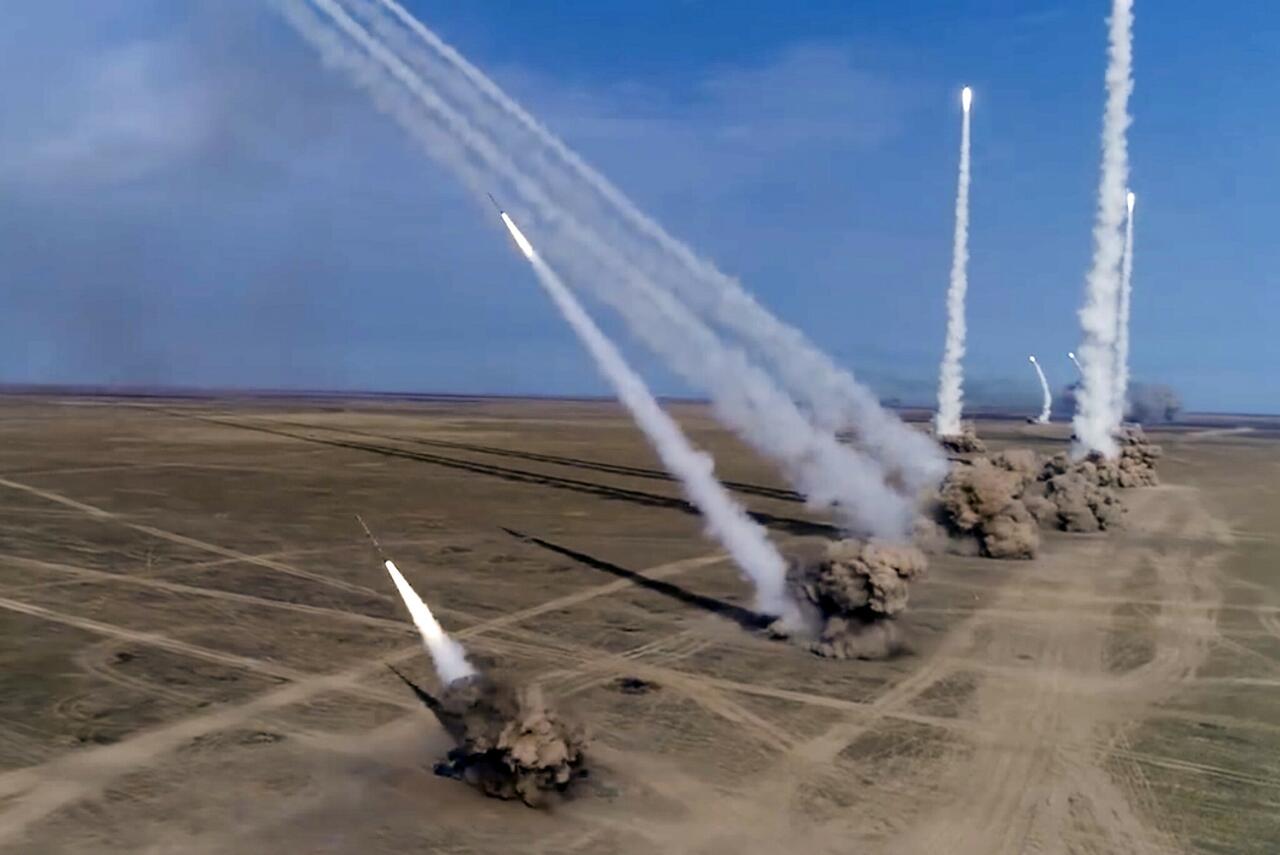
Illustrative image via AP
"If, God forbid, these weapons are used against Russian territory then our armed forces will have no other choice but to strike decision-making centers," Medvedev warned in the new statements.
That's when he suggested the following for the first time, marking a severe escalation of rhetoric:
"Of course, it needs to be understood that the final decision-making centers in this case, unfortunately, are not located on the territory of Kyiv" - with the suggesting being that those Western capitals supplying the advanced arms could come under attack in response.
Previously Russia has threatened to hit "decision-making centers" within Ukraine, such as Kiev and Lviv. These cities have been targeted on occasion, but rarely, throughout the war now in its fourth month.
The US confirmed this past week that Ukraine would receive M142 high-mobility artillery rocket systems, which are medium-ranged, capable of striking targets some 50 miles away.
President Biden on Tuesday stressed that "we're not going to send to Ukraine rocket systems that strike into Russia" - which the Kremlin acknowledged as a "rational" decision, while stilling condemning the transfer of the systems.
Ukraine's government, meanwhile, has reportedly given Washington "assurances" that it will not uses US-supplied weaponry to target Russian territory, which Moscow has long made clear would mark severe violation of its 'red lines'.
This as Yahoo News UK has noted that "The West has been increasingly willing to give Ukraine longer-range weaponry, including M777 howitzers, as its forces battle Russians with more success than intelligence officials had predicted."
Likely these fresh warnings from Medvedev serve to further warn and enforce over Russia's red line. While the longer range MLRS missiles are apparently off the table for now, which can reach up to 190 miles away, the shorter-range MLRS systems could easily be updated with the larger, more advanced and longer range systems.
On the sanctions and economic war front, Poland officials have on Saturday said the next, seventh round of anti-Russia sanctions are currently being readied - suggesting that for the time being the ongoing Russian-NATO/EU standoff will only escalate further. Negotiations are at the same time stalled completely, and diplomatic openings and communications are fewer and fewer, making the situation even more dangerous.

FT : Hedge funds scoop big returns from global interest-rate shake-up

Hedge funds scoop big returns from global interest-rate shake-up
Increased volatility delivers windfall for investors betting on debt and currency moves

High levels of inflation and supply chain bottlenecks have created the best conditions for hedge funds trading bonds and currency markets since the 2008 financial crisis, according to one of the pioneers of macro investing.

Kenneth Tropin, who founded $17bn-in-assets Graham Capital in 1994 and was previously chief executive of billionaire John Henry’s investment firm, is among the big-name macro managers reaping rewards as central banks rapidly raise interest rates to combat surging inflation.

“I can’t recall a more interesting time to be a macro investor since the financial crisis. We’re finding a lot of opportunities,” said Tropin, who is also Connecticut-based Graham’s chair, in an interview with the Financial Times.

“Inflation was so low for so long that central banks underestimated the potential for that genie to get out of the bottle and for how far it could go,” he said. “It’s pretty easy to see that global central bank policy has gone from being a headwind to a tailwind for macro.”

Tropin also highlighted the war in Ukraine and supply chain issues that could take “a very long time” to fix as factors adding to market volatility.

Macro trading, made famous by the likes of George Soros and Louis Bacon, involves betting on global bonds, currencies and commodities and tends to prosper when there are large moves in such markets. However, many funds struggled for years to make money as central bank stimulus suppressed the volatility in interest rates and other markets that they like to trade.

The onset of the coronavirus pandemic proved a major opportunity for them to profit. As central banks raced to loosen monetary policy, funds placed bets that bond prices would jump. Some, such as Andrew Law’s Caxton Associates, made record gains.

Last year proved more difficult for some, as markets began to fret that interest rates would have to rise much faster than central banks had indicated. Chris Rokos’s Rokos Capital and New York-based Alphadyne were among those badly hit as policy-sensitive short-term government debt plummeted.

This year, however, funds have been better prepared to play a large sell-off in bond markets, particularly in longer-dated paper — a price move they have been anticipating for years. They have also been able to profit from betting on one bond against another.

Graham’s Proprietary Matrix fund is up 23.8 per cent this year, while its Absolute Return fund has gained 14.3 per cent.

Among other funds benefiting is Brevan Howard, one of the best-known names in the sector. The hedge fund has been bearish on government bonds and focused much of its trading on medium-term maturities in the market, said one person familiar with its positioning.

Brevan’s $9bn Master fund has gained roughly 13 per cent this year.

Rokos, a former co-founder of Brevan, has risen 12.5 per cent this year at his Rokos Capital, helped by bets on rising bond yields. Meanwhile, Crispin Odey’s Odey European fund has gained about 87 per cent, helped by aggressive bets against longer-dated bonds.

Tropin said that while he did not think inflation will move much higher from current levels, investors were underestimating how long it would take for inflation to fall back to the US Federal Reserve’s target level.

“Some of the pressures that have moved inflation higher are not about to subside,” he said. “It could be two-and-a-half or three years” before it falls back into line.

Tropin added that, after large moves in markets this year, his funds were positioned more cautiously for now. But he remains optimistic for the trading opportunities ahead.

“I like the odds that the market will continue to be volatile and to have big ranges,” he said. “On a three- to five-year cycle is it going to be really good for macro? I do think so.”

FT : Some hedge funds finally see market conditions to justify their existence

Some hedge funds finally see market conditions to justify their existence
Dispersion of stock performance has created opportunities for profit

Hedge funds are having to adapt to a radically different market environment this year. For some, life has become much tougher. But for others, these are precisely the conditions they have long been waiting for.

A new world of high inflation, sharply rising interest rates and rapid quantitative tightening, almost unimaginable just a few years ago, has upended equity and bond markets over the past six months. Eurozone inflation this week hit another record high of 8.1 per cent, increasing pressure on the European Central Bank to speed up rate increases.

High-growth technology stocks have been particularly hard hit. While they can soar to enormous valuations when interest rates are near zero, higher rates mean their prospective future profits look relatively less attractive. Tiger Global and some of the other “Tiger cub” hedge funds that prospered during the bull market have felt the full force of this sell-off, in some cases losing much more than the wider market.

But for some managers who focus on exploiting price discrepancies between stocks, conditions are now in their favour. They had been left frustrated by the “everything rally” in which investors often appeared unconcerned about whether they were buying a high- or low-quality company. However, the removal of the ultra-low-cost financing that was long available to companies is starting to separate the wheat from the chaff.

“Market neutral [equity] and low net funds should benefit from stocks . . . reflecting fundamentals now,” said Kier Boley, chief investment officer of alternative investment solutions at UBP, referring to funds that try to make money from weighing one stock against another, rather than predominantly from betting on rising prices.

A perfect example of how conditions have changed for such funds is London-based Sandbar Asset Management. A year ago, I wrote in this column that the firm with $2.2bn in assets, founded by former Millennium trader Michael Cowley, was struggling with the seemingly illogical way in which markets were operating.

For instance, the correlation between an improvement in expectations about a company’s earnings and the reaction in its share price, which intuitively should be positive, had fallen “to levels not seen in the last decade”, Sandbar said at the time. In some sectors such as aerospace, it had even turned negative, meaning improving earnings expectations would actually push a share price lower. Sandbar ended the year down 7.5 per cent.

Much has changed since then. The fund is up 6.7 per cent in the first four months of this year, compared with a 7.3 per cent fall in equity hedge funds on average, according to data group HFR, and a 14.5 per cent drop in the S&P 500 index as of Wednesday.

Significantly, so-called alpha — industry jargon for the money a manager makes from their skill rather than simply from following overall market moves — has been positive for the fund for each of the past four months.

A major reason, according to Sandbar, is the fact that markets have now entered the “latter stages of the economic cycle”. It wrote in a letter to investors that this has historically represented a time when conditions have been most supportive for funds like itself. This was because “dispersion [between stocks] increases significantly” while returns from simply following the market moderate or turn negative.

The unwinding of positions by other investors at the end of last year and early this year as the market fell created opportunities for Sandbar to profit in recent months, it added.

While the outlook for such managers has improved markedly, there are still factors that could yet hinder their progress. Stocks have rallied over the past couple of weeks on hopes that bad news on the economy will persuade central bankers to limit interest rate rises. And, as UBP’s Boley points out, even if a manager gets the analysis of a stock’s fundamentals correct, their positions can still be knocked off course by a major investor unwinding its book.

Nevertheless, this sifting of the industry, which has long been forecast but often delayed by years of central bank stimulus, is being welcomed by many.

Hedge funds have struggled for much of the past decade to justify why investors should pay their high fees when returns were often uninspiring compared with index-tracking funds — available at a fraction of the cost — or compared with the profits apparently on offer from private equity funds.

In a world in which returns from stocks and bonds are now less appealing, hedge funds that do not simply try to ride the markets but instead exploit market dislocations may finally have hit their stride.

FT : Ukraine warns that only lifting Black Sea blockade can avert global food cr

Ukraine warns that only lifting Black Sea blockade can avert global food crisis
Other routes out can deliver only a fraction of total grain stockpile, says minister

Ukraine has warned that the world faces a critical food shortage unless Russia lifts its Black Sea port blockade, as improvements to other transport options would only enable it to deliver a fraction of its total grain stockpile.

Oleksandr Kubrakov, Ukraine’s infrastructure minister, told the Financial Times that “all of our activity won’t cover even 20 per cent of what we could do through the Black Sea ports”.

Ukraine and its western allies are searching for ways to get up to 20mn tonnes of grain out of the country and clear storage space for this year’s harvest. The crisis threatens tens of millions of people in countries across the Middle East and Africa that rely on Ukraine’s cereals.

Trucks face lengthy delays at the border with Poland and Romania, while moving grain by rail is difficult because trains in the EU and Ukraine run on different gauges of track. Russia has repeatedly bombed the alternative routes, including those leading to Romania by road or rail, where grain is then loaded on barges that sail down the Danube and into the Black Sea.

The EU has simplified its procedures and Ukraine is offering additional guarantees to European barges and trucks after most western insurers shied away because of the risk.

Despite those efforts, Kubrakov said it would prove insufficient. “Everyone is doing superhuman activity, and the [amount exported] is growing every month . . . in the short term it could go up to 30 per cent [of Ukraine’s Black Sea exporting capacity],” he said.

Russia has captured much of Ukraine’s breadbasket in the south and is making progress in the eastern Donbas industrial region, the scene of the fiercest fighting three months into Putin’s invasion of Ukraine.

Since late February, Russia has seized between 400,000 and 500,000 tonnes of grain from occupied territories. Some Ukrainian farms have been hit by air strikes and artillery fire.

President Vladimir Putin has blamed the food crisis on sanctions against Russian exports and said Moscow would only lift the blockade if the restrictions were lifted. On Friday, he said in a state television interview: “The problem of exporting grain from Ukraine does not exist.”

Kubrakov warned that Russia’s actions risked creating famine “on a global scale” and Moscow was acting like “total pirates”.

“They don’t care about the lives of these people in Africa,” he said. “They’re telling them: ‘We don’t care about you. We are only worried about sanctions against us. Now you are hostages.’”

Kubrakov said converting a single railway line to the EU standard would cost $2bn-$3bn, with more investments needed to expand capacity at border crossings.

Kyiv has discussed sending up to 4mn tonnes of grain a month via Belarus, which uses the same railway gauges, and on to a port in Lithuania, according to a government briefing document seen by the FT. But the plan is politically unpalatable because Belarusian leader Alexander Lukashenko let Russia use his country as a staging post for its invasion of Ukraine.

Though export capacity via the new routes is rising, EU diplomats estimate that Ukraine can only export about 5mn tonnes of grain by the end of the summer, leaving the rest of the last harvest at risk of rotting and making it more difficult to store this year’s.

“There is no quick solution, unfortunately,” Kubrakov said. Expanding storage capacity would also mean investing billions of dollars in grain silos along the new routes, he added.

The risk to Ukraine’s cereal crops has awakened traumatic memories of the country’s man-made famine of the 1930s when it was part of the Soviet Union. Peasants had their grain taken from them and were confined to their villages, leading to the deaths of 4mn people in what is known as the Holodomor, or death by starvation.

Kubrakov said the consequences of the Black Sea blockade could be even worse. “They did the Holodomor in our country once, yes? Now they have the chance to do a Holodomor on a global scale,” he said.

UN secretary-general António Guterres is leading an effort to unblock the Black Sea ports and secure guarantees from Russia not to attack commercial shipping.

Russian foreign minister Sergei Lavrov said this week that Putin and Turkish president Recep Tayyip Erdoğan had agreed to help de-mine Ukrainian ports, which Kyiv has blocked to guard against a coastal assault.

But Ukraine says Russia has fired on several cargo vessels and mined the sea route blocking their safe passage through the Black Sea, making any potential agreement contingent on third-party guarantees for the ships’ safety.

Kubrakov said the negotiations were Russia’s “last chance to avoid essentially being guilty for the deaths of millions of people on several continents”.

WSJ : AI Is New but Not Immune From Old Rules, Bank Regulators Say

AI Is New but Not Immune From Old Rules, Bank Regulators Say
Although financial regulators haven’t released specific AI-related rules, existing regulations could apply, senior officials warn

Financial institutions’ use of artificial intelligence should have risk controls in place to address possible drawbacks, senior bank regulators said, warning that old rules could be applied to the novel technology.

Even without AI-specific guidance from federal bank regulators, institutions could run afoul of existing rules, officials at the Federal Reserve Board of Governors and Office of the Comptroller of the Currency said Friday.

“There’s a lot of existing guidance,” Kevin Greenfield, the deputy comptroller for operational risk policy at the OCC, said at a panel discussion hosted by the New York City Bar Association. “It doesn’t need to be AI-labeled to be applicable.”

U.S. financial regulators have grappled with how to handle banks’ and other institutions’ growing use of AI, a technology that has been deployed in applications as diverse as fraud monitoring and product pricing. Five regulators, including the OCC and the Federal Reserve, in 2021 asked institutions for information on their use of AI, but so far they haven’t issued any sweeping guidance.

Despite the lack of new guidance, banks should already have risk management practices in place, David Palmer, a senior supervisory financial analyst at the Federal Reserve, said in the same panel discussion.

“If they don’t have the appropriate governance, risk management and controls for AI, they shouldn’t use AI,” he said.

Mr. Palmer said, in his personal view, a comprehensive set of AI-related rules might never come from banking regulators, and instead the agencies might issue more granular updates on their thinking.

“There could be a series of things issued…as we all learn more,” he said. “Things are moving so quickly and we’re all learning a lot.”

Regulators already have told financial institutions to comb through existing guidance for its possible applications to AI, Mr. Palmer said.

Federal Reserve regulators also have begun to examine how institutions are using AI, though at this point those probes have been conducted mostly as a way of educating the regulators, rather than to produce the types of findings that would emerge from a more formal examination, Mr. Palmer said.

Institutions should maintain a “healthy degree of skepticism” about the technology, and ensure they have enough oversight staff, he said.

“We want to confirm that our institutions [are] using it the right way, they have the proper governance, risk management controls over it,” Mr. Palmer said.

Barrons : Barron’s Weekend Summary: The wedding boom, which began at the end of

Barron’s Weekend Summary: The wedding boom, which began at the end of last year, has fueled hopes that the U.S. could reverse a long trend of falling fertility rates.

* Cover Story:
The wedding boom, which began at the end of last year, has fueled hopes that the U.S. could reverse a long trend of falling fertility rates. But fresh data and interviews with demographers show that, once the backlog of ceremonies clears, the surge in trips to the altar is unlikely to lead to more trips to the maternity ward. Indeed, despite a slight uptick in 2021, the birthrate is still hovering close to historic lows, far below what is needed to keep the population from shrinking.

* Interview:
Barron’s interviews Rich Greenfield, proprietor of LightShed Partners, a research and investment boutique focused on technology, media, and telecommunications. Greenfield discusses social media, games and streaming services and the quest for users. There’s fresh turmoil in the media industry. Advertising spending is softening, pressured by a toxic brew of high inflation, rising interest rates, and worries about an economic slowdown. While consumers are starting to head back to movie theaters, the streaming-video business is showing signs of maturing, with slowing growth and increasing competition. Netflix is going to sell ads. Elon Musk is (maybe) buying Twitter. Apple is airing baseball games.

* Tech Trader:
-A recent law barring large social media companies from moderating content could be bad in ways that investors likely aren’t expecting. In fact, the biggest risk facing Meta Platforms FB –4.06%, Twitter, and Alphabet isn’t the rise of TikTok—or Apple’s tough stance on privacy—it’s the possibility that a new Texas law could effectively upend social media’s business model. The tech companies got some relief this past week when the Supreme Court stepped in to put the law on hold, but there’s no guarantee it stays that way pending a full review of the case in US District Court.

* The Trader:
The end of cheap money has caught up with the market’s scorekeepers: The S&P Global SPGI and MSCI. Their shares are down more than 28% this year, trailing far behind the S&P 500SPX index. Both run indexes and sell reams of data and analytics services. And both are highly insulated from competition, making their stocks good long-term bets. MSCI, though, is looking stronger in the near term.-Consider the stock market this past holiday-shortened week. Through the first three days of trading, the S&P 500SPX index looked like it was going to be able to start a winning streak after breaking a seven-day losing streak the week before. Instead, it finished down 1.2%. The Nasdaq Composite, which closed off 1%, and the Dow Jones Industrial Average, which fell 0.9%, followed similar trajectories. It’s not just the stock indexes that failed to follow the trend—bond yields did, too.

* Features:
-Lux Capital’s co-founders Josh Wolfe and Peter Hébert tell Barron’s that a wide swath of investment firms and portfolio companies aren’t likely to survive the downturn. “In the same way tech led the excess on the way up, you’ll see it on the way down,” Wolfe says. “It feels like the summer of 2000, where you had speculative excess that will get squeezed out.” But there is a silver lining in this dire forecast. The coming dislocations should give patient investors a new set of moneymaking opportunities.
-Convertible securities are somewhat complex instruments that are unfamiliar to most investors. Now could be a good time to learn about them. Converts are bond/stock hybrids that can offer the security of bonds and the upside of stocks. They’ve historically generated strong returns—gaining about 50% in 2020.But the $280B market has been stung this year and is now worth a look.

* European Trader:
Stellantis is a holding in the Global X Autonomous & Electric VehicleDRVE ETF. The three largest providers of ETFs in the U.S.—Vanguard, State Street, and BlackRock own roughly 5% of Stellantis’s shares outstanding. Those three own almost 20% of both General Motors and Ford.The US just doesn’t pay much attention to Stellantis. That’s a shame, too, because investors are overlooking a star with strong global market position and a competitive plan to win in electric vehicles.

* Emerging Markets:
-Tether is making a push into emerging markets as competition grows with rival stablecoin issuer Circle. The largest cryptocurrency after Bitcoin and Ether, Tether’s USDT has long been the leading stablecoin—a type of digital token pegged to a real asset, such as the dollar. But USDT’s dominance has recently come under pressure. Rival USD Coin (USDC), issued by BlackRock and Fidelity-backed Circle, and is increasingly taking market share amid unanswered questions about Tether’s collateralization.

* Commodities:
-Oil could be headed for $150 a barrel. That might not be good for the economy, but it would be great news for energy stocks. Crude prices had been under pressure since peaking in March, as investors fretted about the impact of China’s Covid-19 lockdown on global growth and a potential recession in the U.S. But after getting knocked down as low as $94.29 on April 11, the price of oil has been steadily rising, while making higher highs and higher lows. Oil exploration stocks, in particular, stand to benefit. . Callon Petroleum would be able to return 86% of its market cap, or $3.1B; SilverBow Resources could return 72%, or $620M; Murphy Oil could return 69%, or $4.7B; Ovintiv –could return 67%, or $9.8B; and Ranger Oil could return 65%, or $1.2B.
-Natural-gas prices could jump by 15% or more by year end as supplies fall far short of demand, experts say.“Increasing supply is now getting trickier, and we really don’t see much of a jump until this time next year,” says Peter McNally, an energy expert at Third Bridge. Shortages of equipment and personnel, combined with underinvestment in the sector, will probably lead the price to rally to $10—or about 15% more than recent futures prices. However, McNally says that some US regions may see temporary spikes to $30 due to lack of infrastructure.

* Streetwise:-Jack Hough talks about the 401K. “A 401(k) is an example of a defined-contribution fund, which is a polite way of saying that we know what goes into it, but it’s anyone’s guess what’s there by retirement age, or how long it lasts. These plans now make up 70% of U.S. retirement assets, double their 1980 share. So savers have to get their investment choices right, be willing to work longer, or keep an open mind between, say, Palm Beach and Papua New Guinea. (I’ve heard all good things.)”