WSJ : Apple Is Set to Return Software to Forefront at Annual Developer Conferenc

Apple Is Set to Return Software to Forefront at Annual Developer Conference
The iPhone maker isn’t expected to introduce a headset at WWDC event, and could show off a new version of the MacBook Air laptop

Apple Inc. AAPL -3.86% Chief Executive Tim Cook on Monday will open the iPhone maker’s annual weeklong developer conference, an opportunity to highlight the company’s software prowess as investors worry about slowing gadget sales, rising inflation and a resurgence of Covid-19.

The event is mostly online, with the keynote address scheduled to begin at 1 p.m. in New York via the company’s website. Apple has invited a few people to participate in person at its headquarters in Cupertino, Calif., where they must meet certain conditions around vaccinations and testing.

Two years ago, as the global pandemic was shutting down daily life for many, Apple helped set the tone for virtual events around the world as it transitioned its large-scale convention-center event to a virtual one. The company served as an example to other companies and organizations taking their first steps into the new world of remote events.

The pandemic helped fuel record profit for Apple as workers and students bought laptops, iPhones and tablets to augment their quarantine experience. The company’s first iPhone with 5G cellular-data capability generated record sales of $191 billion in the past fiscal year, which ended in September.

Hurt by parts shortages and factory shutdowns in China related to Covid safety precautions, iPhone sales are expected to be stagnant this quarter compared with a year earlier. In total, analysts surveyed by FactSet on average predict iPhone revenue to rise 6.2% this fiscal year, after climbing 39% in 2021.

Apple’s biggest area of growth this year is expected to come from the services category, which includes money generated from the App Store and Apple’s ad business. Services sales might rise nearly 17% to $80 billion. That would be more than the combined sales of iPad and Mac computers, and rank second to Apple’s iPhone business.

A significant part of that business comes from videogames offered through the App Store. Videogames could play an important role in helping usher in Apple’s next hit product. Close Apple watchers will be looking on Monday for any hints regarding the company’s planned extended-reality headset. Production of the device is expected to begin later this year or early next year, and would bring about Apple’s most highly anticipated new product since the introduction of the company’s smartwatch in the fall of 2014.

The headset isn’t expected to debut during Monday’s keynote, and Apple might reveal a new version of its MacBook Air laptop. The latest versions of its software for the iPhone, iPad and computers are expected to be demonstrated before being released this fall.

By its very nature, Apple’s annual conference, known as WWDC, never commands as much attention as an iPhone event, yet the new software features and policies unveiled can have far-reaching effects. In 2020, for example, Apple announced a new privacy feature that required all app developers to get permission from iPhone users to track their internet use. Most of those users have declined, roiling the businesses of Meta Platforms Inc.’s Facebook and the broader ad-tech industry built on messages targeted at people based on that data.

In recent weeks, Apple has run a high-profile television ad, including during the National Basketball Association’s playoff games, highlighting its features aimed at protecting user privacy.

The latest privacy marketing campaign comes as some developers and lawmakers around the world are questioning the power Apple holds over the distribution of software on its iPhones.

>>> Weekend Papers Summary

Weekend Papers Summary
NEW YORK TIMES
-No Radio, Old Tactics: How the Police Response in Uvalde Broke Down The commander at the scene arrived without a police radio, and decided in the first minutes on an approach that would delay a confrontation. The NYT review the response found that communication mishaps and tactical decisions may have contributed to deaths, and certainly delayed medical help.
-NY Republican Representative Chris Jacobs, whose district includes Buffalo suburbs, abandoned his campaign after support for an assault weapons ban caused a GOP backlash.-With a recount still underway, David McCormick stepped aside to Dr. Mehmet Oz in one of this year’s pivotal midterm races.
-The Democratic candidate for Senate in Pennsylvania, who suffered a stroke last month, didn’t say when he would resume campaigning.
-On Jan 5., 2021, Vice President Pence’s chief of staff flagged a security concern after learning that President Trump was going to turn publicly against Mr. Pence.
-The House had recommended charges against the former Trump aides Peter Navarro, Mark Meadows and Dan Scavino over their stonewalling of its Jan. 6 inquiry.
-The Labor Department reported 390,000 new jobs in May, as policymakers try to ease inflation without inducing a recession.
-The conflict in Ukraine has rocked the global order, wrought destruction that “defies comprehension” and shows little sign of ending. Here’s the latest.
-Gina Haspel Observed Waterboarding at CIA Black Site, Psychologist Testifies The testimony emerged in pretrial hearings in the Cole bombing case at Guantánamo Bay, where the war court is wrestling with the legacy of torture after 9/11.
-Health experts, including the Centers for Disease Control and Prevention, recommend that pregnant women get vaccinated against the coronavirus as soon as possible, to protect both maternal and fetal health.
-Sheryl Sandberg’s exit reveals about women’s progress in tech. Silicon Valley is losing one of its most visible, outspoken and powerful women. Any gains for female tech leaders have been incremental at best.
-Prince Harry and his wife, Meghan, attended a service to celebrate the 70-year reign of Queen Elizabeth II, who skipped Friday’s event. Catch up on highlights.
-Tesla to Cut 10% of Salaried Staff, Musk Tells EmployeesThe electric carmaker has been growing fast in recent years, but Elon Musk, its chief executive, appears to be concerned about a weakening economy.
-The Depp-Heard trial has exposed risks to media in airing #MeToo accusations. Both the women making accusations, and the press when it publishes them, assume the considerable risk that comes with antagonizing the rich, powerful and litigious.

THE FINANCIAL TIMES
-The US economy registered another month of solid jobs growth in May, despite employers grappling with a historically tight labor market and policymakers’ efforts to cool demand.
-Estonia’s government collapsed after the Baltic country’s prime minister launched a blistering attack on her coalition partners, accusing them of working against the nation’s values and failing to protect its independence in the aftermath of Russia’s full-scale invasion of Ukraine. At the request of Prime Minister Kaja Kallas, the president, Alar Karis, on Friday dismissed all seven ministers from the Centre party, which used to have formal ties with Russian president Vladimir Putin’s United Russia party.
-The German parliament has voted to approve a €100B fund to modernize the country’s armed forces, reflecting the fundamental shift in Berlin’s defense and security policy triggered by Russia’s war in Ukraine. Ahead of the vote, Christine Lambrecht, defense minister, told the Bundestag that “security has its price”, and Germany “must be able to defend its values by military means”.
-Tesla shares closed more than 9% lower on Friday after chief executive Elon Musk was reported to have said the electric vehicle maker would cut 10 per cent of salaried staff and freeze hiring.
-Commemorations in Hong Kong of the Tiananmen Square massacre have largely been snuffed out, as authorities have sought to crush observance of the crackdown on student protesters in a city that has typically held the biggest annual vigil on Chinese soil.
-Peter Navarro, who served as the top White House trade adviser to Donald Trump, has been indicted on two counts of contempt of Congress after failing to comply with a subpoena from the committee probing the January 6 2021 assault on the US Capitol.
-When Joe Biden took over the White House from Donald Trump last year, there was no country whose relationship with the US changed more suddenly and more drastically than Saudi Arabia. As a candidate, Biden had vowed to treat the kingdom as a “pariah” amid mounting evidence Saudi officials were behind the 2018 murder of dissident Jamal Khashoggi; within a month in office, Biden had declassified US intelligence pointing to Crown Prince Mohammed bin Salman, the country’s de facto leader, as having been behind the killing.
-Google co-founder Sergey Brin’s secretive project to build huge electric airships is scaling up rapidly, as Lighter Than Air (LTA) Research prepares its first major test flights later this year. The tech billionaire is hiring hundreds of aerospace engineers in Silicon Valley and Akron, Ohio, at a site made famous by the Goodyear blimp, to build airships intended to run humanitarian missions to remote areas or disaster zones.-Global investors are returning to China’s stock markets after a widespread sell-off earlier this year triggered by draconian Covid-19 restrictions, the geopolitical implications of Russia’s war in Ukraine and the lingering effects of regulatory crackdowns.

THE NEW YORK POST
-President Biden on Friday blamed Russian President Vladimir Putin for economic woes as US gas and diesel prices hit records per gallon — and as high inflation, rising interest rates and fear of a recession weigh on Democrats ahead of the November midterm elections.
-Los Angeles motorists bemoaned surging prices at one local gas station that charged more than $8/Gal. of regular this week – a sign of the brutal sticker shock that Californians and others around the country currently face while filling up their tanks.
-Apple is rolling out improvements to its retail scheduling policies in an attempt to placate dissatisfied workers amid a unionization push, Bloomberg reported. Apple will up the amount of time between retail workers’ scheduled shifts to 12 hours from 10 and will allow them to choose a dedicated weekend day off every six months, according to the outlet.

>>> Bank of Japan (BOJ) Gov Kuroda: Japan is not in position for monetary tighte

Bank of Japan (BOJ) Gov Kuroda: Japan is not in position for monetary tightening; Retiterates stance to continue with monetary easing persistently
- Will take strong stance on monetary easing
- Important for Japan's consumer inflation to achieve 2% on average, not temporarily
- Reiterates view that most inflation from energy prices - Weak Yen pushes up both import and export prices, so it is neutral on terms of trade
- Need to support demand with stimulus
- Recovery in consumption and Capex is weaker than in the US or EU zone economies
- BOJ must cushion blow from falling real income, driven by rising raw material costs, on households, firms by maintaining easy monetary policy
- Amount of BOJ bond buying has not increased much despite BOJ recent decision to offer unlimited buying of 10-year JGBS at 0.25%
- Japan households are becoming more accepting to price rises, which is an important change in terms of achieving BOJ price goal
- Households' forced savings, accumulated during covid pandemic, may have made them more accepting to price rises
- Central banks' basic understanding is to maintain monetary easing unless cost-push inflation leads to second-round effects such as heightening inflation expectation, wage growth

(ZH) Onshoring Semiconductor Capacity Is Crucial To National Security

Onshoring Semiconductor Capacity Is Crucial To National Security

When you think about national security, you probably don’t immediately think about semiconductors. These tiny chips are the “brains” enabling all the computational capabilities and data storage that we take for granted today. Chips power virtually every sector of the economy – including data centers, automotive, healthcare, banking, and agriculture. As a consequence of their widespread use, semiconductors have grown to become a $555 billion global industry, and are the world’s fourth most traded product. Semiconductor manufacturing and advanced packaging have been cited frequently as one of the main critical supply chain priorities for the nation.
A steady source of uninterrupted, trusted chips is necessary for the security of the nation – supporting the readiness of the U.S. military and protecting critical infrastructure like the electric grid. The problem is that most chips are fabricated outside of the U.S., in the vulnerable region of Southeast Asia – hence the security issues. Around three quarters of global chip production capacity comes from Southeast Asia. The U.S., on the other hand, represents only 12% of global manufacturing supply, while accounting for around 25% of global demand. This supply-demand imbalance leaves the U.S. in a precarious position, dependent upon foreign sources of supply such as South Korea and Taiwan. Amidst geopolitical tensions in that region, there are compelling reasons to consider strengthening the supply of semiconductor production at home.
The first consideration is cybersecurity. The security of the chips, embedded within everything from your smart phone to your laptop, plays a critical role in cybersecurity. In fact, databases such as the Common Weakness Enumeration list a number of known hardware weaknesses. Furthermore, given the complex global supply chain, there are ample opportunities for foreign adversaries to maliciously tamper with chips and other electronic assemblies.
Beyond the security implications, semiconductors play an important role within the economy. The U.S. semiconductor industry employs roughly 277,000 people and generates $55.8 billion in national GDP. The jobs in this industry pay higher than average wages. For every one worker in the semiconductor industry, an additional 5.7 jobs are supported indirectly through the supply chain or related economic activity. However, the current global chip shortage has reduced U.S. GDP by around $240 billion. Because of the chip shortage, semiconductor inventories for auto makers have dropped 43%, and 70% of auto manufacturers have announced production stoppages. The result is that the global auto industry produced 7.7 million fewer cars in 2021. Without chips, many industries simply cannot support demand.
Of course, building domestic capacity, especially leading-edge capacity, will require commitment, effort, and buy-in by multiple parties. According to a BCG report, building a semiconductor fabrication facility can cost $5-20 billion in upfront capital expenditures, with a ten-year total cost of ownership ranging from $11-40 billion. The report finds that U.S. costs are 25%-50% higher than in other locations such as South Korea and Taiwan, with 40%-70% of this gap accounted for by government incentives. Despite this, trends such as remote work, the increased use of artificial intelligence, and growing demand for electric vehicles will result in continued increases in semiconductor demand.
This is why legislation is an important first step to ensure domestic production. The CHIPS for America Act, which was passed as part of the FY 2021 National Defense Authorization Act, authorizes provisions such as grants for strengthening domestic semiconductor manufacturing and research capabilities. The Senate passed the U.S. Innovation and Competition Act which includes $52 billion in investments supporting the CHIPS Act, while the House passed its own version of competitiveness legislation called the America COMPETES Act that also includes $52 billion in CHIPS Act funding. The Senate and the House are now negotiating the details of the two separate bills to be combined into the Bipartisan Innovation Act. A complementary bill called the FABS Act provides an investment tax credit for construction of domestic semiconductor manufacturing facilities. According to the Semiconductor Industry Association, the CHIPS Act incentives will produce 66,000 research and development jobs, as well as thousands of additional jobs in construction and manufacturing. Together, the grants in the CHIPS Act and the tax incentives of the FABS Act are intended to kick-start the construction and expansion of domestic semiconductor manufacturing facilities and allow for investment in the technology and operations for sustained growth over time.
As we have learned through the pandemic, the global supply chain is surprisingly brittle, and dependence on foreign sources for critical components like semiconductors leaves the nation vulnerable. Cultivating a domestic manufacturing ecosystem can be done by onshoring semiconductor fabrication capabilities and providing market incentives – strengthening national security and promoting economic prosperity.
Zachary A. Collier, Ph.D., is an assistant professor of management at Radford University. He is a visiting scholar at the Center for Hardware and Embedded Systems Security and Trust (CHEST).

(ZH) Central China's State Bailout Good News For Similar Developers

Central China's State Bailout Good News For Similar Developers

By Shen Hong, Bloomberg Markets Live commentator and reporter
The de facto partial state bailout of Central China Real Estate is certainly a sign of things to come, and bodes well for small- to mid-sized Chinese developers of strategic importance to local authorities.
The chairman of the Henan-based developer, China’s 37th-largest, will sell a 29% stake in the firm to a real estate company owned by the provincial government. The proposal followed a December move by China South City Holdings to also sell an identical stake to a state firm. The moves strongly hint at local coordination based on instructions from the very top, as Beijing steps up efforts to prevent the property sector’s liquidity crisis from deteriorating into a major systemic risk.
To be sure, not all distressed developers will be as lucky as the above-mentioned two. Henan is not a rich province but Central China happens to be a major local employer and taxpayer. As one of the nation’s most populous provinces, Henan also can’t afford to see angry homebuyers stage street protests if the developer collapses and leaves behind unfinished apartments.
One last thing: the two episodes need not rekindle concerns about aggressive nationalization of private enterprises. Beijing is proactively helping these struggling developers, with likely no intention to fully own them in the long run.
Real estate is becoming a sunset industry in China, as the population ages fast and economic growth slows further. It’s not where state firms want to be, unless called upon to do the national service of building cheap public housing.

FT : Windfall tax on UK electricity generators would curb investment, Labour war

Windfall tax on UK electricity generators would curb investment, Labour warns
Opposition critical of chancellor’s ‘haphazard, last minute’ plan for additional levy

The Labour party has accused Rishi Sunak of causing uncertainty and damaging investment plans with his “haphazard, last minute” threat to impose a windfall tax on British electricity generators, a move that wiped £3bn off their share price.

The UK chancellor last month warned he would consider hitting power generators with a levy later this year when he announced a 25 per cent tax on the “extraordinary profits” made by North Sea oil and gas companies. The move is designed to raise billions of pounds to provide financial support for households struggling with soaring energy bills.

The chancellor said “certain parts of the electricity generation sector [were] also making extraordinary profits” and he was “urgently evaluating” their scale and what next steps to take.

Government insiders said Sunak wanted to “determine any course of action swiftly”, with internal Whitehall estimates suggesting he could seek to raise £3bn to £4bn from power generators.

Labour, which initially championed a windfall tax on oil and gas producers, claims that Sunak is damaging the investment environment for new energy projects by threatening to extend the levy.

The main UK opposition party highlighted falls in the share price of the companies likely to be affected by such a move, including Drax, Centrica and SSE. “In just one week, almost £3bn was wiped off the value of these companies,” Labour said.

“It’s the hallmark of this chaotic, out of touch, out of ideas government that their hastily cobbled together plan is having this sort of impact on British businesses. They must provide urgent clarity immediately,” said Rachel Reeves, shadow chancellor.

Sunak held back from announcing the windfall tax on generators last week because it required further technical work, but Whitehall insiders said he wanted to end the uncertainty within weeks.

The Treasury declined to comment on a report in the Sunday Telegraph newspaper that it was looking at whether a windfall tax would exclude electricity generated by renewables and nuclear power and instead focus on operators of gas and coal-fired power stations.

Generators privately admit they face an uphill battle as Sunak is determined to enforce a windfall tax and are trying to ensure that investments in low carbon infrastructure could be offset against the tax.

Electricity generators were caught completely off guard when the Financial Times revealed last month that the chancellor planned to expand the windfall tax to their sector. They have since warned the chancellor that their industry is far more complicated and diverse than upstream oil and gas.

Many power station and wind farm owners insist they sell their output far in advance so have not benefited from recent high power prices.

But analysts have pointed out that many companies providing “flexibility services” — generating power to fill gaps in supply when renewable sources such as wind and solar aren’t generating — will probably have received a windfall.

Generators that still hold some of the earliest contracts for renewable power generation — which award a subsidy on top of wholesale prices — are also thought to have benefited.

However, energy groups insist that even if generators have profited, many are reinvesting billions back into UK infrastructure such as new offshore wind farms or by expanding the electricity grid to support the UK’s low carbon ambitions.

The UK government is also relying on energy companies including SSE, Spain’s Iberdrola and EDF Energy to forge ahead with new clean energy projects such as offshore wind farms and nuclear plants to bolster domestic energy sources following Russia’s invasion of Ukraine.

FT : From somebody to nobody: TSMC faces uphill battle in US talent war

From somebody to nobody: TSMC faces uphill battle in US talent war
Taiwan’s tech titan faces off with Intel in Arizona’s tight labour market

On a quiet April morning, cranes, bulldozers, trucks and construction workers bustled down streets in two places lying in opposite directions from Phoenix: those to its north building TSMC’s $12bn chip fabrication plant, and those to the south working on a $20bn expansion of Intel’s 42-year-old campus.

Only 80km apart in Arizona, both projects broke ground in 2021, and both are racing to begin production by 2024. While it may be a while before the factories come online, the two chip giants are already battling with each other for labour — and the road ahead may be far rockier for TSMC.

The Arizona fabrication facility will be the Taiwanese chip titan’s most advanced manufacturing facility outside its home market and one of the biggest investments the company has made in years. It announced plans for the desert project in 2020 to address Washington’s growing geopolitical concerns, despite the significantly higher cost to manufacture in the US than in Asia.

Simply finding enough workers to build the facilities has already proved a challenge. The US is in the midst of the tightest labour market in decades, and Arizona — where summer temperatures average 38C — has always struggled to recruit construction workers in sufficient numbers.

TSMC originally planned to start moving chip production equipment into its facility by about September this year but has told suppliers this will be pushed back to the first quarter of 2023 owing to construction delays, Nikkei Asia previously reported.

The company is working with both American and Taiwanese construction contractors to build the Arizona fab. More than 6,000 people are working on the Phoenix site every day, TSMC told Nikkei Asia, adding that the 2024 production timeline was unchanged.


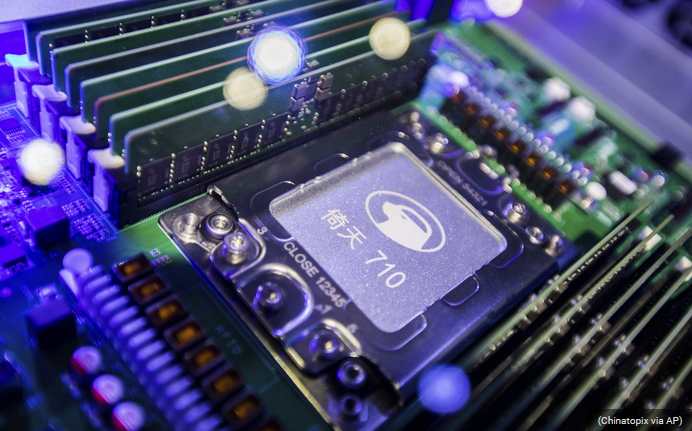
TSMC is building a chip plant in the desert of Arizona. The project faces a number of challenges, from staffing the massive facility to building up a semiconductor supply ecosystem © Yifan Yu
But finding construction workers is only a taste of the next challenge that awaits: recruiting highly skilled technicians and engineers to staff the massive chip plant.

Semiconductor manufacturing in general is not the most glamorous of tech industries in the US, particularly compared to consumer-facing companies such as Apple, Facebook or Google. And with chip manufacturing having been outsourced for decades to Asia, it is a career path that many Americans have not even heard of.

“You say ‘semiconductor manufacturing’ [to potential recruits], people look at you like you have two heads. It’s just unfamiliar,” said Kweilin Waller, deputy human services director at the Phoenix Business and Workforce Development Board.

Daniel Barajas, a careers director at the Maricopa County Community Colleges District, echoed that sentiment. “I think those students that we are trying to recruit to ultimately become employees don’t know what they don’t know. So even before we give consideration to the seven semiconductor manufacturers that they could work with, they need to understand, what is a semiconductor technician?”

That lack of familiarity means that even Intel — a domestic heavyweight with a long history in Arizona — has to work hard to attract applicants. One way it has done this is by building close ties to local universities, particularly Arizona State University. ASU has supplied more students to Intel than any other university, and the US chip giant is the top employer of the engineering school’s students.

The Schools of Engineering at ASU is the largest of its kind in the US, with nearly 27,000 students enrolled. The question is whether TSMC can tap that resource, too.

“Indeed, it’s more of a challenge [for TSMC to attract students],” said Kyle Squires, the school’s dean. Because of the longstanding history between the school and Intel, and the large number of students and alumni working at the American chip giant, “the informal networking [among students] starts to really grab on”.

TSMC, by contrast, is just starting to build those kinds of relationships with students.

And there are no shortcuts on that front, according to Squires. If a company only comes in and tries to recruit students in their senior year, “then it’s too late. It’s stunning how competitive the market is.”

There are signs that TSMC is already braced for that competition. The company’s original plan for staffing the Arizona fab was to hire primarily in the US and send those recruits to Taiwan for about a year of training, sources told Nikkei Asia. But after realising how difficult it is to find enough qualified employees in the US, the company has decided to start recruiting in Taiwan as well, the sources said.

“TSMC is focused on hiring employees, including technicians, locally in the US for our Arizona fab,” TSMC said. The chipmaker did plan to send a limited number of technicians from Taiwan to the new US site for the first two or three years during a transition period, the company added, which was “a common practice for us, not something new.”

For now, TSMC’s human resource team is in constant talks with university and local community colleges to explore more partnerships to build its talent pipeline in the region.

“TSMC recruiters have been very heavily present on campus,” said Zachary Holman, an associate professor at ASU’s engineering school. “TSMC is presently negotiating with the university for some extended collaborations, both in research and in workforce development, and broader training programmes.”

In addition to wooing engineers, semiconductor makers in Arizona are even more desperate for the technicians needed to staff the plants around the clock in order to ensure production runs smoothly. This work is physically demanding, including lifting heavy tools and walking long distances in clean-room suits.

“For every engineering degree they have on staff . . . they probably need four to six technicians to come along,” Squires said.

TSMC participated in the Semiconductor Technician Bootcamp, a two-week, 40-hour programme to rapidly train individuals in the skills necessary for such a career that was launched in March by the Maricopa County Community Colleges District together with industry partners.

“I think TSMC is really trying to get their name known in the market, and they’re actually doing a really good job of trying to connect with different education partners,” said Jennifer Mellor, chief innovation officer at the Greater Phoenix Chamber.

While not directly a consumer-facing business, TSMC said its name was still well-recognised in the semiconductor industry.

“We received lots of resumes from first-tier university engineering graduates and we are confident that the strength and diversity of the engineering talent pipeline from colleges and universities across the US will provide us with outstanding recruits,” TSMC said.

In its home market, where TSMC is a household name, such outreach efforts are far less necessary.

The world’s biggest contract chipmaker is Taiwan’s largest company by market capitalisation, as well as its most profitable and the biggest taxpayer. Perhaps the most telling statistic: it alone accounts for more than 7 per cent of Taiwan’s gross domestic product.

TSMC also offers competitive salaries for its market. New engineers from top local schools can expect a starting salary of about NT$2mn ($67,700), according to Nikkei Asia’s interviews with human resources agencies.

And that is another problem for the company: in the US, $67,000 is hardly an eye-popping figure.

The engineers that TSMC has already hired in America make about $118,000 a year on average, according to the recruitment platform Glassdoor. Intel’s salaries are even higher: engineers can expect to earn more than $128,000 on average, Glassdoor data show.

Making matters worse, many Silicon Valley companies are aiming for the same graduates — and offering far higher pay. The average US annual salary for software engineers in 2021 was $156,000, according to a recent report by Hired, an online recruiting platform.

“In the US there are massive and significant staffing shortages for engineers and technicians. Our customers are also suffering such labour shortages,” Roger Liang, chair of BizLink, a US-based key connector and cable supplier for Tesla, Dell and Siemens, told Nikkei Asia.

“Why are Qualcomm, Nvidia, Intel and AMD all looking to enlarge their engineering teams in Taiwan and India? Because they also struggled to find enough qualified staff in the US,” an executive at a Taiwanese chip developer told Nikkei Asia.

TSMC said it benchmarked its salary offering against similar technology companies in the US and since the Arizona fab is new with a lot of growth potential, it also provides incoming engineers an opportunity to “fast-track” their careers in the semiconductor industry.

Another hurdle facing TSMC is cultural. The company is notorious for its long working hours, strict management and emphasis on discipline and hierarchy, according to Nikkei Asia’s interviews with suppliers and current and former employees, plus an analysis of reviews on job recruitment platforms.

Many employees have stories of being called into work at all hours, even on holidays, to deal with unexpected issues such as earthquakes, blackouts or any other disruption to production.

“You could receive an urgent call at any time . . . and if there is a major incident, you would have to go back to the chip plant right away,” one employee said. “Most employees and suppliers [in Taiwan] think it will be very challenging to duplicate that agility and quick response time in the US.”

A manager with a chip equipment supplier told Nikkei Asia that TSMC’s tough conditions were already turning off some hires.

“Over the years, I’ve been stationed at Intel, Micron, UMC and TSMC’s plants, and I can say TSMC has the strictest, most disciplined corporate culture of all of them,” the manager said. “My colleagues and I met and chatted with some of the trainees from the US at TSMC’s plant in Taiwan last year . . . Many of them had culture shock and asked how TSMC employees could survive such a strict, militarylike culture. A few actually dropped out of the programme.”

Holman at ASU acknowledged that work-life balance was important to potential hires.

“There’s always things like, what’s the salary? What are the benefits? What are the working hours? Those are the sorts of things that I think students are thinking about as they’re looking at these two companies,” Holman said of TSMC and Intel.

TSMC said the company offered cross-cultural communication and collaboration training as well as related management courses, in order to create an “open, diversified and inclusive” working environment.

“We also encourage employees to nurture and enjoy a well-balanced life while pursuing their career goals, offering a wealth of amenities, including state of the art facilities, on-site conveniences, custom fitness and health centres, and a warm ambience,” the group said.

If TSMC faces an uphill battle in the Arizona talent war, the suppliers looking to follow it are in for an even tougher fight.

After the company announced its Arizona fab, many of its suppliers started to consider expanding in the desert state. Phoenix even rezoned an area close to TSMC’s fab specifically to help the company’s suppliers set up factories there.

With even less name recognition and smaller salaries on offer, however, these suppliers may find it even more difficult to staff new facilities in Arizona. And if suppliers struggle to get things up and running, that could further hamper TSMC’s already costly bid to expand operations in the US.

“I think some of those more established companies that have a well-known presence in the market, like the Intels, have an easier time recruiting and hiring than other organisations, which becomes a real challenge for some of the suppliers in that space,” said Mellor at the Greater Phoenix Chamber.

To keep costs as low as possible, chipmakers need to be surrounded by a big ecosystem. This includes equipment suppliers, who are needed to update and perform maintenance on chipmaking machines, and companies providing chemicals and other materials needed in making chips.

Over the past three decades, TSMC has built up a complete cluster of suppliers around its massive production campuses in western Taiwan. The company has also repeatedly said that its ability to mobilise engineers from its multiple manufacturing sites located within just hours of each other helps its operational efficiency. But in Arizona, it is making a brand-new start.

“Not all are on a level playing field there,” said Maricopa’s Barajas.
WWD : On Billionaires’ Row, A Flourish of Louis Vuitton Furnishings


It’s the world of Louis Vuitton — showcased in a setting that feels like you’re on top of the world.
The breadth of the Louis Vuitton collection, in particular the Objets Nomades furnishings, fill a 4,492-square-foot condominium occupying the entire 42nd floor of 111 West 57th Street in Manhattan. That’s the soaring, sylphlike residential tower boasting sweeping views of Central Park and upper Manhattan, and a preserved Steinway Hall, once the site of the Steinway piano store which years ago relocated to 43rd Street.
Meticulously complementing the furnishings are Louis Vuitton’s exotic travel trunks and luggage and decorative items, placed alongside premium Hennessy Cognac and Moët & Chandon Imperial bottles and accessories, as well as the brand’s ready-to-wear, shoes, jewelry, bags and accessories, all products from the LVMH Moët Hennessy Louis Vuitton luxury conglomerate.

“This is the first time that the Louis Vuitton Objets Nomade collection is being exhibited in a real estate project,” said interior designer Rita Chraibi. She’s curated the condo, in collaboration with Louis Vuitton, and with a mission to bring greater awareness to the furnishings, and elevate them in a way that “extracts a project’s natural potential…My goal was to show that these objects are not simply objects.” Collectively, said the French-Moroccan designer, “they create a very harmonious and cozy ambiance” amid a grand residential space. “There’s no other furniture from any other brand here.”
For the residence, Chraibi veered away from the flashier side of the Vuitton color palate. “I wanted something light and softer — whites, beiges and caramels.” Yet there are pops of color and elements of whimsy in several of the pieces, i.e. the lime — yellow swaying leather “cocoon” seat connected by rope to the ceiling, and the red spiral lamps.
Also displayed are Vuitton’s undulating leather lounge chairs, a scallop-shaped, ivory-colored armchair, sheepback dining chairs, and the leather champagne and tea cases. Right off the elevator, you’re confronted by a screen created in a matrix of Vuitton brown leather straps.
Rita Chraibi in the swaying “cocoon” Louis Vuitton seat. Photo by Adrian Gaut.
The Louis Vuitton collection incorporates the talents of several renowned names in design, among them India Mahdavi, Marcel Wanders Studio, Patricia Urquiola, Campana Brothers and Atelier Oï. It’s part of the heritage of Louis Vuitton to open its doors to architects, artists and designers to evolve the various categories and products within the collection.
Officially speaking, Louis Vuitton considers the curation an exhibition, in view of its comprehensive nature. The exhibit also features artworks from Galleria Ca’ d’Oro, including Lorenzo Perrone, Melissa Herrington, Giorgio Tentolini, Irene Mamyie, Michael Haggiag, and Ewa Bathelier, and works from artists Jorge Wellesley and multidisciplinary artist Rachel T. Hicks. All the design pieces, furniture and artwork are available for purchase.
Touring the condo evokes a sense of luxury layered on luxury. It’s a celebration of Louis Vuitton, that supports the marketing of the condo. According to one sales rep, a sale of the condo could be imminent. The condo has three bedrooms; three baths; two dressing rooms; 14-foot, floor-to-ceiling windows; custom smoke-gray solid oak floors, and a Gaggenau-outfitted kitchen. It’s priced at $28.5 million, unfurnished. There are other two-to-four bedroom condos for sale in the tower, starting at $7.75 million, which began marketing the apartments about four years ago.
The exhibit is also an exclusive opportunity for Louis Vuitton clients to discover the scope of the brand. The exhibition will be up through July 4, and during the days and weeks till then, invitation-only events and private appointments are on the agenda.


A view of the condo furnished with Louis Vuitton Objets Nomades. Photo by Adrian Gaut.
“We are thrilled to host the “mise en scene” of Louis Vuitton’s Objets Nomades collection. The exceptional exhibit juxtaposes striking and thought-provoking design pieces with our gracious residences and breathtaking panoramic views of Central Park,” said Michael Stern, founder and chief executive officer of JDS Development Group, which developed 111 West 57th Street along with the Property Markets Group and Spruce Capital Partners.
The tower, designed by SHoP Architects with a terracotta, bronze and glass exterior, is 1,428 feet high, and considered the second tallest residential building in the Western Hemisphere. It’s along the stretch of 57th Street known as “Billionaires’ Row” because of the super tall, luxury residential towers lining the wide thoroughfare, including 432 Park Avenue, considered the tallest residential building in the Western Hemisphere, as well as One57, and 225 West 57th Street which houses the Nordstrom women’s flagship.
A block and a half east of 111 West 57th Street, there’s the Louis Vuitton flagship, situated on the northeast corner of 57th Street and Fifth Avenue.
The bath area in the condo filled with Louis Vuitton Objets Nomades furnishings. Photo by Adrian Gaut.