Brussels to propose temporary gas price ceiling to curb extreme prices
Draft emergency mechanism would allow EU to step in as part of effort to control energy crisis
Brussels is planning to propose an emergency mechanism to curb the price of gas when it reaches extreme levels, as the EU seeks to get a grip on the bloc’s energy crisis.
According to a draft European Commission proposal, the EU should be able to set a maximum “dynamic price” at which gas transactions can take place on the Dutch Title Transfer Facility, a benchmark for gas traded in the bloc.
The aim was to empower the EU to intervene in cases of extreme natural gas prices while not hurting the security of supply or encouraging consumption, the draft said, adding that any emergency ceiling should only last three months.
The draft proposal, seen by the Financial Times, emerged as member states prepare for a summit in Brussels on Thursday and Friday aimed at finding joint solutions for curbing the energy crisis. EU capitals have been at loggerheads over how best to tackle the energy price surge together, with the question of capping gas prices proving particularly contentious.
The commission proposals also float measures to limit volatility in energy derivatives markets, as well as a longer-term project to create a new benchmark for liquefied natural gas. The draft advocates urgent measures to ensure member states co-operate more effectively on gas purchasing, with a particular focus on refilling storage facilities next year.
The plans follow an extraordinary meeting of EU commissioners on Sunday and will still need to be debated among member states ahead of a meeting of the European Council on Thursday and Friday in Brussels.
Germany, which has the largest gas market in the bloc, has been among the member states sceptical of the idea of imposing cap on gas prices, fearing that it could end up bolstering demand or undermining supplies.
“There is no agreement among leaders on a price cap — it is very controversial,” said one EU official ahead of the weekend meeting. “Each form of the cap would have different effects [depending] on where you are in Europe.”
Japan Considers Removing 60 Year Limit On Nuclear Plant Operations
Nuclear continues to be on an upswing globally.
Most recently we learned that Japan is now considering extending its 60 year limit on the operation of plants and is even considering submitting legislation on the issue as soon as next year, according to U.S. News and Nikkei.
The rules could allow "repeated extensions", should they be approved by the country's Nuclear Regulation Authority.
Currently, regulations put in place in reaction to the Fukushima disaster say that reactors "can be operated for 40 years, followed by a 20-year extension if approved by regulators". As of now, four of the country's 33 reactors have been approved for up to 60 years.
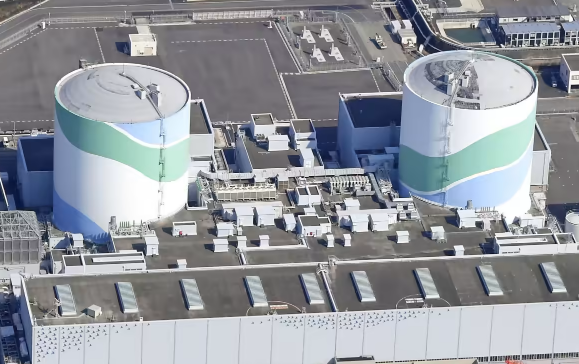
A nuclear plant at Sendai, run by Kyushu Electric Power Co Inc., applied for an extension this week. Kansai Electric Power Co Inc and Japan Atomic Power Company have also lobbied for similar extensions.
Japan has not been immune to the energy crisis that has made its way across the globe this year, facing headwinds in both the availability of supplies and rising prices.
Recall, just days ago we reported that even the woke-ness goddess herself, Greta Thunberg, wasn't against shutting down nuclear plants in favor of coal. Thunberg said that it is a "bad idea" to turn off nuclear power stations if it means switching to coal, according to Politico on Tuesday.
"It depends. If they are already running, I think it would be a mistake to shut them down and turn to coal," she said about nuclear plants.
Nowhere is the nuclear agenda more important than in Germany, a country that had planned to close its 3 remaining nuclear plants at the end of the year before it was launched into a massive energy crisis with skyrocketing prices as a result of the Russia/Ukraine war. They have now decided to extend the life of 2 of the plants.

The additional collateral damage of planning to shut down the nuclear plants has results in Germany also reviving several dormant coal plants, the report says. Nuclear has been such a hot-button issue in the country that "the public discourse over extending the reactors, even for a few months, has been far more controversial than rebooting highly polluting coal plants," Politico says.
Germany's Finance Minister Christian Lindner said of Thunberg's comments: "...in this energy war, everything that creates electricity capacity has to be connected to the grid. The reasons speak for themselves — economically and physically."
With a $13B valuation, Celonis defies current startup economics
When Celonis, an 11-year-old German process mining company, announced a $1 billion raise in August on a $13.2 billion post-money valuation, it was a bit of a shock. After all, VC firms were pulling back from the huge raises and gaudy valuations of yesteryear.
But Celonis — which has raised $2.4 billion, per Crunchbase, with $2 billion coming in the last year alone — has been able to defy the current thinking in startup circles by taking on huge chunks of capital.
Consider that its valuation has grown an eye-popping 420% since 2019, when it raised $290 million at a $2.5 billion valuation. That was followed last year with $1 billion at an $11 billion valuation, culminating in August’s $13 billion valuation.
Part of the reason it’s such a valuable company is that along the way, it’s forged partnerships with corporate giants like IBM and ServiceNow to sell its software, helping push Celonis into markets where even well-funded startups might be limited by the resource requirements.
It’s also been able to fill in the platform with several strategic acquisitions (more on that later).
Why are customers, investors, and partners so interested in Celonis?
Because Celonis, using software, can dig into the way processes move through a company, looking at complex areas like procurement, bill paying, and inventory and searching for inefficiencies and duplications that can ultimately add up to huge savings.
This is the kind of work that high-priced consultants have tended to do, camping inside companies for months or years and figuring out how work flows through the organization while collecting fat checks to do it.
Having software that can replace those human efficiency experts, and in fairly short order, is a tremendous advantage.
...
Economists Now Expect a Recession, Job Losses by Next Year
Majority think Federal Reserve will start cutting rates in late 2023 or early 2024
The U.S. is forecast to enter a recession in the coming 12 months as the Federal Reserve battles to bring down persistently high inflation, the economy contracts and employers cut jobs in response, according to The Wall Street Journal’s latest survey of economists.
On average, economists put the probability of a recession in the next 12 months at 63%, up from 49% in July’s survey. It is the first time the survey pegged the probability above 50% since July 2020, in the wake of the last short but sharp recession.
Their forecasts for 2023 are increasingly gloomy. Economists now expect gross domestic product to contract in the first two quarters of the year, a downgrade from the last quarterly survey, whereby they penciled in mild growth.
On average, the economists now predict GDP will contract at a 0.2% annual rate in the first quarter of 2023 and shrink 0.1% in the second quarter. In July’s survey, they expected a 0.8% growth rate in the first quarter and 1% growth in the second.
Employers are expected to respond to lower growth and weaker profits by cutting jobs in the second and third quarters. Economists believe that nonfarm payrolls will decline by 34,000 a month on average in the second quarter and 38,000 in the third quarter. According to the last survey, they expected employers to add about 65,000 jobs a month in those two quarters.
Forecasters have ratcheted up their expectations for a recession because they increasingly doubt the Fed can keep raising rates to cool inflation without inducing higher unemployment and an economic downturn. Some 58.9% of economists said they think the Fed will raise interest rates too much and cause unnecessary economic weakness, up from 45.6% in July.
“‘Soft landing’ will likely remain a mythical outcome that never actually comes to pass,” said Daniil Manaenkov, an economist at the University of Michigan. A soft landing occurs when the Fed tightens monetary policy enough to reduce inflation, but without causing a recession.
“The coming drag from higher rates and stronger dollar is enormous and will knock off about 2.5 percentage points from next year’s GDP” growth, said Aneta Markowska, chief economist at Jefferies LLC. “In light of this, it’s hard to imagine how the U.S. can avoid a recession.”
Economists’ average forecasts suggest that they expect a recession to be relatively short-lived. Of the economists who see a greater than 50% chance of a recession in the next year, their average expectation for the length of a recession was eight months. The average postwar recession lasted 10.2 months.
For the year as a whole, they expect the economy to grow 0.4% in 2023, through the fourth quarter compared with the fourth quarter of the prior year. In 2024, they see the economy growing 1.8%.
Still, forecasters expect the labor market to weaken in the months and years ahead. They predict the unemployment rate, which was 3.5% in September, will rise to 3.7% in December and 4.3% in June 2023. Economists’ average forecast for the jobless rate at the end of next year is 4.7%, and they expect it to stay broadly at that level through 2024. While a 4.7% unemployment rate is low by historical comparison and indicative of the current worker shortage, it suggests that the Fed’s efforts to bring down inflation will inflict some pain on workers.
“The Federal Reserve is choosing between the lesser of two evils—take a recession with a rise in unemployment today or risk a more corrosive and entrenched inflation taking root,” said Diane Swonk of KPMG. “The risks of a misstep are large given the sins that low rates likely papered over,” she added.
The past few years have been volatile for the U.S. economy as it faced shocks including the Covid-19 pandemic and Russia’s invasion of Ukraine. In 2019, before the pandemic hit, the economy grew 2.6%. GDP contracted 1.5% in 2020 and bounced back strongly in 2021, posting 5.7% growth. This year, as consumers and businesses grapple with high inflation and supply-chain issues, economists expect the economy to eke out growth of just 0.2%.
Interest-rate increases by the Fed are expected to further slow demand for housing next year. Economists expect home prices to decline 2.2% in 2023, measured by the U.S. Federal Housing Finance Agency’s seasonally adjusted purchase-only house price index. That would mark the first such decline since 2011.
The Fed has raised its benchmark federal-funds rate by 0.75 point at each of its last three meetings, most recently in September, bringing the rate to a range of 3% to 3.25%. Another uncomfortably high inflation reading for September is likely to keep the Federal Reserve on track to increase interest rates by 0.75 percentage point at its meeting next month.
Economists on average expect the Fed to lift the federal-funds rate to 4.267% in December, which implies at least one more increase of 0.5 point that month. They see the federal-funds rate peaking at 4.551% in June next year.
Most economists expect that the Fed will eventually have to reverse course and start cutting rates late next year or in early 2024. Some 30% of economists expect the central bank to lower rates in the fourth quarter of 2023, and 28.3% expect the next rate cut in the first quarter of 2024.
The survey of 66 economists was conducted Oct. 7 to 11. Not every economist answered every question.
Activist Investor Starboard Has Nearly 5% Stake in Splunk
Starboard CEO Jeff Smith to discuss Splunk at Tuesday conference, according to sources
Activist investor Starboard Value LP has a sizable stake in Splunk Inc. SPLK 0.69% and plans to push the software maker to take action to boost its stock price, according to people familiar with the matter.
Starboard’s stake is just under 5%, the people said. The hedge fund often targets software companies that could benefit from operational and margin improvements or be attractive takeover targets.
Starboard founder and Chief Executive Officer Jeff Smith is appearing at an activist-investing conference, the 13D Monitor Active-Passive Investor Summit, Tuesday, and is expected to detail the fund’s thesis then, the people said.
Splunk, founded in 2003, makes software used by companies’ information-technology and security operations to monitor threats and analyze data.
It has a market value of around $11.4 billion after the shares dropped nearly 40% this year amid a broader selloff of technology stocks. In late March, its market value was nearly $24 billion and at the peak in September 2020 was above $35 billion as the pandemic stoked demand for cloud computing.
Earlier this year, when Splunk was without a chief executive and its shares had plummeted following a series of disappointing earnings reports, it attracted takeover interest from at least one strategic suitor: Networking giant Cisco Systems Inc. made a takeover offer worth more than $20 billion for Splunk, The Wall Street Journal reported in February, noting that the companies weren’t in active talks at the time. There isn’t a sign that has changed.
Splunk named Gary Steele as its new CEO in March after former Chief Executive Doug Merritt stepped down from the role late last year. Mr. Steele is the founding CEO of Proofpoint Inc., an information-security company that was acquired by software-investment firm Thoma Bravo in 2021.
The same week as Mr. Steele’s announcement, the private-equity firm Hellman & Friedman LLC disclosed it had taken a 7.5% stake in the software maker, in a big bet on both the company and him. That came after technology-focused private-equity firm Silver Lake made a $1 billion investment in the company last year to help support a transformation of the business. Splunk is nearing the end of a shift from a traditional software-licensing arrangement to a cloud-based subscription model.
Last week, Splunk added two directors to its board, including a partner from Hellman & Friedman. In September, the company said its chief financial officer plans to leave in November to take a position at another company and that it is searching for a new one.
New York-based Starboard, established in 2002, invests across sectors but is especially active in technology. Other recent investments include GoDaddy Inc. and NortonLifeLock Inc.
Luna Rossa Unveils Boat Ahead of 37th America’s Cup
The prototype was christened by Miuccia Prada, while Patrizio Bertelli said Prada will no longer sponsor the Challenger Selection Series, known as the Prada Cup.

The new Luna Rossa Prototype boat unveiled at the Luna Rossa Prada Pirelli dock in Cagliari, Italy.
CAGLIARI, Italy — “Luna Rossa spurred the birth of the sailing movement in Italy….This is its true merit,” Prada chief executive officer Patrizio Bertelli said here Thursday, the day the new boat set to compete in the 37th America’s Cup was unveiled.
The mood was cheerful at the Luna Rossa Prada Pirelli dock of the Sardinian town, as Miuccia Prada christened the new model, a half-size prototype set to serve as a testing ground for the AC75 monohull that will compete in the upcoming cup, which will be held in Barcelona in 2024.
Donning cerulean shantung pants with a matching shirt and V-neck sweater complemented by her signature vintage jewelry, the designer looked impatient to carry out her godmother duties — especially when the hoist seemingly had some issues nearing the sailboat’s bow.
This was the 10th time the designer has acted as a godmother to a Luna Rossa boat. She was flanked by her husband, who is also president of the Luna Rossa Prada Pirelli team; Agostino Randazzo, president of the Sicilian sailing circle, and Marco Tronchetti Provera, CEO of Pirelli, co-title sponsor of the Luna Rossa team and partner in its technological development. A new sponsor, Unipol, joined the roster of supporters.

Miuccia Prada christens the new Luna Rossa Prototype boat in Cagliari, Italy flanked by husband Patrizio Bertelli, Marco Tronchetti Provera and Agostino Randazzo.
COURTESY OF LUNA ROSSA PRADA PIRELLI TEAM
Glistening under the sun, the new model, dubbed Prototype and crafted from carbon composites, was decked in a red, white and black geometric camouflage pattern developed in-house which, Bertelli explained, is a trick traditionally employed in the sailing world to hide the boat’s technical features.
The Luna Rossa Prototype marks the first boat the team has entirely developed and manufactured in-house, in Cagliari.
Bertelli touted the painstaking job of the Luna Rossa Prada Pirelli team, crediting the prototype for embedding features that were in the pipeline already ahead of the 36th America’s Cup but were scuppered by COVID-19-related supply chain issues.
“The sailing competition world was very Anglo-Saxon-driven until Luna Rossa made its foray in it. It’s been the single element of disruption in the entire history of sailing throughout the 20th century, nobody says that,” the Prada chief said with pride.
“Without Patrizio [Bertelli] we wouldn’t be here….It’s an Italian boat and I think it’s important to telegraph how advanced the country is in so many fields,” said Max Sirena, skipper and team director.
He said the investment planned for the boat to challenge for the 37th America’s Cup amounts to about 90 million to 95 million euros.
In line with the America’s Cup’s new protocol, espionage is now permitted, meaning delegates of other sailing teams were in attendance, hiding among guests.
This partly explains why Sirena and head of the design team Horacio Carabelli shared few details on the prototype’s technical improvements.
The monohull model required 30,000 hours and 65 people over 10 months for completion. The boat features a wing mast and smaller bowsprit, as well as a revisited keel.
“It is a completely different boat compared to the previous model,” Carabelli said. “It will be a constant development until we come up with the final challenge-ready boat….The aerodynamic component is very important.”
“It’s very advanced, it’s going to be hard to conduct it at the beginning,” echoed Sirena. “It’s really a laboratory; we didn’t spare anything, from its structure to the aerodynamic and fluid dynamic features,” he said.

The new Luna Rossa Prototype boat unveiled in Cagliari, Italy.
COURTESY OF LUNA ROSSA PRADA PIRELLI TEAM
Based on the prototype unveiled Thursday, the boat set to compete in regattas will be built by Persico Marine, taking into account adjustments to be determined during training sessions at sea, which are due to start in a few days.
After acquiring the exclusive naming and presenting sponsor rights of all events, including the Challenger Selection Series, which was officially named the Prada Cup, Bertelli said the luxury brand did not renew the sponsorship, having disliked the previous experience in New Zealand in 2021.
A new naming and presenting sponsor has yet to be disclosed. Before Prada, fellow luxury label Louis Vuitton had sponsored the Challenger Selection Series beginning in 1983.
The concept of a Challenger Selection Series originated in 1970, when for the first time in the history of the America’s Cup there was more than one international challenger vying to race against the defender for the coveted trophy.
The upcoming America’s Cup will mark Luna Rossa’s seventh challenge, but sixth race, as the team in 2015 withdrew from the competition over disagreements with the overturning of rules unanimously adopted throughout the previous year by the Oracle Team of the U.S., which was owned by Larry Ellison and which lost the America’s Cup to the New Zealand team.
The Prada boat will represent Italy and the Sicilian Sailing Circle at the oldest trophy in the history of sports and the most prestigious in the sailing world.
Details for the first series of preliminary regattas including the Challenger Selection Series have yet to be disclosed by team Emirates Team New Zealand, the current defender. Asked about speculation that regattas could take place in Cagliari, Bertelli and Sirena said it is likely but still to be confirmed by the defender.
The Luna Rossa team was established in 1997 by Prada’s CEO with the original name of “Prada Challenge for the America’s Cup 2000.” The team won the Louis Vuitton Cup in 2000, with a record of 38 victories over 49 races. It also competed in 2003 and in 2007, when it reached the Louis Vuitton Cup final.
As reported, Luna Rossa won the most recent Challenger Selection Series, the Prada Cup, in 2021 but lost to contender Emirates Team New Zealand, which succeeded in defending the 36th America’s Cup with a 7-to-3 victory over Luna Rossa Prada Pirelli, wrecking the latter’s ambitions to take the trophy home.
The Week’s 10 Biggest Funding Rounds: Odyssey’s Epic Round, Uniswap Raises Big And Mini Golf Gets Cash
Last week it seemed like big rounds were making a comeback. That’s not the case this week, as even the largest rounds were on the small side and there weren’t a lot of them. Investors continued to go big on biotech and another agtech company made the list, along with a mini golf startup—a first.
1. Odyssey Therapeutics, $168M, biotech: Developing drugs is big business, for both biotech firms and investors. This week, Boston-based Odyssey Therapeutics closed a $168 million Series B led by General Catalyst. Odyssey is developing precision immunomodulators and oncology medicines to treat serious human diseases. The company’s drug discovery engine uses artificial intelligence and machine learning for molecular design, a functional genomics platform for target discovery and other proprietary tech. Founded last year, Odyssey has raised nearly $386 million, according to the company.
2. Uniswap Labs, $165M, crypto: Crypto and blockchain have been relatively quiet recently, but there does usually seem to be at least one round that makes this list every week. This week it was New York-based Uniswap Labs—the company behind the Uniswap Protocol exchange— that landed a $165 million Series B led by Polychain Capital. The raise values the company at $1.66 billion, TechCrunch reported. Founded in 2018, Uniswap is a decentralized exchange platform operating on the Ethereum blockchain. The exchange allows users to deposit tokens into larger liquidity pools and buy and sell at predetermined pricing. In a blog post announcing the round, the company said it has now supported $1.2 trillion in trading volume to date. The company has now raised $176 million, according to Crunchbase data.
3. TripActions, $154M, travel: TripActions has been in the news a lot lately. Just two weeks after it was reported the company had confidentially filed to go public next year, the Palo Alto, California-based business travel startup raised $304 million at a $9.2 billion valuation. The round is comprised of $154 million in equity from new and existing financial investors and a $150 million structured capital transaction led by Coatue. The business travel startup raised $275 million in a Series F round led by Greenoaks Capital last October at a $7.25 billion valuation. In May, Bloomberg reported the company was in negotiations to raise funding at a $9 billion valuation. Late last month, Business Insider first reported the company had filed confidentially to go public and is aiming for a $12 billion valuation in Q2 of next year. The report also said Goldman Sachs has been hired to handle the listing.
4. Puttshack, $150M, sports: Who didn’t at one point love miniature golf? Apparently many people still do. Chicago-based Puttshack locked up a $150 million from funds managed by BlackRock and continued support from Promethean Investments. The company blends a night out—food and beverages—with miniature golf and uses its patented Trackaball technology to help automate scoring and create interactive games at each hole. Puttshack plans to use the new cash to expand into many more locations across the U.S. Founded in 2017, the company has now raised $244 million, according to Crunchbase.
5. Soli Organic, $125M: Agtech continues to be big with investors. Virginia-based indoor farming startup Soli Organic raised $125 million Series D led by CDPQ. Soli sells greens and herbs. However, unlike most indoor farming companies that use hydroponics and vertical farming tech, Soli utilizes soil and its own special fertilizer to grow their crops indoors. The company has been around for a while. It started off as Shenandoah Growers in 1989—making it an OG of the agtech sector. The company has raised $487.5 million since being founded, according to Crunchbase data.
6. Neumora Therapeutics, $112M, biotech: Watertown, Massachusetts-based Neumora Therapeutics, a clinical-stage biotech firm developing medicines for brain diseases, closed a $112 million Series B from investors that included Abu Dhabi Growth Fund (ADG), Amgen, ARCH Venture Partners and others. Founded in 2019, Neumora has raised $650 million in capital, per the company.
7. SprintRay, $100M, 3D printing: Los Angeles-based dental 3D printer maker SprintRay raised more than $100 million in a Series D led by the SoftBank Vision Fund 2, according to a Deal Street Asia report. This is the first disclosed round, per Crunchbase data.
8. Matchpoint Therapeutics, $70M, biotech: Cambridge, Massachusetts-based Matchpoint Therapeutics, a developer of precision covalent medicines to treat immune diseases, closed on a Series A funding of $70 million led by Sanofi Ventures. The company has raised a total of $100 million including its seed round led by Atlas Venture and Access Biotechnology.
9. NorthOne, $67M, fintech: New York-based financial management platform NorthOne raised a $67 million Series B from new and existing investors. Founded in 2016, the company has now raised more than $90 million from investors such as Redpoint and Battery Ventures, per Crunchbase.
10. Ascidian Therapeutics, $50M, biotech: Boston-based Ascidian Therapeutics came out of stealth and announced it had raised a $50 million Series A from ATP, who also developed the company. Ascidian is trying to treat human diseases by replacing mutated exons at the RNA level.
Big global deals
With so few large rounds this week in the U.S., the biggest round globally went to a China-based firm.
- Horizon Robotics, which creates computing platforms for smart vehicles, received a $1 billion investment from Volkswagen for a joint venture.