>>> TradeGate Pre-Market Indications

DAX:
  • Siemens Energy (ENR TH) +1.5%
  • VW (VOW3 TH) +1.4%
  • Vonovia (VNA TH) +1.4%
  • Adidas (ADS TH) +1.1%
  • Deutsche Post (DPW TH) +0.7%
  • Munich Re (MUV2 TH) -0.5%
MDAX:
  • TAG Immobilien (TEG TH) +2.6%
  • Varta (VAR1 TH) +1.8%
    • Goldman Sachs Group, Inc. Raised Varta Voting Rights to 5.03%
  • K+S (SDF TH) +1.3%
  • Evotec SE (EVT TH) -0.8%
  • Lufthansa (LHA TH) -1%
    • Eurowings Pilots Begin Second Strike in Less Than 2 Weeks: DPA
SDAX:
  • Nordex (NDX1 TH) +2.7%
  • Uniper (UN01 TH) +2.3%
  • Medios (ILM1 TH) +2.3%
  • MorphoSys (MOR TH) +1.9%
  • Shop Apotheke (SAE TH) +1.8%
  • Bilfinger (GBF TH) -0.9%
  • PVA TePla (TPE TH) -1%

>>> Europe : Brokers Upgrades & Downgrades - 17th of October 2022

>>> Up
* Bollore Raised to Add at AlphaValue/Baader
* Leroy Raised to Buy at SEB Equities; PT 60 kroner
* Salmar Raised to Buy at SEB Equities; PT 427 kroner
* Standard Chartered Raised to Overweight at Morgan Stanley
* Tryg Raised to Buy at HSBC; PT 185 kroner

>>> Down
* Lloyds Cut to Equal-Weight at Morgan Stanley; PT 58 pence
* Norsk Hydro Cut to Sell at SpareBank; PT 55 kroner
* Temenos PT Cut to 45 Swiss francs at Morgan Stanley
* Temenos Cut to Hold at HSBC; PT 60 Swiss francs

>>> Initiation
* Kape Technologies Rated New Outperform at Cowen; PT 350 pence
* Porsche AG Rated New Sector Perform at RBC; PT 88 euros

>>> Call
* 2023 Outlook Matters More vs. 3Q Results as Recession Fears Grow

>>> What to look at today - 17th of October 2022

Asian equities fell while major currencies made gains against the dollar in a cautious open to the week following further weakness on Wall Street and a defiant message to the world from China’s Communist Party congress. Stocks dropped in Japan, Australia and Hong Kong, where technology companies led declines. Contracts for the S&P 500 and Nasdaq 100 rose after tumbling Friday, when Treasury yields climbed as year-ahead inflation expectations increased. US Yields trimmed that move in Asia on Monday. The dollar eased against its Group-of-10 counterparts, providing a touch of respite to harried currency markets. Traders remained on guard for possible intervention to support the yen, which is near a 32-year low and within reach of the key 150 level versus the greenback. The pound rallied on expectations that the UK may reverse more of its unfunded tax cuts. The outlook for consumer prices in the US continues to fuel bets that the Federal Reserve may make jumbo rate hikes at its next two meetings, further challenging global growth. 
Against this negative backdrop, investors have to contend with news from Beijing, where President Xi Jinping said China’s global power had increased while warning of “dangerous storms” ahead. There were few signs of any let up in the Covid-Zero campaign or housing market policies that are weighing on the economy. Xi also said China would prevail in its fight to develop strategically important technology amid rising tension with the US. The offshore yuan extended gains versus the dollar after China’s central bank halted its cash withdrawal via medium term loans for the first time in three months in a bid to boost the economy. UK markets may be in for a particularly torrid week, with Britain’s beleaguered prime minister Liz Truss battling to rescue her premiership after the Bank of England ended its emergency bond-buying program on Friday. Fed officials in their latest comments suggested they were ready to hike rates higher than previously planned. Kansas City Fed President Esther George said the terminal rate may need to be higher to cool prices. San Francisco Fed’s Mary Daly said she’s “very supportive” of raising to restrictive levels and to between 4.5% and 5% “is the most likely outcome.” Corporate America offered some bright spots Friday, with big banks including JPMorgan Chase & Co. and Wells Fargo & Co. rising after reporting results, while Morgan Stanley fell as equity trading revenue disappointed. oil clawed back some losses after a weekly slump as fears over an economic slowdown continue to weigh on the outlook for demand. Gold steadied in Asia after a volatile week in which expectations of more aggressive rate hikes by the Fed boosted the dollar, weighing on the precious metal.

Nikkei -1.29% Hang Seng -0.58% CSI -0.09% Shanghai +0.25% Shenzen +0.38%

Eur$ 0.9739 CNH 7.2150 CNY 7.2009 JPY 148.73 GBP 1.1232 CHF 1.0035 RUB 62.8250 TRY 18.5810 WTI$ 86.24 +0.74% Gold 1,650 +0.34% BTC 19,240 -0.49% ETH 1,305 -0.41%

S&P +0.75% Nasdaq +0.89% EuroStoxx -0.21% FTSE -0.35% Dax -0.09% SMI +0.02%

Macro :
- Europe to Propose Dynamic Price Cap on Its Biggest Gas Exchange
- Big VIX Bets Roll In With Wager on ‘Fear Gauge’ Hitting 100
- UK in Talks With US LNG Producers for Major Buys: Sky
- Marshall Wace Hiring Commodities Head for $5 Billion Quant Fund

Keep an eye on :
- A2A IM : A2A, Margherita to Restructure Group Headed by Daunia Wind
- ACI US : Kroger’s Pursuit of Albertsons Hinged on Regulatory Strategy
- AIR FP : Boeing Gets Dragged Into Airbus-Qatar Dispute Over Max Deal
- BMW GY : BMW to Stop Making Electric Minis in UK as Focus Shifts to China
- ACA FP : Credit Agricole Unit to Acquire RBC Investor Svcs Ops in Europe
- CSGN SW : Credit Suisse Talks to Underwriters as It Weighs Capital Options
- CSGN SW :Credit Suisse Prepares To Sell Parts of Swiss Domestic Bank: FT
- DRW3 GY : Draegerwerk Prelim 3Q Net Sales About EU725M
- ETL FP : Eutelsat Says Hotbird 13F Satellite Successfully Launched
- FAST NA : Fastned Gets EU75M Investment From Schroders Via Placement
- EO FP : Faurecia to Supply Hydrogen Storage Systems for Renault Van
- FOXA US : News Corp., Fox Confirm They Will Explore Combination
- FOXA US : Lachlan Murdoch Would Consolidate Power in News Corp. Deal
- HYQ GY : Hypoport Says Mortgage Finance Market Contracted Sharply in 3Q
- ITV LN : ITV Explores Options for Its Production Arm ITV Studios: FT
- LHA GY : Eurowings Pilots Begin Second Strike in Less Than 2 Weeks: DPA
- B4B GY : Metro Will Only Sell India Business At Desired Valuation: ET
- MOWI NO : Mowi Prelim 3Q Ebit EU240M
- NTGY SM : *NATURGY SPINOFF `ISN'T CONVENIENT' RIGHT NOW: RIBERA TO CINCO
- NEL NO : Nel Gets NK600m Purchase Order From Woodside Energy
- PRX US : Prosus to Sell Russian Classifieds Business for $2.4 Billion
- TIT IM : Telecom Italia Puts Off Action on Bid as Key Investor Absent
- TEMN SW : Temenos Investor ‘Very Concerned’ After Forecast Hits Stock
- TSLA US : Tesla Won’t Make Batteries in Germany Before 2024: Handelsblatt
- VIRP FP : Virbac To Invest Around €40M in New Production Facility: Echos
- VOD LN : Vodafone Activist Cevian Is Said to Sell Majority of its Stake
- VOD LN : Vodafone Seeks to Finalize Vantage Stake Sale by Nov. 15: Rtrs
- VOW3 GY : European Car Sales’ 4Q Recovery Can't Rescue Full-Year Decline

>>> What to look at today - 17th of October 2022

Asian equities fell while major currencies made gains against the dollar in a cautious open to the week following further weakness on Wall Street and a defiant message to the world from China’s Communist Party congress. Stocks dropped in Japan, Australia and Hong Kong, where technology companies led declines. Contracts for the S&P 500 and Nasdaq 100 rose after tumbling Friday, when Treasury yields climbed as year-ahead inflation expectations increased. US Yields trimmed that move in Asia on Monday. The dollar eased against its Group-of-10 counterparts, providing a touch of respite to harried currency markets. Traders remained on guard for possible intervention to support the yen, which is near a 32-year low and within reach of the key 150 level versus the greenback. The pound rallied on expectations that the UK may reverse more of its unfunded tax cuts. The outlook for consumer prices in the US continues to fuel bets that the Federal Reserve may make jumbo rate hikes at its next two meetings, further challenging global growth. 
Against this negative backdrop, investors have to contend with news from Beijing, where President Xi Jinping said China’s global power had increased while warning of “dangerous storms” ahead. There were few signs of any let up in the Covid-Zero campaign or housing market policies that are weighing on the economy. Xi also said China would prevail in its fight to develop strategically important technology amid rising tension with the US. The offshore yuan extended gains versus the dollar after China’s central bank halted its cash withdrawal via medium term loans for the first time in three months in a bid to boost the economy. UK markets may be in for a particularly torrid week, with Britain’s beleaguered prime minister Liz Truss battling to rescue her premiership after the Bank of England ended its emergency bond-buying program on Friday. Fed officials in their latest comments suggested they were ready to hike rates higher than previously planned. Kansas City Fed President Esther George said the terminal rate may need to be higher to cool prices. San Francisco Fed’s Mary Daly said she’s “very supportive” of raising to restrictive levels and to between 4.5% and 5% “is the most likely outcome.” Corporate America offered some bright spots Friday, with big banks including JPMorgan Chase & Co. and Wells Fargo & Co. rising after reporting results, while Morgan Stanley fell as equity trading revenue disappointed. oil clawed back some losses after a weekly slump as fears over an economic slowdown continue to weigh on the outlook for demand. Gold steadied in Asia after a volatile week in which expectations of more aggressive rate hikes by the Fed boosted the dollar, weighing on the precious metal.

Nikkei -1.29% Hang Seng -0.58% CSI -0.09% Shanghai +0.25% Shenzen +0.38%

Eur$ 0.9739 CNH 7.2150 CNY 7.2009 JPY 148.73 GBP 1.1232 CHF 1.0035 RUB 62.8250 TRY 18.5810 WTI$ 86.24 +0.74% Gold 1,650 +0.34% BTC 19,240 -0.49% ETH 1,305 -0.41%

S&P +0.75% Nasdaq +0.89% EuroStoxx -0.21% FTSE -0.35% Dax -0.09% SMI +0.02%

Macro :
- Europe to Propose Dynamic Price Cap on Its Biggest Gas Exchange
- Big VIX Bets Roll In With Wager on ‘Fear Gauge’ Hitting 100
- UK in Talks With US LNG Producers for Major Buys: Sky
- Marshall Wace Hiring Commodities Head for $5 Billion Quant Fund

Keep an eye on :
- A2A IM : A2A, Margherita to Restructure Group Headed by Daunia Wind
- ACI US : Kroger’s Pursuit of Albertsons Hinged on Regulatory Strategy
- AIR FP : Boeing Gets Dragged Into Airbus-Qatar Dispute Over Max Deal
- BMW GY : BMW to Stop Making Electric Minis in UK as Focus Shifts to China
- ACA FP : Credit Agricole Unit to Acquire RBC Investor Svcs Ops in Europe
- CSGN SW : Credit Suisse Talks to Underwriters as It Weighs Capital Options
- CSGN SW :Credit Suisse Prepares To Sell Parts of Swiss Domestic Bank: FT
- DRW3 GY : Draegerwerk Prelim 3Q Net Sales About EU725M
- ETL FP : Eutelsat Says Hotbird 13F Satellite Successfully Launched
- FAST NA : Fastned Gets EU75M Investment From Schroders Via Placement
- FOXA US : News Corp., Fox Confirm They Will Explore Combination
- FOXA US : Lachlan Murdoch Would Consolidate Power in News Corp. Deal
- HYQ GY : Hypoport Says Mortgage Finance Market Contracted Sharply in 3Q
- ITV LN : ITV Explores Options for Its Production Arm ITV Studios: FT
- LHA GY : Eurowings Pilots Begin Second Strike in Less Than 2 Weeks: DPA
- B4B GY : Metro Will Only Sell India Business At Desired Valuation: ET
- MOWI NO : Mowi Prelim 3Q Ebit EU240M
- NTGY SM : *NATURGY SPINOFF `ISN'T CONVENIENT' RIGHT NOW: RIBERA TO CINCO
- NEL NO : Nel Gets NK600m Purchase Order From Woodside Energy
- PRX US : Prosus to Sell Russian Classifieds Business for $2.4 Billion
- TIT IM : Telecom Italia Puts Off Action on Bid as Key Investor Absent
- TEMN SW : Temenos Investor ‘Very Concerned’ After Forecast Hits Stock
- TSLA US : Tesla Won’t Make Batteries in Germany Before 2024: Handelsblatt
- VIRP FP : Virbac To Invest Around €40M in New Production Facility: Echos
- VOD LN : Vodafone Activist Cevian Is Said to Sell Majority of its Stake
- VOD LN : Vodafone Seeks to Finalize Vantage Stake Sale by Nov. 15: Rtrs
- VOW3 GY : European Car Sales’ 4Q Recovery Can't Rescue Full-Year Decline

FT : Siemens Gamesa calls for quotas on EU-made wind turbines

Siemens Gamesa calls for quotas on EU-made wind turbines
Manufacturer urges action to protect region’s sector against cheaper Chinese imports

The head of one of Europe’s largest wind turbine manufacturers has called for a quota on the amount of EU-produced turbines installed in the region, as the sector seeks to compete with cheaper Chinese imports and the bloc pushes for energy security.

Siemens Gamesa’s chief executive Jochen Eickholt told the Financial Times that if Europe was serious about its energy independence and the role of wind power, turbines should be considered as critical and strategically important infrastructure, with measures introduced to support the industry.

“If our product is critical to the infrastructure of our countries . . . then certainly, not for 100 per cent of the installations but certainly for a certain portion of the installations [in Europe], you need to have things in your own hands,” said Eickholt.

“That means there needs to be an element of knowing how to operate these things and manufacturing these things,” he said, adding that even if certain geopolitical tensions or supply chain disruptions happened, Europe would “perhaps not have the cheapest answer, but would have an answer”.

European wind turbine manufacturers have been struggling financially, cutting jobs and closing factories, even as the EU, under the RePowerEU plan, aims to lift the share of renewable energy from 32 per cent of total production to 45 per cent by 2030. WindEurope, the industry body, reckons wind energy capacity will reach 510GW, from 190GW now.

Siemens Gamesa, the third-largest maker last year by newly installed turbines, suffered a loss of €1.2bn in the nine months ended in June, 233 per cent more than the loss suffered in the same period a year earlier. It recently announced it was slashing 2,900 jobs, or 10 per cent of its global workforce.

The rising cost of key materials such as steel and copper as well as supply chain disruptions have all weighed on the European sector.

Manufacturers have also come under increasing pressure from Chinese rivals boosted by rapid wind adoption in their home country and that often offer much lower prices. Top Chinese manufacturers accounted for 53.5 per cent of new global turbine installations last year, according to the Global Wind Energy Council, up from 36.6 per cent in 2018.

Eickholt said there was “definitely a risk” that the wind turbine industry would come to look like the solar panel industry, where Chinese manufacturers dominate the market and the supply chain, a situation on which the International Energy Agency warned in its July report.

“You have to see that we are meeting Chinese competition across the global markets and also increasingly in Europe,” the chief executive said, adding that Chinese manufacturers often received “additional support, typically from national or regional sources”, and that their innovation spending was in some cases 10 times higher than the Europeans.

“At the end of the day, we feel that there is an imbalanced battle, or at least we do not have the same level of opportunities here,” Eickholt said. “We are asking for a level playing field.”

(ZH) Goldman Trader: I Said "This Reminds Me Of 2008" More Times This Week Than

Goldman Trader: I Said "This Reminds Me Of 2008" More Times This Week Than I Can Remember

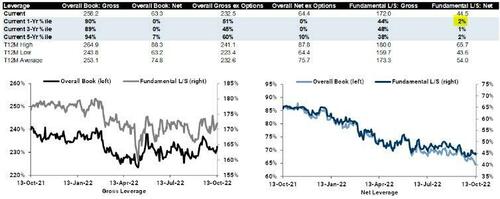
Over the weekend, we discussed that the probability of another sharp leg lower on Monday after Friday's panicked reversal of Thursday's furious gains is extremely low (in fact it's likely that we will get yet another squeeze), if only due to technicals and positioning as hedge funds doubled-down on short aggressively into Friday's dump while overall hedge fund net leverage fell to the lowest level since Mar '20.
And if that isn't enough, Sundial Capital's Jason Goepfert pointed out something far more startling: "Last week, retail traders bought $19.9 billion worth of puts to open. They bought only $6.5 billion in calls to open. This is the first time in history that puts were 3x calls."
Translation: the massive Delta hedge unwind that sent futures explosively higher on Thursday after the dismal CPI print is back even bigger than before, and just waiting for the signal to unwind the dealer delta hedge that will send futures soaring higher.
Still, as we discussed yesterday, while technicals point to a rollercoaster reversal on Monday as we get another overshorted, oversold rally on Monday and we may get a powerful bear market rally in November that pushes stocks to 4,000 or higher by year end, "the bear market won't end until the Fed pivots. The timing of that still remains to be determined, however after the midterm elections when the political blinders drop, we expect that the full - and dire - picture of the US labor market will finally emerge and shock everyone, especially the Fed."
Until then, however, the bear market will be alive and raging, and it is this part of the market cycle that Goldman flow trader, Matt Fleury, who has been one of the most vocal bears on the bank's trading desk, focuses on not only the bear market that is yet to come but also on the Mother of all bear markets, the Global Financial Crisis.
As he writes in his latest note, titled "Adult Swim" (available to pro subs in the usual place), "I said “this reminds me of 2008” more times this week than I can remember. The velocity of moves is increasing. The pace of tremors quickening."
Below we excerpt from Fleury's must-read note, published with quite a bit of urgency late on Saturday night ahead of what is shaping up to be another hair-raising week, at a time when as Bank of America warned that "Liquidity Breaks And Credit Freezes" as its Credit Dysfunction Indicator Breaches The Critical Zone. In short, all hell may be about to break loose.
The year when you started in this business shapes you. I started in 2006 at Bear Stearns with a Bachelor & Masters in how good the economy of Ireland was during the Celtic Tiger. Quite a baptism.
If you started in this business after 2009, all you know is a ‘buy the dip’ market, all you know is a Fed that has your back. You have got glimpses of crashing bear markets. But never rolling bear markets.
A crashing bear market is like swimming in shallow water; eventually you put your feet down and its ok, and there is a lifeguard on duty (the Fed) who is there to save you.
A rolling bear market is deep water swimming, with no lifeguard.
That’s what we are in. A rolling bear market.
The pain trade is lower. It’s always lower.
I get in this debate all the time, and it’s usually with people who started after 2009. It’s a pain trade to watch your friends lose their entire net worth because they never sold a Bear Stearns share. It’s a pain trade to watch your parents lose what money they had saved their whole lives which were in Irish bank shares when they went under.
It is not a pain trade when a hedge fund returns +0.5% on a given day and the market is 2%. They get paid on that +0.5%.
The pain trade is lower, and I do not believe we have seen the worst yet. Sample conversation on the trading floor:

“Matt, but everyone is bearish.”

“Yes, but those same people have their entire net worth ex their homes in equities.”
“Oh.”
Liquidity is tightening

“Earnings don’t move the overall market; it’s the Federal Reserve Board… focus on the central banks, and focus on the movement of liquidity… most people in the market are looking for earnings and conventional measures. It’s liquidity that moves market.” - Stan Druckenmiller

The Fed’s continued aggressive pace of hikes is causing unexpected knock on effects. I was certainly not aware of how levered the UK LDI pensions were. This had an eerie feel to me of the Bear Stearns hedge funds that went down in 2007 and all I could think of “what else is out there we don’t know about?”
The inflation reading in the US was undoubtedly bearish for risk assets.
There was an oversold/technical bounce which was swiftly sold. Ironically this is exactly what I was looking for last month which turned out to be a very strong candidate for worst call of the year.
It is noticeable however how these bounces are getting shorter and shorter. This makes me very uneasy.
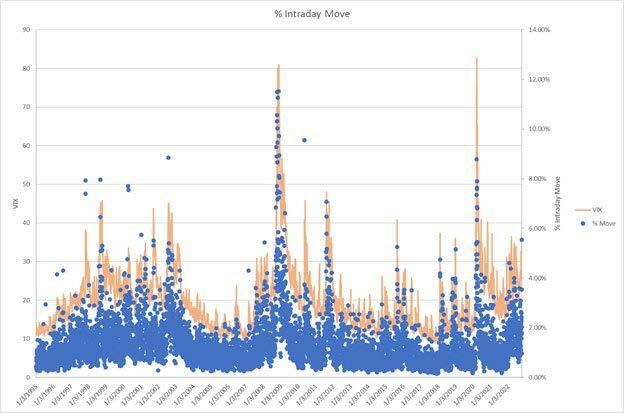
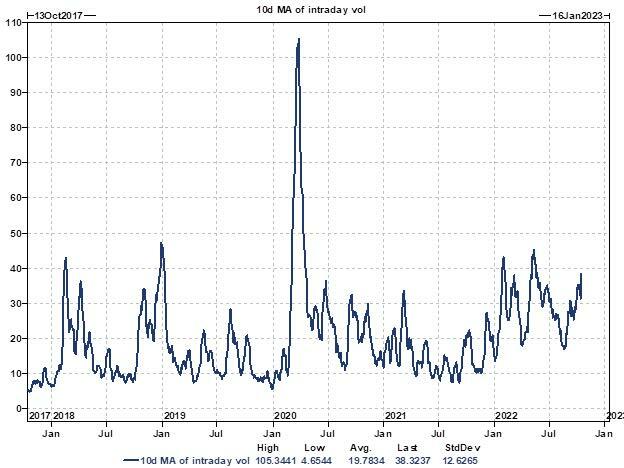
The mark of a bear market is large intraday trading ranges. H/t Matt Kaplan for the chart, which I think is a good illustration of when you get wide intraday trading ranges, it tends to be in the depths of bear markets. Based on history, there is certainly more scope for these to increase in frequency.
Here are a few headlines which caught my eye this week in my inbox for GIR’s excellent econ team. A worrying theme:
  • Poland: Large Inflation Increase in September Confirmed, As Underlying Inflation Reaccelerates
  • USA: Core CPI Inflation Jumps to 6.6% on Service-Sector Strength
  • Romania: Inflation Rises by 0.6pp to +15.9%yoy, Surprising Expectations to the Upside
  • India: CPI inflation increased in September driven by higher food prices
  • USA: Producer Prices Above Expectations In September
  • Hungary: Sharp Rise in Inflation on Household Energy Price Hike, And Underlying Inflation Rises Further
  • Asia in Focus: ASEAN-5 Inflation Outlook: Higher For Longer
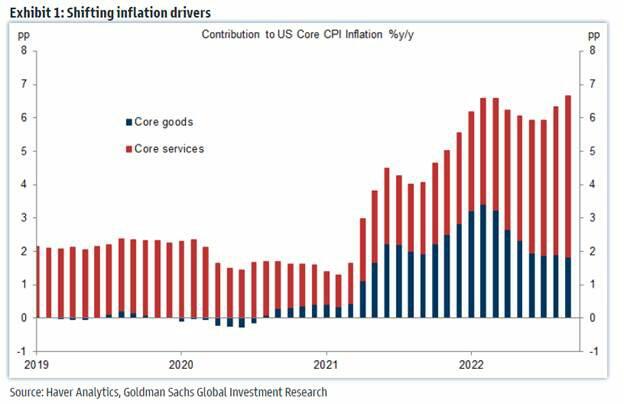
Within the US there is an increased focus on sticky inflation. The transition from goods consumption to services consumption kicks off labor demand and wages drive shelter inflation which is sticky.
Here is the 12mo Atlanta Sticky-Price CPI:
GIR breaks this move from goods to services down nicely:
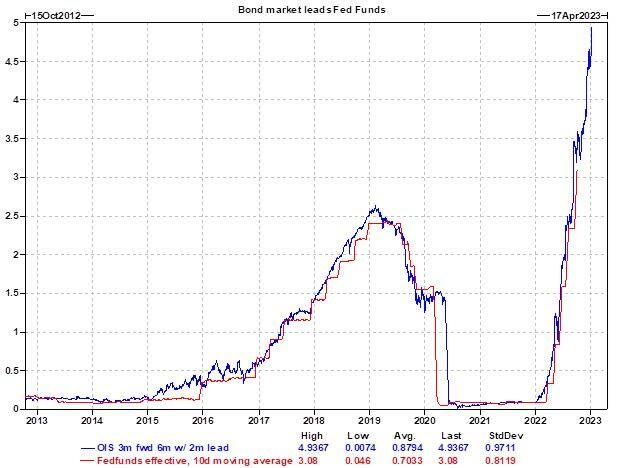
The Fed’s hands are tied here and the terminal rate which the market is pricing continues to move higher.
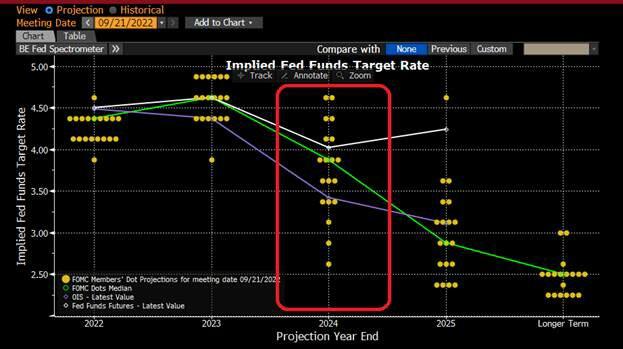
If you are waiting for the Fed to pivot and save you, I point you towards the 2024 dots.
I am of the opinion that the Fed has already made one error by not moving quick enough to hike rates, is now compounding that error, and is also making it up as they go along. They will stay the course into 2023 at least.
The market is leading the Fed, and it is moving ever higher.
This hawkish impulse has been a consistent headwind for equities and I don’t see that stalling in the near term.
Putting the UK in the rearview mirror
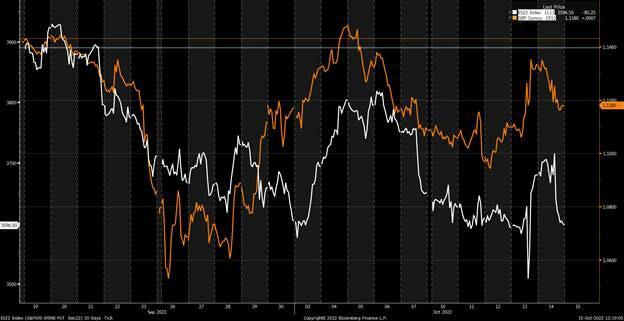
For quite some time S&P futures have moved hand in hand with Britcoin (GBP), but that seems to be breaking as the events within the UK take almost circus like turns.
I do believe the live cam of “who will last longer?” of Liz Truss versus a head of lettuce (LINK) will mark the “peak UK fears” for stock operators.
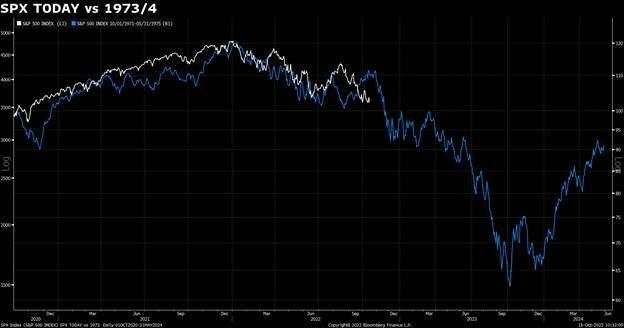
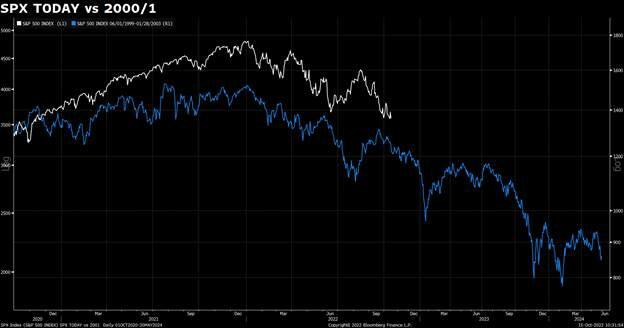
Rolling bears
These are what rolling bears look like. This is the environment we are in.
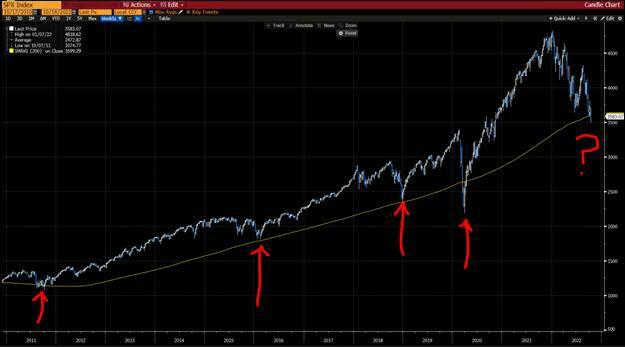
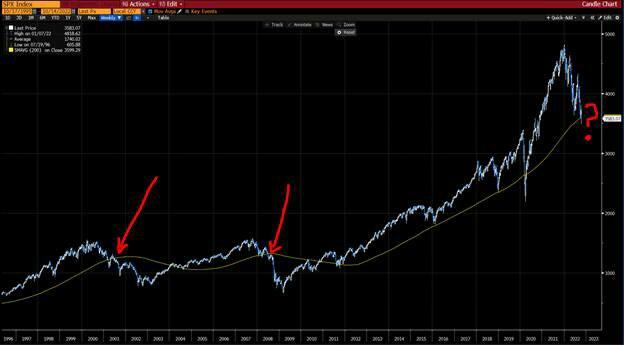
I have seen a lot of talk about the 200wk moving average acting as support. Well yes, it does aside from in rolling bear markets. 200wk MA with Fed support:
But when it breaks in rolling bears, it is ugly:
Corporate Finance 101
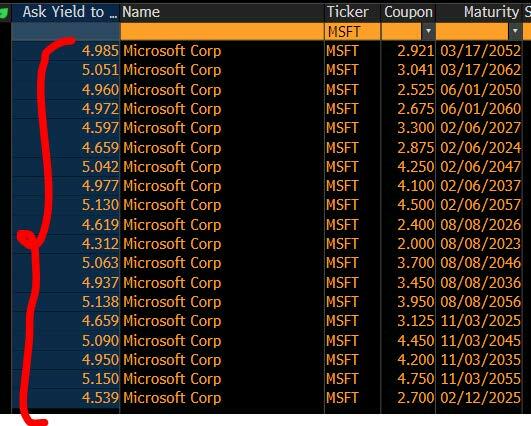
These are the MSFT bonds on Bloomberg. Let’s call it a 5% average. You can debate the attractiveness of owning a 23x MSFT P/E vs its bond at 5%.
But a more important question right now, if the market deems MSFT paper should yield 5%, where will it price lower quality company debt when they need to come to market?? 10%? 12%?
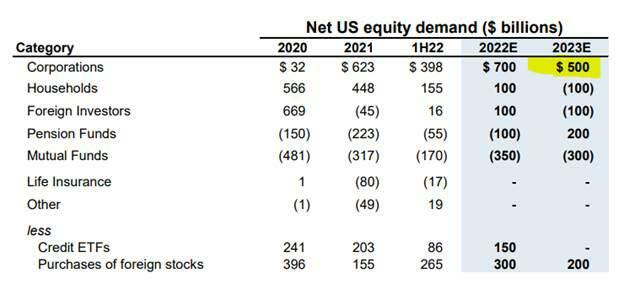
This is the GIR estimate for net corporate demand in 2023.
Question for the upcoming conference calls:
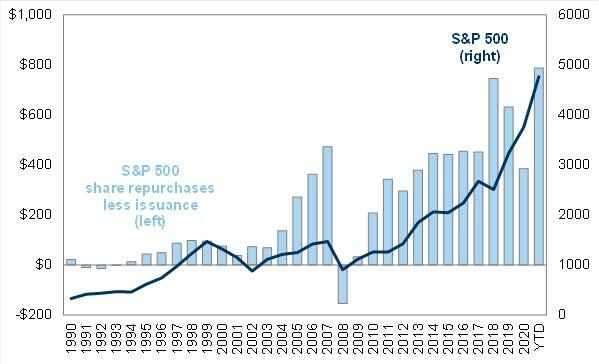
“Hey great quarter guys. Mr. CFO, in this backdrop, with your cash yielding ~4%, are you really buying back stock? And where do you think you would be able to issue debt in the current environment?”
In difficult times, corporate issuance ramps up. I will be watching to see how companies choose to fund themselves in 2023 – via debt or via equity issuance.
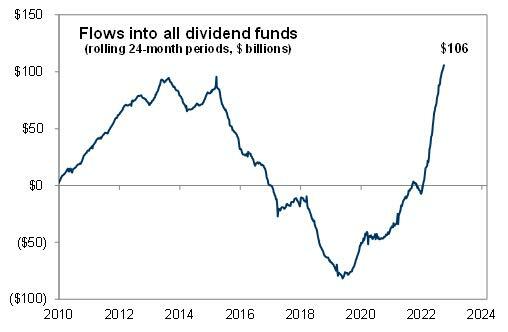
Additionally, there has been a lot of money that flowed into dividend funds – surely that can now buy some high quality IG paper?
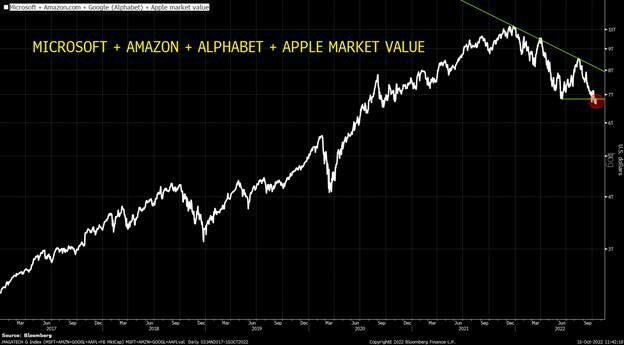
Similarly, is there a home to be found for fallen heroes? This is the market value of AAPL + AMZN + GOOGL + MSFT. That looks like a break.
What am I watching this week?
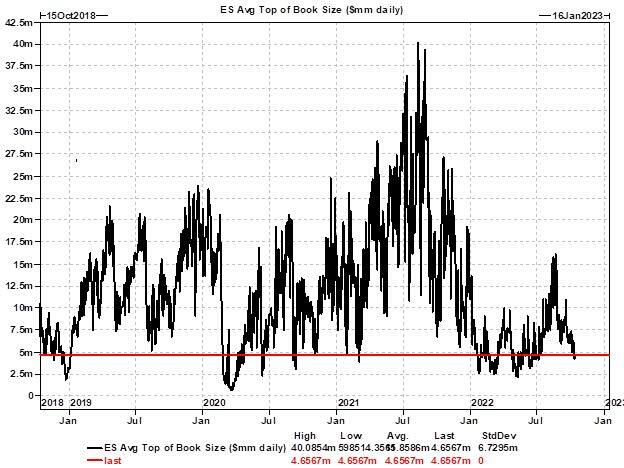
Liquidity remains poor. Top of book depth:
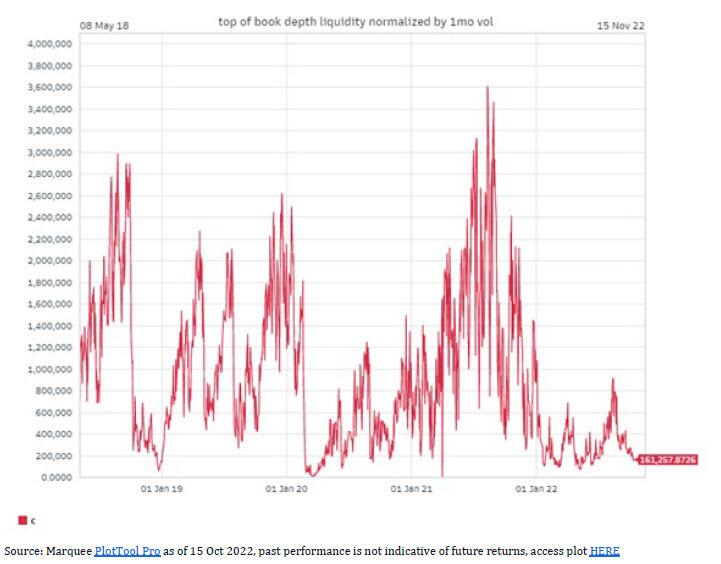
I call this chart the “potential for destruction” – it is top of book depth normalized by 1mo implied vol. It’s as bad now as it was in March 2020.
Overlaying top of book depth in futures vs 1mo 95/105 risk reversals, it will tell you that it is now worse:
Intraday vol is picking up:
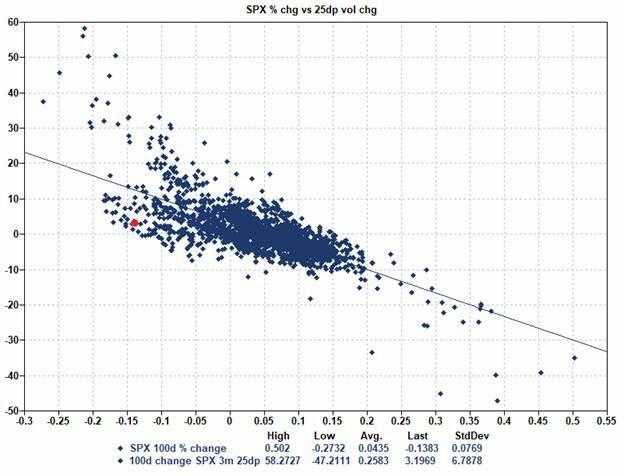
Puts are not helping as much as they could. This is the 100d SPX % change vs SPX 25dp change in vol points. If hedges aren’t working, degrossing is more likely.
This was the chart from Thursday of intraday SPX move vs Vix level (h/t Cullen Morgan):
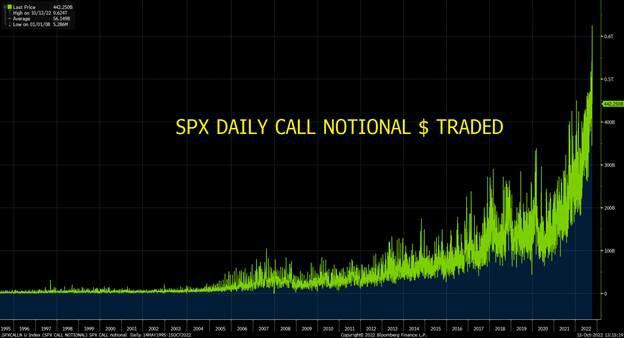
This could change soon. I sent around some thoughts to those on my direct mailing list. Options volume is exploding. The tail is wagging the dog.
More daily notional calls traded in SPX on Thursday than ever before.
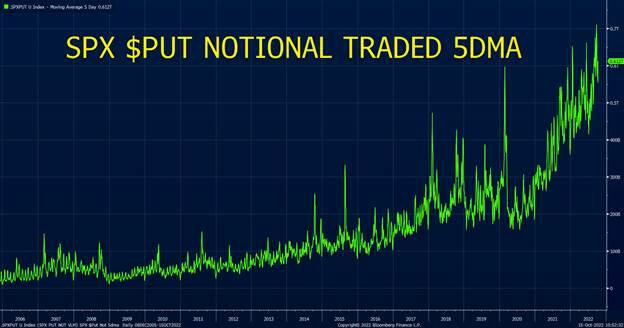
The 5dma of $put notional is ever climbing. It now dwarfs 2008/9 when dealers hands were less tied due to banking regulation and risks they could absorb.
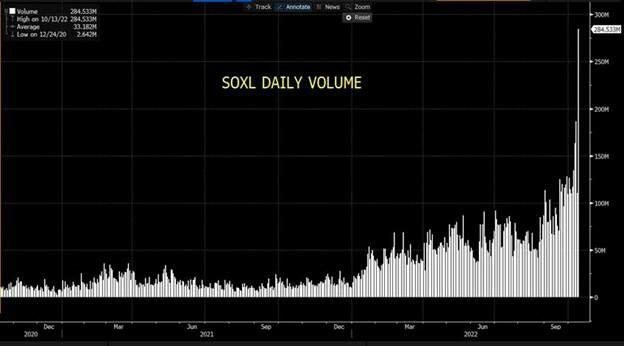
Levered ETF volumes are picking up, and SOXL (Semis 3x levered ETF) is the centre of attention. $10bn+ daily rebalances at the close in this ETF are common place now.
These are not healthy undercurrents. And the Fed’s hands are tied due to the inflation set up.
The Fed pivot will come, but when it comes the Fed pivot will be bearish. It is my view they will be forced to pivot because inflation is coming down due to a cardiac arrest in economic activity.
It is somewhat ironic that a Fed pivot is both part of the bull and bear case.
I do not believe we have seen the full pain of a Fed tightening this quickly yet.
Where are the bankruptcies? Where are the private mark downs? Who owns too much illiquid assets that haven’t had a real mark in years? Where are the over levered homebuilders going under?
The UK LDI pensions look like the first domino to me. The old regime of a central bank supported market is gone. And many business models that were spawned in that era will be tested.
This also comes at a time when the west has no allies in Opec for the first time since inception as the US drains the SPR (potential for oil price to stay elevated further causing headaches for the Fed?), and geopolitical tensions with China potentially impacting future global growth (see escalation on semiconductors late this week).
Good luck out there; it is adult swim, and there is no liFEguarD.
FT : CVC’s biggest bet yet

CVC’s biggest bet yet
When plans for a money-spinning “Super League” of Europe’s top football clubs collapsed in a furious outcry last year, billionaire tycoons were forced into grovelling public apologies. But behind closed doors, Europe’s largest private equity firm had long since walked away, write Kaye Wiggins and Arash Massoudi.

CVC Capital Partners abandoned the project after early-stage talks about a possible investment. Then, after its collapse, the buyout firm stepped up to buy a stake in La Liga, Spain’s football league, for €2.1bn, giving it a share of broadcasting and commercial revenues for up to half a century.

If those revenues keep growing at present rates, CVC could treble or even quadruple its money in the next decade. Since the league is not on the hook for clubs’ costs, the vast majority of CVC’s revenue is profit.

“It’s the best deal in the history of private equity”, a rival football dealmaker says. “They are not going to lose money here.”

CVC has made tens of billions of euros buying stakes in household-name brands from Debenhams to Formula One to the maker of PG Tips tea, all while remaining largely hidden from public view.


Now, almost three decades since it spun out of Citibank’s London office, the 700-person firm with €133bn in assets is at a crossroads. By the beginning of this year, its top executives had finally decided to take the firm public.

That would bring it into line with its larger rivals, such as Blackstone, KKR, and Carlyle; allow it to stay ahead of European competitors like EQT, which has grown rapidly since listing in 2019; and permit the founders who still oversee the firm to eventually cash in their stakes.

But it would also attract a level of scrutiny that it is not used to, and risks watering down the high-risk, high-reward model that is fundamental to CVC’s culture — reducing its rainmaker executives to a smaller part of a sprawling institution.

CVC’s listing will test whether one of Europe’s oldest buyout groups can modernise. Don’t miss don’t this in-depth account of the company at a pivotal moment in the history of both it and the private equity industry.

FT : Price pressures in commercial property

Price pressures in commercial property

Earlier this month, thousands of European property investors arrived in Munich hoping to strike deals and share gossip over German lager, writes George Hammond in London.

But the mood at the Expo Real trade fair was “sombre”, according to Lisa Attenborough, head of the debt advisory team at estate agency Knight Frank, who attended.

While there is now near-consensus in commercial real estate crowds that property prices must come down, no one is sure how far they should fall. This has meant stasis in the market and frustration for professionals who earn their fees on transactional activity.

A sharp increase in borrowing costs — made sharper still in the UK by September’s “mini” Budget — has made it hard for valuers to price property and for banks to lend against it, said Attenborough.

Analysts at Goldman Sachs forecast that UK commercial property prices could fall by up to 20 per cent by the end of 2024. Rising interest rates have increased costs for owners of offices, shops and warehouses, just as they have homeowners looking to secure mortgages.

While there is less leverage in the market than there was before the financial crisis, big rises in borrowing costs will make it impossible for some owners to refinance when existing loans mature, forcing them to sell.

In a tumultuous market, with buyers chipping away at asking prices, landlords who can sit tight rather than sell are choosing to do so. But not everyone has that luxury.

And recent turmoil in the gilt markets is compounding the problem. It’s putting pressure on property funds to shift assets as investors accelerate their retreat from the vehicles to meet their own cash calls. The spike in gilt yields has forced pension funds running liability-driven investment strategies to sell off assets, including property fund holdings, in order to meet collateral calls.

A rush to the exits has forced fund managers, including Schroders, BlackRock and Columbia Threadneedle to suspend or delay redemptions from institutional real estate funds, at least until they can free up cash by selling property. And real estate investors are preparing for discount deals as property funds are pressed to sell off offices and warehouses.

But these sales could take months, and property funds will be hawking assets into a stuttering market. This is bad news for their investors and potentially a trigger for a marketwide doom loop of down-valuations.

“Buildings will trade, but at a lower price,” said one seasoned property investor. “The clearing price will have to be 30-35 per cent lower than in June this year.”

WSJ : Goldman Plans Sweeping Reorganization, Combining Investment Banking and Tr

Goldman Plans Sweeping Reorganization, Combining Investment Banking and Trading
Marcus, the Wall Street firm’s consumer arm, to be part of a combined asset, wealth business

Goldman Sachs Group Inc. GS -2.31% plans to fold its biggest businesses into three divisions, undertaking one of the biggest reshuffles in the Wall Street firm’s history.

Goldman will combine its flagship investment-banking and trading businesses into one unit, while merging asset and wealth management into another, people familiar with the matter said. Marcus, Goldman’s consumer-banking arm, will be part of the asset- and wealth-management unit, the people said.

A third division will house transaction banking, the bank’s portfolio of financial-technology platforms, specialty lender GreenSky, and its ventures with Apple Inc. and General Motors Co. , the people said.

The reorganization could be announced within days, the people said. Goldman is scheduled to report third-quarter earnings Tuesday.

It is unclear how the makeover will shake up Goldman’s senior leadership team, though at least a few executives will have new roles, the people said. Marc Nachmann, the firm’s co-head of trading, will slide over to help run the combined asset- and wealth-management arm, they said.

The reorganization is the latest step in Chief Executive David Solomon’s push to shift Goldman’s center of gravity toward businesses that generate steady fees in any environment. It also reflects the firm’s struggle to overcome skepticism, from investors and even among some of its own executives, over its ambitions for consumer banking.

The firm’s trading and investment-banking acumen has been Goldman’s calling card for decades, churning out massive profits when the markets favored risk-takers and bold deals. But investors often discounted those successes, reasoning that they are harder to sustain when market conditions turn. And in recent years, Goldman has sought to sharpen its trading arm’s focus on client service.

Following the changes, Goldman’s organizational chart will look more like its peers.

A slide presentation from Goldman’s 2020 investor day offered a glimpse of what a combined banking-and-trading business would look relative to peers. At Goldman, the merged group would have delivered a return on equity of 9.2% in 2019, besting Morgan Stanley and Bank of America Corp. but below what JPMorgan Chase & Co. and Citigroup Inc. earned that year.

Bloomberg News earlier reported that Goldman had planned to restructure its consumer-banking arm and was considering combining its asset- and wealth-management businesses.

Goldman’s shares have struggled to keep pace with its rivals, at least by one measure. The firm traded at 0.9 times book value as of June, according to FactSet. That compared with 1.4 times at Morgan Stanley and 1.3 times at JPMorgan.

Goldman has sought to narrow the gap by beefing up the businesses that command higher valuations on Wall Street. Managing wealthy people’s money and overseeing funds for pensions and other deep-pocketed institutions is more profitable than other financial services, and it usually doesn’t put the firm’s balance sheet at risk. And many investors view traditional consumer banking—taking deposits and making loans—as more predictable.

Goldman has invested heavily in building its own consumer bank, and folding the unit into its asset- and wealth-management arm should create more opportunities to offer banking services to wealthy individuals.

Earlier this year, the bank said it aimed to bring in $10 billion in asset and wealth-management fees by 2024.

The Epoch Times : Twitter’s Claim Elon Musk Under Federal Invest

Twitter’s Claim Elon Musk Under Federal Investigation Is a ‘Misdirection’ Says Attorney

Elon Musk’s attorney on Saturday said Twitter’s claim in a court filing that the billionaire is under federal investigation is a “misdirection” and that it’s actually executives of the social media company being investigated.

“Twitter’s executives are under federal investigation. This misdirection was sent by Twitter to try and uncover which of their assorted misconduct they are under investigation for,” Musk’s attorney Alex Spiro said in a statement to The Epoch Times.

The Epoch Times asked Twitter for comment.

An Oct. 6 court filing unsealed on Thursday revealed that Twitter said Musk is under investigation with respect to his conduct during his bid to buy Twitter for $44 billion, according to Reuters.

The filing reportedly didn’t say by which federal authority Musk is said to be investigated, nor the scope or focus.

Twitter Asks Judge to Release Communications
According to the filing, Twitter sought months ago to find out from Musk’s lawyers about communications they had with federal authorities, Reuters reported.

On Oct. 6, Musk’s lawyers claimed “investigative privilege” to avoid handing over documents related to the lawsuit, according to the filing.

“This game of ‘hide the ball’ must end,” Twitter’s attorneys reportedly wrote in that filing.

The social media company urged Chancellor Kathaleen McCormick, head of Delaware’s Court of Chancery, to order Musk to release the relevant documents.

The documents in question reportedly include email drafts dated May 13 to the Securities and Exchange Commission and a presentation to the Federal Trade Commission, which promotes antitrust law and consumer protection.

Twitter’s interest in these documents is unclear.

The company’s Oct. 6 filing was submitted the day the judge delayed the takeover trial between the two parties after Musk indicated that he would go ahead with the deal.

Legal Dispute
Musk and Twitter have been locked in a legal dispute for months after Musk first made his takeover offer in April then withdrew it in July and finally renewed it in October.

Twitter sued Musk in July to force him to close the deal after the world’s richest man attempted to back out amid questions about the number of spam-bot accounts on the platform.

Musk asked Twitter to disclose information about fake accounts, but unsatisfied with the outcome he sought to cancel the deal before ultimately changing his mind and renewing his bid shortly before a trial for the takeover was due to take place in mid-October.

On Oct. 6, the same day Twitter submitted its filing in which it claimed Musk was under investigation, the judge agreed to delay the takeover trial originally set for mid-October, allowing some time to close the deal.

In a win for Musk, who argued the need for the trial was moot in light of his renewed offer, McCormick said the deal needs to be closed by Oct. 28 or the trial will happen in November.

After the judge’s ruling, Twitter indicated it wants to close the deal by Oct. 28 for $54.20 a share, which Musk first offered on April 25.

Musk said he’d close for the original price if Twitter drops its legal action, but Twitter was dubious about his motives and doesn’t seem to want to drop the legal action until the deal is closed.

The company previously accused Musk of refusing to accept his contractual obligations.